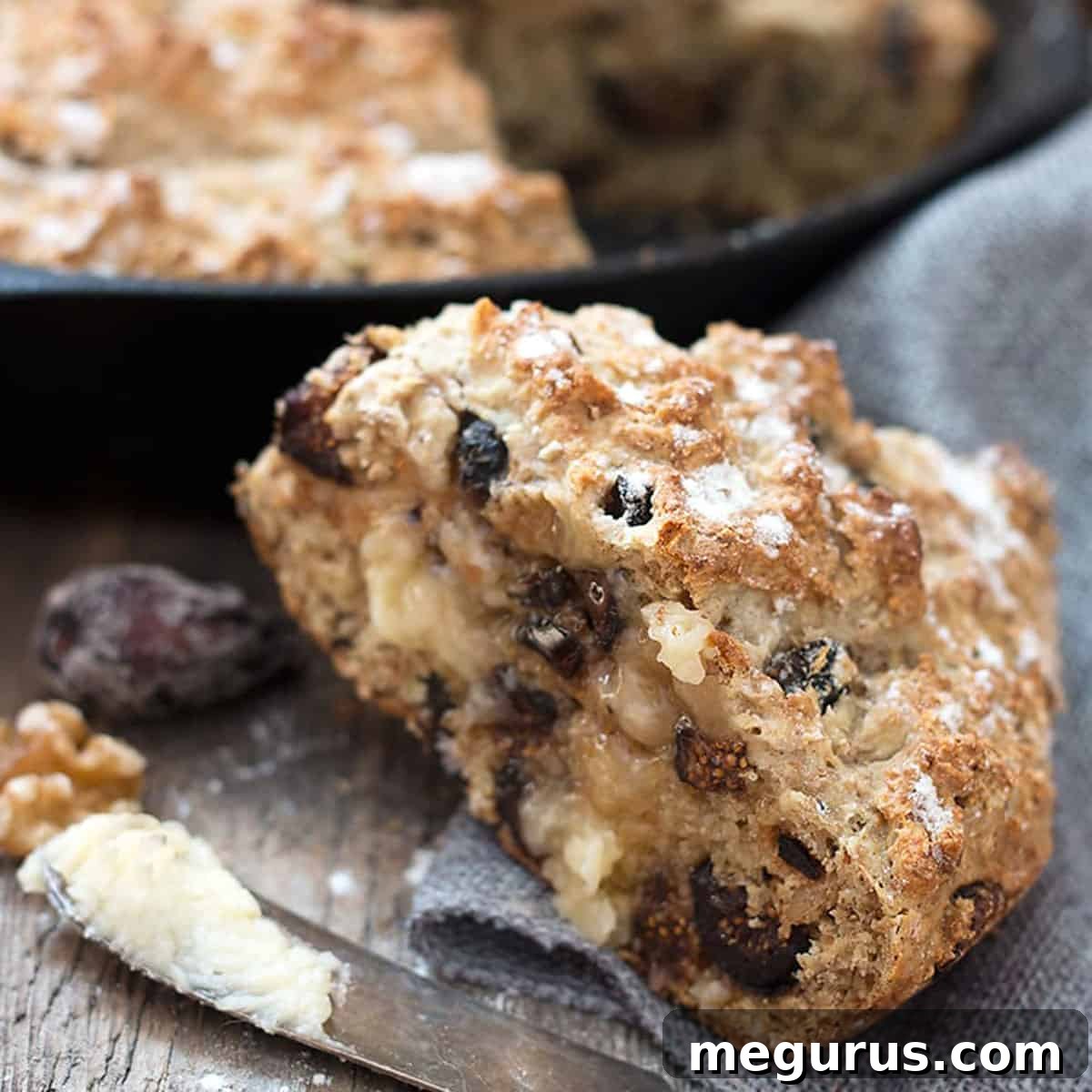
Discover the irresistible charm of homemade Fig and Walnut Soda Bread – a truly delightful and surprisingly simple loaf that’s perfect for any occasion. While it makes a fantastic addition to your St. Patrick’s Day celebration, its wholesome flavors and comforting texture will quickly make it a year-round favorite in your kitchen.
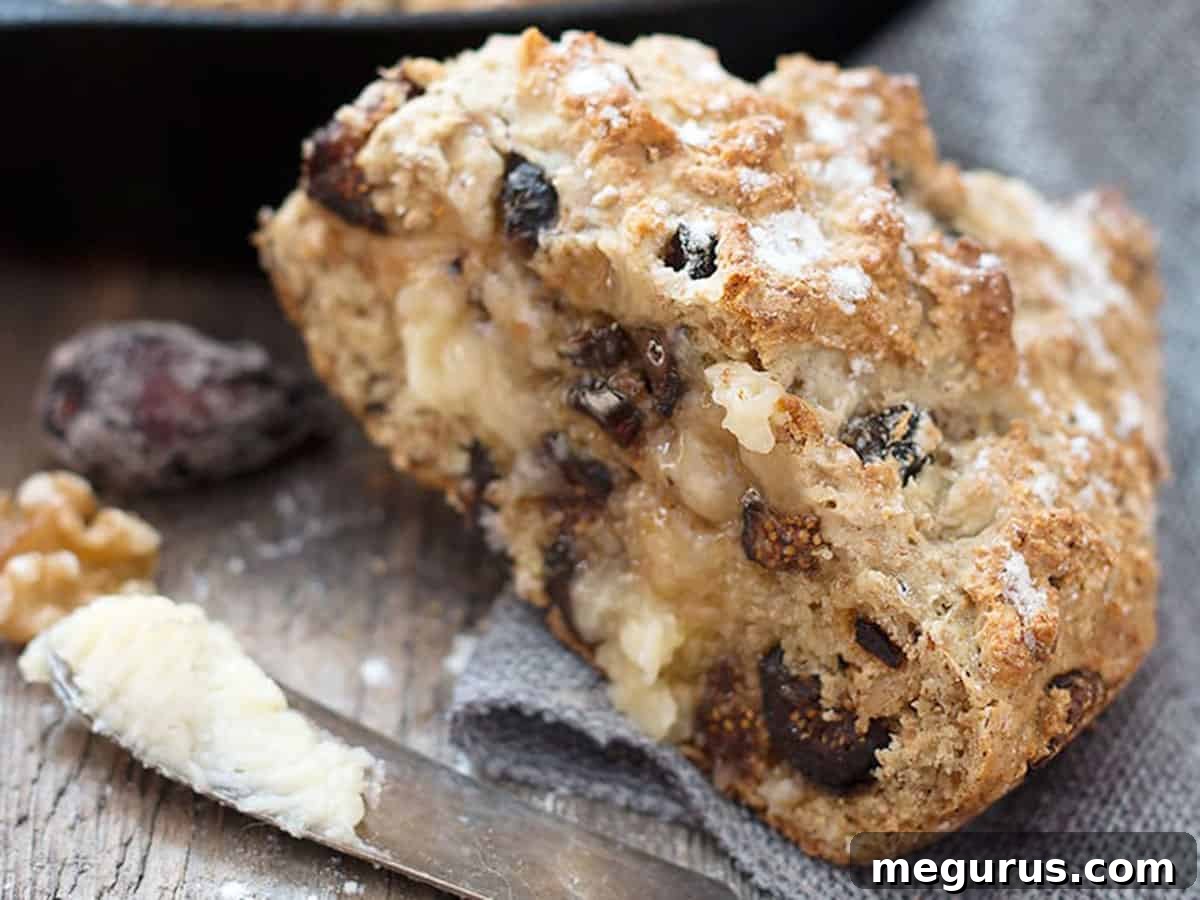
Why You’ll Love This Fig and Walnut Soda Bread
There’s a special kind of satisfaction that comes from baking your own bread, and this Fig and Walnut Soda Bread delivers it in spades. I find myself returning to this recipe every year as St. Patrick’s Day approaches, not just for its seasonal appeal, but because it’s a testament to how effortlessly delicious homemade bread can be. The harmonious blend of sweet, chewy figs and earthy, crunchy walnuts creates a flavor profile that is both unique and deeply comforting, making every slice a memorable treat.
What truly sets this Irish soda bread apart is its understated sweetness. It’s a very lightly sweet bread, subtle enough to complement a savory meal, yet just sweet enough to satisfy a craving for something a little special. This balance is beautifully enhanced by the addition of a simple yet decadent honey butter. Beyond its creamy texture, the touch of sweetness from the honey butter adds that perfect note that ties all the flavors together, elevating the bread from delicious to absolutely divine. It’s a wonderful contrast to the rustic nature of the bread, creating an unforgettable sensory experience that makes it perfect for breakfast, brunch, or a snack with tea or coffee.
The Simple Magic of Soda Bread: A Brief History and Enduring Appeal
Soda bread holds a revered place in Irish culinary tradition, a testament to ingenuity and necessity. Originating in Ireland in the mid-19th century, it became a staple due to its reliance on readily available ingredients and its quick preparation. Unlike yeast breads that require extensive proofing and kneading, soda bread uses bicarbonate of soda (baking soda) as its leavening agent, activated by the acidity of buttermilk. This chemical reaction creates carbon dioxide, causing the bread to rise rapidly and making it an ideal choice for busy households who needed a quick, nourishing loaf.
Traditionally, Irish soda bread was a simple affair, often made with just flour, buttermilk, baking soda, and salt. It was commonly baked in a bastible – a heavy, cast-iron pot – over an open fire. Over time, regional variations emerged, incorporating ingredients like whole wheat flour for a nuttier flavor, or dried fruits and nuts to add richness and texture. Our Fig and Walnut Soda Bread pays homage to this rich heritage while infusing it with a modern, flavorful twist, offering a delightful combination that’s both authentic and exciting. It’s a fantastic way to enjoy the tradition of Irish baking with a unique and delicious spin.
Key Ingredients and Smart Substitutions for Your Loaf
Crafting the perfect Fig and Walnut Soda Bread starts with understanding a few essential components and how they contribute to the loaf’s overall success. Here’s a detailed look at what you’ll need and how to handle any ingredient challenges:
- Buttermilk: This is arguably the most crucial ingredient in authentic soda bread. Real buttermilk offers the ideal acidity to react with the baking soda, creating that characteristic rapid rise and wonderfully tender, crumbly texture. Its natural tang also adds depth to the bread’s flavor. If you find yourself without store-bought buttermilk, don’t fret! You can easily make a homemade substitute that works beautifully for this recipe: simply measure out 2 cups of regular milk (dairy or non-dairy), remove two tablespoons, and replace them with 2 tablespoons of white vinegar or fresh lemon juice. Stir gently and let it sit for 5-10 minutes until it slightly curdles. This DIY buttermilk will provide the necessary acidity.
- Figs: I personally adore using Black Mission Figs for their deep, sweet flavor and beautiful dark color, which adds visual appeal to the bread. However, any type of dried fig will work wonderfully. Whether you choose Turkish, Calimyrna, or another variety, ensure they are soft and plump for the best texture. If your dried figs feel a bit firm, you can rehydrate them slightly by soaking them in warm water for 10-15 minutes, then draining thoroughly and patting them dry before dicing. For those in Canada, Black Mission Figs are often readily available at stores like Bulk Barn, allowing you to purchase just the right amount needed without waste. The chewy texture of the diced figs provides pockets of concentrated sweetness that are a delight in every bite.
- Walnuts: These provide a wonderful earthy crunch and rich, nutty flavor that contrasts perfectly with the sweetness of the figs and the soft bread. For an enhanced flavor, I highly recommend lightly toasting your chopped walnuts in a dry skillet over medium heat for a few minutes until they become fragrant. Be sure to stir them frequently to prevent burning. This optional step truly brings out their inherent nutty essence. If walnuts aren’t your preference, pecans or other nuts like hazelnuts could also be used as a delicious substitute.
- Flour Blend: This recipe cleverly utilizes a combination of both all-purpose flour and whole wheat flour. The all-purpose flour contributes to the bread’s tender crumb and lighter texture, while the whole wheat flour adds a rustic chew, a deeper, nuttier flavor, and a welcome boost of fiber. To ensure accurate measurement and a consistent result, always remember to spoon your flour into the measuring cup and then level it off with a straight edge rather than scooping directly from the bag.
- Baking Powder & Baking Soda: These are your crucial leavening agents in this yeast-free bread. Baking soda reacts primarily with the acidity of the buttermilk, while baking powder (which is double-acting) provides an initial lift and then a secondary lift during baking, ensuring a light and airy texture.
- Sugar & Salt: A modest amount of white granulated sugar provides that very light sweetness we discussed, balancing the robust flavors of the figs and walnuts without making the bread overly sweet. Fine table salt is essential for seasoning and enhances all the other ingredients, bringing them into perfect harmony. Don’t skip the salt!
Expert Tips for Baking Your Best Soda Bread
Achieving a perfectly baked Fig and Walnut Soda Bread is incredibly simple with a few helpful pointers and techniques:
Baking Vessel Options for Optimal Crust
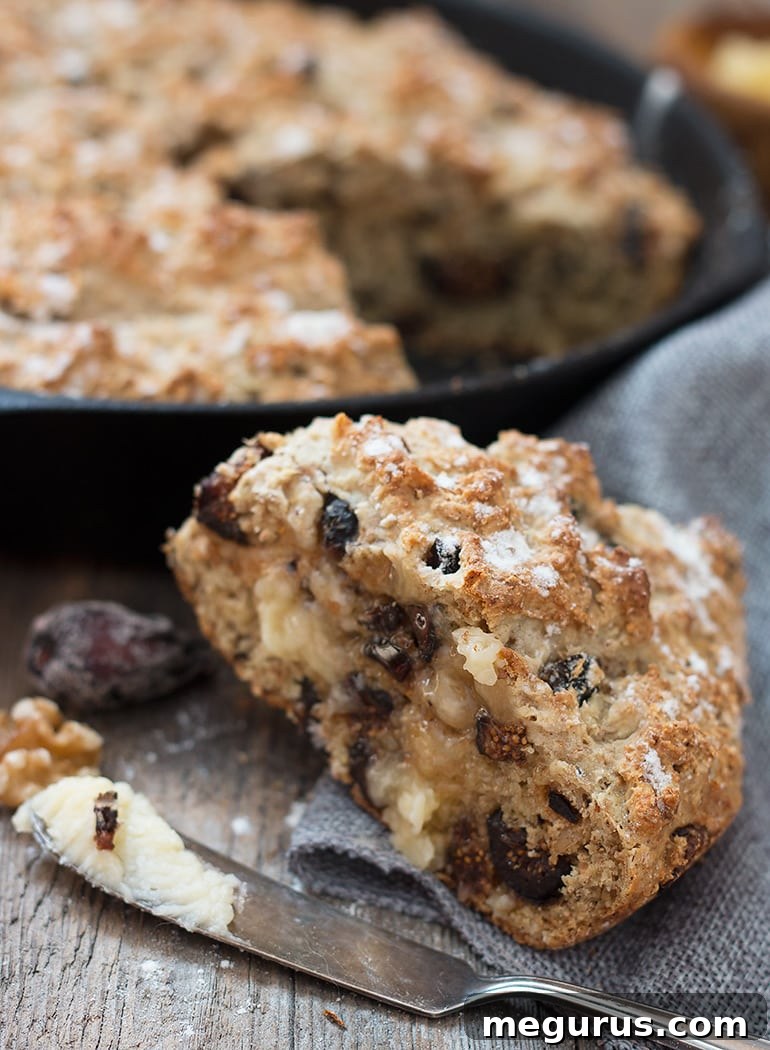
I find baking this bread in a cast iron skillet yields a wonderfully crispy crust and excellent, even heat distribution, as beautifully captured in the photos! My preferred skillet measures 10 inches in top diameter (with an 8-inch diameter at the bottom, which is where the bread actually sits). If you don’t own a cast iron skillet or simply prefer not to use one, a standard 9-inch round baking pan will work just as nicely. Whichever pan you choose, ensure it is adequately greased to prevent any sticking, allowing for easy removal of your freshly baked loaf.
The Essential Honey Butter Serving Suggestion
To truly elevate your soda bread experience, consider mixing up a small bowl of the honey butter before you start baking. Leave it out at room temperature with the warm bread. This ensures it’s perfectly soft and spreadable, making it super convenient for everyone to generously slather onto their slices of the freshly baked loaf. The creamy sweetness of the butter is the ideal complement to the rustic bread.
Do Not Overmix the Dough – A Golden Rule!
One of the most crucial tips for any soda bread recipe is to mix the dough as little as possible. Stir just until the ingredients are combined and a sticky, thick batter forms. Overworking the dough will develop the gluten too much, resulting in a tough, dense bread instead of the tender, crumbly texture that is characteristic of a well-made soda bread. Gentle handling is key.
The Traditional Criss-Cross Cut
Before baking, it’s both traditional and beneficial to score a large, deep cross on the top of the dough. This isn’t just for aesthetics; it serves a functional purpose. The cross helps the bread to rise more evenly, allowing the heat to penetrate the center more efficiently and ensuring it cooks thoroughly from the inside out. Some say it also lets the fairies out!
Checking for Perfect Doneness
Your soda bread is ready when it achieves a beautiful golden-brown color and a skewer or knife inserted into the very center comes out clean. If you notice the top browning too quickly before the inside is fully cooked, simply cover the loaf loosely with a piece of aluminum foil. This will prevent further browning of the crust while allowing the interior to continue baking until done.
Making Ahead, Storing, and Freezing Your Soda Bread
While soda bread is undeniably at its peak freshness and flavor on the day it’s baked, its simple ingredients and robust structure allow for some planning ahead and extended enjoyment:
- Best on Baking Day: For the ultimate experience, enjoy your Fig and Walnut Soda Bread warm from the oven, perhaps with a generous dollop of honey butter. The crust will be perfectly crisp, and the interior wonderfully soft and fragrant. This is when its flavors truly sing.
- Short-Term Storage: If you happen to have any leftovers (a rare occurrence!), allow the bread to cool completely to room temperature before storing. Then, wrap it very tightly in plastic wrap or aluminum foil. It will remain quite good for another day or so at room temperature. For best results on subsequent days, you might gently warm individual slices in a toaster, microwave, or oven before serving to revive some of that fresh-baked appeal.
- Freezing for Later: Soda bread freezes exceptionally well, making it ideal for meal prep, gifting, or simply ensuring you always have a homemade treat on hand. Once completely cooled, wrap the entire loaf or individual slices very tightly in plastic wrap, then add an additional layer of aluminum foil, or place them in a freezer-safe bag, pressing out as much air as possible. It can be stored in the freezer for up to 2 months without significant loss of quality. To enjoy, thaw frozen bread at room temperature, or warm individual slices directly from the freezer in an oven or toaster until heated through.
The Fig and Walnut Soda Bread Recipe
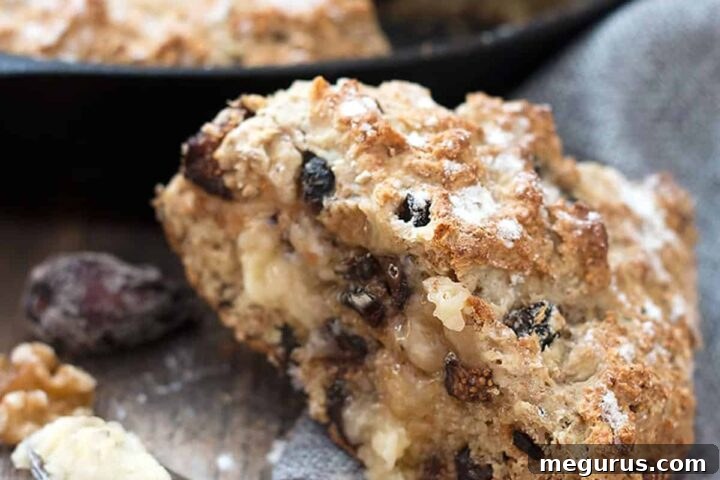
Get the Recipe: Fig and Walnut Soda Bread
This traditional Irish-inspired soda bread is elevated with the delightful combination of sweet figs and crunchy walnuts. It’s incredibly easy to make, requires no yeast or kneading, and pairs perfectly with a homemade honey butter for a truly indulgent experience. Enjoy it fresh from the oven!
Preparation Time: 10 minutes
Cook Time: 25 minutes
Total Time: 35 minutes
Yield: 12 servings
Ingredients
For the Soda Bread:
- 1 1/2 cups all-purpose flour, spooned and levelled
- 1 1/2 cups whole wheat flour
- 3/4 cup walnuts, chopped
- 1/2 cup dried figs, diced (Black Mission figs are recommended)
- 1 Tablespoon baking powder
- 1 Tablespoon white granulated sugar
- 1 teaspoon baking soda
- 1 teaspoon fine table salt
- 2 cups buttermilk (*see notes below for a homemade substitute)
For the Honey Butter:
- 1/3 cup unsalted butter, softened to room temperature
- 2 Tablespoons liquid honey
Instructions
- Preheat your oven to 400°F (200°C), ensuring you use the regular bake setting, not a fan-assisted one, for best results. Lightly grease a 10-inch top diameter cast-iron frying pan or an 8- or 9-inch round baking pan. Set the prepared pan aside.
- In a large mixing bowl, thoroughly whisk together all the dry ingredients: the all-purpose flour, whole wheat flour, chopped walnuts, diced figs, baking powder, granulated sugar, baking soda, and fine table salt. Once combined, create a well in the center of these dry ingredients. Carefully pour the buttermilk into the well.
- Using a wooden spoon or a sturdy spatula, stir the ingredients together until a sticky, thick batter forms. It’s crucial not to overmix the dough; stir just until the dry ingredients are moistened and combined. A few lumps are perfectly acceptable. Scrape the dough into your prepared baking pan, gently pushing it to evenly fill the edges.
- Lightly sprinkle the top of the dough with a bit of extra all-purpose flour. Transfer the pan to the preheated 400°F oven. Bake until the bread is beautifully golden brown on top and a wooden skewer or knife inserted into the very center comes out clean. This typically takes approximately 25-30 minutes. Important Note: After about 20 minutes of baking, check on the bread. If the top appears to be browning too quickly, loosely cover it with a piece of aluminum foil to prevent further browning while the interior continues to cook through.
- Once baked, remove the bread from the oven and allow it to stand in its pan for 5 minutes. Then, run a knife carefully around the edges of the bread to loosen it from the pan. Gently slide the bread onto a wire cooling rack. It’s important to allow the loaf to cool for at least 15 minutes on the rack before attempting to slice it, as this allows the interior to set properly and prevents crumbling.
- For the Honey Butter: In a small bowl, combine the softened butter and liquid honey. Using a fork or a small whisk, mash and mix them together until the mixture is smooth and creamy. This will yield about 1/2 cup of delicious, ready-to-spread honey butter.
Notes and Pro Tips for Success
- No Buttermilk? No Problem! As detailed in the ingredients section, you can easily create a homemade substitute. Simply measure 2 cups of regular milk, remove two tablespoons, and replace with 2 tablespoons of white vinegar or lemon juice. Let it sit for 5-10 minutes to curdle slightly before incorporating it into your recipe.
- Baking Pan Flexibility: While a 10-inch cast iron skillet (with an 8-inch base diameter) is wonderful for a rustic crust, a standard 9-inch round baking pan is a perfectly suitable and common alternative. Choose what you have on hand!
- Serve Honey Butter at Room Temperature: For the best experience, prepare your honey butter ahead of time and ensure it’s at room temperature. This makes it wonderfully soft and spreadable, pairing perfectly with your warm, freshly baked soda bread.
- The Importance of Not Overmixing: Reiterate this golden rule: the key to tender soda bread is minimal handling of the dough. Stir just until the dry and wet ingredients are combined to avoid developing too much gluten, which can lead to a tough loaf.
Cuisine: Irish | Course: Bread | Author: Jennifer Maloney
Nutrition Information (per serving, estimated):
- Calories: 256kcal
- Carbohydrates: 33g
- Protein: 6g
- Fat: 11g
- Saturated Fat: 4g
- Cholesterol: 17mg
- Sodium: 388mg
- Potassium: 300mg
- Fiber: 3g
- Sugar: 9g
- Vitamin A: 225IU
- Vitamin C: 0.2mg
- Calcium: 115mg
- Iron: 1.7mg
More Delicious Soda Bread Recipes to Love!
If you’ve enjoyed the delightful simplicity and rich flavors of this Fig and Walnut Soda Bread, you’re in for a treat! Soda bread is an incredibly versatile and forgiving type of bread, offering endless possibilities for flavor combinations. Here are a couple more beloved soda bread recipes that you might also enjoy adding to your baking repertoire, perfect for any time of the year or for expanding your St. Patrick’s Day feast:
I sincerely hope you enjoy baking and savoring this delightful Fig and Walnut Soda Bread as much as I do. It’s a recipe that truly celebrates simple ingredients coming together to create something extraordinary and comforting. Whether it’s for a special occasion or just a cozy weekend treat, this bread is sure to bring joy to your table. Happy baking, and don’t forget to share your creations!