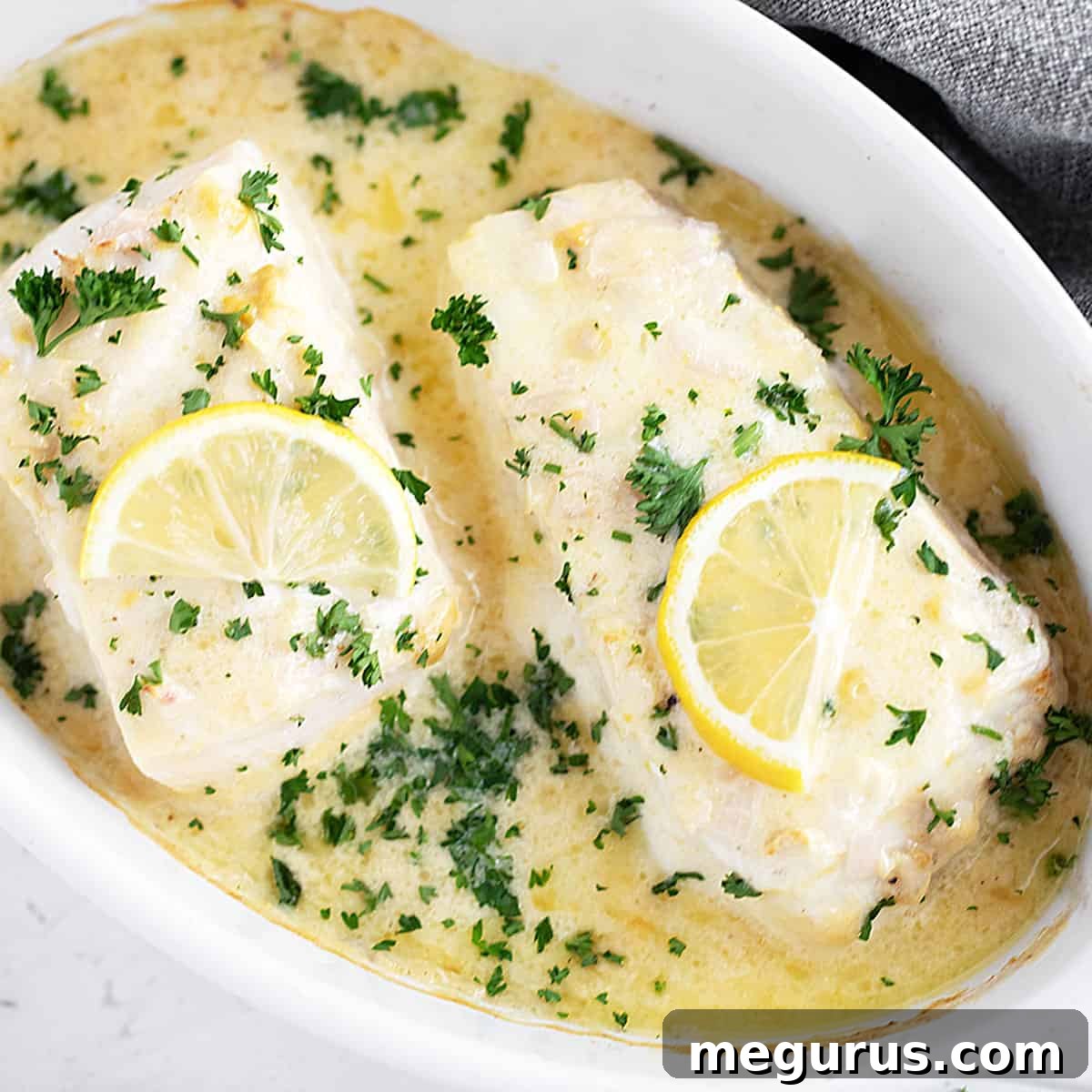
Creamy Lemon Baked Halibut: An Effortless & Elegant 20-Minute Fish Dinner
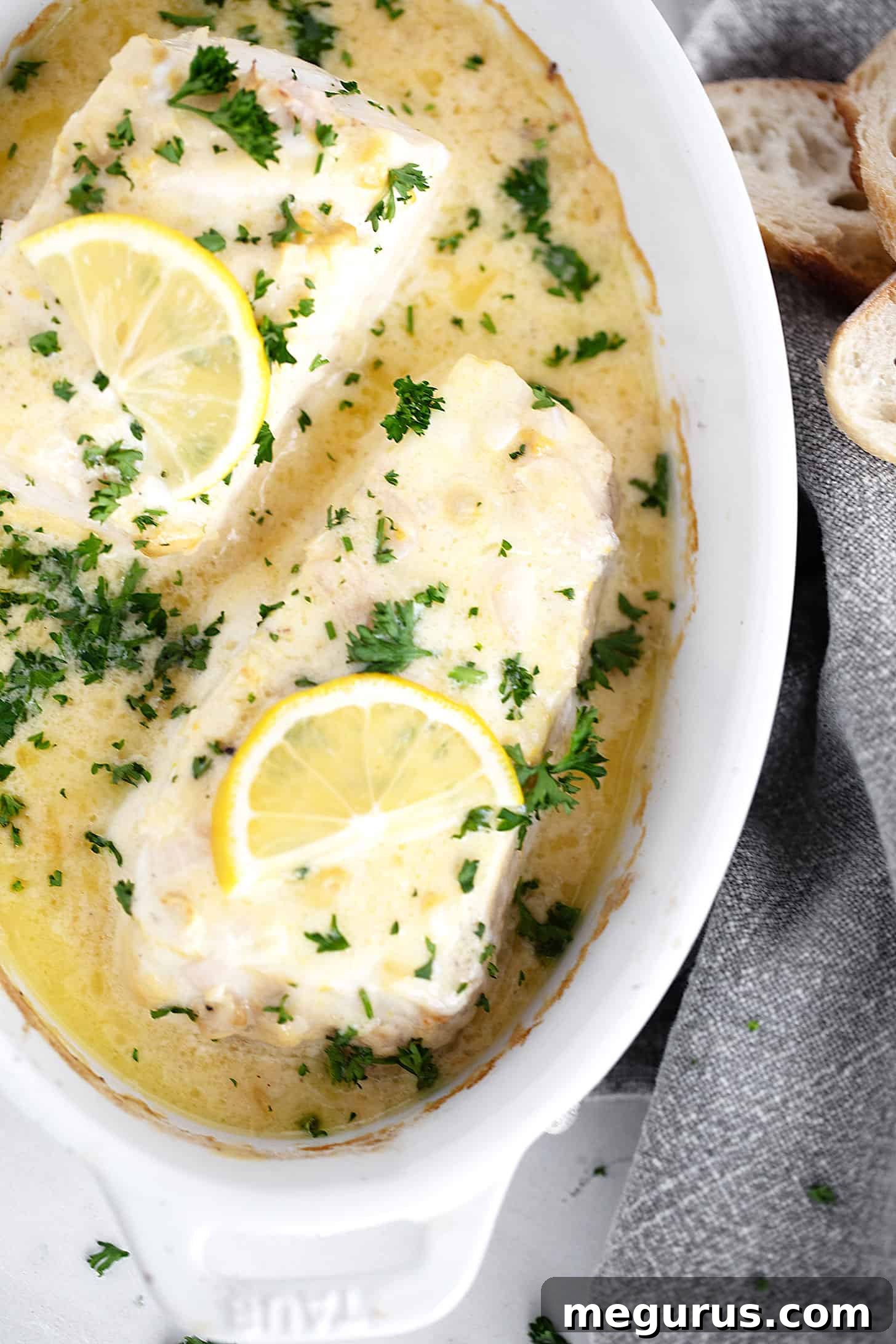
Discover one of the most delightful and simplest ways to enjoy magnificent halibut. This creamy lemon baked halibut recipe promises a restaurant-quality meal in under 20 minutes, making it perfect for both busy weeknights and special occasions. The rich, vibrant sauce, a harmonious blend of fresh lemon, luxurious butter, aromatic garlic, and a hint of Dijon mustard, exquisitely complements the mild, flaky halibut, transforming a simple fish dinner into an unforgettable culinary experience.
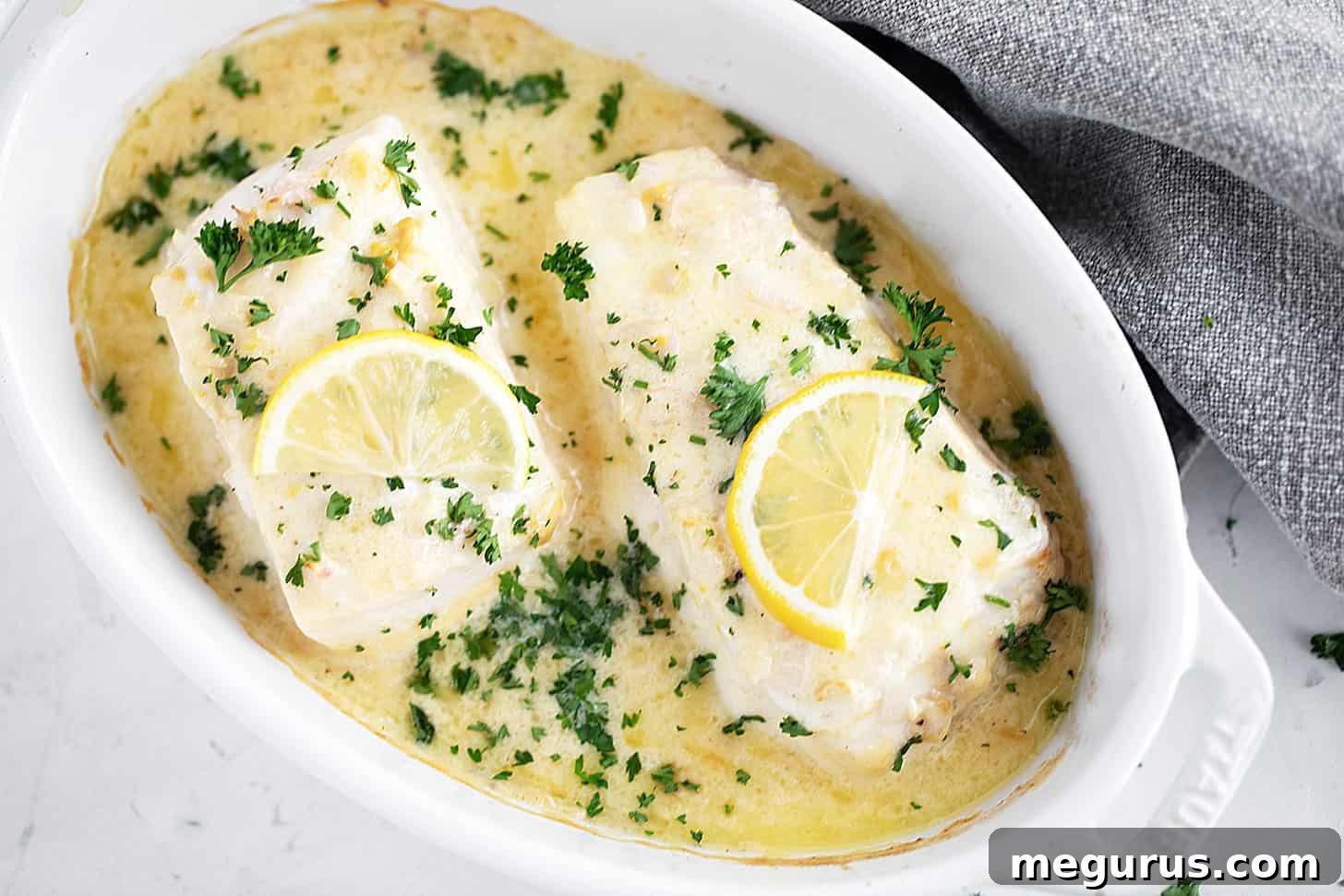
Why Halibut is the Perfect Choice for a Quick & Healthy Meal
Halibut stands out as an exceptional choice for oven-baking due to its distinct characteristics. It boasts a mild, clean flavor profile that readily absorbs the bright, zesty notes of the lemon and the savory depth of the creamy sauce. Its thick, firm fillets maintain their integrity beautifully during cooking, resulting in tender, flaky perfection every time. This recipe capitalizes on halibut’s natural strengths, combining it with finely diced shallots, rich heavy cream, luscious butter, fresh lemon juice, and a touch of Dijon for an irresistible sauce. Simply pour it over the fish, bake, and in just minutes, you’ll have a gourmet meal with minimal effort. Plus, it’s naturally gluten-free, catering to various dietary needs without compromising on flavor or texture.
The beauty of this 20-minute fish dinner lies not only in its incredible ease but also in its ability to deliver truly restaurant-worthy results. Imagine a weeknight meal that feels like a culinary indulgence, yet requires only a handful of ingredients and straightforward steps. This recipe offers exactly that: a luxurious dish that will impress your family and friends, all while keeping your time in the kitchen to a minimum.
Key Ingredients for Your Creamy Lemon Halibut
Crafting the perfect creamy lemon baked halibut begins with selecting quality ingredients. Here’s a closer look at the key components and how they contribute to this dish’s exquisite flavor, along with some helpful substitution tips:
Halibut
- Recommendation: Opt for beautiful, thick halibut fillets, ideally at least 3/4-inch thick. Their robust texture holds up wonderfully during baking, ensuring a moist and flaky result.
- Choosing Fresh Halibut: Look for fillets that are firm, shiny, and have a fresh, mild scent, not “fishy.”
- Using Frozen Halibut: If using frozen fillets, ensure they are completely thawed in the refrigerator overnight or under cold running water. Pat them thoroughly dry with paper towels before seasoning and baking to prevent excess moisture from diluting the sauce or steaming the fish.
- Substitutions: If halibut isn’t available, excellent alternatives include other firm, thick white fish such as cod, snapper, or even thick tilapia fillets. Ensure your chosen fish is at least 3/4-inch thick to prevent overcooking and achieve a similar texture. Avoid thinner, more delicate fish like sole, or fatty fish like salmon or trout, as their oil content can negatively impact the sauce’s consistency and flavor.
Cream
- Recommendation: Heavy whipping cream (35% b.f.) is highly recommended. Its high fat content is crucial for creating a lusciously thick, smooth sauce that resists splitting when combined with acidic lemon juice.
- Lighter Cream Options: You can substitute with a lighter cream, but be aware that the sauce will be thinner and may have a higher tendency to split or curdle due to the lemon’s acidity. While still flavorful, the texture won’t be as velvety.
- Dairy-Free Alternative: For a lower-fat option that’s less prone to splitting than light cream, canned full-fat evaporated milk works surprisingly well. For a completely dairy-free version, a full-fat coconut cream can be used, though it will introduce a subtle coconut flavor profile.
Shallots
- Recommendation: Shallots offer a delicate, sweet, and mild onion flavor that perfectly complements the fish without overpowering it. Finely dicing them allows their flavor to infuse evenly into the sauce.
- Substitutions: If shallots are not on hand, a small amount of finely minced regular yellow onion or even a milder sweet onion can be used as a substitute. Use slightly less onion than shallots to ensure the flavor remains balanced.
Lemon
- Recommendation: Freshly-squeezed lemon juice is paramount for the brightest, most vibrant flavor. The zest of half a lemon can also be added to the sauce for an even more intense citrus aroma.
- Avoid Bottled Juice: Bottled lemon juice often contains preservatives and lacks the fresh, aromatic quality of real lemons, which can detract from the dish’s overall taste.
Dijon Mustard
- Recommendation: Smooth Dijon mustard adds a subtle tang and depth, acting as a natural emulsifier that helps bind the sauce ingredients together. It’s a key ingredient for the sauce’s well-rounded flavor.
- Substitutions: While smooth Dijon is preferred, a grainy Dijon can work for a slightly different texture, though it might make the sauce less smooth. Avoid yellow American mustard, as its flavor profile is too distinct and will not yield the desired result.
Parsley
- Recommendation: Freshly chopped parsley is the ideal garnish, providing a pop of color and a fresh, herbaceous finish that brightens the dish.
- Optional Herbs: For an extra layer of flavor, a small amount of fresh tarragon pairs beautifully with fish and lemon. You can also experiment with finely chopped chives or a hint of dill.
How to Prepare Creamy Lemon Baked Halibut: A Step-by-Step Guide
Achieving this restaurant-quality dish is incredibly simple, thanks to straightforward steps. Here’s a visual summary to guide you through the process:
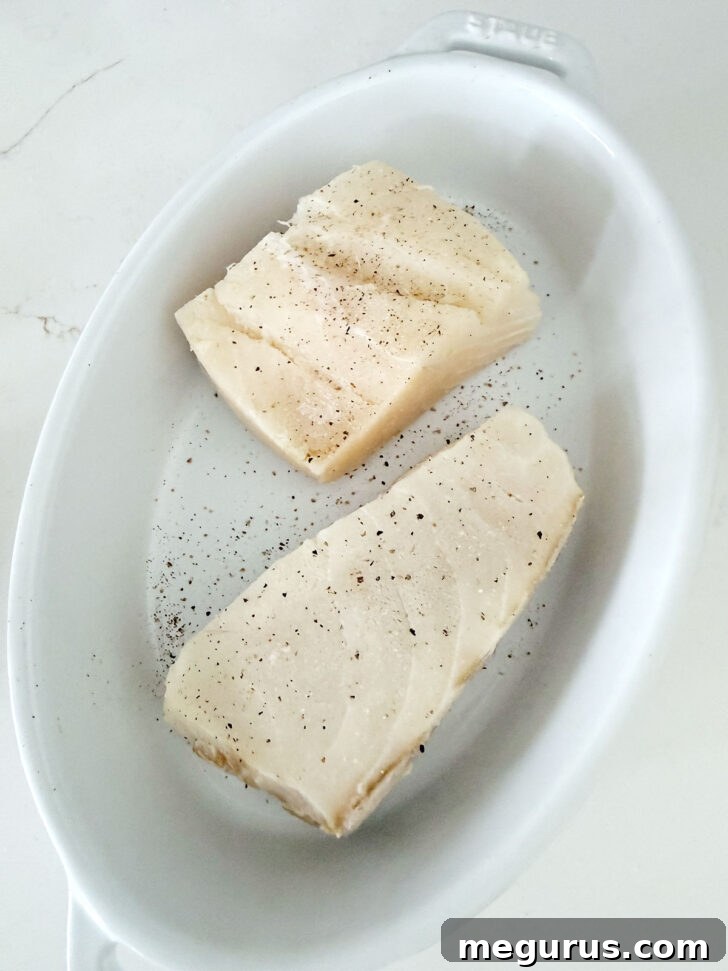
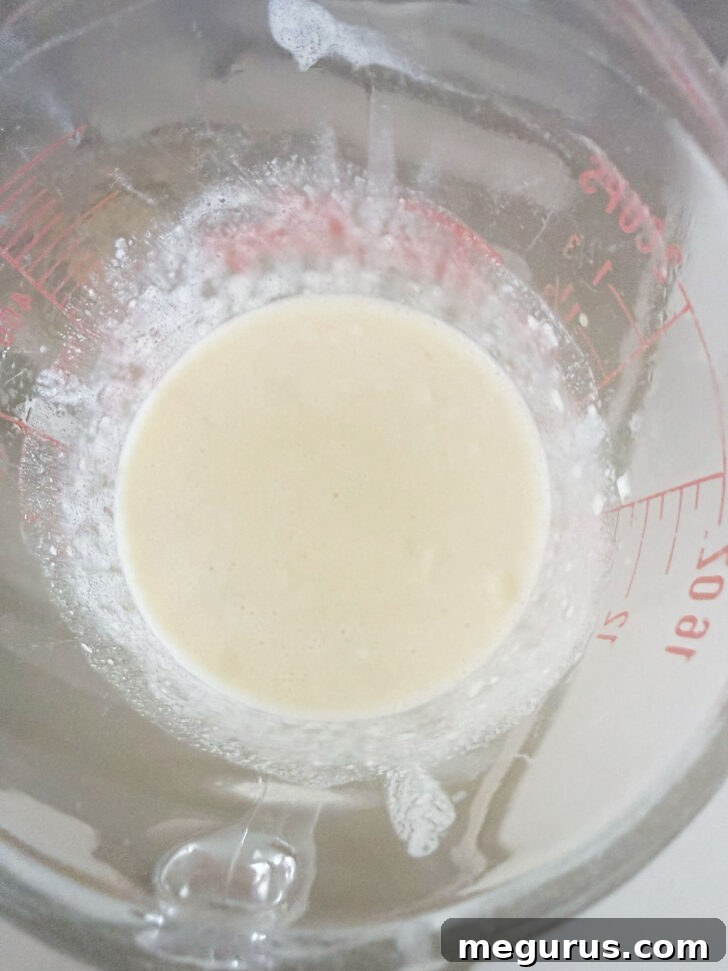
- Preheat Oven and Prepare Fish: Preheat your oven to 400°F (200°C) for even baking. Pat your halibut fillets thoroughly dry with paper towels to ensure a beautiful sear and prevent excess moisture from entering the sauce. Season both sides generously with salt and freshly ground black pepper. Arrange the seasoned fillets in a baking dish that is just large enough to hold them comfortably, allowing a small amount of space between each piece.
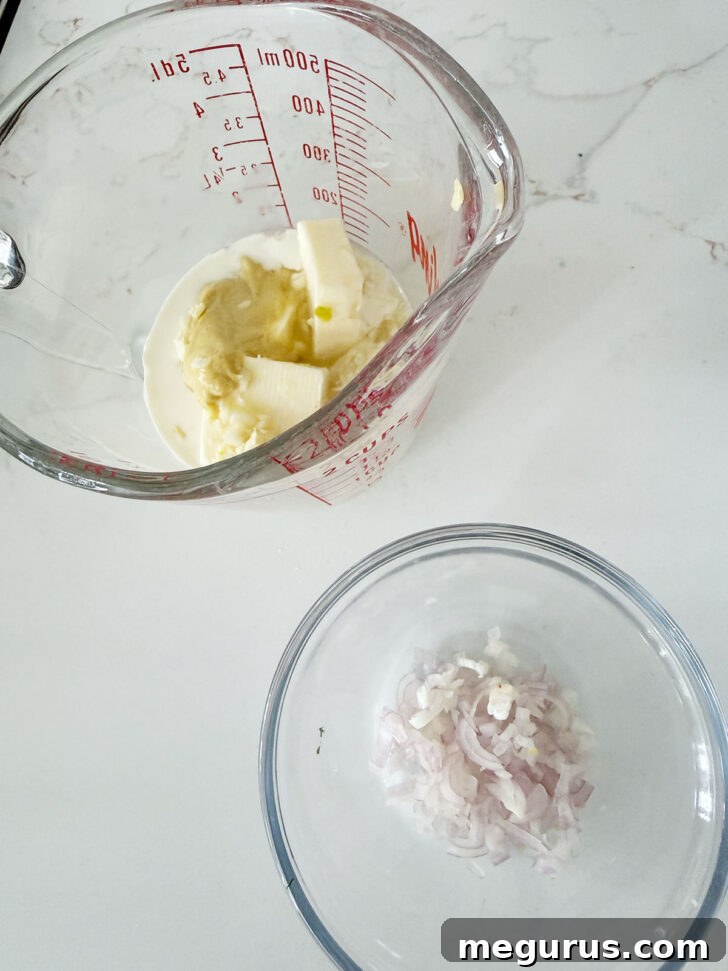
- Dice Shallots and Prepare Sauce Ingredients: Finely dice the shallots and set them aside. In a microwave-safe bowl or measuring cup, combine all the creamy lemon sauce ingredients: butter, heavy whipping cream, minced garlic, Dijon mustard, and freshly squeezed lemon juice. Add a pinch of salt and pepper to the sauce, adjusting later if using salted butter.
- Heat the Sauce: Gently heat the sauce mixture. You can do this in the microwave for 30-second intervals, stirring well after each, until the butter is fully melted and the sauce is smooth and well combined. Alternatively, heat the sauce in a small saucepan over medium-low heat on the stovetop, stirring continuously until melted and smooth. The goal is to warm it slightly and dissolve the butter, not to bring it to a boil.
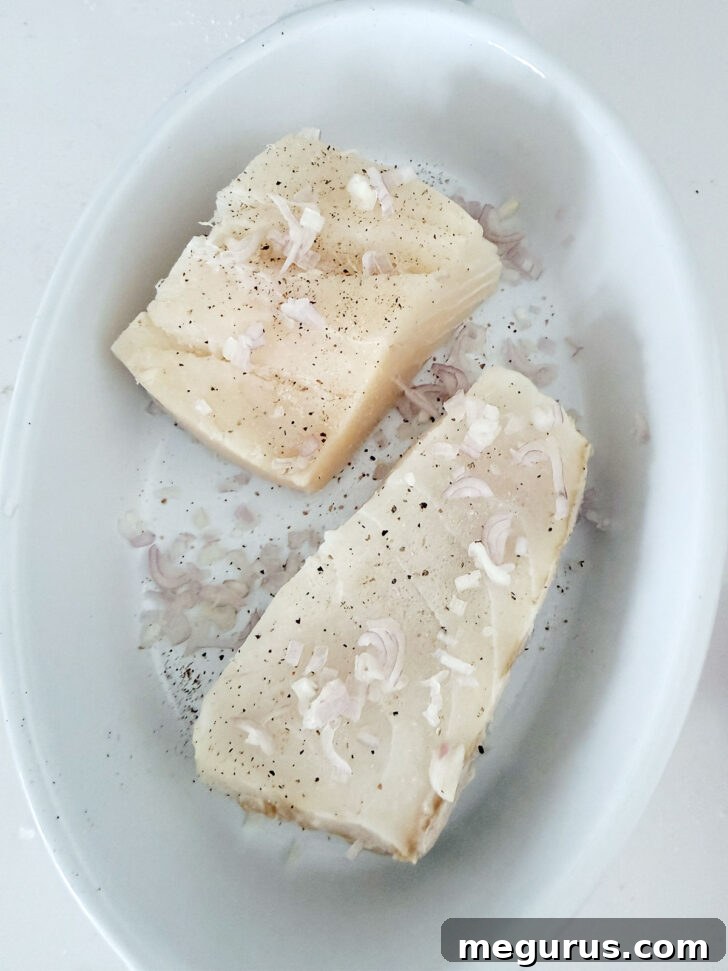
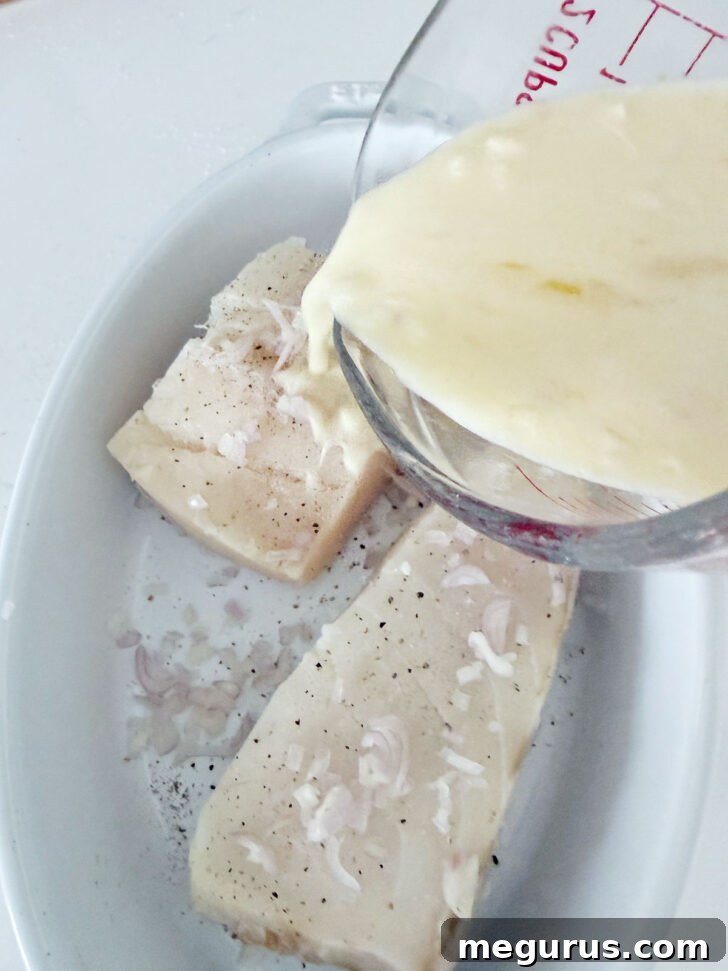
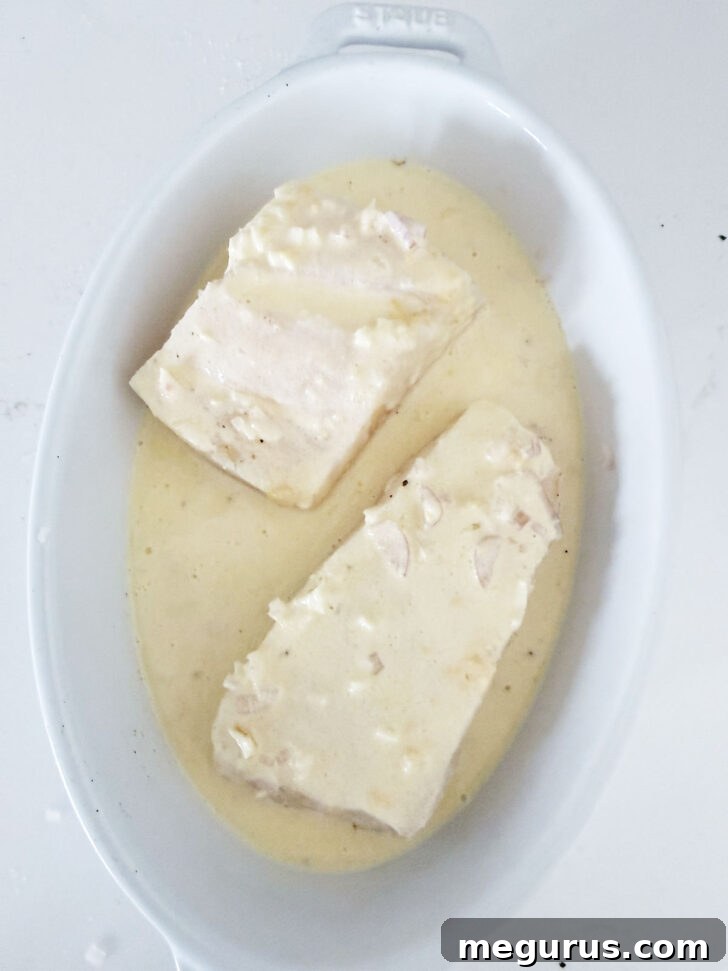
- Add Shallots to Fish: Evenly scatter the finely diced shallots over and around the seasoned halibut fillets in the baking dish. These will soften and contribute a wonderful aromatic sweetness to the sauce as it bakes.
- Pour Over the Creamy Lemon Sauce: Carefully pour the warmed creamy lemon sauce over the halibut fillets. Ensure the sauce generously covers the fish and fills the bottom of the baking dish. At this stage, the sauce will be thin, but it will slightly thicken and develop deeper flavors as it cooks with the fish.
- Bake to Perfection: Transfer the baking dish to your preheated oven. Bake for approximately 10-20 minutes, or until the fish is tender, opaque throughout, and flakes easily when gently pulled with a fork. Cooking time will vary depending on the thickness of your fillets; a good rule of thumb is about 10 minutes per inch of thickness. For ultimate precision, use an instant-read thermometer inserted into the thickest part of the fish, aiming for an internal temperature of 145°F (63°C). The finished sauce will have a pleasant, spoonable consistency, perfect for drizzling over the fish and any accompanying sides.
Expert Tips for a Flawless Creamy Lemon Halibut
- Understanding Sauce Consistency: The sauce for this dish is designed to be a delightful, spoonable consistency, not thick like gravy. It will naturally thicken slightly as it bakes and cools. If you find your sauce is too thin (often due to excess liquid from thinner fish or insufficient fat in the cream), you can carefully remove the cooked fish from the baking dish and return the dish to the oven for an additional 2-3 minutes, watching closely, to allow the sauce to reduce slightly. Alternatively, a small pat of butter swirled in at the end can add richness and a touch more body.
- Choosing the Right Fish: While adaptable, this recipe shines with thick, firm white fish. Avoid very thin or delicate fillets like sole, as they can overcook quickly and fall apart. Similarly, very fatty fish like salmon or trout can release too much oil, which might separate from the sauce and create an undesirable texture. Stick to robust options like cod, snapper, or thicker tilapia for best results.
- Precision in Cooking Time: Oven times are approximate and can vary based on your oven’s calibration and the exact thickness of your fish. Always rely on visual cues (opaque flesh, easy flaking) and, ideally, an instant-read thermometer. Overcooked fish becomes dry and tough, so it’s better to undercook slightly and check again.
- Thawing Frozen Fish Properly: If using frozen halibut, ensure it’s fully thawed before cooking. The best method is to thaw it in the refrigerator overnight. If you’re short on time, place the vacuum-sealed fish in a bowl of cold water, changing the water every 30 minutes, until thawed. Always pat the fish very dry before seasoning and baking.
- Enhance the Citrus: For an even brighter lemon flavor, consider adding a teaspoon of fresh lemon zest to the sauce mixture before heating. The zest contains essential oils that impart a more intense aromatic quality.
- Meal Prep Potential: While best served fresh, this dish can be partially prepped. You can mince the shallots and combine all sauce ingredients (except the lemon juice, which is best added just before heating) a day in advance and store them in the refrigerator.
- If you love creamy sauces, be sure to try my Coconut Milk Fish next for another delectable fish experience!
Delightful Serving Suggestions
This creamy lemon baked halibut is incredibly versatile and pairs wonderfully with a variety of side dishes. Here are some ideas to complete your meal:
- Green Vegetables: Complement the rich sauce with something fresh and crisp. Steamed or roasted green beans, tender broccoli, or delicate broccolini are excellent choices. A simple side salad, like my Broccoli Caesar Salad, also offers a fantastic contrast.
- Grains: For a satisfying starch, fluffy white rice or a lemon-herb infused rice pilaf is a superb option, perfect for soaking up every last drop of the creamy sauce. Quinoa or couscous also work well for a lighter alternative.
- Potatoes: Creamy mashed potatoes, roasted baby potatoes with herbs, or even crispy potato wedges offer a comforting and delicious pairing.
- Crusty Bread: A warm, crusty baguette is ideal for mopping up the delectable sauce, ensuring no flavor goes to waste.
- Wine Pairing: A crisp, dry white wine like Sauvignon Blanc, Pinot Grigio, or an unoaked Chardonnay would beautifully complement the lemon and cream notes in the dish.
Flavorful Variations to Explore
While this creamy lemon baked halibut recipe is perfect as is, it’s also a fantastic canvas for creative culinary experimentation. Here are some ideas to change it up and personalize the flavors:
- Add Fresh Herbs: Beyond parsley, consider incorporating a sprinkle of fresh dill or tarragon into the sauce before baking for an aromatic twist. Fresh chives, finely snipped, also make a lovely addition.
- Introduce Capers: For a briny, tangy kick, scatter a tablespoon or two of drained capers into the baking dish before baking. They add a wonderful complexity that pairs exceptionally well with lemon and fish.
- Spice it Up: A tiny pinch of red pepper flakes in the sauce can introduce a subtle warmth without making the dish overtly spicy. A dash of smoked paprika can also add depth and a beautiful hue.
- Mediterranean Flair: Add a handful of cherry tomatoes, halved, and some Kalamata olives to the baking dish alongside the fish for a Mediterranean-inspired twist.
- Cheesy Indulgence: A light sprinkle of freshly grated Parmesan cheese over the fish during the last 5 minutes of baking can create a golden, cheesy crust.
- Creamy Spinach Base: Wilt a bed of fresh spinach in the baking dish before adding the fish and sauce for an added layer of greens and flavor.
Recipe Card: Creamy Lemon Baked Halibut
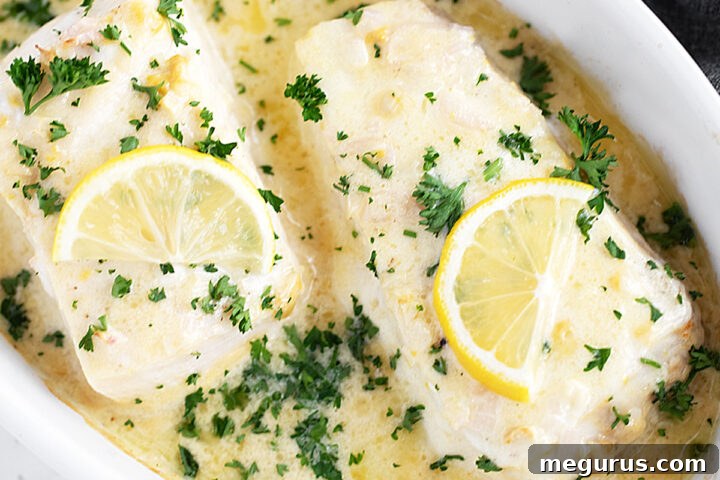
Get the Recipe: Creamy Lemon Baked Halibut
A super easy and fabulously delicious way to enjoy great fish! Lovely, thick halibut fillets are combined with a creamy lemon and mustard sauce that bakes completely in the oven.
Pin This
Leave a Review
Prep Time: 5 mins
Cook Time: 15 mins
Total Time: 20 mins
Yield: 2 servings
Ingredients
- 8-12 oz thick halibut fillets, fresh or thawed frozen (two 4-6oz fillets)
- salt and freshly ground pepper, to taste
- 2 Tablespoons shallot, peeled and finely diced (or onion)
For the sauce:
- 1/4 cup butter, unsalted recommended
- 1/4 cup heavy whipping cream, 35% b.f. (see Note 1 below)
- 2 cloves garlic, minced
- 1 Tablespoon Dijon mustard
- 1 1/2 Tablespoons lemon juice, freshly-squeezed recommended
- salt and freshly ground pepper, as needed (use less if using salted butter)
To serve:
- parsley, finely chopped
- fresh lemon slices, cut in half-moon
Instructions
- Preheat oven to 400°F (non-convection/not fan-assisted).
- Tip! If using thawed frozen fish, thaw completely, then pat dry really well with a paper towel to remove any excess moisture.
- Pat the halibut fillets dry and season with a bit of salt and pepper. Place into a baking dish that is not too large, but allows the fish to have a bit of room between the fillets. Scatter the shallots over the fish and into the baking dish. Set aside.
- Add the sauce ingredients to a microwaveable bowl or a small saucepan on the stovetop. Microwave the sauce for 30 seconds, stir, then microwave about 15 seconds more or until the butter is melted and the sauce is smooth. (For the stovetop, heat over medium heat, stirring, until the butter is melted and the sauce is smooth.)
- Pour the sauce over the top of the fish, allowing it to spill over into the baking dish. (The sauce will be thin at this point, but it will thicken a bit as it cooks with the fish.) Place into the preheated oven and cook until cooked through, 10-20 minutes, depending on the thickness of the fish (count on about 10 minutes for every inch of thickness). The fish should register 145°F internal temperature when tested with an instant-read thermometer, or look for the fish to be opaque, and it should flake easily with a fork. The finished sauce should have thickened, but it won’t ever be super thick or gravy-like. It is a perfect consistency for spooning over the fish. See the Recipe Tips section if you’d like a bit thicker sauce.
- To serve, sprinkle with parsley and place a half-moon lemon slice on top of the fish, if you like. Finish with a bit more salt and pepper, to taste.
Notes
Nutritional information based on two 6oz halibut fillets.
Note 1: Heavy whipping cream is recommended as the higher fat content prevents the sauce from splitting when combined with acidic lemon juice. While you can use a lighter cream, the sauce may split. It will still taste fine, but will be less smooth. Canned full-fat evaporated milk is a decent lower-fat alternative.
Tips!
The finished sauce should be a perfect consistency if using halibut, as it is a firm fish and doesn’t release a lot of liquid as it cooks. If you are using another type of fish that releases more liquid, your sauce may be thinner. If you’d like to thicken the sauce slightly, remove the fish from the baking dish and return the baking dish to the oven for a couple of minutes (watch closely!).
This recipe is adaptable to other fish options, but avoid thin and tender fish fillets such as sole. Salmon and trout won’t fare well as they are too fatty and will make a poor sauce. Thick fillets of cod, tilapia or snapper are good options for this cooking method.
Be sure to read the notes above this Recipe Card for more tips, substitution suggestions and step-by-step photos that you might find helpful.
Cuisine: American, Canadian
Course: Main Course
Author: Jennifer Maloney
Serving: 1 serving, Calories: 478 kcal, Carbohydrates: 5g, Protein: 34g, Fat: 36g, Saturated Fat: 22g, Polyunsaturated Fat: 2g, Monounsaturated Fat: 10g, Trans Fat: 1g, Cholesterol: 178mg, Sodium: 390mg, Potassium: 843mg, Fiber: 1g, Sugar: 2g, Vitamin A: 1267IU, Vitamin C: 6mg, Calcium: 53mg, Iron: 1mg
Tried this recipe? If you enjoyed this recipe, please consider leaving a star rating and comment. It helps others to find it!
Adapted from a Recipe Tin Eats recipe
More Delicious Fish Recipes to Love!
Frequently Asked Questions (FAQs) About Creamy Lemon Baked Halibut
Q: Can I use frozen halibut for this recipe?
A: Absolutely! Many people use frozen halibut, and it works wonderfully in this recipe. The most important step when using frozen fish is to ensure it is completely thawed before cooking. Thaw it overnight in the refrigerator, or for a quicker method, place the vacuum-sealed fish in a bowl of cold water, changing the water every 30 minutes until fully thawed. Once thawed, pat the fillets very, very dry with paper towels. Removing excess moisture is crucial for achieving a good texture and preventing a watery sauce.
Q: How do I know when the halibut is perfectly cooked?
A: Halibut is cooked when its flesh turns opaque throughout and flakes easily when gently prodded with a fork. The best way to ensure perfect doneness without overcooking is to use an instant-read thermometer. Insert it into the thickest part of the fillet; it should register an internal temperature of 145°F (63°C). Cooking times can vary based on your oven and the exact thickness of your fish, so always rely on these indicators rather than just the clock.
Q: My sauce seems a bit thin; how can I thicken it?
A: The sauce for this dish is designed to be a light, spoonable consistency, not gravy-thick. However, if it’s thinner than you’d prefer, particularly if using a fish that releases more liquid than halibut, you have a couple of options. Once the fish is cooked, carefully remove the fillets from the baking dish and set them aside. Return the baking dish with the sauce to the oven for 2-3 minutes, watching closely, to allow the sauce to reduce and thicken slightly. Alternatively, for a richer, slightly thicker sauce, swirl in a small pat of cold butter (about 1 teaspoon) into the warm sauce after removing it from the oven.
Q: Can I prepare this dish ahead of time?
A: While this creamy lemon baked halibut is best enjoyed fresh from the oven, you can do some prep work in advance. You can finely dice your shallots and mince the garlic a day beforehand. The sauce ingredients (butter, cream, garlic, Dijon) can also be combined and stored in the refrigerator, but it’s best to add the fresh lemon juice just before heating and pouring over the fish to maintain its vibrant flavor. The fish itself should be seasoned and baked immediately before serving for optimal taste and texture.
Q: Is this recipe genuinely gluten-free?
A: Yes, this creamy lemon baked halibut recipe is naturally gluten-free! All the ingredients listed, including halibut, heavy cream, butter, lemon, shallots, garlic, and Dijon mustard, are inherently free of gluten. This makes it a wonderful option for those with celiac disease or gluten sensitivities, offering a delicious and safe meal without any modifications.