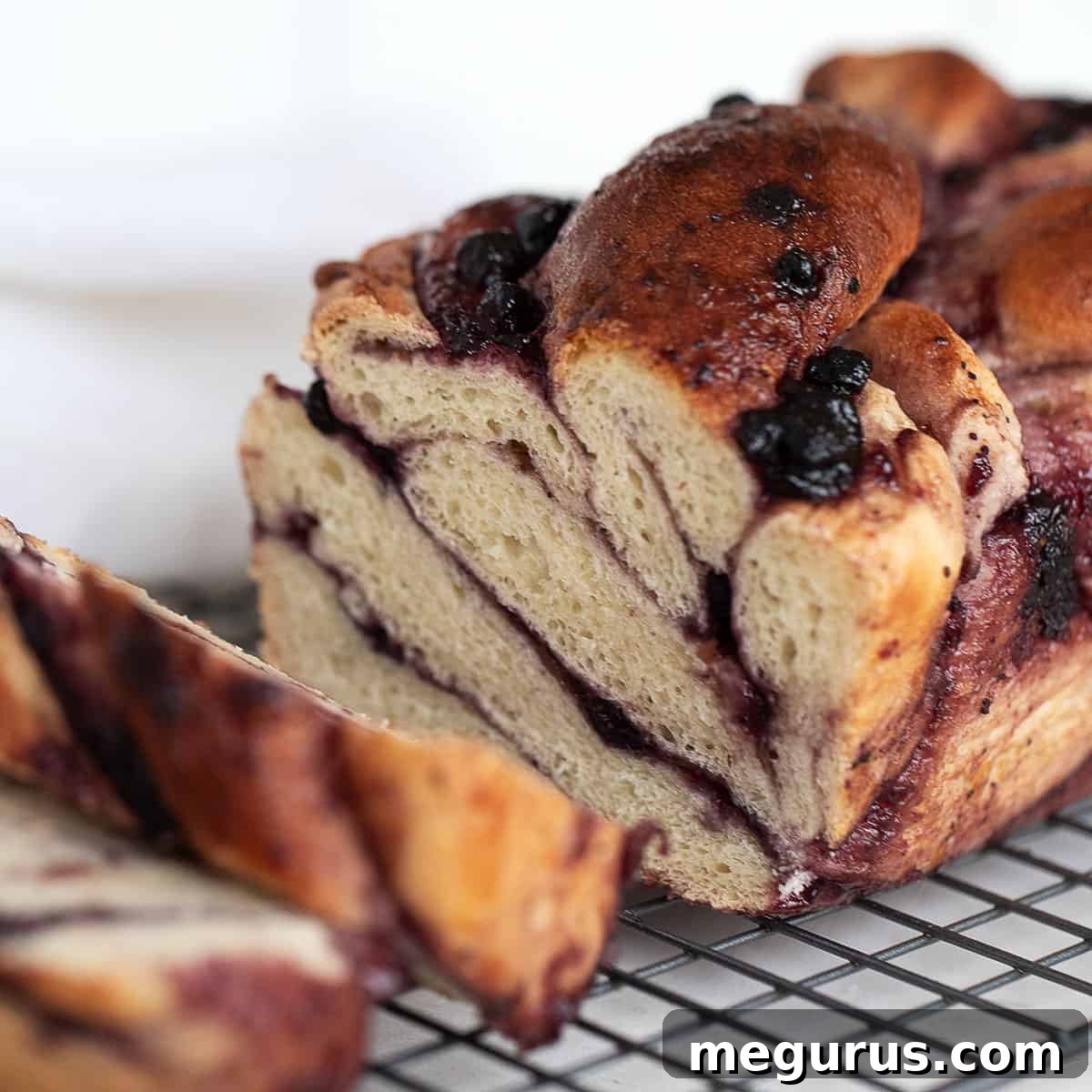
There’s nothing quite like the aroma of freshly baked bread filling your home. But imagine a bread that comes with its own delectable filling, beautifully swirled throughout each slice. That’s precisely what you get with our irresistible **Blueberry Swirl Bread** – a delightful yeast bread infused with sweet and tangy blueberry jam. It’s a truly delicious and visually appealing loaf that promises to elevate your breakfast, brunch, or snack time. Enjoy it simply with a pat of butter, or toast it to perfection for an extra layer of warmth and crunch.
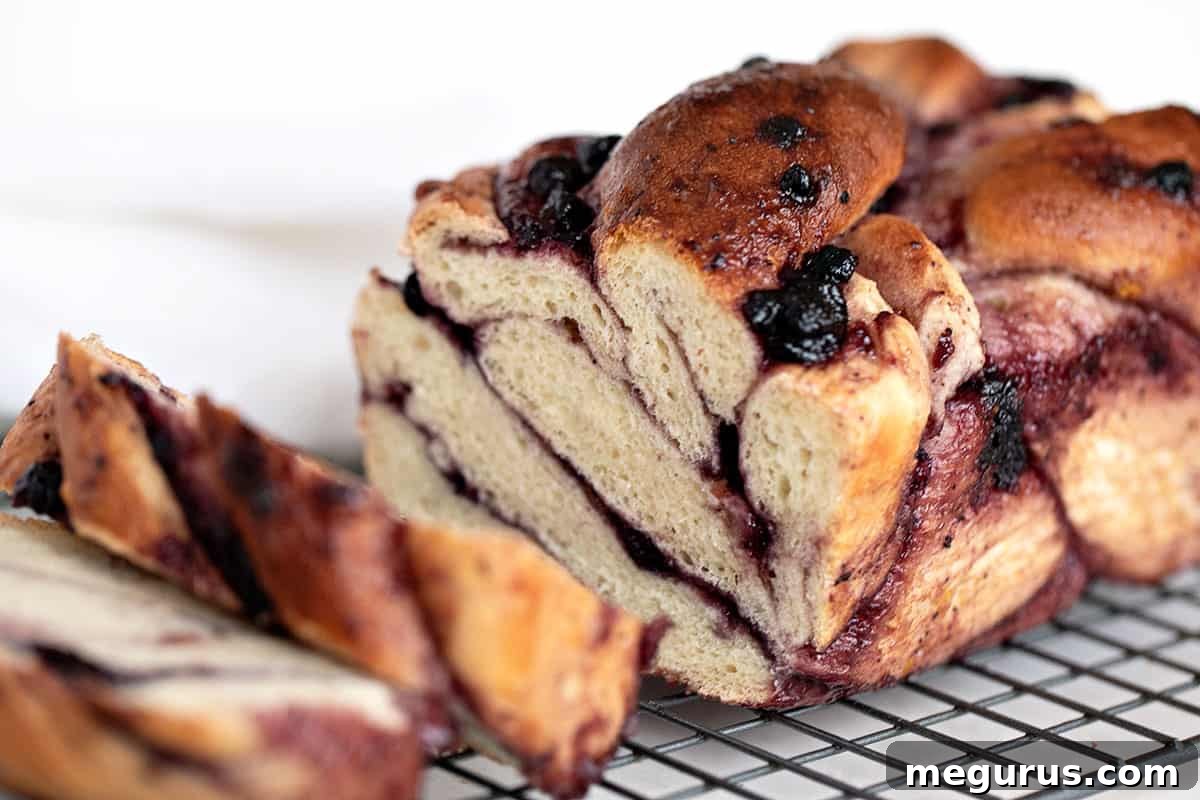
Forget the hassle of spreading jam onto your bread; with this recipe, the jam is already IN the bread! Each tender, fluffy slice reveals a vibrant ribbon of fruity goodness, making every bite a joy. This elegant and flavorful swirl bread isn’t just pretty to look at; it also makes the absolute best toast, transforming an ordinary morning into a special culinary experience. It’s perfect for those lazy weekend mornings or as a comforting treat any day of the week.
While we’ve highlighted luscious blueberry jam for this recipe, the beauty of this bread lies in its versatility. Feel free to use any jam you adore! Whether it’s a classic strawberry, a tart raspberry, or a sweet apricot, simply choose your favorite flavor and get ready to bake a loaf that’s uniquely yours. The possibilities are endless, and the result is always a delightful, jam-packed surprise.
Why You’ll Love This Homemade Swirl Bread
This Blueberry Swirl Bread isn’t just another bread recipe; it’s an experience. Here’s why it’s sure to become a staple in your kitchen:
- **Stunning Presentation:** The gorgeous swirl of jam running through the soft bread makes for an impressive presentation, perfect for sharing with guests or simply brightening your own day.
- **Flavorful and Fruity:** Each bite offers the perfect balance of rich yeast bread and bursts of sweet, tangy fruit jam. The flavors meld beautifully, creating a harmonious taste sensation.
- **Incredibly Versatile:** Enjoy it for breakfast, as a delightful snack, or even a light dessert. It pairs wonderfully with coffee, tea, or a tall glass of milk.
- **Therapeutic Baking Process:** While shaping might seem intricate, the process of creating this beautiful loaf is incredibly rewarding. There’s a special satisfaction in seeing the swirl come to life.
- **Customizable:** As mentioned, you can easily swap blueberry jam for any other jam flavor, allowing you to tailor the bread to your personal preferences or what’s in season.
Diving into the Key Ingredients
Crafting the perfect Blueberry Swirl Bread starts with understanding the role of each ingredient. Here are some quick notes on what you’ll need and potential substitutions:
Jam – The star of our swirl! As noted, you have complete freedom here. A **thicker jam** will generally work best for shaping, as it tends to stay in place more effectively when you roll and twist the dough. For example, a chunky fruit blueberry jam will create beautiful pockets and streaks of fruit. If you opt for a smoother or runnier jam, don’t fret; it might spread a bit more and become more absorbed into the bread, resulting in a more subtle swirl rather than distinct lines. Both outcomes are equally delicious, so choose based on your preference for a pronounced fruity top or a more integrated flavor. Consider homemade jams for an extra special touch, or high-quality store-bought varieties.
Yeast – This is the leavening agent that gives our bread its characteristic rise and soft texture. For this classic two-rise yeast bread recipe, you can use either **Active Dry Yeast** or **regular Instant Yeast** (such as SAF Brand). It’s crucial to avoid using “Quick Rise” or “Rapid Rise” instant yeast. These types are formulated to work much faster and don’t typically perform well in recipes requiring longer proofing times, which are essential for developing the complex flavors and superior texture of a traditional yeast bread. Ensure your yeast is fresh by checking the expiration date; expired yeast can lead to a flat, dense loaf.
Flour – The backbone of your bread. Unbleached bread flour or all-purpose flour will both work beautifully. **Bread flour** has a higher protein content, which develops more gluten, giving the bread a chewier texture and better structure. **All-purpose flour** will result in a slightly softer, more tender crumb. The amount of flour needed can vary based on factors like humidity, altitude, and how you measure your flour. Always start with the recommended amount and add more gradually, until your dough reaches the ideal consistency – smooth, moist, and elastic, cleaning the sides of the bowl without being overly sticky.
Lukewarm Water & Buttermilk/Milk – These liquids activate the yeast and hydrate the flour. The lukewarm temperature (around 95°F / 35°C) is ideal for yeast activity. Buttermilk or milk adds richness and tenderness to the dough. If you don’t have buttermilk, you can make a substitute by adding a tablespoon of lemon juice or white vinegar to regular milk and letting it sit for 5-10 minutes until it slightly curdles.
Fine Salt – Essential for enhancing the flavor of the bread and controlling yeast activity. If using salted butter, you might want to slightly reduce the amount of added salt.
White or Brown Sugar – Provides food for the yeast, aids in browning, and contributes to the bread’s delightful sweetness. Brown sugar will add a subtle molasses note.
Unsalted Butter or Vegetable Oil – Adds richness, moisture, and tenderness to the bread. Melted butter will give a wonderful flavor, while vegetable oil provides a neutral taste and keeps the bread soft.
Optional Lemon Zest – A little grated lemon zest can brighten the flavor of the blueberry jam, adding a wonderful citrusy counterpoint that truly enhances the overall taste profile. It’s a small addition that makes a big difference.
Mastering the Swirl: A Step-by-Step Shaping Guide
Don’t be intimidated by the beautiful swirl! While it might look complex, the shaping process is quite achievable and incredibly satisfying. Follow these detailed steps to create your gorgeous Blueberry Swirl Bread:
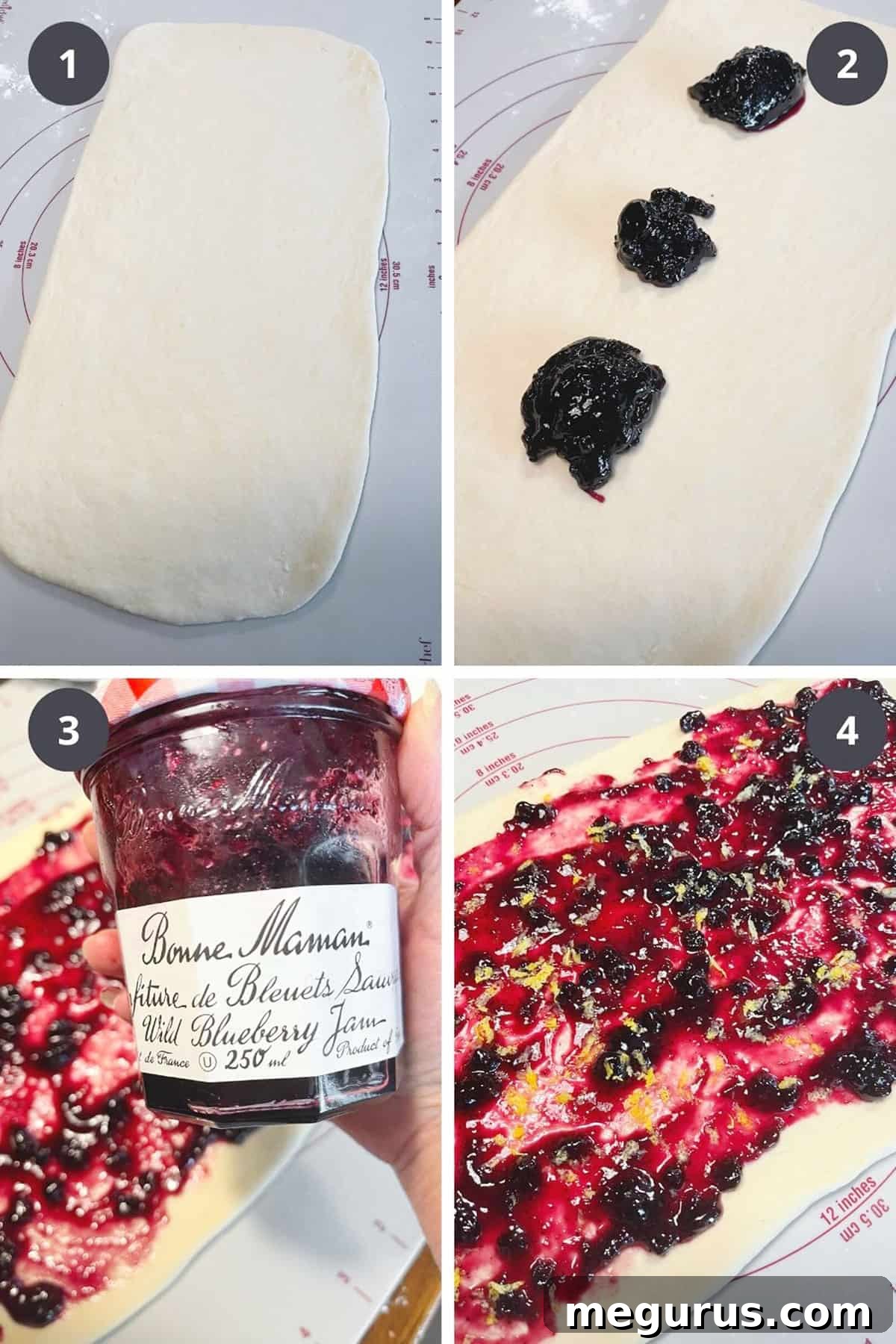
- After your dough has successfully completed its first rise and has doubled in size, gently deflate it. Transfer the dough to a lightly floured work surface. Using a rolling pin, roll the dough out into a rough rectangle, approximately 16 inches long by 8 inches wide. Aim for an even thickness across the entire surface.
- Carefully spoon about 3 dollops of your chosen jam onto the surface of the rolled-out dough. Distribute them somewhat evenly to ensure good coverage.
- Using an offset spatula or the back of a spoon, spread the jam evenly over the entire surface of the dough, leaving a small ½-inch margin clean on the two longest sides. You’re aiming for a thin, consistent layer of jam.
- At this point, if you’re using it, sprinkle the optional lemon zest evenly over the jam layer. This adds a beautiful aromatic and citrusy lift to the blueberries.
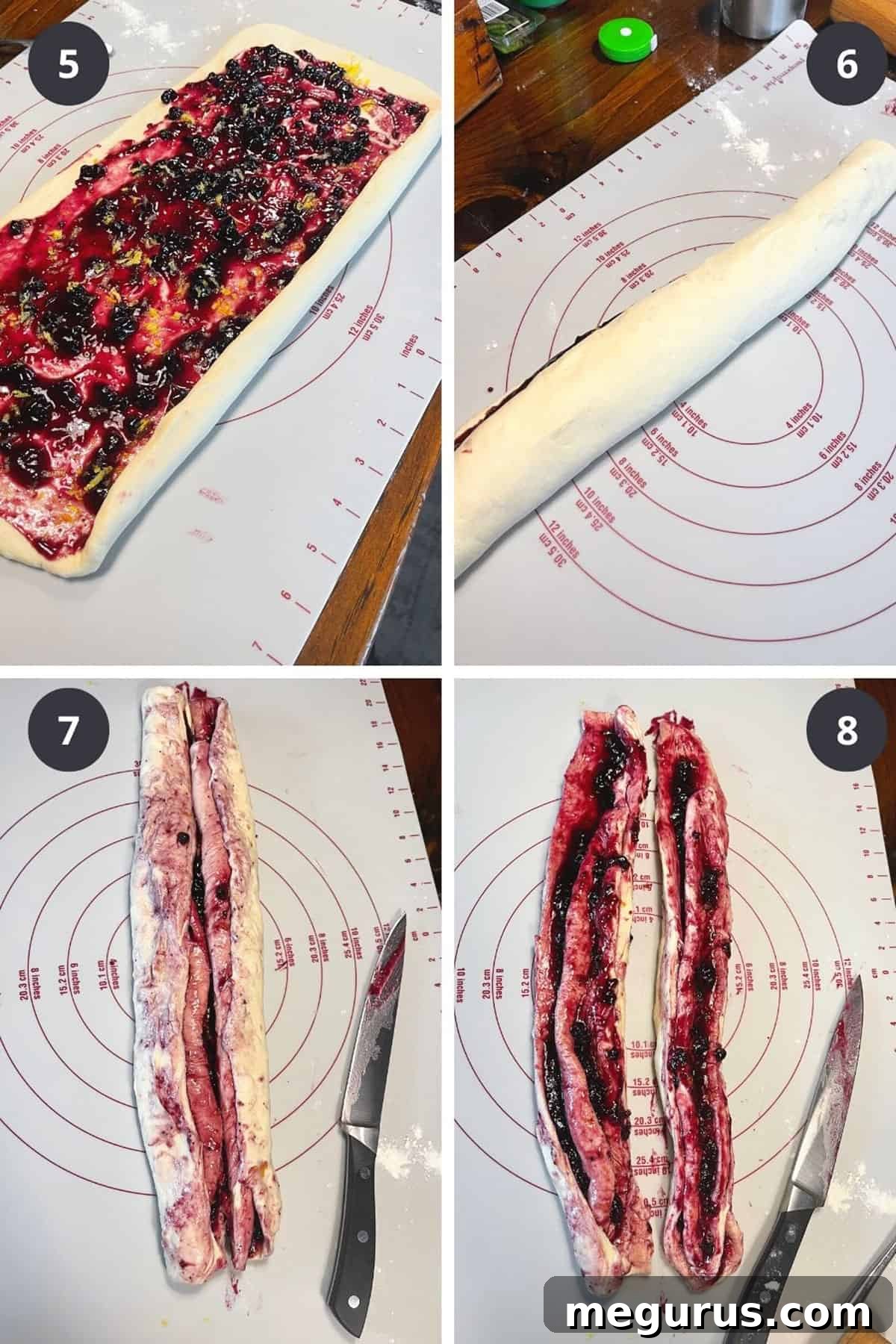
- Now comes the fun part! Starting from one of the long sides, carefully and tightly roll up the dough, jelly-roll style, all the way to the opposite long side. Try to keep the roll as tight and even as possible to ensure a beautiful swirl.
- Once you have the entire dough rolled up into a log, firmly pinch the seam together along the length of the roll to seal it. Also, pinch the ends closed to keep the jam securely inside.
- Using a very sharp knife or a bench scraper, cut the dough roll lengthwise right down the center. You should now have two long halves, each exposing the jam layers.
- Gently rotate both pieces of dough so that the cut, jam-exposed side is facing upwards. This is crucial for creating the visible swirl effect.
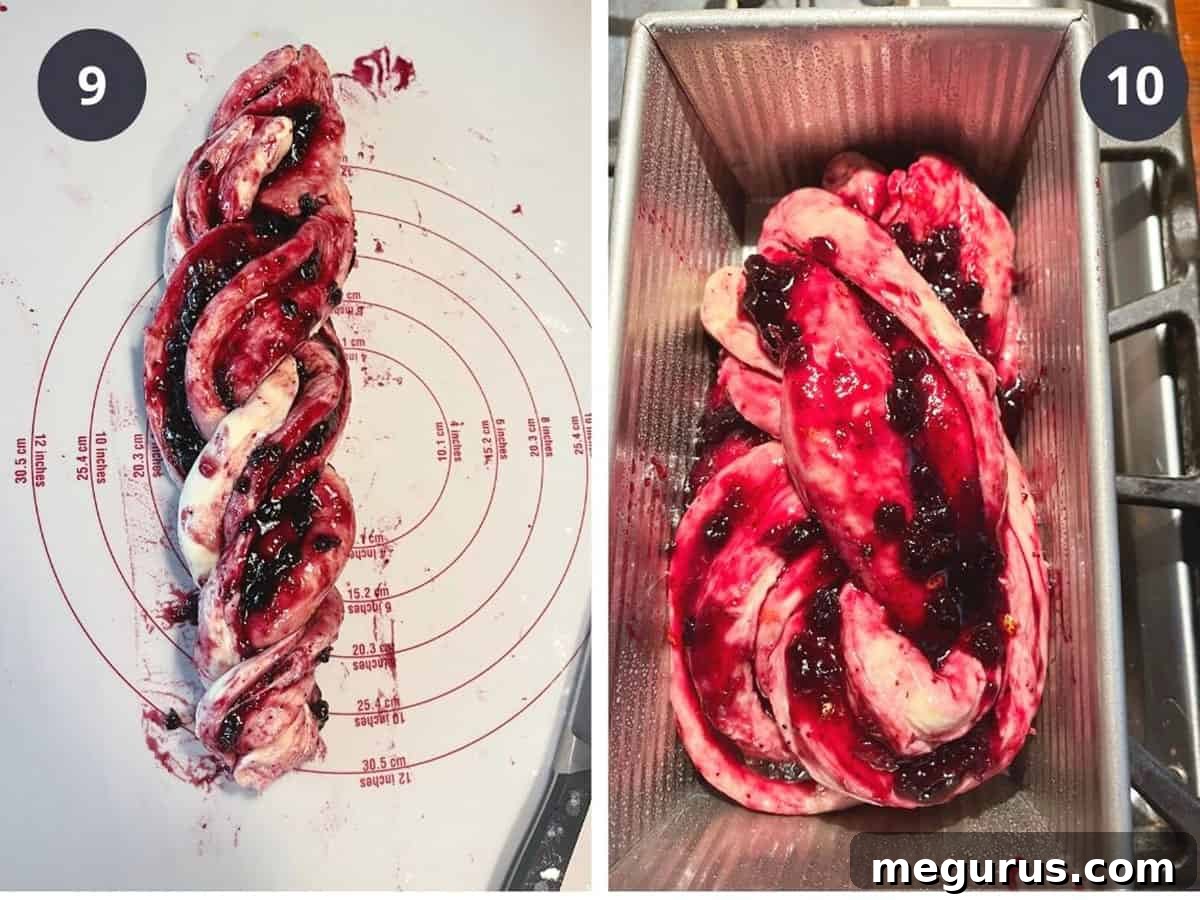
- To begin the twist, firmly pinch together the two pieces of dough at the end furthest from you. Then, starting from this pinched end, twist the two strands of dough together, gently lifting one piece over the other repeatedly, until the entire length is twisted. Once twisted, pinch the ends closest to you together to secure the shape.
- Take the pinched end closest to you and gently rotate it upwards, bringing it next to the other pinched end, forming a narrow “U” shape. The bottom of the “U” should be closest to you. Now, take the right-side piece and carefully lay it over the left-side piece, or twist them together one more time if needed, ensuring all the far ends are pinched together securely. You should now have a formed loaf, approximately 8 inches long. Carefully lift this beautiful, braided loaf (a bench scraper can be very helpful here) and place it into a greased 8×4-inch loaf pan. This is where it will undergo its second rise before baking.
Yes, we’ll admit this bread can be a little messier to make than some simpler loaves. Don’t stress if a bit of jam peeks out or smears on the dough during shaping. Just go with the flow! The slight imperfections will only add to its rustic charm, and rest assured, it will all come together beautifully in the end to create a truly delicious loaf.
Expert Yeast Bread Baking Tips!
Baking with yeast can feel like an art, but with a few key tips, you’ll achieve perfect results every time:
- **Flour is an Approximation:** The amount of flour specified in recipes, including this one, is always an approximation. Factors like the type of flour you use (bread vs. all-purpose), humidity in your kitchen, and even how you measure your flour (weighing is always best!) will affect the exact quantity needed. This recipe wisely starts with about 3/4 of the flour, allowing you to add more incrementally. Continue adding flour until you achieve a dough that is smooth, moist but not sticky, and cleanly pulls away from the sides of your mixing bowl and wraps around the kneading hook. Trust your hands and the feel of the dough over strict measurements.
- **Watch the Dough, Not the Clock for Rising Times:** Rising times are rough guidelines and can vary significantly from one kitchen to another, and even from season to season. The ambient temperature and humidity play a huge role. Instead of relying solely on the clock, pay close attention to the dough itself. Let it rise until it has just doubled in size – no more, no less. Over-proofing can lead to a less flavorful, crumbly bread, while under-proofing results in a dense, heavy loaf. A good test is the “poke test”: gently press two fingers into the dough; if the indent remains, it’s ready.
- **Ensuring Doneness: The Internal Temperature Test:** Swirl breads, due to their added filling and often denser structure, tend to take a little longer to bake than a standard plain loaf. The best way to guarantee your bread is fully cooked through is to use an instant-read thermometer. Insert it into the center of the loaf; it should register at least 200°F (93°C) internal temperature. If the top is browning too quickly, loosely tent it with aluminum foil to prevent burning while the inside finishes baking. The bread should also sound hollow when tapped on the bottom.
- **The Importance of Cooling:** It’s tempting to slice into a warm loaf immediately, but allowing the bread to cool completely on a wire rack is crucial. This cooling period allows the internal structure of the bread to set and firm up, preventing a gummy texture and ensuring clean slices. It also allows the flavors to fully develop. Patience is a virtue when it comes to perfect bread!
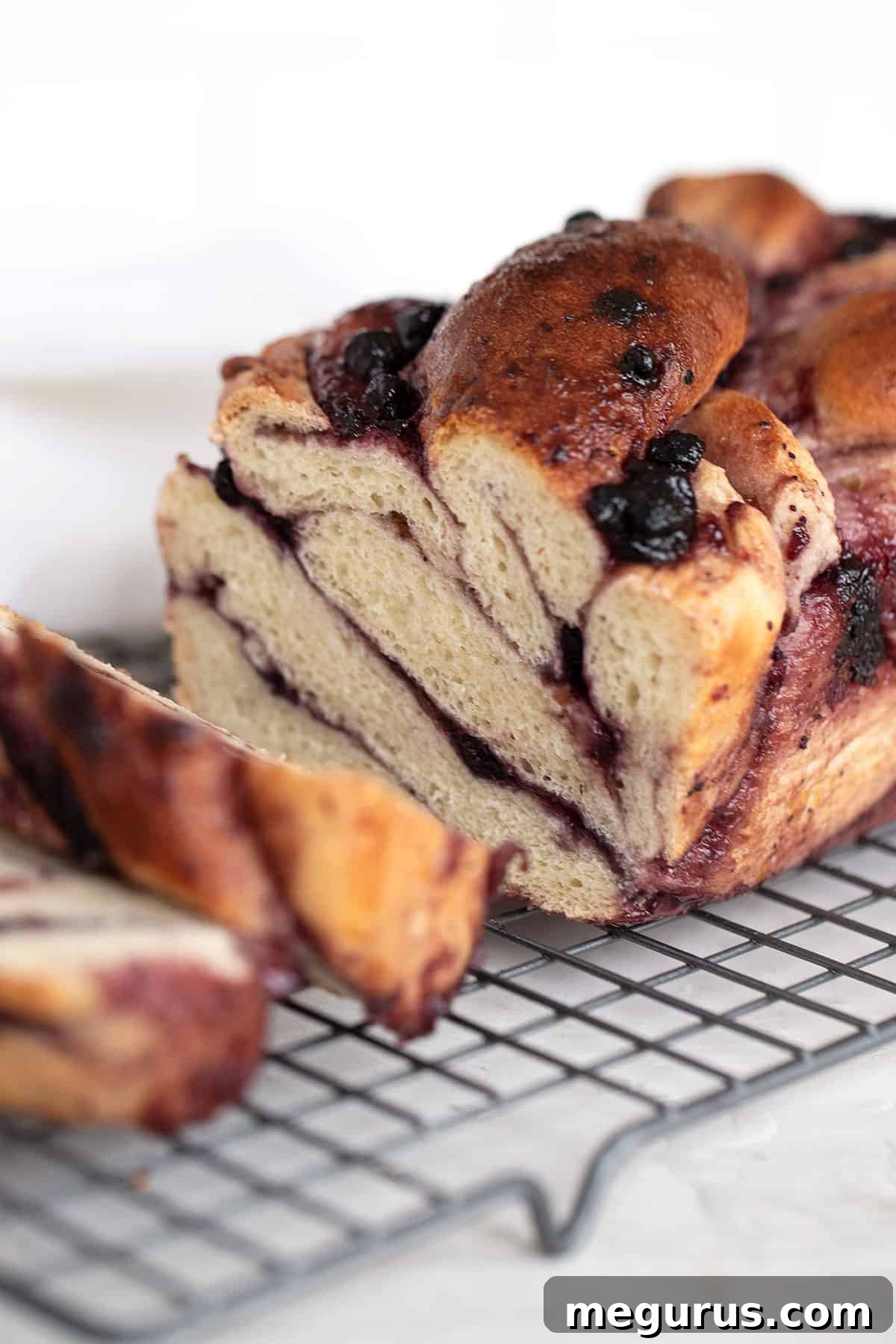
Serving Suggestions
This delightful Blueberry Swirl Bread is incredibly versatile and can be enjoyed in many ways:
- **Plain:** The jam is already inside, so it’s perfect to eat straight out of hand, no toppings necessary.
- **With Butter:** A simple smear of softened butter enhances its rich flavor and tender texture.
- **Toasted:** Pop a slice in the toaster for a warm, slightly crispy exterior and a wonderfully soft, fruity interior.
- **Breakfast or Brunch:** Serve it as part of a larger breakfast spread alongside eggs, bacon, or fresh fruit.
- **Coffee Break:** Enjoy a slice with your morning coffee or afternoon tea for a comforting treat.
Making Ahead, Storing, and Freezing for Freshness
One of the great things about homemade bread is its shelf life, and this Blueberry Swirl Bread is no exception. Proper storage ensures you can enjoy its deliciousness for days or even weeks.
- **Room Temperature Storage:** Once completely cooled, this bread will keep beautifully for a couple of days at room temperature. Store it in an airtight container or a large, sealable plastic bag to prevent it from drying out. Avoid storing it in the refrigerator immediately, as this can actually make fresh bread go stale faster.
- **Refrigerated Storage:** If you need to extend its freshness beyond a few days, you can refrigerate the loaf. Wrap it tightly in plastic wrap or foil, then place it in an airtight container. It will last for up to a week in the refrigerator. To enjoy, simply bring slices to room temperature or toast them.
- **Freezing for Longer Term Storage:** Like most yeast breads, this Blueberry Swirl Bread freezes exceptionally well for up to 3 months.
- **To freeze a whole loaf:** Ensure the bread is completely cool. Wrap it tightly in plastic wrap, then an additional layer of aluminum foil, or place it in a freezer-safe bag. This double layer helps prevent freezer burn.
- **To freeze individual slices:** Slice the cooled loaf, then place parchment paper between slices before stacking them in a freezer-safe bag or container. This allows you to grab just a few slices at a time.
- **Thawing and Reheating:** When ready to enjoy, simply transfer the frozen bread (whole or slices) to the refrigerator overnight, or thaw slices quickly in the microwave or toaster. For a whole loaf, you can also reheat it from frozen in a preheated oven (covered with foil) at 300°F (150°C) for about 20-30 minutes, or until warmed through.
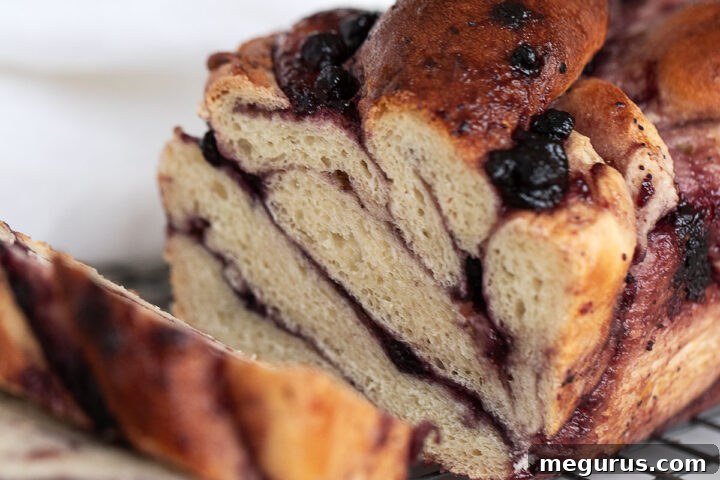
Get the Recipe: Blueberry Swirl Bread
Pin This
Leave a Review
Ingredients
For the bread:
- 1/2 cup (125 ml) water, lukewarm, about 95° F.
- 1/2 cup + 1 Tablespoon (140 ml) buttermilk or milk, lukewarm, about 95° F.
- 2 1/4 teaspoons Active Dry or Instant yeast, not quick or rapid rise yeast
- 3 1/4 cups (400 g) unbleached bread or all-purpose flour, approximately
- 1 teaspoon fine salt, reduce slightly if using salted butter
- 2 1/2 Tablespoon white or brown sugar
- 2 Tablespoons unsalted butter, melted or vegetable oil
For the filling:
- 1/2 cups blueberry jam, approximately, not too runny is best or the jam flavor of your choice
- 1 teaspoon lemon zest, optional
Instructions
-
In a large bowl or the bowl of a stand mixer fitted with a kneading hook, combine the lukewarm water, yeast, and a pinch of sugar. Stir gently and allow it to stand for a few minutes until frothy, indicating the yeast is active. To this yeast mixture, add 2 cups of the flour, salt, and remaining sugar. Mix until just combined. Next, incorporate the lukewarm milk and melted butter or oil, mixing well.
-
Gradually add the remaining flour, starting with ¼ cup at a time, then in smaller increments as needed. Knead the dough (either by hand on a floured surface or with the stand mixer’s dough hook) between each addition until you achieve a soft, smooth, and elastic dough. It should be moist but not sticky, and cleanly pull away from the sides of the bowl and wrap around the kneading hook. Form the dough into a ball and place it in a lightly greased bowl. Cover the bowl with plastic wrap and let it rise in a warm place until doubled in size, which typically takes about 45-60 minutes.
-
Prepare an 8½ x 4½-inch metal loaf pan by thoroughly greasing it or spraying it with cooking spray. Set aside.
-
Once the dough has risen, gently punch it down and transfer it to a lightly floured surface. Roll the dough into a rectangle approximately 16 inches long by 8 inches wide. Spread your chosen jam evenly over the entire surface, making sure to leave a ½-inch margin clean on both of the longest sides. If you’re using lemon zest, sprinkle it over the jam at this point. Starting from one of the long sides, carefully roll the dough up, jelly-roll style, until you reach the opposite end. Firmly pinch the long seam and both ends together to seal the jam inside.
-
*For visual guidance, refer to the step-by-step shaping photos provided earlier in this article.
-
Using a sharp knife, carefully cut the dough roll in half lengthwise, from one end to the other. Gently rotate the two pieces so that the cut sides (exposing the jam) are facing upwards. Place them side by side. Pinch the two pieces of dough together firmly at the end furthest away from you. Begin twisting the two pieces together, lifting one piece over the other and repeating several times along the length of the dough. Once twisted, pinch the end closest to you together to secure the shape. Take this pinched end closest to you and rotate it up, positioning it next to the pinched end furthest from you, forming a narrow “U” shape. Take the right-side piece and gently twist it slightly over the left-side piece, then pinch all the ends furthest from you securely together.
-
Carefully lift the shaped loaf (a bench scraper is very useful for this) and place it into the prepared loaf pan. Lightly spray a piece of plastic wrap with cooking spray and gently place it over the top of the pan, loosely covering the dough. Allow the dough to rise again in a warm place until it has risen about an inch above the rim of the pan in the middle, which typically takes approximately 30-40 minutes.
-
While the bread is undergoing its second rise, pre-heat your oven to 350° F (175° C) using the regular bake setting (not fan-assisted).
-
Once the bread has fully risen, carefully remove the plastic wrap. Place the loaf pan into the preheated oven and bake for 30 minutes. After 30 minutes, check the bread; if it’s already browning significantly, loosely cover the top with a piece of aluminum foil to prevent it from getting too dark. Rotate the pan front to back to ensure even baking. Continue baking for an additional 10-15 minutes, or until the bread is golden brown and sounds hollow when tapped on the bottom. For precise doneness, use an instant-read thermometer; the internal temperature should reach at least 200° F (93° C). Allow the bread to cool in the pan for 5 minutes before carefully running a knife around the edges to loosen it. Remove the bread from the loaf pan and transfer it to a wire cooling rack to cool completely.
-
It is essential to allow the bread to cool completely on the cooling rack before attempting to slice it. This ensures the internal structure sets properly, resulting in clean, beautiful slices.
Notes
Conclusion
Baking this Blueberry Swirl Bread is more than just making a loaf; it’s an act of love and creativity. From the moment the yeast activates to the final golden-brown finish, you’re on a journey to create something truly special. The vibrant swirl of jam, the tender crumb, and the delightful aroma make this bread an instant favorite. Whether you’re a seasoned baker or new to yeast breads, we encourage you to try this recipe and experience the joy of homemade goodness. It’s a taste of comfort and a beautiful addition to any table.