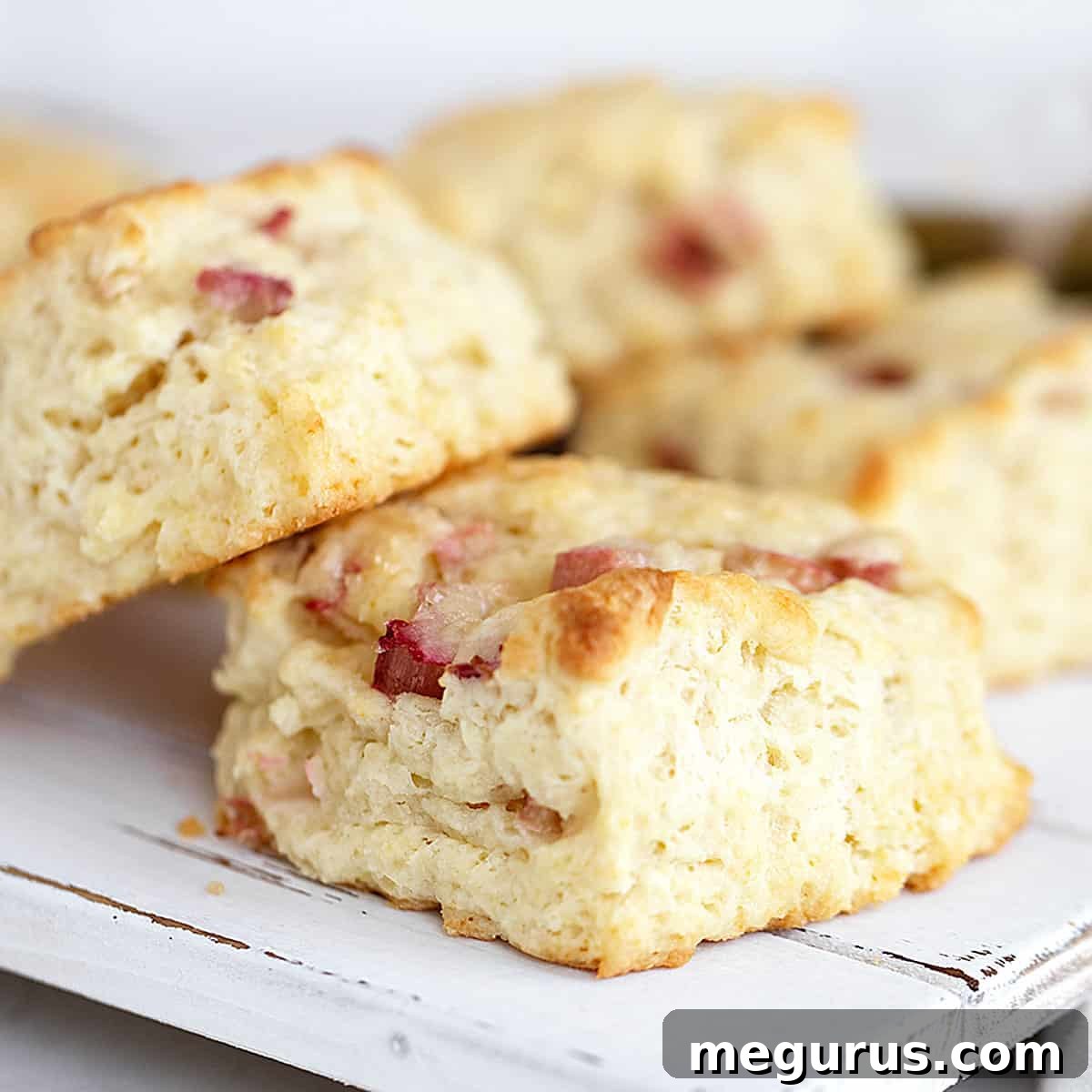
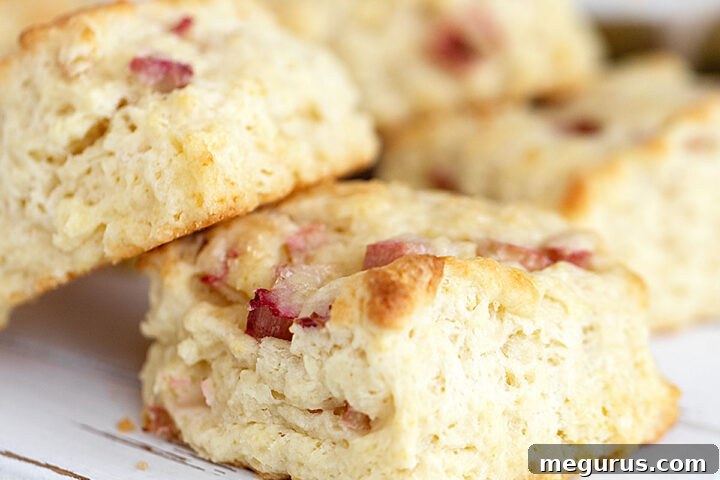
Welcome to the ultimate guide for crafting the most delectable Rhubarb Scones! These aren’t just any scones; they’re a delightful fusion of sweet and tart, boasting a wonderfully rich and buttery texture thanks to the secret ingredient: heavy cream. Whether you have an abundance of fresh rhubarb from your garden or a stash of frozen stalks, this recipe is designed to help you create bakery-quality treats right in your own kitchen. Perfect for a leisurely breakfast, an elegant afternoon tea, or simply a comforting snack, these scones are incredibly versatile and freeze beautifully, allowing you to enjoy a taste of spring anytime.
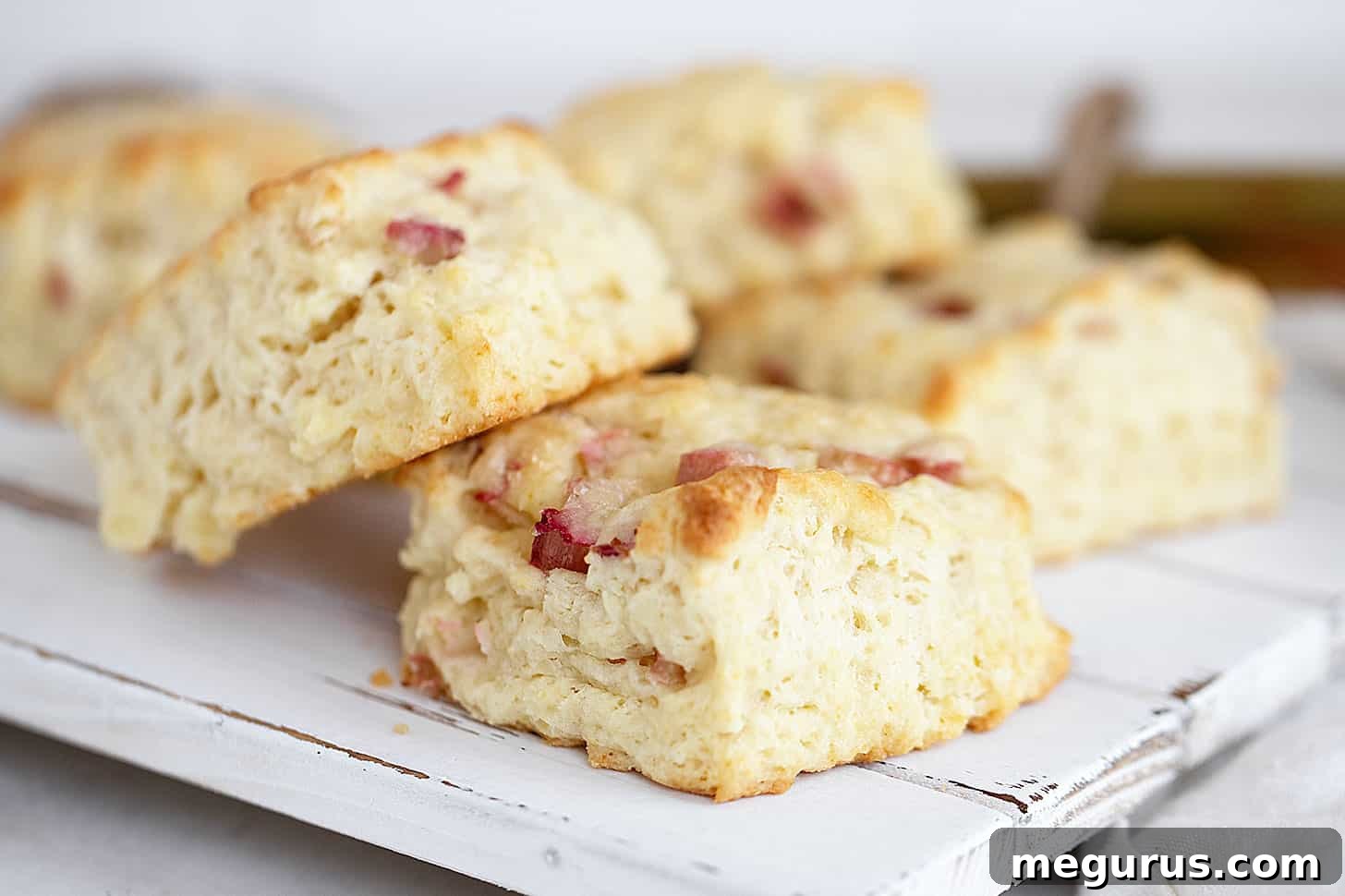
There’s something uniquely charming about a homemade scone, especially one infused with the vibrant tang of rhubarb. This recipe not only delivers on flavor but also offers a satisfying baking experience for both novice and experienced bakers. The combination of simple ingredients and straightforward steps makes these rhubarb scones an excellent choice for anyone looking to impress with minimal fuss. Plus, the convenience of using either fresh or frozen rhubarb means you can enjoy these treats year-round.
One of the best features of this recipe is how well the scones freeze. You can easily bake a large batch, savor some immediately, and then freeze the rest to pull out and enjoy whenever a scone craving strikes. Imagine the joy of having warm, freshly baked rhubarb scones ready in minutes, even on the busiest of mornings!
Key Ingredients for Perfect Rhubarb Scones
Crafting exceptional rhubarb scones begins with understanding the role each ingredient plays. Here’s a closer look at what you’ll need and some helpful substitution tips:
- Rhubarb: The Star Ingredient
You have the flexibility to use either fresh or frozen rhubarb in this recipe. Rhubarb brings a unique tartness that beautifully balances the sweetness of the scone. For fresh rhubarb, simply wash and finely dice it into 1/4-inch pieces. If you’re using frozen rhubarb, it’s crucial to thaw it thoroughly in a colander. This step allows excess moisture to drain away. After thawing, gently pat the rhubarb dry with paper towels without squeezing or crushing it. Removing as much moisture as possible prevents the dough from becoming too wet and ensures your scones maintain their ideal texture. - Cream: For Unrivaled Richness
This recipe specifically calls for heavy whipping cream (35% butterfat) combined with a touch of milk. Heavy cream is a game-changer for scones, contributing to an incredibly rich, tender, and buttery crumb that lighter creams simply can’t match. The high fat content helps create those coveted flaky layers. While you *can* use a lighter cream if you prefer, be aware that it will result in a less rich scone, and you may need to adjust the liquid amount by using less to achieve the correct dough consistency. - All-Purpose Flour: The Foundation
Standard all-purpose flour works perfectly for these scones. When measuring, spoon the flour into your measuring cup and level it off with a straight edge rather than scooping directly from the bag. This prevents over-packing, which can lead to dense, tough scones. - Cold Unsalted Butter: The Secret to Flakiness
Just like in pie crusts, cold butter is essential for flaky scones. As the butter melts in the oven, it creates pockets of steam, which in turn produce those wonderful layers. Unsalted butter allows you to control the overall salt content of your scones. Cut it into small, uniform pieces (about 6-7) and keep it chilled until you’re ready to incorporate it into the flour. - Sugar, Baking Powder, and Salt: The Flavor & Leavening Agents
Granulated sugar provides the necessary sweetness, complementing the tart rhubarb. Baking powder is the leavening agent that gives scones their lift and airy texture. Ensure your baking powder is fresh for optimal results. Salt enhances all the other flavors, making them more vibrant. If you’re using salted butter, reduce the amount of added salt to 1/4 teaspoon to prevent over-salting. - Cold Egg: For Structure and Tenderness
A large, cold egg adds richness, binds the ingredients, and contributes to the scone’s tender crumb. Keeping it cold is key to maintaining the overall coolness of your dough. - Vanilla Extract or Paste: A Touch of Aromatic Sweetness
Vanilla adds a warm, comforting aroma and enhances the overall flavor profile. Use good quality vanilla extract or vanilla bean paste for the best results.
Step-by-Step Guide: How to Make Irresistible Rhubarb Scones
Baking these delicious rhubarb scones is a rewarding process. Follow these detailed steps to ensure perfectly risen, flaky, and flavorful results every time. Remember, the key is to work quickly and keep your ingredients cold!
Before you begin, preheat your oven to 400°F (non-convection setting) and prepare your baking sheet. If you prefer easy cleanup, lining it with parchment paper is a great idea, though not strictly necessary.
- Prepare Your Rhubarb: If using frozen rhubarb, begin by thawing it in a strainer to allow excess moisture to drain. Once thawed, pat the rhubarb pieces thoroughly dry with paper towels. Dice both fresh and prepared frozen rhubarb into small, uniform 1/4-inch pieces. Set aside. This ensures even distribution and prevents large chunks that can make shaping difficult.
- Combine Wet Ingredients: In a separate bowl or measuring cup, whisk together the cold egg, heavy whipping cream, milk, and vanilla extract until well combined. This ensures all the wet ingredients are evenly distributed before being added to the dry mixture. Keep this mixture cold until ready to use.
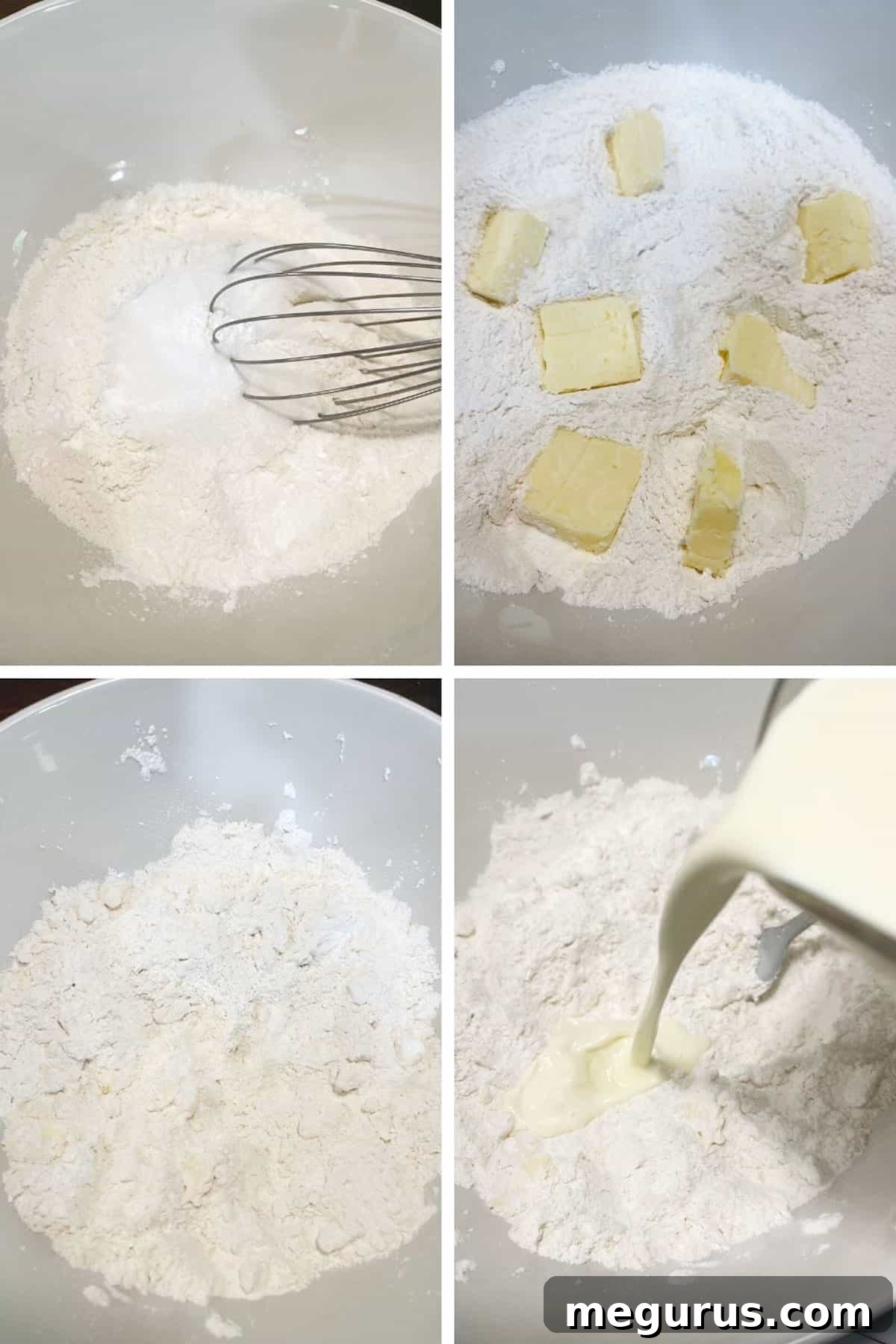
- Mix Dry Ingredients and Incorporate Butter: In a large mixing bowl, whisk together the all-purpose flour, granulated sugar, baking powder, and salt. Add the cold, cubed unsalted butter to the dry ingredients and toss gently to coat the butter in flour. Using your fingertips (or a pastry blender/cutter), quickly rub the butter into the flour. The goal is to break the butter into pea-sized pieces, with some smaller, crumbly bits. Avoid overworking the mixture; you want to keep the butter as cold as possible to create those desirable flaky layers.
- Add Wet to Dry: Create a well in the center of your flour and butter mixture. Pour about two-thirds of the chilled cream mixture into the well. Using a fork, gently stir the dough just enough to incorporate the liquid. Gradually add more of the remaining cream mixture, one tablespoon at a time, stirring after each addition, until the dough is very moist but not overly sticky. The exact amount of liquid can vary depending on the humidity and your flour, so trust your judgment here. It’s better to have a slightly moist dough than a dry one.
- Shape the Dough: Lightly flour your work surface and turn the dough out onto it. Gently pat the dough into a rough oval or rectangle, approximately 1 inch thick. If the dough feels a bit sticky, you can dust your hands and the surface with a touch more flour, but avoid adding too much, as this can make the scones tough.
- Incorporate Rhubarb and Fold: Evenly scatter the diced rhubarb pieces over the surface of the dough. Carefully fold the dough in half over itself, encasing the rhubarb. Lightly press down. Rotate the dough 90 degrees and fold it in half again. This folding technique helps distribute the rhubarb evenly and builds layers within the scone, contributing to a better rise and flakiness. Gently press or roll the dough into a piece about 3/4 to 1 inch thick.
- Cut the Scones: Using a 2-inch round or square biscuit cutter, cut out your scones. Alternatively, you can pat the dough into a 3/4 to 1-inch thick round and use a sharp knife to cut it into 8 wedges. Place the cut scones onto your un-greased or parchment-lined baking sheet, spacing them about 1 1/2 inches apart. Gather any dough scraps, gently re-form them, and cut additional scones. Be careful not to overwork these scraps.
- Chill Before Baking: This is a crucial step for achieving tall, beautifully shaped scones! Place the baking sheet with the cut scones into the freezer for 15-20 minutes. If your freezer space is limited, the refrigerator for 30 minutes will also work. Chilling re-hardens the butter, preventing the scones from spreading too much in the oven and helping them maintain their shape and develop those lovely layers.
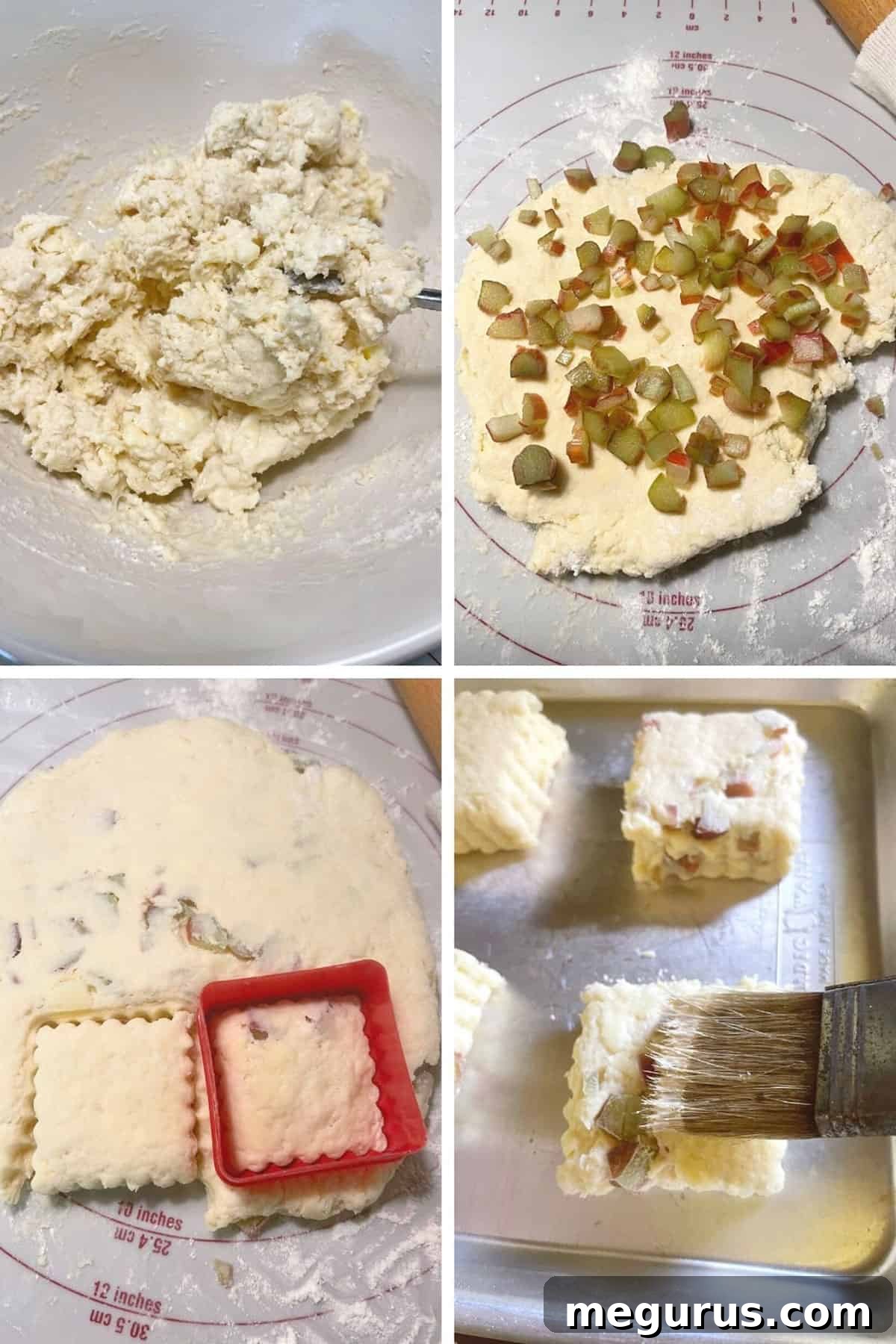
- Prepare for Baking: Just before baking, use a pastry brush to lightly brush the tops of the chilled scones with a little extra heavy cream. This helps them achieve a beautiful golden-brown crust. Then, sprinkle a generous amount of Turbinado sugar (also known as raw sugar), coarse sugar, or even fine white granulated sugar over the tops. This adds a lovely crunch and sparkle.
- Bake and Enjoy: Transfer the baking sheet to your preheated 400°F oven. Bake for 15-17 minutes, rotating the baking sheet front to back halfway through to ensure even baking. The scones are ready when they are light golden brown around the edges and well-risen. Remove them from the oven and let them cool on the baking sheet for 2-3 minutes before transferring them to a wire rack to cool completely.
Expert Tips for Scone Perfection!
- Mind the Liquid: When adding the cream mixture to the dry ingredients, start with about two-thirds of the liquid. Only add more, a tablespoon at a time, if the dough is too dry. You’re aiming for a very moist, shaggy dough, but not one that’s overly sticky or wet. Different flours and environmental humidity can affect absorption, so visual cues are more important than exact measurements here.
- Small Rhubarb, Big Flavor: Ensure your rhubarb is diced into fairly small (1/4-inch) pieces. Smaller pieces are easier to incorporate into the dough, make for cleaner cuts, and bake more uniformly without creating large, unstable pockets in the scones.
- Balance is Key for Rhubarb: While the tartness of rhubarb is delightful, don’t overload your dough. Too much rhubarb can make the scones excessively tart (as it’s essentially unsweetened in the dough) and can also lead to a crumbly, difficult-to-handle dough that won’t hold its shape well. Stick to the recommended 1/3 to 1/2 cup for the best balance.
- Don’t Skip the Chill: The trip to the freezer (or refrigerator) before baking is a non-negotiable step for truly great scones. This re-chills the butter, preventing it from melting too quickly in the oven and ensuring your scones rise tall, retain their distinct layers, and don’t spread out into flat discs.
- Handle with Care: Overworking the dough is the enemy of tender scones. The more you handle the dough, the more gluten develops, leading to a tough texture. Work quickly and gently, just enough to bring the ingredients together.
- The Power of Folding: Folding the dough multiple times (as instructed) creates layers, similar to puff pastry. These layers are crucial for a light, airy, and flaky scone. Each fold enhances the texture and height.
- Precision Brushing: When brushing the tops with cream, be careful to apply it only to the top surface. If cream drips down the sides, it can seal the edges, trapping steam and hindering the scone’s ability to rise properly and form those beautiful, distinct layers.
- Dry Fruit for Dry Dough: If you ever substitute other fruits, always ensure they are as dry as possible. Excess moisture from fruit can throw off the dough’s consistency, making it too wet and affecting the final texture.
Making Ahead, Storing, and Freezing Rhubarb Scones
Scones are undeniably at their peak when enjoyed freshly baked and still warm from the oven. However, these rhubarb scones maintain their deliciousness throughout the day they are baked, and they also store and freeze exceptionally well for future enjoyment.
- Storing Baked Scones: Once baked and completely cooled, store your scones in an airtight container at room temperature for up to 3 days. While they remain tasty, they will naturally soften a bit over time. For a quick refresh, you can warm them slightly in a toaster oven or microwave.
- Freezing Baked Scones: To freeze baked scones, ensure they are completely cool. Place them in a single layer on a baking sheet and freeze until solid (about 1-2 hours). Once frozen, transfer them to a freezer-safe bag or container, removing as much air as possible. They will keep well for up to 2 months. To reheat, simply warm them in a preheated oven at 300°F (150°C) for about 10-15 minutes, or until heated through.
- Freezing Unbaked Scones: For the ultimate convenience, you can freeze unbaked scones! Follow all the steps up to cutting the scones and chilling them (Step 8 in the instructions). Instead of baking, place the chilled, unbaked scones in a single layer on a baking sheet and freeze until solid. Once frozen, transfer them to a freezer-safe bag or container. They can be stored for up to 2 months. When you’re ready to bake, place the frozen unbaked scones directly onto a prepared baking sheet, brush with cream, sprinkle with sugar, and bake from frozen. You’ll need to add an extra 5-10 minutes to the usual baking time (so, 20-25 minutes total), or until they are golden brown and cooked through. This method is perfect for having fresh scones on demand!

Frequently Asked Questions About Rhubarb Scones
Here are some common questions you might have when baking these delightful rhubarb scones:
- Why are my scones flat and not rising?
Flat scones are usually a result of warm butter, overworking the dough, or skipping the chilling step. Cold butter creates steam for lift, overworking develops gluten leading to toughness and less rise, and chilling ensures the butter stays solid longer in the oven, contributing to height. Always use cold ingredients and handle the dough minimally. - Can I use buttermilk instead of heavy cream and milk?
Yes, you can! Buttermilk will add a lovely tangy flavor to the scones and help tenderize them. If using buttermilk, you may need to adjust the amount slightly as buttermilk can be thinner than heavy cream/milk combined. Start with the same quantity and add more as needed until the dough is moist but not sticky. - What kind of sugar should I sprinkle on top?
Turbinado sugar (also known as raw sugar) is excellent for sprinkling on top as it provides a beautiful coarse texture and sparkle that doesn’t melt away easily. Coarse granulated sugar or even regular white granulated sugar will also work, adding a pleasant crunchy crust. - How do I prevent my scones from being dry?
Dry scones are often caused by adding too much flour, not enough liquid, or overbaking. Ensure you measure flour correctly (spooned and leveled), add enough liquid to achieve a very moist dough, and bake only until the edges are light golden brown. - Can I add other spices or flavors?
Absolutely! Rhubarb pairs wonderfully with ginger, cardamom, or orange zest. You could add 1/2 teaspoon of ground ginger or cardamom, or 1-2 teaspoons of finely grated orange zest to the dry ingredients for an extra flavor dimension. - What’s the best way to serve rhubarb scones?
These scones are fantastic on their own, but they’re even better served warm with a dollop of clotted cream, a spoonful of strawberry jam (which complements rhubarb beautifully), or a simple pat of butter. They make a perfect accompaniment to coffee or tea.
Get the Recipe: Rhubarb Scones
Pin This
Leave a Review
Ingredients
- 1/3-1/2 cup fresh or frozen rhubarb, finely diced into 1/4-inch pieces
- 2 cups all-purpose flour, spooned and levelled
- 1/2 cup white granulated sugar
- 2 1/2 teaspoons baking powder
- 1/2 teaspoon salt, *reduce to 1/4 teaspoon if using salted butter
- 1/3 cup cold unsalted butter, cut into 6 or 7 pieces
- 1 large egg, cold
- 1/2 cup heavy whipping cream, cold (35% b.f.)
- 1/4 cup milk, cold (2 or 3% milk recommended)
- 1/2 teaspoon vanilla extract or vanilla bean paste
For topping before baking:
- Additional heavy cream, for brushing
- Turbinado, coarse or fine white granulated sugar, for sprinkling on tops
Instructions
- Preheat oven to 400°F (non-convection).
- If using frozen rhubarb, thaw in a strainer to remove excess moisture, then pat dry well. Dice the rhubarb into fine 1/4-inch-ish pieces. Set aside.
- In a bowl or measuring cup, use a fork to whisk together the egg, whipping cream, milk, and vanilla. Set aside.
- In a large bowl, whisk together the flour, sugar, baking powder, and salt. Add the pieces of cold butter into the dry ingredients and toss to coat the butter in a bit of flour. Using your fingertips (or a pastry blender or pastry cutter), rub the butter into the flour, breaking up the larger butter pieces as you go, until you have a mixture with about pea-sized pieces of butter.
- Make a well in the middle of the flour mixture and pour about 2/3 of the cream mixture into the bowl. Using a fork, stir dough just enough that the liquid is absorbed. Begin adding additional cream mixture, stirring as you add it, until the dough is very moist, but not super sticky. You may not need to use all of the cream mixture.
- Turn the dough onto a lightly floured surface, and gently pat the dough into a rough oval about 1-inch thick. You can dust with additional flour as needed if the dough is too sticky.
- Scatter the rhubarb pieces over top of the dough. Fold the dough in half over onto itself and lightly press the dough down. Turn the dough 90 degrees and fold in half again. Using your hands or a rolling pin, press or roll the dough into a piece 3/4 to 1 inch thick.
- Use a 2-inch round or square biscuit cutter (or use a knife to cut into 2-inch squares). Place scones onto an un-greased baking sheet, about 1 1/2 inches apart. You can use parchment paper if you like, for easy clean-up, but it is not necessary. Gather any scraps and re-roll and cut additional scones. Alternatively, you can pat the dough into a 3/4 to 1-inch thick round and use a sharp knife to cut the round into 8 wedges. Remove the wedges to the baking sheet 1 1/2 inches apart.
- Place the baking sheet with the cut scones into the freezer for 15-20 minutes. This step is important. Cold scones will bake up better and hold their shape well. If you can’t fit the baking sheet into your freezer, place it in the refrigerator for 30 minutes instead.
- Use a pastry brush to brush the tops of the scones with a bit more cream, then sprinkle with sugar.
- Bake scones for 15-17 minutes, rotating the baking sheet front to back halfway through baking. Bake until they are light golden brown on the edges. Remove scones from the oven and leave them on the baking sheet for 2-3 minutes before transferring them to a wire rack to cool.
Notes
- Always start with cold butter, cold cream, and a cold egg.
- Work quickly, so you don’t warm and soften the butter.
- Don’t be afraid to adjust the liquid amount, adding less or more, as needed, until the dough is very moist, but not super sticky. Different flours will absorb differently, so the exact amount will vary from kitchen to kitchen.
- It’s okay to add a dusting of flour when shaping and cutting the scones, to prevent major sticking, but don’t overdo it. Use just what you need.
- Don’t overwork the dough. This warms and softens the butter, leading to tough scones.
- Fold the dough over several times before rolling and cutting. This creates layers and a better rise.
- Chill the cut scones before baking. This re-chills the butter and ensures the scones retain their shape, develop layers, and don’t spread.
- If adding fruit, keep the fruit as dry as possible, to avoid adding extra liquid to the dough.
- When brushing the tops of scones with cream, be sure to brush carefully so that only the top is moistened with the cream. Don’t use so much that it drips down the sides of the scones, as it can affect the rise by sealing the sides and not allowing steam to escape out the sides, which is what rises scones into lovely layers.
Be sure to read the detailed information above this Recipe Card, where you’ll find substitution suggestions, step-by-step photos, and my best tips for making great scones!
Calories: 236kcal,
Carbohydrates: 30g,
Protein: 4g,
Fat: 11g,
Saturated Fat: 7g,
Polyunsaturated Fat: 1g,
Monounsaturated Fat: 3g,
Trans Fat: 1g,
Cholesterol: 49mg,
Sodium: 131mg,
Potassium: 169mg,
Fiber: 1g,
Sugar: 11g,
Vitamin A: 407IU,
Vitamin C: 1mg,
Calcium: 71mg,
Iron: 1mg
Tried this recipe?
If you enjoyed this recipe, please consider leaving a star rating and comment. It helps others to find it!