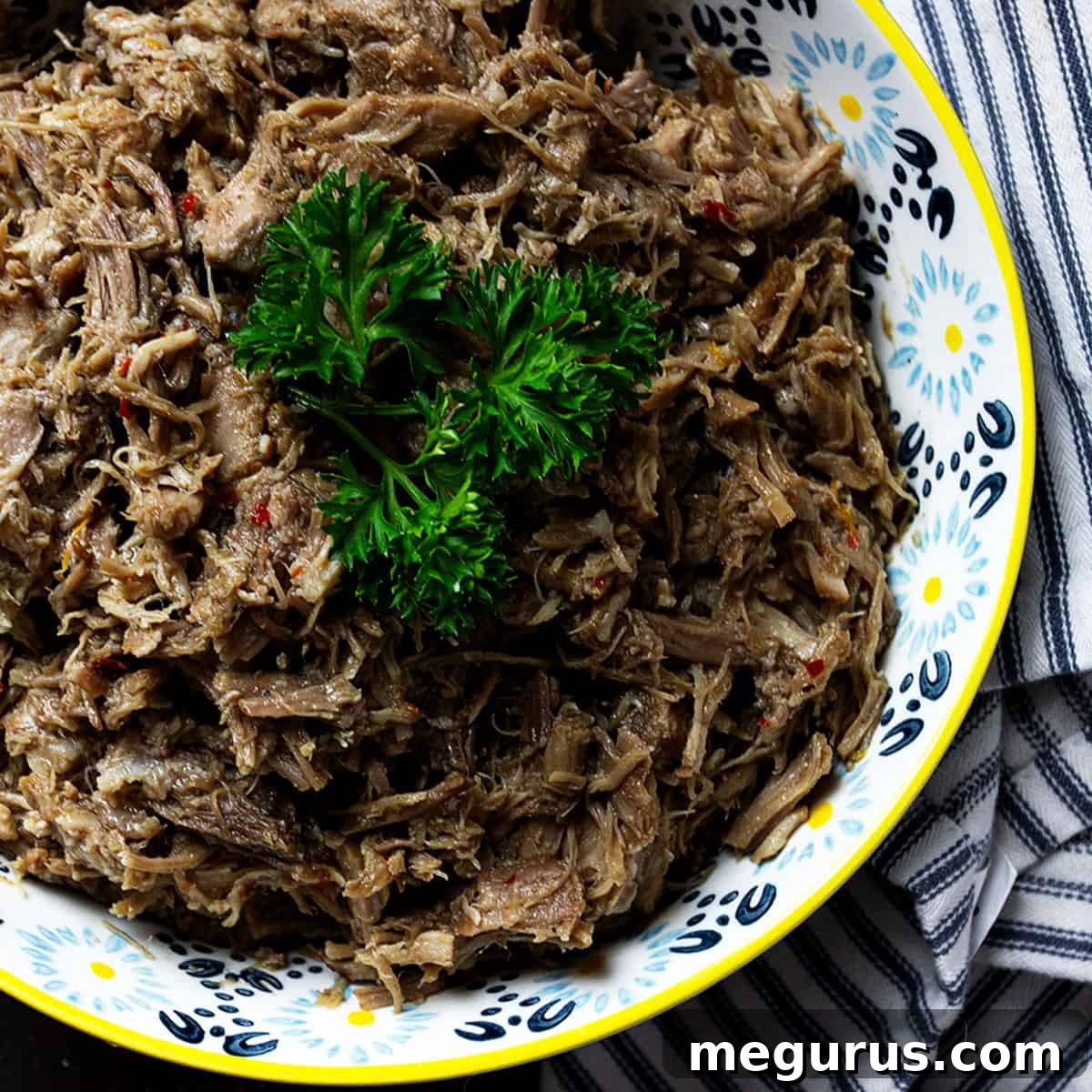
Prepare to embark on a culinary journey to Mexico with the ultimate guide to crafting perfect Slow Cooked Pork Carnitas! This incredibly versatile dish is a true crowd-pleaser, delivering succulent, flavorful pork that melts in your mouth and then crisps up beautifully. Imagine a single batch providing endless possibilities for weeknight dinners or festive gatherings: pile it high in authentic tacos, roll it into crispy taquitos or flautas, build hearty sandwiches, or even sprinkle it over homemade pizza for an unexpected gourmet twist. Once you master this recipe, you’ll wonder how you ever lived without this Mexican staple.
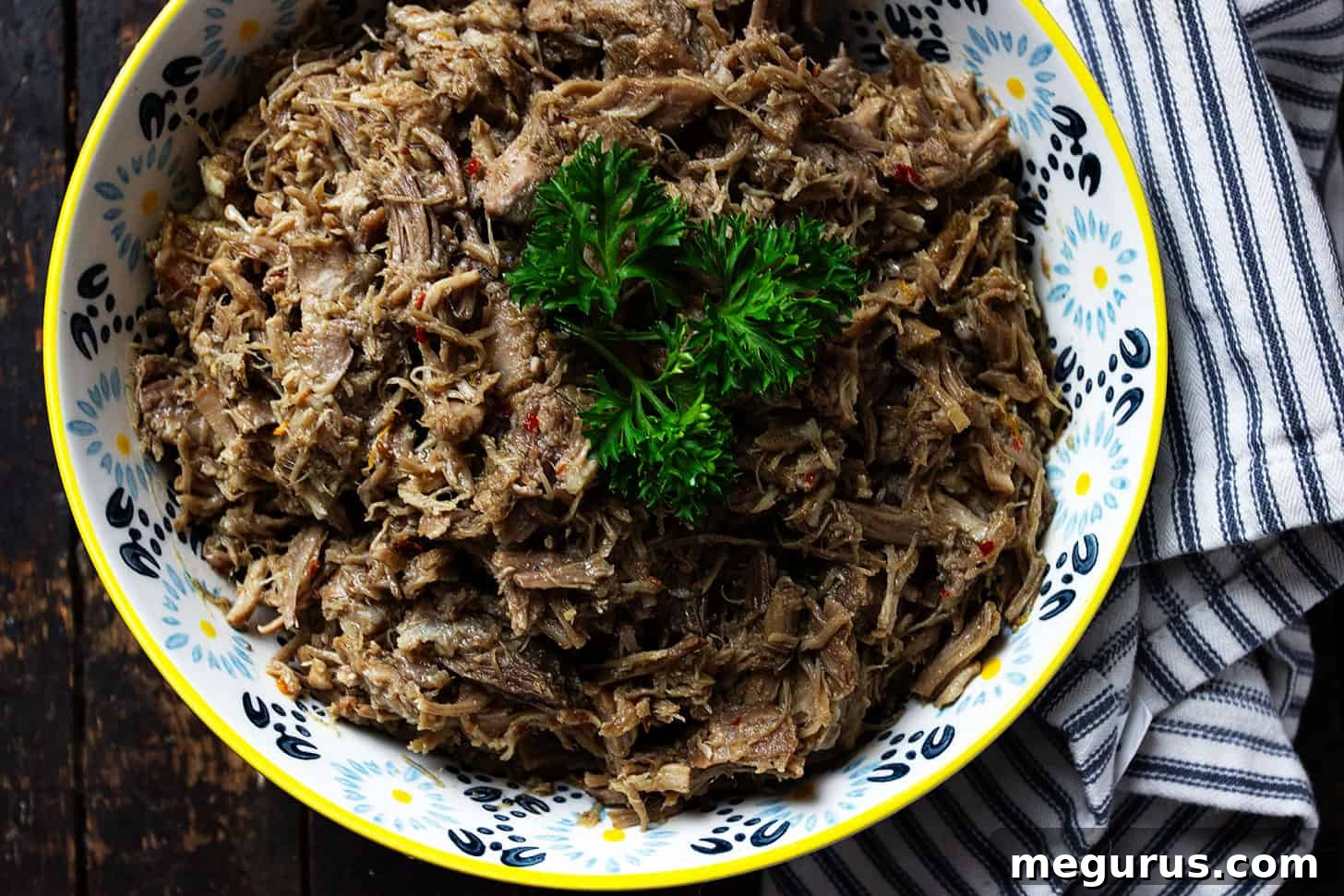
Today, we’re diving deep into a fundamental Carnitas recipe designed for both simplicity and incredible flavor. This method is ideal for those who love to plan ahead, as it refrigerates and freezes exceptionally well. The magic truly happens in two stages: first, a long, gentle simmer infuses the pork with aromatic spices, rendering it incredibly tender and shreddable. Then, a quick finish in a hot skillet transforms it into golden, crispy perfection, bringing out all the rich, savory notes that make carnitas so utterly irresistible.
What are Carnitas? A Culinary Journey to Mexico
Carnitas, meaning “little meats” in Spanish, is a beloved dish hailing from the state of Michoacán, Mexico. Traditionally, it involves simmering chunks of pork in its own rendered fat (lard) until fork-tender, then increasing the heat to achieve a crispy, caramelized exterior. Our slow-cooked version captures the essence of this traditional process by cooking the pork in liquid with aromatic spices, which tenderizes the meat deeply before it gets its signature crispy finish in a hot pan. The result is a perfect balance of juicy, tender interior and wonderfully browned, crunchy edges, creating a texture and flavor profile that’s truly unique and incredibly satisfying.
This dish is more than just pulled pork; it’s a celebration of rich, savory pork infused with subtle hints of citrus and spice. The long cooking process breaks down tough cuts of pork, leaving you with tender, succulent meat that is incredibly versatile. It’s a staple in Mexican cuisine, often served in tacos with a squeeze of lime, fresh cilantro, and chopped onion, but its adaptability allows it to shine in countless other applications.
The Magic of Slow Cooking: Achieving Perfect Carnitas
The secret to exceptional carnitas lies in the slow cooking method. By simmering the pork shoulder over an extended period, you allow the connective tissues to break down gradually, resulting in meat that is incredibly tender and easy to shred. This gentle cooking process also gives the pork ample time to absorb the flavors from the aromatics and spices in the cooking liquid. Unlike braising where the goal is often a rich sauce, our carnitas cooking method focuses on transforming the pork itself.
Initially, the pork cooks submerged in water with a carefully selected blend of spices. This helps to steam and tenderize the meat, creating a moist environment that prevents it from drying out. As the water slowly evaporates, the pork begins to cook in its own rendered fat, eventually leading to a natural browning. This dual-stage cooking within the pot is what helps achieve both the melt-in-your-mouth tenderness and the potential for a flavorful, slightly caramelized texture even before the final crisping step.
Key Ingredients for Authentic Pork Carnitas
Crafting authentic-tasting pork carnitas starts with selecting the right ingredients. Each component plays a vital role in building the complex and delicious flavor profile of this traditional Mexican dish.
- Pork Shoulder (Boston Butt): This is the unequivocal star of our carnitas. Pork shoulder, also known as Boston butt, is ideal due to its excellent fat marbling and connective tissue. During the long, slow cooking process, this fat renders down, moistening the meat from within, while the connective tissue breaks down into gelatin, resulting in incredibly tender, juicy, and shreddable pork. Avoid leaner cuts, as they will dry out and lack the characteristic richness. Bone-in or boneless works; bone-in may add a bit more flavor to the liquid, but boneless is easier to cut and shred.
- Aromatic Foundation: Orange Peel, Garlic, and Onion: These three ingredients form the fragrant base for our carnitas. The orange peel (often just a few strips of zest) provides a subtle citrusy brightness that cuts through the richness of the pork, a hallmark of traditional carnitas. Fresh garlic cloves, minced, infuse the meat with their pungent, savory notes, while a large chopped onion sweetens the pot as it slowly cooks down, adding depth and complexity to the overall flavor.
- Flavor Enhancers: Spices (Crushed Red Pepper Flakes, Ground Cinnamon, Bay Leaves, Ground Cloves, Dried Oregano Leaves): This carefully chosen blend of spices creates the signature warmth and aromatic complexity of carnitas. Crushed red pepper flakes add a gentle heat, which can be adjusted to your preference. Ground cinnamon provides an unexpected yet traditional warmth and sweetness, beautifully complementing the pork. Bay leaves contribute an earthy, slightly herbaceous note, while a pinch of ground cloves offers a deep, resonant aroma. Dried oregano leaves (preferably Mexican oregano for an authentic touch, but Mediterranean works too) add a classic herbaceous, earthy flavor that ties all the ingredients together.
- Kosher Salt: Essential for seasoning, kosher salt enhances all the other flavors without making the dish overly salty, as its larger crystals allow for better control. Always taste and adjust seasoning to your preference, keeping in mind that fine salt is stronger by volume than kosher salt.
- Water: Simple yet crucial. Water acts as the initial cooking liquid, gently simmering the pork and allowing the flavors to meld. As it reduces, it concentrates the flavors and eventually leaves the pork to brown in its own rendered fat.
Step-by-Step Guide to Making Irresistible Carnitas
Creating perfect slow-cooked pork carnitas is a straightforward process that rewards patience with incredible flavor and tenderness. Follow these steps for a dish that will impress every time:
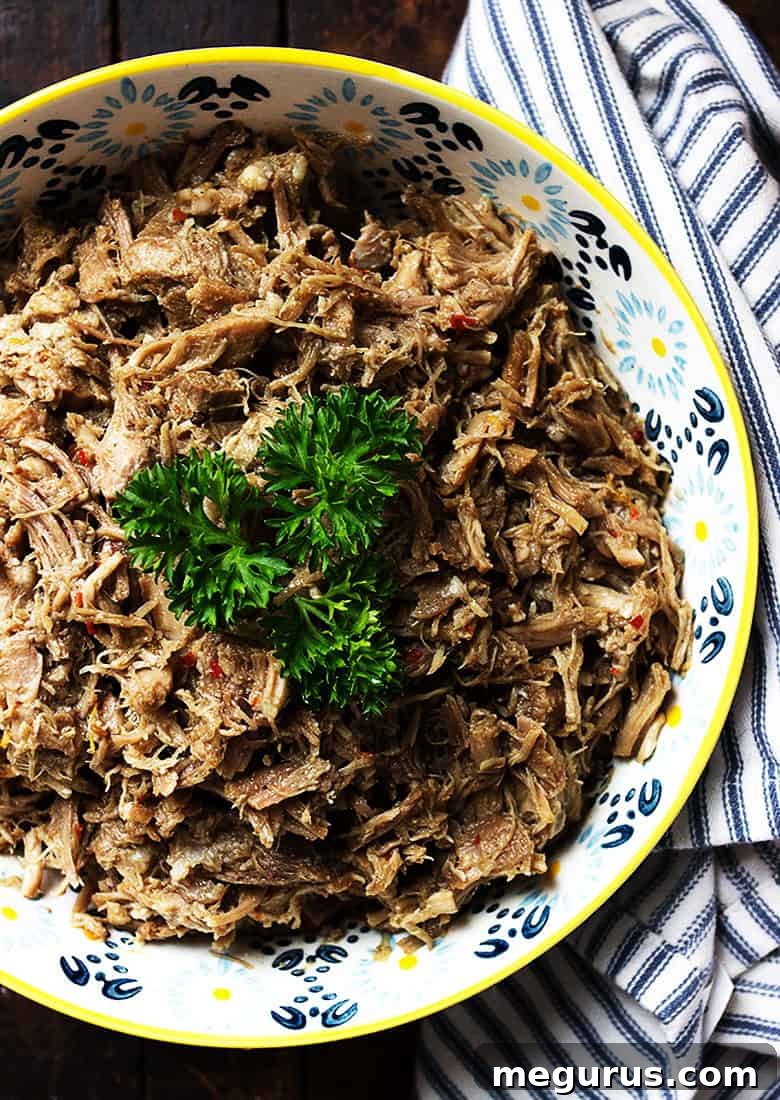
Essential Tips for Perfect Pork Carnitas Every Time
Achieving the Crispy Finish: The Carnitas Secret
The hallmark of truly exceptional carnitas is that irresistible crispy, caramelized exterior contrasting with the tender interior. After your pork has slow-cooked and shredded, the final step is crucial. Heat a little cooking oil (such as vegetable, canola, or lard for authentic flavor) in a heavy-bottomed skillet or cast iron pan over medium-high heat until shimmering. Add your shredded carnitas in a single layer, ensuring not to overcrowd the pan. Allow it to cook undisturbed for a few minutes until it forms a beautiful golden-brown crust. Use a spatula to press down on the pork, maximizing contact with the hot pan for optimal crisping. Flip and repeat on other sides until you achieve your desired level of crispiness. This step is non-negotiable for that authentic carnitas experience.
Make-Ahead and Freezing Mastery
Carnitas are a fantastic make-ahead meal, perfect for meal prep or feeding a crowd. Once cooked and shredded, allow the carnitas to cool completely. For refrigeration, transfer them to an airtight container and store in the fridge for up to 3-4 days. To reheat and serve, simply follow the crisping instructions above. For longer storage, carnitas freeze beautifully for up to 3 months. Portion the cooled carnitas into freezer-safe bags or containers, removing as much air as possible to prevent freezer burn. Thaw overnight in the refrigerator before crisping and serving. This makes delicious meals accessible even on the busiest days.
Pork Selection and Preparation
While pork shoulder (Boston butt) is the ideal cut, ensure you prepare it correctly. Cut the pork into roughly 1-2 inch chunks. This size allows for even cooking and easier shredding later. While you want to remove any large, obvious chunks of pure fat (as indicated in the recipe), don’t be overly aggressive. Some fat marbling throughout the meat is essential for moisture and flavor. Leaving a small amount of fat on the cubes will contribute to the rich, unctuous texture of the finished carnitas as it renders down during the long cooking process.
The Art of Shredding
After the initial long simmer, the pork should be incredibly tender. You can use two forks to easily pull the meat apart into shreds directly in the pot. For a slightly finer texture, a potato masher works wonderfully to break down the chunks. The goal is a mix of textures – some finely shredded pieces, some slightly larger, tender bits – for a more interesting mouthfeel. Ensure you do this while the pork is still warm, as it will be much easier to shred than when cold.
Slow Cooked Pork Carnitas Recipe Card
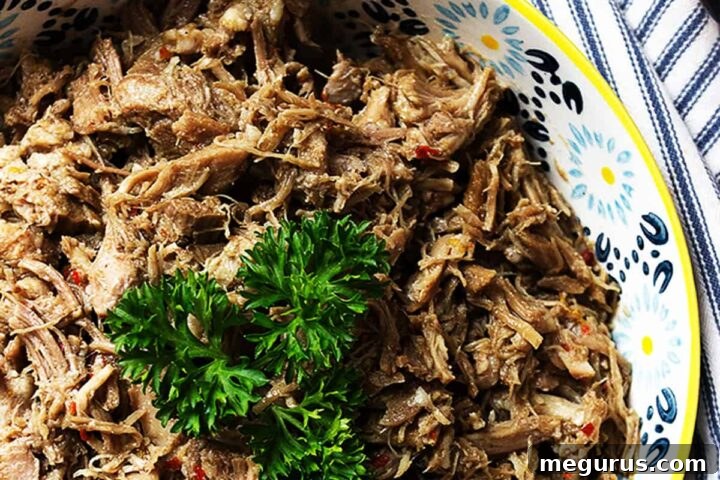
Slow Cooked Pork Carnitas
Pin This
15
2
2 15
12 people
Ingredients
- 3 pounds pork shoulder
- 7 strips orange peel
- 5 cloves garlic, minced
- 1 large onion, chopped
- 1 teaspoon crushed red pepper flakes
- 1/2 teaspoon ground cinnamon
- 2 leaves bay
- Pinch ground cloves
- 1 teaspoon dried oregano leaves, (less if ground oregano)
- 1 1/2 teaspoon kosher salt, or more, to taste (less if using fine salt)
Instructions
-
Cut pork shoulder into 1-2 inch chunks, trimming and discarding any large, solid pieces of fat. It’s fine to leave a moderate amount of fat on the cubes, as this will render during cooking and contribute to the rich flavor and moisture.
-
Place the prepared pork in a large, heavy-bottomed pot on your stovetop. Add enough water to completely cover the meat by about 2 inches. Heat the pot over medium-high heat until the water reaches a vigorous boil. Allow it to boil for approximately one minute, then turn off the heat. Carefully skim off any foam or rendered fat from the surface of the liquid and discard it.
-
To the pot, add the orange peel strips, minced garlic, chopped onion, crushed red pepper flakes, ground cinnamon, bay leaves, dried oregano leaves, kosher salt, and a pinch of ground cloves. Stir all the ingredients together to ensure they are well combined and the spices are evenly distributed. Reheat the liquid to a boil, then immediately reduce the heat to medium-low to maintain a gentle simmer. Simmer, uncovered, for 1 1/2 hours. During this period, check a few times, particularly towards the end of cooking, to ensure there is still sufficient liquid in the pot; add a bit more water if needed to keep the pork partially submerged and prevent it from drying out.
-
After 1 1/2 hours, carefully remove and discard the bay leaves from the pot. Use two sturdy forks or a potato masher to break apart and shred the tender chunks of pork directly in the pot. Continue cooking, stirring occasionally, for an additional 30 minutes, or until almost all of the liquid has evaporated, leaving the shredded pork in a rich, concentrated broth. This final cooking period helps to further tenderize the pork and reduce the liquid for maximum flavor.
-
Your slow-cooked carnitas are now ready to be enjoyed immediately. Alternatively, allow them to cool completely before transferring to an airtight container for refrigeration or freezing for later use.
-
For that authentic, crispy carnitas experience, you can serve the carnitas “as is” directly from the pot, or, for an even better texture, crisp them up. To do so, heat a little cooking oil (or reserved pork fat) in a skillet over medium-high heat. Add the desired amount of carnitas and cook until beautifully browned and crispy, pressing down with a spatula occasionally to ensure good contact with the pan.
Notes
Mexican
Main Course
Jennifer Maloney
Serving Suggestions: Beyond the Taco
While pork carnitas are undeniably excellent in tacos, their versatility knows no bounds. This delicious, tender, and crispy pork can elevate a wide array of dishes, making it a fantastic ingredient to have on hand.
- Classic Tacos, Burritos, & Quesadillas: The most popular choice! Serve crispy carnitas in warm corn or flour tortillas with your favorite toppings like chopped onion, cilantro, a squeeze of lime, salsa verde, or pickled onions. For burritos, wrap them with rice, beans, and cheese. For quesadillas, melt cheese with carnitas between tortillas.
- Crispy Flautas & Taquitos: Just like the linked recipes below, carnitas make an incredible filling for flautas (rolled in flour tortillas) or taquitos (rolled in corn tortillas) that are then fried until golden and crispy. Serve with guacamole, sour cream, and salsa.
- Hearty Sandwiches & Sliders: Pile carnitas on a crusty roll with some creamy coleslaw, avocado, or a tangy BBQ sauce for a satisfying sandwich. Smaller buns can be used for delightful sliders, perfect for parties.
- Flavorful Carnitas Bowls: For a lighter or carb-conscious option, serve carnitas over a bed of rice (cilantro-lime rice is a great choice), quinoa, or cauliflower rice. Add black beans, corn salsa, avocado, and a dollop of Greek yogurt or sour cream.
- Unique Pizza Topping: Step up your pizza game by using carnitas as a topping. It pairs wonderfully with a thin crust, a little salsa as a base, red onion, jalapeños, and Monterey Jack cheese.
- Vibrant Salads: Add a protein punch to your salad. Serve carnitas over mixed greens with corn, black beans, tomatoes, avocado, and a zesty vinaigrette for a refreshing and filling meal.
- Nachos & Loaded Fries: Layer carnitas over tortilla chips or crispy fries with melted cheese, jalapeños, pico de gallo, and a drizzle of crema for an ultimate indulgence.
Frequently Asked Questions (FAQ) About Carnitas
- Can I use a different cut of pork for carnitas?
- While pork shoulder (Boston butt) is highly recommended for its ideal fat content and connective tissue, you could technically use other fattier cuts like pork butt. However, pork shoulder consistently yields the most tender and flavorful results due to how its fat renders and connective tissues break down during slow cooking.
- What if I don’t have a heavy-bottomed pot?
- A heavy-bottomed pot is ideal because it distributes heat evenly and minimizes scorching. If you don’t have one, use your largest, thickest-bottomed pot available. You may need to stir more frequently, especially during the liquid reduction phase, to prevent sticking and ensure even cooking.
- How do I store leftover carnitas?
- Allow cooked carnitas to cool completely before transferring them to an airtight container. They can be refrigerated for 3-4 days. For longer storage, freeze them in freezer-safe bags or containers for up to 3 months. Thaw in the refrigerator before reheating and crisping.
- Can I make this in a slow cooker or instant pot?
- Yes, you can adapt this recipe for a slow cooker or Instant Pot. For a slow cooker, cook on low for 6-8 hours or high for 3-4 hours until tender. For an Instant Pot, cook on high pressure for 60-75 minutes with a natural release, using less liquid initially. In both cases, the final crisping step in a skillet is still essential to achieve the signature carnitas texture.
- Is this carnitas recipe spicy?
- This recipe uses crushed red pepper flakes for a gentle warmth, not intense heat. You can easily adjust the amount of red pepper flakes to suit your preference – omit them entirely for no spice, or add more for a bigger kick!