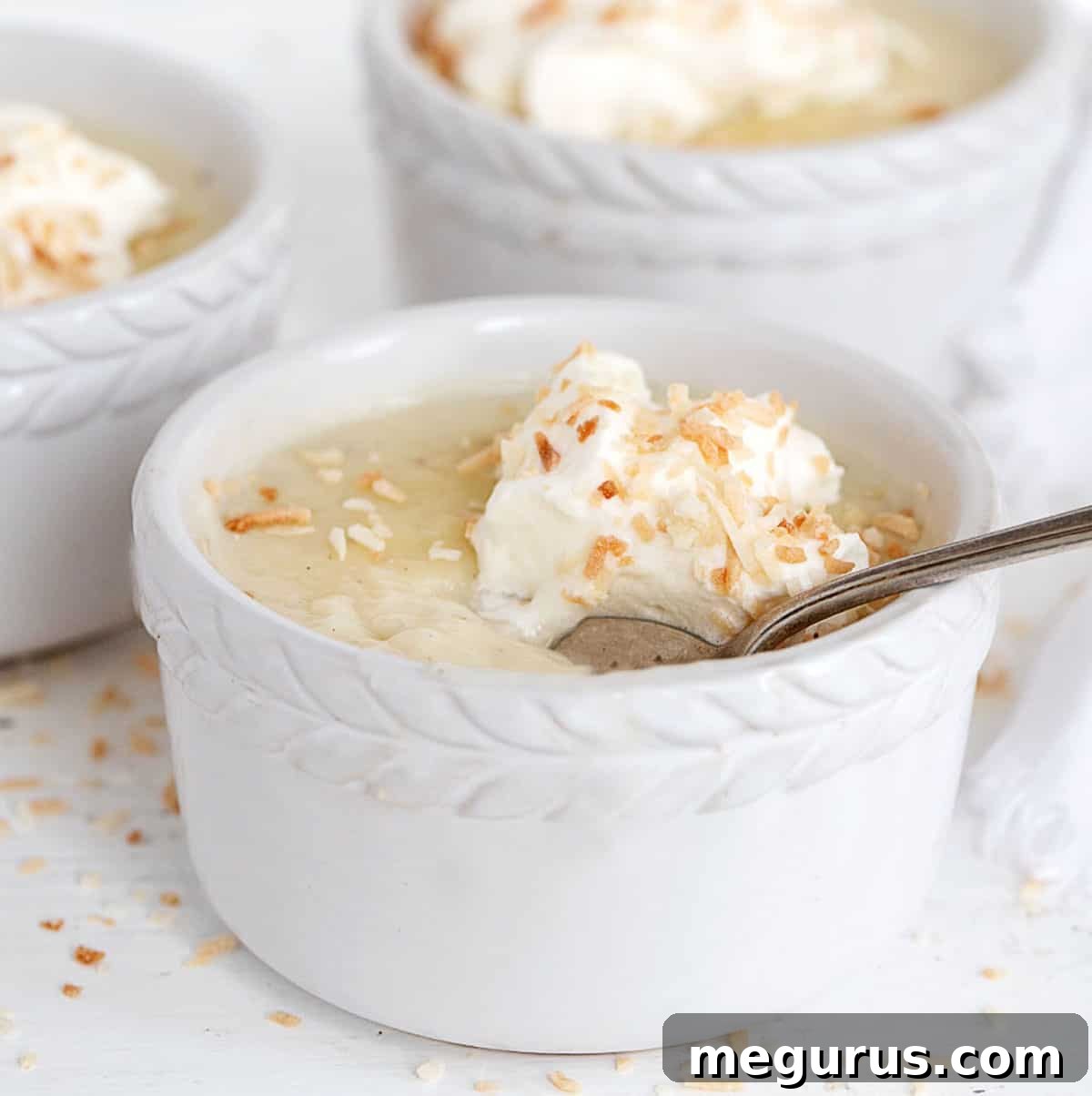
Prepare to be enchanted by the silky smooth texture and rich tropical flavor of this incredible Coconut Cream Pudding. Imagine all the lusciousness of a classic coconut cream pie, but without the hassle of a crust. This recipe delivers a perfectly creamy, intensely coconut-flavored dessert that’s effortlessly elegant and incredibly satisfying. Whether you’re craving a taste of the tropics or simply looking for an easy yet decadent treat, this homemade pudding is your ideal choice.
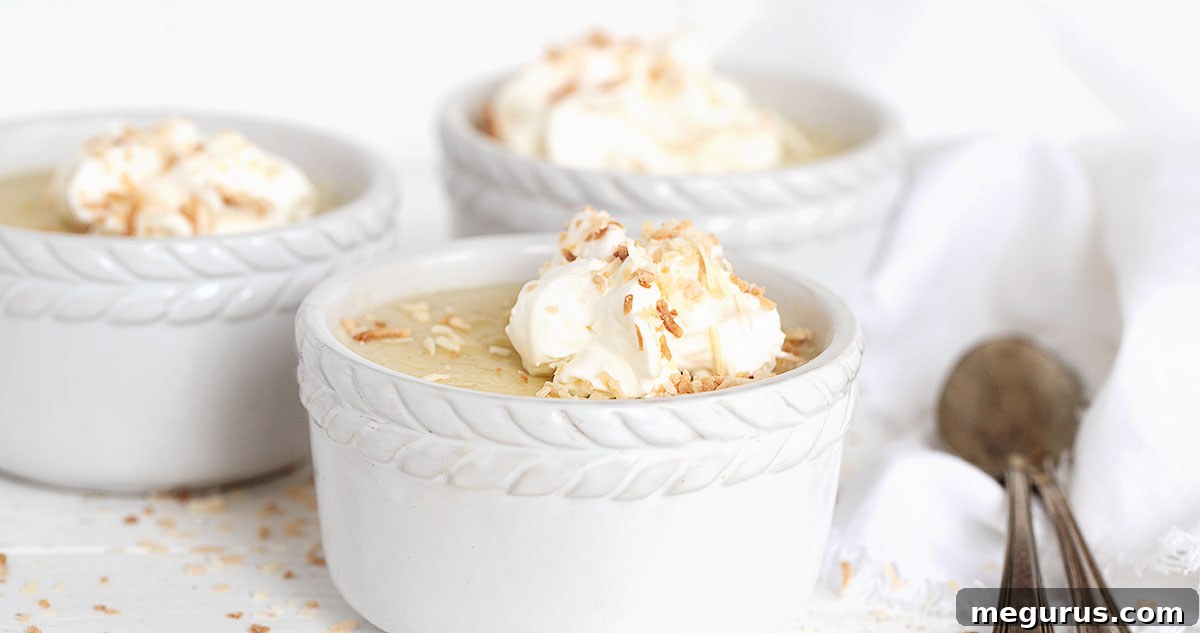
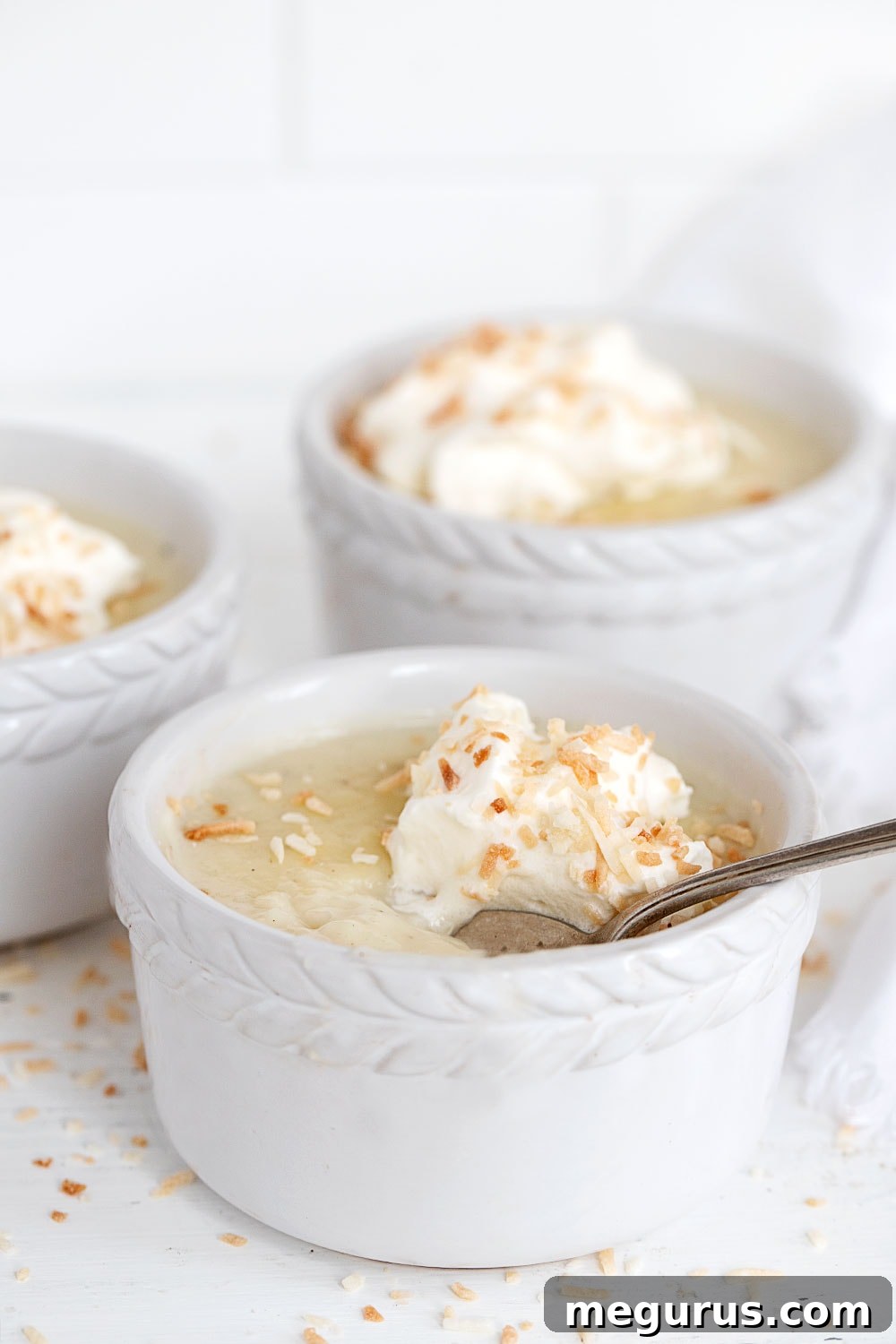
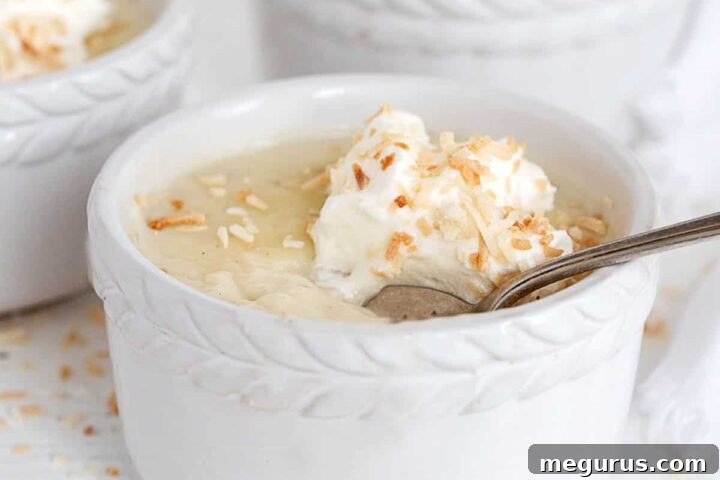
For those who adore the sweet, creamy essence of coconut cream pie, this pudding offers an irresistible alternative. It captures that iconic taste in a spoonable, melt-in-your-mouth form. Enjoy these delightful puddings served in charming individual ramekins, as showcased here, or pour the entire batch into a larger bowl for family-style enjoyment. Elevate your serving presentation with a generous dollop of freshly whipped cream and a sprinkle of golden, toasted coconut. It’s a dessert that feels both comforting and luxurious, perfect for any occasion from casual weeknights to special gatherings.
Understanding Your Ingredients: The Foundation of Flavor
Crafting the perfect creamy coconut pudding begins with understanding the role each ingredient plays. Here’s a closer look at the key components that come together to create this tropical masterpiece, along with notes on potential substitutions to suit your dietary needs or preferences.
Coconut Milk: The Heart of Tropical Flavor
Full-fat coconut milk is the secret to an incredibly rich and velvety pudding. Its higher fat content contributes significantly to both the creamy texture and the pronounced coconut flavor. For the most decadent results, we strongly recommend sticking with full-fat varieties. While you might be tempted to use light or reduced-fat coconut milk, be aware that these will likely yield a thinner, less satisfying pudding. The richness provided by full-fat coconut milk is simply unparalleled in this recipe. We have not tested this recipe with lighter versions, but if you do, anticipate a slight reduction in both creaminess and overall thickness.
Dairy Milk or Half-and-Half Cream: Customizing Richness
To balance the intense coconut flavor and add another layer of creaminess, this recipe calls for either whole milk or half-and-half cream.
- Whole Milk (3.5% b.f.): Using full-fat whole milk creates a wonderfully satisfying pudding that’s perfect for everyday indulgence. It provides a classic custard texture without being overly heavy.
- Half-and-Half Cream (10% b.f.): For a truly luxurious and richer pudding, opting for half-and-half cream is an excellent choice. The higher fat content will result in an even thicker and more decadent dessert, ideal for special occasions or when you simply want to treat yourself. You can also use a blend of both, splitting the difference to find your perfect level of richness.
While 2% milk might work, it hasn’t been tested, and a thinner pudding is a possibility. For those exploring dairy-free options, non-dairy milk (like almond or oat milk) could potentially be used, or even an all-coconut milk base for an ultra-intense coconut flavor, but these variations have not been personally tested. If you experiment with these, we’d love to hear about your results!
Coconut: Texture and Sweetness
The type of coconut you choose can subtly influence the pudding’s texture. Any form of coconut – shredded, flaked, or desiccated – will work beautifully. Feel free to use whatever you have on hand or what best suits your preferred texture.
- Sweetened Coconut: For the best flavor balance and a truly dessert-like sweetness, we highly recommend using sweetened shredded coconut. It enhances the overall sweetness and provides a lovely chewiness.
- Unsweetened Coconut: If you prefer to control the sugar content or want a less sweet pudding, unsweetened coconut can be used, but you might want to slightly increase the sugar in the recipe to compensate.
Consider toasting a portion of your coconut for garnish; it adds a delightful crunch and nutty aroma that complements the creamy pudding perfectly.
Eggs: The Essential Thickener for Custard
As a true custard-style pudding, large eggs are absolutely indispensable. They are not merely an optional addition; the egg yolks, when gently cooked, act as a primary emulsifier and thickening agent, giving the pudding its characteristic smooth, firm yet tender set. Without eggs, this would not be a custard, and the pudding would not achieve its desired texture. Therefore, eggs cannot be omitted from this recipe.
Additional Key Ingredients: Flavor and Structure
- White Sugar: Provides essential sweetness and balances the richness of the coconut and dairy.
- Cornstarch: Acts as a secondary thickener, ensuring a stable and smooth consistency, especially important when working with dairy and eggs. It helps prevent curdling and adds body.
- Salt: A pinch of salt is crucial for enhancing all the other flavors, preventing the pudding from tasting flat, and bringing out the natural sweetness of the coconut.
- Vanilla Extract (or Vanilla Bean Paste): Adds a warm, aromatic depth that beautifully complements the tropical coconut notes. Use a good quality extract for the best flavor. Vanilla bean paste offers a more intense vanilla experience and adds lovely flecks.
How to Create Your Perfect Coconut Cream Pudding: A Step-by-Step Guide
Making this creamy coconut pudding is simpler than you might imagine, but it does require a bit of patience and attention to detail, especially during the cooking phase. Follow these steps for a smooth, luscious dessert every time.
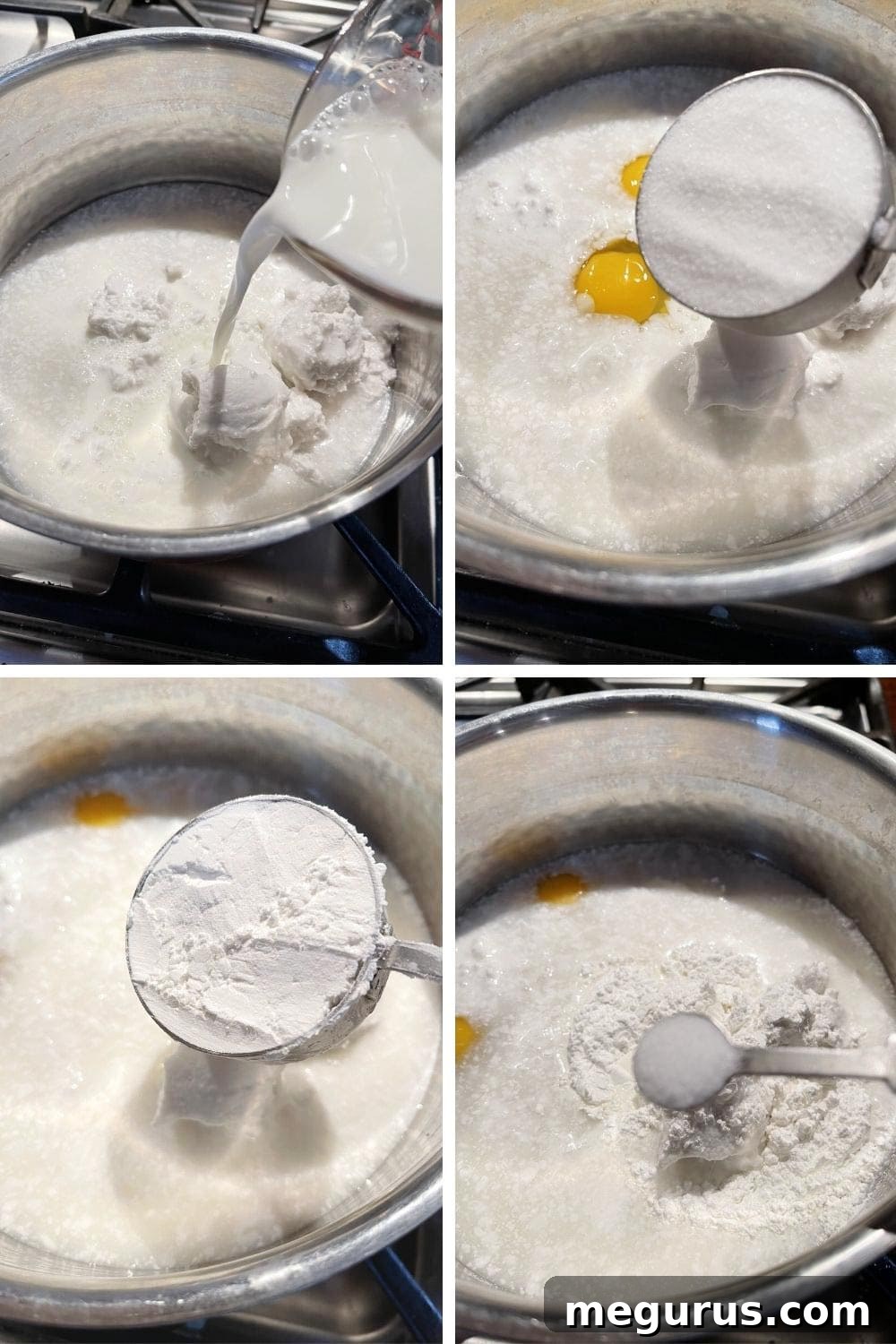
1. Initial Mixing and Gentle Heating: Begin by combining all your ingredients – the full-fat coconut milk, whole milk or half-and-half, large eggs, white sugar, cornstarch, and salt – in a large, heavy-bottomed saucepan. A heavy bottom is crucial for even heat distribution, preventing scorching. Whisk vigorously at this stage to ensure all ingredients are thoroughly combined and no lumps of cornstarch remain. Place the saucepan over medium-low heat. This slow and steady heating process is absolutely critical, especially with the eggs. You need to warm the egg mixture gradually to temper them, preventing them from scrambling. Initially, stir regularly, ensuring the mixture heats evenly. As the pudding begins to warm and steam, switch to constant stirring. This constant motion will help you gauge the thickening process and ensure a perfectly smooth custard. This step typically takes 10-15 minutes, so embrace patience; rushing will lead to a grainy texture or scrambled eggs.
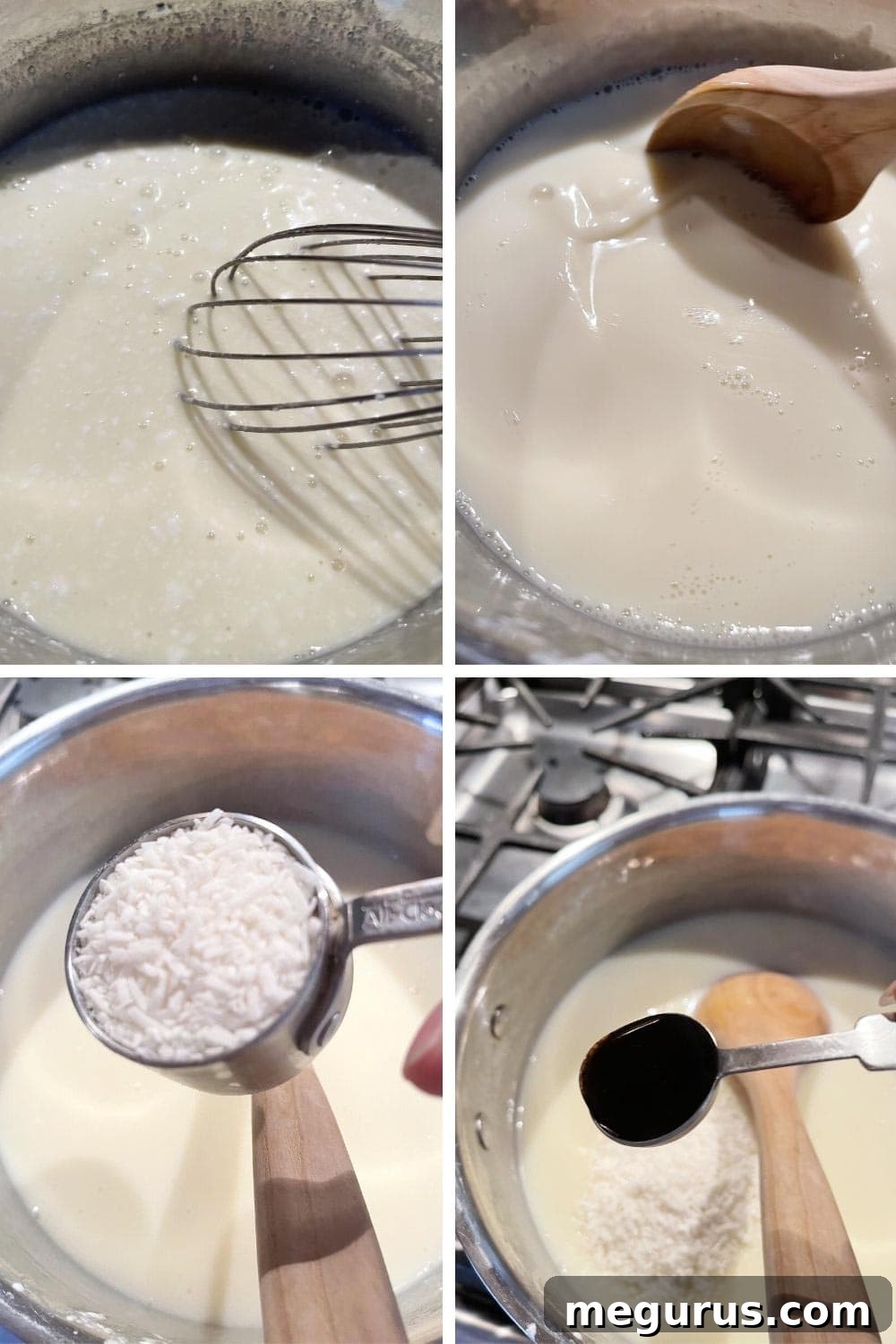
2. Thickening and Finishing: Continue cooking and stirring constantly until the mixture noticeably thickens to a pudding-like consistency. A good indicator is when you see the first large bubble break the surface, or if you’re using a thermometer, when it reaches approximately 205°F (96°C). At this point, immediately remove the pot from the heat. If you notice any small lumps, don’t despair! A vigorous whisking motion can often smooth them out. Alternatively, for a truly silken pudding, you can carefully pour the hot mixture through a fine-mesh sieve into a clean bowl, pressing down on any solids. An immersion blender can also work wonders to achieve perfect smoothness before the next step. Once smooth, stir in the sweetened shredded coconut and vanilla extract (or vanilla bean paste). The residual heat will warm the coconut and integrate the vanilla beautifully. From here, you can ladle the warm pudding into individual serving dishes, such as ramekins, or pour it into one larger serving bowl.
3. Chilling for Perfection: Refrigerate the pudding for a minimum of 2 hours. However, for the best possible texture and fully developed flavor, aim for 3 to 4 hours of chilling time, or even overnight. As it chills, the pudding will firm up further, becoming even more luscious. Regarding the “skin” on pudding: if you prefer a skin on your pudding (a preference many share!), leave the pudding uncovered in the fridge. If you desire a completely smooth top without a skin, press a piece of plastic wrap directly onto the surface of the pudding, ensuring no air is trapped between the plastic and the pudding, before refrigerating.
Expert Tips for Your Best Coconut Cream Pudding
Achieving a perfectly smooth and flavorful coconut cream pudding is easy with a few insider tips. These insights will help you navigate common custard-making queries and ensure your dessert is a resounding success.
- Dairy Choice for Desired Richness: As mentioned, you have flexibility with your dairy. Using only whole milk provides a delightful, everyday creamy texture that is incredibly satisfying. If you’re aiming for a dessert that feels more indulgent, consider using half-and-half cream for all or part of the milk component. This will yield a noticeably richer and slightly thicker pudding, making it ideal for entertaining or when you want to elevate the dessert experience. Don’t be afraid to experiment with a mix of both to find your sweet spot!
- The Art of Gentle Cooking: The cardinal rule for any egg-based custard is patience. Maintaining a medium-low heat setting on your stove is non-negotiable. Rushing the cooking process by turning up the heat too high is the quickest way to end up with curdled or scrambled eggs. The goal is not a vigorous boil, but rather a gentle simmer where the mixture visibly thickens, and perhaps a single large bubble slowly breaks the surface. This slow cooking allows the eggs to temper and thicken gradually, resulting in a smooth, silky pudding.
- Handling Lumps (The Pudding Maker’s Friend): Despite your best efforts, sometimes small lumps can appear. This is not a failure, but a common occurrence. Often, a vigorous whisking right off the heat can smooth them out. For stubborn lumps, an immersion blender used directly in the saucepan (before adding coconut and vanilla) works wonders. Alternatively, pouring the warm pudding through a fine-mesh sieve into a clean bowl, pressing with a spatula to extract all the creamy goodness, will also ensure a perfectly smooth finish. Remember, always do this *before* incorporating the shredded coconut.
- Yield and Portions: This recipe is designed to be versatile. You can typically expect to fill approximately 4 standard large ramekins, or 6 smaller ramekins if you’re aiming for daintier, individual servings. Of course, pouring it into a single larger bowl for scooping is always an option too!
- Coconut Extract vs. Natural Flavor: Many people wonder about adding coconut extract for an intensified flavor. While some prefer it, our preference leans towards the natural, delicate flavor derived solely from the full-fat coconut milk and shredded coconut. Extracts, in our experience, can sometimes lend an artificial taste or an unpleasant aftertaste that detracts from the pudding’s natural charm. However, taste is subjective! If you are a fan of extracts and wish for a bolder coconut punch, feel free to add about half a teaspoon of good quality coconut extract at the same time as the vanilla.
- Optimizing Storage and Anticipating Texture Shifts: Your homemade coconut cream pudding will maintain its excellent quality in the refrigerator for 2-3 days when properly covered. After approximately 48 hours, you might observe a slight thinning of the pudding as the liquid begins to separate from the solids (a natural process known as syneresis). Rest assured, the pudding is still perfectly safe and delicious to eat! Simply give it a good stir to reincorporate everything before serving, and it will be as delightful as ever. Ensure it’s stored in an airtight container to preserve freshness and prevent it from absorbing other refrigerator odors.
Making Ahead, Storing, and Freezing Your Tropical Delight
One of the many appealing aspects of this easy coconut cream pudding is its suitability for making ahead, which is a significant convenience for entertaining or meal prep. Since the pudding requires adequate chilling time to set and develop its full flavor, preparation in advance is not just an option, but an integral part of the recipe. The flavors actually deepen and meld beautifully after a few hours in the refrigerator, making it an ideal dessert to prepare the day before an event.
Storage Guidelines
Once prepared and chilled, your coconut cream pudding will keep exceptionally well in the refrigerator for a solid 2 to 3 days. To maintain its freshness and prevent any undesirable skin from forming (unless you prefer it!), ensure the pudding is covered properly. If you want to avoid a skin, press a layer of plastic wrap directly onto the surface of the pudding before placing it in an airtight container or simply covering the individual ramekins. For those who enjoy a slightly firmer top, simply cover the serving dishes loosely or use a lid that allows for a little air circulation.
Freezing Potential
While this pudding is designed to be enjoyed fresh and chilled, it can generally be frozen. Custard-based puddings can sometimes undergo slight textural changes after freezing and thawing, such as becoming a bit softer or having a slightly different mouthfeel. However, the core deliciousness of the coconut flavor should remain intact. If you do choose to freeze portions, we recommend doing so in individual, freezer-safe containers for easy thawing. Thaw frozen pudding slowly in the refrigerator overnight. We can’t speak definitively to the exact post-freezing texture, mainly because these delightful puddings rarely last long enough in our household to even consider freezing them!
Get the Recipe: Coconut Cream Pudding
Pin This
Leave a Review
Ingredients
- 14 oz (400 ml) full-fat coconut milk, not light or fat-reduced
- 1 1/4 cups whole milk (3.5%) or half and half cream (10%), or half of each
- 2 large eggs
- 3/4 cups white sugar
- 1/3 cup cornstarch
- 1/4 teaspoon salt
- 1/4 cup sweetened shredded coconut
- 1 teaspoon vanilla extract, or vanilla bean paste
For topping to serve (optional):
- Whipped Cream
- Toasted Coconut *see Notes
Instructions
-
Combine the coconut milk, milk or half and half, eggs, sugar, cornstarch, and salt in a large saucepan. Whisk until smooth. Place over medium-low heat and cook, stirring regularly to start, then constantly once it starts to steam. This will take about 10-15 minutes, so be patient.
-
Once the mixture noticeably thickens and a bubble breaks the surface (at about 205°F, if you have a thermometer), it’s done. Remove from heat. Whisk well to remove any lumps or, if still a little lumpy, you can pour and press through a fine sieve into a bowl or use an immersion blender before adding the coconut and vanilla. Remove from the heat and add the 1/4 cup processed coconut and the vanilla. Pour into individual ramekins or one large bowl.
-
If you don’t want a skin on your pudding, cover with plastic wrap so the plastic wrap rests right on top of the pudding. Leave uncovered in the refrigerator if you want a skin. Refrigerate at least 2 hours, but it will be even better after 3-4 hours of refrigeration. The pudding will thicken further as it refrigerates.
-
Serve with a dollop of whipped cream and a sprinkling of toasted coconut.
Notes
Tips!
- You can use either whole milk or half and half cream for this pudding, or you can split the difference and use half of each. I find the pudding made with whole milk quite satisfying for basic, everyday family eating. Adding some or all half and half produces a richer and slightly thicker pudding, which is nice for a special dessert.
- As this is an egg-based pudding, you need to heat the mixture slowly, so keep the stove at the medium-low setting and be patient. You don’t want to cook the mixture to a full boil, but just to the point where one bubble will break the surface or when the mixture noticeably thickens. Sometimes, the mixture will curdle, meaning you’ll notice lumps in it. Generally, a vigorous whisk will smooth it out, or an immersion blender at the end of cooking, but before adding the coconut. You can also pour it through a fine sieve into a bowl before adding the coconut, as well.
- You will get about 4 large ramekins or 6 smaller ramekins if making individual portions.
- Some may be wondering about adding coconut extract to this pudding. I don’t love extracts in general, as I never find the taste particularly pleasing, and I don’t like the aftertaste. I just tend to prefer the natural flavor, even if it isn’t quite as forward as when using an extract. But that’s just me. If you want to add a half teaspoon or so, go right ahead.
- The pudding will keep in the fridge for several days, though after a certain point (48-hours-ish), it will start to thin as the liquid separates from the solids. It’s still fine to eat. You can stir it back together and enjoy.
Be sure to read the notes above the Recipe Card for more tips on making this recipe. You will also find step-by-step Photos there that you might find helpful.
Nutritional information reflects making the pudding with whole milk.
Tried this recipe?If you enjoyed this recipe, please leave a star rating and comment. It helps others to find it!
More Tropical Coconut Recipes to Love!
If you’ve fallen for the enchanting flavor of coconut in this pudding, you’ll be thrilled to discover more delightful recipes that celebrate this versatile tropical ingredient. Expand your culinary horizons with these other fantastic coconut-inspired treats:
We hope you thoroughly enjoy making and savoring this delightful Coconut Cream Pudding. It’s a testament to how simple ingredients can come together to create something truly special and memorable. Don’t forget to share your experience in the comments below!