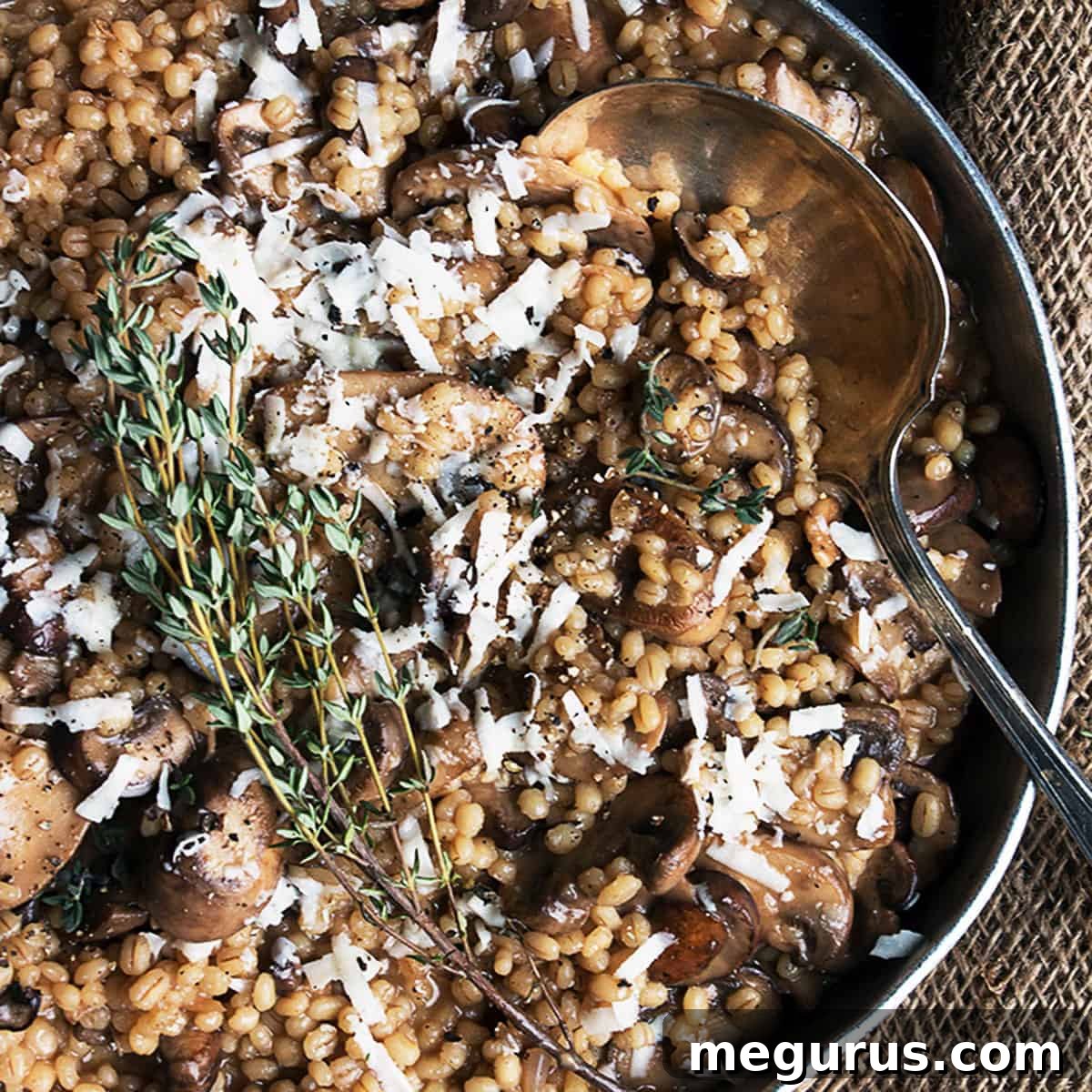
Discover the heartwarming delight of this Mushroom Barley Risotto, a dish that transforms humble pearl barley into a rich, creamy, and incredibly satisfying meal. Cooked in the classic risotto style with earthy mushrooms, aromatic garlic, and savory Parmesan cheese, this recipe is a testament to comfort food at its finest. Whether you’re seeking a robust meatless main course or a flavorful, hearty side dish, this barley risotto promises a delightful culinary experience that nourishes both body and soul.
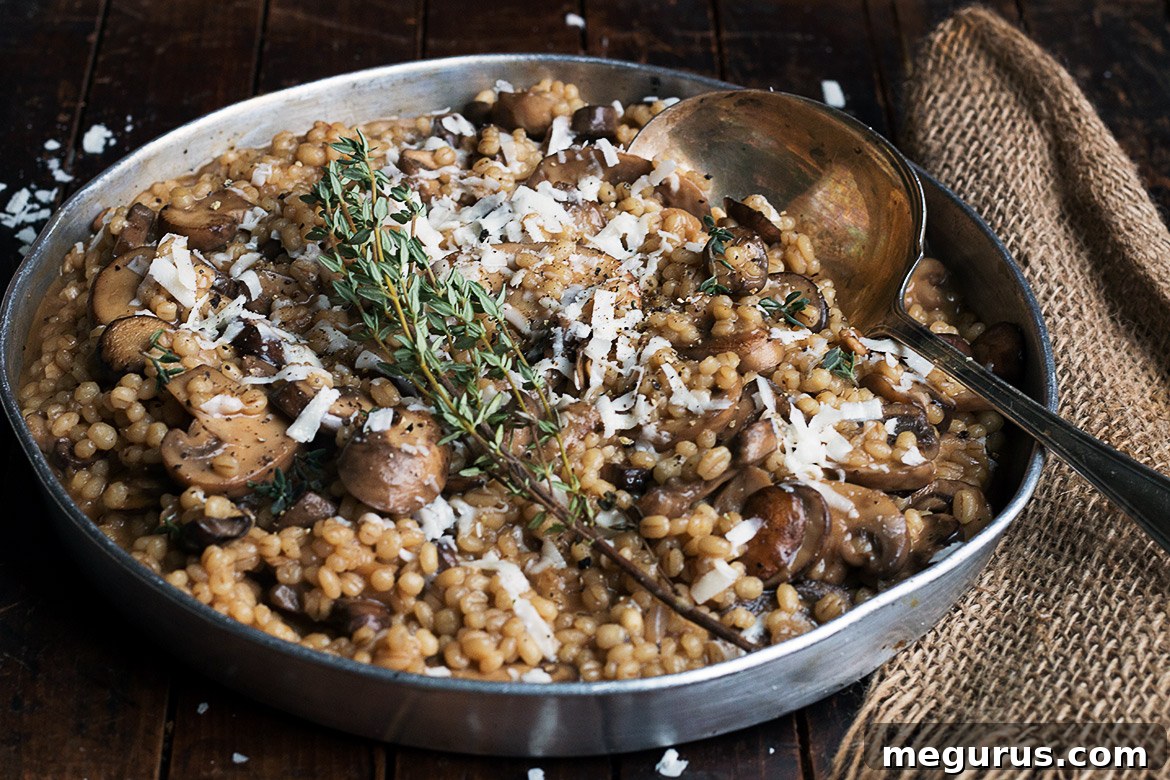
As a devoted fan of comforting, wholesome dishes, barley holds a special place in my kitchen. It’s not just its wonderfully nutty flavor and chewy texture that I adore; barley is also a powerhouse of nutrition, packed with dietary fiber that contributes to a healthy digestive system and provides sustained energy. From hearty soups and refreshing salads to this elegant risotto, barley consistently proves itself as a versatile and incredibly beneficial grain. It’s the perfect ingredient to fuel your body, especially on those days when you need a little extra sustenance.
This particular dish elevates barley to new heights, embracing the traditional risotto technique to create a truly luxurious experience. Each grain of pearl barley is slowly simmered in rich beef broth, absorbing layers of flavor from sautéed garlic and a generous medley of mushrooms. A final touch of Parmesan cheese melts into the creamy concoction, adding a tangy, umami-rich finish that makes every bite irresistibly delicious. The result is a deeply satisfying, full-flavored dish that showcases the best of what barley has to offer.
Unlocking Flavor: Key Ingredients & Smart Substitutions
The success of any great dish lies in the quality of its ingredients, and this mushroom barley risotto is no exception. Here’s a closer look at the stars of our recipe and how you can adapt them to your preferences or what you have on hand:
Barley: The Foundation of Our Risotto
When you venture to the grocery store for barley, you’ll typically encounter two main varieties: pot barley and pearl barley. While both are incredibly nutritious, their processing and cooking characteristics differ significantly. Understanding these differences is crucial for achieving the perfect risotto texture. Scroll down a bit further, and we’ll delve deeper into the distinctions between these two types of barley.
Mushrooms: The Earthy Heart of the Dish
The beauty of this recipe is its adaptability to various mushroom types. Common choices like button mushrooms or cremini mushrooms (also known as baby bellas) are always excellent and readily available. However, I highly recommend experimenting with a mix of mushrooms to add complexity and depth to the flavor profile. Combining button and cremini mushrooms, for instance, offers a subtle variation in taste and texture. For an even more gourmet touch, consider incorporating a handful of sliced shiitake, oyster, or even chopped portobello mushrooms. Remember to clean your mushrooms gently with a damp cloth or a soft brush, avoiding excessive water, which can make them soggy.
Beef Broth: The Secret to Deep Umami
Through numerous iterations of this dish, I’ve come to a firm conclusion: using beef broth is a game-changer. Its robust, savory depth and rich umami notes complement the nutty flavor of the barley and the earthiness of the mushrooms in a way that chicken broth simply cannot replicate. While chicken broth will work in a pinch, beef broth truly elevates this risotto. To best control the seasoning of your final dish, I suggest starting with a low-sodium or no-sodium beef broth. This allows you to gradually add salt throughout the cooking process, ensuring a perfectly balanced flavor without the risk of over-salting.
Making it Vegetarian: If you’re aiming for a vegetarian version of this delightful risotto, simply substitute the beef broth with a high-quality vegetable broth. To compensate for the depth of flavor lost from the beef broth, consider adding a splash of balsamic vinegar towards the end of cooking. Its subtle sweetness and tang will introduce a welcome layer of complexity, enhancing the overall savoriness of the dish.
White Wine: A Touch of Acidity and Aroma
A dry white wine, like a Sauvignon Blanc or Pinot Grigio, adds a wonderful layer of acidity and aromatic complexity to the risotto, helping to deglaze the pan and meld the flavors together. Choose a wine that you genuinely enjoy drinking, as its character will infuse into the dish. If you prefer not to use alcohol or don’t have wine on hand, don’t worry. You can simply omit it and use an equivalent amount of extra broth. For a touch of acidity, a splash of balsamic vinegar or white wine vinegar can be added in place of the wine, providing a similar brightening effect on the flavors.
Pot Barley vs. Pearl Barley: Understanding the Difference
Choosing the right type of barley is essential for this risotto, and understanding the nuances between pot barley and pearl barley will help you appreciate why pearl barley is typically preferred for this preparation.
After harvest, all barley undergoes a husking process where it’s passed through a specialized machine to remove its inedible outer layer. This initial stage differentiates the two main types:
Pot Barley (or Hulled Barley): This variety is lightly husked, meaning only the outermost, inedible hull is removed. Crucially, the nutritious bran and germ layers remain intact. Because it retains these vital outer layers, pot barley is considered a whole grain, offering the maximum possible nutritional benefits, including a higher fiber content. However, this also means pot barley has a tougher texture and requires a significantly longer cooking time, often twice as long as pearl barley. Its robust nature makes it ideal for dishes that simmer for extended periods, such as hearty soups and slow-cooked stews, where its chewiness and ability to absorb flavors over time truly shine.
Pearl Barley: The Risotto Star: Pearl barley undergoes a more extensive polishing process in the husking machine. This process removes not only the outer hull but also the bran and germ layers, revealing the inner, lighter-colored “pearl” of the grain. While this process does reduce some of its whole-grain nutritional content, pearl barley remains a very nutritious option and an excellent source of dietary fiber. Its key advantage for dishes like risotto is its quicker cooking time and its slightly softer, more tender texture when cooked. Without the tough outer layers, pearl barley absorbs liquid more readily and achieves a creamy consistency much faster, making it perfect for preparations where a shorter cooking time and a specific texture are desired, much like Arborio rice in traditional risotto. Its characteristic nutty flavor and satisfying chewiness are still very much present, making it a fantastic choice for this comforting dish.
Essential Recipe Tips for Perfect Barley Risotto
Achieving a perfectly creamy and flavorful barley risotto is easier than you might think with these expert tips:
- Using Pot Barley: While this recipe is designed for pearl barley due to its faster cooking time and ideal texture, it is certainly possible to make it with pot barley. However, be aware that pot barley will require a much longer cooking duration and more liquid than specified in the recipe. You’ll likely need to simmer it for an additional 15-20 minutes or even longer, continuously adding broth (or hot water if you run out of broth) until the grains are tender. The final texture will be chewier, but equally delicious in its own way.
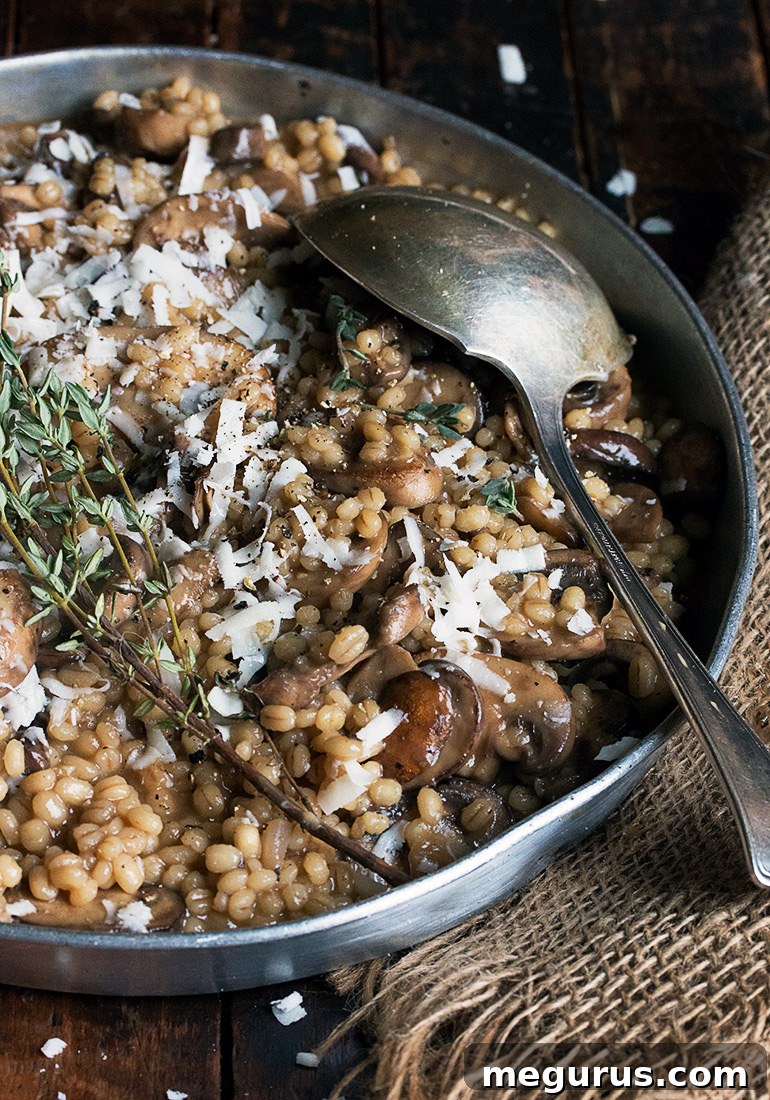
- The “Risotto Style” Advantage: One of the beautiful aspects of making risotto with barley, as opposed to traditional rice risotto, is that it’s far less demanding. While you’ll still add broth gradually and stir, you don’t need to hover over the pot constantly, stirring almost continuously. Instead, allow the mixture to simmer gently, stirring occasionally (every few minutes) and adding more broth when the pan looks nearly dry. This more relaxed approach still yields a wonderfully creamy result without the intense commitment of a classic rice risotto. Just keep an eye on it to prevent sticking.
- Storage and Freezing Guidelines: Leftover mushroom barley risotto can be stored in an airtight container in the refrigerator for up to 2-3 days. When reheating, you might need to add a splash of extra broth or water to restore its creamy consistency. Unfortunately, risotto, whether made with rice or barley, doesn’t freeze particularly well. The texture tends to become mushy and less appealing after thawing, so freezing is not recommended for this dish. Enjoy it fresh!
How to Enjoy This Versatile Barley Risotto
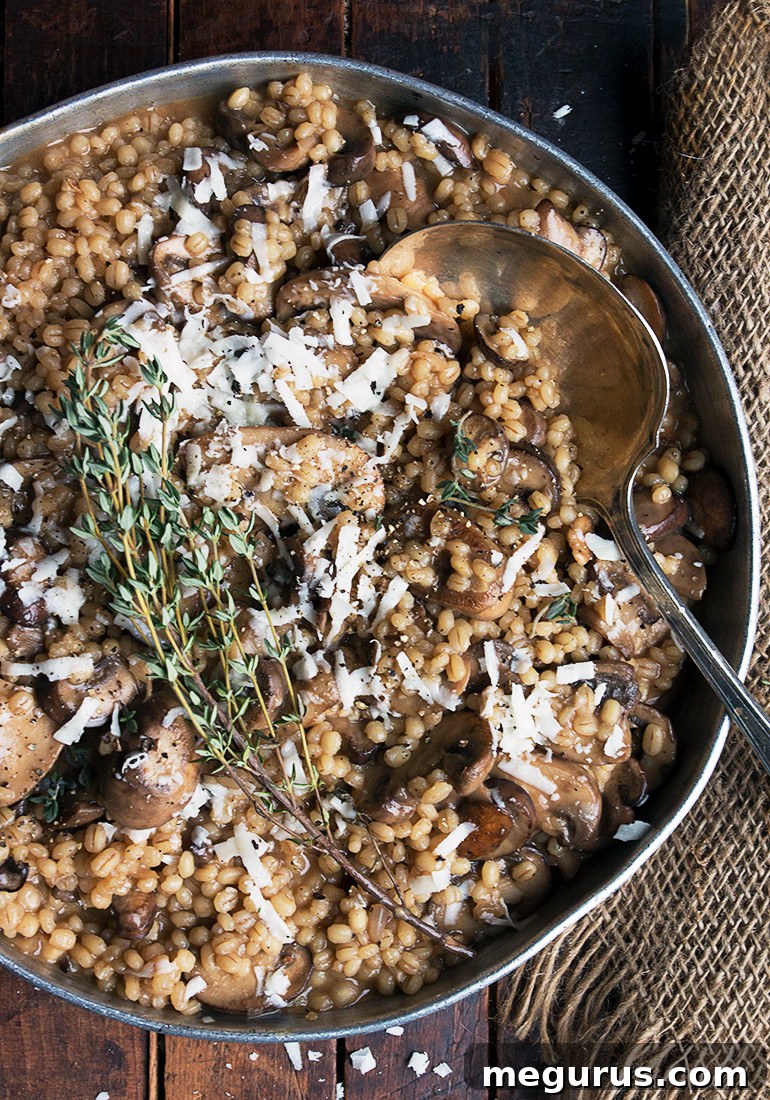
This mushroom barley risotto is wonderfully versatile, making it suitable for a variety of dining occasions. Its rich flavors and satisfying texture allow it to stand alone as a delightful and nourishing meatless main course, perfect for weeknight dinners or a comforting weekend meal. The goodness of whole grains ensures you’re getting a fiber-rich, wholesome dish that will keep you feeling full and energized.
If you’re serving it as a main, consider enhancing the nutritional profile and adding more vibrant colors and textures by incorporating some steamed broccoli, broccolini, or even sautéed spinach. A sprinkle of toasted nuts like walnuts or pecans could also add a pleasant crunch and extra healthy fats.
Alternatively, this barley risotto makes an exceptionally flavorful and hearty side dish. It pairs beautifully with a simple roasted chicken, pan-seared fish, or grilled pork tenderloin. The earthy notes of the mushrooms and barley provide a lovely counterpoint to a variety of proteins. Imagine it alongside a perfectly cooked steak or as a substantial accompaniment to a holiday feast. No matter how you choose to serve it, this mushroom barley risotto is guaranteed to be a crowd-pleaser, offering a comforting and delicious experience for everyone at the table.
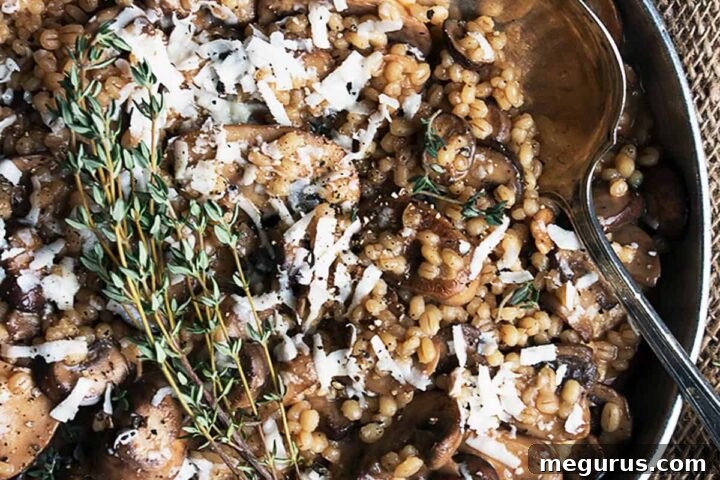
Get the Recipe: Mushroom Barley Risotto
Pin This
Leave a Review
Ingredients
- 3 Tablespoons butter, DIVIDED
- 1 shallot, minced
- 2 cloves garlic, thinly sliced
- 1/2 lb fresh mushrooms, about 1 standard tray
- 1/4 teaspoon fresh thyme leaves, plus more for garnish or a pinch of dried thyme leaves
- Salt and freshly ground pepper
- 1 cup pearl barley
- 1/2 cup dry white wine
- 4 cups beef broth, hot (low sodium recommended)
- 1/4 cup Parmesan cheese, grated
For garnish:
- Additional fresh thyme leaves
- Freshly grated Parmesan cheese
Instructions
-
Heat the beef broth in a saucepan and keep it warm over low heat. It’s important to add hot broth to the barley to maintain a consistent cooking temperature.
-
In a large, deep skillet or Dutch oven, melt 2 tablespoons of the butter over medium heat. Add the minced shallots and thinly sliced garlic, cooking and stirring gently until they soften and become fragrant, about 2-3 minutes. Be careful not to brown the garlic. Next, add the fresh mushrooms and thyme leaves (or a pinch of dried thyme). Season generously with a pinch of salt and freshly ground pepper. Cook, stirring regularly, for about 5-6 minutes, until the mushrooms are tender, have released their moisture, and are lightly golden. Add the pearl barley and the remaining 1 tablespoon of butter to the skillet. Stir well to coat the barley grains, cooking for about 1 minute to lightly toast them. Pour in the dry white wine and continue to cook, stirring, until all the wine has been absorbed by the barley, which should take approximately 3-4 minutes.
-
Add one ladleful (about ½ cup) of the hot beef broth to the barley mixture and stir gently to combine. Allow it to cook over medium heat, stirring occasionally (once or twice), until nearly all of the broth has been absorbed. The mixture should maintain a consistent, gentle simmer, not a vigorous boil; adjust your heat as needed. Continue this process: add broth one ladle at a time, allowing each addition to be almost fully absorbed before adding the next. This gradual process helps the barley release its starches and develop a creamy texture. Continue until all 4 cups of broth have been added and absorbed, which typically takes 25-30 minutes for pearl barley. Taste the barley to check for doneness; it should be al dente – tender with a slight, pleasant chew in the center. If it’s still too firm, add another half ladle of hot water (or broth if you have extra) and cook a bit longer until desired tenderness is reached. Once the barley is perfectly cooked, remove the skillet from the heat and stir in the grated Parmesan cheese until it melts and creates a wonderfully creamy consistency.
-
Season the finished dish with additional salt and freshly ground pepper to taste. Serve the mushroom barley risotto immediately, garnished with extra freshly grated Parmesan cheese and sprigs or leaves of fresh thyme for an aromatic finish. Enjoy this comforting and flavorful dish as a main course or a luxurious side.
Notes
Nutrition Information (per serving):
- Serving: 1 serving
- Calories: 226 kcal
- Carbohydrates: 28g
- Protein: 8g
- Fat: 7g
- Saturated Fat: 4g
- Cholesterol: 18mg
- Sodium: 716mg
- Potassium: 328mg
- Fiber: 5g
- Sugar: 1g
- Vitamin A: 215 IU
- Vitamin C: 1.4mg
- Calcium: 71mg
- Iron: 1.4mg
Tried this recipe? If you enjoyed this recipe, please leave a star rating and comment below. Your feedback helps others discover and enjoy it too!