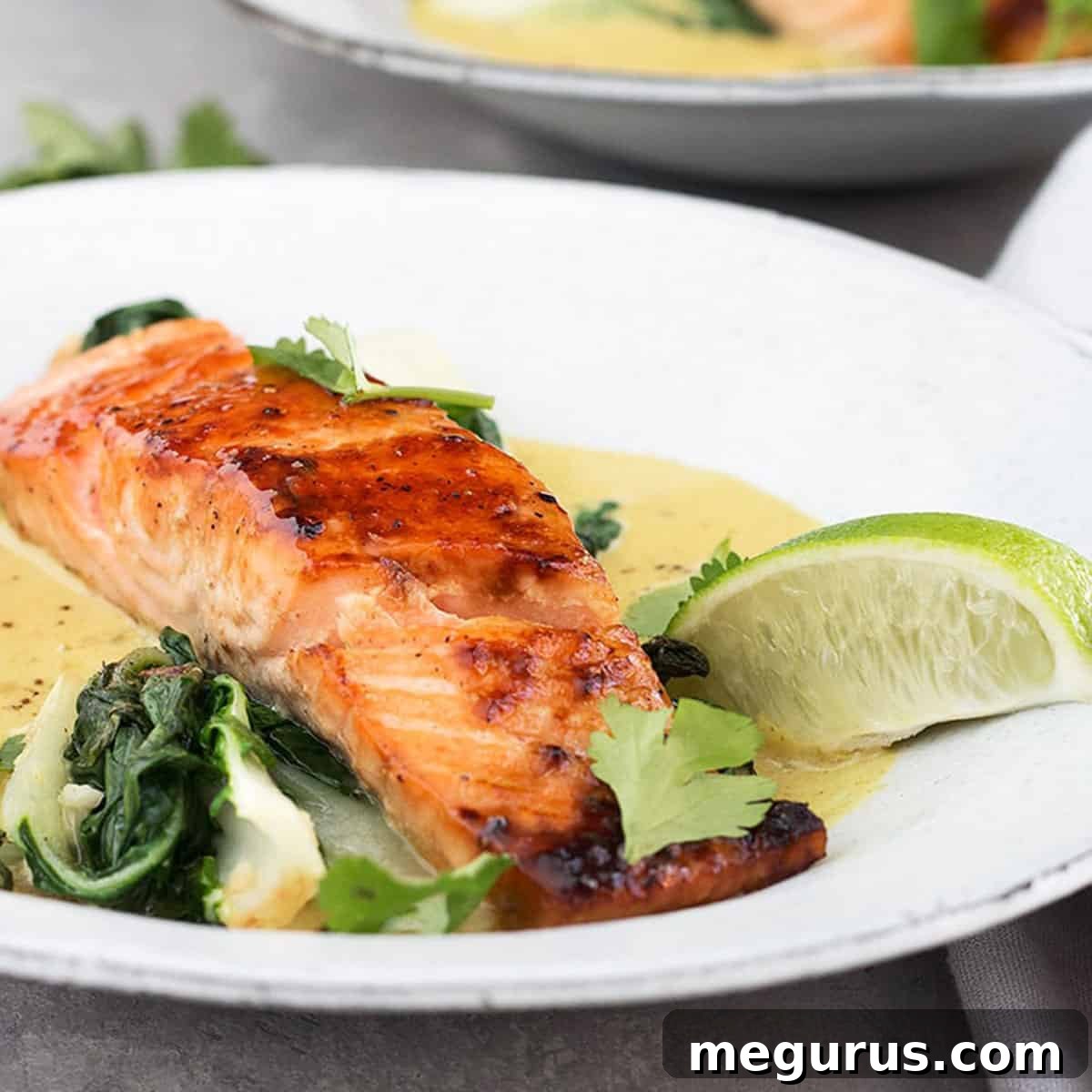
Transform your weeknight dinner routine with this incredibly easy and utterly delicious Coconut Lime Salmon recipe. Perfectly seared salmon fillets, glazed with a hint of sugar for a beautiful caramelization, are served alongside tender-crisp wilted baby bok choy, all bathed in a luscious, aromatic coconut lime sauce. This vibrant dish not only looks stunning but also comes together in under 30 minutes, making it an ideal choice for a healthy, flavour-packed meal, even on the busiest evenings.
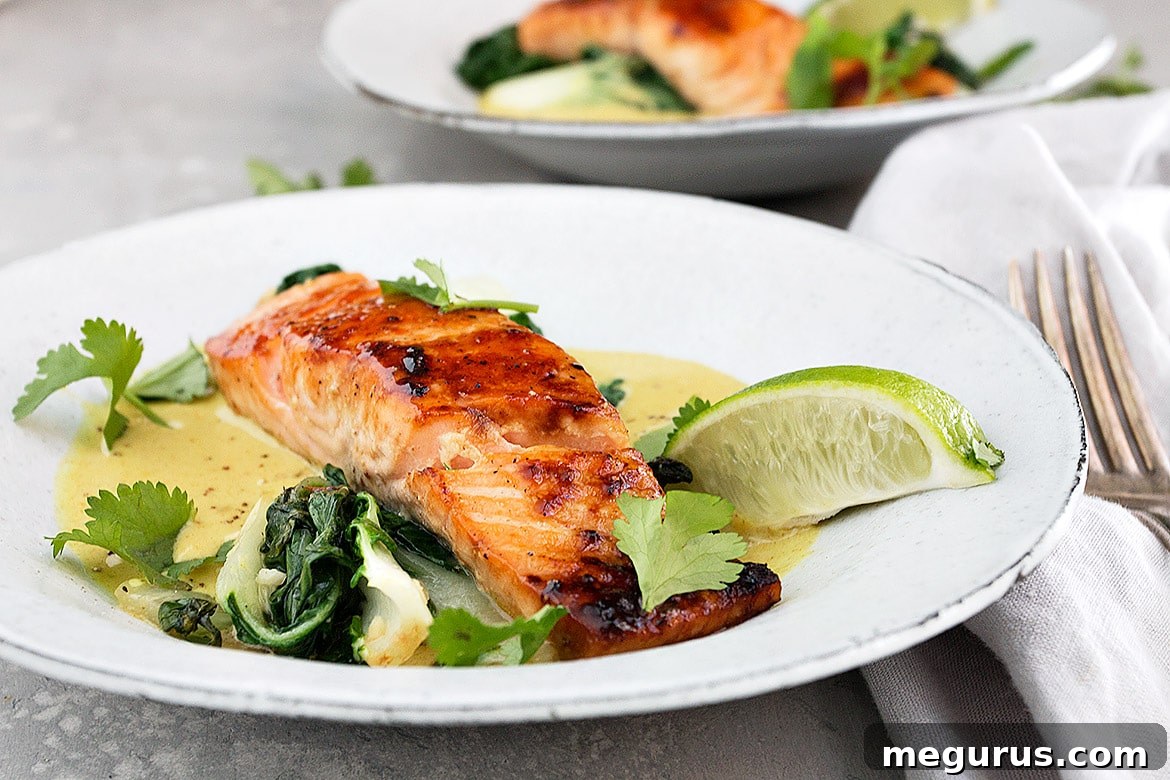
There’s something truly special about a meal that delivers on taste, health, and speed. This sugar-seared salmon with coconut lime sauce ticks all those boxes and more. It’s a go-to favourite for a reason: the rich, flaky salmon is complemented by the bright, tangy notes of lime and the creamy, warming embrace of coconut milk, elevated by fragrant ginger and lemongrass. Paired with fresh, vibrant bok choy, it’s a complete meal that feels both indulgent and wonderfully nourishing. Best of all, this impressive easy salmon recipe is primarily a one-skillet wonder, simplifying both cooking and cleanup!
Why You’ll Love This Coconut Lime Salmon Recipe
If you’re searching for a quick, healthy, and incredibly flavourful dinner, look no further than this Coconut Lime Salmon. Here’s why it’s destined to become a staple in your kitchen:
- Lightning-Fast Preparation: From start to finish, this dish is ready in under 30 minutes, perfect for busy weeknights when time is precious.
- Exquisite Flavor Profile: The sweet caramelization of the sugar-seared salmon beautifully contrasts with the creamy, zesty, and subtly spicy coconut lime sauce. It’s a symphony of Southeast Asian-inspired flavours that tantalizes the taste buds.
- Healthy & Wholesome: Salmon is packed with omega-3 fatty acids, protein, and vitamins. Combined with fresh bok choy, this meal offers a balanced and nutritious option.
- Minimal Cleanup: Cooked predominantly in a single skillet, this recipe drastically reduces the amount of washing up, giving you more time to enjoy your meal.
- Visually Appealing: The golden-brown salmon, bright green bok choy, and creamy sauce make for a beautiful presentation, suitable for both family dinners and entertaining guests.
Essential Ingredients for Your Coconut Lime Salmon
Crafting the perfect Coconut Lime Salmon begins with selecting high-quality ingredients. Each component plays a crucial role in building the layered flavours of this delightful dish. Here’s a detailed look at what you’ll need and potential substitutions:
Salmon Fillets
Centre-cut salmon pieces are ideal for this recipe due to their even thickness, which promotes consistent cooking. I typically prefer skinless salmon for ease of searing and serving, but feel free to use skin-on fillets if that’s your preference. If using skin-on, ensure the skin is properly crisped for an added textural element. Salmon is a fantastic source of lean protein and essential omega-3 fatty acids, making it a healthy foundation for any meal. Aim for fillets that are roughly 6 oz (170g) each for four servings.
The Sugar Rub
The secret to that irresistible caramelized crust on the salmon lies in a simple sugar rub. While I usually reach for white granulated sugar, its role is to create a delightful Maillard reaction, not just sweetness. Any sugar with fine granules will work effectively here, such as brown sugar for a deeper, molasses note, palm sugar for an authentic Southeast Asian touch, or coconut sugar for a slightly less refined option. The sugar, combined with salt and pepper, enhances the salmon’s natural flavour and provides an appealing texture. Remember, you might not use all of the rub; the goal is an even, generous coating.
Aromatic Foundations: Lemongrass and Ginger
These two ingredients are the heart of the fragrant coconut lime sauce. For convenience, I often use the ready-to-go tubes of lemongrass paste and ginger paste found in the produce section of most grocery stores. They offer a consistent flavour and save prep time. However, if you prefer using fresh ingredients, grated fresh ginger root and finely minced lemongrass stalk can be used instead. Be mindful that fresh aromatics can be more potent, so you might use slightly less than the paste equivalent – about 3/4 teaspoon of fresh for every 1 teaspoon of paste.
Kaffir Lime Leaves
Kaffir lime leaves are a powerhouse of citrusy aroma, distinct from lime juice or zest. They infuse the sauce with an unparalleled fragrant depth that truly elevates the dish. I was thrilled to find dried kaffir lime leaves at my local grocery store, often available in the spice aisle or the international foods section. For Canadian shoppers, look for them under President’s Choice Black Label spices. They are also readily available online, for instance, through Amazon, if you wish to stock your pantry. If you can’t find them, you can simply omit them; the sauce will still be delicious thanks to the fresh lime, but the unique depth of kaffir lime will be missed.
Coconut Milk
The foundation of our creamy, flavourful sauce. I recommend using full-fat coconut milk from a can for the richest, most luxurious sauce. It provides a beautiful creaminess and carries the other flavours wonderfully. If you prefer a lighter option, light coconut milk can be used, though the sauce will naturally be thinner and less rich. To compensate for the reduced thickness, you can easily thicken it with a cornstarch slurry (a mixture of a teaspoon of cornstarch with two teaspoons of cold water) stirred in at the end until your desired consistency is achieved.
Additional Ingredients for Flavour and Freshness
- Baby Bok Choy: This mild, leafy green vegetable wilts beautifully and provides a fresh, slightly crisp contrast to the rich salmon and sauce. Look for firm, vibrant green stalks.
- Garlic: Finely chopped, it adds an essential aromatic base to both the bok choy and the sauce.
- Cooking Oil & Butter: A neutral cooking oil for searing, and butter adds richness and helps create that desirable brown crust on the salmon.
- Fish Sauce: Don’t let the name deter you! Fish sauce is a critical ingredient in Southeast Asian cuisine, providing a deep, savoury umami flavour without making the dish taste “fishy.” It balances the sweetness and acidity beautifully.
- Brown Sugar (for sauce): A touch of brown sugar in the sauce helps balance the acidity of the lime and the saltiness of the fish sauce, adding a subtle sweetness.
- Turmeric: A pinch of turmeric gives the sauce a lovely golden hue and a subtle earthy warmth.
- Lime Zest & Juice: Fresh lime is non-negotiable for that bright, zesty flavour that cuts through the richness of the coconut milk.
- Salt and Freshly Ground Pepper: Essential for seasoning both the salmon rub and the final sauce to taste.
- Lime Wedges & Fresh Cilantro: Perfect for garnishing and adding a final flourish of freshness upon serving.
Expert Tips for Success with Your Coconut Lime Salmon
- Mastering the Sugar Sear: The sugar rub creates a fantastic caramelized coating, but sugar can scorch if the heat is too high. Maintain medium heat and watch the salmon carefully. If it starts to darken too quickly, reduce the heat. Using a non-stick skillet is highly recommended as it allows you to easily swirl the salmon around the pan, preventing it from sticking and over-browning in one spot while ensuring even cooking.
- Applying the Sugar Rub: You don’t necessarily need to use all of the sugar rub prepared. The goal is an even, generous sprinkling on both sides of the salmon fillets. Apply the rub to the top side first, then place that side down into the hot skillet. While the first side is cooking, you can easily sprinkle the remaining side with the rub before flipping the fillets.
- The “Less is More” Sauce Philosophy: The coconut lime sauce is rich and incredibly flavourful, best described as a “little goes a long way” kind of sauce. You don’t need to drench your plate in it, though you certainly can if you love it! You might have leftover sauce, which is a bonus. It freezes beautifully in an airtight container for up to 2-3 months, ready to elevate a future meal.
- Don’t Overcook the Salmon: Salmon cooks quickly. Overcooked salmon can become dry and unappetizing. Cook until it flakes easily with a fork but still retains some moisture and tenderness.
- Tender-Crisp Bok Choy: When cooking the bok choy, aim for tender-crisp. You want it softened but still with a slight bite. Adding small splashes of water and allowing it to cook off helps steam and wilt the greens perfectly without drying them out.
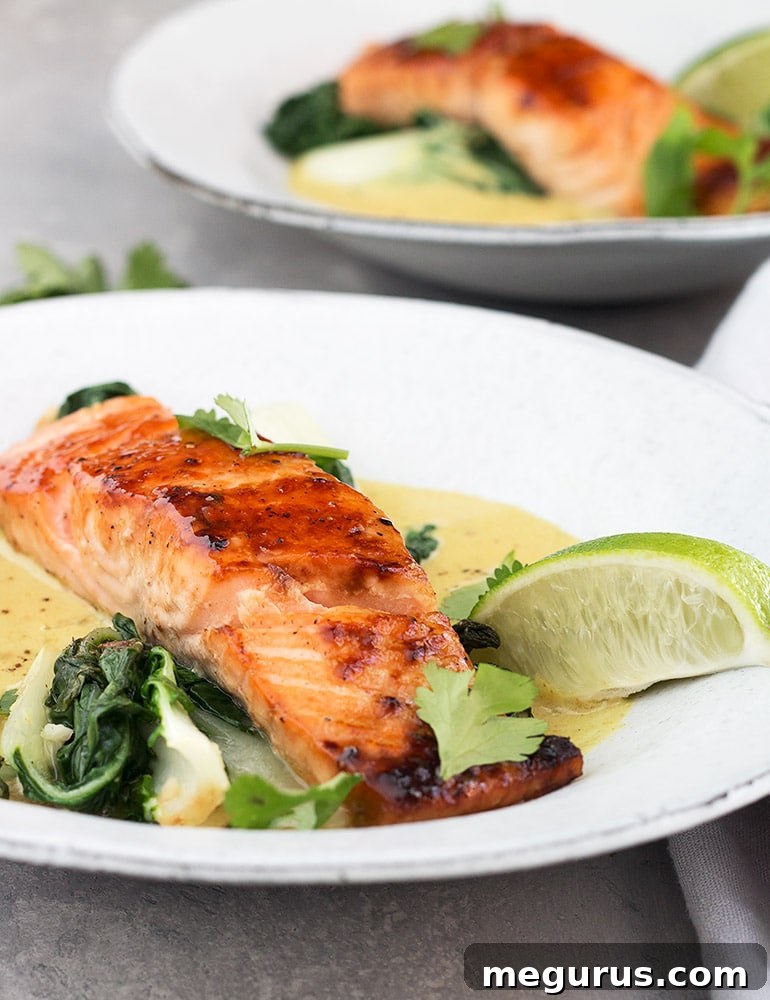
Delicious Coconut Lime Salmon with Wilted Bok Choy
This recipe is designed for maximum flavour with minimal fuss, perfect for a satisfying meal any day of the week.
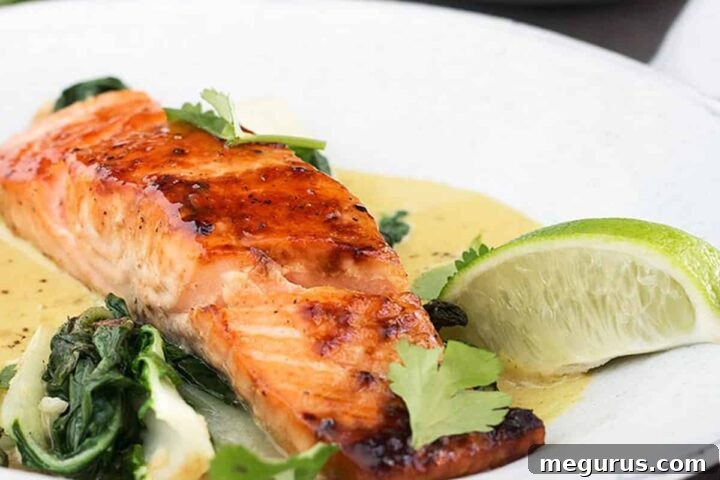
Get the Recipe: Lime and Coconut Salmon
Easy and delicious, this lime and coconut salmon is served with wilted bok choy and a creamy, flavourful coconut lime sauce.
Pin This
Leave a Review
Prep Time: 5 mins
Cook Time: 20 mins
Total Time: 25 mins
Yield: 4 servings
Ingredients
For the Salmon and Bok Choy:
- 4 centre-cut salmon fillets
- 2 Tablespoons butter
- 6 baby bok choy, stem end removed and sliced in half if large
- 1 clove garlic, finely chopped
- 1 teaspoon cooking oil
- 1/4 cup water, or as needed
For the Sugar Rub (you may not need to use it all):
- 2 Tablespoons white sugar
- 1 teaspoon salt
- 1/2 teaspoon freshly ground black pepper
For the Coconut Lime Sauce:
- 1 teaspoon lemongrass paste, or 3/4 tsp peeled and grated stalk
- 1 teaspoon ginger paste, or 3/4 tsp grated ginger root
- 14 oz can full-fat coconut milk
- 1 Tablespoon fish sauce
- 1 Tablespoon brown sugar
- 1/4 teaspoon turmeric
- 2 teaspoon lime zest
- Juice of 1/2 a small lime
- 2 kaffir lime leaves, optional
- Salt and freshly ground pepper, to taste
To serve:
- Lime wedges
- Chopped fresh cilantro leaves, optional
Instructions
- Cook the Bok Choy: Begin by preparing the bok choy. Remove the tough stalk end, then rinse and thoroughly dry the leaves. If any leaves are particularly large, slice them in half from top to bottom. Heat a teaspoon of cooking oil in a large skillet over medium heat. Add the finely chopped garlic and the bok choy leaves to the pan. Cook, stirring frequently, for about one minute until fragrant. Add approximately a tablespoon of water to the pan and allow it to cook off, stirring once or twice over the next couple of minutes. Repeat this process with another small splash of water, cooking and stirring for an additional minute or until the bok choy leaves are beautifully wilted and tender-crisp. Once cooked, transfer the bok choy to a clean plate and remove the skillet from the heat, but do not clean it yet.
- Prepare the Rub and Sauce Ingredients: While the bok choy is cooking, prepare the sugar rub by stirring together the white sugar, salt, and freshly ground black pepper in a small bowl. In a separate bowl, gather and measure out all your coconut lime sauce ingredients (lemongrass paste, ginger paste, coconut milk, fish sauce, brown sugar, turmeric, lime zest, lime juice, and kaffir lime leaves if using). Having these ready will ensure the sauce comes together quickly later.
- Cook the Salmon: Gently moisten the salmon fillets with a tiny bit of water. Generously sprinkle the top side of each fillet with the prepared sugar rub. Carefully wipe the skillet clean with a paper towel, then return it to medium heat on the burner. Add 2 tablespoons of butter to the skillet and allow it to melt completely. Once melted, place the salmon fillets into the skillet with the sugar-rubbed side down. Allow them to cook undisturbed for approximately 2 minutes to begin the searing process. After this initial sear, continue cooking for another 2 minutes, gently moving the fillets around in the pan to encourage even caramelization and prevent sticking, until the underside is a deep golden-brown and beautifully caramelized. Sprinkle the top (uncooked) side of the salmon with more sugar rub, then carefully flip the fillets. Cook the second side until it is also golden-brown and the salmon is cooked through and flakes easily with a fork, typically about 3-4 minutes more. Once done, remove the salmon to a plate.
- Prepare the Coconut Lime Sauce: Keep the delicious browned butter in the skillet and return it to medium heat. Add the lemongrass paste and ginger paste to the skillet. Stir continuously, scraping up any browned bits from the bottom of the pan, and cook for about 30 seconds until fragrant. Pour in the full-fat coconut milk, fish sauce, brown sugar, turmeric, lime zest, lime juice, and kaffir lime leaves (if using). Bring the sauce to a gentle boil, then reduce the heat slightly and allow it to simmer and reduce for a couple of minutes until it thickens slightly. Taste the sauce and season with salt and freshly ground pepper as needed, adjusting to your preference. If your salmon has cooled slightly, you can gently place it back into the warm sauce in the skillet for a minute to warm through before serving.
- To Serve: Artfully arrange a small pile of the wilted bok choy in the centre of a shallow serving bowl or plate. Carefully place a cooked salmon fillet on top of the bok choy. Spoon a generous amount of the hot coconut lime sauce around either side of the bok choy and salmon. Garnish with a fresh wedge of lime and a sprinkle of chopped fresh cilantro leaves, if desired. Serve immediately and enjoy your vibrant, flavourful meal!
Notes
For more detailed insights on ingredients, substitutions, and additional cooking tips, please refer to the sections above the recipe card.
- Sugar-Searing Caution: Remember that sugar can scorch. Keep a close eye on the heat and adjust as necessary to achieve a beautiful caramelization without burning. A good non-stick pan helps immensely!
- Sauce Storage: Any leftover coconut lime sauce can be stored in an airtight container in the refrigerator for up to 3 days or frozen for up to 3 months.
Cuisine: American, Canadian, Southeast Asian Inspired
Course: Main Course, Dinner
Author: Jennifer Maloney
Nutrition Information (Approximate Per Serving)
Serving: 1 serving, Calories: 591 kcal, Carbohydrates: 18g, Protein: 38g, Fat: 41g, Saturated Fat: 26g, Cholesterol: 108mg, Sodium: 1187mg, Potassium: 1106mg, Fiber: 3g, Sugar: 14g, Vitamin A: 7790IU, Vitamin C: 79.6mg, Calcium: 223mg, Iron: 4.3mg
Tried this recipe?
If you enjoyed this recipe, we’d love for you to share your experience! Please consider leaving a star rating and comment below. Your feedback helps others discover and enjoy this delicious dish!
Serving Suggestions for Your Coconut Lime Salmon
This Coconut Lime Salmon with Bok Choy is a complete meal on its own, but you can certainly enhance it with a few complementary side dishes. For a traditional pairing, serve it with a steaming bowl of jasmine rice or fluffy basmati rice, which will soak up every last drop of the exquisite coconut lime sauce. If you’re looking for a low-carb alternative, cauliflower rice is an excellent choice. Other great options include quinoa for added protein and fibre, or even a side of glass noodles or rice vermicelli tossed with a light dressing. Don’t forget those fresh lime wedges and a generous sprinkle of chopped cilantro to brighten every bite!
Storage and Reheating Tips
While this easy salmon recipe is best enjoyed fresh, leftovers can be stored and reheated:
- Storage: Store cooked salmon and bok choy separately from the coconut lime sauce in airtight containers in the refrigerator for up to 2-3 days. This helps maintain the texture of the salmon and prevents the bok choy from becoming too soggy.
- Reheating Salmon: To reheat salmon, it’s best to use a gentle method to prevent it from drying out. You can warm it in a skillet over low heat with a lid, or in the oven at 275°F (135°C) for about 10-15 minutes, or until just warmed through. Avoid microwaving if possible, as it can easily overcook and dry out the fish.
- Reheating Sauce: The coconut lime sauce can be gently reheated in a saucepan over low heat, stirring occasionally, until it’s simmering. If it has thickened too much in the fridge, you can add a tablespoon or two of water or chicken broth to thin it to your desired consistency.
- Freezing Sauce: As mentioned, the sauce freezes beautifully. Allow it to cool completely, then transfer to a freezer-safe container or bag. It can be frozen for up to 3 months. Thaw in the refrigerator overnight before reheating.
Frequently Asked Questions About Coconut Lime Salmon
Here are some common questions you might have when preparing this delightful Coconut Lime Salmon:
- Can I use frozen salmon fillets?
- Yes, absolutely! If using frozen salmon, ensure it is fully thawed in the refrigerator overnight or under cold running water before patting it completely dry. Excess moisture can prevent a good sear and caramelization.
- What if I don’t have kaffir lime leaves?
- While kaffir lime leaves add a unique aromatic depth, the sauce will still be delicious without them. You can omit them or try adding a bit more fresh lime zest to compensate for some of the citrusy notes.
- Can I make this recipe dairy-free?
- Yes, this recipe is naturally dairy-free! Coconut milk is a fantastic plant-based alternative to cream. Just ensure your butter is dairy-free or use an equal amount of cooking oil for searing.
- Is this recipe gluten-free?
- Generally, yes. Salmon, bok choy, and most coconut milk brands are gluten-free. Fish sauce is usually gluten-free, but it’s always best to check the label for any hidden wheat ingredients, especially if you have a severe gluten sensitivity.
- How can I make the sauce spicier?
- To add a kick, you can incorporate a pinch of red pepper flakes into the sauce while it simmers, or add finely minced fresh chilies (like bird’s eye chilies) along with the ginger and lemongrass. A dash of sriracha or chili garlic sauce at the end would also work.
- Can I use other greens instead of bok choy?
- Certainly! Spinach, Swiss chard, or even kale (massaged first to soften) would make excellent substitutions for the bok choy. Adjust cooking times as needed for different greens.