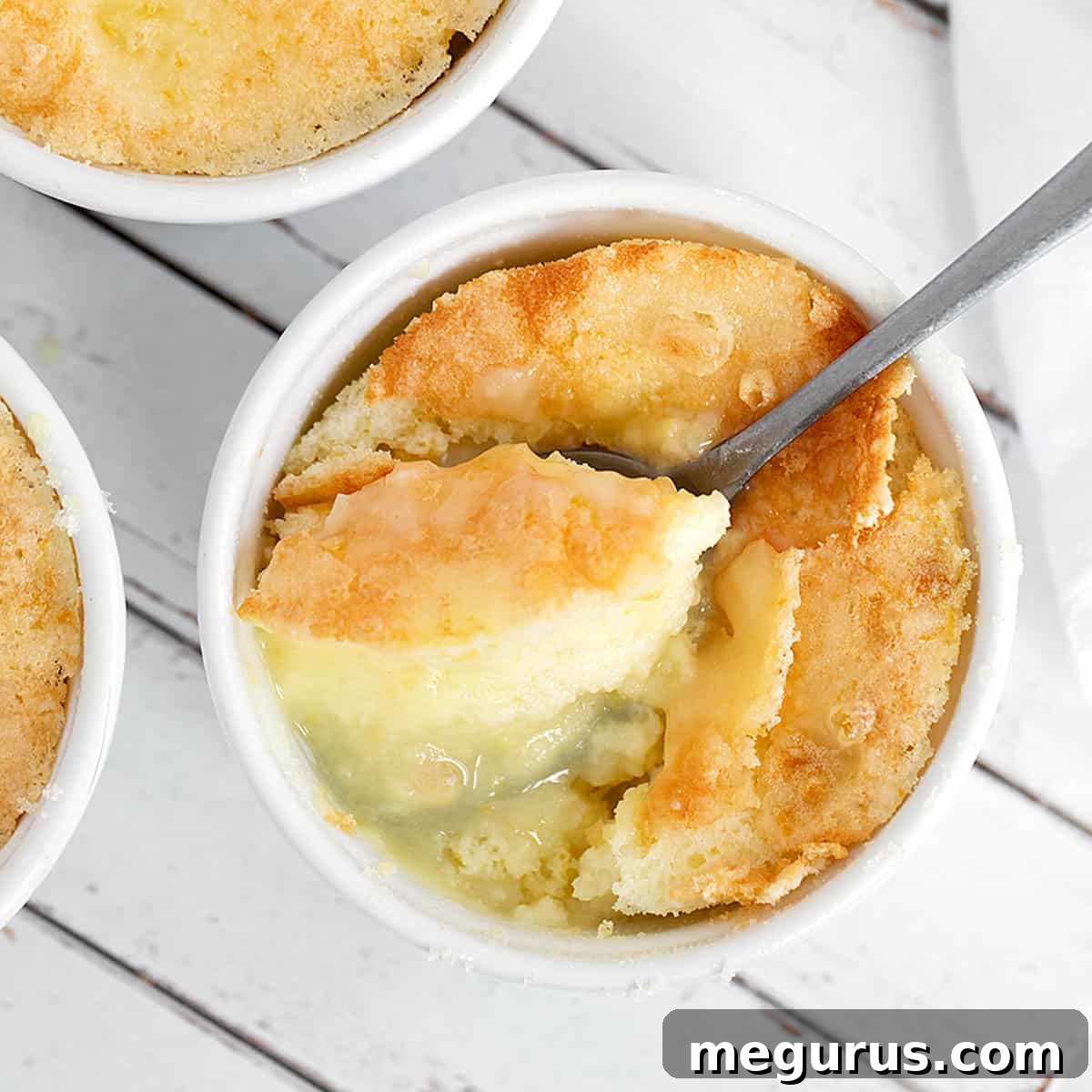
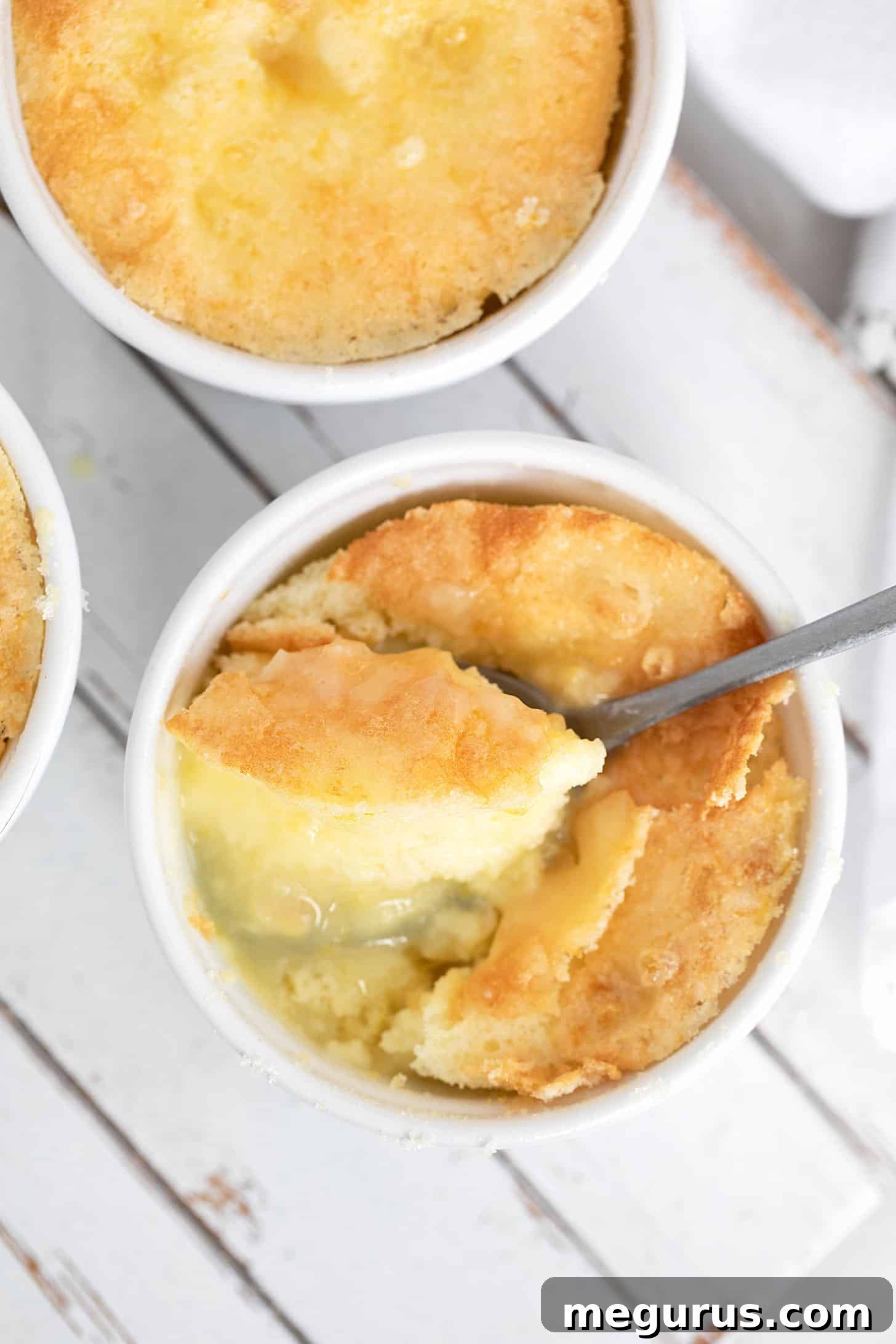
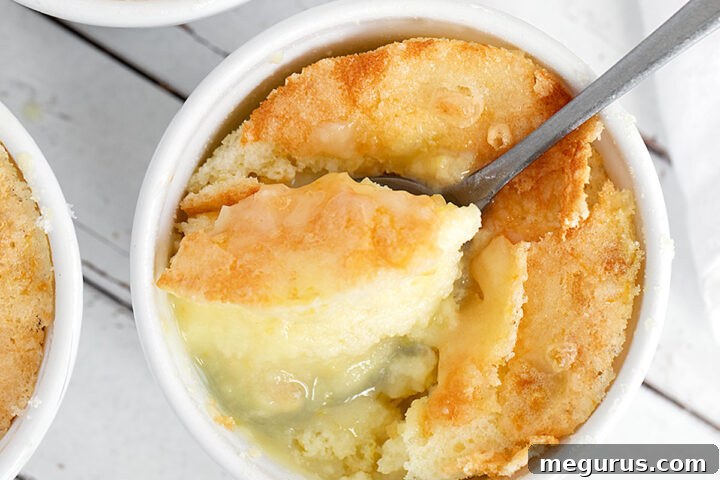
Embark on a delightful culinary journey with our extraordinary Lemon Pudding Cake Pie, a dessert that redefines the classic lemon pudding cake experience. This unique creation features a surprisingly crispy, flaky, pie-crcrust-like topping, offering a delightful textural contrast that demands to be gently “smashed” before you reach the lusciously light lemon cake and velvety smooth lemon pudding nestled beneath. It’s an innovative twist on a beloved favorite, promising a symphony of flavors and textures in every spoonful.
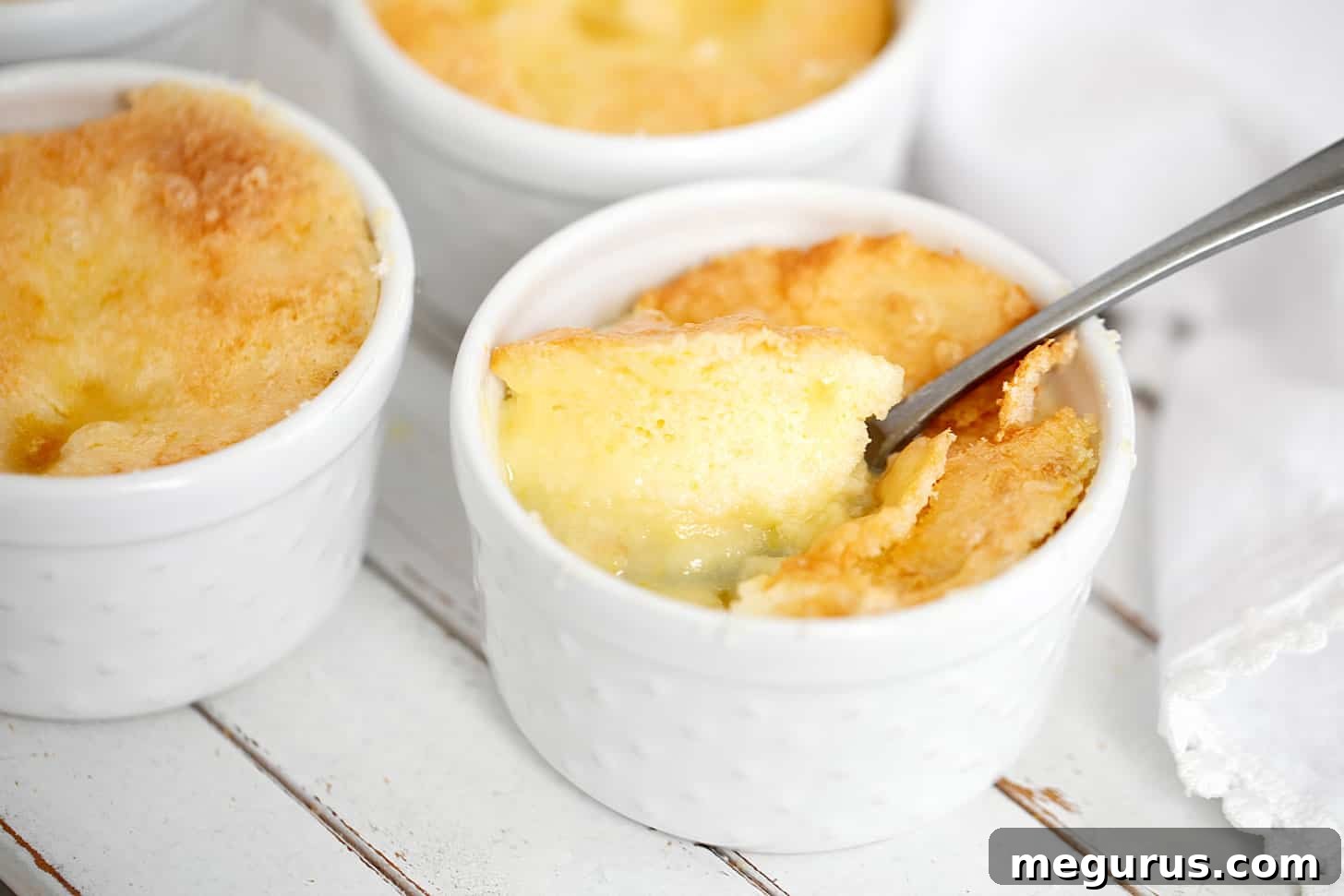
For those who cherish the comforting essence of a traditional lemon pudding cake, the foundational flavors of this recipe will feel wonderfully familiar. However, what truly elevates this dessert into a category of its own is its captivatingly crispy topping. Unlike any ordinary cake, this one bakes up with a golden, airy crust that wonderfully mimics the delicate flakiness of a pie. The joy lies in the initial crack, as your spoon breaks through this golden layer, revealing the moist lemon cake and vibrant, tangy lemon pudding that awaits below. This innovative design ensures each bite delivers an exciting interplay of textures, from the initial crunch to the soft, creamy interior.
Whether you’re hosting a dinner party, looking for a comforting treat, or simply craving a bright and zesty dessert, our Lemon Pudding Cake Pie is sure to impress. Its individual ramekin presentation makes it an elegant choice, while the ease of preparation ensures it’s accessible to home bakers of all skill levels. Get ready to experience lemon dessert perfection with this truly special recipe.
Key Ingredients for Your Perfect Lemon Pudding Cake Pie
Crafting this exceptional lemon dessert relies on a few core ingredients, each playing a vital role in achieving its signature flavor and texture. Understanding their properties and potential substitutions can make all the difference in your baking success.
Cake Flour: The Secret to a Superior Crust
Cake flour, also commonly known as cake and pastry flour, is a low-protein (or “soft”) flour. Its lower protein content means less gluten development, which is precisely what contributes to the incredibly tender crumb in cakes and the desirable flakiness in pie crusts. In this recipe, cake flour is paramount for achieving that distinctive crispy, flaky topping that sets our Lemon Pudding Cake Pie apart. The delicate structure of cake flour ensures the topping bakes up light and airy, creating a satisfying shatter when you dive in with your spoon.
While we highly recommend using cake flour for the optimal experience, we understand it might not always be readily available. If you find yourself without cake flour, you can substitute it with all-purpose flour. However, be aware that this substitution will result in a slightly different texture for the topping. It will still be crispy, but it may be thinner and less flaky, lacking some of the signature “pie-crust-like” quality. If using all-purpose flour, you might consider sifting it first to help achieve a lighter texture, although the protein difference will still be noticeable.
Fresh Lemon: Zest for Zest, Juice for Tang
The star of this dessert is, undoubtedly, the lemon. For the most vibrant and authentic flavor, fresh lemons are absolutely essential. You’ll typically need one large, average-sized lemon, or a couple of smaller ones, to gather both the zest and juice required. It’s crucial not to skimp on the zest; the lemon zest contains aromatic oils that deliver an intense burst of citrus flavor, far more potent than the juice alone. Be sure to pack your measuring spoon well when measuring the zest to ensure you get a robust lemon flavor that perfectly balances the sweetness of the pudding and cake.
When zesting, use a microplane or a fine grater, being careful to only remove the bright yellow part of the rind and avoid the bitter white pith underneath. For the juice, roll the lemon firmly on a countertop before slicing it in half and squeezing. This helps release more juice. The combination of fresh zest and juice provides the bright, tangy notes that make this lemon dessert so refreshing and irresistible.
Milk: The Foundation of a Creamy Pudding
The choice of milk plays a significant role in the luxurious creaminess of the pudding layer. We highly recommend using whole milk (3-3.5% butterfat) if possible. The higher fat content in whole milk interacts beautifully with the lemon juice and other ingredients to create a rich, smooth, and wonderfully thick pudding. This extra fat also contributes to a more decadent mouthfeel, enhancing the overall indulgence of the dessert.
If whole milk isn’t available, 2% milk will work as a suitable substitute. However, anticipate a slightly less creamy pudding layer. While still delicious, it might not have the same luscious richness that whole milk provides. Skim milk or non-dairy alternatives are generally not recommended for this recipe, as their lower fat content can prevent the pudding from setting properly and achieving the desired creamy consistency.
How to Make Lemon Pudding Cake Pie: A Step-by-Step Overview
Creating this delightful Lemon Pudding Cake Pie is a straightforward process, combining simple steps to achieve a truly impressive dessert. This section provides a concise summary of the baking journey. For precise measurements and comprehensive instructions, always refer to the full Recipe Card below.
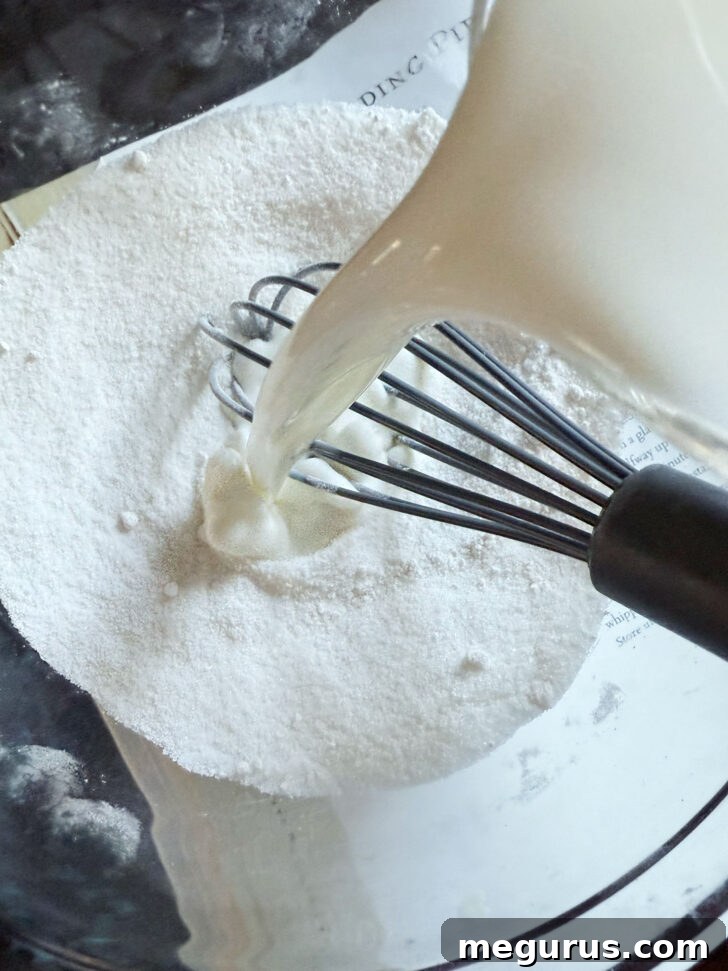
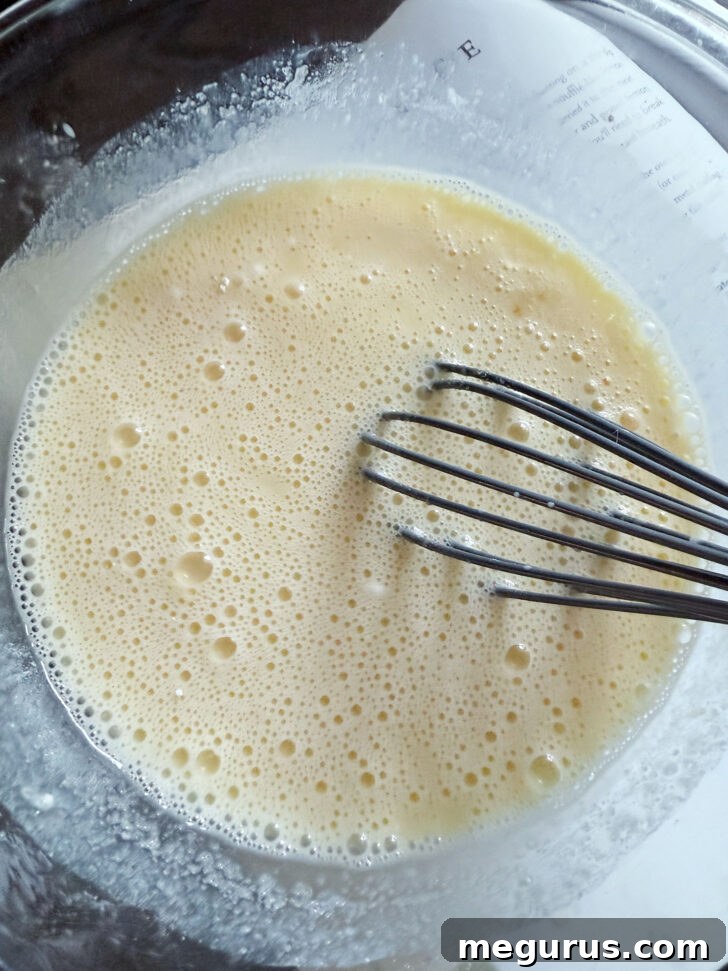
- Begin by thoroughly whisking together the dry ingredients (sugar, flour, and salt) in a medium bowl to ensure they are well combined. Then, gradually add the milk, mixing until just incorporated.
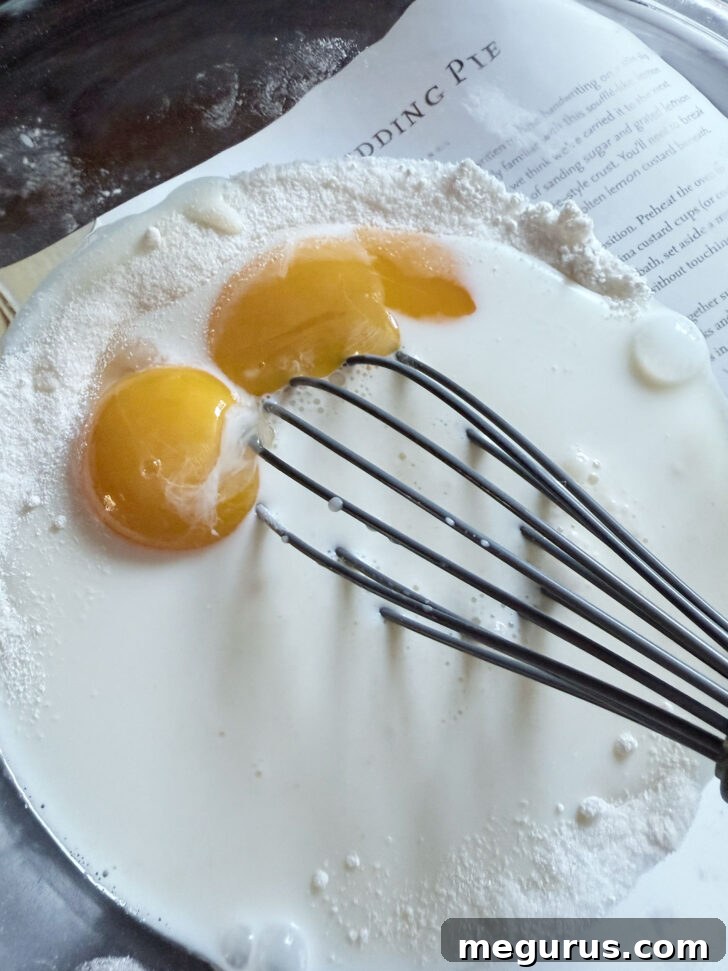
- Next, carefully separate your eggs and add only the egg yolks to the bowl with the milk and dry ingredients. Reserve the egg whites for a later step.
- Whisk the mixture vigorously until all ingredients are smoothly blended and any lumps are gone. This forms the base of your rich lemon pudding.
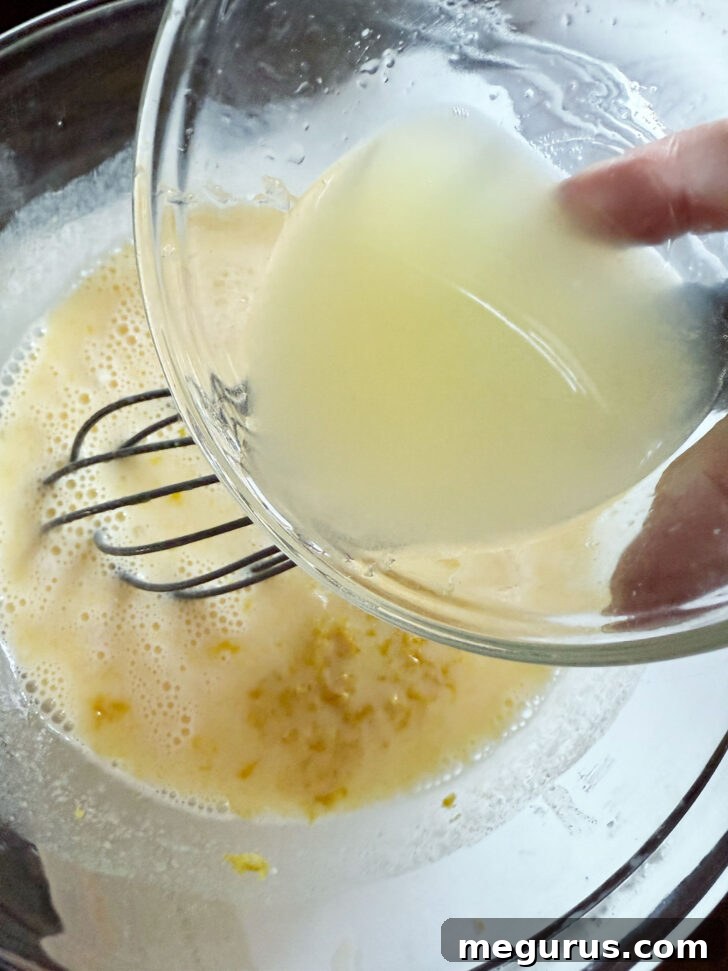
- To infuse the batter with bright citrus flavor, add the freshly squeezed lemon juice and the aromatic lemon zest. Whisk these ingredients in until evenly distributed.
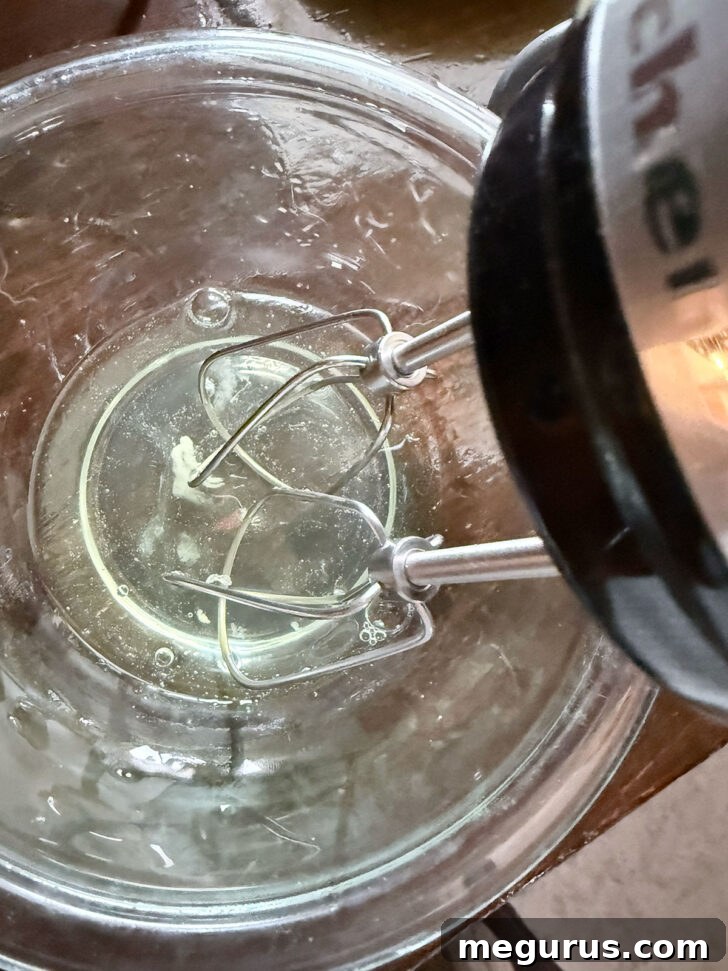
- Retrieve the reserved egg whites and place them in a separate, small, clean bowl. Ensure the bowl and whisk are free of any grease, as this can prevent the whites from stiffening.
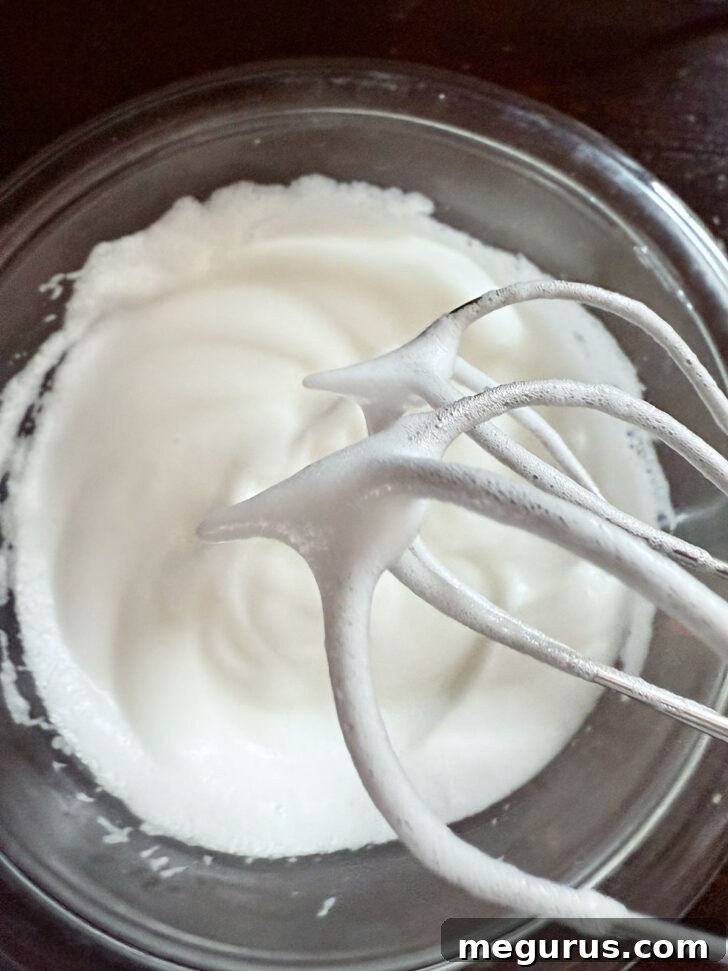
- Using an electric beater, whip the egg whites until they reach stiff peaks. This means they should hold their shape firmly when the whisk is lifted. While an electric beater makes this task quick and easy, you can also achieve stiff peaks by hand with a good whisk – just be prepared for a bit of a workout!
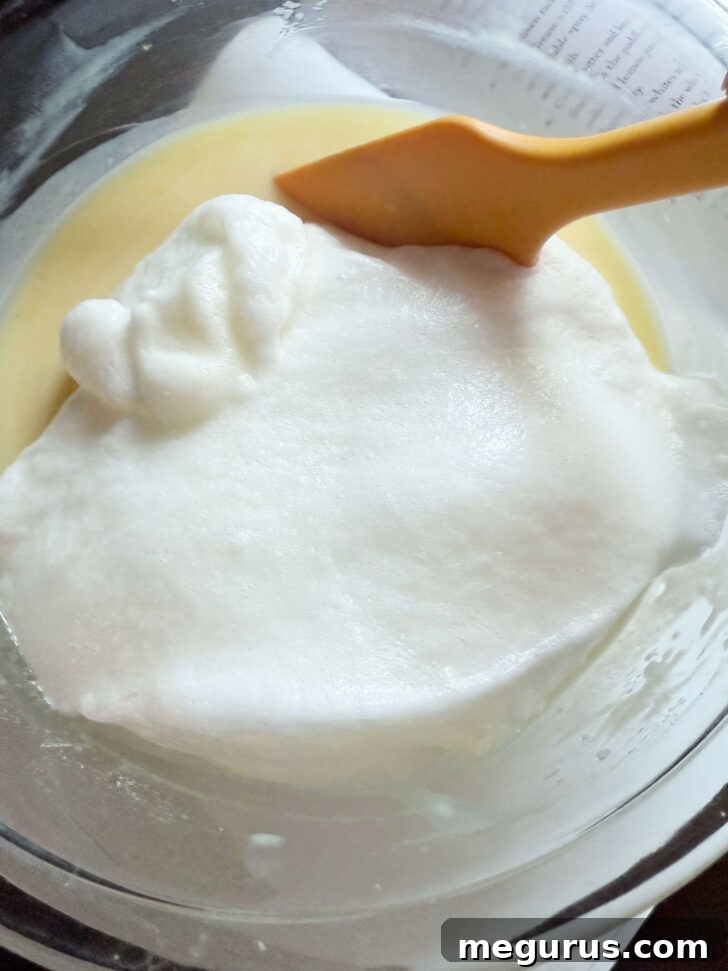
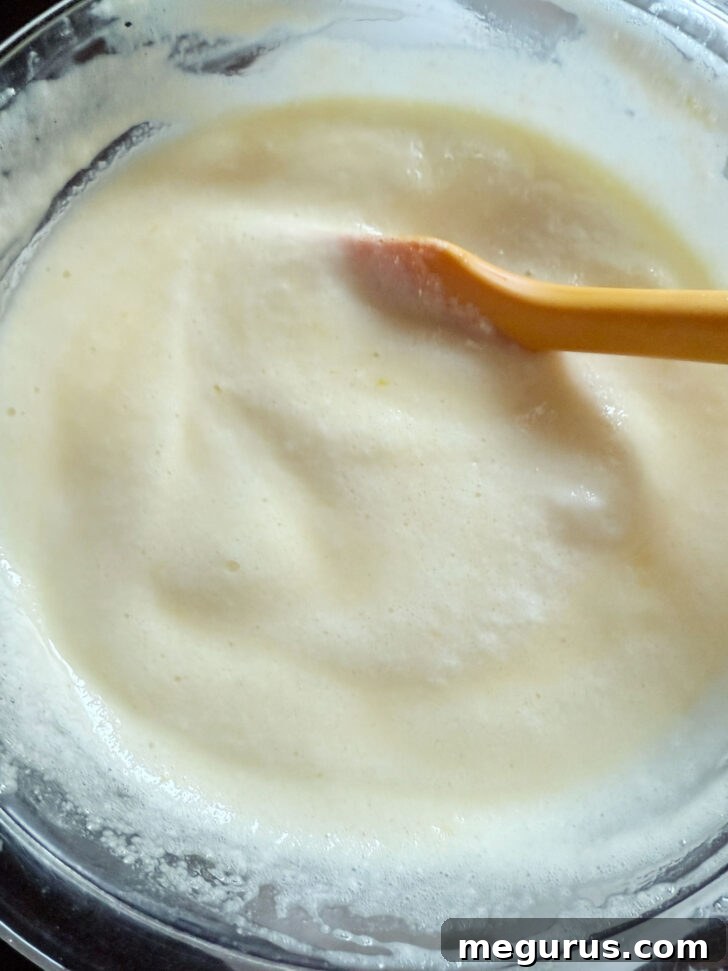
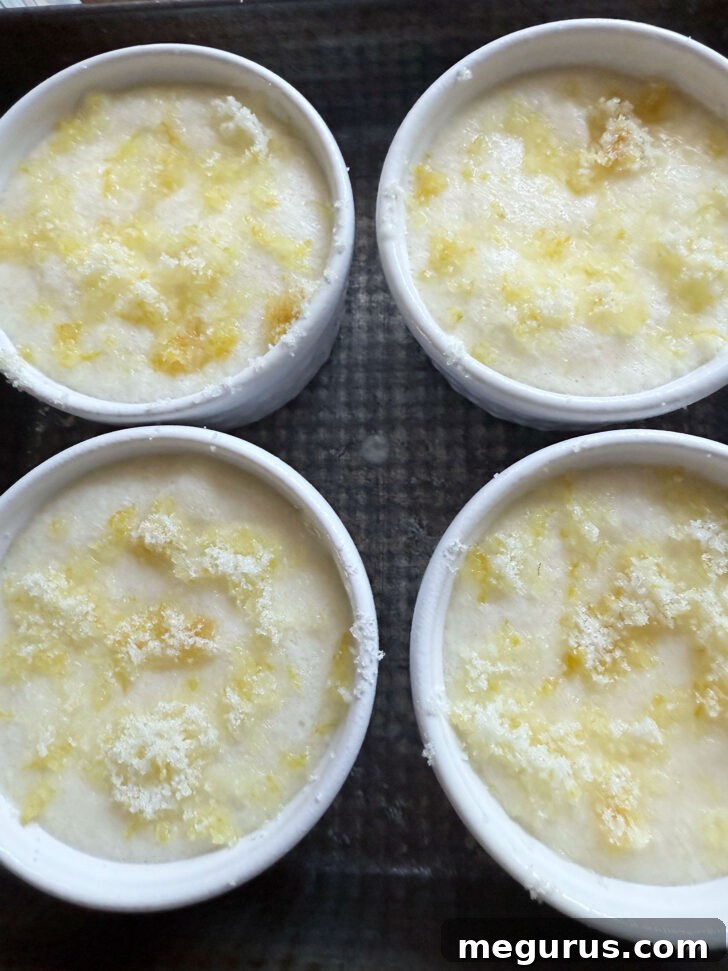
- Once your egg whites are stiff, gently add them to the main batter mixture. This step is crucial for the cake’s light and airy texture.
- Using a rubber spatula, carefully fold the egg whites into the batter. Employ a gentle motion, slicing through the batter and folding it over, rotating the bowl as you go. The goal is to incorporate the whites without deflating them, preserving as much air as possible. A few small lumps of egg whites are perfectly fine and indicate a light hand.
- Finally, divide the aerated batter evenly among your prepared ramekins. Sprinkle the lemon/sugar topping generously over each, ensuring an even layer for that signature crisp crust. Place the ramekins in a baking pan, then carefully fill the pan halfway up the sides of the ramekins with boiling water to create a water bath, which helps the puddings bake gently and evenly. Bake as directed in the full recipe card.
Expert Tips for Your Best Lemon Pudding Cake Pie!
- Ramekin Size Matters: The ramekins used in this recipe hold approximately 1 cup of liquid. If your ramekins are a similar size, you should yield 4 individual lemon puddings. Adjusting the recipe quantities might be necessary for different ramekin sizes to prevent overfilling or underfilling.
- Embrace Cake Flour for Superior Topping: While it might seem like a small detail, using cake flour instead of all-purpose flour for the topping truly makes a significant difference. Its lower protein content results in a distinctively crispier, flakier, pie-crust-like texture that is the hallmark of this dessert. Don’t underestimate its impact!
- Maximize Lemon Flavor with Zest: When measuring lemon zest, always ensure it is well-packed. The zest is packed with essential oils that deliver a powerful, aromatic lemon punch, vital for balancing the sweetness of the pudding. A good microplane grater is your best friend for achieving fine, flavorful zest without incorporating the bitter white pith.
- Achieving Perfect Stiff Egg Whites: For the light cake layer, properly beaten egg whites are key. An electric beater is recommended for efficiency, but a hand whisk will also work for an arm workout! To test for stiff peaks, lift your whisk or beaters; the peaks should stand upright and hold their shape firmly, as illustrated in the step-by-step photos above (see Step 6). Over-beating can make them dry, while under-beating will lead to a less airy cake.
- The Magic of the Water Bath: Baking these puddings in a water bath (bain-marie) is essential. This method ensures gentle, even cooking, preventing the puddings from cracking and promoting a smooth, creamy texture for the bottom pudding layer, while still allowing the top to crisp beautifully. Make sure the water is boiling hot when added to the pan for best results.
- Serving Temperature Preference: These delightful lemon puddings are versatile! You can enjoy them warm straight from the oven (after a short cooling period), at room temperature, or chilled from the refrigerator. Personally, I find they achieve the most exquisite balance of sweet and tart when served cold. The flavors meld and intensify, offering a truly refreshing experience.
- Garnish for Extra Flair: Elevate your Lemon Pudding Cake Pies with simple garnishes. A dusting of powdered sugar, a few fresh berries (raspberries or blueberries complement lemon beautifully), or a small dollop of whipped cream can add both visual appeal and an extra layer of flavor.
Making Ahead and Storing Your Lemon Pudding Cake Pies
One of the many appealing aspects of these Lemon Pudding Cake Pies is their flexibility when it comes to preparation and storage. They can be a fantastic make-ahead dessert, allowing you to enjoy fresh, homemade goodness without last-minute stress.
You can certainly bake these delightful puddings in advance. Once baked, they can be left at room temperature for a couple of hours, making them ideal for serving after a meal without needing immediate refrigeration. However, for longer storage, it’s best to loosely cover them with aluminum foil and place them in the refrigerator. This helps maintain their freshness and prevents them from drying out.
These lemon puddings will maintain their best quality when stored in the refrigerator for approximately 2 days. While they remain delicious beyond this period, the distinctive crispy topping, which is a highlight of this dessert, tends to soften over time. For the ultimate textural experience, it’s best to enjoy them within the first 24-36 hours after baking. When serving chilled, allow them to sit out for a few minutes if you prefer them slightly less cold, or enjoy them straight from the fridge for a wonderfully refreshing treat.
Get the Recipe: Lemon Pudding Cake Pie
Pin This
Leave a Review
15
40
55
4 servings
Ingredients
- 2 large eggs, separated
- 1 cup (200 g) white granulated sugar
- 3 Tablespoons cake flour, *see Note 1 below
- 1/8 teaspoon fine table salt
- 1 cup (250 ml) milk, whole milk recommended *see Note 2 below
- 2 teaspoons lemon zest, well-packed
- 3 Tablespoons lemon juice
For topping before baking:
- 2 Tablespoons white granulated sugar
- 1 teaspoon lemon zest, well-packed
Equipment
- Four 1-cup ramekins
- Baking pan (8 or 9-inch square cake pan recommended)
- Electric beater (optional, or whisk)
- Rubber spatula
- Large measuring cup
Instructions
- Place four 1-cup ramekins in a baking pan (an 8 or 9-inch square cake pan works well). Spray them lightly with cooking spray or rub with a little butter to prevent sticking. Set aside.
- Preheat your oven to 325F (160C) if it’s a conventional oven (non-convection/not fan-assisted). Begin boiling some water now; this will be used for the water bath in Step 11.
- Carefully separate the eggs. Place the egg whites in a small, clean bowl and set them aside. Keep the egg yolks readily accessible for the next step.
- Take a moment now to prepare your lemon. You will need 2 well-packed teaspoons of fresh lemon zest for the pudding mixture; measure this out and set aside in a small bowl. For the topping, you will need another 1 well-packed teaspoon of lemon zest; measure and set this aside in a separate small bowl. Once you’ve collected all the zest, juice the lemon and measure out 3 Tablespoons of lemon juice for the pudding mixture. Set this aside.
- In a medium mixing bowl, whisk together the granulated sugar, cake flour, and fine table salt until thoroughly combined. Add the milk and the separated egg yolks, and whisk well until the mixture is smooth and uniform. Incorporate the 3 Tablespoons of lemon juice and the 2 teaspoons of lemon zest, whisking them in thoroughly. Set this bowl aside while you prepare the egg whites.
- Using an electric beater (or a whisk by hand for a good workout!), beat the reserved egg whites in their small bowl until they form stiff peaks. To test this, lift the beater or whisk; the peaks of the egg whites should stand upright and hold their shape firmly (refer to Step 6 in the step-by-step photos above this Recipe Card for a visual example).
- Gently add the stiffly beaten egg whites to the medium bowl containing the lemon batter.
- Using a rubber spatula, carefully fold the egg whites into the batter. Use a gentle motion, cutting through the batter with the spatula, then rotating the blade to scoop from the bottom and gently lay it over the top. Continue rotating the bowl and repeating this motion until the egg whites are just combined with the batter. Avoid over-mixing, as this can deflate the egg whites and result in a denser cake. A few small lumps of egg whites are acceptable.
- Use a ladle or spoon to divide the batter equally among the four prepared ramekins.
- Prepare the crispy topping by combining the 2 Tablespoons of white granulated sugar and the 1 teaspoon of well-packed lemon zest in a small bowl. Use a spoon to mix and rub the lemon zest into the sugar very well; this infuses the sugar with intense lemon flavor.
- Evenly sprinkle the lemon/sugar topping over the batter in each of the four ramekins.
- Carefully pour the boiling water into the baking pan, around the ramekins, until the water rises approximately halfway up the sides of the ramekins. Be very careful to avoid splashing water into the puddings themselves.
- Carefully transfer the baking pan, with the ramekins and the hot water bath, into the preheated oven.
- Bake the puddings for about 35-40 minutes, or until the tops are beautifully and evenly golden-colored and set.
- Once baked, carefully remove the baking pan from the oven. Using oven mitts, transfer the hot ramekins to a wire cooling rack. Allow them to cool completely, or at least almost completely if you prefer to enjoy them warm. It’s crucial for the puddings to rest for at least 15-20 minutes after baking; this allows the top crust to fully crisp and the pudding layer to properly set.
- If you are preparing these in advance, once they have cooled completely, loosely cover each ramekin with aluminum foil and refrigerate. These puddings can be enjoyed cold straight from the fridge, at room temperature, or gently warmed. I personally prefer them cold from the refrigerator, as I find the chilled temperature enhances the balance between sweet and tart, making them incredibly refreshing.
- The puddings will keep well in the refrigerator for 24-36 hours. After this time, while still delicious, the crispness of the topping tends to soften significantly.
Notes
Note 2: Whole milk, typically with 3-3.5% butterfat, is ideal for achieving the creamiest and most luxurious pudding layer. The higher fat content reacts with the lemon juice to thicken beautifully. In a pinch, 2% milk can be used, but expect a slightly less creamy consistency in the pudding layer.
For more detailed tips on achieving the best results with this recipe, including visual guides, please refer to the “Expert Tips” section located above this Recipe Card.
American, Canadian
Dessert
Jennifer Maloney
Nutrition Information
- Serving: 1 serving
- Calories: 299 kcal
- Carbohydrates: 64 g
- Protein: 6 g
- Fat: 3 g
- Saturated Fat: 1 g
- Polyunsaturated Fat: 1 g
- Monounsaturated Fat: 1 g
- Trans Fat: 0.01 g
- Cholesterol: 96 mg
- Sodium: 132 mg
- Potassium: 149 mg
- Fiber: 0.3 g
- Sugar: 59 g
- Vitamin A: 252 IU
- Vitamin C: 6 mg
- Calcium: 92 mg
- Iron: 1 mg
Tried this recipe?
If you enjoyed this recipe, please leave a star rating and comment. It helps others to find it!