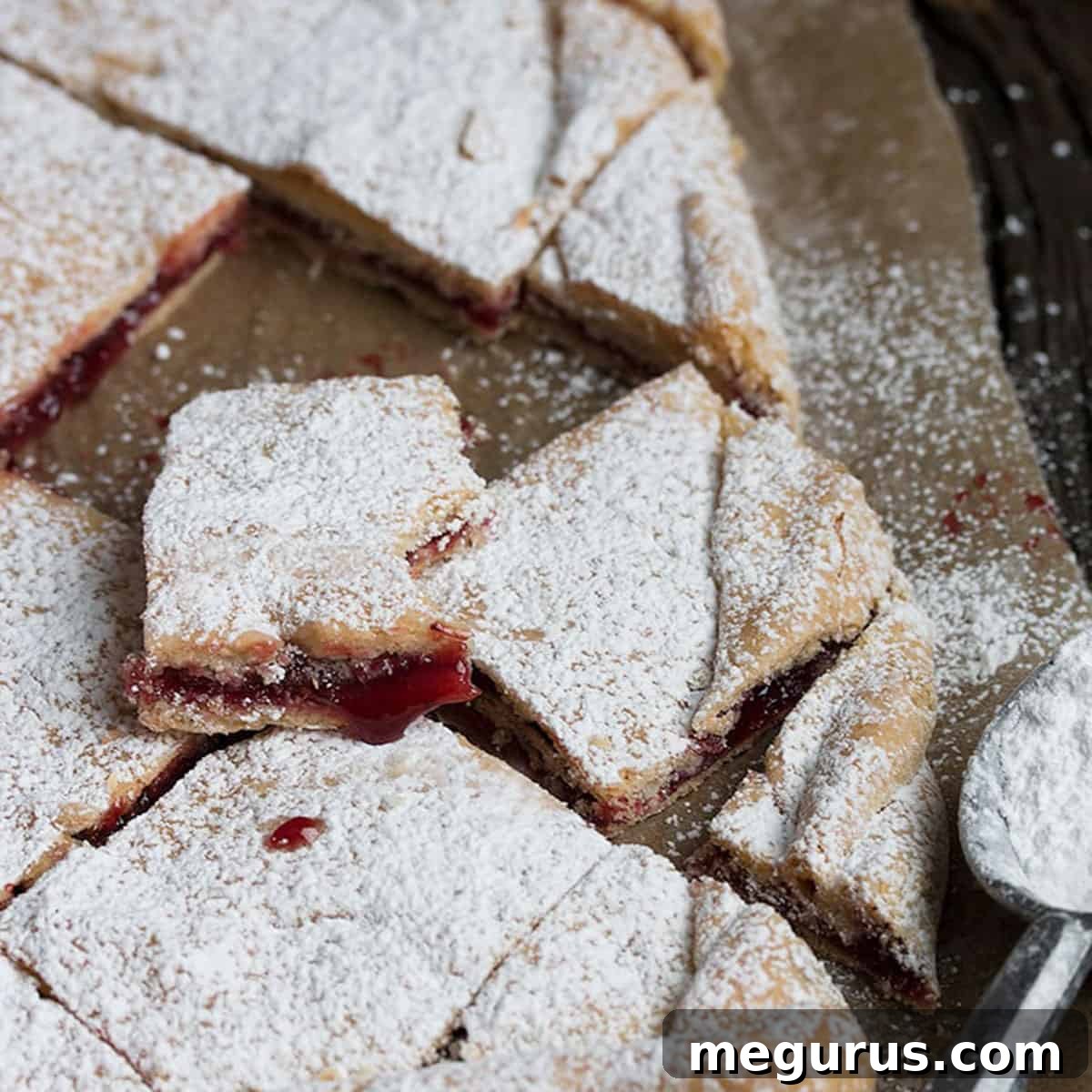
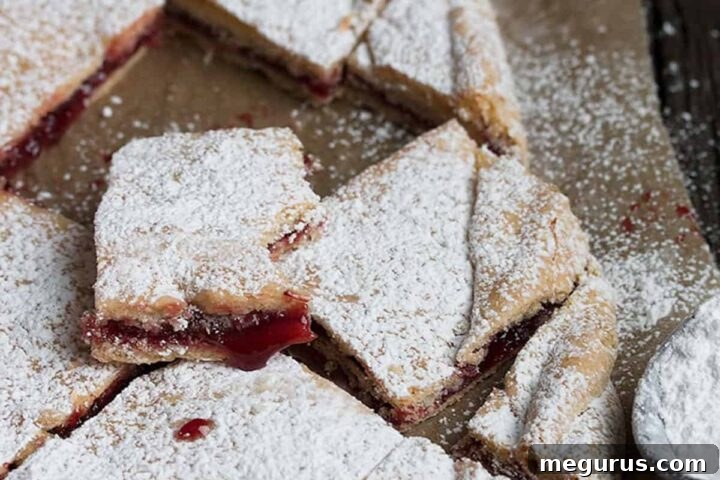
Imagine a beloved childhood treat, elevated to gourmet status with a tender, buttery pastry and a vibrant fruit filling. These Raspberry Jam Squares are precisely that – delightful, buttery pastry bars brimming with sweet raspberry jam and elegantly dusted with icing sugar. They’re often hailed as the “Pop Tarts for grown-ups,” offering a sophisticated twist on a nostalgic favorite, perfect for any time of day.
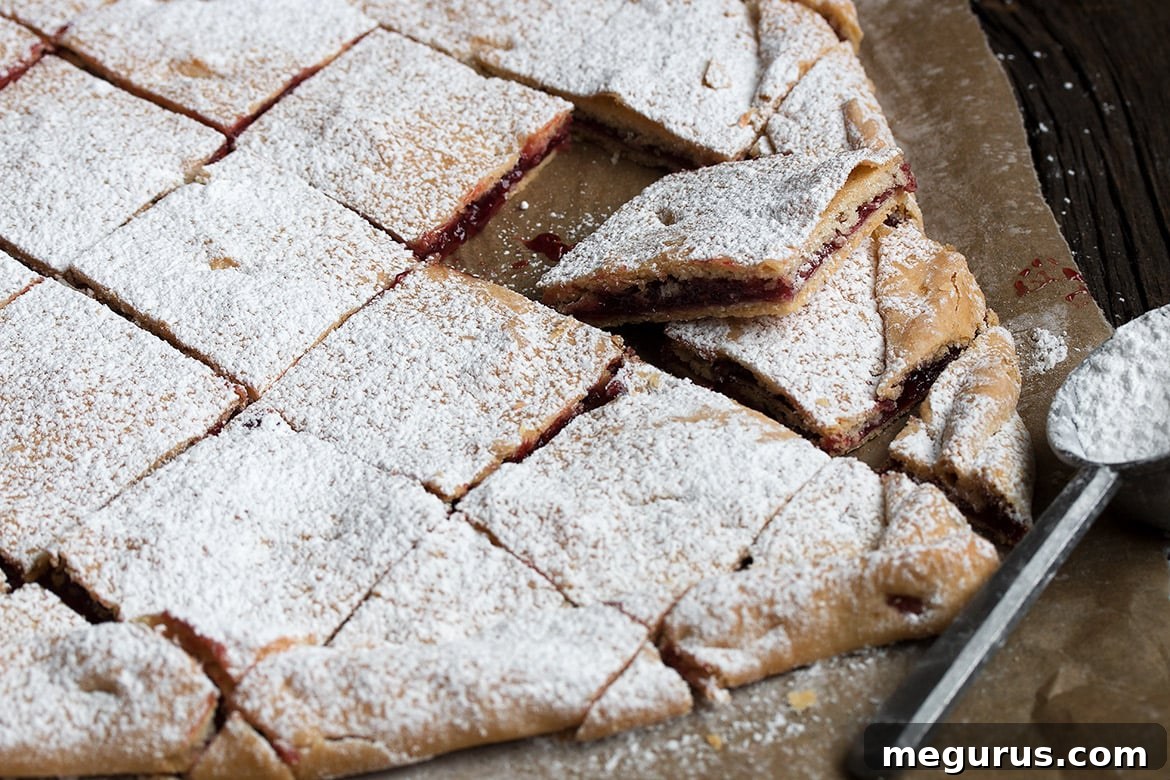
The Ultimate Guide to Baking Irresistible Raspberry Jam Squares
There’s something uniquely comforting about a homemade pastry, and these raspberry jam squares epitomize that feeling. They combine the simplicity of a bar cookie with the luxuriousness of a flaky, tender pastry, making them an ideal indulgence for breakfast, an afternoon tea companion, or a satisfying dessert. What makes this particular recipe stand out is its intriguing use of a yeast dough – not in the heavy, bread-like sense, but rather to create an exquisitely enriched, pliable pastry that’s a sheer joy to work with.
Discovering the Magic of Yeast in Pastry
Many home bakers might feel a touch intimidated by recipes involving yeast, often associating it with complex bread-making processes that demand extensive kneading and multiple proofs. However, let me assure you, this recipe is a delightful exception. The dough for these jam squares utilizes yeast, but it’s fundamentally a pastry dough, enriched with generous amounts of butter. This enrichment means the yeast acts less as a leavening agent for a significant rise, and more as a tenderizer, contributing to a wonderfully soft and slightly pliable texture that’s distinct from traditional pie or cookie doughs.
For those new to yeast baking, this recipe is an excellent starting point. It requires minimal kneading – just enough to bring the ingredients together into a smooth, cohesive ball – and only one relatively short resting period. The butter-rich dough is remarkably forgiving and exceptionally easy to roll out, behaving much like a dream pie dough. This makes the entire process far less daunting than you might imagine, paving the way for a truly rewarding baking experience.
A Taste Sensation: Beyond the Ordinary Pastry
So, what can you expect when you bite into one of these delectable squares? Imagine the nostalgic charm of a Pop Tart, but elevated to an entirely new level of culinary excellence. The crust is a symphony of flavors and textures: lightly sweet, incredibly buttery, and possessing a delicate crumb that melts in your mouth. This perfectly balanced crust cradles a generous layer of vibrant raspberry jam, whose tartness provides a beautiful counterpoint to the rich pastry.
Finished with a delicate dusting of icing sugar, these squares are a triumph of simple yet profound flavors. They are equally perfect as a comforting breakfast pastry alongside your morning coffee, a delightful treat to share during an afternoon tea gathering, or a casual dessert that satisfies any sweet craving. Their versatile appeal makes them a fantastic addition to any baker’s repertoire.
Essential Ingredients and Smart Substitutions
Creating these delightful jam squares starts with a few key ingredients. While the recipe focuses on raspberry, the beauty lies in its adaptability. Here’s a closer look at what you’ll need and how to personalize it:
The Dough Foundation:
- Yeast: You have flexibility here! Both Active Dry and Instant Yeast work wonderfully for this recipe. If using active dry, ensure it proofs in the warm water first to activate. Instant yeast can often be mixed directly with the dry ingredients. Always check the expiration date on your yeast for best results.
- Flour: All-purpose flour is the standard here. Spooning and leveling ensures you don’t add too much, which can result in a dry dough.
- Butter: This is the secret to the squares’ incredible richness and tenderness. Using cold, cubed butter that’s then allowed to sit at room temperature for a short while (about 15 minutes) ensures it integrates beautifully into the flour, creating those desirable flaky layers without being overly soft and greasy.
- Sugar: A small amount of granulated sugar activates the yeast and adds a subtle sweetness to the pastry, balancing the tartness of the jam.
- Salt: Essential for enhancing all the flavors in the dough.
- Water: Lukewarm water is crucial for activating the yeast without killing it. Aim for a temperature around 105°F (40°C).
The Heart of the Square: The Jam Filling
- Raspberry Jam: Our star ingredient! Raspberry jam provides a lovely balance of sweetness and tartness. However, this is where your creativity can shine. The most important rule for any filling is that it must be thick. This prevents it from bubbling out excessively during baking and keeps your squares neat and tidy.
- Substitution Ideas for Fillings:
- Other Fruit Jams: Strawberry, apricot, blackberry, blueberry, or mixed berry jams are excellent choices. Just ensure they are thick-set.
- Marmalade: For a zesty, slightly bitter note, a good quality orange marmalade can be surprisingly delicious.
- Nutella: A decadent chocolate-hazelnut spread would make these squares utterly irresistible for chocolate lovers.
- Apple Cinnamon: Combine finely diced cooked apples with cinnamon and a touch of sugar for a comforting, autumnal twist. Ensure the apple mixture isn’t too wet.
- Lemon Curd: For a bright, tangy burst, a thick lemon curd can be a fantastic option.
The Finishing Touch:
- Icing/Confectioners’ Sugar: A generous dusting of icing sugar after baking adds a beautiful, powdery finish and an extra touch of sweetness.
Crafting Your Perfect Jam Squares: Step-by-Step Instructions
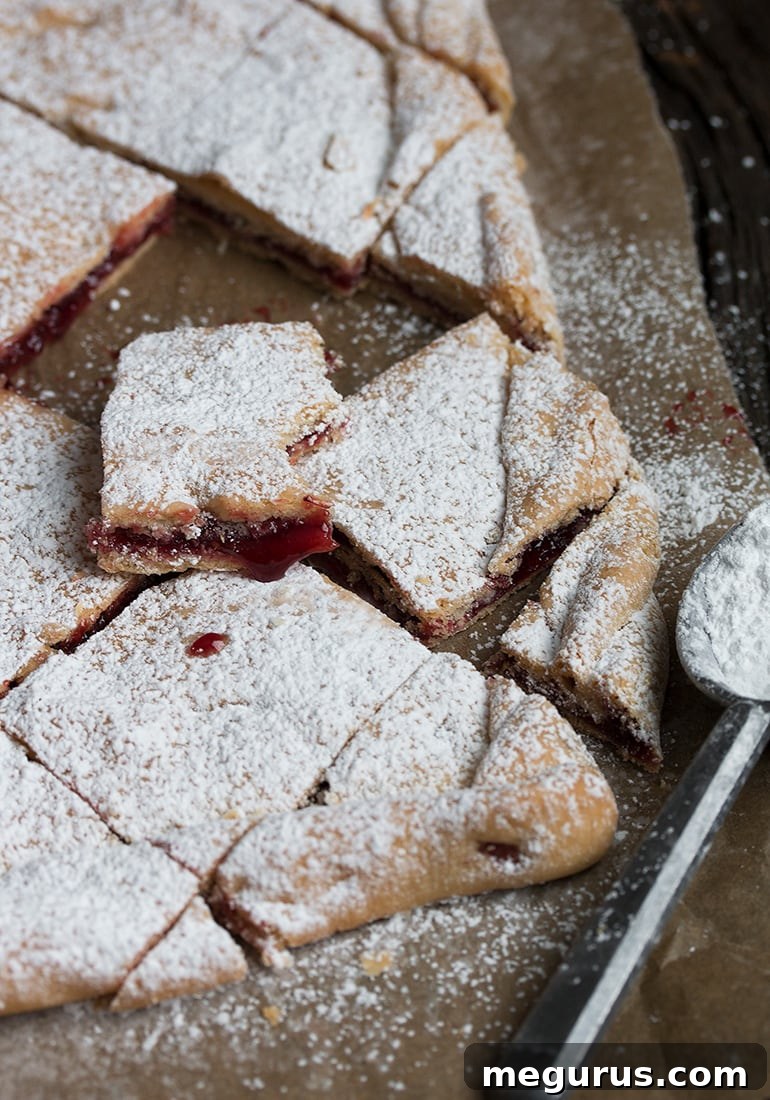
Let’s walk through the process to create these delightful Raspberry Jam Squares. The recipe is designed to be straightforward, even for those new to yeast doughs.
- Activate the Yeast: In a small bowl, combine the lukewarm water (around 105°F or 40°C) with the granulated sugar. Stir until the sugar dissolves. Sprinkle the yeast over the surface, give it a gentle stir, and let it stand for about 10 minutes. You should see it become foamy, indicating the yeast is active and ready to work its magic.
- Prepare the Dough Base: While the yeast is activating, in a large mixing bowl, combine 2 cups (or 270g) of all-purpose flour and the salt. Add the cubed, slightly softened butter to the flour. Using your fingertips, gently rub the butter into the flour mixture. Continue rubbing until the mixture resembles coarse sand with no large chunks of butter remaining, and everything is uniformly combined. This step is crucial for developing the flaky texture of the pastry.
- Combine Wet and Dry Ingredients: Make a well in the center of the flour and butter mixture. Pour the activated yeast mixture into this well. Using a sturdy spoon, gradually draw the flour mixture from the sides into the center, stirring until a rough, shaggy dough begins to form.
- Light Kneading: Transfer the rough dough to a lightly floured surface. Knead the dough gently for just a few minutes, adding a tiny bit more flour if necessary, until it comes together into a smooth, non-sticky ball. Remember, we are not developing gluten as intensely as in bread dough; we just want a cohesive, workable pastry.
- First Rise: Place the dough ball into a clean bowl, cover it tightly with plastic wrap, and allow it to rest and rise in a warm spot for 30-40 minutes. Because this is an enriched pastry dough, it won’t double in size like bread dough, but it should look noticeably puffy.
- Prepare for Baking: While the dough rests, preheat your oven to 355°F (180°C) – use a regular bake setting, not a fan-assisted one. Line a 10×15-inch rimmed baking sheet with parchment paper, allowing some overhang on the sides for easy lifting later.
- Divide the Dough: Turn the risen dough out onto a lightly floured board. Divide the dough into two parts, with one piece being slightly larger than the other. The larger piece will form the base of your squares.
- Form the Base Layer: Take the larger dough piece and roll it out into a rectangle that is approximately ½ inch wider and longer than your prepared baking sheet. To transfer it easily, gently roll the dough around your rolling pin, then unroll it over the parchment-lined baking sheet. Carefully adjust the dough so it extends about ½ inch over all edges of the pan. Using your fingers, gently press this excess dough up against the sides of the baking sheet to create a slight lip, which will help contain the filling.
- Add the Jam Filling: Spread your chosen thick jam evenly over the entire surface of the bottom dough layer. Ensure it forms a consistent, thin layer.
- Create the Top Layer: Roll out the second, smaller piece of dough into a rectangle that matches the exact inner dimensions of your baking sheet. Again, carefully roll it around your rolling pin and gently unroll it over the jam layer, adjusting to cover the jam completely. Starting from one corner, carefully fold the ½-inch overhang of the bottom dough over the top dough, pinching them together slightly to create a seal all around the edges.
- Vent and Bake: Using clean kitchen scissors, make several small cuts through the top layer of dough, spaced about 2-3 inches apart across the entire surface. This allows steam to escape during baking. Bake in the preheated oven for 40-45 minutes, or until the pastry is beautifully lightly golden brown.
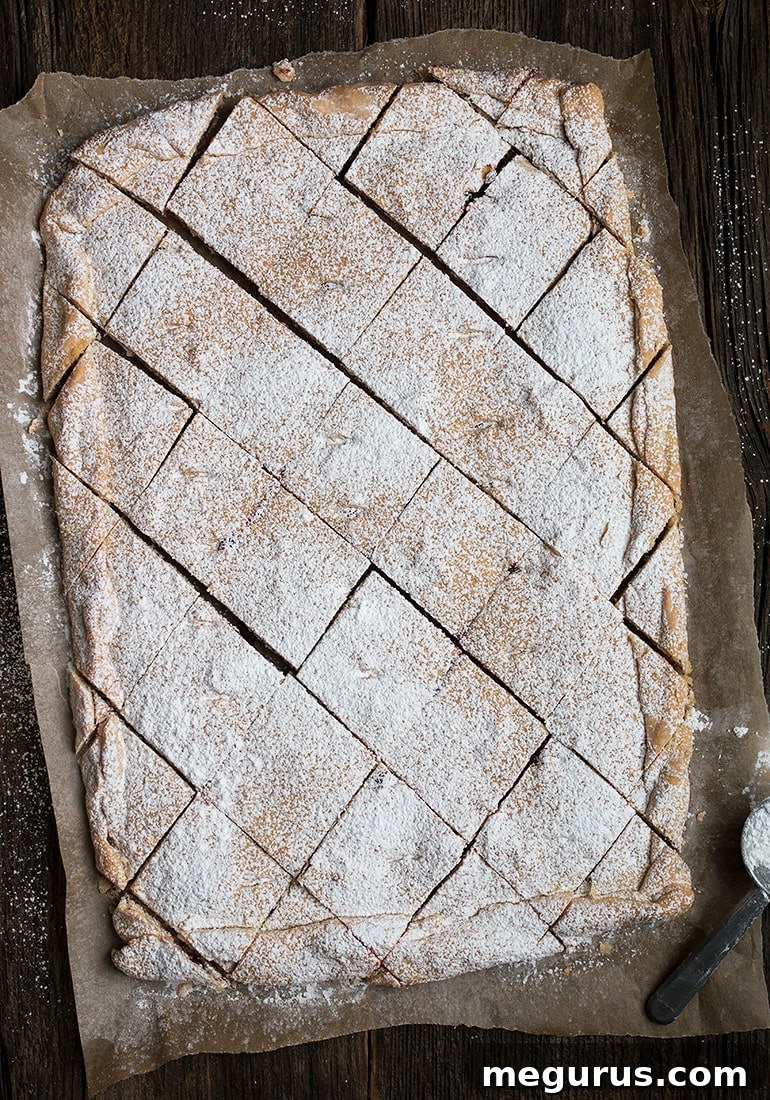
- Cool and Finish: Once baked, remove the baking sheet from the oven and allow the jam squares to cool completely on the sheet. This is important for the jam to set. Once cool, carefully lift the entire slab of squares from the tray using the parchment paper. Transfer it to a cutting surface. Dust the top generously with icing (confectioners’) sugar. Using a sharp knife, cut the large pastry slab into individual bars or squares, cutting diagonally as shown in many recipe photos for an appealing presentation.
Expert Tips for Flawless Raspberry Jam Squares
Even though this recipe is designed for ease, a few pointers can ensure your jam squares turn out perfectly every time:
- Dough Rise Expectations: Don’t expect this enriched yeast dough to double in size like a typical bread dough. The high butter content limits the yeast’s ability to create massive aeration. A noticeable puffiness after 30-40 minutes is exactly what you’re looking for.
- Flouring for Success: The dough is quite buttery and easy to handle. However, if you find it sticking to your surface or rolling pin, don’t hesitate to lightly dust with extra flour. A light sprinkle on top of the dough before wrapping it around your rolling pin is especially helpful when transferring it to the baking sheet.
- Jam Consistency is Key: Always use a thick jam or filling. A runny jam will bubble excessively during baking, potentially making the pastry soggy and messy. If your jam seems a bit thin, you can gently warm it in a saucepan and stir in a teaspoon of cornstarch mixed with a tablespoon of water, then cool it completely before using.
- Parchment Paper is Your Friend: Lining the baking sheet with parchment paper is non-negotiable. It ensures easy transfer and prevents sticking, especially with a sticky jam filling.
- Even Baking: Bake the squares until they are a light, golden brown. Overbaking can make the pastry dry, while underbaking can leave it doughy. Keep an eye on them, especially towards the end of the baking time.
- Cool Completely Before Cutting: Patience is a virtue here! Allowing the squares to cool completely is crucial. The jam needs time to set, and the pastry will firm up, making it much easier to cut into neat, clean squares without crumbling or squishing the filling.
Storing and Freezing Your Raspberry Jam Squares
These raspberry jam squares keep remarkably well, making them an excellent make-ahead treat:
- Room Temperature Storage: Store cooled jam squares in an airtight container at room temperature for up to 3-4 days. They tend to retain their freshness and tender texture beautifully.
- Freezing for Later: While the original recipe hasn’t explicitly tested freezing, there’s no reason why these delicious squares wouldn’t freeze wonderfully. To freeze, ensure they are completely cooled. You can wrap individual squares tightly in plastic wrap, then place them in a freezer-safe bag or container. They should last for up to 1-2 months in the freezer. Thaw them at room temperature or gently warm them in a low oven for a few minutes for a fresh-baked taste.
Serving Suggestions to Elevate the Experience
While delightful on their own, here are some ideas to make your Raspberry Jam Squares even more special:
- Classic Pairing: Serve with a hot cup of tea or coffee for a comforting breakfast or afternoon snack.
- Dessert Delight: Warm a square slightly and serve with a scoop of vanilla ice cream or a dollop of whipped cream for a simple yet elegant dessert.
- Brunch Star: Arrange a platter of these squares alongside fresh fruit, yogurt, and other pastries for an impressive brunch spread.
- Gift Giving: Package a few squares in a decorative box or bag for a thoughtful homemade gift.
Frequently Asked Questions (FAQs)
Can I use a different type of jam?
Absolutely! While raspberry is a classic, any thick jam like strawberry, apricot, or even marmalade will work. The key is to ensure the jam is thick enough to prevent it from becoming too runny during baking. You can also experiment with other thick fillings like Nutella or a cooked apple cinnamon mixture.
Is this recipe difficult for beginners who are new to yeast?
Not at all! This recipe is designed to be very approachable. The dough requires minimal kneading and only a single, short rise, making it much less demanding than traditional bread recipes. The enriched dough is also very forgiving and easy to handle.
How do I know if my yeast is active?
After mixing the yeast with lukewarm water and sugar, let it sit for about 10 minutes. If the mixture becomes foamy or bubbly on the surface, your yeast is active and ready to use. If it doesn’t foam, your yeast might be old or the water temperature was incorrect, and you should start with fresh yeast.
Can I make the dough ahead of time?
Yes, you can! After the first rise, you can gently punch down the dough, wrap it tightly in plastic wrap, and refrigerate it for up to 1-2 days. Allow it to come to room temperature for about 30 minutes before rolling it out and proceeding with the recipe.
How can I prevent the jam from making the bottom soggy?
Ensuring your jam is thick is the primary way to prevent sogginess. Baking the pastry until it’s truly golden brown and allowing the squares to cool completely before cutting also helps the jam set and prevents moisture from seeping into the crust.
What does “spooned and leveled flour” mean?
This is a common baking technique to accurately measure flour. Instead of scooping flour directly with your measuring cup (which compacts it and results in too much flour), you lightly spoon flour into the measuring cup until it overflows, then use the back of a knife or straight edge to level off the excess.
Conclusion: Your New Favorite Jam Pastry Awaits
These Raspberry Jam Squares are more than just a recipe; they’re an invitation to enjoy the simple pleasures of homemade baking. With their tender, buttery crust, luscious fruit filling, and delightful dusting of icing sugar, they offer a comforting and sophisticated treat that’s surprisingly easy to achieve. Whether you’re a seasoned baker or new to the world of yeast doughs, you’ll find this recipe rewarding and the results utterly delicious. So, gather your ingredients, follow these steps, and prepare to fall in love with your new favorite jam-filled pastry!