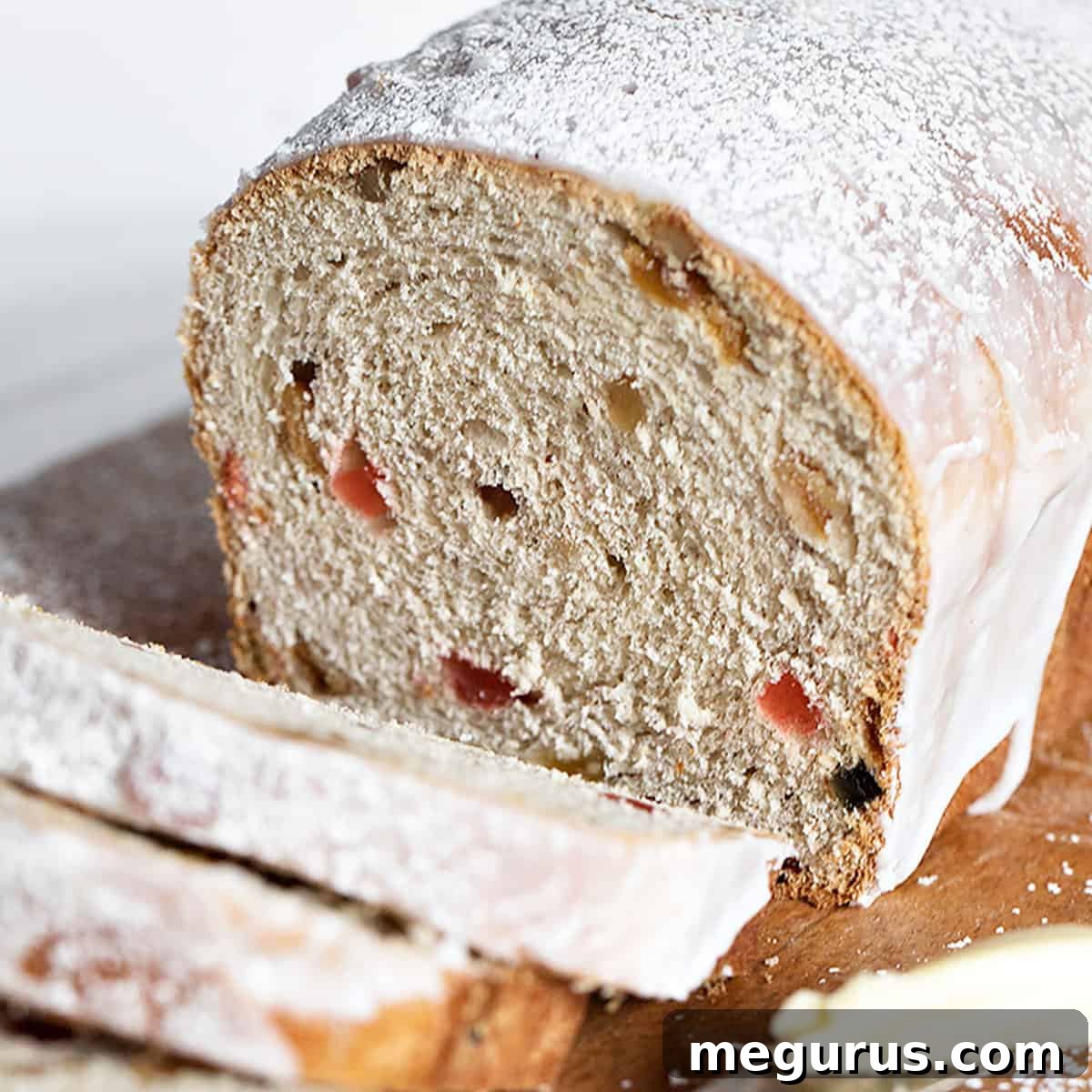
Step into the festive season with a truly unique and delightful treat: Chop Suey Bread. This exquisite yeast bread, surprisingly unrelated to Chinese cuisine, is a holiday baking masterpiece. Imagine a tender, subtly spiced loaf, generously studded with a colorful medley of candied fruit, crunchy nuts, and sweet raisins, all crowned with a luscious, delicate icing. It’s more than just a bread; it’s a celebration of flavors and a charming addition to any holiday table or a cozy winter morning. Prepare to discover your new favorite tradition!
The Intriguing Name: Unraveling “Chop Suey Bread”
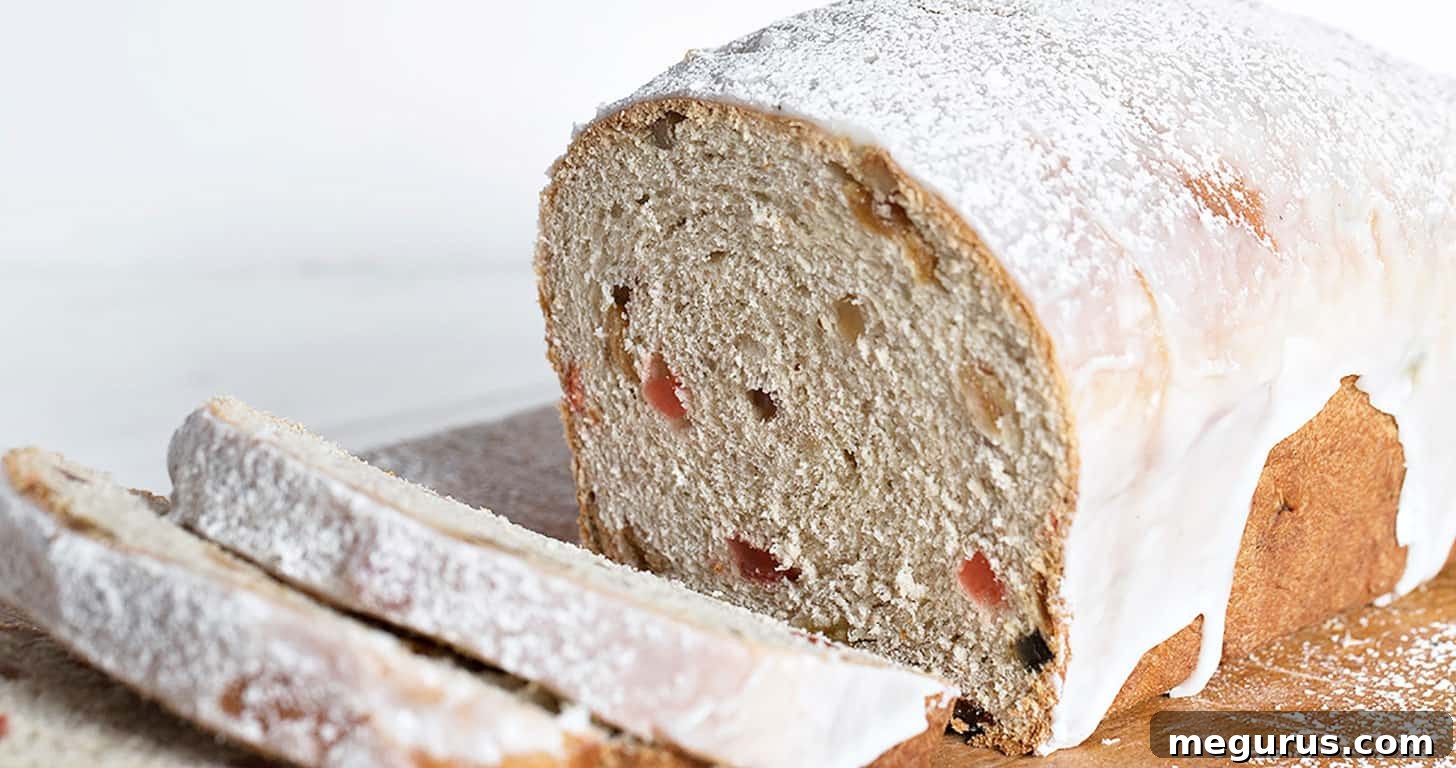
The name “Chop Suey Bread” often piques curiosity, conjuring images of savory Chinese dishes. However, rest assured, this sweet yeast bread is a world apart. Its moniker likely stems from a charming culinary tradition, much like the popular stir-fry dish that inspired it. Just as traditional chop suey often combines “odds and ends” of available meats and vegetables, this bread creatively utilizes the delightful leftover bits from traditional Christmas baking – glacé fruit, raisins, and various nuts. It’s a brilliant way to transform those festive ingredients into something new and exciting, ensuring nothing goes to waste while creating a distinctly delicious loaf. It’s a testament to resourceful and imaginative baking, turning simple ingredients into a festive treasure.
A Symphony of Festive Flavors: What Makes This Bread So Special?
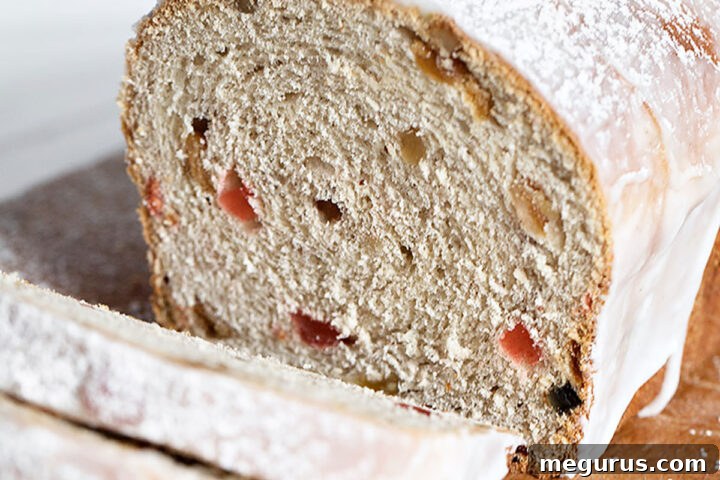
Chop Suey Bread stands out with its rich, complex flavor profile that perfectly captures the spirit of the holidays. The bread itself is a soft, airy yeast base, gently infused with warm spices like cinnamon, nutmeg, and a hint of mace. This aromatic foundation provides the perfect canvas for the vibrant fillings. Each slice reveals a delightful burst of texture and taste: the chewy sweetness of glacé fruit mix, the plump juiciness of golden raisins, and the satisfying crunch of walnuts. The final touch of a sweet, drizzled icing adds an extra layer of indulgence, creating a harmonious balance that makes every bite memorable. It’s a bread that feels both nostalgic and refreshingly unique, guaranteed to become a cherished part of your seasonal repertoire.
This festive bread isn’t just about taste; it’s about the experience. The aroma filling your kitchen as it bakes is pure holiday magic, a comforting scent that welcomes guests and warms hearts. Its beautiful appearance, with colorful fruit peeking through the golden crust and glistening icing, makes it a stunning centerpiece for any holiday brunch or dessert spread. Whether you’re sharing it with loved ones or savoring a quiet moment, Chop Suey Bread offers a simple yet profound joy that defines the festive season.
Key Ingredients & Savvy Substitutions for Your Loaf
Crafting the perfect Chop Suey Bread starts with understanding its core ingredients and knowing how to adapt them to your pantry or preferences. While the recipe calls for specific components, there’s always room for flexibility without compromising flavor or texture.
- Glacé Fruit Mix: This vibrant mixture of chopped candied fruits is a cornerstone of Chop Suey Bread. You’ll typically find it in plastic containers in the baking aisle of most grocery stores, especially during the holiday season. In Canada, Bulk Barn is an excellent source. If you can’t find a ready-made mix, you can easily create your own by chopping individual glacé cherries (red and green), pineapple, and orange peel. This allows for even more customization to your taste!
- Raisins: While any type of raisin will work beautifully, golden raisins are highly recommended for their bright color and slightly sweeter, fruitier flavor, which adds a lovely visual contrast to the bread. If golden raisins aren’t available, standard dark raisins are a perfectly acceptable substitute. Remember to plump your raisins (and any dried fruit you use) by soaking them in hot water for about 10-15 minutes before incorporating them into the dough. This ensures they remain moist and juicy, preventing them from drawing moisture out of the bread during baking. You can also experiment with other dried fruits like currants, chopped dried cranberries, or even chopped dried apricots for a different twist.
- Mace: Mace is a delicate, warm spice, closely related to nutmeg but with a more subtle, slightly floral, and peppery note. Not every kitchen may stock it, but don’t let that deter you! Nutmeg is an excellent substitute in equal measure, offering a similar comforting warmth. If you have both, a combination can provide a more nuanced flavor, but either works well to enhance the bread’s aromatic profile.
- Butter: Using good quality butter at room temperature is crucial for the dough’s texture and flavor. It incorporates smoothly, creating a rich, tender crumb. Unsalted butter is generally preferred in baking as it gives you more control over the salt content of the recipe.
- Milk: Scalding the milk is an important step in yeast bread recipes. It deactivates enzymes that can interfere with gluten development and yeast activity, resulting in a softer, more consistent crumb. Be sure to let it cool to lukewarm before adding to the yeast mixture.
- Nuts: Walnuts provide a lovely crunch and earthy flavor that complements the sweet fruit. Feel free to substitute with other chopped nuts like pecans, almonds, or even a mix of your favorites. Toasting the nuts lightly before adding them can enhance their flavor significantly.
Mastering Chop Suey Bread: Essential Tips for Success!
- Don’t Overload the Fruit: While it’s tempting to add an abundance of glacé cherries or other fruits, be mindful of the total quantity. Too much heavy fruit can make it harder for the dough to rise properly. If you wish to include whole or halved glacé cherries, slightly reduce the amount of mixed glacé fruit and raisins to maintain a good balance.
- Handle the Dough with Care (and sometimes by Hand): The dough for Chop Suey Bread is quite substantial, especially once all the fruit and nuts are incorporated. If using a stand mixer, start with the paddle attachment, then switch to the dough hook. If you notice your mixer straining, don’t hesitate to transfer the dough to a floured counter and finish kneading by hand. This ensures the dough develops correctly without overworking your equipment.
- Achieve the Perfect Icing Consistency: The icing should be thick enough to cling to the bread and cascade gently down the sides, rather than dripping off quickly. Start with the minimum amount of milk and gradually add tiny increments until you reach a consistency that flows like a thick sheet, not individual drips. This allows it to set beautifully and evenly.
- The Art of Slow Rising: This yeast bread is a true test of patience, but the rewards are well worth it! Expect each of the two rise periods to take between 1 1/2 to 2 1/2 hours, depending on the warmth of your kitchen. A slower rise often results in a more flavorful bread. During the second rise, lightly grease the tops of your loaves and cover them tightly with plastic wrap. This prevents the surface from drying out and forming a tough crust, ensuring a soft, tender finish.
- Prevent Fruit from Sinking: To ensure your fruits and nuts are evenly distributed throughout the bread and don’t all sink to the bottom, lightly toss them with 1.5 tablespoons of flour before adding them to the dough. This creates a thin coating that helps them adhere to the dough and prevents them from falling during the rise and bake.
- Cooling is Key: After baking, remove the loaves from their pans promptly and allow them to cool completely on a wire rack. Cooling allows the internal structure of the bread to set and prevents it from becoming soggy. Attempting to ice or slice the bread while it’s still warm can result in a messy presentation and a less-than-ideal texture.
Making Ahead, Storing, and Freezing Chop Suey Bread
This recipe yields two generous loaves of Chop Suey Bread, making it perfect for sharing, gifting, or enjoying over several days. Its shelf life is moderate, so proper storage is key to preserving its freshness and deliciousness.
- Freshness is Best: Like most homemade yeast breads, Chop Suey Bread is truly at its peak on the day it’s baked. The crust is perfectly tender, the crumb soft, and the flavors most vibrant.
- Short-Term Storage: If you plan to enjoy the bread within a day or two, ensure it is tightly wrapped in plastic wrap or aluminum foil once it has completely cooled. Store it at room temperature. This will help maintain its moisture and prevent it from drying out.
-
Long-Term Storage (Freezing): Chop Suey Bread freezes exceptionally well, making it ideal for meal prepping or having a delicious treat on hand whenever a craving strikes.
- To Freeze an Iced Loaf: Allow the icing to fully set on the bread. Then, wrap the loaf tightly in plastic wrap, followed by a layer of aluminum foil. Place it in a freezer-safe bag to prevent freezer burn.
- To Freeze an Un-iced Loaf: If you anticipate wanting to toast some slices later (as the icing prevents good toasting), you might consider icing only one loaf and freezing the other plain. Wrap the un-iced loaf just as you would an iced one.
- Freezing Slices: For ultimate convenience, slice the bread before freezing. Arrange slices on a baking sheet and freeze until firm, then transfer them to a freezer bag with parchment paper between slices to prevent sticking. This allows you to grab just a few slices as needed.
Frozen bread can be stored for up to 2 months. Thaw frozen loaves overnight in the refrigerator or at room temperature. Individual slices can be toasted directly from frozen or thawed quickly.
Get the Recipe: Chop Suey Bread
Pin This
Leave a Review
Ingredients
- 1/4 cup lukewarm water
- 3 teaspoons active dry or instant yeast
- 1 teaspoon white granulated sugar
- 1 cup milk, scalded (*see instructions below)
- 6 Tablespoons butter, at room temperature
- 1/2 cup brown sugar, lightly packed
- 1/2 cup water
- 1 large egg
- 1 teaspoon vanilla extract
- 2 cups all-purpose flour, spooned and levelled, plus more needed below
- 1 1/2 teaspoon ground cinnamon
- 1/4 teaspoon ground nutmeg
- 1/8 teaspoon ground mace, or additional nutmeg
- 2 teaspoon fine salt
- 2 cups all-purpose flour, spooned and levelled, plus more as needed for kneading
- 1 cup chopped glacé fruit mix
- 1 cup golden raisins, or regular raisins, plumped (soaked in hot water before using)
- 1/3 cup walnuts, chopped
- 1 1/2 Tablespoons all purpose flour, for tossing with fruit
For the Icing:
- 2 cups icing sugar (confectioners’ sugar)
- 3-4 Tablespoons milk
Instructions
-
To scald the milk: In a small saucepan, gently heat milk to 180°F. If you don’t have a thermometer, heat it until it begins to steam and small bubbles form around the edge of the pan. Remove from heat and set aside to cool to lukewarm (about 95-105°F).
-
In a small bowl, combine the lukewarm water, yeast, and 1 teaspoon of white granulated sugar. Stir gently and set aside for 5-10 minutes to proof. The mixture should become foamy, indicating the yeast is active.
-
In a large mixing bowl or the bowl of a stand mixer fitted with the PADDLE attachment, cream together the softened butter and lightly packed brown sugar until well combined. Check that your scalded milk has cooled to lukewarm, then add it to the bowl along with 1/2 cup of water. Stir in the proofed yeast mixture. Add the egg and vanilla extract, mixing until everything is thoroughly incorporated. Gradually add the initial 2 cups of all-purpose flour, cinnamon, nutmeg, mace (or additional nutmeg), and salt. Mix until a shaggy dough forms.
-
In a separate medium bowl, combine the chopped glacé fruit mix, plumped raisins, and chopped walnuts. Sprinkle 1 1/2 tablespoons of all-purpose flour over the mixture and toss gently to coat the fruits and nuts. This helps prevent them from sinking to the bottom of the loaves during baking. Set aside.
-
If using a stand mixer, remove the paddle attachment and replace it with the DOUGH HOOK. If kneading by hand, switch to a sturdy wooden spoon or your hands. Add 1 more cup of flour to the dough and knead until well incorporated. Continue by adding an additional 1/3 to 1/2 cup of flour, kneading it in until the dough begins to pull away from the sides of the bowl. Now, add the prepared fruit and nut mixture, along with about 1/4 cup of flour. Mix until the fruit and nuts are evenly distributed throughout the dough. Transfer the dough to a lightly floured counter. Continue to add small increments of flour as needed, kneading until you achieve a moist, elastic dough that is no longer sticky to the touch. This process usually takes about 8-10 minutes of kneading.
-
Lightly grease a large bowl with vegetable oil or cooking spray. Place the kneaded dough into the greased bowl, turning once to coat. Cover the bowl tightly with plastic wrap and place it in a warm, draft-free spot to rise until it has almost doubled in size, which typically takes about 1 1/2 to 2 1/2 hours, depending on your kitchen’s temperature.
-
Once the first rise is complete, gently punch down the dough to release the air. Transfer it to a lightly floured surface and divide it into two equal pieces. For each piece, roll the dough into a rectangle approximately 8 inches wide by 12-14 inches long. Starting from the 8-inch side, carefully roll the dough up jelly-roll style into a tight cylinder. Pinch the seam firmly to seal it and tuck the ends under slightly. Place each rolled loaf, seam-side down, into a greased 8 1/2 x 4-inch loaf pan.
-
Lightly brush the tops of the shaped loaves with a little vegetable oil or spray with cooking spray. Cover both pans loosely with plastic wrap. Allow the loaves to undergo their second rise in a warm spot until they have almost doubled in size and look puffy, typically 1 1/2 to 2 hours.
-
About 20 minutes before the second rise is complete, preheat your oven to 350°F (175°C). Ensure your oven is not fan-assisted for even baking.
-
Once the loaves are fully risen, place them into the preheated oven. Bake for 40-45 minutes, or until the tops are golden brown and a thermometer inserted into the center of a loaf registers approximately 195°F (90°C). If the tops of the loaves start to over-brown before they are cooked through, loosely tent them with a sheet of aluminum foil for the remaining baking time.
-
Carefully remove the baked loaves from their pans immediately after baking and transfer them to a wire cooling rack. Allow them to cool completely before icing or slicing. This can take several hours.
-
For the icing: In a small bowl, whisk together the icing sugar and 2 tablespoons of milk. Continue adding milk in very small increments (1 teaspoon at a time), stirring thoroughly after each addition, until you achieve a smooth, pourable consistency that is thick enough to run off a spoon in a thick stream, but not so thin that it drips quickly. Spoon the icing generously down the center of each cooled loaf, gently coaxing it towards the edges so it cascades slightly down the sides. Allow the icing to fully set before slicing the bread. Once the icing has set, the bread can be frozen without disturbing the glaze.
Notes
If you’d like to add some whole or halved glacé cherries to the bread, reduce your mixed glacé fruit and raisins slightly, to avoid overloading the bread with fruit, which can make rising more difficult.
I suggest removing the dough from a stand mixer to finish with hand-kneading, as the dough is quite bulky and can strain the mixer. If at any time you feel your mixer is straining, just remove it to the counter to finish kneading in the last of the flour.
The icing for Chop Suey Bread should be fairly thick. Aim for a consistency that will flow off the side in a smooth sheet, rather than quick drips.
This recipe makes two loaves. I recommend either freezing the extra loaf or gifting it, as the bread is best enjoyed within a day or two of baking. Tightly wrapped, it remains enjoyable for another day or two.
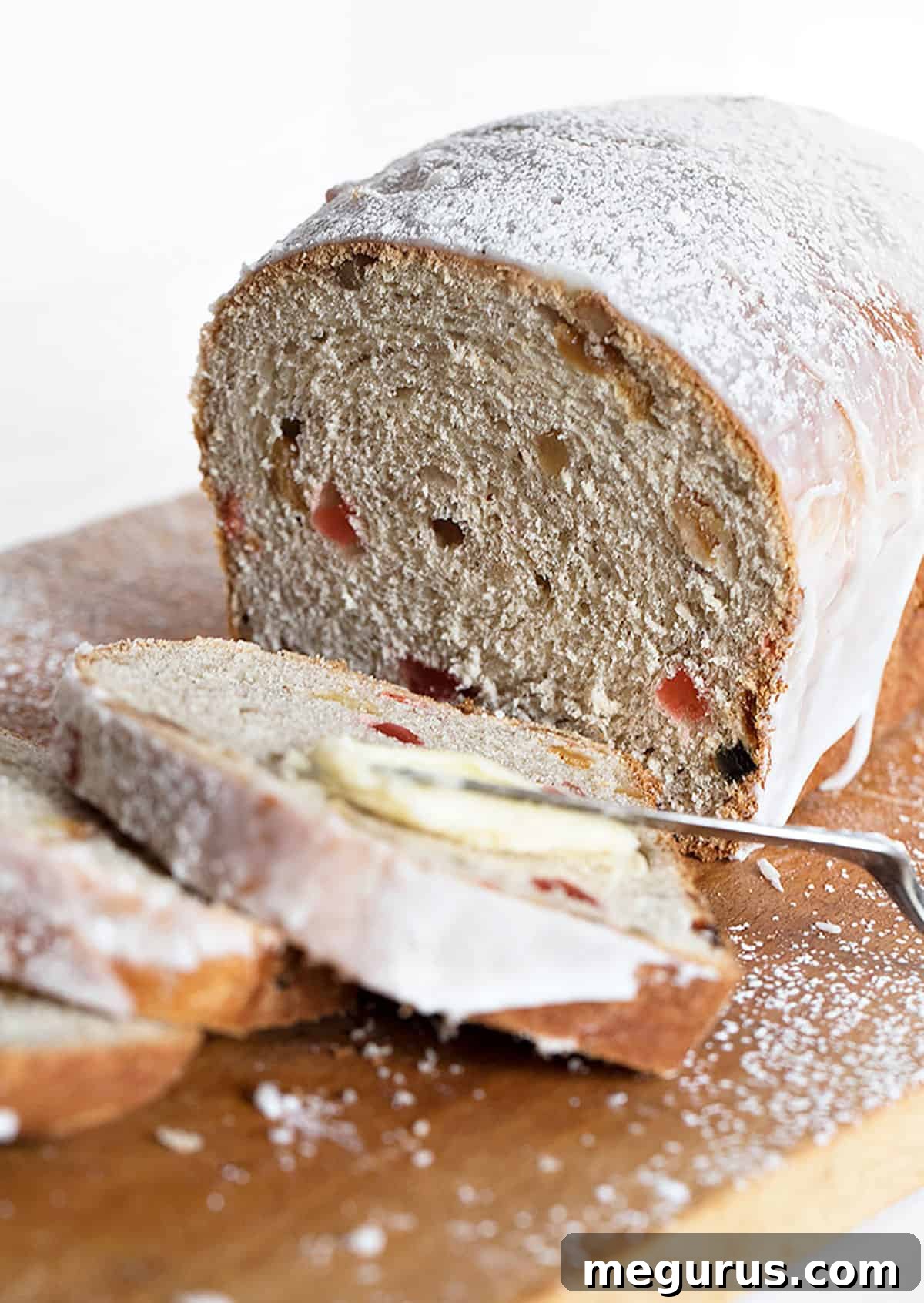
Chop Suey bread is wonderfully delicious fresh with a generous spread of butter. It’s also quite tasty toasted, but the icing can make that option a bit messy. If you’d like to enjoy some toasted slices, consider leaving one of the loaves un-iced or icing only half a loaf, allowing you to enjoy both options.
Top Tip! This yeast bread is a very slow riser, so patience is key. Each of the two rise periods can take 1 1/2 – 2 1/2 hours, depending on your kitchen’s warmth. Due to this long rise, remember to grease the top of your loaves during the second rise and cover tightly to prevent them from drying out and forming a tough crust.
Frequently Asked Questions About Chop Suey Bread
What exactly is Chop Suey Bread?
Chop Suey Bread is a festive and sweet yeast bread, traditionally enjoyed during the holiday season. It’s filled with a rich assortment of candied (glacé) fruits, raisins, and nuts, then topped with a sweet, delicate icing. Despite its name, it has no culinary connection to Chinese stir-fry; the name is believed to refer to its use of “odds and ends” of traditional Christmas baking ingredients, much like how the dish chop suey is composed of various ingredients.
Can I substitute other dried fruits or nuts?
Absolutely! The beauty of Chop Suey Bread is its versatility. While the recipe calls for glacé fruit mix, golden raisins, and walnuts, you can easily customize it. Feel free to use currants, chopped dried cranberries, apricots, or even chopped dates instead of or in addition to raisins. For nuts, pecans, almonds, or even a mix of your favorite chopped nuts would be delicious alternatives to walnuts.
Why is my bread rising so slowly?
Chop Suey Bread is known for being a slow riser. This is primarily due to the heavy load of fruits and nuts in the dough, which can weigh it down and inhibit yeast activity. Patience is key! Ensure your kitchen is warm and free of drafts, and allow ample time for both rises (1.5 to 2.5 hours each). The warmth of your kitchen significantly impacts the rising time.
Can I make this bread dairy-free or vegan?
While the original recipe contains milk and butter, you can adapt it. For dairy-free, substitute dairy milk with an unsweetened plant-based milk (like almond or soy milk) and use a dairy-free butter alternative. For a vegan version, in addition to the dairy substitutes, you would need to replace the egg with an egg substitute (e.g., a flax egg or commercial egg replacer), though this may slightly alter the texture of the bread.
What’s the best way to enjoy Chop Suey Bread?
Chop Suey Bread is fantastic enjoyed fresh, perhaps with a generous smear of butter. It also makes an excellent addition to a holiday breakfast or brunch spread. For a different experience, if you leave one loaf un-iced or only partially ice a loaf, you can lightly toast slices for a warm, comforting treat. It pairs beautifully with a cup of coffee, tea, or even a glass of mulled cider during the festive season.
Embrace the Festive Spirit with Chop Suey Bread
As you embark on your holiday baking adventures, let this Chop Suey Bread be a beacon of warmth and flavor. Its unique name and even more unique taste make it a conversation starter, while its comforting spices and generous fruit filling make it an instant classic. Perfect for sharing, gifting, or simply savoring, this bread embodies the joyous spirit of the season. Don’t be shy about experimenting with your favorite dried fruits and nuts to make it truly your own. Bake a loaf (or two!) and bring a touch of old-world charm and delightful sweetness to your home. Happy baking!