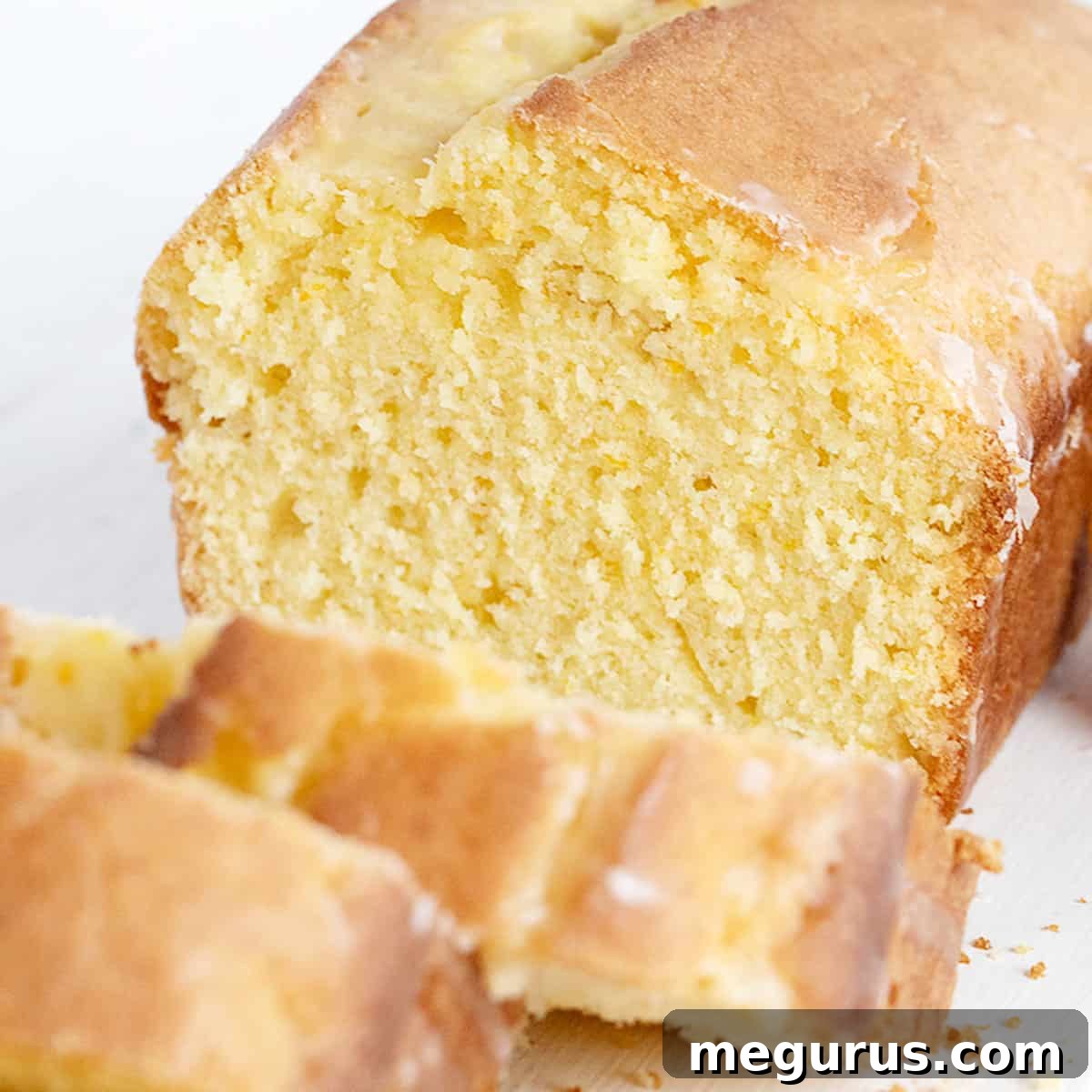
Delightful Glazed Orange Pound Cake Loaf: Your New Favorite Citrus Treat
Embrace the bright, vibrant flavors of citrus with this exquisite Glazed Orange Pound Cake Loaf. Unlike its lemon counterpart, orange offers a beautifully sweet and aromatic note that makes this pound cake truly special. Each slice reveals a wonderfully moist and tender crumb, bursting with fresh orange juice and zest, all crowned with a luscious, sweet orange glaze. It’s the perfect treat to brighten any day, whether for breakfast, a delightful afternoon snack, or a refreshing dessert.
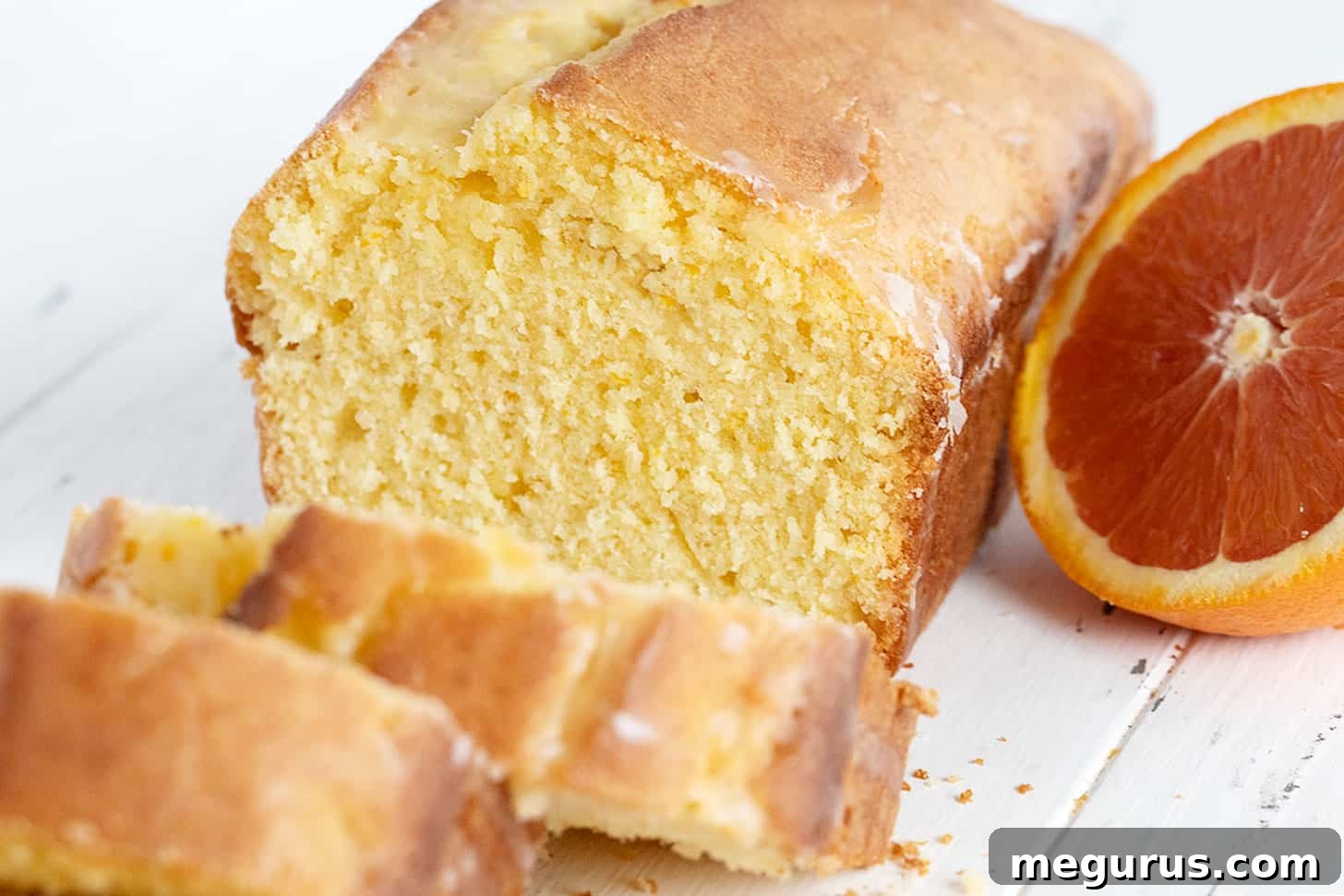
While lemon often takes the spotlight in the world of citrus loaf cakes, the subtle sweetness and aromatic depth of orange provide a truly refreshing change. This classic orange pound cake isn’t just a feast for the eyes; it boasts a magnificent texture that cuts cleanly, yet remains incredibly moist and utterly saturated with bright, fresh flavor. It’s a testament to simple ingredients coming together to create something truly extraordinary, promising a delightful experience with every bite.
Essential Ingredients for Your Perfect Orange Pound Cake
Crafting the perfect orange pound cake begins with understanding the role of each ingredient. Here’s a closer look at what you’ll need and some helpful notes for substitutions or variations.
Oranges: The Star of the Show
For this recipe, fresh oranges are non-negotiable. You’ll need both their vibrant zest and their freshly squeezed juice to infuse the cake with its signature citrus flavor. Any type of orange will work beautifully, each offering a slightly different nuance:
- Navel Oranges: Widely available, sweet, and easy to peel, yielding plenty of juice and zest.
- Cara Cara Oranges: These often have a pinkish flesh and a less acidic, sweeter flavor profile, making them excellent for baking. I specifically used Cara Cara oranges in this particular recipe for their subtle sweetness.
- Valencia Oranges: Known for their high juice content, perfect if you need a lot of fresh juice.
- Blood Oranges: While they offer a dramatic color and unique flavor, they can be a bit more tart, so you might adjust sugar levels slightly if using them.
You’ll typically need about 3 medium or 2 large oranges to get the required amount of zest and juice for both the cake and the glaze.
Freshly Squeezed Orange Juice
The assumption here is that you’ll be using freshly squeezed orange juice. Since you’re already zesting the oranges, it makes perfect sense to use their juice. Store-bought orange juice, while convenient, simply doesn’t deliver the same bright, fresh, and complex flavor that freshly squeezed juice does. It also often contains added sugars or preservatives that can alter the cake’s taste and texture.
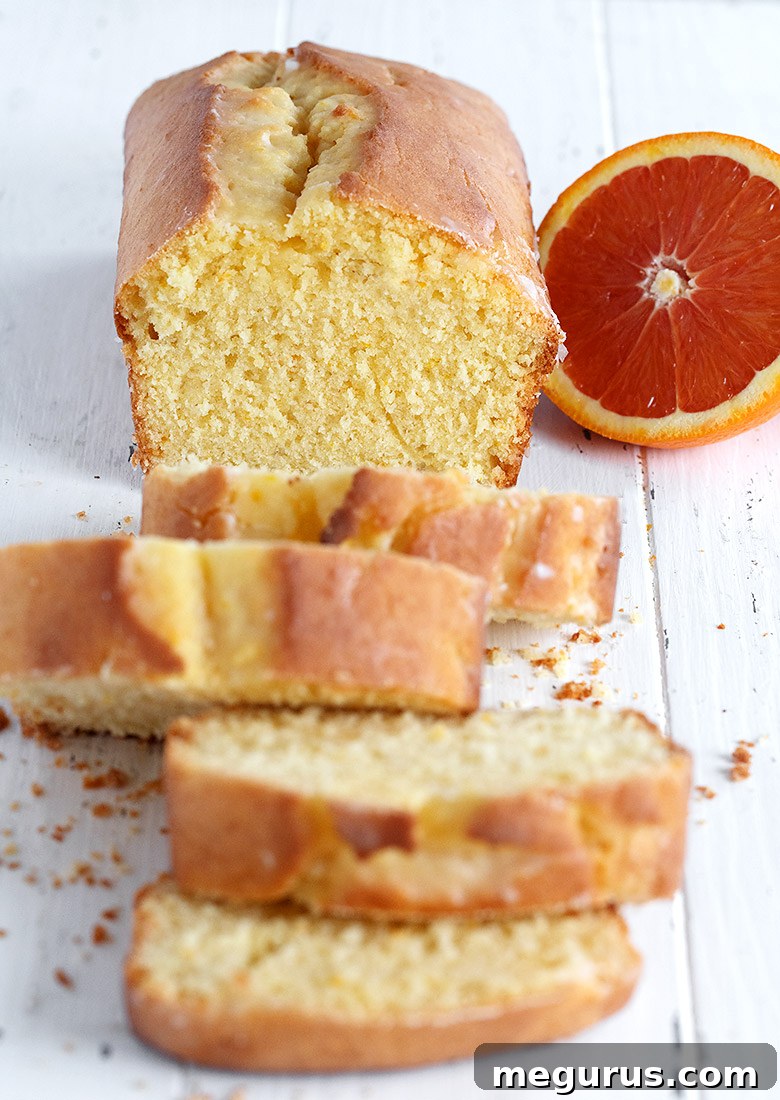
Expert Baking Tips for a Flawless Loaf
Achieving a bakery-quality pound cake is all about mastering a few fundamental baking techniques. These tips will help ensure your orange loaf turns out perfectly moist, tender, and consistently delicious every time.
Understanding “Room Temperature Butter”
Softening butter to room temperature is a critical step in many baking recipes, including this pound cake. However, it’s also a common point of confusion that can significantly impact the quality of your baked goods. “Room temperature” or “softened” butter doesn’t mean melted butter; it refers to butter that has warmed up just enough to become pliable without becoming greasy or liquid.
While an average room temperature might be considered around 72°F (22°C), for butter, the ideal temperature is closer to 68°F (20°C). You can test this precisely with an instant-read thermometer if you’re meticulous. A simpler method is the “finger test”: gently press your index finger onto the butter. If it leaves a slight indentation without your finger sinking in too easily or the butter appearing oily, it’s perfect. Butter that is too cold won’t cream properly with sugar, resulting in a dense cake, while butter that is too warm (starting to melt) will lead to a greasy texture and a cake that doesn’t rise as well because it loses its ability to trap air.
How to Speed Up Butter Softening
If you’re short on time and forgot to take your butter out, avoid the microwave! Microwaves tend to melt butter unevenly, causing the fat and milk solids to separate, which is detrimental to your batter. The best and most reliable method for quickly softening cold butter is to grate it using a cheese grater. The small shreds warm up much faster, cutting the softening time by at least half, if not more. Spread the grated butter on a plate to maximize surface area and let it sit for 10-15 minutes.
The Art of Measuring Flour Accurately
Measuring flour incorrectly is a common baking pitfall that can drastically alter your results. Too much flour leads to a dry, dense cake, while too little can result in a fragile, crumbly texture. Always use the “stir, spoon, and level” method:
- Stir: First, gently stir or “aerate” the flour in its container using a spoon or whisk. This fluffs it up and prevents compaction.
- Spoon: Using a spoon, lightly scoop the flour into your dry measuring cup until it’s overflowing. Do not pack it down or tap the cup.
- Level: Finally, use the straight back edge of a knife or a flat spatula to scrape off the excess flour, allowing it to fall back into your flour container.
Never scoop flour directly from the bag, as this compresses it and can add significantly more flour than the recipe intends, sometimes up to 25% extra.
The Importance of Sufficient Creaming Butter and Sugar
The creaming process, where softened butter is beaten together with granulated sugar, is fundamental to the structure and texture of your pound cake. This step does more than just combine ingredients; it incorporates air into the mixture, creating tiny pockets that expand during baking, resulting in a light, fluffy, and tender crumb. Don’t rush this step! For optimal results, set a timer and beat the butter and sugar on medium speed (Speed 4 or 5 on a KitchenAid mixer) for at least 2.5 to 3 minutes. The mixture should transform from dense and yellowish to pale yellow and noticeably light and fluffy. Scrape down the sides of the bowl periodically to ensure even creaming.
Bringing Eggs to Room Temperature
Just like butter, room temperature eggs are crucial for a well-emulsified batter and an optimal rise. Cold eggs can cause the butter mixture to seize and curdle, leading to a less uniform batter and a denser cake. Room temperature eggs, on the other hand, mix more seamlessly with other ingredients, creating a smoother batter that traps air more effectively, which translates to a better rise and a finer, more tender texture in your finished loaf. It takes about 30 minutes for eggs to reach room temperature on the counter. To speed up the process, place the eggs in a bowl and cover them with slightly warm (not hot) tap water for 5-10 minutes.
Why Your Baking Time Might Differ
Baking is a science, but it also has an art to it, and baking times are rarely exact. As a recipe developer, I’ve learned that reported baking times are always approximate. Many factors can influence how long your loaf needs in the oven:
- Oven Calibration: Ovens can vary significantly in their actual temperature compared to what they display. An oven thermometer is a great investment for accuracy.
- Oven Rack Position: The position of your oven rack can affect heat distribution. Baking in the center of the oven usually provides the most even heat.
- Baking Pan Material and Color:
- Dark Metal Pans: Absorb heat more quickly, potentially leading to faster baking and darker crusts.
- Glass Pans: Also retain heat effectively and can make cakes bake faster and sometimes unevenly. If using a dark metal or glass pan, it’s often wise to reduce your oven temperature by 25°F (15°C) to prevent over-browning or over-baking.
- Light-Colored Metal Pans: These are generally preferred for even baking, reflecting heat rather than absorbing it.
- Pan Size: Using a loaf pan of a different size than specified (e.g., an 8×4 inch instead of 9×5 or 4.5×10 inch) will result in a thicker or thinner loaf, requiring an adjustment in baking time.
- Ingredient Temperature: Even slightly cooler-than-room-temperature butter or eggs can extend baking time.
**The Golden Rule:** Always treat the recipe’s baking time as a guideline. Start checking for doneness 5-10 minutes before the minimum specified time. Turn on your oven light to observe the loaf without opening the door. Look for a golden-brown top, edges pulling away from the pan, and a well-risen appearance. Once it looks nearly done, insert a long wooden skewer or toothpick into the center of the loaf. If it comes out clean with no wet batter attached, your loaf is done. If it comes out moist, continue baking in short intervals (5-7 minutes) and re-test with a clean skewer each time. Trust your eyes and the skewer test over the clock.
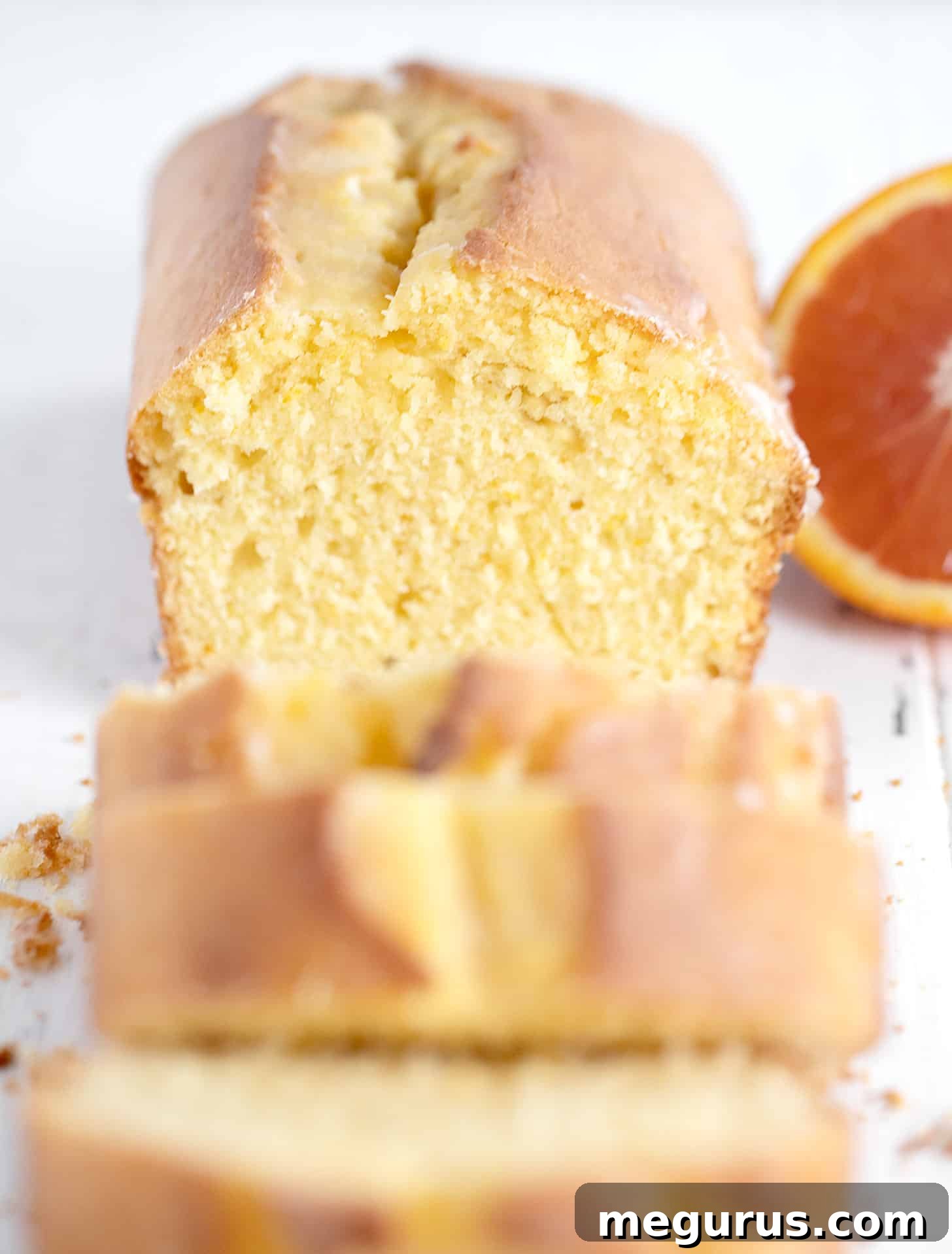
Top Tip: Preventing Your Loaf from Sticking
There’s nothing more frustrating than carefully baking a beautiful quick bread or pound cake, only to have it stubbornly stick to the pan or break apart when you try to remove it. To avoid this heartbreak, always take a two-pronged approach to pan preparation:
- Grease Your Pan: First, thoroughly spray or grease your loaf pan with butter or baking spray. Ensure you get into all the corners.
- Line with Parchment Paper: Next, line the greased pan with parchment paper. The greasing helps the parchment paper adhere smoothly to the sides of the pan without slipping or bunching. Make sure the parchment extends beyond the top edges of the pan, creating “handles.” These parchment overhangs will allow you to easily lift the entire baked loaf out of the pan once it has cooled slightly. This method guarantees a perfect release every single time, preserving your beautiful loaf intact.
Making Ahead, Storing, and Freezing Your Orange Pound Cake
This orange pound cake loaf is undoubtedly at its peak flavor and texture on the day it’s baked, especially with the glaze freshly set. However, it also keeps remarkably well, making it a fantastic make-ahead option or a lovely treat to enjoy over several days.
- Storage at Room Temperature: To maintain its freshness for 3-4 days, store the loaf at room temperature. Once sliced, wrap the cut end tightly with plastic wrap or aluminum foil to prevent it from drying out. If the entire loaf is wrapped too tightly, the glaze might become sticky or soften, so focus on covering the exposed cake.
- Freezing for Longer Enjoyment: This loaf freezes beautifully for up to 3 months. For best results, allow the glazed loaf to set completely, then wrap it tightly in plastic wrap, followed by a layer of aluminum foil, or place it in a freezer-safe bag. To thaw, simply unwrap the frozen loaf and let it come to room temperature on your counter for a few hours. This is perfect for having a delicious homemade treat on hand for unexpected guests or a future craving.
Glazed Orange Pound Cake Loaf
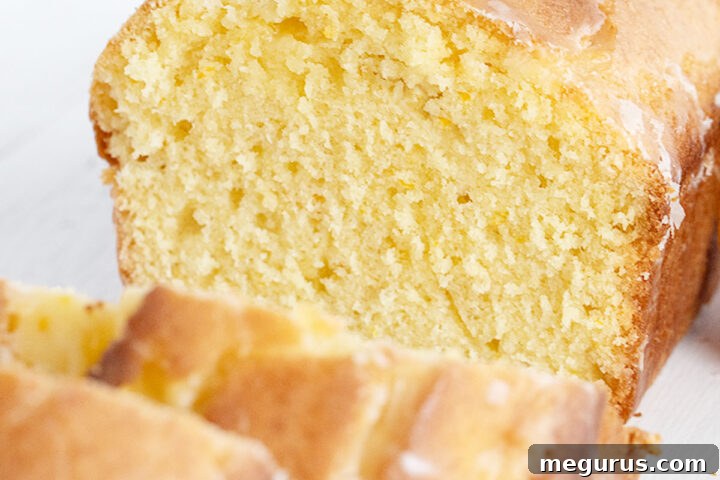
A classic orange pound cake loaf, flavored with fresh orange juice and zest and topped with a sweet orange glaze. This recipe delivers a moist, tender, and incredibly aromatic citrus cake perfect for any occasion.
Pin This
Leave a Review
Prep Time: 15 mins
Cook Time: 45 mins
Total Time: 1 hr
Yield: 12 servings
Ingredients
For the Loaf:
- 2/3 cup (150 g) unsalted butter, softened to room temperature
- 2/3 cup (120 g) white granulated sugar
- 3 large eggs, at room temperature
- Zest of 1 medium to large orange (approximately 1 – 1 1/2 Tablespoons)
- 1/3 cup + 1 Tablespoon (100 ml) freshly squeezed orange juice (from about 2 medium oranges)
- 2 cups (250 g) all-purpose flour, measured using the spoon and level method
- 2 teaspoons baking powder
- 1/8 teaspoon salt (use just a pinch if using salted butter)
For the Glaze:
- 1 1/4 cups (120 g) powdered sugar (icing sugar)
- 2 Tablespoons (30 ml) freshly squeezed orange juice (from about 1 medium orange)
Instructions
- Preheat your oven to 375°F (190°C) using a regular bake setting (not fan-assisted), with an oven rack positioned in the center. If using a glass loaf pan or a dark-colored metal pan, reduce the oven temperature by 25°F (15°C) to prevent over-browning.
- Prepare a 4 1/2 x 10-inch tea loaf pan by greasing it thoroughly, then lining it with parchment paper. Ensure the parchment paper extends higher than the pan edges to create “handles” for easy removal. As an alternative, a standard 9×5 inch loaf pan can be used as the volume is roughly similar, which should result in a comparable thickness and baking time. (Note: This recipe has not been tested in an 8×4 inch loaf pan; the batter might overflow or require a significantly longer baking time).
- In a medium bowl, whisk together the measured flour, baking powder, and salt. Set this dry mixture aside.
- In a large mixing bowl, using an electric mixer or a stand mixer fitted with the paddle attachment, cream the room temperature butter with the white granulated sugar. Beat on medium speed for 2 1/2 to 3 minutes, until the mixture becomes light, pale, and fluffy. Remember to scrape down the sides of the bowl once or twice during this process to ensure all ingredients are evenly incorporated. This step is vital for the final texture of your pound cake.
- Add the eggs, one at a time, beating well after each addition until fully incorporated. Continue to scrape down the sides of the bowl as needed. Once the eggs are mixed in, turn off the mixer. Add the orange zest and freshly squeezed orange juice. Turn the mixer back on to low speed just until combined, being careful to avoid splashing.
- With the mixer still on low speed, gradually add the reserved dry ingredients to the wet mixture. Mix only until the flour is just incorporated and no dry streaks remain. Overmixing can lead to a tough loaf.
- Pour the prepared batter evenly into your greased and parchment-lined loaf pan. Use a spatula to smooth the top surface.
- Bake in the preheated oven for 45-60 minutes. The loaf is done when a wooden skewer or toothpick inserted into the very center comes out clean, free of wet batter.
- Once baked, remove the loaf from the oven and let it cool in the baking pan for 10 minutes. After this initial cooling, carefully use the parchment paper overhangs to lift the loaf out of the pan and transfer it to a wire rack to cool completely.
- While the loaf cools completely (this is important, as glazing a warm loaf will cause the glaze to melt), prepare the orange glaze. In a small bowl, combine the powdered sugar with the 2 tablespoons of orange juice, stirring until you achieve a smooth, pourable consistency. The glaze should be thick enough to cling to the spoon but flow easily, like lava. If it’s too thick, add a few more drops of orange juice; if it’s too thin, add a little more powdered sugar. Place a baking sheet underneath your cooling rack to catch any drips. Spoon the glaze generously down the center of the cooled loaf, allowing it to naturally cascade over the top and down the sides. Allow the glaze to set completely at room temperature before slicing and serving.
- The glazed orange pound cake loaf will remain fresh at room temperature for several days when stored with the cut end wrapped. Be aware that wrapping the entire loaf tightly may cause the glaze to soften. This loaf also freezes exceptionally well for longer storage.
Notes
- Please note that baking times are always approximate. Individual oven calibrations, oven rack position, and the specific size, color, and material of your baking pan can all influence how long your loaf needs to bake. Always rely on visual cues and the skewer test for doneness.
- If you are using a dark-colored metal loaf pan or a glass loaf pan, you should consider reducing your oven temperature by 25°F (15°C) from the specified temperature. These materials absorb and retain heat more efficiently, which can lead to faster baking and potentially over-browning.
- Using a loaf pan of a different size than recommended will alter the thickness of your loaf and, consequently, its baking time. Thicker loaves will require longer baking. Always check for doneness by inserting a skewer into the center of the loaf; it should come out clean.
- For more comprehensive baking tips, including detailed explanations on ingredient temperatures, flour measurement, and troubleshooting, please refer to the detailed sections above this recipe card!
Cuisine: American, Canadian
Course: Dessert
Author: Jennifer Maloney
Nutrition (per serving, estimated): Calories: 284kcal, Carbohydrates: 41g, Protein: 4g, Fat: 12g, Saturated Fat: 7g, Cholesterol: 80mg, Sodium: 136mg, Potassium: 133mg, Fiber: 1g, Sugar: 24g, Vitamin A: 413IU, Vitamin C: 5mg, Calcium: 44mg, Iron: 1mg
More Orange Cake Recipes to Love!