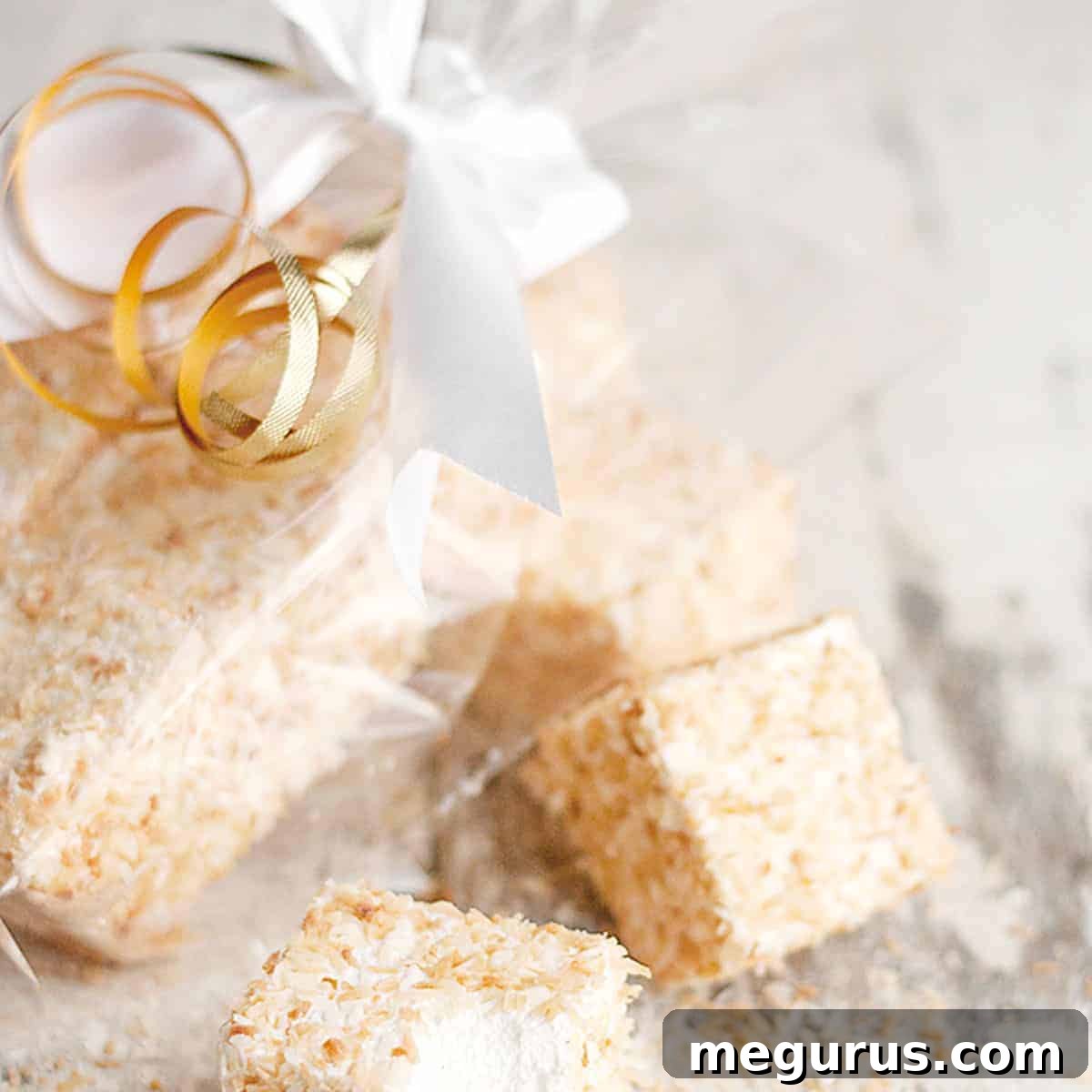
Homemade Toasted Coconut Marshmallows: Your No-Thermometer Guide to Fluffy Delights
Imagine sinking your teeth into a cloud of soft, sweet marshmallow, elevated by the delicate crunch and rich flavor of toasted coconut. These homemade toasted coconut marshmallows are not only incredibly delicious but also surprisingly simple to make – no fussy candy thermometer required! They are the perfect project for both seasoned bakers and ambitious beginners, promising a delightful treat that’s far superior to anything store-bought.
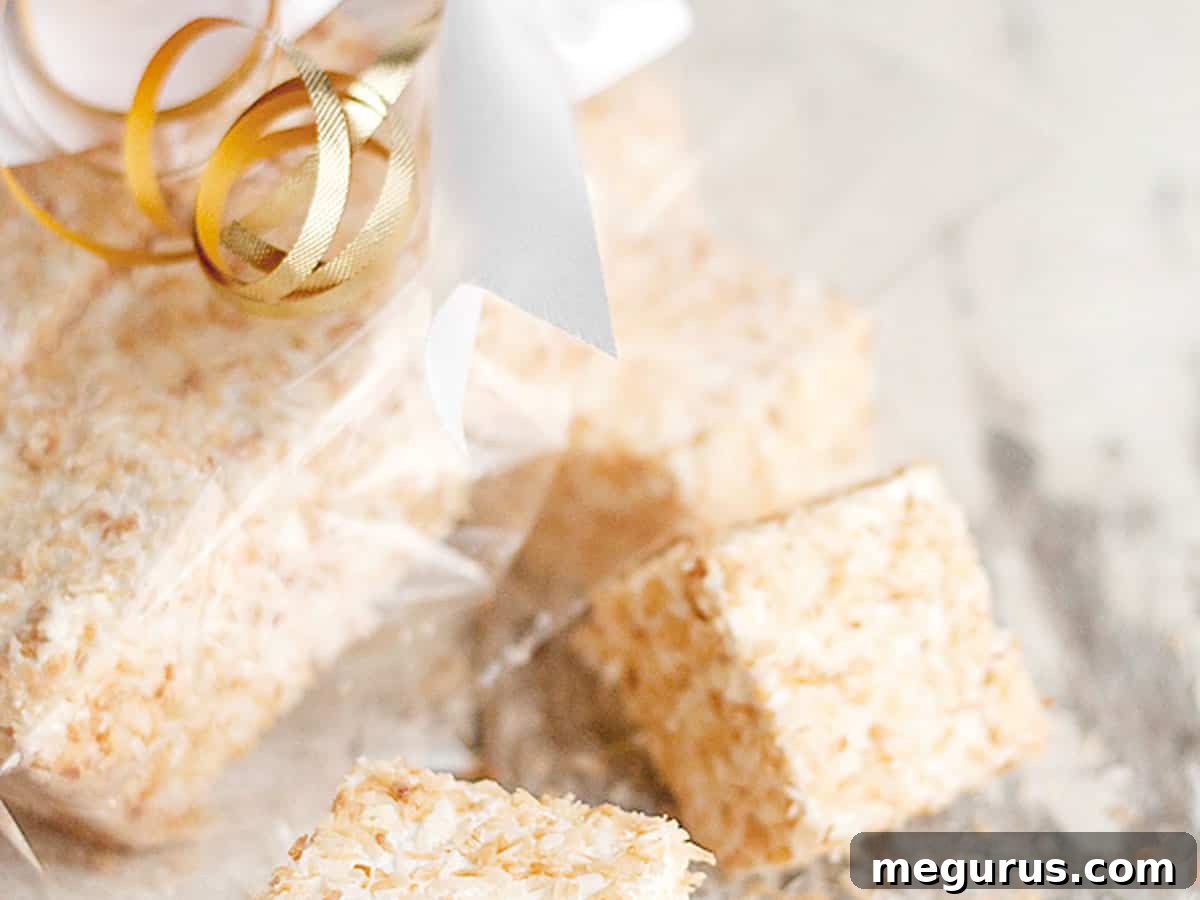
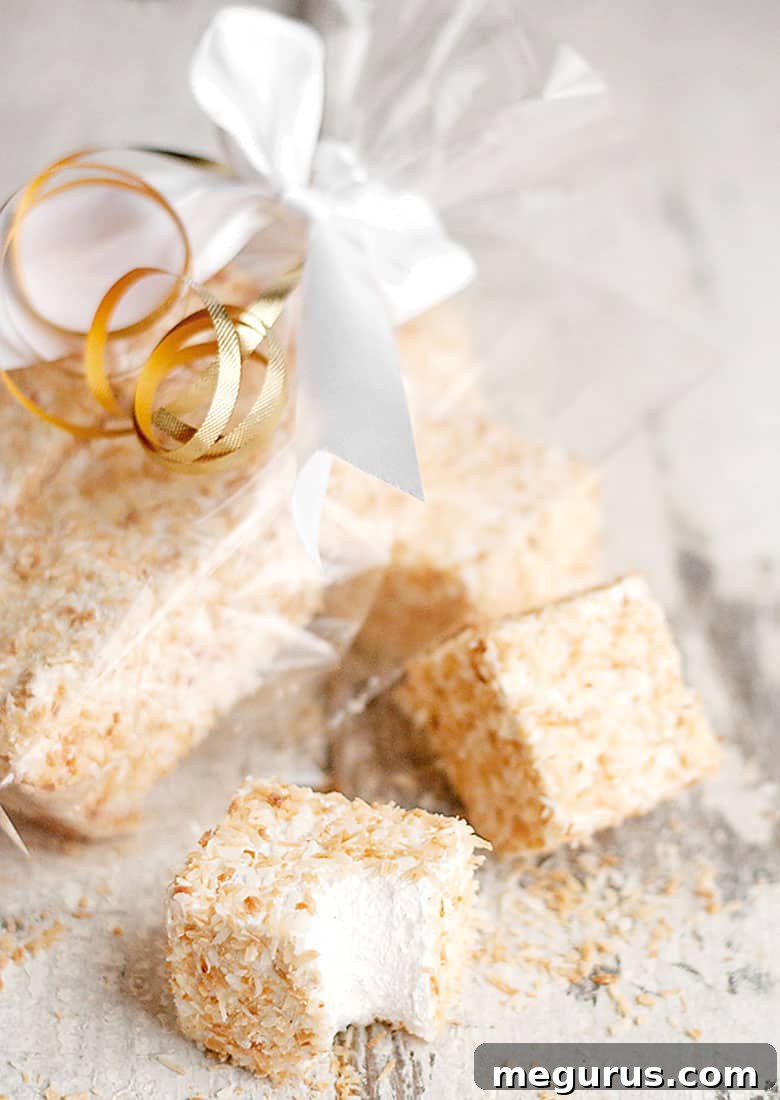
There’s something uniquely charming about a gift crafted with love, and these homemade toasted coconut marshmallows fit that bill perfectly. They’re visually appealing, made by hand, and undeniably delicious. Beyond their gourmet taste, they offer a delightful surprise to anyone who might shy away from making marshmallows themselves, making them an exceptional and thoughtful present for any occasion. Bag them up, tie them with a festive ribbon, and keep them on hand for impromptu holiday giving, host gifts, or even elegant party or wedding favors throughout the year.
The Irresistible Appeal of Homemade Marshmallows
While store-bought marshmallows have their place, homemade versions offer a superior experience in every way. The texture is softer, silkier, and boasts an ethereal melt-in-your-mouth quality that industrially produced ones can’t match. When you make them yourself, you control the ingredients, ensuring no artificial flavors or preservatives, and allowing for endless customization. The addition of toasted coconut transforms these simple sweets into a gourmet confection, adding a layer of sophisticated flavor and a delightful textural contrast that will leave everyone asking for your secret recipe.
Key Ingredients for Your Coconut Marshmallow Creation
Crafting the perfect marshmallow starts with understanding the role of each ingredient. Here’s a closer look at what you’ll need and why certain choices are recommended for the best results:
Coconut: The Flavor Star
The recipe specifically calls for unsweetened shredded coconut, and for good reason. Marshmallows are inherently sweet, and using sweetened coconut would likely result in an overly sugary product, masking the delicate balance of flavors. Unsweetened coconut allows its natural nutty, tropical notes to shine through, especially after toasting. The toasting process itself is crucial; it deepens the coconut’s flavor, adds a beautiful golden hue, and provides a delightful crisp texture that complements the marshmallow’s chewiness. If you can only find sweetened coconut, reduce the granulated sugar slightly in the recipe, but unsweetened is truly preferred for optimal flavor control.
Corn Syrup: The Texture Guardian
Light corn syrup is a highly recommended ingredient for homemade marshmallows due to its unique properties. Firstly, it has a neutral taste, ensuring it doesn’t interfere with the coconut and vanilla flavors. More importantly, corn syrup is an invert sugar, which plays a critical role in preventing sugar crystallization during the heating process. Without it, your sugar syrup could seize up, resulting in grainy, unappetizing marshmallows. Light corn syrup is preferred over dark corn syrup for its lighter color and milder flavor, which keeps the marshmallows bright and pure-tasting. While some recipes might suggest alternatives like honey or agave, these can impart distinct flavors that might not be suitable for this specific marshmallow, and they might not offer the same anti-crystallization benefits.
Gelatin: The Structure Builder
Unflavored powdered gelatin is the magic ingredient that gives marshmallows their characteristic bouncy, airy structure. It provides the necessary stability to hold the whipped sugar syrup and air together. Ensure you use fresh gelatin, as old gelatin might not bloom or set properly. Typically, one envelope of gelatin is 1/4 ounce, so you’ll need three envelopes for this recipe to achieve the perfect consistency.
Sugar, Water, and Vanilla: The Sweet Foundation
Granulated white sugar provides the primary sweetness and bulk for the marshmallow. Combined with water, it forms the hot syrup that will be whipped into a cloud. Fine salt balances the sweetness, enhancing all the other flavors. Finally, pure vanilla extract or vanilla bean paste adds a warm, aromatic depth that perfectly complements the toasted coconut, rounding out the overall flavor profile. Don’t skimp on good quality vanilla!
Mastering the Marshmallow-Making Process: Expert Tips for Success
Making marshmallows from scratch can seem daunting, but with a few key tips, you’ll be whipping up perfect batches in no time. This recipe is designed to be accessible, even if you don’t have specialized candy-making tools.
No Candy Thermometer? No Problem!
One of the standout features of this recipe is that it cleverly bypasses the need for a candy thermometer. Instead of relying on specific temperature readings, you simply boil the sugar syrup for exactly 1 minute after it reaches a rolling boil. This foolproof method ensures your syrup reaches the correct stage without the need for extra equipment, making it a truly beginner-friendly homemade marshmallow recipe.
Yield and Pan Size Considerations
This recipe consistently yields approximately 24 one-inch square marshmallows when prepared in a 7×11-inch pan. If you prefer thicker marshmallows, or if a 7×11-inch pan isn’t readily available, a 9×9-inch square pan can also be used. Keep in mind that using a different size pan will alter the thickness and potentially the yield of your marshmallows. A larger pan will result in thinner marshmallows, while a smaller pan will make them thicker and fewer in number.
Mise en Place: Your Kitchen’s Best Friend
The marshmallow-making process moves quickly once the syrup is hot, so having all your ingredients measured and tools ready (“mise en place”) is crucial for a smooth and stress-free experience. This includes greasing and lining your pan, measuring out all liquids and dry ingredients, and having your stand mixer and whisk attachment prepared. A few moments of preparation will save you frantic scrambling later on.
Safety First: Handling Hot Sugar Syrup
When working with hot sugar syrup, extreme caution is paramount. The syrup reaches very high temperatures and can cause severe burns if it comes into contact with skin. Always handle the saucepan and measuring cup carefully, and never allow children to be near the stovetop during this stage. Pour the hot syrup slowly and deliberately into the mixer, aiming for the side of the bowl to avoid splashes. Safety should always be your top priority in the kitchen.
Achieving the Perfect Whip: Timing and Texture
The whipping stage is where the magic happens, transforming a liquid syrup into a voluminous, fluffy marshmallow batter. Whip the mixture on high speed for 10 to 12 minutes, or until it nearly triples in size and becomes incredibly thick and glossy. It should hold stiff peaks when the whisk is lifted. If you have a smaller stand mixer bowl, you may need to pause and scrape down the sides frequently to ensure all the mixture is incorporated and to prevent overflow as it expands. The mixture will become noticeably cooler to the touch as it whips.
The Art of Cutting and Coating
Once your marshmallow slab is fully set, the cutting and coating process is the final step to creating individual treats. For clean cuts, use a pizza cutter or a large, sharp knife lightly greased with cooking spray. Work steadily but quickly, as the marshmallows can become sticky. Rolling each freshly cut square in the cooled, toasted coconut not only adds flavor but also helps prevent the marshmallows from sticking together, making them easier to handle and store. Allow them to sit in the coconut for 30-45 minutes to dry slightly before packaging.
Making Ahead & Storage Solutions for Your Marshmallow Treasures
Homemade marshmallows are remarkably shelf-stable, making them an excellent candidate for advance preparation. For short-term storage, simply place them in an airtight container at room temperature. They will remain wonderfully fresh and soft for several weeks, ready to be enjoyed or gifted at a moment’s notice. Avoid storing them in the refrigerator, as the humidity can make them weep and become overly sticky.
For longer preservation, these delightful treats freeze exceptionally well! Arrange them in a single layer on a baking sheet and freeze until firm, then transfer them to an airtight, freezer-safe container or bag. They can be frozen for up to 3 months. When you’re ready to enjoy them, simply thaw them at room temperature for a few hours. Freezing is a fantastic way to extend their shelf life and ensures you always have a batch of these delectable marshmallows on hand for any spontaneous craving or unexpected guest.
Get the Recipe: Toasted Coconut Marshmallows
Pin This
Leave a Review
Ingredients
- 1 cup water, divided
- 3 Tablespoons + 1 1/2 teaspoons unflavored powdered gelatin (3 envelopes – envelope is 1/4 oz. each for 3/4 oz. total)
- 2 cups granulated white sugar
- 1/2 cup light corn syrup
- 1/2 teaspoon fine salt
- 2 Tablespoons pure vanilla or vanilla bean paste
- 2 cups unsweetened shredded coconut
Instructions
- Spray a 9×9 or 7×11 inch baking pan and line with parchment paper (I cut mine to fit flat on the bottom, with the edges of the paper over-hanging the sides. The ends are fine just sprayed.)
- In a stand mixer fitted with a whisk attachment, pour in 1/2 cup of the water and sprinkle the gelatin over. Let stand.
- In a medium saucepan over high heat, stir together the sugar, corn syrup, salt and the remaining 1/2 cup of water. Stir until sugar dissolves and mixture begins to boil. Stop stirring and once mixture comes to a rolling boil, continue boiling for 1 minute. Remove from the heat. (I like to carefully pour mixture into a 2-cup glass measuring cup, to make it easier to pour into mixer).
- Turn the mixer to low and mix the gelatin a bit to loosen. Very slowly and carefully add the hot sugar mixture by pouring it gently down the side of the bowl. Continue to mix on low until all the sugar mixture is added.
- Turn the mixer to high and whip the mixture for 10 to 12 minutes until the marshmallow batter almost triples in size and becomes very thick. If you have a smaller mixer bowl, you may need to scrape down the sides of the bowl frequently to avoid the batter overflowing as it grows. Stop the mixer, add the vanilla, and then whip briefly to combine.
- Transfer the mixture to the prepared baking pan (a silicone bowl scraper works like a charm for this!) and use a spatula or bench scraper to spread the marshmallow evenly in the pan, pushing it down into the corners. Work quickly, as the marshmallow becomes more difficult to manipulate as it begins to set.
- Spray a sheet of plastic wrap liberally with cooking spray and lay it across the top of the marshmallow, sprayed side down. Using your fingers, smooth the plastic wrap on top of the marshmallows a bit to seal it smoothly and tightly against the mixture.
- Leave the marshmallow to set at room temperature for at least 3 hours or, even better, overnight. The marshmallow will be too sticky and soft to cut if you try too soon.
- Meanwhile, pre-heat oven to 325°F (160°C). Spread coconut out evenly on a baking sheet. Cook for 5-8 minutes, stirring regularly, until coconut is a uniform golden brown color. Remove from oven and transfer to another baking sheet to cool completely.
- When marshmallows are ready, grab the edges of the parchment and lift the marshmallows from the pan. Remove the plastic wrap from the top and fold down the parchment on the sides. Using a pizza cutter or a large knife, cut the slab into 1- × 1-inch squares. Roll each of the freshly cut marshmallow squares in the cooled, toasted coconut on the baking sheet. Allow marshmallows to sit in the coconut to dry slightly before packaging up (30 – 45 minutes).
Notes from the Kitchen
Be sure to read the comprehensive tips and explanations above this Recipe Card for more detailed advice on making this recipe a resounding success!
Nutrition Information (Approximate Per Serving)
Serving: 1 serving, Calories: 146kcal, Carbohydrates: 24g, Protein: 2g, Fat: 5g, Saturated Fat: 4g, Sodium: 60mg, Potassium: 42mg, Fiber: 1g, Sugar: 23g, Vitamin C: 0.1mg, Calcium: 4mg, Iron: 0.3mg
Creative Ways to Enjoy Your Homemade Toasted Coconut Marshmallows
While these delightful marshmallows are perfectly delicious on their own, their unique flavor and texture make them versatile for various culinary applications:
- Elevate Your Hot Chocolate: Forget plain marshmallows! Drop one or two of these toasted coconut beauties into a mug of hot cocoa for an instant upgrade in flavor and a luxurious, melty topping.
- Gourmet S’mores: Take your campfire or indoor s’mores to a whole new level. The toasted coconut adds an exotic, crunchy dimension that pairs wonderfully with chocolate and graham crackers.
- Dessert Topping: Dice them and use as a topping for ice cream, puddings, fruit salads, or even frosted cakes and cupcakes for an added chewiness and burst of coconut flavor.
- Baking Adventures: Incorporate them into recipes for Rice Krispie treats, rocky road fudge, or other no-bake desserts to infuse them with a tropical twist.
- Snacking: Keep a bowl of them on your counter for a quick, satisfying sweet treat. Their indulgent flavor makes them feel like a special indulgence any time of day.
Frequently Asked Questions About Homemade Marshmallows
New to making marshmallows? Here are answers to some common questions:
How long do homemade marshmallows last?
When stored in an airtight container at room temperature, homemade marshmallows can last for up to 2-3 weeks. For longer storage, they can be frozen for up to 3 months. Always ensure they are completely cool and dry before storing to prevent sticking.
Can I use sweetened coconut instead of unsweetened?
While unsweetened coconut is recommended for better flavor balance, you can use sweetened shredded coconut. If you do, consider reducing the amount of granulated sugar in the recipe by about 1/4 to 1/2 cup to prevent the marshmallows from becoming overly sweet. Be aware that the flavor profile might be slightly different.
What if I don’t have a stand mixer?
A stand mixer with a whisk attachment is highly recommended for this recipe, as it provides the necessary power and continuous whipping action to achieve the proper volume and texture. It can be very challenging, if not impossible, to achieve the same results with a hand mixer due to the duration and intensity of whipping required. If you don’t have one, this might be the recipe that convinces you to invest in a stand mixer!
How do I prevent my marshmallows from being too sticky?
Several factors contribute to sticky marshmallows. Ensure you use enough confectioners’ sugar/cornstarch mixture for coating (if using, though this recipe relies on toasted coconut). Most importantly, allow the marshmallows to set completely – ideally overnight – before attempting to cut them. Rushing this step will result in a soft, sticky slab. After cutting, rolling them generously in toasted coconut helps immensely with reducing stickiness and makes them easier to handle.