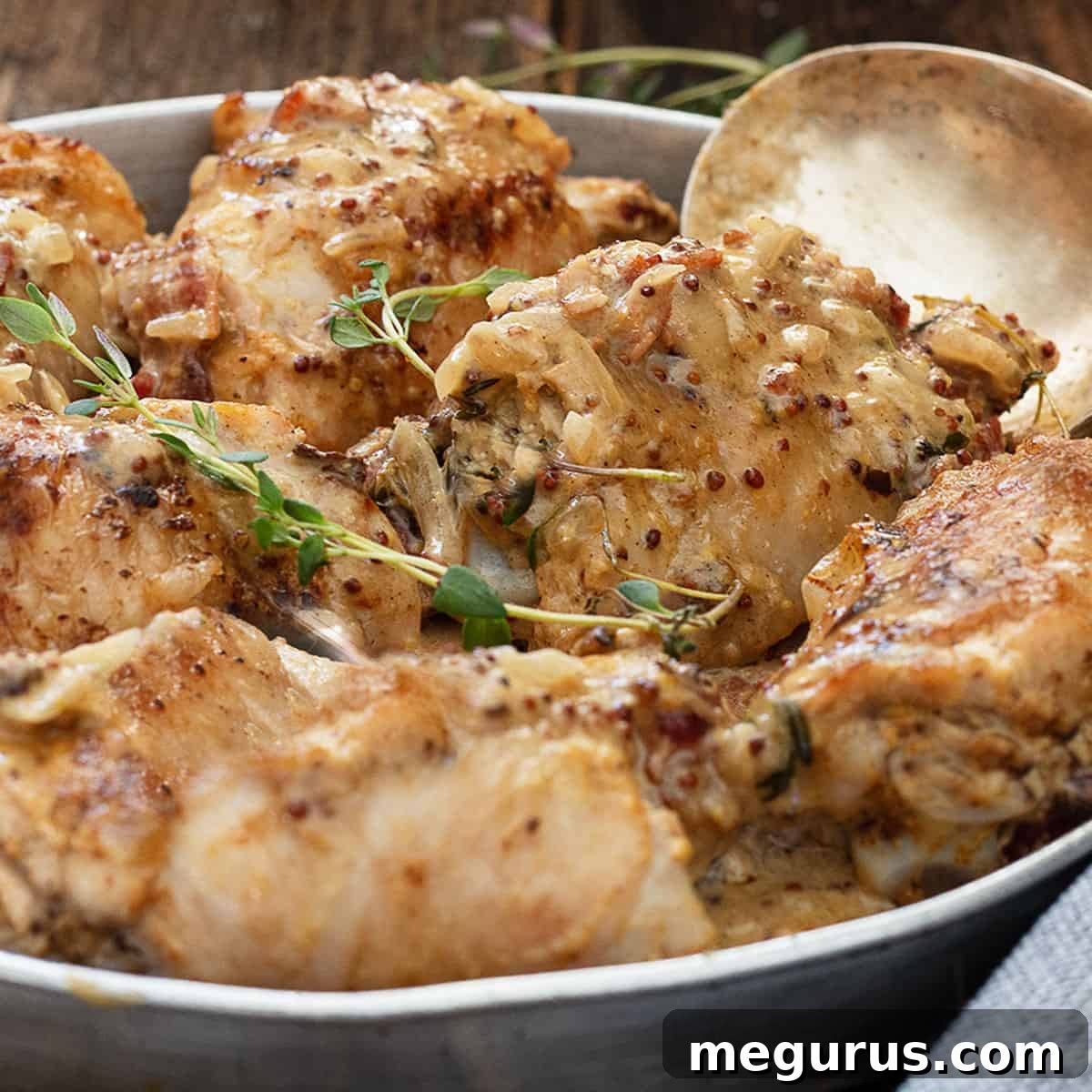
Discover the ultimate easy weeknight meal with this incredible Chicken Dijon recipe. Featuring tender bone-in chicken thighs cooked to perfection and enveloped in a luscious, savory mustard sauce, this dish is a true crowd-pleaser. Not only is it quick and simple to prepare in a single skillet, but its robust flavors also make it elegant enough to impress guests at your next dinner party. Prepare to add this satisfying classic to your regular culinary rotation.
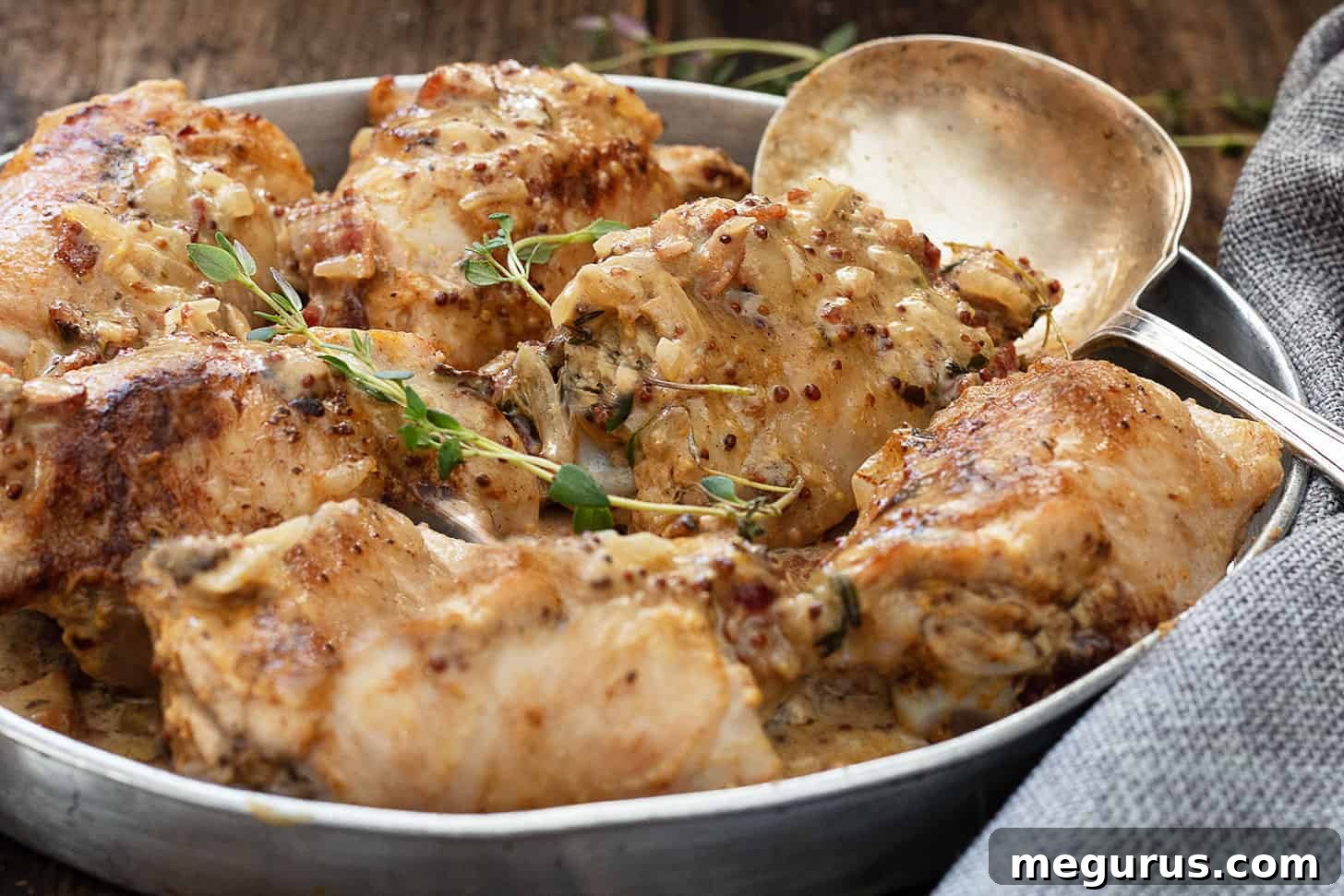
For many home cooks, having a reliable collection of go-to recipes is essential for navigating busy schedules without compromising on flavor or quality. This Chicken Dijon stands out as a consistently satisfying dish that graces tables frequently. Combining the tangy zest of classic Dijon with the intriguing texture of grainy mustard, this one-skillet wonder delivers a depth of flavor that feels gourmet yet requires minimal effort. Whether you’re seeking a stress-free dinner after a long day or aiming to create a memorable meal for entertaining, this recipe strikes the perfect balance.
Key Ingredients for Your Perfect Chicken Dijon
Crafting a truly exceptional Chicken Dijon begins with understanding the role of each ingredient. Here are a few essential notes on the core components that make this dish so special, along with flexible substitution options to suit your pantry and preferences.
Choosing Your Chicken
For this recipe, I’ve opted for **bone-in, skin-on chicken thighs**. These cuts are celebrated for their rich flavor and ability to remain incredibly moist during cooking, thanks to the bone and skin which help lock in juices and render a wonderfully crispy exterior. However, this recipe is highly adaptable to various chicken cuts:
- Boneless Chicken Thighs or Breasts: If using boneless cuts, you can simplify the cooking process further by skipping the oven step entirely. Cook them directly in the skillet until fully done. For boneless chicken breasts, consider butterflying them into thinner cutlets. This ensures they cook more quickly and evenly on the stovetop, preventing them from drying out. Adjust cooking times accordingly, as thinner cuts will cook much faster.
- Skin-on/Bone-in Chicken Breasts: If you prefer chicken breasts with the bone and skin, they will also benefit from an oven finish after searing. Keep in mind that bone-in breasts are thicker and will typically require a longer cooking time in the oven, potentially an additional 10-15 minutes or more, compared to thighs. Always check the internal temperature to ensure they reach a safe 165°F (74°C).
The Magic of Dijon Mustard
The heart of our sauce lies in the harmonious blend of two distinct types of Dijon mustard: **regular Dijon mustard** and **grainy Dijon mustard**. Regular Dijon provides that classic sharp, tangy, and smooth base, while grainy Dijon introduces a delightful texture and a slightly milder, more nuanced mustard flavor with a hint of spice. This combination creates a complex and irresistible sauce that truly defines the dish. While many brands offer excellent Dijon mustards, I’ve always found Maille™ brand to be a consistent favorite for both varieties, delivering authentic flavor and quality.
The Savory Touch of Bacon
Is anything truly complete without bacon? In this recipe, **bacon** isn’t just an optional garnish; it’s a fundamental flavor builder. As the bacon renders, it creates a rich, savory fat that forms the perfect base for sautéing your onions and browning the chicken. The crispy bacon bits themselves are then added back at the end, providing a wonderful textural contrast and an extra layer of smoky depth. If you prefer to omit bacon for dietary reasons or simply don’t have any on hand, don’t worry! You can easily skip it and replace the rendered bacon fat with a tablespoon or two of olive oil to start your sautéing process.
White Wine or Broth?
The recipe calls for **white wine** to deglaze the pan, which adds a layer of acidity and complexity to the sauce, lifting all those delicious browned bits from the bottom of the skillet. A dry white wine, such as Sauvignon Blanc or Pinot Grigio, works beautifully. However, if you prefer not to use alcohol in your cooking, or if you simply don’t have wine available, it’s a straightforward substitution. Simply replace the white wine with an equal amount of chicken broth. While the flavor profile will be slightly different, the broth will still help deglaze the pan and contribute to the sauce’s liquid base effectively.
The Creamy Finish: Heavy Whipping Cream
A crucial element for achieving a rich, velvety sauce is **heavy whipping cream**. Recipes like this often specify heavy cream for a good reason: its high fat content. This characteristic is vital because it prevents the sauce from breaking or curdling, especially when cooked at higher temperatures or when combined with acidic ingredients like mustard. While it might be tempting to opt for lower-fat creams, yogurt, or sour cream, be aware that these alternatives have a much lower fat content and are significantly more prone to curdling when heated or mixed with acids. For the best quality and consistency of your finished sauce, sticking with heavy whipping cream is highly recommended.
Expert Tip for Sauce Perfection!
To ensure your Dijon sauce remains smooth and creamy, always use heavy whipping cream. Its high fat content is key to preventing curdling when combined with acidic ingredients like mustard or when cooked at higher temperatures. Avoid using lower-fat creams or substitutes like yogurt and sour cream, as they are more likely to split and ruin the texture of your luxurious sauce.
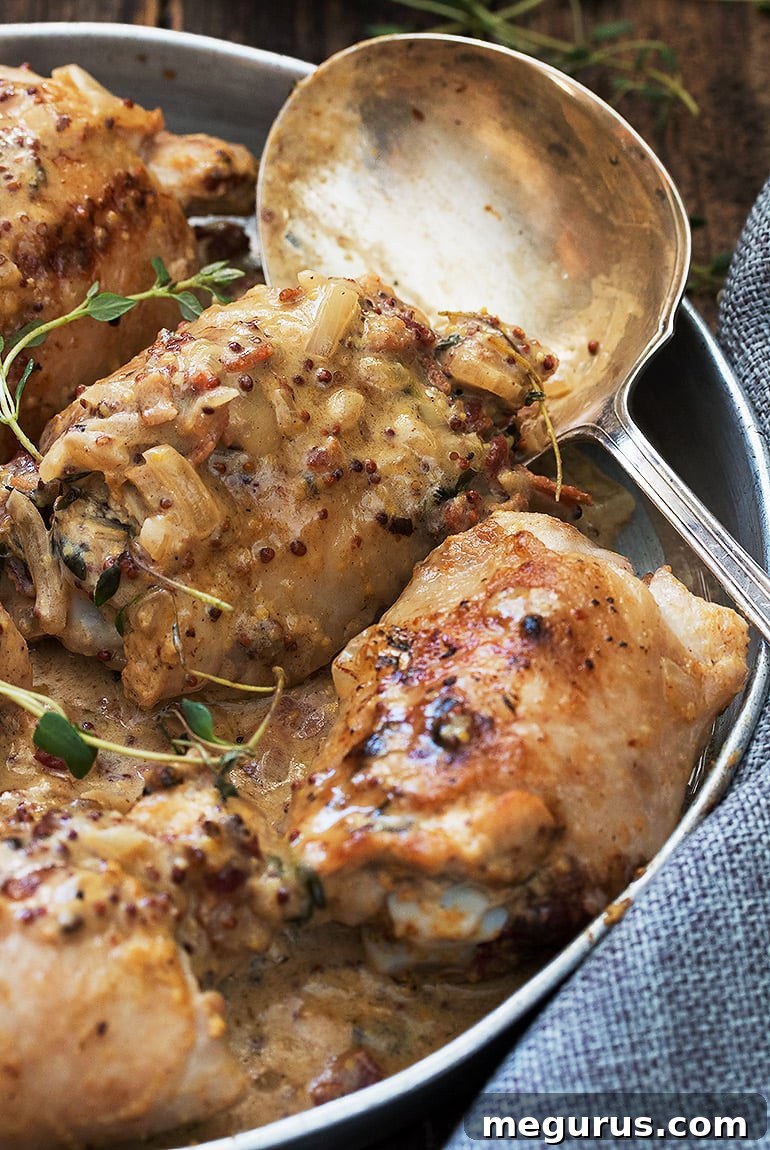
What to Serve with Your Delicious Dijon Chicken
The rich and tangy flavors of Chicken Dijon pair beautifully with a variety of side dishes, making it incredibly versatile for any meal. Here are some fantastic suggestions to complete your plate:
- Creamy Mashed Potatoes: A classic pairing! The fluffy, buttery mashed potatoes provide the perfect canvas to soak up every last drop of that delectable Dijon mustard sauce.
- Pasta: For a delightful change, serve your Chicken Dijon over a bed of al dente pasta. Egg noodles, fettuccine, or even a short pasta like penne would be excellent choices, allowing the sauce to cling beautifully.
- Rice: A simple steamed white rice or a light pilaf can also be a wonderful accompaniment, offering a neutral base that lets the chicken and sauce shine.
- Fresh Green Vegetables: To balance the richness of the dish and add a pop of color and essential nutrients, include a nice green vegetable. Excellent choices include:
- Steamed Green Beans: Lightly steamed or sautéed green beans with a hint of garlic.
- Roasted Brussels Sprouts: Caramelized and slightly nutty, roasted Brussels sprouts offer a fantastic textural and flavor contrast.
- Broccoli or Broccolini: Steamed, roasted, or lightly sautéed, these options bring a vibrant green and earthy flavor.
- Asparagus: Pan-seared or grilled asparagus adds an elegant touch and delicate flavor.
- Crusty Bread: Don’t forget a loaf of crusty French bread or a baguette to mop up any remaining sauce – it’s too good to leave behind!
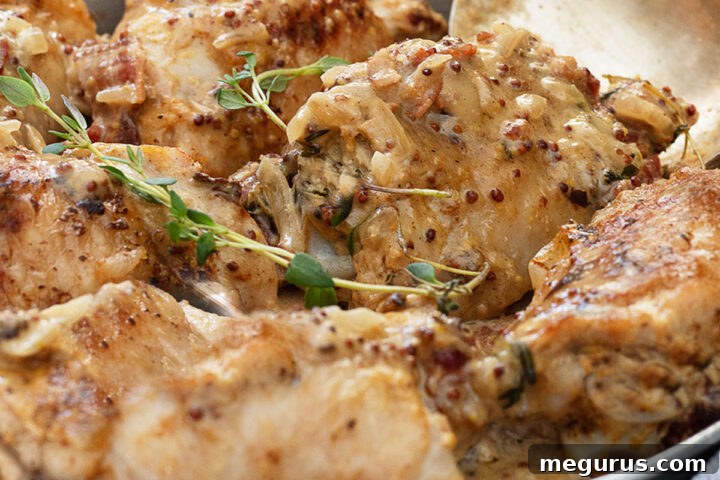
Get the Recipe: Classic One-Pan Chicken Dijon
Pin This
Leave a Review
10
30
40
4 servings
Ingredients
- 6 bone-in/skin-on chicken thighs
For the Dijon Mustard Sauce:
- 1/3 cup Dijon mustard
- 1/4 teaspoon paprika
- 1/4 teaspoon salt
- Freshly ground black pepper, to taste
- 1/3 cup bacon, diced
- 1/3 cup onion, finely diced
- 1 teaspoon fresh thyme leaves, or 1/2 tsp. dried thyme leaves
- 2 Tablespoons olive oil
- 3/4 cup dry white wine, or chicken broth
- 2 Tablespoons grainy mustard
- 2 Tablespoons heavy whipping cream
For garnish:
- Fresh thyme sprigs, for garnish
Instructions
-
Prepare Oven: Preheat your oven to 375°F (190°C). This ensures it’s ready for the chicken when you transfer the skillet.
-
Season Chicken: In a large mixing bowl, combine the Dijon mustard, paprika, salt, and a generous amount of freshly ground black pepper. Add the chicken thighs to the bowl and toss them thoroughly to ensure each piece is evenly coated in the flavorful mustard mixture. Allow the chicken to sit in the bowl while you begin preparing the other components and heating your skillet. This brief marination enhances the flavor penetration.
-
Cook Bacon & Onions: Heat a large, oven-safe skillet (cast iron or heavy-bottomed stainless steel works best) over medium-high heat. Add the diced bacon and cook, stirring occasionally, until it starts to crisp and brown. This process renders out the flavorful bacon fat. Once browned, remove the bacon to a small bowl, leaving any rendered fat in the skillet. If there’s more than about 1 tablespoon of bacon fat, carefully drain the excess. Add the diced onion to the skillet and cook, stirring, until it softens and becomes translucent, which usually takes about 3 minutes. Stir in the fresh or dried thyme leaves and cook for an additional minute to release their aroma. Transfer the cooked onion to the bowl with the bacon.
-
Sear & Roast Chicken: Add the olive oil to the same skillet and heat until shimmering. Carefully place the mustard-coated chicken thighs into the hot pan, skin side down. Sear over medium-high heat for about 5-7 minutes, or until the skin turns a beautiful golden brown and becomes crispy. Flip the chicken pieces over and brown the other side for another 2-3 minutes. Once both sides are seared, transfer the skillet with the chicken directly into the preheated oven. Cook for approximately 10-15 minutes, or until the chicken is cooked through and reaches an internal temperature of 165°F (74°C).
-
Finish Sauce & Combine: Once the chicken is fully cooked, carefully remove the skillet from the oven. Transfer the cooked chicken to a clean plate and set aside, keeping it warm. Place the skillet back on the stovetop over medium heat. Pour the white wine (or chicken broth) into the pan, stirring vigorously to scrape up any delicious browned bits (fond) from the bottom of the pan. Let the wine simmer and reduce slightly for about 1 minute. Stir in the grainy mustard and the heavy whipping cream, mixing until well combined and the sauce starts to thicken slightly. Return the cooked chicken, reserved bacon, and sautéed onions to the pan, allowing them to simmer gently with the sauce until the chicken is re-warmed and thoroughly coated. Taste the sauce and adjust seasoning with salt and freshly ground pepper as needed. Serve immediately, garnished with additional fresh thyme leaves for a final flourish.
Notes
Calories: 530kcal,
Carbohydrates: 4g,
Protein: 29g,
Fat: 40g,
Saturated Fat: 10g,
Cholesterol: 177mg,
Sodium: 617mg,
Potassium: 437mg,
Fiber: 1g,
Sugar: 1g,
Vitamin A: 330IU,
Vitamin C: 1.7mg,
Calcium: 42mg,
Iron: 1.7mg
Tried this recipe?
If you enjoyed this recipe, please leave a star rating and comment. Your feedback helps others discover and enjoy it too!
Variations to Elevate Your Chicken Dijon
While the classic Chicken Dijon recipe is perfect as is, it’s also wonderfully adaptable! Don’t be afraid to experiment with these delicious variations to customize it to your taste:
- Herb Boost: Beyond thyme, consider adding other fresh herbs like rosemary or tarragon for different aromatic notes. A sprinkle of fresh parsley at the end can also brighten the dish.
- Mushroom Magic: Sauté sliced mushrooms (cremini or button) with the onions to add an earthy depth and extra texture to the sauce.
- Spicy Kick: For those who enjoy a little heat, a pinch of red pepper flakes added with the paprika can provide a subtle warmth to the sauce.
- Different Mustards: Experiment with other types of mustard if you’re feeling adventurous. A touch of whole grain mustard can add more texture, or a bolder, spicier mustard can give it an extra zing.
- Other Proteins: While chicken is traditional, this sauce works beautifully with other proteins. Pork tenderloin medallions or even thick white fish fillets (like cod or halibut) could be adapted for this creamy Dijon sauce. Adjust cooking times accordingly for different proteins.
- Vegetarian Option: Create a vegetarian version by using robust vegetables like seared cauliflower steaks or thick-sliced portobello mushrooms instead of chicken. Use vegetable broth in place of wine.
Storage and Reheating Tips
Chicken Dijon makes for fantastic leftovers, and it’s quite simple to store and reheat while maintaining its delicious flavor and creamy texture. Here’s how:
- Storage: Allow the cooked Chicken Dijon to cool completely to room temperature. Transfer it to an airtight container and store it in the refrigerator for up to 3-4 days.
- Freezing: While possible, the creamy sauce may slightly change in texture (sometimes becoming a bit grainy) after freezing and thawing. If you choose to freeze, store in an airtight, freezer-safe container for up to 2-3 months. Thaw overnight in the refrigerator before reheating.
- Reheating on Stovetop: This is the best method for reheating. Place the leftovers in a skillet over medium-low heat. Add a splash of chicken broth or a tablespoon of heavy cream to help loosen the sauce. Stir gently and heat until warmed through, ensuring the chicken reaches an internal temperature of 165°F (74°C).
- Reheating in Microwave: For a quicker option, microwave individual portions on a microwave-safe plate. Heat in 1-minute intervals, stirring in between, until hot. Be cautious not to overheat, as this can cause the chicken to dry out or the sauce to separate.
Frequently Asked Questions About Chicken Dijon
Here are answers to some common questions you might have about making this delightful Chicken Dijon recipe:
- Can I make this recipe ahead of time?
Yes, you can certainly prepare parts of it in advance. You can dice the bacon and onion, and mix the Dijon mustard, paprika, salt, and pepper for the chicken coating. Store these components separately in the refrigerator. The cooked dish itself reheats beautifully, as detailed in the “Storage and Reheating” section above. - What if my sauce is too thin or too thick?
If your sauce is too thin, you can simmer it gently for a few extra minutes to allow it to reduce and thicken naturally. Alternatively, you can mix a small amount of cornstarch (1 teaspoon) with an equal part cold water to form a slurry, then gradually stir it into the simmering sauce until it reaches your desired consistency. If it’s too thick, simply whisk in a tablespoon or two of chicken broth or extra cream until it loosens to your preference. - Can I use chicken breast instead of thighs?
Absolutely! As mentioned in the “Choosing Your Chicken” section, boneless chicken breasts can be used. For best results, butterfly them to create thinner cutlets, which will cook more evenly and quickly on the stovetop. If using bone-in, skin-on chicken breasts, expect a slightly longer cooking time in the oven. Always check the internal temperature to ensure doneness. - What kind of white wine should I use?
A dry white wine is ideal for this recipe. Good choices include Sauvignon Blanc, Pinot Grigio, or even a dry Chardonnay (unoaked). Avoid sweet wines, as they will alter the flavor profile of the sauce. If you prefer not to use wine, chicken broth is a perfect non-alcoholic substitute.
More Weeknight Chicken Dinners to Explore!