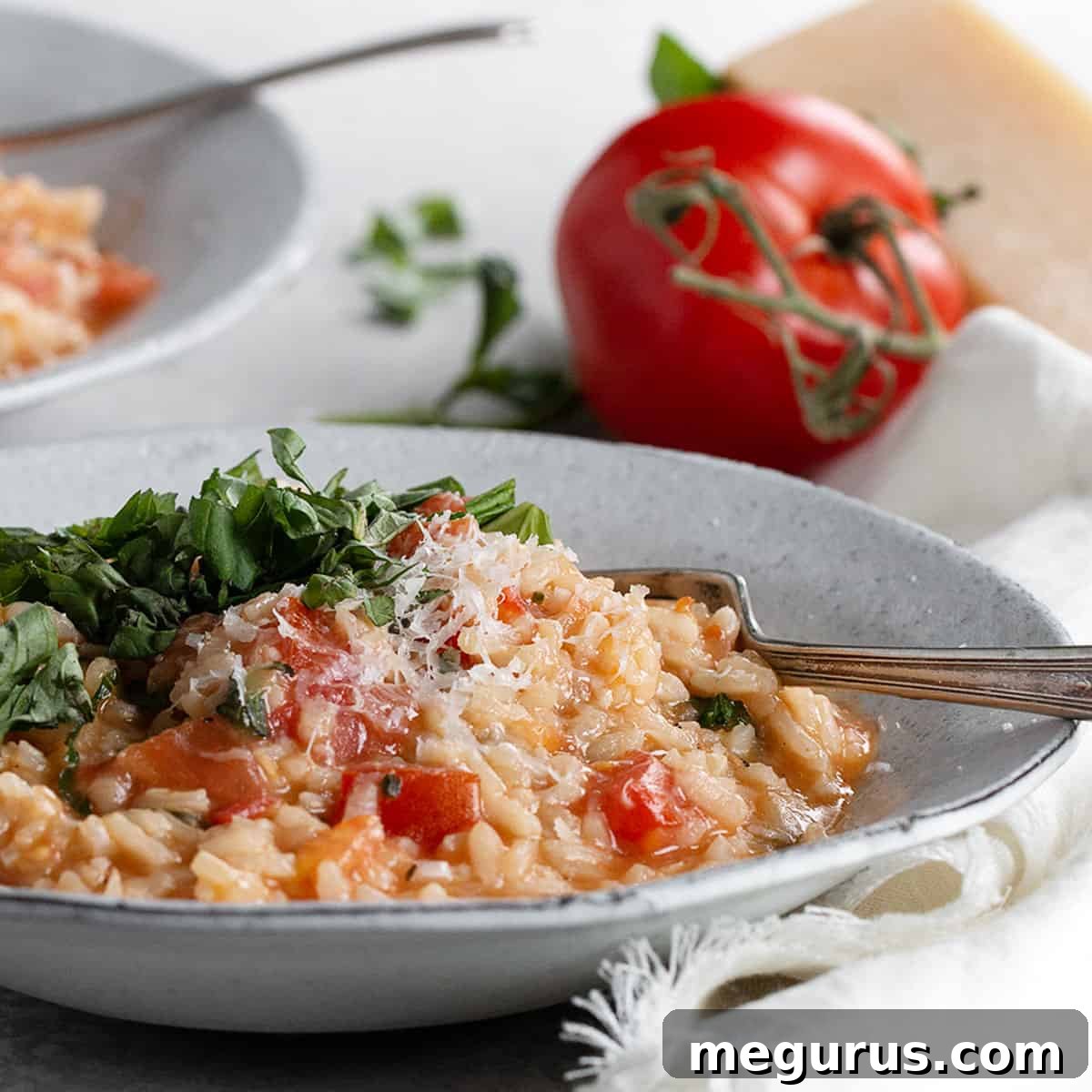
Discover the ultimate summer delight with this exquisite Tomato and Basil Risotto. This vibrant dish perfectly captures the essence of peak-season tomatoes and fragrant fresh basil, offering a truly comforting and flavourful experience. Whether you’re looking for an elegant meatless main course or a sophisticated side dish, this recipe is designed to impress and nourish.
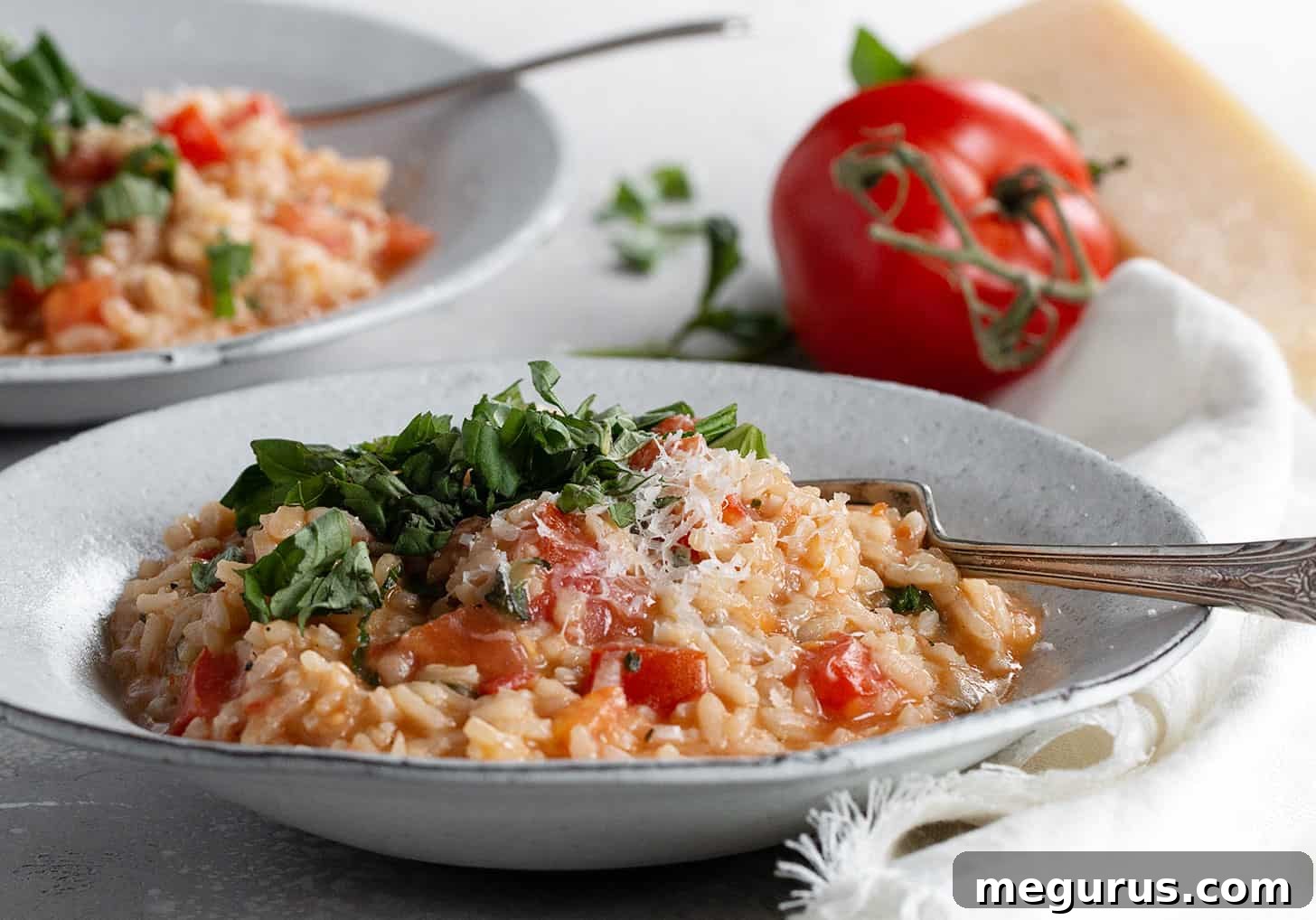
Embrace the bounty of summer with this easy and classic Tomato Basil Risotto. It’s a staple in my kitchen, especially when fresh, sun-ripened tomatoes and aromatic basil are at their best. This risotto isn’t just a meal; it’s a celebration of simple, high-quality ingredients transformed into something truly extraordinary. It serves wonderfully as a satisfying meatless main course, making it a regular feature in my meal rotation. Its delicate yet rich flavour also makes it an excellent companion to a variety of dishes, particularly grilled meats or vegetables fresh off the barbecue.
For an elevated dining experience, consider pairing this risotto with a warm, crusty loaf of artisanal bread. The bread’s texture and flavour will complement the creamy risotto beautifully, allowing you to savour every last drop of its delicious sauce.
Why You’ll Fall in Love with This Tomato Basil Risotto
There’s something inherently magical about risotto. It’s a dish that feels indulgent and complex, yet with the right guidance, it’s surprisingly achievable for home cooks. This tomato basil rendition takes that magic a step further, harnessing the bright, sweet, and tangy notes of summer tomatoes, balanced by the peppery, fresh aroma of basil. It’s a dish that speaks to the soul, comforting on a cool evening yet light enough for a summer gathering. The creamy texture, achieved through the slow incorporation of broth and the natural starches of the rice, provides a luxurious mouthfeel that coats every delightful morsel. Furthermore, it’s a fantastic way to enjoy a wholesome, vegetarian meal that doesn’t compromise on flavour or satisfaction. It’s also incredibly versatile, offering endless possibilities for customisation to suit your palate.
Understanding the Art of Risotto Making
Risotto has a reputation for being fussy, but in reality, it’s more about patience and technique than constant, strenuous effort. The key to a perfect risotto lies in the gradual addition of warm stock, allowing the Arborio rice to slowly absorb the liquid and release its starches, creating that signature creamy texture without adding actual cream. This process develops a deep, nuanced flavour profile, where each ingredient shines. Don’t be intimidated by the stirring; while regular stirring is important to prevent sticking and ensure even cooking, it doesn’t have to be continuous. Think of it as a meditative process, a culinary dance that rewards your attention with a truly remarkable dish. The goal is an “al dente” texture – meaning the rice grains are cooked through but still have a slight, pleasant bite in the centre. This requires tasting as you go, which is one of the most enjoyable parts of cooking!
Ingredient Notes: The Foundation of Flavor
The success of any great dish, especially one with a relatively simple ingredient list like risotto, hinges on the quality of its components. Here’s a deeper dive into selecting and preparing each:
- Tomatoes: This recipe calls for the star of summer! Seek out the finest, ripest tomatoes you can find. During the summer months, field-ripened varieties burst with unparalleled sweetness and juiciness. Their vibrant colour and fragrant aroma are undeniable indicators of quality. If fresh summer tomatoes are out of season, I highly recommend using firm, flavourful Roma tomatoes, as they tend to hold their flavour well even when not at peak seasonality. You’ll notice this recipe cleverly uses tomatoes in two ways: some are grated to form the rich, flavourful base of the sauce, while others are diced and added at the end for a burst of fresh texture and bright flavour. This dual application enhances the overall tomato experience. Feel free to use a colourful medley of cherry tomatoes for the diced portion, as I did, to add visual appeal and a variety of sweet notes.
- Stock: For this delicate tomato risotto, vegetable stock is my preferred choice. Chicken stock can sometimes overpower the subtle sweetness of the tomatoes and basil. When choosing a store-bought vegetable stock, opt for a brand whose flavour you genuinely enjoy, as quality can vary significantly. Whether you choose full-salt or reduced-salt stock, remember to taste and adjust the seasoning as it warms on the stove-top. Properly seasoned stock is fundamental to a well-flavoured risotto. If chicken stock is all you have, it’s perfectly acceptable, though you might consider watering it down slightly to temper its intensity. For the truly ambitious, making your own vegetable stock from scratch offers the purest flavour and is a wonderful way to use up vegetable scraps. Aim to start with 5 cups of warm stock. While you may not use it all, it’s always better to have extra warmed and ready. Many cartons come in 4-cup quantities; if you’re using one, don’t hesitate to supplement with a little warm water if you find your rice needs a touch more liquid to reach perfection.
- Wine: A dry white wine adds a crucial layer of acidity and complexity to the risotto, deglazing the pan and infusing the dish with a sophisticated depth of flavour. Choose a wine you would genuinely enjoy drinking – if it’s not good enough to drink, it’s not good enough to cook with! Sauvignon Blanc or Pinot Grigio are excellent choices. If you prefer to omit alcohol, simply replace the wine with an equal amount of warm vegetable stock and add a splash of white wine vinegar for that essential touch of acidity. This substitution ensures the flavour profile remains balanced.
- Arborio Rice: This is non-negotiable for authentic risotto. Arborio is a short-grain Italian rice specifically bred for risotto due to its high amylopectin (starch) content. This starch is what creates the creamy texture as it’s released during the cooking process. Carnaroli rice is another excellent option, often considered superior by chefs for its firmer texture and even higher starch content, resulting in an even creamier, more forgiving risotto. Do not rinse the rice, as this washes away the vital starches needed for creaminess.
- Parmesan Cheese: Freshly grated Parmesan cheese is paramount here. The quality of your cheese will significantly impact the final flavour. Pre-grated cheeses often contain anti-caking agents that can affect texture and flavour. Grating it yourself ensures a pure, nutty, salty contribution to the dish. For a delightful variation, consider using Pecorino Romano, a harder, saltier sheep’s milk cheese that offers a bolder flavour profile if you enjoy its distinct taste.
- Basil: Fresh basil is an absolute must. Its sweet, peppery, and slightly minty notes are the perfect aromatic complement to the juicy tomatoes. Dried basil simply won’t capture the vibrant essence required for this dish. Look for bright green, unblemished leaves for the best flavour and aroma. The basil is typically added at the very end to preserve its delicate flavour and prevent it from discolouring.
Cook’s Notes: Mastering the Technique
Even seasoned cooks benefit from a few tried-and-true tips when it comes to risotto. These notes will help ensure your Tomato Basil Risotto is nothing short of perfect:
- The Stirring Myth: Contrary to popular belief, you don’t need to stir risotto non-stop for 30 minutes straight. While constant attention is beneficial, it’s not about vigorous, uninterrupted stirring. My method involves a more relaxed approach: after adding a ladleful of stock, I allow the risotto to gently simmer, undisturbed, for a few minutes as the liquid is absorbed. As the stock starts to thin and evaporate, I then stir vigorously, scraping the bottom of the pan to prevent sticking and encourage starch release, until it’s time for the next ladleful. This intermittent but attentive stirring achieves the desired creamy texture without exhausting your arm.
- Seasoning is Key: Risotto, like many Italian dishes, relies on layers of flavour, and proper seasoning is fundamental to bringing these layers together. Don’t be shy with salt and freshly ground pepper throughout the cooking process. You’ll season the stock, the onions, and the tomatoes, and most importantly, you’ll taste and adjust the seasoning at the very end. The grated Parmesan cheese will add a salty element, so always taste before adding more salt towards the finish. A well-seasoned risotto truly sings!
- The Perfect Consistency: Aim for a creamy, flowing consistency – often described as all’onda (wavy). The risotto should not be stiff or overly thick, nor should it be soupy. When you draw a spoon through it, it should slowly flow back into itself. This ensures that wonderful, luscious mouthfeel.
- Serve Immediately: Risotto is a dish that truly shines when served fresh off the stove. The creamy texture and vibrant flavours are at their peak right after cooking. As it cools, it tends to stiffen, so gather your diners before the final stirring and serve it piping hot!
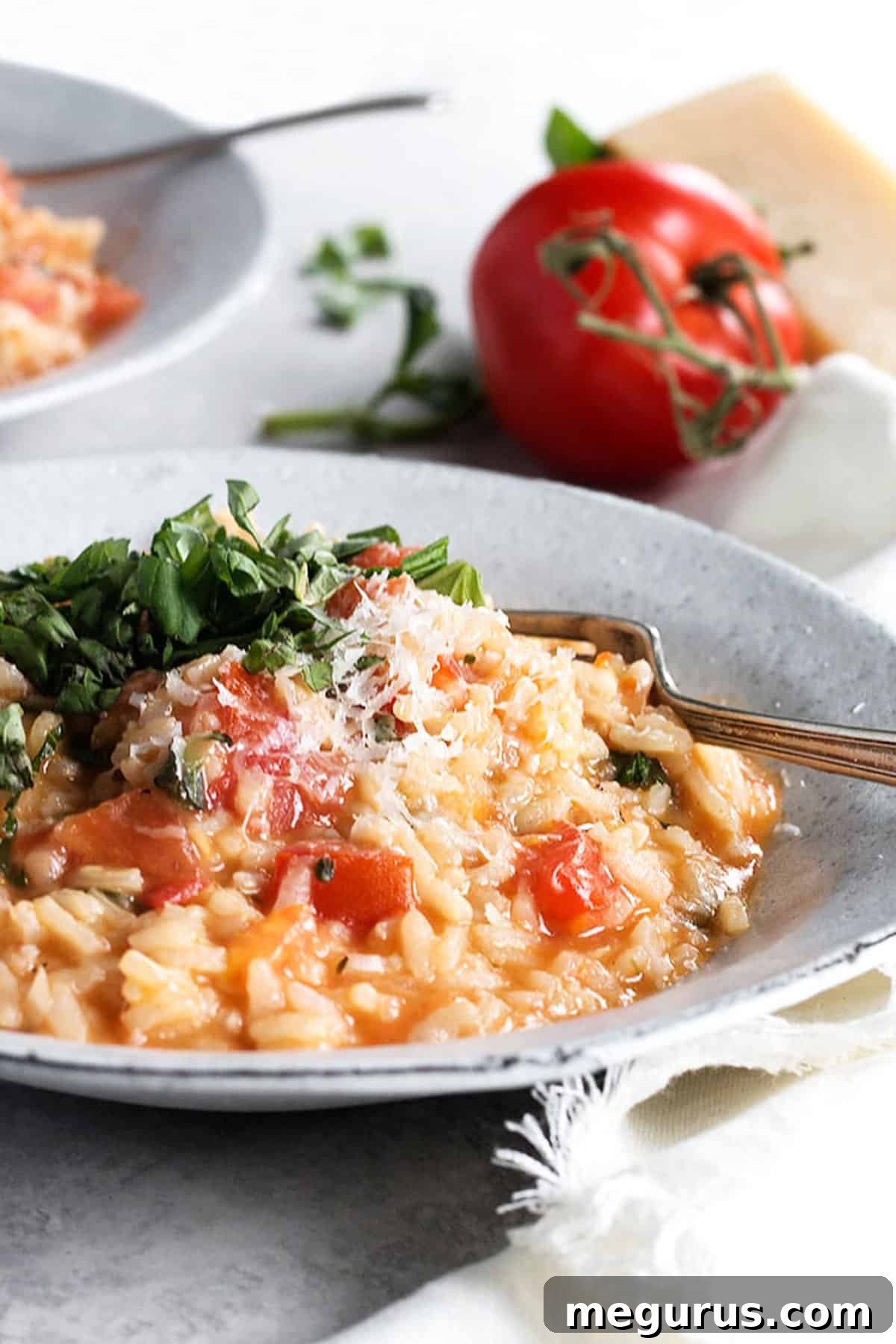
How to Grate Tomatoes: A Simple Trick for Deep Flavor
Grated tomatoes provide a beautiful, pulpy texture that melts into the risotto, creating a rich and concentrated tomato flavour base without any large chunks. This technique is simple and incredibly effective:
Take a ripe tomato and cut it in half along its equator (middle). Hold one half firmly with the cut side facing the coarse side of a box grater. Cradle the tomato with the skin against the palm of your hand, using the skin as a natural barrier to protect your fingers. Rub the tomato up and down against the grater until only the skin remains in your hand. Discard the skin and repeat with the remaining tomato halves. You’ll be left with a beautiful, flavourful tomato pulp perfect for your risotto.
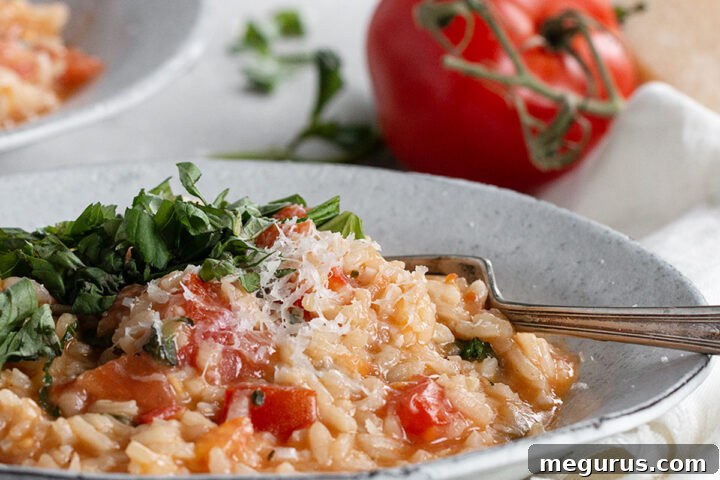
Get the Recipe: Tomato Basil Risotto
Pin This
Leave a Review
10 mins
30 mins
40 mins
4 servings
Ingredients
- 4-5 cups vegetable stock, or broth
- 1 1/2 Tablespoons extra virgin olive oil
- 1/3 cup onion, finely diced
- 2 cloves garlic, minced
- 10 oz tomatoes, grated *see notes, about 2 medium tomatoes
- 5 oz tomatoes, diced, about 1/2 cup
- Pinch sugar
- 1 cup Arborio rice, or Carnaroli
- 1/3 cup dry white wine
- Salt and freshly ground pepper, to taste
- 1/4 cup fresh basil, slivered
- 1/4 cup Parmesan cheese, grated
Instructions
- Heat the stock: Pour vegetable stock/broth into a medium saucepan and bring to a simmer over low heat. Taste stock and add some salt and pepper, as needed, to season well. Have a ladle handy.
- In a large skillet, heat the olive oil over medium heat. Add the onion and a bit of salt and cook, stirring, until onion is softened, 4-5 minutes. Add the rice and garlic and cook, stirring, for about 1 minute. Add the grated tomatoes, a pinch of sugar and a bit of salt and cook, stirring often, until the tomatoes have cooked down a bit and coated the rice, about 7-8 minutes. Add the wine and cook, stirring, until the wine has evaporated.
- Begin adding the stock, one ladleful at a time and cook, stirring regularly, until the stock is absorbed, before adding another ladleful. Repeat until you only have about 1 ladle-full of stock left. Taste the rice to ensure it is cooked through but still chewy. If not, add additional stock or warm water as needed, to finish cooking.
- Spoon in the final ladle of stock, the diced tomatoes, half the Parmesan and half the basil. Stir and cook about 1 minute. Remove from heat. Taste and add seasoning with salt and pepper, as needed.
- Serve warm, garnished with remaining Parmesan and basil.
Notes
Be sure to read the “Ingredient and Cook’s Notes” (above the recipe card!), where I share more detailed tips, variations and substitution suggestions for this recipe!
Serving:
1serving
Calories:
360kcal
Carbohydrates:
52g
Protein:
7g
Fat:
12g
Saturated Fat:
3g
Cholesterol:
11mg
Sodium:
1076mg
Potassium:
484mg
Fiber:
3g
Sugar:
7g
Vitamin A:
2135IU
Vitamin C:
25.5mg
Calcium:
101mg
Iron:
2.7mg
Tried this recipe? If you enjoyed this recipe, please consider leaving a star rating and comment. Your feedback helps others discover and enjoy it too!
Variations to Explore: Customizing Your Risotto
While this Tomato Basil Risotto is perfect in its classic form, its simplicity lends itself beautifully to creative variations. Don’t be afraid to experiment and make it your own!
- Add More Veggies: Sautéed asparagus, spinach, or zucchini can be folded in during the last few minutes of cooking for added nutrition and flavour. Roasted red peppers or sun-dried tomatoes (chopped finely) could also enhance the tomato profile.
- Protein Boost: For a heartier meal, consider adding cooked shrimp, grilled chicken, or even cannellini beans during the final stages of cooking.
- Herb Alternatives: While basil is iconic, a touch of fresh oregano or marjoram could add a different aromatic dimension. Chives, finely snipped, make an excellent garnish.
- Cheese Swaps: Beyond Parmesan and Pecorino, a dollop of fresh mozzarella or burrata stirred in at the end would add an incredible creaminess and a delightful stretch.
- Spicy Kick: A pinch of red pepper flakes added with the garlic can introduce a subtle warmth, enhancing the sweetness of the tomatoes.
Serving Suggestions: Completing Your Meal
This Tomato Basil Risotto is wonderfully satisfying on its own, especially when paired with crusty bread for soaking up every last bit of creamy goodness. However, it also pairs beautifully with a range of accompaniments to create a more elaborate meal:
- Fresh Green Salad: A simple, crisp green salad with a light vinaigrette provides a refreshing contrast to the richness of the risotto.
- Grilled Delights: Serve alongside grilled salmon, chicken breast, or portobello mushrooms for a balanced and flavourful dinner.
- Roasted Vegetables: Asparagus, broccolini, or bell peppers roasted with olive oil and herbs make an excellent, complementary side.
- Garlic Bread: If you’re a garlic lover, a slice of warm garlic bread or focaccia can be an irresistible addition.
Storage and Reheating Tips
Risotto is best enjoyed fresh, but if you happen to have leftovers, they can certainly be saved and reheated, though the texture won’t be quite the same as when freshly made.
- Storage: Allow any leftover risotto to cool completely before transferring it to an airtight container. Store it in the refrigerator for up to 2-3 days.
- Reheating: To reheat, place the risotto in a saucepan over medium-low heat. Add a splash of vegetable stock, water, or even milk (for extra creaminess) to loosen it up. Stir gently and continuously until heated through and creamy again. Avoid high heat, which can make the rice stick and become gummy.
- Creative Leftovers: Leftover risotto can also be formed into small patties, breaded, and pan-fried to make delicious arancini (without the typical filling) or risotto cakes.