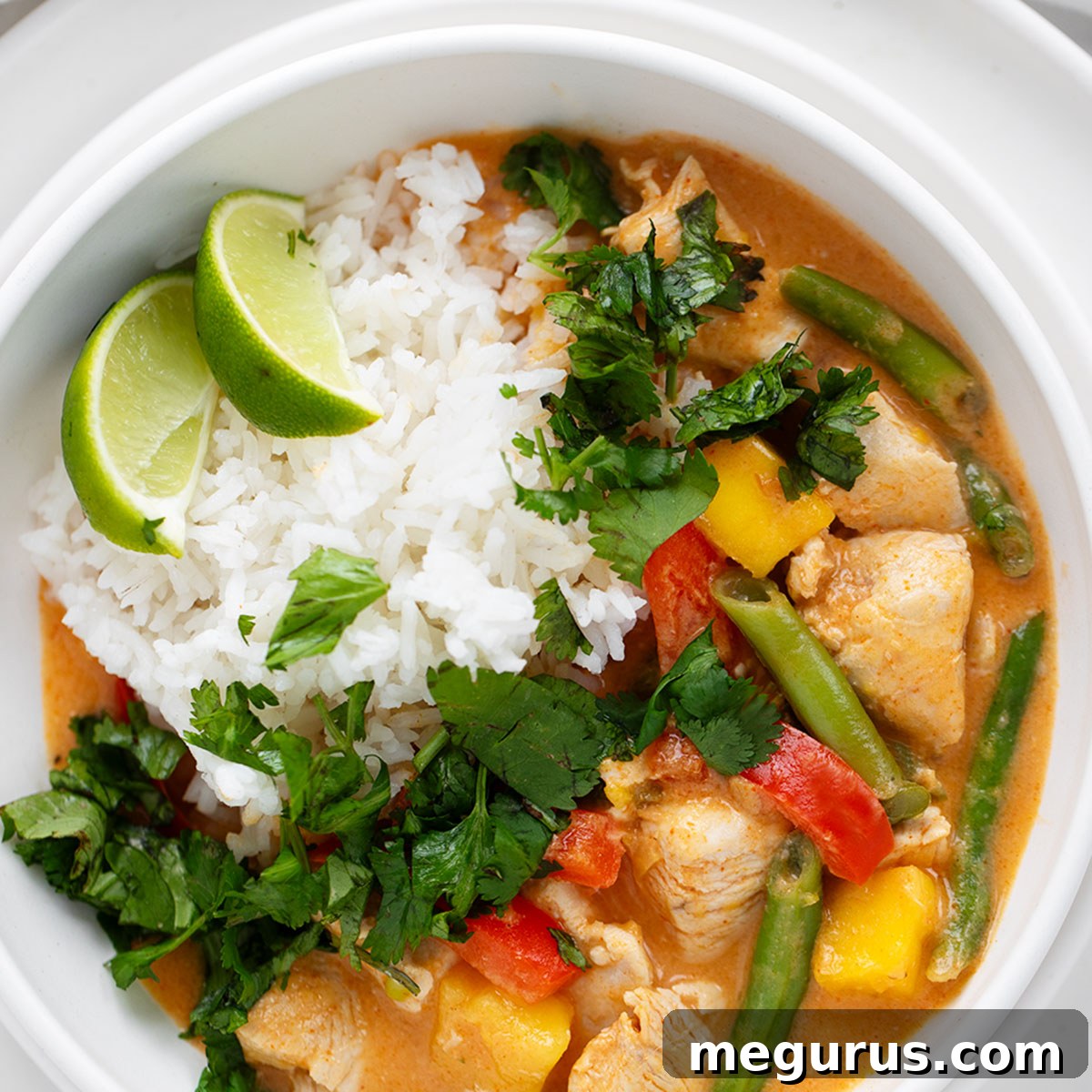
Craving a vibrant, flavorful, and incredibly easy weeknight meal? Look no further than this delightful Thai Mango Chicken Curry. This recipe marries the rich, aromatic spices of a traditional Thai red curry with the unexpected sweetness and tang of fresh mango, creating a dish that’s both exotic and comforting. It’s the perfect blend of creamy coconut, tender chicken, crisp vegetables, and that luscious mango brightness that makes every bite an absolute pleasure. Ideal for busy evenings, this homemade curry comes together quickly, promising a delicious and satisfying dinner that will transport your taste buds straight to Thailand. Just add a side of fluffy rice, and you’re all set for an unforgettable culinary experience!
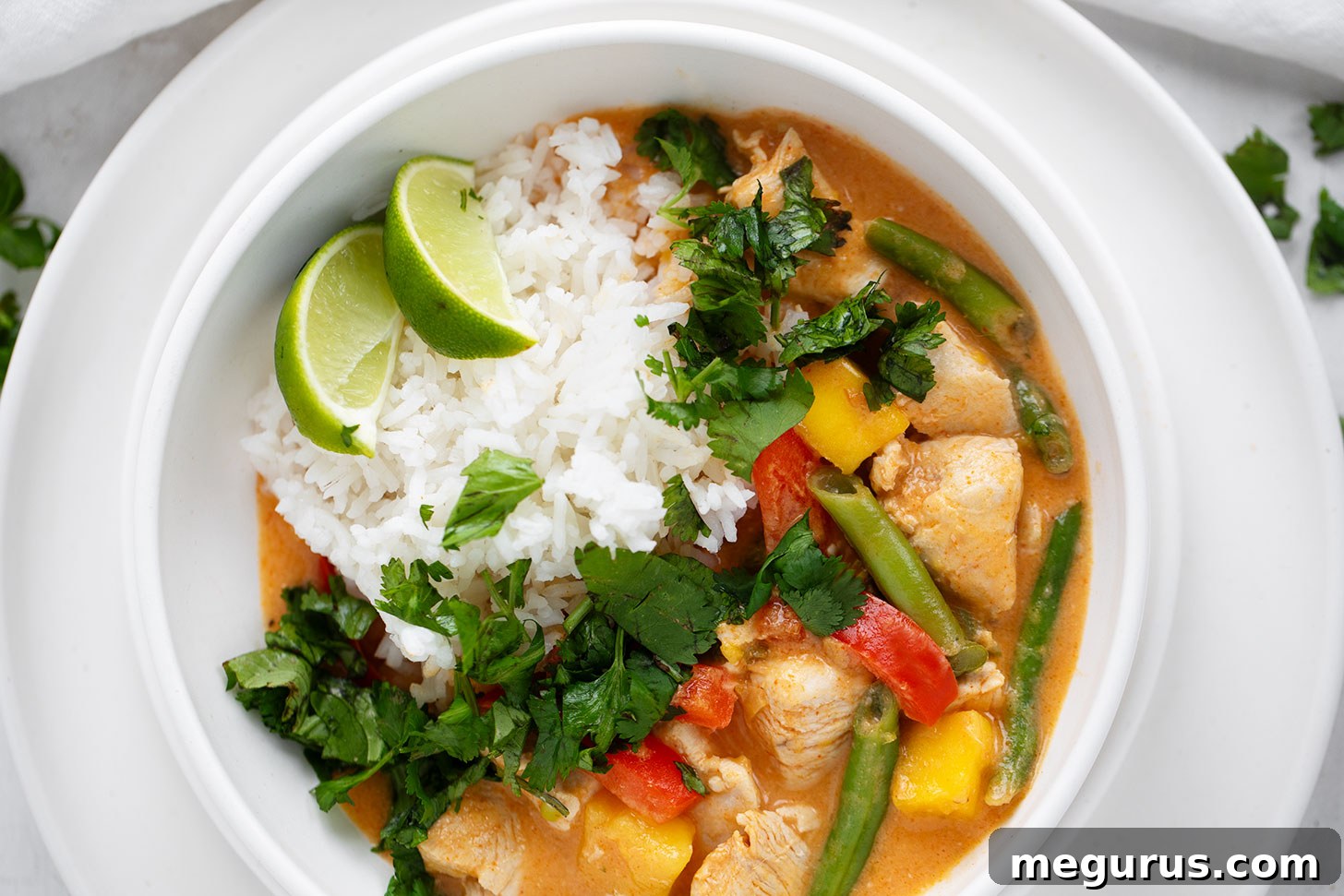
Thai curries have always been a staple in my kitchen for their incredible depth of flavor and quick preparation, and this Thai Mango Chicken Curry has quickly become a top favorite. It skillfully combines succulent chicken breast with crisp green beans, vibrant red bell peppers, and the star ingredient: ripe mango. The addition of mango isn’t just a garnish; its tangy-sweet essence cuts through the richness of the coconut milk and the spice of the curry paste, elevating the entire dish with a fresh and lively twist. It’s a truly harmonious blend that’s both comforting and exciting, perfect for impressing guests or simply enjoying a fantastic homemade meal.
Why You’ll Love This Thai Mango Chicken Curry
This Thai Mango Chicken Curry isn’t just another dinner recipe; it’s a culinary experience designed for ease, flavor, and pure enjoyment. Here’s why it deserves a spot in your weekly rotation:
- Effortlessly Delicious: Despite its gourmet taste, this curry is incredibly straightforward to make. With minimal prep and cooking time, you can have a restaurant-quality meal on your table in under 30 minutes.
- Vibrant Flavor Profile: The unique combination of spicy Thai red curry paste, creamy coconut milk, and the sweet-tart notes of fresh mango creates a complex, balanced, and utterly addictive flavor.
- Nutrient-Packed: Loaded with lean protein from the chicken, essential vitamins from the bell peppers and green beans, and healthy fats from coconut milk, this meal is as wholesome as it is tasty.
- Customizable Comfort: Easily adjust the spice level to your preference, swap out vegetables, or even experiment with different proteins. This recipe is wonderfully adaptable.
- Perfect for Weeknights: When time is short but you crave something special, this curry delivers. It’s quick enough for a busy Tuesday and impressive enough for a relaxed Friday night.
Essential Ingredients & Smart Substitutions
A few notes and helpful tips about the key ingredients that make this Thai Mango Chicken Curry truly shine. Choosing quality ingredients and understanding their roles will ensure the best possible outcome for your dish.
Chicken: For this versatile curry, you have the flexibility to use either boneless, skinless chicken breasts or boneless, skinless chicken thighs. I personally gravitate towards chicken breasts for their lean texture and ability to absorb the rich curry flavors without becoming overly fatty. When preparing, ensure the chicken is cut into uniform, bite-sized pieces to promote even cooking. If you opt for chicken thighs, which offer a slightly richer flavor and juicier texture, you might need to adjust the cooking time slightly as they can take a bit longer to cook through.
Mango: The star of this dish! I have a particular fondness for Ataulfo mangoes, often marketed as Honey Mangoes. These smaller, yellow-skinned varieties are renowned for their intensely sweet flavor and incredibly creamy, fiber-free flesh. For this recipe, you’ll typically need 3-4 of these smaller Ataulfo mangoes. If Ataulfos aren’t available, don’t worry! Any of the larger, red-skinned mango varieties will work beautifully, though you might only need a couple of those due to their size. The most crucial aspect of mango selection is ripeness; choose mangoes that yield slightly to gentle pressure when squeezed, indicating they are sweet and ready to impart their tropical essence. You can also use good quality frozen mango, thawed, if fresh is out of season.
Bell Pepper: Red bell peppers are my preferred choice here, primarily for the striking color contrast they provide against the vibrant yellow-orange curry. Beyond aesthetics, they offer a subtle sweetness and crisp texture. Yellow or orange bell peppers are also excellent alternatives, delivering the same sweet flavor profile. However, I generally advise against using green bell peppers in this curry. Their distinctly strong, sometimes bitter, flavor can overpower the delicate balance of the mango and red curry paste, detracting from the dish’s overall harmony.
Green Beans: Whether you prefer the crisp snap of fresh green beans or the convenience of frozen ones, both options work wonderfully in this curry. If using fresh, a quick trim of the ends is all that’s needed. For frozen green beans, there’s no need to thaw them beforehand; simply add them directly to the skillet, as they will cook perfectly in the simmering sauce.
Coconut Milk: This ingredient forms the creamy, luscious base of our curry. I highly recommend using regular full-fat canned coconut milk for the richest flavor and most decadent texture. Its natural fats contribute significantly to the curry’s body and mouthfeel. If you are aiming for a lighter option, fat-reduced coconut milk can be used, but be aware that the sauce may be thinner. To compensate for this, you might consider adding a touch more cornstarch to your coconut mango sauce mixture to achieve a desired consistency.
Thai Red Curry Paste: The aromatic heart of this curry! The quality and freshness of your red curry paste can significantly impact the final flavor. Look for a reputable brand and, if possible, one that lists its ingredients clearly. Adjust the amount used based on your preferred spice level – 2 tablespoons for a mild-medium heat, and 3 tablespoons or more for a bolder, spicier kick.
Fish Sauce or Soy Sauce: These essential ingredients provide the vital umami depth characteristic of Thai cuisine. Fish sauce offers an authentic flavor, while soy sauce is an excellent vegetarian or vegan substitute, or for those who prefer its taste.
Ginger Garlic Paste: A foundational aromatic blend that provides warmth and zest. If you don’t have paste, finely minced fresh ginger and garlic can be used in equal measure.
Lime Juice: Fresh lime juice is crucial at the end of cooking. It brightens all the flavors, adding a necessary tangy counterpoint to the sweetness of the mango and the richness of the coconut milk.
How to Prepare This Irresistible Thai Mango Chicken Curry: A Step-by-Step Guide
Follow these detailed steps to create a rich and flavorful Thai Mango Chicken Curry. Always refer to the full, printable recipe card for precise measurements and comprehensive instructions.
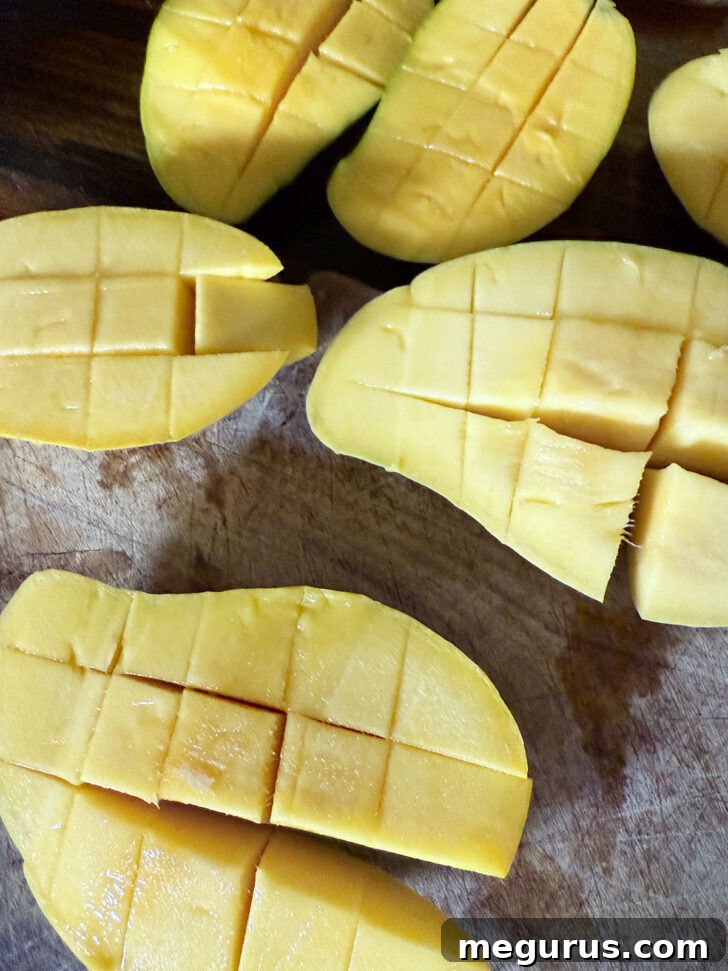
- Prepare the Mango: Begin by carefully cutting the ripe mangoes into small, uniform cubes. If you’re using the smaller Ataulfo (Honey) mangoes, this step is particularly quick. Set a portion aside for blending into the sauce and another portion for adding towards the end of cooking.
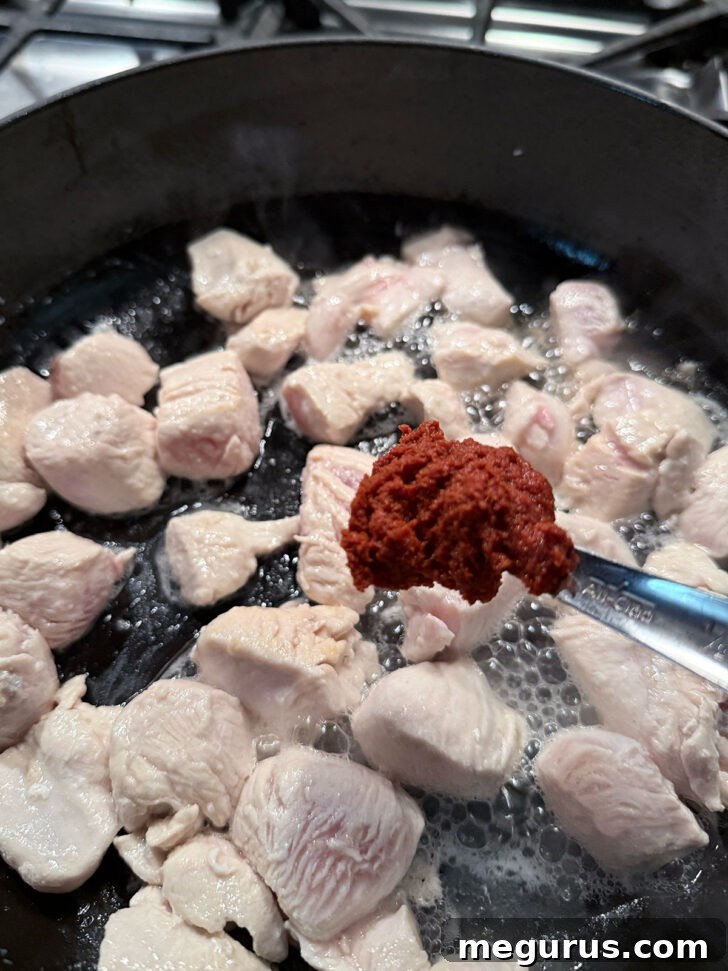
- Brown the Chicken and Bloom the Curry Paste: Heat your chosen cooking oil in a large skillet over medium heat. Add the diced chicken and cook until it’s no longer pink, developing a light golden hue. This initial browning adds depth of flavor. Next, stir in the ginger garlic paste and the vibrant Thai red curry paste. Cook these aromatics with the chicken for about a minute, stirring constantly, to allow their flavors to “bloom” and intensify.
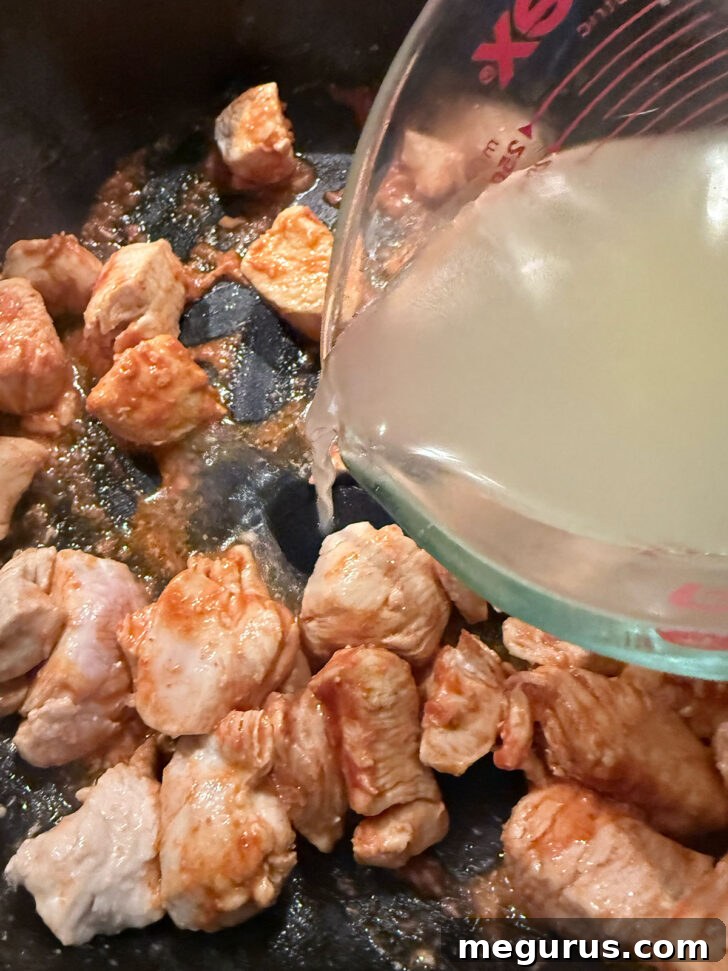
- Introduce the Broth and Vegetables: Pour the chicken broth into the skillet, deglazing the pan and picking up all the flavorful bits. Immediately add the chopped green beans and sliced red bell pepper. Give everything a good stir to combine.
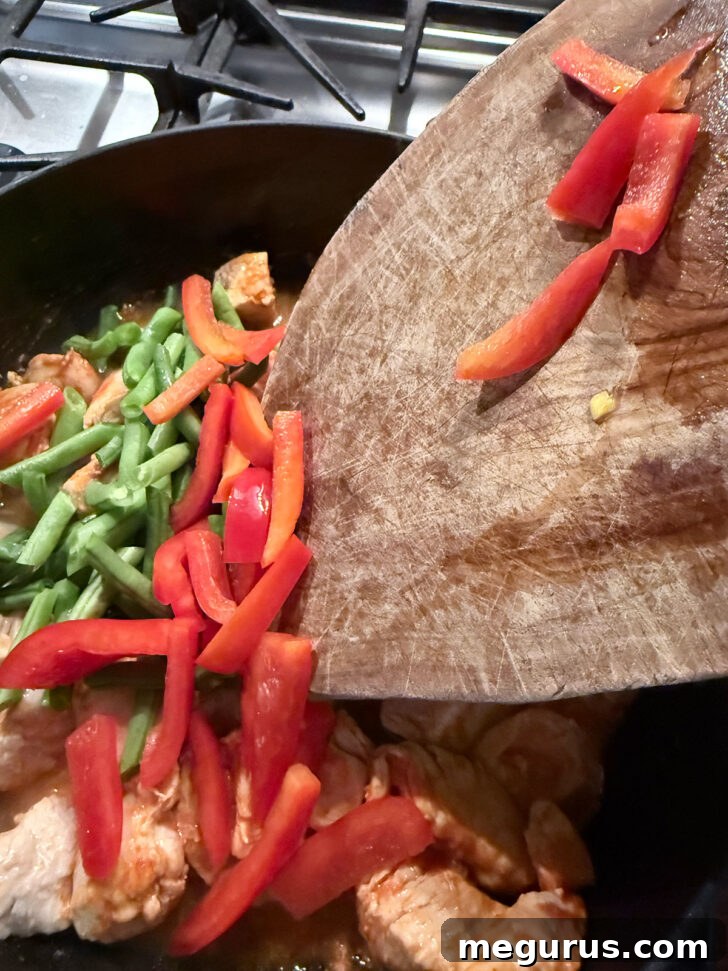
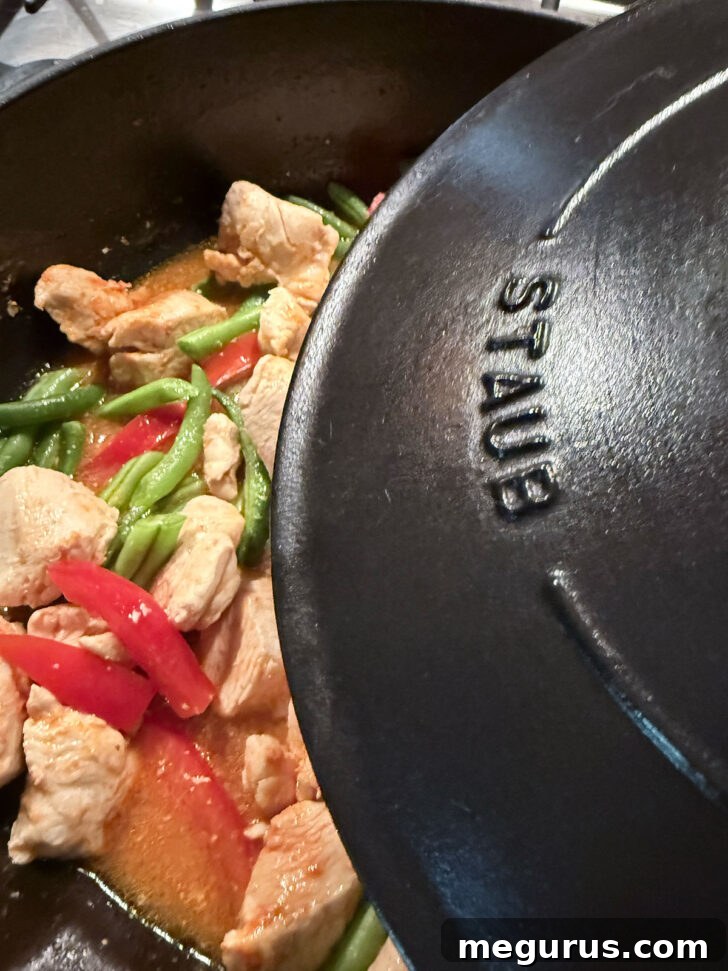
- Simmer the Vegetables: Cover the skillet with a lid, reduce the heat to medium-low, and let the curry gently simmer for 5-7 minutes. This allows the vegetables to become tender-crisp while the flavors meld together. Keep an eye on them to ensure they don’t overcook.
- Prepare the Coconut Mango Sauce: While the vegetables simmer, combine the canned coconut milk, cornstarch, the reserved cubed mango for the sauce, fish sauce (or soy sauce), and optional lemongrass paste in a blender or food processor. Blend until completely smooth and creamy. This unique sauce is what gives the curry its signature lusciousness and tropical flavor.
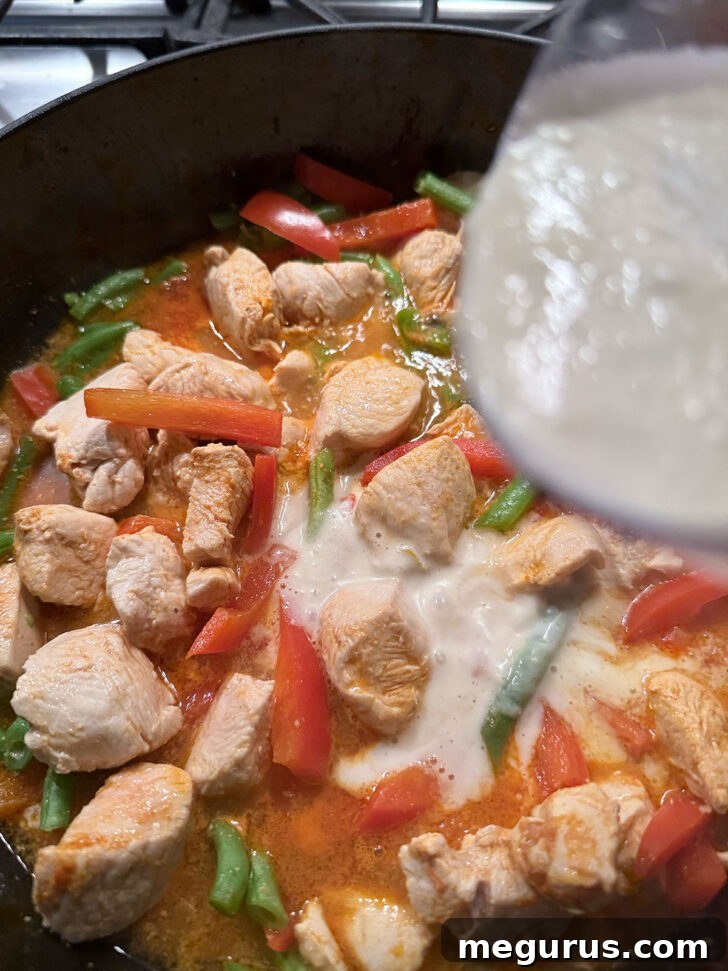
- Incorporate the Sauce: Once the vegetables are tender, remove the lid from the skillet. Pour the smooth coconut mango sauce into the skillet with the chicken and vegetables. Stir gently to evenly coat all ingredients and bring to a gentle simmer.
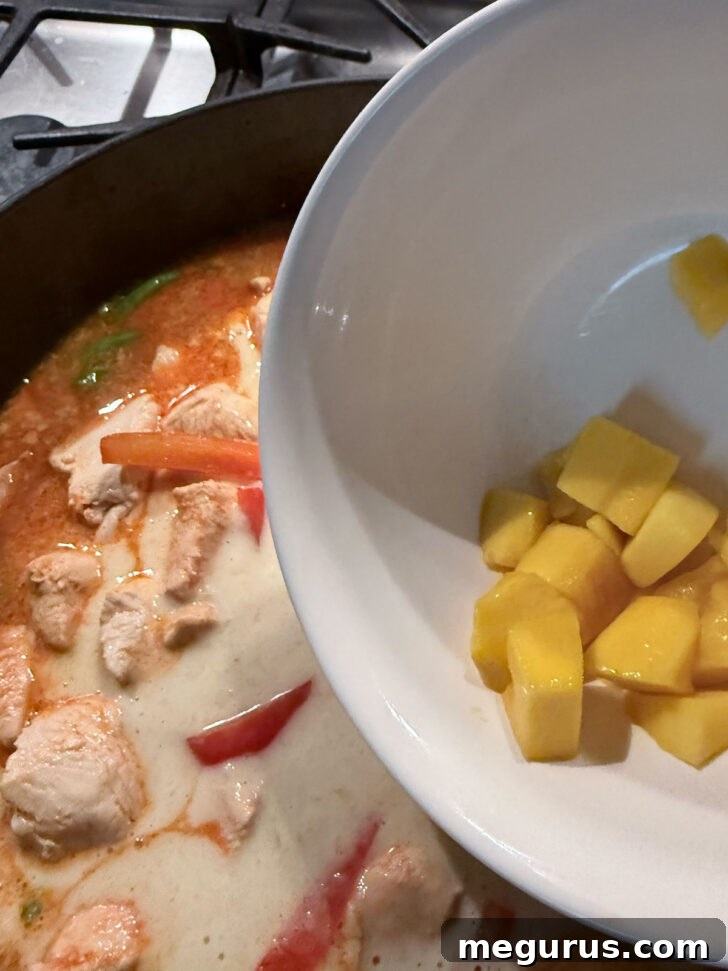
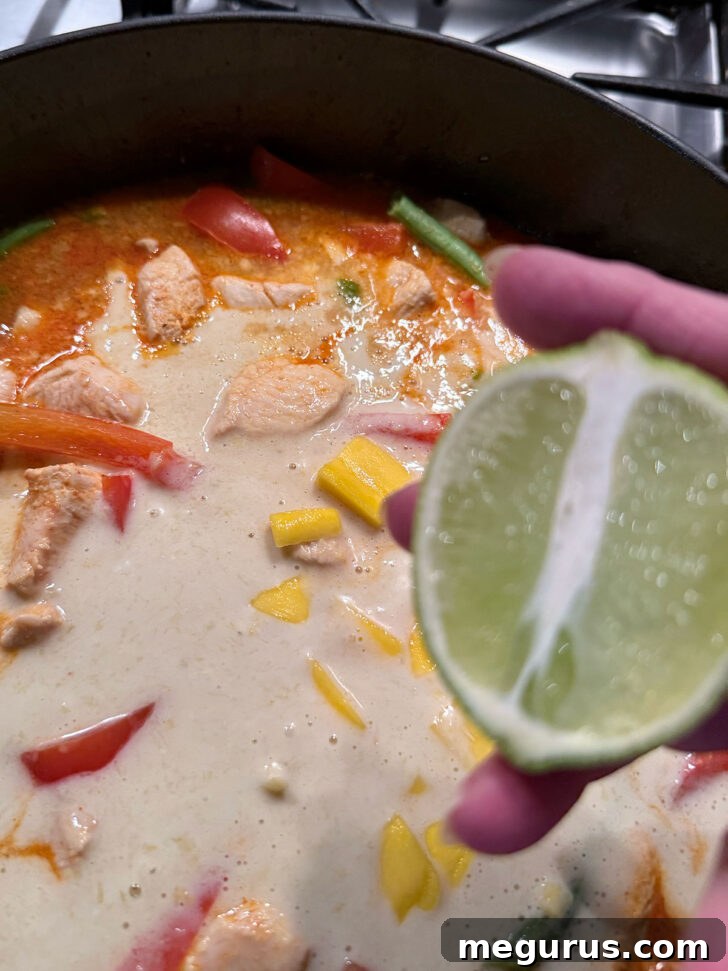
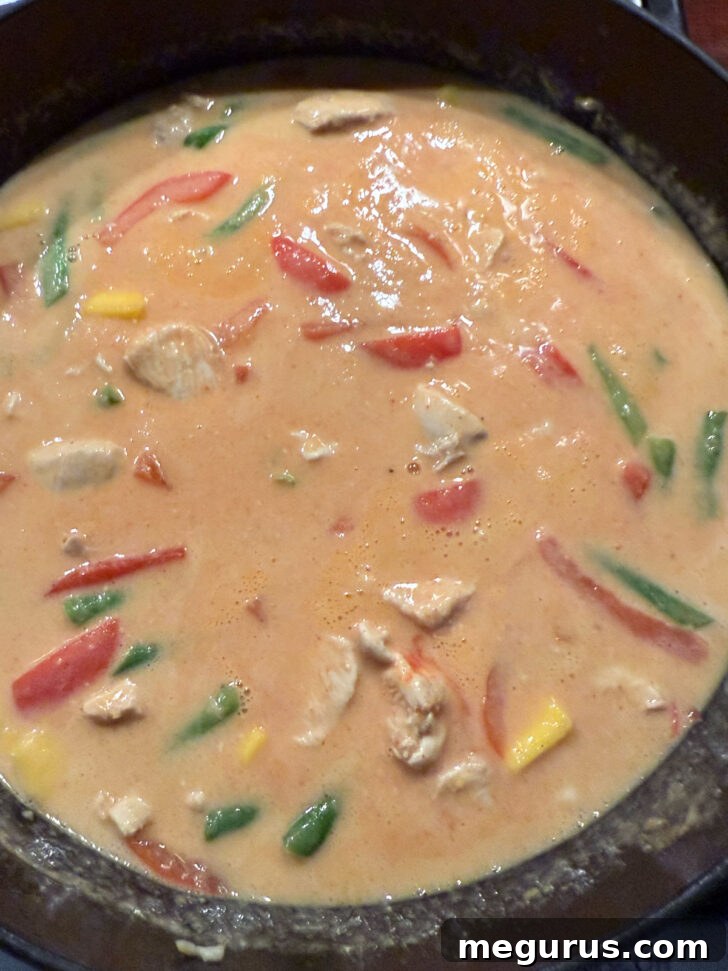
- Add Fresh Mango and Final Seasoning: Stir in the additional cubed mango that you set aside. This provides wonderful bursts of fresh fruit in the final dish. Finish the sauce with a generous squeeze of fresh lime juice, and season with salt and pepper to taste. This is your moment to adjust the flavors – add a little more red curry paste for extra heat, or another splash of fish sauce for more umami.
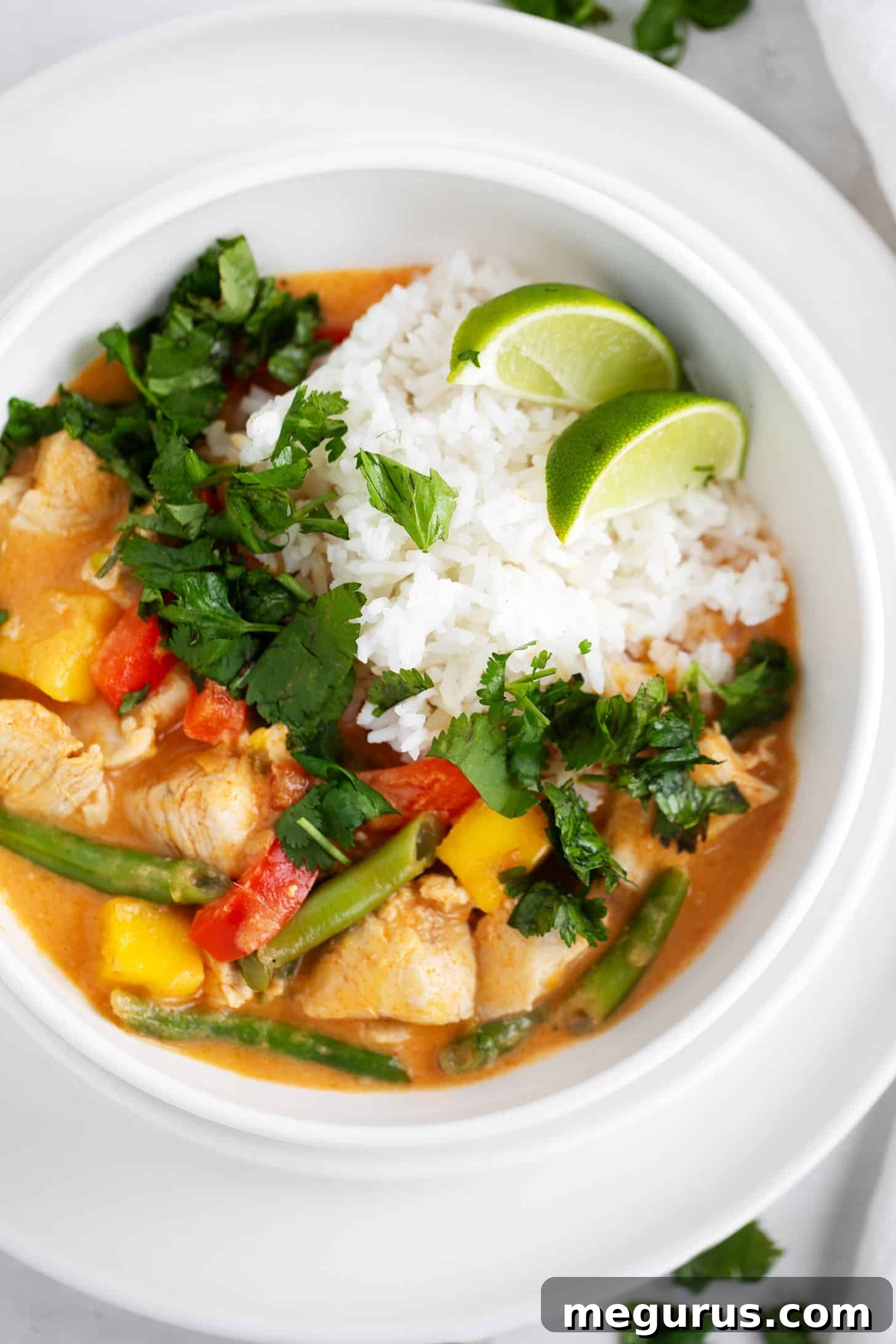
- Serve: Allow the curry to simmer briefly, just long enough for the flavors to fully meld and the sauce to thicken slightly. Spoon generously over freshly cooked rice. Garnish with chopped fresh cilantro and extra lime wedges for a beautiful presentation and an added burst of freshness. Enjoy your homemade Thai Mango Chicken Curry!
Recipe Video: Watch How It’s Made!
For those who prefer a visual guide, this short video demonstrates each step of making this delicious Thai Mango Chicken Curry, ensuring you can follow along with confidence and ease.
Pro Tips for the Perfect Thai Mango Chicken Curry
Achieving curry perfection is all about these little details:
- Rice Timing is Key: I wholeheartedly recommend starting your rice (basmati, jasmine, or any long-grain variety) before you even begin preparing the curry. This curry comes together remarkably fast, and having your rice ready and waiting ensures a seamless serving experience.
- Don’t Skip the Taste Test: The most important step before serving any curry is tasting and adjusting! A proper seasoning with salt will amplify and harmonize all the incredible flavors – the sweetness of the mango, the spice of the paste, and the richness of the coconut milk. If you prefer a more intense curry flavor, don’t hesitate to stir in an extra teaspoon or two of red curry paste at the very end.
- Ripe Mango Matters: Ensure your mangoes are perfectly ripe. Under-ripe mangoes will be too firm and lack the crucial sweetness and tang that makes this curry so special.
- Control the Heat: Thai red curry paste varies in spiciness. If you’re sensitive to heat, start with less and add more to taste. For an extra kick, a pinch of red chili flakes can be stirred in during the final minutes.
- Fresh Lime Finish: The squeeze of fresh lime juice at the end is non-negotiable! It brightens the entire dish, cutting through the richness and making the flavors pop.
- Uniform Chicken Pieces: Cutting your chicken into even, bite-sized pieces ensures it cooks through uniformly and remains tender, preventing dry spots.
Serving Suggestions
While this Thai Mango Chicken Curry is a star on its own, pairing it with the right accompaniments elevates the meal to new heights. Here are some delicious ideas:
- Classic Rice: Steamed jasmine rice or basmati rice is the traditional choice, soaking up all the incredible sauce.
- Alternative Grains: For a healthier twist, consider serving it with brown rice, quinoa, or even couscous.
- Noodles: A bed of rice noodles or even egg noodles can make this curry a heartier, one-bowl meal.
- Fresh Herbs: A generous sprinkle of fresh cilantro, basil, or mint leaves adds a burst of freshness and aroma.
- Extra Lime: Always serve with extra lime wedges on the side for guests to squeeze over their curry for an added zing.
- Naan Bread or Roti: Warm, flaky bread is perfect for scooping up every last drop of the delicious sauce.
Making Ahead and Storing Your Curry
One of the many benefits of this Thai Mango Chicken Curry is how well it holds up for meal prep and future enjoyment. Thai curries, in general, tend to improve in flavor the day after they’re made, as the spices and ingredients have more time to meld.
- Making Ahead: This curry is an excellent candidate for making ahead. Prepare the entire dish, allow it to cool completely, then transfer it to an airtight container. Refrigerate for up to 2-3 days. When you’re ready to serve, gently reheat on the stovetop over medium-low heat until warmed through, adding a splash of chicken broth or coconut milk if the sauce seems too thick.
- Storing Leftovers: Any leftover curry should be stored in a sealed airtight container in the refrigerator for up to 2 days. For best results and food safety, ensure it’s cooled rapidly before refrigerating.
- Freezing: While this curry can be frozen, be aware that the texture of the coconut milk-based sauce might change slightly after freezing and thawing. It may become a bit grainy or separate. To minimize this, ensure the curry is thoroughly cooled before freezing. Thaw overnight in the refrigerator and reheat gently, stirring well to re-emulsify the sauce. The mango pieces might also become softer after freezing.
Frequently Asked Questions (FAQ)
Here are answers to some common questions about making this Thai Mango Chicken Curry:
- Can I make this curry vegetarian or vegan?
- Absolutely! For a vegetarian version, swap the chicken for firm tofu or chickpeas. Ensure your red curry paste is vegetarian (some contain shrimp paste). For a vegan version, use a vegan curry paste and substitute fish sauce with soy sauce or a vegan fish sauce alternative.
- What if I don’t have fresh mango?
- Good quality frozen mango, thawed, works perfectly fine for both blending into the sauce and adding as chunks. Ensure it’s ripe and sweet for the best flavor.
- How can I adjust the spice level?
- The amount of Thai red curry paste directly correlates to the spice level. Start with 2 tablespoons for a milder curry, and increase to 3 tablespoons or more if you prefer a spicier kick. You can also add a pinch of red chili flakes with the curry paste for extra heat.
- Can I use other vegetables?
- Certainly! This curry is highly adaptable. Feel free to add or substitute with other quick-cooking vegetables like snap peas, broccoli florets, zucchini, or even bamboo shoots. Add them during the simmering step with the green beans and bell peppers.
- What’s the best type of rice to serve with it?
- Jasmine rice is traditionally served with Thai curries due to its fragrant aroma and slightly sticky texture. Basmati rice is another excellent option. For a healthier alternative, brown rice works well too.
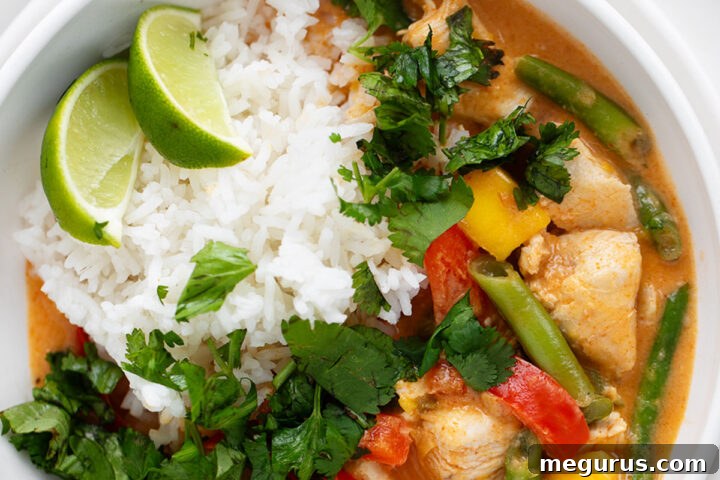
Get the Recipe: Thai Mango Chicken Curry
Pin This
Leave a Review
10 minutes
20 minutes
30 minutes
4 servings
Ingredients
Coconut Mango Sauce:
-
13.5 oz
(400 ml)
canned coconut milk, full-fat or lite -
1 Tablespoon
cornstarch -
1/2-3/4 cup
mango, cubed, fresh or thawed frozen mango -
1 Tablespoon
fish sauce, or soy sauce -
2 teaspoons
lemongrass paste, optional
For the curry:
-
2-3 teaspoons
cooking oil -
2 large
boneless, skinless chicken breasts, cubed -
2 Tablespoons
ginger garlic paste, or 1 Tbsp minced ginger and 1 Tbsp minced garlic -
2-3 Tablespoons
Thai red curry paste -
1/2 cup
chicken broth -
1 1/2 cups
green beans, chopped fresh or frozen -
2 cups
red bell peppers, sliced or chopped -
1/2 cup
mango, cubed fresh or frozen mango (for adding at the end) - Juice of 1/2 lime
- salt and pepper, to taste
For garnish:
- fresh cilantro, chopped
- lime wedges, for drizzling
Instructions
-
If you are serving with rice, start cooking the rice according to package instructions before you begin preparing the curry.
-
In a blender or food processor, combine the coconut milk, cornstarch, 1/2 to 3/4 cup of cubed mango (for the sauce), fish sauce (or soy sauce), and optional lemongrass paste. Blend until the mixture is completely smooth and uniform. Set this coconut mango sauce aside.
-
Heat the cooking oil in a large skillet or wok over medium heat. Add the cubed chicken and cook, stirring occasionally, until it is no longer pink and lightly browned on all sides. Stir in the ginger garlic paste and Thai red curry paste. Continue to cook for about 1 minute, stirring constantly, allowing the curry paste to become fragrant. Add the chicken broth to the skillet, then stir in the chopped green beans and sliced red bell pepper. Stir everything together to combine. Cover the skillet with a lid and reduce the heat to medium-low. Allow the mixture to simmer, covered, for 5-7 minutes, or until the vegetables are tender-crisp.
-
Remove the lid from the skillet. Pour the prepared coconut mango sauce into the skillet. Add the remaining 1/2 cup of fresh cubed mango and the juice from 1/2 a lime. Stir well to incorporate all the ingredients. Allow the curry to cook briefly, just until the sauce thickens slightly and is heated through. Taste the sauce and adjust seasoning as needed, adding salt and pepper to your preference. If you desire a stronger curry flavor, you can stir in an additional teaspoon or two of red curry paste at this stage.
-
To serve, spoon a generous portion of cooked rice into individual bowls. Using a slotted spoon, add the chicken and vegetables from the curry to the bowl, then ladle plenty of the creamy coconut mango sauce over the top. Garnish with chopped fresh cilantro and serve with fresh lime wedges for drizzling. Enjoy immediately!
Notes
You can substitute boneless, skinless chicken thighs for breasts; you would typically need 5-6 chicken thighs, cut into similar-sized pieces.
Nutritional information provided does not include the addition of rice or other side dishes.
Always be sure to taste and season at the end of cooking. I find Thai curries are particularly enhanced by a final adjustment of salt to bring all the wonderful flavors into perfect balance.
Thai
Main Course
Jennifer Maloney
Nutrition Information
Calories: 387kcal,
Carbohydrates: 22g,
Protein: 17g,
Fat: 27g,
Saturated Fat: 21g,
Polyunsaturated Fat: 1g,
Monounsaturated Fat: 3g,
Trans Fat: 0.01g,
Cholesterol: 36mg,
Sodium: 451mg,
Potassium: 816mg,
Fiber: 6g,
Sugar: 14g,
Vitamin A: 4262IU,
Vitamin C: 119mg,
Calcium: 57mg,
Iron: 3mg
Tried this recipe?
If you enjoyed this recipe, please leave a star rating and comment. It helps others to find it!
More Thai Curry Recipes to Love!
If you’ve enjoyed this delightful Thai Mango Chicken Curry, you might be eager to explore other fantastic Thai-inspired dishes. Here are a few more curry recipes that are sure to tantalize your taste buds and bring the vibrant flavors of Thailand into your home: