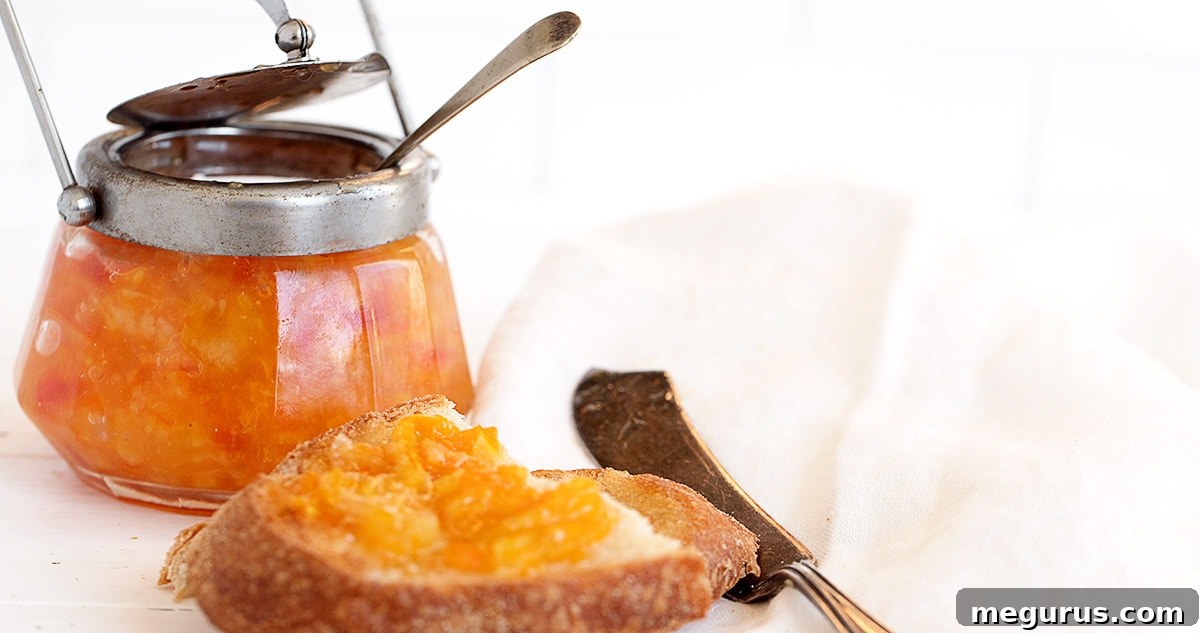
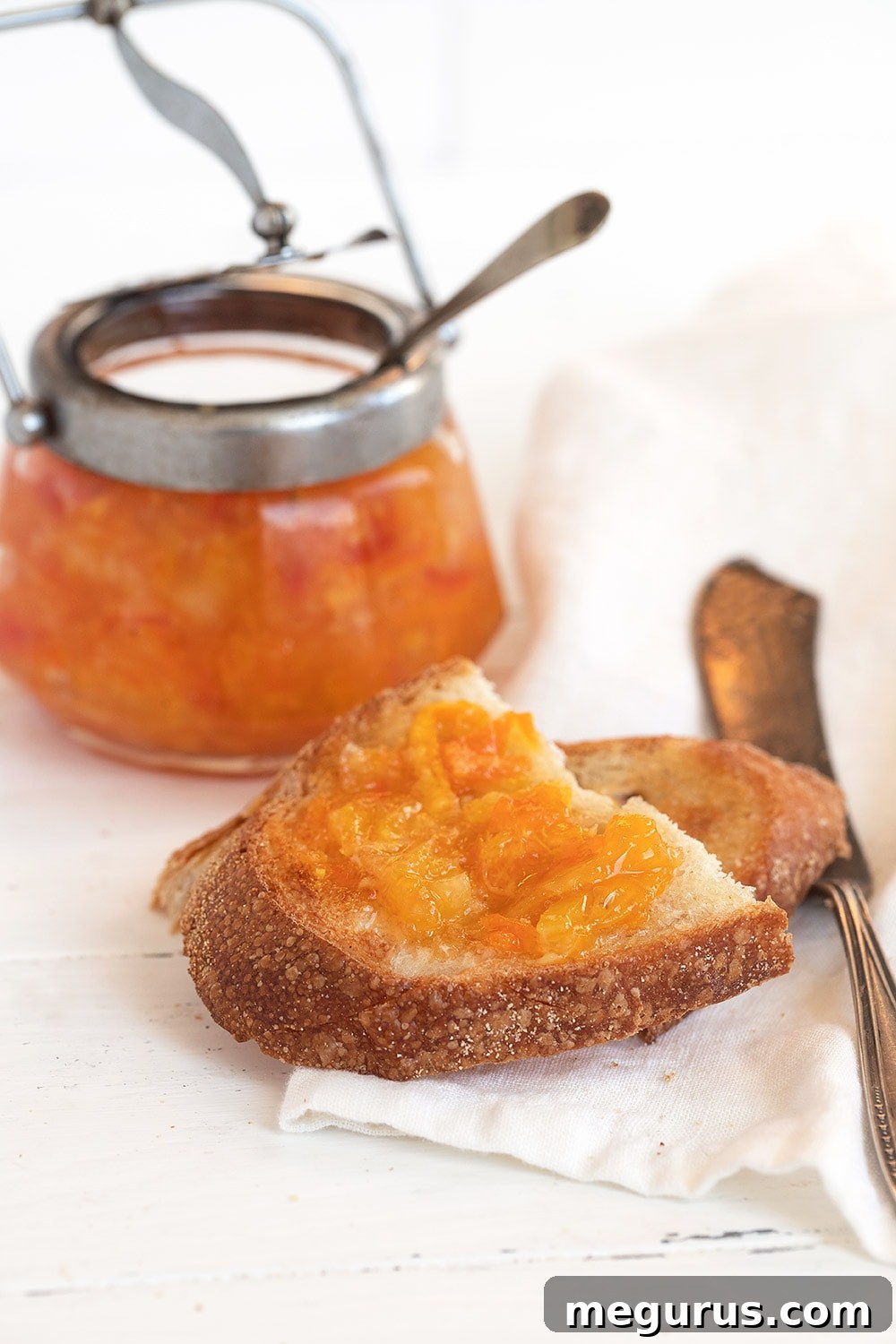
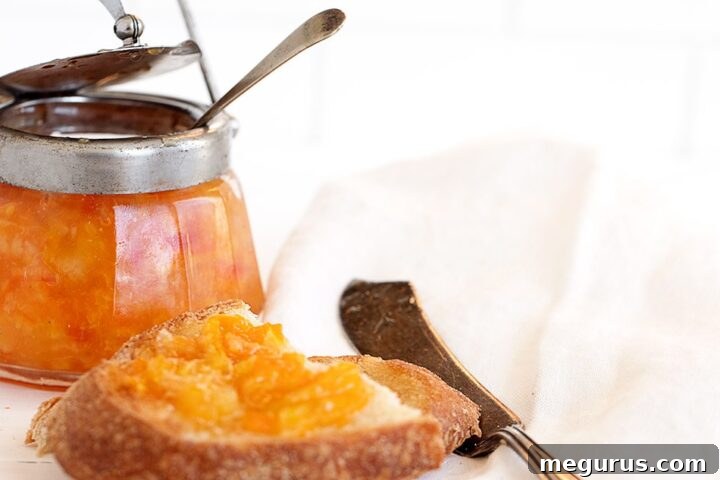
Enjoy homemade orange marmalade anytime with this quick and easy recipe. Small-batch, no pectin needed, no canning and ready in 1 hour!
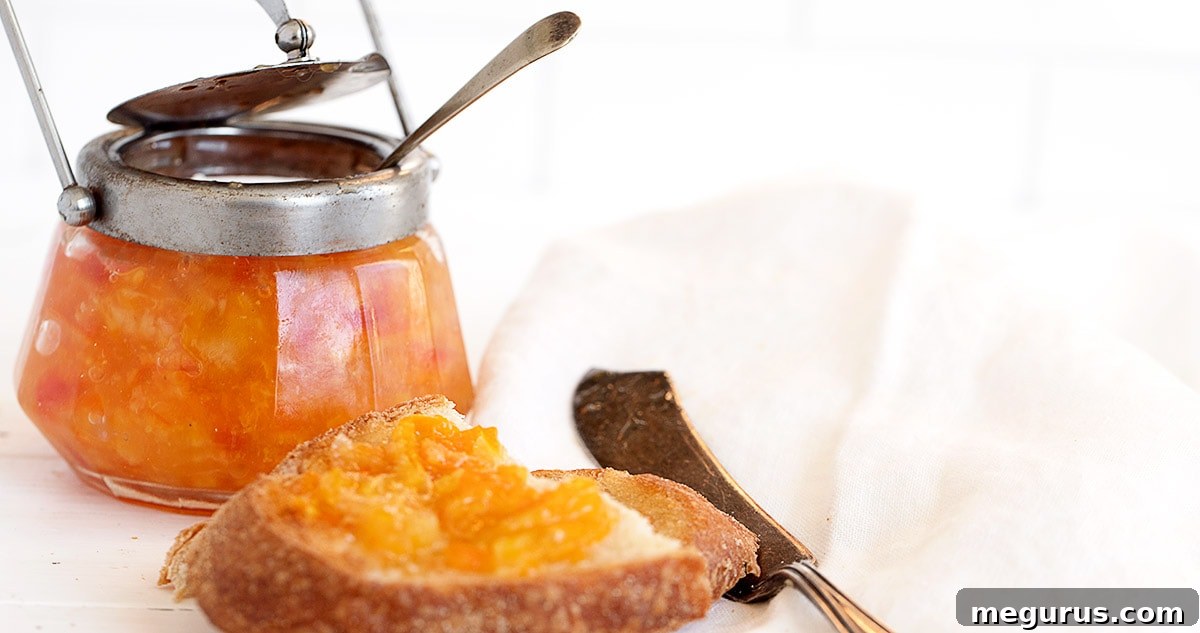
Unlock the Sweetness of Citrus: Your Guide to Quick & Easy Small-Batch Orange Marmalade
There’s something uniquely comforting and utterly delicious about a jar of homemade orange marmalade. It’s a taste of sunshine, brightening up any morning toast or scone. If you’ve ever thought making marmalade was a daunting, all-day affair, prepare to be surprised! This incredible small-batch recipe is designed for simplicity, speed, and maximum flavor. Forget the need for added pectin or complex canning processes; with just a few core ingredients and about an hour of your time, you’ll create a vibrant, tangy-sweet preserve that captures the essence of fresh oranges.
Why Homemade Marmalade? The Joy of Crafting Your Own
Beyond the delightful taste, crafting your own marmalade offers several advantages. You control the quality of ingredients, ensuring no artificial preservatives or flavors. It’s a wonderful way to utilize seasonal citrus, especially when you find yourself with an abundance of beautiful oranges, perhaps left over from holiday festivities. The process itself is surprisingly therapeutic, transforming simple fruit into a gleaming, golden spread. And the best part? The sheer satisfaction of spooning your very own creation onto a warm piece of toast.
Essential Ingredients for Your Perfect Marmalade
This recipe champions simplicity, relying on just three core ingredients to achieve a beautifully set, flavorful marmalade. Understanding each component and its role is key to success.
The Star: Choosing Your Oranges
While various oranges can be used, the choice of fruit significantly impacts the final flavor and texture of your marmalade. For this specific recipe, we highly recommend mandarin oranges. Here’s why:
- Thin-Skinned & Less Pith: Mandarin varieties like Satsumas or Halos boast thin skins and very little bitter pith (the white spongy layer between the peel and the fruit). This translates to less prep work and a less bitter, more approachable marmalade.
- Wonderful Flavor Profile: Mandarin oranges are renowned for their bright, sweet, and aromatic flavor, which shines through beautifully in the finished product.
- Natural Sweetness: Being naturally sweeter than many other orange types, mandarin oranges contribute to a marmalade that’s perfectly balanced, especially if you prefer a less intensely tart spread.
Quantity Guide: You’ll need approximately 300g (about 10.5 ounces) of oranges. This typically equates to 2 large Satsumas or Halos, or 3-4 smaller clementines. Using a kitchen scale is highly recommended for accuracy, as orange sizes can vary widely.
Alternatives:
- Navel Oranges: If using navel oranges, extra care is required. You must meticulously remove only the outermost orange zest for slicing, then discard the thick white pith layer entirely before chopping the fruit. This step is crucial to prevent a bitter marmalade. A sharp vegetable peeler or a paring knife can help with precision. One good-sized navel orange is usually sufficient for this recipe.
- Seville Oranges: For those who love a traditional, intensely bitter marmalade, Seville oranges are an excellent choice. However, due to their inherent tartness, you may need to adjust the sugar ratio. A general guideline for Seville oranges is to use an equal weight of sugar to oranges to temper the bitterness, ensuring a delightful balance.
The Sweetness Factor: Sugar
Regular white granulated sugar is all you need here. Don’t be tempted to drastically reduce the amount of sugar, as it plays a critical role beyond just sweetness:
- Setting Agent: Sugar interacts with the natural pectin in the fruit to help the marmalade set into that desirable gel-like consistency.
- Preservation: Sugar also acts as a natural preservative, extending the shelf life of your homemade marmalade.
Ratio: This recipe uses a 3:2 ratio of oranges to sugar by weight. So, 300g of oranges will require 200g of sugar (approximately 1 cup). While it might seem like a lot, remember that marmalade is a condiment enjoyed in small servings. This ratio ensures both a proper set and excellent flavor balance.
Honey Substitution: For a different flavor profile, you could experiment with replacing white sugar with honey. A good starting point would be ¾ cup of honey for every 1 cup of sugar. Note: This substitution has not been tested with this specific recipe, so results may vary.
The Tangy Touch: Lemon
We generally incorporate the flesh and peel of half a lemon into this recipe. The lemon serves a dual purpose:
- Natural Pectin Boost: Lemons are naturally rich in pectin, which aids in the setting process, especially since this recipe doesn’t call for added pectin.
- Flavor Enhancement: It adds a lovely, bright tang that balances the sweetness of the oranges, elevating the overall complexity of the marmalade’s flavor.
Omission: If you don’t have a lemon on hand or prefer to stick purely to orange flavor, you can omit the lemon entirely and still achieve a delicious marmalade. The natural pectin in the oranges will still provide a good set.
Optional Add-ins: Customizing Your Marmalade
While delicious on its own, marmalade is a fantastic canvas for additional flavors. You can stir in various additions right at the end of the cooking process:
- Cherries: Chopped red glacé cherries or Maraschino cherries add a festive pop of color and sweetness.
- Cranberries: For a slightly tart counterpoint, chopped dried cranberries work beautifully.
- Vanilla: A teaspoon of vanilla bean paste or extract introduces a warm, aromatic twist.
- Spices: Consider a pinch of cinnamon, star anise, or a tiny amount of fresh ginger for an exotic touch.
- Other Zests: For an even more complex citrus profile, finely grated lime or grapefruit zest can be added.
Essential Equipment for Marmalade Making
Having the right tools can make your marmalade-making experience smoother and more enjoyable:
- Large, Heavy-Bottomed Saucepan: Crucial for even heat distribution and to prevent scorching. Ensure it’s non-reactive (stainless steel is ideal; avoid aluminum or cast iron, which can react with the acidic fruit).
- Sharp Knife and Cutting Board: For precise peeling and slicing of the orange and lemon zest. Consistency in slice size is key to the final texture.
- Kitchen Scale: For accurate measurement of oranges and sugar, ensuring the correct ratio for a perfect set.
- Ladle and Heatproof Jar: For transferring the hot marmalade safely.
- Wide-Mouth Funnel (Optional but Recommended): Makes filling jars much easier and cleaner.
- Immersion Blender or Potato Masher: For achieving your desired marmalade texture by breaking down the fruit flesh.
- Small Plate (for the “Cold Plate Test”): Essential for determining when your marmalade has reached the perfect setting point.
Step-by-Step Visual Guide: Crafting Your Small-Batch Marmalade
This section provides a visual summary of the key stages. For complete, detailed instructions, please refer to the comprehensive Recipe Card below.
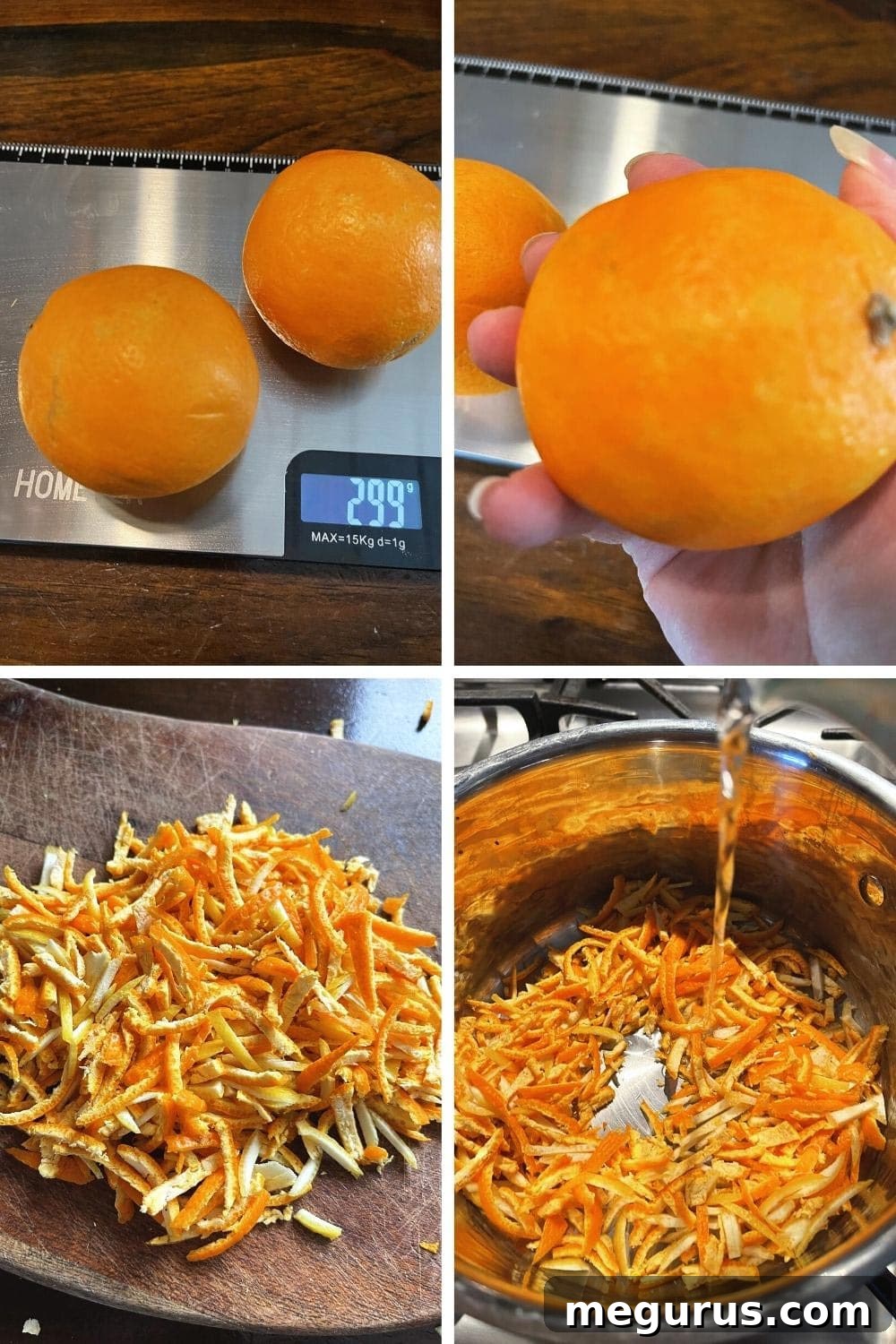
1. Prepare Your Oranges with Precision: The initial preparation of your oranges is vital for the marmalade’s final appearance and texture. Start by peeling your chosen mandarin oranges. As mentioned, a kitchen scale is your best friend here; aim for 300g of oranges before peeling. If you’re estimating, the image above shows the approximate size of two average Halo mandarin oranges in hand. Once peeled, focus on slicing the orange peel into uniform pieces. Whether you prefer thin or thick-cut marmalade, consistency in slice size will make a noticeable difference. The goal is to create appealing, evenly distributed pieces of zest throughout your marmalade. After slicing the orange peel, thin slices of lemon peel (just the yellow part, avoiding white pith) are added to the mix.
2. Soften the Peel: Combine the meticulously sliced orange and lemon peel with water in your large, non-reactive saucepan. Bring this mixture to a boil, then reduce the heat, cover, and simmer gently for 20 minutes. This crucial step softens the peel, making it tender and enjoyable to eat rather than tough. Remember to check the liquid level around the 15-minute mark and add a little more water if needed to prevent drying out.
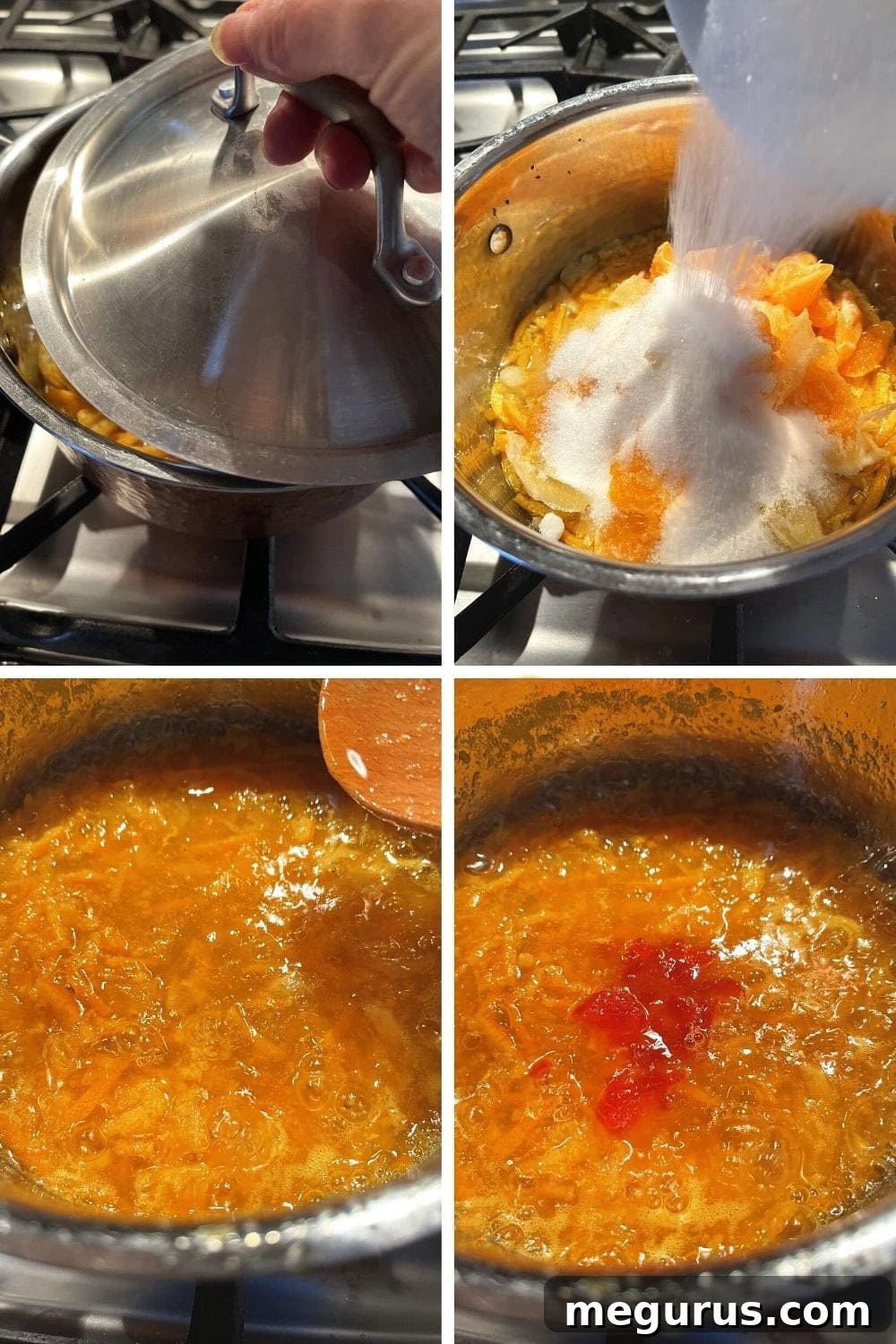
3. Introduce Sweetness and Simmer to Perfection: Once the peel is tender, it’s time to add the sugar and the chopped orange and lemon fruit (pitted). Stir everything together thoroughly to ensure the sugar dissolves completely. Increase the heat to bring the mixture to a rolling boil. This vigorous boil is where the magic happens! Allow it to boil for approximately 10-12 minutes. During this time, the natural pectin in the fruit, activated by the heat and sugar, will begin to thicken the marmalade. Midway through, you can use an immersion blender for a few quick pulses (or a potato masher) to gently break down the fruit flesh further, achieving your desired consistency without completely obliterating the peel slices. This step is particularly helpful for a smoother marmalade.
4. The Cold Plate Test: This traditional method is the most reliable way to determine if your marmalade is perfectly set. Before you begin cooking, place a small plate in your freezer. When you suspect the marmalade is ready, spoon a small amount of the hot liquid onto the chilled plate. Let it cool for 30-60 seconds, then gently push your pinky finger through it. If the surface wrinkles and your finger leaves a distinct line that doesn’t immediately flow back together, your marmalade is done! If it’s still too runny, continue boiling for another minute or two and re-test. This method ensures a soft, natural set without overcooking and caramelizing the bright orange flavors.
5. Jar and Store: Once the marmalade passes the cold plate test, remove it from the heat. If using, stir in any optional add-ins like cherries. Carefully spoon the hot marmalade into a clean, dry jar. Leave about a quarter-inch of headspace. Allow it to cool, uncovered, for about 15 minutes before placing the lid loosely on top. Once fully cooled, tighten the lid and refrigerate. This small batch yields about 1.5 cups, perfect for enjoying fresh!
Achieving the Perfect Marmalade Set: Tips and Troubleshooting
One of the most common concerns when making marmalade is whether it will set correctly. This recipe is designed to leverage the natural pectin in oranges and lemons, offering a beautiful, soft set without additional pectin. Here’s a deeper dive into the setting process and how to troubleshoot if things don’t go exactly as planned.
Understanding the “Cold Plate” Test
As detailed in the step-by-step guide, the cold plate test is your most reliable indicator. The science behind it is simple: chilling a small amount of marmalade quickly mimics the eventual cooling and setting of the entire batch. When the marmalade wrinkles, it signifies that the pectin-sugar-acid network has gelled sufficiently to create a set. This is a far more accurate method for this specific recipe than relying solely on a thermometer.
Why Not a Thermometer to 220°F?
While many jam and jelly recipes call for cooking to 220°F (104°C), we avoid this temperature for this particular marmalade. Our experience shows that reaching 220°F can lead to a dark, overly thick, and caramelized marmalade, potentially masking the bright, fresh orange flavors we aim for. With this small-batch method and the specific orange-sugar ratio, a temperature around 212°F (100°C – boiling point) is often sufficient when combined with a successful cold plate test. The goal is a perfect soft set derived from natural pectin, not a firm, jello-like consistency often achieved with added pectin or prolonged cooking.
What if My Marmalade Didn’t Set?
Don’t despair! Even if your marmalade turns out a bit runnier than ideal, it’s far from wasted:
- Continue Cooking: If you test it and it’s clearly too runny, simply return the pot to a boil and cook for another 2-3 minutes, then re-test on a new cold plate. Sometimes, just a little more time is all it needs.
- Culinary Uses: A runnier marmalade is still incredibly flavorful. It makes an excellent syrup for pancakes, waffles, or ice cream. Stir it into yogurt, oatmeal, or use it as a glaze for poultry or fish. It can also be incorporated into dressings or marinades.
- Pectin Boost (Last Resort): If you truly desire a firmer set after multiple attempts, you could try dissolving a small amount of powdered pectin (following package directions for a small batch) in a little water, adding it to the marmalade, and boiling for another minute before re-testing. However, this recipe is designed to work without it.
Adjusting for Desired Chunky or Smooth Texture
- For Chunky Marmalade (Thick-Cut): Simply cut your orange and lemon peel into wider slices at the initial preparation stage. The larger pieces will retain their form, creating a marmalade with more substantial texture.
- For Smoother Marmalade: After the initial boil and sugar dissolution, use an immersion blender more extensively. A few extra pulses will break down the peel and fruit flesh further, resulting in a silkier, less chunky spread. Be careful not to over-blend if you still want some discernible pieces of peel.
Storage and Creative Ways to Enjoy Your Marmalade
Once your delicious small-batch orange marmalade is made, knowing how to store it and exploring various serving ideas will help you get the most out of your homemade creation.
How Long Will It Keep?
- Refrigeration: This small-batch marmalade, stored in a clean, airtight jar, will keep beautifully in the refrigerator for up to 3 months. However, it’s so delicious, it’s unlikely to last that long!
- Freezing: Yes, you can freeze marmalade! Transfer it to a freezer-safe container, leaving about half an inch of headspace to allow for expansion. Frozen marmalade will maintain its quality for up to a year. Thaw in the refrigerator before use.
- Canning/Preserving for Longer Term: While this recipe focuses on a quick, no-canning method, you can process this marmalade for longer-term pantry storage using traditional water bath canning techniques. However, as canning processes require specific safety protocols and equipment, it’s always best to consult a reputable canning guide or expert for proper instructions to ensure food safety and quality.
Beyond the Toast: Creative Uses for Orange Marmalade
While a classic spread on toast or scones is always a winner, your homemade orange marmalade is incredibly versatile:
- Breakfast Booster: Stir into oatmeal, yogurt, or cottage cheese. Dollop onto pancakes, waffles, or French toast.
- Baking & Desserts: Use as a filling for tarts, cakes, or thumbprint cookies. Swirl into muffin batter or serve alongside cheesecakes and ice cream. It also makes a fantastic glaze for fruit tarts.
- Savory Pairings: Orange marmalade adds a delightful sweet-tart dimension to savory dishes. It’s superb as a glaze for roasted chicken, duck, or pork. The original article mentions a salmon recipe – and indeed, it makes a fantastic glaze for baked or grilled salmon! Whisk it into salad dressings or use it in marinades for a citrusy kick.
- Cheese Boards: A spoonful of vibrant orange marmalade is a wonderful accompaniment to sharp cheeses, crackers, and crusty bread on a charcuterie board.
- Cocktails: A small amount can be shaken into cocktails for a unique citrus twist.
Making your own orange marmalade is a rewarding experience that yields a truly special treat. With this easy, small-batch recipe, you can enjoy the bright, zesty flavors of homemade marmalade whenever the craving strikes, without the fuss. Happy cooking!
Get the Recipe: Quick and Easy Small-Batch Orange Marmalade
Pin This
Leave a Review
Ingredients
- 10 1/2 oz (300 g) mandarin oranges, such as Halo or Satsuma, about 2 large *see Notes
- 1 cup (240 ml) water
- 1/2 medium lemon, *see Notes
- 7 oz (200 g) white sugar, about 1 cup
- 1/4 cup chopped cherries or dried cranberries, optional
Instructions
-
Before you start, take a small plate and pop it in your freezer. We will use it later to test our marmalade.
-
Peel the orange and set the peel on a cutting board. Set the orange pieces aside for now. Get your sharpest knife and cut the peel into small slices. You can make them smaller, for a less chunky marmalade or larger for a chunky marmalade. Do try to make them all the same size, whichever way you go. I like a thin slice about 3/4-1-inch long.
-
Using a sharp vegetable peeler, remove the peel from 1/2 a lemon, trying your best to get just the yellow and little of the white. Slice the lemon peel thinly and add to your orange slices. Cut the lemon in half and set the peeled half lemon aside with the peeled oranges for now.
-
Add the sliced orange and lemon peel to a large saucepan (not aluminum or cast iron). Add the water and bring mixture to a boil over medium heat. Reduce heat to low, cover the pot with a lid and simmer for 20 minutes. **Check the pot after about 15 minutes to make sure there is still enough liquid in the pot. If not, add a bit more.
-
Meanwhile, chop the orange by cutting across the equator of the oranges and breaking into smaller pieces, checking for and discarding any pits you might find. Place the orange pieces into a bowl (to keep the juices contained). Chop the half lemon, removing and discarding any pits. Add to the bowl with the orange pieces.
-
Remove lid when peel has simmered. Add the white sugar and the chopped orange and lemon flesh to the pot. Increase heat to High and stir until mixture comes to a boil and sugar is dissolved. Allow mixture to boil, stirring only once or twice, for 8 minutes. At this point, use a few pulses with an immersion blender in the pot (or a potato masher), to break up the orange flesh a bit more, for a smoother marmalade. Just a couple of pulses are needed, as you don’t want to break down the peel slices. Continue boiling for about 2-4 minutes more, then start testing the liquid on the cold plate from your freezer. *Total boiling time should be about 10-12 minutes in most cases.
-
To test the marmalade: Drop a bit of the liquid from the marmalade on the cold plate and run your pinky finger through it. If the liquid runs back together and fills in the line you just made with your finger, you need to cook longer. If the line remains and the edges of the line look “set” or a bit wrinkled, your marmalade is ready!
-
Remove pot from heat. Stir in any add-ins at this point. If you notice any chunks of the white pith from the lemon still visible, you can spoon out and discard. Let marmalade stand in the pot while you get your jar ready. Clean a 2-cup/16oz jar and dry. If you have a wide-mouth funnel, that would be handy here, too. Spoon marmalade into clean jar and let stand, uncovered, for 15 minutes, then place lid on jar (not too tight) and refrigerate.
-
Marmalade will keep well refrigerated for up to 3 months or can also be frozen for up to one year.
Notes
That said, you can use any type of orange with this marmalade. Please refer to the Ingredient Notes above the Recipe Card for more details. Whatever type of orange you start with, you will want to use 300g of orange and 200g of white sugar. The 3:2 ratio of orange to sugar will ensure a nice set to the marmalade.
The lemon is added just for a little more citrus flavour and adds a bit more natural pectin to the mix. If you don’t have or want to use lemon, you can just omit and use oranges only.
Tried this recipe?If you enjoyed this recipe, please leave a star rating and comment. It helps others to find it!
Save or Share This Recipe
If you loved this Quick & Easy Small-Batch Orange Marmalade recipe, don’t forget to save it for later or share it with friends and family!