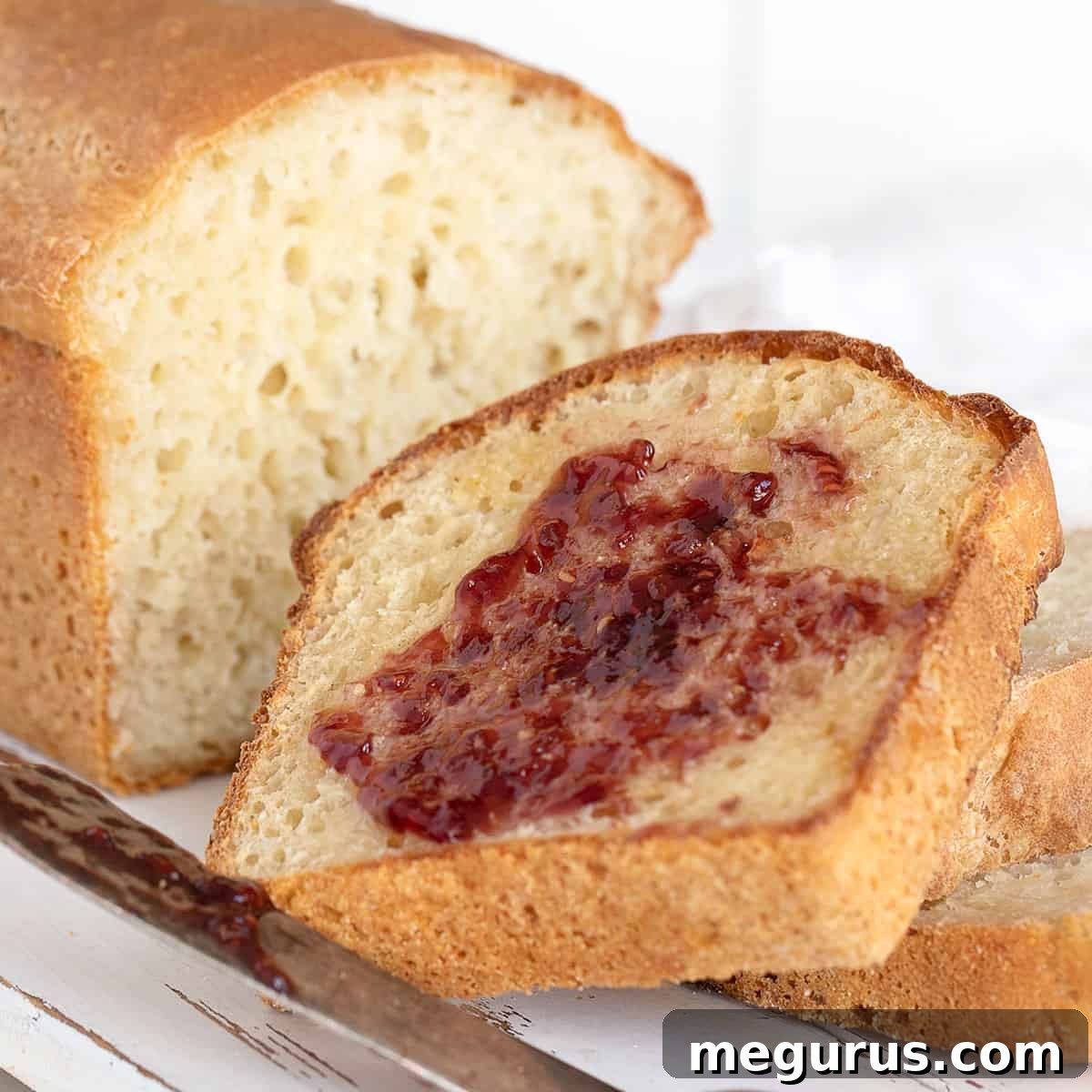
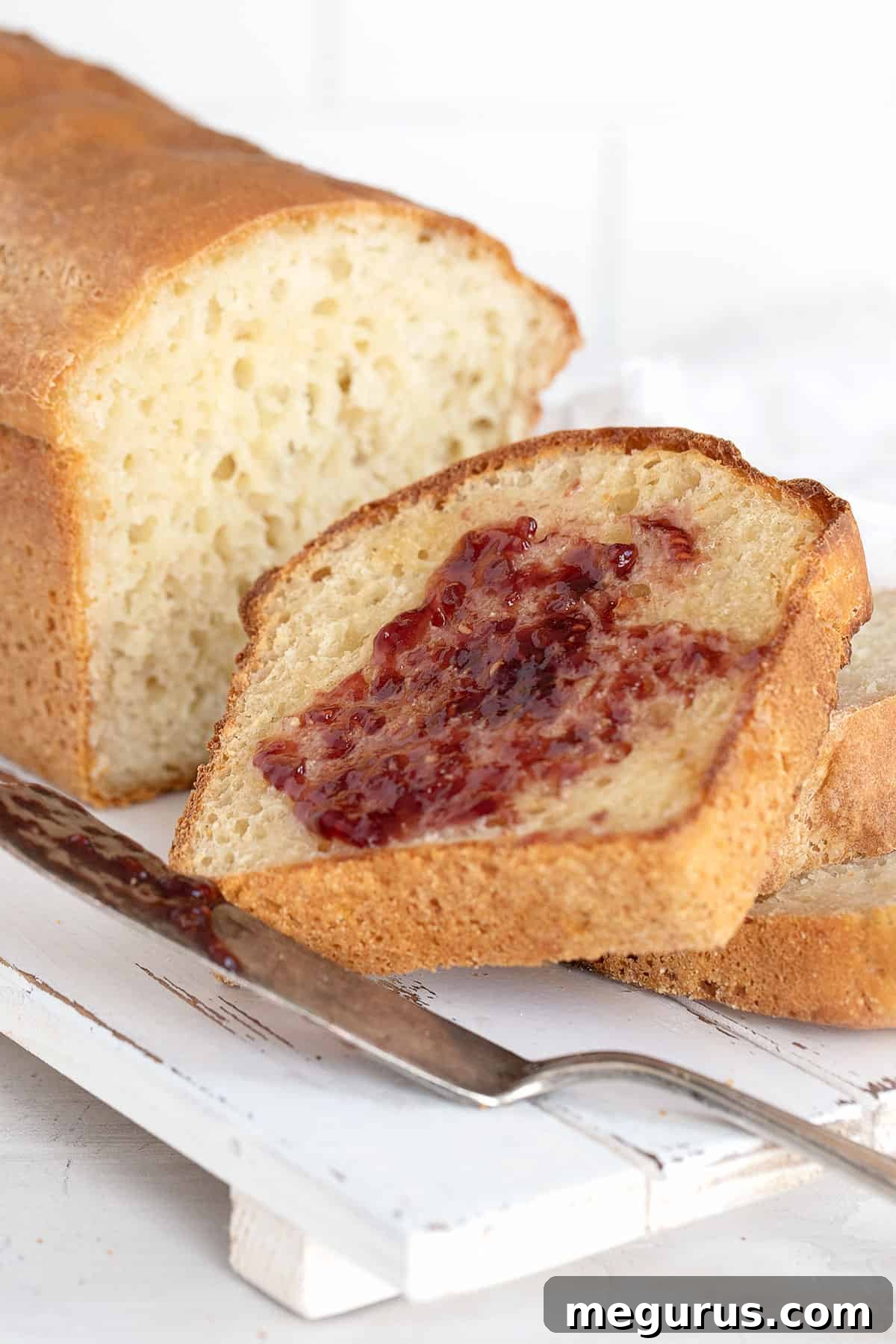
Discover the joy of baking with this incredibly easy, no-knead English Muffin Bread recipe! A true family favorite, this delightful loaf boasts the iconic nooks and crannies that are perfect for cradling melted butter, jam, or your favorite sandwich fillings. Forget the hassle of traditional bread making; this batter bread requires no kneading at all, making it an ideal choice for beginner bakers and seasoned pros seeking a simple, rewarding project.
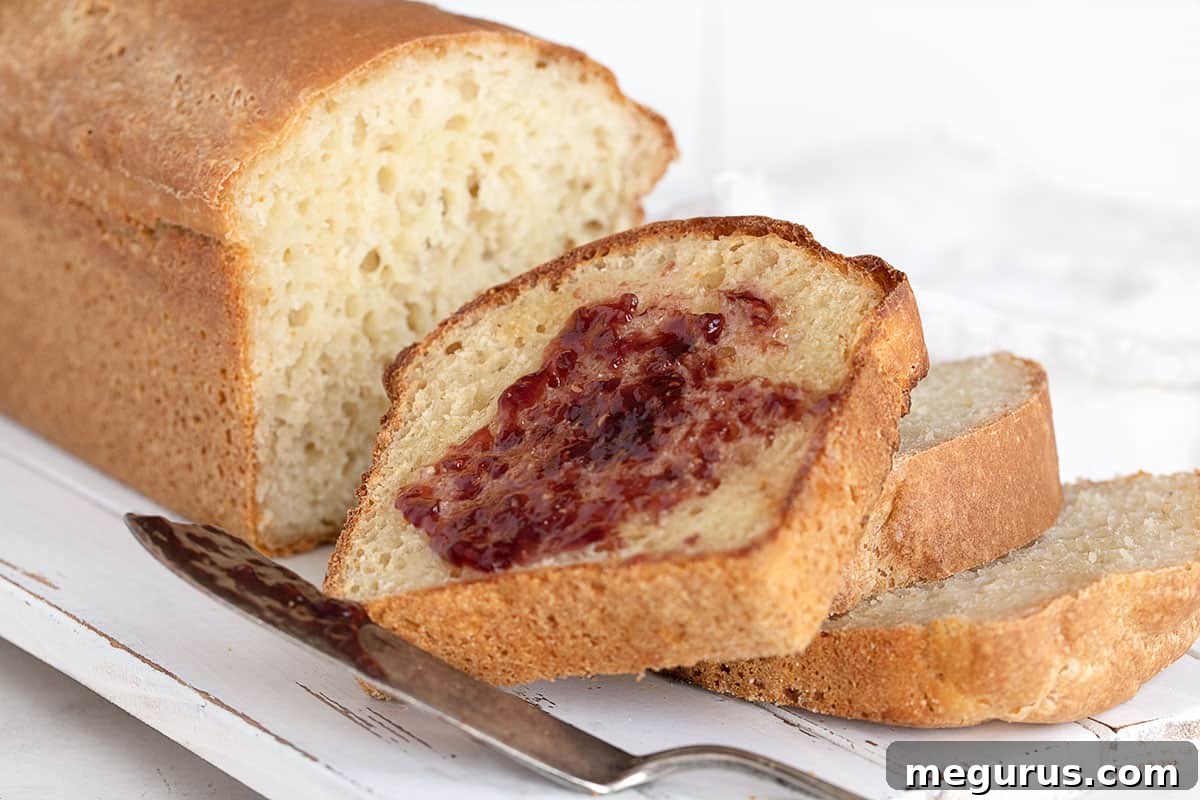
There’s something uniquely satisfying about homemade bread, and this English Muffin Bread delivers all the charm with none of the fuss. Its tender crumb and distinct texture are reminiscent of classic English muffins, but in a convenient loaf form. Imagine waking up to the aroma of freshly baked bread, then toasting a thick slice to golden perfection. The signature “nooks and crannies” are not just for show; they’re tiny pockets designed to absorb every bit of melted butter, creating a truly irresistible bite. This versatile bread is fantastic as a simple toast with jam, the foundation for a hearty breakfast sandwich, or even elevated into a gourmet grilled cheese.
The beauty of this recipe lies in its simplicity. As a “batter bread,” the dough is more liquid than a traditional kneaded dough, eliminating the need for extensive mixing or physical kneading. This makes it a quick and accessible option for anyone looking to enjoy fresh bread without a long, complicated process. Whether you’re new to baking or just short on time, this English Muffin Bread recipe promises delicious results with minimal effort.
Essential Ingredients for Your English Muffin Bread
Crafting the perfect English Muffin Bread relies on a few key ingredients, each playing a vital role in achieving its unique flavor and texture. Here’s a detailed look at what you’ll need and some considerations for substitutions.
- Milk: For the richest flavor and best texture, we recommend using 2% or whole (3%) milk. The fat content contributes to a tender, moist crumb. While this recipe hasn’t been specifically tested with non-dairy alternatives, many plant-based milks (like almond or soy milk) could potentially work. However, be aware that the final texture of the loaf might differ slightly. If experimenting with non-dairy milk, opt for unsweetened varieties.
- Yeast: You have flexibility here! Both Active Dry yeast and regular Instant yeast (such as SAF Brand yeast) will yield excellent results. Active Dry yeast usually requires activation in warm water and a pinch of sugar first, while Instant yeast can often be mixed directly with the dry ingredients. Ensure your yeast is fresh and active for a proper rise. Rapid rise or quick-rising yeast varieties have not been tested with this particular recipe and may behave differently, potentially resulting in a faster but less flavorful rise or a compromised texture.
- Baking Soda: This is the secret ingredient for those beloved “nooks and crannies”! Baking soda reacts with acidic ingredients (like the yeast fermentation byproducts) and heat to create carbon dioxide gas, which forms tiny air pockets throughout the bread. Do not skip the baking soda, as it’s crucial for achieving the characteristic open, bubbly texture of English muffins. For best results, dissolve it in a tablespoon of water just before adding it to the dough, ensuring even distribution.
- Cornmeal: This ingredient serves a dual purpose. Firstly, dusting your loaf pan with cornmeal acts as a natural non-stick barrier, preventing the bread from adhering to the pan. Secondly, and perhaps more importantly, it imparts that authentic English muffin feel and appearance to the crust, adding a subtle texture and flavor that truly elevates the bread. Don’t underestimate its contribution to the overall experience!
- All-Purpose Flour: Standard all-purpose flour is perfect for this recipe. Ensure you measure it correctly, typically by spooning it into a measuring cup and leveling it off, rather than scooping directly from the bag, which can compact the flour and lead to a denser loaf.
- Sugar: A small pinch of white sugar is added not just for a hint of sweetness, but primarily to feed the yeast, encouraging it to activate and multiply, leading to a robust rise.
- Salt: Fine sea salt is recommended for its pure flavor and even distribution. If using table salt, you might want to slightly reduce the amount as it can be saltier by volume due to its finer grain. Salt is vital for enhancing flavor and controlling yeast activity.
- Water: Warm water is essential for activating the yeast. Ensure it’s within the specified temperature range (105-115°F for Active Dry, slightly less for Instant if activating) to avoid killing the yeast (if too hot) or failing to activate it (if too cold).
How to Make Homemade English Muffin Bread: A Step-by-Step Guide
Baking this English Muffin Bread is a straightforward process, designed for ease and enjoyment. Follow these visual steps and detailed instructions to create your perfect loaf. Remember, the key to success is patience and following the warm-up and rising times!
- Activate the Yeast: In a large mixing bowl (or the bowl of a stand mixer fitted with a paddle attachment), gently sprinkle the yeast and a pinch of sugar over the warm water (105-115°F). Stir lightly and allow it to sit undisturbed for about 5 minutes. This step “proofs” the yeast, ensuring it’s active and ready to make your bread rise. You should see a foamy layer forming on the surface.
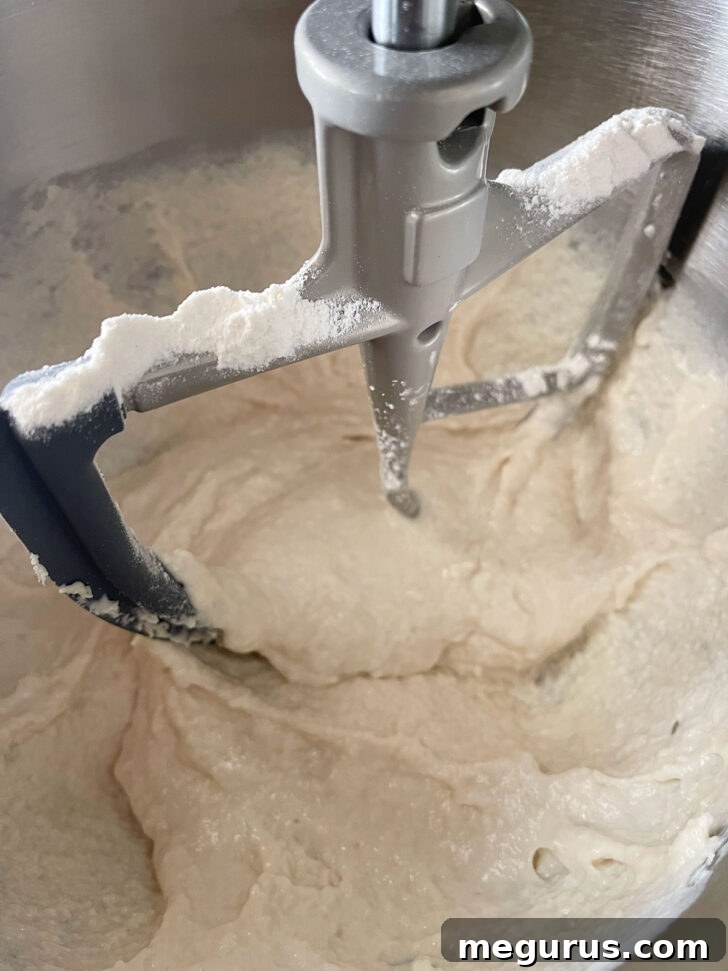
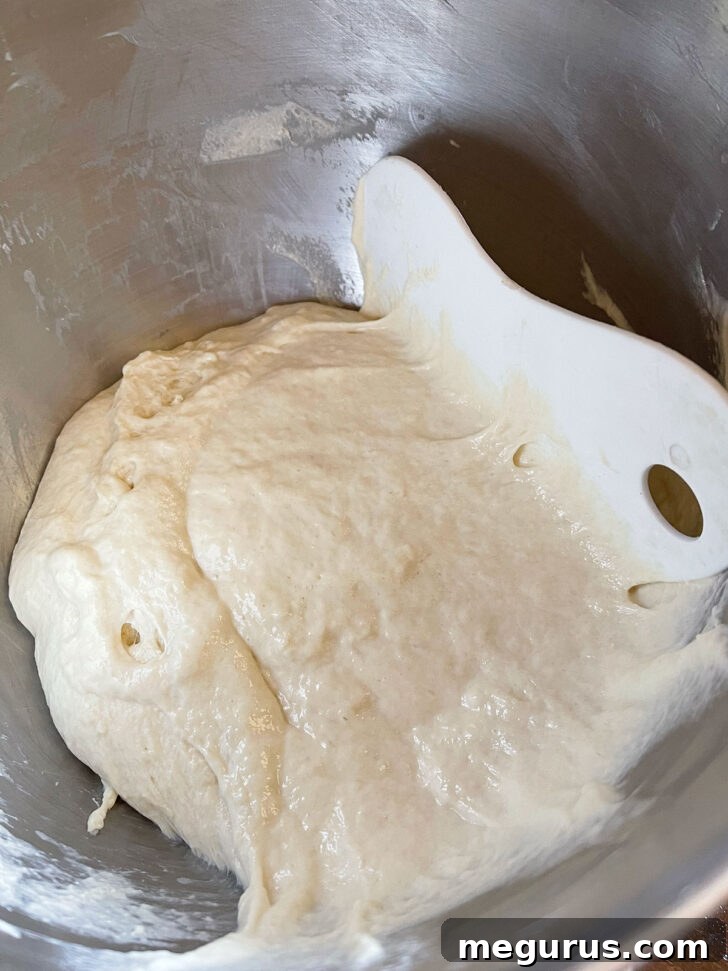
- Combine Wet and Dry Ingredients: To the activated yeast mixture, add the warm milk (around 100°F) and the salt. Give it a good stir. Gradually add the all-purpose flour, one cup at a time, mixing thoroughly after each addition. Whether you’re using a large wooden spoon for hand mixing or the paddle attachment on low speed for a stand mixer, aim for a smooth, well-blended batter. This usually takes about 30 strong strokes by hand or approximately one minute on low speed with a mixer. The dough will be very wet and sticky, more like a thick batter than a traditional bread dough.
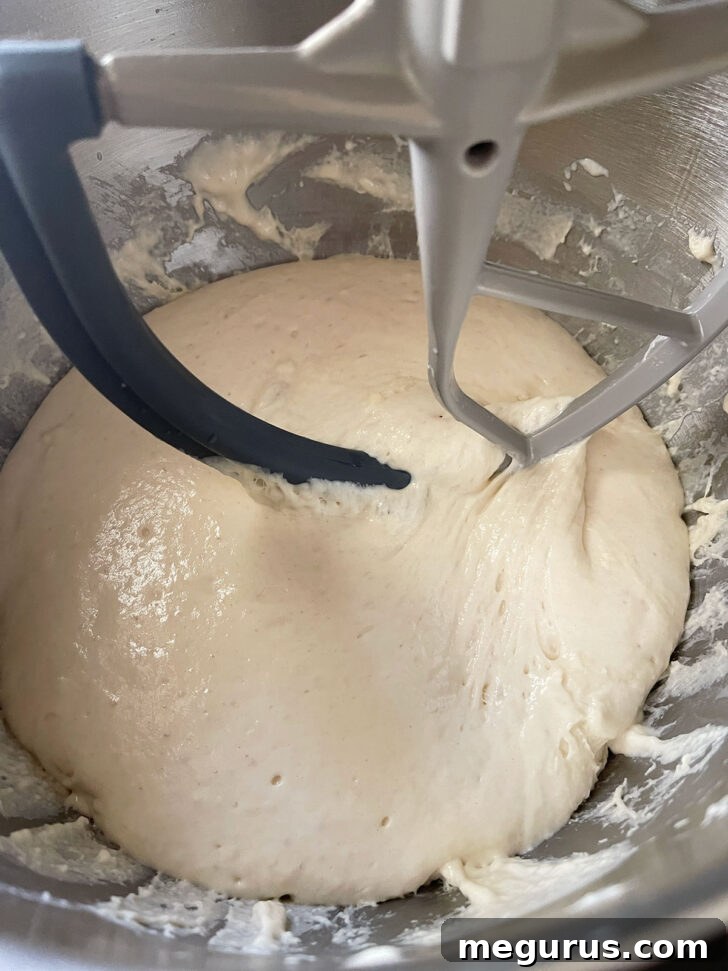
- First Rise: Once the dough is mixed, cover the bowl tightly with plastic wrap. Place it in a warm, draft-free location in your kitchen. Let the dough rise for approximately 1 hour. During this time, the yeast will work its magic, and the dough should noticeably double in size and become quite bubbly. If using a stand mixer, you can simply remove the paddle attachment, cover the mixer bowl, and let it rise there.
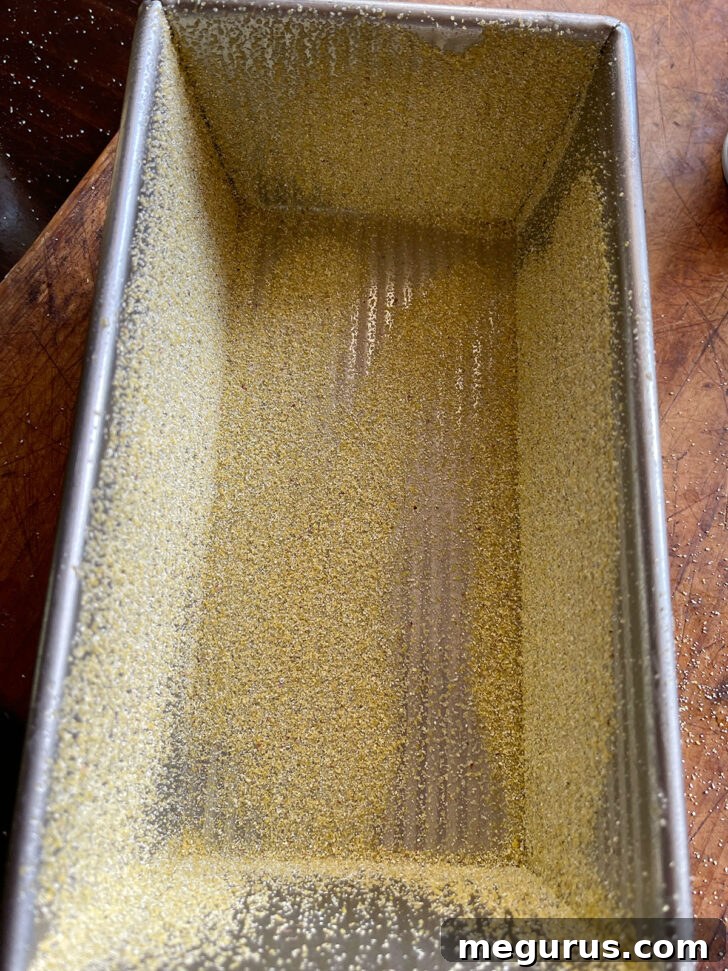
- Prepare the Loaf Pan(s): While the dough is rising, get your loaf pan ready. A standard 9×5-inch loaf pan works well, but you can also use a 4×12-inch or 4×13-inch pan for a longer loaf, or even two 8×4-inch pans for two smaller loaves. Spray the pan(s) generously with non-stick cooking spray, ensuring full coverage, or grease it thoroughly with butter or oil. Then, liberally sprinkle cornmeal onto the bottom and sides of the pan. Tilt and rotate the pan to ensure the cornmeal evenly coats all interior surfaces. Place the prepared loaf pan(s) onto a baking sheet, which will make it easier to transfer to the oven and catch any potential drips.
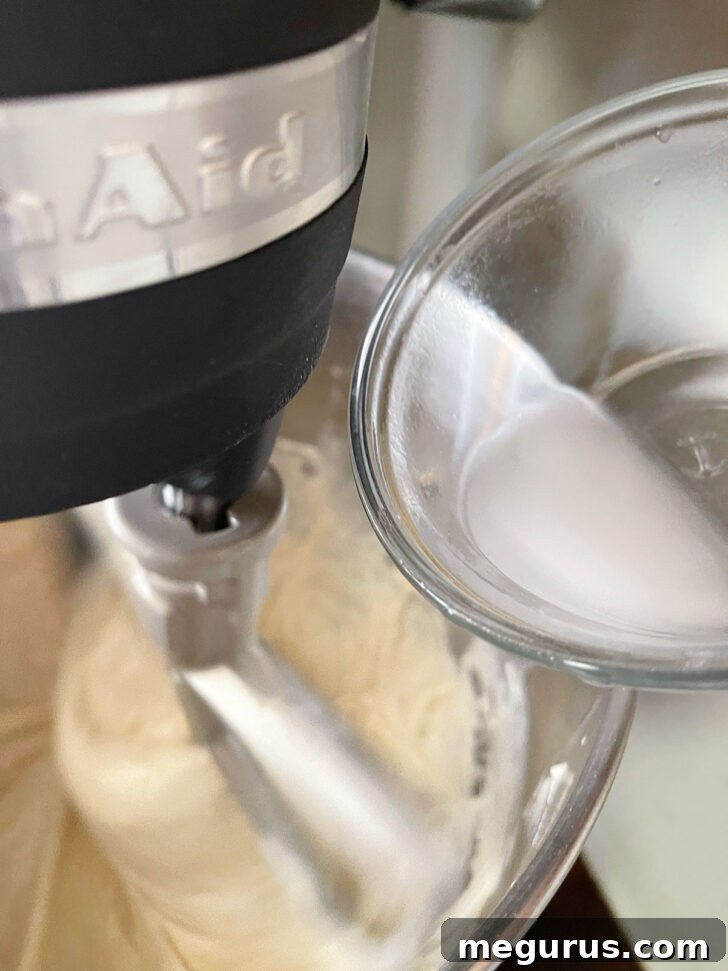
- Incorporate Baking Soda: After the first hour of rising, the dough should be light, airy, and very bubbly. If mixing by hand, gently stir down the batter-like dough. Then, add the baking soda dissolved in one tablespoon of water. Stir this mixture thoroughly into the dough until well combined. This step is crucial for developing the signature bubbly, open texture. If using a stand mixer, reattach the paddle and mix the dissolved baking soda into the dough on low speed for about 30-45 seconds.
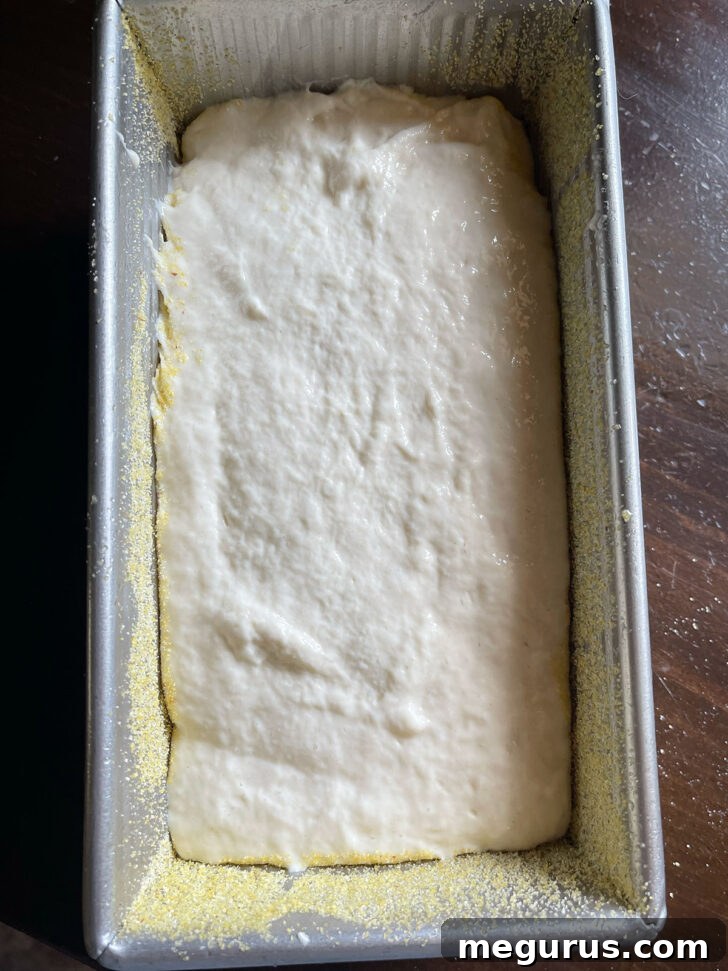
- Transfer to Pan: Preheat your oven to 375°F (190°C) with the oven rack positioned in the center. Carefully pour or spoon the batter into the prepared loaf pan(s), dividing it evenly if using two smaller pans. A silicone bowl scraper or a sturdy spatula is excellent for this task, as the dough will be quite sticky. If necessary, use your spatula to gently push the batter into the corners of the pan to ensure an even loaf shape. The pan will be approximately half to two-thirds full.
- Second Rise (Proofing): Allow the dough to rest and rise in the prepared pan. This second rise is much quicker than the first. Keep a close eye on it; as soon as the dough rises to about ½-inch from the top edge of the pan on the sides, it’s ready to bake. This can happen quickly, especially with the 4×12-inch pan (often just 10-15 minutes). For a 9×5-inch pan, it might take 30-35 minutes. If using two 8×4-inch pans, aim for no longer than 30 minutes. Do not let it over-rise, as this can affect the final texture.
- Bake to Golden Perfection: Immediately place the loaf pan(s) (still on the baking sheet) into the preheated oven. Bake for 40-60 minutes. The exact baking time will vary depending on your oven and the size/material of your loaf pan. Look for a deep golden-brown crust, and the loaf should pull away cleanly from the sides of the pan. For an accurate measure of doneness, an instant-read thermometer inserted into the center of the loaf should register at least 200°F (93°C). If the top of the loaf begins to brown too quickly, you can loosely tent it with a piece of aluminum foil to prevent over-browning. For example, a 4×12-inch dark-colored pan often takes around 50 minutes, while a 9×5-inch pan might be done closer to 40 minutes.
- Cooling: Once baked, remove the loaf from the oven. Immediately and carefully remove the bread from the loaf pan and transfer it to a wire cooling rack. Lay the loaf on its side to cool completely. Cooling on its side helps prevent the center of the moist loaf from sinking in due to its own weight. It’s crucial to allow the bread to cool entirely before slicing; this allows the internal structure to set and ensures the best texture for toasting.
Baking Success: Expert Tips for English Muffin Bread
- Baking Soda Streaks: Don’t be alarmed if you notice brownish streaks within your bread! This is a completely harmless chemical reaction from the baking soda and is nothing to worry about. To minimize its appearance, simply ensure you stir the dissolved baking soda mixture into the dough thoroughly, allowing for even distribution.
- Toasting Time: This English Muffin Bread is exceptionally moist, which is part of its charm! However, this moisture means it may take a little longer to toast to a golden crisp compared to drier breads. Be patient with your toaster; the extra few minutes are well worth it for that perfect crunch and warm, buttery interior.
- Don’t Over-Rise (Second Rise): The second rise in the loaf pan is critical. Over-proofing can lead to a loaf that collapses in the oven or has a coarse, crumbly texture. Watch it closely and bake as soon as it reaches the specified height.
- Oven Temperature Consistency: Ensure your oven is fully preheated before putting the bread in. An accurate oven thermometer can be very helpful to verify your oven’s true temperature, as slight variations can impact baking time and texture.
- Serving Suggestions: Beyond butter and jam, consider using this bread for open-faced sandwiches, a savory egg and cheese breakfast, or even as a base for homemade bruschetta. Its sturdy yet porous texture holds up beautifully to various toppings.
Making Ahead, Storing, and Freezing Your English Muffin Bread
The delicious extra moisture in this English Muffin Bread means it’s incredibly tender and flavorful, but also that it doesn’t have as long of a shelf life at room temperature compared to drier bread varieties. Proper storage is key to enjoying your homemade loaf for as long as possible.
Storage at Room Temperature
While fresh is best, you can store your English Muffin Bread at room temperature for 2-3 days. To keep it from drying out, wrap the cooled loaf tightly in plastic wrap or aluminum foil, or place it in an airtight bread bag or container. Keep it in a cool, dry place away from direct sunlight.
Refrigeration for Extended Freshness
If you want to extend the life of your loaf beyond a few days, refrigeration is an excellent option. Wrap the bread tightly and store it in the refrigerator for up to a week. Be aware that refrigeration can sometimes alter the texture of bread, making it a bit firmer. However, a quick toast will typically bring back its delightful softness and crisp exterior.
Freezing for Long-Term Storage
For even longer enjoyment, English Muffin Bread freezes beautifully! This is a fantastic way to ensure you always have a homemade loaf on hand. Here’s how to freeze it effectively:
- Cool Completely: Ensure the loaf is entirely cool before freezing. Freezing warm bread can lead to ice crystals and a soggy texture upon thawing.
- Slice (Optional but Recommended): For convenience, consider slicing the loaf before freezing. This allows you to pull out just a few slices at a time, toast them from frozen, and enjoy without having to thaw the entire loaf.
- Wrap Properly: Wrap the whole loaf or individual slices tightly in plastic wrap, then an additional layer of aluminum foil or a freezer-safe bag. This double layer helps prevent freezer burn and keeps the bread fresh.
- Label: Don’t forget to label your package with the date.
Frozen English Muffin Bread will maintain its quality for up to 3 months. When you’re ready to enjoy it, you can:
- Thaw Whole Loaf: Transfer the wrapped loaf to the refrigerator overnight, or thaw at room temperature for a few hours. Once thawed, slice and toast as desired.
- Toast from Frozen: If sliced, simply pop the frozen slices directly into your toaster or toaster oven. They may require a slightly longer toasting time than fresh slices.
Having a frozen loaf on hand makes spontaneous breakfast toasts or sandwiches a breeze, bringing the warmth and comfort of homemade bread to your table with minimal fuss.
English Muffin Bread Recipe
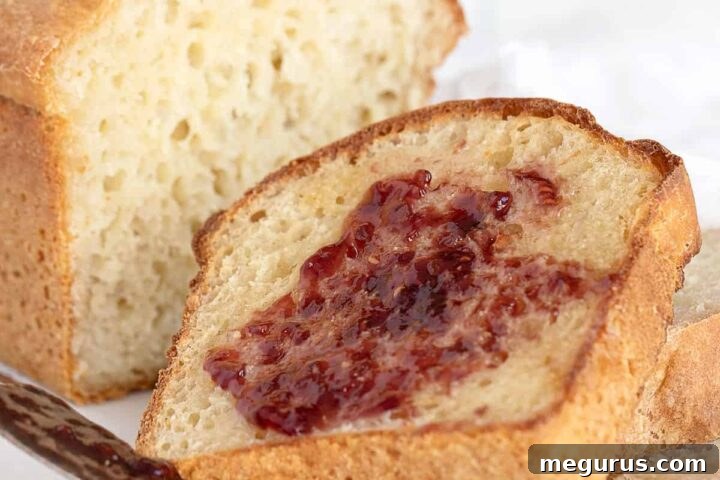
A long-time family favorite, this English Muffin Bread is perfect for toasting, with plenty of nooks and crannies to hold the melted butter. It’s also incredibly easy with no kneading required!
5 stars from 8 ratings
Pin This
Leave a Review
Prep Time: 15 mins
Cook Time: 1 hr
Rising Time: 1 hr 15 mins
Total Time: 2 hrs 30 mins
Yield: 16 servings
Ingredients
- 2 teaspoons dry active or instant yeast (not quick or rapid rise yeast)
- Pinch white sugar
- 1/2 cup water, warmed to 105-115° F.
- 1 3/4 cups milk, warmed to 100° F.
- 1 1/2 teaspoons fine sea salt (use a bit less for table salt)
- 3 1/4 cups all-purpose flour, spooned and leveled
- 1/2 teaspoon baking soda, dissolved in 1 Tablespoon water
- Cornmeal for dusting pans
Instructions
- In a large bowl or the bowl of a stand mixer fitted with a paddle attachment, sprinkle the yeast and sugar over the warm water. Stir and let stand for 5 minutes until foamy.
- Add the warm milk to the water and yeast mixture. Add the salt and mix in. With a large wooden spoon or the paddle attachment of a stand mixer running at low speed, add the flour 1 cup at a time, stirring the flour in after each addition. Stir until smooth and well-blended, about 30 strokes by hand or about a minute on low with a stand mixer.
- Cover the bowl with plastic wrap and place in a warm, draft-free place for about 1 hour. The dough should have doubled in size and be quite bubbly.
- Prepare a 9×5 loaf pan by spraying well with non-stick spray (or grease well). Sprinkle liberally with cornmeal on the bottom and sides of the pan. Place loaf pan onto a baking sheet and set aside. (Alternately, you can use a 4×12, 4×13 or two 8×4 loaf pans. The 8×4 will make two small/short loaves).
- At the end of the hour rise, gently stir down the batter-like dough and add the dissolved baking soda/water mixture. Stir the baking soda in well until completely combined. (This is responsible for the lovely bubble texture of the finished bread.)
- Preheat oven to 375°F (regular bake/not fan assisted), with the rack in the center of the oven.
- Pour or spoon the batter into the prepared loaf pan(s), dividing the batter evenly between the pans if using two. A silicone bowl scraper works really well for this job. If necessary, use a spatula to push the batter into the corners of the pan. The pan will be about 1/2 to 2/3 full.
- Allow dough to rest and rise in the pan until the dough rises to 1/2-inch from the top edge of the pan on the sides. This can happen quickly, especially if using the 4×12 pan (10-15 minutes), so don’t wander too far. As soon as the dough reaches that point, immediately put it in the oven. (A 9×5 loaf generally takes about 30-35 minutes for this rise. If using a 4×13 with tall sides or two 8×4 pans, let rise no longer than 30 minutes).
- Place loaf into preheated oven, on the baking sheet, and bake for 40-60 minutes or until an instant-read thermometer registers at least 200°F (93°C), or when the loaf is deep golden and pulls away from the side of the pan. (If at any point the loaf looks at risk of over-browning, place a sheet of aluminum foil loosely over the top of the loaves. My 4×12 dark-colored loaf pan takes about 50 minutes. A 9×5 pan is generally done around 40 minutes.)
- When done, remove from the oven, then immediately remove the loaf from the pan. Set to cool by laying them on their side on a wire rack (cooling on their sides prevents the center of the loaf from sinking in). Allow to cool completely before slicing for the best texture.
Notes
- The baking soda in the bread can sometimes cause brownish streaks in the dough if it isn’t mixed in well enough. It’s harmless and doesn’t affect the taste.
- Refer to the detailed instructions and tips above the recipe card for more guidance and step-by-step photos.
Cuisine: American, Canadian
Course: Bread
Author: Jennifer Maloney
Nutrition Information
- Serving: 1 serving
- Calories: 194 kcal
- Carbohydrates: 39 g
- Protein: 7 g
- Fat: 1 g
- Saturated Fat: 1 g
- Polyunsaturated Fat: 1 g
- Monounsaturated Fat: 1 g
- Cholesterol: 1 mg
- Sodium: 264 mg
- Potassium: 106 mg
- Fiber: 2 g
- Sugar: 1 g
- Vitamin A: 49 IU
- Vitamin C: 1 mg
- Calcium: 40 mg
- Iron: 2 mg
Tried this recipe?
If you enjoyed this recipe, please leave a star rating and comment. It helps others to find it!