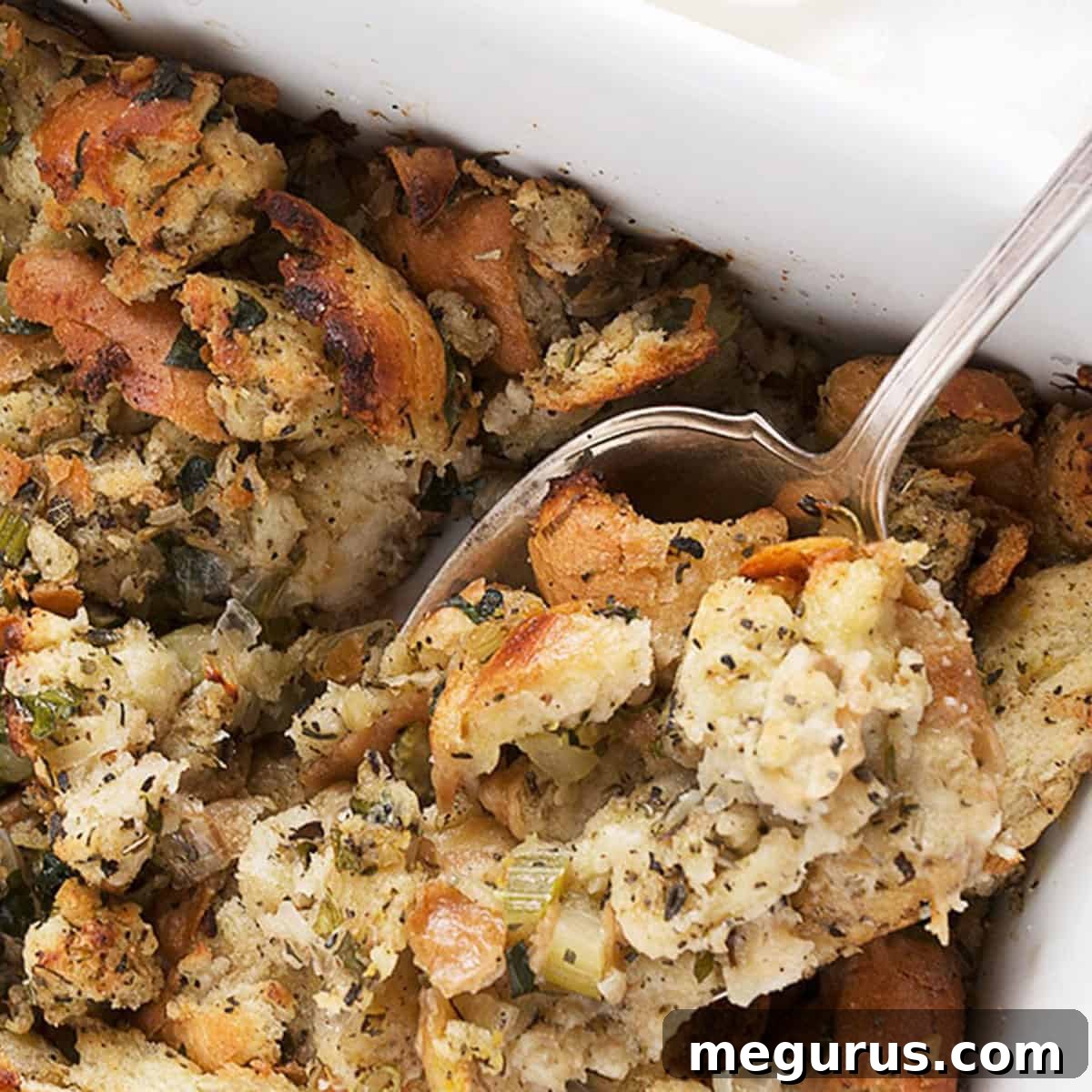
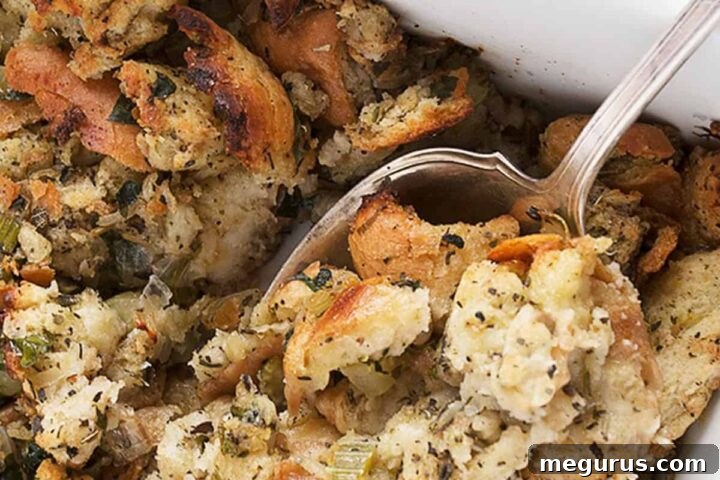
Prepare for your most delicious holiday feast yet with this **Classic Bread Stuffing Recipe**, featuring a convenient **Oven-Baked Stuffing Option**. Whether nestled inside your Thanksgiving or Christmas turkey or baked to golden perfection on its own, this recipe promises the ultimate comfort food experience.
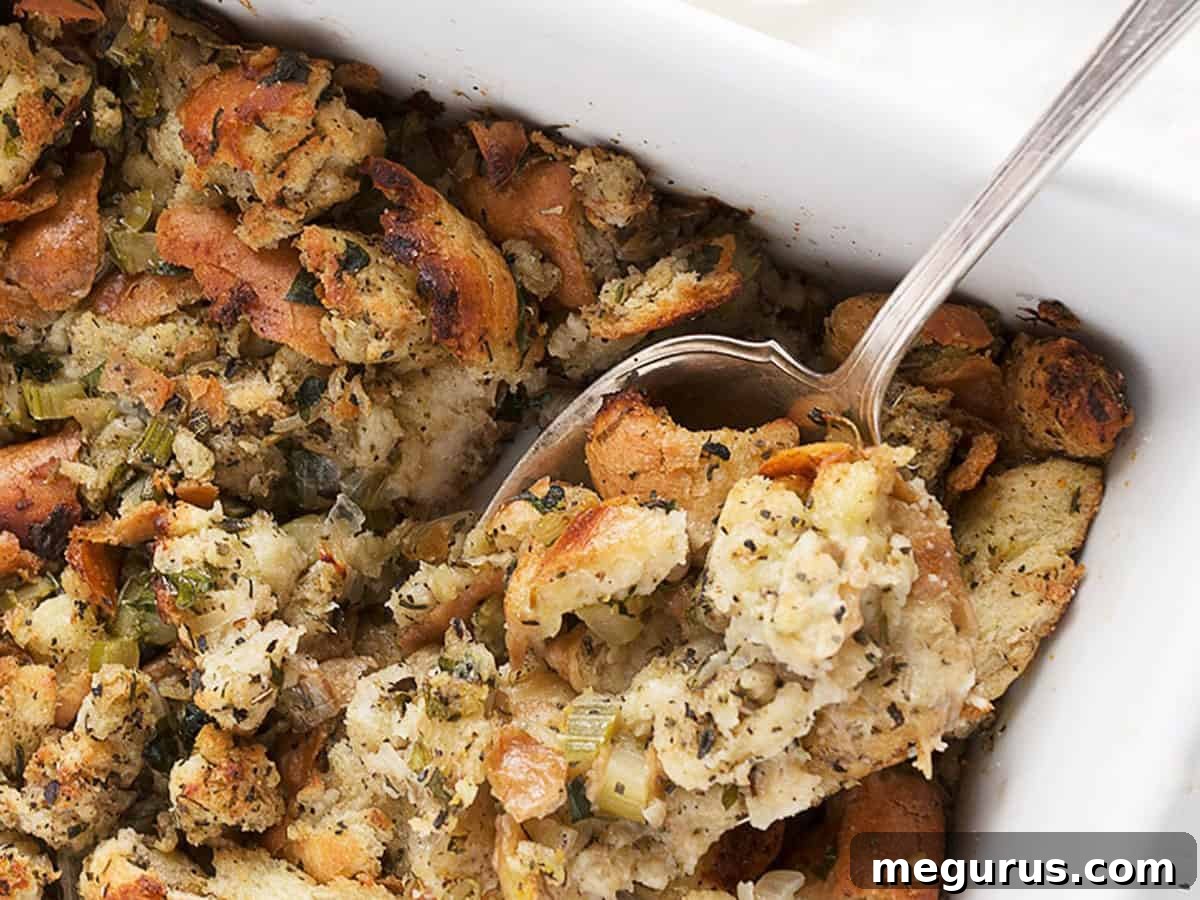
As the air chills and holiday preparations begin, few dishes evoke the warmth and tradition of festive gatherings quite like a hearty bread stuffing. With Canadian Thanksgiving just around the corner and other winter holidays on the horizon, I’m thrilled to share a timeless classic bread stuffing recipe that has graced our family table for many years. This isn’t just any stuffing; it’s a foundation for creating unforgettable holiday memories.
For decades, my personal preference has always been to cook stuffing inside the turkey. There’s an undeniable magic to bread stuffing that slowly bastes within the bird for hours, absorbing every savory drop of turkey essence. This method yields a stuffing that is incredibly moist, deeply flavorful, and often considered the “gold standard” by many culinary enthusiasts. The continuous infusion of turkey juices creates a rich, complex taste and a tender texture that is truly unparalleled.
However, despite the undisputed deliciousness of turkey-cooked stuffing, there are a few practical considerations that aren’t always ideal. These challenges often lead home cooks to seek alternative solutions for their holiday meal planning.
Firstly, the amount of stuffing you can fit inside a turkey is limited. Unless you’re roasting an exceptionally large bird, it can be challenging to prepare enough stuffing to adequately serve a sizable Thanksgiving or Christmas gathering. This often means making a second, separate batch anyway, which can complicate timing and consistency.
Secondly, while the interior of the turkey provides incomparable moisture, it often leaves us longing for those coveted crispy bits. The exposed portions of stuffing that peek out from the turkey, beautifully browned and slightly crunchy, are highly sought after. Many wish for more of this textural contrast in every bite.
And finally, even if you manage to produce enough stuffing for the main dinner, leftovers are often a rare commodity. The demand for that delightful stuffing means it’s usually the first dish to disappear, leaving little to enjoy with subsequent turkey sandwiches or leftover plates.
These considerations sparked an idea: could my beloved classic bread stuffing recipe be successfully adapted into a delectable **oven-baked stuffing** version? The goal was simple: to create more stuffing, ensure abundant crispy edges, and potentially simplify the holiday cooking process without sacrificing flavor. After several test batches, I’m genuinely delighted with the results. While the oven-baked version offers a distinct experience from its turkey-cooked counterpart – it doesn’t quite replicate the deep, turkey-infused moisture – it stands on its own as a truly delightful, crispy, and flavorful side dish. This year, I plan to prepare both, ensuring enough for everyone and satisfying all preferences!
Top Reader Tip for Enhanced Oven-Baked Stuffing!
Reader Barbara shared a fantastic tip that takes oven-baked stuffing to the next level: “One of the things I have learned … is to buy extra turkey wings and place them on top of the filled baking dish, cover with foil for the first 30 minutes, then remove the foil and finish baking. This method provides moisture and turkey flavor from the rendered wings, but also allows the edges to become crispy – so you tend to get similar to ‘turkey stuffed’ stuffing and crispy bits. Delicious!!!” This brilliant hack is perfect for infusing that desirable turkey flavor into your standalone stuffing, making it even closer to the traditional experience.
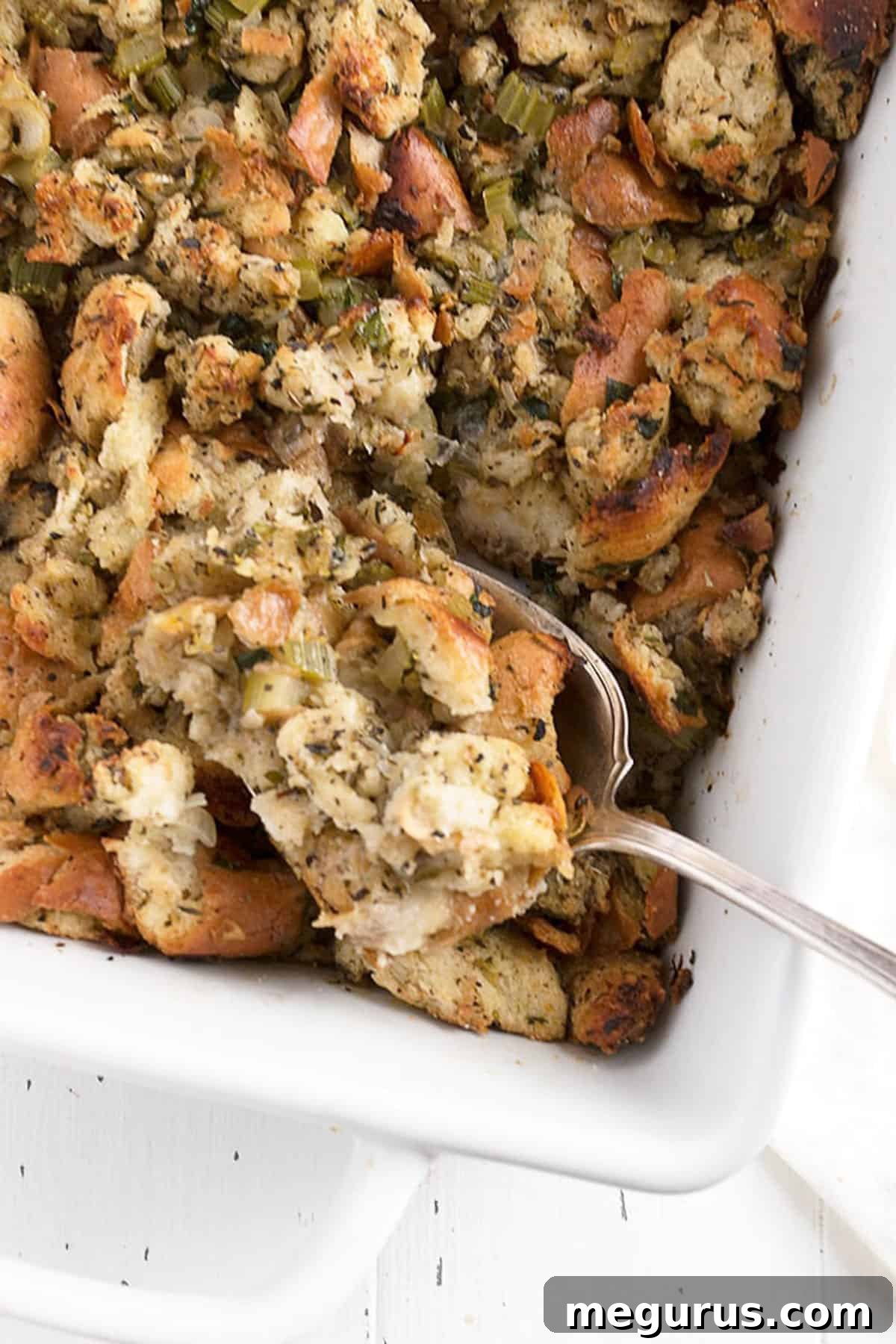
Essential Ingredients and Smart Substitutions for Your Perfect Stuffing
Crafting the perfect stuffing starts with high-quality ingredients and knowing how to adapt them to your taste and dietary needs. Here’s a breakdown of the core components and suggested substitutions:
- Butter: Whether you opt for salted or unsalted butter, remember that its rich flavor is crucial for this recipe. If you’re preparing the oven-baked version, be mindful of the overall salt content, especially since most commercial stocks already contain sodium. Using a low-sodium broth is an excellent way to maintain control over the final seasoning, allowing the true flavors of the herbs and vegetables to shine.
- Aromatic Vegetables (Onion, Celery, Fennel): These form the aromatic base of your stuffing.
- Onion & Celery: Finely chopped, they provide foundational flavor and texture. Cook them until tender to ensure they meld seamlessly into the bread mixture.
- Fennel: With its distinct anise-like flavor, fennel adds a sophisticated depth. If you’re a fan, use half celery and half fennel. If fennel isn’t to your liking, simply use an extra cup of finely chopped celery for a more classic profile. Other aromatic additions could include finely diced carrots for a hint of sweetness or sautéed mushrooms for an earthy umami note.
- Bread: The Heart of Your Stuffing: While theoretically any bread can be used, a basic white bread is often preferred for its neutral flavor profile, allowing the herbs and butter to take center stage. I highly recommend seeking out unsliced white loaves from a bakery; they are easier to tear into irregular pieces, which creates more pockets for flavor absorption and textural variety. A French loaf also works wonderfully. The key is to use *dry* bread. If you can find “day-old” bread, it’s ideal as it naturally has less moisture. Why dry bread? Fresh, moist bread can result in a mushy, dense stuffing, whereas drier bread soaks up the butter and stock beautifully, leading to a lighter, more flavorful texture.
- Herbs: The Soul of the Stuffing: The right blend of herbs elevates stuffing from a simple side to a star dish.
- Dried Herbs: For the primary herb blend (sage, savory, marjoram, thyme), dried herbs are generally preferred in stuffing as their flavors are more concentrated and less prone to burning during the long cooking process. Always buy fresh dried herbs at the beginning of the holiday season for the best potency and aroma. Bulk food stores are great for this, allowing you to purchase just the right quantities.
- Fresh Parsley: Fresh parsley, added at the end, provides a bright, herbaceous note and a pop of color. However, for the oven-baked version, dried parsley might be a better choice as it holds up well to baking without scorching.
- Other Herbs: Feel free to experiment with other complementary herbs like a touch of fresh rosemary for a piney note or a pinch of dill for a unique twist, always considering the overall flavor balance.
- Stock or Broth (for Oven-Baked Stuffing): This liquid gold provides essential moisture and flavor for the oven-baked version. Turkey stock or broth is the ideal choice if you can find or make it, as it naturally complements the holiday meal. Chicken broth is an excellent and readily available alternative. As previously mentioned, always opt for a low-sodium variety to manage the saltiness of your finished dish, especially if you’re using salted butter.
Expert Recipe Tips for Stuffing Success
Achieving stuffing perfection involves a few simple yet crucial steps. These tips will help you create a dish that’s both flavorful and perfectly textured:
- Invest in Fresh Dried Herbs: This cannot be overstated. The potency and aroma of your dried herbs will significantly impact the final taste of your stuffing. Old, stale herbs from the back of the pantry will yield a flat flavor. Make a point to purchase fresh, high-quality dried sage, savory, marjoram, and thyme specifically for your holiday cooking. In many regions, bulk food stores like Bulk Barn in Canada are fantastic resources for buying just the right amount, ensuring freshness without waste.
- The Importance of Dry Bread: This is arguably the most critical tip for stuffing texture. Using fresh, soft bread will result in a dense, gummy stuffing that lacks the desired light and absorbent qualities. Dry bread, on the other hand, soaks up the savory butter and broth mixture beautifully, leading to a moist interior with potential for crispy edges. I prefer using whole, unsliced white bread loaves or French bread with a softer crust, as they tear easily into uneven pieces.
- How to Dry Your Bread:
- Air Drying (Recommended): Simply tear your chosen bread into approximately 1-inch by 1-inch pieces and spread them out on a large baking sheet or clean counter. Let them air dry for several hours, or even overnight, tossing occasionally to ensure even drying. This natural method yields the best results.
- Quick Oven Drying: If time is short, you can quickly dry your bread cubes in the oven. Spread them evenly on a baking sheet and bake in a 300°F (150°C) oven for about 5-10 minutes, or until lightly toasted and dry to the touch. Be careful not to let them brown too much.
- “Day Old” Bread is Your Friend: Always check the “day old” bread rack at your grocery store first! Not only is it often half-price, but it’s already perfectly dryer than freshly baked bread, saving you a step.
- Scaling Your Recipe: This recipe is designed to generously stuff a 15-16 lb. turkey or fill a 9×13-inch casserole dish for the oven-baked version. If you have a larger turkey or are hosting a very big crowd, you’ll want to scale the recipe up accordingly. For smaller gatherings or turkeys, you can easily halve the recipe.
Brilliant Top Tip for Vegetarian Guests!
One of the fantastic advantages of preparing an **oven-baked stuffing** is the flexibility it offers for accommodating diverse dietary needs. You can easily make a portion or a full batch of delicious **vegetarian bread stuffing** by simply swapping out the chicken or turkey broth for a high-quality vegetable broth. This ensures that everyone at your holiday table can enjoy this classic side dish, without compromising on flavor or festivity. Consider making a dedicated small batch just for your vegetarian guests to avoid cross-contamination.
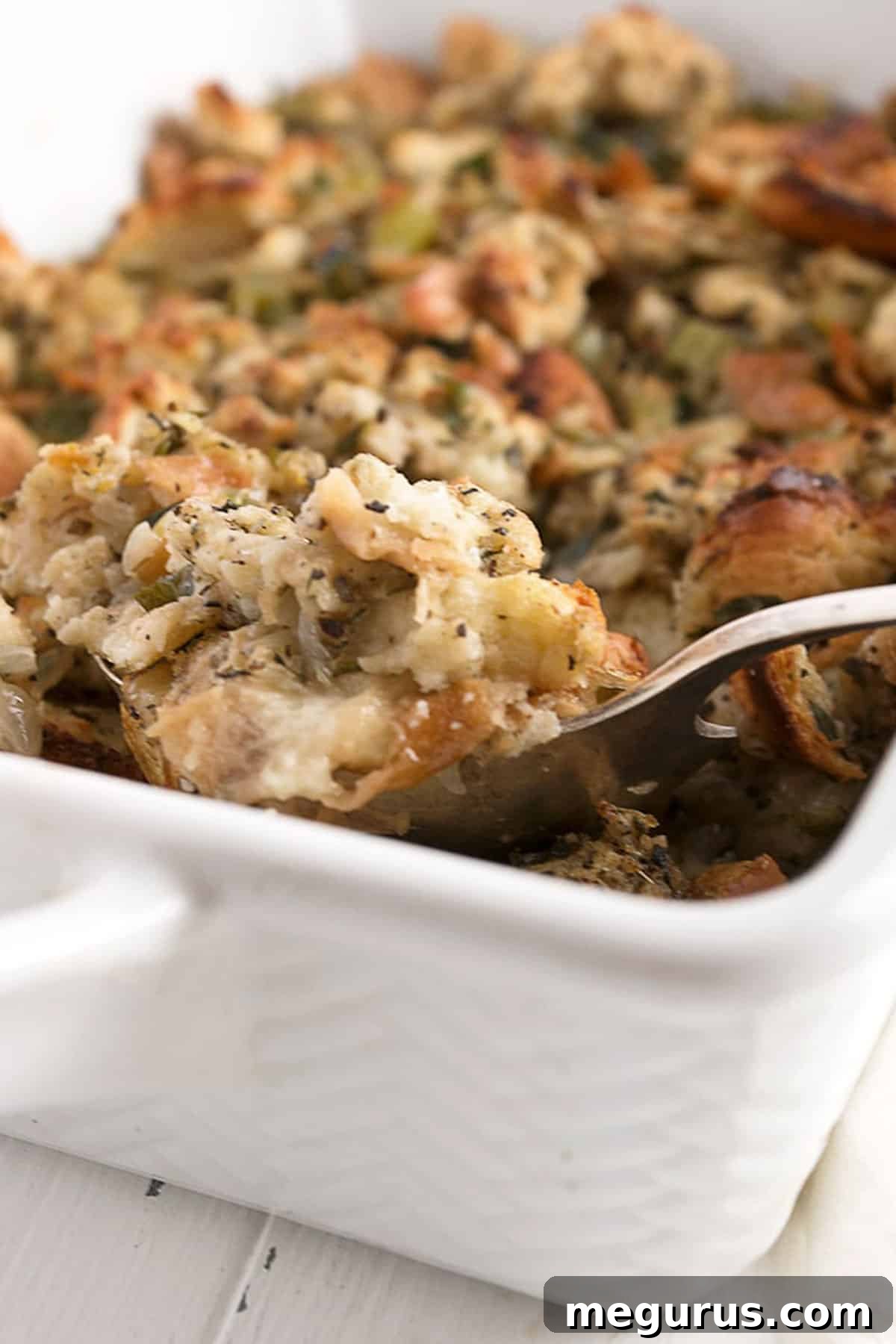
Crucial Food Safety for Turkey Stuffing
Food safety is paramount when preparing stuffing, especially when it comes into contact with poultry. The warm, moist environment of uncooked stuffing provides an ideal breeding ground for bacteria. Adhering to these guidelines will ensure a safe and delicious meal for everyone:
- Immediate Cooking is Key: Once your stuffing mixture is prepared and the wet and dry ingredients are combined, it must be cooked immediately. Whether you’re stuffing it into a turkey or baking it in a casserole dish, do not let the unbaked mixture sit at room temperature for an extended period.
- Safe Make-Ahead Steps: To streamline your holiday cooking, you can prepare the sautéed butter, onion, and celery mixture ahead of time. Cook the vegetables and spices as directed, then let the mixture cool completely before refrigerating it in an airtight container, separate from the bread cubes. When you’re ready to make the stuffing, gently re-warm the butter mixture (as the butter will solidify in the fridge) before combining it with the bread and fresh parsley, and then proceed to cook immediately.
- Internal Temperature for Stuffed Turkey: If you choose to stuff your turkey, it is absolutely essential to ensure the internal temperature of the stuffing reaches 165°F (74°C). Use a reliable meat thermometer inserted into the deepest part of the stuffing to verify. This temperature ensures that any potential bacteria are destroyed.
- Remove Stuffing Promptly from Turkey: As soon as the turkey is removed from the oven, immediately scoop all the stuffing out of the cavity. Do not allow it to sit inside the turkey as it cools, as residual heat can create a dangerous temperature zone where bacteria can multiply. Serve the stuffing right away or follow proper refrigeration guidelines.
- Internal Temperature for Oven-Baked Stuffing: Similarly, oven-baked stuffing should also reach an internal temperature of 165°F (74°C). The stuffing should go directly into the preheated oven after mixing and be fully baked.
- Making Oven-Baked Stuffing Ahead: For added convenience, you can prepare and fully bake your oven-baked stuffing a day in advance. Once baked, allow it to cool completely, then cover it tightly with aluminum foil and refrigerate. To reheat, remove it from the refrigerator for about 15 minutes to take off the chill, then place the foil-covered dish in a 350°F (175°C) oven for 15-20 minutes, or until thoroughly warmed through. If it appears a bit dry, you can drizzle a small amount of extra chicken or turkey stock over it before reheating.
Get the Recipe: Classic Bread Stuffing with Oven-Baked Option
Pin This
Leave a Review
Ingredients
Stuffing For Turkey (or base for Oven-Baked):
- 3/4 cup butter
- 2 1/2 cups onion, finely chopped
- 1 cup celery, finely chopped
- 1 cup fennel, finely chopped (or additional 1 cup celery)
- 4 teaspoons dried sage
- 1 teaspoon fine salt
- 1 teaspoon dried savory
- 1 teaspoon dried marjoram
- 1 teaspoon pepper
- 1/2 teaspoon dried thyme
- 14 cups white bread, cubed or torn into about 1-inch x 1-inch pieces (ensure bread is dry)
- 1 cup fresh parsley, chopped, or 4 Tbsp dried parsley for oven-baked stuffing
Additional Ingredients for Oven-Baked Stuffing:
- 2 cups chicken or turkey stock or broth, low-sodium recommended (or vegetable broth for vegetarian option)
- 1-2 Tablespoons butter, cut into small pieces, for topping
Instructions
-
Tear bread into small, roughly 1-inch by 1-inch pieces and place them in a very large mixing bowl. *If using fresh bread, spread the pieces on a baking sheet and let them sit on the counter for several hours (or overnight), tossing occasionally, to dry out. Alternatively, quickly dry them in a 300°F (150°C) oven for 5-10 minutes.
-
In a large skillet, melt the butter over medium heat. Add the chopped onions, celery, fennel (if using), salt, pepper, and all the dried herbs (sage, savory, marjoram, thyme). Sauté for 10 to 15 minutes, stirring occasionally, until the vegetables are tender. Taste a piece of celery to ensure it has softened. Remove the pan from the heat and allow the mixture to cool for a few minutes.
-
Pour the warm butter and vegetable mixture over the dried bread cubes in the large bowl. Add the chopped fresh parsley (or dried parsley if making oven-baked). Now, it’s time to get your hands involved! Gently but thoroughly mix and “squeeze” the mixture with your hands to ensure the butter and seasonings are evenly distributed and absorbed by every piece of bread. Break up any larger bread chunks if necessary.
-
Immediately use the stuffing to fill your turkey cavity, or follow the instructions below for the oven-baked version. *For food safety, stuffing must be cooked immediately after mixing. You can prepare and fully bake the oven-baked version ahead of time and reheat, but do not prepare the raw mixture ahead without baking.
-
For Oven-Baked Stuffing: Preheat your oven to 350°F (175°C), using a regular bake setting (not convection). Lightly grease a 9×13-inch casserole dish. Spread the warm stuffing mixture evenly into the prepared dish. Drizzle 1 cup of the chicken or turkey stock over the top. Cover the dish tightly with aluminum foil and bake for approximately 30 minutes. Remove from the oven, drizzle the remaining 1 cup of stock over the stuffing, and dot with the small pieces of butter. Return the dish to the oven, uncovered, and continue baking for an additional 25-30 minutes, or until the top is golden brown and deliciously crispy. For an extra-crispy finish, you can briefly place it under a hot broiler for a few minutes, watching carefully to prevent burning.
-
If stuffing your turkey: Ensure that the internal temperature of the stuffing reaches 165°F (74°C) before the turkey is removed from the oven. As soon as the turkey is out, promptly remove all stuffing from the turkey cavity. Do not let it cool inside the bird. Serve immediately, or cover and refrigerate any leftovers within two hours.
-
For reheating oven-baked stuffing: Remove the refrigerated stuffing from the fridge for about 15 minutes to allow it to come slightly to room temperature. Cover it tightly with aluminum foil and heat in a 350°F (175°C) oven until thoroughly warmed through, typically about 20 minutes. If the stuffing appears dry, drizzle a little extra chicken or turkey stock over it before reheating to restore moisture.
Notes
Tried this recipe?If you enjoyed this recipe, please leave a comment and review! It helps others to find it and enjoy it too!