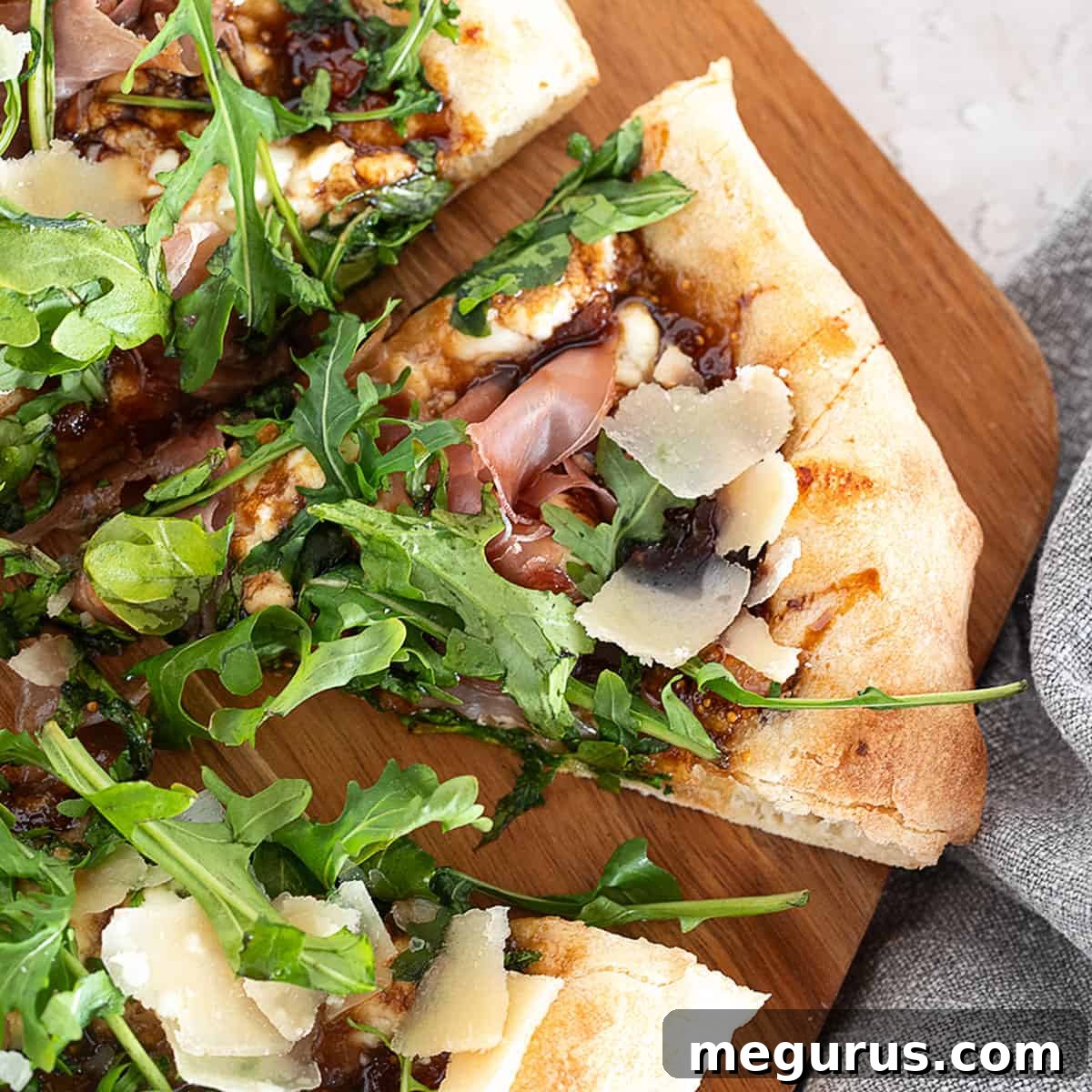
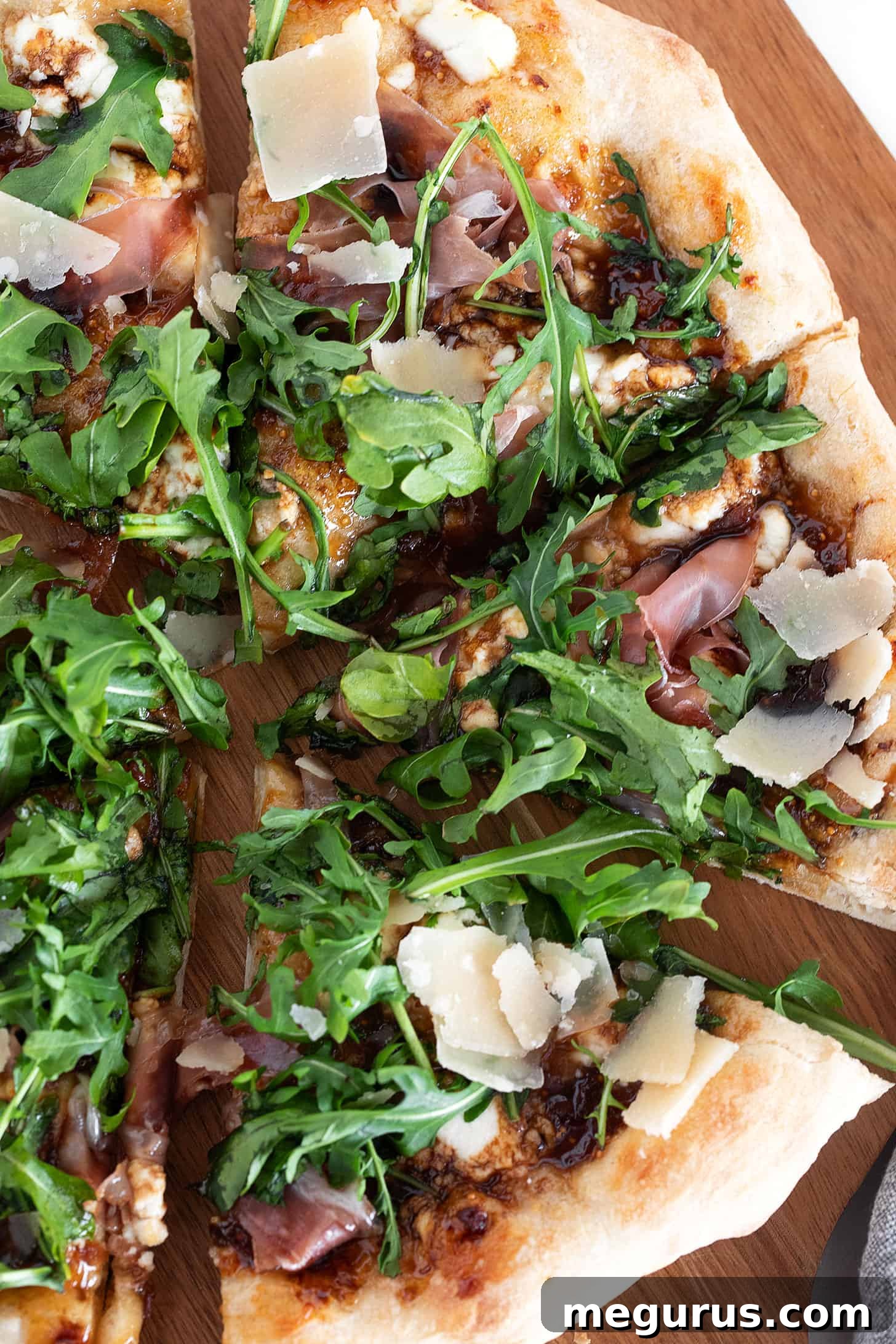
Transform your ordinary pizza night into an extraordinary culinary experience with this exquisite sweet and salty prosciutto white pizza. Often affectionately dubbed the “Fig and Pig” pizza, it harmoniously blends the rich flavors of fig jam, creamy goat cheese, savory prosciutto, peppery fresh arugula, and delicate Parmesan shavings. This gourmet creation offers a symphony of tastes that promises to delight your palate and become a new favorite in your home.
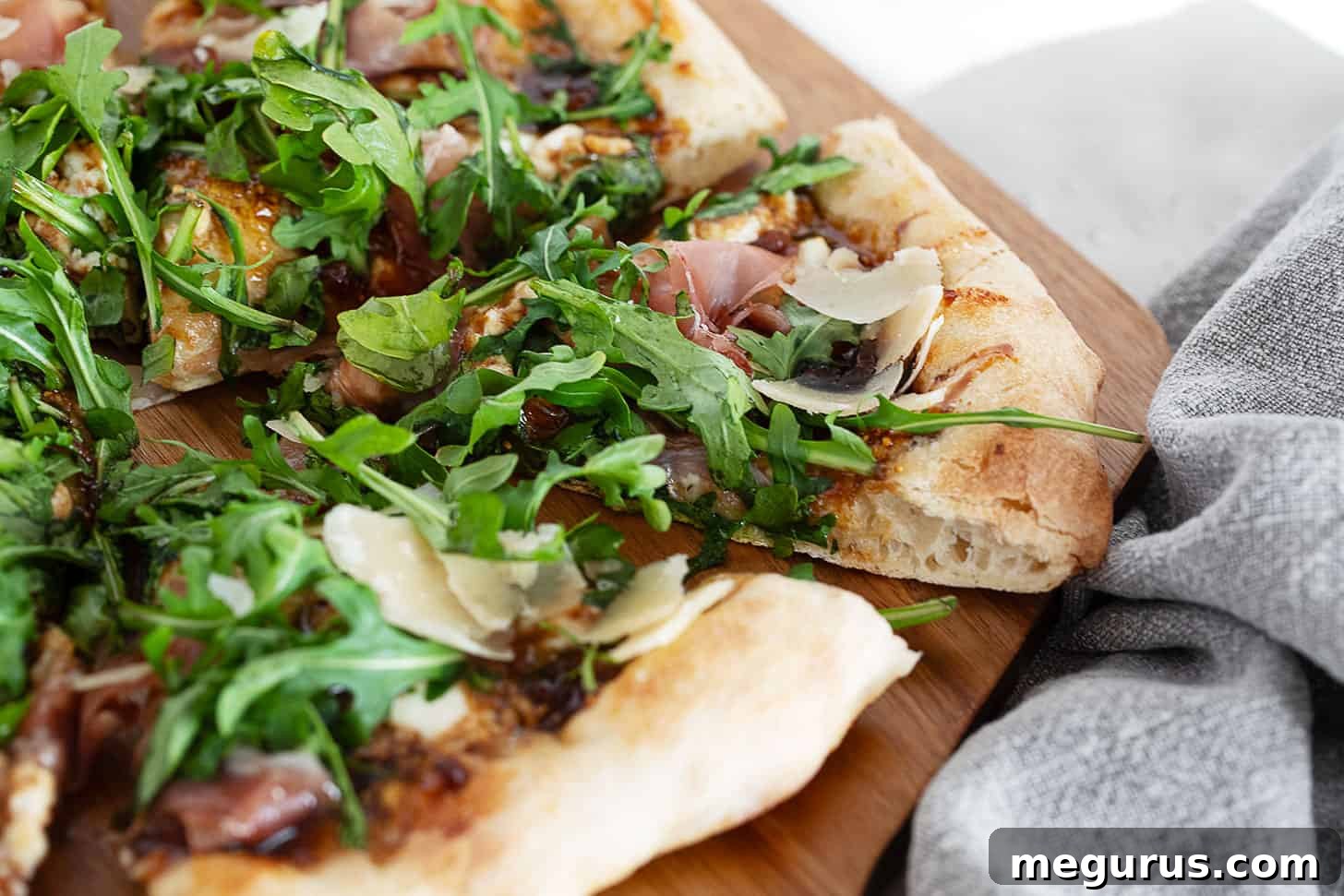
Discover the joy of crafting gourmet-style pizza right in your own kitchen! This prosciutto pizza transcends the sum of its individual components, creating an unforgettable flavor journey. With a luscious base of sweet fig jam, complemented by the tangy creaminess of goat cheese, the irresistible saltiness of thinly sliced prosciutto, the fresh bite of peppery arugula, and the nutty finish of Parmesan, every slice is a true feast for the senses. Whether you opt for the convenience of store-bought pizza dough or embark on the rewarding journey of making your own, the result will be a masterpiece that rivals your favorite pizzeria.
This white pizza brilliantly marries sweet and savory profiles, allowing you to recreate restaurant-quality flavors from the comfort of your home. If you’re a connoisseur of white pizzas and adore the delicate balance of sweet and savory, you might also enjoy exploring other delightful options like our Honey Goat Cheese Pizza, which offers a similar, yet distinct, flavor adventure.
Key Ingredients and Smart Substitutions for Your Fig and Pig Pizza
Crafting the perfect Fig and Pig pizza begins with understanding its core components. Here’s a closer look at the essential ingredients and versatile substitutions to ensure a delicious outcome every time:
- Pizza Dough: The foundation of any great pizza. You have options here: save time by picking up a fresh or frozen ball of pizza dough from your local grocery store. These are commonly sold in 1 to 1.5 lb balls, which typically yield one large (14-16 inch) pizza or two smaller (10-12 inch) pizzas. For an unparalleled texture and flavor, consider making your own homemade pizza dough. We’ll share our favorite no-knead recipe later in the tips section for those seeking an authentic, chewy crust.
- Fig Jam: This sweet and slightly earthy spread forms the unique base of our pizza. Seek out small jars of fig jam, often found near specialty cheeses or the preserve aisle in well-stocked grocery stores. A bright orange lid is often a tell-tale sign of a quality brand. If fresh fig jam is elusive, you can easily find recipes online to make your own from dried figs, ensuring you don’t miss out on this crucial flavor. For a slight variation, a high-quality apricot or plum jam could offer a similar sweet counterpoint, though fig jam remains the star.
- Goat Cheese (Chèvre): Beloved for its creamy texture and distinct tangy flavor, goat cheese elevates this pizza with its unique character. It melts beautifully, creating pockets of rich, piquant goodness. If traditional goat cheese isn’t to your liking, goat feta offers a similar tang in a crumbly format, providing a different textural experience. Other creamy, mild cheeses like ricotta or even a soft Brie could be interesting substitutes, though they will alter the pizza’s signature profile.
- Prosciutto: This Italian dry-cured ham brings a delicate saltiness and a tender, melt-in-your-mouth texture that perfectly complements the sweetness of the fig jam. You’ll typically find pre-packaged slices in the deli meat section of your grocery store, or ask for freshly sliced prosciutto at the deli counter for superior quality. Its robust flavor is best enjoyed thinly sliced.
- Balsamic Glaze: A thickened, syrupy reduction of balsamic vinegar, this glaze adds a sweet, tart, and deeply savory finish to the pizza. Look for it in small bottles alongside balsamic vinegar; Nonna Pia’s is a widely available and highly-regarded brand. If you can’t find it, creating your own is simple: gently simmer balsamic vinegar with a touch of brown sugar until it reduces to a thick, glossy syrup. This homemade version often tastes even better!
- Fresh Arugula: A generous handful of fresh arugula, added after baking, introduces a vibrant peppery kick and a welcome freshness that cuts through the richness of the other ingredients. Its slightly bitter notes provide a perfect balance.
- Shaved Parmesan: A final flourish of nutty, salty Parmesan cheese adds another layer of umami and sophistication. Use a vegetable peeler to create delicate shavings for an elegant presentation and burst of flavor.
Crafting Your Fig and Pig Pizza: A Step-by-Step Guide
Creating this gourmet pizza at home is simpler than you might imagine. Follow these detailed steps to achieve a perfectly balanced and utterly delicious result. For a visual overview, refer to the images below, and find the complete ingredient list and full instructions in the Recipe Card further down.
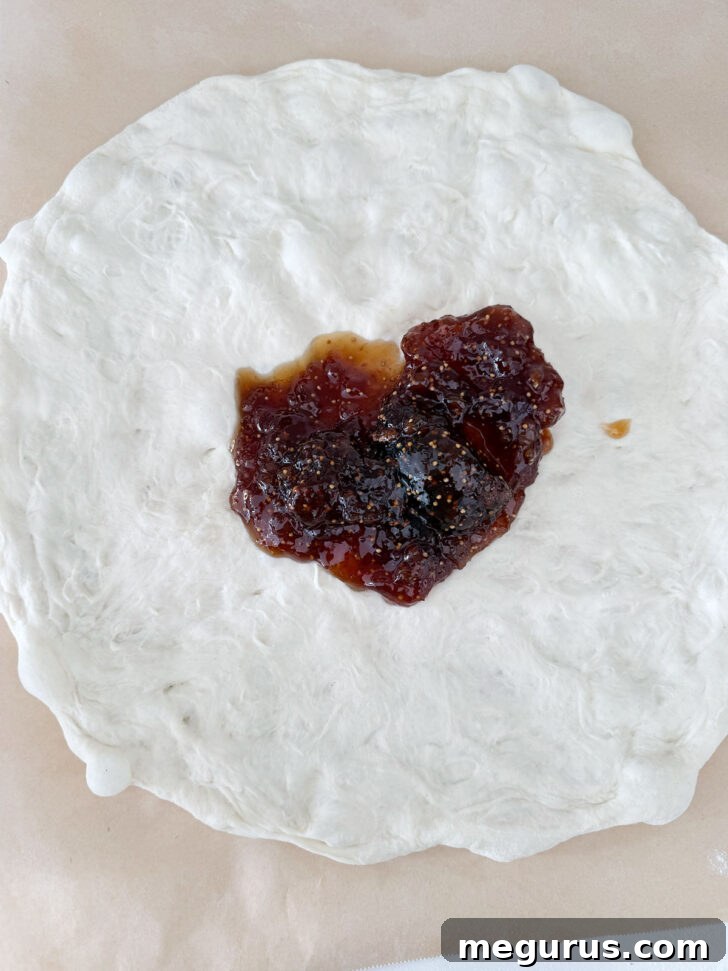
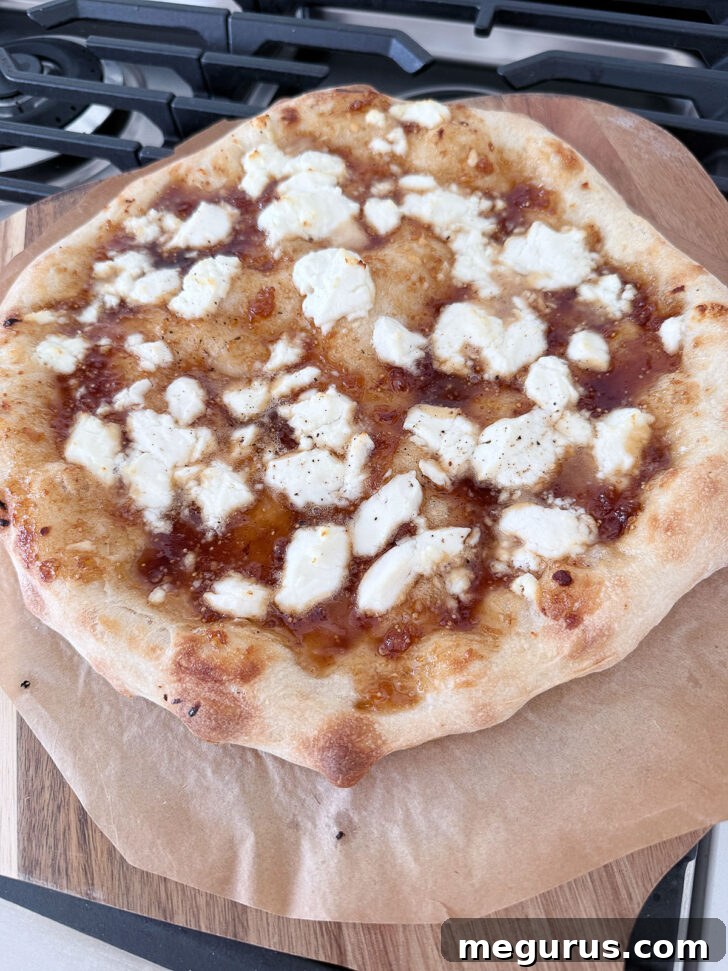
- Prepare Your Dough: Begin by pressing your pizza dough out into a roughly 12-14-inch round on a sheet of parchment paper. This makes transferring it to the oven much easier. Once stretched, generously spoon the fig jam over the dough. For an exciting twist that balances the sweetness, consider scattering a pinch of red pepper flakes over the jam to add a subtle sweet-heat flavor.
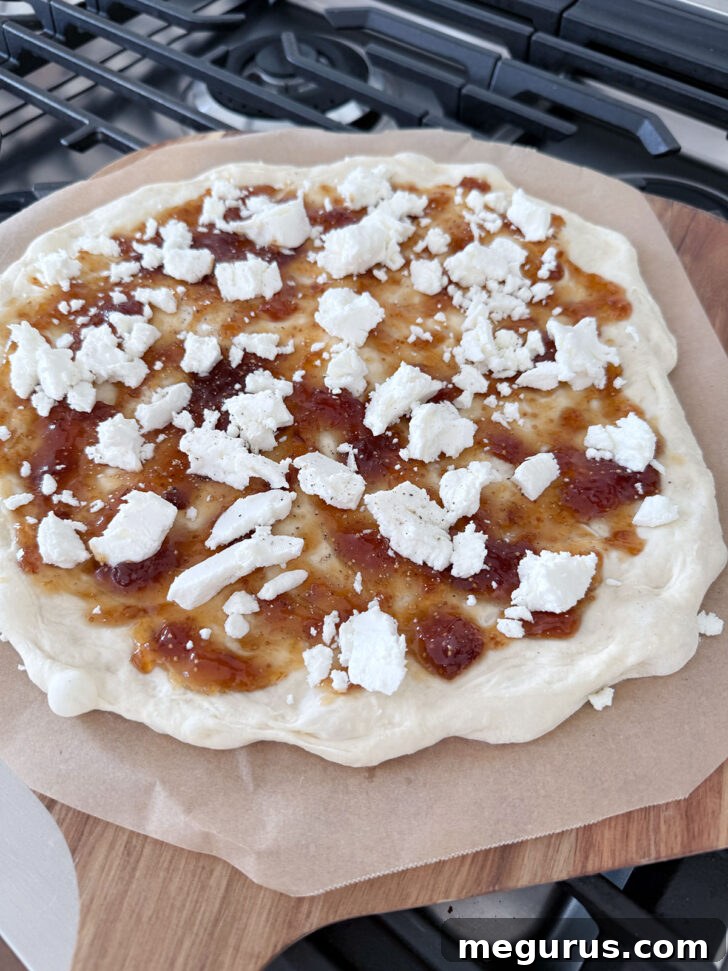
- Add Goat Cheese and Bake: Evenly spread the fig jam over the dough, ensuring you leave about a 3/4-inch border around the outside bare for the crust to form. Next, break up the goat cheese into small crumbles and scatter it generously over the jam. Transfer your pizza to a preheated oven and bake at a high temperature, around 500°F (260°C), for 8-12 minutes, or until the crust is beautifully golden brown and the cheese is bubbly and slightly caramelized.
- Initial Baking Complete: Carefully remove the partially baked pizza from the oven once the crust is firm and golden. The base flavors are now locked in and ready for the final touches.
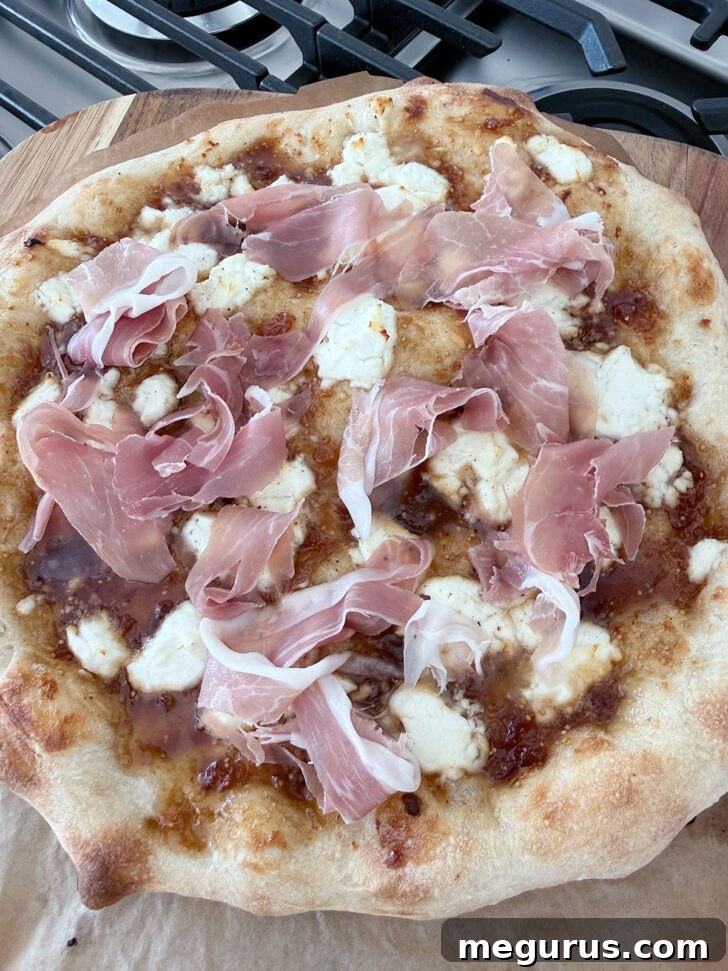
- Arrange the Prosciutto: Once out of the oven, artfully arrange the thinly sliced prosciutto over the hot, baked pizza. The residual heat will gently warm the prosciutto, enhancing its flavor without making it crispy (unless desired, see tips below).
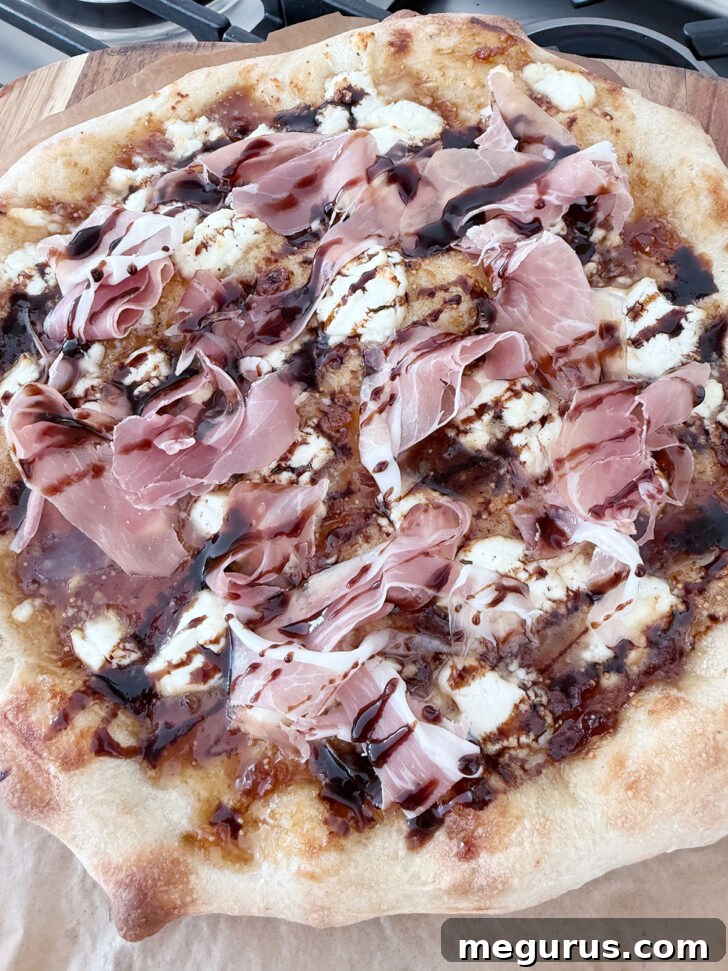
- Drizzle with Balsamic Glaze: Generously drizzle the rich, syrupy balsamic glaze over the entire pizza. This adds a crucial layer of tangy sweetness that ties all the flavors together.
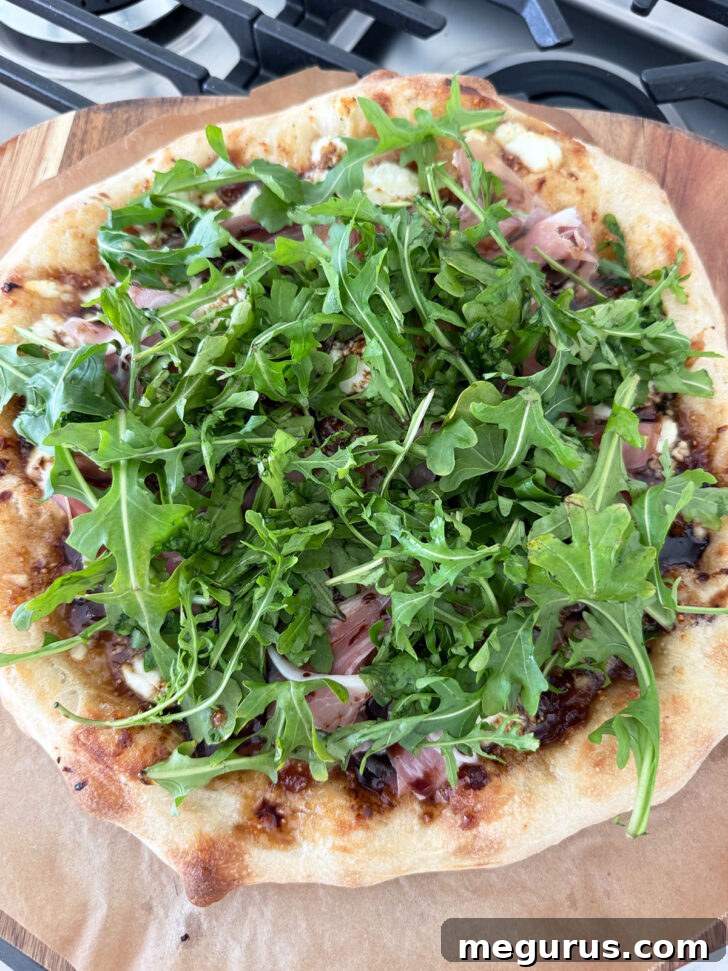
- Finish with Freshness: Scatter a generous layer of fresh, peppery arugula over the top of the pizza. Finally, add a scattering of shaved Parmesan cheese for an extra touch of savory, nutty goodness. Slice, serve, and savor your homemade gourmet pizza!
Expert Recipe Tips for Your Fig and Pig Pizza
- Balancing Sweetness with Heat: The fig jam base, while delicious, can be quite sweet. To perfectly balance this, a sprinkle of red pepper flakes over the jam before baking introduces a subtle, pleasant heat. Alternatively, a final drizzle of chili oil over the finished pizza offers a similar vibrant kick and depth of flavor. Experiment to find your preferred level of spicy warmth!
- Prosciutto Preference: Traditionally, prosciutto is added after baking to preserve its delicate texture and flavor. However, some prefer their prosciutto slightly cooked. If you fall into this camp, simply scatter the prosciutto over the pizza during the last minute or two of baking. Be cautious not to add it too early, as it can quickly become burnt and brittle under high heat.
- Dough Prep for Success: Always allow your pizza dough to come to room temperature before attempting to stretch it. Cold dough is stiff and difficult to work with, increasing the chances of tearing. Room temperature dough is more elastic and forgiving, making shaping a breeze.
- Don’t Overload: While tempting, too many toppings can make your pizza soggy and prevent the crust from cooking properly. This “Fig and Pig” pizza is intentionally simple in its toppings to let each star ingredient shine. Stick to the suggested amounts for optimal results.
Achieving Restaurant-Quality Pizza in Your Home Kitchen
Making truly exceptional pizza at home is an achievable feat, even for beginners. Here are our top tips for elevating your homemade pizza to restaurant standards:
- The Power of Homemade Pizza Dough: While store-bought dough offers convenience, investing a little time in a quality homemade dough makes all the difference. Our absolute favorite is Jim Lahey’s No-Knead Pizza Dough. It requires an 18-hour head start, allowing for a long, slow fermentation that develops incredible flavor and a superior, airy texture with a crisp crust. This planning is well worth the effort if you’re chasing that authentic pizzeria experience. We’ve included the ingredients and instructions for this remarkable dough in the Recipe Card Notes below.
- Parchment Paper: Your Best Friend for Easy Transfers: Assembling your pizza directly on parchment paper is a game-changer. It makes the crucial step of transferring your delicate, topped pizza into a scorching hot oven incredibly easy and mess-free. If you own a wooden pizza peel, simply slide the parchment-lined pizza onto the peel. If you don’t have a peel, a rimless baking sheet or an inverted rimmed baking sheet (using its flat bottom) works perfectly. Just remember to be careful when sliding – metal can be slippery!
- Invest in a Pizza Stone or Steel: For consistent, evenly cooked crusts with a delightful crispness, a pizza stone or baking steel is an invaluable investment for any home pizza enthusiast. We highly recommend a classic clay-type pizza stone for its ability to retain and distribute high heat effectively. Always place your pizza stone in a cold oven before preheating to 500°F (260°C). This allows the stone to gradually heat up with the oven, preventing thermal shock that could cause it to crack. Similarly, leave the hot stone in the oven to cool down completely after baking. A baking steel is another fantastic option, often heating up faster and retaining even more heat for an extra crispy crust.
- Bake Directly on Parchment: There’s a common misconception that baking on parchment paper will hinder crust crispness. In reality, it doesn’t! Baking your pizza directly on the parchment paper provides an easier transfer to the hot stone and ensures less mess. You’ll still achieve a wonderfully golden and crispy bottom crust. For safety and to minimize scorching, we suggest trimming the parchment paper to within an inch or so of the pizza’s edge. While the exposed parchment might darken in the high heat, it rarely catches fire.
- Preheat, Preheat, Preheat!: High heat is paramount for excellent pizza. Ensure your oven, and especially your pizza stone or steel, is fully preheated for at least 30-60 minutes at its highest temperature (500-550°F / 260-290°C). This intense heat cooks the crust rapidly, creating that desirable crispy exterior and chewy interior.
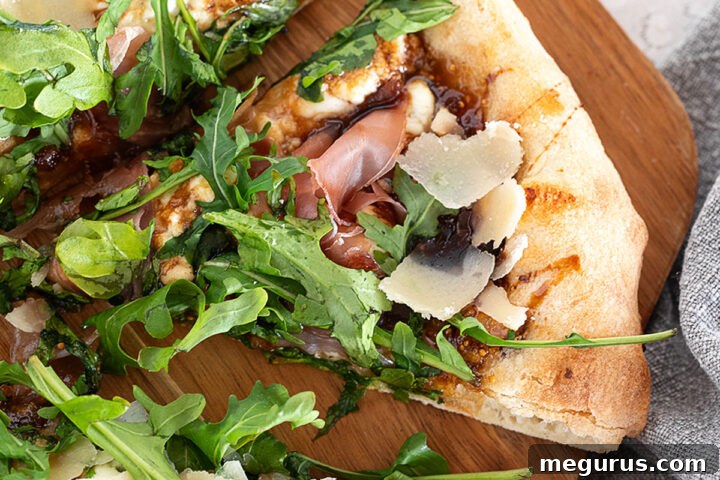
Get the Recipe: Fig and Pig Pizza
Pin This
Leave a Review
Ingredients
- 1 1/2 lb pizza dough, store-bought or homemade (see Note 1 below for my favorite homemade recipe)
- 8 oz (240 g) fig jam
- Red pepper flakes, optional (see Note 2 below)
- 10 oz (240 g) goat cheese, crumbled (see Note 3 below for alternatives)
For topping after cooking:
- 3 oz (85 g) prosciutto, thinly sliced (see Note 4 below)
- balsamic glaze, for drizzling (see Note 5 below)
- 5 oz (142 g) fresh arugula
- shaved Parmesan, for garnish
Instructions
-
This recipe yields two 12-14-inch pizzas, or 16 slices, serving 4-6 people. To make only one pizza, use half of each ingredient.
-
Preheat Oven: If using a pizza stone, place it on the center rack of your oven. Preheat the oven to 500°F (260°C) (use a non-convection setting if available). Allow the oven and stone to preheat for at least 30 minutes to ensure maximum heat retention. If you don’t have a pizza stone, use a large baking sheet; turn it upside down to create a flat surface. Prepare the pizza on parchment paper on the baking sheet, then transfer directly to the preheated oven. Baking time may be slightly longer without a heated stone.
-
Prepare Pizza Base: Lay a sheet of parchment paper large enough for your pizza. Sprinkle a bit of cornmeal or flour onto the parchment to prevent sticking. Take a 3/4-pound piece of pizza dough and, using your fingertips, gently press it out into a 12- to 14-inch round. Spoon half of the fig jam (about 4 oz) onto the dough, spreading it evenly with the back of a spoon, leaving a 3/4-inch border bare around the edges. If desired, sprinkle 1/8 to 1/4 teaspoon of red pepper flakes over the fig jam. Crumble half of the goat cheese and scatter it over the jam.
-
Transfer to Oven: Carefully transfer the pizza on the parchment paper onto the hot pizza stone (or baking sheet) in the oven, using a pizza peel or the inverted baking sheet.
-
(While the first pizza bakes, you can begin preparing the second pizza to have it ready for the oven.)
-
Bake Until Golden: Bake the pizza for 8-12 minutes, or until the crust is puffed and golden brown, and the goat cheese is bubbly. You can gently lift the pizza with tongs to check for golden spots on the underside of the crust.
-
Finish and Serve: Remove the hot pizza from the oven. Artfully arrange half of the prosciutto (1.5 oz), lightly scrunching it, over the baked pizza. Drizzle generously with balsamic glaze, then top with a substantial layer of fresh arugula (5 oz) and a scattering of shaved Parmesan. Slice each pizza into 8 pieces and serve immediately for the best experience!
-
Reheating Tips: While best fresh, leftover slices can be reheated in a hot skillet on the stovetop or on a baking sheet in a 425°F (220°C) oven for a few minutes until warmed through and crispy.
Notes
You can use either store-bought or homemade pizza dough. If using frozen dough, ensure it’s completely thawed before shaping. A 1 1/2 lb ball of dough is ideal for two 12-14-inch pizzas. For an unparalleled homemade experience, I highly recommend Jim Lahey’s No-Knead Pizza Dough. It does require planning 18 hours ahead, but the resulting flavor and texture are truly worth it. I often prepare it the night before and let it ferment overnight.
Jim Lahey’s No-Knead Pizza Dough (Start 18 hours ahead):
Ingredients:
500g all-purpose or ’00’ flour (approximately 3 3/4 cups, spooned and leveled)
1 gram instant yeast (1/4 teaspoon)
350g room temperature water (1 1/2 cups)
16g fine sea salt (about 2 teaspoons; I often use 1 1/2 teaspoons for personal preference)
Instructions:
In a large bowl or stand mixer (fitted with a paddle attachment), combine all ingredients. Mix until the flour is just moistened and no dry streaks remain. If using a stand mixer, remove the paddle and scrape the dough into a mound at the bottom of the bowl. Cover the bowl tightly with plastic wrap. Let the dough ferment at room temperature (about 68-72°F / 20-22°C) for 16-18 hours.
One hour before you plan to bake your pizza, scrape the very sticky dough onto a generously floured work surface. Dust the dough with a bit more flour and gently roll it around on the counter until it’s less sticky and more manageable. Divide the dough into two equal pieces and gently form each piece into a round ball. Cover each dough ball with an inverted large bowl and let them rest for 1 hour. This allows the gluten to relax, making the dough easier to stretch into pizzas. This recipe yields two 12-14-inch pizzas. (Recipe adapted from Jim Lahey.)
Note 2: Customizing the Heat
The inherent sweetness of the fig jam is beautifully complemented by a touch of heat. Red pepper flakes, sprinkled over the jam before baking, provide a subtle warmth. Alternatively, for a different flavor profile, a drizzle of high-quality chili oil over the finished pizza after baking works wonderfully.
Note 3: Goat Cheese Alternatives
If goat cheese isn’t your preference, don’t shy away from this recipe! Goat feta is an excellent alternative, offering a similar tang in a crumbly texture. Regular feta cheese can also work. For a creamier, milder option, consider dollops of fresh labneh or ricotta. I’ve even thought about trying Brie for a truly decadent touch!
Note 4: Prosciutto Texture
As written, the prosciutto is added after baking to maintain its delicate, tender texture. If you prefer your prosciutto slightly cooked or crispier, you can add it during the final 1-2 minutes of baking. It’s crucial not to add it at the beginning of the bake, as it will likely burn and become overly brittle.
Note 5: Balsamic Glaze Made Easy
Balsamic glaze is typically found in small bottles alongside balsamic vinegars in most grocery stores; Nonna Pia’s is a popular choice. If you can’t locate it, making your own is surprisingly simple and often more flavorful: combine 1/2 cup of good quality balsamic vinegar with 1 1/2 teaspoons of brown sugar in a small saucepan. Bring to a simmer over medium-low heat and cook for 10-15 minutes, stirring occasionally, until the mixture has reduced and thickened to a syrupy consistency. Let it cool slightly before drizzling.