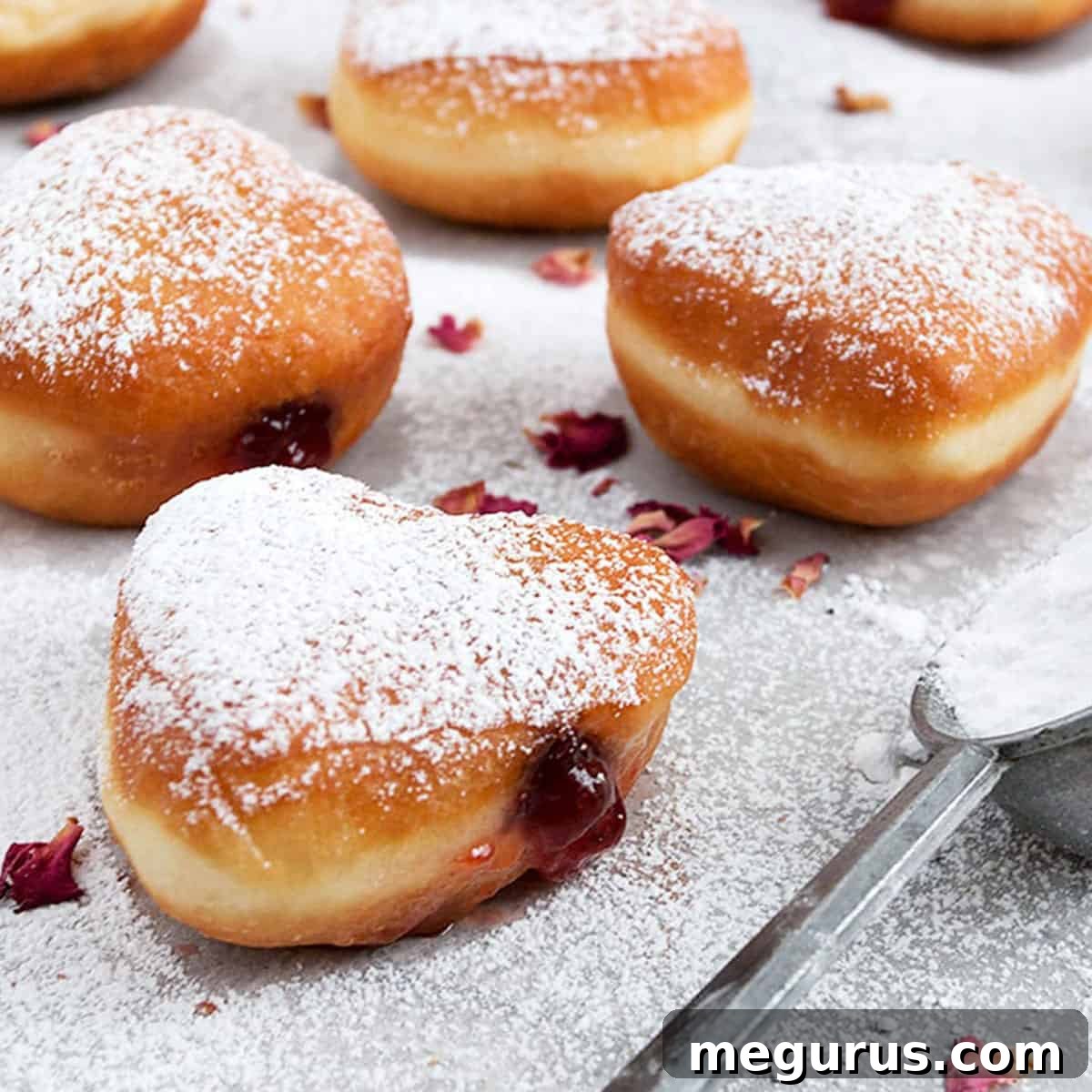
Irresistible Homemade Heart-Shaped Jam-Filled Yeast Donuts: The Ultimate Guide
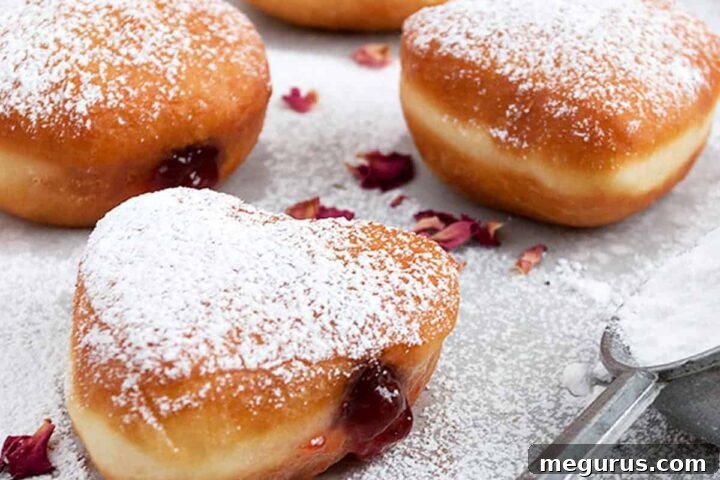
These delightful heart-shaped donuts offer the perfect way to share a little love, whether for Valentine’s Day, a special occasion, or simply to brighten any ordinary day. Each donut is lovingly crafted, yeast-risen to perfection, and deep-fried to a golden crisp before being generously filled with your favorite seedless jam. Prepare to impress with these truly authentic, fluffy, and flavor-packed treats!
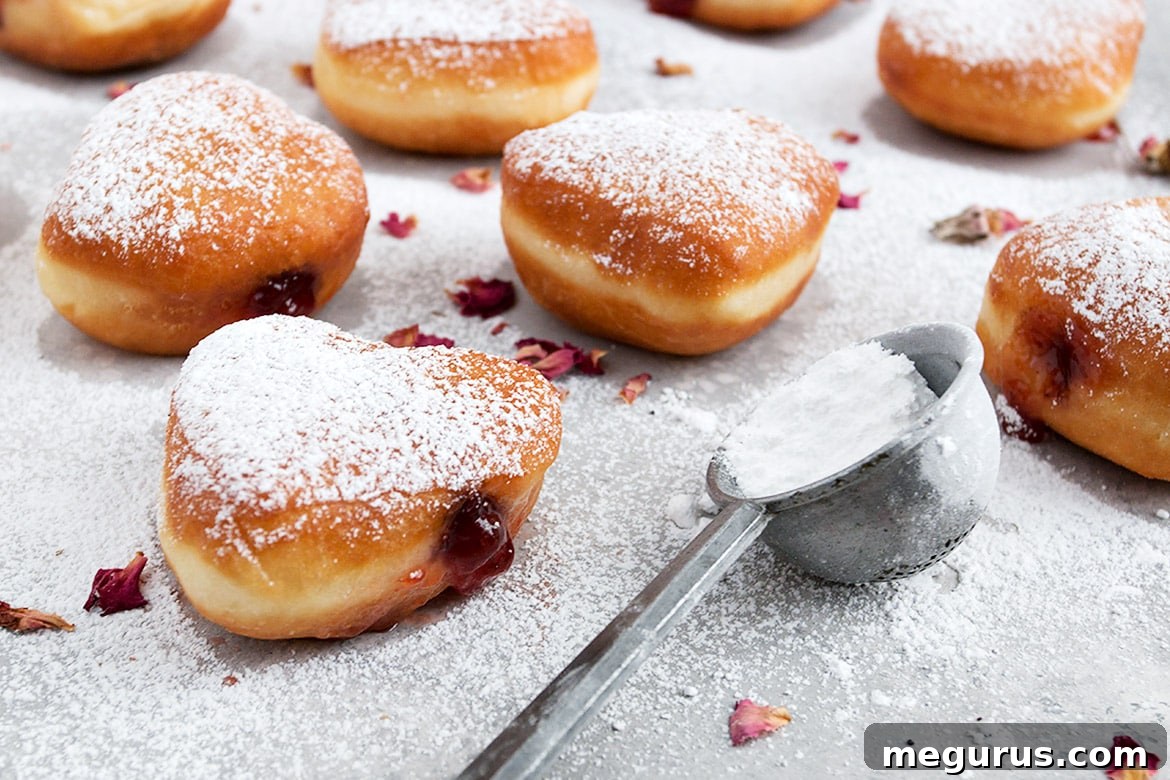
For those who know me, it’s no secret that a perfectly made donut is a treat I can rarely resist. With their soft, airy texture and sweet, luscious filling, these homemade heart-shaped donuts are the epitome of comfort and indulgence. Many shy away from making donuts at home, envisioning a complicated process or requiring specialized equipment. However, I assure you, these yeast-risen and deep-fried beauties are surprisingly simple to create, even without a dedicated deep fryer.
Beyond their charm, these donuts are practical too. They freeze exceptionally well, meaning you can prepare a batch in advance and have them ready for any impromptu celebration or sweet craving. Imagine having freshly thawed, delicious homemade donuts at your fingertips!
Why Homemade Donuts Are Always a Winner
Choosing to bake donuts at home offers a multitude of benefits that go beyond just taste. The sheer satisfaction of creating something so delectable from scratch is incredibly rewarding. You have complete control over the quality of ingredients, ensuring a fresh and wholesome treat free from unwanted additives. Furthermore, homemade donuts allow for endless customization. While we’re focusing on jam-filled hearts today, the base recipe is versatile, opening up a world of possibilities for different fillings, glazes, and toppings to suit any palate or occasion.
The aroma that fills your kitchen as these yeast donuts proof and fry is an experience in itself, promising the warm, comforting delights to come. There’s a distinct freshness to homemade donuts that store-bought varieties simply cannot match—a delicate crispness on the outside and an incredibly soft interior that truly melts in your mouth.
Key Ingredients and Smart Substitutions
Crafting the perfect donut begins with understanding the role of each ingredient. Here’s a detailed look at what you’ll need and how to best utilize them:
- Yeast: The star of yeast-risen donuts! You can confidently use either Active Dry Yeast or Instant Yeast for this recipe. If using active dry yeast, you’ll typically activate it first in warm water (as instructed in the recipe). Instant yeast, on the other hand, can often be mixed directly with the dry ingredients, saving a step. Always check the expiration date on your yeast to ensure it’s active and ready to make your donuts beautifully fluffy.
- Jam: For a seamless filling experience, a high-quality, seedless jam is absolutely essential. Jams with seeds or large fruit chunks will inevitably clog your piping tip, leading to frustration and an uneven filling. If your favorite jam contains seeds, don’t despair! You can easily press it through a fine-mesh sieve with the back of a spoon to remove any troublesome bits. Popular choices include raspberry, strawberry, or apricot, but feel free to experiment with any smooth fruit preserve you love.
- Vegetable Shortening: This ingredient contributes significantly to the tender crumb of the donuts. While shortening provides a neutral flavor and excellent texture, you can substitute it with unsalted butter or even lard if you prefer. Butter will impart a richer flavor, while lard can create an exceptionally delicate and flaky texture.
- Milk: Warm milk helps to activate the yeast and develop the dough. Ensure it’s just warm to the touch—too hot will kill the yeast, and too cold won’t activate it effectively.
- Egg: A large beaten egg adds richness, structure, and helps bind the dough ingredients together, contributing to the donut’s tender consistency.
- White Granulated Sugar: Beyond sweetness, sugar feeds the yeast, aiding in the proofing process and contributing to the golden-brown crust during frying.
- Fine Table Salt: Salt balances the sweetness, enhances flavor, and also plays a role in regulating yeast activity.
- Grated Nutmeg: This spice is a classic addition to donuts, providing a warm, comforting aroma and subtle flavor that elevates the overall taste profile.
- All-Purpose Flour: The foundation of our donut dough. Ensure you spoon and level the flour rather than scooping it directly from the bag, which can compact it and lead to too much flour, resulting in a dense donut. Keep extra flour on hand for dusting your work surface.
- Oil for Deep Frying: A neutral-flavored oil with a high smoke point is crucial. Vegetable oil, canola oil, or peanut oil are excellent choices. The amount needed will depend on the size of your frying vessel, but aim for about three inches of oil depth.
- Piping Bag with Plain Tip: Essential for cleanly and efficiently filling your donuts with jam. A 3/8 to 1/2-inch plain tip works best.
- Icing/Confectioners’ Sugar: The perfect finishing touch, adding a delicate sweetness and a beautiful visual appeal to your freshly filled donuts.
Mastering Deep Frying for Fluffy Perfection
Deep frying can seem intimidating, but with a few key tips, you’ll achieve perfectly cooked donuts every time. The most critical factor is maintaining the correct oil temperature.
- The Deep Fryer Advantage: If you own a deep fryer, it simplifies the process immensely by automatically regulating the oil temperature. This consistent heat control is a game-changer for uniform frying.
- Stovetop Frying (No Fryer Needed!): Don’t have a deep fryer? A deep, heavy-bottomed pot like a Dutch oven works perfectly. Crucially, invest in a candy or deep-frying thermometer. This tool is non-negotiable for monitoring the oil temperature accurately. Keep a lid handy; in the rare event of a grease fire, simply slide the lid onto the pot to extinguish it.
- Optimal Oil Temperature: Aim for 365°F (185°C).
- Too Hot Oil: If the oil is too hot, the exterior of the donut will brown and cook rapidly, while the interior remains raw or undercooked. The result is a donut that looks done but is dense and doughy inside.
- Not Hot Enough Oil: If the oil isn’t hot enough, the donut won’t cook and seal quickly. This allows the oil to seep into the dough, resulting in greasy, heavy donuts that lack that desirable fluffy texture.
- Oil Depth: For stovetop frying, you’ll need approximately 2-3 inches of oil in your pot. Donuts float as they cook, so only about an inch of the donut is submerged at any given time. This depth is sufficient to ensure they cook evenly without touching the bottom.
- Small Batches Are Key: Resist the urge to overcrowd the pot. Frying 2-3 donuts at a time is ideal. Adding too many at once drastically lowers the oil temperature, leading to uneven cooking and potentially greasy donuts.
- Visual Cues for Doneness: Donuts should be a beautiful deep golden brown on each side when done. This typically takes about one minute per side. If your donuts are browning much faster, your oil is too hot. Conversely, if they remain pale after a minute, your oil needs to be hotter. Adjust your heat source accordingly throughout the frying process to maintain a consistent temperature.
Making Ahead, Storing, and Freezing
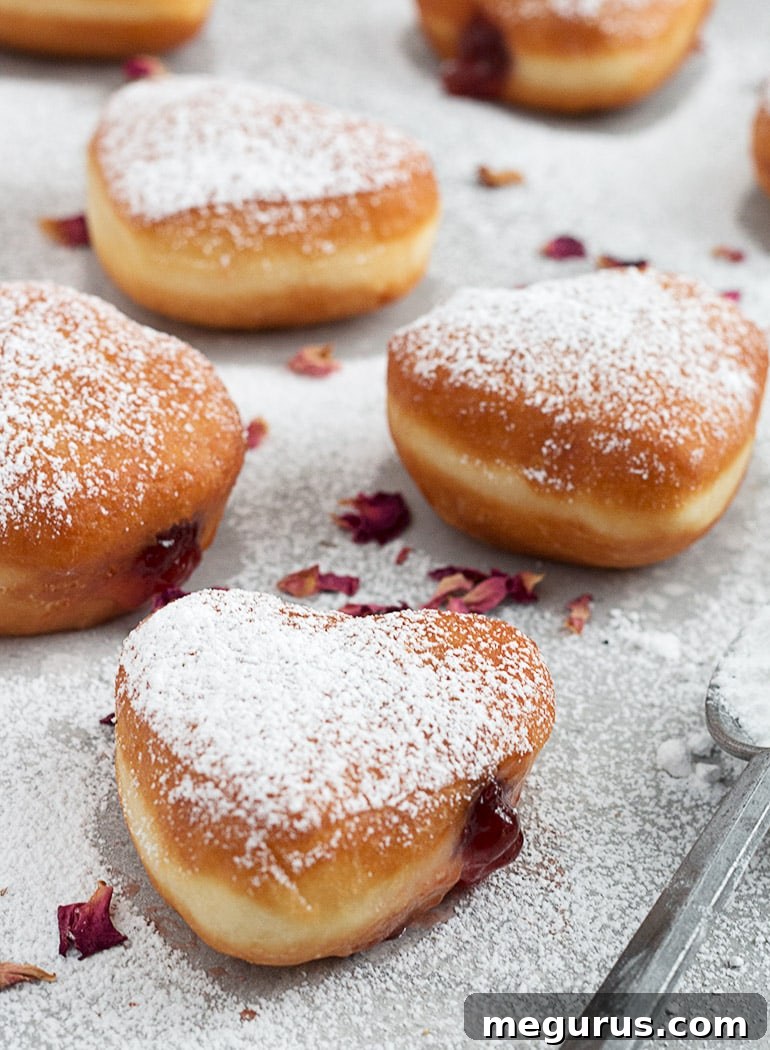
While donuts are undeniably at their peak freshness immediately after frying, these particular heart-shaped treats hold up remarkably well. They remain quite delicious even into the next day, making them a fantastic option for entertaining or meal prep.
For longer storage, these donuts freeze beautifully. Here’s how to do it:
- Allow the freshly fried donuts to cool completely on a wire rack.
- Once cool, proceed with filling them with your chosen seedless jam. At this stage, skip the dusting of icing sugar.
- Arrange the filled donuts in a single layer on a baking sheet. Place the baking sheet into the freezer for about an hour, or until the donuts are firm enough to handle without squishing.
- Once firm, transfer the donuts to a freezer-safe bag or airtight container. This initial freezing step prevents them from sticking together. They can be stored in the freezer for up to 1-2 months.
- To enjoy later, simply remove the desired number of donuts from the freezer bag and let them thaw at room temperature for 30-40 minutes.
- Just before serving, dust them generously with icing/confectioners’ sugar for that fresh-from-the-bakery finish.
The Ultimate Heart-Shaped Jam-Filled Yeast Donuts Recipe
Recipe Summary
Indulge in these easy-to-make, irresistible heart-shaped donuts. Crafted with a soft yeast dough, deep-fried until golden, and generously filled with sweet jam before a final dusting of icing sugar. A truly heartwarming treat!
Average rating: 5 stars from 6 ratings.
Prep Time: 15 minutes
Cook Time: 20 minutes
Rising Time: 1 hour 30 minutes
Total Time (including rising): 2 hours 5 minutes
Yield: 12 donuts
Ingredients
- 3/4 cup milk
- 3 Tablespoons vegetable shortening (or substitute butter or lard)
- 2 1/4 teaspoons active dry or instant yeast
- 3 Tablespoons warm water (95°F to 105°F)
- 1 large egg, beaten
- 2 Tablespoons white granulated sugar
- 2 teaspoons fine table salt
- 1/2 teaspoon grated nutmeg
- 2 1/3 cups all-purpose flour, spooned and leveled, plus more as needed for dusting
- Oil for deep frying (you will want about 3 inches of oil in your frying vessel; any neutral flavor frying oil is suitable)
- Piping Bag with a 3/8-1/2-inch plain tip
- Seedless jam or jelly, for filling
- Icing/Confectioners’ Sugar, for dusting
Instructions
- Gently warm the milk in a medium saucepan over medium heat until it’s just warm to the touch. Alternatively, heat it in the microwave.
- In a mixing bowl, place the vegetable shortening. Pour the warmed milk over the shortening and stir until the shortening is completely melted. Set this mixture aside to cool until it is lukewarm.
- In a separate small bowl, sprinkle the yeast over the warm water (ensure it’s between 95°F to 105°F). Let it stand for 5 minutes until it becomes foamy, indicating the yeast is active.
- Once the yeast is activated, pour the foamy yeast mixture into the bowl of a stand mixer. Add the cooled lukewarm milk and shortening mixture.
- To the mixer bowl, add the beaten egg, granulated sugar, fine table salt, grated nutmeg, and half of the all-purpose flour. Using the paddle attachment, mix on low speed until the flour is just incorporated, then increase the speed to medium and beat until the ingredients are well combined and smooth.
- Gradually add the remaining flour, mixing on low speed initially to prevent scattering, then increase the speed to medium and continue beating thoroughly until a soft dough forms.
- Switch to the dough hook attachment on your mixer. Knead the dough on medium speed for approximately 3 to 4 minutes, or until the dough pulls away cleanly from the sides of the bowl and develops a smooth, elastic texture. If you’re kneading by hand, continue until the dough is smooth and no longer sticky.
- Lightly oil a clean bowl. Transfer the dough to this bowl, turning it once to coat all sides. Cover the bowl with plastic wrap or a clean kitchen towel and let it rise in a warm place for about 1 hour, or until the dough has doubled significantly in size.
- Once risen, gently turn the dough out onto a generously floured surface. Roll the dough evenly to a thickness of approximately 3/8-inch. Ensure your surface remains well-floured to prevent sticking.
- Using a heart-shaped cookie cutter, cut out individual donut shapes. Place the cut donuts onto a lightly floured baking sheet, cover them loosely with a clean tea towel, and let them rise for a second time for about 30 minutes. This final rise will make them extra fluffy.
- While the donuts are having their second rise, preheat your frying oil in a deep fryer or a Dutch oven to 365°F (185°C). Maintaining this temperature is crucial for perfect results.
- Carefully place 3 to 4 donuts into the hot oil at a time, being careful not to overcrowd the pot, which would lower the oil temperature. Fry for about 1 minute per side, or until they achieve a beautiful deep golden brown color.
- Using a slotted spoon, carefully remove the fried donuts and transfer them to a wire rack placed over a baking pan. This allows excess oil to drain and catches any drips. Let the donuts cool completely before filling.
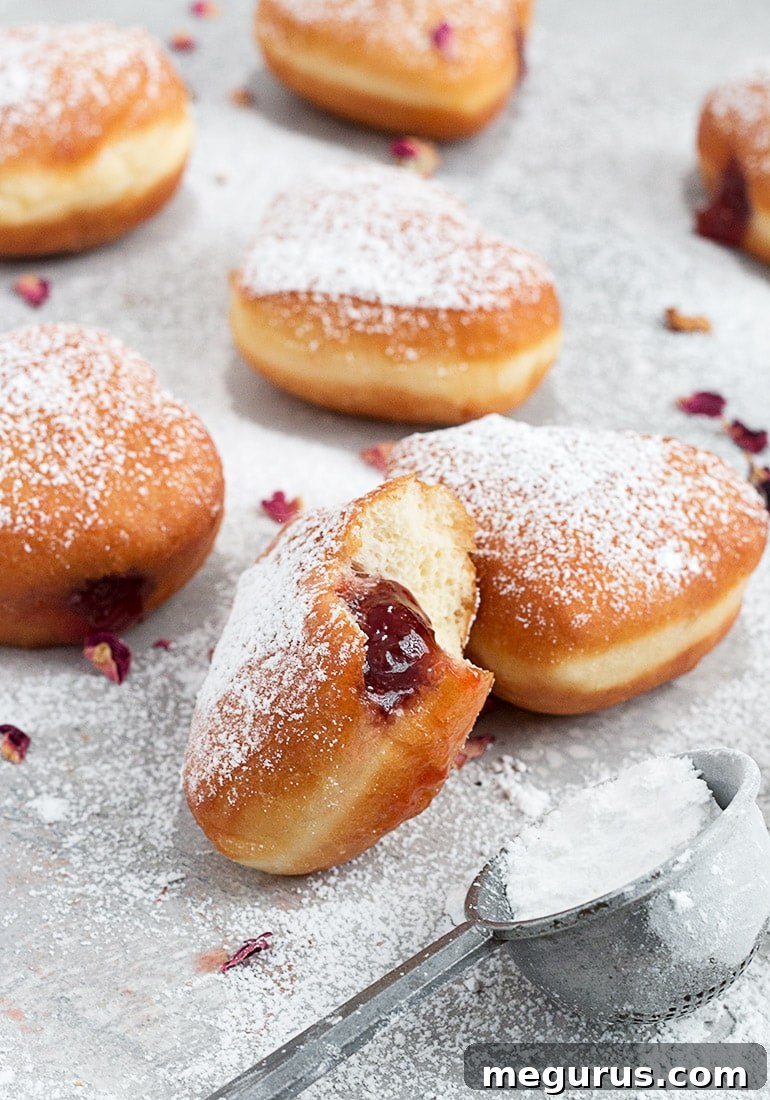
- To fill, use a sharp paring knife to make a small incision on the side of each heart-shaped donut. Gently wiggle the knife inside to create a small pocket for the jam. Fill a piping bag, fitted with a 3/8-1/2-inch plain tip, with your seedless jam. Insert the tip into the hole and pipe in a generous amount of jam until the donut feels pleasantly weighted.
- Before serving, dust the filled donuts with icing/confectioners’ sugar. Enjoy your homemade heart-shaped treats!
Expert Tips for Donut Success
- Yeast Activation is Key: Always ensure your water temperature is correct (95°F to 105°F) for activating active dry yeast. Water that is too hot will kill the yeast, and water that is too cold will not activate it properly, leading to dense donuts.
- Dough Consistency Matters: The dough should be soft, pliable, and slightly sticky, but easily managed after kneading. If it’s too sticky, add a tiny bit more flour, but be careful not to overdo it, as this can make the donuts tough.
- Don’t Rush the Rise: Allow your dough to complete both rises fully. This is essential for achieving light, airy donuts. Patience is a virtue in yeast baking!
- Oil Temperature Vigilance: As reiterated, monitoring oil temperature with a thermometer is paramount. Consistent temperature ensures even cooking and prevents greasy or undercooked donuts. Adjust heat as needed.
- Frying Safety First: Always be cautious when deep frying. Keep children and pets away from the stovetop. Never leave hot oil unattended. Having a pot lid nearby is an excellent safety measure for smothering any potential flare-ups.
- Jam Preparation: If your jam has seeds, straining it meticulously will save you a lot of hassle during the piping stage. A smooth, flowing jam makes for a perfect filling.
- Cooling Completely: Ensure donuts are entirely cool before filling. If filled while warm, the jam can melt and make the donut soggy.
Donut Variations and Serving Suggestions
While classic jam-filled hearts are divine, don’t hesitate to get creative:
- Alternative Fillings: Experiment with lemon curd, pastry cream, chocolate ganache, or even a Nutella spread for different flavor profiles.
- Glazes and Frostings: Instead of simple icing sugar, consider a vanilla glaze, a chocolate glaze, or a maple glaze. Simply whisk powdered sugar with a small amount of milk or water (and flavorings) until smooth.
- Creative Toppings: Add sprinkles, chopped nuts, toasted coconut, or even a dusting of cinnamon sugar for extra texture and flavor.
- Serving Warm: While best when cooled before filling, a brief warm-up in the microwave (a few seconds) can bring out that comforting fresh-from-the-fryer feel again, especially for previously frozen donuts.
- Pairing: These donuts are wonderful with a cup of coffee, tea, or a glass of cold milk. They make a fantastic dessert, breakfast treat, or afternoon snack.
Frequently Asked Questions About Homemade Donuts
Here are answers to some common questions you might have:
- Q: Can I use different cookie cutter shapes?
A: Absolutely! While hearts are perfect for Valentine’s Day, you can use round cutters, stars, or any other shape you desire. Just ensure they are not too intricate, as this can make handling the dough tricky. - Q: What if my dough doesn’t rise?
A: The most common reasons for dough not rising are inactive yeast (check the expiry date!), water that is too hot or too cold during activation, or a kitchen that is too cold for proofing. Ensure your yeast is fresh and your water temperature is correct. You can create a warm environment by placing the bowl in a slightly warm (but turned off) oven or near a sunny window. - Q: How do I know the oil is at the right temperature without a thermometer?
A: While a thermometer is highly recommended, a quick test is to drop a small piece of donut dough into the oil. If it immediately sizzles and bubbles vigorously, but doesn’t brown too quickly, the oil is likely ready. If it browns instantly, it’s too hot; if it just sits there and slowly bubbles, it’s too cool. However, this method is less precise. - Q: Can I bake these donuts instead of frying them?
A: This recipe is specifically designed for deep frying to achieve its characteristic texture. Baking will result in a different texture, more akin to a sweet bread roll, and won’t give you the classic donut experience.
Cuisine: American, Canadian
Course: Snack, Dessert, Breakfast
Author: Jennifer Maloney
Nutrition Information (Per 1 donut serving)
- Calories: 239kcal
- Carbohydrates: 21g
- Protein: 3g
- Fat: 4g
- Saturated Fat: 1g
- Cholesterol: 18mg
- Sodium: 401mg
- Potassium: 61mg
- Sugar: 2g
- Vitamin A: 55IU
- Calcium: 25mg
- Iron: 1.2mg
If you enjoyed making and tasting this delightful recipe, please consider leaving a star rating and comment! Your feedback helps others discover and create these wonderful homemade donuts.
More Donut Recipes You’ll Love!