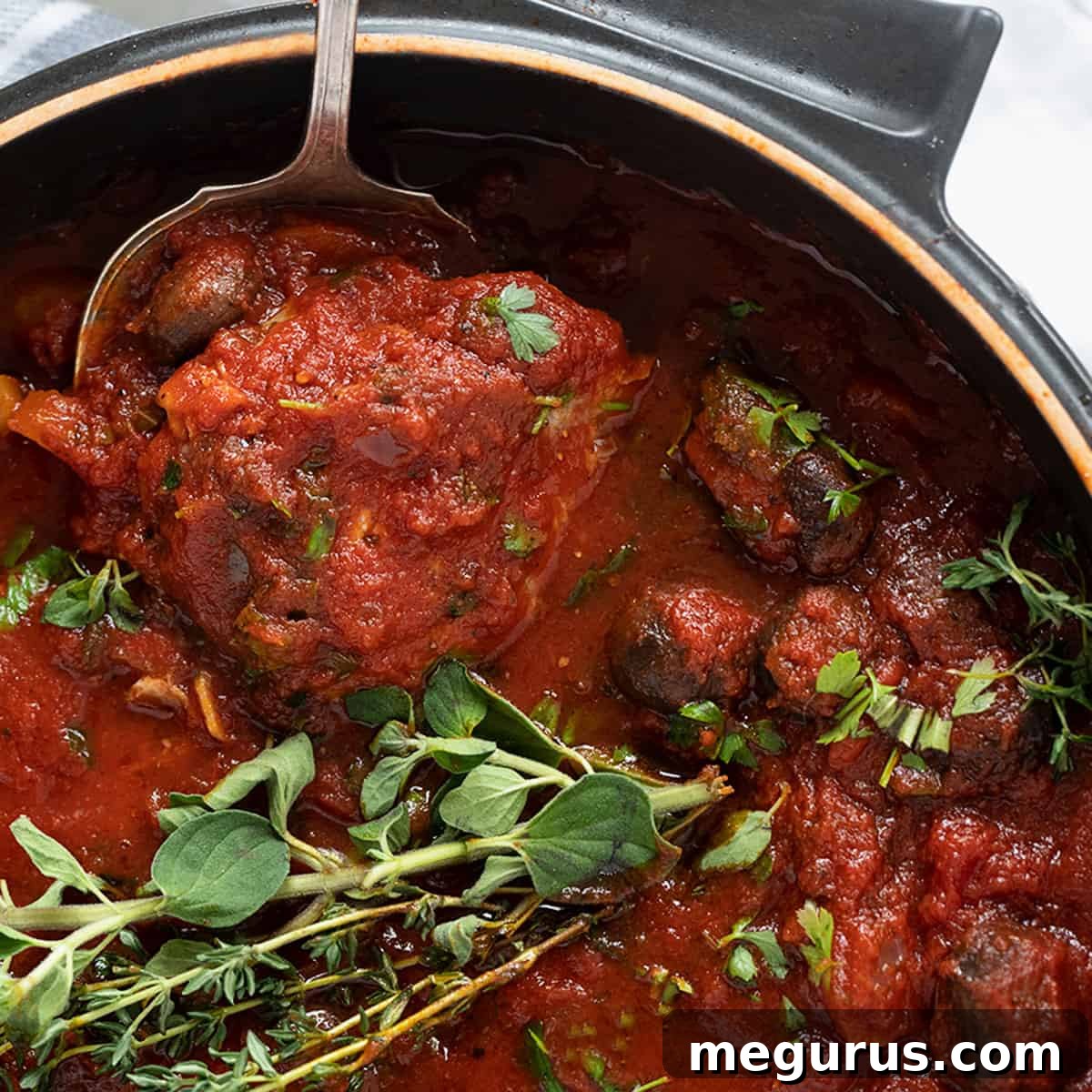
Step into the heart of Italian culinary tradition with our Classic Chicken Cacciatore recipe. This beloved “hunter’s style” chicken dish promises a truly comforting experience, featuring exquisitely tender chicken pieces, a vibrant medley of garden vegetables, and a rich, slow-cooked tomato sauce that bursts with authentic Mediterranean flavors. Perfect for a cozy family dinner or entertaining guests, this robust and flavorful meal embodies the rustic charm of Italian home cooking.
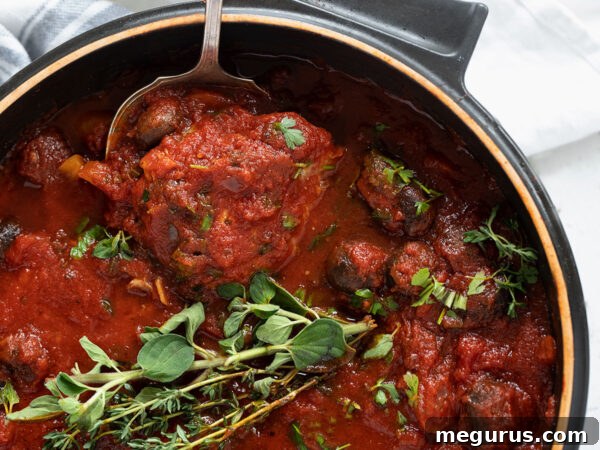
Chicken Cacciatore, translating to “hunter’s style chicken” in Italian, is a dish steeped in history and regional variations. While many versions exist, each reflecting local produce and preferences, this recipe offers a delicious and hearty take on the classic, designed for slow cooking on the stovetop. It transforms simple bone-in chicken pieces into a fall-off-the-bone tender meal, enveloped in a deeply flavorful sauce that is both rustic and refined.
Our interpretation of classic chicken cacciatore embraces tradition while allowing for delightful personal touches. You might find my addition of earthy mushrooms a pleasant departure from the strictly “authentic” versions, but feel free to omit them if you prefer. For an extra layer of savory depth, sometimes I love to render a bit of bacon or pancetta at the start, infusing the dish with its smoky essence. The beauty of cacciatore lies in its adaptability, inviting you to customize it with your favorite ingredients to create your own perfect rendition.
What is Chicken Cacciatore? A Hearty Italian Classic
Chicken Cacciatore is more than just a chicken dish; it’s a culinary journey to the Italian countryside. The name “cacciatore” refers to a meal prepared “hunter-style,” implying a rustic preparation with readily available ingredients like chicken, onions, herbs, tomatoes, and often bell peppers and mushrooms. Historically, hunters would cook their catch with whatever fresh produce they gathered from the fields or forests. This tradition has evolved into a beloved comfort food, known for its rich, aromatic sauce and exceptionally tender meat. Each region of Italy boasts its unique cacciatore recipe, some using red wine, others white, some including specific vegetables or herbs. Our recipe draws inspiration from these rich traditions, offering a balanced and profoundly satisfying flavor profile that captures the essence of Italian home cooking.
Why You’ll Love This Classic Chicken Cacciatore Recipe
This isn’t just another chicken dinner; it’s an experience. You’ll adore this classic chicken cacciatore for its incredible depth of flavor, achieved through slow, patient cooking. The chicken, cooked bone-in and skin-on, becomes incredibly tender and succulent, literally melting in your mouth, while its skin browns beautifully, adding texture and taste. The rich, slow-simmered tomato sauce, infused with aromatic herbs, sweet vegetables, and a hint of wine, develops a complex, savory character that is utterly irresistible. It’s a versatile dish that can be served with a variety of sides, making it perfect for weeknight meals or special gatherings. Plus, the minimal hands-on time once it’s simmering makes it a fantastic choice for a relaxed cooking day.
The Essential Ingredients & Smart Substitutions
Crafting the perfect Chicken Cacciatore starts with selecting quality ingredients. Each component plays a vital role in building the layers of flavor that make this dish so special. Understanding their purpose and potential substitutions can help you tailor the recipe to your pantry and palate.
Chicken
For the most authentic flavor and juicy texture, I highly recommend using bone-in, skin-on chicken pieces. Thighs, drumsticks, breasts, or a mix of each work wonderfully. The bones impart a profound depth of flavor to the sauce as it simmers, and the skin, when properly browned, renders fat and contributes to a richer taste and crispy texture that many find irresistible. While you *can* use boneless, skinless chicken, be aware that the dish will lose some of its inherent richness and depth. If opting for boneless, adjust cooking times accordingly to prevent drying out the chicken.
Red or White Wine
A splash of wine is crucial for deglazing the pan and adding a layer of sophisticated flavor to the sauce. I love using either a dry red wine (like Chianti or Merlot) for a richer, bolder sauce or a dry white wine (like Pinot Grigio or Sauvignon Blanc) for a lighter, brighter finish. If you prefer not to use alcohol, an equal amount of good quality chicken broth is an excellent substitute. It will still provide moisture and help deglaze the pan, ensuring no delicious browned bits are left behind.
Herbs
The aroma of fresh herbs truly elevates this cacciatore. I was fortunate to have fresh thyme, oregano, and parsley directly from my summer herb garden when developing this recipe, and their vibrant flavors are highly recommended. Fresh herbs contribute a brighter, more pungent flavor. If fresh herbs are not available, dried herbs will work just as well, though you should use approximately one-third of the amount specified for fresh herbs, as dried herbs are more concentrated. A sprig of fresh thyme, a generous hand of chopped parsley, and a good pinch of oregano are the backbone of the Mediterranean flavor profile.
Mushrooms
While traditional cacciatore often omits them, I firmly believe mushrooms are a fantastic addition, lending a wonderful earthy depth to the dish. I typically use button cremini mushrooms for their robust flavor and texture. The key is to brown them thoroughly at the beginning of the cooking process and then remove them, adding them back later. This technique ensures they retain their texture and don’t become soggy, contributing a delightful chewiness rather than a watery consistency. If mushrooms aren’t your preference, simply leave them out without compromising the dish’s overall deliciousness.
Tomatoes
The tomato sauce is the heart of cacciatore. I prefer to use canned crushed tomatoes for their smooth consistency, which results in a beautifully homogenous sauce. Alternatively, canned whole peeled tomatoes can be hand-crushed for a chunkier, more rustic texture. In a pinch, a high-quality passata (strained tomato puree) can also be used, offering a very smooth sauce. Whichever you choose, ensure it’s a good brand, as the quality of the tomatoes significantly impacts the final taste.
Other Key Vegetables
Beyond tomatoes and optional mushrooms, a classic cacciatore relies on a triumvirate of aromatic vegetables: **onions**, **garlic**, and **bell peppers**, often accompanied by **carrots**. Diced onions provide a sweet base when softened, while garlic adds its pungent warmth. Bell peppers (red, orange, or yellow for sweetness and color) contribute a fresh, slightly sweet counterpoint, and thinly sliced or diced carrots add natural sweetness and depth, softening beautifully into the sauce.
Flavor Foundations
Don’t underestimate the power of a few key ingredients to build immense flavor. **Tomato paste** is concentrated tomato goodness that, when cooked until slightly darkened, adds umami and depth that fresh tomatoes alone can’t achieve. A pinch of **red pepper flakes** provides a subtle warmth, enhancing all the other flavors without necessarily making the dish spicy. Of course, good **olive oil**, **salt**, and freshly ground **black pepper** are indispensable for seasoning every step of the way.
Step-by-Step Guide: Crafting Your Perfect Cacciatore
Step 1: Prep & Searing for Flavor Depth
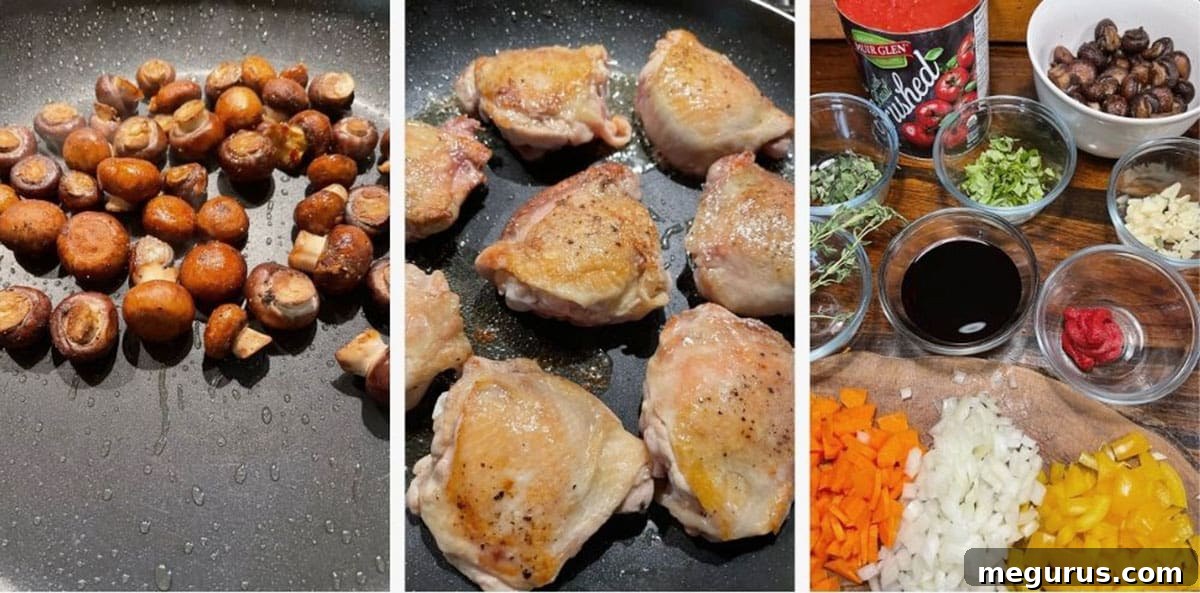
Begin by heating a large, heavy-bottomed skillet with a lid or a Dutch oven over medium-high heat. Add a teaspoon of olive oil. Introduce your sliced cremini mushrooms, season them lightly with salt and pepper, and cook, stirring frequently, until they are beautifully browned and have released their moisture. This critical step ensures a rich, earthy flavor and prevents soggy mushrooms. Transfer the browned mushrooms to a separate bowl and set aside. In the same skillet, add a little more olive oil if needed. Season your bone-in, skin-on chicken pieces generously with salt and pepper. Place the chicken skin-side down into the hot pan and sear until the skin is deeply golden and crispy. This rendering of the fat and browning of the skin is essential for flavor. Flip the chicken pieces and cook for just a couple more minutes on the other side. Remove the chicken to a plate and set it aside. While the mushrooms and chicken are browning, take this opportunity to gather and precisely prepare all your remaining ingredients, ensuring a smooth cooking process ahead.
Step 2: Building the Aromatic Base
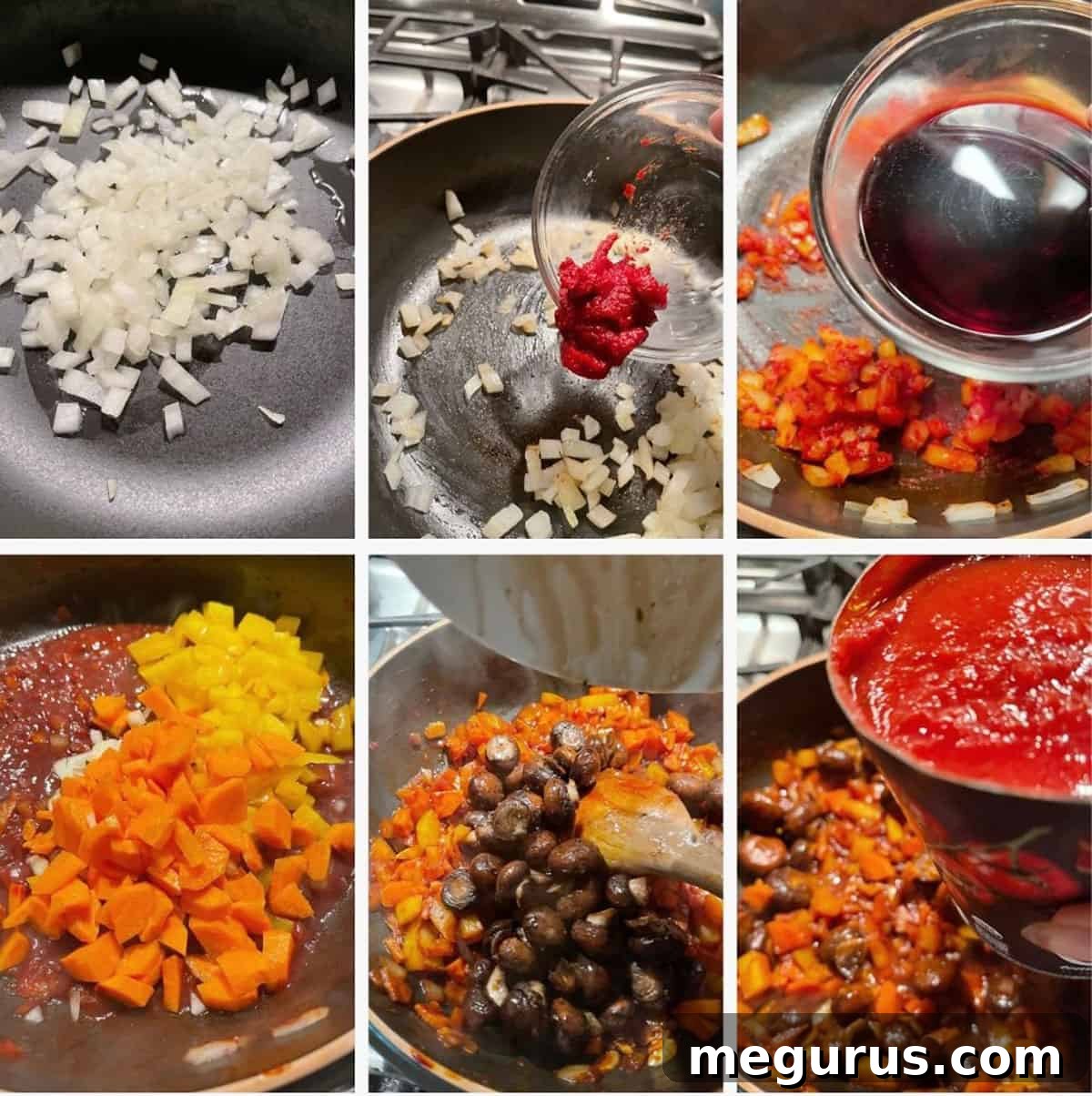
After removing the chicken, carefully spoon off and discard any excess fat from the skillet, but be sure to leave any browned bits (fond) clinging to the bottom – these are packed with flavor! Add the diced onion to the pan and cook, stirring regularly, until it softens and becomes translucent, which usually takes about 4-5 minutes. Next, stir in the sliced garlic and a pinch of red pepper flakes, cooking for just another minute until fragrant. Be careful not to burn the garlic. Add the tomato paste and stir it into the vegetables, cooking for about 1 minute until it darkens slightly and caramelizes. This enhances its sweetness and umami. Pour in the red or white wine, scraping the bottom of the pan with a wooden spoon to deglaze and release all those delicious browned bits. Allow the wine to boil for 1.5 to 2 minutes, reducing its volume by about half and cooking off the alcohol. Finally, add the diced carrots and bell pepper, along with the pre-cooked mushrooms and crushed tomatoes, stirring everything together.
Step 3: Slow Simmer & Finishing Touches
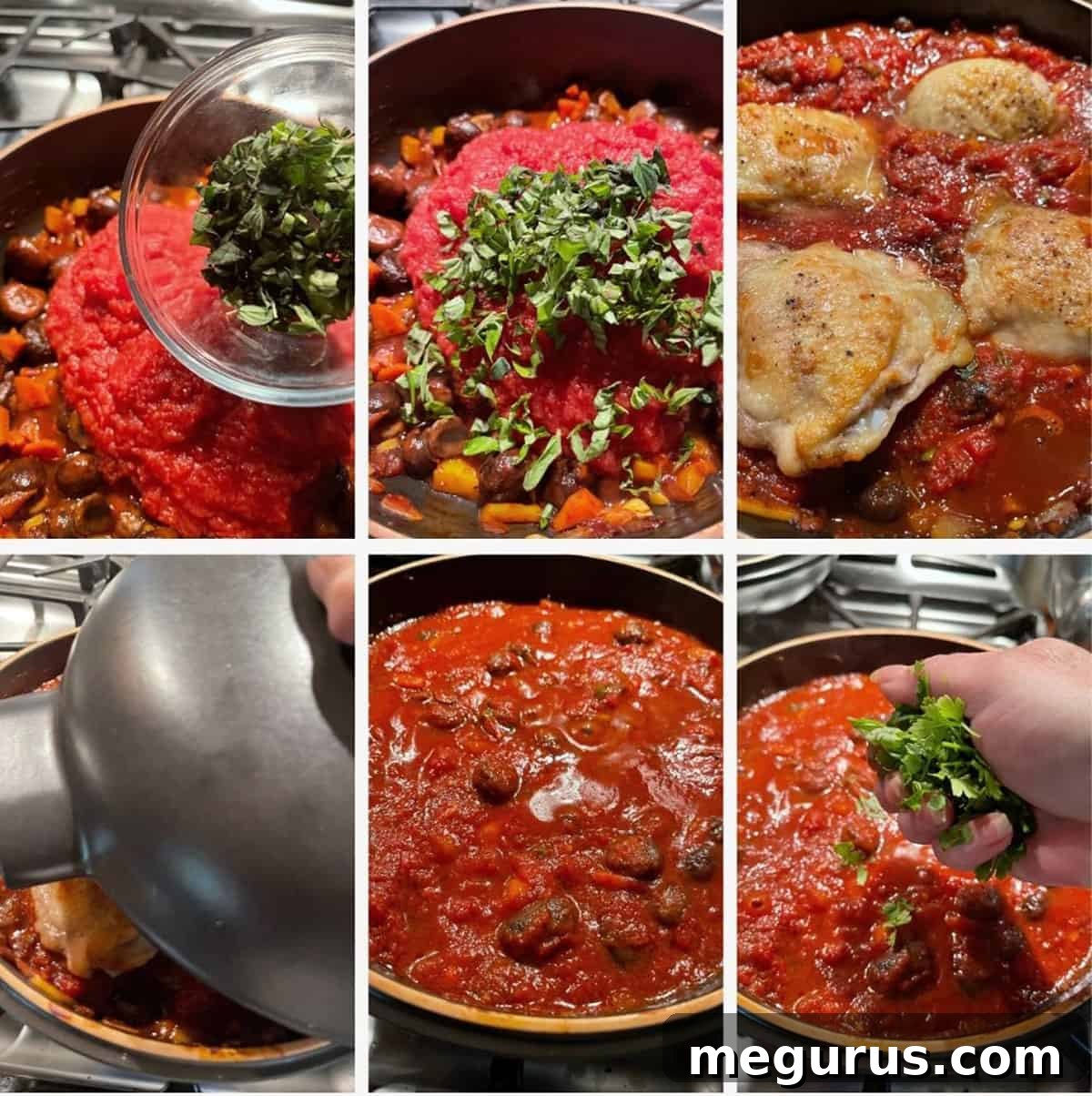
Now, it’s time for the magic to happen. Add your chosen fresh herbs – chopped parsley, basil, oregano, and a sprig of thyme – to the pan and stir well to incorporate them into the sauce. Return the browned chicken pieces to the pan, nestling them down into the rich tomato sauce. Cover the pot tightly with a lid, reduce the heat to medium-low, and let it gently simmer for about 20 minutes. Then, remove the cover, carefully flip the chicken over, return the lid, and continue to simmer for another 15-20 minutes, or until the chicken is cooked through and wonderfully tender. Breast meat will generally take longer than thighs. Once cooked, remove the lid, flip the chicken once more so the skin side faces up, and gently stir in a small pat of butter. This step adds a beautiful richness and sheen to the sauce. Stir in a generous amount of additional fresh chopped parsley. If desired, now is the perfect time to add black olives or capers for a briny, acidic kick. Allow to cook for a few more minutes to warm through, then taste the sauce and season generously with salt and freshly ground pepper, adjusting as needed to bring out all the vibrant flavors.
For an extra layer of complexity, if you like, you can add black olives or capers at the very end of cooking. Simply stir them in and let them warm gently in the sauce for a couple of minutes before tasting and adjusting any seasoning. Alternately, a small splash of good quality balsamic vinegar can be stirred in at this stage. All of these additions contribute a lovely acidic note that brightens the entire dish and cuts through the richness, creating a perfectly balanced flavor profile.
Expert Tips for Cacciatore Success
Achieving a truly remarkable Chicken Cacciatore involves a few key techniques and considerations. These tips will help you elevate your dish from good to unforgettable.
- The Lid is Your Friend for Tender Perfection: A tight-fitting lid is crucial for slow-simmering chicken cacciatore. It traps steam and moisture, ensuring the chicken cooks through evenly and becomes wonderfully tender, while also allowing the flavors to meld beautifully. If your pan doesn’t have a lid, don’t fret! You can create an effective seal by tightly wrapping the top of the pan with aluminum foil. Another clever trick is to use a large baking sheet placed over the top of the pan, making sure it completely covers the opening to minimize steam escape.
- Achieving Perfect Tenderness and Doneness: Always take a moment to test your chicken to ensure it’s cooked through. The internal temperature should reach 165°F (74°C). Also, check the carrots for tenderness – they should be soft but not mushy. Cook time can vary significantly based on the type and size of chicken pieces you use (breasts typically take longer than thighs), as well as the thickness of your carrots. If needed, simply continue simmering for a little longer, checking every 5-10 minutes, until everything reaches optimal tenderness. Patience is key!
- The Power of Finishing Touches: The final few ingredients you add can profoundly impact the dish. I highly recommend stirring in a small pat of butter at the end; it works wonders on tomato sauces, adding a velvety richness and gloss. A generous sprinkle of additional fresh parsley brightens the flavor and adds a pop of color. To truly balance the rich, savory notes, introduce an acidic element: a splash of good balsamic vinegar, a handful of briny black olives, or a spoonful of capers. These acidic touches cut through the richness and make the overall flavor profile more dynamic and appealing.
- Mastering Seasoning: Don’t Fear the Salt! Cacciatore is packed with fantastic ingredients, but after hours of slow cooking, you might find the taste a little… flat or understated. If this happens, it almost always means you need more salt! Unlike dishes with bacon or cured meats, this recipe doesn’t have inherently salty elements (unless you’ve added them). Be generous with your seasoning throughout the cooking process, adding pinches of salt to the mushrooms, chicken, and vegetables as you go. Taste the sauce at the very end, and don’t hesitate to add more salt until all those wonderful flavors truly sing and come alive on your palate. Freshly ground black pepper is also essential for a well-rounded finish.
Top Tip: Layering Flavors for Unforgettable Taste!
Chicken cacciatore is one of those magnificent dishes where the secret to its depth lies in building flavors in layers. Don’t rush any step! Take your time to properly brown the mushrooms until they’re golden and aromatic, then sear the chicken until its skin is crisp and beautifully colored. When you add the tomato paste, allow it to cook in the pan for a minute or two until it slightly darkens – this caramelization develops a deeper, sweeter flavor. Let the wine simmer and reduce by half, concentrating its essence. And here’s a crucial tip: season along the way! Add a pinch of salt and pepper to the mushrooms as they brown, another sprinkle to the chicken, and a bit more over the vegetables after they’ve softened, and again after adding the tomatoes and herbs. These small, incremental additions ensure every component is properly seasoned. Finally, taste the entire dish at the end and adjust with more salt and pepper as needed for a perfectly balanced and incredibly flavorful cacciatore.
What to Serve with Your Delicious Chicken Cacciatore
Chicken cacciatore is a complete meal in itself, but it pairs beautifully with a variety of sides that soak up its luscious, savory sauce.
- Pasta & Grains: Classic choices include a generous bed of spaghetti, pappardelle, or tagliatelle, which are perfect for twirling with the rich sauce. Egg noodles also offer a delightful soft texture. For a rustic touch, serve it over creamy polenta, which provides a comforting base. Alternatively, fluffy rice can absorb all the wonderful flavors. A sprinkle of freshly shaved Parmesan cheese on top adds a salty, umami finish that is highly recommended.
- Potatoes: Hearty and satisfying, rustic garlic mashed potatoes are a fantastic accompaniment, their creamy texture providing a wonderful contrast to the tender chicken and chunky sauce. Roasted potatoes or even simple boiled potatoes can also be excellent.
- Lighter Options: If you’re looking for a lower-carb alternative, consider serving your cacciatore with cauliflower rice or zucchini noodles (zoodles). These lighter options allow the rich flavors of the chicken and sauce to truly shine without adding too many heavy carbohydrates.
- Crusty Bread: And finally, no Italian meal is complete without a fresh, crusty loaf of bread. It’s absolutely perfect for scooping up every last drop of that incredible, flavorful sauce – don’t let a single drop go to waste!
Storage & Make-Ahead Tips
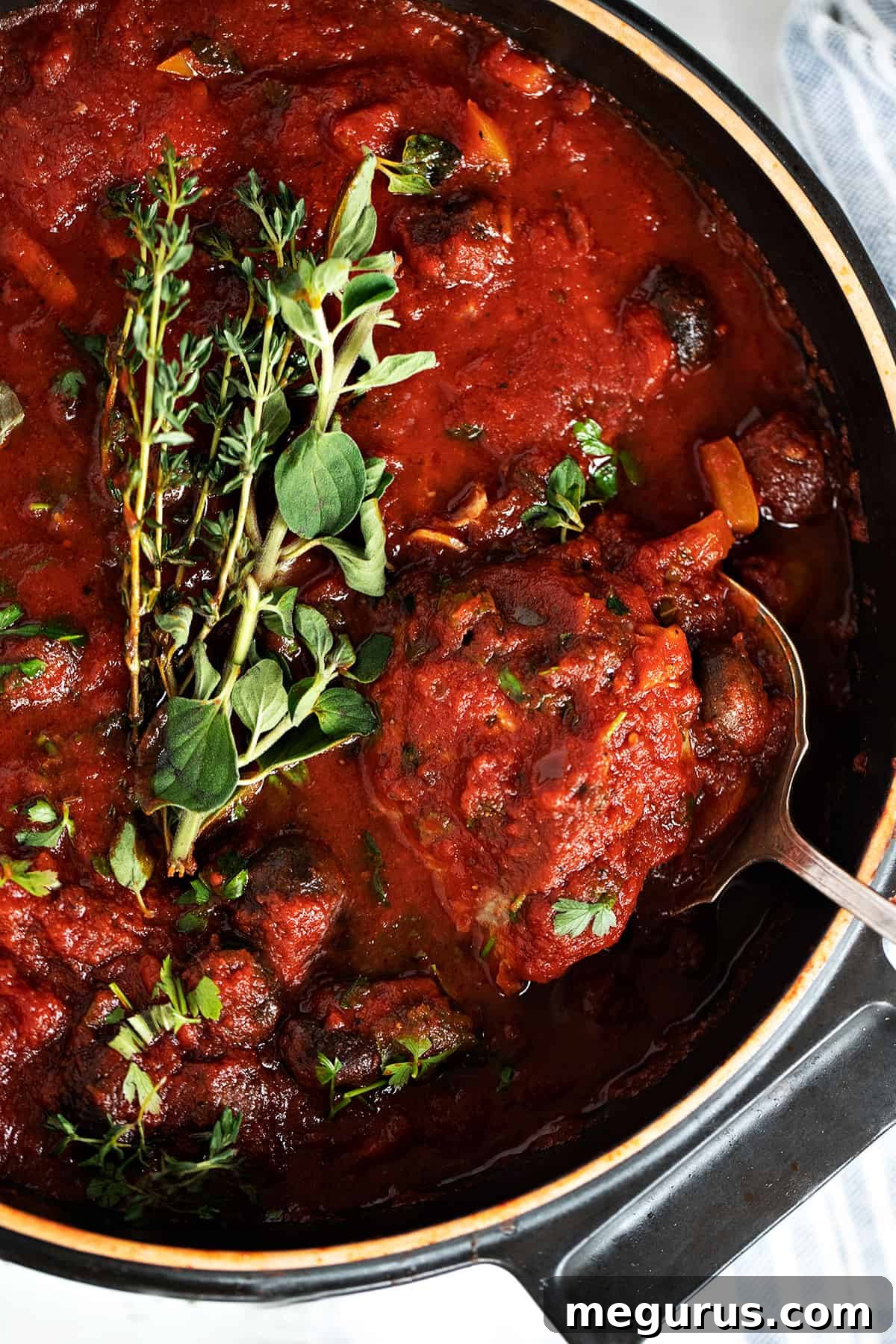
Chicken cacciatore is one of those magical dishes that often tastes even better the next day as the flavors have more time to meld and deepen. Leftovers can be stored in an airtight container in the fridge for up to 3-4 days. For longer storage, this cooked dish freezes exceptionally well. Allow it to cool completely, then transfer it to freezer-safe containers or bags and freeze for 2-3 months. Thaw overnight in the refrigerator before reheating gently on the stovetop or in the microwave. It’s a fantastic meal to make in a larger batch for future dinners!
Creative Variations to Make it Your Own
The versatility of Chicken Cacciatore means you can easily adapt it to your preferences or what you have on hand.
- Smoky Depth: For an extra layer of savory, smoky flavor, add diced bacon or pancetta. Cook it in the skillet after the mushrooms (and before the chicken) until crispy, then remove and set aside. Stir it back into the dish during the final 10-15 minutes of simmering.
- Briny & Tangy Notes: Incorporate black olives (such as Kalamata) or capers for a delightful briny and tangy counterpoint to the rich sauce. Stir them in during the last few minutes of cooking, just enough to warm them through.
- Spice It Up: If you enjoy a bit more heat, increase the amount of red pepper flakes or add a finely chopped fresh chili pepper along with the garlic.
- Extra Vegetables: Feel free to add other hearty vegetables like zucchini, eggplant, or green beans during the last 20 minutes of simmering. Artichoke hearts (canned or jarred) are also a wonderful addition for a Mediterranean twist.
- Citrus Brightness: A squeeze of fresh lemon juice at the very end can add a bright, zesty finish, especially if you opted for white wine in the sauce.
Get the Recipe: Classic Chicken Cacciatore
Pin This
Leave a Review
Ingredients
- 8 oz button cremini mushrooms
- 4 chicken breasts or 6-8 chicken thighs, bone-in/skin on
- 2 tsp olive oil, divided
- 1 cup onion, diced
- 3 cloves garlic, sliced
- Pinch red pepper flakes
- 2 Tbsp tomato paste
- 1/2 cup red or white wine, or you can substitute chicken broth
- 1 cup red, orange or yellow bell pepper, diced
- 1 cup carrot, thinly sliced or diced
- 28 oz canned crushed tomatoes, or canned whole tomatoes hand-crushed
- 3 Tbsp fresh parsley, chopped *see Note 1 for substituting dried herbs
- 2-3 Tbsp fresh basil, chopped
- 1 Tbsp fresh oregano leaves, chopped
- 1 fresh thyme sprig
To finish:
- 1/2 Tbsp butter
- Additional chopped fresh parsley, 3-4 Tbsp
- 1-2 tsp balsamic vinegar OR black olives OR capers, to taste
Instructions
-
Heat a large skillet with a lid or a Dutch oven on the stove-top over medium heat. Add a tsp of olive oil and add the mushrooms. Season with a bit of salt and pepper and cook, stirring regularly, until browned. Remove to a plate and set aside.
-
In the same pan add a bit more oil to heat. Season the chicken with a bit of salt and pepper. Add the chicken to the hot pan, skin side down. Cook until the skin is quite golden, then flip over and cook a couple of minutes more. Remove to a plate and set aside.
-
Spoon off and discard excess fat in the pan (but keep any browned bits!). Add the onion to the pan and cook, stirring, until softened, 4-5 minutes. Add the garlic and red pepper flakes and cook another minute or so. Add the tomato paste and stir in. Cook, stirring, about 1 minute, until it darkens slightly. Add the wine to the pot. Allow to boil 1 1/2-2 minutes, to cook off the alcohol and reduce by about 1/2.
-
Add the bell pepper, carrot, cooked mushrooms and crushed tomatoes to the pot. Add the herbs and a bit of salt and pepper and stir in well. Return the chicken to the pan, pressing the chicken down into the sauce a bit. COVER pot with a lid, reduce heat to medium-low and allow to gently simmer about 20 minutes. Remove cover, flip chicken over, return the cover and simmer another 15-20 minutes, or until the chicken is cooked through (Breasts will take longer than thighs to cook).
-
Remove lid and flip chicken over again, so the skin side is up. Gently stir in the butter and additional fresh parsley. If you like, you can add some black olives or capers at this point and well. Allow to cook another few minutes to warm, then taste the sauce and add additional salt, as needed. (If the sauce tastes flat, it needs salt!) Add a little freshly ground pepper, as well, if you like.
Notes
Leftovers will keep in the fridge for about 3-4 days or you can freeze the cooked dish for 2-3 months.
Be sure to read the Ingredient and Cook’s Notes above this Recipe Card, for more tips on making this recipe. You will also find Step-by-Step photos there, as well, that you might find helpful.