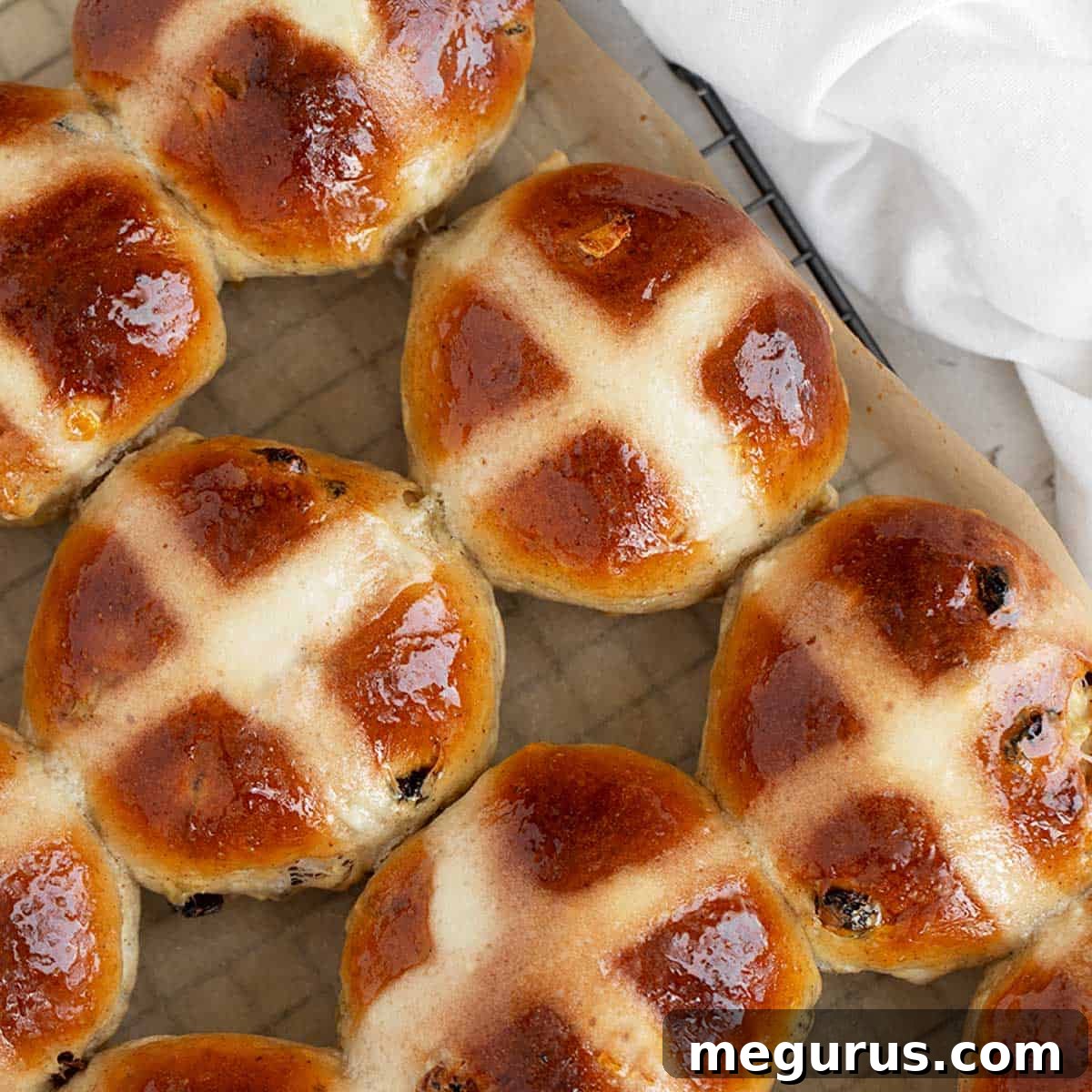
There’s an undeniable charm that comes with baking, especially when it involves traditions steeped in history and flavor. Among the most beloved of these culinary customs is the crafting of Traditional Hot Cross Buns. These subtly spiced, fruit-filled, and flour-crossed delights are more than just a sweet treat; they are a centuries-old symbol of Easter and springtime, cherished across British households and beyond.
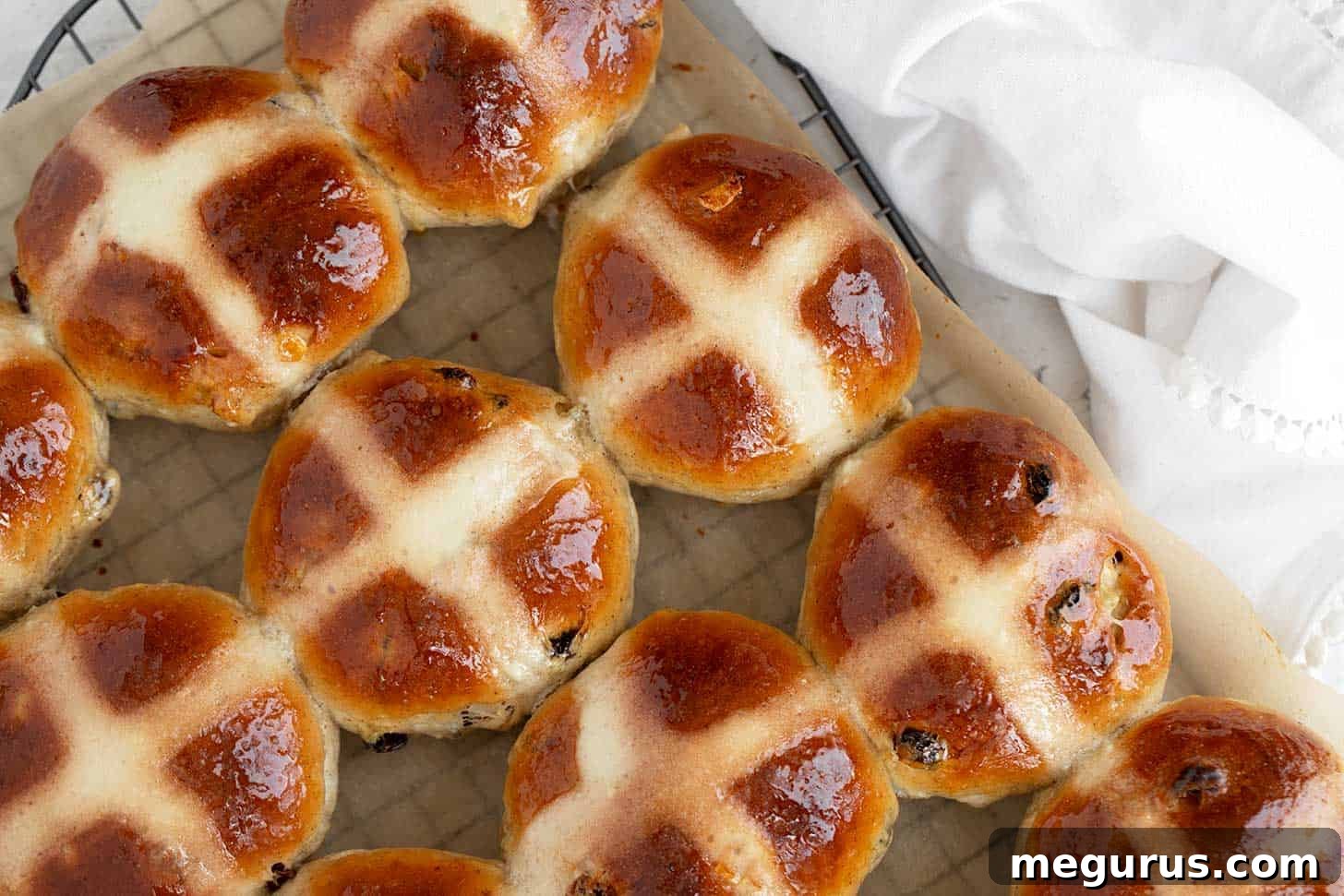
If you’ve been on the hunt for an authentic hot cross bun recipe that brings the true taste of British tradition to your kitchen, your search ends here. Our recipe guides you through creating these classic Easter buns, renowned for their soft, enriched dough, generous filling of plump raisins, zesty currants, and aromatic mixed fruit peel. Each bun is distinctively topped with a delicate flour paste cross before baking, a visual hallmark that’s as iconic as their flavor. Perfect for a morning treat, an afternoon snack, or a delightful addition to your Easter brunch spread, these buns are a testament to simple, delicious baking. They are wonderful eaten fresh from the oven, fantastic toasted with a slather of butter, and incredibly versatile as they freeze beautifully, allowing you to savor them long after the holiday has passed.
The Enduring Legacy of Hot Cross Buns: History and Tradition
The story of hot cross buns is as rich and comforting as the buns themselves, tracing back to the medieval era. These sweet, spiced buns, marked with a cross, have long been associated with Christian traditions, particularly Good Friday. The cross is said to symbolize the crucifixion, while the spices represent the embalming spices used at Christ’s burial. However, the origins may even predate Christianity, with some historians suggesting similar spiced breads were baked by Saxons in honor of the goddess Eostre (from whom Easter possibly derives its name), with the cross representing the four quarters of the moon or the four seasons. Regardless of their exact lineage, hot cross buns became deeply embedded in British culture, evolving into the beloved Easter staple we know today. Folklore also surrounds these buns, with beliefs that buns baked on Good Friday would never go moldy, or that sharing a bun with a friend would ensure friendship throughout the coming year. They were even thought to protect against shipwrecks when taken on sea voyages. While these beliefs may have faded, the tradition of baking and sharing these delightful buns continues to thrive, bringing warmth and joy to countless homes.
Essential Ingredients for Perfect Hot Cross Buns
Crafting the perfect batch of hot cross buns begins with understanding each ingredient’s role. Here’s a detailed look at what you’ll need and why:
- Yeast: Yeast is the heart of any good bread, and these buns are no exception. I highly recommend using Instant Yeast (brands like SAF Red are excellent) as it can be added directly to your dry ingredients, simplifying the process. If you’re working with Active Dry Yeast, remember it needs to be “proofed” first. This means dissolving it in a portion of the lukewarm milk (around 105°F or 40°C) with a pinch of sugar for about 5-10 minutes until it becomes frothy, indicating the yeast is active and ready. Skipping this step with active dry yeast can result in dense, unrisen buns.
- Bread Flour: For that wonderfully chewy yet tender texture characteristic of excellent hot cross buns, Bread Flour is truly superior. Its higher protein content (typically 12-14%) leads to stronger gluten development, which gives the buns their desirable structure and rise. If bread flour isn’t available, All-Purpose Flour can be used, but you might find the buns slightly softer and you may need to adjust the liquid or flour quantity slightly to achieve the right dough consistency. Always measure flour by weight for the most accurate results.
- Raisins: These classic fruit buns benefit from a medley of dried grapes. I often use a blend of Thompson Raisins, Golden Raisins, and Sultanas for a varied texture and sweetness. A crucial step for moist buns is to plump your raisins. Soak them in hot water for at least 15-20 minutes, then drain and pat them dry. This prevents the dried fruit from absorbing moisture from your dough during baking, ensuring your buns remain tender and delicious, not dry.
- Currants: Small, intensely flavored dried currants are a delightful addition, offering a tangy counterpoint to the sweetness of the raisins. If you enjoy their unique taste, feel free to substitute some of the raisins with an equal amount of currants. Plump them alongside your raisins for the best outcome.
- Mixed Fruit Peel: Also known as candied peel, this ingredient brings a beautiful, subtle citrus zing to the buns. Typically made from the peel of lemons, oranges, and sometimes citron, it’s boiled in sugar syrup and then finely chopped. This provides both flavor and a pleasant chewiness. If you’re not a fan of candied peel or can’t find it, you can simply omit it and add more raisins or a touch of fresh citrus zest (lemon or orange) to your dough for a similar aromatic lift.
- Spices: The aromatic blend of spices is what truly defines a hot cross bun. This recipe features a classic combination of Cinnamon, Nutmeg, Allspice, and Mace. Mace, the outer covering of the nutmeg seed, offers a more delicate, subtle version of nutmeg’s flavor with hints of pine and pepper. While it’s a wonderful addition, it’s not always a pantry staple. If you don’t have mace, simply increase the amounts of the other three spices slightly to maintain that warm, inviting flavor profile. You could also experiment with a pinch of ground cloves or ginger for an extra layer of warmth.
- Milk: Using 2% or 3% (whole) milk is recommended. The fat content in the milk enriches the dough, contributing to a softer crumb and a richer flavor. Ensure your milk is lukewarm (around 105°F / 40°C) when added, as this helps to activate the yeast without shocking it.
- Other Essentials: Don’t forget Salt to balance the sweetness and enhance the flavors, White Granulated Sugar to feed the yeast and sweeten the buns, and two Large Eggs, which add richness, moisture, and contribute to the beautiful golden crust. Ensure eggs and butter are at room temperature for optimal mixing and emulsification with the dough.
How to Bake Traditional Hot Cross Buns: A Step-by-Step Guide
Follow these detailed steps to create truly exceptional hot cross buns. Precision and patience are key!
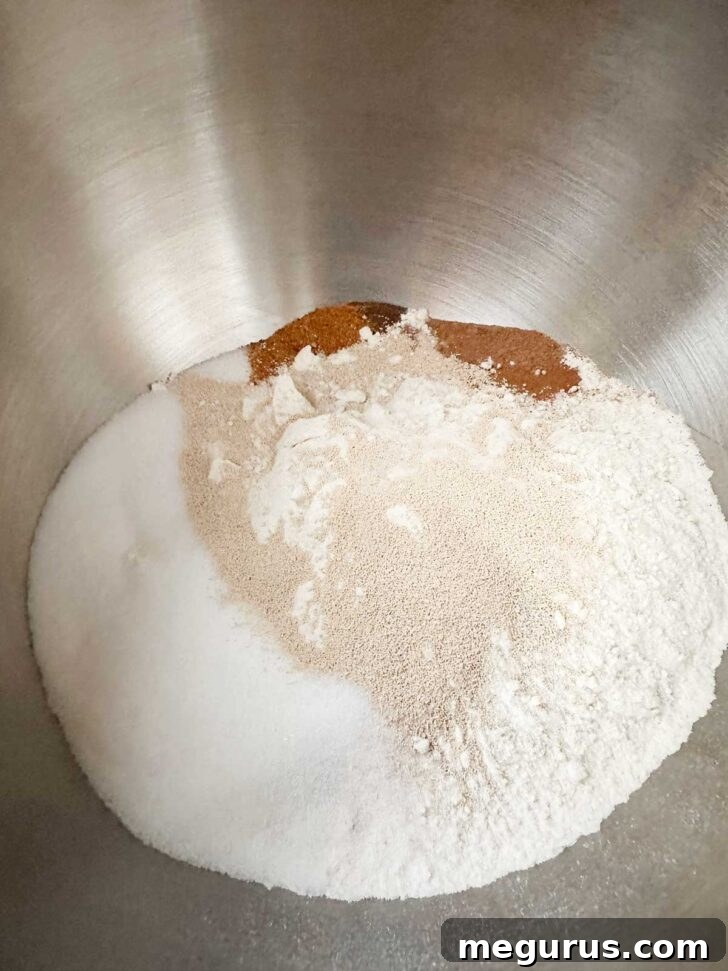
- Combine Dry & Wet Ingredients: In the bowl of a stand mixer (or a large mixing bowl if kneading by hand), combine the bread flour, white granulated sugar, fine table salt, instant yeast, and all the ground spices (cinnamon, nutmeg, allspice, mace). Give them a quick stir to distribute evenly. Next, add the lukewarm milk, the room-temperature butter cut into small cubes, and the lightly beaten egg.
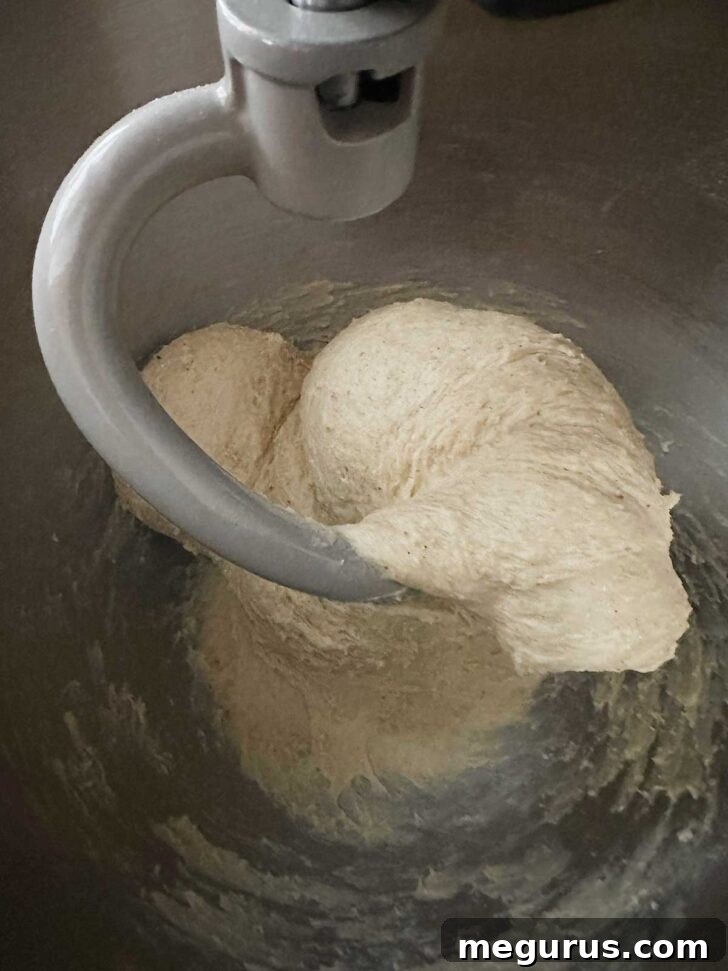
- Initial Kneading: Attach the dough hook to your stand mixer. Begin mixing on a low speed (Speed 2) until all the flour is incorporated and a rough dough forms. Increase the speed slightly and continue to knead for 7 minutes. The dough will become more cohesive, elastic, and smooth during this time. After 7 minutes, the dough should be soft and will likely still be somewhat sticky, wrapping around the dough hook but pulling away from the sides of the bowl.
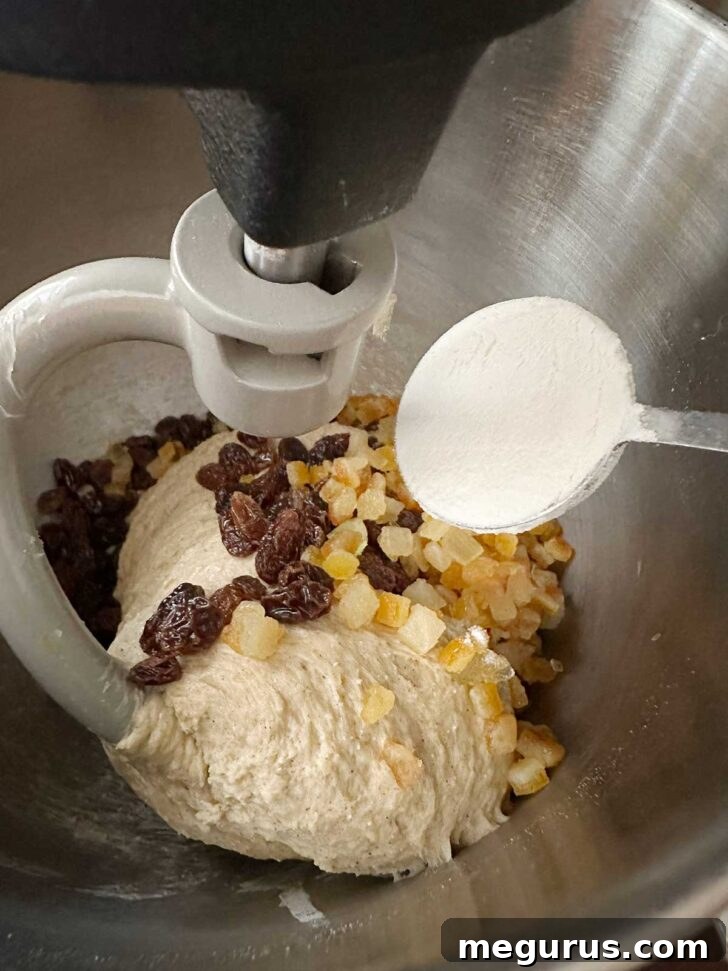
- Incorporate Fruits: While the dough is kneading, prepare your dried fruits. Ensure the plumped raisins and sultanas are thoroughly drained and patted dry. Add them, along with the mixed fruit peel, to the mixer bowl. Sprinkle about a tablespoon of flour over the fruits to help prevent them from clumping together and to assist in even distribution within the dough.
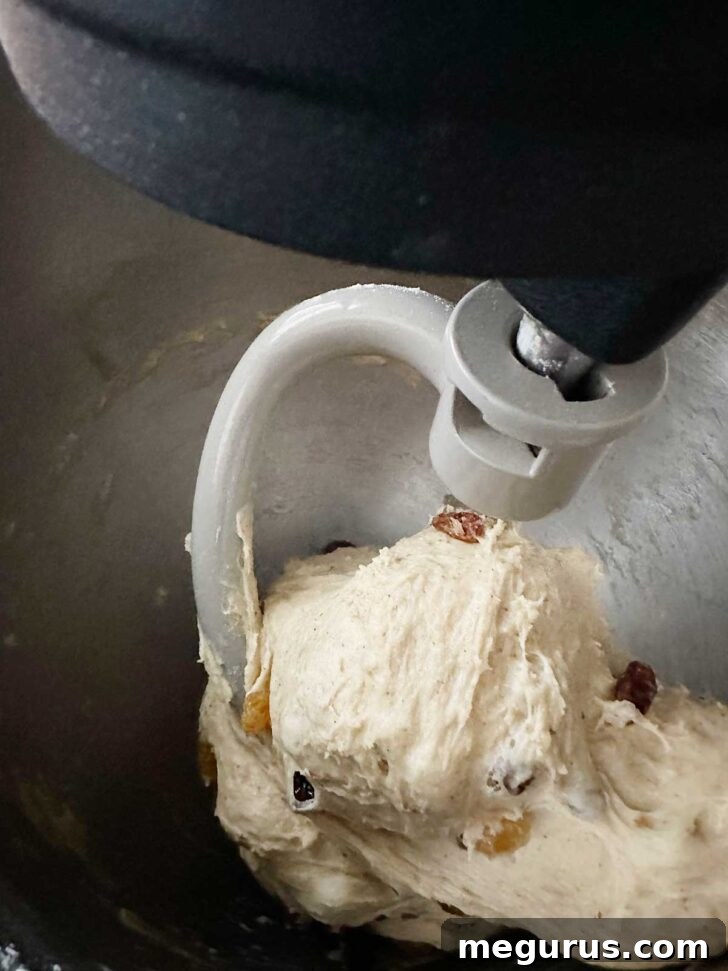
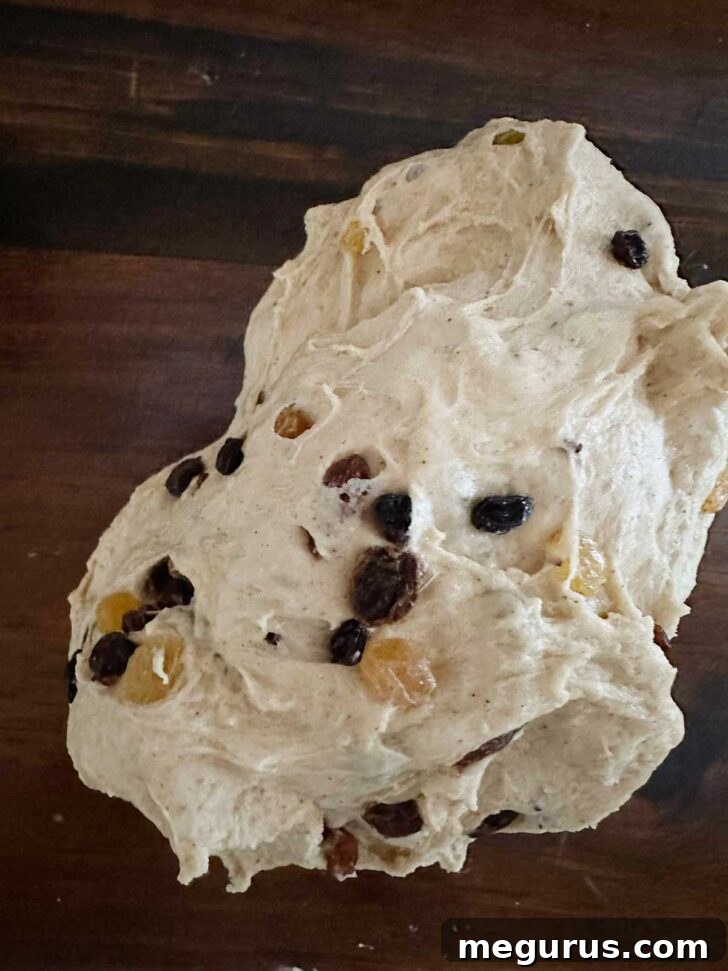
- Final Kneading: Continue kneading the dough with the fruits at Speed 2 for another 3 minutes. The finished dough should be very moist, yet it should mostly clean the sides of the bowl and wrap around the dough hook. There might be a small sticky patch (about 2 inches in diameter) at the very bottom of the bowl. If your dough is excessively sticky, add a very small amount of flour (half a tablespoon at a time) and continue kneading until it reaches the desired consistency. Over-flouring will make the buns dry, so be conservative.
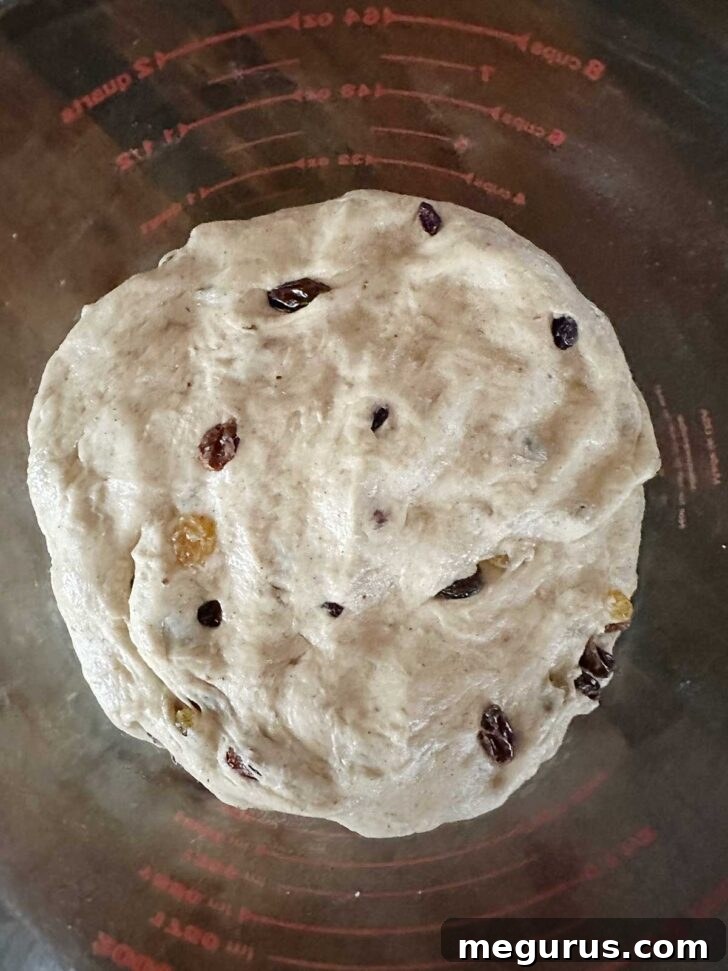
- First Rise (Bulk Fermentation): Gently remove the dough from the mixer bowl onto a lightly floured work surface. Form it into a neat ball. Transfer the dough ball to a greased bowl or a large measuring cup. Cover the bowl tightly with plastic wrap to prevent a skin from forming. Allow the dough to rise in a warm, draft-free place until it has visibly doubled in size. This typically takes about 60-75 minutes, but rising times can vary significantly based on your kitchen’s temperature and humidity. Trust the visual cue of “doubled in size” over a strict timer.
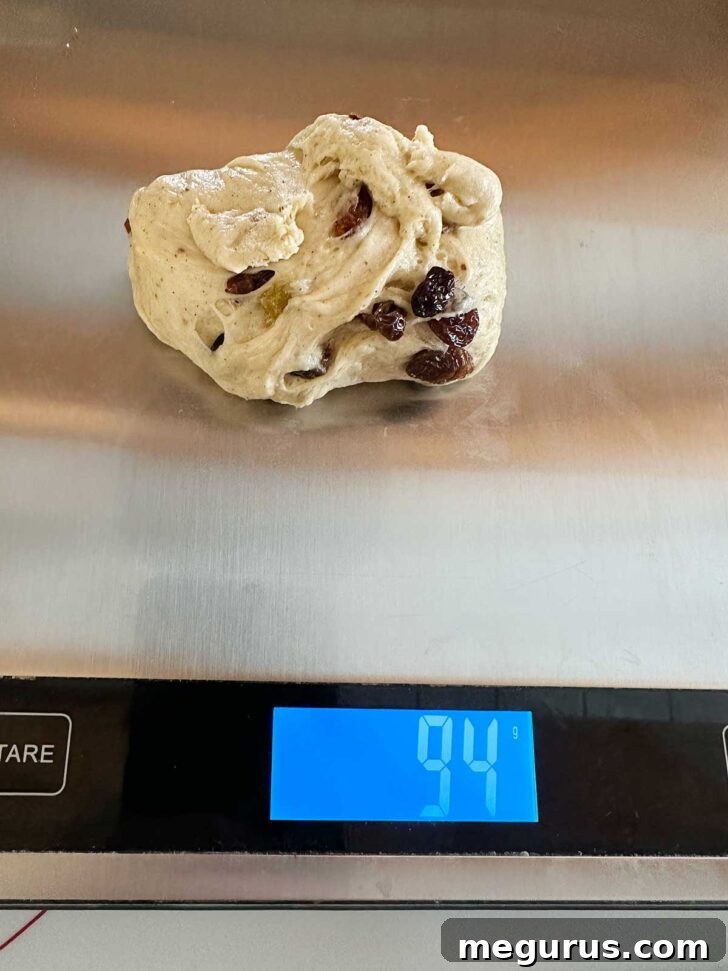
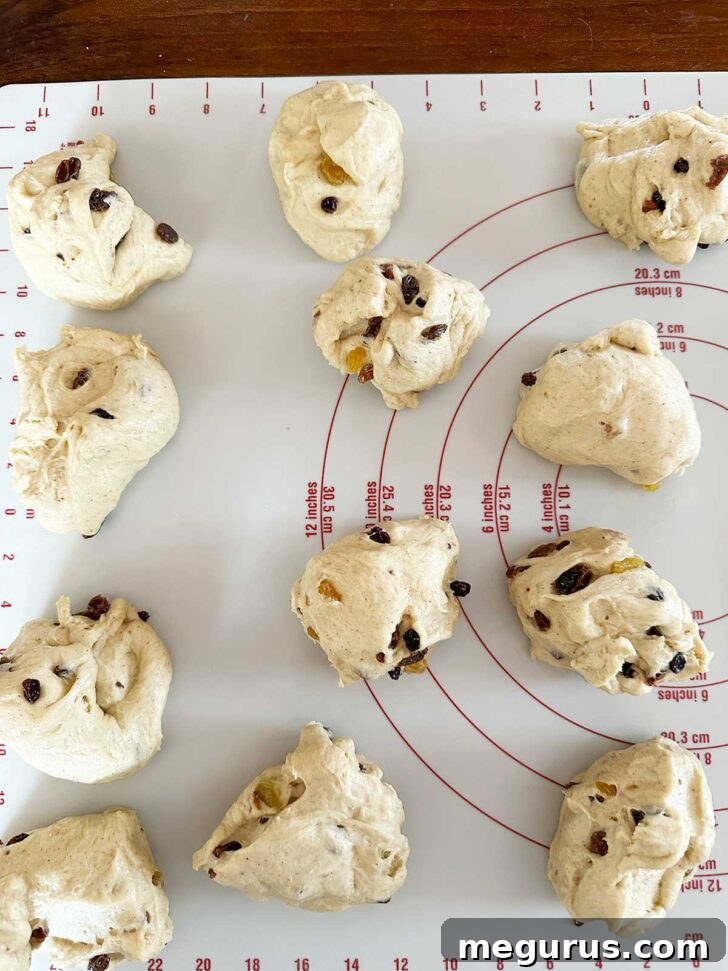
- Divide and Shape: Once the dough has doubled, gently turn it out onto a lightly floured surface. Deflate it carefully to release the gases. Divide the dough into 12 equally sized pieces. For best results and uniform buns, I highly recommend using a kitchen scale. Weigh the entire dough ball, then divide that total weight by 12 to get the target weight for each individual bun. Then, weigh out each piece. This typically results in buns weighing around 90-95 grams each.
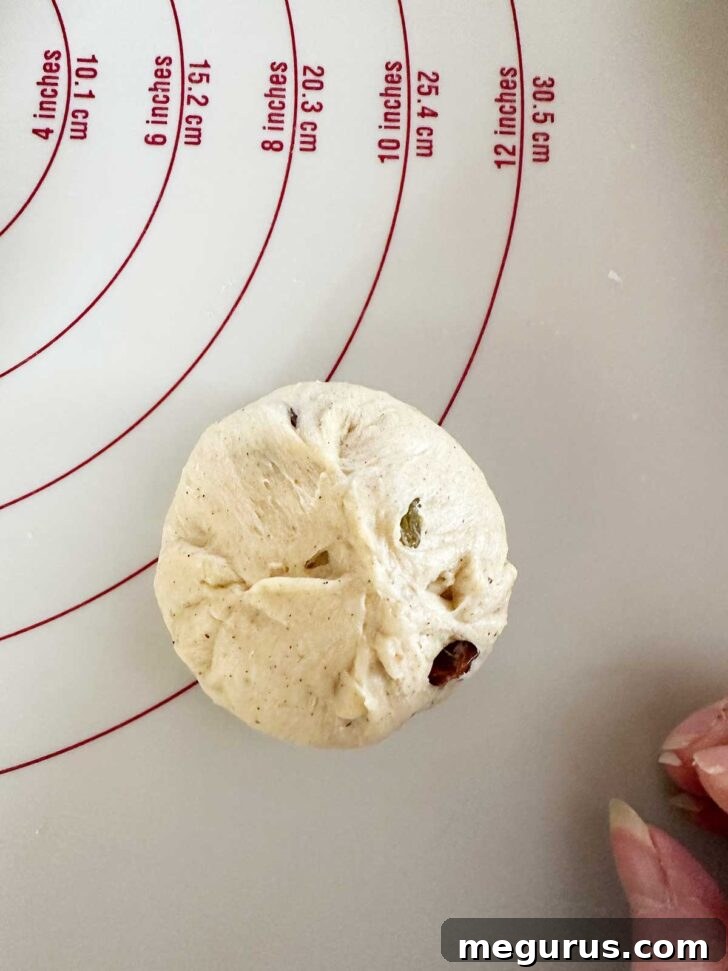
- Form into Balls: Take one piece of dough and gently stretch and pinch the edges towards the center, forming a tight ball with a smooth top surface. Flip the ball over so the pinched seam is underneath. Cup your hand over the dough ball and gently roll it against the work surface in a circular motion to seal the seam and create a perfectly round, taut surface. Repeat this process for all 12 dough pieces.
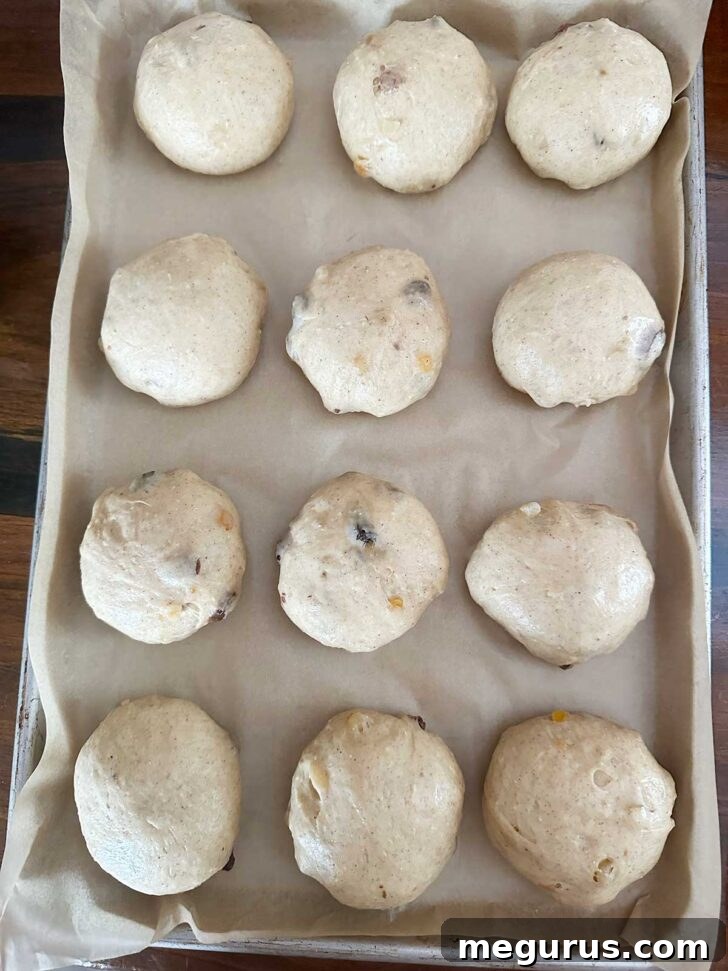
- Second Rise (Proofing): Line a baking sheet (a 10×15-inch jelly roll pan or a 9×13-inch quarter sheet pan works well) with parchment paper. Arrange the shaped dough balls on the prepared baking sheet, leaving as much space between them as possible. For a 10×15-inch pan, they’ll have more room; in a 9×13-inch pan, they’ll be closer, resulting in taller buns that rise into each other. Loosely cover the buns with greased plastic wrap (spray the side facing the buns with cooking spray) to prevent sticking and drying. Allow them to rise in a warm place until they have nearly doubled in size again, which usually takes about 45 minutes.
- Egg Wash & Cross Preparation: While the buns are on their second rise, prepare the egg wash by whisking one large egg with two tablespoons of milk until thoroughly combined. For the crosses, in a small bowl, mix 8 tablespoons of all-purpose flour with 4 tablespoons of white granulated sugar. Gradually add 4 tablespoons of room-temperature water, stirring continuously until you achieve a smooth, pipeable paste. Transfer this paste into a piping bag fitted with a small round tip, or into a sturdy plastic sandwich bag with a corner snipped off (about 1/4-inch opening). Cover the paste to prevent it from drying out.
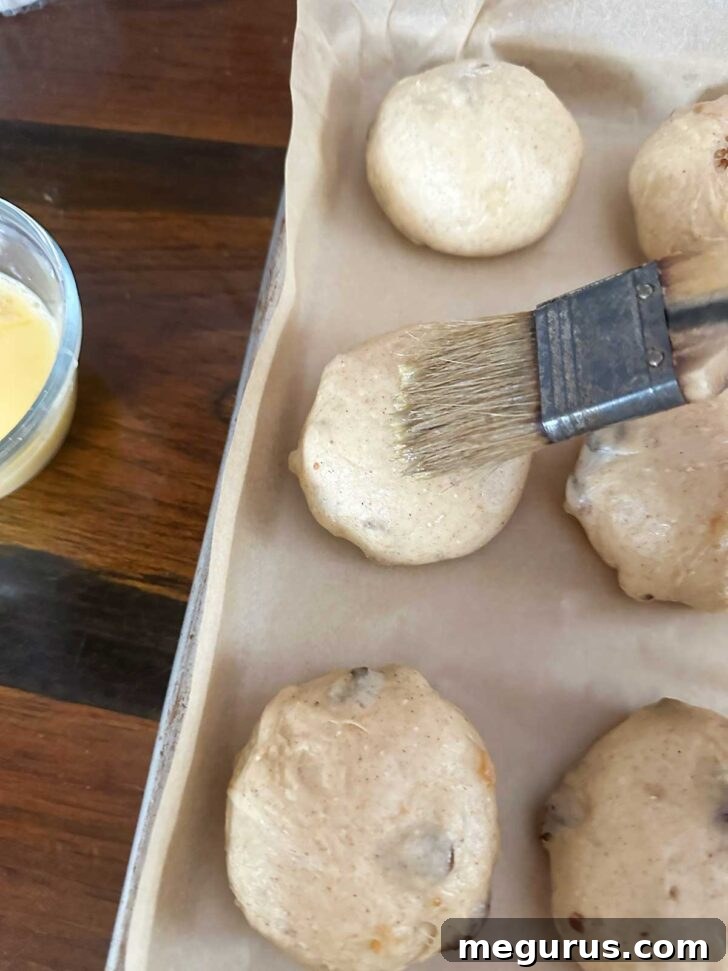
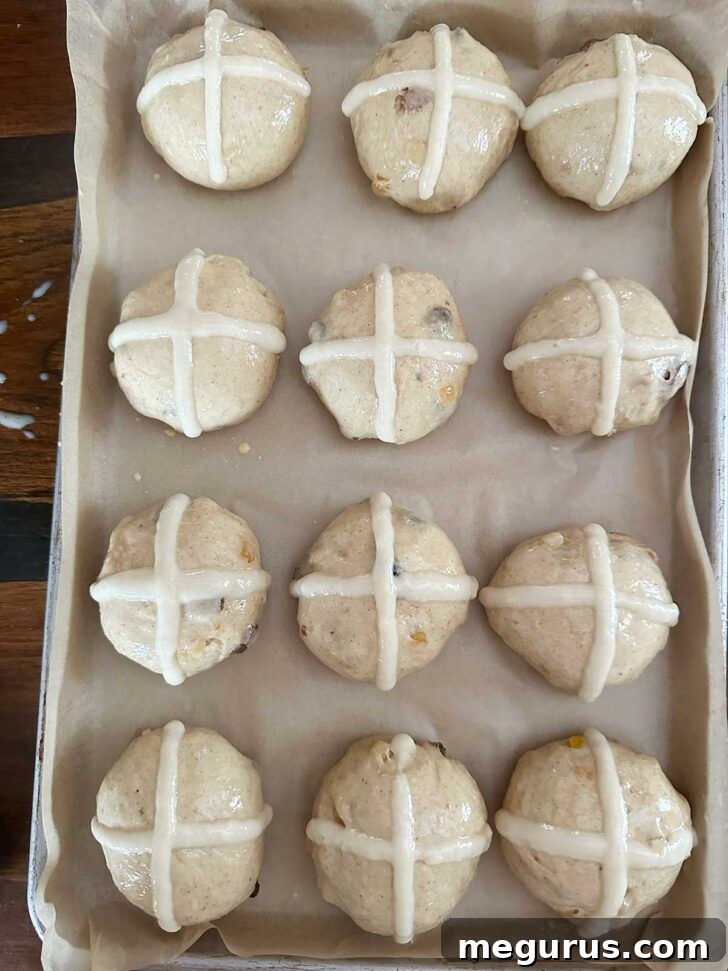
- Bake to Perfection: Preheat your oven to 390°F (200°C) for a non-convection oven. If your oven only offers 400°F, set it there and prepare to slightly reduce baking time. Once the buns have doubled in size, gently brush them all over with the prepared egg wash. Be careful not to deflate them. If they have risen into each other, do not separate them. Now, pipe the flour crosses onto the top of each bun, starting about half an inch from the bottom and extending across. Place the baking sheet in the preheated oven. Bake for 16-20 minutes for a 10×15-inch pan, or 20-25 minutes for a 9×13-inch pan. Rotate the pan halfway through baking for even browning. The buns should be a deep golden brown and register an internal temperature of 190°F (88°C) with an instant-read thermometer for optimal moistness.
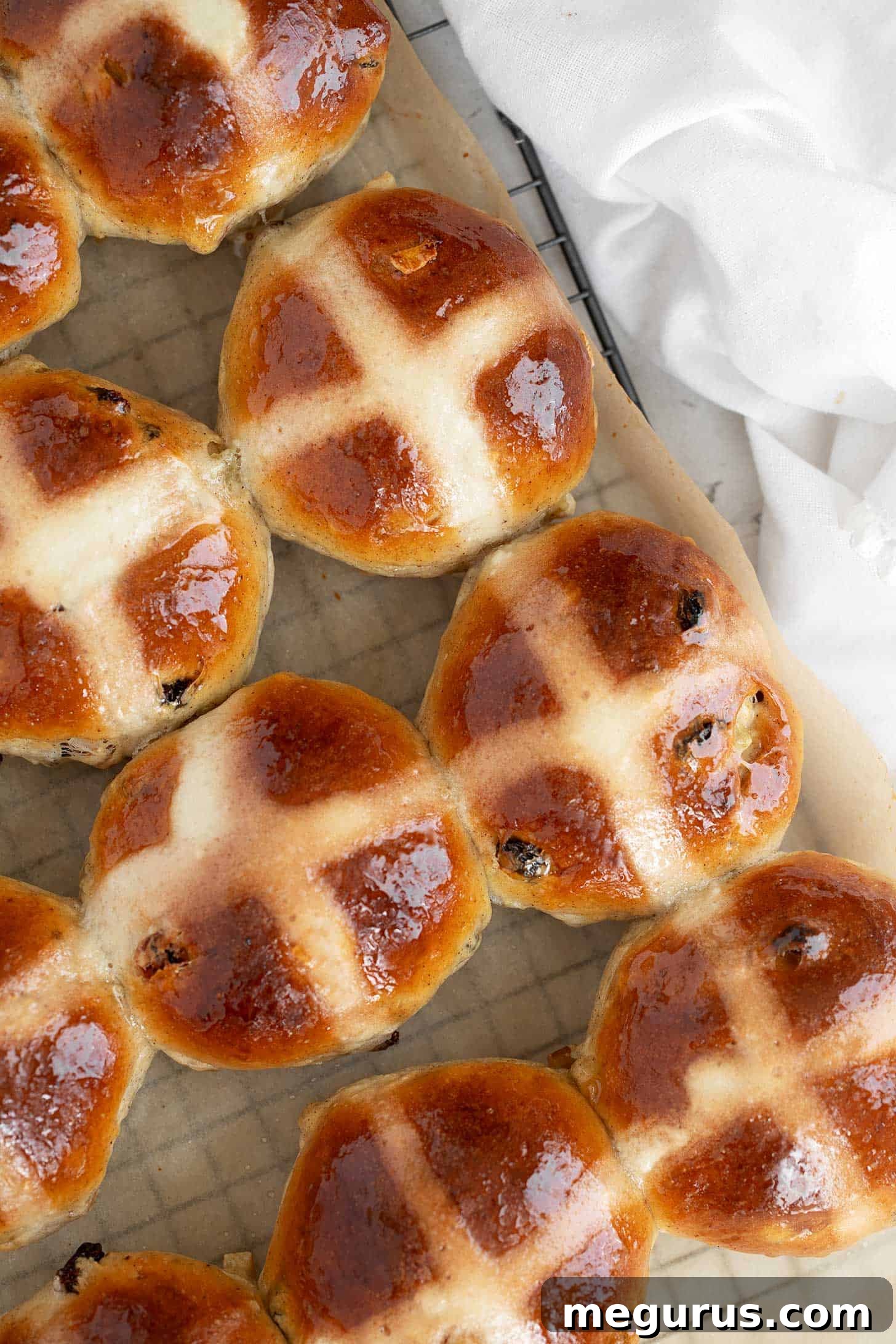
- Sugar Glaze & Cooling: As the buns bake, prepare the simple sugar glaze. Combine 4 tablespoons of white granulated sugar with 4 tablespoons of water in a microwave-safe cup and microwave for 45-60 seconds until the sugar dissolves. Alternatively, heat in a small saucepan until simmering. Immediately upon removing the hot buns from the oven, brush the tops generously with the warm sugar syrup. This adds a lovely shine and a touch of extra sweetness. Transfer the buns, still on the parchment paper, to a wire cooling rack to cool completely. Resist the urge to pull apart connected buns until they are fully cooled, as separating them too soon can release steam and result in a gummy interior.
Hand-Kneading Option: No stand mixer? No problem! You can absolutely make these hot cross buns by hand. Simply combine the ingredients in a large bowl, stirring with a sturdy spoon until a shaggy dough forms. Then, turn the dough out onto a lightly floured work surface and knead for 10-12 minutes. The dough will be a bit sticky, and that’s perfectly normal – try to resist adding excessive additional flour, as this can make your buns dry. The stickiness will become more manageable after the first rise.
Choosing the Right Pan for Your Hot Cross Buns
The type of baking pan you use significantly impacts the final shape and baking time of your hot cross buns:
- 9×13-inch Quarter Sheet Pan or Cake Pan: If you use a 9×13-inch pan, your buns will be placed closer together. As they rise and bake, they will grow taller and press against each other, resulting in soft-sided buns that are quite lofty. These buns typically require a few extra minutes in the oven to cook through completely, often around 23-25 minutes.
- 10×15-inch Jelly Roll Pan or Rimmed Baking Sheet: Opting for a larger 10×15-inch baking sheet allows for more space between the buns. This results in flatter buns with crisper, more golden sides, which are often preferred for toasting. These usually bake a bit faster, reaching internal temperature in about 16-18 minutes.
For the most even baking, I highly recommend using metal baking pans. The material of the pan conducts heat efficiently and consistently, ensuring your buns bake beautifully every time.
Expert Recipe Tips for Success!
- Precision with Flour: A kitchen scale is your best friend when baking! Using weight measurements for flour (500g) eliminates guesswork and prevents accidental over-flouring, which is a common cause of dry buns. If you don’t have a scale, use the “spoon and level” method: spoon flour into your measuring cup, then level it off with a straight edge, rather than scooping directly from the bag.
- Spice Level Adjustment: Our recipe provides a pleasantly spiced bun that isn’t overwhelming. If you prefer a bolder, more intensely spiced flavor, feel free to increase the quantity of the spices. However, be aware that a higher concentration of spices can sometimes slow down yeast activity, so be prepared for potentially longer rising times.
- Embrace the Stickiness: The dough for hot cross buns is intentionally on the stickier side after the initial mixing. This high hydration contributes to their characteristic soft, moist crumb. Resist the urge to add too much extra flour during the initial kneading phase or when turning it out for the first rise. The dough will become less sticky and much easier to handle after its first proof.
- Simple Piping Solution: You don’t need fancy pastry equipment for the flour paste crosses. A simple plastic sandwich bag with one corner snipped off (about 1/4-inch opening) works perfectly as a makeshift piping bag.
- Leave Buns Connected: If your buns rise so much that they join together during the second proof, do not try to separate them before baking; this can cause them to deflate. Similarly, after baking, leave them connected on the cooling rack. Breaking them apart while they’re still warm allows steam to escape too quickly, which can lead to a gummy texture inside. Only separate them gently once they are completely cooled.
- Trust Your Dough’s Rise: Rising times are always estimates and can vary significantly depending on ambient kitchen temperature, humidity, and the activity of your yeast. Instead of strictly adhering to the time specified, always observe your dough. Allow it to rise until it has genuinely doubled in size, regardless of how long that takes. A properly risen dough is crucial for light and airy buns.
- Optimal Baking Temperature: For the most tender and moist hot cross buns, I’ve found that baking them until they reach an internal temperature of 190°F (88°C) is ideal. An instant-read thermometer is invaluable for this. If you don’t have one, rely on visual cues: the buns should be a beautiful deep golden brown, and feel light and springy to the touch. Pay close attention to the baking times suggested for your specific pan size.
Serving Suggestions and Variations for Your Hot Cross Buns
Hot cross buns are incredibly versatile and delightful in many forms. Enjoy them warm, straight from the oven, perhaps split and spread with a generous dollop of butter. For a classic experience, slice them in half and toast them until golden brown, then add butter or even your favorite jam or marmalade. They also pair beautifully with clotted cream or a slice of mature cheddar cheese for a British-inspired treat. Don’t be afraid to get creative with variations. You could add finely grated orange or lemon zest directly to the dough for an intensified citrus note, or swap out some of the traditional dried fruits for dried cranberries, chopped dried apricots, or even mini chocolate chips for a modern twist. An apricot or orange marmalade glaze (simply warmed marmalade brushed on top) can offer an alternative to the simple sugar syrup.
Making Ahead, Storing, and Freezing Hot Cross Buns
Hot cross buns are at their absolute peak of flavor and freshness within 24 hours of baking. The soft crumb and aromatic spices are most pronounced when fresh. However, if you’re planning to make a larger batch or want to enjoy them over several days, proper storage is key to maintaining their quality.
- Short-Term Storage (1-2 days): Once the buns have completely cooled to room temperature, store them in an airtight container or a large resealable plastic bag. This will help keep them soft and prevent them from drying out. Avoid refrigerating them, as refrigeration tends to dry out yeast-leavened baked goods more quickly.
- Freezing for Longer Preservation: Freezing is the best method to preserve the fresh quality of hot cross buns for an extended period. Allow the buns to cool completely after baking. Then, wrap each bun individually in plastic wrap, or place them in a single layer in a freezer-safe bag or airtight container. They can be frozen for up to 3 months.
- Thawing and Reheating: When you’re ready to enjoy your frozen buns, simply remove them from the freezer and let them thaw at room temperature in their original wrapping. Once thawed, you can warm them gently in a microwave for 15-20 seconds per bun, or reheat them in a preheated oven at 300°F (150°C) for about 5-10 minutes until warmed through. This helps to revive their soft texture and bring out their lovely aroma, making them taste almost as good as freshly baked.
Get the Recipe:
Traditional Hot Cross Buns
20 mins
20 mins
1 hr 45 mins
2 hrs 25 mins
12 buns
Ingredients
For the buns:
-
4 cups
(500 g) bread flour, spooned and levelled *See Note 1 below - 3 teaspoons instant yeast, *See Note 2 below for Active Dry yeast
- 1 teaspoon fine table salt
-
1/4 cup
(55 g) white granulated sugar - 1 teaspoon cinnamon
- 1 teaspoon nutmeg
- 1 teaspoon allspice
- 1 teaspoon mace, *See Note 3 below
-
1/4 cup
(55 g) butter, at room temperature, cubed - 1 large egg, lightly beaten
-
1 1/4 cups
(285 ml) milk, lukewarm (about 105F) -
1/4 cup
(55 g) mixed peel, *See Note 4 below -
1/3 cup
(55 g) raisins -
1/3 cup
(30 g) sultanas - 2 Tablespoons currants, optional
For the flour crosses:
- 8 Tablespoons all-purpose flour
- 4 Tablespoons white granulated sugar
- 4 Tablespoons water, room temperature
For the egg wash:
- 1 large egg
-
2 Tablespoons
(30 ml) milk
For the sugar glaze:
- 4 Tablespoons white granulated sugar
- 4 Tablespoons water
Equipment
-
9×13 or 10×15-inch rimmed baking sheet (or 9×13-inch baking pan)
Instructions
-
Tip! For the best and most accurate results, use the weight measurement and a kitchen scale. If you don’t have a scale, be sure that you are measuring your flour with the spoon and level method, to avoid adding too much flour.
-
In a large bowl or the bowl of a stand mixer, add the flour, instant yeast, salt, sugar and spices.
-
With a stand mixer fitted with the kneading hook, stir together the dry ingredients briefly. Add the lukewarm milk, room-temperature cubed butter and the egg. Using Speed 2 on the mixer, mix together until the flour is mixed in, then continue to knead on Speed 2 for 7 minutes.
-
Meanwhile, measure out the raisins and sultanas and place them into a small bowl. Cover with hot water and let stand while the dough kneads.
-
When the dough has kneaded for 7 minutes, drain the raisins and sultanas and pat dry with a paper towel. Add them to the bowl with the dough. Add the mixed peel to the bowl as well. Add 1 Tablespoon of flour to the bowl.
-
With the mixer on Speed 2, knead in the raisins and peel for 3 minutes.
-
The finished dough should be very moist and a bit sticky. It should clean the bowl and wrap the dough hook but will have a sticky bit of dough on the bottom of the bowl a couple of inches in diameter. If your dough is stickier than that, add a tiny bit more flour to the bowl and knead in until it reaches that point.
-
Remove the dough to a greased bowl. Cover with plastic wrap and allow to rise until doubled in bulk, about 60-75 minutes.
-
Prepare a 10×15-inch rimmed baking sheet or a 9×13-inch rimmed baking sheet or baking pan (preferably metal) and line with parchment paper. Set aside.
-
When the dough has doubled, remove it to a work surface and gently deflate. Divide the dough into 12 equal-sized pieces. Tip! I like to weigh the total dough ball, and then divide by 12 to get a weight for each bun. Typically, this is in the 90-95g range for me.
-
Form each piece of dough into a ball, by pinching in the sides of the dough to form a tight ball. Flip it over with the pinched side down, cup your hand over the ball and roll on the work surface to seal. Place onto the prepared baking sheet. Repeat with the remaining balls of dough, placing them onto the baking sheet as far apart as possible.
-
Spray a large piece of plastic wrap and place it over the buns, sprayed side down. Allow the buns to rise until doubled, about 45 minutes.
-
Meanwhile, prepare the egg wash by whisking the egg and milk together with a fork. Set aside.
-
In a small bowl, stir together the flour and sugar for the flour crosses. Add the water and stir together until you have a smooth paste. Transfer the paste to a disposable piping bag or a plastic sandwich-type storage bag. Set aside, ensuring that the paste is well-covered to prevent drying out.
-
Preheat the oven to 390F (non-convection). If your oven doesn’t allow for that level of specificity, set it to 400F and reduce the baking time slightly.
-
When the buns have doubled in size, use a pastry brush to brush the buns with the egg wash. Tip! If the buns have joined together as they rose, don’t try to separate them or you may deflate them. Leave them connected. Be sure to brush the buns completely or they may look patchy when baked.
-
To pipe the crosses onto the buns, snip the tip of the piping bag or the corner of the sandwich bag so the hole is about 1/4-inch in diameter (5-6ml). Pipe the crosses onto each bun, starting the cross about half an inch from the bottom of the buns.
-
Place the buns into the oven and bake, rotating the baking pan front to back halfway through baking. For buns on a 10×15-inch pan, bake until deep golden and the buns reach an internal temperature of 190F when tested with an instant-read thermometer, about 16-20 minutes. For buns baked on a 9×13-inch pan, baking time will be a bit longer as the buns will be taller, about 20-25 minutes.
-
While the buns are baking, make the sugar syrup by combining the sugar and water in a 1-cup measuring cup and microwaving for 45-60 seconds. You can also bring to a boil in a small saucepan. Set aside.
-
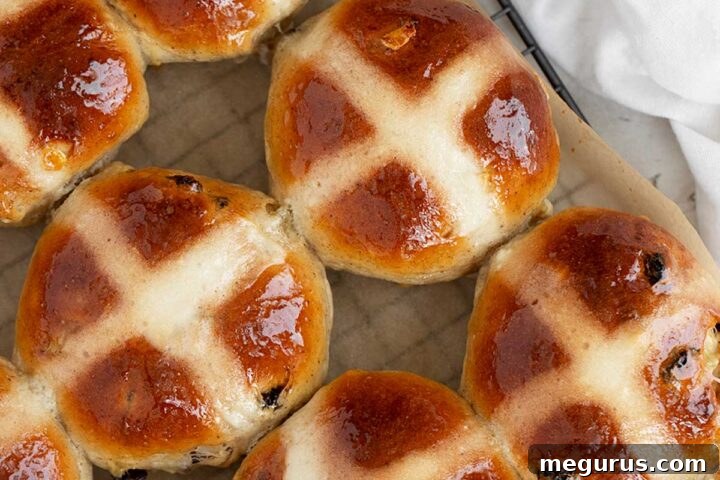
Remove the buns from the oven and immediately brush the top of the buns with the sugar syrup. Transfer the buns on the parchment paper to a cooling rack to cool completely. Tip! If the buns are connected, avoid separating them until they are completely cooled, as separating and releasing the steam in the buns may make the buns gummy inside.
-
Allow the buns to cool completely then transfer to an air-tight container. Hot cross buns are best enjoyed within 24 hours of baking. If you can’t eat them all up or if you are making them ahead, wrap them well and freeze them for up to 3 months.
-
Enjoy the hot cross buns, split with butter or split and toasted with butter.
Notes
Note 2: Active dry yeast must be proofed in a liquid to activate it. In this case, use the lukewarm milk. Be sure the milk is no warmer than 105F, then add the Active Dry yeast. Stir and let stand for 10 minutes before adding to the bowl.
Note 3: Mace is not a common spice, so if you don’t have it on hand, simply add a bit more of the other 3 spices.
Note 4: Mixed fruit peel, also known as candied fruit peel, is usually available in the baking aisle or from bulk food stores. Peel adds a lovely citrus flavour to the buns. If you don’t have or don’t enjoy peel, you can omit and add an equal amount of additional raisins instead.
These buns are pleasantly but not heavily spiced. If you prefer a more heavily spice bun, you can increase the amount of spices, but keep in mind that more spices will probably slow down the rise, so expect that the rising times will be longer.
Be sure to read the notes above this Recipe Card, for more tips on making this recipe. You’ll also find step-by-step photos that you might find helpful.
Jennifer Maloney
Serving: 1bun
,
Calories: 258kcal
,
Carbohydrates: 45g
,
Protein: 8g
,
Fat: 6g
,
Saturated Fat: 3g
,
Polyunsaturated Fat: 1g
,
Monounsaturated Fat: 1g
,
Trans Fat: 0.2g
,
Cholesterol: 27mg
,
Sodium: 248mg
,
Potassium: 175mg
,
Fiber: 2g
,
Sugar: 10g
,
Vitamin A: 195IU
,
Vitamin C: 0.5mg
,
Calcium: 49mg
,
Iron: 1mg
Tried this recipe?
If you enjoyed this recipe, please consider leaving a star rating and comment! It helps others to discover and enjoy it too.