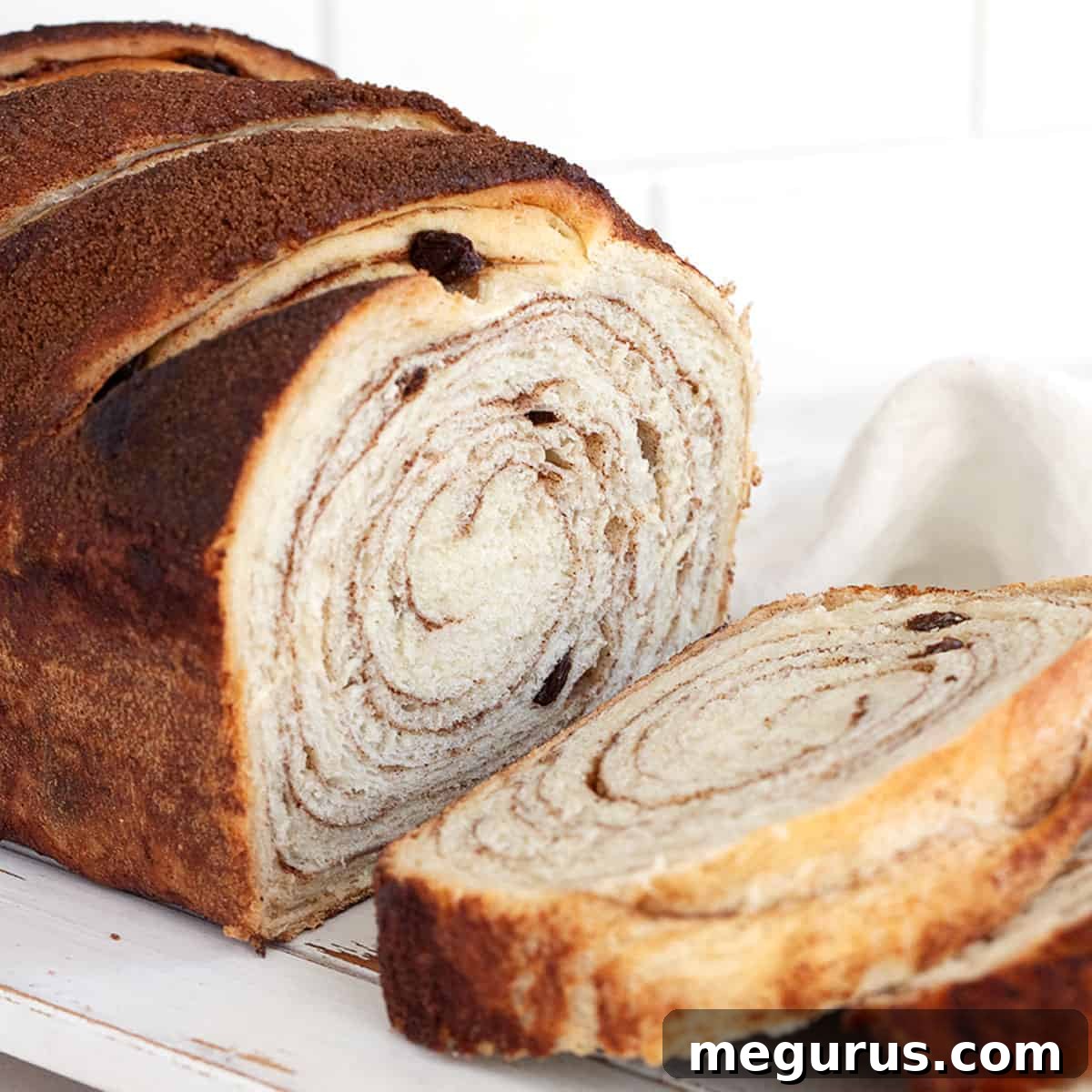
Indulge in the comforting aroma and delightful taste of homemade Cinnamon Swirl Raisin Bread. This recipe promises a truly exceptional loaf, featuring a generous, warm brown sugar and cinnamon swirl expertly layered throughout, complemented by an abundance of plump, juicy raisins. What truly sets this bread apart is its irresistible cinnamon crunch coating on the outside, adding a fantastic textural contrast to every slice. It’s more than just bread; it’s an experience that brings warmth and joy to any kitchen.
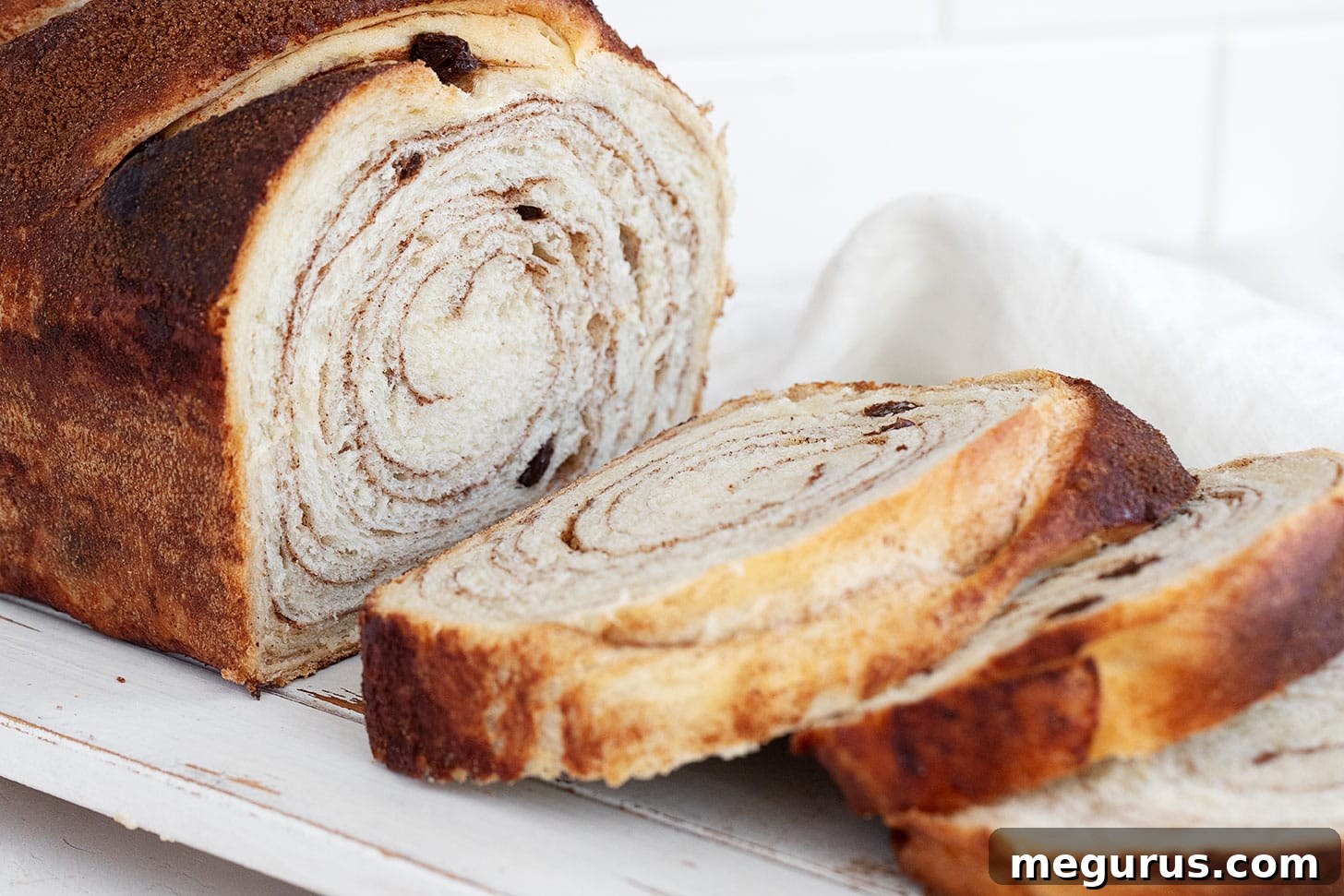
If you’ve been on a quest for the ultimate cinnamon bread recipe, your search ends here. This isn’t just any cinnamon bread; it’s a masterpiece of flavor and texture, meticulously crafted to deliver a superior baking experience. The elegant cinnamon swirl on the inside is perfectly balanced by a sweet, crispy cinnamon and brown sugar coating on the exterior, offering a delightful crunch with every bite. And, of course, no classic cinnamon swirl bread would be complete without the timeless addition of raisins, creating a harmonious and utterly delicious flavor combination that evokes warmth and nostalgia, making it the perfect breakfast or snack.
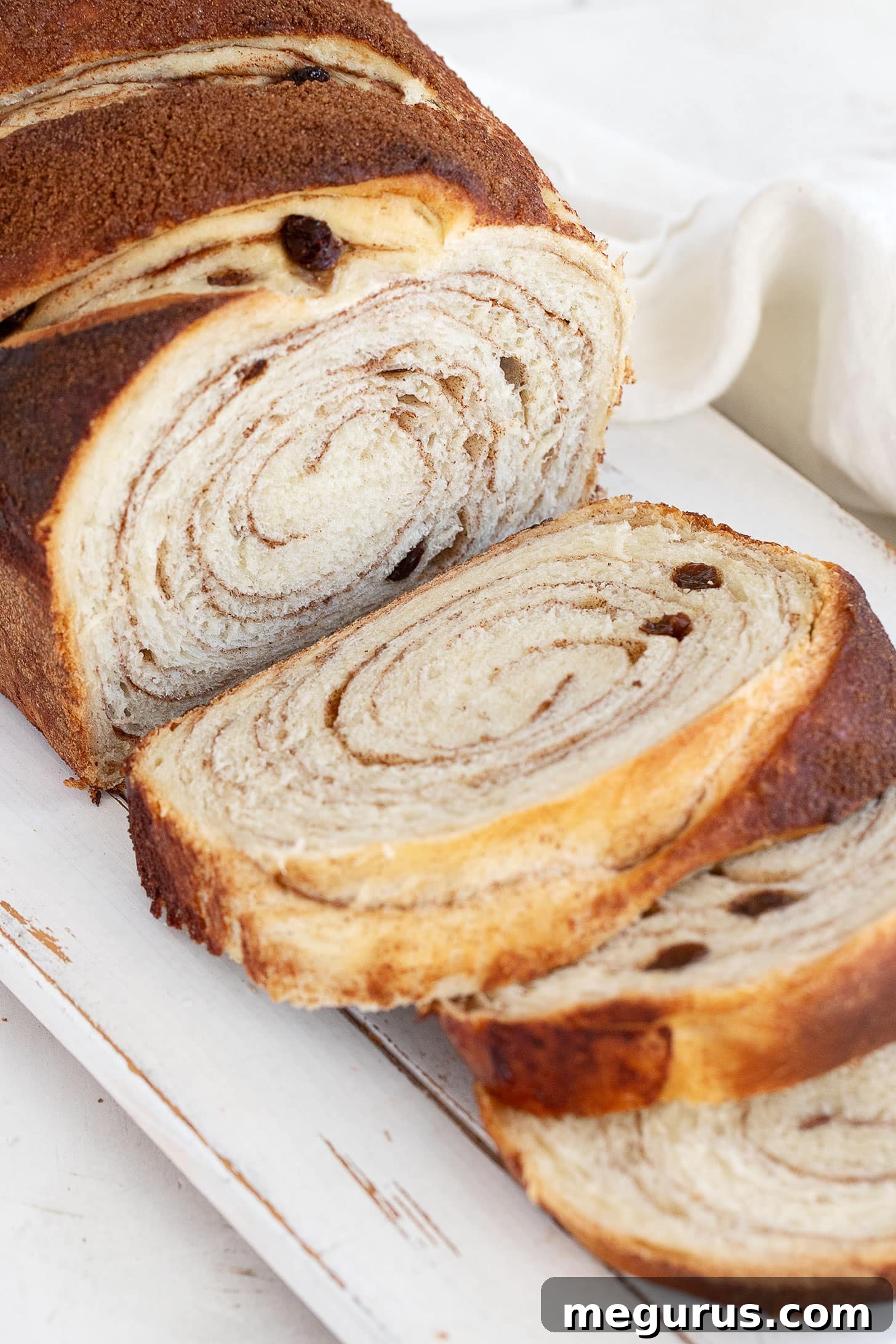
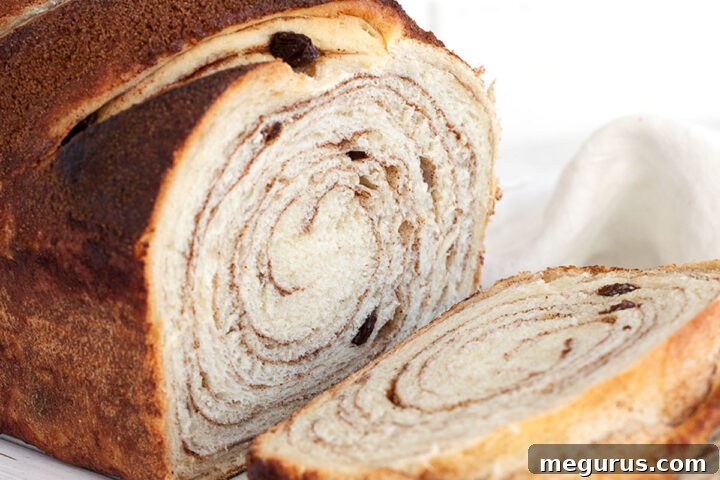
Beyond its irresistible flavors and wonderfully tender crumb, what home bakers will truly appreciate about this particular cinnamon swirl bread recipe is its ingenious method for preventing the dreaded “gaps” that often mar the appearance and texture of cinnamon swirl loaves. Our detailed shaping technique ensures a beautifully integrated swirl, making every slice a picture of perfection and ensuring that the delightful cinnamon-sugar goodness is evenly distributed throughout.
Not a raisin enthusiast? No problem! You can easily customize this recipe by simply omitting the raisins. The result will still be an absolutely delightful cinnamon swirl bread, guaranteed to satisfy any cinnamon bread lover with its rich flavor and tender texture. It’s a versatile recipe designed to please every palate.
Key Ingredients and Smart Substitutions for Your Perfect Loaf
Creating an exceptional loaf of Cinnamon Swirl Raisin Bread begins with understanding the role of each ingredient. Each component plays a vital part in achieving the perfect flavor, texture, and rise. Here are a few important notes and potential substitutions to help you achieve the best results, ensuring your homemade bread is nothing short of spectacular:
Flour Power: Achieving the Ideal Bread Texture
Bread Flour and All-Purpose Flour: This recipe calls for a precise blend of half bread flour and half all-purpose flour. This combination is carefully chosen to yield the ideal balance of chewiness and tenderness—a strong gluten structure from the bread flour for a robust rise and satisfying chew, and a softer crumb from the all-purpose flour for a delicate finish. If you only have one type of flour on hand, you can certainly use it, but be prepared to make slight adjustments to the total amount of flour needed. Bread flour tends to absorb more liquid, so you might need a little less if using only all-purpose, or a touch more if using only bread flour to achieve the correct dough consistency. Always trust your instincts and the feel of the dough rather than adhering strictly to volume measurements when making flour substitutions, as ambient humidity and specific flour brands can significantly affect absorption rates.
The Sweetness Factor: Raisins and Honey
Raisins: For this delightful bread, Thompson raisins are my go-to choice, known for their classic sweetness and soft texture. Their natural sugars caramelize beautifully within the bread. However, feel free to experiment with golden raisins or Sultanas, or even a delightful mixture of varieties, as they will all work beautifully and add their own unique notes. The most crucial step with raisins is to plump them as directed in the recipe. Unplumped raisins tend to absorb moisture directly from the bread dough during baking, which can result in a noticeably drier loaf. By rehydrating them beforehand, you ensure your bread remains wonderfully moist and tender, and the raisins themselves become plump and juicy bites. As mentioned earlier, if raisins aren’t to your taste, feel free to omit them entirely for a pure cinnamon swirl experience that is equally delicious.
Honey: Honey serves as the primary sweetener in this bread, lending a subtle depth of flavor that complements the cinnamon beautifully, and also aids in the desirable golden-brown color of the crust. Its liquid form also contributes to the dough’s hydration. If you don’t have honey available, you can substitute an equal amount of granulated white sugar, brown sugar, or maple syrup. Each will impart a slightly different flavor profile to the finished bread; brown sugar will enhance the caramel notes, while maple syrup will add its distinct, rich sweetness. All will work effectively as sweeteners in terms of dough chemistry.
Other Essential Ingredients for Bread Success
Yeast: Active dry or instant yeast is the magical leavening agent crucial for the bread’s rise. Ensure your yeast is fresh and active for optimal results; a simple proofing test in lukewarm water will confirm its vitality. Lukewarm water (around 105°F / 40°C) is key to activating it without killing the delicate organisms. If using active dry yeast, allow it a few extra minutes to bloom and become foamy before adding other ingredients.
Salt: Fine table salt is used not just for enhancing the overall flavor of the bread, but also for its vital role in controlling yeast activity and strengthening the gluten structure of the dough. It slows down the fermentation process, allowing for better flavor development, and tightens the gluten network, contributing to a better texture and rise. Don’t skip it, as it’s fundamental to both taste and structure!
Butter: Room temperature butter is incorporated into the dough after the initial mixing, contributing significantly to its richness, tenderness, and overall luscious flavor. Its fat content also helps to shorten the gluten strands, creating a softer, more delicate crumb that melts in your mouth.
Crafting Your Masterpiece: A Step-by-Step Guide to Cinnamon Swirl Raisin Bread
This section provides a visual and narrative summary of the key stages in making this exquisite bread. Following these steps carefully will ensure you achieve a professional-looking and tasting loaf every time. For precise measurements and comprehensive details, always refer to the complete instructions in the Recipe Card below.
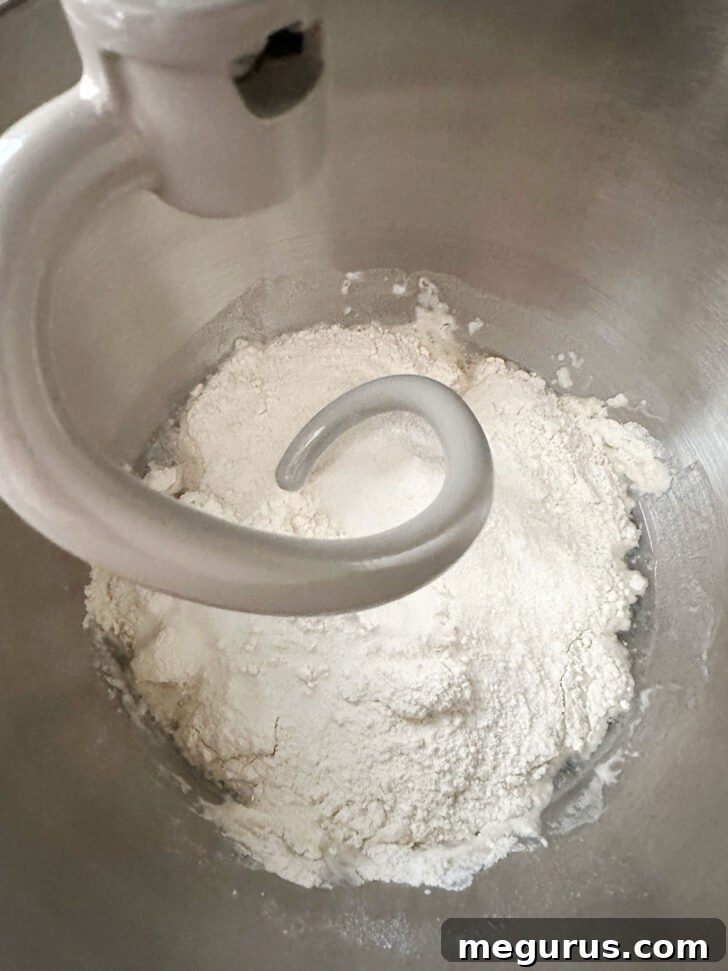
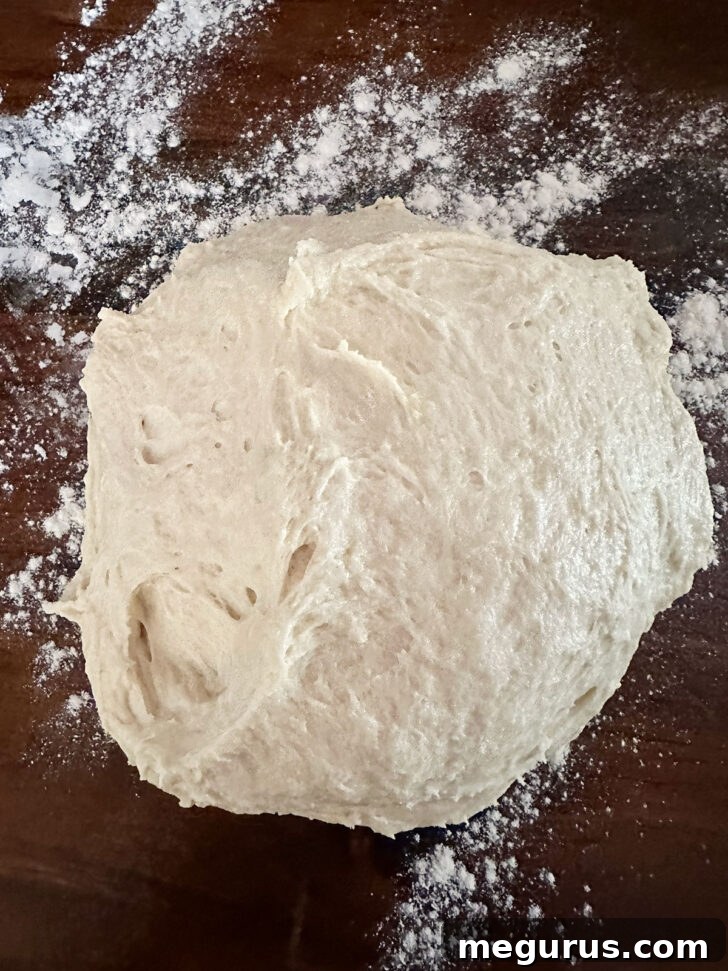
- Combine Ingredients & Initial Kneading: For utmost accuracy, especially with flour measurements, we highly recommend using a kitchen scale. Begin by adding all ingredients, except the butter, to the bowl of a stand mixer fitted with a paddle attachment. Mix on low speed until they just come together to form a shaggy, cohesive dough. Then, gradually add the room temperature butter in small pieces, continuing to mix until it is fully incorporated into the dough.
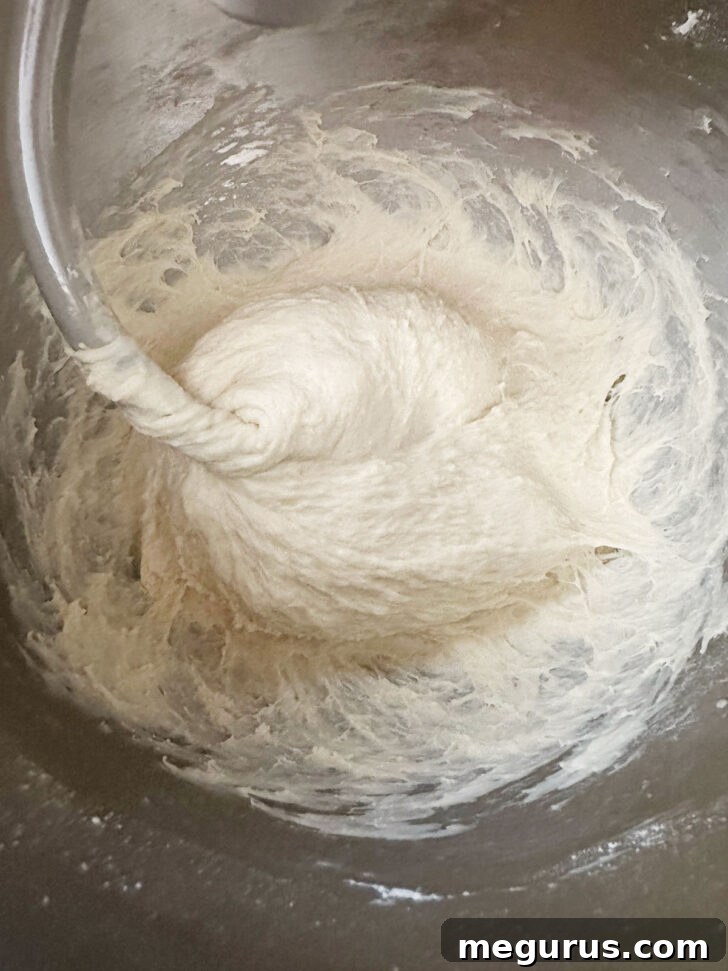
- Develop the Dough: Once the butter is completely incorporated, switch to the dough hook attachment and knead at Speed 2 for a full 10 minutes. This extended kneading time is absolutely crucial for properly developing the gluten, which gives the bread its signature chewy yet tender texture and ensures a good rise. The finished dough will appear quite sticky, adhering slightly to the bottom of the bowl and wrapping around the dough hook. It’s vital to resist the temptation to add more flour to the mixer bowl at this stage, as this stickiness is a normal and desired characteristic for a truly tender loaf.
- Final Dough Adjustment: Carefully remove the sticky dough from the mixer bowl using a silicone scraper and transfer it to a generously floured work surface. Lightly knead in additional flour as needed, but only if the dough is excessively sticking to your hands or the counter. The goal is to make it just manageable enough to form into a ball without being dry or stiff. Remember, too much added flour at this stage will result in a tough, dense bread, so be conservative with additions.
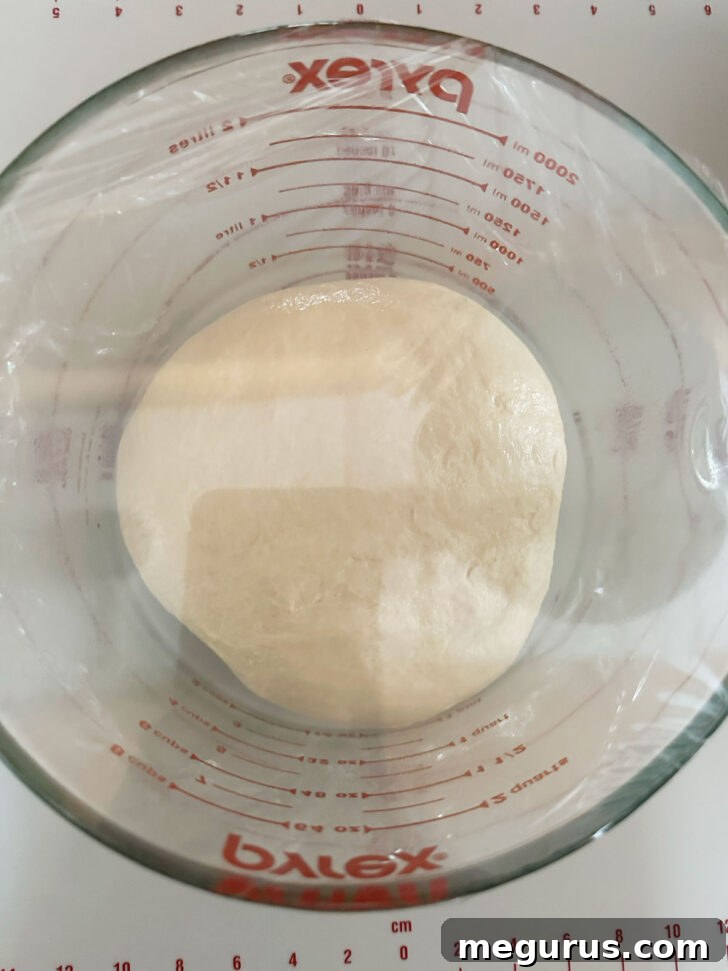
- First Rise (Bulk Fermentation): Gently form the dough into a smooth ball and place it into a lightly greased, adequately sized bowl. Ensure the bowl is large enough to comfortably accommodate the dough doubling in size without overflowing. Cover the bowl securely with plastic wrap or a damp kitchen towel to prevent it from drying out and forming a crust, and let it rise in a warm, draft-free place until it has visibly doubled in volume. This crucial step, known as bulk fermentation, typically takes about 1 hour, but rising times can vary based on room temperature and the activity of your yeast.
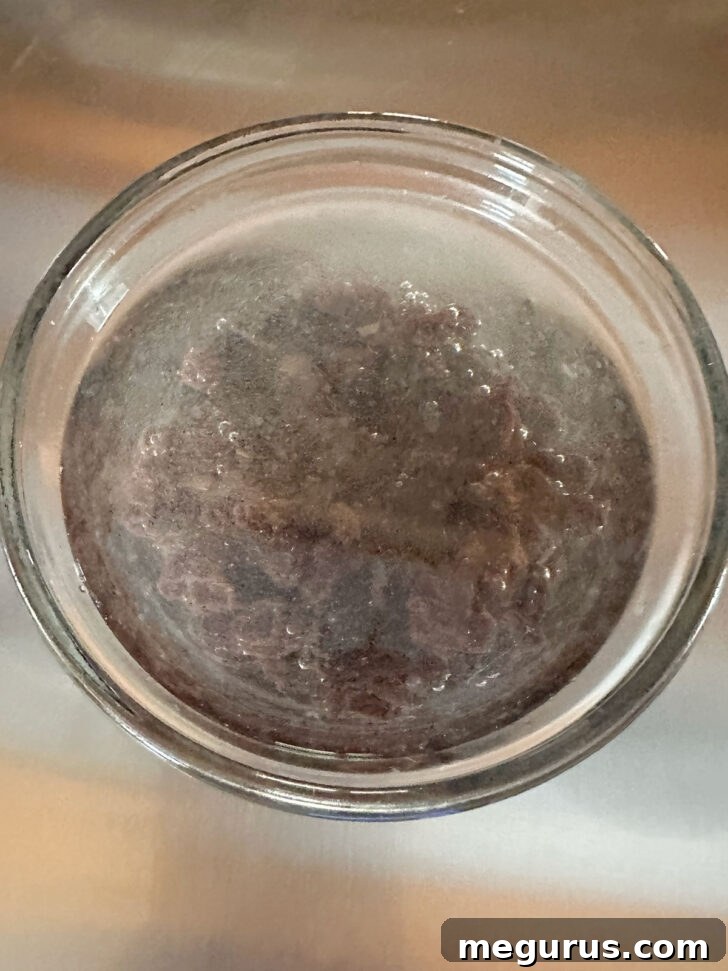
- Prepare the Raisins: While your dough is on its first rise, prepare the raisins. Place them in a small heatproof bowl and cover them completely with hot water. This crucial step, known as “plumping,” effectively rehydrates the dried fruit. Dried raisins can otherwise draw moisture directly from your bread dough during baking, leading to a noticeably drier crumb and harder raisins. By rehydrating them beforehand, you ensure your bread remains wonderfully moist and tender, and the raisins become soft and juicy. Allow them to soak until just before you’re ready to use them. Before incorporating them into the dough, make sure to drain them thoroughly and pat them dry with a paper towel to remove any excess surface moisture.
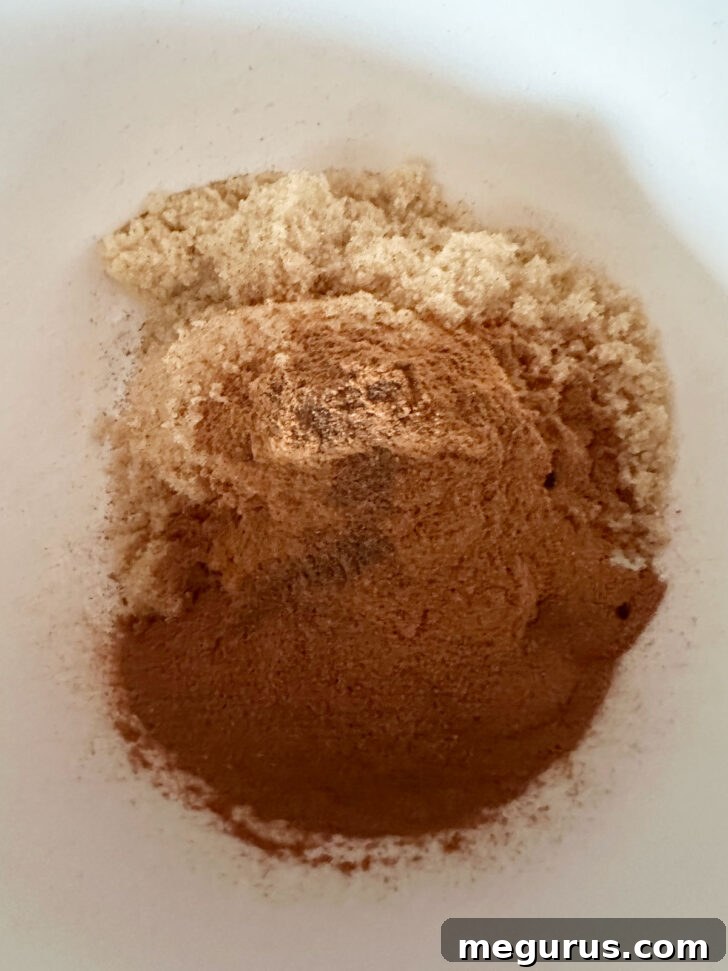
- Craft the Cinnamon-Sugar Swirl: In a separate small bowl, combine the well-packed brown sugar, ground cinnamon, and the optional pinch of allspice. Stir them together until they are thoroughly mixed and evenly distributed. This fragrant mixture will form the heart of your cinnamon swirl and will also be used to create the delectable crunch topping. Set this aside until needed, ensuring it’s easily accessible when you begin shaping.
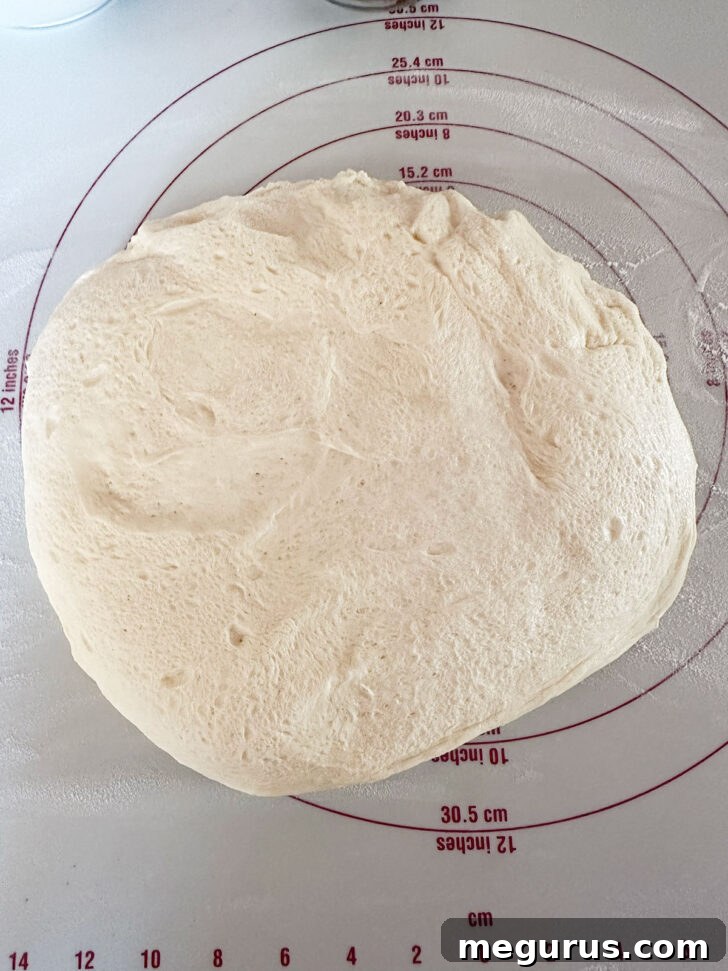
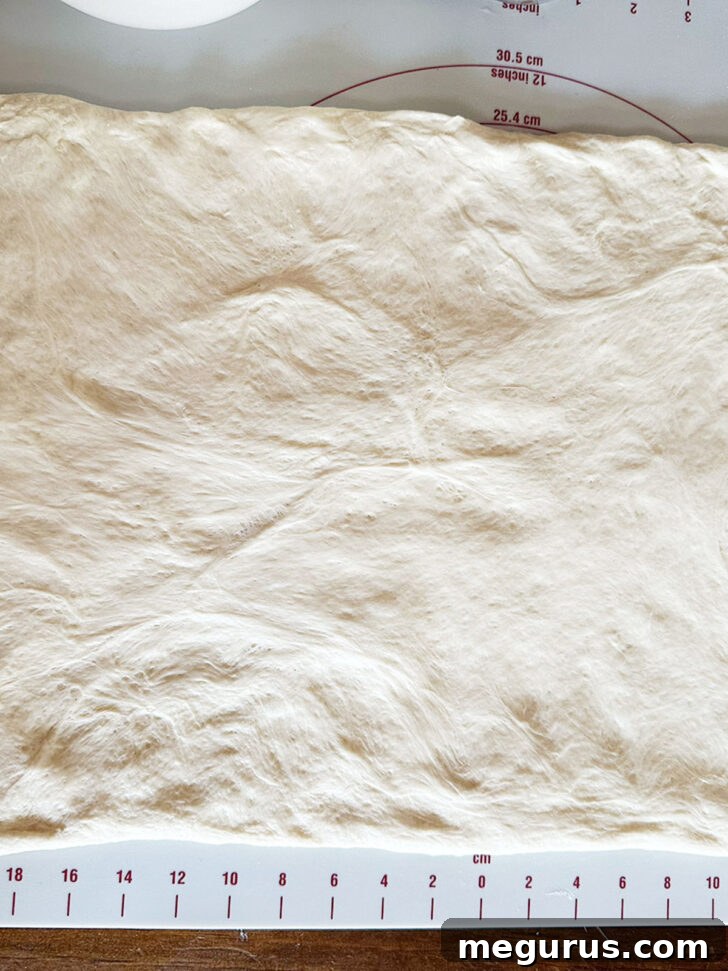
- Deflate and Shape: Once the dough has proudly doubled in size, indicating a successful first rise, gently remove it from the bowl and place it onto a lightly floured work surface. Carefully deflate the dough by gently pressing out the accumulated air. Then, using your hands or a rolling pin if needed, skillfully pat and stretch the dough into an even 18×12-inch rectangle. For optimal layering, position the dough so the long 18-inch side is furthest from you. This generous surface area is absolutely key for creating a beautiful, even swirl without unwanted gaps in your finished loaf.
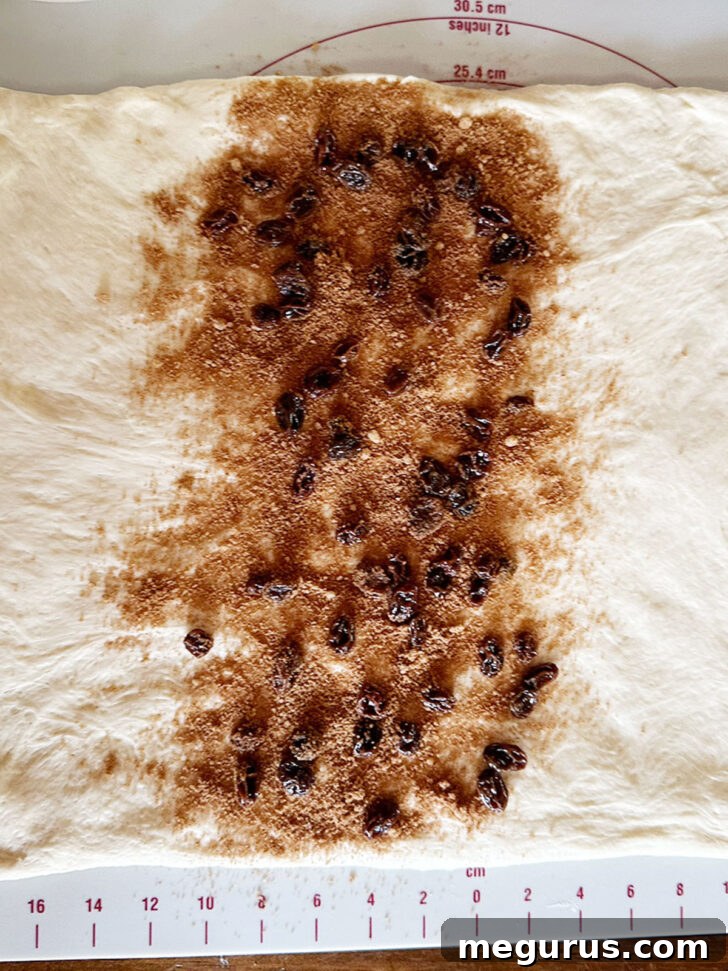
- The First Layer of Flavor: Take approximately 2 heaping tablespoons of your prepared cinnamon-brown sugar mixture and sprinkle it evenly over the center third of the dough rectangle. Ensure the layer is consistent. Then, scatter about half of your thoroughly drained and patted-dry plumped raisins over this cinnamon layer. This careful distribution helps create a balanced flavor profile throughout the bread.
- Fold for the Swirl: Carefully fold one-third of the dough (either the right or left side, whichever is more comfortable for you) over the top of the section you just covered with the cinnamon and raisins. Gently press down along the edges to seal slightly. This initiates the layering process that will result in the distinctive swirl.
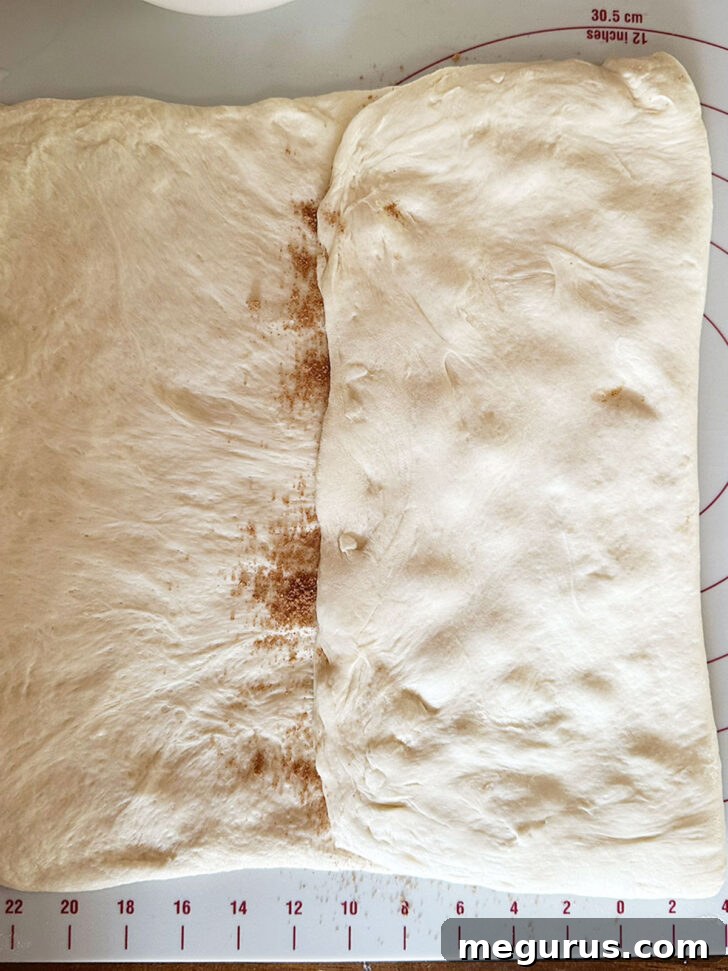
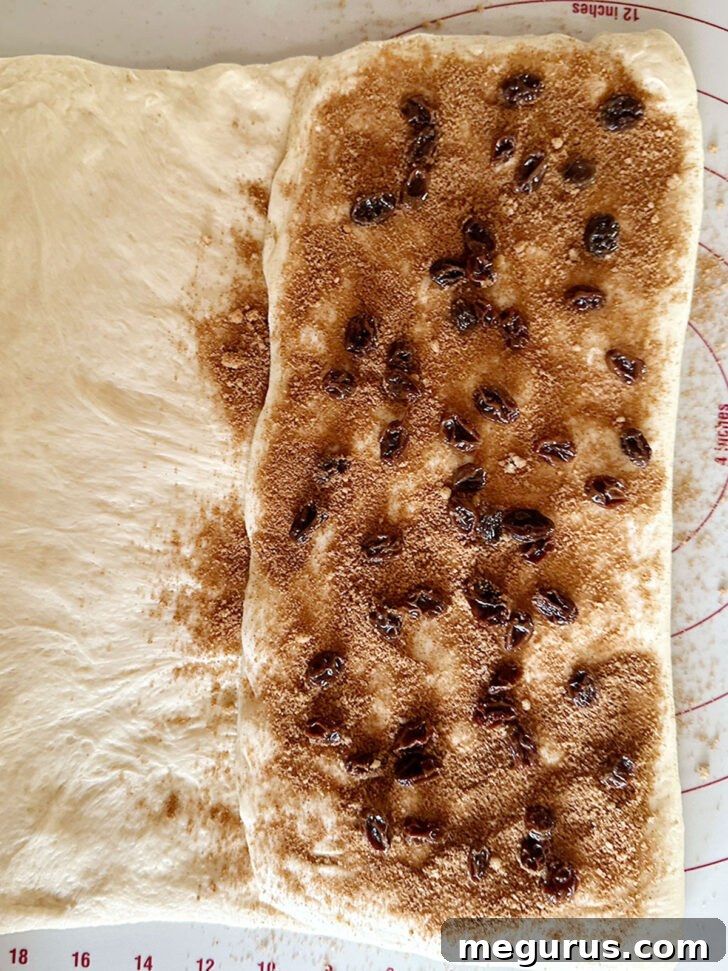
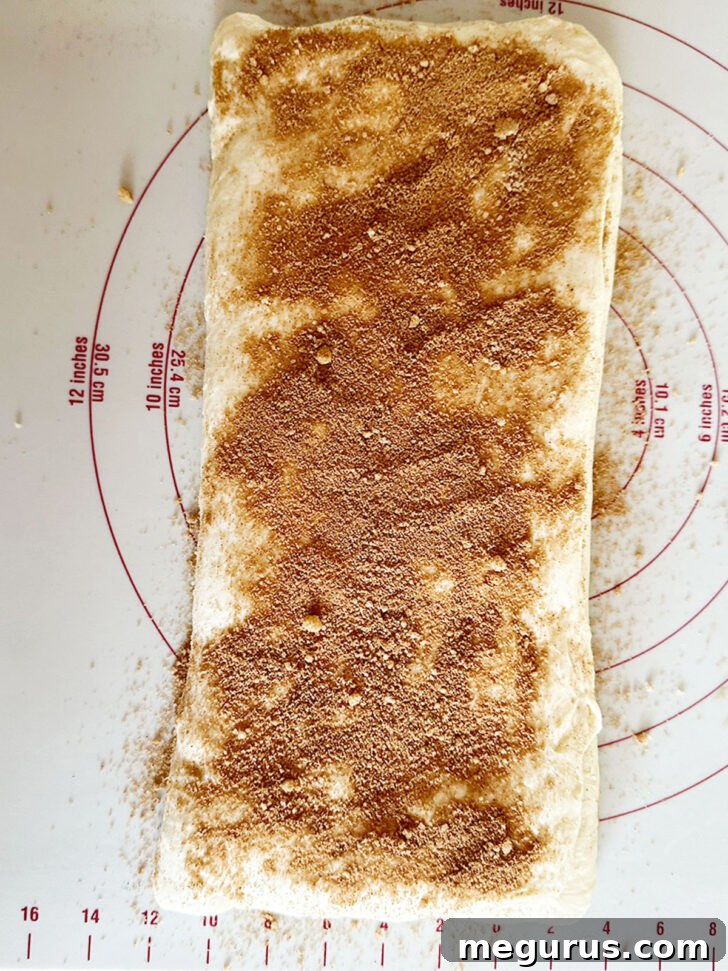
- Second Layer of Flavor: Over the newly folded dough section, sprinkle another 2 heaping tablespoons of the cinnamon mixture. Then, scatter the remaining plumped and dried raisins overtop. This layered approach ensures a rich and consistent swirl, preventing large pockets of plain bread and distributing the deliciousness evenly throughout the entire loaf.
- Final Fold and Sprinkle: Now, take the remaining “empty” third of the dough (the side that hasn’t been folded yet) and carefully fold it over the top of the last layer of cinnamon and raisins. You should now have a rectangular block of dough, roughly 6 inches wide and 12 inches long, with the shorter 6-inch side facing you. Sprinkle approximately 2 more tablespoons of the cinnamon mixture on top of this folded dough. This final sprinkle will form part of our delicious crispy exterior, adding another layer of texture and flavor.
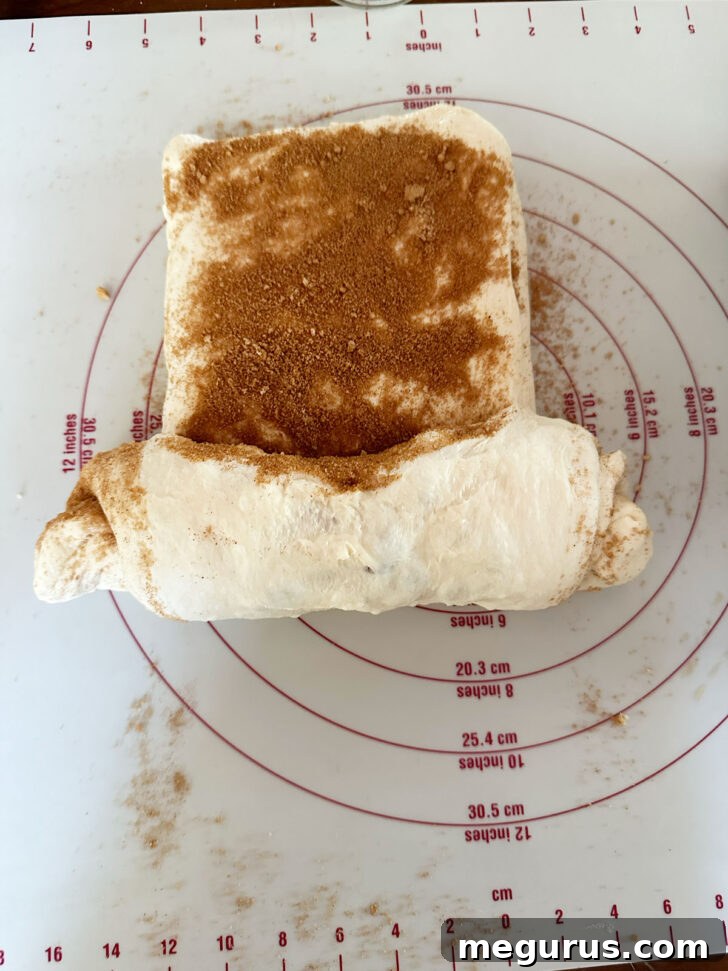
- Roll for the Perfect Swirl (The No-Gaps Technique): This step is critical for achieving a beautiful, gap-free swirl that is characteristic of a truly well-made cinnamon bread. Starting from the short end (the 6-inch side closest to you), begin to roll the dough up very tightly. As you roll, use your fingertips to gently press down into the dough where the edge of the roll meets the flat dough. This technique is crucial for creating tension, eliminating air pockets, and ensuring a tight, compact spiral without the air gaps that can lead to hollow sections in your baked bread. Continue rolling tightly until you have a plump, even log. Once completely rolled, firmly pinch the seam closed along the entire length of the roll to seal the loaf. The resulting dough roll will have a uniform thickness and be about 9 inches wide.
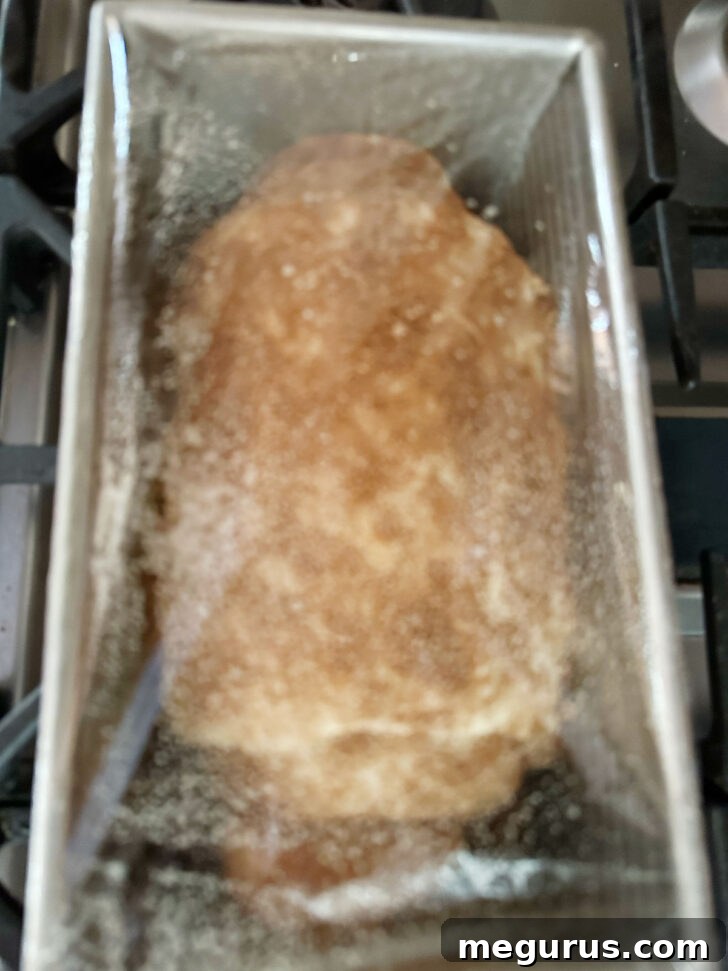
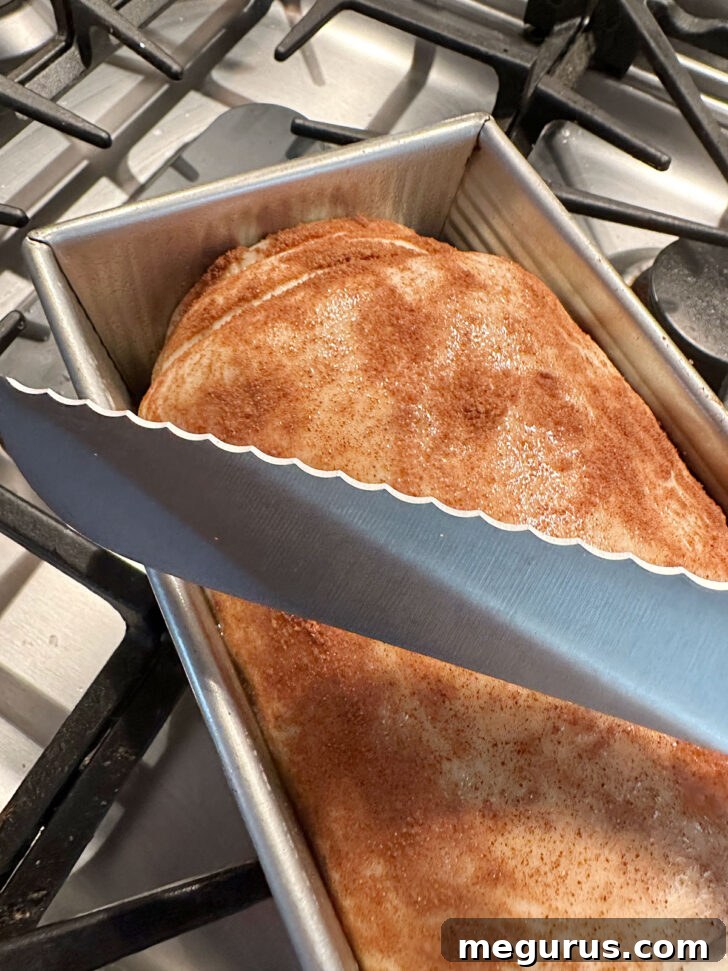
- Second Rise (Proofing): Carefully transfer the tightly rolled dough into a lightly greased 9×5-inch loaf pan. This is a substantial loaf, so a larger pan is truly recommended for proper rise and shape. Press the remaining cinnamon-brown sugar mixture evenly over the top of the loaf; this will form a delightful crunchy crust. Lightly grease a piece of plastic wrap and place it loosely over the loaf pan to prevent sticking and drying. Allow the loaf to rise in a warm, draft-free place for about 30-40 minutes, or until it has crested the top of the pan by about an inch in the center. This secondary rise (proofing) is crucial for a light and airy final texture.
- Prepare for Baking: While the loaf is undergoing its second rise, preheat your oven to 400°F (200°C) using a regular bake setting (not fan-assisted). Ensure the oven is fully preheated for consistent results. If you are using a glass loaf pan, it’s advisable to reduce the oven temperature slightly to 375°F (190°C), as glass retains heat differently and can sometimes lead to over-browning on the bottom crust. The baking times provided are optimized for a metal loaf pan.
- Scoring and Baking: Just before placing the loaf in the oven, use a sharp serrated knife to make three shallow, distinct diagonal slashes across the top center of the dough. This scoring allows the bread to expand gracefully and beautifully during baking, preventing uncontrolled tearing and creating an attractive, artisanal finish. Place the bread in the preheated oven and set the timer for 10 minutes. After this initial baking period, loosely cover the entire loaf with a sheet of aluminum foil. This crucial step prevents the sugary topping from burning or becoming too dark during the remaining baking time, ensuring a perfectly golden, crispy crust. Continue baking for an additional 30-40 minutes (for a total baking time of 40-50 minutes), or until an instant-read thermometer inserted into the very center of the loaf registers an internal temperature of 195-200°F (90-93°C).
- Cooling is Key: Once baked to perfection, immediately remove the loaf from the oven. Carefully transfer the hot loaf out of its pan and onto a wire cooling rack. This allows air to circulate freely around all sides, preventing the bottom from becoming soggy due to trapped steam. It is absolutely essential to allow the bread to cool completely before attempting to slice it. Slicing warm bread disrupts the internal structure as it’s still setting, which can lead to a gummy texture and crumbly, ragged slices. Patience will truly be rewarded with a perfectly textured, easy-to-slice loaf.
Recipe Video: Visualizing the Baking Process
For those who prefer a visual guide, a recipe video demonstrating the key steps of making this Cinnamon Swirl Raisin Bread is available. Watching the techniques, especially for kneading and shaping the dough to achieve that perfect, gap-free swirl, can be incredibly helpful in ensuring you achieve flawless results and build confidence in your baking.
(Video content for Cinnamon Swirl Raisin Bread will be embedded here.)
Expert Tips for Cinnamon Swirl Bread Success!
- Handling Sticky Dough with Confidence: The dough for this bread is intentionally quite sticky after initial mixing and kneading. This high hydration is precisely what contributes to a supremely tender, moist crumb. For this reason, a stand mixer is highly recommended for ease and efficiency. If you’re kneading by hand, embrace the stickiness! Use specialized techniques for sticky doughs (like the stretch-and-fold method or using a bench scraper) and add only the bare minimum of extra flour to make it just manageable. Over-flouring will inevitably lead to a tough, dry loaf. Hand-knead for a solid 10-12 minutes to ensure proper gluten development.
- Preventing Over-Browning of the Crust: Due to the delightful brown sugar and cinnamon coating on the outside of the loaf, it’s prone to browning quickly, sometimes excessively. To prevent it from getting too dark or even burning, make sure to loosely cover the loaf with a sheet of aluminum foil after the initial 10 minutes of baking. This shields the top while allowing the inside to cook through perfectly and the flavors to meld.
- Choose the Right Loaf Pan for Optimal Shape: This recipe yields a generous, beautifully proportioned loaf, designed to fill a standard pan. For the most even baking and best shape, it is absolutely crucial to use a 9×5-inch loaf pan, preferably one made of metal. Metal pans conduct heat more efficiently and consistently than glass, resulting in a superior crust and crumb. While it hasn’t been extensively tested in smaller pans, attempting to bake this amount of dough in an 8.5×4.5-inch pan may result in overflow, an awkward shape, or a dense, underbaked center due to the volume of dough.
- The Golden Rule of Cooling Bread: Patience is truly a virtue when baking bread, especially a sweet, enriched loaf like this. Always allow your cinnamon swirl raisin bread to cool completely on a wire rack before attempting to slice it. Slicing into a warm loaf disrupts the internal structure as it’s still setting, which can result in a gummy, doughy texture and ragged slices that don’t hold their shape. A fully cooled loaf will slice cleanly, revealing its beautiful swirl and tender, perfectly set crumb.
- Don’t Rush the Rise (Proofing is Key): Both the first and second rises (bulk fermentation and proofing) are crucial stages in developing the bread’s flavor and texture. Allow the dough ample time to double in size for the first rise and to visibly crest the pan for the second. Under-proofed bread will be dense and heavy, while slightly over-proofed bread might collapse in the oven or have a coarse crumb. Look for the visual cues described in the instructions, as exact times can vary with ambient temperature and yeast activity.
- Measure Accurately, Especially Flour: For consistently excellent bread baking results, precise measurements are paramount. Using a kitchen scale to measure flour and other dry ingredients by weight (grams) rather than volume (cups) will yield the most consistent and best results, as cup measurements can vary significantly depending on how the flour is scooped and packed.
Enjoying Your Homemade Cinnamon Swirl Raisin Bread
This versatile and utterly delicious bread can be enjoyed in so many wonderful ways, making it a perfect addition to any meal or snack time! Simply slice a piece and savor it plain, allowing the complex flavors of cinnamon, brown sugar, and plump raisins to shine through on their own. For an extra touch of richness, spread it generously with a pat of softened butter or a dollop of cream cheese for a truly decadent experience. It also makes for the most incredibly satisfying toast, perfect for a cozy morning breakfast, perhaps with a sprinkle of extra cinnamon.
Don’t let any leftover cinnamon raisin bread go to waste! It’s absolutely perfect for transforming into other delectable treats, elevating them with its spiced sweetness. Imagine a decadent batch of homemade French Toast, where the bread soaks up custardy goodness, or a comforting, warm Bread Pudding, where the bread’s tender texture and flavor truly excel. It’s also fantastic as a base for a sweet breakfast sandwich with a fried egg, or simply warmed slightly in the microwave or oven with a drizzle of honey or a sprinkle of powdered sugar for an instant treat.
Storing and Freezing Your Cinnamon Swirl Raisin Bread
To keep your freshly baked cinnamon swirl raisin bread at its absolute best and maintain its tender crumb, ensure it has cooled completely on a wire rack before storing. Once thoroughly cooled, transfer the loaf to an airtight bread bag or container. It will remain wonderfully fresh and soft at room temperature for approximately 2-3 days. For optimal freshness and to prevent it from drying out, it is generally advisable to avoid refrigerating bread, as the cold temperatures can accelerate staling.
For longer-term storage, this bread freezes exceptionally well, allowing you to enjoy homemade goodness whenever a craving strikes. To freeze, wrap the cooled loaf tightly in plastic wrap, then add an additional layer of aluminum foil, or place it in a heavy-duty freezer-safe bag. It can be confidently frozen for up to 3 months without significant loss of quality. When you’re ready to enjoy it again, simply thaw the bread at room temperature, then warm it gently in the oven or toaster for that delightful fresh-baked taste and aroma. For added convenience, you can also slice the loaf before freezing and pull out individual slices as needed for quick toast or snacks.
Get the Recipe:
Cinnamon Swirl Bread with Raisins
Rating: 5 stars from 1 rating
Pin This
Leave a Review
30
40
1 30
2 40
12 servings
Ingredients
- 1 1/4 cups (300 g) lukewarm water, about 105°F (40°C)
- 2 1/4 teaspoons Active dry or instant yeast
- 1 1/2 Tablespoons (30 g) runny honey, or substitute maple syrup, white sugar or brown sugar
- 2 teaspoons (12 g) fine table salt
- 2 1/2 Tablespoons (35 g) butter, at room temperature, softened
- 1 3/4 cups (225 g) all-purpose flour, plus more as needed for kneading
- 1 3/4 cups (225 g) bread flour, *see Note 1 below for substitution
For the Filling:
- 1/3 to 1/2 cup (50-75 g) raisins, Thompson, golden, or Sultanas
- 1/3 cup + 1 Tablespoon (75 g) brown sugar, well-packed, dark or light
- 4 teaspoons ground cinnamon, good quality for best flavor
- Pinch allspice, optional, for added warmth
Equipment
-
9×5-inch loaf pan (a metal loaf pan is highly recommended for even baking and browning)
-
Aluminum foil (for covering the loaf during baking to prevent over-browning)
-
Stand mixer with paddle and dough hook attachments (optional, but highly recommended for sticky dough)
-
Kitchen scale (for precise ingredient measurements)
-
Wire cooling rack (essential for proper cooling)
Instructions
-
Tip for Accuracy: If you have a kitchen scale, always use the gram measurements provided for the most consistent and best baking accuracy. If measuring by volume (cups), be sure to measure the flour using the stir, spoon, and level method to avoid over-packing.
-
In the bowl of a stand mixer, combine the lukewarm water, yeast, and honey. Stir gently to combine these ingredients. Allow the mixture to stand for about 5 minutes (or up to 10 minutes if using Active Dry yeast) until it becomes visibly foamy, indicating the yeast is active and ready to work its magic.
-
Add the all-purpose flour, bread flour, and salt to the yeast mixture in the bowl. Using a paddle attachment, mix the dough on Speed 2 until all the ingredients are just combined and come together into a shaggy dough. Next, begin adding the room temperature butter in several small pieces, continuing to mix until each piece is fully incorporated into the dough.
-
Once the butter is fully incorporated, switch to the dough hook attachment. Continue to knead the dough on Speed 2 for a full 8-10 minutes. Important: The dough will remain very sticky throughout this process. It will wrap around the dough hook somewhat but will still be sticky at the bottom of the bowl. Resist the urge to add more flour to the mixer bowl at this point, as this high hydration is essential for a wonderfully tender crumb. If, however, your dough is exceptionally loose and not wrapping the dough hook at all, you may add up to 1/4 cup (30g) more flour, one tablespoon at a time, to reach the correct consistency. Visual Tip! Refer to the step-by-step photos or the recipe video above this Recipe Card to see what the finished dough consistency should ideally look like.
-
Carefully remove the sticky dough from the mixer bowl using a silicone scraper and transfer it to a generously floured work surface. Lightly coat the dough in flour and begin kneading by hand, adding just enough additional flour only if the dough sticks excessively to your hands or the work surface. The goal is to make it just manageable enough to form into a smooth ball without being dry or stiff. Once shaped, place the dough into a lightly greased, large bowl. Cover the bowl securely with plastic wrap or a damp kitchen towel to prevent drying, and allow it to rise in a warm, draft-free place until it has visibly doubled in size, which typically takes about 1 hour.
-
While the dough is undergoing its first rise, prepare the raisins. Add them to a small, heatproof bowl and cover completely with hot water. Allow them to soak, or “plump,” until just before you are ready to use them. This critical step prevents the dried raisins from absorbing moisture from your bread dough during baking, which can lead to a drier final product. When ready to use, drain the plumped raisins thoroughly and pat them very dry with paper towel to remove any excess surface moisture.
-
Prepare the cinnamon and brown sugar filling mixture. In a small bowl, combine the well-packed brown sugar, ground cinnamon, and the optional pinch of allspice. Stir everything together until it is thoroughly mixed and uniformly distributed. This fragrant mixture will be used for both the internal swirl and the external crunchy topping. Set this aside.
-
Once the dough has doubled in size from its first rise, gently remove it to a lightly floured work surface. Carefully deflate the dough by gently pressing out the air. Using your hands or a rolling pin if preferred, press and stretch the dough into an 18×12-inch rectangle, ensuring the longer 18-inch side is positioned furthest from you. Tip! The dough should be soft and pliable enough to easily press and stretch by hand without much resistance. If it’s not as cooperative, a rolling pin can be used.
-
Have a 9×5-inch metal loaf pan ready. Lightly spray the inside with cooking spray and set it aside. This recipe makes a generously sized loaf; using a smaller 8.5×4.5-inch loaf pan is not recommended as there will likely be too much dough, leading to overflow during rising or an uneven bake.
-
Visual Aid Tip! If you find the instructions for filling and shaping the loaf unclear, please refer to the detailed step-by-step photos or the recipe video provided earlier in this post for a clear visual guide to ensure a perfect swirl.
-
To create the signature swirl, begin by sprinkling approximately 2 heaping tablespoons of the prepared cinnamon mixture over the center third of the dough rectangle. Ensure the layer is consistent. Next, scatter about half of the drained and dried plumped raisins evenly over this cinnamon layer. Carefully fold the right side third of the rectangle over the section just covered with cinnamon and raisins. Gently press down along the edges to secure. Sprinkle another 2 heaping tablespoons of the cinnamon mixture onto the top of this folded section. Scatter the remaining raisins over this second cinnamon layer. Finally, fold the empty left side third of the dough over the top, creating a layered rectangle. Now, sprinkle approximately 2 more heaping tablespoons of the cinnamon mixture over the very top of this folded dough. You should now have a rectangle roughly 6 inches wide and 12 inches long, with the shorter 6-inch side closest to you.
-
To shape the loaf for a perfect, gap-free swirl: Starting from the shorter 6-inch side closest to you, begin to roll the dough up very tightly. With each turn of the roll, use your fingertips to press down firmly into the dough where the edge of the roll meets the flat dough. This technique is crucial for creating tension, eliminating air pockets, and ensuring a tight, compact spiral without the air gaps that can lead to hollow sections in your baked bread. Continue rolling tightly until you have a plump, even log. Once completely rolled, firmly pinch the seam together along the entire length to seal the loaf. The resulting dough roll should be a uniform thickness and be about 9 inches wide. Carefully place this shaped loaf into your prepared 9×5-inch loaf pan. Sprinkle and gently press any remaining cinnamon-brown sugar mixture onto the very top surface of the loaf for a delightful crunchy crust. Lightly grease a piece of plastic wrap and place it loosely over the loaf pan. Set the loaf aside to undergo its second rise (proofing) in a warm, draft-free spot for approximately 30-40 minutes, or until it has visibly risen and crested about 1 inch above the rim of the pan in the center.
-
Preheat your oven to 400°F (200°C) with the rack in the center position. Ensure your oven is fully preheated for at least 15-20 minutes before placing the bread inside for consistent baking. *If using a glass loaf pan, it is recommended to reduce the oven temperature to 375°F (190°C) to prevent over-browning of the crust, as glass heats differently than metal and retains heat more intensely. The baking times provided are based on using a metal pan.
-
When the loaf has adequately risen (it should be nicely domed about 1 inch above the pan’s edge), use a sharp serrated knife to carefully make three distinct diagonal slashes into the center part of the dough. These slashes allow for controlled expansion during baking, prevent uncontrolled tearing, and add to the artisanal appearance of your bread.
-
Place the prepared bread in the preheated oven and set a timer for 10 minutes. After this initial baking period, loosely cover the entire loaf with a sheet of aluminum foil. This crucial step is essential to protect the sweet cinnamon-sugar topping from burning or becoming excessively dark, ensuring a perfectly golden, crispy crust without scorching. Continue to bake the loaf, loosely covered with foil, for an additional 30-40 minutes (bringing the total baking time to 40-50 minutes). The bread is fully baked when an instant-read thermometer inserted into the very center of the loaf registers an internal temperature between 195-200°F (90-93°C).
-
Once baked, promptly remove the loaf from the oven. Immediately transfer the hot loaf out of its pan and onto a wire cooling rack. This allows air to circulate freely around all sides, preventing the bottom from becoming soggy due to trapped steam. Crucial Tip! It is absolutely essential to allow the bread to cool completely before attempting to slice it. Slicing warm bread disrupts the internal structure as it’s still setting, which can lead to a gummy, doughy texture and crumbly, ragged slices. Patience will truly be rewarded with a perfectly textured, easy-to-slice loaf.
-
Once the loaf has cooled completely, store it in an airtight plastic bag or container at room temperature for 2-3 days to maintain its freshness and soft texture. For optimal freshness and to prevent it from drying out, it is generally advisable to avoid refrigerating bread, as the cold temperatures can accelerate staling. For extended storage, ensure the loaf is well-wrapped in plastic wrap and then aluminum foil, or placed in a heavy-duty freezer-safe bag. It will freeze beautifully for up to 3 months. Thaw at room temperature before enjoying.
Notes
Tips for Dough Handling: This bread dough is designed to be quite sticky, which is a desirable characteristic for achieving its tender final texture. If possible, mixing and kneading in a stand mixer is highly recommended as it handles sticky doughs with ease. For hand kneading, employ techniques that work well with high-hydration doughs (e.g., the stretch and fold method or using a bench scraper). Add flour sparingly and only as necessary to make the dough manageable, avoiding over-flouring which can lead to a dry, tough loaf. Aim to knead by hand for 10-12 minutes to ensure adequate gluten development.
Crust Protection: To prevent the delicious brown sugar and cinnamon coating from burning or becoming excessively dark during baking, it is absolutely essential to loosely cover the loaf with aluminum foil after the initial 10 minutes in the oven. The sugars in the topping caramelize quickly and can darken too much if left exposed for the entire baking duration.
Visual Guidance: For extra assistance with the kneading process, shaping the loaf, and understanding the dough’s consistency at various stages, please refer to the step-by-step photos and the recipe video located above this Recipe Card. These visual aids can be very helpful for first-time bakers or those new to yeast breads.
Calories: 212kcal,
Carbohydrates: 42g,
Protein: 5g,
Fat: 3g,
Saturated Fat: 2g,
Polyunsaturated Fat: 0.3g,
Monounsaturated Fat: 1g,
Trans Fat: 0.1g,
Cholesterol: 6mg,
Sodium: 413mg,
Potassium: 108mg,
Fiber: 2g,
Sugar: 10g,
Vitamin A: 75IU,
Vitamin C: 0.3mg,
Calcium: 22mg,
Iron: 1mg
Tried this recipe?
If you enjoyed this recipe for Cinnamon Swirl Raisin Bread, please consider leaving a star rating and comment below. Your valuable feedback not only helps other home bakers discover this delicious bread but also supports our community!
More Delicious Bread Recipes to Love!