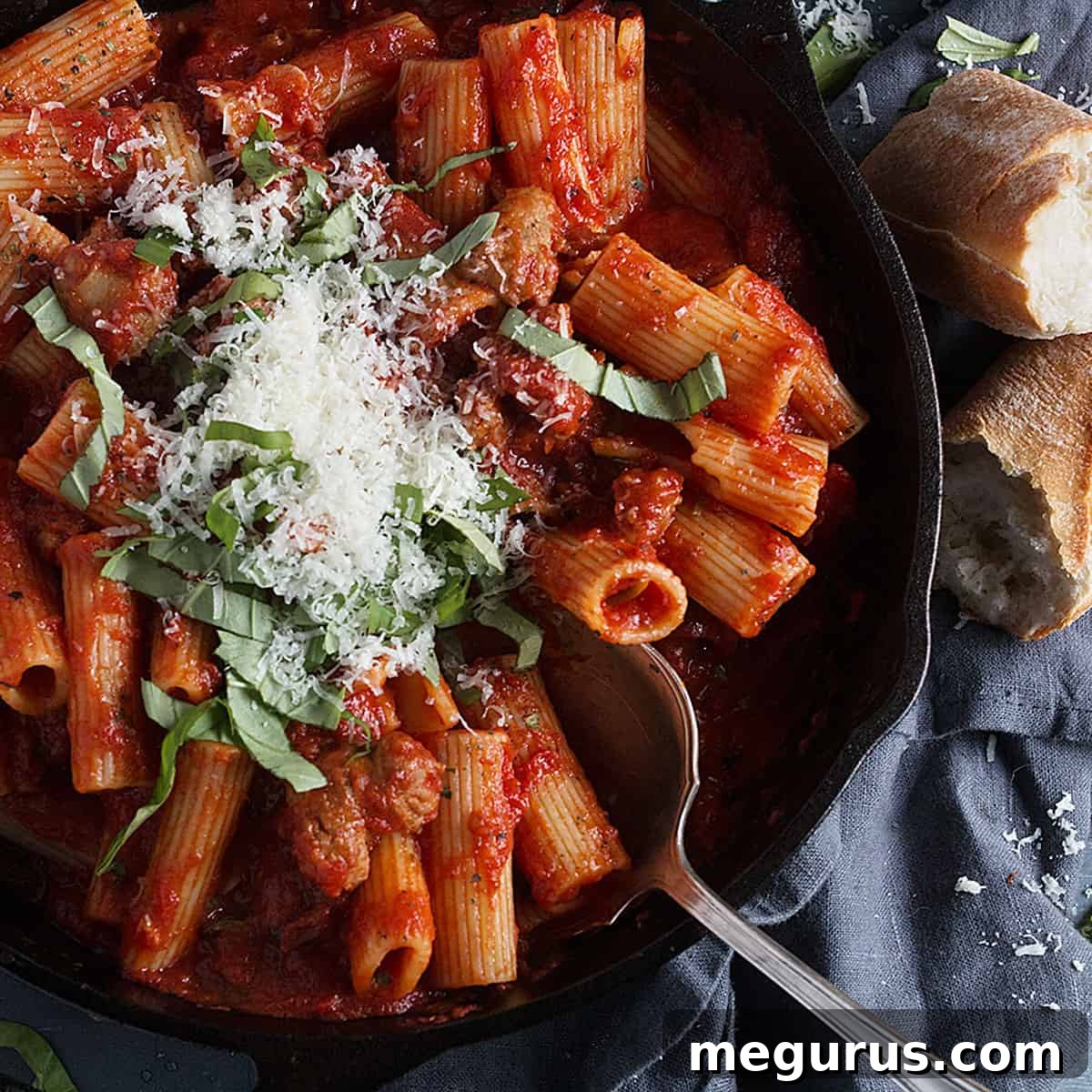
Experience a symphony of robust Italian flavors with this incredible sausage pasta recipe. Each forkful delivers a hearty, deeply satisfying taste, featuring succulent Italian sausage, vibrant roasted red peppers, and the rich sweetness of sun-dried tomatoes, all harmoniously blended into a luscious tomato sauce. A generous sprinkle of sharp Pecorino cheese provides the perfect finishing touch, elevating this dish from a simple meal to an unforgettable culinary experience. This recipe is a celebration of classic Italian comfort food, designed to warm your soul and impress your palate.
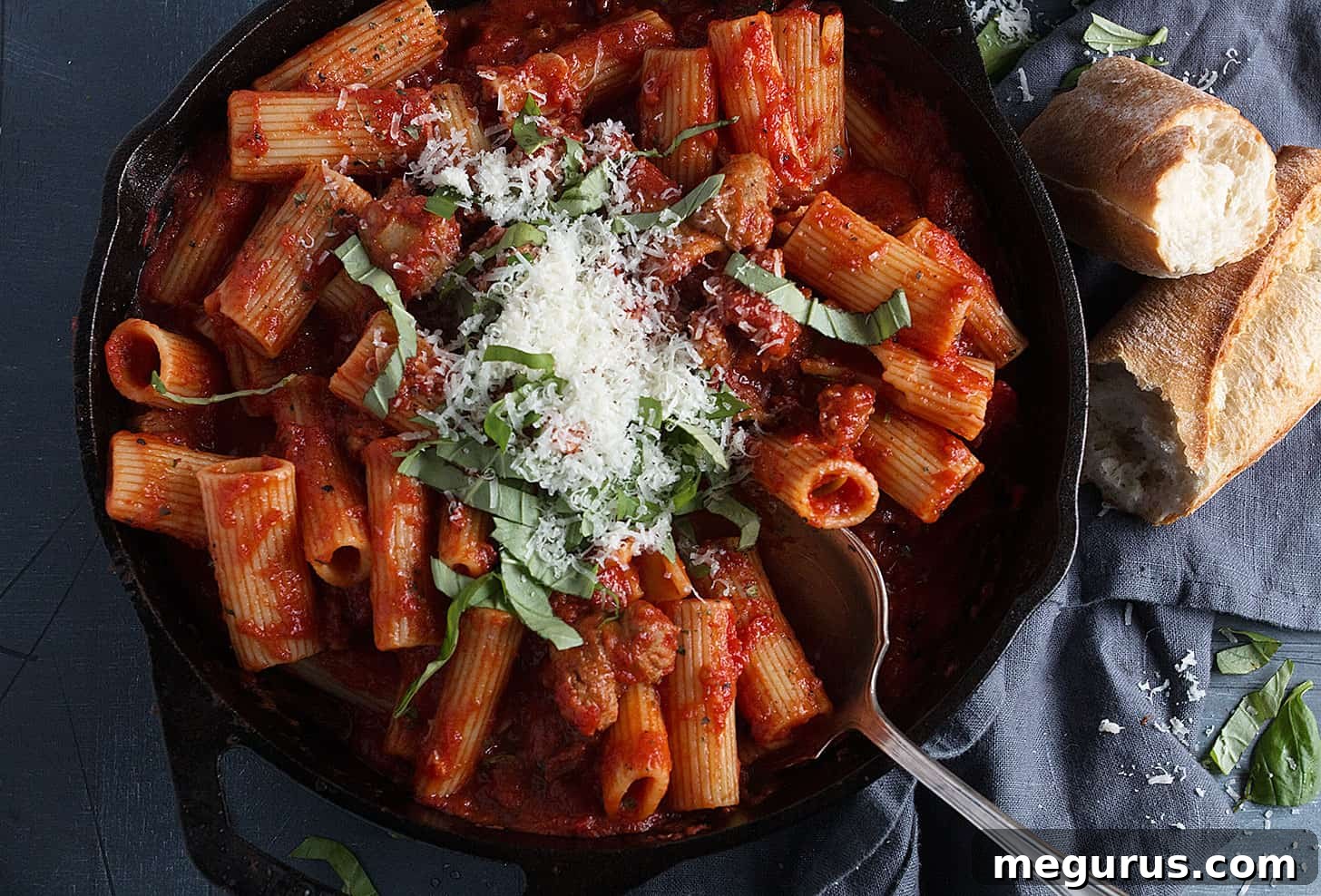
This Italian sausage and pasta recipe stands out as a personal favorite, cherished for its remarkable depth of flavor. What elevates a basic tomato sauce to something extraordinary in this dish are the key additions: tender roasted red peppers and intensely flavored sun-dried tomatoes. As these ingredients meld together during cooking, they create a wonderfully robust and comforting sauce that perfectly coats every piece of pasta, offering a truly hearty and flavorful meal that’s both easy to prepare and incredibly rewarding to eat. It’s the kind of dish that feels gourmet but comes together with surprising ease, making it ideal for both weeknight dinners and special occasions.
Unleashing Flavor: Key Ingredients and Smart Substitutions
Crafting a truly exceptional Italian sausage pasta begins with understanding your ingredients. Each component plays a vital role in building the layered flavors of this dish. Here, we delve into the core ingredients, offering insights into their selection and clever substitutions to ensure your pasta is always bursting with authentic taste.
Choosing Your Pasta: The Foundation of Your Dish
Pasta: While this versatile sauce pairs beautifully with almost any pasta shape, I highly recommend a short pasta for optimal enjoyment. Shapes like rigatoni, penne, rotini, or fusilli excel at capturing and holding onto the rich, chunky sauce, ensuring every bite is flavorful. In this recipe, I’ve opted for rigatoni, known for its ridges that cling perfectly to the sauce.
For precise cooking, measuring your dried pasta to 8 oz (approximately 225g for those using a metric scale) is a game-changer. It might seem like less than you’d expect, but this amount creates the ideal pasta-to-sauce ratio. If a kitchen scale isn’t handy, a simple estimation works: divide the total weight of your pasta package to determine roughly 8 oz. However, for consistent results and ease, a scale is undoubtedly the simpler choice, eliminating guesswork and ensuring a perfectly portioned meal every time.
Roasted Red Peppers: Sweetness and Depth
Roasted Red Peppers: These vibrant peppers bring a beautiful sweetness and a touch of smoky depth to the sauce. My go-to choice is jarred roasted red peppers, thanks to their unparalleled convenience and consistently delicious flavor. They save significant prep time without compromising on taste.
Alternatively, for a fresh-from-the-oven taste, you can easily roast your own red peppers at home. Simply halve and deseed fresh red peppers, toss with a little olive oil, and roast until tender and slightly charred. Once cooled, peel and chop them, adding the same amount as you would the jarred variety. Both options yield fantastic results, allowing you to choose based on your preference and time constraints.
Sun-Dried Tomatoes: Concentrated Umami
Sun-Dried Tomatoes: These little gems are flavor bombs, offering an intense, sweet-tart, and umami-rich punch that deepens the complexity of the sauce. Like roasted red peppers, I find sun-dried tomatoes packed in oil to be superior for this recipe. Their ready-to-use nature means no rehydration is necessary, saving you time and effort.
Moreover, the flavorful oil they’re packed in can be a fantastic bonus, often adding an extra layer of richness when incorporated into the dish. If you only have the dry variety, be sure to rehydrate them in warm water or olive oil before chopping and adding them to the sauce to ensure they soften and release their full flavor.
Italian Sausage: The Heart of the Dish
Italian Sausage: This is truly the star of the show, providing the robust, savory foundation for our pasta. You generally have two excellent choices here: mild or hot Italian sausage. I personally lean towards mild Italian sausage for its balanced flavor, which allows the other ingredients to shine without being overpowered.
However, if you crave a fiery kick, hot Italian sausage is an excellent option that will add a delightful spice to your meal. For those who enjoy a nuanced heat, consider a blend of both mild and hot sausages to achieve a perfect balance of warmth and flavor. Look for high-quality sausage from a reputable butcher for the best taste and texture.
Canned Tomatoes: Building the Sauce Base
Canned Tomatoes: The quality of your canned tomatoes significantly impacts the overall flavor of your sauce. I highly recommend using San Marzano canned tomatoes, if available. These premium Italian tomatoes are renowned for their naturally sweet, less acidic flavor and tender texture, which translate into a remarkably rich and balanced sauce.
If San Marzano aren’t accessible, choose the best quality whole peeled tomatoes you can find. Avoid diced tomatoes, as they often contain calcium chloride, which prevents them from breaking down properly and can result in a grainy sauce. For an authentic texture, hand-crushing whole tomatoes (as detailed in the notes below) creates a perfectly rustic and flavorful base.
Fresh Herbs: Aromatic Brilliance
Basil & Oregano: Fresh herbs are non-negotiable for vibrant Italian cooking. For much of the year, I keep a fresh basil plant on my windowsill, as fresh basil offers an unparalleled aromatic brightness. Its sweet, peppery notes are essential. If fresh basil isn’t available, dried basil can be used, but reduce the quantity as its flavor is more concentrated.
Similarly, fresh oregano adds a warm, earthy, and slightly pungent flavor that complements the other ingredients beautifully. If fresh is unavailable, dried oregano leaves (not ground) are a perfectly acceptable substitute, again, using less due to their potency. The combination of these two classic Italian herbs infuses the sauce with an irresistible fragrance and authentic taste.
Pecorino Cheese: The Salty, Tangy Finish
Pecorino Cheese: Lately, I’ve developed a deep appreciation for Pecorino cheese as the finishing touch for this pasta. It offers a delightful change from the more commonly used Parmesan, bringing its own unique character to the dish. Pecorino is crafted from sheep’s milk, giving it a distinctly sharper, tangier, and often saltier flavor profile compared to Parmesan, which is made from cow’s milk.
Being frequently a younger cheese than Parmesan, Pecorino boasts a bolder and more piquant taste that truly stands out. I believe it’s a worthy staple for any cheese drawer, adding a sophisticated edge to many Italian dishes. However, if Parmesan is what you have on hand, rest assured it will still make a delicious topping, offering a milder, nuttier finish that also complements the sauce beautifully.
Got leftover sun-dried tomatoes or roasted red peppers? Don’t let them go to waste! They are absolutely perfect for my fabulous Italian pasta salad, adding a burst of Mediterranean flavor to a refreshing side dish.
Mastering the Sauce: Expert Recipe Tips
Achieving a truly outstanding Italian sausage pasta is all about paying attention to a few crucial details. These simple yet effective tips will elevate your cooking and ensure your sauce reaches its full flavor potential.
- Garlic Preparation for Optimal Flavor: Rather than finely mincing the garlic, I prefer to thinly slice it. This technique makes the garlic less prone to burning, which can quickly introduce an undesirable bitter taste to your exquisite sauce. Thinly sliced garlic gently infuses the oil and sauce with its aromatic essence, creating a smoother, more balanced flavor profile without any harshness.
- The Art of Browning Sausage: Do not rush the sausage-cooking stage. This is a critical step for developing deep, complex flavors in your sauce. Continue cooking the sausage until it is thoroughly browned and caramelized. The rich, savory crust that forms on the sausage pieces during browning is packed with umami and will significantly enhance the overall depth and deliciousness of your sauce, forming the backbone of its hearty character.
Top Tips for Unforgettable Pasta Perfection
Beyond the sauce, the way you cook and combine your pasta is equally important for a truly restaurant-quality dish. Follow these top tips to ensure your pasta is always perfectly cooked and infused with flavor.
- Generously Salt Your Pasta Water: This is arguably the most crucial step for flavorful pasta. Your pasta cooking water should be generously salted—it needs to “taste like the ocean.” This infuses the pasta itself with flavor from the inside out, making it an integral part of the dish rather than just a bland vehicle for the sauce. Don’t underestimate the power of properly seasoned water; it makes all the difference.
- Marry Pasta and Sauce in the Pan: Instead of mindlessly draining your pasta in a colander, use a spider strainer or tongs (for longer pasta) to scoop the cooked pasta directly from the boiling water and transfer it immediately into your hot sauce. Adding hot pasta directly to the simmering sauce allows it to absorb the flavors more readily, creating a cohesive and deeply integrated dish. This method also keeps a bit of starchy pasta water handy, which is invaluable for thinning the sauce if it becomes too thick. Just be sure to drain excess water from the pasta spoon to avoid diluting your sauce.
- Finish Cooking Pasta with the Sauce: For the ultimate flavor infusion and perfect texture, always cook the pasta with the sauce in a hot skillet or saucepan for at least a couple of minutes before serving. This brief communal cooking time allows the pasta to fully absorb the sauce’s flavors, creating a more unified and delicious dish. Great pasta dishes are “brought together” in the hot pan, not in the serving bowl, ensuring every strand is coated and bursting with taste.
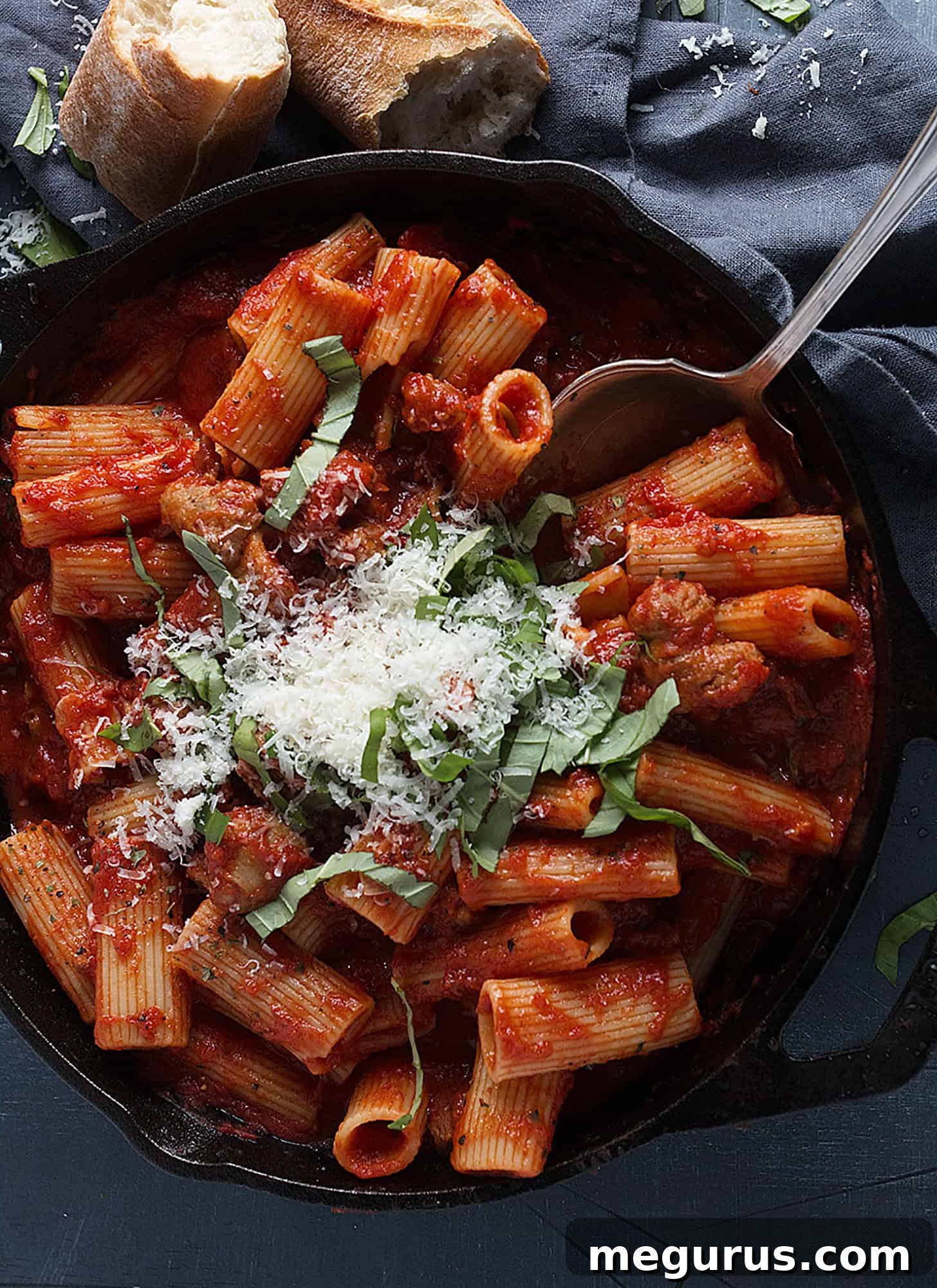
Serving Suggestions: What to Pair with Italian Sausage Pasta
This Italian sausage pasta is incredibly satisfying and flavorful on its own, making it a complete meal with minimal accompaniments. For a perfectly balanced and delightful dining experience, it truly needs only a fresh, crisp salad on the side. A simple green salad with a light vinaigrette will cut through the richness of the pasta beautifully.
If you’d like to round out the meal further and ensure no drop of that delicious sauce goes to waste, a bit of crusty bread or garlic bread served alongside is always a welcome addition. It’s perfect for soaking up every last bit of the savory sauce, completing a truly comforting and authentic Italian-inspired feast.
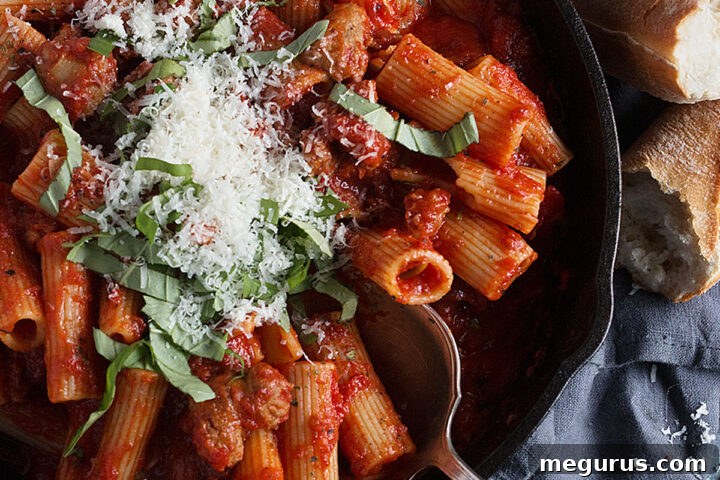
Get the Recipe: Italian Sausage Pasta
Pin This
Leave a Review
5 mins
25 mins
30 mins
4 servings
Ingredients
-
8 oz
short pasta, such as rigatoni, penne, fusilli or rotini - Salt for pasta cooking water
Sausage Tomato Sauce:
-
1 teaspoon
olive oil -
3 links
Italian sausage, mild or hot or a mix of both -
2 cloves
garlic, thinly sliced -
Pinch
red pepper flakes, omit if using hot sausage -
28 oz
canned whole tomatoes, San Marzano recommended, hand-crushed* -
1/3 cup
sun-dried tomatoes, packed in oil, chopped -
1/3 cup
roasted red pepper, jarred, drained and chopped -
1/4 cup
fresh basil, chopped or 2 tsp-ish dried basil -
2 teaspoons
fresh oregano, chopped or 1/2 tsp-ish dried oregano leaves -
1/2 Tablespoon
butter, optional, to finish sauce - Salt and freshly ground pepper, to taste
For serving:
- Additional chopped fresh basil
- Freshly grated Pecorino or Parmesan cheese
Instructions
-
Begin by bringing a large pot of generously salted water to a rolling boil for the pasta.
-
Slice the Italian sausage links into approximately 1/2-inch thick pieces. Heat the olive oil in a large skillet or deep pan over medium heat on your stovetop. Add the sliced sausage pieces and cook, stirring occasionally, until they are fully cooked through and beautifully browned. While the sausage is browning, take this time to thinly slice your garlic, chop the sun-dried tomatoes, roasted red peppers, and fresh basil.
-
Once the pasta water is vigorously boiling, add your chosen dried pasta. Cook according to package directions until it reaches an al dente texture – firm to the bite.
-
When the sausage has achieved a nice, deep brown, add the thinly sliced garlic and, if you’re using it, the red pepper flakes (omit if you chose hot sausage). Cook, stirring continuously, for about 1 minute more, or until the garlic becomes fragrant and slightly softened. Pour in the hand-crushed canned tomatoes, then stir in the chopped sun-dried tomatoes and roasted red peppers to combine all the elements. Add the fresh or dried herbs and season with a pinch of salt and freshly ground black pepper. Bring the sauce to a gentle boil, then reduce the heat to medium-low and allow it to simmer for at least 10 minutes, allowing the flavors to meld. If desired, stir in the 1/2 tablespoon of butter at this stage for added richness. Reduce the heat under the sauce to low to keep it warm while the pasta finishes cooking, if necessary.
-
Once the pasta is cooked al dente, increase the heat under the sauce to medium. Using a spider strainer or a slotted spoon, carefully transfer the hot pasta directly from the cooking water into the simmering sauce, ensuring any excess water drains back into the pot. Cook the pasta with the sauce for approximately 2 minutes, stirring regularly to ensure the pasta is thoroughly coated and absorbs the delicious flavors. Taste the sauce and adjust seasoning with additional salt and pepper as needed.
-
Serve immediately, garnished generously with freshly grated Pecorino or Parmesan cheese and an extra sprinkle of freshly chopped basil. Enjoy!
Notes
Leftover sun-dried tomatoes and roasted red peppers? Don’t let them go to waste! They are a fantastic addition to my fabulous Italian pasta salad.
For more detailed tips, variations, and substitution suggestions for this recipe, be sure to read the comprehensive notes and sections preceding this recipe card!
American, Canadian
Main Course
Jennifer Maloney
Calories: 587kcal,
Carbohydrates: 58g,
Protein: 23g,
Fat: 30g,
Saturated Fat: 11g,
Polyunsaturated Fat: 4g,
Monounsaturated Fat: 13g,
Trans Fat: 0.1g,
Cholesterol: 68mg,
Sodium: 1083mg,
Potassium: 1067mg,
Fiber: 6g,
Sugar: 10g,
Vitamin A: 513IU,
Vitamin C: 30mg,
Calcium: 125mg,
Iron: 5mg
Tried this recipe?
If you enjoyed this recipe, please leave a star rating and comment. It helps others to find it!
More Delicious Sausage and Pasta Recipes to Explore!
If you’ve enjoyed the rich flavors of this Italian Sausage Pasta, you’re in for a treat! The versatility of Italian sausage makes it a fantastic ingredient for many comforting and satisfying pasta dishes. Here are a couple more highly-rated recipes featuring sausage and pasta that we know you’ll love, perfect for expanding your culinary repertoire.