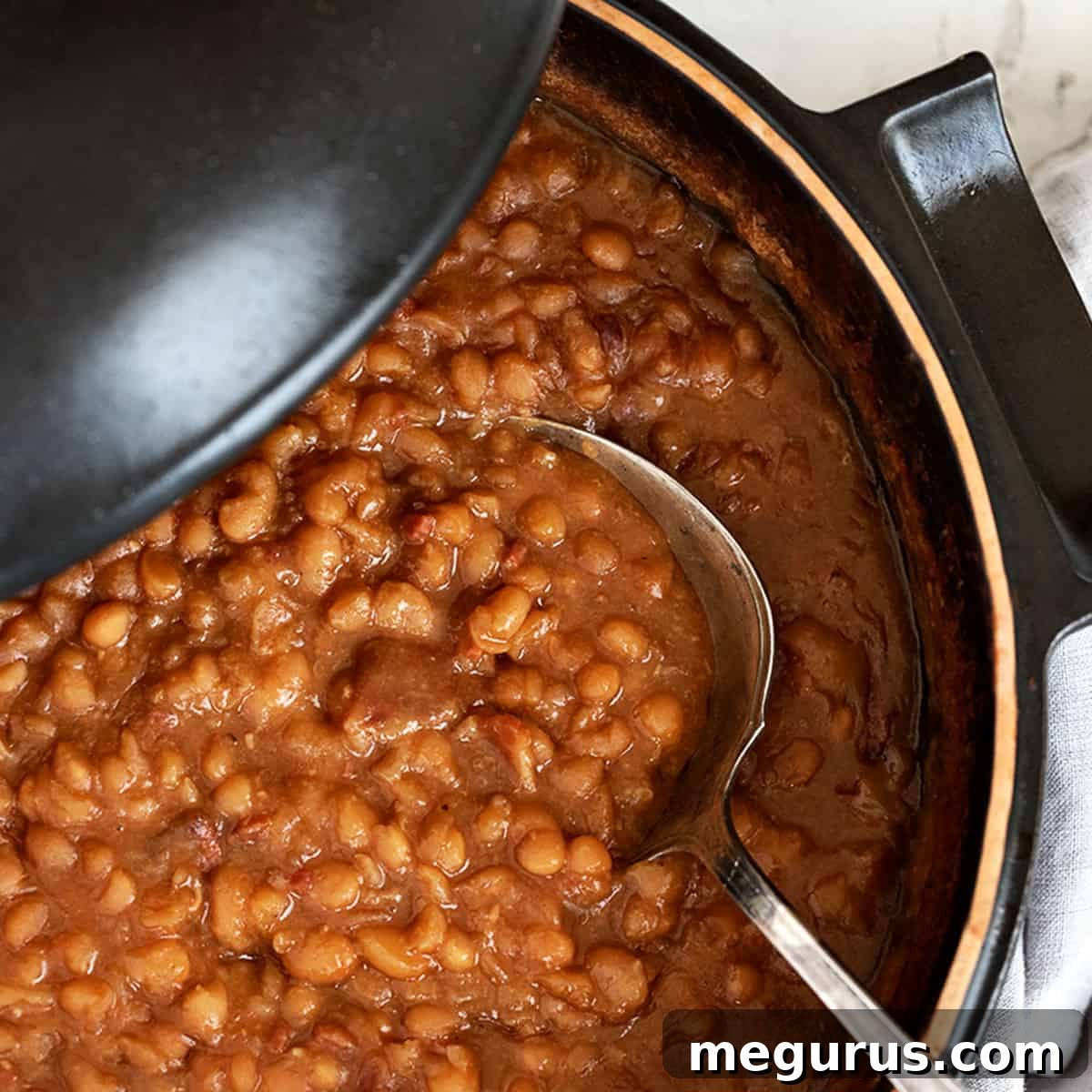
Discover the art of crafting perfectly tender, flavorful maple baked beans, slow-cooked to perfection from scratch. This cherished recipe combines the rustic goodness of dried navy beans with the rich sweetness of real maple syrup, the savory depth of crispy bacon, and a hint of dark molasses for an unforgettable side dish that elevates any meal.
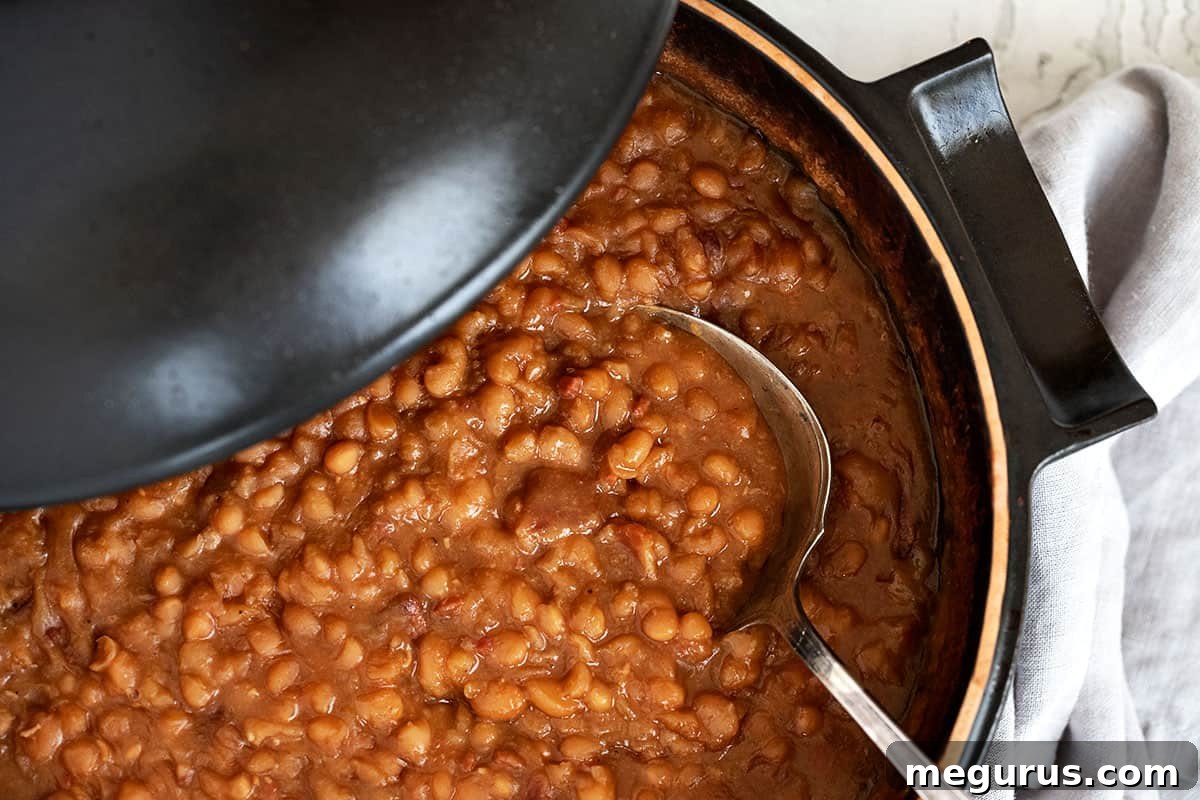
There’s an undeniable charm and superior taste that comes with slow-cooked, homemade baked beans, and these maple-infused delights are truly exceptional. Far from the canned varieties, this recipe delivers a symphony of flavors: a delicate sweetness from premium maple syrup, a satisfying saltiness contributed by savory bacon, and a profound richness from a touch of molasses. The careful balance of these ingredients results in a side dish that is both comforting and sophisticated, making it a staple for family gatherings and special occasions alike.
Maple baked beans are incredibly versatile and make a perfect accompaniment for a variety of meals. They shine as a celebratory side for an Easter dinner, complementing a glazed ham beautifully. Beyond the holidays, they are an absolute must-have for summer barbecues, pairing wonderfully with grilled meats, hot dogs, and burgers. Imagine a scoop of these warm, glistening beans alongside your favorite BBQ fare, adding a unique sweet and savory dimension to your plate.
While preparing baked beans from dried beans might seem like a commitment, the process is incredibly rewarding. The depth of flavor and the wonderfully creamy texture achieved with dried beans simply cannot be replicated with pre-cooked alternatives. Don’t be intimidated; I’ve gathered all my expert tips and tricks to guide you through each step, ensuring your homemade maple baked beans turn out absolutely perfect every time.
Essential Ingredients and Thoughtful Substitutions
Crafting the best maple baked beans starts with selecting high-quality ingredients. Here’s what you’ll need and some considerations for each:
Dried Navy Beans: The Foundation of Flavor
Also popularly known as pea beans, these small, oval-shaped white beans are the traditional choice for classic baked beans, and for good reason. They boast a creamy texture and a mild flavor that readily absorbs the delicious maple and molasses sauce. You can typically find them in the dried bean section of most well-stocked grocery stores. A crucial tip for achieving the best results is to always purchase a fresh bag of beans. Even dried beans continue to lose moisture and become overly dry when stored in a cupboard for extended periods, which can impact their cooking quality and tenderness. Older beans may take longer to cook and might not achieve the desired creaminess.
It’s important to note that navy beans are distinct from Great Northern beans, despite their similar appearance. While Great Northern beans can be used in a pinch, navy beans offer a superior texture and flavor profile that truly elevates this dish. Their delicate nature allows them to become wonderfully tender without turning mushy, holding their shape while embracing the rich sauce. Stick to navy beans for that authentic, beloved baked bean experience.
Pure Maple Syrup: The Heart of Maple Baked Beans
When a recipe specifies “maple,” there’s truly no substitute for genuine maple syrup. This ingredient is the star of the show, imparting its distinctive, complex sweetness and aromatic warmth that defines these baked beans. You’ll need a full cup of this liquid gold to achieve the rich maple flavor. For the deepest, most robust maple essence, opt for Grade A Dark Color, Robust Taste (formerly known as Grade B) syrup. Its intense flavor stands up beautifully to the long cooking process. However, Grade A Amber Color, Rich Taste (formerly Grade A Medium Amber) is also an excellent choice and will deliver a delightful sweetness. Avoid “maple-flavored” syrups, which are often high-fructose corn syrup with artificial flavors; they will not yield the same authentic taste or quality.
Smoked Bacon: The Savory Counterpoint
Bacon is more than just a garnish in this recipe; it introduces a vital salty, smoky depth that perfectly balances the sweetness of the maple and molasses. Its fat also contributes to the rich, unctuous texture of the sauce. We highly recommend including bacon for the full flavor experience. However, if you are preparing a vegetarian version, you can certainly omit the bacon. In this case, be sure to increase the amount of added salt to compensate for the savory notes that bacon would otherwise provide. You might also consider adding a touch of smoked paprika for a hint of smokiness.
Molasses: For Depth and Color
Molasses adds another layer of dark, complex sweetness and a beautiful deep color to the baked beans. For the finest flavor, I recommend using “Fancy” molasses, which is the lightest and sweetest grade, offering a subtle, caramel-like richness. “Cooking” molasses, a slightly darker and more robust variety, can be used if Fancy molasses is unavailable, though it has a stronger flavor, so you might consider using a touch less. Blackstrap molasses, with its very strong, bitter, and mineral-rich profile, is generally too potent for this recipe and would likely overpower the delicate maple notes.
Dried Mustard Powder: The Secret Ingredient
This powdered mustard isn’t just for flavor; it plays a crucial role in helping the beans absorb moisture and thicken the sauce. It adds a subtle tang and warmth that complements the sweet and savory elements. If you don’t have dried mustard powder on hand, you can easily substitute it with regular yellow prepared mustard, as detailed in the comprehensive recipe card below. Just be sure to adjust the quantity for the best balance.
The Art of Making Maple Baked Beans: A Step-by-Step Guide
Transforming humble dried beans into a culinary masterpiece is a journey of patience and simple techniques. Here’s a detailed guide to creating these exceptional maple baked beans, ensuring every batch is a success. Remember to consult the full recipe card for precise measurements and timings.
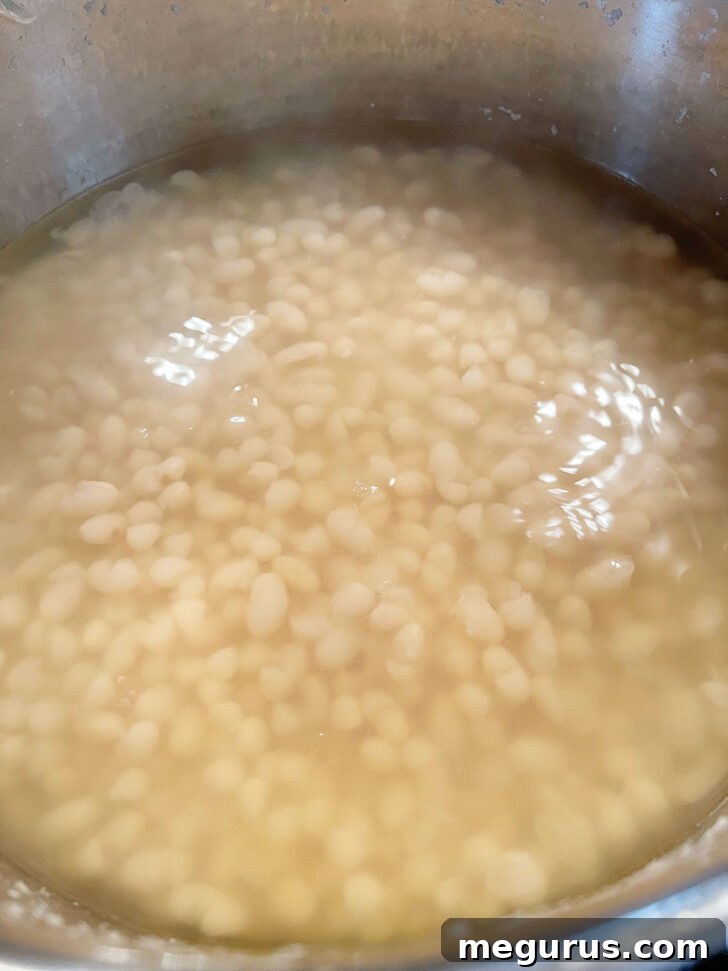
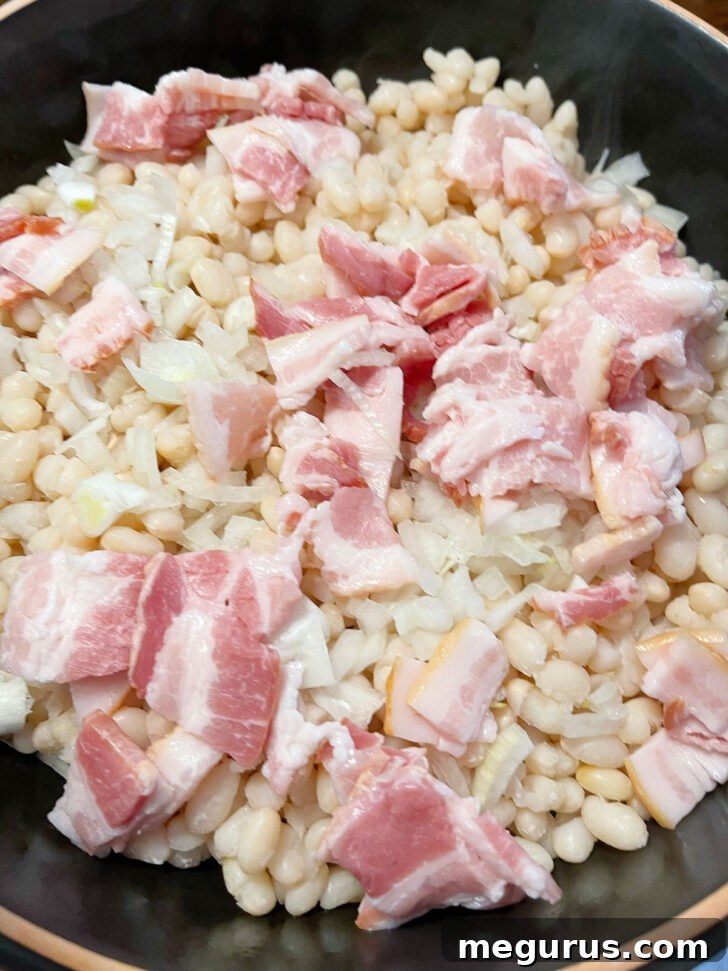
- Soak and Simmer the Beans: Begin by soaking your dried navy beans overnight in cold water. This crucial step rehydrates the beans, reducing cooking time and ensuring even tenderness. The following day, drain the soaked beans and transfer them to a large pot with fresh water. Gently simmer them, uncovered, until they are tender. This typically takes 45-55 minutes, but the key is regular taste-testing to ensure they’ve reached the perfect tenderness without becoming mushy. Avoid salting the water during this initial simmer, as salt can toughen the bean skins.
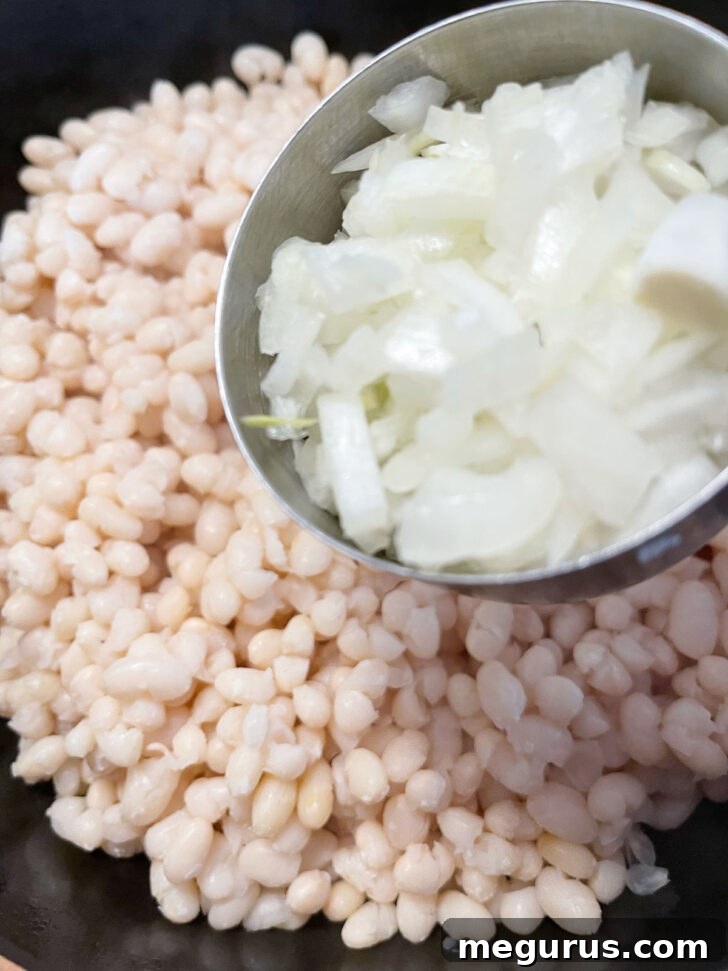
- Prepare the Baking Dish: Once the beans are tender, drain them thoroughly and rinse quickly under cold water to halt the cooking process. This prevents them from overcooking and becoming mushy in the oven. Transfer the cooked beans to a sturdy casserole dish or a Dutch oven with a tight-fitting lid. Then, evenly scatter the diced onion over the beans.
- Add the Bacon: Distribute the cut bacon pieces over the beans and onions. As the beans bake, the bacon will crisp up slightly and release its flavorful fat into the sauce, enriching the dish with its savory notes.
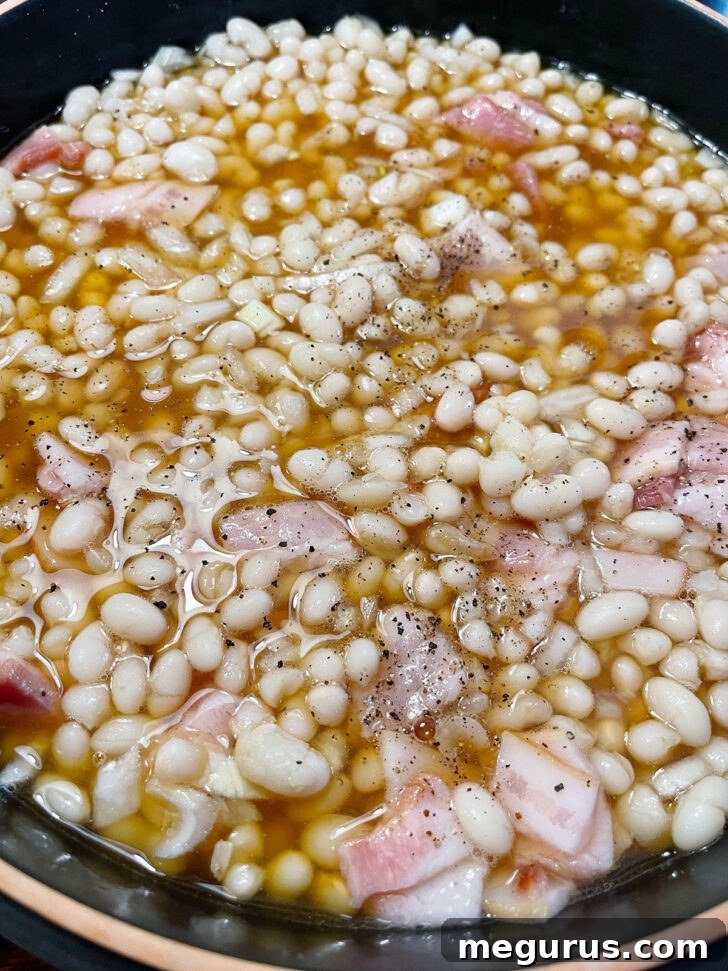
- Combine the Maple Mixture: In a separate bowl or large measuring cup, whisk together the maple syrup, molasses, dried mustard powder, and salt until well combined. This forms the flavorful sauce that will infuse the beans during baking. Pour this aromatic mixture over the beans in the casserole dish, then add the specified amount of hot water. Stir very gently to ensure all ingredients are evenly distributed.
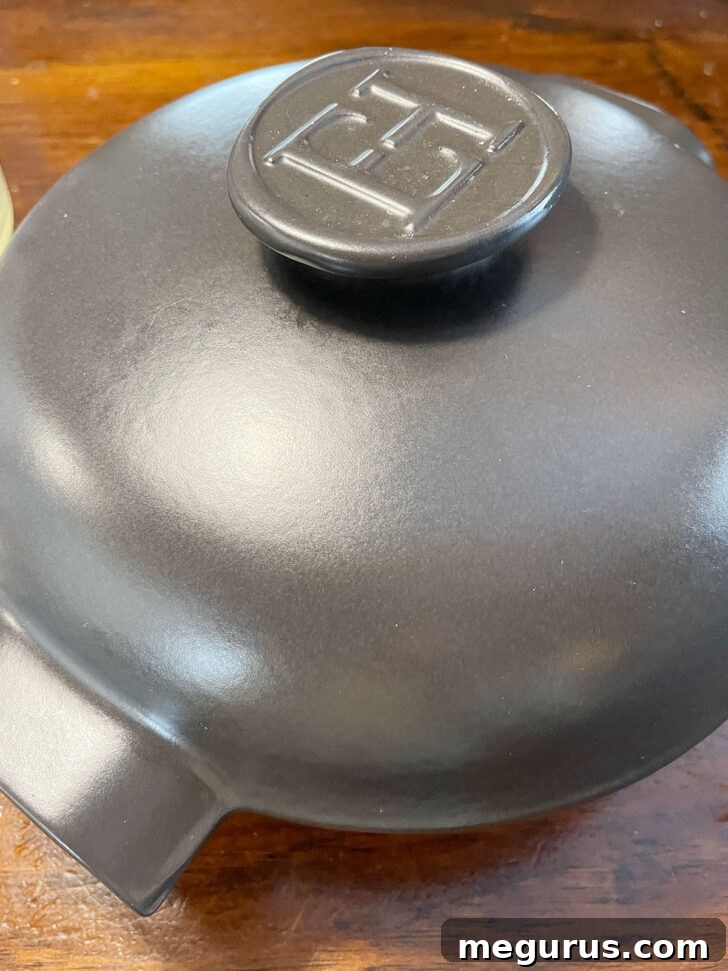
- Slow Bake to Perfection: Cover your casserole dish tightly with its lid or aluminum foil. Place it in a preheated oven (typically 325°F / 160°C) and bake for a full 4 hours. The low and slow cooking process allows the flavors to meld beautifully and the beans to become incredibly tender and rich.
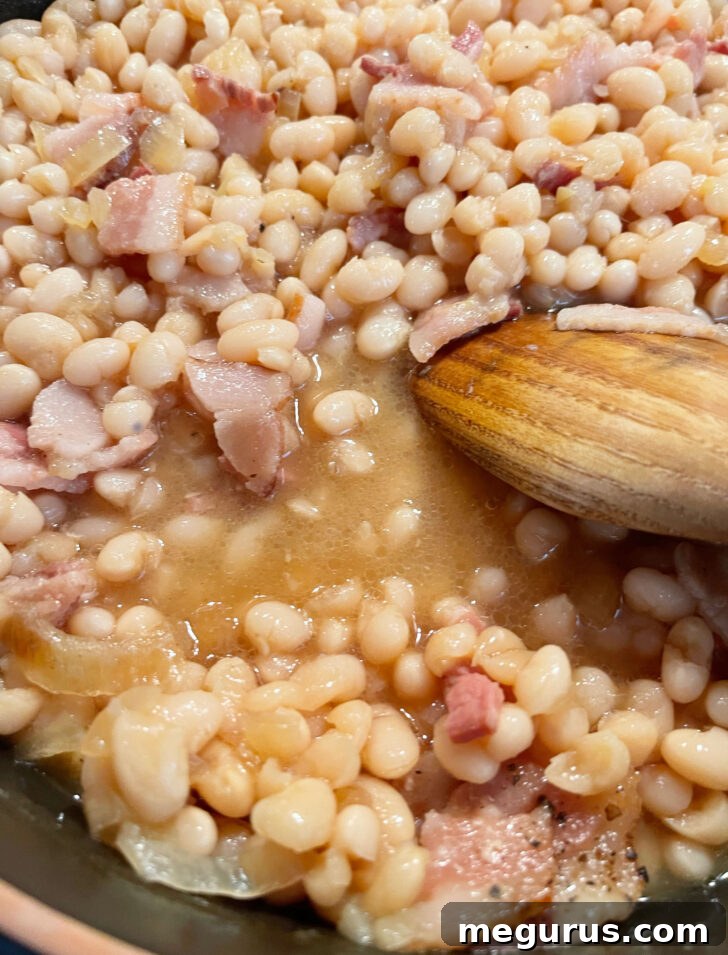
- Maintain Liquid Levels: During the covered baking period, it’s essential to check the beans every hour or so. Gently stir them to gauge the liquid level accurately. You want the beans to remain submerged in enough liquid so that you can see “puddles” on the surface. If the mixture appears dry or the liquid has significantly reduced, add additional hot water (about ½ cup at a time) until the desired level is restored. This constant moisture prevents the beans from drying out, compacting, and becoming mushy.
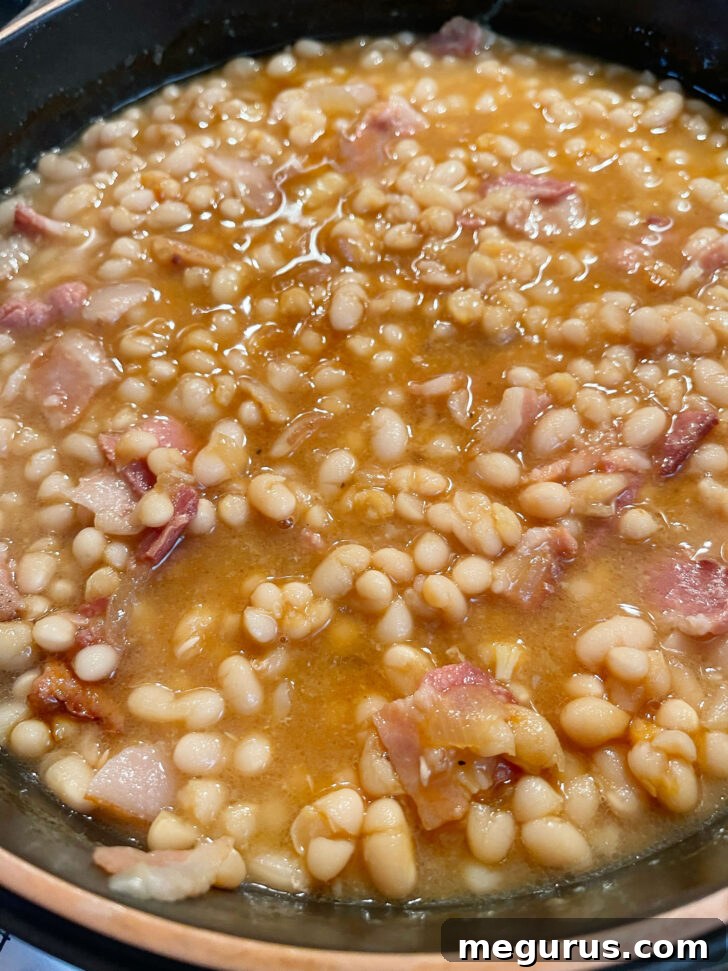
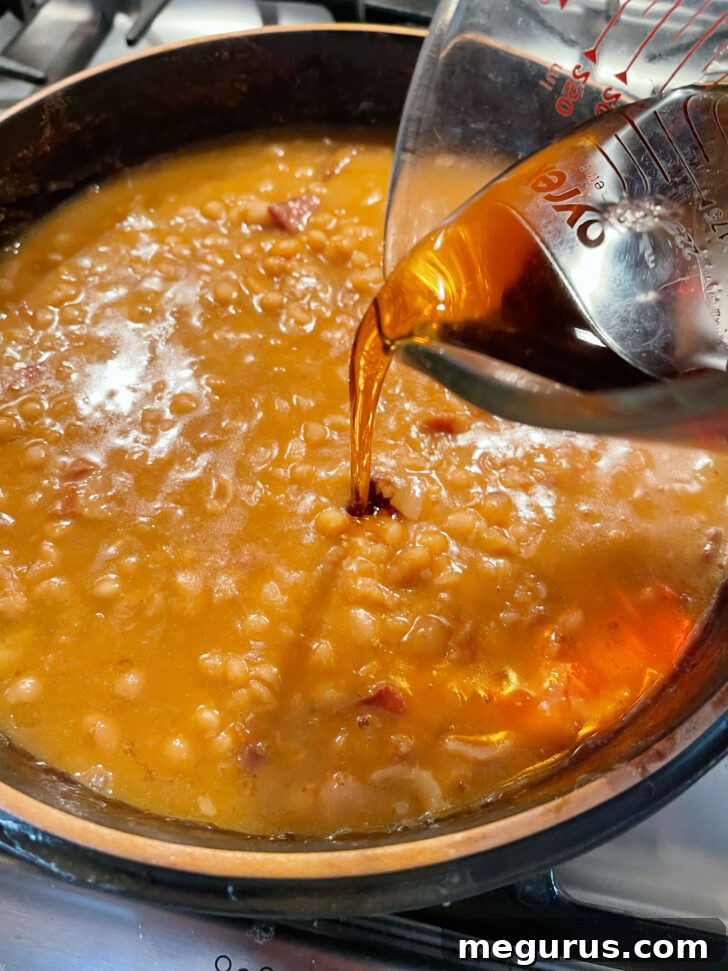
- Final Touches and Thickening: After the initial 4 hours of covered baking, remove the casserole from the oven. At this point, you’ll add the remaining maple syrup, which provides a fresh burst of maple flavor. Gently stir it in. Return the dish to the oven, but this time, leave it UNCOVERED.
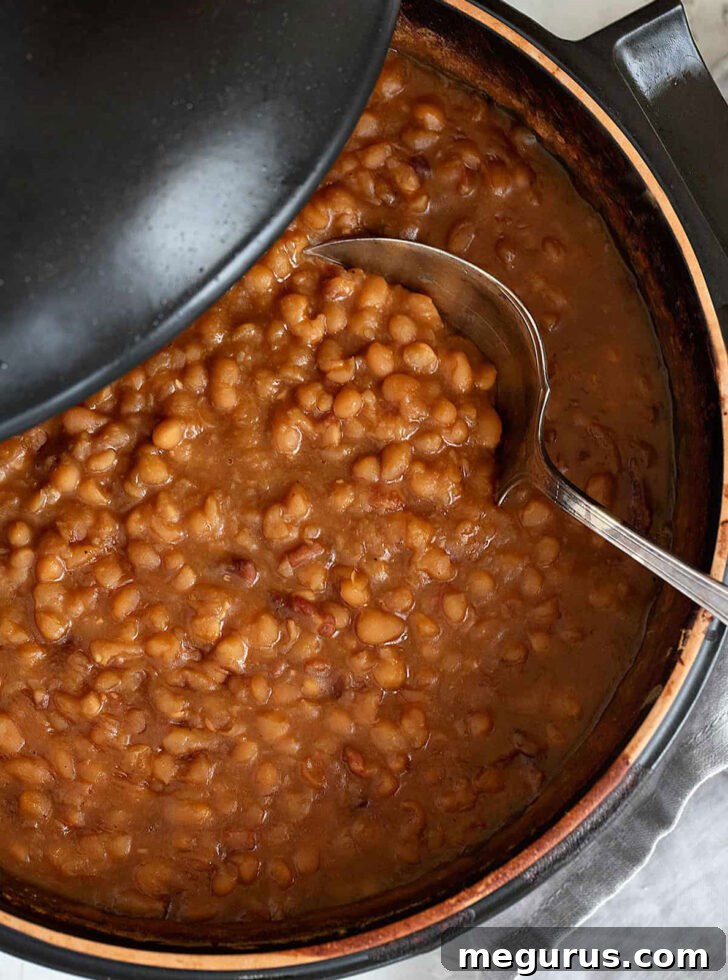
- Achieve Desired Consistency: Continue to bake the beans uncovered for another 30 minutes, or until the sauce has visibly thickened and is bubbling nicely around the edges. This uncovered stage allows some of the excess liquid to evaporate, concentrating the flavors and achieving that signature saucy consistency. The beans will continue to thicken slightly as they cool after being removed from the oven.
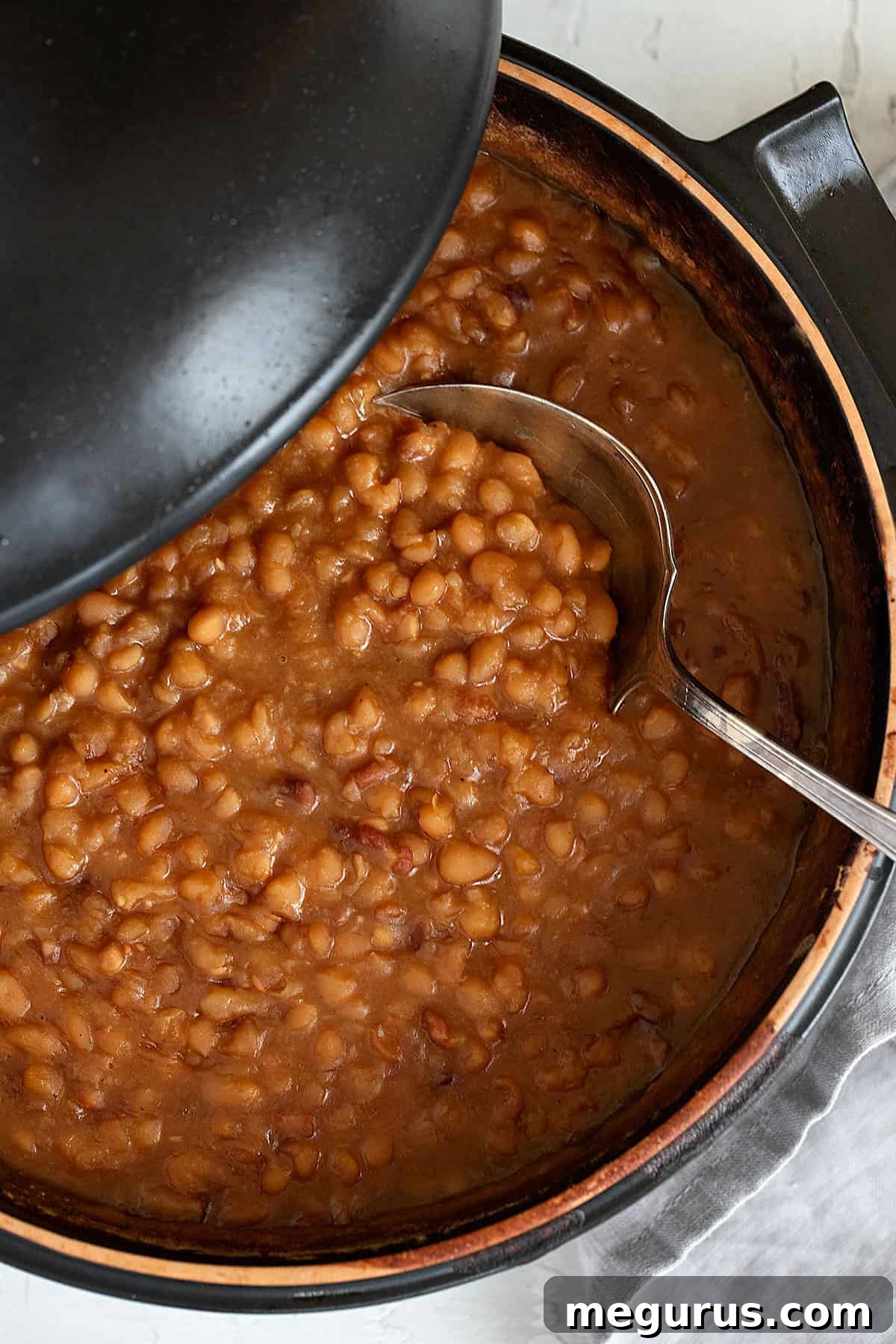
- Rest and Serve: Let the baked beans rest for 5-10 minutes, either uncovered or lightly covered, before serving. This brief resting period allows the flavors to settle and the sauce to reach its optimal thickness. Serve warm and enjoy the fruits of your labor!
Mastering the Perfect Texture: How to Avoid Mushy Baked Beans
Achieving tender, creamy beans without them turning into an unappetizing mush is a common concern for home cooks. Beans become mushy when their outer skin cracks or is crushed, allowing too much moisture to penetrate the interior too rapidly. Follow these expert tips to ensure your maple baked beans always have a desirable texture:
- Start with Fresh Beans: This is perhaps the most critical step. Even though beans are dried, they continue to dehydrate over time when stored in a cupboard. Older, excessively dried beans have compromised cell structures that make them prone to falling apart during cooking. A fresh bag of dried navy beans ensures a better starting point for even rehydration and tender cooking.
- Embrace the Overnight Soak: Do not skip the overnight soak in cold water. This simple, hands-off step allows the beans to rehydrate slowly and evenly, which is far more reliable than quick-soaking methods. Proper rehydration minimizes the risk of uneven cooking where the outside becomes soft while the inside remains hard.
- Gentle Simmering is Key: When pre-cooking your soaked beans, maintain a gentle simmer, not a vigorous boil. A rapid boil can cause the bean skins to split, leading to a mushy texture. Keep the pot uncovered to allow for some evaporation and prevent over-agitation of the beans.
- Simmer Just Until Tender: The goal during the initial simmering stage is to cook the beans until they are just tender to the bite, with a consistent texture throughout. Taste-test them regularly (starting around 40 minutes) to catch them at their prime. Remember, they will continue to soften during the long oven bake, so don’t overcook them in this initial stage.
- Stop Cooking with a Cold Rinse: Immediately after simmering, drain the beans and rinse them under cold running water. This quickly lowers their internal temperature, effectively stopping the cooking process and preventing carryover cooking that could lead to mushiness.
- Stir with Care: Throughout the long baking process, resist the urge to stir the beans vigorously. Aggressive stirring can bruise or break the delicate bean skins, promoting mushiness. When checking liquid levels or adding water, use a gentle, scooping motion.
- Monitor and Hydrate Hourly: Baked beans require consistent moisture during their extended oven time. Check the beans hourly, giving them a very gentle stir, and add additional hot water as necessary. Maintaining sufficient liquid prevents the beans from drying out and compacting, which can also contribute to a less desirable texture. Aim for visible “puddles” of liquid on the surface of the beans to indicate proper hydration.
Planning Ahead: Making, Storing, Freezing, and Re-heating Your Baked Beans
These homemade maple baked beans are not only delicious fresh but also excellent for meal prepping and entertaining, as they store and reheat beautifully. Here’s everything you need to know:
Making Ahead
Maple baked beans are a fantastic make-ahead dish, which makes them perfect for holidays or busy weeknights. You can prepare them entirely in advance, refrigerate them, and simply reheat when ready to serve. This allows the flavors to deepen and meld even further, often resulting in an even more delicious dish the next day. Cooked baked beans can be safely refrigerated for 2-3 days.
Storing
Always store cooked baked beans in an airtight container in the refrigerator to maintain freshness and prevent spoilage. For longer storage options, they can also be frozen, but only after they have been fully baked and cooled. Freezing uncooked beans after soaking or simmering is not recommended for this recipe, as it can negatively impact their texture.
Freezing
Cooked maple baked beans freeze exceptionally well. Portion them into freezer-safe containers or heavy-duty freezer bags once they have completely cooled. They can be frozen for up to 3 months, and sometimes even longer, without a significant loss in quality. Thaw them in the refrigerator overnight before reheating, or reheat directly from frozen using the instructions below.
Reheating
From Refrigerated: To reheat refrigerated baked beans, first remove them from the refrigerator about 20-30 minutes before baking to allow them to come closer to room temperature. Transfer them to an oven-safe dish, cover it tightly (with a lid or aluminum foil), and place in a preheated 350°F (175°C) oven for about 20-25 minutes, or until thoroughly warmed through. If the beans appear too thick, gently stir in a splash of hot water with a fork to loosen the sauce. Avoid vigorous stirring, which could crush the tender beans.
From Frozen: Baked beans can be reheated directly from frozen in the oven. Keep the dish covered and bake in a 350°F (175°C) oven for approximately 35-40 minutes, or until heated through. Once the beans begin to warm and are no longer frozen solid, you can add a splash of water if needed to adjust the consistency. If, after freezing and reheating, the beans seem a bit watery, simply remove the lid and continue baking uncovered for a few minutes to allow the excess liquid to evaporate and the sauce to thicken slightly.
For convenience, you can also reheat smaller portions of cooked baked beans in the microwave or gently on the stovetop in a saucepan over low heat, stirring occasionally.
Frequently Asked Questions About Maple Baked Beans
Do I need to use real maple syrup?
As these are “maple” baked beans, the distinctive flavor comes directly from real maple syrup. While I understand it can be expensive in some regions, opting for real maple syrup is highly recommended for the best flavor profile. Please avoid maple-flavored syrups, which are typically artificial and contain unwanted ingredients. If real maple syrup is truly out of reach or you wish to reduce the cost, you can replace a portion (1/4 to 1/2 cup) of the maple syrup with brown sugar mixed with water. For example, to replace 1/4 cup of maple syrup, mix 1/4 cup hot water with 1/3 cup brown sugar. Double these amounts if you’re replacing 1/2 cup of maple syrup. Be aware that this substitution will naturally result in a less pronounced maple flavor in your final dish.
Can I make these baked beans ahead and reheat them?
Absolutely! One of the great advantages of well-made baked beans is their ability to be prepared in advance and reheated beautifully. In fact, many people find that the flavors of baked beans actually improve after a day in the refrigerator, allowing the ingredients to meld further. For detailed instructions on how to properly prepare, store, and reheat your beans, please refer to the “Making Ahead, Storing, Freezing and Re-heating” section above.
Can I make these baked beans in a slow cooker or Instant Pot?
While I haven’t personally tested this specific recipe in a slow cooker or Instant Pot, as it is primarily developed for oven baking (they are “baked” beans, after all!), it might be possible with some adjustments. However, for guaranteed success and optimal texture, I recommend seeking out a recipe that has been specifically developed and tested for use in a slow cooker or Instant Pot. These appliances require different liquid ratios and cooking times. If you’re looking to free up oven space, remember that these baked beans are excellent when made ahead. They store wonderfully in the fridge and reheat perfectly. Additionally, this recipe bakes at 325°F (160°C), which is a common temperature that allows them to cook alongside many other dishes, such as a holiday ham, maximizing your oven efficiency.
Aren’t baked beans typically made with kidney beans?
In many parts of the world, especially in North America, classic “baked” beans are traditionally made with small white beans, most commonly navy beans. While kidney beans are used in other bean dishes like chili, they are not the bean of choice for the traditional baked bean dish that this recipe aims to recreate. The creamy texture and mild flavor of navy beans are what define authentic baked beans.
Can I use canned navy beans instead of dried ones?
This recipe is meticulously crafted for starting with dried navy beans, taking into account their need for soaking, initial simmering, and a long, slow oven bake to achieve their signature tenderness and absorb the flavors. Since canned beans are already pre-cooked, the extended baking time of this recipe would be far too long for them, likely resulting in a mushy, undesirable texture. While you could certainly experiment with the same flavorful ingredients and a significantly shorter cooking time using canned beans, I cannot offer specific advice or guarantees on the outcome, as I haven’t tried that variation myself. For best results, stick to dried beans as instructed.
My baked beans are not tender. What did I do wrong?
The most common reason for tough or undercooked baked beans is insufficient simmering time at the beginning of the process. It is crucial that the beans are simmered until fully tender before they go into the oven. The long oven baking time is primarily for flavor development and sauce thickening, not for softening hard beans. Be diligent in taste-testing your beans during the simmering stage to ensure they are uniformly tender throughout. Other contributing factors could include using very old, excessively dried beans (as discussed in the “Avoid Mushy Beans” section) or cooking with extremely hard water, which can sometimes hinder bean softening. If you suspect hard water, consider using filtered water for soaking and simmering.
I like darker baked beans. Can I add more molasses?
Yes, adjusting the amount of molasses is a matter of personal preference and taste! Molasses not only adds a deeper flavor but also contributes to the rich, dark color of the beans. You can certainly experiment by adding a bit more molasses to achieve your desired shade and taste. Start with an extra tablespoon or so and adjust from there in subsequent batches. Just be mindful not to overdo it, as molasses, especially darker varieties, has a strong, distinctive flavor that can overpower the delicate maple notes if used in excessive quantities. The goal is a balanced flavor profile.
Are maple baked beans sweet?
Maple baked beans are inherently sweeter than traditional baked bean recipes due to the generous amount of real maple syrup. However, the inclusion of savory bacon and the subtle tang of mustard powder creates a delightful and well-balanced sweet and salty profile. If, after tasting the finished beans, you find them a touch too sweet for your preference, you can easily stir in a bit more salt to balance the flavors. Alternatively, in future preparations, you might consider adding slightly less maple syrup during the final uncovered baking stage.
What should I serve with maple baked beans?
Maple baked beans are incredibly versatile and pair wonderfully with a wide array of dishes. They are an absolute showstopper as a side dish for ham, particularly for special occasions like Easter or Christmas. For casual summer gatherings, they are right at home at any barbecue, making a perfect accompaniment to juicy hamburgers, tender ribs, grilled sausages, or pulled pork. Beyond the main course, don’t forget about leftovers! Warm maple baked beans spooned over a slice of buttered toast make for a quick, comforting, and satisfying lunch or light dinner.
Can I add a splash of bourbon to the maple beans?
Absolutely! A splash of bourbon can add a fantastic layer of complexity and warmth to these maple baked beans, complementing the existing sweet and smoky flavors. If you wish to incorporate it, add a small amount (start with just a tablespoon or two) along with the maple and molasses mixture at the beginning of the cooking process. Be cautious not to be too heavy-handed, as the flavors will concentrate during the long, slow baking. A subtle hint of bourbon is perfect to enhance, not overpower, the natural deliciousness of the beans.
When simmering the soaked beans, how do I know when they are “tender”?
Determining “tender” during the initial simmering stage is crucial for perfectly cooked baked beans. The beans are considered tender when they exhibit an even, soft texture all the way through to their center. When beans are undercooked, they will feel soft on the outside but will have a slightly chalky or raw taste and firm texture in the middle when you bite into them. Once you can easily mash a bean between your fingers or it has a consistent, creamy texture throughout when chewed, it’s done. It’s important to remember that at this point, the beans won’t be as “soft” as the final baked product; that final magic happens during the long oven bake. You just need them to be thoroughly tender, which typically occurs after 45-55 minutes of gentle simmering.
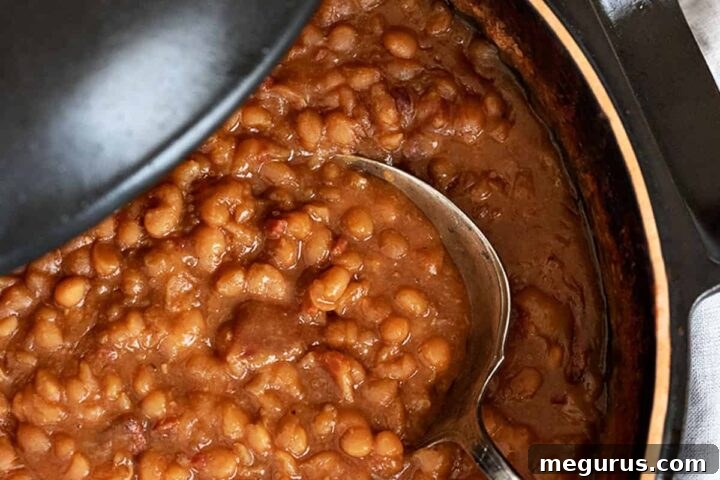
Maple Baked Beans
Low and slow-cooked maple baked beans, made from dried beans, real maple syrup, bacon and a touch of molasses.
15 mins
4 hrs 30 mins
9 hrs
13 hrs 45 mins
10 servings
Pin This
Ingredients
- 2 cups dried navy beans
- 1/2 cup onion, diced
- 4 slices bacon, cut into 1-inch pieces
- 1/2 cup maple syrup, plus more as needed near the end of baking
- 1/4 cup Fancy molasses, *see Note 1 below
- 1 teaspoon dry mustard powder, or 1 Tablespoon yellow prepared mustard
- 1 teaspoon fine salt
- 2 cups hot water, plus more as needed while baking
To be added near the end of cooking:
- 1/4-1/2 cup maple syrup, add a bit at a time, to taste
Instructions
- The night before baking: In a large bowl, add 6 cups of cold water and 2 cups of dried navy beans. Allow to soak overnight, uncovered.
- Day of baking: Drain beans and place into a large pot. Add 6 cups of fresh water to the pot. (Water should be about 2 inches above the beans. You can add a bit more if needed). Do not salt the water. Bring to a boil over medium-high heat, then reduce heat to medium-low or whatever level allows for a gentle simmer.
- Simmer the beans until just tender, about 40-55 minutes. Be sure to taste test beans for tenderness regularly (starting at about 40 minutes). You want to simmer the beans until they are tender, but no longer.
- Drain beans and run the drained beans under cold water to stop the cooking process. Add the beans to a casserole dish with a lid (approx. 2 1/2 quart size for the base 1X recipe) or a Dutch oven.
- Preheat oven to 325°F (regular bake/not fan-assisted), with the rack in the center of the oven.
- Scatter the onion and bacon overtop of the beans in the casserole. In a measuring cup, stir together the 1/2 cup maple syrup, molasses, mustard powder, and salt. Pour over the beans. Add the 2 cups of hot water and stir gently to combine.
- Cover the pot and place into the preheated oven. Bake for 4 hours covered, checking every hour for the first 3 hours, then every 30 minutes for the last hour of cooking, to be sure there is sufficient liquid in the pot. When checking, very gently stir the mixture so you can gauge the liquid level. You want the liquid in the pot to just cover the beans, so you should see some “puddles” on the top of the beans. If you don’t and the mixture seems dry, add some hot water until you get the liquid to that level. It’s not unusual to add 1/2 cup of water a couple of times during the baking time.
- You’re always better to err on the more liquid side than to allow the beans to dry out, which causes them to compress and get mushy. If you find you have a lot of liquid at the end, you can simply extend the uncovered baking time slightly to allow it to cook off.
- After 4 hours of baking, remove from the oven. Add the remaining 1/2 cup of maple syrup and gently stir in. Return to the oven and bake, UNCOVERED, for about 30 minutes or until the mixture is thickened and saucy. The beans will thicken a bit further as they rest after coming out of the oven.
- Let stand, uncovered for 5 minutes or covered for 10-15 minutes before serving. If making ahead, let cool until they stop steaming, then cover and refrigerate up to 2 days. Reheat covered in a 350°F oven until warmed through. If they thicken a bit, gently stir in a bit of water to loosen. (Don’t add water until they start to warm though, as they will thin a bit naturally as they reheat).
- Store left-over baked beans in the refrigerator for 2-3 days. You can also freeze baked beans after they have been cooked.
Notes
- Fancy molasses is recommended for the best flavor. If you only have Cooking molasses, you can use it, but as it is a stronger flavor, use a bit less. Blackstrap molasses isn’t recommended as the flavor is too intense and will overpower the maple flavor.
I’ve included extensive tips on making perfect baked beans throughout this article, so be sure to read through them to ensure your beans are exceptional!
Canadian
Side Dish
Jennifer Maloney
Calories: 292kcal,
Carbohydrates: 54g,
Protein: 11g,
Fat: 4g,
Saturated Fat: 1g,
Polyunsaturated Fat: 1g,
Monounsaturated Fat: 2g,
Trans Fat: 1g,
Cholesterol: 6mg,
Sodium: 299mg,
Potassium: 719mg,
Fiber: 10g,
Sugar: 28g,
Vitamin A: 3IU,
Vitamin C: 1mg,
Calcium: 116mg,
Iron: 3mg