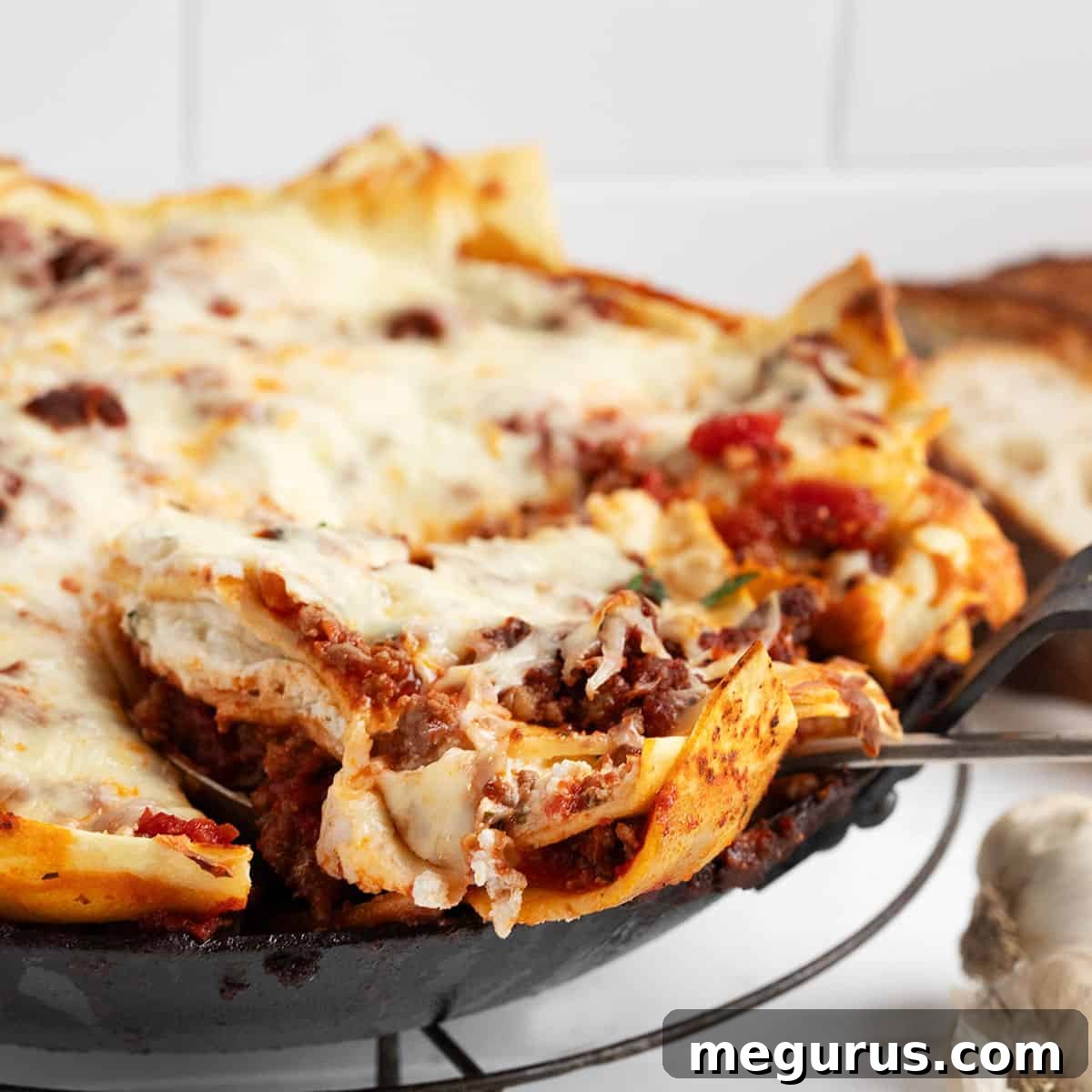
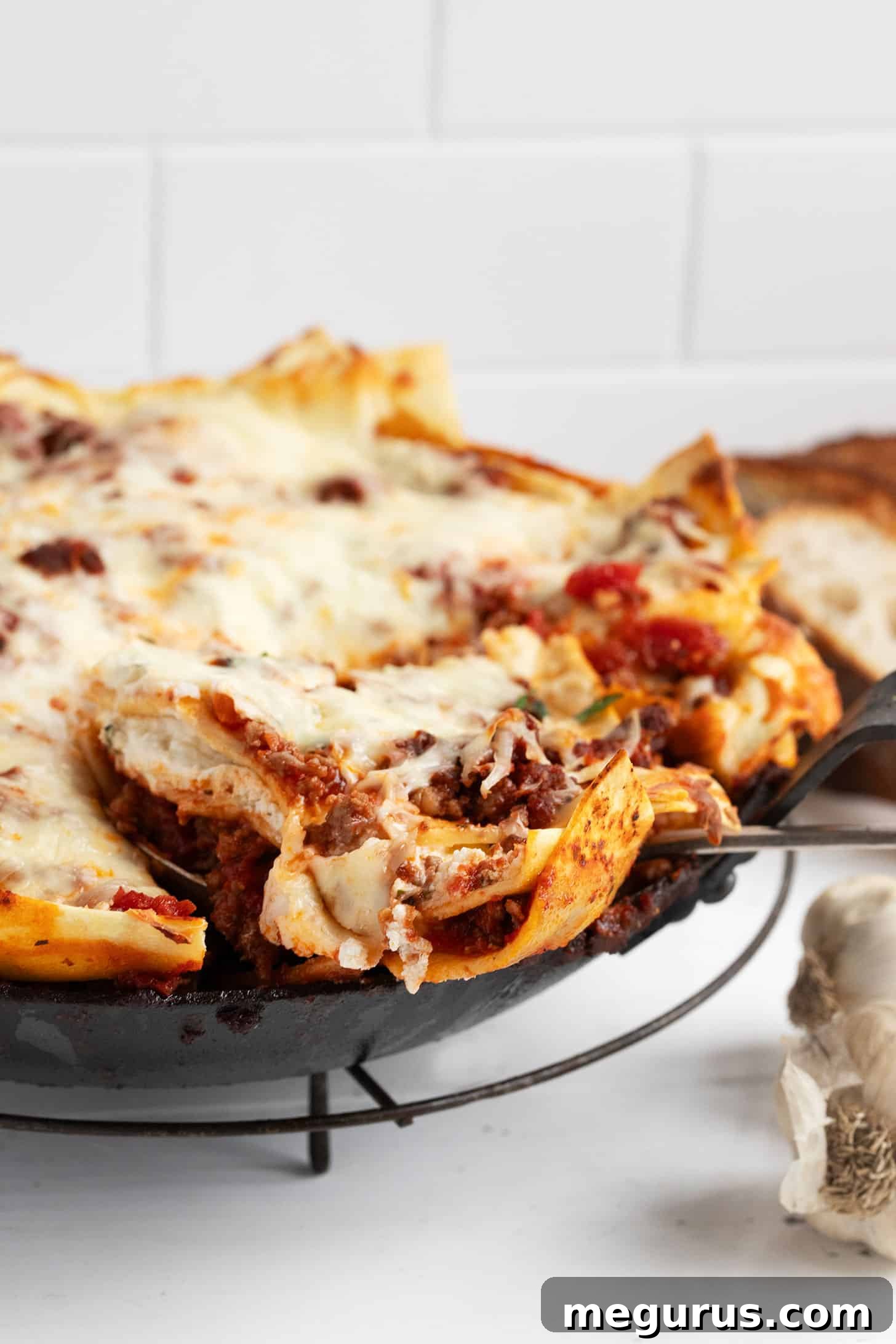
Craving a hearty, comforting lasagna but short on time? This incredibly easy skillet lasagna recipe is your answer! Ditch the lengthy prep work with no-boil, fresh pasta sheets that cook perfectly right in your homemade meat sauce. Featuring a rich, flavorful meat sauce and a creamy ricotta cheese layer, this lasagna delivers all the classic taste you love without the fuss. It’s an ideal weeknight dinner solution that promises delicious results every time, right from your stovetop to your oven.
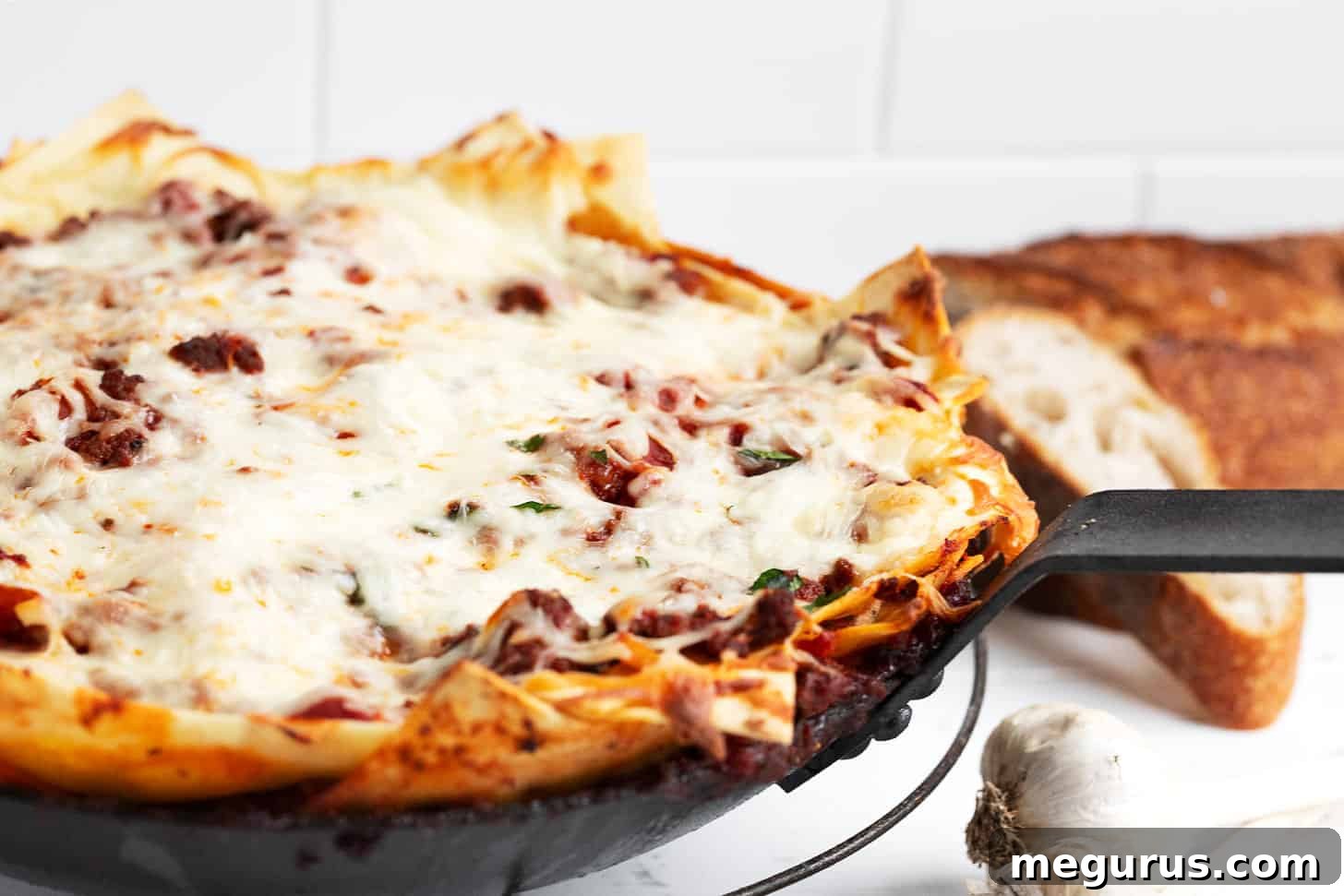
This lasagna recipe revolutionizes your dinner routine by utilizing readily available refrigerated, fresh lasagna noodles. Found in the pasta section of most grocery stores, these fresh sheets are a game-changer. Unlike traditional dried lasagna noodles, fresh pasta cooks up beautifully directly in the sauce, eliminating the need for pre-boiling. This not only saves you significant time and effort but also results in a wonderfully tender, almost crepe-like texture in your finished lasagna, offering a delicate contrast to the robust meat and cheese layers.
What truly sets this skillet lasagna apart is its quick yet deeply flavorful sauce. We start with high-quality crushed tomatoes, which naturally create a richer, thicker sauce without requiring hours of simmering. Infused with the savory goodness of Italian sausage alongside ground beef or pork, fragrant garlic, and a medley of classic Italian herbs, this sauce achieves gourmet flavor in a fraction of the time. It’s a perfect balance of convenience and culinary excellence, making homemade lasagna an achievable luxury on even your busiest days.
Why You’ll Love This Easy Skillet Lasagna Recipe
- Effortless Preparation: Say goodbye to boiling pasta! Fresh lasagna sheets cook directly in the sauce, cutting down on prep time and dishes.
- Rich, Quick-Cooking Meat Sauce: A flavorful meat sauce made with crushed tomatoes, Italian sausage, and ground meat comes together quickly, without the need for a long simmer.
- Creamy Ricotta Layer: A simple yet decadent ricotta cheese filling adds a delightful creaminess that balances the savory meat sauce.
- One-Pan Potential: While you can transfer it, this recipe is designed to be made and baked in a single oven-safe skillet, simplifying cleanup.
- Perfect Texture: Fresh pasta creates a tender, melt-in-your-mouth lasagna with a lovely crepe-like quality.
- Versatile & Customizable: Easily adapt ingredients to your preferences, from meat choices to herb selections and cheese types.
- Family Favorite: A guaranteed crowd-pleaser that brings the authentic taste of Italy to your dinner table with minimal fuss.
Unveiling the Key Ingredients & Smart Substitutions
Crafting the perfect lasagna starts with understanding your ingredients. Here’s a detailed look at what you’ll need and how you can adapt the recipe to your pantry or dietary preferences:
- Fresh Lasagna Pasta Noodles: These are the star of our no-boil method! Look for them in the refrigerated pasta section of your grocery store. You’ll typically need about 6 sheets for a standard skillet. The fresh quality ensures they cook tenderly and absorb the sauce’s flavors beautifully.
Substitution Note: If fresh noodles aren’t available, you can use dried “no-boil” lasagna noodles. However, you’ll need to increase the liquid in your sauce slightly to ensure they cook through. Refer to the “Expert Tips” section for guidance. - Ground Pork or Beef: You’ll need approximately 1/2 pound of ground meat. Any variety works well – medium, lean, or extra lean – as we’ll be draining off any excess fat after browning. This forms the hearty base of our meat sauce.
Substitution Note: Feel free to use ground turkey or chicken for a lighter alternative. Just ensure they are properly browned for maximum flavor. - Italian Sausage: About 3 average-sized links (casings removed) or 1/2 pound of loose Italian sausage adds a significant depth of flavor. I generally opt for mild Italian sausage, but if you enjoy a spicy kick, hot Italian sausage is an excellent choice. The fennel and savory spices in Italian sausage are quintessential to a robust lasagna sauce.
Substitution Note: If Italian sausage isn’t available, you can substitute with more ground beef/pork and add a pinch of fennel seeds and a dash of red pepper flakes for a similar flavor profile. - Tomato Paste: A small amount of tomato paste provides concentrated tomato flavor and richness to the sauce. Tubes of tomato paste are incredibly convenient as they allow you to use just what you need without opening an entire can.
Substitution Note: If using canned tomato paste, store leftovers in an airtight container in the fridge for a few days or freeze in small portions for future use. - Crushed Tomatoes: Highly recommended for this quick sauce! Crushed tomatoes already have a smoother consistency, contributing to a wonderfully “saucy” texture that doesn’t require extensive simmering.
Substitution Note: Canned diced tomatoes can be used, but you’ll need to simmer the sauce for a longer duration to allow more of their excess liquid to cook off and reduce the sauce to a desirable consistency. - Ricotta Cheese: The creamy, mild flavor of ricotta is perfect for the cheese layer. It adds a luxurious texture and balances the bold meat sauce.
Substitution Note: If you prefer, cottage cheese can be used as a direct substitute. Opt for small curd cottage cheese for a smoother texture. - Fresh Spinach or Parsley: A little bit of finely chopped fresh green, like baby spinach or fresh parsley, brightens up the ricotta cheese layer, adding subtle flavor and visual appeal.
Substitution Note: This ingredient is optional; if you don’t have it on hand, the lasagna will still be delicious. Dried parsley can also be used in a pinch, about 1 teaspoon. - Parmesan and Mozzarella Cheese: You’ll need grated Parmesan cheese for the ricotta filling, adding a salty, nutty depth. For the topping, shredded mozzarella cheese provides that irresistible gooey, bubbly crust. Freshly grated cheeses generally offer superior flavor and melt, but pre-grated options work just as well for convenience.
- Essential Seasonings: Don’t forget dried basil, thyme, and oregano to infuse your sauce with classic Italian aromas. A pinch of white sugar is optional but helps to balance the acidity of the tomatoes. Generous amounts of salt and freshly ground black pepper are crucial for bringing all the flavors to life in both the sauce and the ricotta filling.
Step-by-Step Guide to Your Delicious Skillet Lasagna
Follow these easy steps to assemble your incredible skillet lasagna, moving from stovetop to oven with minimal fuss.
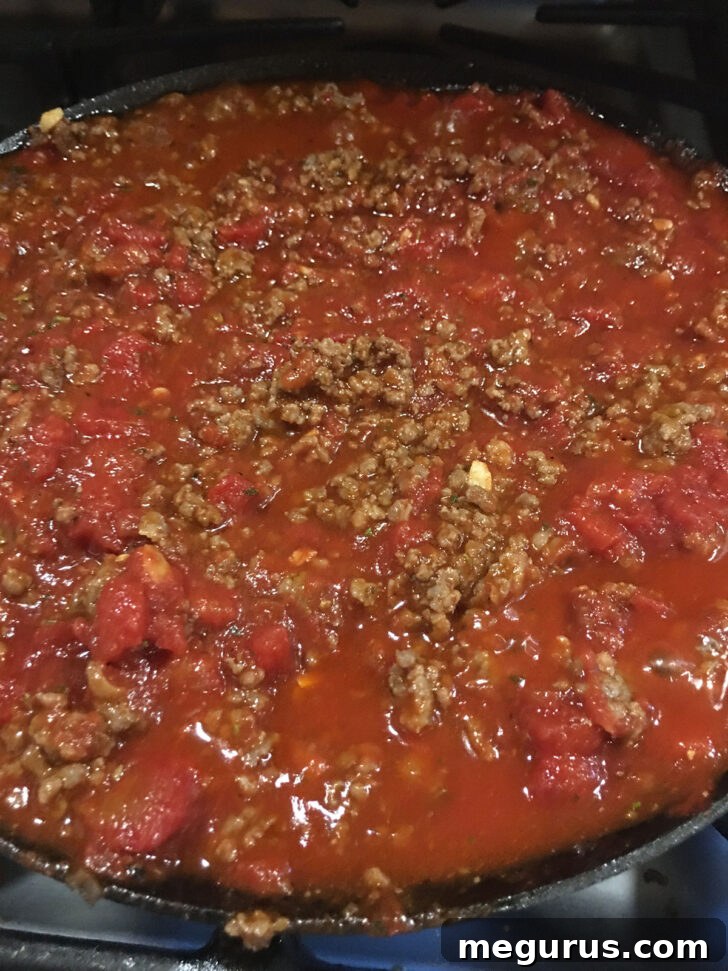
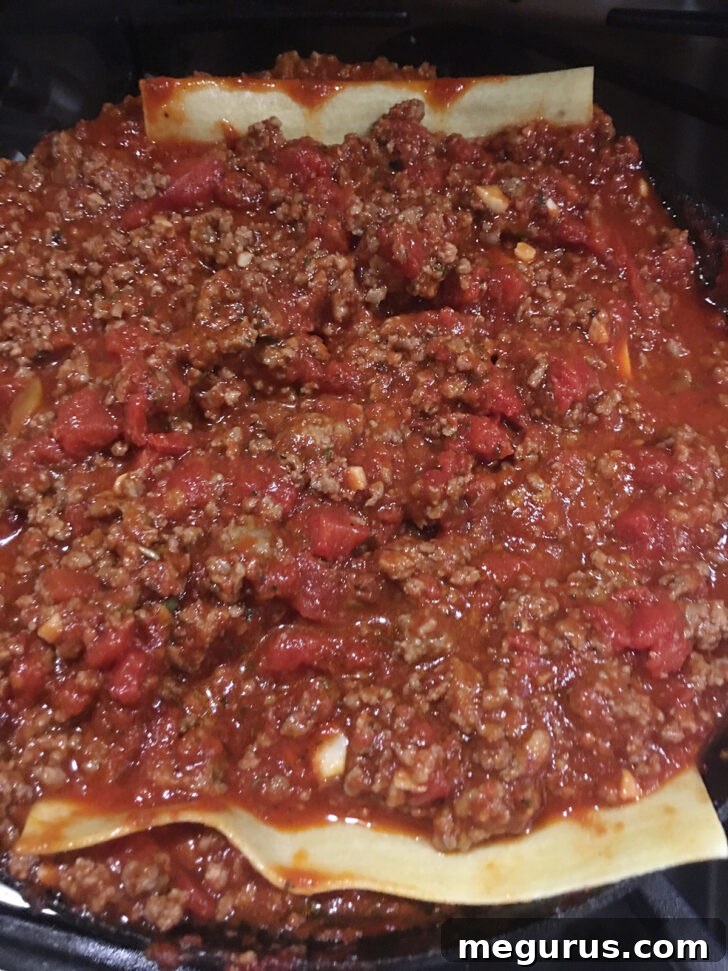
- Prepare the Speedy Meat Sauce: Begin by browning your ground pork/beef and Italian sausage with garlic in an oven-safe skillet. Once browned, drain any excess fat. Stir in tomato paste, crushed tomatoes, herbs, and seasonings. Allow the sauce to simmer briefly while you prepare your ricotta mixture. Crucially, ensure your sauce retains a good amount of liquid; this moisture is vital for cooking the fresh pasta sheets as the lasagna bakes.
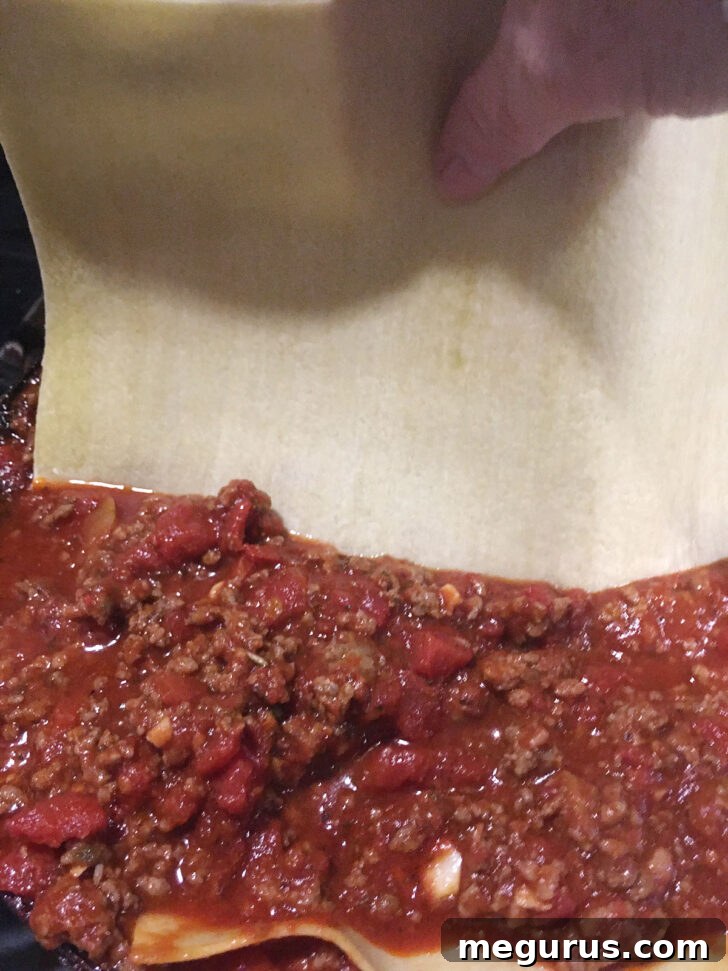
- Start the Layering: Once your sauce is ready and the skillet is removed from the heat, remove most of the meat sauce to a separate bowl, leaving a thin, even layer at the bottom of the skillet. Carefully place two sheets of fresh lasagna noodles over this sauce, arranging them in an “X” shape. This layering technique helps ensure even coverage and stability.
- Continue Building Layers: Follow with a generous spoonful of meat sauce over the noodles. Then, add another layer of fresh noodles, this time orienting them in a “+” shape to alternate their position and create a sturdy structure for your lasagna.
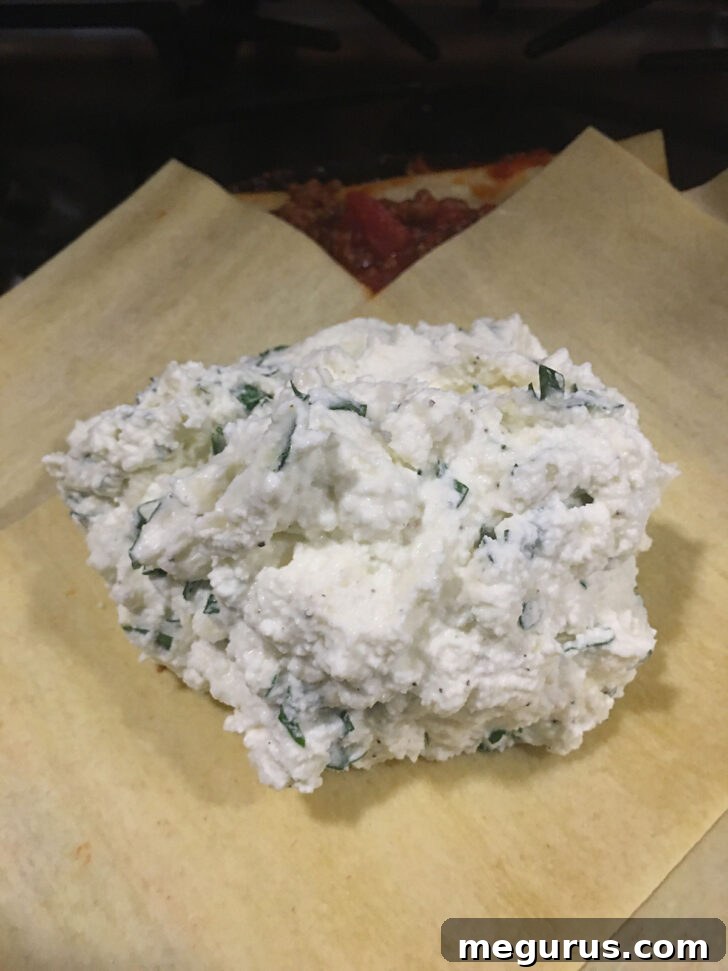
- Add the Creamy Ricotta Layer: In a separate bowl, combine ricotta cheese with grated Parmesan, chopped spinach or parsley, and season generously with salt and pepper. Spread this flavorful ricotta mixture evenly over the second layer of noodles. This creamy layer is crucial for balancing the rich meat sauce.
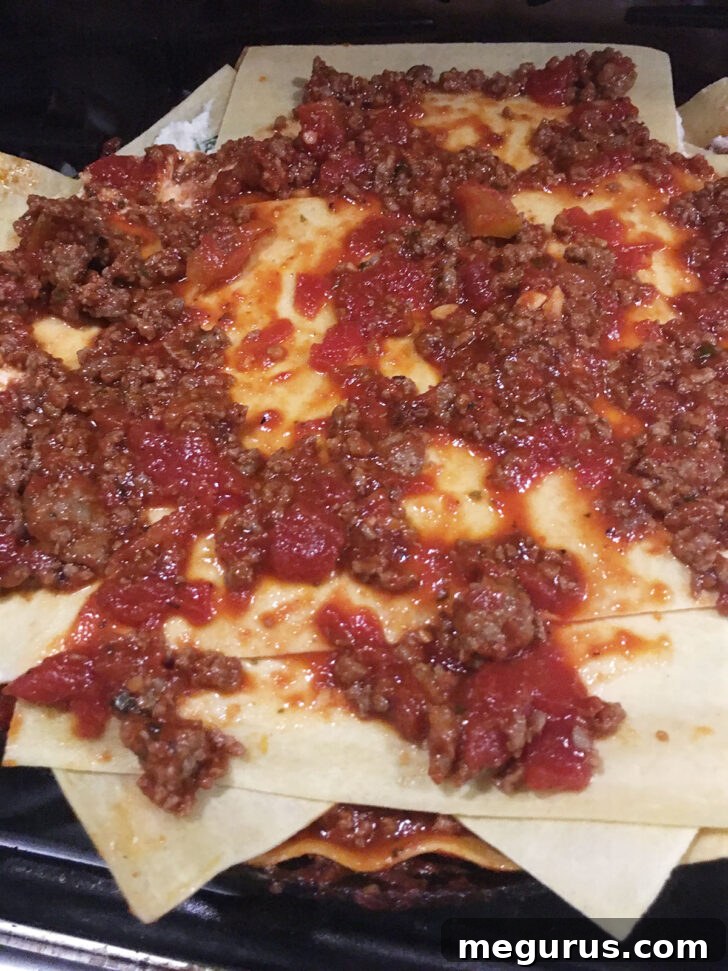
- Final Meat Sauce Layer: Spoon the remaining meat sauce over the ricotta layer, ensuring it covers the cheese well. This adds another dimension of flavor and moisture.
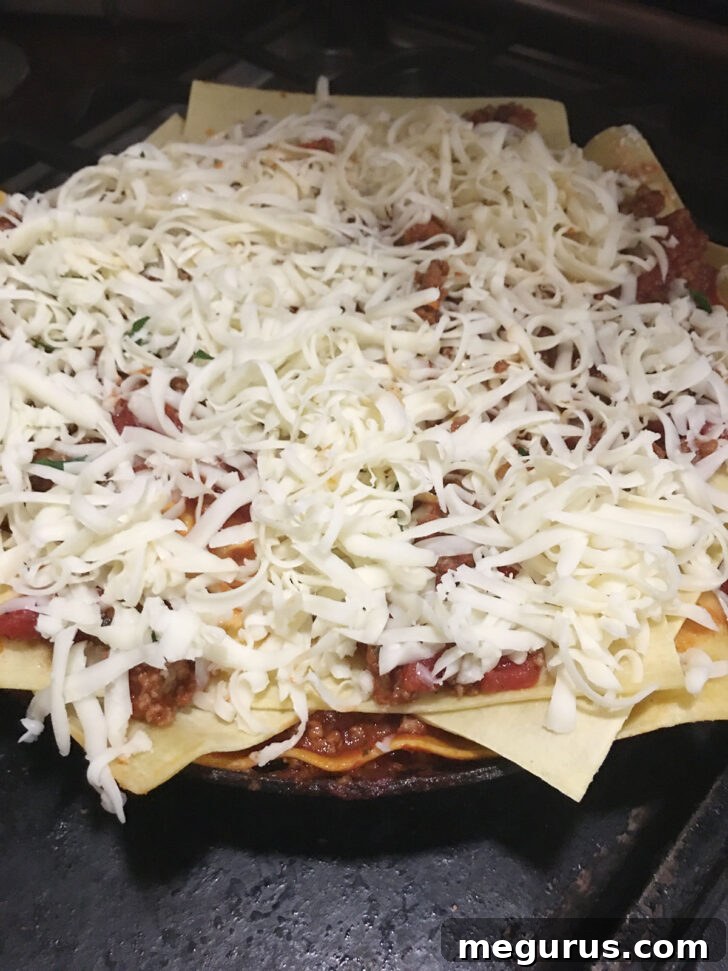
- Cheese Topping & Bake: Finish your lasagna with a generous blanket of shredded mozzarella cheese. Place the skillet in a preheated 350°F (175°C) oven and bake uncovered for 30-35 minutes, or until the sauce is bubbling and the cheese is beautifully golden and melted.
Expert Tips for Lasagna Perfection
Achieving a truly outstanding skillet lasagna is simple with these expert tips:
- Sauce Consistency is Key: Because fresh pasta sheets don’t require pre-boiling, your meat sauce needs to have adequate liquid to properly cook them in the oven. It shouldn’t be overly watery, but definitely not dry. I often add a splash of water to the finished sauce just before layering to loosen it slightly. Also, ensure the top layer of noodles is completely covered with sauce to prevent them from drying out or becoming too crispy (unless that’s your preference!).
- Ricotta Filling – No Egg Needed: For this quick-cooking dish, I typically omit the traditional egg from the ricotta filling. The natural thickness and creaminess of ricotta straight from the container are perfectly sufficient for this shorter bake time, and I’ve found it’s never missed.
- Season Generously: Don’t underestimate the power of seasoning! Both the meat sauce and the ricotta filling need a good hand with salt and freshly ground pepper. Proper seasoning enhances all the flavors, making your lasagna truly sing.
- Elevate with Pesto: For an extra layer of gourmet flavor, consider spreading a thin layer of basil pesto between the noodle layers or directly under the ricotta cheese. It adds a vibrant herby note that complements the other ingredients beautifully.
- Don’t Stress Over Noodle Placement: Getting the lasagna sheets perfectly aligned isn’t necessary. Fresh pasta is forgiving! Arrange them in any way that fits your pan – even cutting them in half to manage smaller sections is perfectly fine. The goal is simply to create an even layer.
- Choose the Right Skillet Size: While the original recipe used a slightly smaller skillet, a 10 or 12-inch (top diameter) cast-iron skillet is ideal for this dish. It provides ample space for layering and ensures even cooking.
- Prevent Bubble-Overs: If your skillet is particularly full, it’s a good practice to place it on a baking sheet before putting it in the oven. This will catch any bubbling sauce that might overflow, keeping your oven clean.
- Beyond the Skillet: While it’s called “skillet lasagna,” don’t feel limited to one pan for the entire process. You can certainly cook the meat sauce in a skillet on the stove and then assemble the lasagna in a traditional baking dish before baking. It might not be a strict “one-pan” meal, but it will be just as delicious!
- Embrace or Avoid Crispy Edges: I personally love the slightly crispy bits of pasta that emerge from the sauce on the edges of the pan. If you’re a fan of this texture, leave some noodles exposed. However, if you prefer uniformly soft pasta, simply trim the sheets to fit your pan precisely and ensure all noodles are fully submerged in sauce.
- Allow for Resting Time: This is a crucial step! After removing the lasagna from the oven, let it rest for 10-15 minutes. This allows the layers to set, making it much easier to slice and serve neatly, and it significantly improves the overall texture and flavor distribution.
Make Ahead, Store, and Freeze: Your Lasagna Planning Guide
This skillet lasagna is fantastic for meal prepping, entertaining, or simply enjoying leftovers. Here’s how to manage it:
- Making Ahead: You can assemble the entire lasagna up to one day in advance. Once assembled, cover it tightly with plastic wrap or foil and refrigerate. When ready to bake, remove it from the fridge about 30 minutes before baking to allow it to come closer to room temperature. Bake as directed, or add an extra 10-15 minutes if baking from cold, ensuring it’s covered with foil for the initial part of the bake to prevent the top from browning too quickly, then uncover for the last 15 minutes.
- Refrigerating Leftovers: Leftover lasagna stores beautifully in an airtight container in the refrigerator for up to 3-4 days.
- Re-heating: To reheat, individual slices can be warmed in the microwave. For a larger portion or the entire skillet, cover with foil and reheat in a 350°F (175°C) oven until warmed through, about 20-30 minutes, or until the internal temperature reaches 165°F (74°C).
- Freezing: This lasagna freezes exceptionally well!
- To freeze unbaked: Assemble the lasagna in a freezer-safe dish (if not using the skillet for freezing). Cover tightly with plastic wrap, then a layer of aluminum foil. Label with the date and freeze for up to 2-3 months. To bake from frozen, remove foil and bake at 350°F (175°C) for about 60-75 minutes, covering with foil for the first 45-60 minutes to prevent over-browning, then uncover until bubbly and heated through.
- To freeze baked: Allow the baked lasagna to cool completely. You can freeze it whole, in large portions, or individual slices. Wrap tightly in plastic wrap, then foil, or place in freezer-safe containers. Freeze for up to 2-3 months. Thaw overnight in the refrigerator before reheating as described above.
Frequently Asked Questions About Skillet Lasagna
- Can I use dried lasagna noodles instead of fresh?
- Yes, you can, but it requires a slight adjustment. If using traditional dried noodles (not “no-boil”), you’ll need to par-boil them first. If using dried “no-boil” noodles, ensure your sauce has a bit more liquid than specified for fresh pasta, as these noodles absorb more moisture during baking. You might need to add an extra 1/2 cup of water or broth to the sauce.
- What kind of skillet is best for this recipe?
- An oven-safe skillet, such as a cast-iron skillet (10-12 inches in diameter), is ideal. Stainless steel or other heavy-bottomed, oven-safe pans will also work. Ensure your skillet handle is also oven-safe.
- Can I make this vegetarian?
- Absolutely! Omit the ground beef and Italian sausage. Instead, you can use sautéed mushrooms, zucchini, bell peppers, and extra spinach. You might also consider adding a can of drained lentils for protein or a plant-based ground meat substitute.
- How do I know when the lasagna is cooked through?
- The lasagna is done when the sauce is visibly bubbling around the edges, the top cheese is melted and golden brown, and the pasta sheets are tender. You can gently test a noodle with a fork to ensure it’s soft. If it looks like the cheese is browning too quickly, loosely tent the skillet with foil.
- Is it essential to let the lasagna rest after baking?
- Yes, resting is important! Allowing the lasagna to rest for 10-15 minutes after baking helps the layers set and the juices redistribute. This makes for cleaner slices and a more cohesive, less messy serving experience. Skipping this step can result in a runny lasagna.
- Can I add other vegetables to the meat sauce?
- Definitely! Finely diced onions, carrots, and celery (a classic soffritto base) can be sautéed with the garlic before adding the meat for extra flavor and nutrients. Mushrooms, bell peppers, or even a handful of chopped kale can also be stirred into the sauce.
Fresh Pasta Skillet Lasagna
A quick and easy skillet lasagna using refrigerated fresh lasagna noodles, a rich meat sauce, and creamy ricotta cheese.
Prep Time: 30 mins
Cook Time: 30 mins
Total Time: 1 hr
Yield: 6 servings
Ingredients
For the Meat Sauce:
- 1 Tablespoon olive oil
- 3 cloves garlic, finely chopped
- Pinch red pepper flakes (optional, for a hint of heat)
- 6 oz mild Italian sausage, casing removed (about 3 links)
- 6 oz ground beef or ground pork
- 2 Tablespoons tomato paste
- 28 oz canned crushed tomatoes (or see Note 1 below)
- 1 teaspoon dried basil
- 1 teaspoon dried thyme
- 1 teaspoon dried oregano
- 1 teaspoon white sugar (optional)
- Salt and freshly ground pepper, to taste
- 6 fresh lasagna sheets (refrigerated)
For the Ricotta Filling:
- 1 1/4 cups ricotta cheese (or cottage cheese)
- 1/4 – 1/3 cup fresh spinach or parsley, finely chopped
- 1/3 cup Parmesan cheese, grated
- Salt and freshly ground pepper, to taste
- 1 1/2 cups shredded mozzarella cheese, for topping
Instructions
- Preheat oven to 350°F (175°C) (non-convection setting).
- Heat olive oil in an oven-safe skillet or stove-top and oven-safe casserole dish, approximately 10-12 inches top diameter. Add the finely chopped garlic and cook, stirring frequently, for 30-45 seconds until fragrant. Add the ground beef/pork and Italian sausage (casings removed). Cook, breaking up larger chunks with your spoon, until both meats are thoroughly browned. Carefully spoon off and discard any excess fat from the pan.
- Stir in the tomato paste and cook for about 1 minute, allowing it to deepen in color and flavor. Add the crushed tomatoes, dried basil, thyme, oregano, and the optional white sugar. Season generously with salt and freshly ground pepper. To ensure proper noodle cooking, add about 1/4 to 1/2 cup of water to your empty crushed tomato can, swirl it around to rinse, and set aside in case your sauce needs additional liquid. Bring the sauce to a gentle boil, then reduce the heat to a simmer while you prepare the ricotta filling.
- In a medium-sized mixing bowl, combine the ricotta cheese, grated Parmesan, finely chopped fresh spinach or parsley, and a good pinch of salt and freshly ground pepper. Stir all ingredients well until uniformly combined and set aside.
- Remove your skillet from the heat. At this point, check the consistency of your meat sauce. It should be rich and saucy, with enough liquid to cook the fresh noodles. If it appears too thick or dry, gradually stir in some of the reserved water from the tomato can until it reaches a looser, saucy consistency. I usually add a good splash to ensure it’s not too tight.
- Transfer most of the meat sauce to a separate bowl, leaving a thin, even layer of sauce coating the bottom of your skillet. Place two sheets of fresh lasagna noodles on top of this sauce, arranging them to cross over each other in an “X” shape. Spoon some of the meat sauce over these noodles, then add another layer of fresh noodles, this time orienting them in a “+” shape (shifting their position slightly from the previous layer). Evenly spread the prepared ricotta mixture over this noodle layer. Top with a final layer of noodles in an “X” shape. Spoon the remaining meat sauce evenly over the top, ensuring all noodles are covered. Finish by sprinkling the shredded mozzarella cheese generously over the entire surface.
- Bake the lasagna uncovered in the preheated 350°F (175°C) oven for 30-35 minutes, or until the filling is bubbling hot around the edges and the mozzarella cheese on top is beautifully melted and golden brown. If your skillet is very full, place it on a baking sheet to catch any potential bubble-overs. Once baked, remove the skillet from the oven and allow the lasagna to rest for about 10-15 minutes before slicing and serving. This resting period helps the layers set and makes for easier, neater portions.
Notes
- Note 1: If you don’t have crushed tomatoes, you can use canned diced tomatoes. However, you may need to simmer the sauce longer to cook off some of the extra liquid from the diced tomatoes and achieve the desired thickness.
- For additional tips on achieving the best results with this recipe, please refer to the “Expert Tips for Lasagna Perfection” section above the recipe card.
Cuisine: American, Canadian
Course: Main Course
Author: Jennifer Maloney
Nutrition Information (Approximate per serving)
Serving: 1 serving, Calories: 562kcal, Carbohydrates: 38g, Protein: 30g, Fat: 33g, Saturated Fat: 15g, Cholesterol: 125mg, Sodium: 759mg, Potassium: 751mg, Fiber: 3g, Sugar: 8g, Vitamin A: 846IU, Vitamin C: 15mg, Calcium: 385mg, Iron: 5mg
Loved this recipe? We hope you truly enjoyed making and savoring this easy skillet lasagna. If this recipe brought a smile to your face and satisfied your cravings, please consider sharing your experience! Your feedback helps others discover delicious meals.