
Chili Shakshuka: A Hearty, Flavorful, and Easy Vegetarian One-Pan Dinner
Discover the ultimate meatless weeknight dinner with this enticing Chili Shakshuka recipe. Infusing the rich flavors of classic shakshuka with a satisfying chili twist, this dish is not only incredibly easy to prepare but also a robust, wholesome meal that comes together in a single skillet. Perfect for those busy evenings when you need a delicious, vegetarian option made primarily from staple pantry ingredients.

This Chili Shakshuka takes the beloved Middle Eastern and North African dish and gives it a comforting, Tex-Mex inspired spin. It’s a brilliant fusion that combines the luscious tomato-based sauce and perfectly poached eggs of traditional shakshuka with the hearty goodness of beans, corn, and warming chili spices. The result is an all-in-one-pan dinner that’s wonderfully satisfying, deeply flavorful, and surprisingly simple to whip up, proving that meatless meals can be both exciting and effortless.
Beyond the customary shakshuka elements like tomatoes and eggs, this unique chili version elevates its nutritional profile and heartiness by incorporating kidney beans, vibrant red bell peppers, and sweet corn. These additions transform it into a complete, balanced meal that’s rich in protein and fiber, making it an ideal choice for a fulfilling family dinner or a cozy solo feast.
Why You’ll Love This Chili Shakshuka Recipe
- Effortless One-Pan Cooking: Say goodbye to piles of dishes! This recipe cooks entirely in one skillet, minimizing cleanup and maximizing convenience.
- Pantry-Friendly: Designed with common kitchen staples in mind, it’s perfect for those last-minute dinners when a grocery run isn’t an option.
- Hearty & Satisfying: Packed with vegetables, beans, and eggs, this dish is incredibly filling and will leave you feeling nourished.
- Flavorful Fusion: The blend of classic shakshuka spices with chili flavors creates a unique and irresistible taste experience.
- Vegetarian & Customizable: Naturally vegetarian, it’s easy to adapt with various vegetables, beans, or even a dash of heat to suit any palate.
- Weeknight Winner: With minimal prep and a quick cook time, it’s an ideal choice for busy weeknights that still crave a homemade meal.
Essential Ingredients & Smart Substitutions
Crafting the perfect Chili Shakshuka begins with understanding your ingredients. Here are some notes and flexible substitution ideas for the key components:
Canned Kidney Beans
Canned beans are a cornerstone of this chili shakshuka, contributing both texture and plant-based protein. While red kidney beans offer a classic chili feel and robust flavor, their size typically ranges from 15-17 ounces per can. Feel free to use a mix of red and white kidney beans for visual interest. If you’re looking to experiment or simply use what you have on hand, black beans are an excellent substitute, adding a deep, earthy flavor and beautiful color. Pinto beans or even cannellini beans could also work well, offering a creamier texture. Remember to include the liquid from the can, as it adds depth and helps thicken the sauce.
Canned Tomatoes
The choice of tomatoes significantly impacts the final flavor. I highly recommend fire-roasted diced tomatoes for this recipe. Brands like Muir Glen offer a distinct, subtle smoky flavor that beautifully complements the chili spices, adding an extra layer of complexity without being overpowering. If fire-roasted tomatoes aren’t available, standard canned diced tomatoes will work perfectly. In a pinch, whole canned tomatoes can be used; simply crush them by hand before adding them to the skillet. The goal is a rich, chunky tomato base that can simmer down beautifully.
Spices: Cumin, Chili Powder, and Red Pepper Flakes
These spices are the heart of our chili twist. Ground cumin provides a warm, earthy base, while chili powder delivers the signature chili flavor. Red pepper flakes introduce an adjustable element of heat. The quantities listed in the recipe provide a balanced flavor, but don’t hesitate to adjust them to your personal taste. Use the lower end of the range for a milder dish, or increase them for a bolder, spicier kick. For the best flavor, ensure your spices are fresh, as older spices can lose their potency.
Aromatics: Onion and Garlic
A finely diced onion and coarsely chopped garlic form the aromatic foundation of this dish. Sautéing them until softened and fragrant builds a crucial layer of flavor that permeates the entire shakshuka. Don’t rush this step, as properly caramelized aromatics are key to a delicious sauce.
Red Bell Pepper
Finely diced red bell pepper adds sweetness, color, and a pleasant crunch. While optional, it enhances the vegetable content and contributes to the vibrant appearance of the dish. Other bell pepper colors like green or yellow can also be used, or for an extra layer of heat, a diced jalapeño could be added.
Tomato Paste
A small amount of tomato paste is a powerful flavor concentrator. Cooking it briefly until it begins to darken (or turn “rusty” as described) helps to deepen its flavor and contributes to the richness and thickness of the sauce.
Corn Kernels
Frozen corn kernels are an easy and convenient addition, bringing a touch of sweetness and texture that pairs wonderfully with the chili theme. Fresh corn can also be used when in season.
Apple Cider Vinegar
A teaspoon of apple cider vinegar at the end of cooking acts as a secret ingredient, brightening all the flavors and adding a subtle tang that balances the richness of the tomatoes and spices. Don’t skip this small but impactful step!
Eggs
Fresh, large eggs are essential for perfectly poached yolks within the simmering sauce. The way they cook in the sauce is what makes shakshuka so unique and delightful.
Grated Extra-Sharp Cheddar
Cheddar cheese adds a creamy, savory layer and is a natural pairing for chili flavors. For a different profile, consider Monterey Jack, a Mexican cheese blend, or even crumbled Cotija or feta for a salty tang.
Fresh Cilantro
A sprinkle of fresh chopped cilantro as a garnish provides a burst of fresh, herbaceous flavor that cuts through the richness of the dish. If you’re not a fan of cilantro, fresh parsley or chives could be alternative garnishes.
Recommended Equipment for Your Kitchen
While this recipe is adaptable to various kitchen setups, having the right tools can make the cooking process even smoother and more enjoyable.
Skillet Choice
A large skillet is crucial for this recipe, ideally one with a 10 to 12-inch top diameter to accommodate all the ingredients and allow space for the eggs. While a cast-iron skillet is highly recommended for its even heat distribution and ability to go from stovetop to oven (though not required here), any large, heavy-bottomed skillet will work just fine. Stainless steel or a good quality non-stick pan can be excellent alternatives.
Cast Iron Care for Acidic Dishes
Many home cooks worry about using cast iron for tomato-based dishes due to concerns about stripping the seasoning or imparting a metallic taste. Rest assured, if your cast-iron skillet is well-seasoned, it will handle the acidity of tomatoes without issue. The key is not to let the acidic food sit in the pan for extended periods. As soon as you’re done serving, transfer any leftovers to a separate storage container. Promptly clean and dry your cast-iron skillet after use. To ensure it’s thoroughly dry and to maintain its seasoning, wipe the clean skillet with a thin layer of cooking oil and place it on a low burner on the stovetop for a few minutes until it’s completely dry and slightly warm. This simple routine will keep your cast iron in top condition for years.
Lid Alternatives
If your skillet doesn’t come with a matching lid, don’t fret! A large baking sheet, an inverted plate, or even aluminum foil can serve as an effective lid. The goal is to trap steam to help the eggs cook evenly and quickly while keeping the yolks runny.
Recipe Tips for Success!
- Seasoning Strategy: Tomato-heavy dishes often require additional seasoning to truly make their flavors sing. However, canned beans (and their liquid) contribute sodium. For this reason, it’s best to hold off on adding most of your salt until the very end. Taste the shakshuka once it has simmered and then adjust the salt as needed to achieve perfect balance.
- Endless Customization: This recipe is incredibly forgiving and adaptable. Feel free to swap out the kidney beans for black beans, pinto beans, or any other canned bean you prefer or have on hand. It’s also an excellent vehicle for sneaking in extra vegetables; consider adding finely diced zucchini, spinach, or kale along with the red bell pepper. A bit of diced jalapeño can also elevate the heat and flavor.
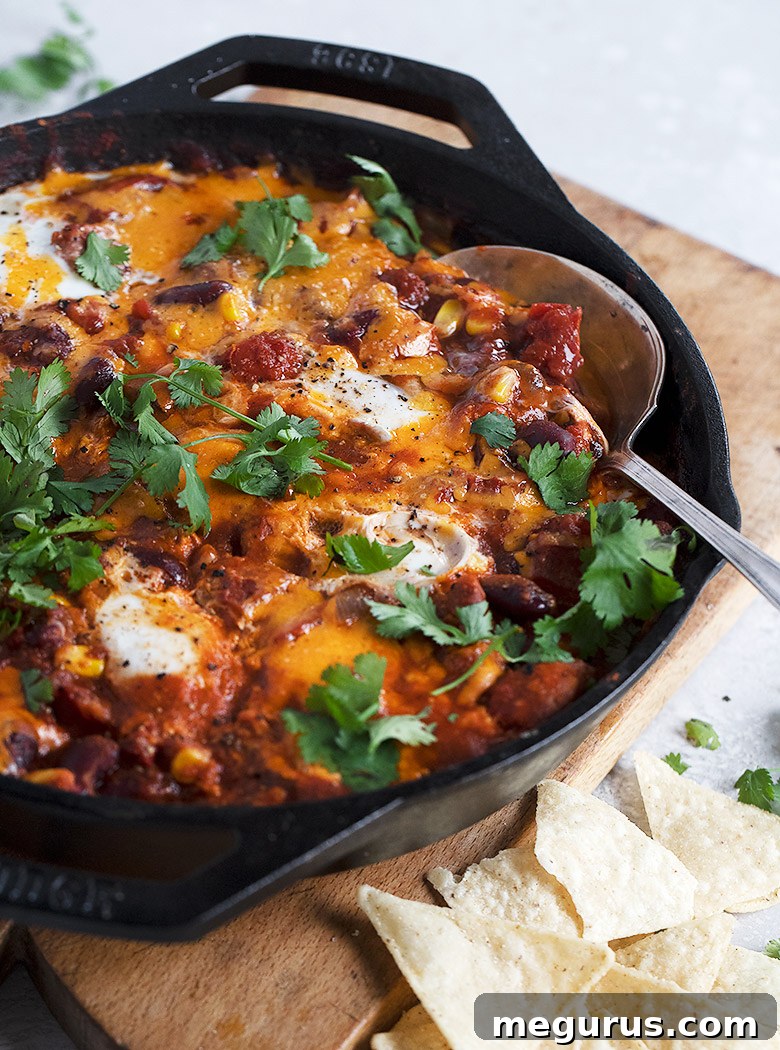
- Serving Suggestions: Chili Shakshuka is wonderfully versatile when it comes to serving. It pairs beautifully with tortilla chips for scooping, or hearty sides like cornbread or cornbread sticks. For a lighter accompaniment, a simple side salad adds freshness and crunch. Don’t hesitate to think beyond breakfast – this is a fantastic lunch or dinner option!
Elevate Your Dish with Toppings
While delicious on its own, dressing up your chili shakshuka with extra toppings can transform it into an even more spectacular meal. Consider these additions:
- Diced Avocado: Adds a creamy, cooling contrast to the warm spices.
- Crumbled Cheese: Beyond Cheddar, try crumbled Cotija for a salty, tangy bite, or classic feta for a Mediterranean twist.
- Diced Red Onion: Provides a sharp, fresh bite and beautiful color.
- Diced Green Onion (Scallions): Offers a milder onion flavor and vibrant green garnish.
- A Dollop of Sour Cream or Greek Yogurt: Adds a creamy, tangy element that balances the heat.
- Fresh Lime Wedges: A squeeze of lime juice just before serving brightens all the flavors.
- Hot Sauce: For those who love extra heat, a drizzle of your favorite hot sauce is always welcome.
Chili Shakshuka
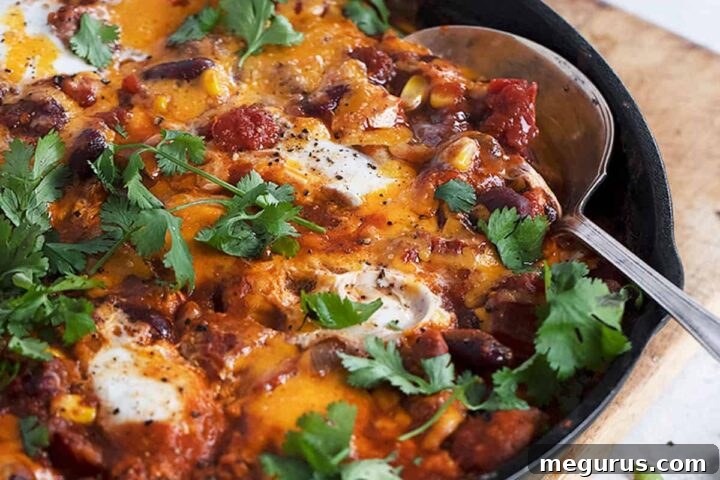
An easy, delicious, and meatless meal featuring a chili-spiced tomato, beans, and vegetables, topped with perfectly cooked eggs.
Pin This
Prep Time: 5 mins
Cook Time: 25 mins
Total Time: 30 mins
Yield: 4 servings
Ingredients
- 1 Tablespoon butter
- 1 small onion, coarsely diced
- 1/2 medium red bell pepper, finely diced (optional)
- Salt and black pepper, to taste
- 3 cloves garlic, coarsely chopped
- 2-3 teaspoon ground cumin
- 3-4 teaspoon chili powder
- Pinch red pepper flakes, or more, to taste
- 1/4 cup tomato paste
- 28 oz canned fire-roasted diced tomatoes, or other canned diced tomatoes
- 15 oz red kidney beans, with their liquid, or any canned bean you like
- 1/3 cup corn kernels, frozen (optional)
- 1 teaspoon apple cider vinegar
- 4 large eggs
- 1 cup grated extra-sharp Cheddar
- Chopped Cilantro, for serving
Instructions
- In a 10-inch top diameter cast-iron (or other) skillet, melt the butter over medium-high heat. Add the onion and finely diced red pepper, if using. Season lightly with salt and pepper and cook, stirring occasionally, until softened, about 5 minutes. Add the garlic, cumin, chili powder, and red pepper flakes. Stir to combine and cook until fragrant, about 1 minute. Add the tomato paste and cook, stirring occasionally, until it begins to stick to the bottom of the pan and turns rusty in color, about 2 minutes.
- Stir in the canned tomatoes and the can of beans, with their liquid. Add the frozen corn, if using. Bring the mixture to a boil, then reduce to a simmer. Gently smash some of the beans with the back of a spoon to thicken the sauce, and stir occasionally, until the sauce has reduced and thickened, about 20 minutes. Stir in the apple cider vinegar, then taste and season with additional salt and pepper as needed.
- Reduce the heat to low. Make four evenly spaced divots (small indentations) in the chili mixture and carefully crack an egg into each divot. Using a spoon, gently nudge some of the chili mixture over the whites of the eggs. This technique helps the whites cook more quickly and evenly. Season the eggs with a pinch of salt and pepper, then sprinkle the entire chili surface with the grated Cheddar cheese. Cover the skillet and cook until the egg whites are set and opaque, but the yolks are still wonderfully runny, typically 10-12 minutes. If your skillet doesn’t have a lid, use a large baking sheet or aluminum foil to cover it tightly.
- Serve your Chili Shakshuka immediately, garnished generously with fresh cilantro. For an even more complete meal, serve alongside warm tortillas, crispy tortilla chips, or crunchy tostadas.
Notes
For serving versatility, enjoy your Chili Shakshuka with crunchy tortilla chips, or a side of classic cornbread or cornbread sticks. A simple, fresh side salad also pairs beautifully, offering a refreshing contrast.
To truly elevate the experience, consider adding extra toppings just before serving. Diced avocado, crumbled Cotija cheese (or feta), finely diced red onion, or a sprinkling of green onions can add fantastic flavor and texture. A dollop of cool sour cream or Greek yogurt provides a creamy counterpoint to the warm, spicy flavors.
Cuisine: American, Canadian
Course: Main Course
Author: Jennifer Maloney
Nutrition Facts (per serving)
- Serving:
- 1 serving
- Calories:
- 424 kcal
- Carbohydrates:
- 40g
- Protein:
- 26g
- Fat:
- 19g
- Saturated Fat:
- 10g
- Cholesterol:
- 248mg
- Sodium:
- 627mg
- Potassium:
- 1051mg
- Fiber:
- 11g
- Sugar:
- 7g
- Vitamin A:
- 2129 IU
- Vitamin C:
- 36mg
- Calcium:
- 333mg
- Iron:
- 7mg
Storage and Reheating Tips
Chili Shakshuka is best enjoyed fresh, straight from the skillet. However, leftovers can be stored and reheated, though the eggs may cook further upon reheating.
- Storage: Allow any remaining shakshuka to cool completely. Transfer it to an airtight container and refrigerate for up to 3-4 days. It’s important to remove it from the cast-iron skillet promptly to avoid potential reactivity with the acidic tomatoes.
- Reheating: For best results, gently reheat individual portions in a small saucepan over low heat on the stovetop. If you prefer to keep the eggs as runny as possible, you might consider removing them before reheating the sauce and adding a fresh egg to cook directly in the reheated sauce. Alternatively, reheat in the microwave in short bursts, stirring the sauce gently, until warmed through. Be mindful that eggs will continue to cook as they reheat.
Frequently Asked Questions (FAQ)
- Can I make this Chili Shakshuka ahead of time?
- The tomato and bean base can certainly be prepared ahead of time and stored in the refrigerator for up to 2-3 days. When ready to serve, simply reheat the base in your skillet until simmering, then make the divots and crack in the fresh eggs to cook. This is a great meal prep strategy!
- Is this recipe very spicy?
- The recipe calls for 2-3 teaspoons of ground cumin, 3-4 teaspoons of chili powder, and a pinch of red pepper flakes. This provides a warming chili flavor with a mild to medium heat. You can easily adjust the spiciness by reducing or increasing the red pepper flakes and chili powder to suit your preference.
- What if I don’t have a cast-iron skillet?
- No problem! Any large, heavy-bottomed skillet with a 10-12 inch diameter will work. A good quality stainless steel or non-stick pan is perfectly suitable for this recipe.
- Can I use other types of beans?
- Absolutely! This recipe is very versatile. Black beans, pinto beans, or cannellini beans are all excellent substitutes for kidney beans, each offering a slightly different flavor and texture profile.
- Can I add meat to this recipe?
- While this is designed as a delicious vegetarian meal, you can certainly add cooked ground beef, turkey, or even shredded chicken to the sauce. Brown any ground meat with the onions and bell peppers, then proceed with the recipe as directed.
- How do I prevent the shakshuka from being watery?
- The key to a thick, flavorful shakshuka base is simmering the sauce long enough (about 20 minutes) to allow it to reduce. Also, smashing some of the beans against the side of the skillet helps release their starches, naturally thickening the sauce. Ensure your canned tomatoes are well-drained if they contain excessive liquid (though typically the liquid from diced tomatoes is fine).