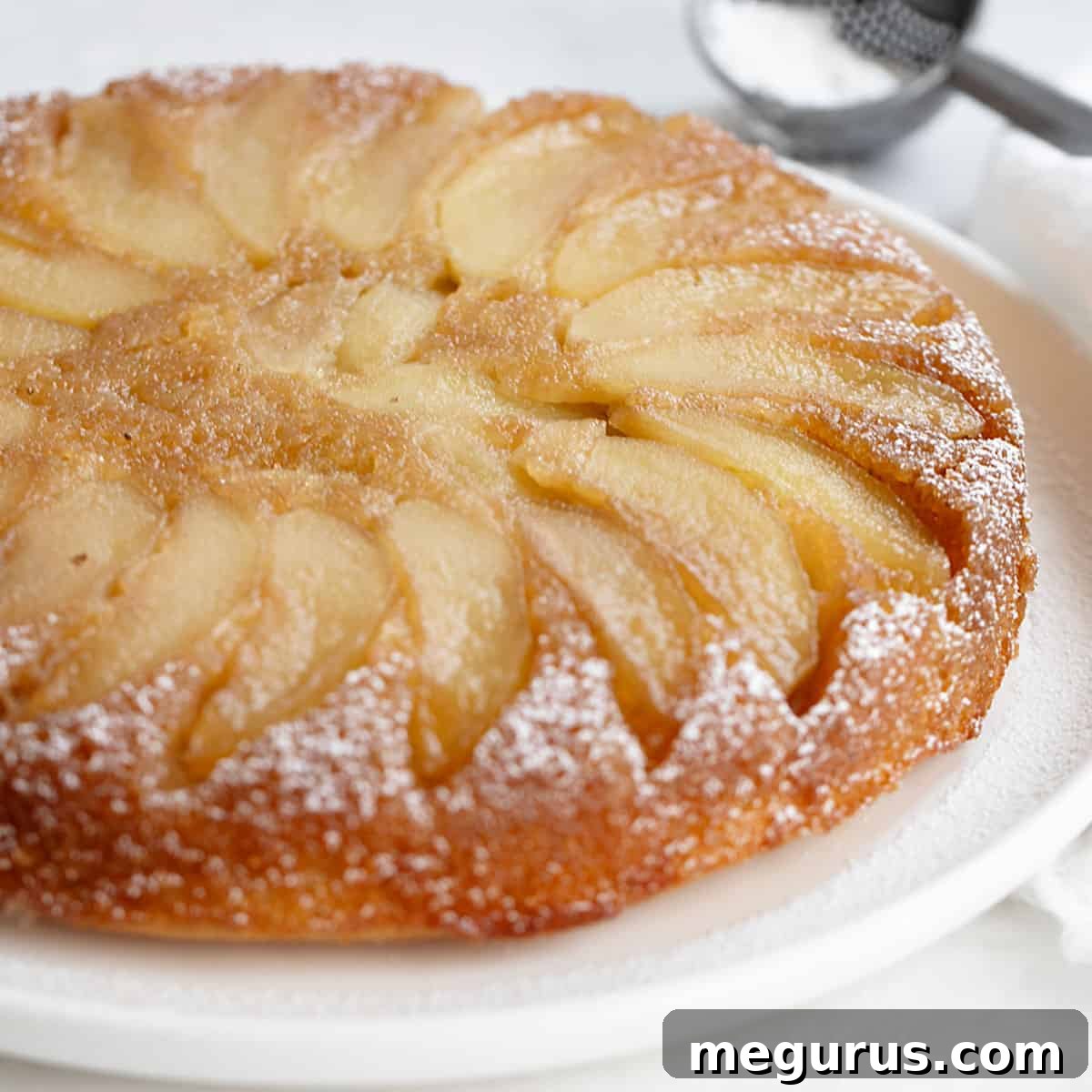
Indulge in a truly extraordinary dessert that redefines comfort food: our irresistible Maple Apple Upside Down Cake. Imagine the tender, caramelized apples mingling with a rich, buttery cake, all infused with the warm, inviting essence of pure maple syrup. This isn’t just any cake; it’s a nostalgic journey reminiscent of a stack of fluffy, warm pancakes, generously topped with cooked apples and a glistening drizzle of amber maple syrup. Every bite is a harmonious blend of sweet and tart, creating a dessert experience that’s both elegant and deeply satisfying.
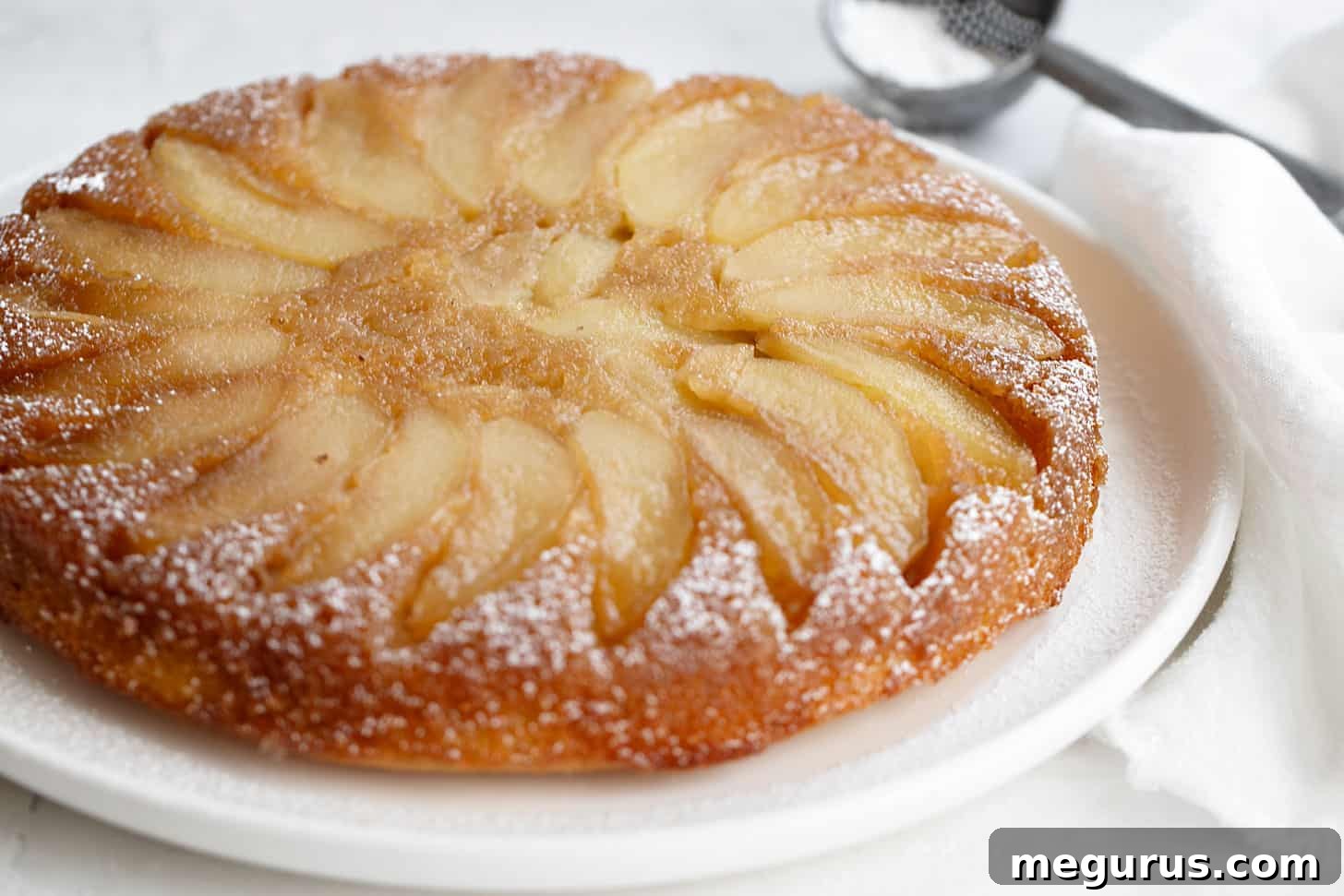
The moment this delectable apple cake bakes in your oven, your kitchen will be filled with an intoxicating aroma that promises warmth and sweetness. It’s the kind of scent that transforms a house into a home, making every hour leading up to serving an anticipation-filled delight. And the best part? The taste more than lives up to the incredible smell. This maple apple upside down cake isn’t just a dessert; it’s an experience that evokes cozy mornings and joyful gatherings, making it perfect for any occasion, from a simple family meal to a festive celebration.
Whether you’re an experienced baker or just starting your culinary journey, this recipe is designed to be straightforward and rewarding. With clear instructions and helpful tips, you’ll be able to create a show-stopping dessert that will impress everyone at the table. Get ready to bake a masterpiece that combines the best of seasonal apples with the luxurious sweetness of maple syrup.
Selecting the Perfect Ingredients for Your Maple Apple Upside Down Cake
The secret to an exceptional apple upside down cake lies in the quality and balance of its core ingredients. Each component plays a vital role in creating that perfect flavor and texture. Here’s a detailed look at what you’ll need and how to make the best choices:
Maple Syrup: The Golden Touch
For this recipe, maple syrup isn’t just a sweetener; it’s a star ingredient that creates the rich, caramelized topping. To achieve the most profound maple flavor, we highly recommend using a dark or Grade B maple syrup. These grades are known for their robust and complex profiles, which stand up beautifully against the tartness of the apples and the richness of the cake. However, any pure maple syrup will yield delicious results. Avoid imitation syrups, as they lack the authentic flavor and natural caramelization properties that are crucial for this cake.
- Dark/Grade B: Offers a deep, intense maple flavor that truly shines through.
- Any Pure Maple Syrup: Still excellent, providing a lighter but equally delightful maple essence.
- Tip: Reducing the maple syrup concentrates its flavor, making the topping even more impactful.
Apples: The Heart of the Cake
Choosing the right apple variety is essential for an apple upside down cake. You want apples that will hold their shape during baking, offering a pleasant texture rather than turning into mush. Their tartness should also provide a lovely counterpoint to the sweet maple syrup and cake batter. While I often gravitate towards Granny Smith apples for their firm texture and bright, tangy flavor, there are several other excellent choices:
- Granny Smith: My personal preference for this recipe. Their crispness holds up wonderfully, and their tartness perfectly balances the sweetness of the maple syrup.
- Braeburn: A fantastic all-purpose apple, offering a good balance of sweet and tart with a firm texture.
- Jonathan: Known for its tangy-sweet flavor and ability to maintain its shape, making it ideal for baking.
- Honeycrisp: A sweeter option, but still maintains a crisp texture after baking. If using Honeycrisp, you might slightly reduce the sugar in the cake batter.
- Golden Delicious: A mild, sweet apple that softens beautifully. It’s a good choice if you prefer a less tart apple.
- Northern Spy: A classic baking apple, known for its firm texture and rich, aromatic flavor.
- Preparation: Always peel, core, and quarter your apples before slicing them evenly. Uniform slices ensure even cooking and a beautiful presentation.
Flour, Leavening, and Salt: The Cake’s Foundation
These ingredients form the backbone of your cake, providing structure and rise.
- All-Purpose Flour: Ensure it’s spooned and leveled for accurate measurement, which is crucial for the cake’s texture.
- Baking Powder & Baking Soda: These leavening agents work together to give the cake its light, airy crumb. Don’t skip them!
- Fine Salt: Enhances all the flavors in the cake, balancing the sweetness. If you opt for salted butter, remember to reduce the added salt to avoid an overly salty taste.
Butter and Sugar: For Richness and Sweetness
The combination of butter and sugar creates a tender, moist cake.
- Unsalted Butter: At room temperature, it creams easily with sugar, incorporating air for a light texture. If using salted butter, adjust the recipe’s added salt accordingly.
- White Granulated Sugar: Provides the primary sweetness to the cake batter, complementing the maple apples.
Eggs, Milk, and Vanilla: Binding and Flavor
These wet ingredients bring the batter together and add depth of flavor.
- Large Eggs: Act as binders and add richness. Ensure they are at room temperature for better emulsion with the butter and sugar.
- Milk (or Buttermilk): Adds moisture and tenderness. Buttermilk introduces a slight tang, which can be a lovely addition. You can easily make your own buttermilk by mixing regular milk with a touch of lemon juice or white vinegar and letting it sit for 10 minutes.
- Vanilla (or Vanilla Bean Paste): Essential for a warm, aromatic flavor that perfectly complements the apples and maple.
Step-by-Step Guide to Baking Your Maple Apple Upside Down Cake
Creating this stunning cake is a delightful process. Follow these detailed steps for a perfect result:
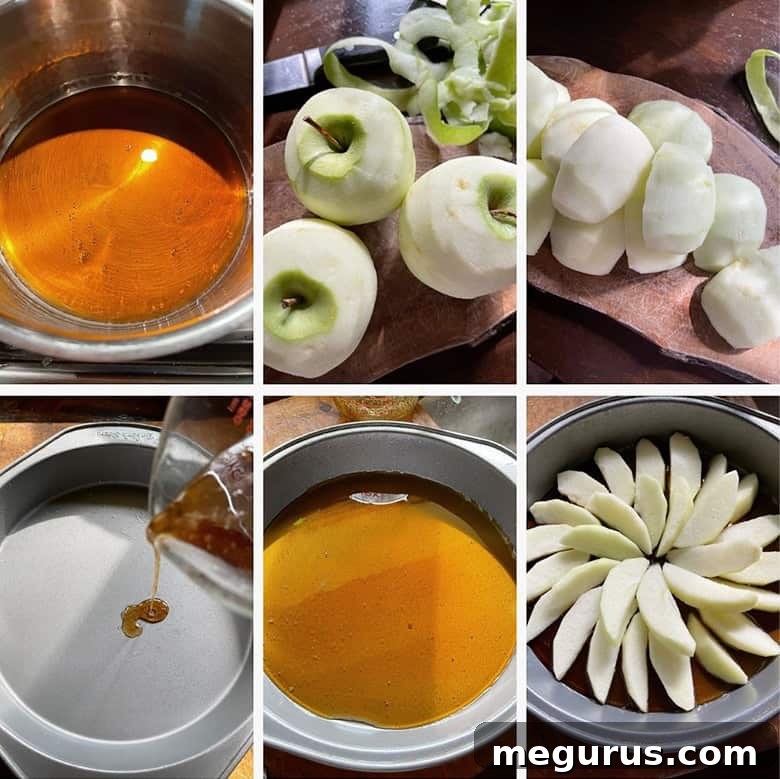
Phase 1: Preparing the Maple-Apple Base
- Preheat and Prepare Your Pan: Begin by preheating your oven to 350°F (175°C) using the regular bake setting (not convection/fan-assisted). Lightly grease a 9-inch round baking pan. To catch any potential overflow during baking, place the greased pan on a sturdy baking sheet. Set aside.
- Reduce the Maple Syrup: In a medium to large saucepan, pour in your pure maple syrup. Bring it to a boil over high heat, then immediately reduce the heat to low. Allow the syrup to simmer gently until it significantly thickens and reduces to approximately 1/2 cup. This process usually takes about 15-20 minutes, depending on the initial syrup volume and heat. Be vigilant as it approaches boiling, as maple syrup can bubble up considerably! This reduction concentrates the maple flavor and creates that luscious, caramelized topping.
- Prepare the Apples: While the maple syrup is simmering, get your apples ready. Peel, core, and quarter the apples. Then, slice each quarter into 4 even pieces. Aim for uniform slices, about 1/4 inch thick, to ensure they cook evenly and create a beautiful pattern.
- Assemble the Base: Once the maple syrup has reduced and thickened, carefully pour it into the prepared 9-inch round baking pan, spreading it evenly across the bottom. Next, arrange your apple slices in two concentric circles over the syrup, slightly overlapping them. This creates the beautiful “upside-down” pattern you’ll see when the cake is inverted. Set the pan aside while you prepare the cake batter.
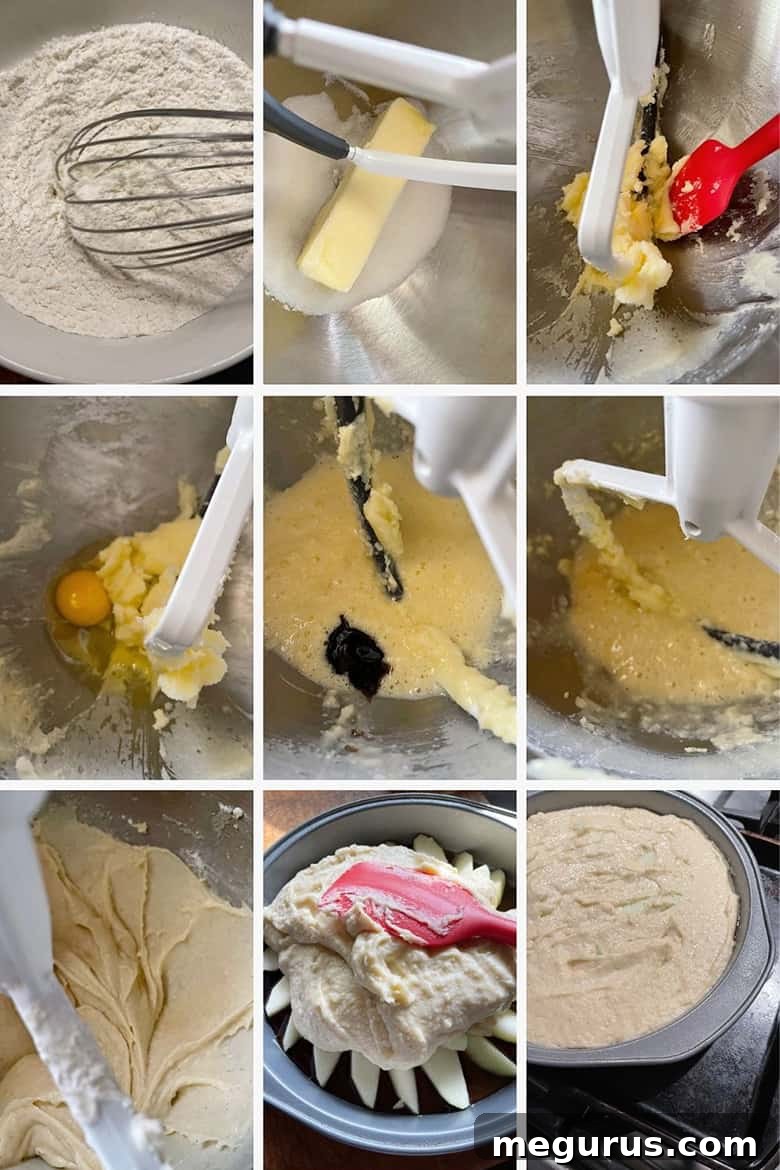
Phase 2: Crafting the Cake Batter
- Combine Dry Ingredients: In a medium bowl, whisk together the all-purpose flour, baking powder, baking soda, and fine salt until well combined. This ensures the leavening agents are evenly distributed throughout the batter. Set this bowl aside.
- Cream Butter and Sugar: In the bowl of a stand mixer fitted with the paddle attachment, or using a hand mixer, beat the room-temperature unsalted butter and white granulated sugar together on medium speed. Continue beating for about 3 minutes, until the mixture is light, fluffy, and pale in color. Remember to scrape down the sides of the bowl once or twice during this process to ensure everything is thoroughly combined. This step incorporates air, making the cake tender.
- Add Eggs and Vanilla: Beat in the large eggs one at a time, ensuring each egg is fully incorporated before adding the next. This helps create a smooth emulsion. Follow by beating in the vanilla extract or vanilla bean paste until just combined.
- Alternate Dry and Wet Ingredients: Gradually add the dry flour mixture alternately with the milk to the wet ingredients. A good rhythm is to add 1/3 of the flour mixture, mix until just combined, then 1/2 of the milk, mix, then another 1/3 of the flour, mix, the remaining milk, mix, and finally the remaining flour mixture. Mix only until the batter is smooth and no streaks of flour remain. Be careful not to overmix, as this can lead to a tough cake. Scrape down the sides of the bowl one last time to ensure uniformity.
Phase 3: Baking and Inverting
- Pour and Spread Batter: Gently pour the prepared cake batter evenly over the apple slices in your baking pan. Use an offset spatula or the back of a spoon to spread the batter into an even layer, completely covering the apples.
- Bake to Perfection: Place the baking pan (which is on top of the baking sheet) into your preheated oven. Bake for approximately 30-40 minutes. The cake is done when a wooden skewer or toothpick inserted into the center comes out clean. Baking times can vary significantly based on your individual oven and even the color of your baking pan (darker pans bake faster). Start checking around the 30-minute mark. The cake should appear slightly puffed in the center, golden brown, and just beginning to pull away from the sides of the pan.
- Cool Before Inverting: This is a crucial step for a successful upside-down cake! Remove the cake from the oven and let it cool in the pan, on a wire rack, for a full 45 minutes. Resist the urge to invert it sooner, as the warm caramel can stick to the pan. Cooling allows the caramel to firm up slightly and the cake to settle, making for a clean release.
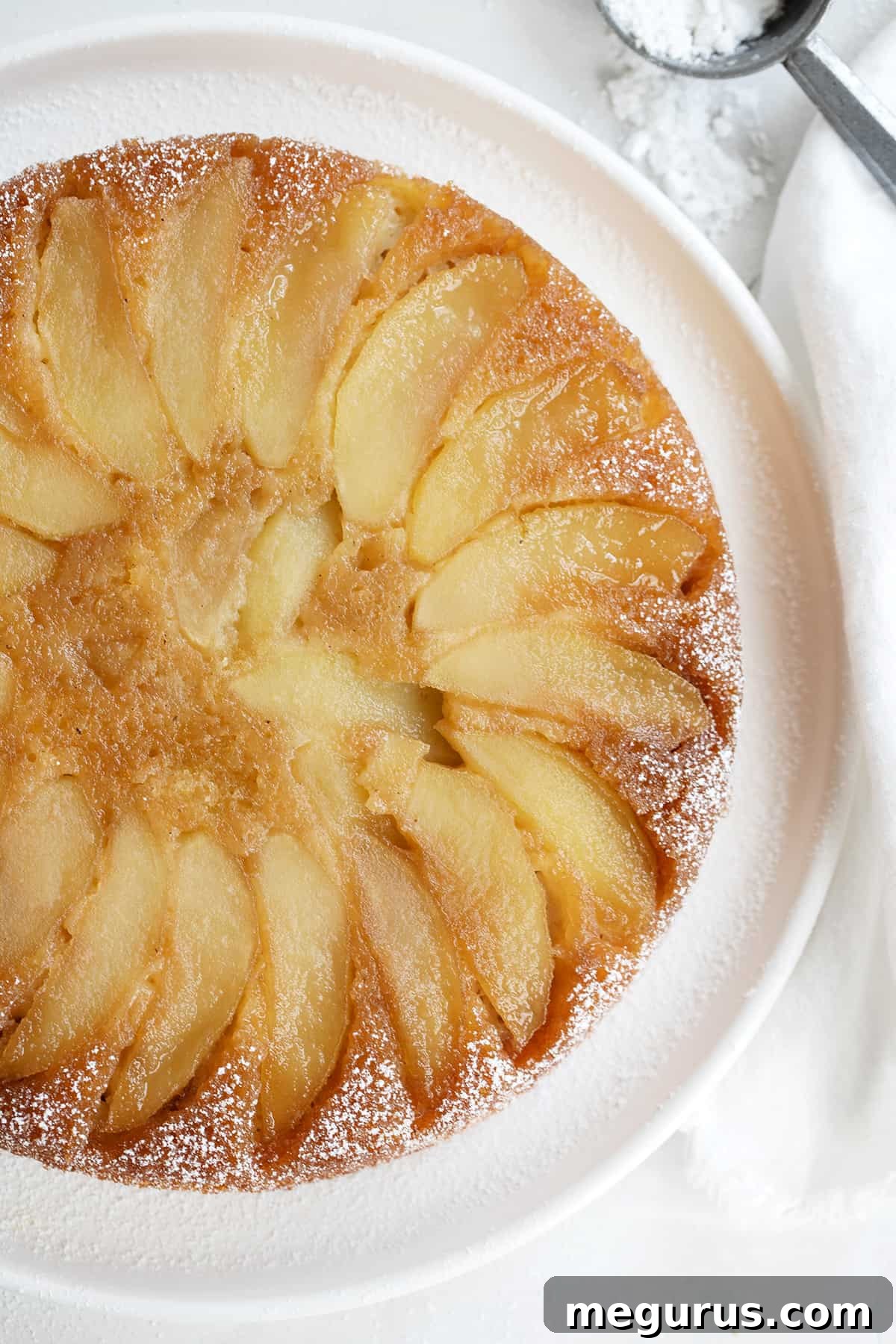
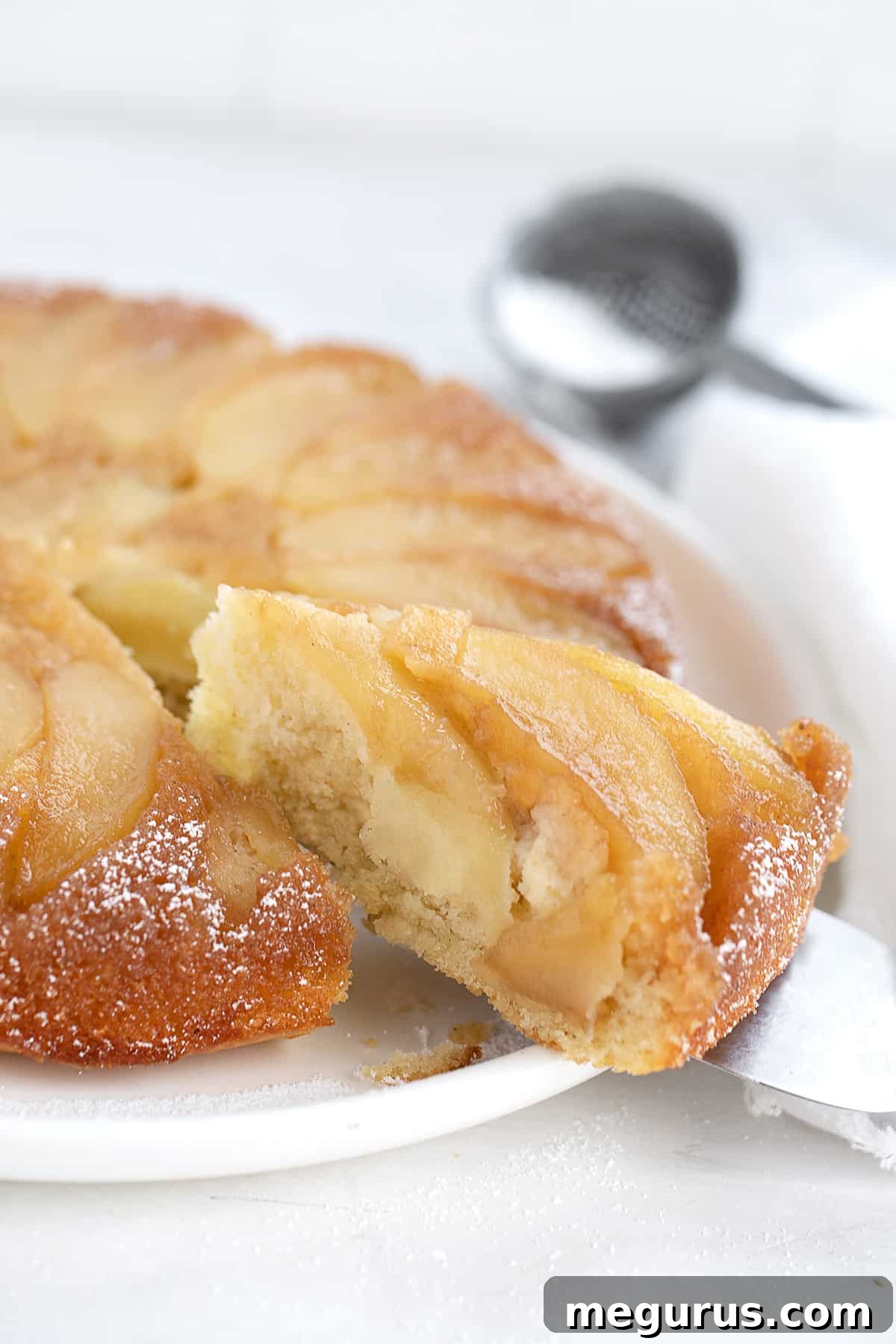
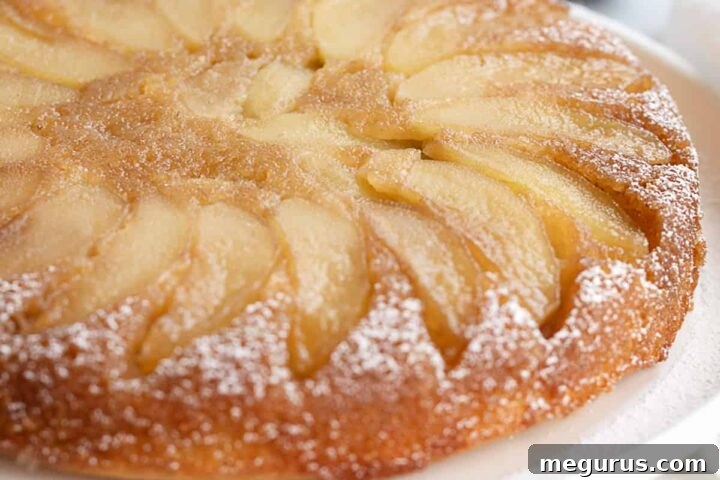
- Invert and Serve: After the 45-minute cooling period, place your serving plate (ideally one with a slight rim to catch any excess syrup) upside down on top of the cake pan. With confidence, carefully flip the cake pan and plate over together. Tap the bottom of the pan lightly, if needed, to help release the cake. Carefully lift the pan off, revealing your beautifully caramelized apple topping. Allow the cake to cool slightly further or completely, if desired, before serving. For an elegant finish, dust with icing/confectioners’ sugar. Serve warm with a scoop of vanilla ice cream and an extra drizzle of maple syrup for an unparalleled dessert experience.
Expert Baking Tips for Your Maple Apple Upside Down Cake
Achieving a perfect maple apple upside down cake is simple with a few insider tips. Pay attention to these details to ensure your cake turns out beautifully every time:
- Choosing the Right Pan Size: This recipe is designed for a standard 9-inch round baking pan, which ensures the batter bakes evenly and the apples are perfectly covered. If you only have an 8-inch round baking pan, you can use it, but be cautious. The batter volume might be slightly too much for a smaller pan, risking overflow. If using an 8-inch pan, it’s wise to hold back a small amount of batter to prevent over-filling. Fill the pan only to the level shown in the step-by-step photos above, which demonstrates the ideal batter height. Using a baking sheet underneath your cake pan is always a good practice, regardless of pan size, to catch any unexpected drips.
- No Parchment Paper Needed for the Base: You might be tempted to line the bottom of your pan with parchment paper, but for this specific upside-down cake, it’s generally unnecessary. The maple syrup caramelizes beautifully and acts as a natural non-stick layer. As long as you allow the cake to cool for the recommended 45 minutes, it should invert cleanly and release from the pan with ease. This cooling period is critical for the caramel to set properly, preventing it from sticking or breaking apart when you flip the cake.
- Understanding Baking Time Variations: Baking is an art and a science, and ovens can be notoriously individual. The suggested baking time of 30-40 minutes is a guideline. Factors like your oven’s calibration, its hot spots, and even the color and material of your baking pan can influence how quickly your cake bakes. Darker metal pans absorb more heat and tend to bake contents faster, while lighter, shinier pans reflect heat and bake more slowly. Begin checking your cake around the 30-minute mark. Avoid opening the oven door too frequently, especially in the early stages, as this can cause the cake to sink. Look for visual cues: the cake should appear lightly golden, slightly puffed in the center, and might begin to pull away from the sides of the pan. Once it reaches this stage, you can gently insert a wooden skewer or toothpick into the center. If it comes out clean with no wet crumbs, your cake is ready. If it’s still pale or sunken in the middle, it needs more time.
- Room Temperature Ingredients: Ensure your butter and eggs are at room temperature. This allows them to cream together more effectively with the sugar, creating a smoother batter that incorporates more air. This leads to a lighter, more tender cake.
- Don’t Overmix the Batter: Once you add the dry ingredients to the wet, mix only until just combined and no streaks of flour are visible. Overmixing develops the gluten in the flour, which can result in a tough, dense cake.
- Gentle Inversion: When it’s time to flip the cake, do so with a swift, confident motion. This helps ensure the cake detaches cleanly from the pan and the beautiful apple topping remains intact. If it doesn’t immediately release, a gentle tap on the bottom of the pan should help.
Making Ahead, Storing, and Freezing Your Apple Upside Down Cake
Planning to bake ahead or have leftovers you want to preserve? Here’s everything you need to know about preparing, storing, and freezing your maple apple upside down cake to keep it delicious:
Best Enjoyed Fresh:
While this cake is delightful at any time, it truly shines on the day it’s baked. The flavors are at their peak, the cake is perfectly moist, and the caramelized apples are glistening. If you’re serving it for an event, baking it a few hours before serving allows it to cool sufficiently but still retains that fresh-from-the-oven appeal. It’s an excellent candidate for a special breakfast or brunch, as well as a memorable dessert.
Storage at Room Temperature:
Should you have any cake left over (a rare occurrence!), it can be stored at room temperature for a couple of days. The key to maintaining its freshness is to keep it properly covered. An airtight cake dome or a large container will protect it from drying out and keep unwanted air away. As the cake sits, you might notice it becoming even more moist, as the juices from the fruit continue to infuse into the cake itself. This isn’t necessarily a bad thing; some people even prefer it a day or two later when the flavors have had more time to meld and deepen.
Freezing for Later Enjoyment:
While this cake isn’t the absolute ideal candidate for freezing due to its delicate fruit topping and moist texture, it is certainly possible and worthwhile if you want to extend its shelf life. If you find yourself with a significant amount of leftovers, freezing is a good option to prevent waste and enjoy a treat later. Be prepared for a slightly different texture post-thaw; the cake may become quite moist or even a little soft from the freeze/thaw process, and the apples might lose a touch of their firmness. To freeze:
- Ensure the cake is completely cooled.
- Wrap individual slices or the entire cake tightly in plastic wrap, then an additional layer of aluminum foil. This double layer helps prevent freezer burn.
- Place in a freezer-safe container.
- It can be stored in the freezer for up to 1-2 months.
- To thaw, transfer the wrapped cake to the refrigerator overnight, then bring to room temperature before serving. You can gently warm slices in the microwave or oven for a “freshly baked” feel.
Get the Recipe: Apple Upside Down Cake
Pin This
Leave a Review
20 minutes
35 minutes
45 minutes
1 hour
40 minutes
10
servings
Ingredients
-
2/3 cup
pure maple syrup, Grade B recommended -
2-3 large
apples, peeled, cored and quartered, then cut each quarter into 4 equal slices *see Note 1 below -
1 1/2 cups
all purpose flour, spooned and levelled -
3/4 teaspoon
baking powder -
1/4 teaspoon
baking soda -
1/2 teaspoon
fine salt, reduce to 1/4 tsp if using salted butter -
1/2 cup
unsalted butter, at room temperature (can use salted butter, but reduce the added salt as noted above) -
1/2 cup
white granulated sugar -
2 large
eggs -
1/2 cup
milk, or buttermilk *see Note 2 below -
2 teaspoon
vanilla, or vanilla bean paste
For garnish:
-
Icing/confectioners’ sugar, for dusting
For serving:
-
Vanilla Ice Cream and a bit more maple syrup, for serving
Instructions
-
Preheat the oven to 350° F. (regular bake setting/not fan assisted). Lightly grease a 9-inch round cake pan and set on top of a baking sheet. Set aside. *See Note 3 below for other pan options.
-
In a large saucepan, bring the maple syrup to a boil over high heat, then reduce heat to low and simmer until very thick and reduced to 1/2 cup, about 20 minutes. *Use a large pot and watch as it approaches boil, as it will bubble up considerably! While the syrup is simmering, you can peel and cut your apples. Pour the thickened syrup into the prepared pan. Arrange the apples in the pan in 2 concentric circles, overlapping them slightly. *See Step-by-Step photos above this recipe card for a visual of this.
-
In a bowl, whisk together the flour, baking powder, baking soda and salt. Set aside.
-
In the bowl of a stand mixer fitted with the paddle attachment, beat the butter and sugar at medium speed until fluffy, about 3 minutes. Beat in the eggs one at a time. Beat in the vanilla. Add the dry ingredients alternately with the milk until the batter is smooth. Scrape down the side of the bowl.
-
Pour the batter over the apples and spread it into an even layer. Place cake pan on top of a baking sheet, to catch any bubble-overs.
-
Bake the cake for about 30-40 minutes or until a tester inserted in the centre comes out clean. Let the cake cool in the pan, on a cooling rack for 45 minutes. *Baking time will vary by oven and colour of pan. Mine took about 34 minutes. Start checking it about 30 minutes and test when it looks set and golden in colour.
-
Once cake has cooled in pan for 45 minutes, place a plate on top of the cake and invert the cake onto the plate. Tap lightly to release the cake, if necessary. Remove the pan. Let the cake cool slightly or completely before serving. Garnish with a dusting of icing/confectioners’ sugar, if desired. Serve with vanilla ice cream and extra maple syrup, if you like.
Notes
2. Make your own buttermilk, if you like! Mix 3/4 cup regular milk with 2 tsp lemon juice or white vinegar. Let stand 10 minutes and use.
3. If you don’t have a 9-inch round baking pan, you can use an 8-inch round baking pan, but you will need to hold back some of the batter, as it probably won’t all fit. Fill pan to the level shown in the step-by-step photos above the Recipe card.
Be sure to read the Baking Tips above the recipe card, for more tips on making this recipe.
American, Canadian
Dessert
Jennifer Maloney
Serving:
1
serving
,
Calories:
291
kcal
,
Carbohydrates:
46
g
,
Protein:
4
g
,
Fat:
11
g
,
Saturated Fat:
6
g
,
Polyunsaturated Fat:
1
g
,
Monounsaturated Fat:
3
g
,
Trans Fat:
1
g
,
Cholesterol:
62
mg
,
Sodium:
167
mg
,
Potassium:
182
mg
,
Fiber:
2
g
,
Sugar:
28
g
,
Vitamin A:
385
IU
,
Vitamin C:
2
mg
,
Calcium:
65
mg
,
Iron:
1
mg
Tried this recipe?
If you enjoyed this recipe, please leave a star rating and comment. It helps others to find it!