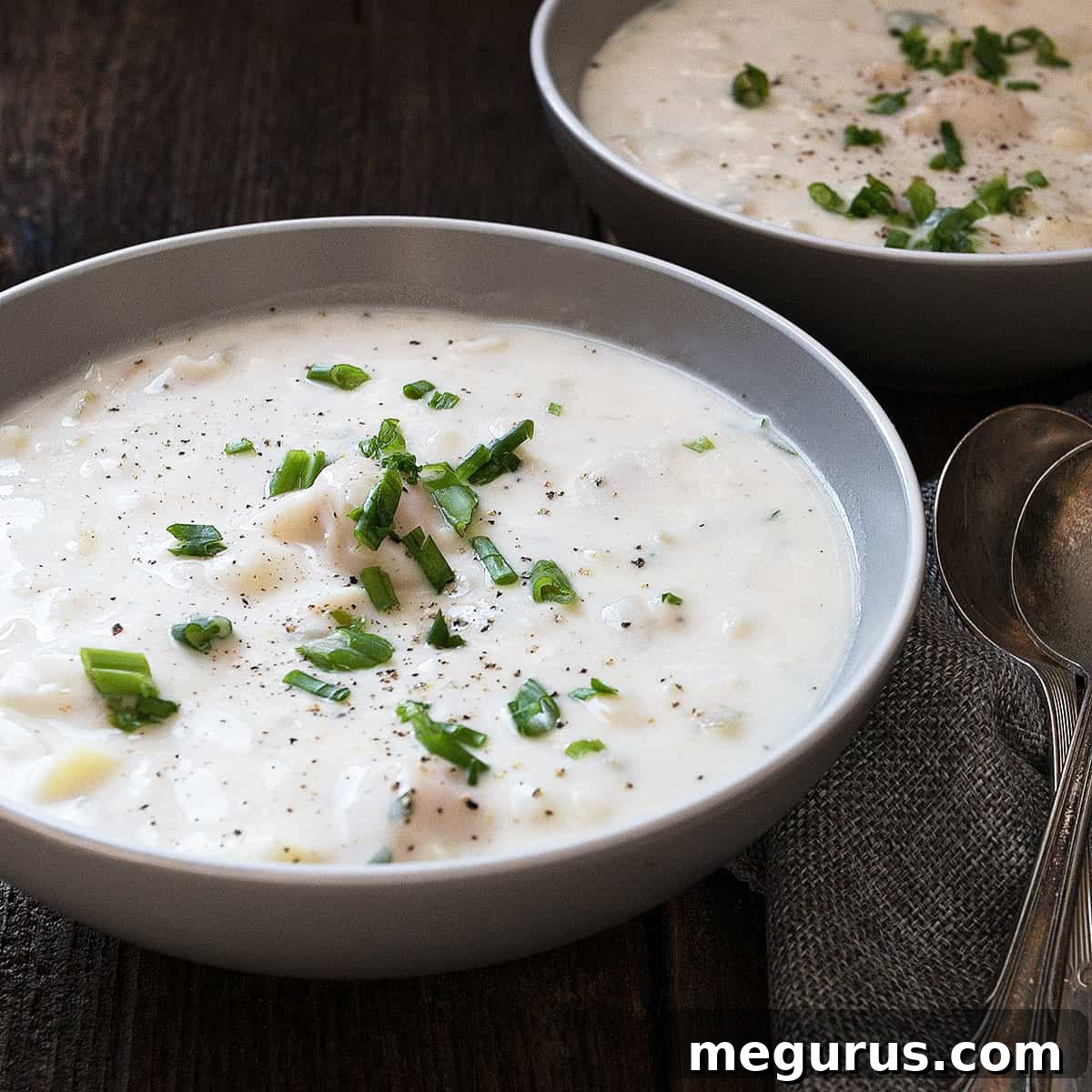
Indulge in the ultimate comfort food with this incredibly thick and creamy seafood chowder. This versatile recipe celebrates the bounty of the ocean, allowing you to use any combination of your favorite seafood, whether fresh from the market or conveniently frozen. It’s a heartwarming dish perfect for any occasion, promising rich flavors and a satisfying texture that will delight your senses.
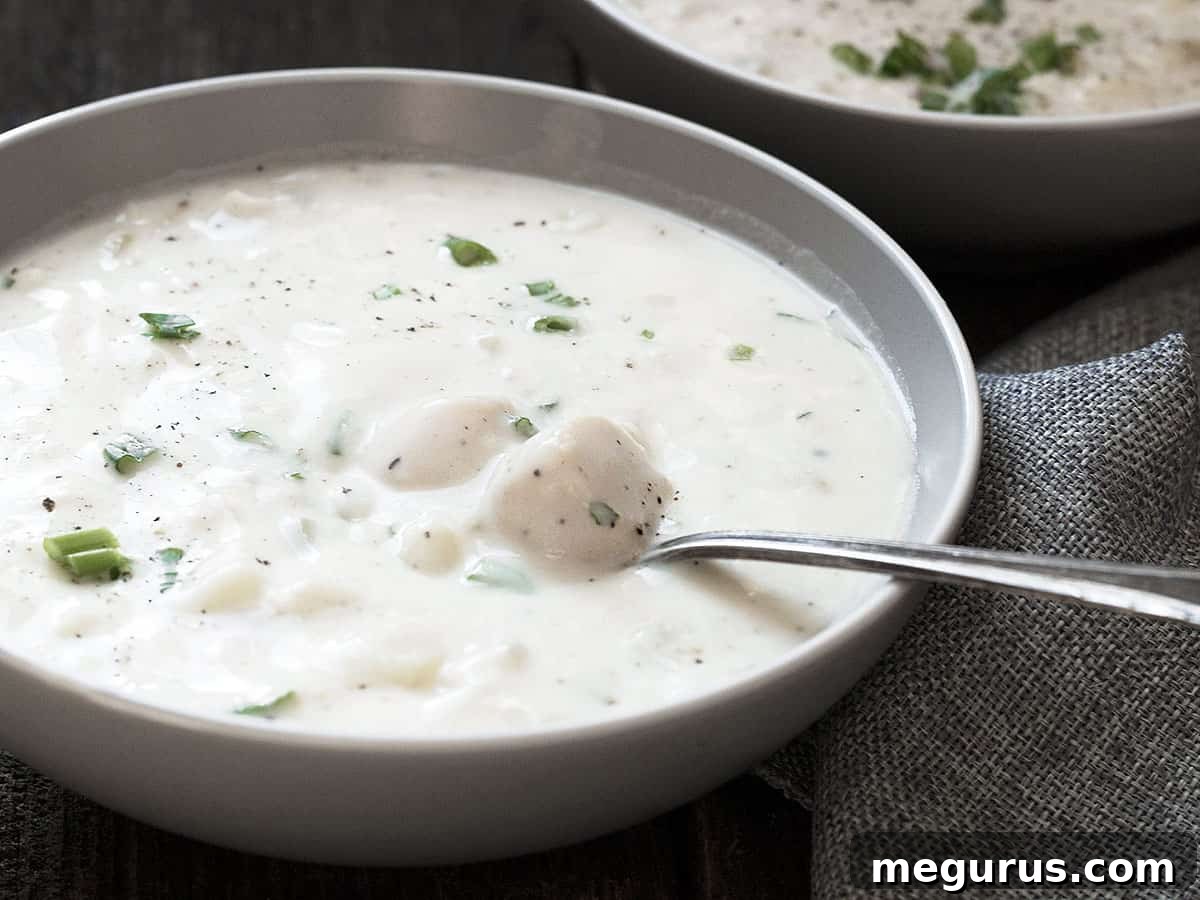
As the weather cools and soup season officially arrives, there’s nothing quite as comforting and inviting as a steaming bowl of seafood chowder. A true chowder, by definition, is a thick, chunky, and hearty soup, and this recipe perfectly embodies that description. What makes it even more appealing is its incredible adaptability – you can customize it with whatever fresh or frozen seafood you have on hand, transforming it into your own culinary masterpiece. From succulent shrimp to flaky cod, tender scallops, or rich lobster, the possibilities are endless.
This particular seafood chowder recipe draws inspiration from the classic East Coast Canada style, renowned for its luxurious creaminess and substantial ingredients. It’s a robust soup, brimming with tender vegetables and hearty potatoes alongside a generous medley of seafood. A key to its depth of flavor is the simple yet incredibly effective homemade fish stock, created right in your kitchen, which forms the aromatic foundation of this exquisite dish.
Despite its rich appearance and velvety texture, much of the chowder’s satisfying creaminess comes naturally from the potatoes. As they cook down, russet potatoes release starches that beautifully thicken the soup, allowing for a relatively modest amount of added heavy cream. This clever technique results in a wonderfully indulgent-tasting soup that, at approximately 300 calories per serving (for 8 servings), offers all the goodness of seafood without excessive richness. It’s a balanced and flavorful meal that nourishes both body and soul.
Crafting the Perfect Seafood Chowder: Key Ingredients & Smart Substitutions
The magic of a truly great seafood chowder lies in its components. Choosing quality ingredients and understanding their roles will elevate your dish from good to unforgettable. Here’s a closer look at the essential elements and how you can adapt them to your preferences:
The Star of the Show: Your Seafood Selection
You’ll need approximately 1 ½ pounds of seafood for this recipe, but the beauty is in the customization. Feel free to use a single type or create a vibrant medley. For instance, a combination of sole and scallops offers a delightful contrast in texture and flavor. Other excellent choices include:
- White Fish: Cod, haddock, halibut, or pollock are fantastic options for their mild flavor and flaky texture.
- Shellfish: Shrimp, scallops, mussels, clams, or even lobster pieces add a touch of elegance and a burst of oceanic flavor.
- Salmon: While not traditional for all chowders, fresh salmon can add a richer color and distinct flavor profile.
Don’t be afraid to experiment! If you prefer a pure fish chowder, simply use all fish. This recipe is designed to be flexible, so embrace your culinary creativity. Whether fresh or frozen, your chosen seafood will shine.
The Natural Thickener: Potatoes
For that signature thick and comforting chowder consistency, selecting the right potato is crucial. We highly recommend using baking potatoes, such as Russet (also known as Idaho potatoes). These starchy varieties break down beautifully as they simmer, releasing their starches into the soup. This natural thickening action is key to achieving a hearty body without relying too heavily on added cream or flour, contributing significantly to the chowder’s depth and mouthfeel.
Aromatics and Vegetables: Building the Flavor Base
Beyond the potatoes, a classic chowder features a robust vegetable base. Diced onion and celery are foundational, creating a fragrant and savory start to the soup. These aromatics are sautéed in butter until softened, releasing their sweet and earthy notes that meld seamlessly with the seafood. Feel free to add other root vegetables like carrots for additional sweetness and color, or a touch of garlic for an extra layer of savory depth.
Recipe Wisdom: Tips & Tricks for a Flawless Seafood Chowder
Elevate Your Chowder: Expert Guidance
- Seasoning is King: Seafood thrives on proper seasoning. This soup truly needs a generous hand with salt and freshly ground black pepper to coax out and highlight all the delicate flavors of the ocean. Don’t be timid! Taste as you go and continue adding salt until the flavors truly pop and sing on your palate.
- Garnish for Grandeur: Elevate your chowder with delightful garnishes. Traditional choices include crisp oyster crackers or crumbled cooked bacon for a textural contrast. Freshly chopped chives or green onions add a mild oniony bite and vibrant color. Sprigs of fresh thyme, parsley, or dill introduce aromatic freshness. For a playful touch, consider delicate pea shoots or a light dusting of paprika for warmth and visual appeal.
- Cream Choices for Creaminess: For the ultimate luxurious and creamy chowder, heavy whipping cream (with 35% butterfat) is highly recommended. If you prefer a lighter option or don’t have heavy cream, a light cream can be used. To ensure your soup still achieves a desirable thickness, simply whisk about 1 tablespoon of cornstarch into the lighter cream before slowly incorporating it into the chowder. This prevents thinning and helps maintain that comforting consistency.
- Perfect Pairings: Serve this magnificent seafood chowder alongside a fresh, crusty loaf of bread – perfect for soaking up every last drop of the rich broth. A crisp side salad offers a refreshing counterpoint, creating a well-rounded and deeply satisfying meal.
Top Tip: Streamlining Your Seafood Prep
No need to fret if your seafood isn’t fresh or thawed ahead of time! This recipe offers a convenient shortcut: you can add frozen seafood directly to the poaching liquid. Just be aware that poaching from frozen will require a few extra minutes of cooking time to ensure the seafood becomes opaque and tender throughout. This simple trick saves you valuable prep time without compromising flavor or texture.
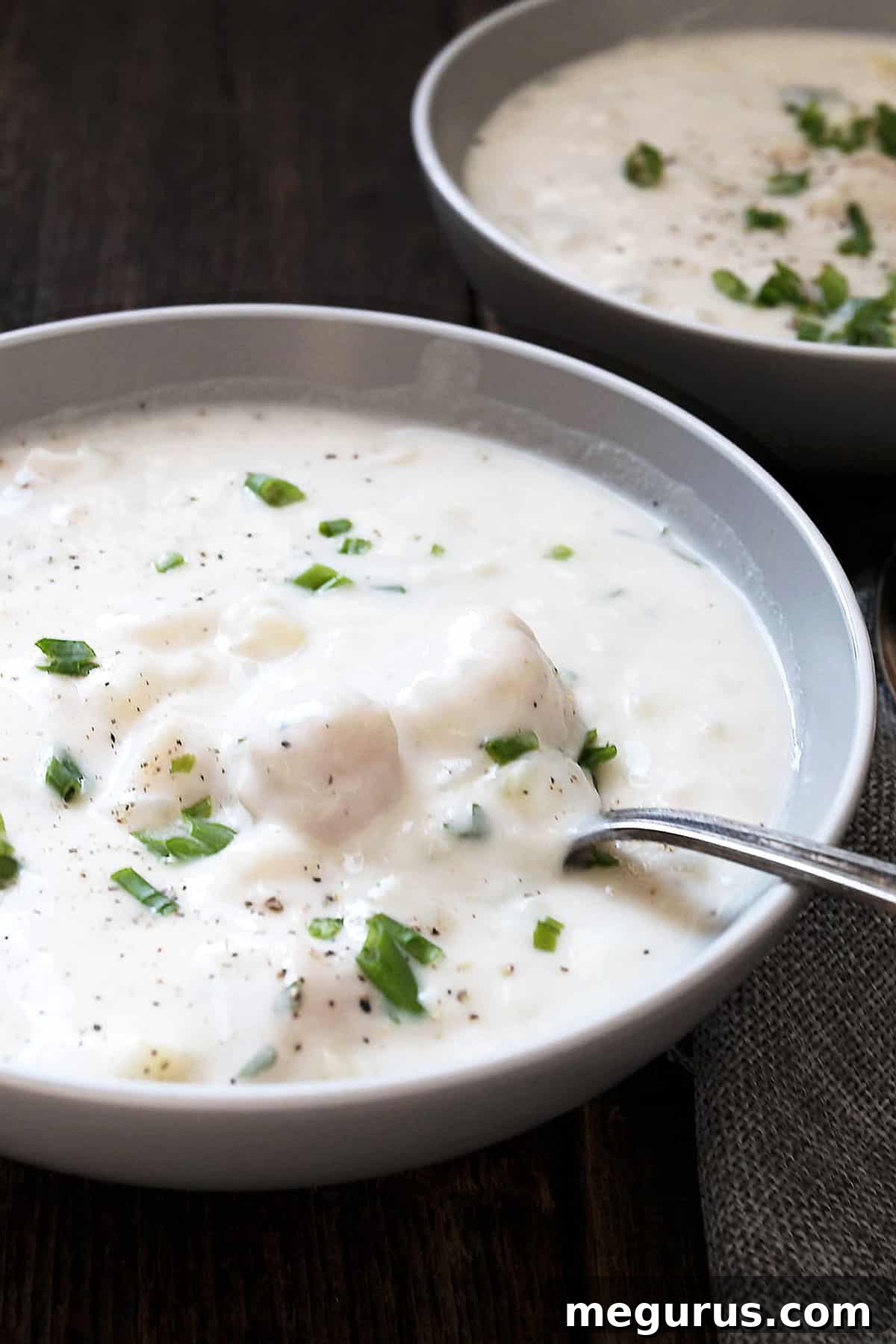
Storing and Freezing: Enjoying Your Chowder Later
This delicious seafood chowder is just as good the next day, if not better, as the flavors have more time to meld.
- Refrigeration: Leftover seafood chowder can be stored in an airtight container in the refrigerator for up to 3 days.
- Freezing: For longer storage, this chowder freezes beautifully. Transfer it to an airtight, freezer-safe container and freeze for up to 4 months. When you’re ready to enjoy it again, defrost the chowder in the refrigerator overnight. Reheat gently on the stove-top over medium-low heat, stirring frequently, until thoroughly warmed through. Avoid boiling to maintain the creamy texture and prevent the seafood from becoming tough.
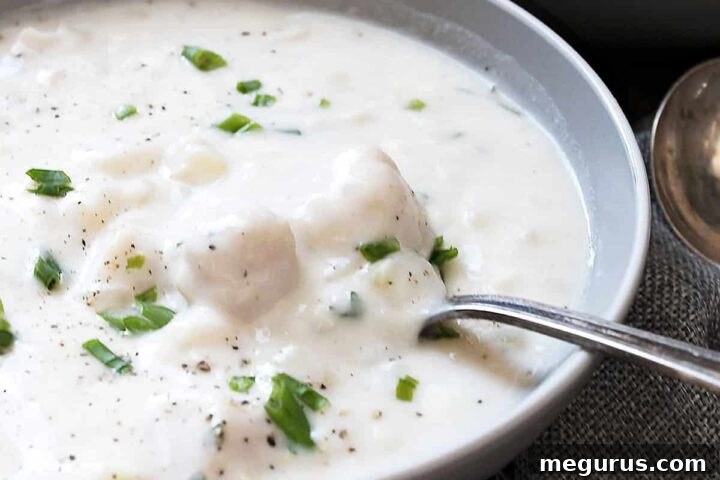
Get the Recipe:
Thick and Creamy Seafood Chowder
Pin This
Leave a Review
Prep Time: 30 mins
Cook Time: 30 mins
Total Time: 1 hr
Yield: 8 servings
Ingredients
Vegetables:
- 2 Tablespoons butter
- 1 small onion, diced
- 3 ribs celery, diced
- 4 cups baking potato, such as Russet, peeled and diced
- Water, to just cover vegetables
Poaching Liquid:
- 2/3 lb sole filet, cubed (or fish of your choice)
- 2/3 lb scallops, whole (or shrimp, lobster etc.)
- 4 cups water
- 1 bay leaf
- 1/4 medium onion
Soup:
- 1/4 cup butter
- 1/2 cup all-purpose flour
- 3/4 cup heavy, whipping cream, 35% b.f. *see Notes below
- 1 pinch nutmeg
- Salt and freshly ground pepper, to taste
Instructions
- Cook the Vegetables: In a large, heavy-bottomed pot or Dutch oven, melt 2 tablespoons of butter over medium heat. Add the diced onions and cook, stirring occasionally, until they soften and become translucent, about 3 minutes. Incorporate the diced celery and continue cooking, stirring for 8-10 minutes, allowing the flavors to deepen. Finally, add the diced baking potatoes to the pot. Pour in enough water to just cover all the vegetables. Bring the mixture to a boil, then reduce the heat to a gentle simmer. Cook until the potatoes are tender but still hold their shape – approximately 10-15 minutes, depending on how large you diced them. Remove the pot from the heat.
- Prepare the Poaching Liquid and Seafood: In a separate, second pot, combine the 4 cups of water, one bay leaf, and the 1/4 onion. Heat this mixture until it’s just about to boil, maintaining a temperature just below a rolling boil. Carefully add your cubed sole filet (or fish of your choice) and whole scallops (or shrimp, lobster, etc.) to the poaching liquid. Cover the pot and cook only until the seafood turns opaque and becomes tender. Using a slotted spoon or a fine-mesh strainer, gently remove the cooked fish and scallops and transfer them to a clean bowl, being careful not to overcook. Reserve the flavorful poaching liquid – this will become the base for your chowder’s stock. Discard the bay leaf and the quartered onion.
- Assemble the Chowder: In a clean saucepan, melt the remaining 1/4 cup of butter over medium heat. Add the all-purpose flour, stirring constantly to create a smooth paste, known as a roux. Cook the roux for about 1 minute to cook out the raw flour taste. Gradually whisk in the reserved poaching liquid, a little at a time, until you achieve a smooth, lump-free mixture. Continue cooking and whisking until this base begins to visibly thicken. Return the pot containing the cooked potatoes to medium heat. Slowly pour the thickened butter-flour-poaching liquid mixture into the potato pot, stirring continuously. Gently fold in the cooked fish and scallops. Continue cooking and stirring the chowder until it reaches your desired thick consistency. Finally, stir in the heavy cream and heat through gently, taking care not to let the chowder boil after the cream is added. Season generously with a pinch of nutmeg and a liberal amount of salt and freshly ground black pepper, adjusting to your taste preference. Serve hot and enjoy!
Notes
Cuisine: American, Canadian
Course: Soup
Author: Jennifer Maloney
Nutrition Facts (per serving):
- Serving: 1 serving
- Calories: 301 kcal
- Carbohydrates: 22g
- Protein: 13g
- Fat: 18g
- Saturated Fat: 10g
- Cholesterol: 79mg
- Sodium: 373mg
- Potassium: 648mg
- Fiber: 3g
- Vitamin A: 675 IU
- Vitamin C: 13.2mg
- Calcium: 70mg
- Iron: 4mg
Tried this recipe?
If you enjoyed this recipe, please leave a star rating and comment. It helps others to find it!