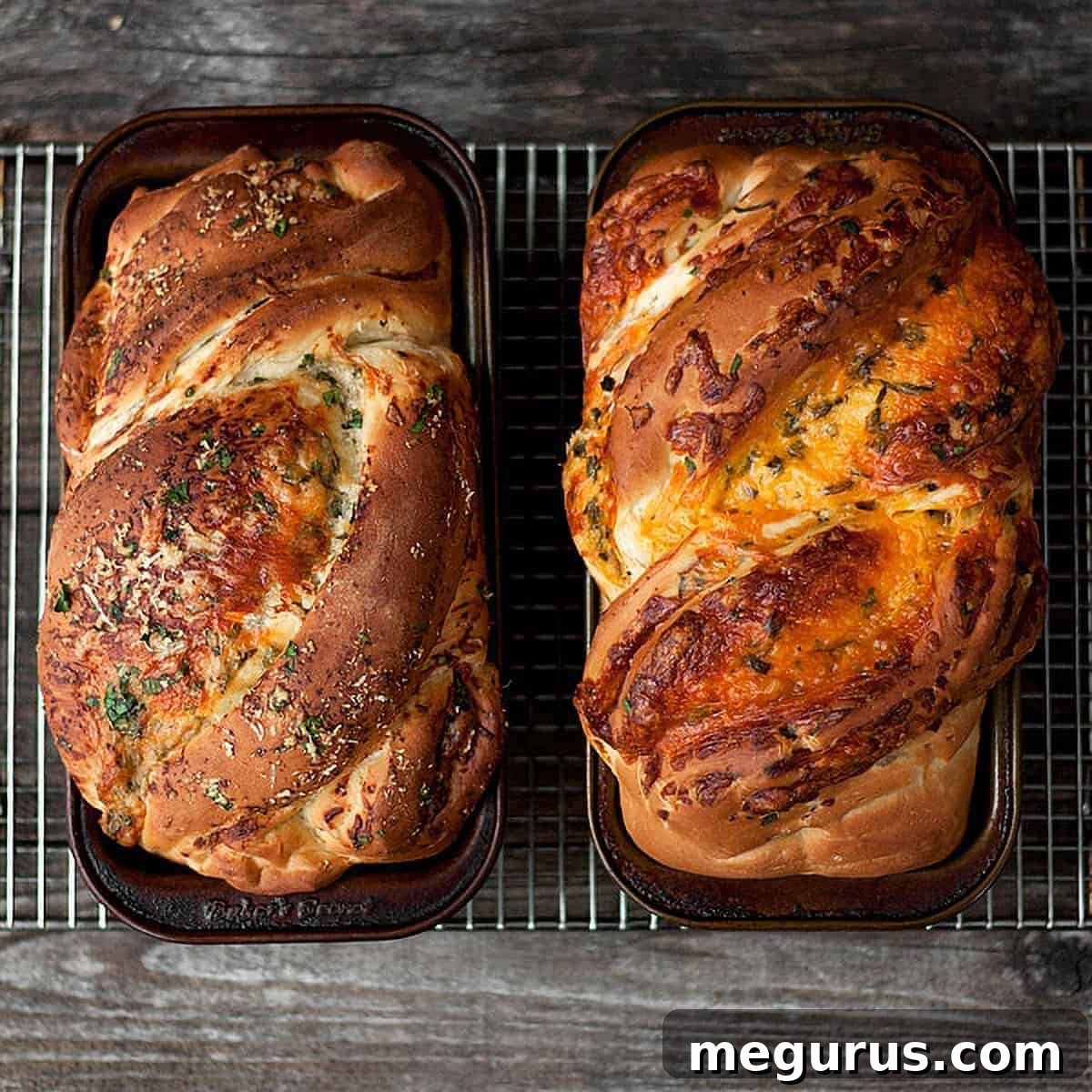
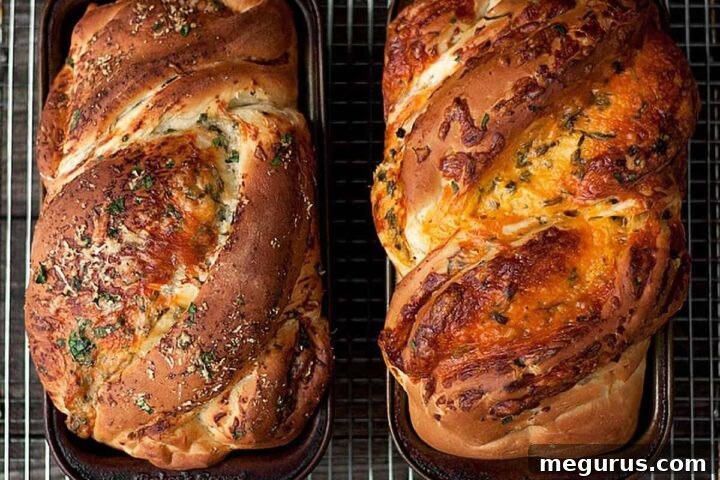
Discover the secret to baking the most delicious, irresistibly soft homemade cheese bread! This comprehensive guide provides two incredible variations: a robust Cheddar cheese loaf and an aromatic Parmesan and Herb delight. Perfect for breakfast, alongside a meal, or as a savory snack, this recipe guarantees a beautiful, gap-free loaf every time, elevating your home baking to new heights.
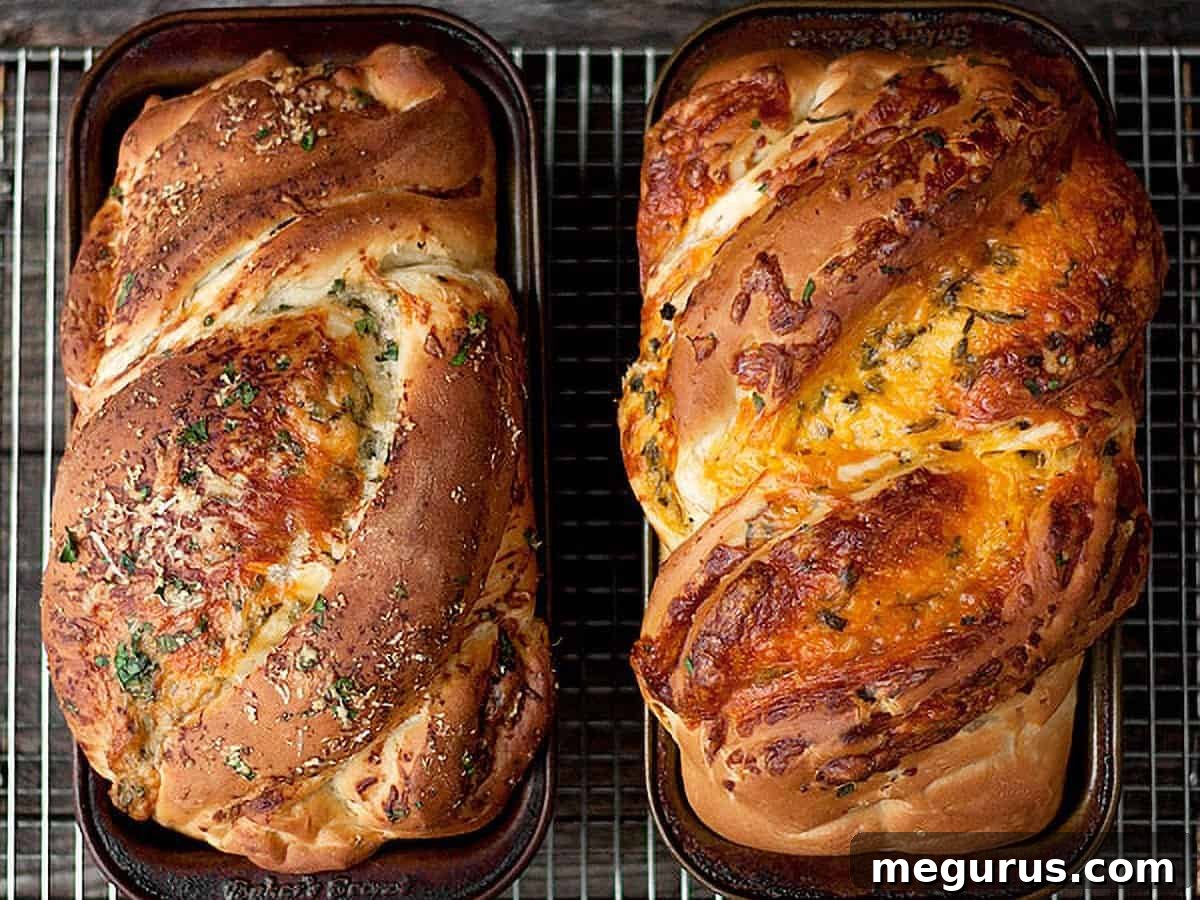
There’s nothing quite like the comforting aroma of freshly baked bread filling your home, and this cheese bread recipe takes that experience to a whole new level. It’s not just another recipe; it’s my absolute favorite, cherished for its incredibly soft texture, rich flavor, and the sheer joy of working with its perfectly pliable dough. The innovative shaping technique described here is a game-changer, ensuring a stunning loaf without those frustrating, unsightly gaps where the cheese might otherwise escape or clump. Get ready to bake a loaf that’s as delightful to look at as it is to eat!
Essential Ingredients and Smart Substitutions for Perfect Cheese Bread
Crafting exceptional cheese bread begins with understanding your ingredients. Below, we’ll dive into the key components of this recipe, offering insights and clever substitutions to ensure your baking journey is both successful and satisfying.
Bread Flour: The Foundation of a Fluffy Loaf
Bread Flour is the superstar of this recipe, and for good reason. Its higher protein content (typically 12-14%) directly translates to increased gluten development, which is essential for creating bread with a beautiful, airy crumb and a satisfying chewiness. This robust gluten structure allows the dough to rise magnificently, holding its shape and contributing to that desirable soft, yet substantial, texture we crave in homemade bread.
While bread flour is highly recommended for optimal results, don’t despair if you only have all-purpose flour on hand. You can absolutely use it, but be mindful of a few adjustments. All-purpose flour has a lower protein content (around 10-12%), meaning it will absorb less liquid and produce a slightly less elastic dough. When substituting, you may need to add a touch more flour during mixing and kneading to achieve that smooth, moist, and slightly tacky consistency. The final loaf will still be wonderfully soft, but expect a slightly denser crumb compared to using bread flour. For an even closer approximation to bread flour, consider adding 1-2 teaspoons of vital wheat gluten per cup of all-purpose flour.
Yeast: The Living Engine of Your Dough
For this recipe, we specify Regular Instant Yeast, such as the popular SAF Brand. Instant yeast is a baker’s best friend for its convenience; it doesn’t require prior proofing and can be mixed directly with the dry ingredients. Its consistent activation ensures a reliable rise every time.
It’s crucial to distinguish between yeast types. Quick or rapid-rising Instant yeast is NOT recommended for this recipe. These varieties are formulated to rise much faster, often resulting in a bread that lacks the depth of flavor developed through a slower fermentation process. Using them could lead to an over-proofed dough and a less complex taste profile.
If you only have Active Dry Yeast, fret not! You can certainly use it, but it requires a simple activation step. First, dissolve the Active Dry Yeast in the lukewarm water portion of the recipe, along with a pinch of sugar. The sugar acts as food for the yeast, helping it to activate. Let this mixture stand for about 5-10 minutes, or until it becomes foamy. This foam indicates that the yeast is alive and active. Once proofed, you can proceed to add it to your dough along with the other wet ingredients as specified in the recipe. Always ensure your yeast is fresh and stored properly (in an airtight container in the refrigerator or freezer) for consistent results.
Milk: For Tenderness and Enriched Flavor
The choice of liquid plays a significant role in the texture and flavor of your cheese bread. You have the flexibility to use either regular milk or buttermilk. When opting for milk, any variety with 1% fat or higher will work beautifully. Personally, I prefer using whole milk (3.5% butterfat) whenever possible. The higher fat content contributes to a richer flavor, a more tender crumb, and a lovely golden-brown crust.
Buttermilk, with its slight acidity, adds an extra layer of tenderness and a subtle tang to the bread, enhancing its overall flavor profile. If you don’t have buttermilk on hand but wish to achieve a similar effect, it’s incredibly easy to make your own. Simply combine 1 cup of regular milk with 1 tablespoon of either fresh lemon juice or white vinegar. Give it a gentle stir and let it stand for about 10 minutes. You’ll notice it thickening and curdling slightly, indicating it’s ready to use as a buttermilk substitute. This simple trick ensures you never have to miss out on that special buttermilk touch.
Cheese: The Star of the Show
When it comes to cheese, quality and type make a huge difference in the final taste of your bread. For the cheddar version, I highly recommend using a sharp cheddar cheese. Its bold, distinctive flavor truly shines through in the baked loaf. The most important tip here is to grate the cheese yourself. Pre-shredded cheeses often contain anti-caking agents like cellulose, which can prevent the cheese from melting smoothly and can affect the texture of your bread. Freshly grated cheese melts beautifully, integrating seamlessly into the dough.
Visually, a yellow cheddar offers a beautiful contrast, making the cheese pockets more apparent and the loaf more appealing. However, an aged white cheddar works just as wonderfully, providing a sophisticated depth of flavor. Don’t be afraid to experiment with other cheeses too! Gruyère, provolone, Monterey Jack, or even a blend of cheeses can create unique and delicious variations.
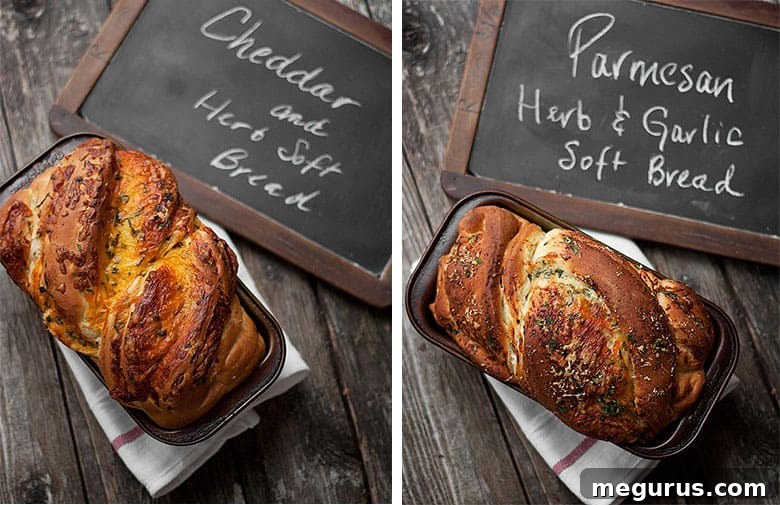
Understanding the Unique Shaping Process: A Visual Guide
One of the distinctive features of this recipe is its ingenious shaping method, designed to evenly distribute the cheese and prevent those common internal gaps. If you’re new to this technique or simply a visual learner, watching a demonstration can be incredibly helpful.
Before you begin the shaping process, we highly recommend watching the instructional video linked within the recipe card below. It clearly illustrates each step, from rolling out the dough to creating the beautiful braided effect, ensuring you achieve a perfectly pretty loaf with a consistent, cheesy bite in every slice. Understanding this technique will build your confidence and lead to consistently stunning results.
Top Tips for Baking Your Best Cheese Bread!
- Unleash Your Creativity: Endless Customization: This cheese bread recipe is incredibly versatile, a blank canvas awaiting your culinary imagination. While the Cheddar and Parmesan & Herb versions are phenomenal, the possibilities extend far beyond. Consider incorporating different cheese types like smoked gouda, spicy pepper jack, or a blend of your favorites. Experiment with a variety of fresh or dried herbs such as rosemary, thyme, oregano, or dill. Want to add an extra layer of flavor and texture? Sun-dried tomatoes (chopped), a swirl of pesto, finely diced olives, crispy bacon bits, or even caramelized onions can be folded into the filling before shaping. The beauty lies in tailoring it to your personal taste – whether you prefer a subtle hint of cheese or a generously loaded loaf, this recipe adapts beautifully to your preferences.
- Baking in Batches: Two Loaves, Many Options: This recipe is designed to yield two delicious loaves, offering great flexibility. You can choose to bake one Cheddar and Herb loaf and one Parmesan, Garlic, and Herb loaf, enjoying the best of both worlds. Alternatively, if you have a strong preference, you can make two loaves of the same variety. Just a friendly reminder: the ingredient amounts for the filling listed in the Recipe Card are for one loaf. So, if you decide to make two of the same, remember to simply double the filling ingredients for that particular flavor profile. Baking two loaves also makes it perfect for sharing, freezing one for later, or ensuring you have plenty for a hungry crowd.
- The Magic of Cold Fermentation: Overnight Rise Option: For those who appreciate deeper flavors and a more convenient baking schedule, this dough offers an optional overnight rise in the refrigerator. While I often bake with impatience and a lack of foresight, I can attest to the benefits of a longer, slower fermentation. Retarding the dough in the fridge for up to 4 days not only develops more complex flavors and a superior texture but also allows you to break up the baking process, making it perfect for busy schedules. Simply prepare the dough, place it in a lightly oiled bowl, cover it tightly, and let it slowly rise in the refrigerator. Remove it about 2 hours before you plan to bake to allow it to come to room temperature and finish its final proof. This extended rise truly enhances the bread’s character.
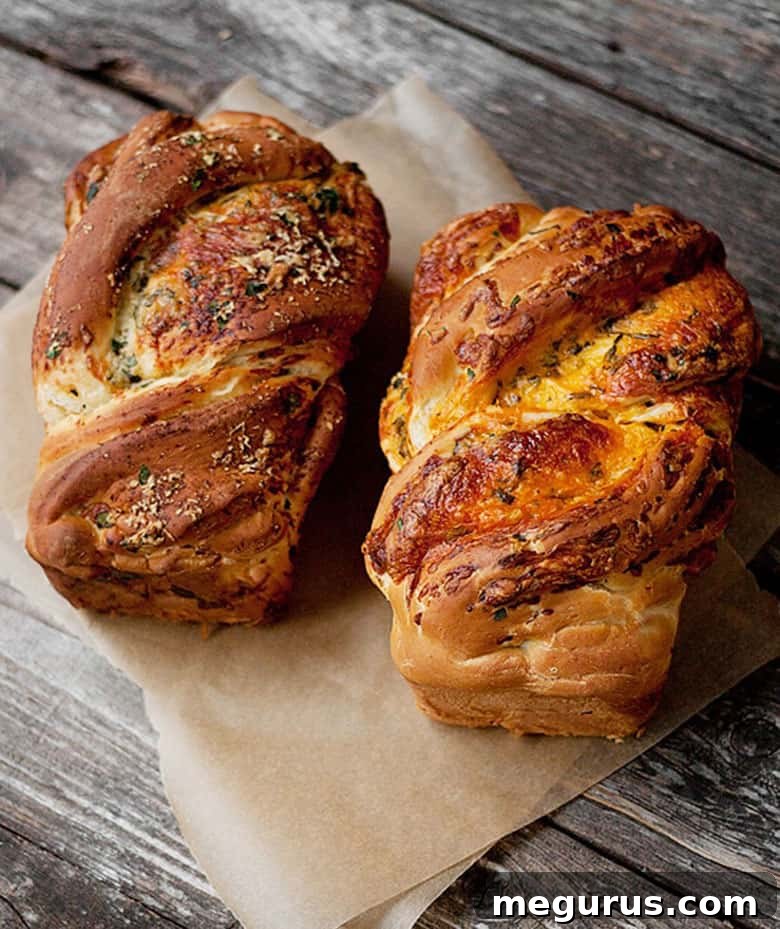
Mastering Yeast Baking: Essential Tips for Success
Many novice bakers approach yeast-based recipes with the same precision they’d apply to a cake, expecting exact measurements and timings to always yield perfect results. However, baking with yeast is more of an art form, a dance between ingredients and environment, rather than a rigid science. Factors like ambient kitchen temperature, humidity levels, the moisture content of your flour, and even the season can dramatically influence how your dough behaves and rises.
Understanding this inherent variability is more than half the battle won. The true secret to becoming a successful bread baker lies in cultivating a sense of intuition – learning to trust what you see and feel. Is the dough a bit too sticky despite following the flour measurement? Don’t hesitate to add a small increment more flour until it feels right. Conversely, if your dough achieves that perfect smooth, tacky consistency before you’ve added all the flour specified in the recipe, trust your judgment and stop adding more. When it comes to rising times, let your eyes be your guide, not solely the clock. Doughs can rise faster or slower depending on the conditions. Embrace this flexibility, observe your dough, feel its texture, and adjust as needed. This intuitive approach will unlock a world of baking success.
- Temperature Control for Yeast Activation: Yeast is a living organism, and its activity is highly sensitive to temperature. Too cold, and it remains dormant; too hot, and it perishes, rendering your dough lifeless. For Active Dry Yeast, the ideal proofing liquid temperature is between 105-110°F (40-43°C). Instant yeast is slightly more forgiving and can tolerate temperatures up to 120°F (49°C). Crucially, all yeast begins to die off at around 140°F (60°C). An instant-read thermometer is an indispensable tool in your baking arsenal to ensure your liquids are within the perfect range, giving your yeast the best possible start.
- Flour Measurement as an Approximation: Always consider the flour quantity in yeast recipes as an estimate. Flours vary widely in their protein content and moisture absorption capabilities, not just between brands but also due to environmental factors like humidity. Consequently, the exact amount of flour needed to achieve a perfectly smooth, soft, and workable dough will naturally fluctuate from one baking session to another.
- The Art of Gradual Flour Addition: Given the variability mentioned above, a golden rule for yeast baking is to always hold back a portion of the specified flour – typically ¼ to ⅓ of the total amount – at the beginning of the mixing process. Add the remaining flour gradually, just a tablespoon at a time, until your dough reaches the desired consistency. This approach prevents you from inadvertently adding too much flour at once, which can result in a stiff, dry dough that’s difficult to correct and yields a dense, heavy bread.
- Visual Cues for Rising: A large, clear glass measuring cup (like an 8-cup capacity) is an excellent tool for the first rise (bulk fermentation). The clear sides and marked measurements make it incredibly easy to visually monitor your dough’s progress and accurately determine when it has doubled in size, eliminating guesswork.
- Patience is a Virtue: Just as flour amounts are approximate, so too are rising times. Environmental conditions significantly impact how quickly yeast ferments. Resist the urge to rush the process. Instead, rely on visual cues – observing that your dough has genuinely doubled in size and feels airy – rather than strictly adhering to the clock. Patience in rising will be rewarded with superior flavor and texture in your finished bread.
- The “Windowpane Test”: To truly know if your dough has developed enough gluten, try the windowpane test. Pinch off a small piece of dough (about a golf ball size) and gently stretch it with your fingers. If you can stretch it thin enough to see light pass through without tearing, it has developed sufficient gluten. If it tears easily, knead for a few more minutes and test again.
- Proper Kneading Techniques: Whether by hand or with a stand mixer, effective kneading is crucial for gluten development. Knead until the dough is smooth, elastic, and pulls away cleanly from the bowl or your hands. Over-kneading is rare, especially by hand, but under-kneading will result in a dense, chewy loaf.
Get the Recipe:
Simply Perfect Homemade Cheese Bread (Two Ways)
Pin This
Leave a Review
20 minutes
50 minutes
2 hours
3 hours
10 minutes
24
servings
Ingredients
-
6 1/2 cups
(794 g)
unbleached bread flour, spooned and levelled (can use all-purpose flour; see Note 1 below) -
2 teaspoons
(14 g)
fine salt, or a bit more, if using coarse kosher salt -
5 Tablespoons
(64 g)
white sugar, or 5 Tbsp brown sugar or 3 1/2 Tbsp. honey or agave nectar -
1 cup
(227 g)
lukewarm water, about 95°F (for even softer bread, you can use 1 cup water leftover from boiling potatoes, cooled) -
1 cup plus 2 Tablespoons
(255 g)
milk or buttermilk, lukewarm, about 95°F -
1 1/2 Tablespoons
(14 g)
Instant yeast, (can also use Active Dry yeast; see Note 2 below) -
1/4 cup
(57 g)
unsalted butter, melted, or the same amount of vegetable/canola oil
Cheddar and Herb (to make one loaf):
-
2 cups
(340 g)
shredded sharp cheddar cheese -
1/4 cup
(60 ml)
minced fresh herbs, parsley and chives are good choices or a heaping tablespoon of dried herbs
Parmesan, Garlic and Herb (to make one loaf):
-
1 1/2 cups
(375 ml)
Parmesan cheese, freshly grated -
1/2 teaspoon
garlic powder, or about 2 tsp. minced fresh garlic -
1/4 cup
(60 ml)
minced fresh herbs, parsley works well, or a heaping tablespoon of dried herbs -
1/4 cup
(57 g)
butter, at room temperature
Instructions
-
In a large mixing bowl or the bowl of a stand mixer, combine the flour, salt, and sugar. If you are measuring flour by volume (cups) without a scale, it’s advisable to hold back about 1 cup of the flour to add gradually later, as needed. If using honey or agave nectar, add it with the liquid ingredients in the next step.
-
In a separate large measuring cup or bowl, whisk together the lukewarm water and buttermilk. Stir in the instant yeast until it is fully dissolved. Pour this liquid mixture, along with the melted butter, into the dry ingredients. Mix using a sturdy spoon or a dough hook on a stand mixer for about 2 minutes, until all ingredients are just combined and a shaggy dough forms. Let the dough rest for 5 minutes.
-
Continue mixing and kneading the dough. Gradually add the reserved flour in very small increments, only as needed, until the dough transforms into a soft, smooth, and slightly tacky (but not sticky) ball. The dough should pull cleanly from the sides of the bowl.
-
Transfer the dough to a lightly floured surface and knead for an additional couple of minutes. Only add more flour if the dough is excessively sticking to your hands or the work surface. Form the kneaded dough into a smooth ball. Place the dough ball into a lightly oiled bowl, ensuring to turn it once to coat all sides with oil. Cover the bowl tightly with plastic wrap. You can either refrigerate the dough for an overnight rise (up to 4 days) for enhanced flavor or allow it to rise at room temperature until it has doubled in size (this typically takes about 60-90 minutes, depending on your kitchen’s temperature). For easy monitoring, an 8-cup glass measuring cup is ideal, as its markings clearly show when the dough has doubled.
-
Note: If you opted for the refrigerated overnight rise, remember to remove the dough from the refrigerator approximately 2 hours before you intend to bake. This allows it to gradually come to room temperature and relax, ensuring a better rise in the next stage.
-
Prepare two 8-inch by 4-inch loaf pans by lightly greasing them. Set them aside.
-
Gently punch down the risen dough to release the air. Divide the dough into two equal pieces. Lightly dust each piece with a bit of flour, then use a rolling pin to roll each into a rectangle, aiming for dimensions of approximately 10 inches wide by 16 inches long.
-
**For a clear visual guide on the unique shaping process for this bread, please refer to the Recipe Video located above this Recipe Card. Watching the video before you begin shaping is highly recommended for best results.**
-
For the Cheddar and Herb Bread: Evenly spread all of the shredded sharp cheddar cheese and minced fresh herbs over the entire surface of one rolled-out dough rectangle. Starting from the shortest side, carefully roll the dough up tightly, jelly-roll style. Pinch the seam firmly together to seal.
-
For the Parmesan, Garlic and Herb Bread: First, spread the softened butter evenly across the surface of the second rolled-out dough rectangle. Then, sprinkle generously with the freshly grated Parmesan cheese, garlic powder (or minced fresh garlic), and minced fresh herbs. Lightly press the toppings into the butter with the palm of your hand to ensure they adhere. Starting from the shortest side, roll the dough up tightly, jelly-roll style, and pinch the seam firmly together to seal.
-
Shaping the Loaf: Take one of the rolled dough logs. Using a sharp knife or a bench scraper, carefully cut the dough roll down the center, lengthwise, creating two long halves. Rotate each piece so that the cut sides are facing upwards. Place the two cut pieces side-by-side, forming a “V” shape if you look at the pinched ends. Pinch together the ends farthest from you to join them. Now, keeping the cut sides facing upwards as much as possible, lift the right-side piece over the left-side piece, creating a gentle twist. Straighten the dough as needed, then repeat the process, pinching together the ends closest to you. If any cheese escapes during this process, simply tuck it back onto the top of the dough. Using a bench scraper or a wide spatula, carefully lift the beautifully braided dough into one of the greased loaf pans. Repeat the entire shaping process with the second dough log and place it in the other greased loaf pan. Cover both loaf pans loosely with a piece of greased plastic wrap and allow them to rise in a warm spot until the dough domes about 1 inch above the sides of the pans in the middle. This second rise (proof) is crucial for a light and airy texture.
-
Preheat your oven to 350°F (175°C) (ensure it’s not a fan-assisted or convection setting unless adjusted for bread baking, as fan ovens can dry out the crust). Bake the loaves for a total of 45-50 minutes. After about 25 minutes of baking, rotate the pans front-to-back in the oven to ensure even browning. If you notice the tops are browning too quickly, loosely tent the loaves with a piece of aluminum foil to prevent over-browning. The bread is done when it reaches an internal temperature of approximately 185°F (85°C) in the center, measured with an instant-read thermometer.
-
Once baked, remove the bread from the oven. Allow them to cool in their pans for just a couple of minutes. Gently run a sharp knife around the edges of the bread to loosen them, then carefully remove the loaves from the pans and transfer them to a wire cooling rack. This allows air to circulate around all sides, preventing a soggy bottom crust. It is crucial to allow the loaves to cool completely for at least 1 hour before slicing. Slicing hot or very warm bread can result in a gummy, dense crumb, so resist the tempting aroma and let it cool for the best texture and flavor!
Notes
- High-protein bread flour is highly recommended for achieving the best texture and a light, airy crumb. If only all-purpose flour is available, you can use it, but anticipate a slightly denser loaf. When substituting all-purpose flour, you might need to adjust the amount, potentially using a bit more to reach the desired moist, smooth dough consistency.
- Should you only have Active Dry yeast instead of Instant yeast, you will need to activate it first. Dissolve the Active Dry yeast in the lukewarm water (add a pinch of sugar to aid activation). Let the mixture stand for 5 minutes until foamy before incorporating it into the dough as specified with the other wet ingredients.
For even more expert tips, ingredient options, thoughtful substitutions, and creative variations to personalize this recipe, be sure to read the comprehensive Ingredient and Cook’s Notes sections located above this Recipe Card. You’ll also find My Best Tips for Baking with Yeast and a helpful video demonstrating the cheese bread shaping technique!
American, Canadian
Bread
Jennifer Maloney
Nutrition Information
- Serving: 1serving
- Calories: 237kcal
- Carbohydrates: 28g
- Protein: 9g
- Fat: 9g
- Saturated Fat: 5g
- Cholesterol: 25mg
- Sodium: 397mg
- Potassium: 69mg
- Fiber: 1g
- Sugar: 3g
- Vitamin A: 280IU
- Calcium: 160mg
- Iron: 0.4mg
Tried this recipe?
If you enjoyed this recipe, please leave a star rating and comment. It helps others to find it!