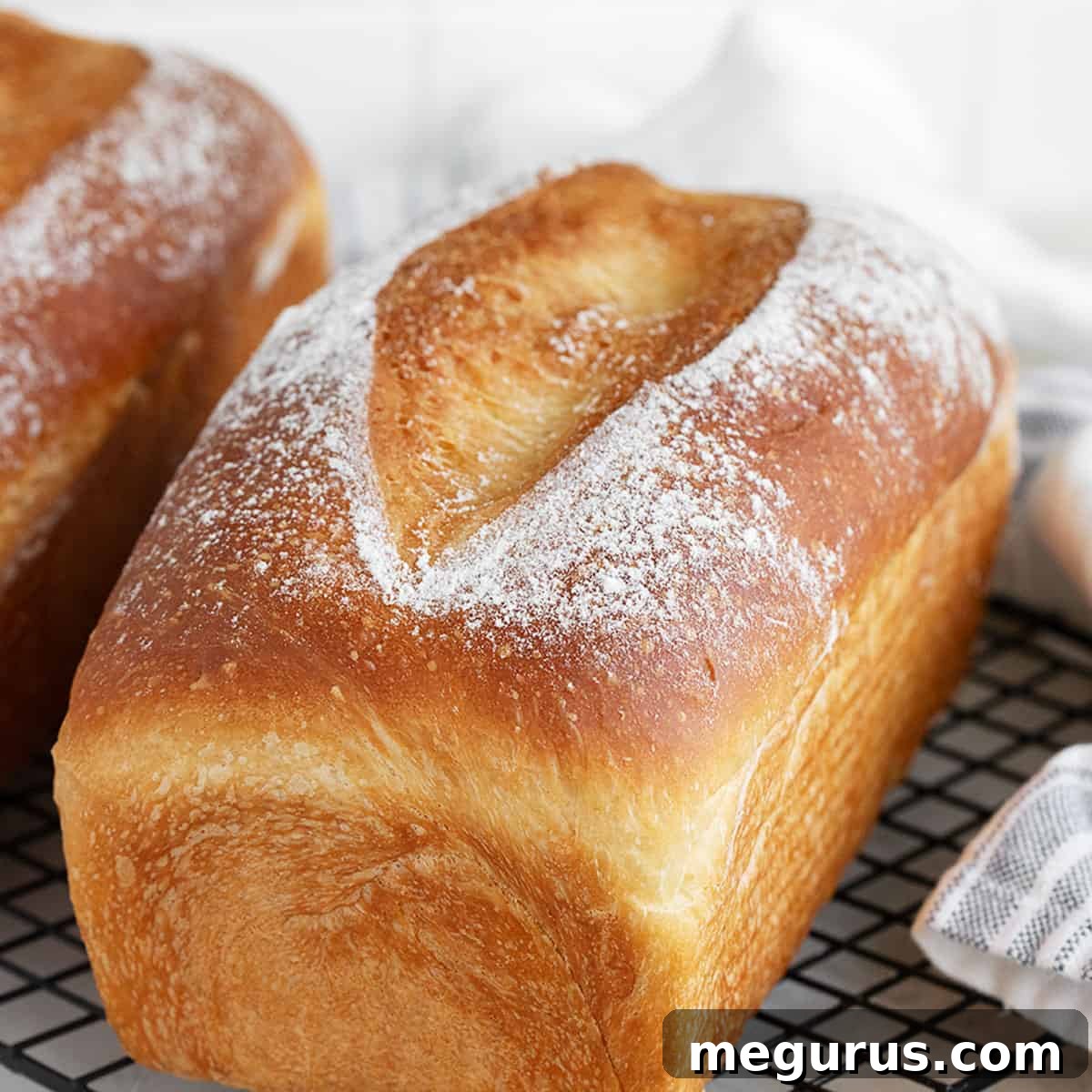
Easy Overnight Sandwich Bread: Your Secret to Fresh Homemade Bread Daily
Imagine waking up to the aroma of freshly baked bread without the morning rush. Our easy overnight sandwich bread recipe makes this dream a delicious reality. This revolutionary method allows you to mix the dough in a mere 15 minutes, then simply tuck it into your refrigerator to slowly develop its incredible flavor and texture. The next day – or even up to four days later – you can effortlessly shape your loaves, let them complete their final rise, and bake them to golden perfection. It’s homemade bread on your schedule, designed for ultimate convenience and unparalleled taste.
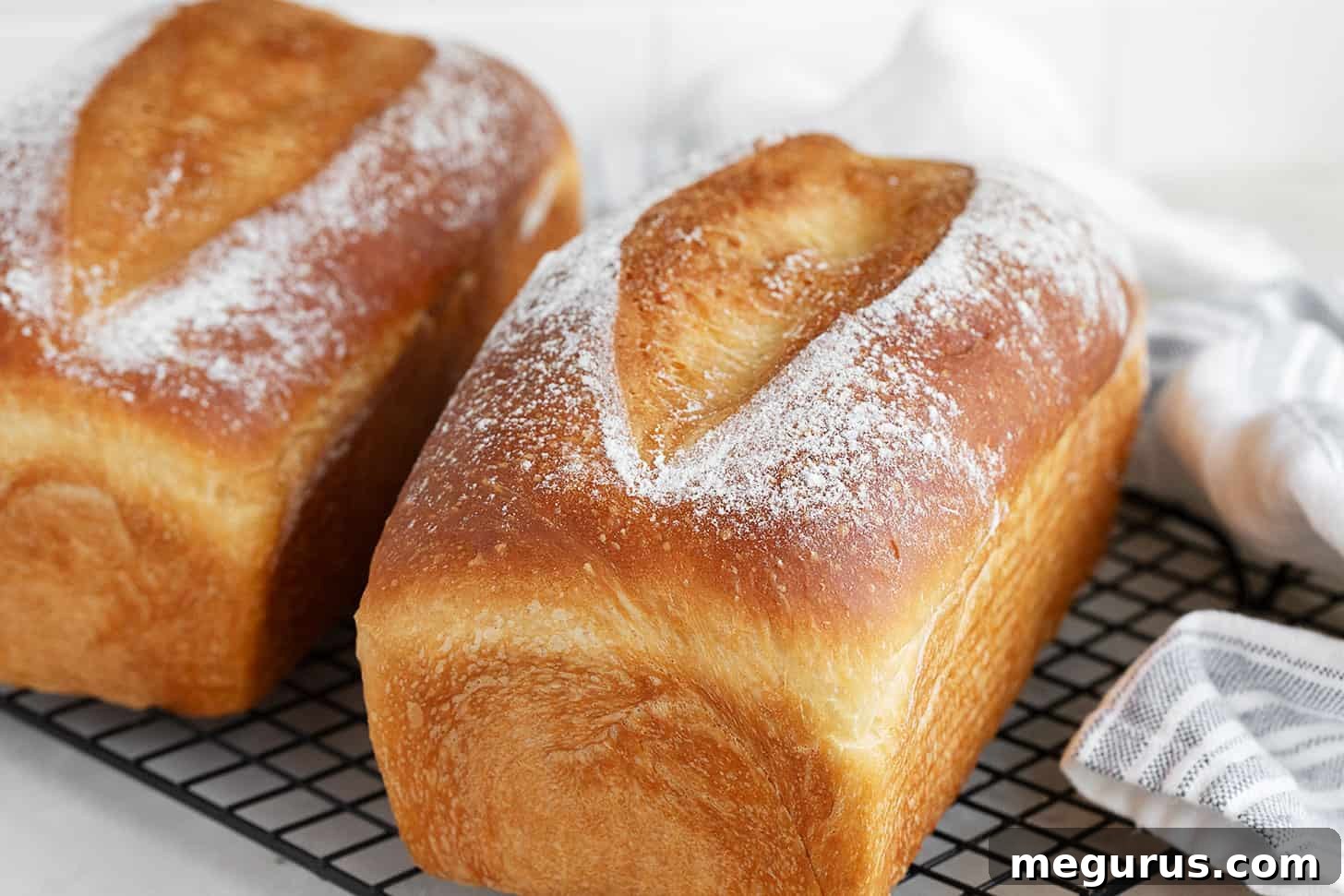
For many, the idea of baking fresh bread from scratch is often put off due to time constraints. Between kneading, multiple rises, and baking, traditional bread recipes can feel like a day-long commitment. This overnight sandwich bread recipe changes everything. It’s specifically crafted for busy lifestyles, ensuring that homemade goodness is always within reach. The dough’s long, slow fermentation in the cold environment of your fridge contributes to a richer, more complex flavor profile and a superior texture, far beyond what quick-rise methods can achieve.
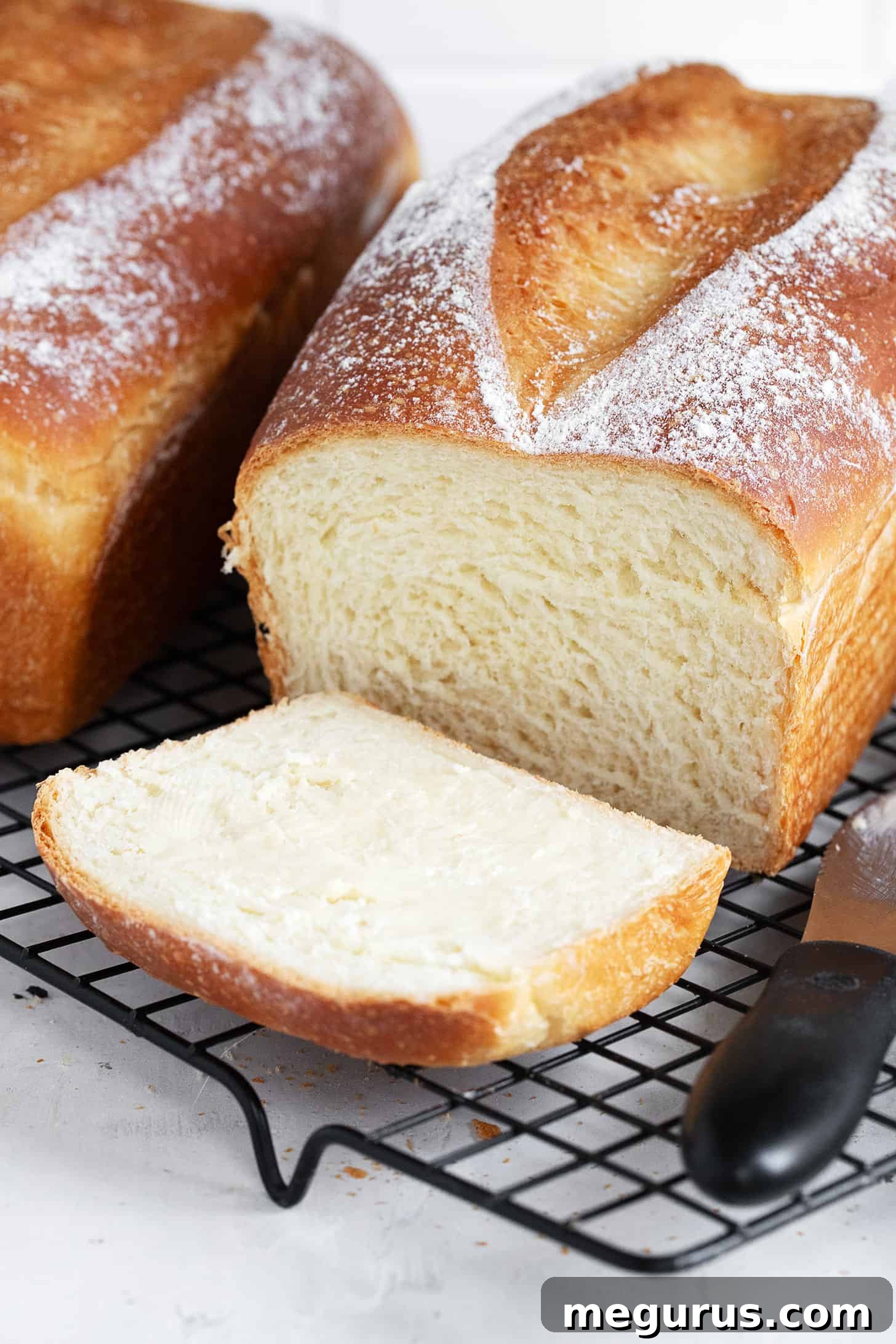
When you’re ready for warm, crusty bread, just retrieve the dough, shape it into loaves, and allow it to rise at room temperature for a few hours before baking. The result is a wonderfully soft and airy bread with a delightful crust, perfect for sandwiches, toast, or simply enjoyed with a pat of butter. This recipe delivers the satisfaction of artisanal bread with minimal active effort, making it a staple for any home baker.
Why You’ll Love This Make-Ahead Bread Recipe
- Unbeatable Convenience: Mix the dough in just 15 minutes, then let the refrigerator do most of the work. Bake when it suits your schedule, not the other way around.
- Flexible Baking Window: The dough can happily chill in your fridge for up to four days, giving you ample flexibility to fit baking into your week.
- Superior Flavor & Texture: The extended cold fermentation enhances the bread’s depth of flavor and results in an incredibly soft, tender crumb.
- Freshness on Demand: Enjoy warm, homemade bread whenever you crave it, transforming everyday meals into special occasions.
- Simple & Accessible: Whether you’re a seasoned baker or new to the craft, the straightforward steps ensure success with every loaf.
- Versatile Use: Perfect for everyday sandwiches, toast, or as an accompaniment to any meal.
Essential Ingredients for Perfect Overnight Sandwich Bread
Crafting exceptional bread begins with understanding your ingredients. While this recipe is forgiving, selecting quality components will elevate your final product. Here’s what you’ll need and why:
Bread Flour: The Foundation of Structure
I highly recommend using bread flour for this recipe, as it contains a higher protein content than all-purpose flour. This extra protein is crucial for developing strong gluten networks, which give your bread its characteristic chewy texture and structural integrity, allowing it to rise beautifully and hold its shape. Unbleached bread flour is often preferred for its natural qualities, but bleached bread flour works perfectly well too. If you only have all-purpose flour on hand, it can be used in a pinch, but be aware that your dough might be a bit stickier, potentially requiring a touch more flour during shaping, and the final texture might be slightly less robust.
Instant Yeast: The Quick Starter
My go-to choice for bread making is Instant yeast, specifically varieties like SAF Red Instant Yeast. Its fine granules mean it can be added directly to the dry ingredients without prior proofing in liquid, saving you a step and ensuring consistent results. I purchase it in larger quantities and store it in an airtight jar in my freezer, where it retains its potency for an extended period. This convenience and longevity make instant yeast an invaluable tool for regular bakers.
If you have Active Dry yeast instead, you’ll need to activate it before adding it to your dry ingredients. Simply dissolve it in the lukewarm milk (around 95°F / 35°C) with a pinch of sugar, and let it sit for about 10 minutes until foamy. This indicates the yeast is alive and ready to work. Never add active dry yeast directly to the flour mixture.
Salt: Flavor and Control
Salt isn’t just for flavor; it plays a critical role in controlling yeast activity and strengthening the gluten structure. Too little salt and your bread will taste bland and potentially overproof; too much, and the yeast activity will be inhibited. Precision is key here.
White Granulated Sugar: Sweetness and Browning
A small amount of white granulated sugar provides food for the yeast, helping with fermentation, and contributes to the lovely golden-brown crust and a hint of sweetness in the finished bread.
Lukewarm Milk: Richness and Tenderness
Using lukewarm milk (around 95°F / 35°C) instead of water adds richness to the dough, resulting in a softer crumb and enhanced flavor. The temperature is crucial for activating the yeast without killing it. Dairy-free milk alternatives can often be substituted if needed.
Vegetable Oil (or Melted Butter): Moisture and Texture
Vegetable oil or melted butter contributes moisture and tenderness to the bread, making it soft and pliable. It also helps to keep the bread fresh for longer. Choose a neutral-flavored oil like canola or sunflower, or enjoy the rich flavor of butter.
Large Egg: Enrichment and Color
A single large egg enriches the dough, lending a finer crumb structure, a slight yellow hue, and additional protein for strength and tenderness.
Equipment You’ll Need
- Stand mixer with paddle and dough hook attachments (or a large mixing bowl for hand mixing)
- Large bowl for first rise
- Plastic wrap
- Two 8.5 x 4.5 inch loaf pans (or similar size)
- Kitchen scale (highly recommended for precision)
- Measuring cups and spoons
- Sharp paring knife (for slashing, optional)
- Cooling rack
Step-by-Step: How to Make Easy Overnight Sandwich Bread
This recipe can be made using either a stand mixer for ease or by hand for a more tactile experience. The following instructions detail the stand mixer method, with notes for hand mixing included where appropriate. Always pay attention to dough consistency rather than strict timings, as environmental factors can vary.
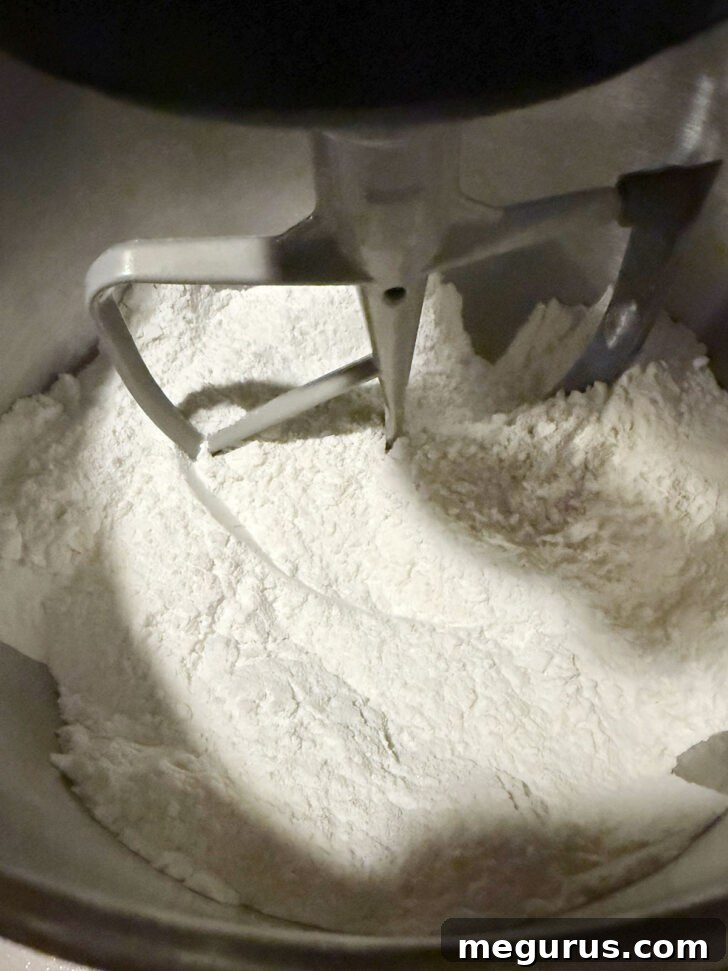
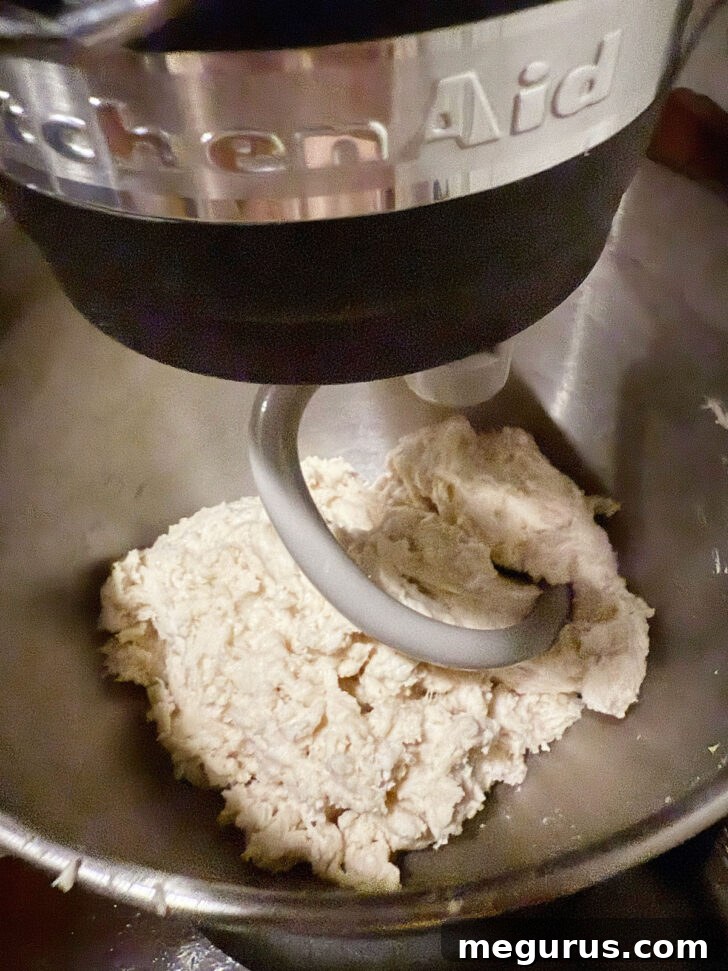
- Combine Dry Ingredients: In the bowl of a stand mixer fitted with the paddle attachment, add the bread flour, instant yeast, granulated sugar, and salt. Mix briefly on low speed until just combined. If using Active Dry yeast, ensure it has been proofed in the lukewarm milk first (see ingredient notes).
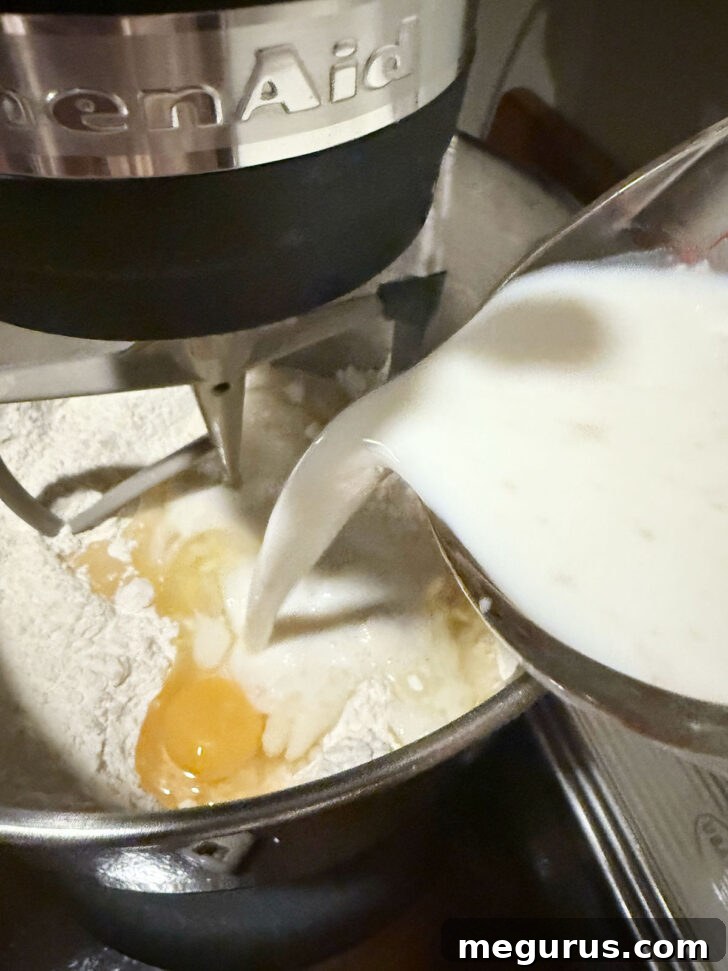
- Add Wet Ingredients: Pour in the lukewarm milk, vegetable oil (or melted butter), and the beaten egg to the flour mixture. Mix with the paddle attachment on the lowest speed for about 2 minutes, until a shaggy dough forms and most of the flour is incorporated.
- Switch to Kneading Hook: Remove the paddle attachment and scrape down any dough from the paddle and the sides of the bowl. Attach the dough hook to your stand mixer.
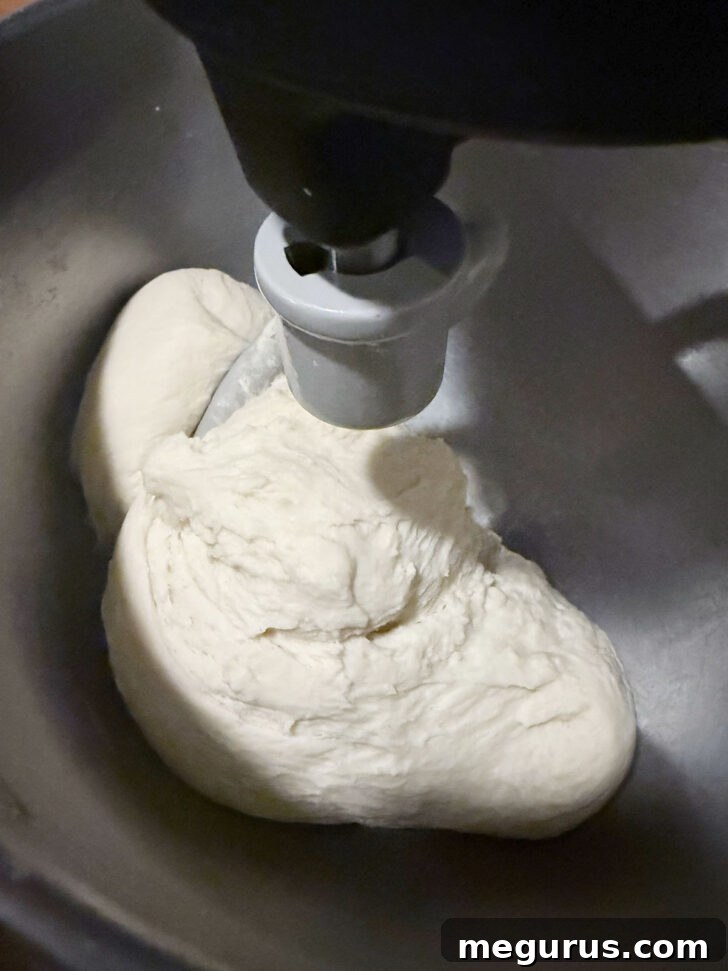
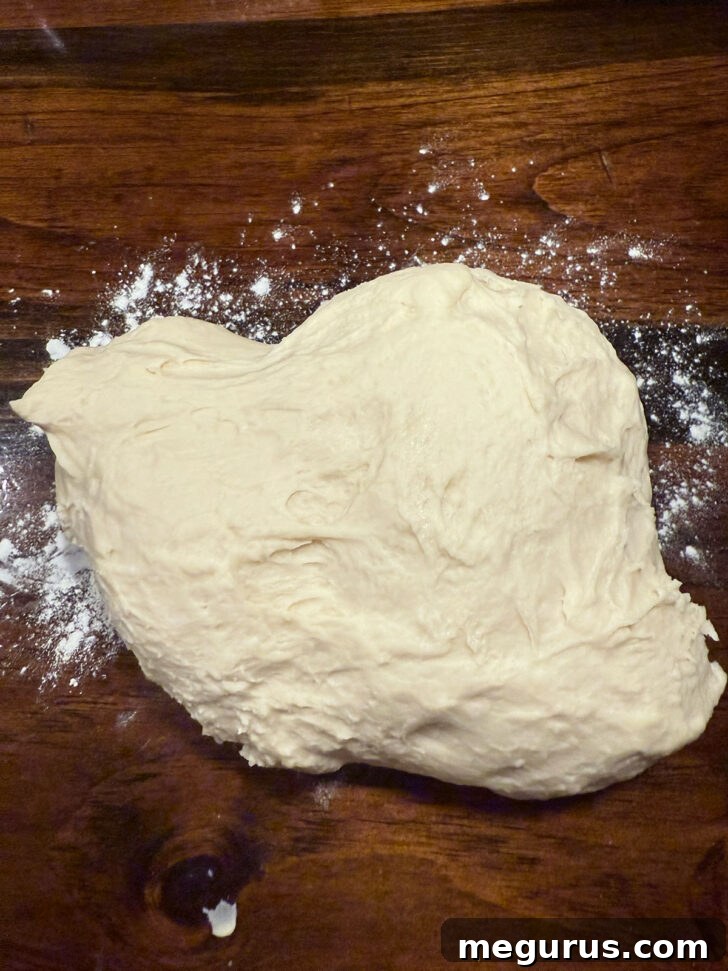
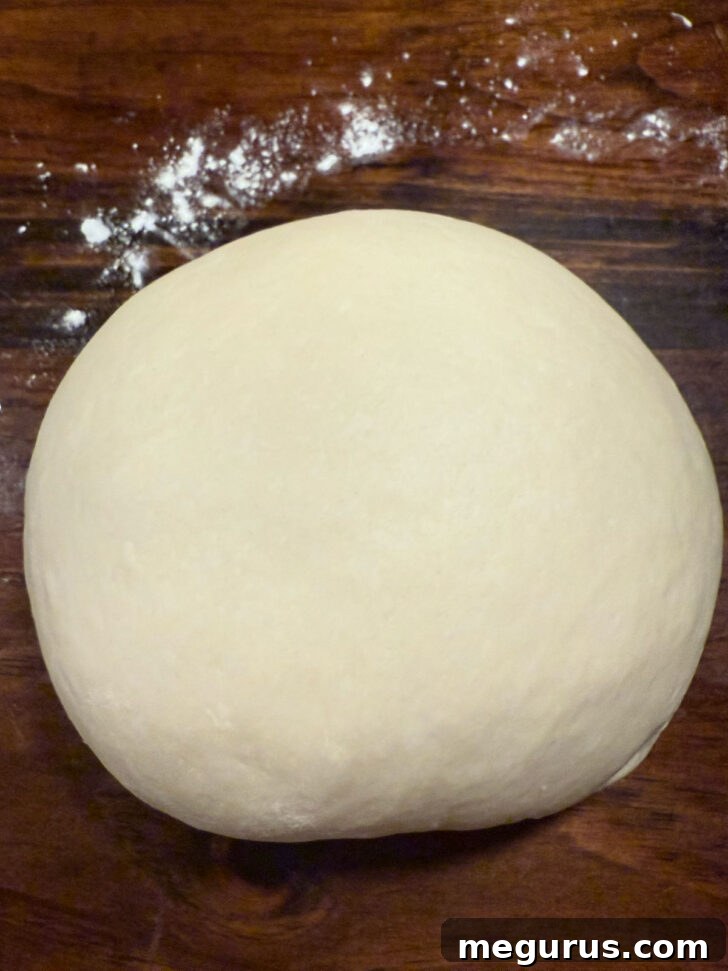
- Knead the Dough: Knead the dough with the dough hook on medium-low speed (e.g., Speed 2 on a KitchenAid) for 4 to 5 minutes. The dough should begin to pull away from the sides of the bowl, cleaning it, and feel soft and slightly tacky, but not overly sticky. Resist the urge to add more flour at this stage, even if it seems a little sticky in the bowl.
- Brief Hand Knead: Transfer the dough to a lightly floured work surface. Knead by hand for just 1 minute. Only add a minimal amount of additional flour if the dough is significantly sticking to your hands or the counter. The dough should feel smooth and moist.
- Form a Ball: Shape the dough into a smooth, round ball.
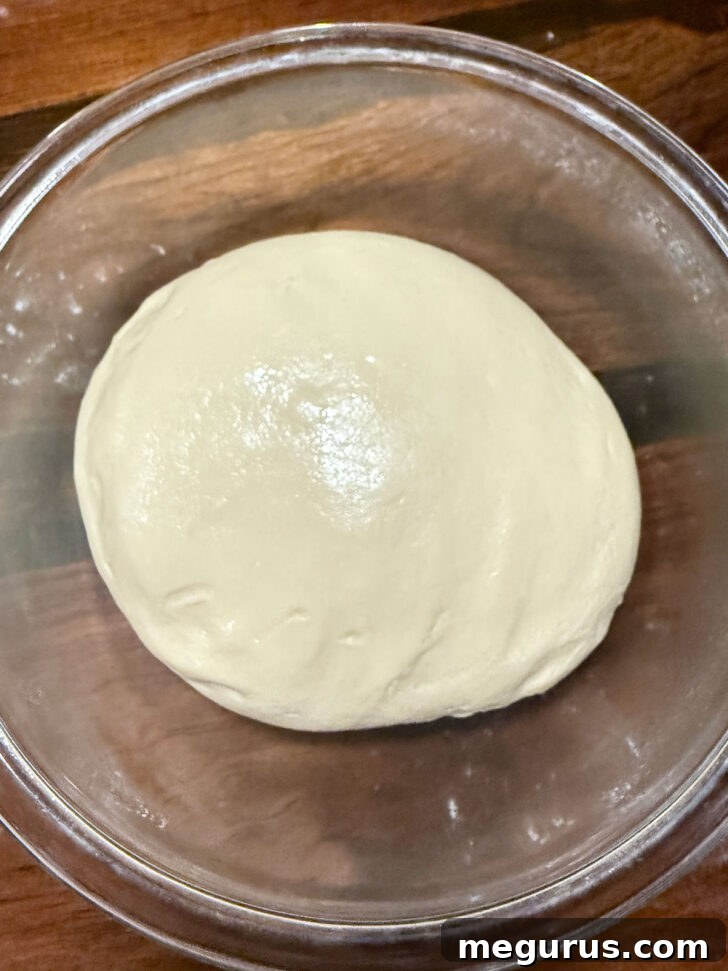
- First Rise (Cold Fermentation): Lightly grease a large bowl with cooking spray or a little oil. Place the dough ball into the bowl, smooth side down, then flip it over so the smooth top is now lightly coated in oil. This prevents drying. Cover the bowl tightly with plastic wrap to create an airtight seal and immediately transfer it to the refrigerator. Allow the dough to cold proof for at least 12 hours, or up to 4 days. This slow rise is key to developing flavor.
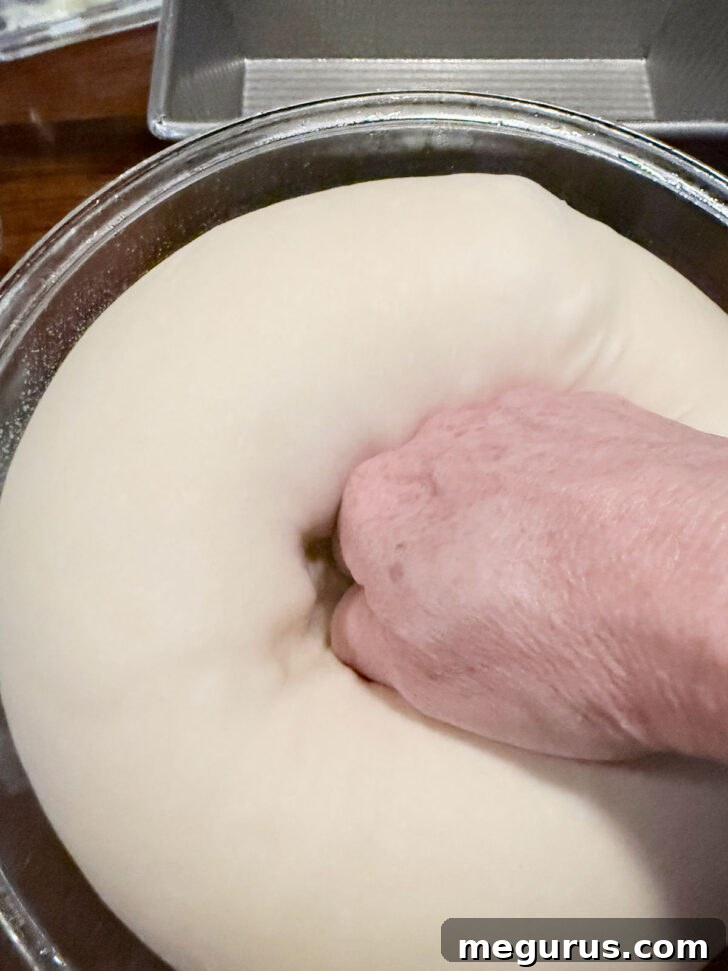
- Prepare for Shaping: When you’re ready to bake, remove the dough from the refrigerator. Gently deflate the dough by pressing out the air. The cold dough will be firmer and easier to handle.
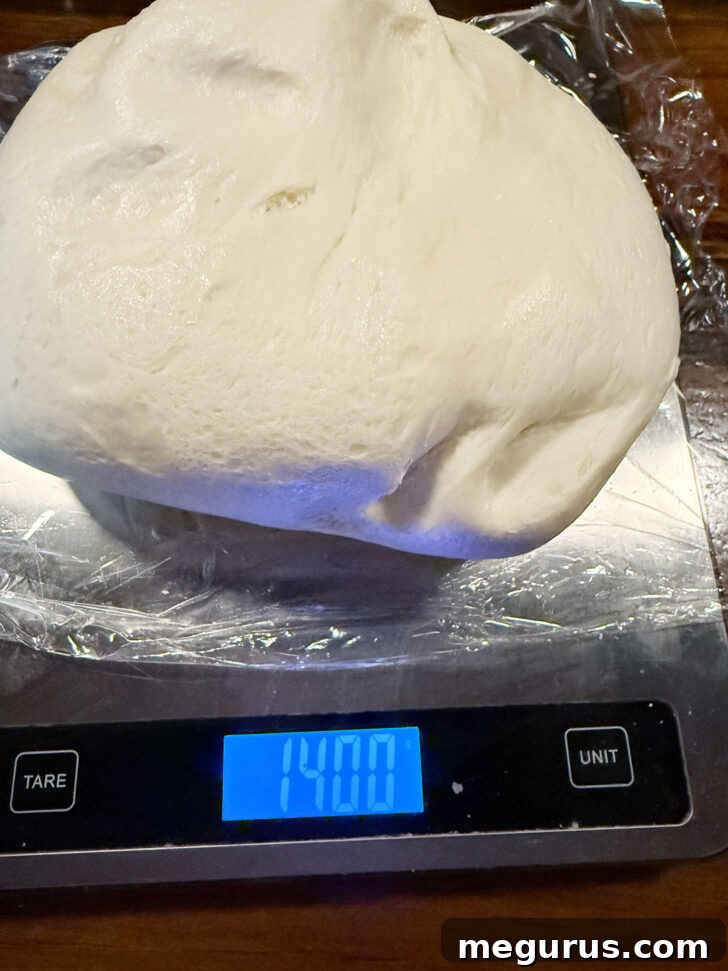
- Divide the Dough: Place the dough on a kitchen scale to measure its total weight. Typically, this recipe yields around 1400g of dough. Divide the dough evenly into two pieces (approximately 700g each). Shape each piece into a rough ball. If you don’t have a scale, do your best to visually divide it into two equal portions.
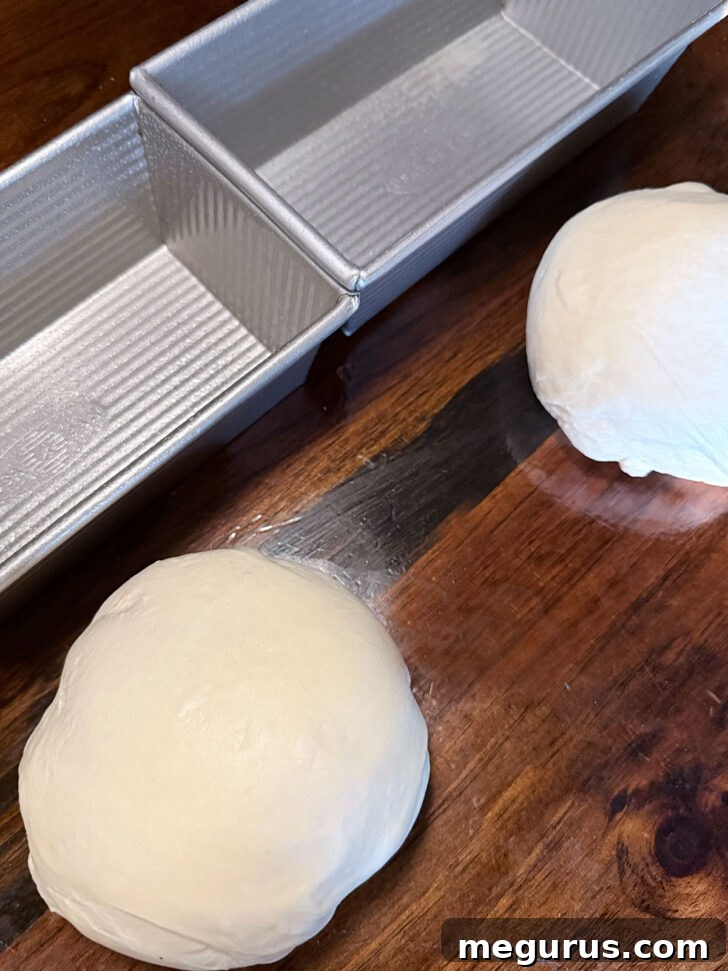
- Prepare Loaf Pans: Lightly grease two standard 8.5 x 4.5 inch loaf pans with cooking spray or butter.
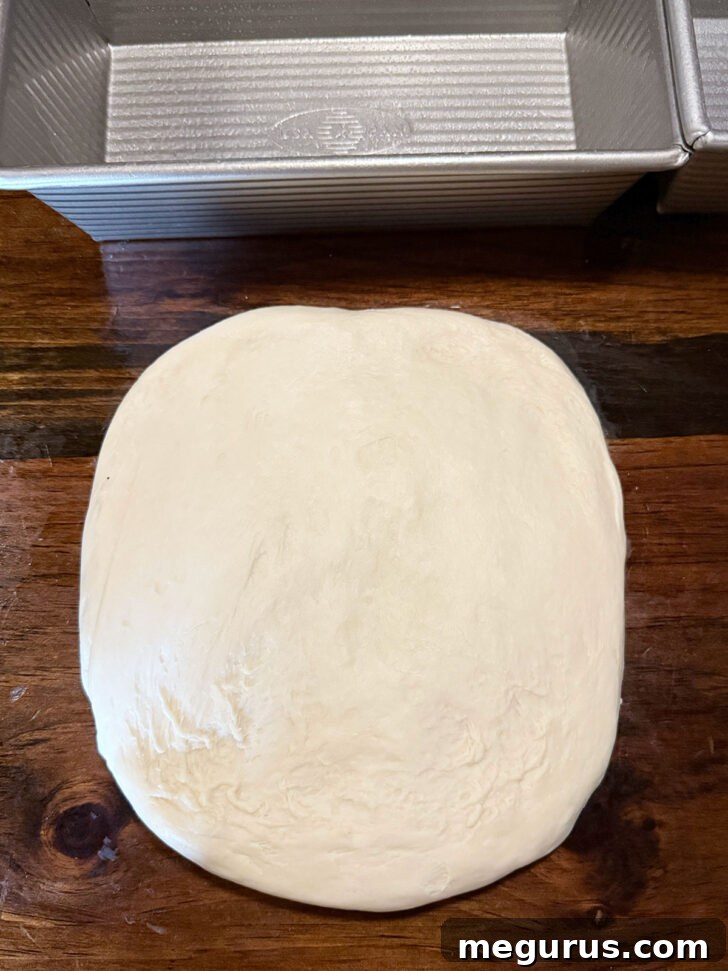
- Shape Each Loaf: Take one dough ball and flip it so the smooth side is facing down. Using the heel of your palm, gently press the cold dough out into a rough rectangle, approximately 6 inches wide and 8 inches long. The cold dough will be firm, making it easier to handle and shape.
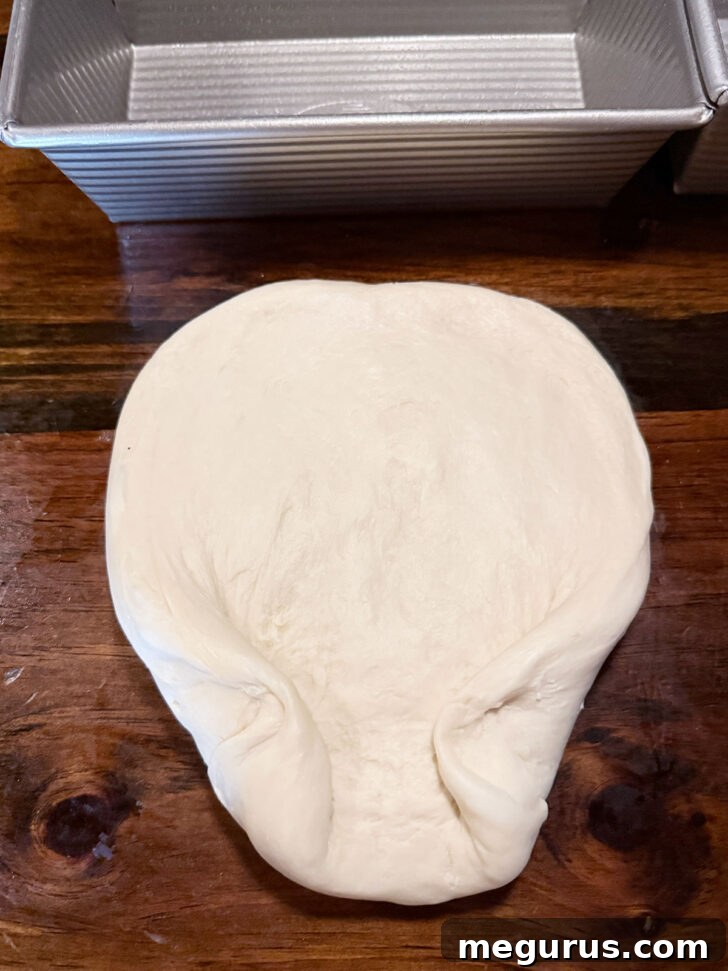
- First Fold: Fold the two corners of the rectangle closest to you inwards, about a quarter of the way towards the center. This creates a more uniform shape for rolling.
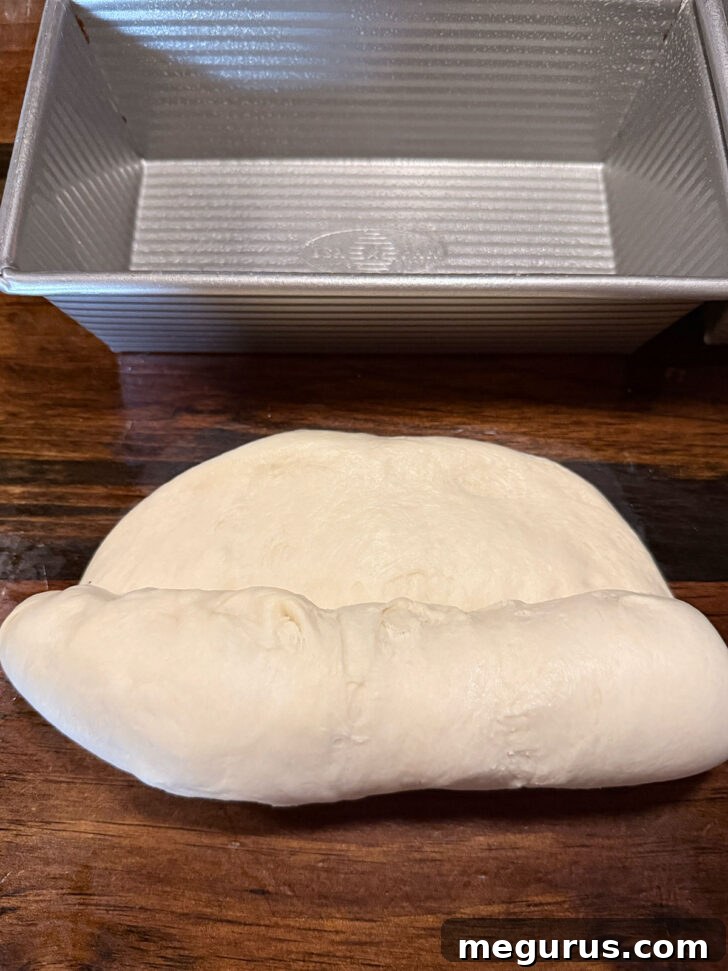
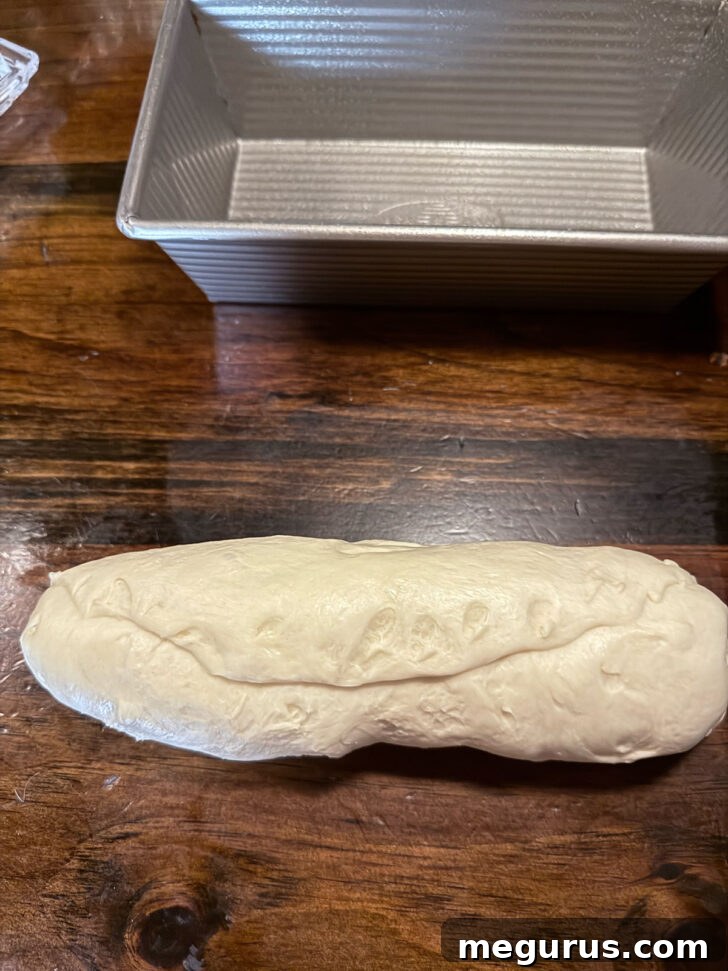
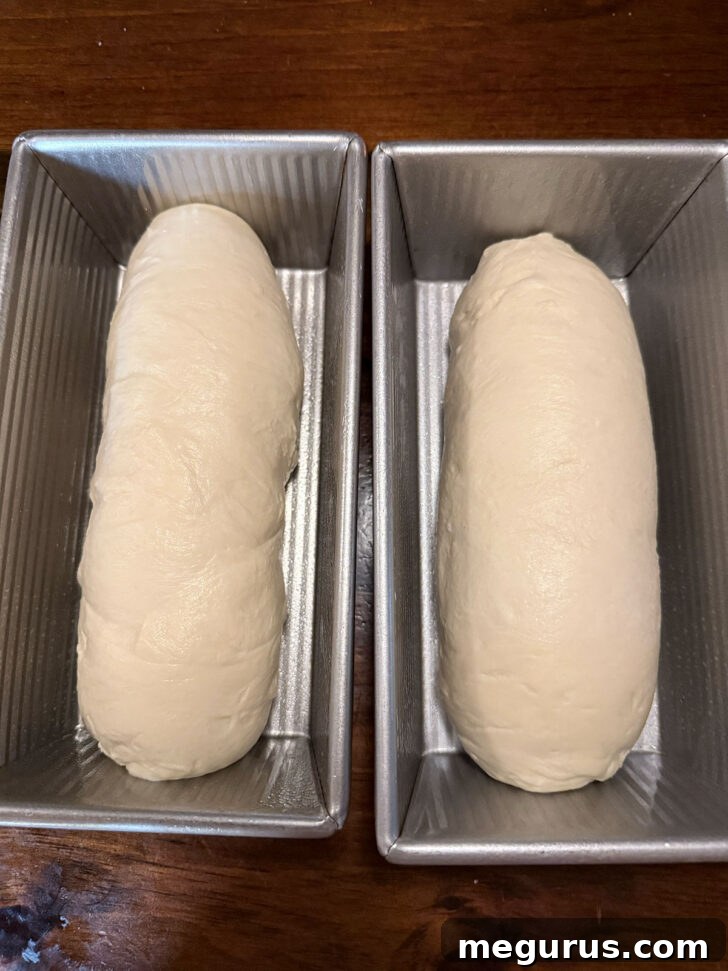
- Roll the Dough: Starting from the folded end, begin to roll the dough tightly upwards, jelly-roll style. With each roll, use your fingertips to press the base of the roll firmly into the surface, ensuring a tight spiral without air pockets. Continue until you reach the end of the rectangle.
- Seal the Loaf: Pinch together the seam firmly along the entire length of the roll. Also, pinch the ends together to create a sealed loaf. Your shaped dough should be roughly 8 inches long.
- Place in Pans: Carefully transfer the shaped dough, seam-side down, into one of the greased loaf pans. Repeat the shaping process with the second dough ball and place it in the other pan.
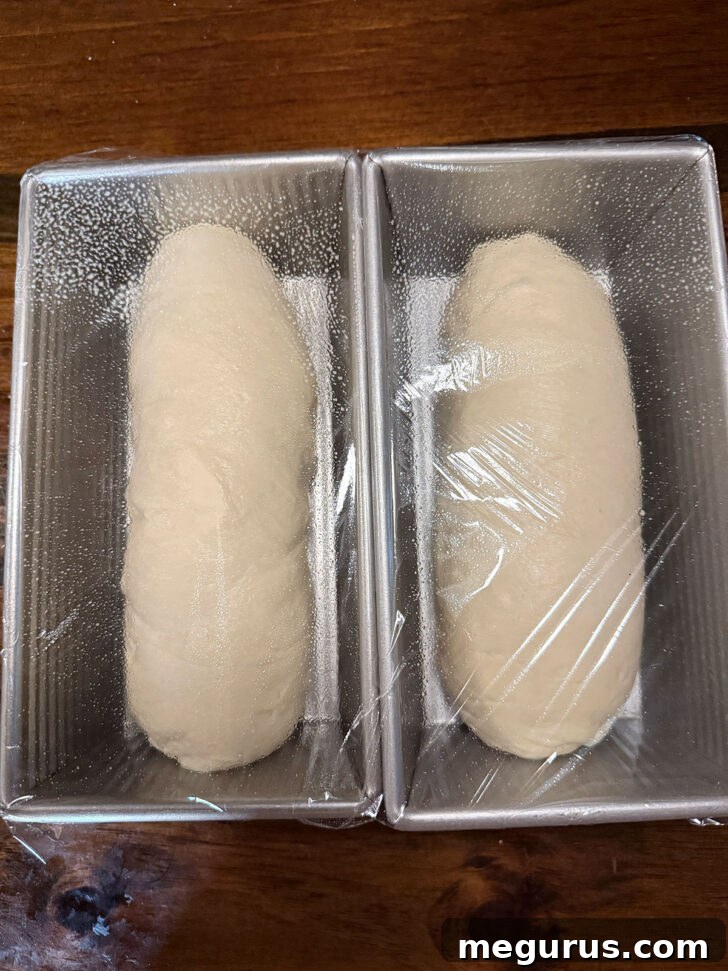
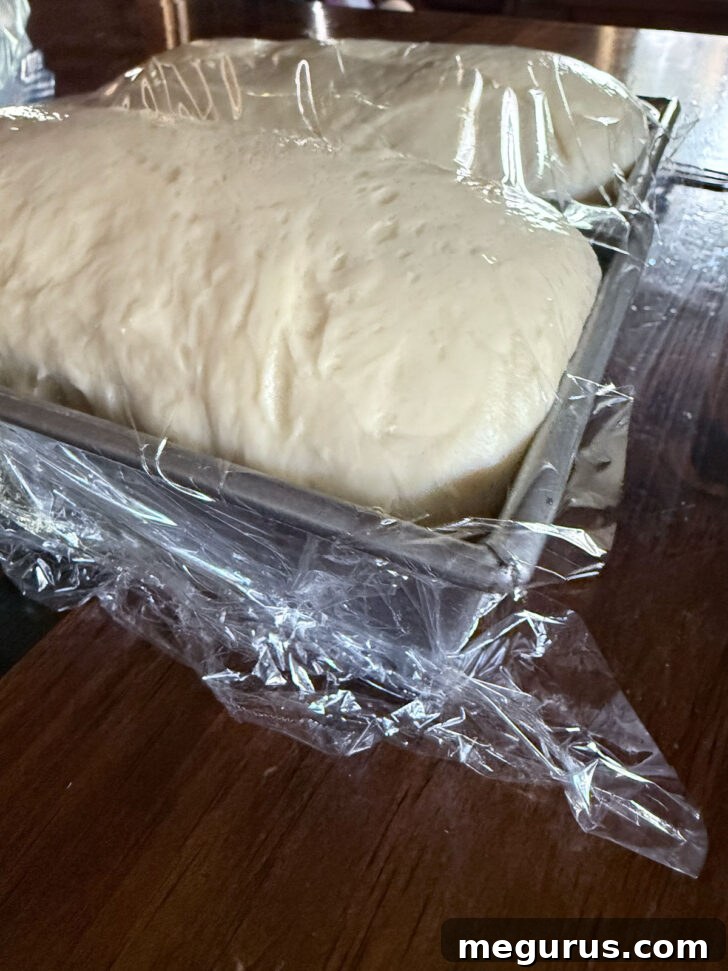
- Second Rise (Proofing): Lightly spray a large piece of plastic wrap with oil and place it loosely over the loaf pans, sprayed side down. This prevents the dough from sticking. Leave the pans at room temperature for the final rise. This stage can take anywhere from 2.5 to 4 hours, depending on the initial temperature of your dough (how cold it was from the fridge) and the ambient temperature of your kitchen. In a typical 72°F (22°C) kitchen, expect around 3.5 hours.
- Check for Proper Rise: The dough is ready to bake when it has risen significantly, filling the pan and cresting about 1.5 to 2 inches above the rim. A gentle poke with a floured finger should leave a slight indentation that slowly springs back.
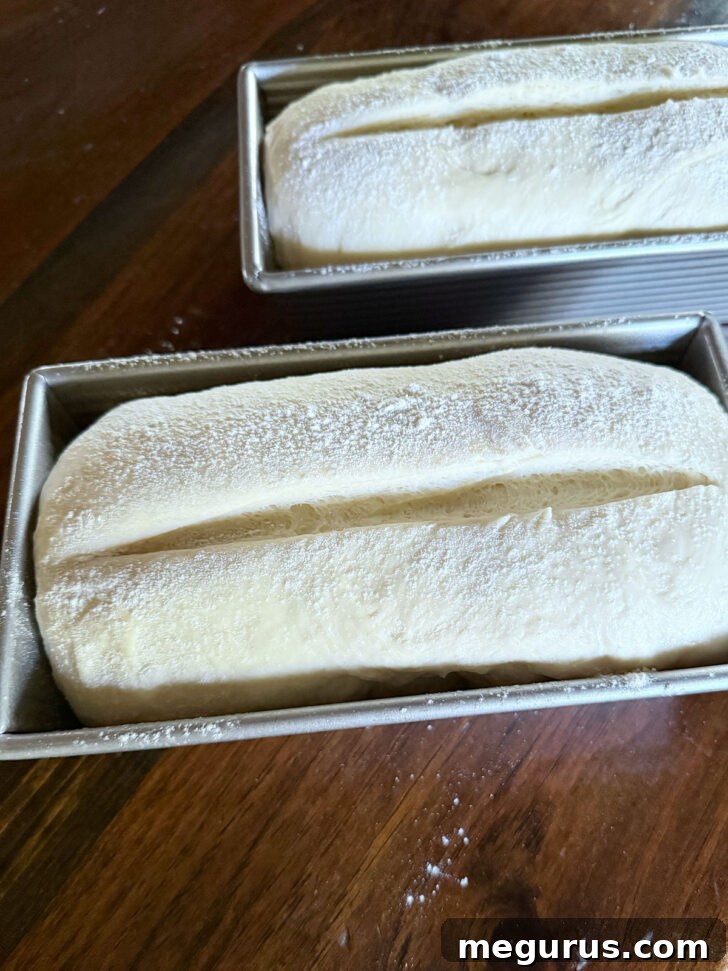
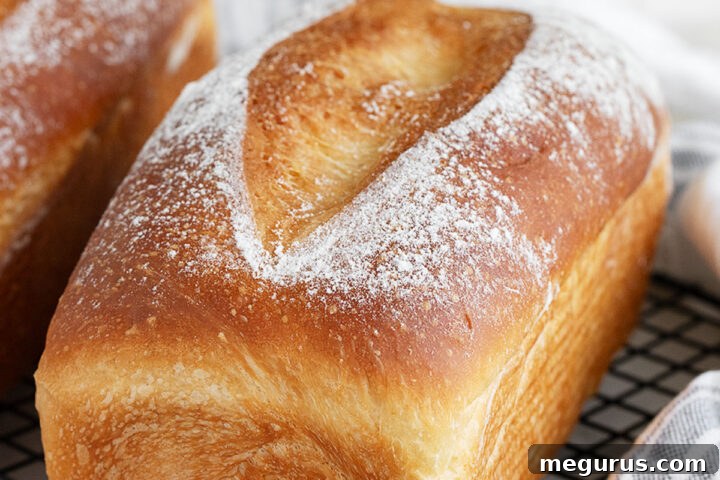
- Preheat Oven & Score (Optional): About 20 minutes before baking, preheat your oven to 350°F (175°C) for a non-convection oven. If desired, you can flour and slash the loaves for an artisanal look and to control oven spring. Lightly dust the tops with flour using a fine mesh strainer, then use a sharp paring knife or lame to make one swift, confident slash across the top of each loaf. Avoid slow cuts, which can cause the dough to stick and tear unevenly.
- Bake the Bread: Place the loaf pans in the preheated oven. Bake for 20 minutes, then rotate the pans 180 degrees (front to back) and switch their positions (left to right) for even baking. Continue baking for another 20-25 minutes, or until the loaves are deeply golden brown and reach an internal temperature of at least 185°F (85°C) when measured with an instant-read thermometer.
- Cool Completely: As soon as the loaves are done, remove them from the oven and immediately take them out of their pans. Transfer them to a wire cooling rack to cool for at least 1 hour before slicing. Slicing hot bread can result in a gummy texture.
Expert Tips for Bread Baking Success
- Precision with a Kitchen Scale: For the most consistent and best results, invest in a kitchen scale. Weighing ingredients, especially flour, is far more accurate than using volume measurements, leading to perfect dough every time. A scale also helps in dividing dough evenly for uniform loaves.
- Mastering Rise Time: The final rise (proofing) time is highly variable. Factors like your refrigerator’s temperature (affecting dough initial temperature) and your kitchen’s ambient temperature play a big role. Plan for approximately 3 to 3.5 hours for the rise, plus 40-45 minutes for baking. Add another hour for cooling. If you want to eat the bread at a specific time, calculate backwards: remove dough from fridge about 4 to 4.5 hours before desired serving time.
- The Art of Slashing: If you choose to score your loaves, use a very sharp paring knife or a bread lame. Make one quick, decisive slash across the top. Hesitation or slow cuts can cause the dough to drag and create jagged edges, impacting the final aesthetic and rise.
- Patience During Cooling: It’s tempting to slice into a warm, fragrant loaf, but resist! Allowing the bread to cool for at least an hour on a wire rack is crucial. This cooling period allows the internal structure to set, preventing a gummy texture and ensuring a clean slice.
- Make Two Loaves or Freeze for Later: This recipe yields two generously sized loaves. While you could halve the recipe, homemade bread freezes exceptionally well. Enjoy one loaf fresh and freeze the second for a future treat. Alternatively, you can divide the cold dough and bake one loaf, returning the other half to a covered bowl in the refrigerator for baking within the next few days.
- Adjusting to Larger Pans: If you only have larger 9×5-inch loaf pans, you can still use this recipe. Shape one larger loaf (around 900g of dough) and use the remaining dough to create delicious dinner rolls or hamburger buns.
Creative Variations: Making Rolls or Buns with This Dough
The versatility of this overnight dough extends beyond just sandwich loaves! You can easily transform it into delightful dinner rolls, hamburger buns, or hot dog buns. After the initial cold fermentation, simply remove the dough from the refrigerator, gently deflate it, and divide it into smaller portions:
- For standard dinner rolls, aim for roughly 55g (about 2 ounces) per portion.
- For larger hamburger or hot dog buns, divide into approximately 85g (about 3 ounces) portions.
Shape each portion into a tight ball or oblong shape for buns. Place them on a baking sheet lined with parchment paper, leaving enough space between each for expansion. Cover loosely with oiled plastic wrap and let them rise at room temperature until doubled in size (this will be quicker than loaf proofing, usually 1-1.5 hours). For a golden, glossy finish, brush them with an egg wash (one egg beaten with a tablespoon of water) before baking. Bake in a preheated oven at 400°F (200°C) for 12-18 minutes, or until golden brown and cooked through.
Storing Your Homemade Bread
Proper storage is essential to maintain the freshness and texture of your homemade overnight sandwich bread:
- Room Temperature: Once your loaves have completely cooled, store them in an airtight plastic bag or container at room temperature for up to 3 days. This helps keep the crust soft and the interior moist.
- Freezing for Longer Storage: For extended storage, homemade bread freezes beautifully. Once the bread is fully cooled, wrap each loaf tightly in plastic wrap, followed by a layer of aluminum foil, or place in a freezer-safe bag. Freeze for up to 3 months. You can also pre-slice the loaf before freezing, then simply pull out individual slices as needed for toast.
- Thawing: To thaw a frozen loaf, simply remove it from the freezer and let it come to room temperature while still in its wrapping. This helps to maintain moisture. For a “freshly baked” experience, you can gently warm the thawed loaf in a low oven (300°F/150°C) for 10-15 minutes.
Overnight Sandwich Bread
This overnight sandwich bread rises in the refrigerator after mixing. Shape, rise, and bake the bread anytime the next day (or within four days), providing ultimate flexibility for fresh homemade bread.
Pin This
Prep Time: 30 mins
Cook Time: 40 mins
Refrigeration Rising Time: 12+ hrs
Total Time: 13 hrs 10 mins (includes minimum refrigeration and cooling)
Yield: 24 servings (2 large loaves)
Ingredients
- 6 1/4 cups (794 g) bread flour, spooned and leveled
- 1 Tablespoon (9 g) Instant yeast
- 2 teaspoons (14 g) salt
- 5 1/2 Tablespoons (78 g) white granulated sugar
- 1 3/4 cups (425 g) lukewarm milk, about 95°F (35°C)
- 6 Tablespoons (85 g) vegetable oil, or melted butter
- 1 large egg
Equipment
- 2 standard 8 1/2 x 4 1/2 inch loaf pans
- Stand mixer (optional, can mix by hand)
- Kitchen scale (highly recommended)
Instructions
- This bread can be made by hand or with a stand mixer. If making by hand, mix the dough in a bowl with a sturdy spoon for about 2 minutes, then transfer to a floured work surface and knead for about 5 minutes, adding additional flour only if the dough is sticking excessively.
- Place the bowl of a stand mixer on a scale and weigh out the flour, instant yeast, salt, and sugar into the bowl. Attach the paddle attachment and mix briefly on low speed to combine.
- Warm the milk to lukewarm (around 95°F/35°C) and add it to the dry mixture along with the oil and egg. Mix with the paddle attachment on the lowest speed for about 2 minutes, until a shaggy dough forms. Scrape down the bowl and the paddle. Remove the paddle and attach the kneading hook.
- Knead the dough with the dough hook on medium-low speed (e.g., Speed 2 on a KitchenAid) for about 5 minutes. The dough should clean the sides of the bowl and be soft and slightly tacky, but not sticky. Do not add more flour to the bowl.
- Remove the dough to a lightly floured work surface. Knead by hand for about 1 minute, adding minimal flour only if necessary to prevent sticking. Shape the dough into a smooth ball.
- Lightly grease a large bowl with cooking spray. Place the dough ball into the greased bowl, smooth side down, then flip it over so the smooth side is up and coated in oil. Cover the bowl tightly with plastic wrap and immediately place it into the refrigerator.
- Refrigerate the dough for at least 12 hours or up to 4 days.
- When ready to bake, remove the dough from the refrigerator. Gently deflate the dough and place it on a kitchen scale to determine its total weight (typically around 1400g). Divide the dough into two equal pieces (around 700g each). Form each piece into a rough ball.
- Lightly grease two 8 1/2 x 4 1/2 inch loaf pans with cooking spray.
- Take one dough ball and flip it so the smooth side is down. Using the heel of your palm, press the dough into a rough rectangle, about 6 inches wide by 8 inches long.
- Fold the two corners closest to you in about 1/4 of the way. Then, starting from the folded end, tightly roll the dough up, jelly-roll style. With each roll, use your fingertips to press the bottom of the roll into the base to ensure a tight loaf.
- Once rolled, firmly pinch together the seam along the bottom, and pinch the ends closed as well. The dough roll should be approximately 8 inches long. Place it seam-side down into one of the prepared loaf pans. Repeat with the second dough ball.
- Lightly spray a large piece of plastic wrap with oil and place it loosely over both loaf pans, oiled side down.
- Allow the dough to rise at room temperature until it fills the pans and crests about 1.5 to 2 inches above the rim. This can take 2.5 to 4 hours, depending on kitchen temperature and dough temperature.
- About 20 minutes before baking, preheat your oven to 350°F (175°C) (non-convection).
- If desired, lightly dust the tops of the loaves with flour using a fine mesh strainer, then use a sharp paring knife to make one swift, firm slash across the top of each loaf.
- Bake for 20 minutes, then rotate the pans front to back and left to right for even baking. Continue baking for another 20-25 minutes, or until the loaves are golden brown and reach an internal temperature of at least 185°F (85°C).
- Remove the loaves from the oven and immediately turn them out onto a wire cooling rack. Cool for at least 1 hour before slicing.
Notes
- Substituting All-Purpose Flour: All-purpose flour can be used, but bread flour is recommended for the best texture. You may need slightly more flour if using all-purpose.
- Using Active Dry Yeast: To use Active Dry yeast, add it to the lukewarm milk (around 95°F/35°C) and stir. Let stand for 10 minutes until foamy, then add this mixture to the dry ingredients when the milk addition is specified. Do not add Active Dry yeast directly to the flour.
- Making Rolls or Buns: Divide dough into approx. 55g portions for dinner rolls or 85g for hamburger/hot dog buns. Shape, rise until doubled, brush with egg wash, and bake at 400°F (200°C) for 12-18 minutes.
- Dough Storage: The prepared dough can be kept in the refrigerator for up to 4 days. You can bake off one loaf and return the remaining dough to a covered bowl in the refrigerator for baking later.
- Storage of Baked Bread: Store cooled bread in an airtight container or plastic bag at room temperature for up to 3 days. For longer storage, wrap well and freeze for up to 3 months. Thaw frozen loaves in their wrapping at room temperature.
Cuisine: American, Canadian
Course: Bread
Author: Jennifer Maloney
Nutrition Information (per serving, 1 of 24)
Calories: 172kcal, Carbohydrates: 27g, Protein: 5g, Fat: 5g, Saturated Fat: 1g, Polyunsaturated Fat: 2g, Monounsaturated Fat: 1g, Trans Fat: 0.02g, Cholesterol: 10mg, Sodium: 204mg, Potassium: 64mg, Fiber: 1g, Sugar: 4g, Vitamin A: 41IU, Calcium: 28mg, Iron: 0.3mg
Tried this recipe? If you enjoyed this recipe, please consider leaving a star rating and comment to help others discover it!
Adapted from a Peter Reinhart recipe.
More Delicious Sandwich Bread Recipes to Explore!