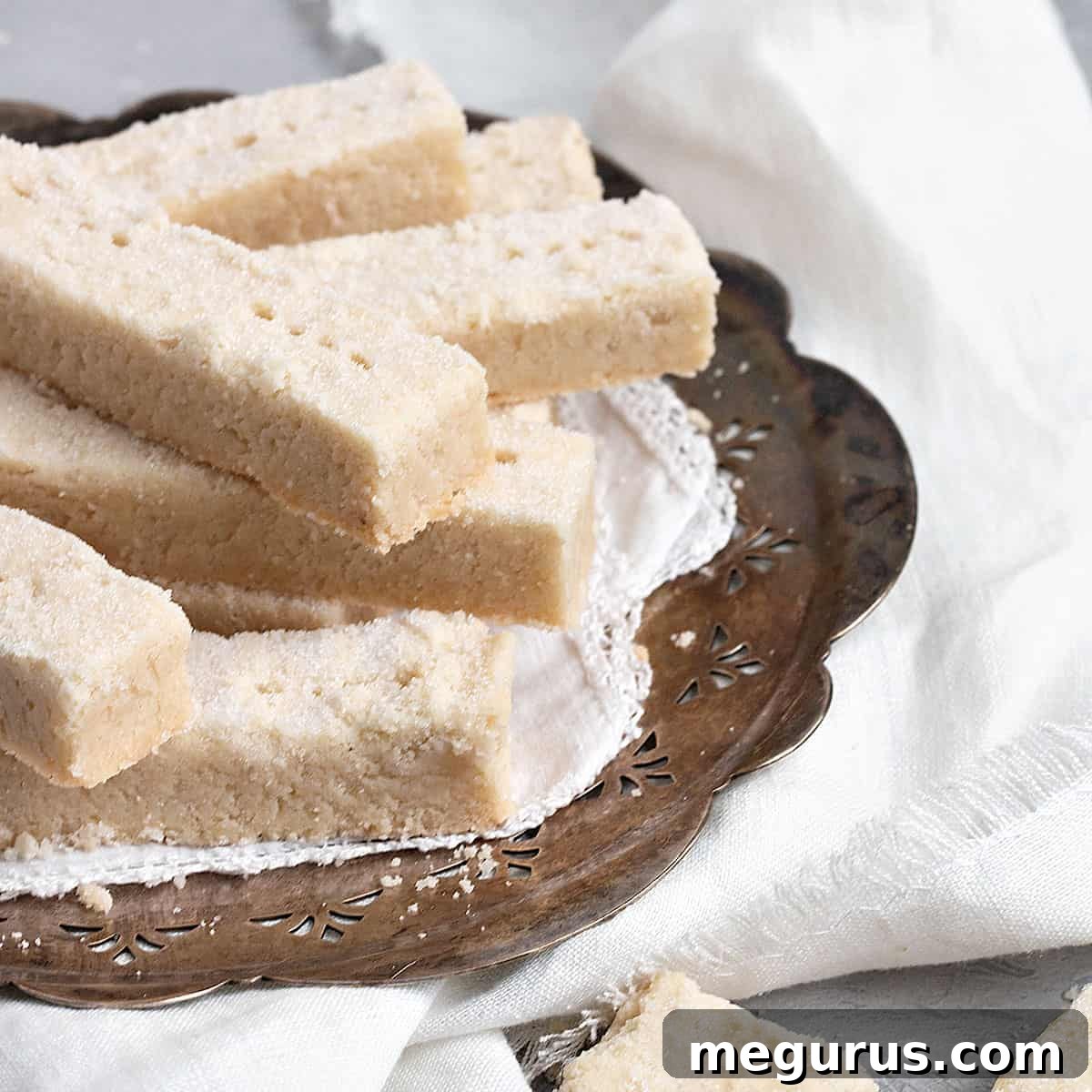
The Ultimate Guide to Perfectly Crispy Scottish Shortbread with Rice Flour
Delight in the exquisite taste and texture of truly authentic Scottish shortbread, a culinary masterpiece crafted with just four fundamental ingredients. This meticulously developed recipe incorporates a secret weapon – rice flour – to achieve an unparalleled crispness that sets it apart. The process is deceptively simple: mix the ingredients, press into your baking pan, and let our unique twice-baked method work its magic to deliver a consistently perfect texture every single time.
This celebrated Scottish Shortbread recipe earned the prestigious title of WINNER in the
Pancake Princess’ Best Shortbread Bake-Off!! A testament to its superior quality and irresistible charm.
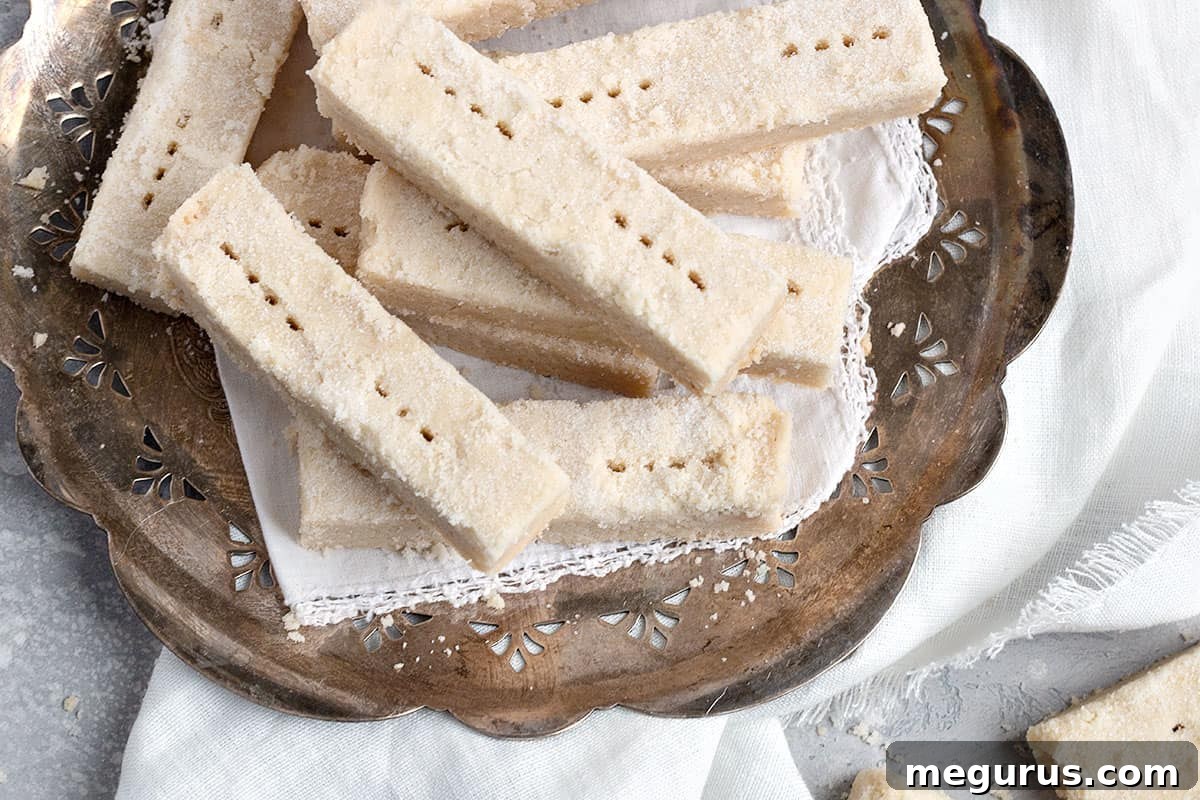
Scottish shortbread holds a cherished place in baking traditions, revered for its rich buttery flavor and distinct crumbly texture. This guide will walk you through the nuances of creating shortbread that not only honors its heritage but elevates it to new heights of crisp perfection. From selecting the finest ingredients to mastering the unique baking technique, you’re about to embark on a journey to bake shortbread that will earn rave reviews from everyone who tastes it.
Why This Scottish Shortbread Recipe is a Must-Try for Bakers
There are countless shortbread recipes available, but this particular method stands out for several compelling reasons, promising a baking experience that’s both rewarding and delicious:
- Unparalleled Texture: What truly distinguishes this traditional Scottish shortbread is its exquisite texture. The inclusion of rice flour creates a thick, satisfyingly crisp cookie with a signature sandy crumb that melts in your mouth. It strikes a perfect balance on the sweetness scale, making it an ideal companion for tea or coffee, or simply as a delightful treat on its own.
- Simplicity with a Secret Ingredient: This recipe calls for just four simple ingredients: all-purpose flour, white rice flour, high-quality butter, and granulated sugar. The addition of rice flour is undeniably the biggest game-changer. It’s the secret to achieving a delicate crispness and unique texture that regular flour or other substitutes simply cannot replicate.
- The Magic of Twice-Baked Perfection: Beyond the stellar ingredient list, we employ a unique twice-baked cooking method. This technique is crucial for developing the ideal tender-crisp finished texture, ensuring that each shortbread cookie is baked to absolute perfection, both inside and out. It’s a simple step that yields profound results.
- A Baker’s Dream: Perfect for Making Ahead: While these shortbread cookies are utterly delicious fresh from the oven, they possess a remarkable quality that makes them even better over time. Their flavor deepens and their texture becomes more refined with each passing day, making them an excellent choice for advance preparation for holidays, gifts, or simply to have on hand for unexpected cravings.
Unlocking the Secrets to Perfect Shortbread: Key Ingredients
The beauty of shortbread lies in its simplicity, making the quality of each ingredient paramount. Here’s a detailed look at what you’ll need and why specific choices make all the difference:
The Butter: Your Foundation for Flavor and Texture
When it comes to shortbread, the old adage “garbage in, garbage out” rings especially true for butter. Investing in the best butter you can find is not just a recommendation; it’s a non-negotiable step for truly exceptional shortbread. High-quality butter, especially those with a higher butterfat percentage (like European-style butter, often 82-84% butterfat), will yield a richer flavor and a superior, more tender texture. Brands like Kerrygold (82% b.f.) or Gay Lea’s Baker’s Gold (84% b.f.) are excellent choices if available. Avoid generic or value brands, as they often contain more water and less flavor, compromising the integrity of your shortbread. You can use either salted or unsalted butter, but unsalted is generally preferred as it allows you to control the salt content precisely. If you opt for unsalted butter, a small pinch of fine sea salt added to the dough will enhance all the other flavors.
The Game-Changer: Why Rice Flour is Essential
Rice flour is the unsung hero of this recipe, and I cannot stress enough its importance. It’s relatively easy to find in most grocery stores or bulk food outlets (like Bulk Barn in Canada). Look specifically for White Rice Flour – brands like Bob’s Red Mill or Clubhouse are common and reliable. It is crucial to avoid any rice flour labeled “glutinous” or “sweet rice flour,” as these are different products with varying properties due to their higher starch content and stickier nature, which will not achieve the desired crispy, sandy shortbread texture. Rice flour, being gluten-free, works differently than wheat flour; it absorbs moisture and creates a more delicate, short (meaning crumbly) texture that is incredibly distinctive and delicious. If, in a pinch, you absolutely cannot find white rice flour, you can substitute an equal amount of cornstarch (also known as cornflour in some regions). However, be aware that cornstarch will result in a slightly less crispy cookie with a different mouthfeel, so it should only be considered a last resort.
Flour and Sugar: The Supporting Stars
For the remaining core ingredients, your choices also play a subtle yet significant role.
All-Purpose Flour: I typically prefer regular bleached all-purpose flour for these cookies. It tends to produce a lighter-colored cookie, which is aesthetically pleasing and traditional for shortbread. However, unbleached all-purpose flour will also work perfectly fine, yielding a slightly darker hue without impacting the taste or texture negatively.
White Granulated Sugar: This recipe is designed for standard white granulated sugar. If you’re an experimental baker looking to fine-tune the texture even further, consider a blend: use 1/4 cup superfine white sugar (also known as caster sugar) and 1/4 cup regular white sugar, instead of 1/2 cup all regular sugar. Superfine sugar dissolves more readily and can contribute to an even more delicate, melt-in-your-mouth texture. I found using all superfine sugar made the shortbread a tad too sweet for my preference, but the half-and-half approach offers a wonderful compromise.
Step-by-Step Masterclass: Crafting Your Crispy Shortbread
Baking perfect shortbread is an exercise in precision and technique. Follow these detailed steps to ensure a flawless batch:
Preparing Your Workspace and Ingredients
- Begin by preheating your oven to 350°F (175°C) using the regular bake setting (not fan-assisted), with an oven rack positioned in the center. Line an 8-inch square metal baking pan with parchment paper, allowing an inch or two of overhang on the sides. This overhang will serve as convenient handles later for removing the shortbread.
Mixing for That Signature Sandy Dough
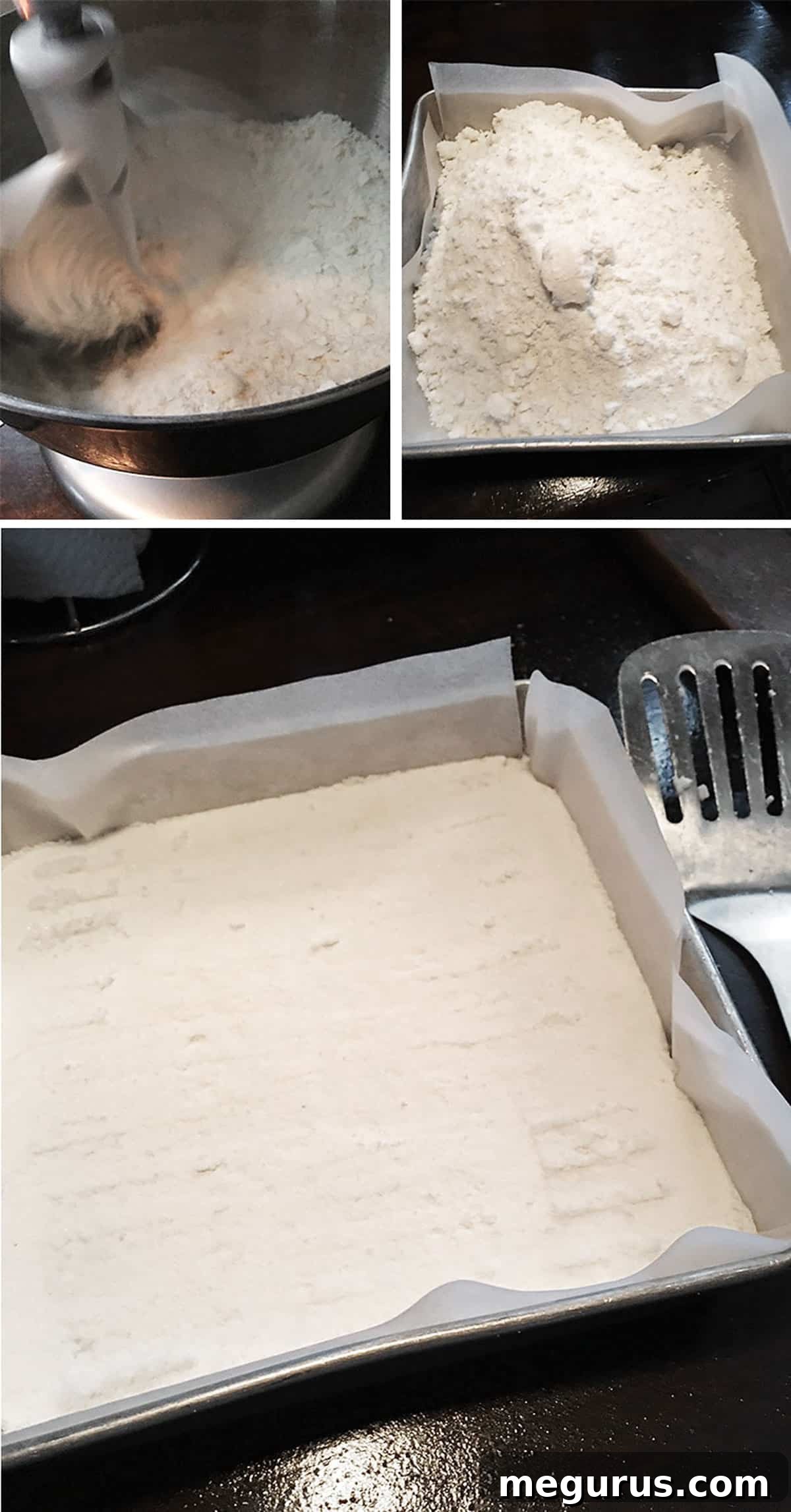
- In a large mixing bowl, either with an electric mixer or a stand mixer fitted with a paddle attachment, combine the all-purpose flour, rice flour, and sugar. If using unsalted butter, now is the time to add the pinch of fine sea salt (omit if your butter is salted). Add the cold butter, cut into approximately 16 pieces, and mix on low speed. Continue mixing for several minutes until the butter is thoroughly incorporated and broken down into small, even-sized pieces, resembling coarse sand. It’s important not to expect a cohesive dough at this stage; it will appear loose and sandy. However, if you grab a small handful and squeeze it, it should clump together. If your butter has a higher moisture content, your mixture might feel slightly more moist than described, but as long as it’s not sticky, it’s fine.
- Troubleshooting Dough Texture: If your dough feels overly moist or sticky, it might be due to incorrect flour measurement. Always measure flour using the stir, spoon, and level method for accuracy. Gradually add a bit more all-purpose flour, a teaspoon at a time, mixing until the stickiness disappears and the dough forms a soft clump when squeezed. Conversely, if your dough is too dry and won’t clump at all, you’ve likely added too much flour. To remedy this, add a very small amount of cold water, half a teaspoon at a time, mixing gently until the dough reaches the desired clumping consistency.
The Art of Pressing and Pre-Baking
- Once your dough is properly mixed, dump the sandy mixture into your prepared baking pan. Using a kitchen spatula or the flat bottom of a measuring cup, press the mixture down very firmly and evenly into the pan. This compaction is essential for a dense, crisp shortbread. Ensure the top surface is as smooth and level as possible.
- Bake in the preheated oven for approximately 35 minutes. The shortbread should be set, but crucially, there should be no browning around the edges. If your dough was initially more moist, it might require an additional 5 minutes of baking, up to 40 minutes. Remove the pan from the oven, but do not turn off the oven yet! Allow the shortbread to stand in the pan for precisely 10 minutes. This brief resting period helps it firm up slightly before cutting.
- After the 10-minute rest, use a sharp knife to carefully and slowly cut the shortbread into 16 uniform pieces, typically 1-inch wide by 4-inches long. If desired, gently press the tines of a fork twice into each “stick” to create traditional shortbread prick marks, making sure to press through to the bottom of the pan.
The Crucial Twice-Baked Method for Unmatched Crispness
- Grab a clean baking sheet. Very carefully, using the parchment paper overhang as handles, lift the entire sheet of pre-cut shortbread out of the baking pan and transfer it to the baking sheet, keeping the parchment underneath. Gently slide the individual shortbread sticks apart, creating a small space between each piece. This separation allows for even air circulation and crisping during the final bake. If any shortbread sticks break during this process, simply press the pieces back together firmly; they will often mend beautifully during the final cooking stage.
- Return the baking sheet with the separated shortbread to the 350°F (175°C) oven, but here’s the critical step: IMMEDIATELY TURN THE OVEN OFF! Allow the shortbread to remain on the baking sheet in the still-warm, turned-off oven for 30 to 45 minutes. For a lightly crisp, pale shortbread, aim for 30 minutes. For a crispier, lightly golden cookie with deeper flavor, leave it for up to 45 minutes. Personally, I find around 40 minutes to be the perfect sweet spot for an ideal balance of crispness and color. This extended slow “drying” period in residual heat is what creates that remarkable, lasting crisp texture.
- Finally, remove the shortbread from the oven and transfer the individual cookies to a wire cooling rack to cool completely. They will continue to crisp as they cool.
Expert Tips for Flawless Shortbread
- Butter Moisture: Less expensive butter often contains a higher water content. If your dough appears more moist than depicted in process photos, don’t worry. The shortbread will still bake up wonderfully, though its final texture might be ever so slightly different. Focus on achieving the “clumping but sandy” consistency rather than exact visual moisture.
- Customizing Crispness: The final “baking” period in the turned-off oven is key for texture. For a subtle crispness with a lighter color, keep them in for 30 minutes. For maximum crispness and a hint of golden hue, extend this to 45 minutes. Adjust according to your preference!
- A Touch of Sweetness: For an extra layer of sweetness and sparkle, consider sprinkling a small amount of white granulated sugar over the shortbread pieces just before the final ‘bake’ in the cooling oven.
- Handle with Care: Due to their wonderfully fine and crumbly texture, shortbread cookies can be quite fragile, especially when warm. Handle them gently during the cutting and separating stages. If you’re baking for a gift, consider cutting smaller pieces (e.g., 1-inch by 2-inch rectangles or even squares) to minimize the risk of breakage during transport.
- The Power of a Gentle Press: Should a shortbread stick break in the middle after the initial bake, don’t despair! You can often “repair” it before the final cooling period by simply pressing the two pieces firmly back together. The residual heat and subsequent cooling will often meld them back into one piece.
Storage, Longevity, and Gifting Ideas
One of the many charms of shortbread is its incredible shelf life, often improving with age. This makes it a fantastic cookie for both personal enjoyment and thoughtful gifting.
Optimizing Freshness: Room Temperature Storage
Shortbread cookies actually develop a deeper, more nuanced flavor and a better texture a day or two after baking. My preferred method is to store them at room temperature in an airtight container, such as a traditional cookie tin. This protects them from moisture and keeps them fresh for several weeks. Their excellent keeping qualities make them an ideal make-ahead treat for busy periods or upcoming events.
Freezing Shortbread: When and How
While you certainly can freeze shortbread cookies, I generally advise against it for everyday storage. In my experience, freezing can sometimes cause cookies to absorb freezer odors or undergo subtle changes in texture, even when properly wrapped. Given that shortbread maintains its quality so well at room temperature for an extended period, I would only consider freezing for truly long-term storage, beyond a few weeks. If you do freeze, wrap them tightly in plastic wrap and then place them in an airtight freezer-safe container to minimize exposure to air and moisture.
Presenting Your Shortbread: Perfect for Gifting
Homemade shortbread makes a delightful and impressive gift. To ensure your beautifully baked shortbread arrives intact, especially given its delicate nature, pack them carefully. Arrange cooled cookies in layers separated by parchment paper within a sturdy cookie tin or box. If cutting smaller shapes, they are naturally more robust for gifting. Consider tying the tin with a festive ribbon and perhaps including a small tag with the recipe name.
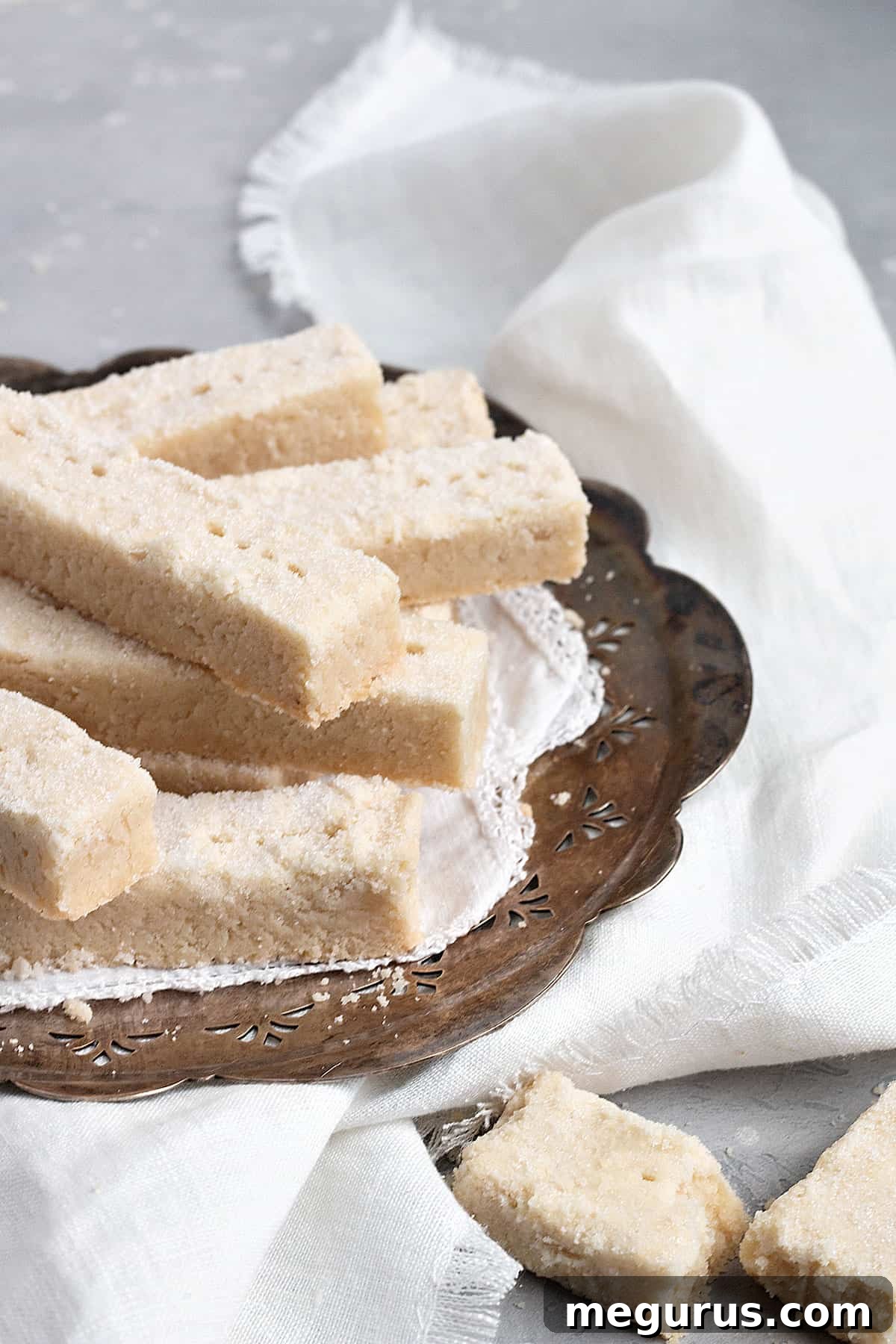
Creative Variations: Personalizing Your Shortbread
While I tend to be a purist when it comes to classic Scottish shortbread, its simple canvas makes it perfect for subtle flavor variations. Here are a few ideas to personalize your batch:
Classic Chocolate Dipped Shortbread
For a touch of elegance and indulgence, many enjoy dipping one end of the cooled shortbread fingers into melted dark, milk, or white chocolate. Allow the chocolate to set on a parchment-lined tray before storing. This adds a lovely contrast in flavor and texture.
Experimenting with Brown Sugar
Traditional Scottish shortbread typically uses white sugar, but some recipes call for all or part brown sugar. If you enjoy experimenting with flavors, try substituting half of the white granulated sugar with light brown sugar. This will introduce a subtle caramel note and a slightly chewier texture, though it may reduce the crispness a bit. Start with a small batch to see if it suits your preference.
Adding Flavor with Zests and Spices
For a fragrant twist, consider adding citrus zest (lemon or orange) to the dough along with the dry ingredients. About 1-2 teaspoons of finely grated zest will infuse a lovely aroma. Alternatively, warm spices like a pinch of ground cardamom, ginger, or even a subtle hint of cinnamon can add depth and complexity, particularly appealing during colder months.
Nutty Additions and Decorative Touches
While not strictly traditional, very finely chopped toasted nuts (like pecans or almonds) can be folded into the dough for added texture and flavor. Be mindful not to add too much, as it can affect the “shortness” of the shortbread. For a decorative finish, consider pressing edible flowers or a dusting of confectioners’ sugar (after cooling) before serving.
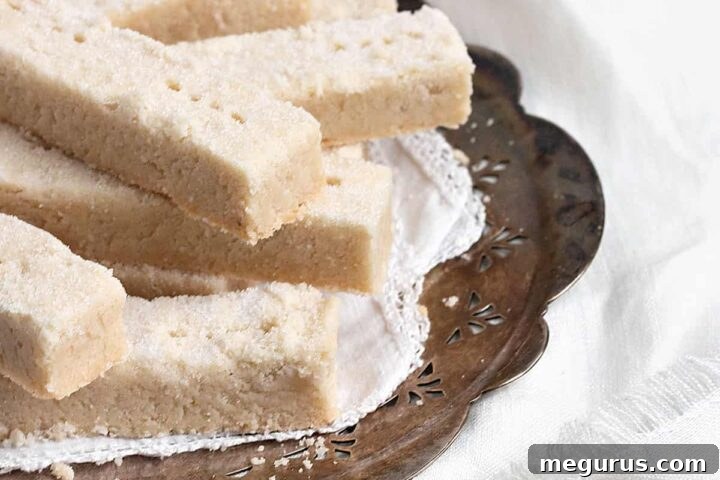
Get the Recipe: Simply Perfect Crispy Scottish Shortbread
Pin This
Leave a Review
Ingredients
- 1 1/2 cups (180 g) all purpose flour, measure with the spoon and level method
- 1/2 cup (77 g) white rice flour, spooned and levelled (not glutinous rice flour)
- 1/2 cup (100 g) white granulated sugar
- 1/4 teaspoon fine sea salt , omit if using salted butter
- 1 cup (227 g) unsalted butter, cold, cut into about 16 pieces **see Note 2 below
Instructions
- Preheat oven to 350F (regular bake/not fan-assisted), with rack in centre of the oven. Line an 8-inch square metal baking pan with parchment paper, leaving an inch or so overhanging the sides to use as handles to remove the cookies later. Set aside.
- In a large bowl with an electric mixer or the bowl of a stand mixer fitted with a paddle attachment, mix together the all-purpose flour, rice flour and sugar. If using unsalted butter, add the salt (OMIT the salt if using salted butter). Add the cold butter cubes and mix on low speed for several minutes, until the butter is broken down into small, even-sized pieces. Mixture will usually be loose and sandy, but if you grab a bit of it and squeeze it, it should form a clump. (If your butter had more moisture, the mixture could be more moist. As long as it isn’t sticky, it’s fine. See Note 2 below to troubleshoot texture).
- Dump mixture into your prepared baking pan. Using a kitchen spatula, press mixture firmly into the pan. (See process photos above this recipe card). Try to get the top as even as you can.
- Bake in preheated oven for about 35 minutes or until set, but not with any browning around the edges at all. (If you dough was more moist, it may need a few more minutes in the oven, maybe 40 minutes). Remove from oven (*Leave oven on!) and let stand for ONLY 10 minutes. Using a sharp knife, cut (slowly and carefully), into 16 pieces (1-inch wide x 4-inches long). Using a fork, press fork twice into each of the “sticks”, if you like, making sure to press right through the cookie to the bottom of the pan.
- Grab a baking sheet. Very carefully, using the parchment overhang as handles, lift the cookies out of the pan on the parchment paper. Set onto baking sheet with parchment paper still underneath. Using a fork, gently slide the cookie sticks apart, so there is a bit of space between each piece. *If a cookie stick breaks, you can often press it back together at this point and it will mend itself during the final bit of cooking.
- Return to the 350F oven, BUT IMMEDIATELY TURN THE OVEN OFF! Let sit on the baking sheet in the still-warm oven for 30-45 minutes. (30 minutes for a lightly crisp, light coloured cookie or up to 45 minutes for a crispier, lightly golden cookie). Remove from oven and transfer cookies to a cooling rack to cool completely.
- Once cooled, store in an airtight container at room temperature. Cookies can be eaten right away, but they develop even more flavour as they sit, so don’t hesitate to make ahead.
Notes
- Unsalted butter will produce the best results and is recommended. Look for high-fat (84%) butter, European-style butter or something like a Kerrygold. The best butter you can find! Salted butter will work, but omit the added salt in the dough.
-
If by chance your dough has turned out more moist than shown here, it may be due to your butter having more moisture in it. As long as it isn’t too moist (sticky), it will be fine. If your dough is sticky, you have likely not added enough flour (perhaps due to how you measured it). I would suggest adding a bit more flour, as needed, until the dough is no longer sticky.
Finally, if your dough doesn’t clump at all (it’s too dry), you have probably added too much flour. Again, it’s probably due to how you measured the flour. I always recommend measuring flour using the stir, spoon and level method, for best results. To correct a too dry mixture, add a bit of water, a teaspoon at a time, until the dough clumps, as shown.
Be sure to read the notes above, for more tips, options, substitutions and variations for this recipe!
Frequently Asked Questions About Shortbread
Here are answers to some common questions about baking and enjoying Scottish shortbread:
What is the difference between shortbread and sugar cookies?
While both are beloved butter-based cookies, shortbread and sugar cookies are distinct. Shortbread is characterized by its high butter content, often a 1:2:3 ratio of sugar, butter, and flour, giving it a wonderfully tender, “short” (crumbly) texture. It typically contains no leavening agents like baking powder or soda. Sugar cookies, on the other hand, usually contain eggs and leavening, resulting in a slightly chewier, crispier texture that holds its shape well for decorating. Shortbread’s flavor is intensely buttery, while sugar cookies offer a broader canvas for vanilla and other extracts.
Can I make this shortbread gluten-free?
This recipe already incorporates white rice flour, which is gluten-free, contributing significantly to its unique texture. While theoretically you could attempt to substitute the all-purpose flour with a gluten-free all-purpose blend, results may vary significantly. Gluten-free blends often contain different starches and gums that can alter the dough’s consistency and the final cookie’s texture. For best results with this specific recipe, using the recommended all-purpose flour alongside rice flour is advised.
Why is my shortbread crumbly?
Shortbread is meant to be crumbly – that’s its defining characteristic! The term “short” in shortbread refers to the cookie’s texture, meaning it breaks easily due to the high fat content and low gluten development. If your shortbread is excessively crumbly to the point of being difficult to handle, it might be due to too much flour, too little butter, or not pressing the dough firmly enough into the pan. Ensure you measure flour accurately and press the dough tightly to bind it.
How do I cut perfect shortbread fingers?
Cutting perfect shortbread fingers requires patience and a sharp knife. The key is to cut the shortbread after its initial bake while it’s still warm but has had a chance to firm up slightly (the 10-minute rest is crucial). A long, thin, sharp knife will yield the cleanest cuts. Make slow, deliberate passes, rather than sawing. If you find your knife dragging, gently wipe it clean between cuts. Consistent pressure and careful handling will ensure beautifully shaped fingers.