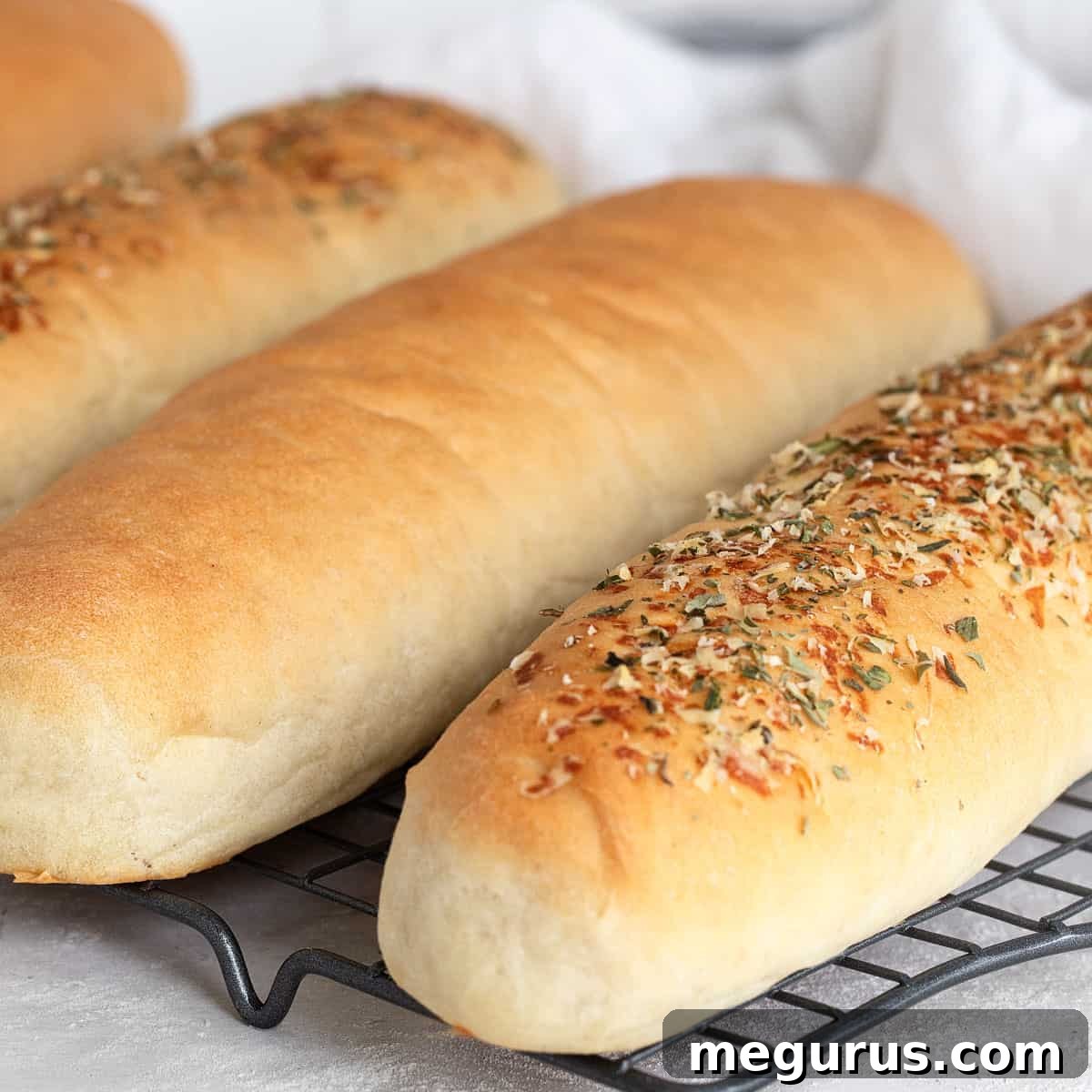
Easy Homemade Sub Rolls: Soft, Sturdy & Perfectly Delicious Sandwich Buns
Imagine sinking your teeth into a perfectly crafted sandwich, held together by a fresh, tender, yet wonderfully sturdy sub roll. This isn’t just a dream; it’s a delicious reality waiting to happen in your own kitchen! Our easy homemade sub roll recipe delivers light and airy buns with just the right amount of chew and resilience to cradle your favorite fillings, from hearty meatballs to classic deli meats and fresh veggies. Forget bland, store-bought bread that crumbles under pressure – these quick-to-make rolls are a game-changer, freezing beautifully so you’re always ready for sandwich cravings.
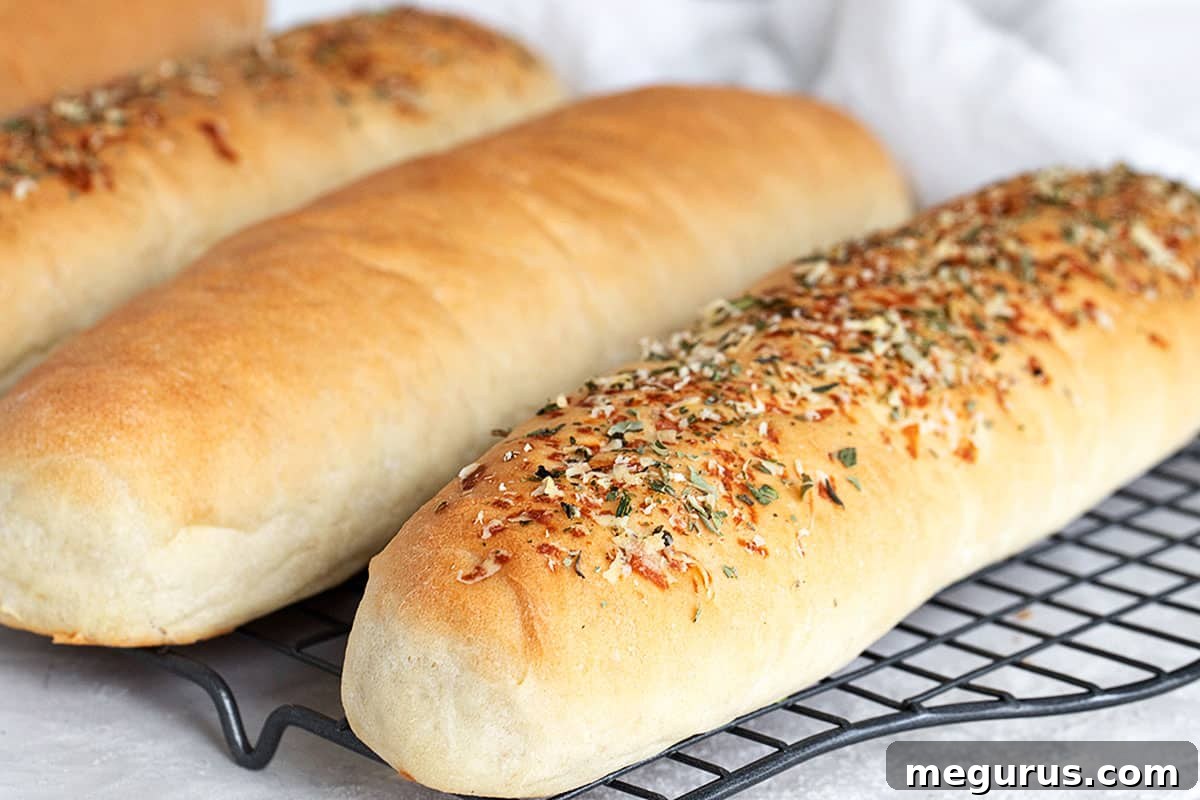
Why You’ll Fall in Love with This Homemade Sub Rolls Recipe
There’s an unparalleled satisfaction that comes with baking your own bread, and these sub rolls are no exception. Beyond the incredible aroma that will fill your home, you’ll discover numerous reasons to make this recipe a staple in your kitchen:
- Perfect Texture & Strength: These sub rolls strike the ideal balance. They are wonderfully soft and light on the inside, offering a delightful chew, yet possess a sturdy exterior that won’t fall apart, no matter how generously you load them with fillings. Say goodbye to soggy bottoms and collapsing sandwiches!
- Amazingly Quick & Easy: Don’t let the thought of homemade bread intimidate you. This recipe is designed for efficiency. By utilizing a slightly higher yeast content, these rolls rise more quickly than traditional recipes, meaning you can have fresh, warm sub rolls ready in under two hours from start to finish. It’s an ideal choice for busy weeknights or impromptu gatherings.
- Freezer-Friendly Convenience: Life gets busy, but that doesn’t mean you have to compromise on quality. These sub buns freeze exceptionally well. Bake a batch (or double the recipe!), individually wrap them, and stock your freezer. You’ll have artisanal-quality sub rolls at your fingertips whenever the craving strikes, making meal prep a breeze.
- Superior Flavor: There’s simply no comparison to the fresh, yeasty flavor of homemade bread. The subtle sweetness and hint of salt create a depth of flavor that store-bought varieties can rarely match, elevating any sandwich to gourmet status.
- Customizable for Any Meal: Whether you’re making Italian subs, philly cheesesteaks, hot dogs, or even garlic bread, these versatile rolls are the perfect base. You can easily adjust toppings and seasonings to complement your chosen meal.
Essential Ingredients for Your Sub Rolls
Creating perfect sub rolls starts with understanding the role of each ingredient. This recipe uses simple, accessible components that come together to form a truly exceptional bread:
- Lukewarm Water: The ideal temperature is crucial for activating the yeast without killing it. Around 105°F (40°C) is perfect – warm to the touch, but not hot.
- Active Dry or Instant Yeast: The magic behind the rise! We use a generous amount here to ensure a quick and robust proof, contributing to the light and airy texture. Don’t be afraid of the “Tablespoons” measurement – it’s key to the quick rise.
- Sugar: A small amount of sugar acts as food for the yeast, helping it activate and providing a touch of sweetness that enhances the bread’s flavor and promotes browning.
- Fine Salt: Essential for flavor, salt also plays a vital role in controlling yeast activity and strengthening the gluten structure of the dough.
- Vegetable Oil: Adds tenderness to the crumb and helps keep the rolls moist. Any neutral-flavored oil like canola or sunflower oil works well.
- All-Purpose Flour: The backbone of your rolls. Using a good quality all-purpose flour provides enough protein for a sturdy yet tender texture. Ensure you measure it correctly (spoon and level method or by weight) for the best results.
Step-by-Step Guide: Crafting Your Perfect Sub Rolls
Follow these detailed steps, complete with visual aids, to bake delicious sub rolls at home. The process is straightforward and rewarding!
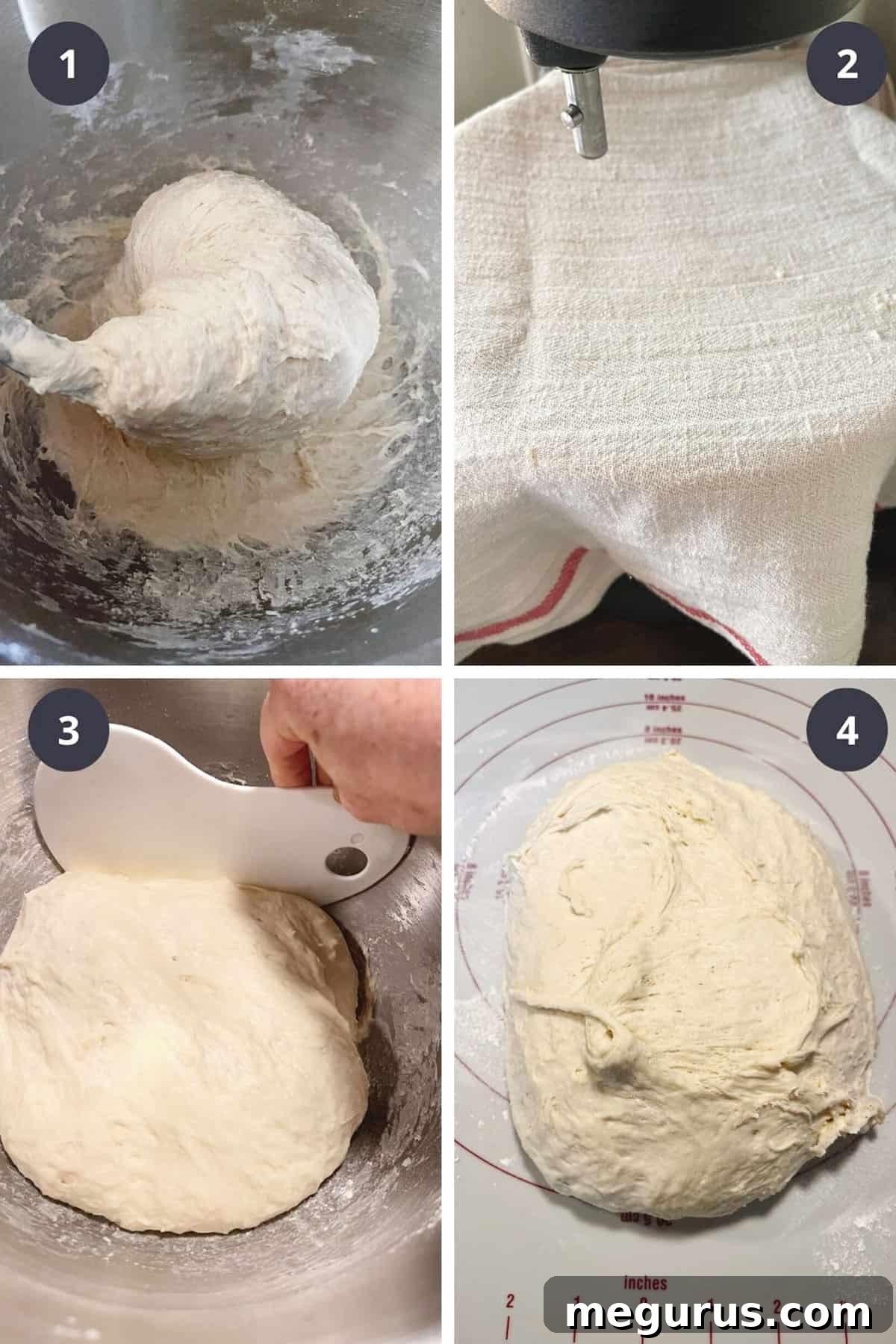
- Prepare the Dough Ingredients: In a large mixing bowl or the bowl of a stand mixer equipped with a dough hook, combine the lukewarm water, active dry or instant yeast, and 1/2 teaspoon of the sugar. Let this mixture stand for about 5 minutes. This allows the yeast to activate and become foamy, confirming it’s alive and ready to work. After 5 minutes, add the remaining sugar, salt, and vegetable oil, mixing briefly until well combined.
- Add Flour & Mix: Gradually incorporate the all-purpose flour, adding one cup at a time and mixing well after each addition. Once all the flour has been added, continue mixing (or kneading by hand) for 3-4 minutes to develop the dough’s gluten structure. At this stage, the dough will be quite moist and sticky, which is perfectly normal. Resist the urge to add more flour now.
- First Rest Period: If using a stand mixer, remove the dough hook. Cover the bowl with a clean tea towel and let the dough rest for 15 minutes. This brief rest allows the flour to fully hydrate, making the dough less sticky and easier to handle in the next step.
- Flour Your Work Surface & Briefly Knead: Transfer the rested dough to a lightly floured work surface. Knead the dough for a couple of minutes. Only add a minimal amount of additional flour if the dough is excessively sticking to your hands or the work surface. The goal is a slightly tacky, manageable dough.
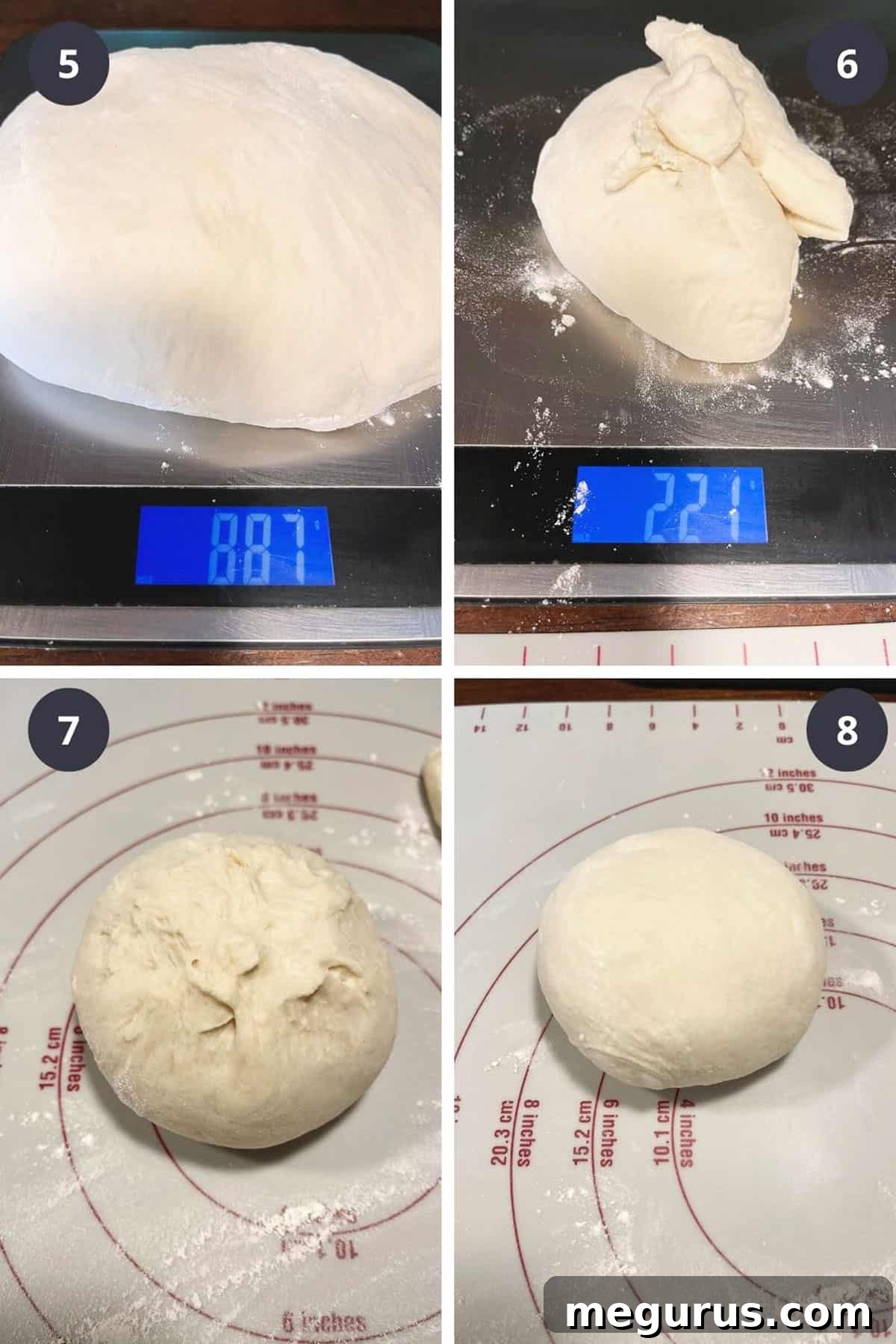
- Divide the Dough: Weigh the entire dough ball, then divide that total weight by 4 to get the target weight for each of your four sub rolls. This ensures consistently sized rolls. Carefully weigh out four equal pieces of dough.
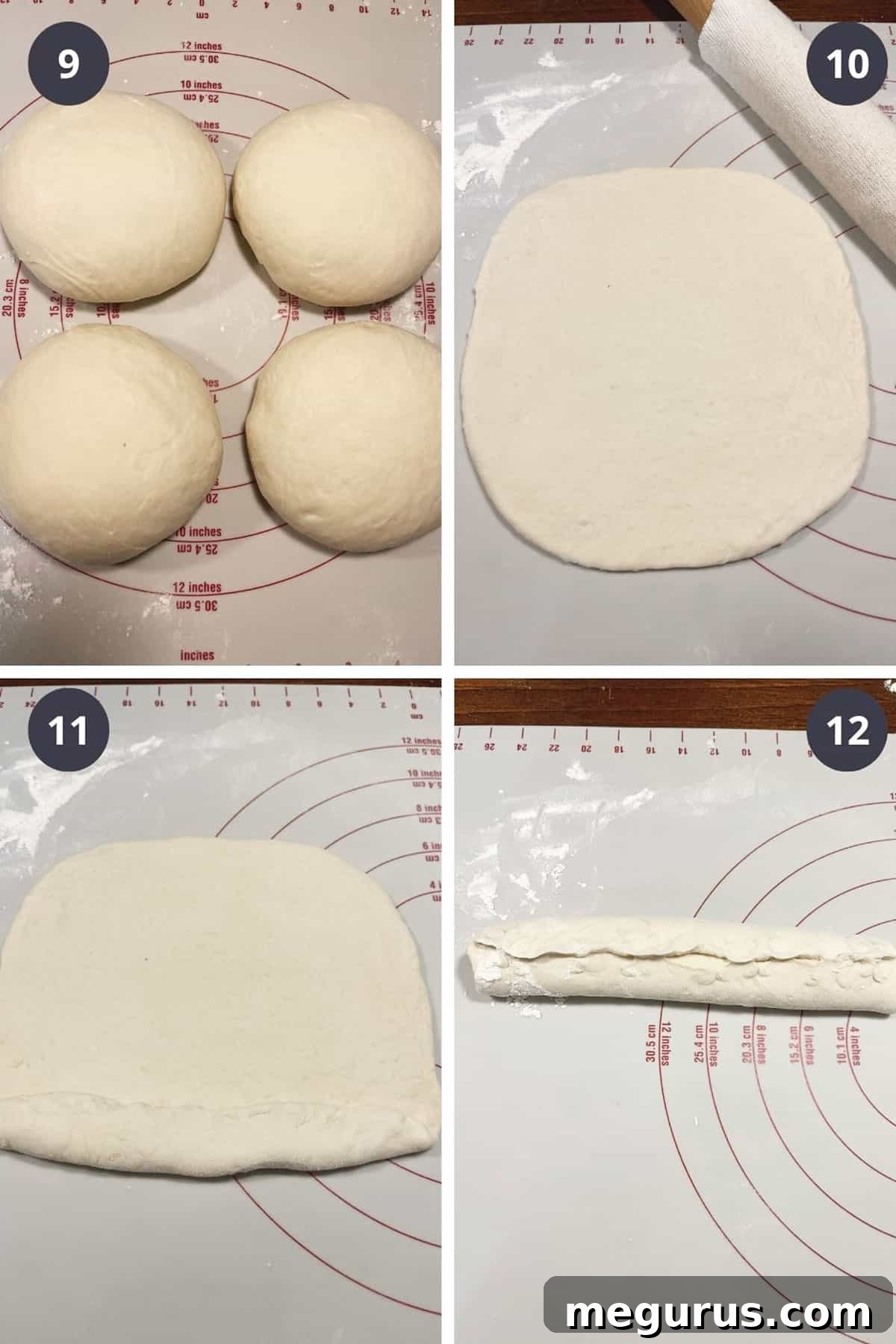
- Form Dough Balls: Take each piece of dough and form it into a smooth ball. Do this by gently pinching the dough together underneath, creating a tight surface on top. Flip the ball over so the smooth side is facing up.
- Second Rest Period: Cover the formed dough balls with a clean tea towel and let them rest for another 15 minutes. This short rest helps the gluten relax, making the dough much easier to roll out.
- Roll into Squares: On your lightly floured work surface, take one dough ball and roll it out into an 8×8-inch square. Aim for an even thickness.
- Roll Up Jelly-Roll Style: Starting with the edge closest to you, tightly roll the dough square upwards, much like you would a jelly roll or a cinnamon bun.
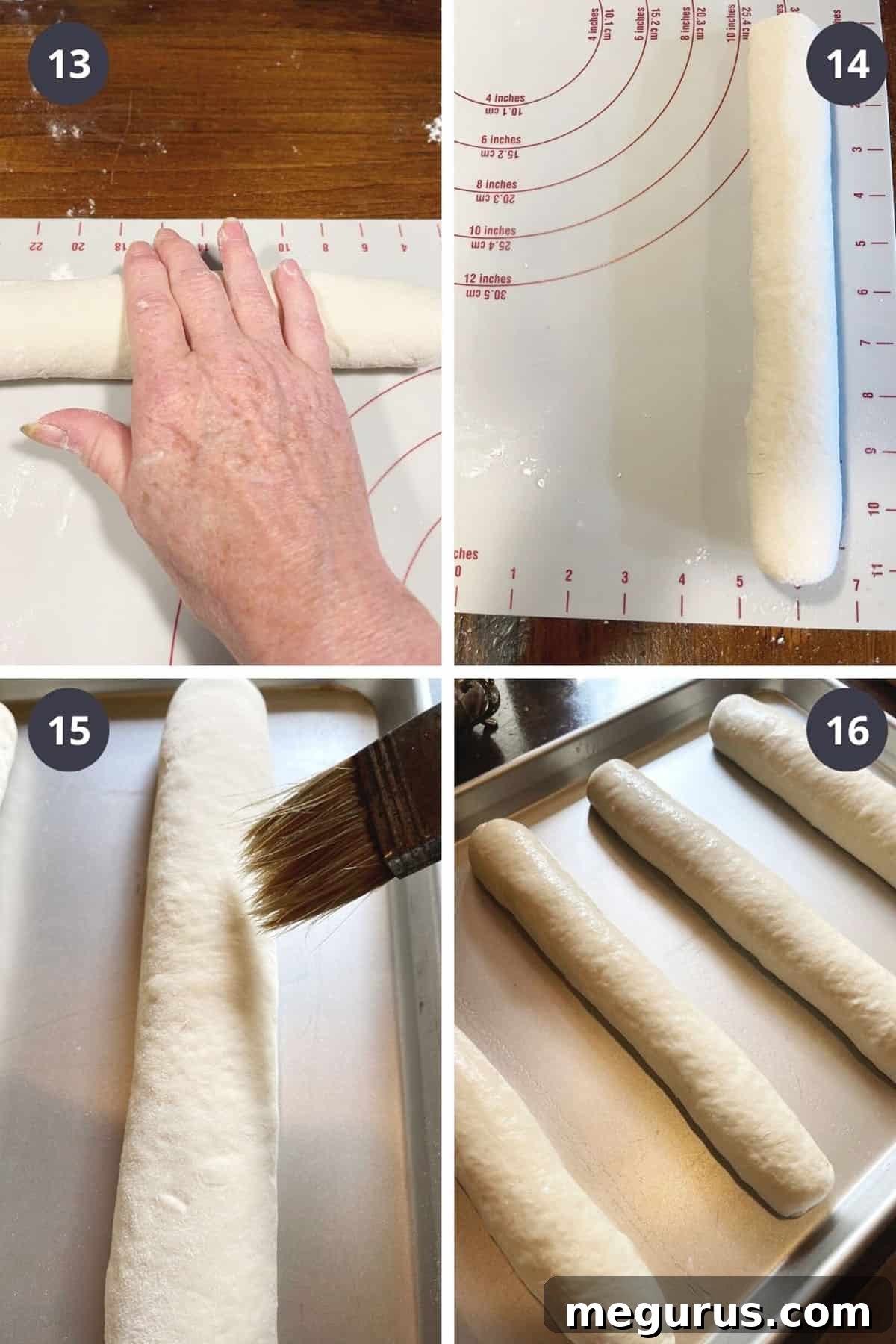
- Pinch the Seam: Firmly pinch the seam of the rolled dough together to seal it securely. This prevents the roll from unrolling during baking.
- Stretch and Shape: Using the palms of your hands, gently roll the dough log back and forth on your work surface. As you roll, gently stretch the dough, working from the center outwards, until it is an even 11-12 inches long. Ensure the thickness is consistent along the entire length.
- Prepare for Rising: Carefully transfer the shaped dough log to a large, un-greased baking sheet. If your baking sheet is prone to sticking, you can lightly dust it with flour or line it with parchment paper.
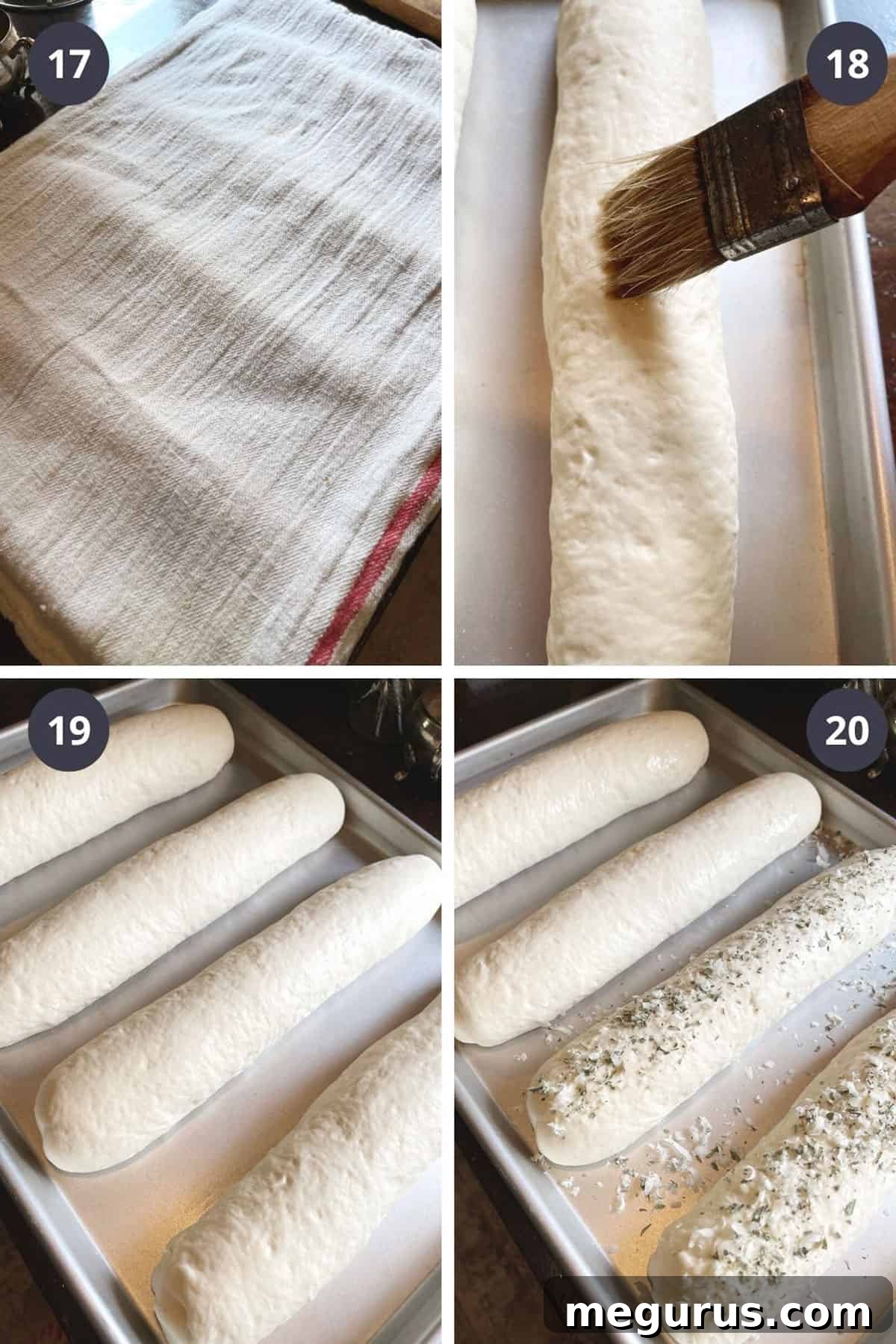
- Repeat & Brush with Water: Repeat steps 8-12 with the remaining three dough pieces. Once all four rolls are on the baking sheet, lightly brush the tops of each roll with water. This helps create a beautiful, crispy crust and allows toppings to adhere.
- Final Rise (Proofing): Cover the rolls loosely with a clean tea towel or plastic wrap (lightly oiled to prevent sticking). Allow them to rise in a warm, draft-free place for 20-30 minutes, or until they look visibly puffy and have increased in size.
- Preheat Oven & Second Water Brush: As the rolls are finishing their rise, preheat your oven to 375°F (190°C) – use a regular bake setting, not fan-assisted. Once the rolls are fully proofed, brush them lightly with water again. This extra moisture helps with steam generation in the oven, contributing to a chewier crust.
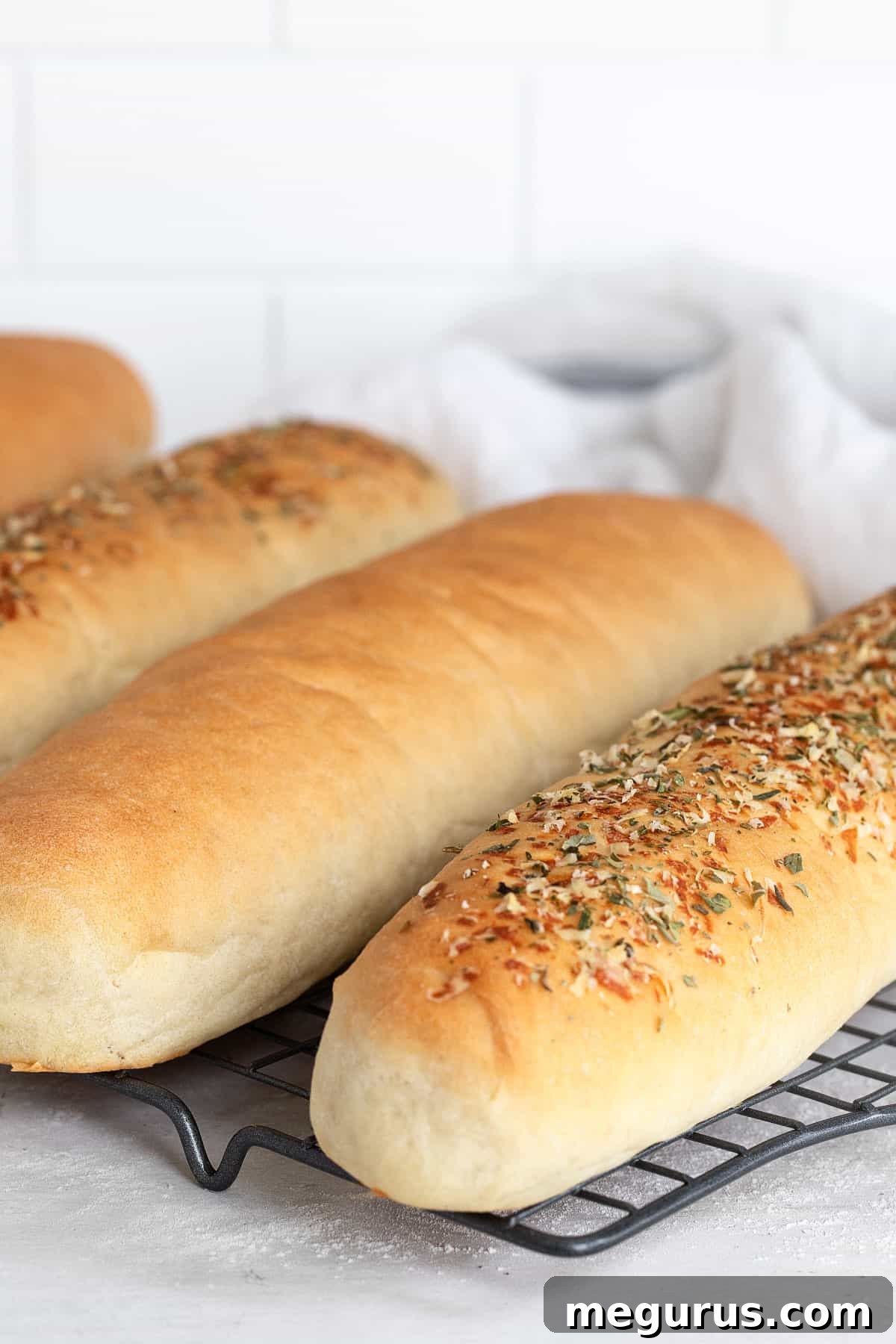
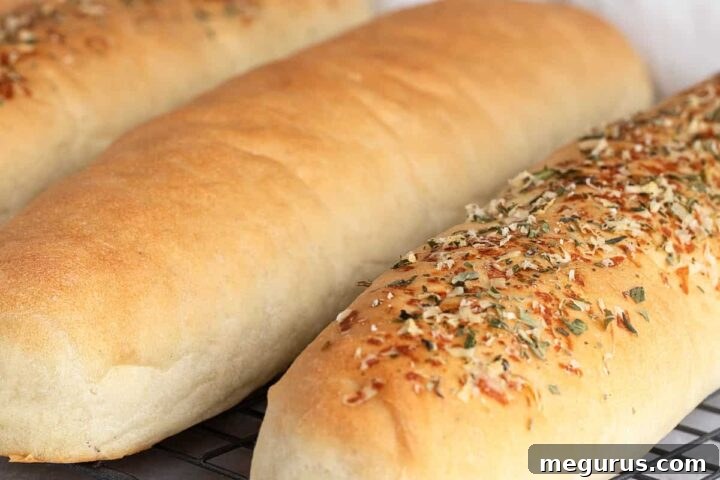
- Add Toppings & Bake: If desired, sprinkle your preferred toppings at this stage (e.g., sesame seeds, poppy seeds, grated cheese, or dried herbs). Bake the rolls for 18-22 minutes, or until they achieve a deep golden-brown color and sound hollow when tapped on the bottom.
- Cool Completely: As soon as the rolls come out of the oven, immediately transfer them to a wire cooling rack. Allow them to cool completely before slicing and filling. Cooling on a rack prevents the bottoms from becoming soggy and helps develop the perfect crust.
Expert Baking Tips for Flawless Sub Rolls
Achieving bakery-quality sub rolls at home is easier than you think with these expert tips:
- Precision with Flour Measurement: For the most accurate results, especially in baking, a kitchen scale is your best friend. Weighing flour (500g for 4 cups) ensures consistency. If you don’t have a scale, use the “stir, spoon, and level” method: stir the flour in its container, spoon it lightly into your measuring cup, and then level off the top with a straight edge. Never scoop directly with the measuring cup, as this compacts the flour and leads to too much in your recipe.
- Dough Hydration is Key: The mixed dough will initially be quite wet and sticky. This is intentional! Resist the urge to add more flour at the initial mixing stage. The dough will absorb more liquid and firm up slightly during its first 15-minute rest. Only add a tiny bit of extra flour to your work surface later if the dough is truly unmanageable and sticking excessively to your hands. Over-flouring will result in dry, dense rolls.
- The Power of Warmth: Yeast loves warmth! Ensure your water is lukewarm (not hot or cold) and that your rising environment is warm and free from drafts. A slightly warm oven (turned off, with the door ajar), or a sunny spot can work wonders for proofing.
- Don’t Rush the Rise: While this recipe is designed for a quick rise, don’t cut it short. The “puffy” stage is crucial for a light, airy texture. If your kitchen is cool, it might take a few extra minutes. Look for visual cues rather than strictly adhering to time.
- Steam for a Great Crust: The brushing of water before and during baking contributes to a beautiful, crisp crust. You can also place a shallow pan of hot water on the bottom rack of your oven during the first 10-15 minutes of baking to create additional steam, which further enhances crust development.
- Check for Doneness: Besides the golden color, a fully baked sub roll will sound hollow when tapped on the bottom. If it still sounds dense, give it a few more minutes in the oven.
Customizing Your Sub Rolls for Any Occasion
These homemade sub rolls are a fantastic canvas for your culinary creativity:
- Elevate with Toppings: Before baking, after the second brush of water, sprinkle generously with sesame seeds (classic!), poppy seeds, caraway seeds, or a mix of “everything bagel” seasoning for extra texture and flavor.
- Cheesy Goodness: For a cheesy twist, sprinkle shredded Parmesan or provolone cheese on top of the rolls during the last 5-10 minutes of baking.
- Herbaceous Infusion: Add dried herbs like oregano, basil, or Italian seasoning to the dough itself or sprinkle on top for an aromatic boost.
- Garlic & Onion: For robust flavor, a teaspoon of garlic powder or onion powder can be mixed into the dry ingredients with the flour.
- Vary the Size: While this recipe yields four 11-12 inch rolls, you can easily divide the dough into 6 or 8 smaller rolls for hot dog buns or smaller sandwiches. Adjust baking time accordingly.
Making Ahead, Storing, and Freezing
One of the greatest advantages of baking your own sub rolls is the ability to enjoy them fresh or preserve them for later convenience:
These sub rolls are at their absolute best when enjoyed within 24 hours of baking. The crust is crisp, and the interior is perfectly tender. To keep them fresh for longer at room temperature, store them in an airtight container or a large zip-top bag once completely cooled. For extended freshness beyond a day or two, refrigeration can help, though it may slightly alter the texture. However, for true long-term storage, freezing is the ultimate solution.
These buns freeze beautifully and retain their quality remarkably well. To freeze them, ensure they are completely cool first. We recommend wrapping each sub roll individually, first in plastic wrap and then tightly in aluminum foil. This double layer of protection prevents freezer burn and helps maintain their texture and flavor. Stored this way, they will keep well in the freezer for up to 3 months.
To enjoy frozen rolls, simply remove them from the freezer and let them thaw at room temperature for an hour or two. For the best “fresh-baked” experience, once thawed (or even from frozen, for a quick warm-up), you can refresh them in a preheated oven at 350°F (175°C) for 5-10 minutes, or until warmed through and slightly crisp again. This brings back their wonderful crust and soft interior, making them almost as good as day one!
Frequently Asked Questions About Sub Rolls
Q: Can I use bread flour instead of all-purpose flour?
A: Yes, you can! Bread flour has a higher protein content, which will result in a chewier, slightly denser crumb. If you prefer a more robust roll that holds up even better to very wet fillings, bread flour is a great option. However, all-purpose flour gives a wonderfully light and soft texture as written.
Q: What if my yeast doesn’t foam when activated?
A: If your yeast mixture doesn’t become bubbly or foamy after 5-10 minutes, it likely means your yeast is old or dead, or your water was too hot/cold. Unfortunately, you’ll need to discard that batch and start over with fresh yeast and properly lukewarm water (around 105°F/40°C). This activation step is crucial to ensure your dough will rise.
Q: My dough is too sticky. What should I do?
A: It’s normal for this dough to be quite moist initially. After the first 15-minute rest, it should be easier to handle. If it’s still excessively sticky when kneading, add a very small amount of flour (1-2 tablespoons at a time) to your work surface, not directly into the dough, until it becomes manageable. Avoid adding too much, as this can make the rolls tough.
Q: Can I make these sub rolls ahead of time?
A: Absolutely! You can prepare the dough up to the first rise, then punch it down, place it in a lightly oiled bowl, cover it tightly with plastic wrap, and refrigerate it overnight (up to 24 hours). Let it come to room temperature for about 30-60 minutes before proceeding with shaping and the final rise. Alternatively, bake them, cool them, and freeze them as described in the “Making Ahead, Storing, and Freezing” section.
Q: How can I tell when the rolls are perfectly proofed?
A: The “puffy” stage is key. They should look noticeably larger and feel light. A good test is the “poke test”: gently poke the dough with a floured finger. If the indentation springs back slowly, it’s ready. If it springs back immediately, it needs more time. If it collapses, it’s over-proofed, but you can still bake it; the texture might just be slightly less airy.
Easy Homemade Sub Rolls Recipe
Embrace the joy of baking with this straightforward recipe for irresistible homemade sub rolls. They’re so much better than anything you’ll find at the store!
Get the Recipe: Easy Homemade Sub Rolls
An easy, homemade sub roll recipe, which produces soft and light buns that are also sturdy enough to hold any fillings. Quick and easy and freeze well, too! Makes four 12-inch long sub rolls.
Prep Time: 25 mins
Cook Time: 20 mins
Resting and Rising Time: 1 hr
Total Time: 1 hr 45 mins
Yield: 4 sub rolls
Ingredients
- 1 1/2 cups (360 ml) water, lukewarm about 105°F (40°C)
- 2 Tablespoons active dry or Instant yeast (Yes! It is Tablespoons, not teaspoons)
- 3 1/2 teaspoons sugar
- 1 1/2 teaspoons fine salt
- 3 1/2 teaspoons vegetable oil
- 4 cups (500 g) all-purpose flour, spooned and leveled
Instructions
- Add lukewarm water to a large bowl or the bowl of a stand mixer fitted with the kneading hook. Add the yeast and 1/2 teaspoon of the sugar. Let stand 5 minutes until foamy, then add the remaining sugar, salt, and vegetable oil. Mix briefly to combine.
- Add the flour, one cup at a time, mixing between additions. When all the flour has been added, continue mixing for 3-4 minutes to develop the dough. The dough may be quite wet and sticky. That’s fine; it will tighten up as it rests, and you can add additional flour later if needed. If using a mixer, remove the kneading hook and cover the top of the bowl with a clean tea towel. Let stand 15 minutes.
- Remove dough to a lightly floured work surface. Knead dough a couple of minutes, adding additional flour as needed, only if the dough is sticking to your hands or the work surface. Divide dough into 4 equal pieces. (A useful tip: weigh the entire piece of dough, then divide that amount by 4 to weigh out identically sized pieces for consistency).
- Form each piece of dough into a ball, cover with a clean tea towel, and let rest for 15 minutes.
- Roll each piece of dough into an 8×8-inch square. Starting with the edge closest to you, tightly roll the dough up, jelly-roll style, and firmly pinch the seam together to seal. Using your palms, roll the dough log on a work surface, gently and evenly stretching it out longer until it is 11 to 12 inches long. Ensure the dough has an even thickness along its entire length. Remove the shaped dough to a large, un-greased baking sheet. (You can lightly dust the baking sheet with a bit of flour or line it with parchment paper if your baking sheet is prone to sticking).
- Repeat with the remaining dough pieces.
- Brush the top of the rolls lightly with water, cover, and let rise for 20-30 minutes, or until visibly puffy.
- As the rolls are rising, preheat the oven to 375°F (190°C) (regular bake/not fan-assisted), ensuring the oven is hot and ready when your rolls are proofed.
- Brush the dough with water again and sprinkle with any desired toppings at this point (seeds, cheese, dried herbs, etc.).
- Bake for 18-22 minutes, or until deep golden brown. Remove from the oven and immediately transfer to a cooling rack to cool completely.
- Wrap and store at room temperature or in the fridge to extend freshness. For longer storage, wrap well and freeze for up to 3 months.
Notes
This recipe can be doubled to make more rolls, but please note that it produces a large amount of dough. Ensure your stand mixer, if using, can handle that much dough at one time.
Cuisine: American, Canadian
Course: Bread
Author: Jennifer Maloney
Nutrition Information (per serving)
- Serving: 1 bun
- Calories: 475 kcal
- Carbohydrates: 100 g
- Protein: 14 g
- Fat: 1 g
- Saturated Fat: 0.2 g
- Polyunsaturated Fat: 1 g
- Monounsaturated Fat: 0.2 g
- Sodium: 880 mg
- Potassium: 153 mg
- Fiber: 4 g
- Sugar: 4 g
- Vitamin C: 0.01 mg
- Calcium: 23 mg
- Iron: 6 mg