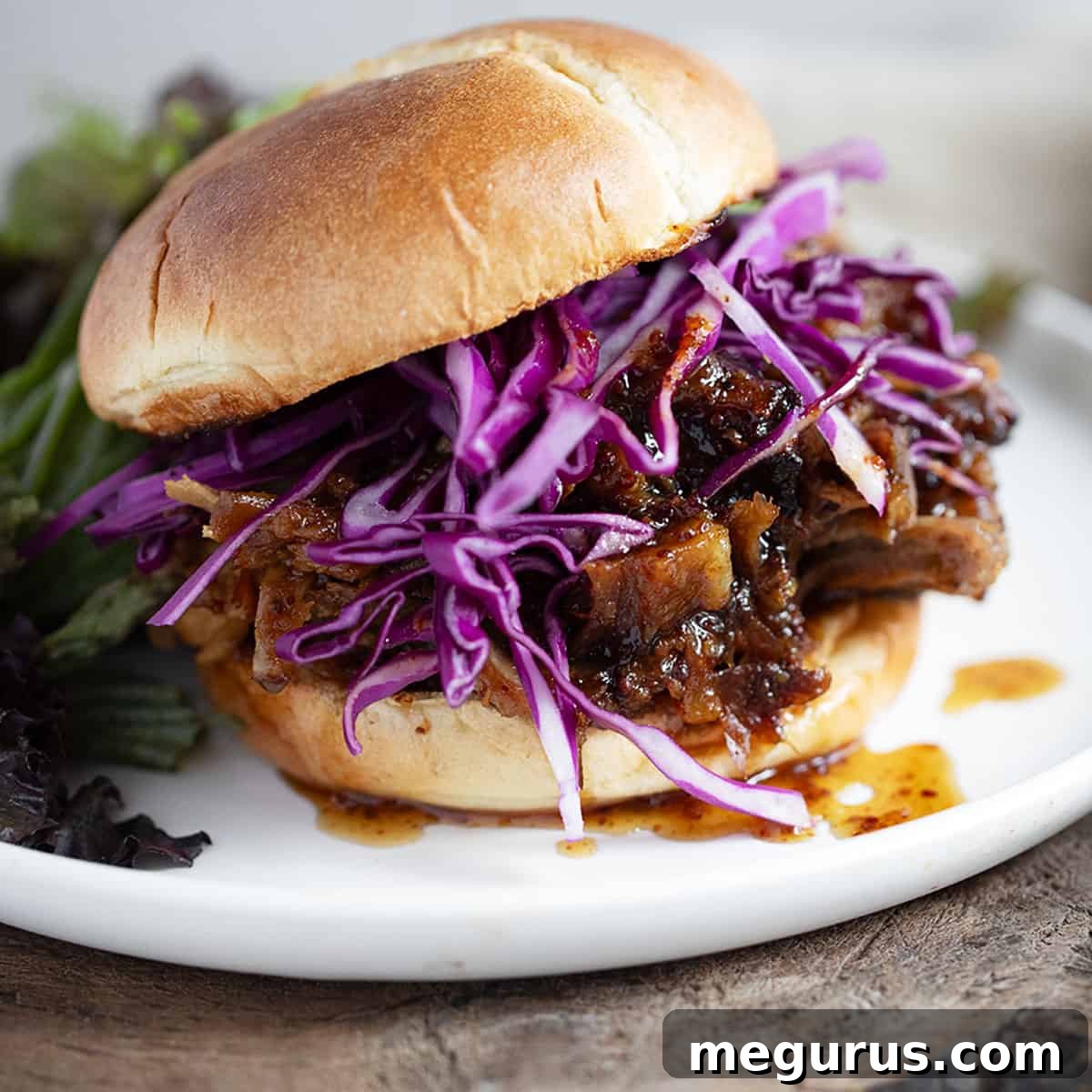
Welcome to a culinary journey that elevates traditional pulled pork to new heights! This Maple Mustard Pulled Pork recipe offers a delightful twist on a beloved classic, infusing tender pork with the sweet, tangy, and subtly spicy flavors of maple and mustard. What makes this recipe truly stand out is its unique brining and oven-roasting method. While it requires a bit of foresight with an overnight brining period, the extra time invested promises incredible rewards: exceptionally moist pork, a delectable crispy ‘bark’, and those coveted caramelized ‘burnt ends’ that are packed with flavor. Prepare to impress your family and friends with a dish that’s both comforting and gourmet.
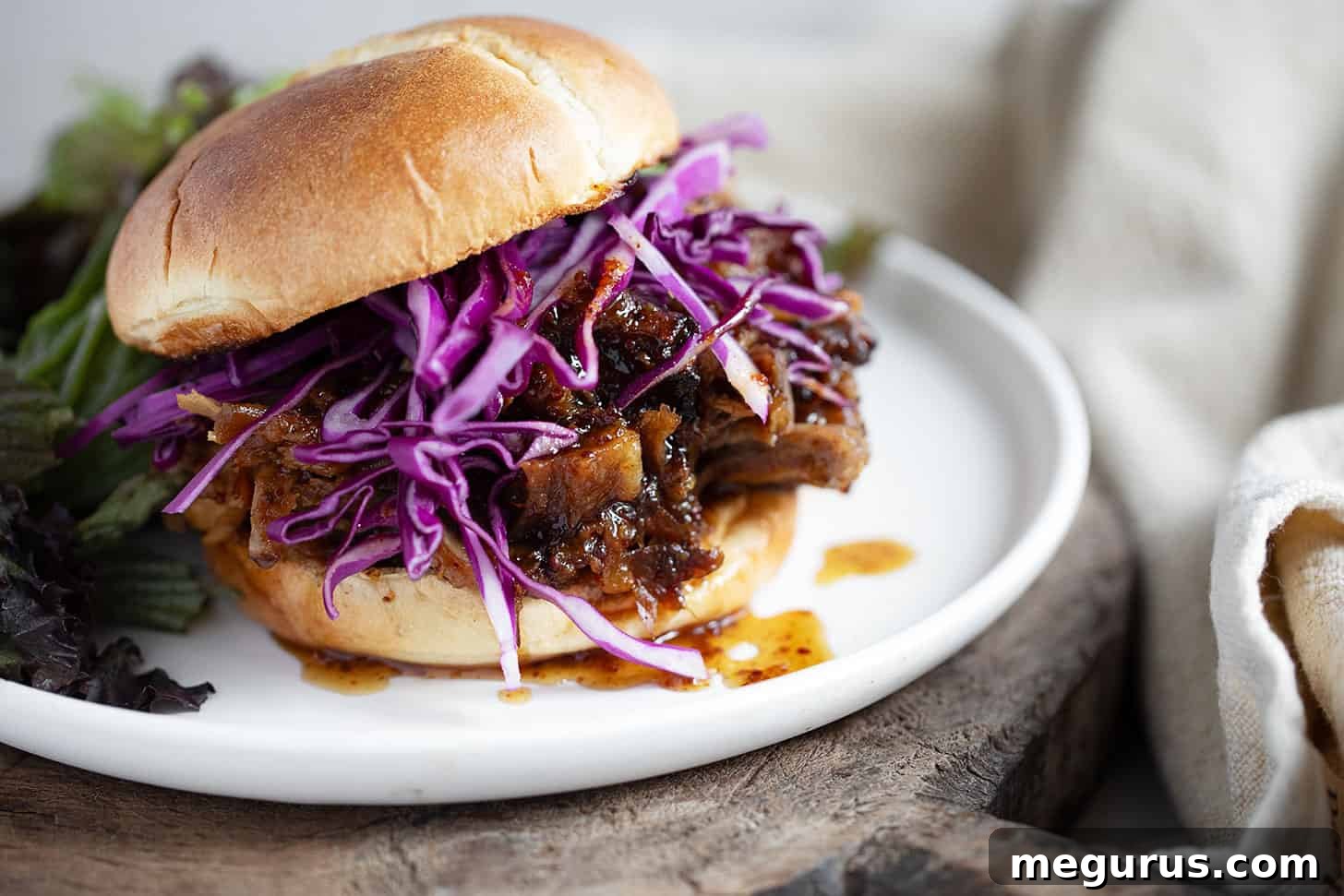
Why You’ll Love This Maple Mustard Pulled Pork Recipe
Pulled pork is a staple for gatherings, family dinners, and game day feasts. Our Maple Mustard Pulled Pork takes this classic dish and elevates it with a complex flavor profile that perfectly balances sweetness with a zesty kick. The combination of pure maple syrup and two types of mustard creates a glaze that caramelizes beautifully during the long, slow roast, forming a savory “bark” that is utterly irresistible. Beyond its unique taste, this recipe is designed for maximum tenderness and juiciness, thanks to a crucial overnight dry brining step. You’ll achieve restaurant-quality results in your own kitchen, creating a memorable meal that’s surprisingly easy to prepare with a little planning. It’s the perfect dish for those who appreciate deep, layered flavors and fall-apart tender meat.
Essential Ingredients and Smart Substitutions
Crafting the perfect Maple Mustard Pulled Pork begins with selecting high-quality ingredients. Here’s a closer look at the key components and how to make the best choices for your dish:
- Boneless Pork Shoulder Roast (Pork Butt/Boston Butt): The star of our show. Look for a boneless pork shoulder roast, typically around 1.5 kg (3 1/4 lbs) to 1.8 kg (4 lbs). This cut is ideal for slow cooking as it contains a good balance of meat and fat, which renders down to create incredibly tender and flavorful pulled pork. Many boneless pork shoulders come tied with butcher’s twine; leave this on during cooking to help the roast hold its shape for even cooking. If you can only find bone-in, that works too, but you’ll need to adjust cooking time and remove the bone before pulling.
- Pure Maple Syrup: This is where the magic happens! For the deepest, richest maple flavor, always opt for real maple syrup. Grade A Dark, Robust Taste (formerly known as Grade B) is highly recommended. Its intense flavor stands up beautifully against the mustard, providing that signature sweet and savory balance. Avoid imitation syrups, as they won’t deliver the same depth or quality.
- Whole-Grain Mustard: A coarse, grainy mustard provides both texture and a pungent, tangy flavor that complements the maple syrup. Brands like Maille’s “Old Style” or “à l’Ancienne” are excellent choices, known for their balanced flavor and distinctive whole mustard seeds. If you don’t have whole-grain, a good quality Dijon mustard can be used, though you’ll miss the textural element.
- Mustard Powder: Adding mustard powder (like the classic Keen’s in the yellow tin) intensifies the mustard flavor without adding excess liquid. It contributes a sharp, earthy undertone that rounds out the sauce. Ensure your mustard powder is fresh for the best potency. Yellow mustard powder is generally preferred for its classic flavor profile.
- Fine Salt & White Granulated Sugar (for Brining): These two ingredients are crucial for the dry brine. Fine salt is easily absorbed, and the sugar helps in retaining moisture and promoting browning. Do not skip the brining step; it’s essential for a moist, flavorful roast that won’t dry out in the oven.
- Light Brown Sugar (for Sauce): Packed light brown sugar adds another layer of sweetness and molasses notes to the sauce, enhancing the caramelization process during roasting.
- Freshly Ground Black Pepper: A simple yet vital seasoning. Freshly ground pepper adds a subtle heat and aromatic complexity to the sauce, enhancing all the other flavors.
The Importance of Brining for Juicy Pulled Pork
Unlike many pulled pork recipes that rely on slow cookers or Dutch ovens to retain moisture, this oven-roasted method leaves the pork uncovered to develop a beautiful crust. This is precisely why the overnight dry brine is not just recommended, but absolutely essential. Brining involves rubbing the pork with a mixture of salt and sugar, which works through osmosis to draw moisture from the meat and then reabsorb it along with the dissolved salts. This process tenderizes the meat, enhances its natural flavors, and most importantly, helps the pork retain moisture throughout the long roasting process, preventing it from drying out. A properly brined pork shoulder will be noticeably more juicy and flavorful, ensuring your pulled pork is succulent from the first bite to the last. So, plan ahead and make brining your pork shoulder the night before a non-negotiable step for truly exceptional results.
Step-by-Step Guide: Crafting Your Maple Mustard Pulled Pork
This visual summary combined with detailed instructions will guide you through creating the most delicious Maple Mustard Pulled Pork. Remember to always refer to the complete recipe card below for precise measurements and timings.
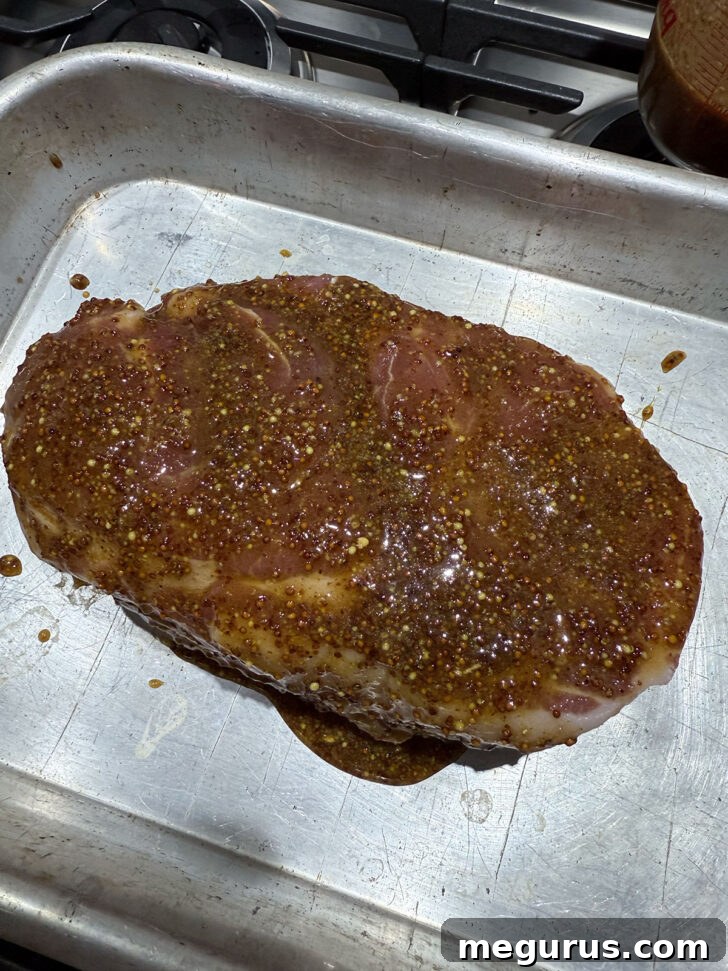
- Brine Overnight (The Day Before): In a small bowl, thoroughly mix together the fine salt and white granulated sugar. Place your boneless pork shoulder roast on a clean surface and generously rub the entire surface with this salt and sugar mixture. You might not use all of it, but ensure good, even coverage. Transfer the rubbed pork shoulder to a large, sturdy plastic food bag or wrap it tightly with several layers of plastic wrap. Place it in the refrigerator and allow it to brine overnight, or for a minimum of 8 hours. This step is crucial for moisture and flavor.
- Prepare for Roasting: The following day, about 30 minutes before you plan to start cooking, preheat your oven to 325°F (160°C). Make sure to use a conventional setting if your oven has both conventional and convection options, as convection ovens cook differently. Line a heavy-duty roasting pan completely with robust aluminum foil. This seemingly simple step will save you significant effort during cleanup, as the maple mustard glaze can get quite sticky and caramelized.
- Rinse and Sauce the Pork: Remove the brined pork shoulder from the refrigerator. Rinse it meticulously under cold running water to wash off any excess salt mixture from the surface. Pat the roast thoroughly dry with paper towels. A dry surface is key to achieving a beautiful, crispy exterior. Place the dried pork into the prepared foil-lined roasting pan. In a separate small bowl, whisk together the light brown sugar, pure maple syrup, whole-grain mustard, mustard powder, and a generous amount of freshly ground black pepper until well combined. This is your delicious maple mustard sauce. Liberally brush this sauce over all sides of the pork shoulder, ensuring an even coating.
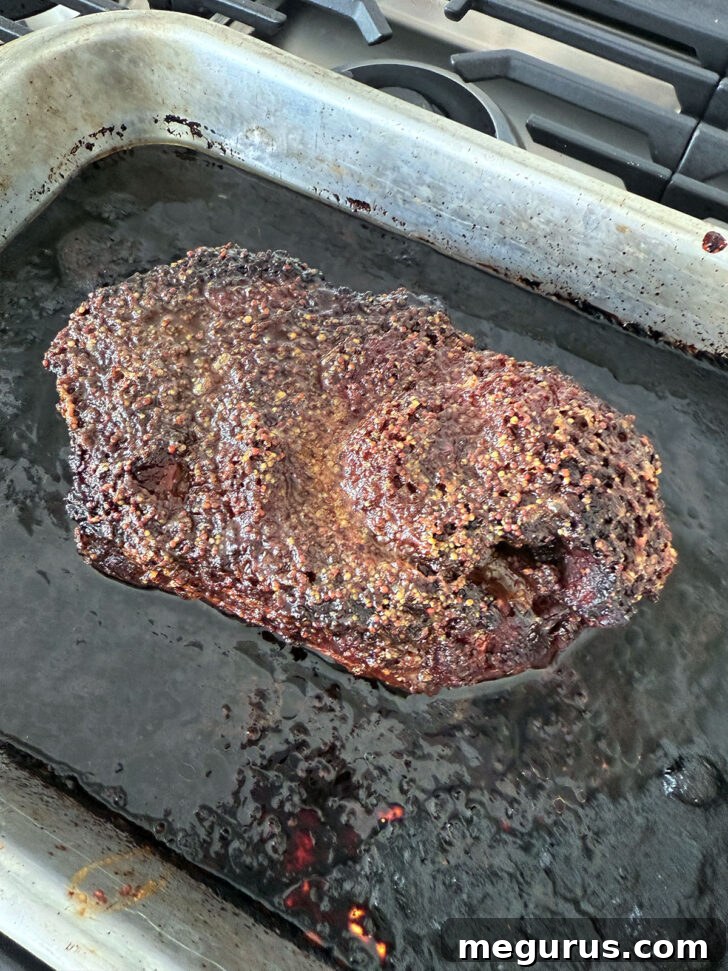
- Slow Roast and Baste: Place the roasting pan with the sauced pork into the preheated oven. Roast for approximately 3 to 3 1/2 hours. During this cooking time, it is important to baste the pork with additional maple mustard sauce (from your reserved bowl) every hour. This regular basting helps to build up layers of flavor and contributes to the formation of a rich, caramelized “bark.” As a helpful tip, I often pour about a cup of water into the bottom of the roasting pan a couple of times during cooking. This helps prevent the drippings from scorching too quickly and keeps lovely aromas filling your kitchen instead of burnt smells.
- Check for Tenderness: The pork is ready when it is gloriously browned, caramelized, and incredibly tender. To test for doneness, gently insert two forks into the meat and try to pull it apart. Even if it’s still tied with twine, the meat should easily separate and shred with minimal resistance. If it feels tough or resistant, continue roasting for another 30 minutes, then recheck. The goal is fall-apart perfection. Ensure you have some sauce left over for serving; if not, you can quickly mix a small additional batch.
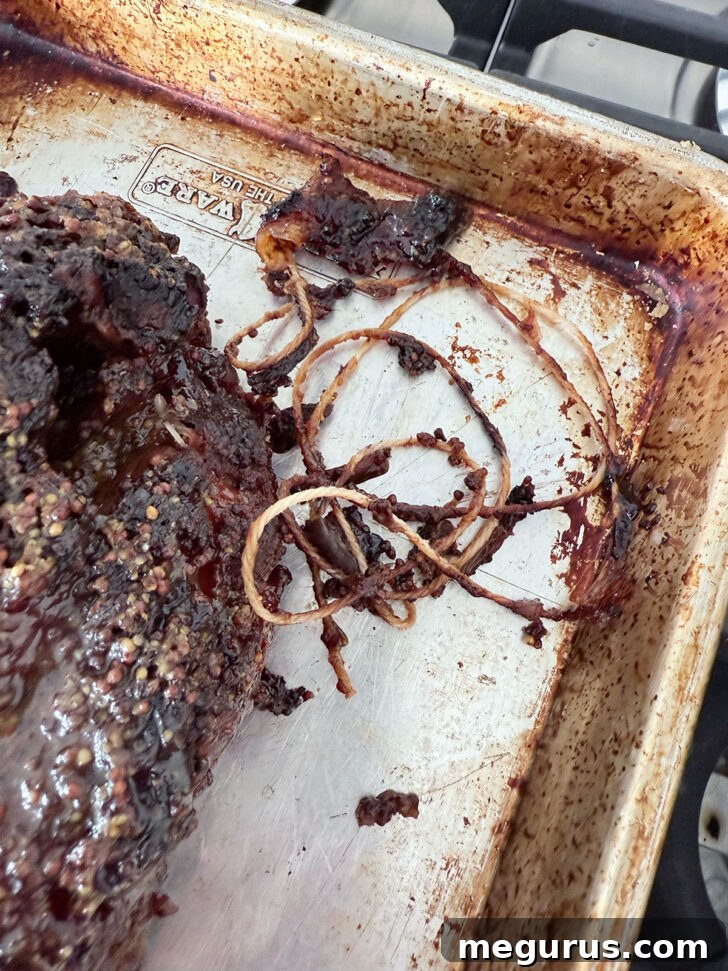
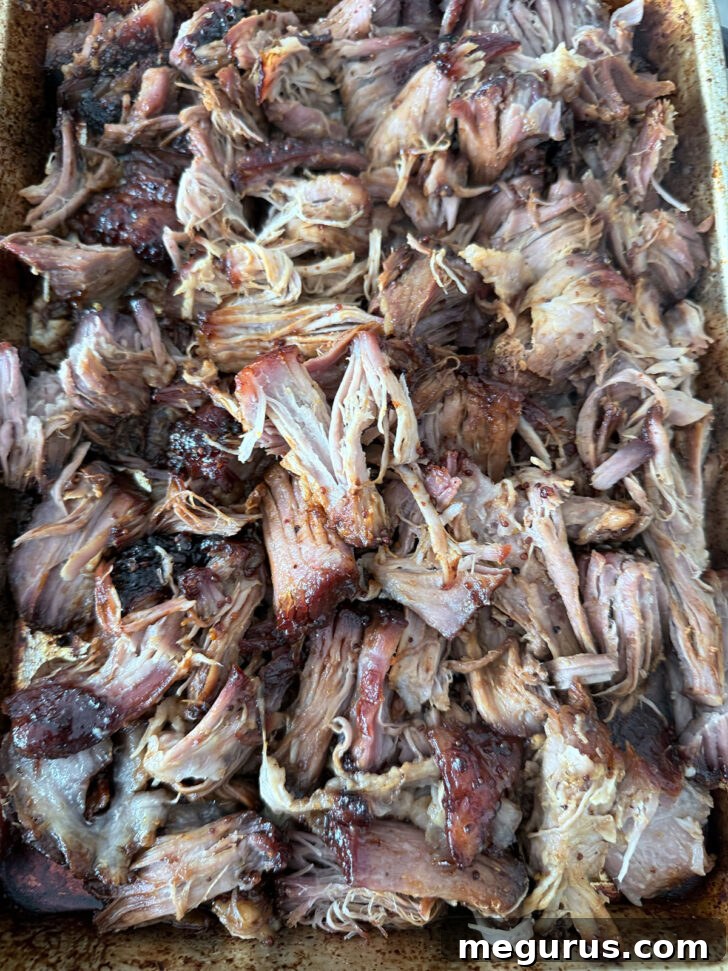
- Rest the Roast: Once the pork is tender and cooked through, carefully transfer it from the roasting pan to a clean rimmed baking sheet or cutting board. Loosely tent it with aluminum foil and let it rest for a crucial 15-20 minutes. This resting period allows the juices within the meat to redistribute, ensuring every shred of pulled pork is incredibly moist and flavorful. Do not skip this step!
- Pull the Pork: After resting, remove and discard any butcher’s twine that was holding the roast together. Using two sturdy forks, begin to “pull” the pork apart. The meat should be so tender that it easily shreds into delicious, bite-sized pieces. You can pull it as finely or as coarsely as you prefer.
- Serve with Glaze: Once all the pork is pulled, you can either toss it directly with a portion of the remaining maple mustard sauce or serve the sauce on the side for drizzling over individual portions. This allows everyone to customize their pulled pork to their preferred level of glaze. Serve immediately and enjoy the fruits of your labor!
Expert Tips for Perfect Pulled Pork
- Don’t Skip the Brine! This is perhaps the most important tip. While many pulled pork recipes cook in a covered environment (like a Dutch oven or slow-cooker) which helps retain moisture, our recipe roasts uncovered in the oven. This allows for that coveted crispy “bark” but also means the meat is more exposed to dry heat. The overnight dry brining is absolutely critical to keep the pork succulent and tender. It only takes a few minutes to rub the pork and place it in the fridge, so plan ahead!
- Line Your Roasting Pan: The maple mustard sauce, while delicious, becomes sticky and caramelized on the pan. For significantly easier cleanup, always line your roasting pan completely with heavy-duty aluminum foil. You’ll thank yourself later!
- Prevent Scorching: To avoid the pan drippings from scorching and producing unwanted burnt smells in your kitchen (and potentially affecting the flavor of your roast), I like to pour a small amount of water (about 1 cup) into the bottom of the roasting pan a couple of times throughout the cooking process. This keeps the drippings moist and flavorful without hindering the formation of the pork’s delicious crust.
- Invest in a Meat Thermometer: For absolute precision and peace of mind, an instant-read meat thermometer is a valuable tool. While we’re looking for fork-tenderness, knowing the internal temperature reaches around 195-205°F (90-96°C) ensures the collagen has broken down sufficiently for that perfect pull-apart texture.
- Resting is Key: After roasting, resist the urge to pull the pork immediately. Letting the roast rest, loosely covered with foil, for 15-20 minutes allows the meat fibers to relax and reabsorb the juices, resulting in a much moister and more flavorful pulled pork.
Serving Suggestions and Creative Pairings
This Maple Mustard Pulled Pork is incredibly versatile and can be enjoyed in many delicious ways. Here are some ideas to inspire your next meal:
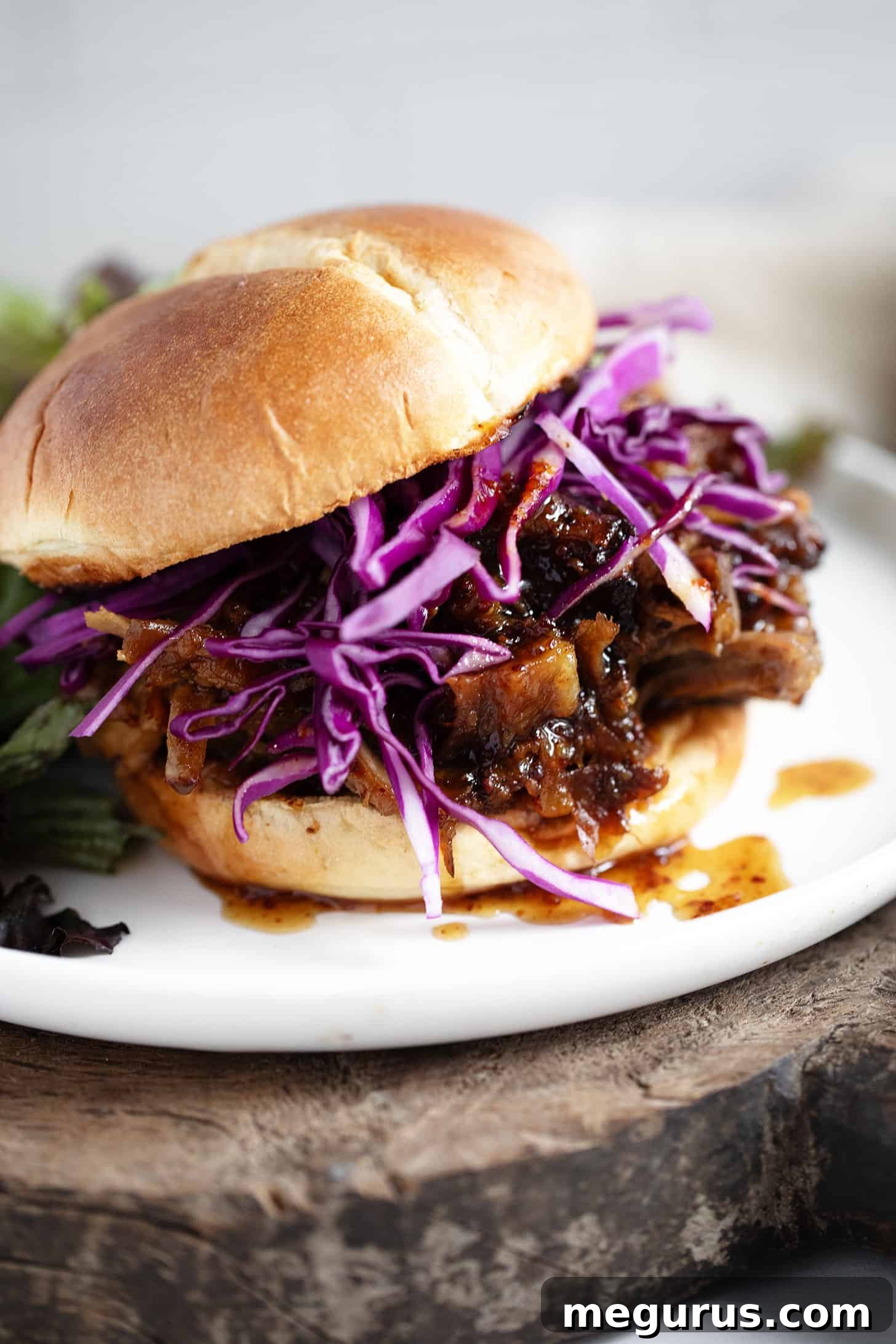
- Classic Pulled Pork Sandwiches: Serve it piled high on soft brioche or kaiser buns, topped with a crisp coleslaw (creamy or vinegar-based) or simple shredded cabbage for a delightful crunch. A few pickle slices add a nice tang.
- With Mashed Potatoes: For a comforting and hearty meal, enjoy the pulled pork on its own, alongside a generous scoop of creamy mashed potatoes, allowing the rich sauce to mingle with the potatoes.
- Braised Red Cabbage: A classic pairing, braised red cabbage offers a sweet and sour counterpoint that beautifully complements the richness of the pork.
- Tacos or Nachos: Use the pulled pork as a flavorful filling for tacos, topped with fresh salsa, avocado, and a squeeze of lime. It also makes an excellent topping for loaded nachos.
- Pulled Pork Mac and Cheese: Stir the shredded pork into your favorite macaroni and cheese recipe for an indulgent and satisfying dish.
- Salads and Bowls: Add a portion of cold pulled pork to a fresh green salad or a grain bowl for a protein-packed lunch.
- Sides to Consider: Beyond the classics, consider serving with cornbread, roasted sweet potatoes, green beans, or a simple garden salad with a vinaigrette dressing.
Storage and Reheating Tips
This Maple Mustard Pulled Pork makes excellent leftovers, making it perfect for meal prep or feeding a crowd.
- Refrigeration: Store any leftover pulled pork in an airtight container in the refrigerator for up to 3-4 days. For best results, store it with some of its juices or leftover sauce to keep it moist.
- Freezing: Cooked and shredded pulled pork freezes beautifully for longer storage. Place cooled pulled pork in freezer-safe bags or containers, ensuring as much air as possible is removed to prevent freezer burn. It can be frozen for up to 3 months. Thaw overnight in the refrigerator before reheating.
- Reheating: To reheat, gently warm the pulled pork on the stovetop over medium-low heat with a splash of chicken broth or water to prevent it from drying out. You can also reheat it in the oven at 300°F (150°C), covered, until warmed through. Avoid microwaving for best texture, though it’s an option for quick reheating.
Mustard and Maple Pulled Pork Recipe
This deliciously different mustard maple pulled pork starts with an economical pork shoulder roast. Dry-brining the pork overnight keeps the pork moist, and the oven-roasting produces a great crust on the roast. Enjoy on a bun or simply with mashed potatoes. This recipe offers a unique blend of sweet and savory, making it a standout dish for any occasion.
Prep Time: 15 minutes
Cook Time: 3 – 3.5 hours
Brining Time: 8 hours (overnight)
Total Time: Approximately 11 hours 15 minutes (including brining)
Yield: 8 servings
Ingredients
For the Brining:
- 1/4 cup (50g) fine salt
- 1/4 cup (50g) white granulated sugar
- 3 – 3 1/2 lb (1.5 kg) boneless, skinless pork shoulder roast, tied (see Note 1 below)
For the Maple Mustard Sauce:
- 1/2 cup (100g) light brown sugar, packed
- 7 Tablespoons (100ml) pure maple syrup (Grade A Dark or Grade B recommended for richer flavor)
- 7 Tablespoons (100g) whole-grain mustard (e.g., Maille Old Style or à l’Ancienne)
- 2 Tablespoons mustard powder (e.g., Keen’s)
- Freshly ground black pepper, to taste
Instructions
- Plan Ahead (Overnight Brining): The night before cooking, mix the salt and white sugar together in a small bowl. Rub this salt mixture evenly and generously over the entire pork shoulder. Not all of the mixture may be needed, but ensure good coverage. Place the rubbed pork shoulder into a large, sealable plastic food bag or wrap it tightly with plastic wrap. Place into the refrigerator to brine overnight or for at least 8 hours. This step is crucial for keeping the pork moist and flavorful, so do not skip it!
- Prepare for Roasting: The next day, or after the brining period, preheat your oven to 325°F (160°C) for a conventional oven (non-convection/not fan-assisted). Line a sturdy roasting pan completely with heavy-duty aluminum foil. This step is essential for easy cleanup, as the sauce will caramelize and become sticky.
- Rinse and Sauce the Pork: Remove the pork from the refrigerator and rinse it thoroughly with cold water to remove any excess brining mixture. Pat the roast completely dry with paper towels; a dry surface promotes a better crust. Place the dried pork into your prepared roasting pan. In a separate small bowl, whisk together the light brown sugar, pure maple syrup, whole-grain mustard, mustard powder, and a generous amount of freshly ground black pepper to create the rich maple mustard sauce. Brush this sauce generously over all sides of the pork shoulder.
- Roast to Perfection: Place the sauced pork roast in the preheated oven. Roast for approximately 3 to 3 1/2 hours. During the roasting process, baste the pork with additional sauce (from your reserved bowl) about every hour. This builds layers of flavor and helps create that desirable “bark.” Chef’s Tip: To prevent the pan drippings from scorching and producing unwanted smells, occasionally pour a cup or so of water into the bottom of the roasting pan. This keeps the drippings loose and moist without affecting the roast’s crispiness.
- Check for Doneness: The pork is ready when it is beautifully browned, caramelized, and fork-tender. To test doneness, gently pull at the meat with a fork. It should easily separate and shred with minimal effort, even with the butcher’s twine still on. If it doesn’t, continue cooking in 30-minute increments until it reaches the desired pull-apart consistency. Reserve some of the sauce for serving; if you run out, a small extra batch can be quickly mixed.
- Rest and Pull: Carefully transfer the roast from the oven to a rimmed baking sheet. Loosely cover it with aluminum foil and let it rest for 15-20 minutes. This resting period allows the juices to redistribute, ensuring a moist and flavorful pulled pork. Before serving, remove and discard any butcher’s twine holding the roast together. Using two forks, “pull” the pork apart into bite-sized shreds.
- Serve and Enjoy: Toss the pulled pork with a bit of the remaining maple mustard glaze, or drizzle it generously over individual servings. This pulled pork is fantastic piled high on soft buns with crisp cabbage or a creamy coleslaw. For a comforting meal, serve it alongside fluffy mashed potatoes or a vibrant braised red cabbage.
Recipe Notes
- Note 1 – Pork Shoulder Selection: When selecting your pork shoulder, look for a boneless, skinless cut, often referred to as pork butt or Boston butt. It typically comes tied with butcher’s string and will have a decent fat cap on one side, but no skin. Aim for a roast weighing between 3 and 3 1/2 lbs (1.5 kg). If your roast is slightly smaller or larger, adjust the cooking time accordingly, decreasing for smaller cuts and increasing for larger ones, ensuring it reaches fork-tenderness.
- Ingredient Quality: Using high-quality ingredients, especially real maple syrup (Grade A Dark or Grade B for maximum flavor) and a robust whole-grain mustard, will significantly enhance the final taste of your pulled pork. The nuanced flavors make a real difference.
- Make Ahead & Freezing: This pulled pork is an excellent candidate for meal prep. Cook it ahead of time, shred it, and store leftovers in an airtight container in the refrigerator for up to 3-4 days. For longer storage, freeze portions for up to 3 months. Thaw in the refrigerator overnight and reheat gently on the stovetop or in the oven with a splash of broth to maintain moisture.
Nutrition Information (Approximate Per Serving)
- Serving Size: 1 serving
- Calories: 392 kcal
- Carbohydrates: 33g
- Protein: 46g
- Fat: 8g
- Saturated Fat: 2g
- Polyunsaturated Fat: 1g
- Monounsaturated Fat: 4g
- Trans Fat: 0.03g
- Cholesterol: 119mg
- Sodium: 3794mg
- Potassium: 841mg
- Fiber: 1g
- Sugar: 30g
- Vitamin A: 10 IU
- Vitamin C: 0.2mg
- Calcium: 60mg
- Iron: 2mg
Recipe adapted from a BBC Good Food recipe.
More Pulled Pork Recipes to Love!
If you’ve enjoyed this delightful maple mustard pulled pork, you might be keen to explore other variations of this incredibly versatile dish. Here are a couple more pulled pork recipes that are sure to become family favorites:
We hope this detailed guide inspires you to create a truly spectacular Maple Mustard Pulled Pork. With its irresistible flavor profile and melt-in-your-mouth tenderness, it’s bound to become a staple in your culinary repertoire. Enjoy the cooking process and savor every delicious bite!