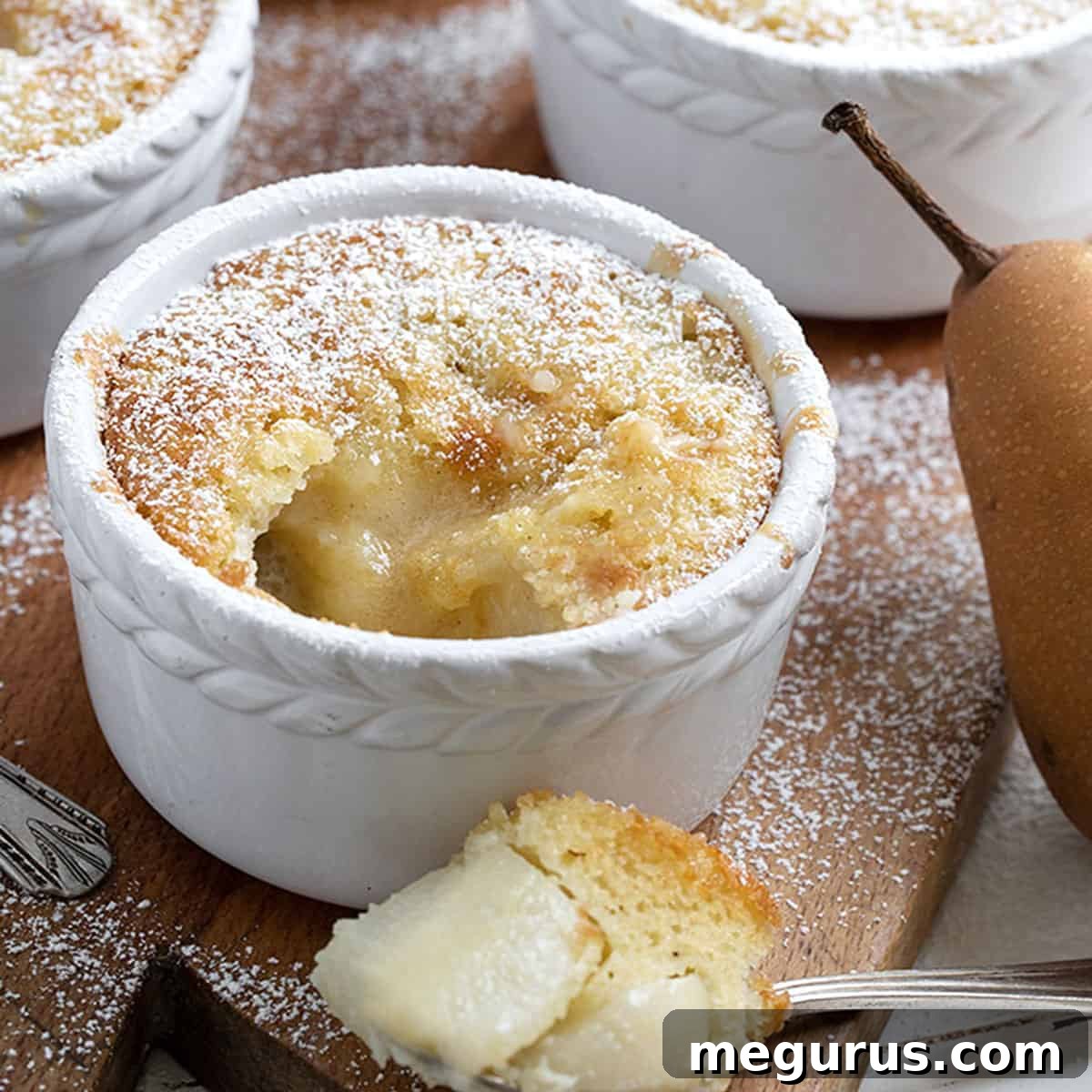
Irresistibly Easy Pear Pudding Cake: Your New Favorite One-Bowl Dessert
Discover the ultimate comfort dessert with this incredibly quick and easy Pear Pudding Cake. Crafted in just one bowl with no mixer required, this delightful creation offers a unique blend of a tender, fruit-filled cake and a rich, custard-like pudding. It’s a perfect treat for any occasion, equally delicious served warm with a scoop of vanilla ice cream or enjoyed at room temperature.
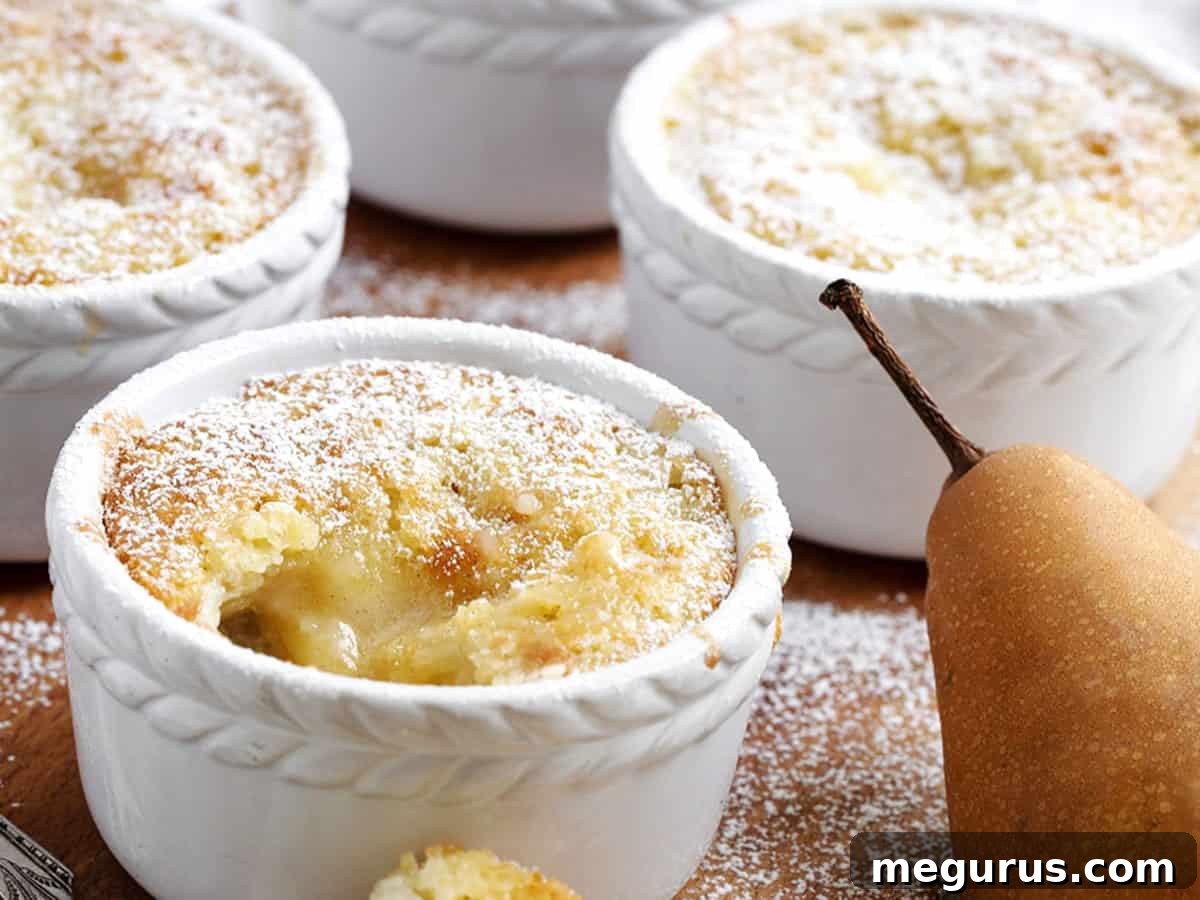
The Sweet Debate: Is It a Pudding or a Cake?
When I first developed this recipe, I wrestled with the perfect name. Is it a classic British-style pudding? A simple, moist cake? The truth is, it beautifully bridges both worlds. This dessert isn’t quite a traditional pudding in the dense, steamed sense, nor is it a light, airy cake. Instead, it’s a harmonious blend, offering the best of both textures: a wonderfully moist, tender cake-like base infused with succulent pear chunks, topped with a distinctive, almost custardy egg-and-sugar crust that bakes on to intensify its rich flavor profile. This unique “pudding cake” identity is precisely what makes it so special and utterly irresistible.
Beyond its intriguing texture, this recipe’s simplicity is its greatest charm. Imagine whipping up a gourmet-tasting dessert with minimal fuss – just one bowl and no electric mixer needed! If you’re a fan of baked pears, or simply looking for an effortless yet impressive sweet treat, this recipe is designed for you. No matter what you choose to call it, the end result is pure pear-infused bliss.
Essential Ingredients for Your Pear Pudding Perfection
Crafting this delightful pear pudding cake relies on a handful of common pantry staples and, of course, the star fruit itself. Each ingredient plays a crucial role in achieving that perfect balance of sweetness, moisture, and custard-like texture.
Choosing and Preparing the Best Pears
The foundation of any great pear dessert is, naturally, the pears! For this pudding cake, selecting the right variety and ensuring proper ripeness are key. You can use any type of pear you prefer, as long as it’s perfectly ripe. Ripe pears will offer a softer texture and a sweeter, more fragrant flavor that truly shines in the baked dessert.
- Recommended Variety: I frequently use Bosc pears for this recipe. They are one of my personal favorites due to their firm yet tender flesh and excellent flavor. Bosc pears are also often sold either ripe or nearly ripe, saving you the waiting time typically associated with some other varieties. However, Anjou, Bartlett, or Comice pears would also be excellent choices, just ensure they are ripe enough to yield slightly to gentle pressure.
- Preparation Steps:
- Begin by carefully peeling each pear using a vegetable peeler. This ensures a smooth texture in the final pudding cake.
- Next, quarter each pear.
- Using a sharp knife, meticulously slice away the core, any seeds, and the tough fibrous membrane that extends up towards the stem. Discard these parts.
- Finally, cut the pear quarters into chunks. The size of your chunks can be adjusted slightly based on your baking vessel. For smaller individual ramekins, smaller chunks are ideal, ensuring each bite contains tender pear. If you’re using a larger baking pan, you can opt for slightly larger pieces, which will soften beautifully during baking.
Pantry Staples for a Flawless Batter
Beyond the pears, the following ingredients form the custardy cake batter and the unique topping:
- All-Purpose Flour: Provides the structure for our cake-like base. Ensure it’s spooned and leveled for accurate measurement.
- White Granulated Sugar: Sweetens both the batter and the topping, balancing the tartness of the pears and contributing to the golden crust.
- Baking Powder: Our leavening agent, giving the pudding cake its desirable rise and tender crumb.
- Fine Salt: A pinch of salt enhances all the other flavors, preventing the dessert from tasting flat.
- Milk (Whole or 2%): Adds richness and moisture to the batter. While I haven’t extensively tested with milk alternatives, full-fat oat milk or almond milk may work, though the texture might vary slightly.
- Vegetable or Canola Oil: A neutral oil contributes moisture without imparting additional flavor, resulting in a very tender crumb. Other neutral oils like grapeseed oil could also be used.
- Vanilla Extract (or Vanilla Bean Paste): Essential for its warm, aromatic notes, which beautifully complement the sweetness of the pears.
- Large Eggs (for Batter): Act as a binder, contribute to the custardy texture, and help with the overall structure.
The Distinctive Topping Ingredients
The topping is a simple yet impactful addition that truly elevates this dessert, forming a delicate, golden crust that seals in moisture and amplifies the custard flavors.
- White Granulated Sugar (for Topping): Creates a crisp, sweet layer when baked.
- Large Egg (for Topping): Combines with the sugar and butter to form the rich, custardy glaze.
- Unsalted Butter (Melted and Cooled): Adds richness and helps the topping caramelize beautifully. It’s crucial that the butter is melted and then cooled before mixing with the egg to prevent the egg from scrambling.
Garnish for a Perfect Finish
A simple garnish can add both visual appeal and a touch of extra sweetness.
- Icing/Confectioners’ Sugar: A light dusting of powdered sugar just before serving provides an elegant finish and a subtle extra sweetness that contrasts wonderfully with the warm pudding cake.
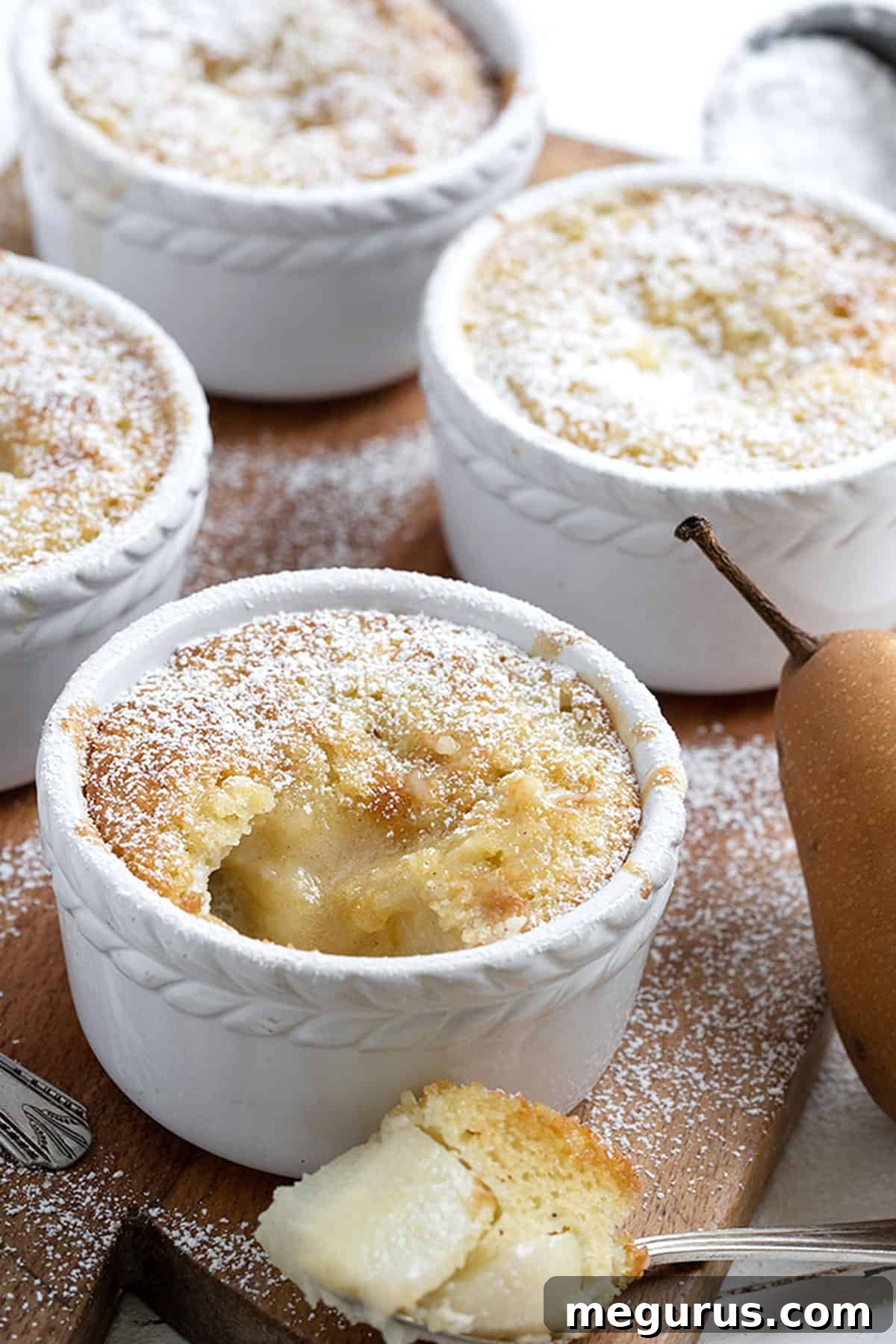
Mastering Your Pear Pudding Cake: Expert Tips for Success
Achieving pear pudding perfection is simple with these helpful tips, ensuring your dessert turns out beautifully every time:
- Gluten-Free and Dairy-Free Adaptations: While this recipe hasn’t been specifically tested with gluten-free flour, a good quality one-for-one gluten-free baking blend (that includes xanthan gum) should work well. Similarly, for dairy-free alternatives, unsweetened full-fat oat milk or almond milk could potentially be substituted for cow’s milk, though the richness and final texture may vary. Always keep in mind that results can differ with substitutions.
- Perfect Topping Application: The timing of adding the topping is crucial. Make sure your pudding cakes have baked for approximately 20 minutes and are just beginning to set before pouring on the topping mixture. This initial setting prevents the topping from sinking completely into the batter, allowing it to bake into that distinctive, beautiful crust on top.
- Ramekin Sizing and Yield: This recipe typically yields four larger individual pudding cakes. If you prefer smaller portions, you can use smaller ramekins, which will likely produce five or six servings. Adjust baking time slightly for smaller ramekins, checking for doneness a few minutes earlier.
- Avoid Overfilling: These pudding cakes will rise significantly as they bake. To prevent overflowing, do not fill your ramekins more than about two-thirds full. This allows ample space for the cake to expand, ensuring neat and visually appealing individual desserts.
- Baking Sheet is Your Friend: Always place your ramekins on a baking sheet before transferring them to the oven. This simple step provides stability, makes it easier to move the hot ramekins, and acts as a safety net to catch any potential drips or overflows, keeping your oven clean.
- Serving Temperature and Enhancements: These cakes are truly delightful served warm, straight from the oven. For an extra touch of decadence, a scoop of vanilla ice cream melting over the warm cake is highly recommended. The contrast of warm cake and cold, creamy ice cream is simply divine. They are also perfectly enjoyable at room temperature, making them a great make-ahead option.
- Flavor Variations: Consider adding a pinch of cinnamon or nutmeg to the batter for a warmer spice profile, or a tablespoon of finely chopped candied ginger for an extra kick. A touch of lemon zest could also brighten the pear flavor.
- Visual Doneness Cues: Beyond the baking time, look for visual cues. The pudding cakes should be golden brown on top and a skewer inserted into the center of the cake (underneath the topping) should come out clean. The topping itself should be set and slightly caramelized.
Storing and Reheating Your Delightful Pear Pudding Cake
One of the many great things about this pear pudding cake is its versatility, extending to how well it stores and reheats. While undeniably best enjoyed fresh from the oven, these individual desserts can easily be prepared in advance and saved for later enjoyment.
To store any leftovers, allow the pudding cakes to cool completely to room temperature. Then, cover them tightly with plastic wrap or transfer them to an airtight container. They will keep well in the refrigerator for up to 3-4 days. This makes them an excellent candidate for meal prep or for having a convenient dessert ready to go.
When you’re ready to enjoy them again, reheating is a breeze. For warm pudding cakes, simply place them back into a preheated 350°F (175°C) oven, loosely covered with foil to prevent the topping from over-browning. Reheat for about 10-15 minutes, or until warmed through to your liking. You can also gently warm individual servings in the microwave for 30-60 seconds, though the oven method will help maintain the crispness of the topping better. Always ensure they are thoroughly heated before serving. These cakes stand up remarkably well to refrigeration and reheating, retaining their moist texture and wonderful flavor, making them a convenient and delicious treat anytime.
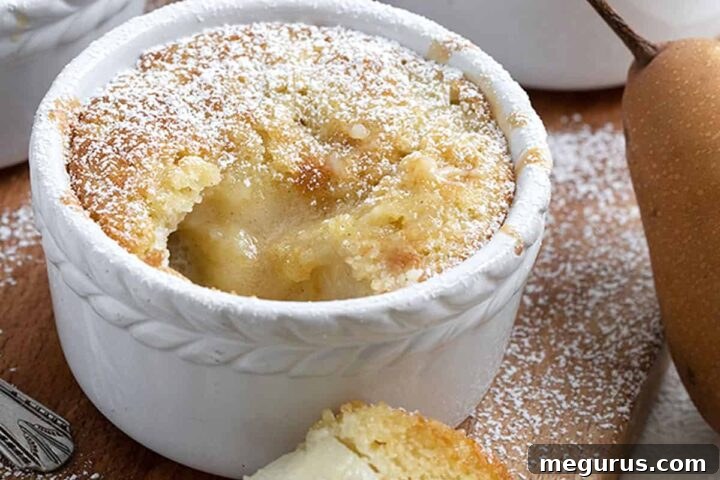
Get the Recipe: Pear Pudding Cake
Pin This
Leave a Review
Ingredients
- 1/2 cup all-purpose flour, spooned and levelled
- 1/3 cup white granulated sugar
- 1 Tablespoon baking powder
- 1/8 teaspoon fine salt
- 1/3 cup milk, whole or 2% recommended
- 2 Tablespoons vegetable or canola oil, or other neutral oil
- 1 teaspoon vanilla extract, or vanilla bean paste
- 2 large eggs
- 4 pears, ripe, peeled, cored and cut into chunks
Topping:
- 1/3 cup white granulated sugar
- 1 large egg
- 3 Tablespoons unsalted butter, melted and cooled
Garnish:
- Icing/Confectioners’ Sugar, for dusting
Instructions
-
Preheat oven to 350°F (175°C) (using a regular bake setting, not fan-assisted). Prepare 4-6 ramekins (4 large or 5-6 smaller) by lightly buttering or spraying them with cooking/baking spray. Set aside.
-
Prepare the pears as directed in the “Choosing and Preparing the Best Pears” section above (peeled, cored, and cut into chunks) and set aside.
-
In a large mixing bowl, whisk together the flour, granulated sugar, baking powder, and salt until well combined. In a separate small bowl or measuring cup, combine the milk, vegetable oil, and vanilla extract. Pour the wet ingredients into the dry flour mixture. Add the two large eggs and stir everything together until the batter is smooth and no lumps of flour remain. Gently fold in the prepared pear chunks, ensuring they are evenly coated.
-
Spoon the pear batter into the prepared ramekins, dividing it evenly among them. Be careful not to overfill, as these pudding cakes will rise significantly during baking. Fill each ramekin no more than about two-thirds full! Place the filled ramekins on a sturdy baking sheet to ensure even baking and easy transport, then carefully place them in the preheated oven. Bake for an initial 20 minutes.
-
While the pudding cakes are baking, prepare the unique custard-like topping. First, melt the butter and set it aside to cool completely. This step is crucial. Once the butter has cooled to room temperature, stir together the remaining 1/3 cup sugar, the large egg, and the cooled melted butter until the mixture is smooth and thoroughly combined. Ensure the butter is cool before adding it to the egg to prevent the egg from cooking. Set this topping mixture aside until needed.
-
After the initial 20 minutes of baking, carefully remove the pudding cakes from the oven. The batter should be partially set. Evenly pour the prepared topping mixture over the surface of each pudding cake. If necessary, gently spread the topping with the back of a spoon to create an even layer. Return the ramekins on their baking sheet to the oven and continue to bake for an additional 15 minutes, or until the topping is beautifully set, golden brown, and the pudding cakes are firm to the touch.
-
Allow the pear pudding cakes to cool for at least 5 minutes before serving warm. For an elegant presentation, dust generously with icing (confectioners’) sugar. Alternatively, serve with a luxurious scoop of vanilla ice cream melting on top. These delightful desserts are also perfectly delicious and satisfying when enjoyed at room temperature. Any leftovers should be covered and refrigerated for optimal freshness.
Notes
Tried this recipe?
If you enjoyed this recipe, please consider leaving a star rating and comment to help others discover it!