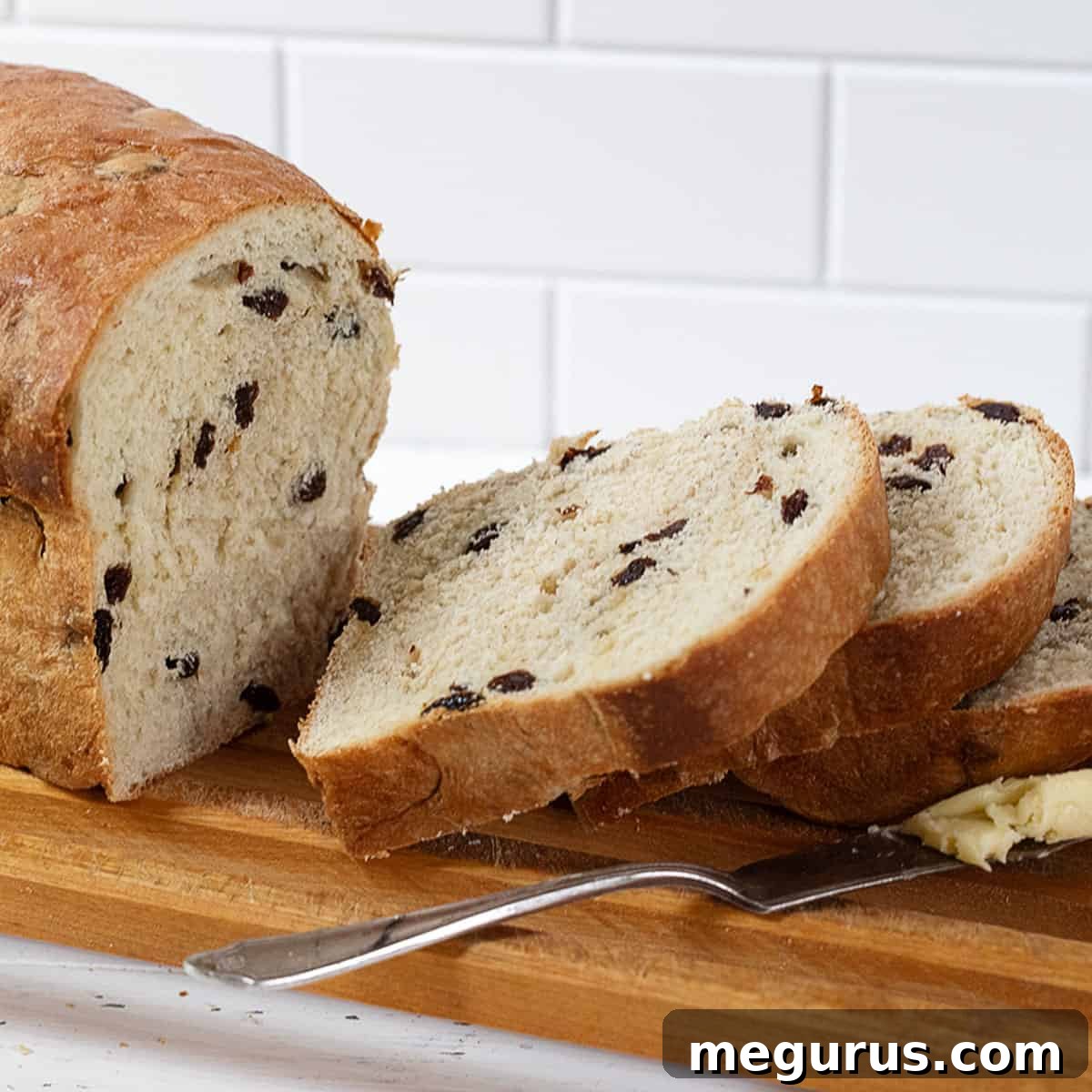
Classic Raisin Bread: A Timeless Homemade Delight (No Cinnamon)
Discover the enduring charm of simple, classic raisin bread. Perfect for a leisurely breakfast, a comforting snack, or even a unique sandwich, this versatile loaf freezes beautifully, making it an ideal staple for any kitchen. Forget complex flavors; this recipe celebrates the pure, sweet essence of plump raisins baked into a soft, tender crumb.
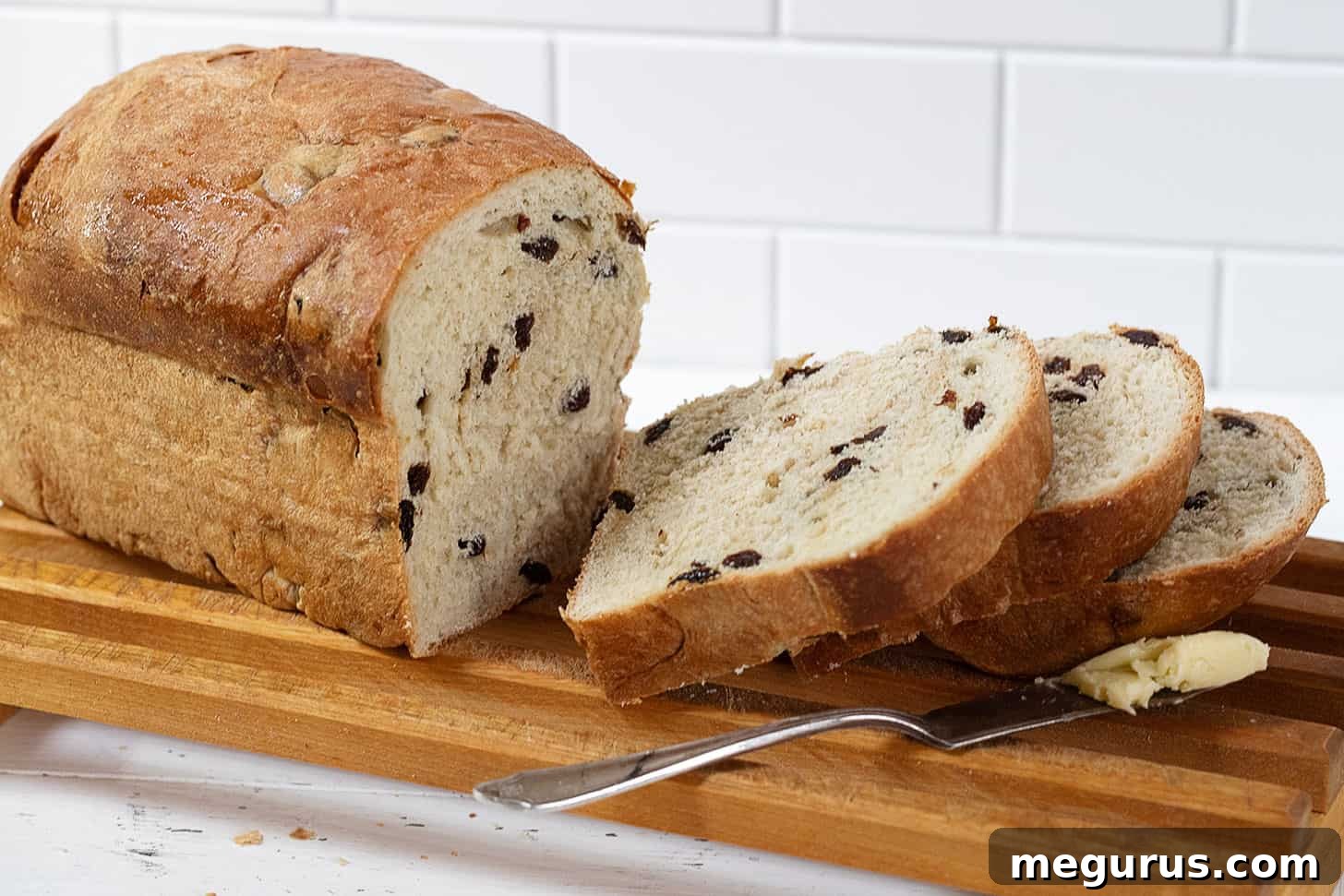
Why You’ll Fall in Love with This Homemade Raisin Bread
There’s something uniquely comforting about a loaf of homemade raisin bread. This classic recipe, intentionally crafted without cinnamon, holds a special place in my heart and is a regular fixture in my kitchen. Its pure, unadulterated flavor profile allows the natural sweetness of the raisins and the rich notes of the bread to truly shine.
The Perfect Morning Toast
Start your day right with a slice of this magnificent bread, expertly toasted to a golden crisp. Spread generously with butter, it offers a simple yet profound pleasure. If you find yourself missing the warmth of cinnamon, a sprinkle of cinnamon sugar on your toasted raisin bread creates a delightful compromise, offering that familiar spice without impacting the dough’s delicate rise.
An Unexpected Sandwich Star
Beyond breakfast, this bread transcends expectations as an exceptional choice for sandwiches. Its subtle sweetness perfectly complements savory fillings, creating a harmonious blend of flavors. I highly recommend pairing it with a classic combination of thinly sliced turkey, creamy Havarti or Swiss cheese, and fresh sprouts. This surprising pairing often converts even the most skeptical palates!
Effortless Freezing for Future Enjoyment
One of the greatest advantages of this recipe is its freezer-friendly nature. The bread retains its superb texture and flavor after thawing, making it perfect for meal prep. Feel free to double the recipe and bake two loaves simultaneously – one to enjoy immediately and one to stash away for those busy days when you crave a homemade treat without the baking effort. Imagine having a wholesome, delicious loaf ready at a moment’s notice!
Essential Ingredients & Smart Substitutions for Your Raisin Bread
Understanding the role of each ingredient and knowing your substitution options will empower you to bake perfect raisin bread every time. Here’s a closer look at the key components:
Raisins: The Star Sweetener
The choice of raisins greatly influences the final taste and texture of your bread. While I’ve often used plump Thompson raisins, Sultanas and Golden Raisins are also excellent choices, each lending a slightly different hue and sweetness. Feel free to use your preferred variety, mix different types for a complex flavor, or simply use what you have on hand. The key is to ensure they are high-quality and, as we’ll discuss, properly plumped.
Milk: For Superior Flavor and Crumb
Milk is a crucial ingredient in yeast bread doughs, contributing significantly to both flavor and texture. The fat and sugars in whole milk (3%) enrich the dough, resulting in a wonderfully soft, tender crumb and a richer taste. While whole milk offers the best results, any type of milk will work. For those avoiding dairy, an equal amount of water can be used as a direct substitute. Be aware, however, that using water may yield a slightly less tender loaf with a milder flavor.
Butter: Enhancing Richness and Aroma
Melted butter adds an irresistible richness and a delicate, savory flavor to this raisin bread, complementing the sweetness of the fruit beautifully. It also contributes to a softer crust and an improved overall texture. If you prefer a dairy-free option or are simply out of butter, an equal amount of liquid oil – such as vegetable oil, canola oil, or any neutral-tasting oil – can be used. This substitution will still provide the necessary fat for moisture, though the flavor profile may be slightly different.
Flour: The Foundation of Your Loaf
Unbleached all-purpose flour is consistently my top recommendation for yeast bread baking. It provides a good balance of protein for structure without making the bread overly dense. If unbleached is not available, regular all-purpose flour works perfectly fine. Should you only have bread flour, you can use it, but be prepared to use slightly less flour overall, as bread flour has a higher protein content and absorbs more liquid. For a more wholesome loaf, consider replacing up to 1 cup of all-purpose flour with whole wheat flour. This will result in a denser texture and a nuttier flavor, and you might need to adjust the total flour amount accordingly.
Yeast: The Life of the Loaf
Yeast is what gives your bread its beautiful rise and airy texture. For this classic two-rise recipe, you can successfully use either active dry yeast or regular instant yeast (such as SAF Brand). It’s important to note that rapid or quick-rise yeast is generally not recommended for this particular recipe. These yeasts are formulated for a faster, single rise, which can sometimes compromise the depth of flavor and texture developed during a traditional two-rise method.
Expert Tips for Baking Your Best Raisin Bread
Achieving a perfectly soft, flavorful raisin bread isn’t just about following the recipe; it’s about understanding the techniques that ensure success. Here are some invaluable tips to guide you:
The Art of Scalding Milk
Scalding milk might seem like an extra step, but it’s a worthwhile one for yeast bread. This process involves heating the milk to exactly 181°F (83°C). The heat denatures the whey proteins in the milk, which are known to inhibit yeast activity. By eliminating this inhibitory effect, you create an optimal environment for your yeast to thrive, resulting in a more robust and consistent rise. A good quality thermometer is essential for accuracy. After scalding, it’s critical to allow the milk to cool sufficiently before adding yeast. For active dry yeast, aim for 105-110°F (40-43°C); instant yeast can tolerate slightly warmer temperatures, up to 125°F (52°C).
Plumping Raisins for Superior Texture
Raisins, being dehydrated fruit, can draw moisture from your dough during baking, potentially leading to a drier loaf. “Plumping” them by soaking them in hot water remedies this. This simple step rehydrates the raisins, making them wonderfully juicy and tender within the bread. To plump, cover your raisins with very hot or boiling water and let them sit for 10-15 minutes. Drain them thoroughly and pat them dry with a paper towel. A clever trick is to toss the plumped and dried raisins with a tablespoon of flour before adding them to the dough. This light coating helps them integrate more evenly into the dough, preventing them from sinking to the bottom of the loaf.
Preventing Burnt Raisins: A Flavor Saver
Few things are as disappointing as biting into a bitter, burnt raisin. Exposed raisins on the surface of your loaf caramelize too quickly and can develop an unpleasant, acrid taste. The solution is simple yet crucial: after shaping your dough into a loaf and before its final rise, carefully examine the surface. Gently push any visible raisins back into the dough. This ensures that all the delicious, plump raisins are nestled safely within the bread, protected from the direct heat of the oven, guaranteeing a sweet and enjoyable bite every time.
The Golden Rule of Flour: Hold Some Back
Flour quantities in recipes are always approximate. Factors like brand variations, humidity levels in your kitchen, and even how you measure flour can significantly impact the dough’s consistency. Never dump the entire specified amount of flour into your mixing bowl at once. Instead, start with about three-quarters of the recommended flour, mixing it thoroughly. Then, gradually add the remaining flour in small increments, mixing after each addition. Continue this process until your dough reaches the desired consistency: smooth, moist, and elastic, but no longer sticky. When using a stand mixer, the dough should cleanly pull away from the sides of the bowl and wrap around the kneading hook.
A Note on Cinnamon: Friend or Foe to Yeast?
This recipe celebrates the pure essence of raisin bread, intentionally omitting cinnamon. It’s a distinct variation from cinnamon raisin bread. If you’re truly keen on adding cinnamon, you could incorporate about a teaspoon into the dough. However, be aware that cinnamon is a known yeast inhibitor. Its presence will significantly slow down the yeast’s activity, meaning you’ll need to extend the rising times considerably. This is precisely why many cinnamon raisin bread recipes feature a cinnamon swirl – to introduce the flavor without direct contact with the yeast in the bulk of the dough, thus preventing it from impeding the rise.
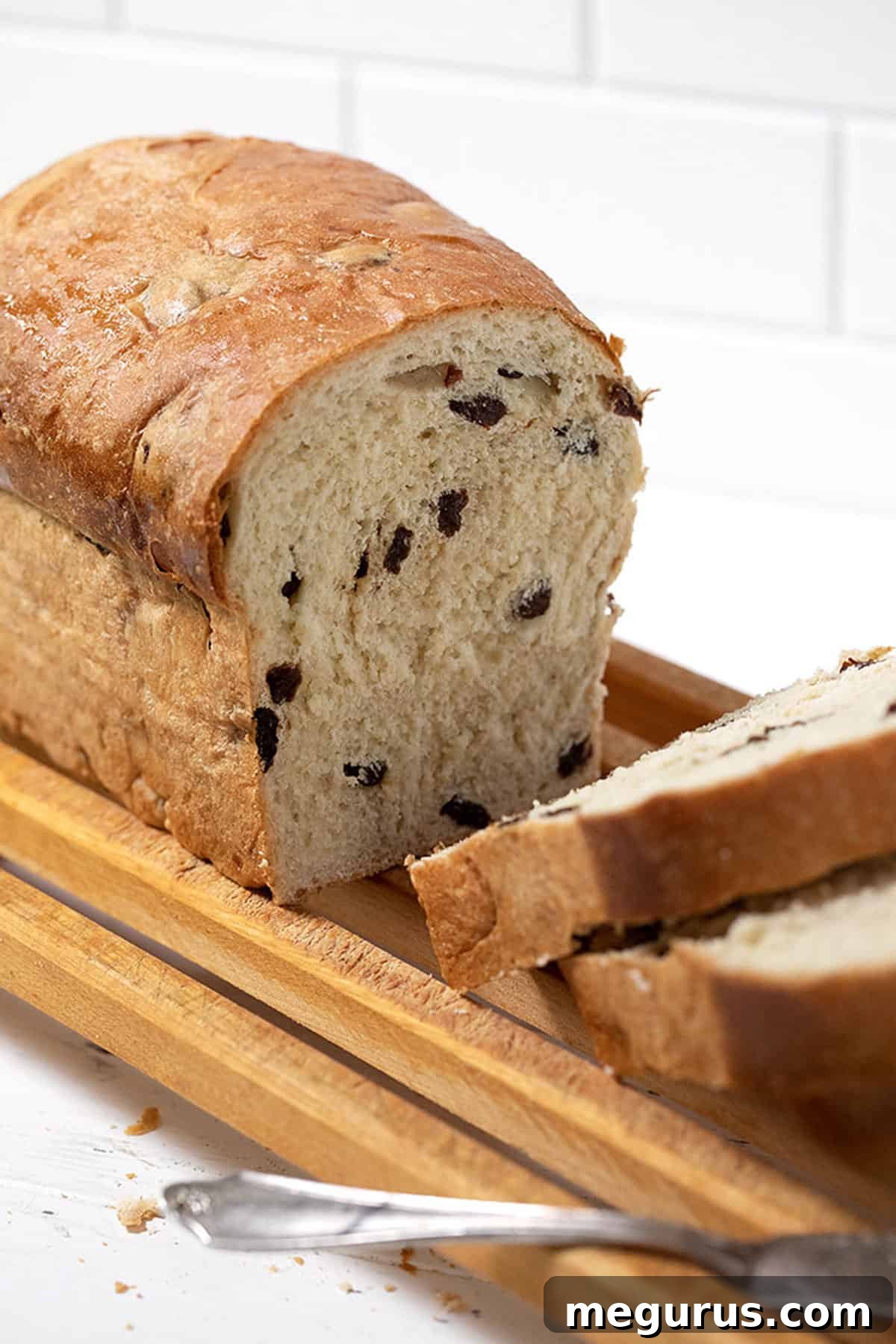
Storing Your Raisin Bread for Lasting Freshness
To enjoy your homemade raisin bread for as long as possible, proper storage is key. Once completely cooled, store the loaf in an airtight container at room temperature for 2-3 days. For an extended shelf life, refrigerate the bread; this can keep it fresh for up to a week. However, keep in mind that refrigeration can sometimes alter the texture slightly, making it a bit firmer. For optimal freshness, simply warm refrigerated slices before serving.
Freezing Instructions for Long-Term Enjoyment
This raisin bread freezes exceptionally well, allowing you to savor its deliciousness for up to 2 months. To freeze, ensure the loaf is completely cooled. For best results, slice the bread before freezing, then arrange the slices in a single layer on a baking sheet and freeze until solid. Once frozen, transfer the slices to a freezer-safe bag or airtight container, removing as much air as possible to prevent freezer burn. Alternatively, you can freeze the entire loaf, wrapped tightly in plastic wrap and then in aluminum foil. To enjoy, simply thaw slices as needed at room temperature or toast directly from frozen for a quick treat.
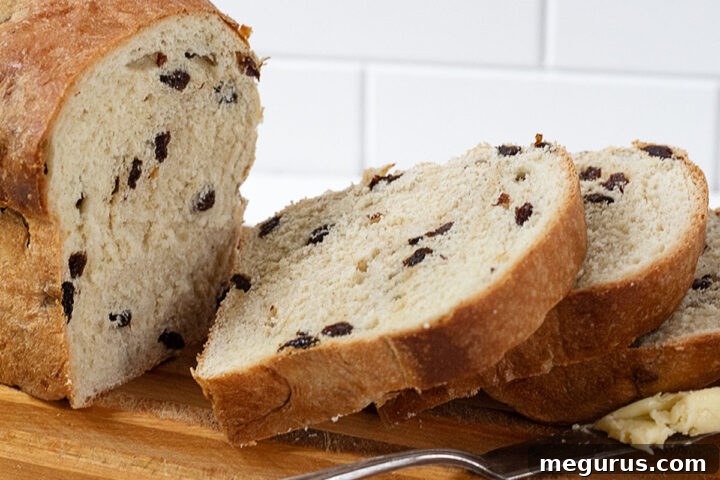
Get the Recipe: Classic Raisin Bread
Pin This
Leave a Review
Ingredients
- 1 cup (240 ml) milk, scalded and cooled *see instructions below
- 1 cup raisins, plumped and patted dry *see instructions below
- 3 cups (375 g) all purpose flour, unbleached recommended, spooned and levelled
- 2 1/4 teaspoons active dry or instant yeast
- 1 1/2 Tablespoons white granulated sugar
- 1 teaspoon fine table salt
- 1 1/2 Tablespoons butter, melted and cooled, salted or unsalted
- 1 large egg
For glazing after baking:
- 2 Tablespoons white granulated sugar
- 2 Tablespoons hot water
Instructions
-
Prepare the Milk: In a small saucepan, heat the milk over medium heat, stirring occasionally, until it reaches 181°F (83°C). Look for steam and small bubbles forming around the edges; avoid boiling. Pour the scalded milk back into your measuring cup and allow it to cool to lukewarm, approximately 105°F (40°C). This precise cooling is vital for yeast activation.
-
Activate Yeast (if using Active Dry): If using active dry yeast, sprinkle it over the lukewarm milk (ensuring it’s not too hot, which can kill the yeast). Stir gently and let stand for 5 minutes until foamy. If using instant yeast, you can add it directly with the dry ingredients in the next step.
-
Plump the Raisins: Place the raisins in a small bowl and cover them with very hot water. Let them soak for 10-15 minutes to rehydrate. Once plumped, drain them thoroughly and pat completely dry with paper towels. This prevents them from making the dough soggy.
-
Combine Dry Ingredients: In a large mixing bowl or the bowl of a stand mixer fitted with a dough hook, combine 2 cups of the flour, the instant yeast (if not pre-activated), white granulated sugar, and salt. Mix briefly until just combined.
-
Form the Dough: Add the lukewarm milk (or the milk/yeast mixture if using active dry yeast) to the flour mixture. Incorporate the melted butter, ensuring it has cooled sufficiently so it doesn’t cook the egg you’re about to add. Finally, add the large egg. Knead the mixture until well combined. Gradually add more flour, a tablespoon at a time, until the dough comes together, wraps around the dough hook, and cleans the sides of the bowl. The dough should be smooth, moist, and slightly tacky but not sticky.
-
Incorporate Raisins: Lightly toss the plumped and dried raisins with a small amount of flour (about 1 teaspoon). Add them to the dough in the mixer or bowl and mix just until they are evenly distributed throughout. Add a tiny bit more flour if the dough becomes too sticky from the raisins.
-
Prepare Loaf Pan: Grease an 8×4-inch (20×10 cm) loaf pan thoroughly and set it aside.
-
First Rise: Transfer the dough to a lightly floured surface and knead briefly (for 1-2 minutes) until it’s smooth and elastic. Form the dough into a ball. Place this ball into a lightly greased bowl, turning it once to coat, then cover with plastic wrap or a clean kitchen towel. Let it rise in a warm, draft-free place until it has doubled in size, which typically takes about 1 hour.
-
Shape the Loaf: Gently punch down the risen dough to release the air. Transfer it to a lightly floured surface and pat it into a rectangle approximately 9 inches (23 cm) long and 5 inches (13 cm) wide. Bring the long edges of the rectangle towards the center and pinch them together to form a seam. Flip the loaf over so the seam is underneath. Critically, push any exposed raisins back into the dough to prevent them from burning during baking. Place the shaped loaf into your prepared loaf pan.
-
Second Rise: Cover the loaf pan with plastic wrap or a kitchen towel and let it rise again in a warm, draft-free spot until it has nearly doubled in size, approximately 45 minutes. This second rise develops more flavor and ensures a light, airy texture.
-
Preheat Oven: While the loaf is on its second rise, preheat your oven to 350°F (175°C). If your oven has a fan-assisted setting, turn it off; conventional baking heat is preferred for this recipe.
-
Bake the Bread: Once the loaf has completed its second rise, place it in the preheated oven and bake for about 35 minutes. The bread is done when its internal temperature reaches 190°F (88°C) using an instant-read thermometer. Around the 25-minute mark, check the loaf. If it is browning too quickly, loosely tent a piece of aluminum foil over the top to prevent further darkening, and continue baking until fully cooked.
-
Glaze and Cool: Immediately upon removing the hot loaf from the oven, carefully remove it from the loaf pan and place it on a wire cooling rack. While the bread is still hot, whisk together the 2 tablespoons of white granulated sugar and 2 tablespoons of hot water to create a simple glaze. Brush this glaze over the top of the hot loaf. Allow the bread to cool completely on the rack before slicing and serving. This ensures the crumb sets properly and makes for cleaner slices.
Notes
For additional insights and pro tips, be sure to read the detailed notes and explanations provided throughout the article above the recipe card!
Tried this recipe?
If you enjoyed this recipe, please leave a star rating and comment. Your feedback helps others discover and love this recipe!
Troubleshooting Common Raisin Bread Issues
Even experienced bakers encounter challenges. Here are solutions to common problems you might face when baking raisin bread:
- Dough Not Rising: If your dough isn’t rising, the most likely culprits are inactive yeast or incorrect milk temperature. Ensure your yeast isn’t expired. When proofing active dry yeast, the milk should be warm (105-110°F / 40-43°C), not hot, as excessive heat kills yeast. Cold liquid will also hinder activation.
- Dense Bread: A dense loaf can result from too much flour, insufficient kneading, or under-rising. Remember the tip about holding back some flour and adding it gradually. Knead until the dough is smooth and elastic. Allow sufficient time for both rises; don’t rush the process.
- Dry Bread: Dry bread is often a sign of too much flour, overbaking, or unplumped raisins drawing moisture from the dough. Ensure you’re adding flour incrementally until the dough is just right. Monitor baking time and internal temperature (190°F / 88°C is ideal). Always plump your raisins!
- Raisins Sinking to the Bottom: This is common. Tossing plumped and dried raisins lightly in flour before adding them to the dough helps them adhere to the gluten strands, distributing them more evenly. Ensure your dough isn’t too wet, which can also cause sinking.
- Burnt Raisins on Crust: As mentioned in the tips, push any exposed raisins back into the dough after shaping the loaf to prevent them from burning and becoming bitter.
Frequently Asked Questions About Raisin Bread
Got more questions? Here are answers to some frequently asked questions about making this classic raisin bread:
Q: Can I use dried cranberries or other fruits instead of raisins?
A: Absolutely! While this recipe is classic raisin bread, you can certainly experiment with other dried fruits like cranberries, chopped dried apricots, or even a mix of dried berries. Just ensure they are also plumped and patted dry before adding to the dough to maintain moisture balance.
Q: How can I make my bread extra soft and moist?
A: Using whole milk and butter contributes significantly to softness. Avoid adding too much flour, as a slightly softer dough will result in a more tender crumb. Proper kneading develops gluten for structure, but over-kneading can toughen the dough. Ensure your raisins are plumped, as dry raisins can absorb moisture from the loaf.
Q: Is it possible to bake this bread in a bread machine?
A: This recipe is designed for traditional oven baking with two rises. While some bread machines have a “sweet dough” setting that might work, the precise timing for scalding milk, cooling, and the two distinct rises might not translate perfectly. You might need to adapt the liquid temperature and rise times specifically for your bread machine model, or simply follow the traditional method for best results.
Q: Can I add nuts to this recipe?
A: Yes, chopped nuts like walnuts or pecans would make a delicious addition. Add about ½ cup of chopped nuts along with the raisins in step 5. Tossing them lightly in flour along with the raisins can help prevent them from clumping or sinking.
Q: How do I know when the bread is fully baked?
A: The most reliable way is to check the internal temperature with an instant-read thermometer. It should read 190°F (88°C). Visually, the crust should be golden brown, and the loaf should sound hollow when tapped on the bottom.