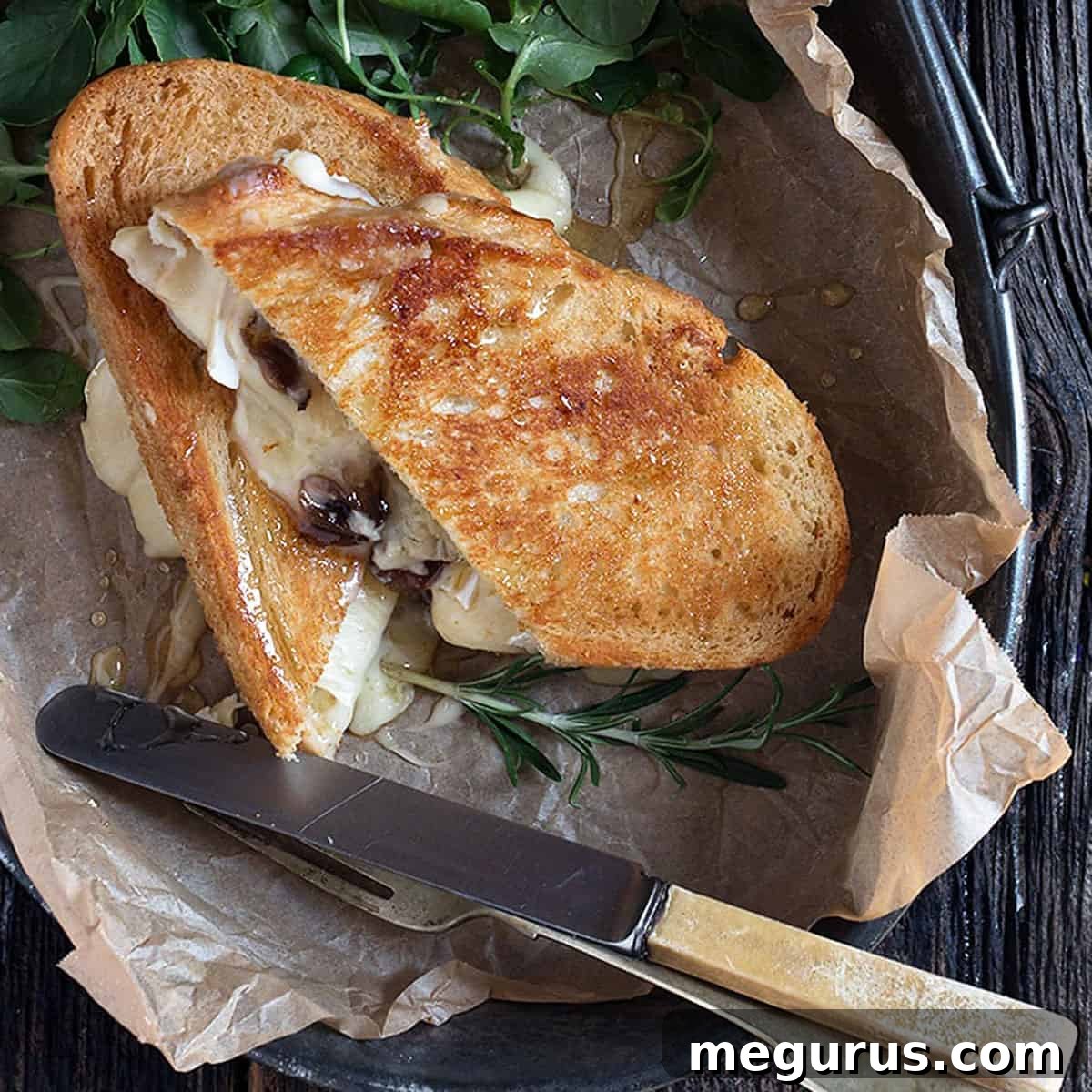
Transform your perception of a simple comfort food with this exquisite knife-and-fork gourmet grilled cheese. Imagine thick slices of crusty sourdough bread, generously layered with rich, creamy Camembert and nutty Gruyère cheese, accented by sweet, tangy balsamic onions, and finished with a delicate drizzle of aromatic rosemary honey. This isn’t just a sandwich; it’s a culinary experience designed to be savored, perfect for an indulgent lunch or a sophisticated, yet easy, dinner.
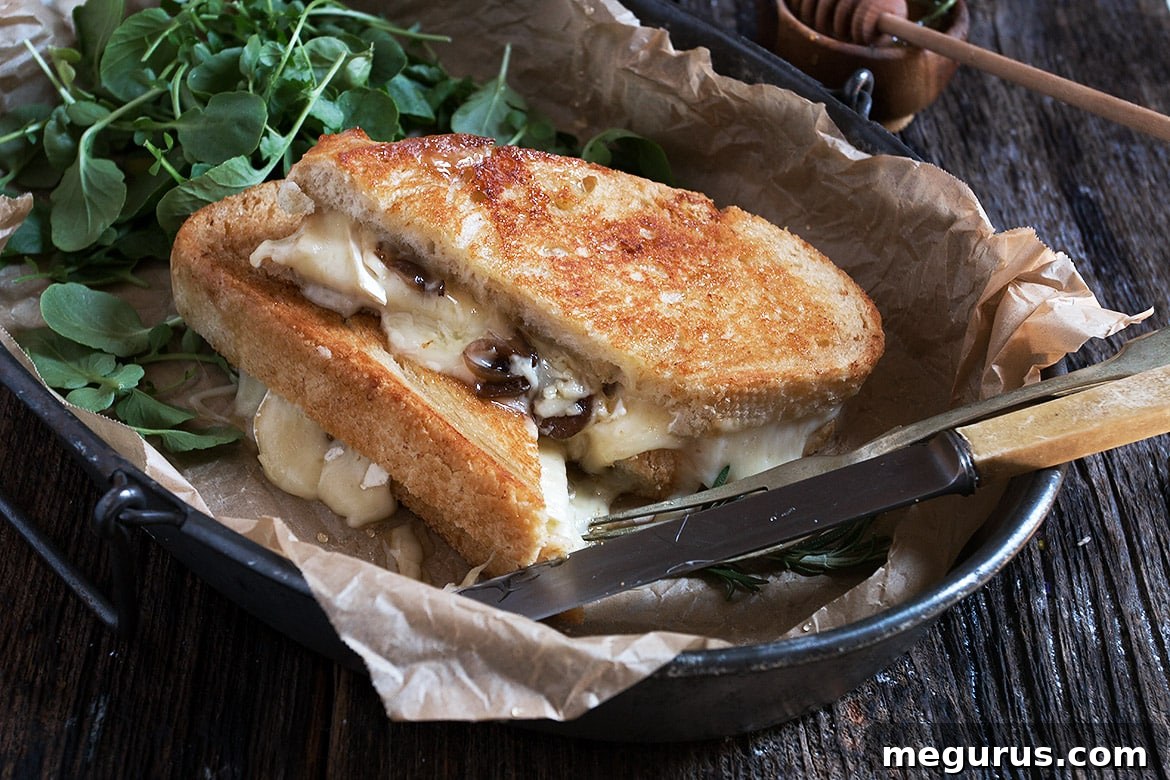
For many, the grilled cheese sandwich holds a special place in their heart as a quick, satisfying meal. It’s the ultimate go-to when time is short, or the pantry seems bare. But what if we told you that this humble classic could be elevated to an entirely new level of gourmet delight? This “Knife and Fork” grilled cheese recipe takes the familiar concept and infuses it with sophisticated flavors and textures, making it a truly special occasion meal that’s surprisingly simple to create at home.
Our journey to the perfect gourmet grilled cheese begins with a foundation of robust sourdough bread, celebrated for its chewy texture and subtle tang. This sturdy base is then topped with generous slices of soft, buttery Camembert cheese, known for its decadent melt. A scattering of finely chopped balsamic onions introduces a delightful sweet and savory counterpoint, which is then crowned with a layer of shredded Gruyère cheese, adding a distinctive nutty sharpness and a beautifully stretchy melt. Each sandwich is patiently grilled to golden perfection in rich butter, ensuring the cheeses are thoroughly melted and the bread is wonderfully crispy. The final flourish? A drizzle of homemade rosemary honey, adding an unexpected herbaceous sweetness, alongside a fresh, peppery side of watercress to cut through the richness. This combination transforms the everyday grilled cheese into a dish worthy of a special occasion, proving that comfort food can indeed be exceptionally elegant.
The true beauty of a gourmet grilled cheese lies in its boundless versatility. The combinations of artisanal breads, diverse cheeses, and creative condiments are virtually endless, allowing for endless experimentation and personalization. Whether you prefer sweet or savory, mild or bold, there’s a perfect grilled cheese waiting to be discovered. Dive into our expert “Cook’s Notes” below for essential tips and read on for inspiration to craft your own masterpiece.
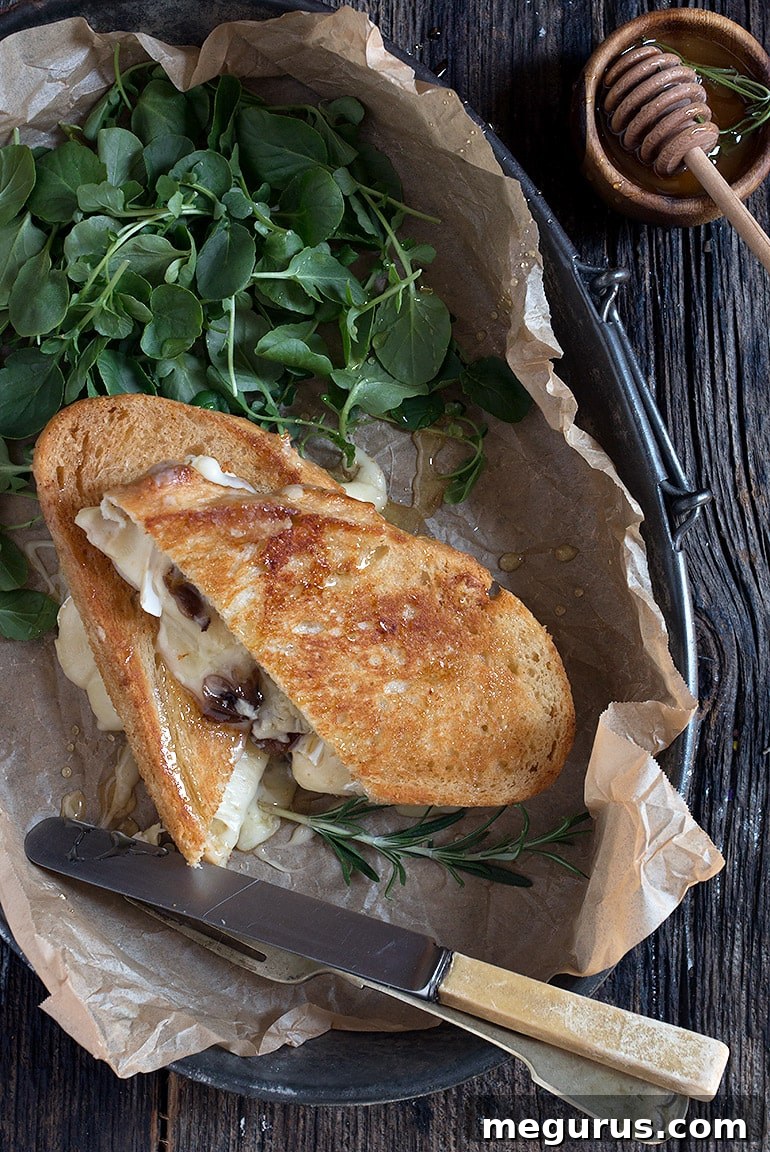
Crafting Your Gourmet Grilled Cheese: Ingredients and Expert Substitutions
Creating an exceptional grilled cheese starts with selecting high-quality ingredients. Each component plays a crucial role in developing the complex flavors and textures that define this gourmet rendition.
Bread Selection: The Foundation of Flavor
While sourdough bread offers an unparalleled tang and a wonderfully sturdy crust, making it our top recommendation for this recipe, feel free to experiment with other artisan breads that you adore. The goal is a bread with good structure that can hold up to the generous fillings without becoming soggy. Consider a hearty seeded multigrain for added texture, a rich challah for a slightly sweet note, or even a dense rye for a more robust flavor profile. When slicing your bread, aim for approximately 3/4-inch thickness. This ensures the bread can crisp beautifully on the outside while allowing enough time for the cheeses to melt perfectly within. If using a large, round loaf, cutting slices from the center will yield impressive, substantial pieces perfect for a “knife and fork” experience. Remember to ensure your skillet is large enough to accommodate the full sandwich for even cooking. For this recipe, one large sandwich, sliced in half, provides two satisfying servings.
Camembert: The Creamy Heart
Camembert, a soft, creamy, surface-ripened cow’s milk cheese, is the star of this sandwich. You’ll typically want a round weighing around 200g. Its rich, buttery, and earthy notes become wonderfully gooey when melted, creating an irresistible texture. For an extra touch of decadence and to allow that beautiful, melty cheese to ooze slightly, consider carefully trimming the rind off one side of the Camembert slices before assembling the sandwich. This trick enhances the “runny” effect that many cheese lovers adore. If Camembert isn’t available or you’d like a different creamy option, Brie is an excellent substitute, offering a similar buttery flavor and luxurious melt.
Gruyère: The Nutty Counterpart
Gruyère cheese, a hard yellow Swiss cheese named after the town of Gruyères, adds a crucial layer of nutty, slightly salty, and intensely flavorful complexity. Its exceptional melting properties ensure it integrates seamlessly with the Camembert. You can purchase Gruyère in a block and shred or slice it yourself, or opt for pre-shredded or pre-sliced varieties for convenience. For a similar flavor profile and melt, consider substituting with Comté, Fontina, or even a sharp, aged white cheddar. The key is to choose a cheese with good melting qualities and a flavor that complements the richness of the Camembert.
Balsamic Onions: A Sweet and Tangy Revelation
The balsamic onions are a game-changer, introducing a sweet and tangy element that beautifully balances the richness of the cheeses. Jarred whole balsamic onions, finely chopped, offer a convenient shortcut. However, for an even deeper flavor, you can easily prepare caramelized onions from scratch. Slowly sauté sliced onions until deeply golden and sweet, then deglaze the pan with a splash of good quality balsamic vinegar, allowing it to reduce and infuse the onions with its distinctive tang. Alternatively, a high-quality onion jam or marmalade or even a savory bacon jam can provide a similar delightful burst of flavor.
Cook’s Notes: Mastering the Art of the Gourmet Grilled Cheese
Achieving the perfect gourmet grilled cheese requires a few simple techniques to ensure a golden, crispy exterior and a wonderfully melted, gooey interior. These tips will guide you to grilled cheese perfection every time.
The Buttering Technique: Flavor from the Pan
Instead of directly buttering the bread, which can sometimes lead to uneven coverage or butter soaking in too quickly, we recommend a superior method: melting the butter directly in the skillet. For each side of the sandwich, melt about 1 tablespoon of butter in the pan, ensuring it covers the area where your sandwich will sit. Place the sandwich onto the melted butter, allowing the bread to absorb it as it cooks. When it’s time to flip, gently lift the sandwich, add another tablespoon of fresh butter to the now-empty side of the pan, let it melt, and then place the uncooked side of the sandwich into the fresh butter. This technique ensures a fresh, even layer of butter for maximum crispness and flavor on both sides.
The Golden Rule: Low and Slow Heat
Patience is paramount when crafting a gourmet grilled cheese. The secret to beautifully melted cheese and a perfectly golden crust lies in cooking the sandwich “low and slow.” Begin with medium heat to melt the initial butter, then immediately reduce the heat to medium-low once the sandwich is in the pan. This lower temperature allows the heat to gently penetrate the bread, melting the interior cheeses evenly without burning the exterior. Rushing the process on high heat often results in a charred crust and a stubbornly cold, unmelted center.
Checking for Doneness: The Melt Test
Monitor your sandwich closely as it cooks. Each side should develop a deep golden-brown color. If your bread is beautifully toasted but you suspect the cheese isn’t fully melted – perhaps it still feels a bit firm when gently pressed – don’t despair! Simply reduce the heat further to low and continue cooking for a few more minutes. Flipping the sandwich once or twice more during this low-heat phase can help distribute the heat and encourage a complete, luxurious melt. A truly perfect grilled cheese will have cheese oozing slightly from the sides and feel soft and yielding to the touch.
Creative Variations: Elevating Your Grilled Cheese Game
- Start with Superior Bread: Beyond sourdough, consider ciabatta for a rustic chew, brioche for a buttery richness (especially good with sweeter fillings), or a savory olive bread. The bread is your canvas; choose one that complements your chosen fillings. Avoid overly thin or extremely soft white bread, as it won’t provide the structural integrity needed for a gourmet sandwich.
- Mind the Thickness: While thick slices of artisan bread are desirable for flavor, ensure they are not excessively thick (more than an inch). Overly thick bread can make it challenging for the heat to reach the center and melt the cheese evenly, leading to a perfectly toasted exterior but a less-than-gooey interior.
- Embrace Cheese Contrasts: The magic often happens when you pair cheeses with complementary, yet contrasting, characteristics. Our Camembert (creamy, mild) and Gruyère (sharp, nutty) combination is a prime example. Experiment with a tangy goat cheese paired with a smoky cheddar, or a mild mozzarella alongside a pungent blue cheese. Aim for at least two types of cheese to create a more complex flavor profile and texture.
- Layer in Additional Flavor: The space between your cheese layers is prime real estate for extra flavor. Our balsamic onions are a fantastic choice, but the possibilities are endless. Consider a sweet fig jam, a tart cranberry sauce, a spicy red pepper jelly, or even a spoonful of pesto. Caramelized apples or pears can add a wonderful sweetness. Remember, these additions should complement, not overpower, the cheeses. A little goes a long way to avoid a messy, unbalanced sandwich.
- Keep Greens on the Side: While fresh greens like watercress, arugula, or spinach wonderfully complement the richness of a grilled cheese with their peppery or bitter notes, it’s generally best to serve them on the side. Adding them directly into the sandwich before grilling can cause them to wilt excessively, release moisture, and potentially make the bread soggy, detracting from the desired crispy texture.
- Experiment with Herbs and Spices: A sprinkle of fresh thyme, chives, or a pinch of red pepper flakes can introduce another layer of aroma and subtle heat. Integrate them directly with your cheese layers or whisk them into your melted butter for an infused crust.
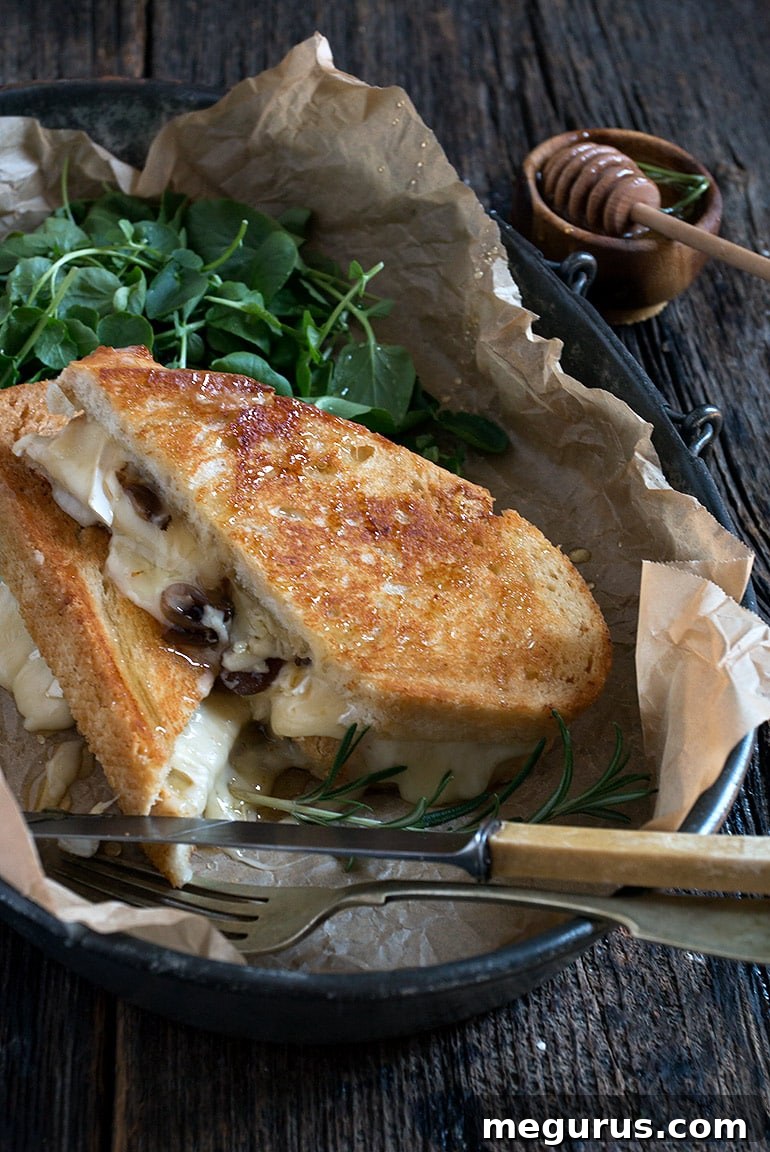
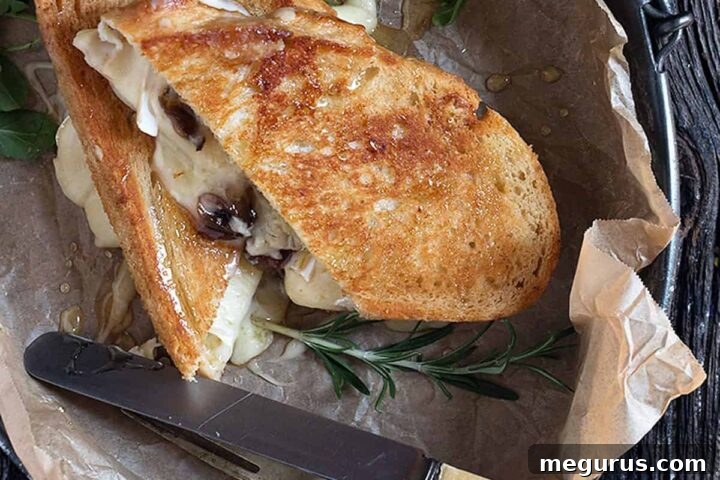
Get the Recipe: Camembert & Gruyere Grilled Cheese with Rosemary Honey
Pin This
Leave a Review
5 mins
10 mins
15 mins
2 servings
Ingredients
For the Rosemary Honey:
- 1/4 cup runny honey
- 1 sprig fresh rosemary
For the Sandwich:
- 2 slices Sourdough bread, cut from the center, about 3/4 inch thick
- 6 slices Camembert cheese, cut from the center of a 200g-ish round, rind optionally trimmed from one side
- 2-3 Tbsp jarred balsamic onions, chopped or onion jam marmalade (see notes below)
- 1/2 cup shredded Gruyere cheese
- 2 Tbsp butter, for grilling
For Serving:
- Fresh watercress
Instructions
-
Prepare the Rosemary Honey: In a small saucepan (or a microwave-safe glass bowl), gently heat the honey with the fresh rosemary sprig until it just begins to boil. Remove from heat and allow the rosemary sprig to steep in the honey as it cools. This infuses the honey with a beautiful aromatic flavor.
-
Assemble the Sandwich: Lay your sourdough bread slices flat on a clean cutting board. If desired, carefully cut the rind off one of the long sides of the Camembert slices for extra meltiness. Arrange the Camembert slices evenly over one slice of bread, cutting them as needed to fit. Scatter the chopped balsamic onions generously over the Camembert. Top with the shredded Gruyere cheese, ensuring it’s evenly distributed. Place the second slice of sourdough bread on top to complete the sandwich.
-
Grill to Perfection: Melt 1 tablespoon of butter in a skillet over medium heat, trying to keep the butter in the area where the sandwich will rest. Once the butter is melted and sizzling slightly, carefully place the sandwich into the skillet. Immediately reduce the heat to medium-low. Cook, pressing down lightly on the top of the sandwich with a spatula several times, until the bottom side is beautifully golden brown. Gently lift the sandwich with a spatula, add the remaining 1 tablespoon of butter to the empty skillet, and once melted, return the sandwich to the pan with the un-grilled side down. Continue cooking on medium-low heat until the second side is also golden brown. Check the cheese for doneness; if it’s not fully melted and gooey, reduce the heat to low and continue cooking for a few more minutes, flipping once or twice if necessary, until the cheese is completely melted and oozing.
-
Serve: Carefully transfer the finished grilled cheese to a cutting board. Cut the sandwich in half, either diagonally or straight across. Drizzle generously with your prepared rosemary honey and serve immediately alongside a fresh bed of peppery watercress. Enjoy this luxurious take on a classic!
Chef’s Notes
American
Main Course, Lunch, Dinner
Jennifer Maloney
Nutrition Facts (per serving):
- Serving: 1 serving
- Calories: 432 kcal
- Carbohydrates: 36g
- Protein: 18g
- Fat: 24g
- Saturated Fat: 14g
- Cholesterol: 68mg
- Sodium: 565mg
- Potassium: 108mg
- Fiber: 1g
- Sugar: 1g
- Vitamin A: 665 IU
- Calcium: 373mg
- Iron: 2.3mg
Tried this recipe?
If you enjoyed this recipe, we’d love to hear from you! Consider leaving a star rating and comment below. Your feedback helps others discover and enjoy this delicious dish!