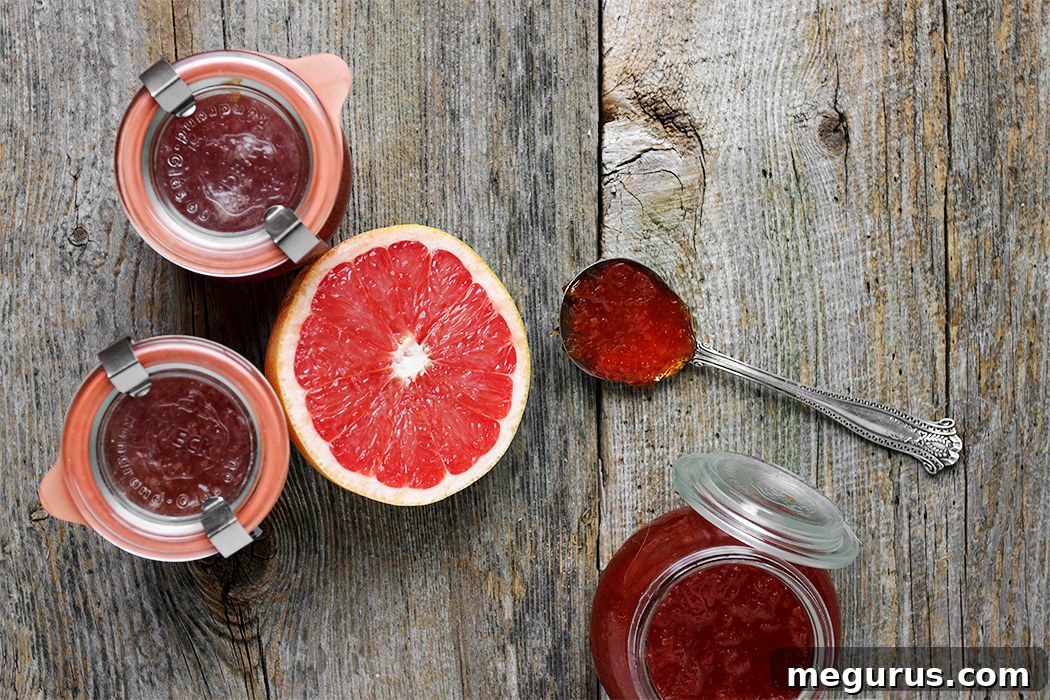
Unlock the vibrant, tangy flavor of seasonal grapefruit with this incredibly simple, small-batch jam recipe. Requiring just two core ingredients and no added pectin, you can whip up this delightful preserve in under an hour. Imagine enjoying the bright, zesty taste of homemade grapefruit jam anytime the craving strikes, whether spread generously on toast, swirled into yogurt, or paired with a gourmet cheese board. This quick and easy method makes preserving the goodness of citrus accessible to everyone, even first-time jam makers.
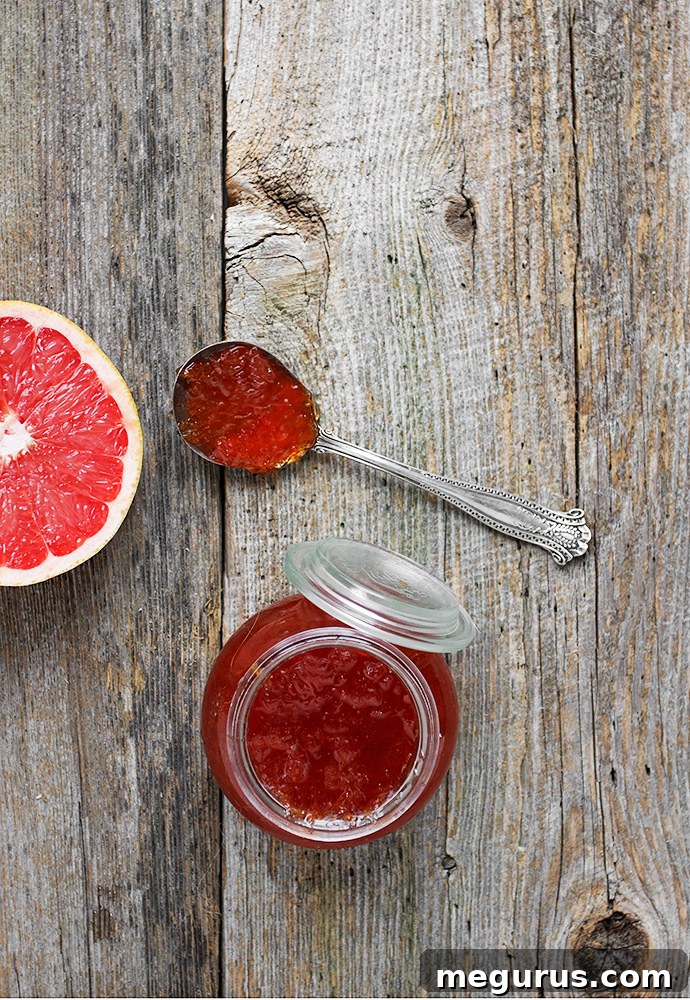
For many, the world of citrus preserves often begins and ends with marmalade. However, a delightful secret exists: grapefruit jam. It was a revelation to discover that this vibrant fruit, known for its distinct tartness, could be transformed into a smooth, peel-free jam. While marmalade celebrates the unique bitterness and texture of citrus peel, grapefruit jam offers all the fantastic, tangy flavor without the peel, delivering a pure fruit experience. This makes it an absolute game-changer for anyone who appreciates the zesty notes of grapefruit but isn’t fond of the chewy rind often found in traditional marmalades.
Beyond its delicious taste and appealing texture, this small-batch grapefruit jam boasts several advantages that make it a must-try. It’s incredibly quick to prepare, requiring minimal fuss and time in the kitchen. The small yield means less fruit is needed, reducing waste and allowing for experimentation without committing to large batches. Furthermore, there’s no complex canning process required for short-term enjoyment; simply refrigerate your freshly made jam and savor its freshness for several months. This makes it not only a perfect treat for your own kitchen but also an ideal, heartfelt homemade gift during the holiday season or any special occasion. Imagine presenting friends and family with a jar of luminous, homemade grapefruit jam – a truly thoughtful gesture that speaks volumes.
Essential Ingredients for Your Small-Batch Grapefruit Jam
Creating this delightful grapefruit jam requires surprisingly few components, making it a straightforward recipe for any home cook. The magic truly lies in the quality of your fresh fruit and the balanced addition of sugar.
Grapefruit: The Star of the Show – For the most visually appealing and richly colored jam, red grapefruit varieties such as Ruby Red or Rio Red are highly recommended. Their vibrant pinkish-red flesh not only contributes to a beautiful hue in the final product but also offers a slightly sweeter, less intensely bitter flavor profile compared to white grapefruits. When selecting your grapefruits, look for fruit that feels heavy for its size, indicating juiciness. The skin should be smooth and firm, without soft spots or discoloration. While red grapefruit is ideal, pink or even white grapefruits can be used; just be aware that the color and perhaps the slight bitterness of the jam will vary accordingly.
Sugar: More Than Just Sweetness – In jam making, sugar plays a multifaceted and crucial role that extends far beyond merely sweetening the fruit. It is an essential component for the jam to set properly, contributing to its desired thick and spreadable consistency. Additionally, sugar acts as a natural preservative, inhibiting the growth of microorganisms and significantly extending the shelf-life of your jam. Attempting to reduce the sugar content without proper adjustments (like adding pectin or using specialized low-sugar pectin) can compromise both the texture and safety of your preserve. Remember, jam is typically enjoyed in small portions, often as a condiment or a flavorful accompaniment, so the overall sugar intake per serving remains moderate. For this recipe, classic white granulated sugar works best to achieve a clear, bright jam.
Expert Tips for Perfect Jam Every Time
Achieving a perfectly set, delicious small-batch grapefruit jam is easy with a few key insights:
- Yield Expectations: This recipe, starting with approximately 4 pounds of whole grapefruit, typically yields about three small jars of finished jam. This modest quantity is perfect for personal enjoyment or sharing with a few close friends without the overwhelm of a large production.
- Storage Guidelines: It’s important to understand that this small-batch jam is designed for short-term refrigeration, as it is not processed through traditional hot water bath canning methods. For optimal freshness and safety, store your homemade grapefruit jam in the refrigerator, where it will maintain its quality for approximately 3-4 months. If you are interested in extending the shelf life through canning for room temperature storage, it is crucial to consult a reputable, up-to-date canning resource for precise instructions and safety guidelines, as proper canning techniques are essential to prevent spoilage.
- The Thermometer Advantage: For consistent and reliable jam setting, an inexpensive candy thermometer is arguably your most valuable kitchen tool. It eliminates guesswork, allowing you to accurately monitor the jam’s temperature. Simply boil the mixture until it reaches 220°F (104°C). This temperature indicates that enough water has evaporated, and the sugar concentration is adequate for gelling. If you don’t already own one, a candy thermometer is a highly recommended addition to any serious home cook’s arsenal.
- The Wrinkle Test Alternative: Should you not have a candy thermometer readily available, fear not! You can still successfully determine when your jam is set by utilizing the traditional “Wrinkle Test.” This method relies on visual cues to confirm proper gelling. Detailed instructions for performing the wrinkle test are provided below, ensuring you can achieve perfect jam regardless of your equipment.
Mastering the Wrinkle Test: How to Check Your Jam’s Set
The wrinkle test is a classic, foolproof method for determining if your jam has reached its setting point, especially useful if you don’t have a candy thermometer. Here’s how to perform it accurately:
- Prepare Your Plate: Before you even begin cooking your jam, place a small glass plate or saucer into your freezer. Allow it to chill for at least fifteen minutes. A very cold surface is essential for this test to work effectively.
- Perform the Test: When you suspect your jam might be ready, temporarily turn off the burner under the jam pot. Carefully spoon a small amount – about a teaspoon – of the hot jam onto the chilled plate from the freezer. Allow the jam to sit on the cold plate for about 30-60 seconds to cool slightly. Then, gently push your finger through the puddle of jam on the plate.
- Interpret the Results: If the jam is set, you will notice that it “wrinkles” or creases along the edges where your finger has pushed it. The surface will resist flowing back together. If the jam is not yet set, it will simply seep back into the space where you ran your finger, indicating it needs more cooking time.
- Repeat if Necessary: If the jam is not set, rinse the cold plate under very cold water or wipe it clean, and return it to the freezer for a few minutes to rechill. Turn the heat back on under your jam and continue to cook for another 2-5 minutes, then repeat the wrinkle test. Continue this process of cooking and testing until your jam consistently passes the wrinkle test. Patience here is key to achieving the perfect consistency.
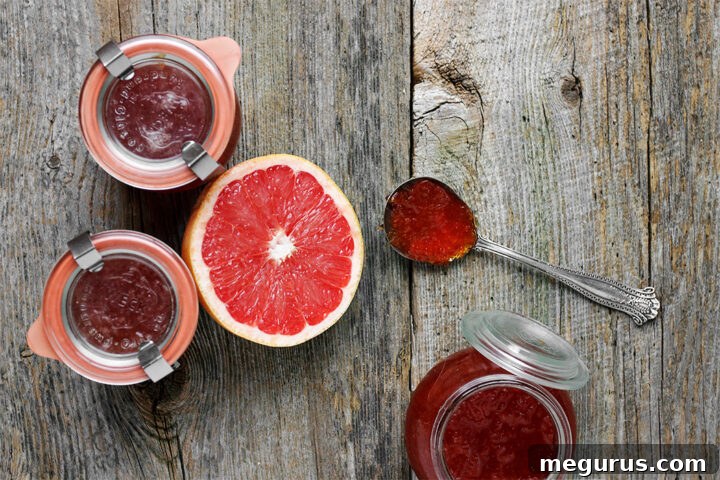
Get the Recipe: Small-Batch Grapefruit Jam
5 stars from 8 ratings
Pin This
Leave a Review
15 minutes
30 minutes
45 minutes
3
small jars
Ingredients
- 4 lbs. whole red grapefruit, about 6 or 7 medium-sized fruits
- 3 cups white granulated sugar
Instructions
-
To prepare for the wrinkle test, place a small saucer or glass plate in your freezer before you begin any other steps.
-
Prepare the Grapefruit: Start by cutting off the very top and bottom of one grapefruit, creating flat surfaces. Stand the grapefruit upright on a cutting board. Using a sharp knife, carefully slice downwards from the top, following the curve of the fruit to remove all of the peel and white pith. Work your way around the entire grapefruit until it is completely peeled. Ensure no bitter white pith remains, as this can affect the jam’s flavor.
-
Hold the peeled grapefruit over a large bowl to catch any juice. Carefully cut between the membranes to free each grapefruit segment (known as “supremes”). Continue until all segments are removed. Gently squeeze the leftover membrane pieces over the bowl to extract any remaining juice. Repeat this process for all the grapefruits. You should have a bowl full of grapefruit segments and fresh juice.
-
Cook the Jam: Transfer the prepared grapefruit segments and all their collected juice into a large, non-reactive, heavy-bottomed pot. Add the granulated sugar and stir thoroughly to ensure the sugar is well combined with the fruit. Place the pot over high heat and bring the mixture to a full, rolling boil, stirring frequently to prevent scorching and to help the sugar dissolve completely. Once a steady, vigorous boil is achieved, allow it to continue, monitoring with a candy thermometer or performing the “wrinkle test” regularly. The jam typically sets around 220°F (104°C), though this can vary slightly with altitude, so confirming with the wrinkle test is always best. This cooking phase usually takes about 10-15 minutes.
-
Once the jam has reached its set point, carefully ladle it into clean, dry small jars. Secure the lids tightly. Allow the jam to cool completely at room temperature before transferring it to the refrigerator for storage. This jam will keep wonderfully for several months in the fridge. (*Note: Since this jam is not processed using proper canning techniques, it must be stored in the refrigerator and should not be kept at room temperature.)
The Wrinkle Test (Detailed Steps):
-
Ensure you have a small glass plate or saucer chilled in the freezer for at least fifteen minutes prior to testing.
When you are ready to test, turn off the heat under your jam. Spoon a small amount (about a teaspoon) of the hot jam onto the very cold plate from the freezer. Let it cool on the plate for about 30-60 seconds. Then, gently push your finger through the center of the jam on the plate. If the jam wrinkles or forms small folds along the edges where your finger moved, it is properly set. If the jam simply flows back into the space you created, it needs more cooking.
If the jam is not set, quickly rinse the plate with cold water and return it to the freezer to rechill. Turn the heat back on under the jam and continue to cook for a few more minutes, then repeat the test. Continue this cycle until the jam consistently passes the wrinkle test.
Notes
American, Canadian
Preserves
Jennifer Maloney
Serving:
1
jar
,
Calories:
1028
kcal
,
Carbohydrates:
264
g
,
Protein:
4
g
,
Sodium:
2
mg
,
Potassium:
816
mg
,
Fiber:
9
g
,
Sugar:
241
g
,
Vitamin A:
6955
IU
,
Vitamin C:
188.7
mg
,
Calcium:
133
mg
,
Iron:
0.6
mg
Tried this recipe?
If you enjoyed this recipe, please leave a star rating and comment. It helps others to find it!