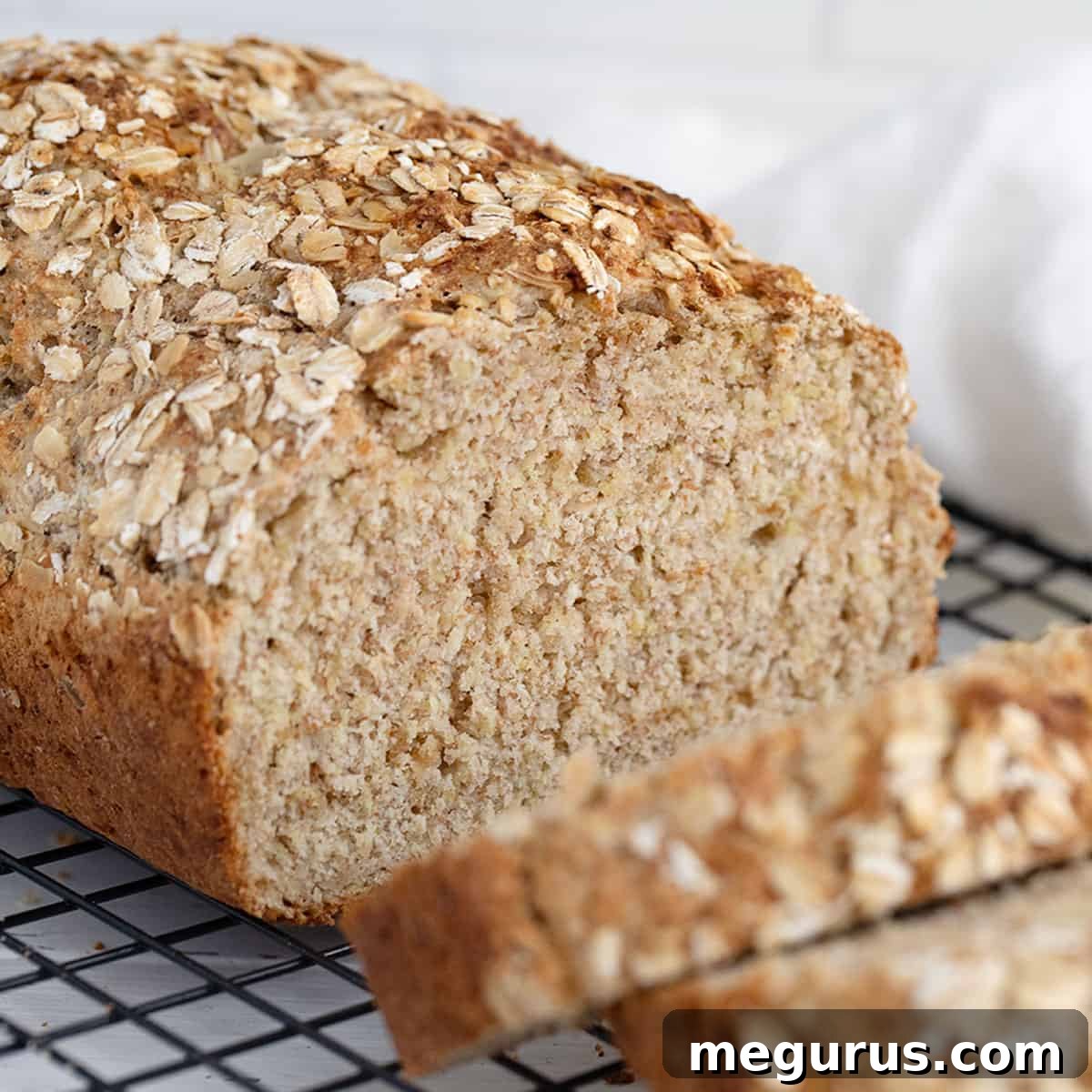
Unlock the rustic charm of Ireland with this authentic brown soda bread recipe, a hearty, no-yeast marvel perfect for any occasion. Crafted with wholesome ingredients like rich whole wheat flour, tangy buttermilk, robust oats, and nutritious wheat germ and bran, this traditional loaf is remarkably quick and easy to prepare, bringing a taste of Irish heritage straight to your kitchen.
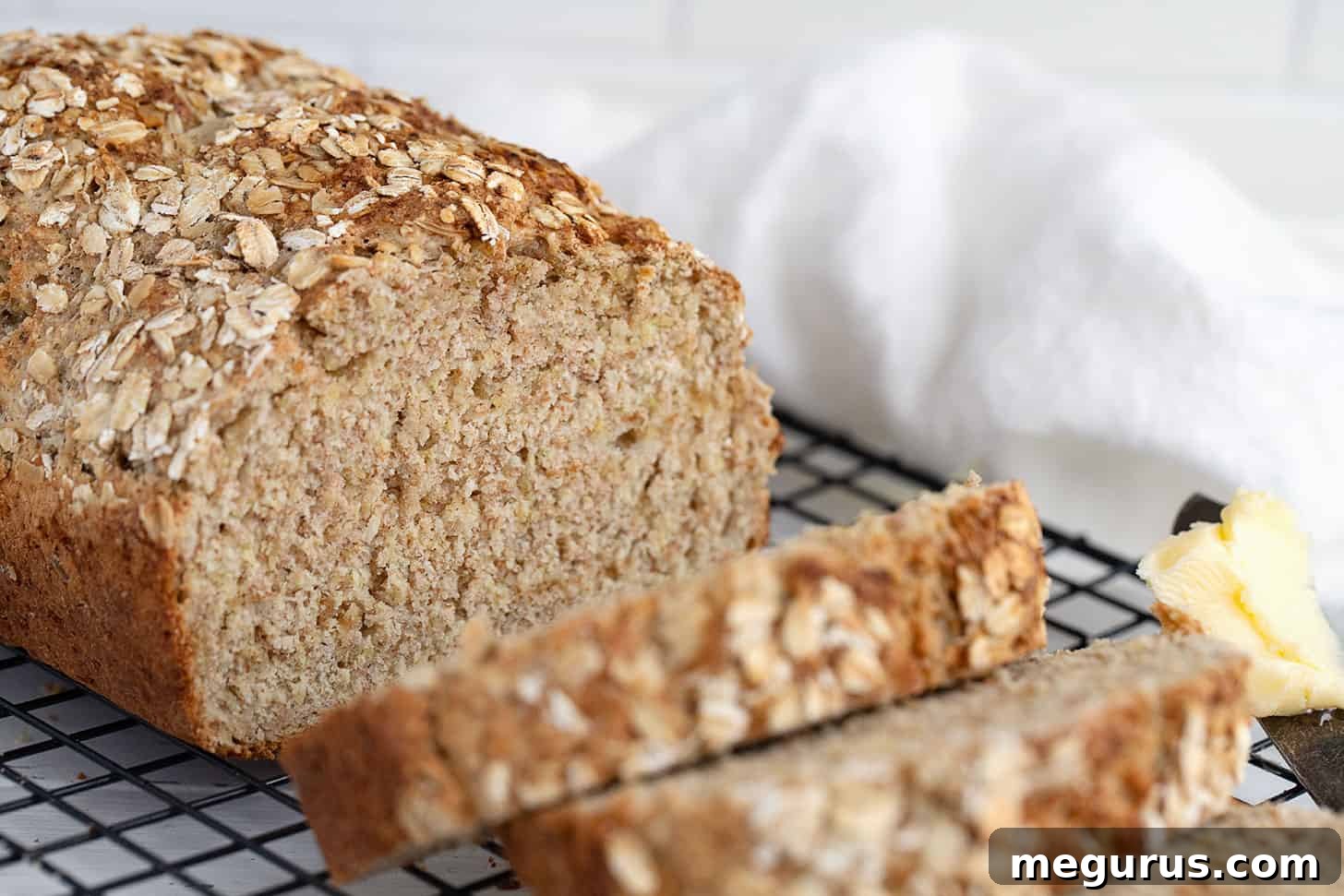
If you’re searching for a profoundly satisfying brown bread that doesn’t require the fuss of yeast or extensive kneading, your quest ends here. This traditional Irish brown soda bread is a true culinary gem. While it makes an exceptional companion to a warming bowl of Irish Stew, especially on festive occasions like St. Patrick’s Day, its simple elegance and wholesome goodness ensure it’s a delicious and effortless bread to enjoy any day of the year. From a comforting breakfast to a hearty side for dinner, this loaf delivers genuine flavor with minimal effort.
Why Choose Irish Brown Soda Bread? A Taste of Tradition and Simplicity
Irish brown soda bread stands out as a beloved staple in Irish cuisine, cherished for its simplicity, speed of preparation, and deeply satisfying flavor. Unlike many conventional breads that rely on yeast for leavening and demand hours of rising and kneading, soda bread uses the straightforward chemical reaction between buttermilk (an acid) and baking soda (a base). This reaction produces carbon dioxide bubbles, which are trapped in the dough, causing it to rise efficiently and quickly in the oven.
The beauty of this method is twofold: it eliminates the time-consuming aspects of traditional bread making, making it accessible even for novice bakers, and it results in a uniquely dense yet tender crumb that is characteristic of authentic Irish soda bread. Our recipe enhances this classic by incorporating whole wheat flour for a richer flavor and added nutritional value, along with oats, wheat germ, and bran for incredible texture and an even more wholesome profile. It’s a bread that truly tells a story with every bite – a story of practicality, sustenance, and the comforting flavors of home.
Essential Ingredients: Crafting Your Perfect Loaf
The magic of traditional Irish brown soda bread lies in its simple, honest ingredients. Each component plays a crucial role in developing the distinct flavor and texture that make this bread so beloved. Here’s a closer look at what you’ll need and some helpful notes for substitutions:
Buttermilk: The Leavening Catalyst
Real buttermilk is highly recommended for the best results. Its acidity is essential for reacting with the baking soda, creating the lift and tender crumb characteristic of soda bread. If you don’t have buttermilk on hand, don’t worry! You can easily create a substitute by combining regular milk (preferably whole or 2%) with either lemon juice or white vinegar. Simply add 2 tablespoons of lemon juice or white vinegar to a 2-cup measuring cup, then fill the rest with milk to the 2-cup line. Stir gently and let it sit for about 10 minutes until it thickens slightly and curdles. This homemade version works wonderfully.
Whole Wheat Flour & All-Purpose Flour: The Foundation
This recipe utilizes a blend of whole wheat flour and all-purpose flour. The whole wheat flour contributes a robust, nutty flavor and a denser texture, along with beneficial fiber, while the all-purpose flour ensures a lighter, more tender crumb. Using only whole wheat flour would result in a very dense loaf, and using only all-purpose would diminish the “brown” bread character. The combination strikes a perfect balance.
Rolled Oats: For Texture and Heartiness
We use large-flake, old-fashioned rolled oats in this recipe. These oats add a delightful chewiness and extra fiber to the bread. They also help retain moisture, contributing to a softer texture. While quick-cooking oats can be used in a pinch, they will result in a less pronounced texture. Instant oats are not recommended as they tend to become mushy and won’t provide the desired structural integrity or chew.
Wheat Germ and Wheat Bran: Nutritional Boost and Rustic Charm
These additions are fantastic for enhancing both the texture and the nutritional profile of your soda bread. Wheat germ adds a delicate, slightly nutty flavor and a boost of vitamins and minerals, while wheat bran contributes a rustic, coarse texture and significant dietary fiber. Toasting both the wheat germ and wheat bran before adding them to the dough is a step we strongly recommend. This simple process deepens their nutty flavor, adding another layer of complexity to the bread. If you only have one of these on hand, you can simply increase the quantity of the one you do have to compensate. If you choose to omit both, remember that you will likely need slightly less buttermilk when mixing the dough, as these ingredients absorb some of the liquid.
Dark Brown Sugar: Sweetness and Depth of Color
Dark brown sugar is preferred for this recipe as it imparts a beautiful caramel-like flavor and a richer, darker hue to the finished loaf, complementing the whole wheat flour perfectly. The molasses content in dark brown sugar also contributes to a more tender crumb. If you only have light brown sugar, it can be used, but your bread may be slightly lighter in color and have a milder sweetness.
You will also need:
* Baking Soda: The primary leavening agent, reacting with the buttermilk.
* Salt: Essential for balancing flavors and enhancing the overall taste.
* Salted or Unsalted Butter: Cold and cut into pieces, butter adds richness and contributes to a tender, flakier texture.
Crafting Your Loaf: A Step-by-Step Guide to Irish Brown Soda Bread
Making this hearty brown soda bread is a straightforward process, demanding minimal time and effort. Follow these simple steps for a perfect loaf every time:
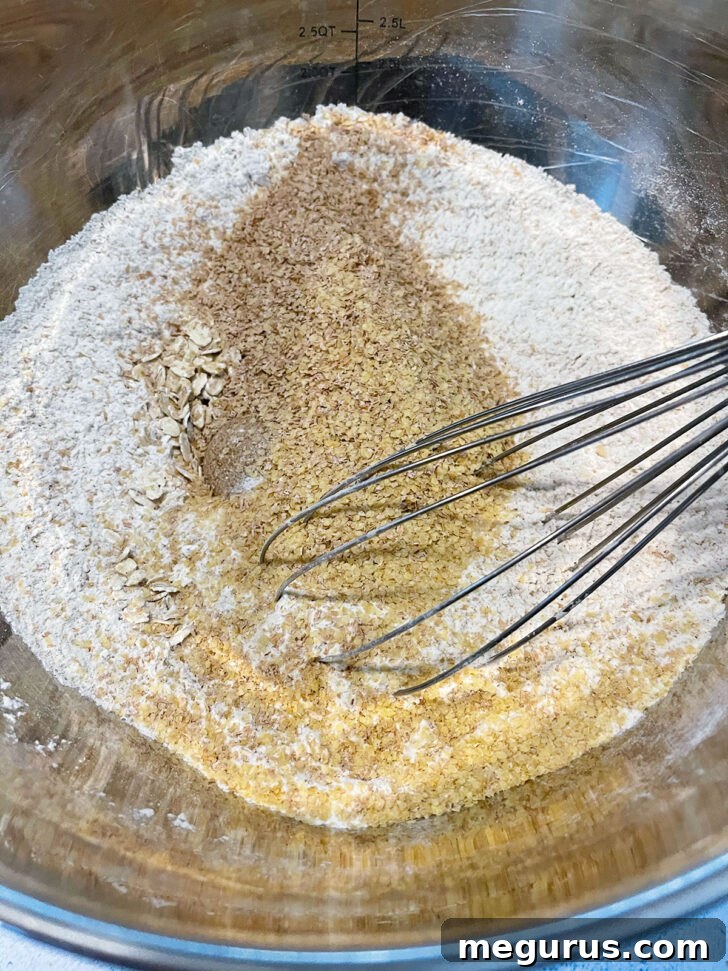
- Prepare Your Dry Mix: In a large mixing bowl, combine all the dry ingredients: all-purpose flour, whole wheat flour, toasted wheat bran, toasted wheat germ, rolled oats, dark brown sugar, baking soda, and salt. Use a whisk to thoroughly combine everything, ensuring the leavening agents and flavorings are evenly distributed throughout the flour. This step is crucial for consistent baking.
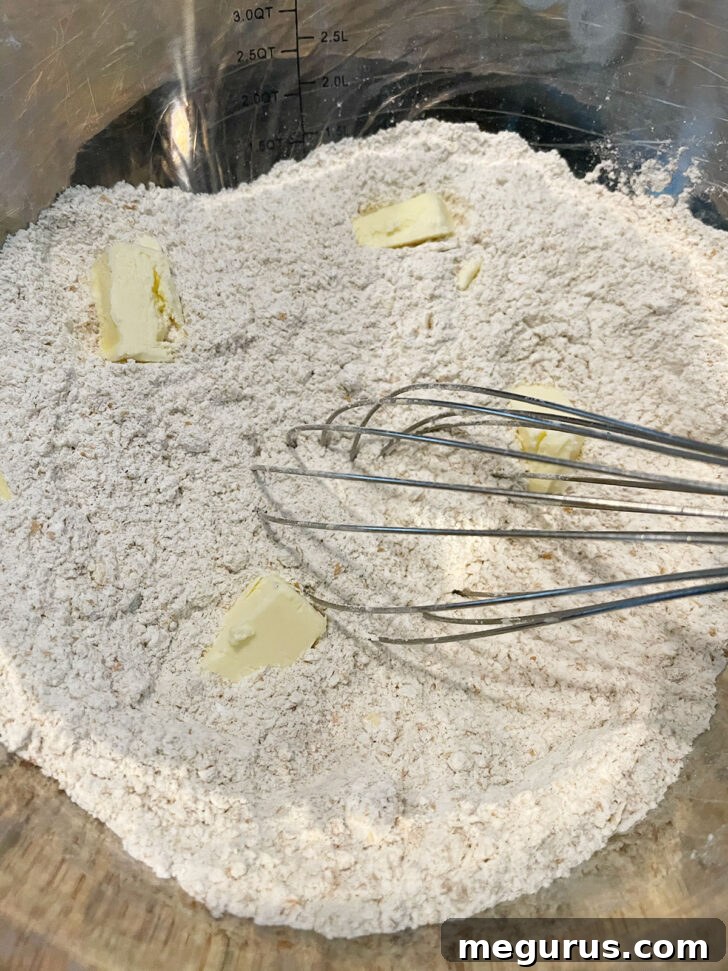
- Add and Rub in the Butter: Add the cold butter pieces to the dry mixture. Using your fingertips, gently rub the butter into the flour until the mixture resembles coarse breadcrumbs or fine meal. The goal is to distribute the butter evenly without overworking it, which creates pockets of richness and contributes to a tender crumb.
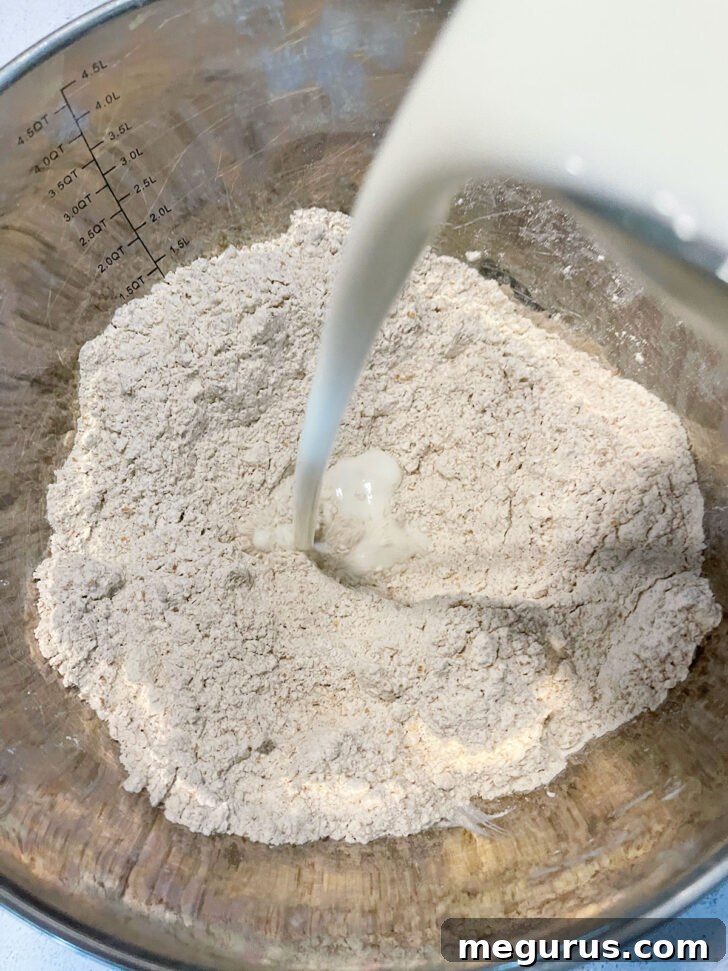
- Introduce the Buttermilk: Pour about two-thirds of the buttermilk into the dry ingredients. Begin stirring with a wooden spoon or your hands, mixing until just combined.
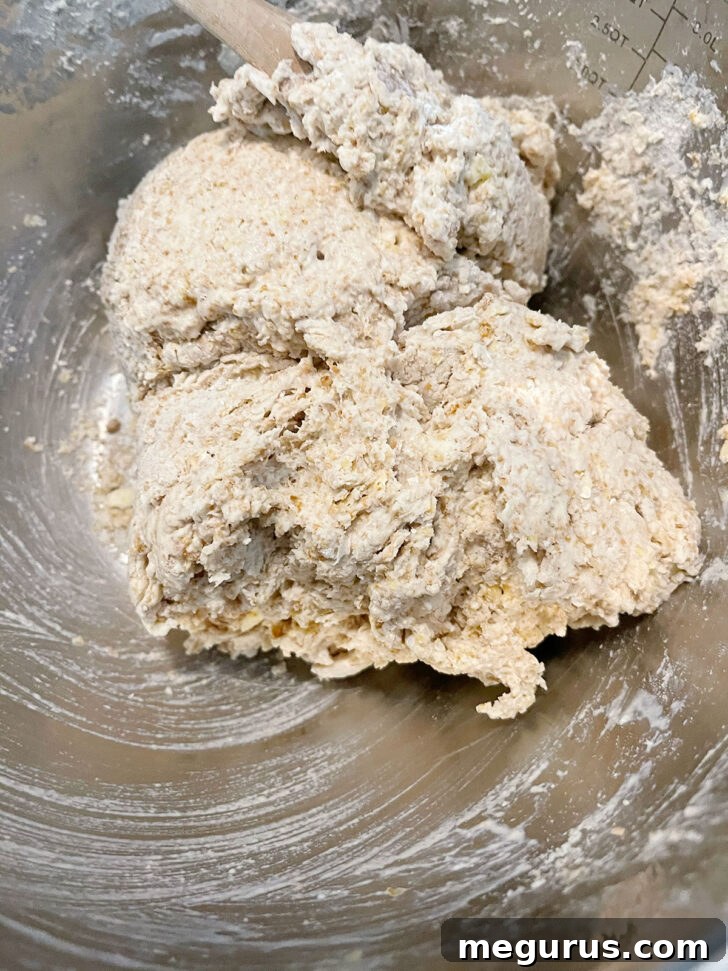
- Form the Dough: Continue adding the remaining buttermilk in small increments, stirring just until the dough comes together. The ideal consistency is moist but not sticky. Be cautious not to overmix, as this can develop the gluten too much, resulting in a tough bread. You might not need all the buttermilk; reserve any excess for brushing the top of the loaf.
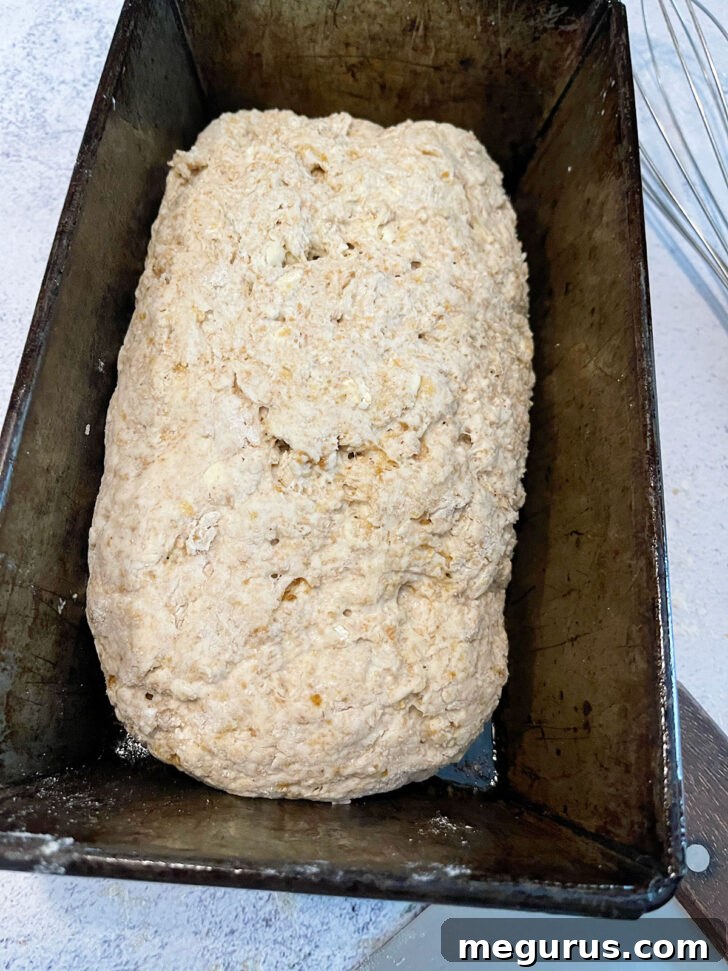
- Shape and Pan the Loaf: Gently transfer the dough to a lightly floured work surface. Briefly shape it into an oblong loaf that fits snugly into your greased 9×5-inch loaf pan. Avoid excessive handling to keep the bread tender.
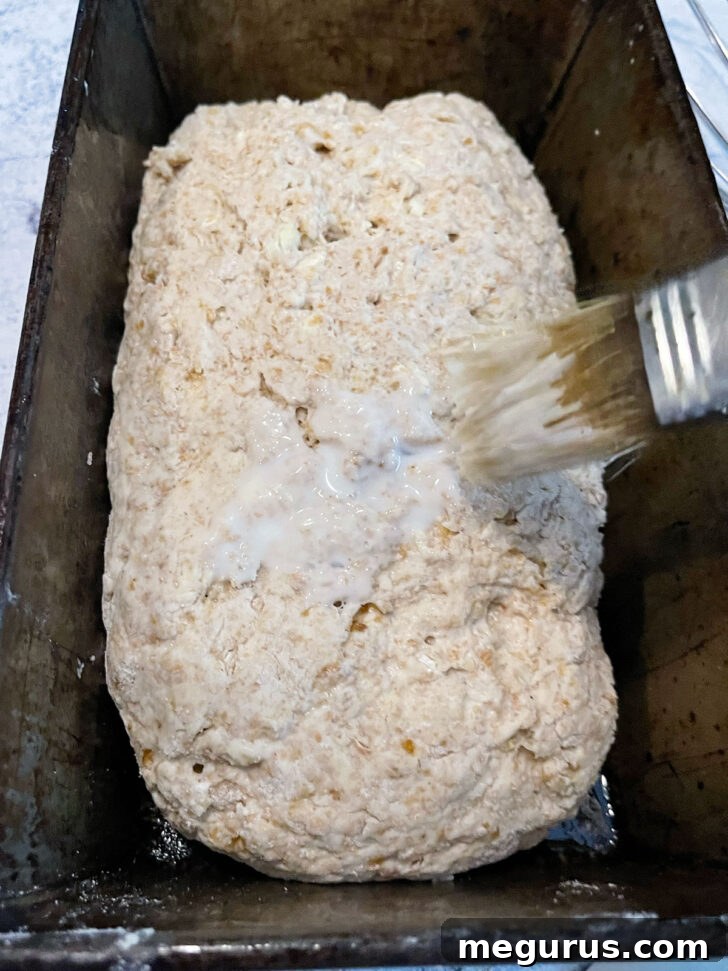
- Brush and Top: Brush the top of the dough generously with any reserved buttermilk or a little regular milk. This step helps create a beautiful golden-brown crust and acts as an adhesive for the topping.
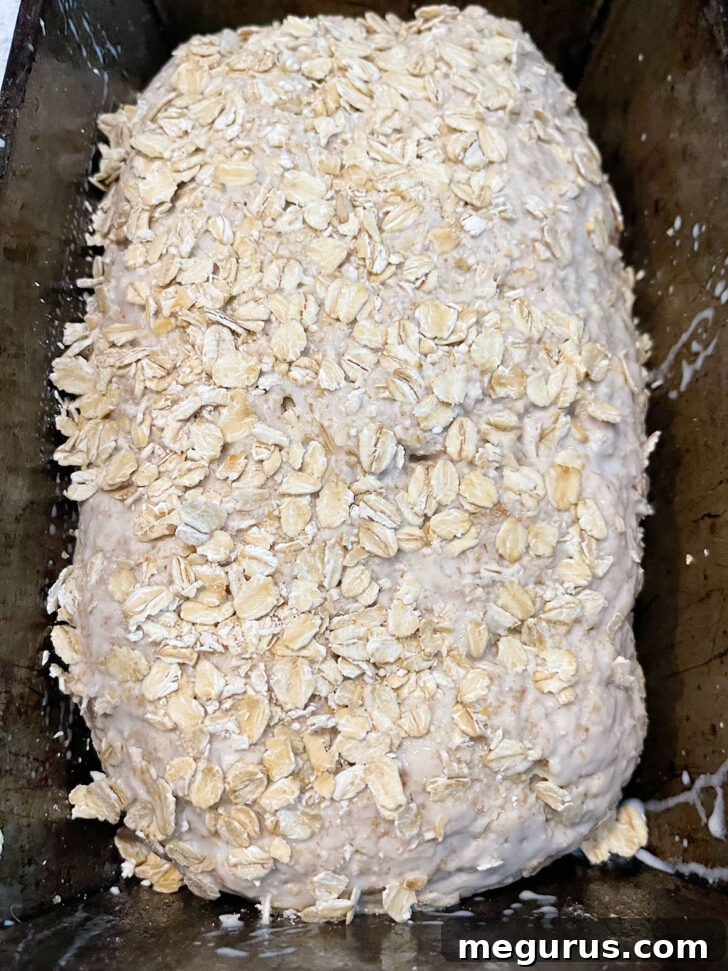
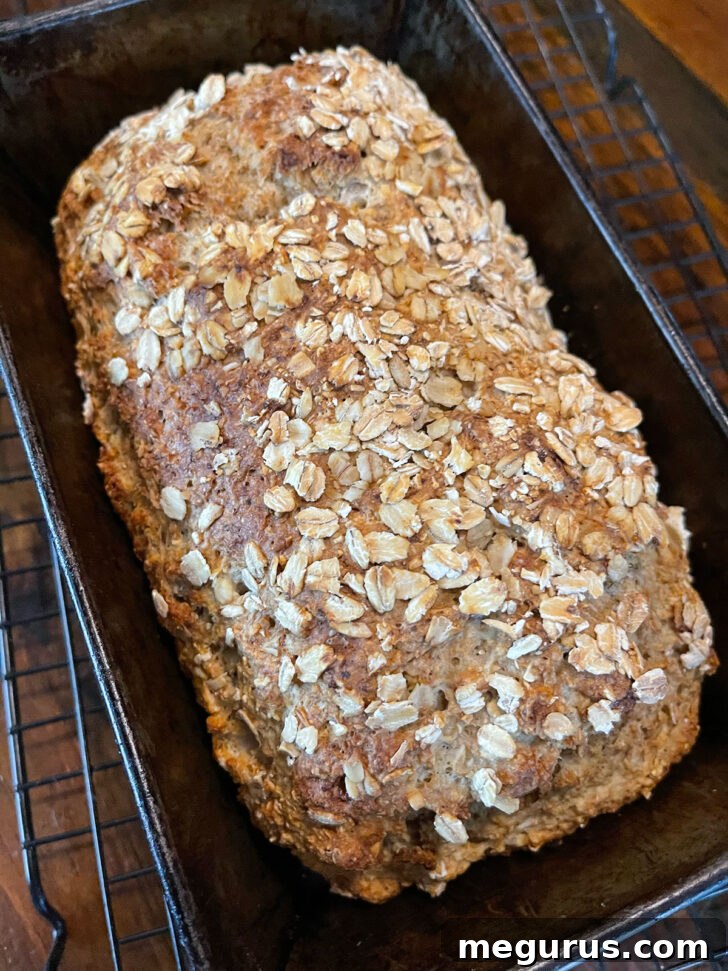
- Add Final Topping: Generously scatter additional rolled oats over the milk-brushed top of the loaf. Gently press them down so they adhere to the dough.
- Bake to Perfection: Place the loaf into your preheated oven and bake until it is beautifully golden brown and a long skewer or cake tester inserted into the center comes out clean. This typically takes about 35-40 minutes. If the top browns too quickly, loosely tent it with aluminum foil to prevent burning while the interior continues to cook. Once baked, remove from the oven and transfer immediately to a wire rack to cool. Allow it to cool until just warm or completely before slicing for the best texture.
Expert Baking Tips for a Flawless Loaf
- Don’t Overmix the Dough: This is perhaps the most critical rule for tender soda bread. Unlike yeast breads that benefit from kneading, soda bread can become tough and dense if overworked. Mix just until the ingredients are combined and a moist dough forms.
- The Right Dough Consistency: Your dough should be moist, but not sticky. It should be firm enough to hold its shape but soft enough that it’s not dry or crumbly. Adjust buttermilk slowly, adding only as much as needed. Remember, reserving a little extra buttermilk for brushing the top is a good idea!
- Toasting Wheat Bran and Wheat Germ: While optional, taking the extra step to toast the wheat bran and wheat germ truly elevates the flavor of this loaf. It brings out their natural nuttiness, adding depth and complexity. Toast them on a dry baking sheet in a 350°F (175°C) oven for 3-4 minutes, stirring once or twice, and watch them closely to prevent burning.
- Oven Temperature Matters: Starting with a high oven temperature (425°F/220°C) helps the bread achieve a good “oven spring” – a rapid initial rise – before the crust sets. This contributes to a lighter internal structure. If you notice the crust browning too quickly, you can reduce the oven temperature slightly or tent the loaf with aluminum foil to ensure the inside cooks thoroughly without burning the exterior.
- Checking for Doneness: The best way to tell if your soda bread is fully baked is by inserting a long wooden skewer or cake tester into the center. If it comes out clean, your bread is ready. If it’s still sticky, continue baking for a few more minutes.
- Adapting Loaf Pan Sizes: This recipe is designed for a 9×5-inch loaf pan. If you only have an 8×4-inch loaf pan, you can still use it. Simply shape the dough to fit the smaller pan. Be aware that the loaf will be taller, which may slightly increase the baking time. Keep a close eye on it and adjust as necessary.
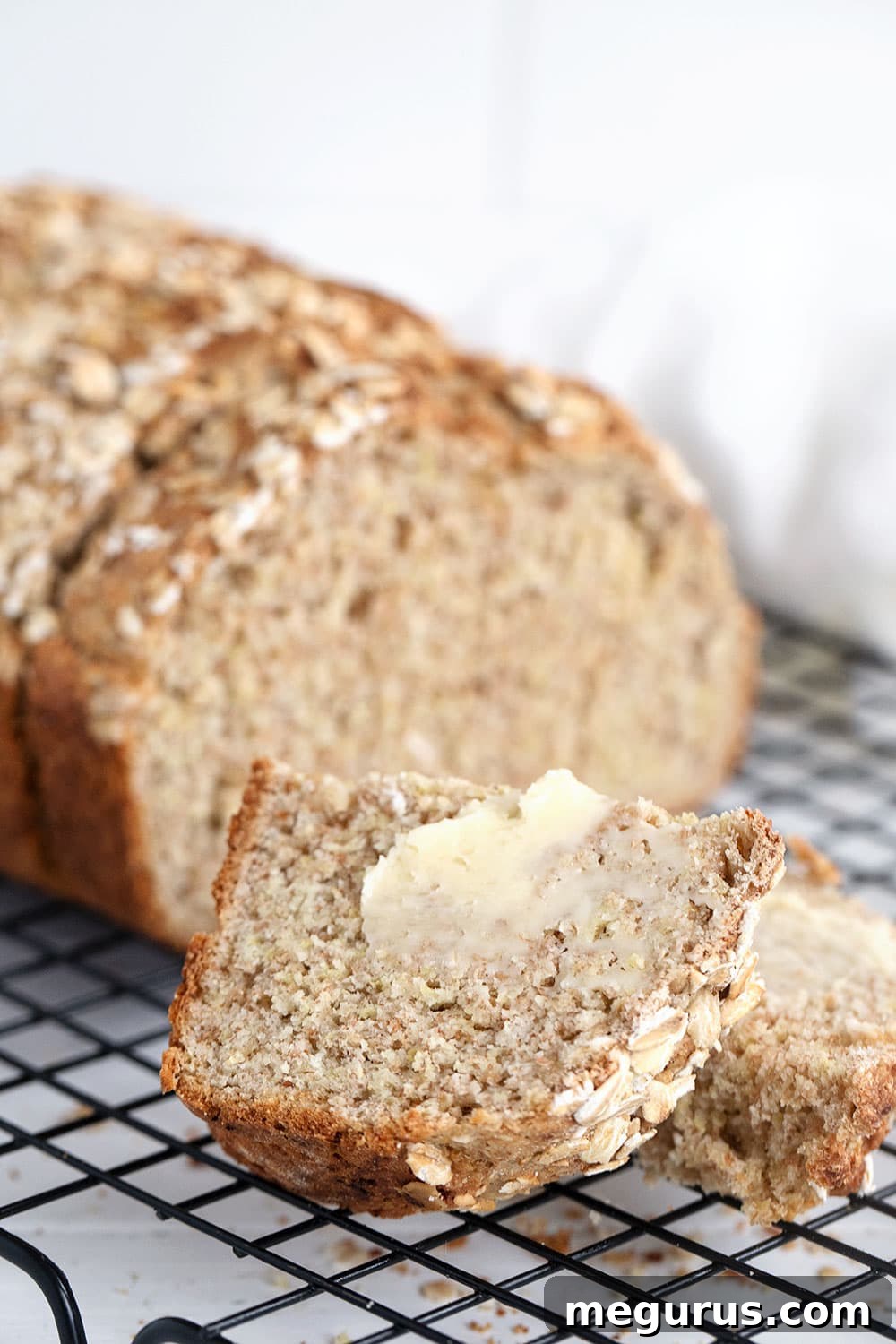
- Cooling is Crucial: Allow the loaf to cool on a wire rack immediately after baking. This prevents the bottom from becoming soggy and allows the internal structure to set properly. Slicing too early can result in a gummy texture.
Beyond the Bake: Serving, Storing, and Freezing
Once your beautiful brown soda bread is baked, the real enjoyment begins! Its rustic charm and wholesome flavor make it incredibly versatile. Here are some ideas for serving, along with practical tips for storage to keep your loaf fresh.
Serving Suggestions
- Classic with Butter: The simplest and often the best way to enjoy Irish brown soda bread is sliced generously and spread with good quality salted butter. The contrast between the hearty bread and the creamy butter is truly sublime.
- With Jams and Preserves: Elevate your breakfast or tea time by pairing slices with your favorite fruit jams, marmalades, or honey.
- Alongside Soups and Stews: Its robust texture and flavor make it the perfect accompaniment to hearty dishes like Irish stew, lentil soup, or any rich, comforting meal. Use it to soak up every last drop!
- Cheese Board Companion: A slice of brown soda bread provides an excellent foundation for a variety of cheeses, especially strong cheddar or a creamy goat cheese.
- Open-Faced Sandwiches: Top slices with smoked salmon, cream cheese, or even leftover roast meats for a quick and satisfying meal.
Making Ahead, Storing, and Freezing
This bread is undoubtedly at its peak on the day it is baked, offering the best texture and freshness. However, it can certainly be enjoyed for a couple of days afterward with proper storage.
- Room Temperature Storage: For enjoyment within 1-2 days, allow the bread to cool completely. Then, wrap it tightly in plastic wrap or aluminum foil, or store it in an airtight container at room temperature. This will help prevent it from drying out.
- Freezing for Longer: For longer preservation, brown soda bread freezes exceptionally well. Once the loaf has completely cooled, wrap it very tightly in several layers of plastic wrap, followed by a layer of aluminum foil, or place it in a freezer-safe bag. It can be stored in the freezer for up to 3 months. When you’re ready to enjoy it, simply thaw it at room temperature, or for a quicker method, slice and toast directly from frozen. You can also re-warm the entire loaf in a moderate oven (around 300°F/150°C) for about 15-20 minutes until heated through.
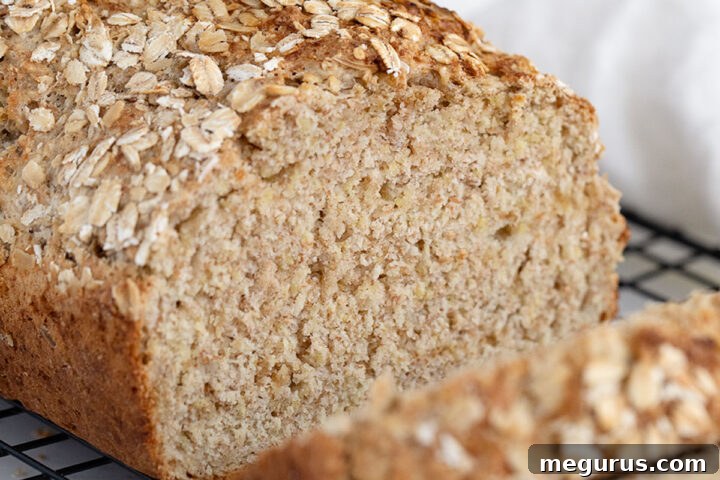
Traditional Irish Brown Soda Bread Recipe
Hearty and delicious Irish brown soda bread, with buttermilk, oats, wheat germ, and wheat bran. Makes 1 large loaf.
Ingredients
- 1 3/4 cups (210 g) all-purpose flour, spooned and levelled
- 1 3/4 cups (210 g) whole wheat flour, spooned and levelled
- 3 Tablespoons wheat bran, toasted (see instructions for toasting)
- 3 Tablespoons wheat germ, toasted
- 2 Tablespoons rolled oats, plus more for topping
- 2 Tablespoons dark brown sugar, or light brown sugar if necessary
- 1 teaspoon baking soda
- 1/2 teaspoon salt
- 2 Tablespoons (28 g) salted or unsalted butter, cold and cut into pieces
- 2 cups (450 ml) buttermilk (see Note 1 below for substitute)
Instructions
- Preheat oven to 425F (220C, regular bake/not fan assisted). Grease a 9×5-inch loaf pan and set aside.
- Toasting Wheat Bran and Wheat Germ (Recommended): Scatter the wheat bran and wheat germ onto a dry baking sheet. Place into a 350F (175C) oven for 3-4 minutes, stirring once or twice. Watch closely as it can quickly burn. Remove from oven and immediately transfer from the baking sheet to a bowl to cool a few minutes before using.
Tip: You can do this while your oven is preheating to 425F. When it reaches about 325F, pop in the baking sheet. Alternatively, preheat to 350F, toast, then increase the oven temperature to 425F once done.
- In a large bowl, combine the all-purpose flour, whole wheat flour, toasted wheat bran and wheat germ, rolled oats, brown sugar, baking soda, and salt. Whisk well to combine.
- Add the cold butter and rub it into the flour mixture with your fingertips until it resembles fine meal.
- Add about 2/3 of the buttermilk and stir well to combine. Continue adding buttermilk in small increments, stirring until the dough comes together in a moist, but not sticky dough. You may not need to use all of the buttermilk, but reserve any excess for brushing the top.
- Remove the dough to a work surface and gently shape it into a loaf to fit your prepared 9×5-inch loaf pan.
- Brush the top of the loaf with the reserved buttermilk or a little regular milk, and generously scatter with more rolled oats. Gently press the oats onto the top of the loaf.
- Bake the loaf for about 35-40 minutes, or until it is golden brown and a long tester (like a skewer or toothpick) inserted into the center comes out clean. If the top browns too quickly, you can loosely lay a sheet of aluminum foil over the loaf to prevent further browning while it finishes baking.
- Remove from the oven and immediately transfer the loaf to a cooling rack. Allow the loaf to cool until just warm or completely before slicing for the best texture.
Notes
1. Buttermilk Substitute: You can make your own buttermilk substitute by combining 2 cups of milk (preferably full-fat whole milk or 2%) with 2 Tablespoons of lemon juice or white vinegar. Stir together and let stand for 10 minutes until it slightly curdles.
2. Wheat Bran and Wheat Germ: These ingredients add wonderful texture and flavor. If you only have one, simply use more of that ingredient to make up the total quantity. If you omit both, you will need to use less buttermilk in the dough, as these ingredients absorb liquid.
Nutrition Information (per serving):
- Serving: 1 serving
- Calories: 192 kcal
- Carbohydrates: 34g
- Protein: 7g
- Fat: 4g
- Saturated Fat: 2g
- Trans Fat: 1g
- Cholesterol: 9mg
- Sodium: 232mg
- Potassium: 200mg
- Fiber: 4g
- Sugar: 4g
- Vitamin A: 126 IU
- Calcium: 61mg
- Iron: 2mg
Explore More Wholesome Soda Bread Recipes!
If you’ve fallen in love with the simplicity and rustic charm of Irish brown soda bread, you’ll be delighted to discover other variations of this humble yet satisfying loaf. From savory to sweet, soda bread offers a canvas for a variety of flavors, always retaining its quick-bake appeal and comforting texture. Here are a few more soda bread recipes you’re sure to enjoy: