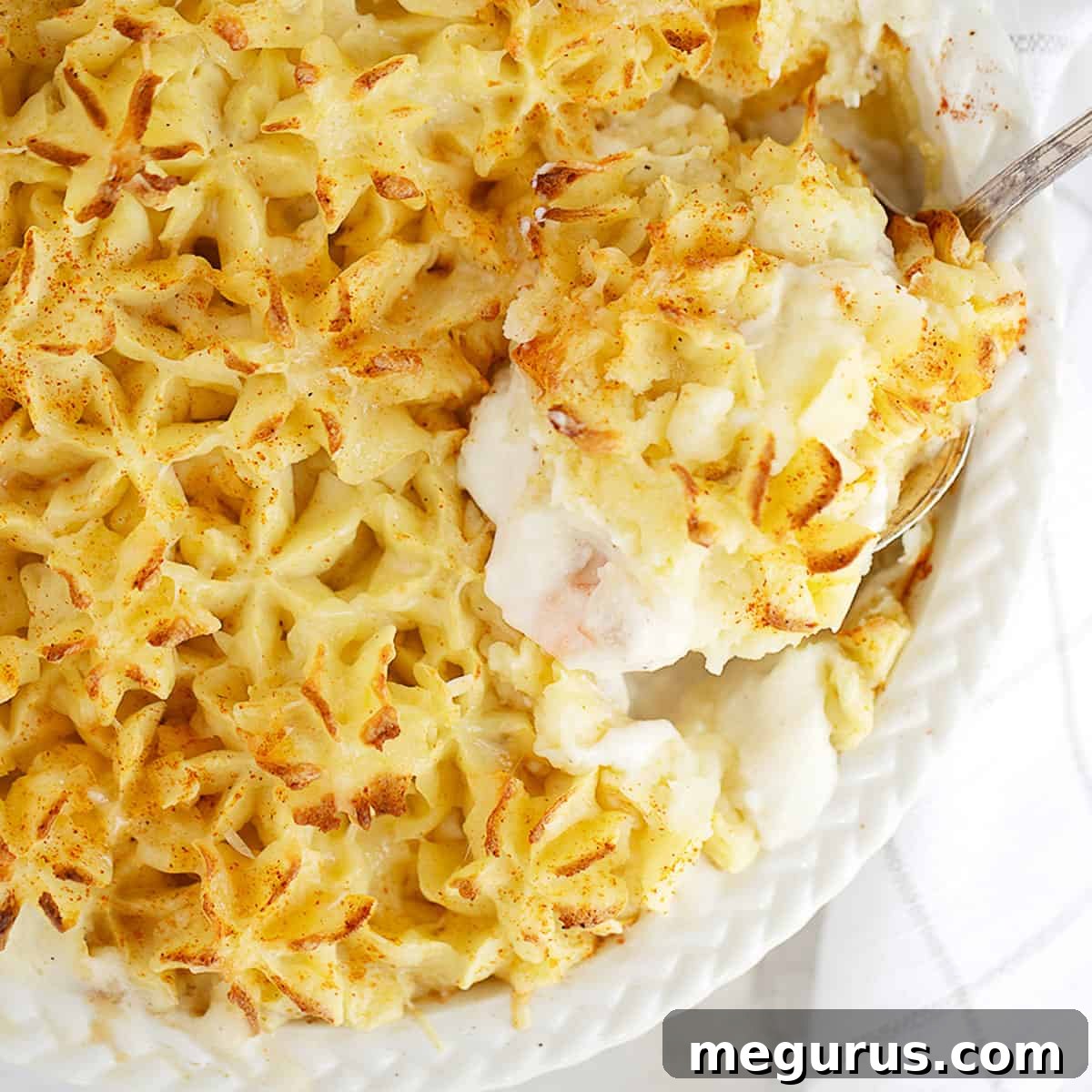
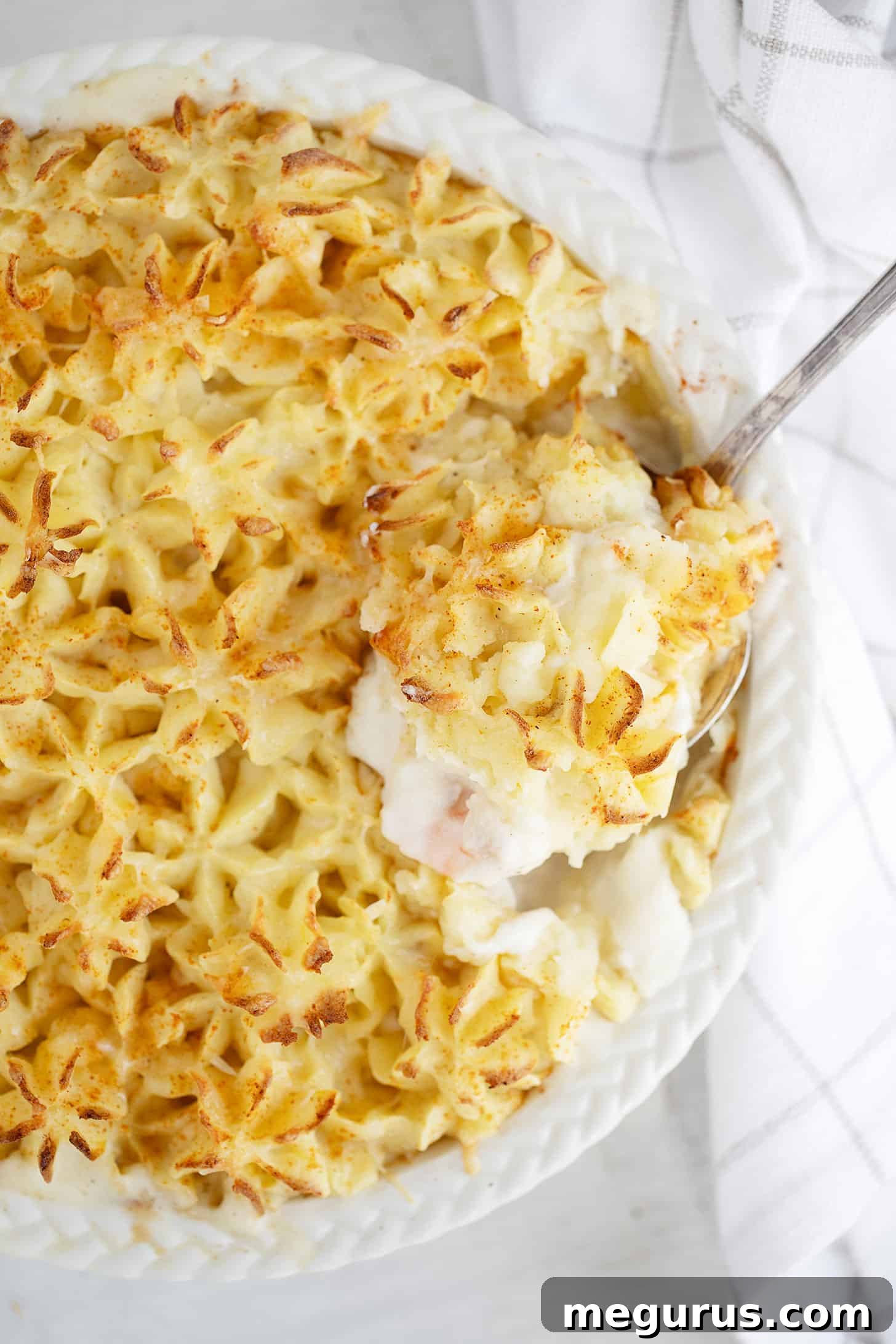
There’s nothing quite like a steaming, golden-topped fish pie to chase away the chill of an evening. This ultimate classic fish pie recipe is the epitome of comfort food, featuring succulent, flaky whitefish and tender seafood enveloped in a rich, creamy, and subtly cheesy sauce, all crowned with a generous layer of perfectly mashed potatoes. Every spoonful delivers a harmonious blend of textures and deeply satisfying flavors that warm you from the inside out. What makes this recipe truly exceptional is its convenience: it can be effortlessly prepared in advance, making it a perfect make-ahead centerpiece for busy weeknights or relaxed gatherings.
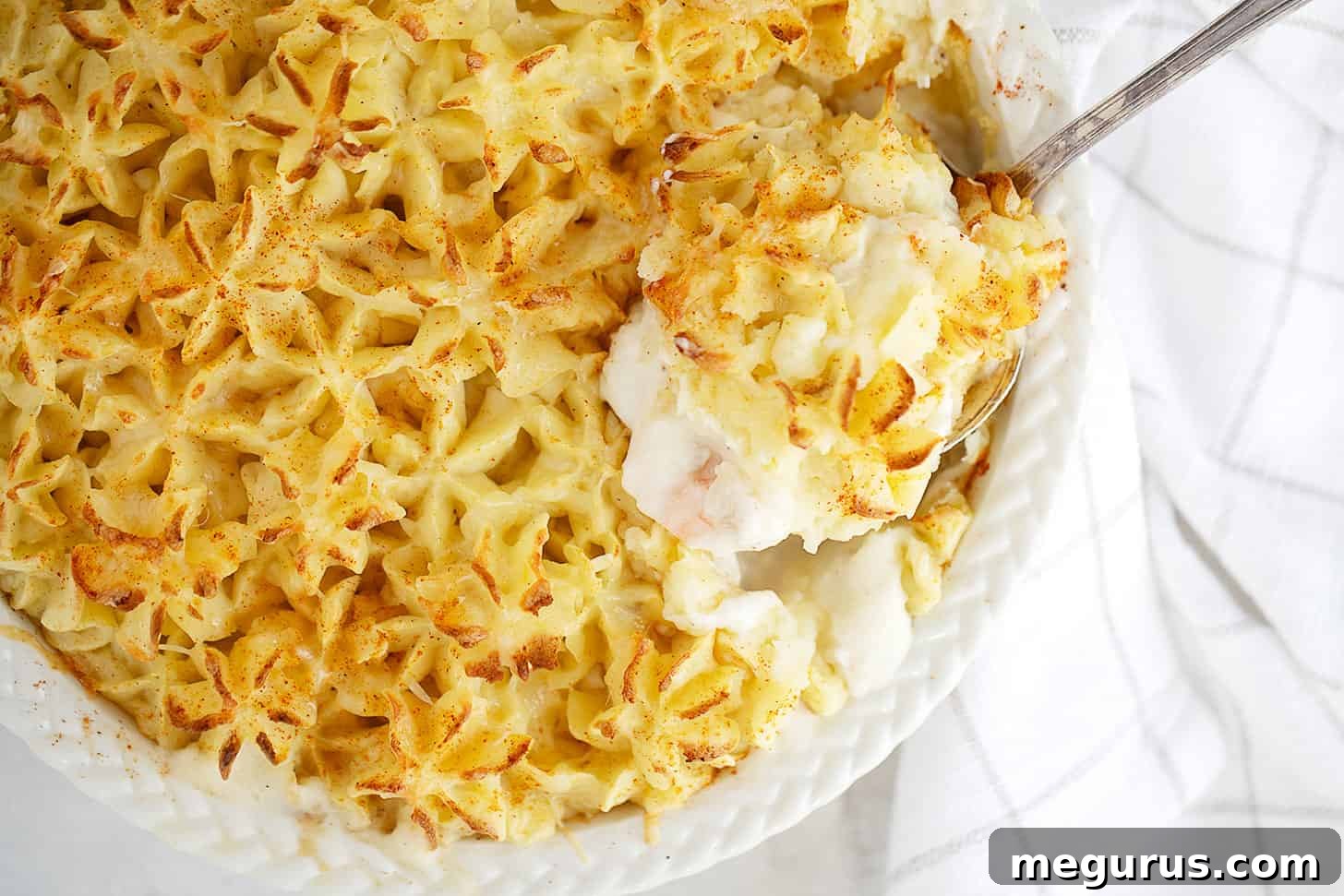
Fish pie holds a cherished spot in culinary traditions worldwide for good reason. It’s a wonderfully flavorful and nourishing way to enjoy fish and seafood, transforming simple ingredients into a truly memorable meal. The ability to assemble this dish ahead of time is a game-changer for entertaining or simply making weeknight dinners stress-free. Imagine having a delicious, homemade meal ready to simply pop into the oven after a long day – that’s the magic of this fish pie!
Why This Classic Fish Pie Will Become Your Family Favorite
Beyond its comforting appeal, this fish pie offers a multitude of reasons to adore it. It’s a fantastic way to incorporate more seafood into your diet, offering a balanced meal rich in protein and flavor. The creamy sauce, combined with tender fish and fluffy potatoes, creates a texturally exciting dish that even picky eaters will love. Its versatility means you can easily adapt it to your family’s preferences or whatever ingredients you have on hand. Plus, the make-ahead nature ensures that you can enjoy a gourmet-quality meal without the last-minute rush.
Essential Ingredients & Smart Substitutions for Your Fish Pie
Crafting the perfect fish pie starts with understanding its core components. Here’s a breakdown of the key ingredients and how you can adapt them to suit your taste and pantry.
The Fish: Heart of the Pie
For the base of your fish pie, I highly recommend using a lean, skinless, and boneless whitefish. Haddock is my personal favorite due to its firm texture and delicate flavor that holds up beautifully in the creamy sauce. However, other excellent choices include Halibut, Cod, or Sole. Each offers a slightly different nuance in texture and taste, so feel free to experiment. If you’re a fan of a deeper, smokier flavor profile, don’t hesitate to incorporate some smoked fish into your mix. Smoked haddock, often called finnan haddie, is a traditional choice that adds wonderful depth. Similarly, if you have some salmon fillets on hand, they make a fantastic addition, contributing a richer flavor and beautiful color to the pie. When using frozen fish, it’s absolutely crucial to thaw it thoroughly and pat it dry with paper towels to prevent excess moisture from making your pie watery. Starting with fresh fish, if available, always yields the best results.
Additional Seafood: Elevating the Flavor
To enhance the richness and variety of this pie, I often include a mix of frozen shrimp and scallops, ensuring they are thawed before use. Shrimp alone is also a popular and delicious choice. A key consideration here is whether to use pre-cooked or raw seafood. While pre-cooked shrimp or scallops can be used, I find that raw seafood stands up a little better to the longer baking time, retaining a more tender and juicy texture. If you prefer to keep things simple or don’t have additional seafood, you can easily omit it and simply double the amount of whitefish for a purely fish-focused pie.
The Cheese: A Touch of Indulgence
A subtle hint of cheese truly elevates the creamy sauce and the mashed potato topping. I typically incorporate a bit of grated Gruyere cheese, known for its nutty, slightly sweet flavor and excellent melting properties. If Gruyere isn’t available or to your liking, you have several delicious alternatives. An aged white cheddar will lend a sharper, more robust flavor, while Emmental offers a milder, buttery note. For those who prefer to keep their fish pie dairy-free or simply want the pure taste of the seafood to shine, you can certainly omit the cheese entirely without compromising the overall deliciousness.
The Potatoes: The Golden Crown
The mashed potato topping is not just a cap; it’s an integral part of the pie, providing a creamy, fluffy contrast to the rich filling. I prefer using yellow-fleshed potatoes, such as Yukon Gold, for their naturally buttery flavor and smooth texture when mashed. Baking potatoes like Russets also work wonderfully, yielding a light and fluffy mash. The key is to use potatoes you typically enjoy for mashing, as their consistency will directly impact the final topping. Remember, the texture of your mashed potatoes is crucial for holding its shape and creating that beautiful golden crust.
Dairy: The Creamy Foundation
Milk is essential for creating the luxurious white sauce that binds the fish pie together. I highly recommend using whole milk (3% or 3.5% butterfat) for the richest, most flavorful sauce. While 2% milk can work, it may result in a slightly less decadent consistency. For the mashed potatoes, you have flexibility: you can use either heavy cream or milk, depending on how rich and indulgent you desire your topping to be. A touch of heavy cream in the mash creates an incredibly smooth and velvety texture, while milk offers a lighter option.
Crafting Your Homemade Fish Pie: A Step-by-Step Visual Journey
Making a truly exceptional fish pie involves a few key steps, each contributing to the layers of flavor and texture. This visual guide will walk you through the process, but always refer to the complete recipe card below for precise measurements and detailed instructions.
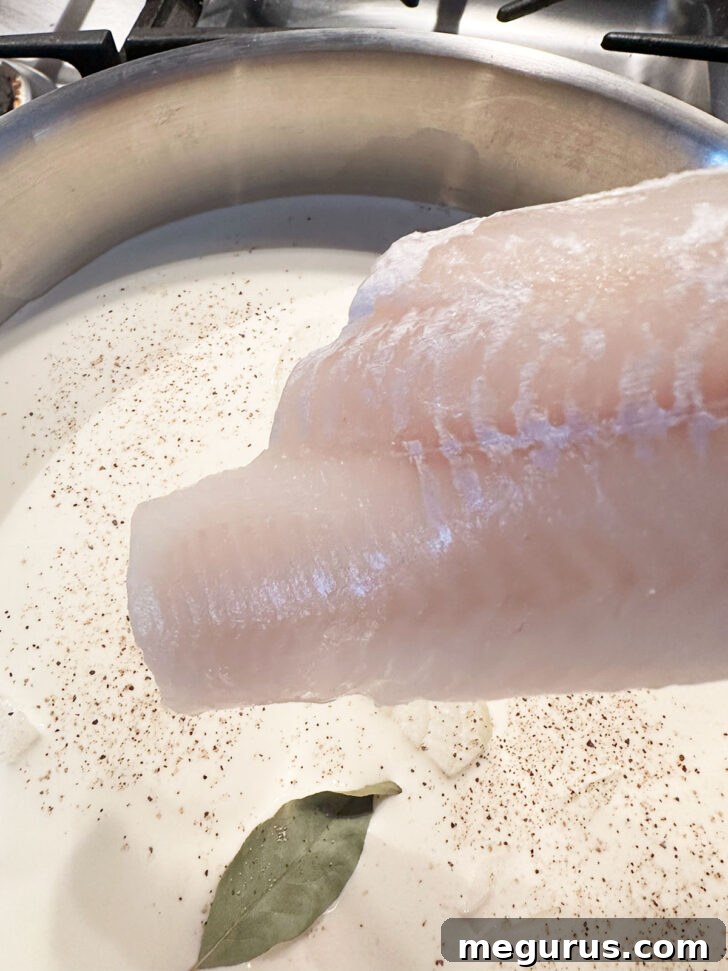
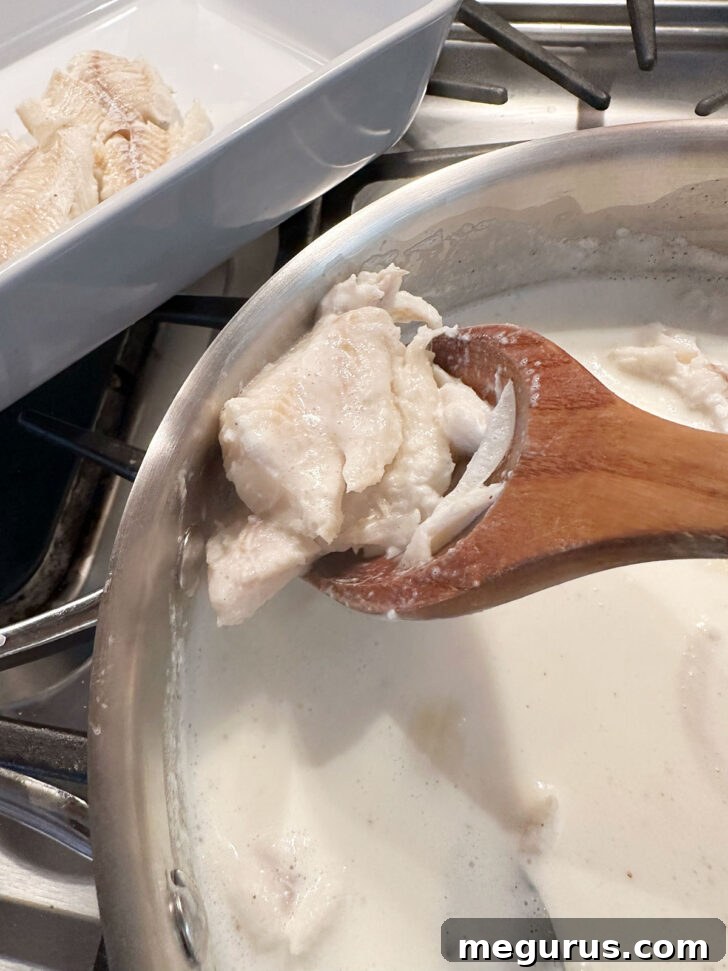
- Begin by gently poaching your fish. In a large skillet, combine milk, cream, quartered onion, a bay leaf, and season generously with salt and pepper. Slide the fish fillets into this aromatic milk mixture. Bring it to a gentle boil, then reduce the heat to medium-low and simmer for about 5 minutes, ensuring the fish is just cooked through and flaky.
- Carefully remove the poached fish from the milk mixture using a slotted spoon and transfer it to your chosen baking dish. You can gently break the fish into larger chunks with a spoon if preferred. The seasoned milk is crucial, so reserve it for your sauce!
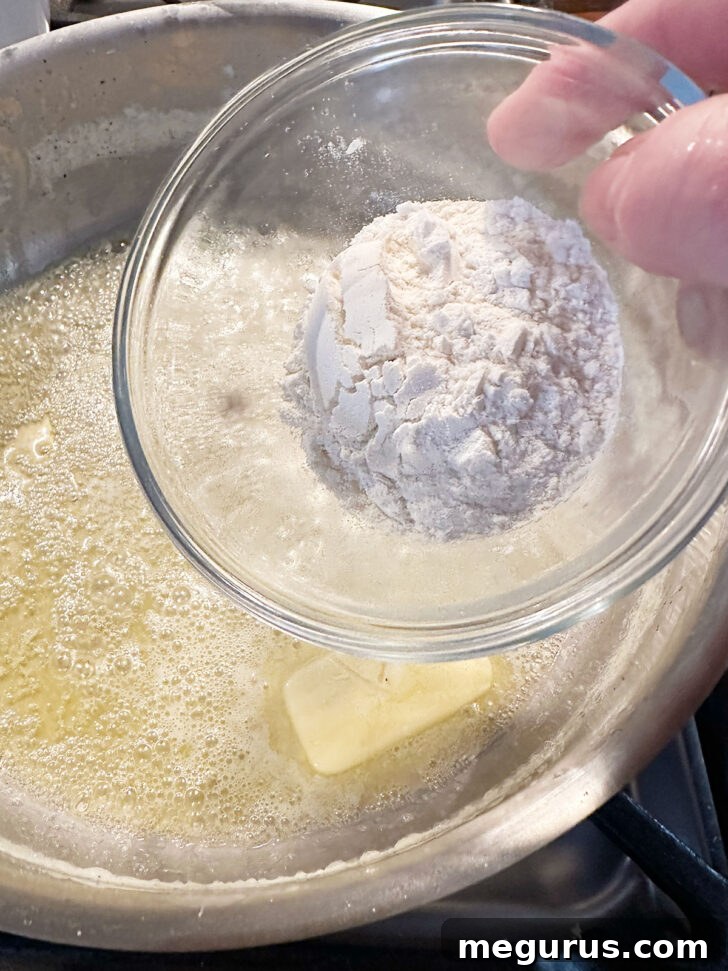
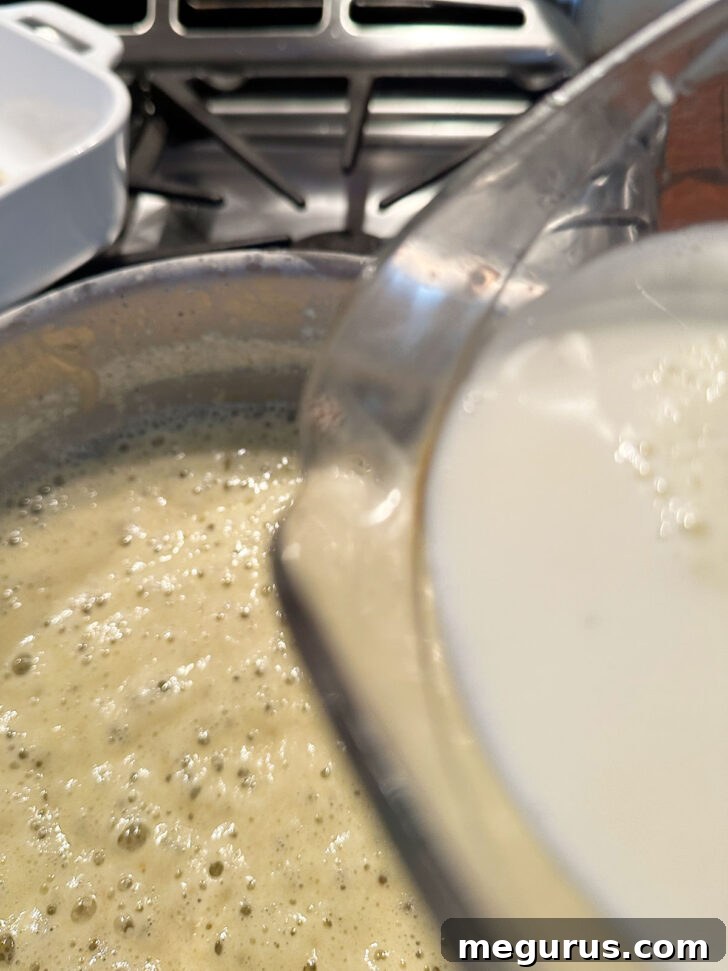
- In the same skillet (no need to clean it!), melt the butter over medium heat. Once melted, add the all-purpose flour and cook, stirring continuously, for about 1 minute. This step creates a roux, which will thicken your sauce and remove any raw flour taste.
- Gradually pour about half of your reserved milk mixture into the butter and flour, whisking vigorously to prevent lumps. Once smooth, add the remaining milk and continue to whisk. Bring the sauce to a boil, then reduce the heat and simmer gently for 8-10 minutes, allowing it to thicken beautifully.
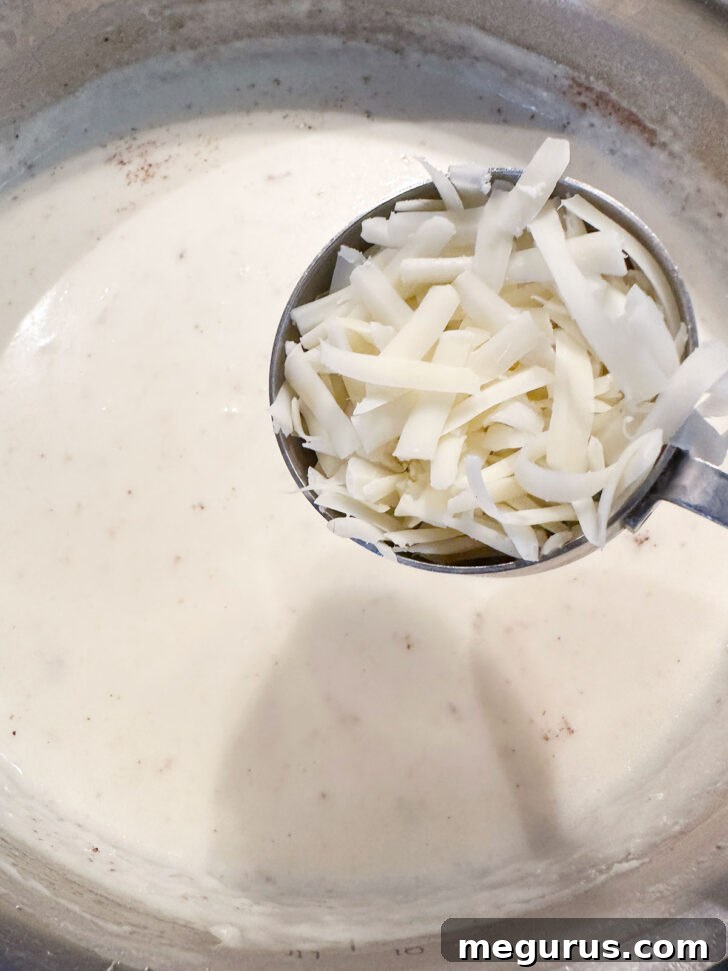
- Once the sauce has reached a lovely, thick consistency, remove the skillet from the heat. Stir in the shredded Gruyere cheese until it has fully melted into the sauce, making it extra creamy and flavorful. A pinch of nutmeg can also be added here for a subtle warmth.
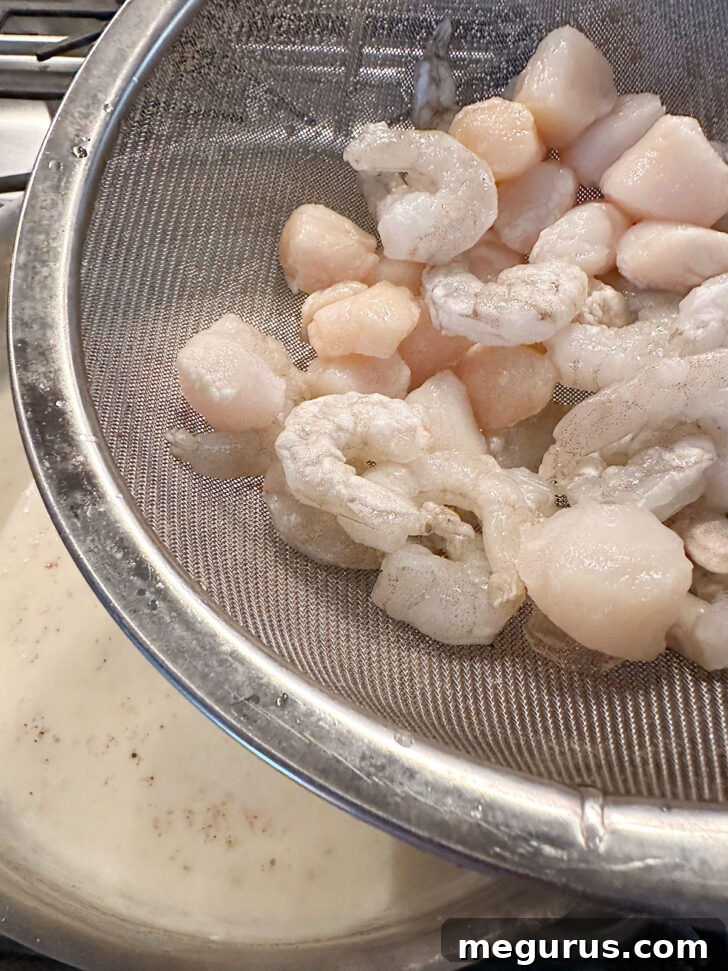
- Now, fold in your thawed shrimp and scallops (or just shrimp, if that’s your preference). The residual heat of the sauce will gently cook them to perfection, ensuring they remain tender. Take a moment to taste and adjust the seasoning with additional salt and pepper as needed.
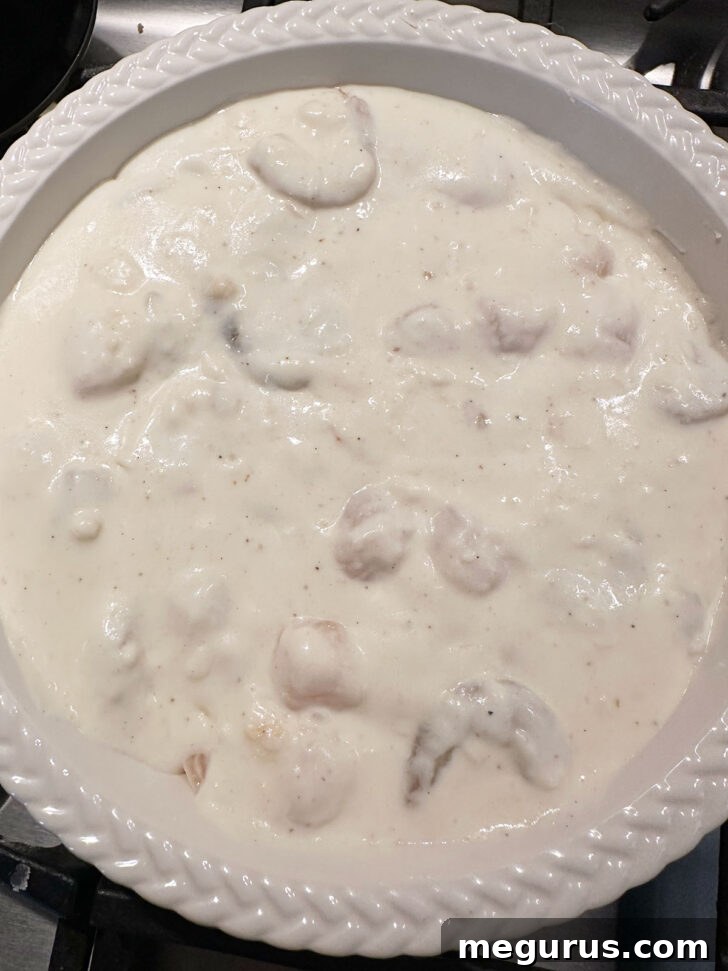
- Pour the luscious, creamy seafood sauce over the cooked fish chunks in the baking dish, ensuring everything is evenly coated. Allow the mixture to cool slightly until the steam subsides, then cover with plastic wrap and refrigerate for at least 1 hour. This chilling step is vital for the filling to firm up, preventing the mashed potatoes from sinking.
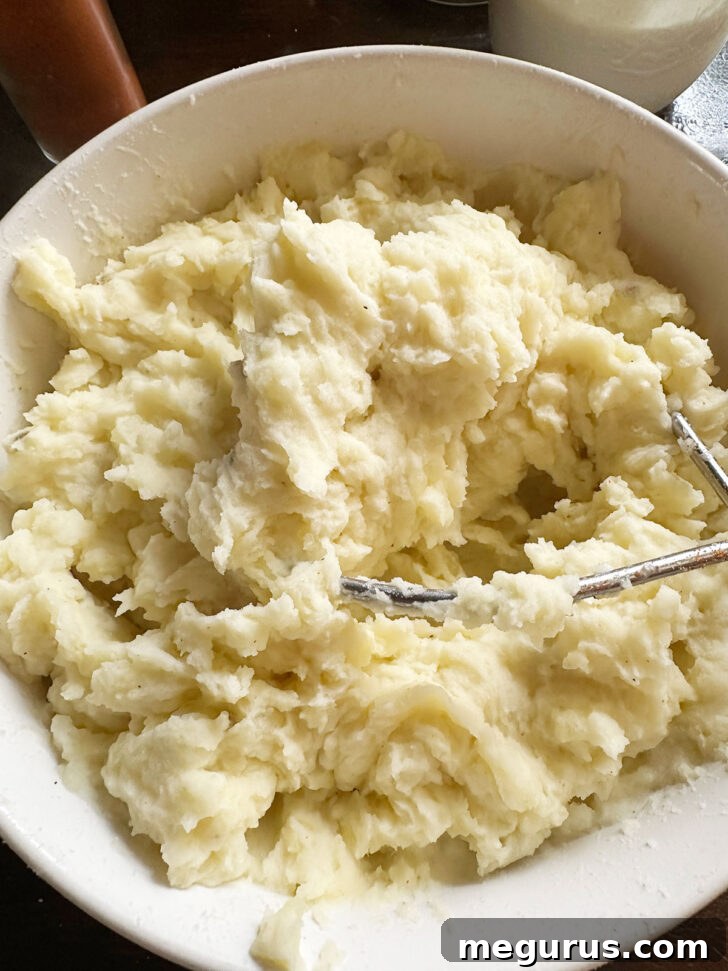
- While the filling chills, prepare your mashed potatoes. Boil peeled and quartered potatoes in generously salted water until tender, about 15-20 minutes. Drain well and let them dry for a few minutes. Mash them with butter, crème fraîche (optional, for extra richness), salt, pepper, and a pinch of paprika. Gradually add heavy cream or half-and-half until you achieve a smooth, creamy, yet firm consistency that can hold its shape.
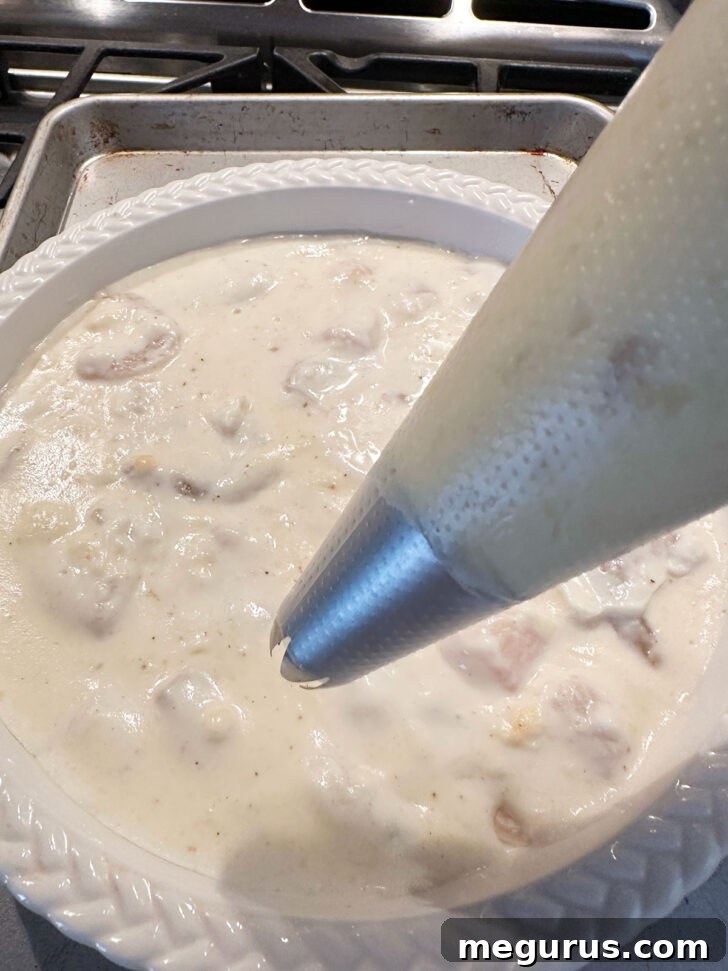
- Once your filling is chilled and potatoes are mashed, it’s time to top the pie. For a beautiful, professional look, fill a piping bag fitted with a large star tip and pipe the mashed potatoes evenly over the chilled filling. If you don’t have a piping bag, simply spoon dollops of potatoes over the filling and spread them gently with the back of a spoon or a fork, creating decorative ridge marks across the top.
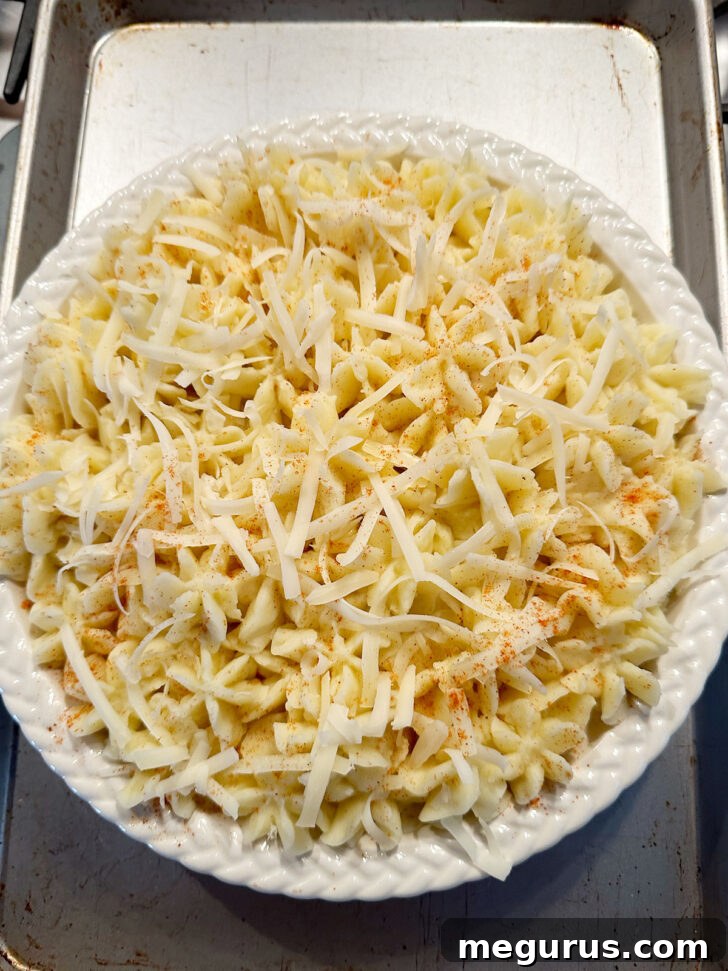
- Finally, sprinkle additional shredded cheese (Gruyere or your preference) over the mashed potatoes, along with a dash of paprika for color and a hint of smoky flavor. Preheat your oven to 400°F (200°C). Place the baking dish on a rimmed baking sheet (to catch any potential bubble-overs) and bake for 30-40 minutes, or until the sauce is visibly bubbling around the edges and the potato topping is gloriously golden brown. Allow to rest for 5 minutes before serving for easy portioning and to let the flavors meld.
Recipe Video Guide
A helpful video guide for preparing your ultimate classic fish pie will be embedded here soon, demonstrating each step to ensure your success in the kitchen.
Expert Tips for the Perfect Fish Pie Every Time!
- Seasoning is Key: Don’t underestimate the power of proper seasoning. Taste your sauce at every stage of cooking, especially before adding the fish and after the cheese has melted. If the sauce tastes a little bland or “flat,” it almost always needs more salt and a touch more pepper. Seasoning in layers builds depth of flavor.
- The Magic of Chilling: The chilling step for the fish pie filling is not optional for optimal results. It serves two crucial purposes: First, it allows the sauce to firm up significantly, which prevents the mashed potato topping from sinking into the pie during baking, ensuring a beautiful presentation. Second, it naturally breaks down the preparation process into two manageable segments, making the overall experience less rushed. You can prepare the filling earlier in the day, chill it, and then make the mashed potatoes closer to baking time.
- Mashed Potato Consistency Matters: For a topping that holds its shape and crisps up beautifully, ensure your mashed potatoes are firm, not runny. Add the cream or milk gradually, a tablespoon at a time, until you reach a creamy but still substantial consistency. Over-mixing can lead to gluey potatoes, so mash just until smooth.
- Protect Your Oven: Fish pies, with their rich, bubbly sauce, can sometimes bubble over during baking. Always place your baking dish on a rimmed baking sheet before putting it in the oven. This simple step will save you from a messy oven cleanup.
- Prompt Refrigeration: To ensure food safety and maintain freshness, avoid letting the baked fish pie sit out at room temperature for too long. Any leftovers should be promptly refrigerated in an airtight container as quickly as possible. This helps preserve the quality and safety of your delicious pie for enjoyment later.
Creative Variations to Customize Your Fish Pie
One of the joys of cooking is making a recipe your own. This classic fish pie is incredibly adaptable, allowing for various delicious modifications.
- Hard-Boiled Eggs: For a truly traditional touch, add 3 or 4 hard-boiled eggs, halved or quartered, to the fish filling before adding the sauce. They add another layer of texture and richness. Note: If you plan to freeze your pie, it’s best to omit hard-boiled eggs as their texture can become rubbery upon thawing.
- Cheese Exploration: While Gruyere is fantastic, feel free to experiment with other cheeses. A sharp aged cheddar offers a robust tang, while a mild Emmental provides a smooth, subtle flavor. You can also skip the cheese entirely for a lighter, purer fish flavor.
- Seafood Medley: Don’t limit yourself to just shrimp and scallops. Consider adding cooked mussels, crab meat, or even chunks of fresh lobster for an extra-special pie. Simply ensure the total weight of seafood remains consistent with the recipe.
- All-Fish Delight: If seafood is not your preference or available, simply increase the amount of whitefish to replace the shrimp and scallops. This creates a deeply satisfying, purely fish-focused pie. This “all-fish” approach is also recommended if you plan to freeze the pie, as it’s not advisable to re-freeze shrimp and scallops that were previously frozen.
- Crispy Topping: For an additional layer of texture, sprinkle some buttered panko breadcrumbs over the mashed potatoes before baking. Alternatively, a simple drizzle of melted butter over the mash will encourage extra crisping and golden color.
- Gluten-Free Option: To make this a gluten-free fish pie, substitute the all-purpose flour in the sauce with a 1-for-1 gluten-free flour blend. If the sauce needs further thickening at the end, create a slurry with equal parts cornstarch and cold water, whisking it into the simmering sauce until it reaches your desired consistency.
- Vegetable Boost: Enhance the nutritional value and flavor by adding finely diced leeks or a handful of frozen peas or corn to the fish filling before pouring the sauce. Sautéed spinach, squeezed dry, also makes a wonderful addition.
Making Ahead, Storing, and Freezing Your Fish Pie
The make-ahead nature of this fish pie is one of its greatest advantages, offering flexibility for meal planning and entertaining.
As highlighted earlier, assembling the fish pie in the morning and then refrigerating it for baking later in the day is ideal. I personally prefer to bake it on the same day it’s assembled to ensure optimal freshness and flavor. However, if needed, the unbaked pie can be covered tightly with plastic wrap and stored in the refrigerator for up to 24 hours before baking.
Once baked, any leftover fish pie will keep beautifully in an airtight container in the refrigerator for up to 2 days. Reheat gently in the oven or microwave until warmed through.
Freezing fish pie is also an option, but there are a few important considerations. If you plan to freeze either the baked or unbaked fish pie, it is crucial to omit the shrimp, scallops, and hard-boiled eggs from the filling. This is because previously frozen shrimp and scallops should not be refrozen, and hard-boiled eggs tend to develop a rubbery texture after freezing and thawing.
You can freeze an assembled, unbaked fish pie (without shrimp, scallops, or eggs) for up to 3 months. Ensure it’s very well-wrapped in multiple layers of plastic wrap and aluminum foil to prevent freezer burn. To bake, thaw the frozen pie in the refrigerator overnight until completely defrosted. Baking time might be slightly longer for a pie thawed from frozen. Similarly, you can freeze leftover baked fish pie (again, without the aforementioned ingredients). Thaw in the refrigerator before reheating.
The Ultimate Creamy Fish Pie
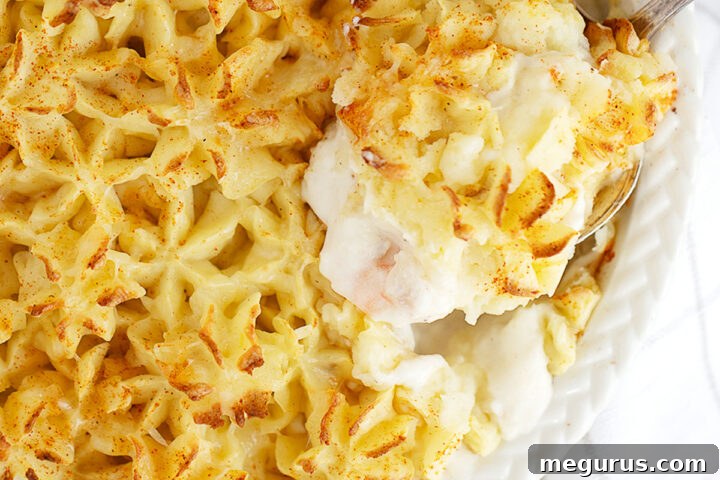
Classic, creamy, mashed potato-topped fish pie, featuring tender white fish and optional seafood in a rich, velvety sauce with a touch of cheese for exceptional flavor.
Prep Time: 30 mins
Cook Time: 30 mins
Chilling Time: 1 hr
Total Time: 2 hrs
Yield: 6 servings
Ingredients
For the Filling:
- 1 3/4 cups (420 ml) whole milk (3-3.5% b.f. recommended)
- 1 1/4 cups (300 ml) heavy whipping cream (35% b.f.)
- 1/2 medium onion, quartered
- 1 bay leaf
- 14 oz (400 g) whitefish fillets, such as haddock, halibut, cod, or sole, skinless and boneless, regular or smoked or a mixture, thoroughly thawed (See Note 1)
- 4 Tablespoons (56 g) butter
- 3 Tablespoons (25 g) all-purpose flour
- 10 oz (300 g) shrimp, or scallops or a mixture, thawed (See Note 2)
- 1/8 teaspoon nutmeg
- Salt and freshly ground pepper, to taste
- 1/3-1/2 cup (80 ml) Gruyere cheese, shredded (See Note 3)
For the Mashed Potatoes:
- 2 lbs. (900 g) yellow-fleshed potatoes, peeled and halved or quartered, if large (e.g., Yukon Gold) (See Note 4)
- 2 Tablespoons (28 g) butter
- 1-2 Tablespoons crème fraîche or sour cream (optional, for extra richness)
- 1/8 teaspoon paprika
- Salt and freshly ground pepper, to taste
- 2-3 Tablespoons heavy whipping cream (35% b.f.) or half-and-half (10%), or as needed for desired consistency
For Topping Before Baking:
- 1/4 cup (60 ml) Gruyere cheese, shredded
- Paprika, for garnish
Instructions
- Top Tip! Seasoning is paramount for a truly flavorful fish pie. Season as you go, and most importantly, taste the sauce before assembly and adjust salt and pepper as needed. A perfectly seasoned sauce makes all the difference!
- In a large, deep skillet, combine the milk, heavy cream, quartered onion, and bay leaf. Season with a generous pinch of salt and freshly ground pepper. Add the fish fillets to the milk mixture. Place the skillet over medium heat. Once the milk comes to a gentle simmer (do not boil rapidly), reduce the heat to medium-low and poach the fish for about 5 minutes, or until just cooked through and flaky.
- Carefully remove the poached fish from the milk mixture using a slotted spoon and transfer it to a 2.5-3 quart baking dish. Gently break the fish into smaller, bite-sized pieces with a spoon if necessary. Ensure your baking dish allows for at least 1 inch of space from the top for the mashed potato topping.
- Using a fine-mesh strainer, strain the milk mixture into a bowl or large measuring cup, discarding the cooked onion and bay leaf, and reserving the seasoned milk. Set the reserved milk aside.
- In the same skillet (no need to clean it), melt the 4 tablespoons of butter over medium heat. Once melted, add the 3 tablespoons of all-purpose flour and cook, stirring constantly, for about 1 minute to create a roux. Gradually add about half of the reserved milk mixture to the pan, whisking continuously until smooth. Then, add the remaining milk and continue whisking. Bring the sauce to a boil over medium heat, then reduce the heat to medium-low and let it simmer gently for 8-10 minutes, allowing it to thicken.
- Remove the skillet from the heat. Stir in the shredded Gruyere cheese until it has completely melted into the sauce. Add the thawed shrimp and/or scallops (if using) and the nutmeg. Take a moment to taste the sauce and adjust the seasoning with additional salt and pepper if needed to achieve a balanced flavor.
- Pour the creamy seafood sauce evenly over the cooked fish chunks in the baking dish. Allow the mixture to cool slightly until the steam subsides, then cover the dish tightly with plastic wrap and place it in the refrigerator to chill for 1 hour. This chilling step is essential for the filling to set, ensuring your mashed potato topping doesn’t sink.
- While the filling chills, prepare the mashed potatoes. Bring a large pot of generously salted water to a boil. Add the peeled and prepared potatoes and boil for 15-20 minutes, or until they are very tender when pierced with a knife.
- Preheat your oven to 400°F (200°C) (use a regular bake setting, not fan-assisted).
- Drain the cooked potatoes thoroughly and return them to the empty pot or a large mixing bowl. Let them stand for about 5 minutes to allow any excess moisture to evaporate. Mash the potatoes using a potato masher or ricer until smooth. Add the 2 tablespoons of butter, crème fraîche (if using), salt, pepper, and paprika. Stir to combine. Gradually add the heavy whipping cream (or half-and-half), a tablespoon at a time, stirring until you achieve creamy, smooth, yet still firm mashed potatoes that can hold their shape. Only add as much cream as needed.
- If you wish to pipe the mashed potatoes for an elegant finish, fill a piping bag fitted with a large star tip and pipe the potatoes decoratively over the chilled filling. Alternatively, simply spoon dollops of the mashed potatoes over the chilled filling and spread them evenly with the back of a spoon, then use a fork to create pleasing ridge marks across the top.
- Sprinkle the additional 1/4 cup of shredded Gruyere cheese evenly over the mashed potatoes, and dust with a final sprinkle of paprika for color. At this point, the assembled pie can be wrapped well and refrigerated for up to 24 hours before baking, or frozen (without shrimp/scallops/eggs) for up to 3 months. I recommend baking on the same day it’s assembled for the freshest taste.
- Place the baking dish on top of a large, rimmed baking sheet. This will catch any potential bubble-overs during baking and prevent a mess in your oven.
- Bake the fish pie in the preheated oven for 30-40 minutes, or until the creamy sauce is visibly bubbling around the edges and the mashed potato topping is beautifully golden brown and lightly crisp.
- Remove the pie from the oven and let it stand for 5 minutes before serving. This allows the sauce to set slightly, making for easier and cleaner serving. Serve your delicious fish pie with a side of steamed peas, tender green beans, or a crisp side salad for a complete meal.
- Promptly refrigerate any leftovers, well-wrapped, for up to 2 days to maintain freshness.
Notes
Note 1: Selecting Your Fish: While any fish you enjoy can be used, whitefish is an excellent choice for its mild flavor and flaky texture. Haddock, Halibut, and Cod are popular options. Salmon can also be included for a richer flavor. You can use regular or smoked fish, or a combination. Fresh fish is ideal, but thoroughly thawed frozen fish works well; just ensure it’s patted very dry to prevent a watery pie.
Note 2: Seafood Additions: Shrimp and/or scallops add a lovely dimension to fish pie. You can use just one or a mix of both. However, if you intend to freeze the pie, it is not recommended to use previously frozen shrimp or scallops as re-freezing can compromise their texture. In this case, simply add more whitefish instead.
Note 3: Cheese Choices: Gruyere offers a wonderful nutty flavor, but feel free to substitute with other good melting cheeses like Emmental or a sharp aged white cheddar. You can also omit the cheese for a simpler, dairy-free version.
Note 4: Potato Preference: Yukon Gold potatoes are favored for their creamy texture, but Russet baking potatoes also yield excellent fluffy mashed potatoes. Use your preferred variety for mashing.
Variations: For a traditional touch, add 3-4 quartered hard-boiled eggs to the filling. Remember to omit these if freezing, as their texture degrades in the freezer.
Cuisine: American, British, Canadian
Course: Main Course
Author: Jennifer Maloney
Nutrition Information (per serving):
Serving: 1 serving, Calories: 569kcal, Carbohydrates: 35g, Protein: 22g, Fat: 38g, Saturated Fat: 24g, Polyunsaturated Fat: 2g, Monounsaturated Fat: 10g, Trans Fat: 0.5g, Cholesterol: 151mg, Sodium: 374mg, Potassium: 1019mg, Fiber: 4g, Sugar: 7g, Vitamin A: 1464IU, Vitamin C: 31mg, Calcium: 287mg, Iron: 2mg