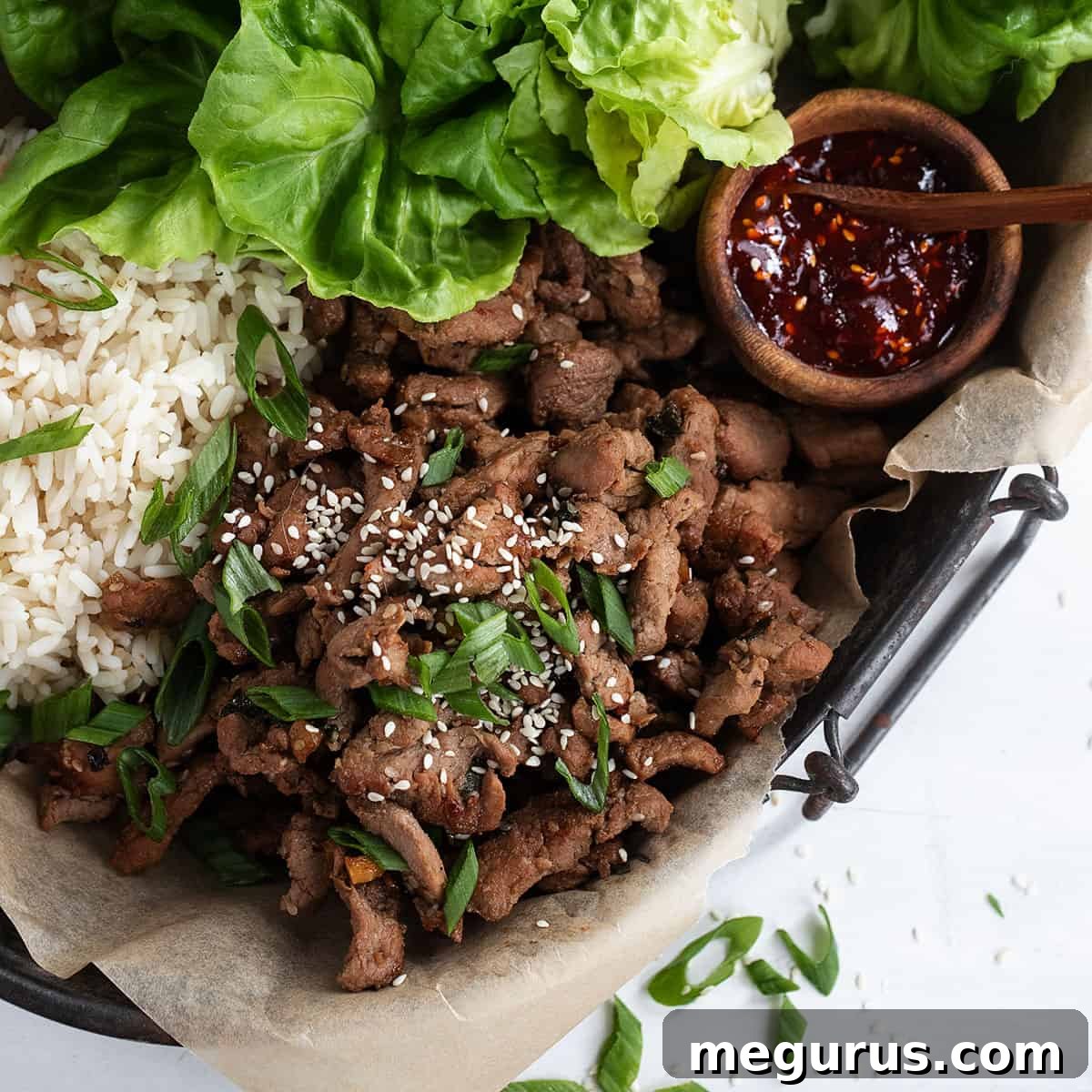
Embark on a culinary journey to Korea right from your kitchen with these incredibly flavorful and easy-to-make Korean Bulgogi Lettuce Wraps. This cherished Korean dish features thinly sliced, tender pork tenderloin or beef, marinated in a rich, savory, and slightly sweet Korean sauce. Known for its melt-in-your-mouth texture and irresistible umami, bulgogi is a staple in Korean cuisine, and this recipe brings its authentic taste directly to your dinner table. Whether you’re looking for a quick weeknight meal, a vibrant dish for entertaining, or a versatile base for various culinary creations, these lettuce wraps promise a delightful and satisfying experience. Enjoy them simply as they are, with fluffy rice tucked into crisp lettuce leaves, or as an exciting addition to rice bowls, noodle dishes, or even Korean-inspired tacos.
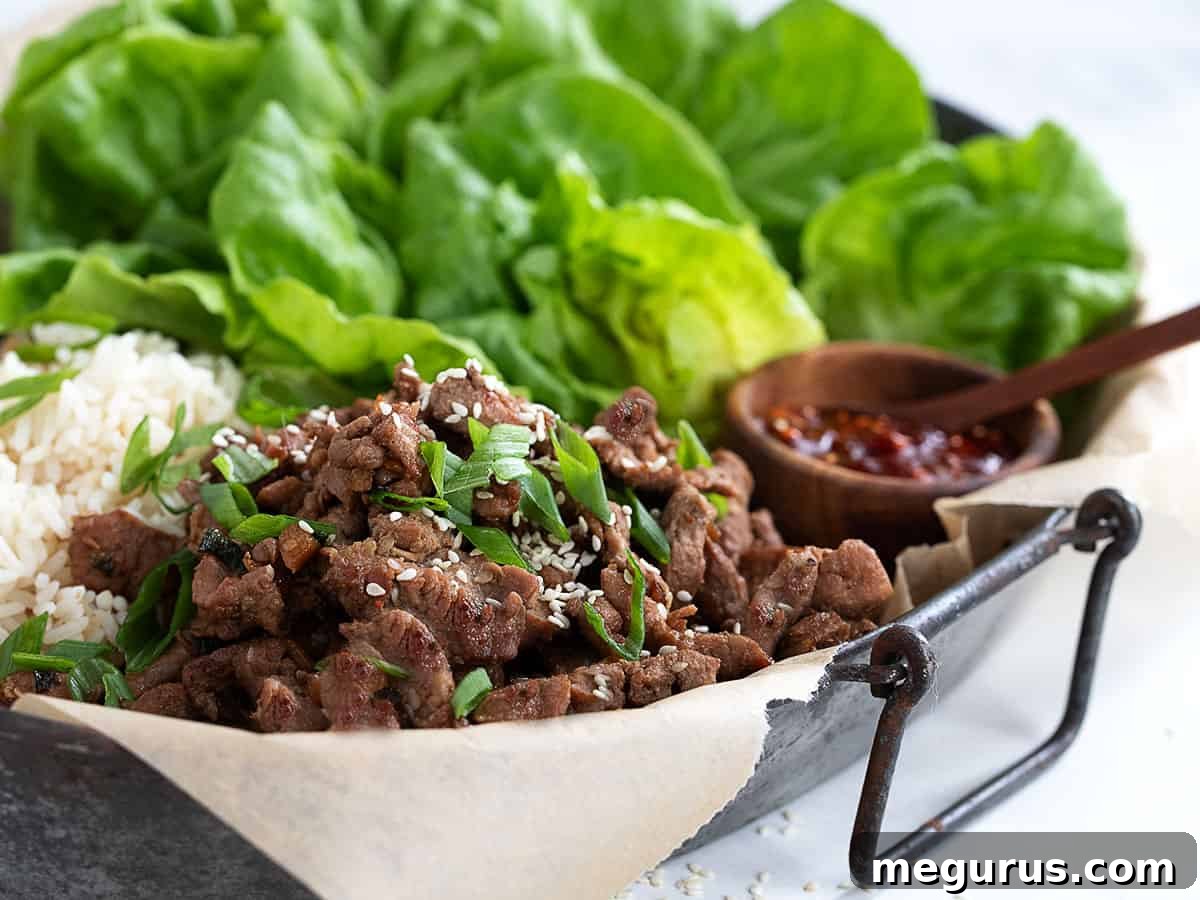
The Ultimate Guide to Easy Korean Bulgogi Lettuce Wraps
Bulgogi, meaning “fire meat,” is a classic Korean dish renowned for its incredible flavor and tender texture. Traditionally grilled, this simplified stovetop version captures all the authentic taste in a fraction of the time, making it an ideal choice for busy home cooks. The beauty of this recipe lies not only in its ease but also in its remarkable versatility. While serving it as refreshing lettuce wraps with a side of rice and a zesty spicy sauce is a popular and delicious option, the marinated and cooked meat can also elevate an ordinary rice bowl, transform a simple stir-fry, or even add a Korean twist to your next taco night. It’s a dish that truly adapts to your cravings and schedule.
Essential Ingredients for Your Authentic Bulgogi
Crafting delicious Korean Bulgogi requires a few key ingredients, each playing a vital role in developing the dish’s signature flavor. Here’s a comprehensive look at what you’ll need, along with helpful substitution tips to ensure your cooking experience is seamless and enjoyable.
Protein Powerhouse: Pork Tenderloin or Beef Stir-Fry Strips
The foundation of our bulgogi is either a single, lean pork tenderloin or a convenient tray of pre-sliced beef stir-fry strips. Both options yield incredibly tender results when prepared correctly. Pork tenderloin is celebrated for its lean profile and ability to absorb marinades beautifully, resulting in succulent, flavorful strips. If opting for beef, look for cuts like sirloin, ribeye, or even flank steak, all of which are excellent for stir-frying due to their tenderness and marbling. This recipe is perfectly portioned for a family meal, but don’t hesitate to double the quantities to feed a larger crowd or to ensure you have delicious leftovers for the week.
The Heart of the Flavor: Bulgogi Marinade Ingredients
- Soy Sauce: The backbone of the marinade, providing savory depth. Low-sodium soy sauce is recommended to control the overall saltiness, allowing the other flavors to shine without overpowering.
- Sugar (White or Brown): Balances the savory notes with a touch of sweetness, crucial for authentic bulgogi flavor. Brown sugar adds a deeper, more molasses-like sweetness.
- Mirin (Sweet Japanese Rice Wine): This essential ingredient imparts a distinct sweet, tangy, and umami flavor, as well as a beautiful glaze to the meat. Mirin is now widely available in most grocery stores or can be easily ordered online. If you don’t have Mirin on hand, a good substitute can be white wine or rice wine vinegar combined with an additional 1 teaspoon of sugar to offset the acidity. In a pinch, even water with a bit more sugar can work, though it won’t offer the same depth of flavor.
- Sesame Oil: A drizzle of sesame oil adds a nutty, aromatic richness that is quintessential in Korean cooking. For a lighter touch, olive oil can be used as an alternative, but the sesame oil truly enhances the authentic Korean profile.
- Sesame Seeds: These tiny seeds contribute a subtle crunch and nutty aroma, both in the marinade and as a garnish.
- Green Onions (Scallions): Freshly chopped green onions provide a mild oniony bite and vibrant color, infusing the marinade with their delicate flavor.
- Garlic Cloves (Minced): Garlic is indispensable in Korean marinades, offering a pungent, aromatic punch that complements the meat beautifully. Use fresh garlic for the best results.
- Black Pepper: A simple seasoning that adds a subtle warmth and depth.
- Gochugaru (Korean Red Pepper Flakes – Optional): For those who appreciate a touch of heat, Gochugaru is highly recommended. These vibrant red pepper flakes are milder than typical crushed red pepper, with a smoky, slightly sweet flavor unique to Korean cuisine. They are excellent for adding an authentic spicy kick. If you don’t have gochugaru, regular red pepper flakes can be substituted for heat, though the flavor profile will be slightly different. Keep them in your pantry for whenever you want to spice up your Korean dishes.
Serving Components for the Perfect Lettuce Wraps
To enjoy your bulgogi in classic lettuce wrap style, you’ll need:
- Lettuce: Choose large, sturdy lettuce leaves that can hold a generous portion of meat and rice. Boston lettuce (also known as butter lettuce) or leaf lettuce varieties are excellent choices as their leaves are soft, pliable, and easy to separate.
- Rice: Steamed white or brown long-grain rice is the traditional accompaniment, offering a neutral base that soaks up the bulgogi flavors. Basmati rice also works wonderfully, providing a fragrant and fluffy texture.
Optional Gochujang Sauce for an Extra Kick
For a truly authentic and fiery experience, a homemade Gochujang sauce is a must. This vibrant red sauce adds a layer of spicy, savory, and sweet complexity. You will need:
- Gochujang (Korean Red Pepper Paste): The star of the sauce, providing its signature heat and fermented depth. This thick, pungent paste is a cornerstone of Korean cooking.
- Soy Sauce: For additional umami and liquid.
- Rice Vinegar: Adds a bright, tangy counterpoint to the richness of the Gochujang.
- Garlic (Minced): Enhances the aromatic profile.
- White or Brown Sugar: Balances the heat and acidity.
- Sesame Seeds & Sesame Oil: For nutty flavor and aroma.
- Corn Syrup (Light or Dark) or Maple Syrup (Optional): Adds a touch of extra gloss and sweetness, enhancing the sauce’s texture.
In a pinch, if Gochujang isn’t available, you can substitute with Sambal Oelek or even Asian Chili Garlic sauce for a spicy kick, though the flavor will vary.
Step-by-Step Visual Guide: Preparing Your Bulgogi
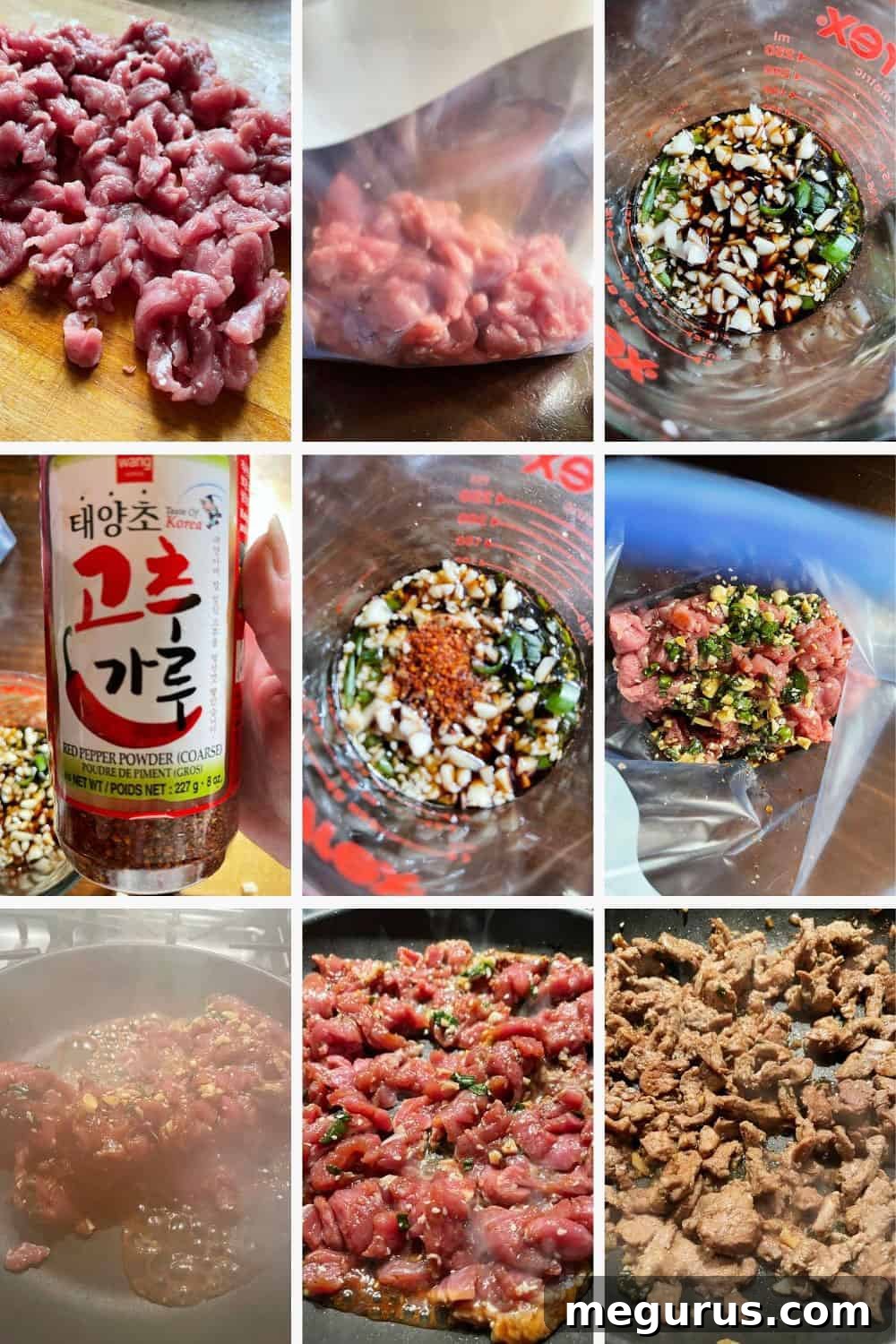
Follow these simple steps to create perfectly tender and flavorful Korean Bulgogi:
- Prepare the Meat: If using pork tenderloin, begin by carefully removing any silver skin or visible fat. This ensures the meat remains tender and enhances its texture. Next, slice the tenderloin into thin, uniform pieces. For optimal results, cut these pieces further into 3 or 4 thinner, long strips. This increases the surface area for the marinade and allows for quick cooking. Place the prepared meat into a large bowl or a resealable plastic bag.
- Craft the Marinade: In a separate bowl, combine all the bulgogi marinade ingredients: soy sauce, sugar, Mirin, sesame oil, sesame seeds, chopped green onions, minced garlic, and a pinch of black pepper. Stir vigorously until all ingredients are well combined and the sugar has dissolved. For those who enjoy a little spice, now is the time to add 1/4 to 1/2 teaspoon of Gochugaru (Korean Red Pepper Flakes), adjusting to your preferred level of heat.
- Marinate for Flavor: Pour the prepared marinade over the sliced pork or beef in the bowl or bag. Toss thoroughly to ensure every piece of meat is evenly coated. Cover the bowl or seal the bag and refrigerate for at least 30 minutes. For a deeper, more intense flavor, you can marinate the meat for up to 8 hours. This allows the meat to fully absorb the aromatic goodness of the marinade.
- Cook to Perfection: When you’re ready to cook, heat 1 tablespoon of vegetable oil (or another neutral cooking oil) in a large skillet over medium-high heat. Once the oil is shimmering, add all the marinated pork (including any remaining marinade liquid) to the skillet. Cook, stirring frequently, until almost all the liquid has evaporated and the meat has beautifully browned. This usually takes about 5-7 minutes.
- Serve and Enjoy: Your delicious bulgogi is now ready! Serve it hot with fresh lettuce leaves and cooked rice. Don’t forget to offer the optional Gochujang sauce on the side for an added layer of spicy, tangy flavor. Garnish with extra sliced green onions and a sprinkle of sesame seeds for presentation and added aroma.
Chef’s Notes & Expert Tips for Perfect Bulgogi
Achieving restaurant-quality bulgogi at home is simpler than you think with these helpful tips:
- Effortless Slicing: Slicing meat thinly can be a challenge, but here’s a pro tip: if you’re starting with frozen pork or beef, let it thaw partially. Meat that is still slightly frozen is much firmer and easier to slice into thin, uniform strips. Aim for pieces that are about 1/8 to 1/4 inch thick.
- Optimal Meat Shape: For traditional bulgogi, the meat should be cut into thin strips, not wide, flat planks. If your initial slices from the pork tenderloin or beef steak are too wide, cut them into 3 or 4 thinner strips. This ensures quick, even cooking and maximizes surface area for delicious caramelization.
- Customize Your Sauce Level: Bulgogi is traditionally cooked until it’s fairly dry and slightly caramelized, with most of the marinade liquid evaporated. However, if you prefer a saucier bulgogi to coat your rice or noodles, you can easily achieve this. Once the pork is cooked through and there’s still some liquid remaining in the pan, create a slurry by stirring together 1 tablespoon of cornstarch with 1 tablespoon of cold water. Add this mixture gradually to the simmering sauce in the skillet, stirring continuously, until your desired sauce thickness is reached.
- Freezer-Friendly Meal Prep: Cooked bulgogi freezes beautifully! Once cooled, transfer it to an airtight container or freezer-safe bag. It can be stored in the freezer for up to 2-3 months. This makes it a fantastic option for meal prep, allowing you to pull out a quick and delicious meal whenever you need it.
- Beef Bulgogi Variation: This recipe is incredibly adaptable. If pork isn’t your preference, simply swap it for beef. Any good quality beef steak, such as sirloin, ribeye, or flank steak, can be sliced into thin strips and used in the same way as the pork tenderloin, yielding equally delicious results.
Beyond Wraps: 5 Versatile Ways to Enjoy Bulgogi
While Korean Bulgogi Lettuce Wraps are undeniably delicious, the tender marinated meat is incredibly versatile and can be incorporated into a myriad of other dishes. Here are five fantastic ways to enjoy your homemade bulgogi, expanding your culinary horizons:
- Classic Bulgogi Lettuce Wraps: The most popular and refreshing way! Serve your bulgogi with steamed rice, crisp lettuce leaves (like Boston or leaf lettuce), and a generous drizzle of spicy Gochujang sauce for a customizable and healthy meal.
- Elevated Rice or Noodle Bowls: Transform your bulgogi into a hearty and flavorful bowl. Arrange the cooked bulgogi over a bed of white or brown rice, or even Korean glass noodles (japchae). Top with an assortment of fresh or stir-fried vegetables like shredded carrots, cucumbers, spinach, mushrooms, and a fried egg.
- Quick & Flavorful Stir-Fry Addition: Got leftover bulgogi? Toss it into any vegetable stir-fry for an instant boost of flavor and protein. It’s especially convenient if you have a batch frozen, ready to be added to a medley of crisp-tender vegetables and your favorite stir-fry sauce.
- Bibimbap Brilliance: Bulgogi makes an excellent topping for the iconic Korean mixed rice dish, Bibimbap. Layer it beautifully with seasoned vegetables (namul), a fried egg, and Gochujang sauce over warm rice for a truly authentic and satisfying experience. Explore more Bibimbap recipes here.
- Korean-Inspired Tacos: Give your tacos an exciting Asian twist! Fill soft tortillas with hot bulgogi, shredded lettuce or cabbage slaw, a dollop of spicy Gochujang sauce, and perhaps some pickled onions or kimchi for extra crunch and tang.
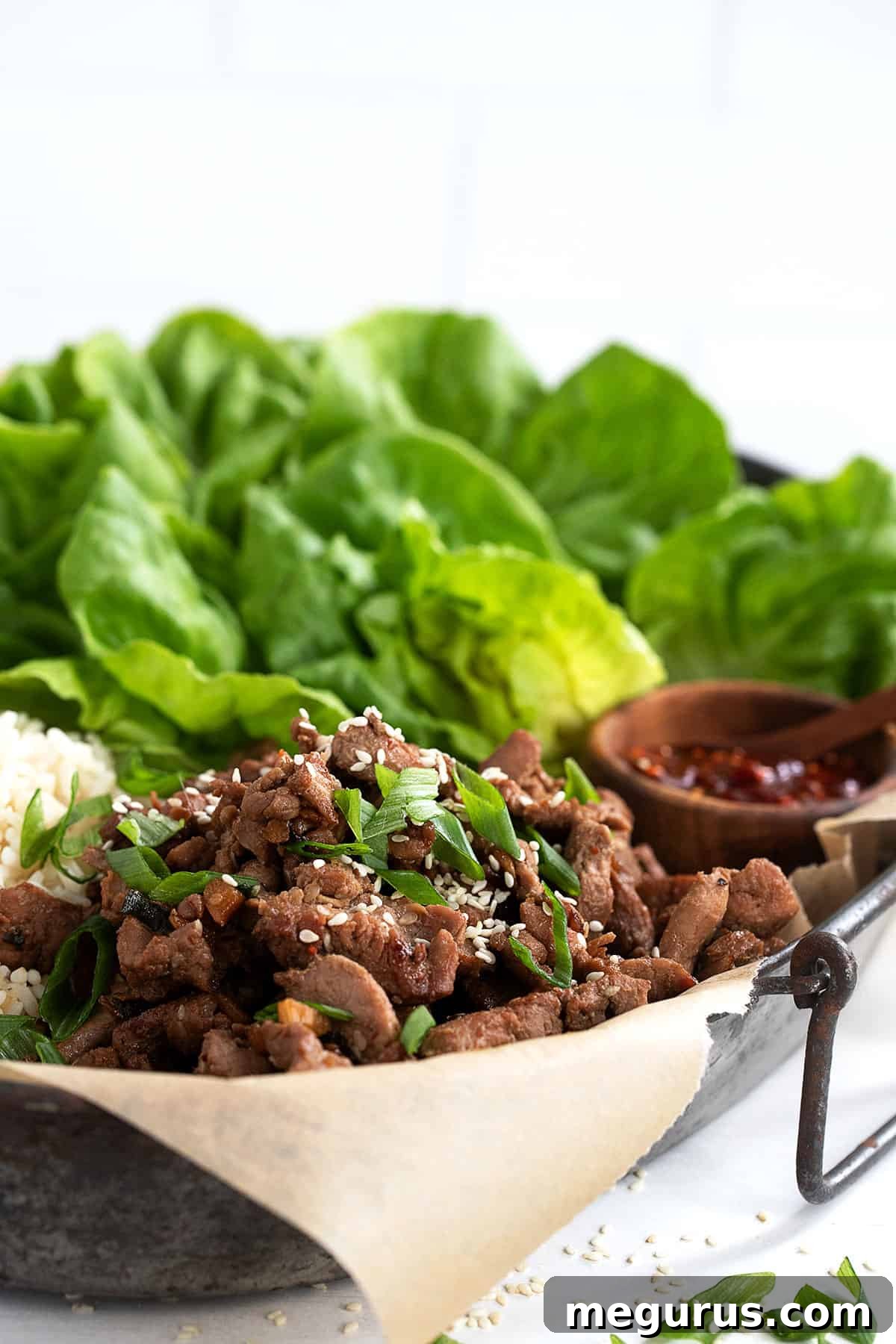
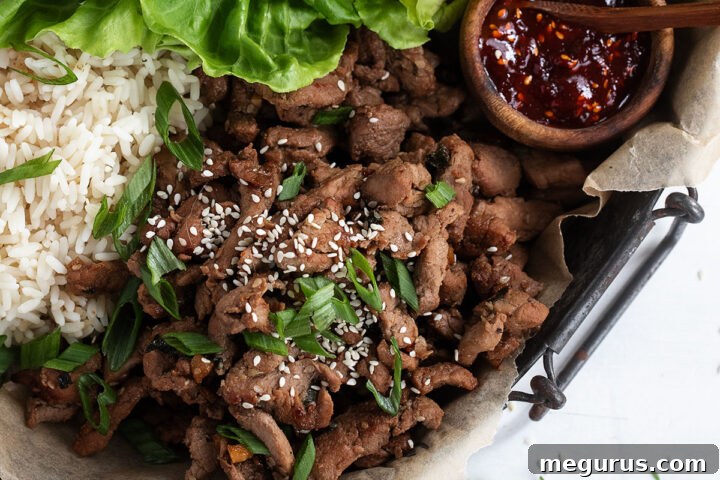
Korean Bulgogi Lettuce Wraps
Easy and delicious bulgogi lettuce wraps are a flavorful and satisfying meal that comes together quickly. This versatile dish can also be served as a hearty rice bowl or incorporated into creative Korean-inspired tacos.
5 stars from 2 ratings
Pin This
Leave a Review
Ingredients
For the Pork Bulgogi:
- 1 1/2 lb. pork tenderloin or beef stir fry strips, silver skin and any visible fat removed
Bulgogi Marinade:
- 1/4 cup soy sauce, low sodium recommended
- 1 Tablespoon white or brown sugar
- 1 Tablespoon Mirin, or white wine, rice wine vinegar or water plus an additional 1 tsp sugar
- 1 Tablespoon sesame oil, or olive oil
- 1 teaspoon sesame seeds
- 2 green onions, chopped
- 4 garlic cloves, minced
- Pinch of black pepper
- 1/4-1/2 tsp Gochugaru Korean Red Pepper Flakes, optional, plus more to taste, or a pinch of regular red pepper flakes, if you’d like a little heat
For cooking:
- 1 Tbsp vegetable oil, or other neutral cooking oil
For lettuce wraps:
- Large lettuce leaves, from Boston or Leaf lettuce
- Cooked white or brown long-grain rice, or Basmati
For garnish to serve:
- Sliced green onion
- Sesame seeds
Optional Gochujang Sauce:
- 2 Tablespoons gochujang Korean chile paste, or Sambal Oelek
- 1 Tablespoon soy sauce
- 1 Tablespoon rice vinegar
- 1 clove garlic, minced
- 2 teaspoon white or brown sugar
- 1 teaspoon sesame seeds
- 1 teaspoon sesame oil, regular or toasted
- 1 teaspoon light or dark corn syrup, or maple syrup (optional)
Instructions
-
If starting with pork tenderloin, remove the silver skin and any visible fat from the pork tenderloin. Slice into thin pieces, then cut those pieces into 3 or 4 thin and long strips. Place into a large bowl or a zip lock bag.
-
Mix up the marinade, by combining all the marinade ingredients and stir well. Pour over the meat in the bowl or bag and toss well to coat and combine. Cover and refrigerate at least 30 minutes or up to 8 hours.
-
When ready to cook, heat oil in a skillet over medium high heat. Add all the pork with the marinade to the skillet and cook, stirring, until almost all the liquid has disappeared, 5-7 minutes. *Bulgogi is usually cooked until fairly dry and browned, but if you want a saucy bulgogi for some reason, don’t cook off all the liquid. Make a slurry of 1 Tbsp cornstarch and 1 Tbsp cold water and add a bit at a time to the hot skillet, stirring after each addition, until desired sauce thickness is achieved.
-
Serve with lettuce leaves and cooked rice and the optional Gochujang sauce (or any spicy Asian sauce will work here).
Notes
You can serve the lettuce wraps with the optional Gochujang Sauce, or simply use Sambal Oelek, Asian Chili Garlic Sauce or even Sriracha, if you like.
You can just cook the pork bulgogi part and use the meat for a rice bowl, bibimbap or even Asian-style tacos!
Try this recipe with beef, too. Just start with any beef steak, cut into strips and make as directed.
Nutritional information is for the pork only and does not include lettuce/rice or sauce.
Be sure to read all the information above this Recipe Card, for more tips on making this recipe.
Nutrition Information (per serving, pork only)
- Serving: 1 serving
- Calories: 325kcal
- Carbohydrates: 10g
- Protein: 37g
- Fat: 14g
- Saturated Fat: 3g
- Polyunsaturated Fat: 5g
- Monounsaturated Fat: 5g
- Trans Fat: 0.1g
- Cholesterol: 111mg
- Sodium: 842mg
- Potassium: 782mg
- Fiber: 0.5g
- Sugar: 6g
- Vitamin A: 64IU
- Vitamin C: 2mg
- Calcium: 41mg
- Iron: 2mg
Tried this recipe? If you enjoyed this recipe, please leave a star rating and comment. It helps others to find it!
More Delicious Korean Recipes to Explore!
If you loved this Bulgogi recipe, you’re sure to enjoy these other authentic and flavorful Korean dishes: