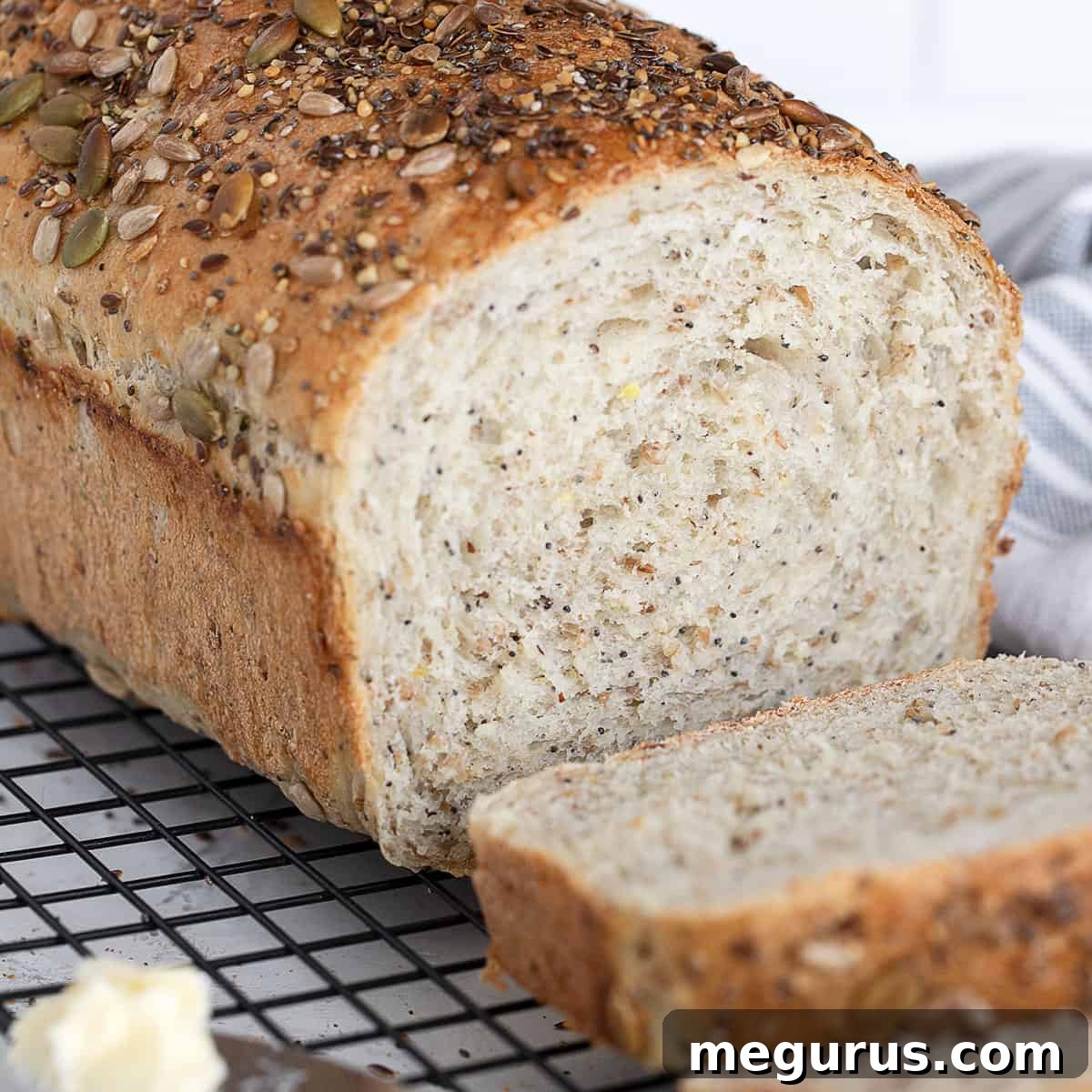
Discover the ultimate homemade bread with our incredibly light and fluffy multigrain loaf. This recipe beautifully combines the wholesome goodness of various whole grains with a delightful, airy texture, making it perfect for everyday sandwiches or a satisfying piece of toast. The crowning glory? A irresistibly crunchy, toasted seed topping that adds both flavor and texture. If you’ve been searching for a versatile, delicious, and relatively quick bread to add to your repertoire, look no further!
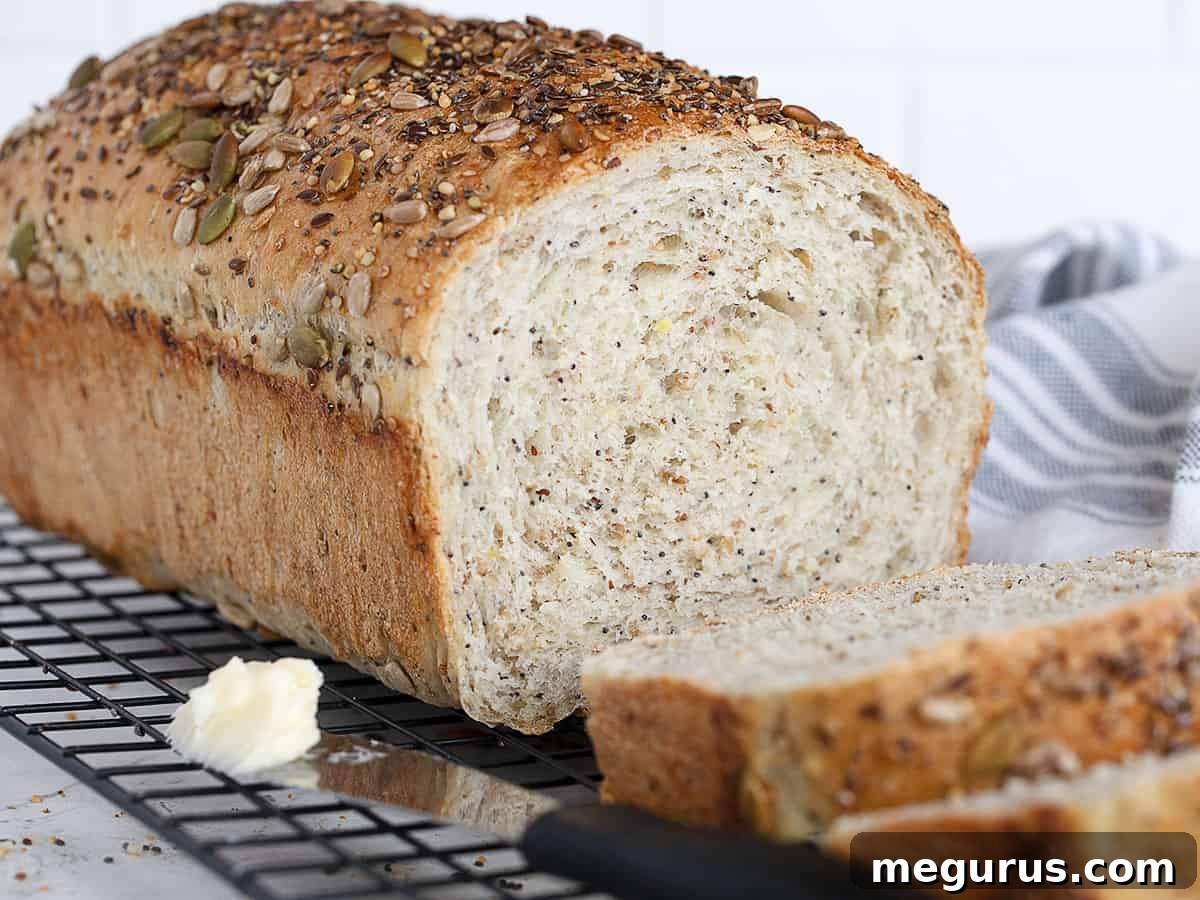
Baking bread at home is a truly rewarding experience, and this particular multigrain bread recipe has quickly become a staple in my kitchen. It strikes a perfect balance: offering the soft, tender crumb of classic white bread while enriching your diet with the nutritional benefits of whole grains. The standout feature, of course, is that exquisite, toasted seed crust – it’s an absolute game-changer. This bread isn’t just a treat; it’s a practical, wholesome choice that elevates any meal.
You’ll fall in love with the rich flavor profile and satisfying texture of this homemade multigrain loaf. It’s wonderfully versatile, serving as an ideal foundation for hearty sandwiches or transforming into a warm, inviting slice of toast for breakfast. What makes this recipe even more appealing is its efficiency; it’s a “fast-riser,” meaning you won’t have to wait hours to enjoy a fresh, warm slice straight from the oven.
Essential Ingredients and Smart Substitutions for Your Multigrain Bread
Crafting the perfect loaf begins with understanding your ingredients. Here are some key components and helpful notes on how to approach them:
- Multigrain Cereal Mix: This recipe relies on a quality multigrain cereal mix, typically found in the hot cereal aisle. These mixes are designed to provide a diverse blend of whole grains, offering a convenient way to incorporate a variety of nutritional benefits into your bread. When selecting a mix, opt for unsweetened, 100% whole-grain options. Avoid commercial flavored oatmeal mixes with added sugars or artificial ingredients, as these can affect the bread’s texture and flavor profile.
- Popular Cereal Mix Options:
- 7-Grain Mix: Often includes ingredients like hard red wheat, barley, rye, steel-cut oats, brown flaxseed, millet, and buckwheat.
- 12-Grain Mix: A more diverse blend that might feature cracked wheat, cracked rye, cracked triticale, oat flakes, millet, cracked oats, barley flakes, sunflower seeds, natural sesame seeds, buckwheat grits, and both brown and yellow flaxseeds.
In Canada, look for these mixes at stores like Bulk Barn. In the US and elsewhere, Bob’s Red Mill is a widely available brand offering various multigrain options, including 7-grain, 8-grain, 10-grain, or 12-grain cereal blends.
- Alternative Porridge Mixes: If specific multigrain cereal mixes are hard to find, explore the hot cereal section for porridge blends. Brands like Rogers offer mixes such as “Porridge Oats and Healthy Grains” (oat flakes, oat bran, wheat bran, flaxseed) or “Porridge Oats and Ancient Grains” (oat, rye, barley, spelt, khorasan flakes, oat bran, millet, flaxseed, quinoa flakes). Quaker also has “Super Grains Hot Cereal,” a blend of whole-grain oats, flaxseed, and quinoa. The key is to find a mix rich in diverse whole grains and free from added sugars.
- Finding Your Mix: The best approach is to thoroughly browse the hot cereal or natural foods section of your local grocery store. With a little searching, you’re likely to find a suitable mix. Should you still come up empty-handed, don’t worry – we’ve included a guide below for making your own homemade multigrain cereal mix!
- All-Purpose Flour: For that signature light and fluffy texture, unbleached all-purpose flour is recommended. You can use bread flour, but be aware that it has a higher protein content, which might require a slight adjustment to the amount of liquid or a little less flour. For those looking to boost the whole grain content further, you can substitute up to 1 cup of the all-purpose flour with whole wheat flour. Keep in mind that this will result in a slightly denser loaf than one made entirely with all-purpose flour.
- Vegetable Oil: Incorporating oil into yeast breads is crucial for achieving a beautifully soft and tender crumb. It also makes this recipe easily adaptable for a vegan diet. However, if you prefer, you can substitute the vegetable oil with an equal amount of melted and cooled unsalted butter, which will lend a rich, dairy note to your bread.
Craft Your Own Multigrain Cereal Mix
If pre-packaged multigrain cereal mixes are not available or if you simply prefer to customize your blend, creating your own is incredibly easy. Combine any of the following whole grains to achieve a diverse and nutritious mix:
- Rolled oats
- Quick oats
- Steel-cut oats
- Quinoa
- Flaxseed meal
- Whole flaxseeds
- Sesame seeds
- Oat flakes
- Rye flakes
- Barley flakes
- Cracked wheat
- Wheat bran
- Oat bran
- Millet
- Buckwheat
Experiment with different ratios to find a blend that best suits your taste and texture preferences. This flexibility ensures you can always enjoy homemade multigrain bread, regardless of what’s available at your local store.
Step-by-Step Guide: How to Bake Perfect Multigrain Bread
This section provides a detailed overview of the bread-making process. For precise measurements and comprehensive instructions, always refer to the complete recipe card at the end of this article. The visual aids below will help guide you through each stage, ensuring a successful bake.
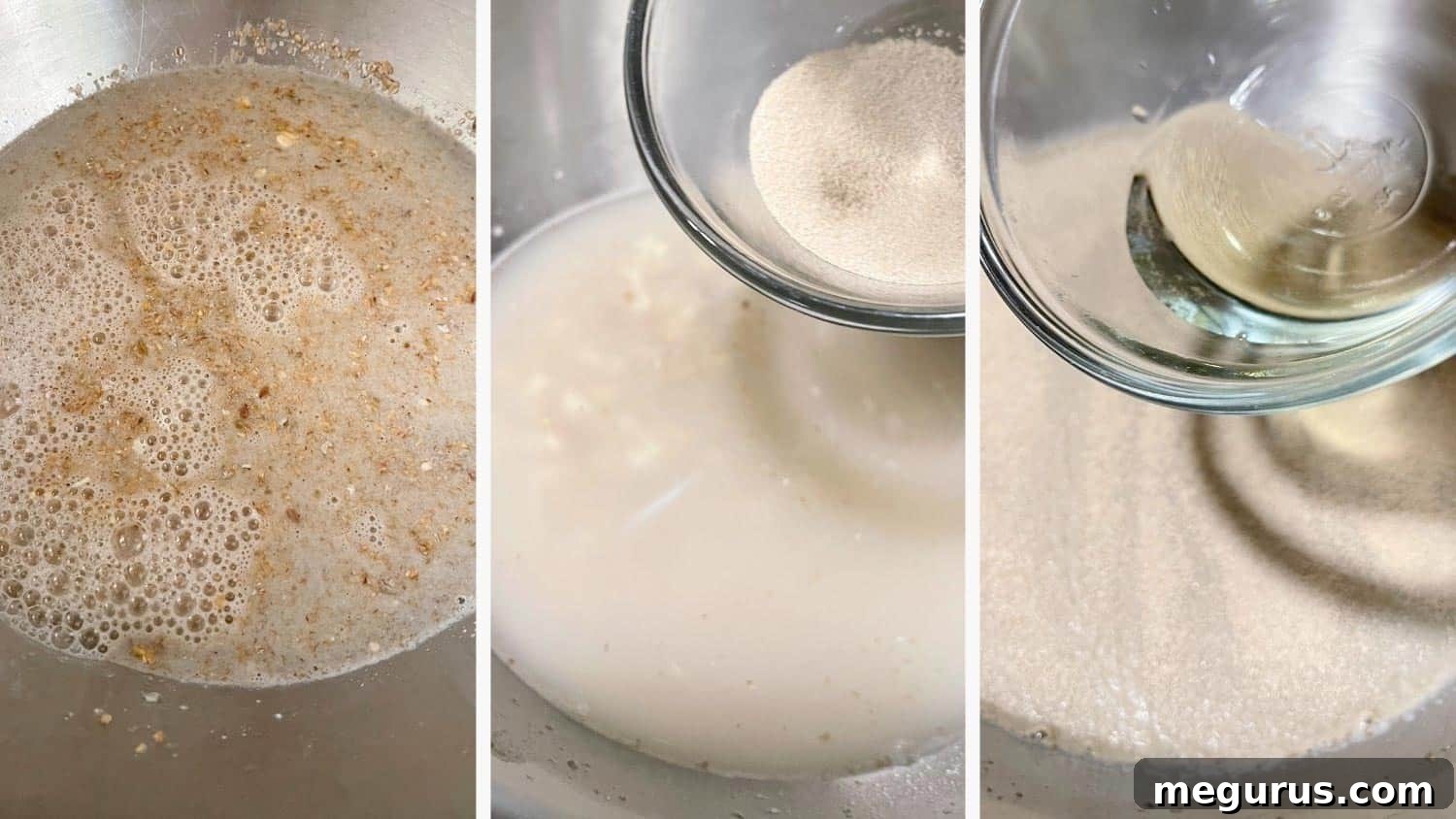
Step 1: Prepare the Multigrain Cereal and Activate Yeast. Begin by placing your chosen multigrain cereal mix into a large mixing bowl or the bowl of a stand mixer. Pour boiling water over the cereal and let it stand for approximately 20 minutes, or until the mixture cools down to a lukewarm temperature (between 105°F and 115°F for active dry yeast, or around 120°F for instant yeast). This soaking step allows the grains to absorb moisture and soften, contributing to the bread’s overall texture. It’s crucial that the mixture isn’t too hot, as excessive heat can kill the yeast. A food thermometer is highly recommended to accurately check the temperature. Once cooled, sprinkle the yeast over the mixture and stir gently to combine. If you’re using active dry yeast, allow it to stand for 5-10 minutes to ensure it activates and becomes foamy before proceeding.
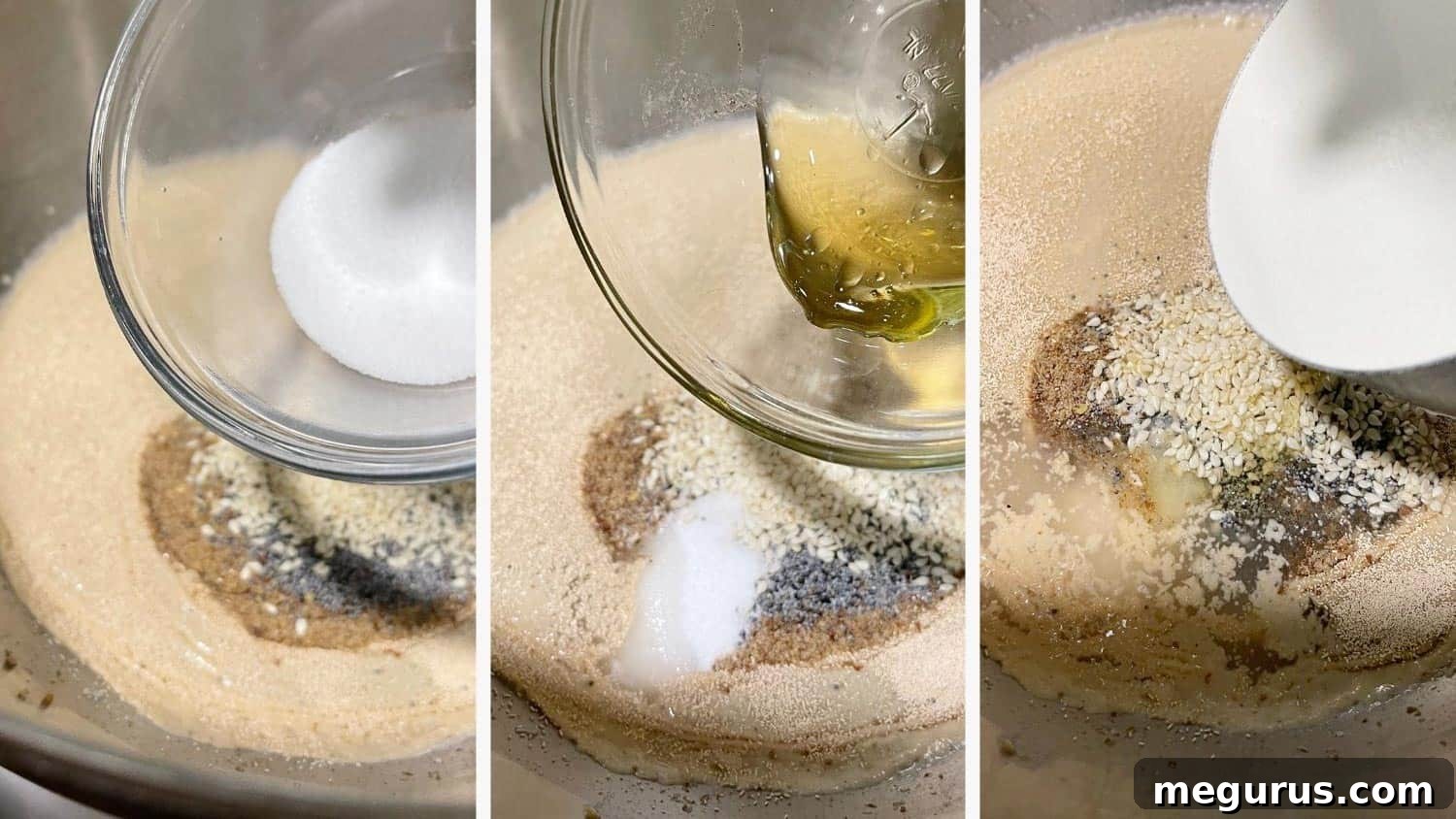
Step 2: Incorporate Wet Ingredients and Optional Add-ins. Next, add the vegetable oil, honey (or brown sugar), and salt to the cereal and yeast mixture. This combination provides flavor, moisture, and aids in the dough’s development. At this stage, you have the option to mix in additional seeds directly into the dough for an extra layer of texture and flavor. Consider adding a blend of sesame seeds, poppy seeds, or ground flaxseed. This step is entirely customizable, so feel free to include your favorites or omit them if you prefer a simpler loaf.
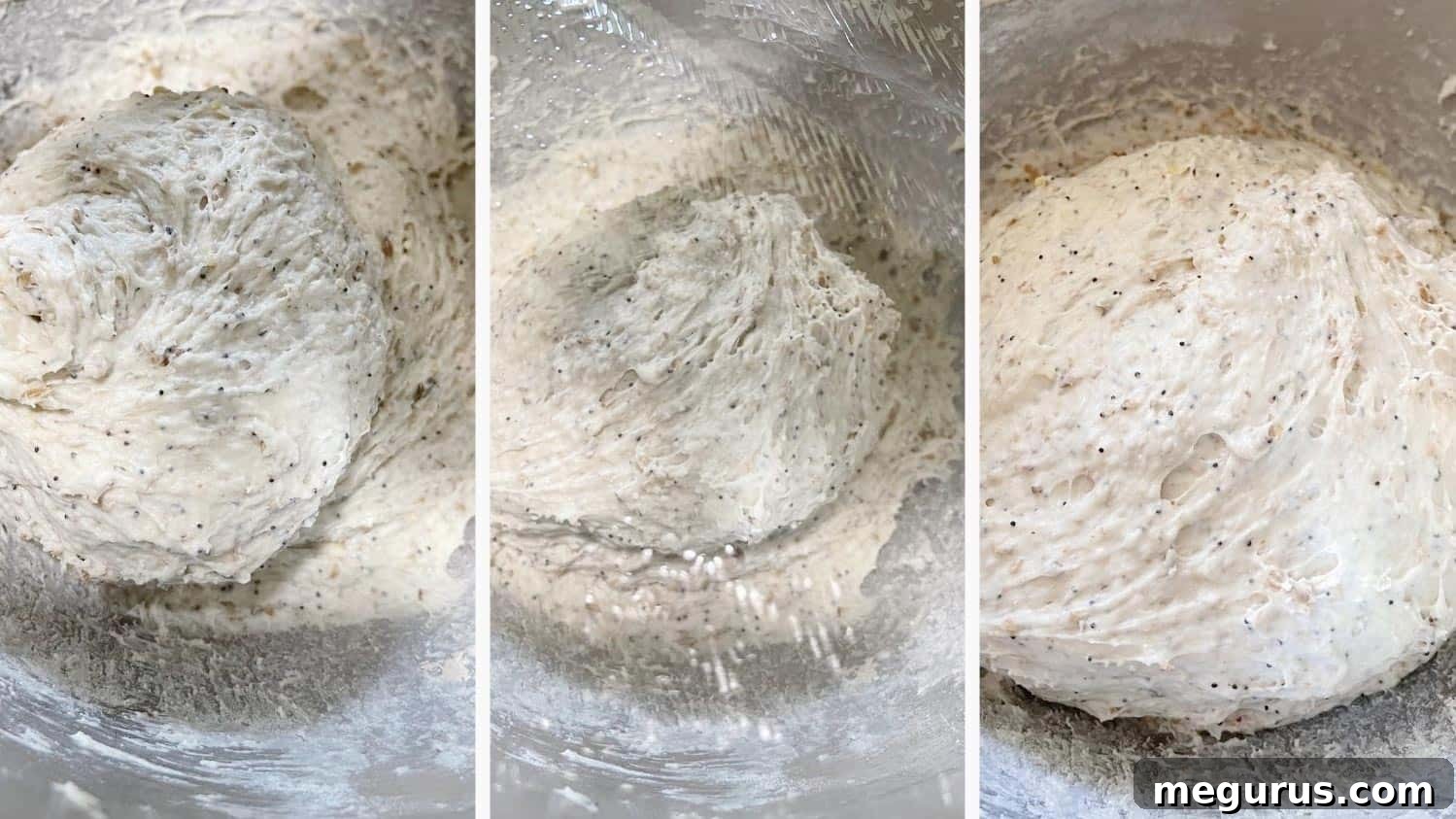
Step 3: Gradually Add Flour and Rest the Dough. Begin incorporating the all-purpose flour into the bowl, kneading it as you go. The secret to achieving a light and airy multigrain bread is to avoid adding too much flour too early. Initially, the dough will appear quite loose and wet, which is exactly the desired consistency. The grains in the mix absorb a significant amount of moisture, so don’t be tempted to add more flour at this stage, even if the dough seems very sticky. Cover the bowl with plastic wrap and let the dough rest for 15 minutes. This resting period allows the grains to further hydrate and the flour to absorb more liquid, making the dough easier to handle in the next step.
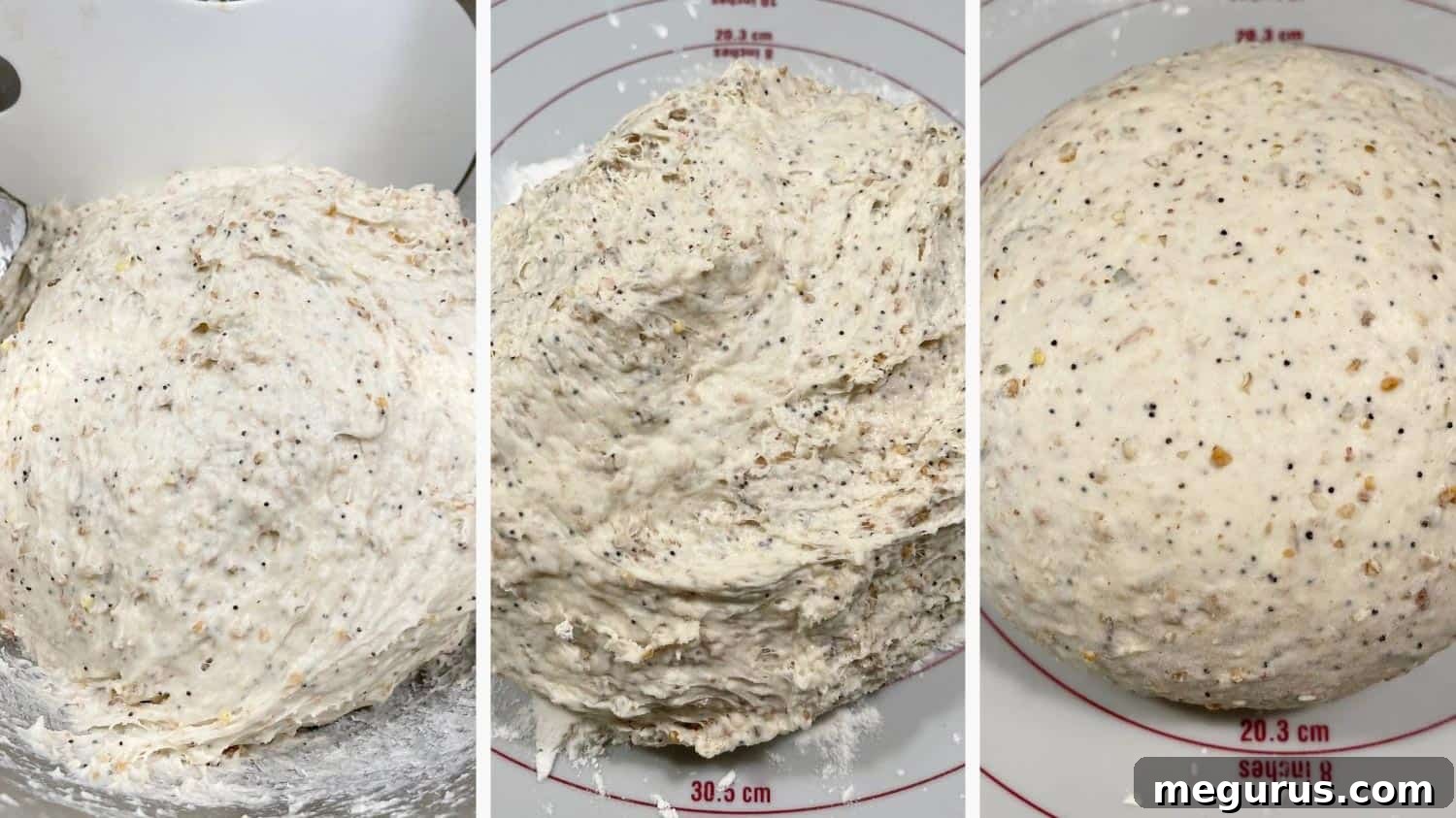
Step 4: Knead the Dough. Turn the rested dough out onto a lightly floured work surface. Now, you can begin kneading. Add small amounts of flour only as needed, if the dough is excessively sticking to your hands or the surface. Knead the dough for several minutes until it becomes smooth and elastic. This process develops the gluten, which is essential for the bread’s structure and its characteristic light texture. Form the kneaded dough into a neat ball.
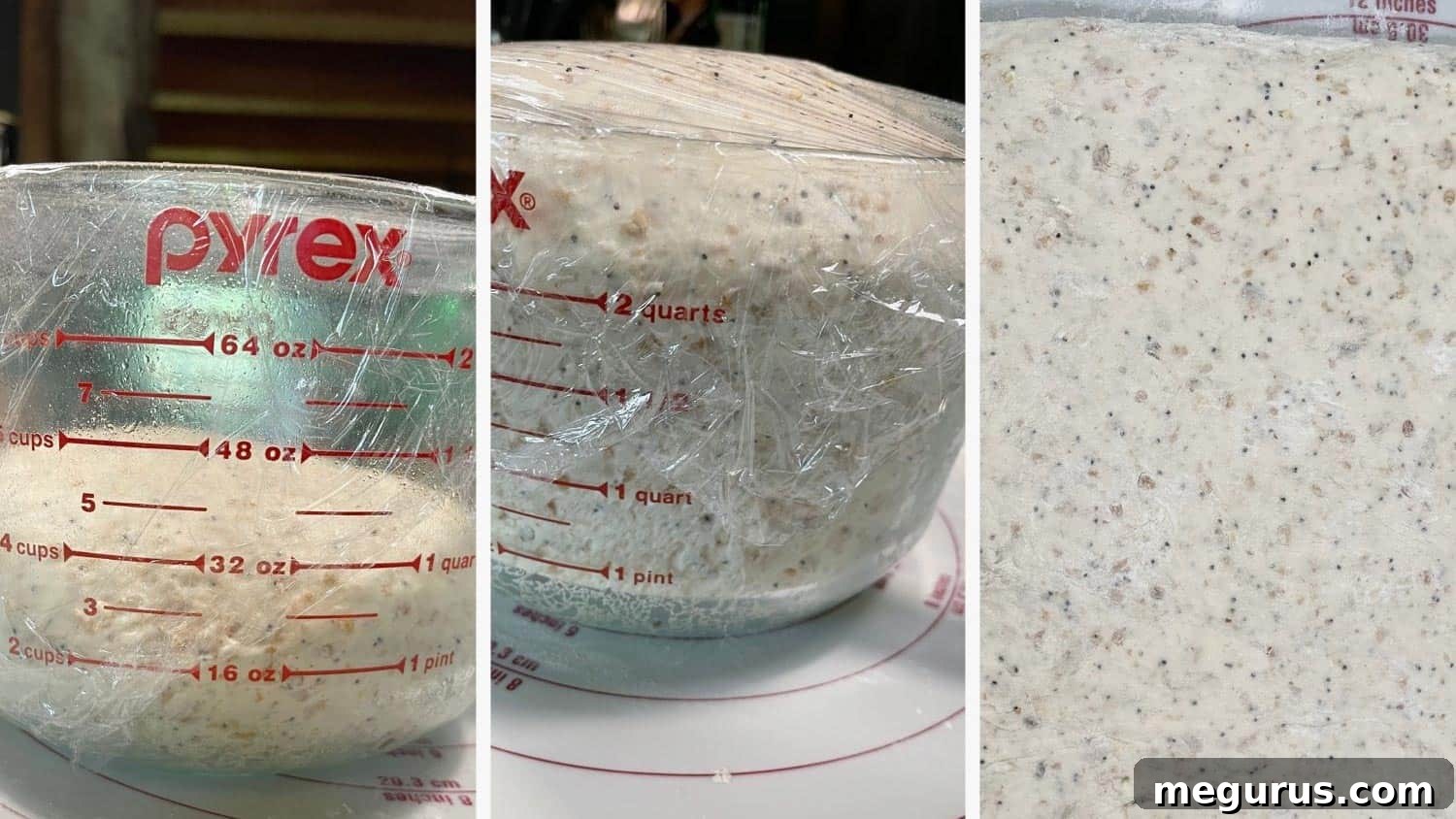
Step 5: First Rise. Lightly oil a large bowl or a sizable measuring cup. Place the dough ball into the oiled bowl, then flip it over so the oiled side is facing up. Cover the bowl tightly with plastic wrap to prevent the dough from drying out. Set the bowl in a warm spot and allow the dough to rise until it has doubled in size. This multigrain bread is known for being a remarkably fast riser, so keep a close eye on it! The first rise can take as little as 35-40 minutes, but may vary depending on your kitchen’s temperature. It’s important to let it rise just until doubled, and not beyond, for the best results.
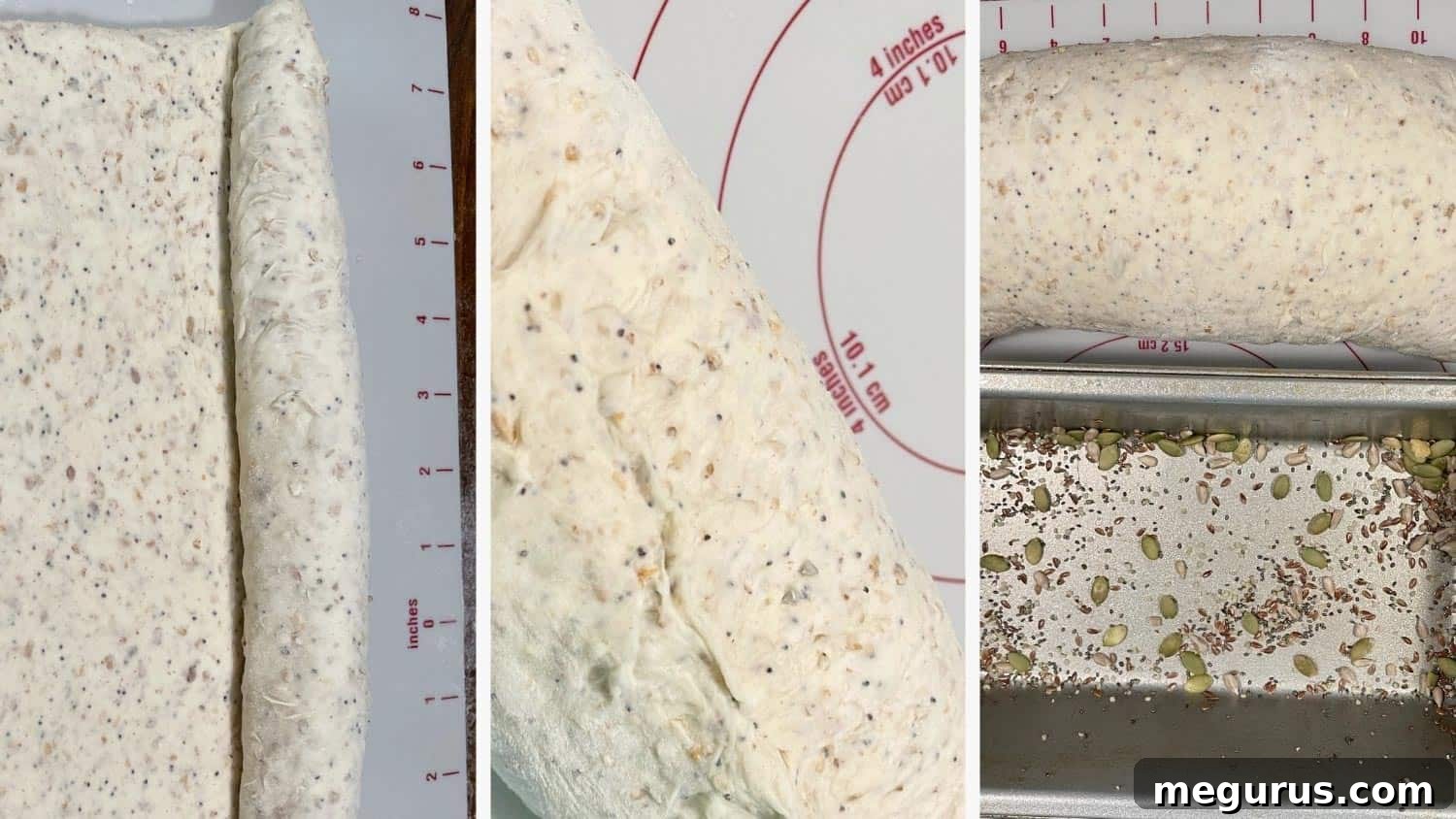
Step 6: Shape the Loaf and Prepare the Pan. Once the dough has doubled, gently remove it from the bowl and place it onto a lightly floured work surface. Lightly deflate the dough by pressing down on it. Roll the dough out into a rectangle. For a 9×5-inch loaf, aim for approximately 10 inches wide by 18 inches long. If you’re making two smaller 8×4-inch loaves, divide the dough in half and roll each piece into a 9×16-inch rectangle. Tightly roll up the dough jelly-roll style, starting from one of the shorter sides, then firmly pinch the seam closed. Grease your chosen loaf pan (or pans). For an extra touch, you can sprinkle some of your topping seed mixture into the bottom of the pan before placing the dough, ensuring a seedy crust all around.
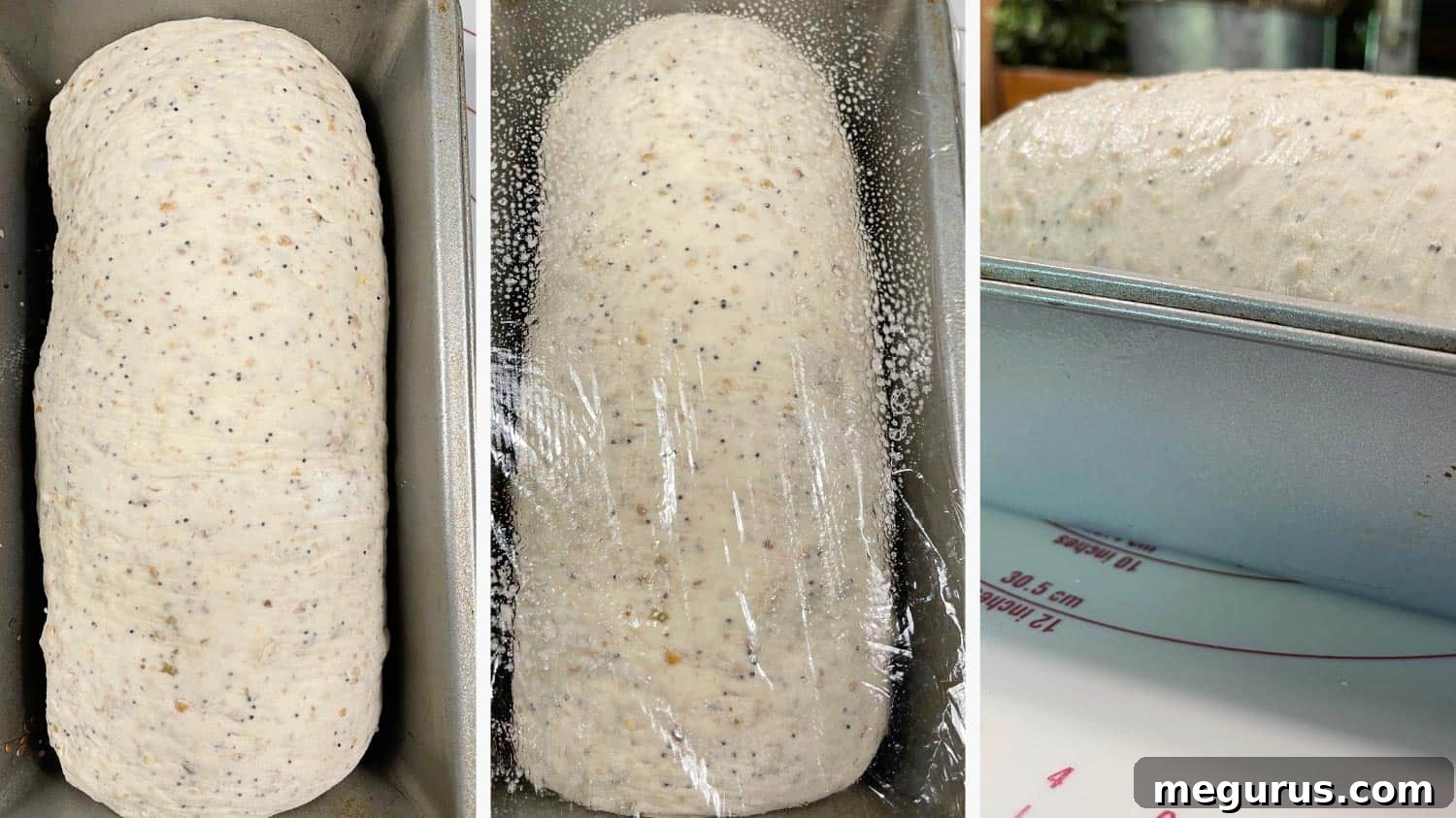
Step 7: Second Rise. Carefully transfer the rolled dough, seam-side down, into the prepared loaf pan. To cover, lightly spray a piece of plastic wrap with cooking spray and place it greased-side down over the pan. Allow the loaf to rise in a warm spot until it has doubled in size, which typically takes about 25-30 minutes, though it might be even faster. For a 9×5-inch pan, the center of the risen dough should crest about 1 1/2 inches above the rim of the pan, indicating it’s ready for baking.
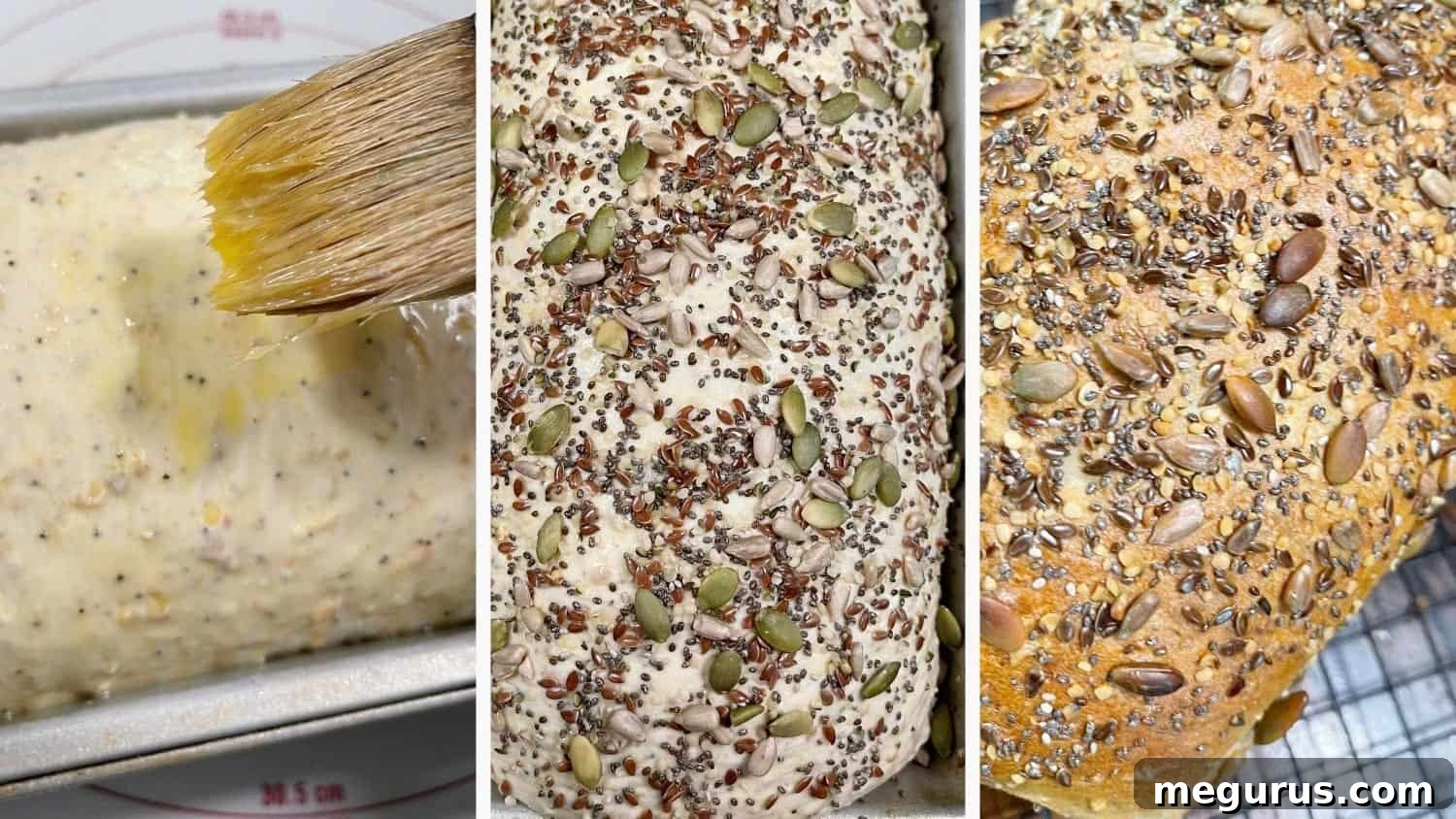
Step 8: Bake to Perfection. Preheat your oven to 425°F (non-convection setting), positioning the oven rack just below the center. This lower placement helps prevent the top of the bread from browning too quickly. Once the loaf has adequately risen, gently brush the top with the egg wash (this helps the seeds adhere and promotes a golden crust) and sprinkle generously with your prepared seed mix. Use the palm of your hand to lightly press the seeds into the dough, ensuring they stick well during baking. Bake for 18-20 minutes, then loosely cover the top of the loaf with aluminum foil to prevent excessive browning. Continue baking for an additional 20-25 minutes for a 9×5 loaf, or 10-15 minutes for 8×4 loaves. The bread is done when it reaches an internal temperature of 195-205°F (ideally around 200°F) when tested with an instant-read thermometer. Don’t be fooled by its golden appearance; a large loaf often looks done before it’s cooked through. A full-sized 9×5 loaf typically requires the entire 40-45 minutes of baking time.
Video Guide
Watch How to Make This Delicious Multigrain Bread
For a visual walkthrough of each step, from preparing the dough to achieving that perfect golden crust, we’ve prepared a detailed video tutorial. This guide will help clarify techniques and ensure your homemade multigrain bread turns out beautifully every time.
Expert Tips for Multigrain Bread Success!
- Dough Consistency is Key: After incorporating the initial 4 cups of flour, your dough will likely be quite wet and loose. This is perfectly normal for multigrain bread, as the various grains absorb a lot of moisture. Unlike traditional white bread dough, it won’t be perfectly smooth or firm. Resist the urge to add excessive flour at this stage. After the 15-minute rest, the dough will become less sticky. Only add a minimal amount of flour on your work surface during kneading if it’s truly sticking. The exact wetness can vary based on your specific grain mix, but a moist dough is essential for a light, fluffy result.
- Customizing the Seed Topping: While the crunchy seed topping is a highlight of this recipe, feel free to adapt it to your preference. You can omit the seeds entirely for a plain loaf, or use an egg wash and sprinkle with rolled oats instead for a different texture.
- Making it Vegan: To make this bread suitable for a vegan diet, simply substitute the honey with an equal amount of light or dark brown sugar. For the egg wash, use plain water on top instead; however, be aware that seeds may not adhere as firmly without the egg.
- Loaf Size Options: This recipe is flexible! You can bake it as one large 9×5-inch loaf or divide the dough to make two shorter, smaller 8×4-inch loaves. Remember that baking times will need to be adjusted for smaller loaves, so keep a close eye on them. The recipe card below provides specific guidance for both sizes.
- Ensure Thorough Baking for Large Loaves: If opting for the larger 9×5-inch loaf, be mindful that it requires adequate baking time to cook through, even if the crust appears perfectly golden. I recommend covering the loaf loosely with aluminum foil after about 20 minutes of baking to prevent over-browning, and then baking for the full 40-45 minutes. An instant-read thermometer is your best friend here: aim for an internal temperature of 195-205°F (around 200°F is ideal) to confirm doneness.
- Doubling the Recipe Caution: While it might be tempting to double this recipe for more bread, proceed with caution. The multigrain dough can be quite bulky, and doubling the ingredients may place too much strain on a standard stand mixer. It’s often better to bake two separate batches if you need a larger quantity.
Creative Variations for Your Multigrain Loaf
This versatile multigrain bread recipe lends itself beautifully to various creative twists. Here are some ideas to inspire you:
- Multigrain Rolls: Transform your loaf into delicious rolls! Simply divide the dough after the first rise into 8-16 equal-sized pieces, depending on your desired roll or bun size. Shape them into neat balls, arrange them on a baking sheet, allow them to rise, and then bake. The baking time will be significantly reduced, likely as little as 15 minutes, so watch them carefully and check for doneness frequently.
- Free-Form Loaf: For a more rustic appearance, you can shape this dough into a free-form boule (round) or an oval loaf. Bake it directly on a baking sheet or in a cast-iron skillet for a wonderfully crusty exterior.
- Flavorful Add-ins: Enhance your multigrain loaf by kneading in a variety of delicious additions during the mixing process, without needing to adjust the base recipe. Consider incorporating:
- Pepitas (pumpkin seeds)
- Sunflower seeds
- Raisins or dried cranberries (plump dried fruit by soaking in boiling water and draining before adding)
- Chopped nuts like pecans or walnuts
Ensure you don’t exceed about 1/2 cup of total add-ins to maintain the dough’s structure and hydration.
Overnight Refrigerator Rise Option
For added convenience, you can prepare this multigrain bread dough ahead of time using an overnight refrigerator rise. Follow the recipe instructions through to shaping the dough and placing it in the loaf pan. At this point, immediately cover the pan tightly with plastic wrap and refrigerate it overnight, or for up to 12 hours. In the morning, simply remove the loaf from the fridge and let it sit on your kitchen counter for about 1 hour to come to room temperature and complete its final rise. Once it has sufficiently risen, as indicated in the main recipe steps, it will be ready to bake as usual. This method is perfect for fresh-baked bread with minimal morning effort!
Storing and Freezing Your Homemade Multigrain Bread
Ensuring your delicious homemade bread stays fresh is simple with these storage tips:
Room Temperature Storage: This multigrain bread will remain fresh and delicious for several days when stored properly. Once completely cooled, place the loaf in an airtight container or a bread bag at room temperature. Avoid refrigerating baked bread, as it can dry out and become stale more quickly.
Freezing Baked Bread: For longer storage, this bread freezes exceptionally well. Once the loaf has cooled completely, wrap it tightly in plastic wrap, then an additional layer of aluminum foil, or place it in a freezer-safe bag. It can be stored in the freezer for up to 3 months. To enjoy, simply thaw at room temperature or warm gently in the oven.
Freezing Unbaked Dough: You can also prepare the loaf up to the point of shaping and placing it in the pan (before the second rise) and then freeze it. I find it convenient to freeze the shaped dough directly in the loaf pan. Once completely solid, remove the frozen dough log from the pan, wrap it tightly in plastic wrap and then foil, and store it in the freezer for up to 3 months. When you’re ready to bake, unwrap the frozen dough log, place it in a greased loaf pan, cover it with plastic wrap, and let it thaw and rise at room temperature for 4-5 hours, or until it has thawed and doubled in size. Then, bake as usual according to the recipe instructions.
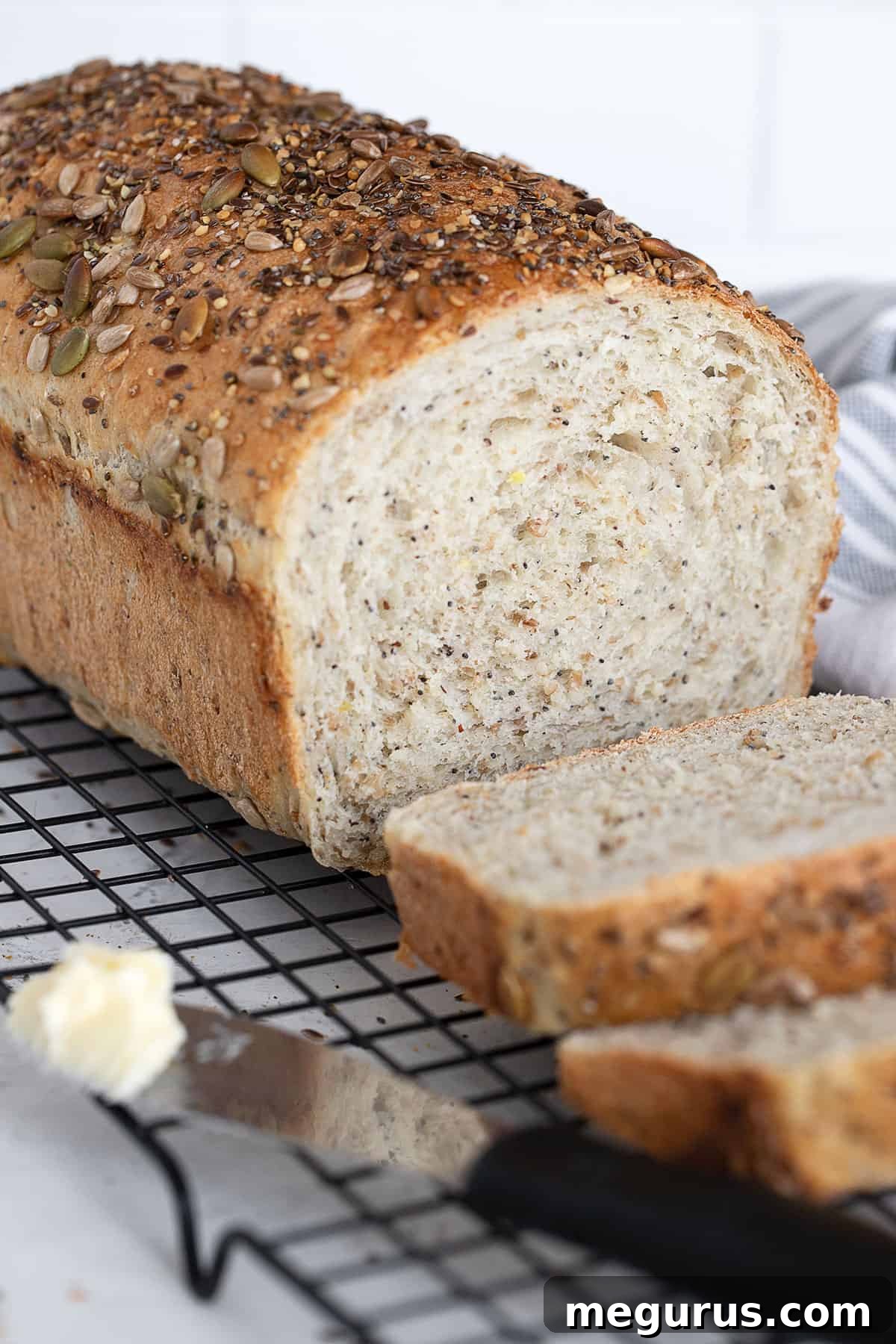
Get the Recipe: Light and Fluffy Multigrain Bread
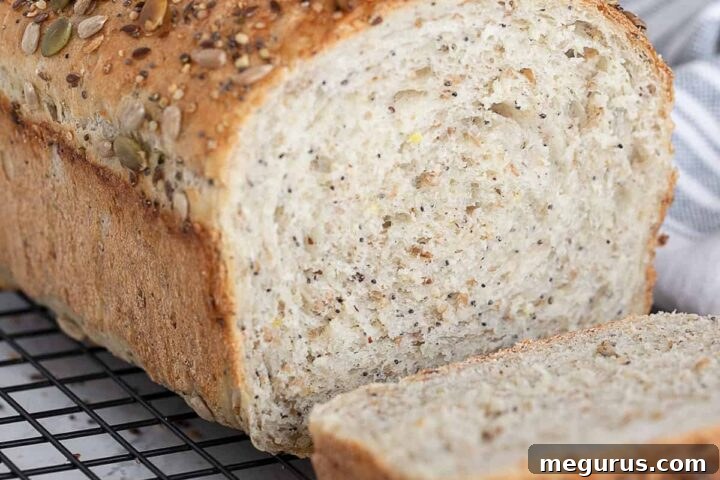
This incredibly light and fluffy multigrain bread is the best of both worlds – light and fluffy bread that is perfect for sandwiches or toast, together with the added goodness of whole grains and a crunchy, seedy topping.
Print Recipe |
Pin This Recipe |
Leave a Review
Prep Time: 20 mins | Cook Time: 40 mins | Rising Time: 1 hr 30 mins | Total Time: 2 hrs 30 mins
Yield: 14 servings
Ingredients
Basic Multigrain Bread Dough:
- 1/2 cup (120 ml) multi-grain cereal (such as 7, 10 or 12-grain cereal *see Note 1 below)
- 2 cups (454 ml) boiling water
- 2 1/4 teaspoons (7 g) active dry or instant yeast (not rapid or quick rise yeast)
- 1 Tablespoon (15 ml) vegetable oil (or other neutral tasting cooking oil, or melted and cooled butter)
- 1 Tablespoon (15 g) honey (or light or dark brown sugar)
- 1 1/2 teaspoons (9 g) fine sea salt
- 4 cups (480 g) unbleached all-purpose flour (spooned and levelled *see Note 2 below)
OPTIONAL Add-ins *See Note 3 below
- 1/3 cup raisins or dried cranberries
- 1/4 cup raw pumpkin or sunflower seeds, chopped
- 1/4 cup nuts (pecans, walnuts etc), chopped
- 2 Tablespoons mixed small seeds (poppy, sesame and/or flax seeds)
Egg Wash:
- 1 large egg, mixed with 1 Tbsp water (or alternately, just water, for a vegan loaf, though seeds may not stick as well).
Topping Seed Mixture:
- 2 teaspoons sesame seeds
- 2 teaspoons flax seeds
- 2 teaspoons poppy seeds
- Raw pumpkin and or sunflower seeds (optional)
Instructions
- Place multigrain cereal in a large bowl or the bowl of a stand mixer fitted with a kneading hook. Pour boiling water over, then let stand until mixture cools to between 105°F. and 115°F. for active dry yeast or to about 120F for Instant yeast, about 20 minutes. Don’t rush it. If your mixture is too hot, it may kill your yeast. A thermometer is handy here to make sure of the temperature before adding the yeast.
- Sprinkle yeast over cereal mixture. If using Active Dry Yeast, allow to stand for 5-10 minutes before proceeding. Add 1 cup of the flour, the oil, honey (or brown sugar) and salt and stir until smooth. Gradually mix in the remaining flour, incorporating any of the optional add-ins during the mixing. Once all the flour is added, you’ll have a moist dough that may also seem a bit loose. Resist the urge to add more flour at this point. Cover the bowl with plastic wrap and let rest 15 minutes. The grains will absorb more of the moisture during the rest period.
- Turn the dough out onto a floured surface. Knead a few minutes until smooth and elastic, adding more flour, as needed, if it’s sticking to your hands or the work surface.
- Oil a large bowl or measuring cup. Add the dough to the bowl, then flip over the ball of dough so the oiled side is up. Cover bowl with plastic wrap and let rise in warm spot until doubled in size. Don’t wander far. This bread is a quick riser and may double in as little as 35-40 minutes. It may take longer. The important thing is to make sure it rises only until doubled, no matter how long that is.
- Prepare the Seed Mixture by stirring together all the seeds in a small bowl. Set aside.
- When dough has doubled in size, remove to a work surface and gently deflate dough by pressing down the dough.
- Grease one 9×5-inch loaf pan or two 8×4-inch loaf pans. Sprinkle a bit of the seed mixture into the pan (or divide between two pans), if you like. For 8×4-inch loaves, divide the dough into two equal-sized pieces. For a 9×5-inch loaf, leave as one piece. Roll the dough out into a rectangle about 10 inches wide and 18 inches long for a 9×5 loaf, or 9×16-inch rectangles each of the two 8×4 loaves. Roll up jelly rolls style, starting with the short side, then pinch seams together. Place rolls seam side down into prepared loaf pan(s).
- Cover the loaves with a clean kitchen towel or greased/sprayed plastic wrap and let rise until doubled in size, about 25- 30 minutes.
- When the dough is nearing risen, preheat oven to 425F. (regular bake/non-convection), with rack positioned just below centre (a little lower rack position, one down from centre, will help to keep the top of the bread from browning as quickly).
- Before baking, brush the top of the loaf with the egg wash and sprinkle the top with the remaining seed mixture. Use the palm of your hand to press the seeds into the top of the loaf slightly to help them stick.
- Bake in preheated 425F oven for 18-20 minutes, then cover the top loosely with a sheet of aluminum foil to prevent over-browning. Bake a further 20-25 minutes for a 9×5 loaf or 10-15 minutes for 8×4 loaves, or until golden and crusty and have an internal temperature of 195-205F when tested with an instant-read thermometer. Bread will look done, even when it isn’t cooked through. The large 9×5 loaf will need the full 40-45 minutes in the oven to be cooked through.
- Remove from oven. Run a knife around the edges of the pan and immediately remove to a cooling rack to cool. Allow to cool completely (or almost completely) before slicing to avoid a gummy bread.
- Store bread well wrapped at room temperature for a couple of days, or freeze for longer storage. This bread will freeze well for up to 2-3 months or more.
Notes
- Note 1: Look for grain cereal at Bulk Barn in Canada, where they have both a 7-grain and a 12-grain cereal mix. Bob’s Red Mill also sells 7, 8, 10 or 12-grain cereal mix. You can also make your own multigrain mix, as described in the “Homemade multigrain cereal mix” section above.
- Note 2: You can replace up to 1 cup of the unbleached all-purpose flour with whole wheat flour if you like, though the resulting bread will not be as light as it would be with all-purpose flour. I don’t recommend adding more than 1 cup of whole wheat flour, as it will alter the hydration of the dough significantly.
- Note 3: The optional add-ins are things you can add to the dough. You can add one, all or none of them, as you like, to change up the bread a bit. That said, don’t exceed about 1/2 cup of total add-ins.
- Note 4: If you find the bread gets too dark for your liking, even after tenting it with foil for the last part of baking, try baking it at 400F instead and baking it a little longer.
- Note 5: Homemade multigrain cereal mix: If you can’t find a pre-mixed multi-grain cereal mix, you can mix up your own with a combination of any of the following whole grains: Rolled oats, quick oats, steel cut oats, quinoa, flaxseed meal, flaxseed, sesame seeds, oat flakes, rye flakes, barley flakes, cracked wheat, wheat bran, oat bran, millet, buckwheat.
- Overnight Rise Option: You can prepare the bread through to shaping and placing in the loaf pan, then immediately cover and refrigerate overnight or up to 12 hours. In the morning, simply remove from the fridge and allow to rise on the counter for about 1 hour before baking or until it has risen sufficiently as shown above.
- Be sure to read the notes above the Recipe Card for more tips on making this bread. You will also find step-by-step photos and a recipe video of making the dough that you might find helpful.
Cuisine: American, Canadian | Course: Bread | Author: Jennifer Maloney
Nutrition Information
- Serving: 1 serving
- Calories: 143 kcal
- Carbohydrates: 29g
- Protein: 4g
- Sodium: 258mg
- Potassium: 52mg
- Fiber: 1g
- Sugar: 1g
- Vitamin A: 35IU
- Calcium: 16mg
- Iron: 2.1mg
Tried this recipe? If you enjoyed this recipe, please consider leaving a star rating and comment. Your feedback helps others discover and love it too!