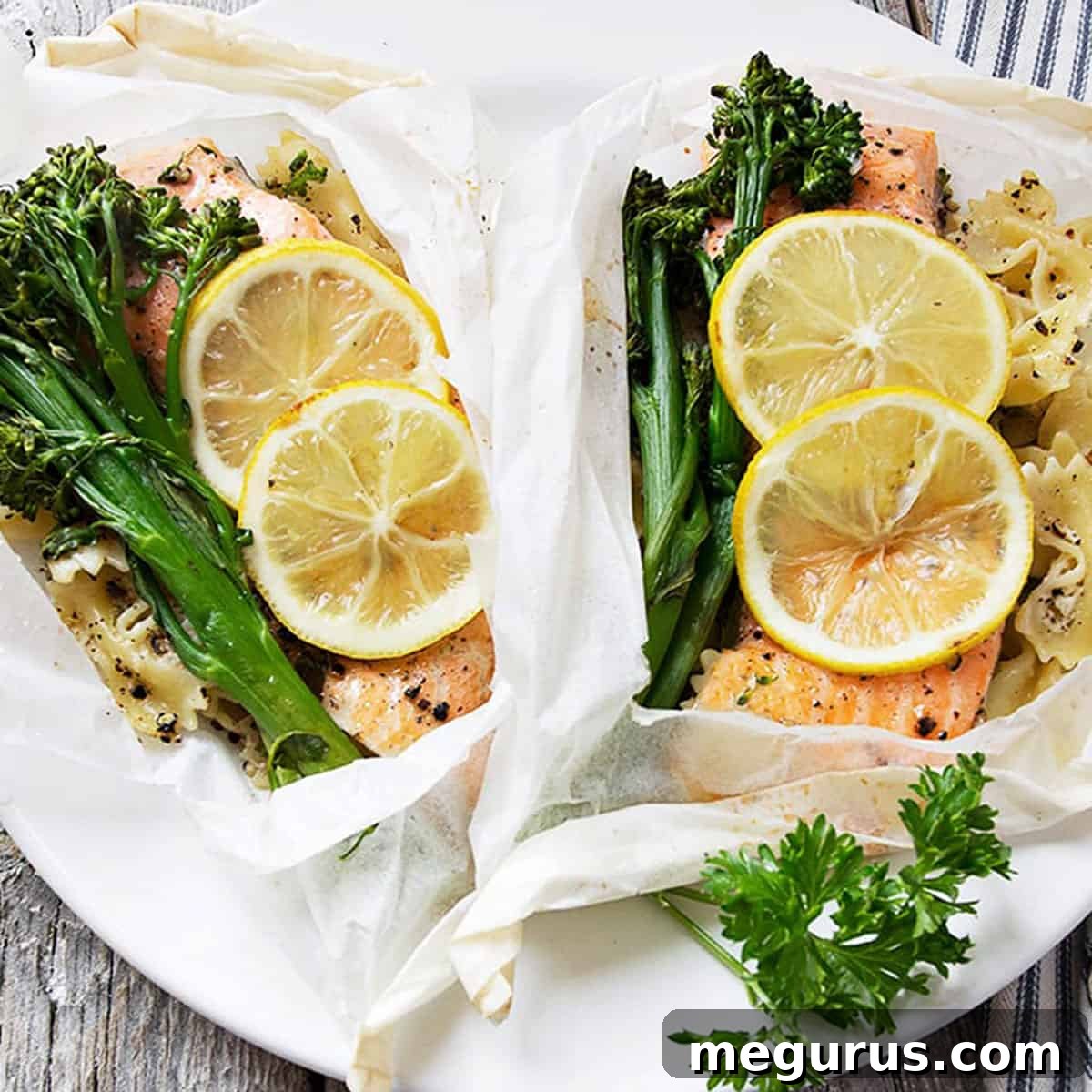
Discover the art of “en papillote” with this exquisite recipe for Rainbow Trout and Lemon Parmesan Pasta, all cooked effortlessly in parchment paper. This method transforms simple ingredients into a gourmet, full-flavor meal, perfect for any occasion.
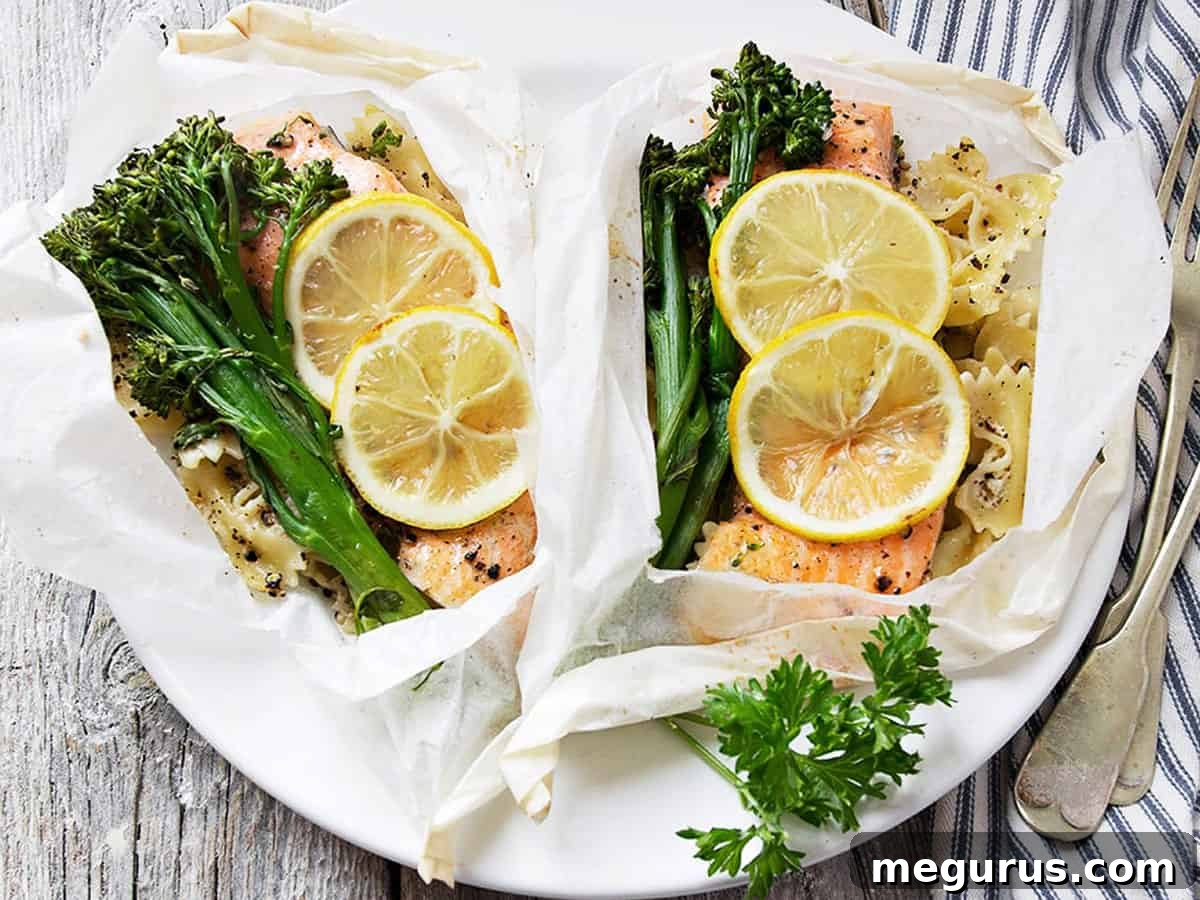
Effortless Elegance: Baked Rainbow Trout and Lemon Parmesan Pasta en Papillote
Imagine a meal that’s not only incredibly flavorful and healthy but also remarkably simple to prepare and clean up. Cooking “en papillote” – French for “in parchment” – delivers precisely that experience. It’s one of my most cherished techniques for elevating an everyday dinner into something truly memorable, making it an ideal choice for anyone seeking a touch of culinary magic without the fuss.
This recipe features succulent rainbow trout, a fantastic alternative to salmon, which emerges from its parchment cocoon perfectly flaky and moist every time. Paired with crisp-tender broccolini and a fragrant lemon Parmesan pasta, it’s a complete meal beautifully balanced in taste and texture. The best part? This entire delightful dish requires just 12-14 minutes in a hot oven, making it an excellent option for busy weeknights or when you want to impress without spending hours in the kitchen. And for those special moments, forming heart-shaped packets adds an extra touch of charm and love to your table.
Why Choose the En Papillote Method for Your Next Meal?
The “en papillote” technique is more than just cooking in paper; it’s a sealed environment that steams food to perfection, locking in moisture and intensifying flavors. This gentle cooking method ensures your fish remains tender and never dries out, while vegetables retain their vibrant color and nutrients. The individual packets create a stunning presentation when served, and perhaps most appealingly, clean-up is an absolute breeze – simply discard the parchment! It’s a healthy, flavorful, and incredibly convenient way to enjoy fresh ingredients.
Ingredients & Flavorful Substitutions for Your Perfect Packet
Crafting the ideal en papillote meal begins with selecting fresh, quality ingredients. Here’s a breakdown of what you’ll need and how you can tailor this recipe to your palate or pantry.
Rainbow Trout: A Delicate and Healthy Foundation
Rainbow Trout serves as the star of this dish, offering a beautifully mild flavor profile that appeals even to those who typically shy away from stronger “fishy” tastes. Its delicate texture becomes wonderfully flaky and moist when steamed within the parchment. If rainbow trout isn’t available or you’d like to experiment, excellent substitutes include fresh salmon fillets for a richer flavor, Arctic Char for a similar mildness and texture, or even cod or halibut for a lean, white fish option. When purchasing, look for fillets that are about 1-inch thick for even cooking. If you find larger pieces, don’t hesitate to cut them down to size – any excess can be frozen for future culinary adventures. Rainbow trout is also a fantastic source of lean protein and omega-3 fatty acids, contributing to a heart-healthy diet while being deliciously satisfying.
Broccolini: The Elegant Green Touch
Broccolini is a superb choice for these packets. Often described as a hybrid of broccoli and Chinese kale, it boasts longer, more slender stems and a milder, slightly sweeter flavor than traditional broccoli. Its tender nature ensures it cooks perfectly alongside the fish in a short amount of time, adding both delightful texture and vibrant color. Broccolini is rich in vitamins C and K, as well as fiber, making it a nutritious addition. While broccolini is highly recommended for its ideal cooking properties and aesthetic appeal, you can certainly substitute regular broccoli florets. However, to ensure they reach a tender-crisp consistency in the limited cooking window, I suggest blanching or lightly microwaving them for 1-2 minutes prior to assembling your packets. This pre-cooking step guarantees tender vegetables without extending the fish’s cooking time.
Fresh Lemon: The Essential Brightener
When it comes to enhancing seafood, nothing quite compares to the bright, aromatic zest and tang of fresh lemon slices. The heat within the parchment packet infuses the fish and vegetables with its vibrant essence, creating a harmonious and refreshing flavor. Always opt for fresh lemons over bottled juice for the best results – the natural oils in the peel are key to this dish’s success. Beyond its flavor, lemon also provides a burst of Vitamin C, adding to the health benefits of this meal. Don’t forget to remove any seeds from your slices before placing them in the packet to avoid bitterness.
Lemon Parmesan Pasta: A Comforting and Zesty Side
Adding a portion of pasta to your en papillote packet transforms this dish into a truly complete, satisfying meal. While it introduces a minor additional step, the reward is a deliciously zesty carb component that perfectly complements the fish and broccolini. The Parmesan cheese melts beautifully, creating a light, savory coating, while the fresh parsley adds a herbaceous counterpoint. If you’re aiming for a lower-carb option or want to simplify further, the pasta can be omitted entirely. Alternatively, cooked quinoa or rice would also make a delightful accompaniment, absorbing the flavorful steam within the packet. I opted for Farfalle (bow-tie pasta) for its charming shape and ability to hold the sauce, but feel free to use any small to medium-sized pasta shape you have on hand or prefer, ensuring it’s enough for two modest servings.
Expert Tips for Perfecting Your Parchment-Baked Trout
Achieving en papillote perfection is easier than you think, especially with a few insider tips. These pointers will help ensure your meal is cooked flawlessly and beautifully presented.
- Generous Packet Sizing is Key: When you’re cutting your parchment paper into those charming half-heart shapes, resist the urge to make them too narrow. The goal is to create ample space within the packet for your ingredients to steam effectively without being cramped. Start your cut from the bottom point, creating a generous curve for the base. Allow several inches along the flat, folded side for a sturdy seam, then gently curve upwards to form the top of the heart. This technique ensures enough volume for the trout, broccolini, and pasta to cook evenly and allows for proper sealing, preventing any steam from escaping prematurely.
- Broccolini: To Pre-cook or Not to Pre-cook? In my experience, broccolini emerges perfectly tender-crisp after 12-14 minutes in the oven, even when added raw to the packets. The high heat and trapped steam are surprisingly efficient. However, if you prefer your vegetables on the softer side, or if your broccolini stalks are particularly thick, a brief pre-cooking step can offer peace of mind. A quick 30-second zap in the microwave or a short blanch in boiling water will give them a head start, guaranteeing tenderness without overcooking your fish. Feel free to adjust based on your personal preference for vegetable texture.
- Efficiency in Pasta Preparation: Cooking a small quantity of pasta, as required for these individual packets, can sometimes feel like a hassle in a large pot. To expedite the process and save energy, try boiling your pasta water in a deep, wide skillet instead of a traditional stockpot. The increased surface area allows the water to come to a rolling boil much more quickly, shaving valuable minutes off your prep time. Remember to generously salt the water for flavorful pasta from the start; this is your only chance to season the pasta itself.
- Optimal Oven Temperature: Consistency in oven temperature is vital for en papillote. Preheat your oven to a precise 400°F (200°C) and allow it to reach this temperature fully before inserting your baking sheet. This ensures the parchment packets begin steaming immediately upon entering the oven, leading to evenly cooked, moist results. Using an oven thermometer can help verify your oven’s accuracy.
- Don’t Peek! The sealed nature of the parchment packet is what makes this cooking method so effective. Resist the temptation to open the packets during baking, as this releases the essential steam that cooks the food. Trust the process; the gentle puffing of the packets will indicate they’re working their magic. Opening them too early will cause the food to steam unevenly and potentially dry out.
- Season Generously: With steamed dishes, flavors can sometimes be mellow. Don’t be shy with salt and freshly ground pepper on your trout fillet and within the pasta mixture. A good pinch of salt will elevate all the other flavors within the packet.
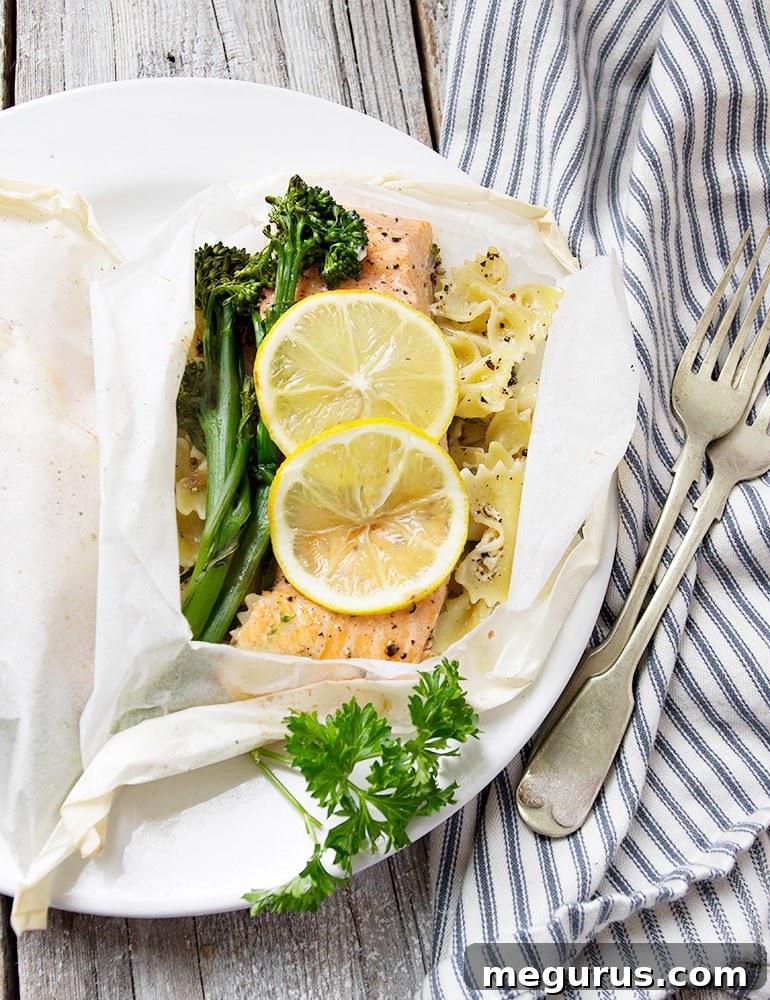
Mastering the Art of Cooking in Parchment: Your En Papillote FAQ
Cooking en papillote might sound sophisticated, but it’s a straightforward and highly rewarding technique. Let’s demystify some common questions about this wonderful method.
What is “En Papillote” and Why Does it Matter?
The term “en papillote” is French for “in parchment” or “in a packet.” It refers to a cooking method where food is enclosed in a folded parchment paper or foil packet and then baked. The sealed packet creates a steamy environment, effectively cooking the contents in their own juices and infused with any added aromatics. This results in incredibly moist, tender food with concentrated flavors, minimal added fat, and a delightful aromatic experience upon opening the packet at the table. It’s a culinary technique celebrated for both its simplicity and its ability to produce restaurant-quality results at home, ensuring maximum flavor capture and effortless cleanup.
Is Parchment Paper Oven-Safe? Addressing Common Concerns
Absolutely, parchment paper is designed for oven use and is perfectly safe for this cooking method. It’s manufactured with a silicone coating that makes it non-stick and highly heat-resistant. While it might brown slightly at very high temperatures (typically above 425-450°F or 220-230°C), it is highly unlikely to ignite under normal oven cooking conditions. The main concern arises from direct, intense heat. Therefore, it is crucial to avoid using parchment paper directly under a broiler element. The extreme, direct heat from a broiler can easily exceed parchment’s heat resistance, potentially causing it to scorch or catch fire. Always ensure your oven is preheated to the recommended temperature and that the packets are placed on a baking sheet, never directly on the oven rack, to ensure even heating and safety.
Parchment vs. Foil: Which One to Choose for En Papillote?
While aluminum foil can technically be used as a substitute for parchment paper in the en papillote method, there are notable differences in the final outcome and user experience. Parchment paper boasts superior non-stick properties, meaning your delicate fish and vegetables are less likely to stick to the packet, preserving their integrity and making serving a breeze. Foil, on the other hand, often requires a generous greasing to prevent sticking, which can add unnecessary fat and calories. Furthermore, some chefs and home cooks report a subtle difference in texture and flavor when cooking with foil, which can sometimes impart a metallic taste or lead to a slightly different steaming effect compared to parchment. While foil can certainly crimp and seal effectively, allowing the food to cook in a similar steamed fashion, parchment often provides a more delicate touch and easier release, contributing to a more refined presentation and taste, especially for lighter ingredients like fish.
Optimal Cooking Times for Fish in Parchment
The beauty of cooking fish en papillote is its speed and predictability. When baking your parchment packets on a baking sheet in an oven preheated to 400°F (200°C), most fish fillets will be perfectly cooked within 12-16 minutes. The precise timing largely depends on the thickness of your fish and personal preference for doneness. For medium-thick fillets like salmon or rainbow trout (approximately 1-inch thick), approximately 14-16 minutes is usually sufficient to achieve a moist, flaky texture. Thinner, more delicate white fish fillets, such as sole or tilapia, might be done in a quicker 10-12 minutes. The packets will puff up beautifully as they cook, indicating the steam is doing its work. The fish is done when it’s opaque throughout and flakes easily with a fork; avoid overcooking to maintain moisture and tenderness.
Versatility of the En Papillote Method: Beyond Just Trout
The en papillote technique is incredibly versatile and extends far beyond just rainbow trout. Virtually any type of fish or seafood can be cooked perfectly using this method, making it a staple for healthy and quick meals. Consider experimenting with cod, snapper, sea bass, haddock, or even more robust options like swordfish or tuna. The gentle steaming also works wonders for other seafood favorites such as plump shrimp, tender scallops, or delicate mussels, which cook rapidly and retain their succulent texture. You can even use this method for boneless, skinless chicken breast (cut into thinner pieces) or a vibrant medley of firm vegetables like asparagus, bell peppers, or green beans. The key is to cut ingredients to similar sizes and consider their individual cooking times to ensure everything in the packet is perfectly done simultaneously.
Step-by-Step Guide to Crafting Perfectly Sealed Parchment Packets
The success of your en papillote dish hinges on a well-sealed packet that traps all the flavorful steam. While there are various folding techniques, the heart-shaped method is both charming and effective. Follow these steps to create your perfect culinary pouches, ensuring every meal is a delightful surprise upon opening:
- Prepare Your Parchment: Begin with a rectangular piece of parchment paper, approximately 12×15 inches, for each individual serving. This size provides ample room for the ingredients and folding. Fold the parchment paper in half lengthwise, creating a distinct crease down the middle.
- Cut the Heart Shape: With the parchment still folded, use a pair of kitchen scissors to cut a half-heart shape. Start from the bottom folded corner and cut a generous, sweeping curve towards the open side of the paper. Crucially, ensure you leave a few inches of the open side flat before curving back up towards the top folded edge to complete the half-heart. When you unfold the paper, you should have a full, symmetrical heart shape. As emphasized in the tips, avoid making this heart too narrow; you need significant space for your ingredients to cook comfortably.
- Arrange Your Ingredients: Unfold your parchment heart and lay it flat on a clean, dry work surface. Carefully place your prepared ingredients – the cooked pasta, rainbow trout fillet, broccolini stalks, lemon slices, a pat of butter, and your seasonings – onto one half of the heart. Position the ingredients specifically on the side closer to the center fold. Remember to leave a clear margin of at least an inch (2.5 cm) around the edges of your ingredients; this space is vital for creating a secure seal.
- Fold and Seal the Packet: Gently fold the empty half of the parchment heart over the food-filled side, carefully aligning the edges. Now, starting from the top point of the heart (the rounded, highest part, not the V-shaped bottom), begin to fold and crimp the raw edges together. Make small, overlapping folds, approximately 1/2 to 1 inch (1-2.5 cm) wide, pressing firmly as you go to create a secure, airtight seal. This crimping motion should continue all the way around the curved edge of the heart until you reach the bottom V-point.
- Secure the Bottom Point: Once you reach the bottom V-point of the heart, give it a final, firm twist to fully seal the pouch. This tight seal is absolutely crucial for trapping all the flavorful steam within the packet, which is how the food cooks and infuses with flavor.
- Double Check Your Seal: Before placing your packets in the oven, take a moment to carefully inspect all the folded and crimped edges. It is paramount that your pouch is well-sealed. If you feel any part isn’t perfectly secure, go back and fold or crimp that section a second time with firm pressure. A well-sealed packet will puff up beautifully in the oven, effectively steaming its contents and delivering maximum flavor and moisture to your dish.
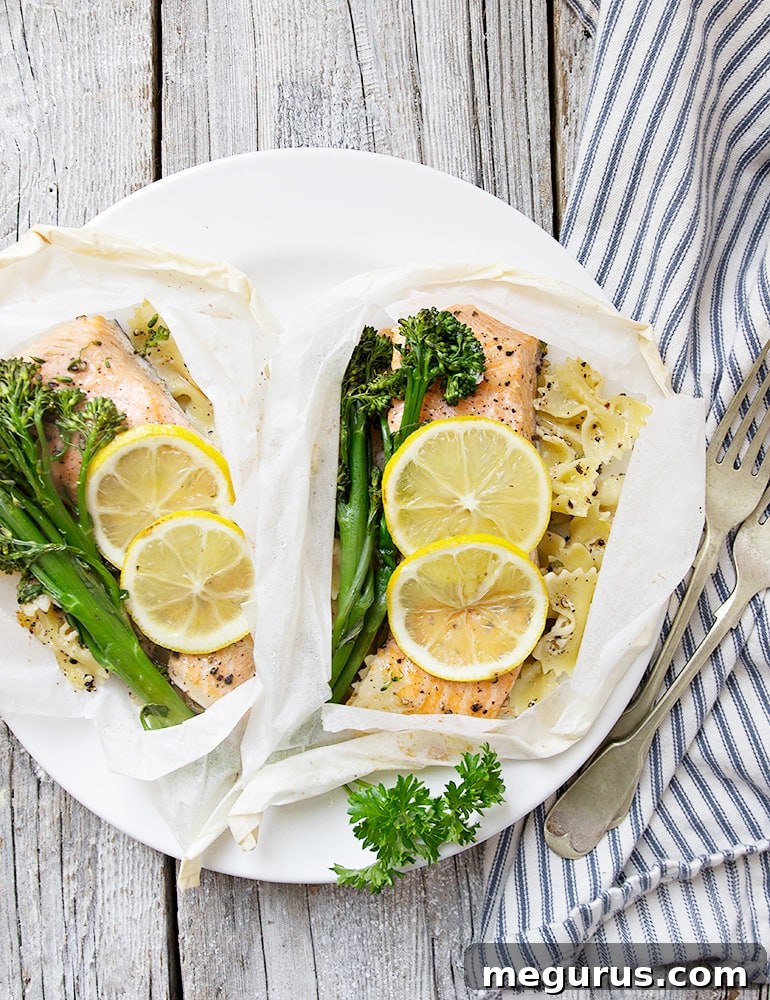
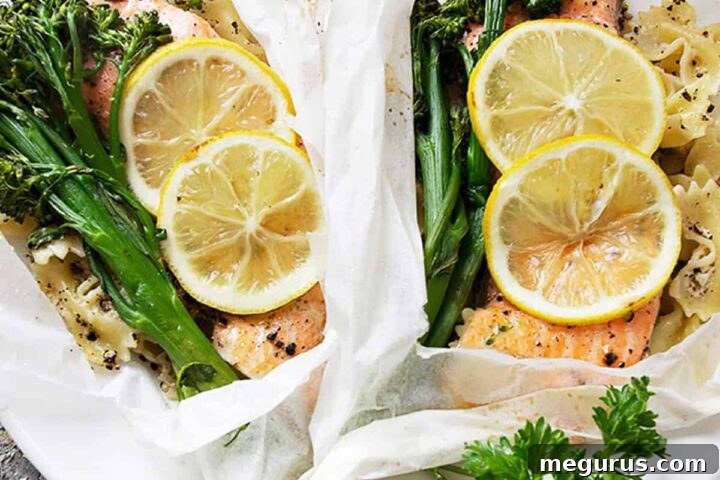
Get the Recipe: Trout en Papillote (Rainbow Trout and Pasta in Parchment)
Pin This
Leave a Review
Ingredients
- 2 rainbow trout fillets
- 4 thin slices lemon, seeds removed
- 4-6 stalks broccolini, bottom 1/2- of stalk trimmed off
Pasta:
- 1 1/2 cups dried Farfale (bow tie) pasta (or pasta or your choice – enough for 2 small servings)
- 1 Tablespoon butter
- 1/3 cup Parmesan, grated
- 2 Tablespoons fresh parsley, chopped
- Juice of 1/2 fresh lemon
- Salt and freshly ground pepper
Equipment
- Two 12×15-inch pieces of parchment paper
Instructions
- Preheat oven to 400 F.
- Boil water for pasta. Tip: for this small amount of pasta, use a deep, wide skillet for the job. The water will boil more quickly! Once water is boiling, salt water and add your pasta. Cook until al dente. Drain well and remove to a medium bowl. Add butter and stir until butter is melted and pasta is coated well. Add Parmesan, parsley, salt and pepper. Stir well to combine. Drizzle with lemon juice and stir to combine. Set aside.
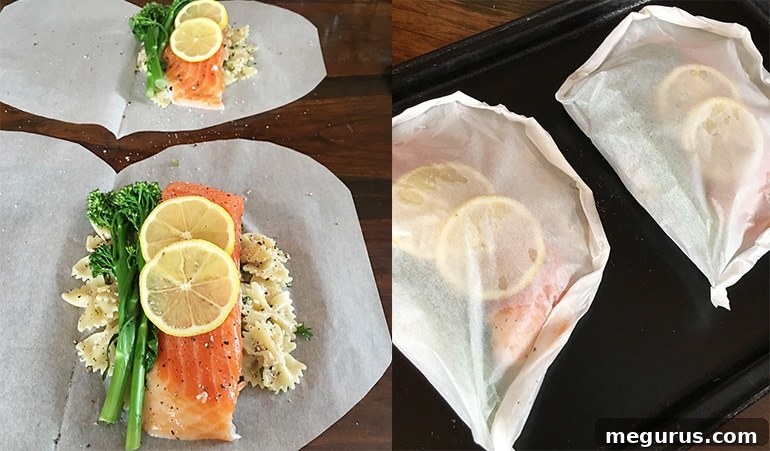
- While pasta is cooking, prepare your parchment hearts. Cut two pieces of parchment 15-inches x 12-inches. Fold in half to make a 7 1/2-inch x 12-inch rectangle. Starting from the bottom fold corner, cut the bottom of the heart shape to the open side. Leave a few inches of the open side flat, then cut the top curve back towards the top fold edge (see photo above in the main article for visual guide). Open up your parchment hearts and lay flat on a work surface.
- Place a pile of your pasta in the centre, just to the right of the centre fold. Keep it a couple of inches from the side edge. Top with a fillet of rainbow trout. Season trout with salt and pepper and a pat of butter. Top with a couple of thin slices of lemon. Tuck a couple of broccolini stalks next to it (on the centre fold side). Fold the unfilled parchment side over-top to enclose. Starting from the bottom heart point, begin folding the edges in, over-lapping and pinching as you go to keep the shape. Once you get to the top, work your way back down, folding over again and folding/pinching as you go. End with twisting the bottom point a bit to seal. Place packets on a baking sheet.
- Bake in preheated 400 F oven for 12-14 minutes (depending on thickness of fillets). Remove from oven. Place packets on plates and carefully cut open to enjoy the flavorful steam and perfectly cooked contents.
Notes
Nutrition Information (per serving): Serving: 1 serving, Calories: 405kcal, Carbohydrates: 58g, Protein: 16g, Fat: 11g, Saturated Fat: 6g, Cholesterol: 27mg, Sodium: 330mg, Potassium: 188mg, Fiber: 2g, Sugar: 2g, Vitamin A: 980IU, Vitamin C: 24.5mg, Calcium: 232mg, Iron: 1.5mg
Tried this recipe? If you enjoyed this recipe, please consider leaving a star rating and comment. Your valuable feedback helps other home cooks discover and enjoy this delicious and easy dish!