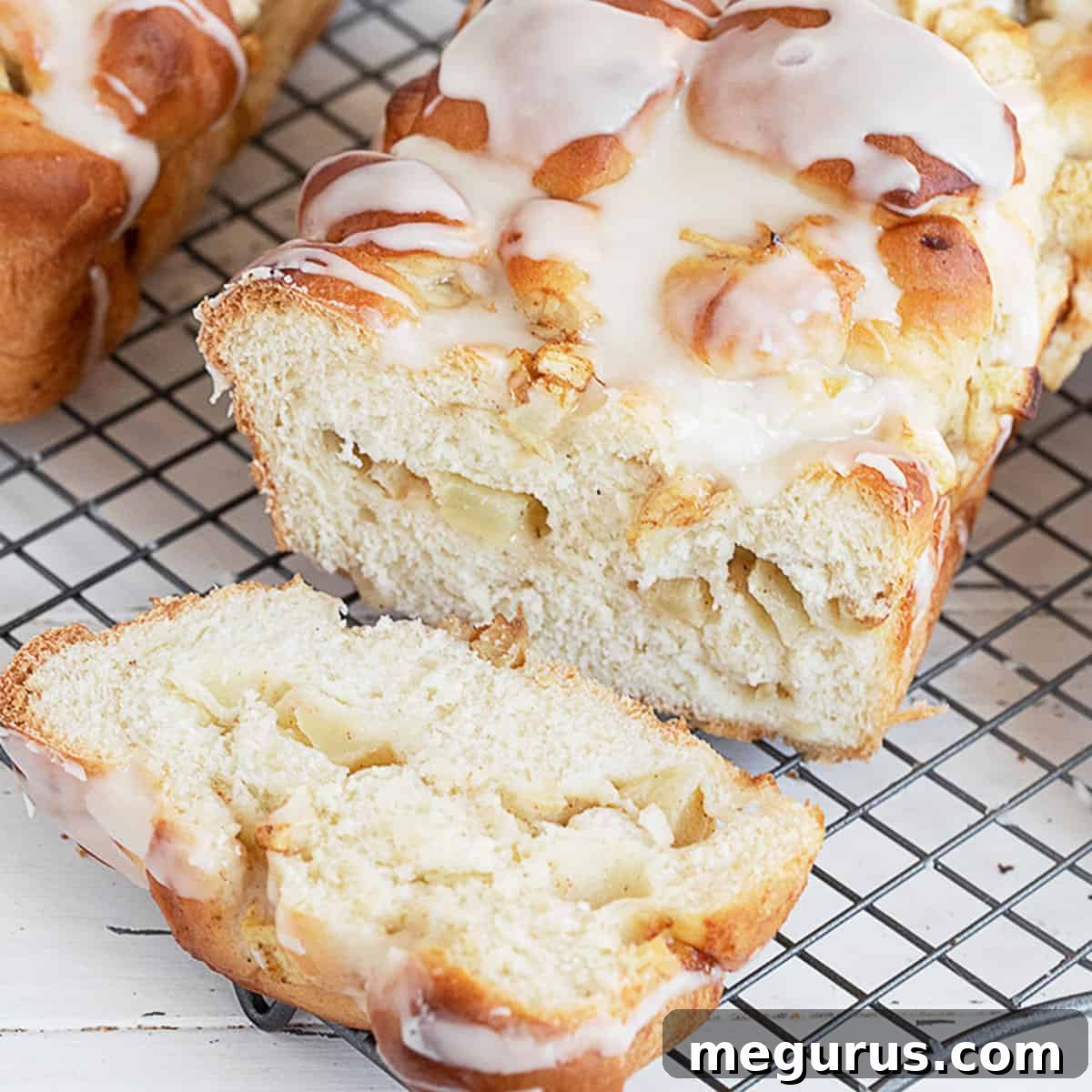
Imagine a truly irresistible loaf that’s wonderfully substantial, brimming with tender apple chunks, and boasting a delightfully soft crumb. This exceptional yeast bread, optionally crowned with a sweet maple glaze, is perfect for any occasion. Savor it plain, toasted, or transform it into the most amazing French Toast you’ve ever tasted!
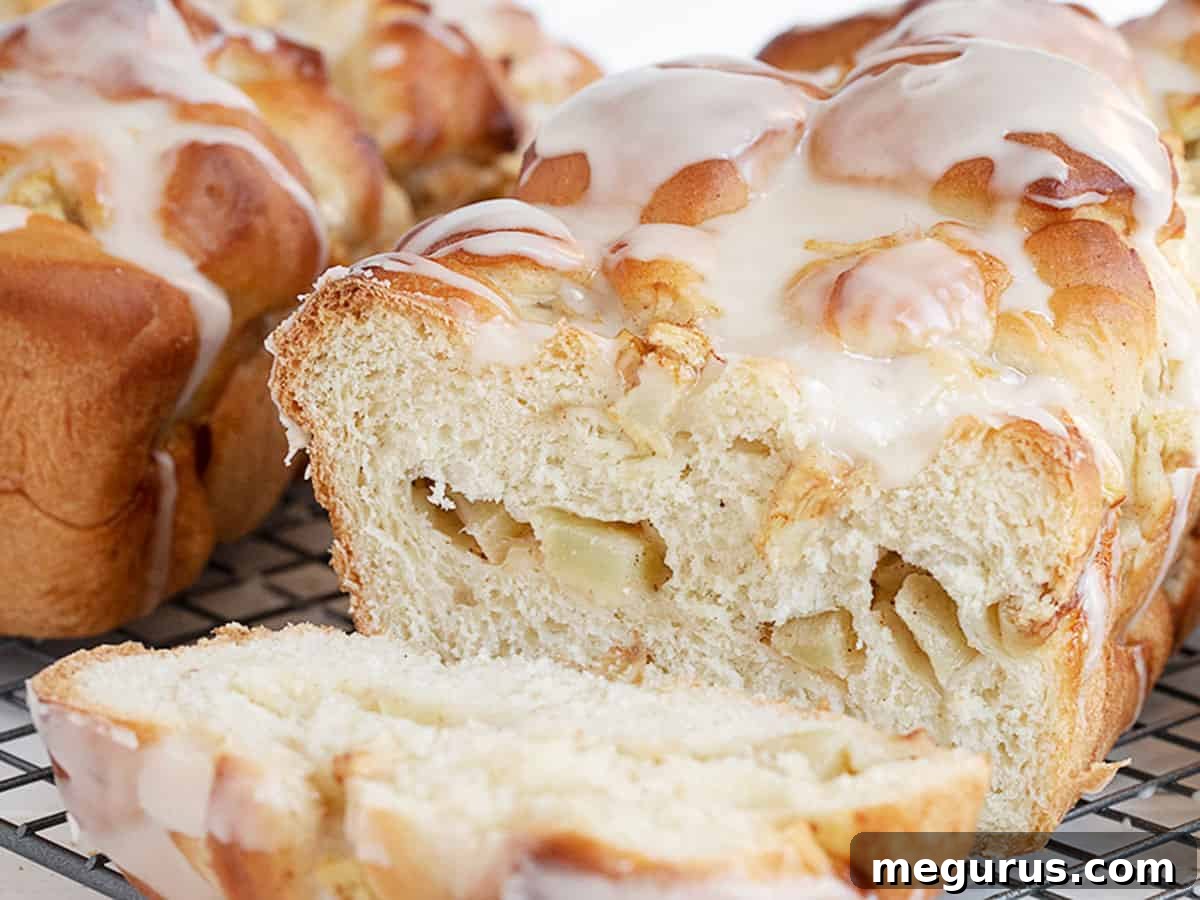
The Irresistible Charm of Chunky Apple Yeast Bread
There’s something uniquely comforting and utterly delicious about a homemade loaf of bread, especially when it’s generously studded with fresh, flavorful fruit. Our chunky apple yeast bread isn’t just a recipe; it’s an experience. What sets this bread apart is the sheer abundance of fresh apple pieces – approximately 1.5 pounds of them – meticulously distributed across two loaves. But the real fun, and the secret to its delightful texture, comes from the unique preparation method: cutting the dough into individual chunks and scattering them into the loaf pans. This creates a bread that’s wonderfully rustic, deeply satisfying, and visually appealing, with every slice offering a perfect bite of tender bread and sweet-tart apple.
This versatile apple-filled yeast bread is a true star on its own, whether enjoyed simply with a smear of butter, transformed into golden-brown toast, or elevated to an unforgettable French Toast. And for those who appreciate a touch of sweetness, an optional, luscious maple glaze adds an extra layer of indulgence that complements the apples beautifully.
Key Ingredients and Smart Substitutions for Perfect Apple Bread
Crafting the perfect loaf begins with understanding each ingredient’s role. Here’s a detailed look at what you’ll need and how you can adapt the recipe to your pantry or preferences.
Yeast: The Heart of the Rise
Whether you opt for Active Dry Yeast or common Instant Yeast (like SAF Brand), this recipe accommodates both without any major adjustments. Since we’re proofing the yeast in warm water initially, it provides an excellent opportunity to ensure your yeast is active and ready to make your bread rise beautifully. Fresh yeast is crucial for a light, airy texture, so always check the expiration date and ensure your water is the right temperature – too hot and it kills the yeast, too cold and it won’t activate.
Flour: The Foundation of Flavor and Texture
For breads, I consistently recommend unbleached all-purpose flour. It typically has a slightly higher protein content than bleached varieties, which contributes to better gluten development and a chewier, more satisfying texture. However, if bleached all-purpose flour is what you have on hand, it will still yield a perfectly delicious loaf. The key is to measure your flour correctly, using the “spooned and leveled” method to avoid over-measuring, which can lead to a dense, dry bread.
Milk: For a Tender, Moist Crumb
The addition of milk to yeast bread dough is a game-changer. It enriches the dough, resulting in a wonderfully tender, moist, and flavorful crumb that’s truly delightful. If you prefer to bake without dairy, a simple substitution of an equal amount of additional warm water will work just fine. While the texture might be slightly less rich, the bread will still be delicious.
Butter: A Touch of Brioche-Like Richness
Softened butter is incorporated into the dough in a method reminiscent of brioche, gradually kneaded in to create a rich, luxurious dough. This fat content contributes significantly to the bread’s tender crumb and appealing golden crust. If butter is not an option, you can substitute an equal amount of a neutral-flavored vegetable oil, adding it with the other wet ingredients at the beginning. Be aware that you might need to adjust the flour slightly at the end, as oils can absorb differently than solid fats.
Apples: The Star of the Show
For this chunky apple bread, I chose Granny Smith apples, and for good reason. They are reliably firm, ensuring they hold their shape beautifully through the baking process, preventing a mushy filling. Their tartness also provides a wonderful counterpoint to the subtle sweetness of the bread and the optional maple glaze, creating a perfectly balanced flavor profile. Granny Smiths are also widely available year-round. However, feel free to experiment with other firm, baking-friendly apple varieties like Honeycrisp, Braeburn, Fuji, or Gala. The general rule is: if it’s good for apple pie, it’s good for this bread!
Essential Supporting Ingredients
Beyond the main players, you’ll also need a few pantry staples: two large eggs (one for the dough, one for the apple filling), vanilla extract or vanilla bean paste for aromatic depth, cinnamon to perfectly complement the apples, white granulated sugar to feed the yeast and add subtle sweetness, and fine salt to enhance all the flavors and control yeast activity. For the optional maple glaze, ensure you have powdered sugar, milk, and real maple syrup on hand.
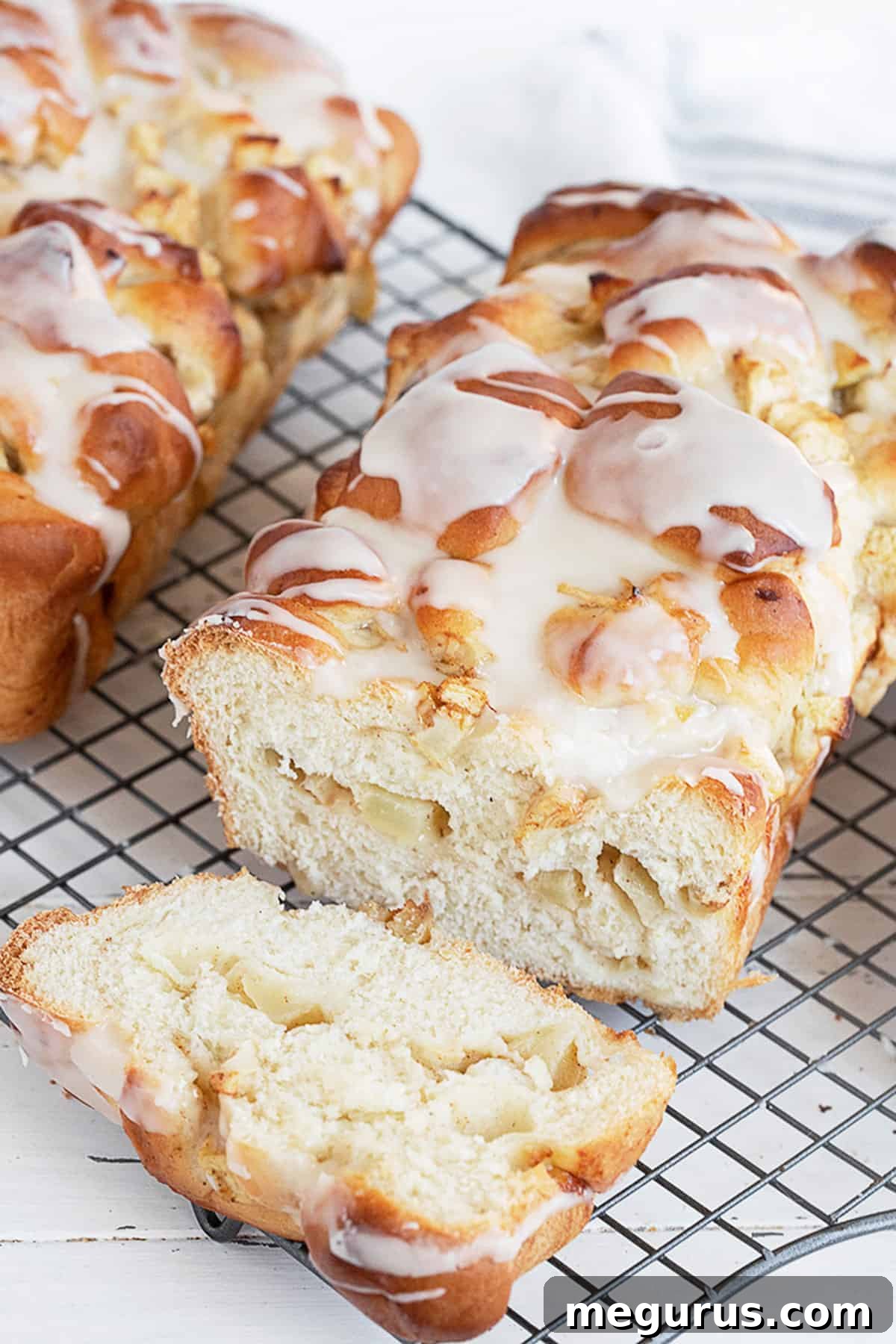
Expert Tips for Baking the Best Chunky Apple Bread
Achieving bakery-quality results at home is easier than you think with these helpful tips and tricks for your homemade apple yeast bread:
- Glazing Strategy for Versatility: If you’re someone who loves the option of toasting your bread, the glaze isn’t ideal as it can become sticky. A smart solution is to glaze only one half of the loaf, leaving the other half unglazed. This way, you get the best of both worlds – a sweet, tender slice for immediate enjoyment and a plain section perfect for toasting or turning into French Toast.
- Understanding the Sweetness Balance: It’s important to note that this bread, without the glaze, is not overly sweet. The sweetness primarily comes from the optional maple glaze. This makes the unglazed loaf an excellent choice for savory applications, like sandwiches, or for pairing with butter to appreciate the subtle flavors and tartness of the apples. It also serves as an exceptional base for French Toast or a rich bread pudding, where additional sweetness can be added as desired.
- Embrace Fruit Variations: This chunky yeast bread recipe is incredibly adaptable. Consider it a fantastic base for exploring other fruit additions. Imagine swapping out or combining apples with fresh blueberries, juicy peaches, or tender pears. You can also experiment with different spices, such as a pinch of nutmeg or cardamom, to create unique flavor profiles.
- Optimal Freezing for Future Enjoyment: This apple bread freezes beautifully, making it an excellent candidate for meal prep or enjoying fresh bread weeks later. For the best results, it is highly recommended to freeze the bread unglazed. The glaze tends to absorb moisture during the freeze/thaw cycle, which can result in a soggy or sticky texture upon defrosting. Wrap the unglazed loaves tightly in plastic wrap, then in foil, and store in an airtight freezer bag for up to 3 months. Thaw at room temperature before serving.
- Don’t Waste Those Egg Whites: This recipe calls for egg yolks, leaving you with a couple of egg whites. Don’t let them go to waste! They are perfect for making delicate homemade macaroons, elegant macarons, or even a simple meringue to top a pie.
- Dough Consistency is Key: When adding the last cup of flour, do so gradually. The goal is a dough that wraps around the kneading hook and cleans the bowl, indicating it has developed sufficient gluten without becoming too stiff. A slightly sticky dough is often better than a dry one. Adjust flour as needed, but trust your judgment more than exact measurements at this stage.
- Proper Proofing for a Light Bread: Ensuring your dough doubles in size during both rises is critical for a light, airy bread. Place your covered bowl in a warm, draft-free spot. If your kitchen is cool, a slightly warmed oven (turned off!) or a proofing setting on your oven can help.
Storing and Freezing Your Delicious Loaves
Once your chunky apple yeast bread has cooled completely, store it in an airtight container or a sealed plastic bag at room temperature for up to 2-3 days. This helps to maintain its freshness and soft texture. For longer storage, this bread excels in the freezer, staying fresh for up to 3 months. As noted in the tips above, freezing the bread without the maple glaze is best, as the glaze can become moist and soft after thawing. To enjoy, simply thaw frozen loaves at room temperature, then slice and serve as desired.
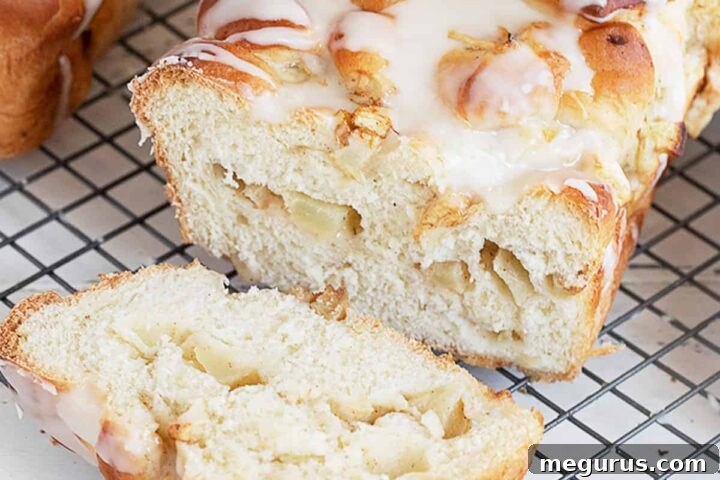
Get the Recipe: Chunky Apple Yeast Bread
Pin This
Leave a Review
Ingredients
- 3 teaspoons active dry or instant yeast
- 3/4 cup lukewarm water, about 105F.
- 2/3 cup lukewarm milk, about 105F.
- 3 Tablespoons white granulated sugar
- 1 large egg yolk
- 1 teaspoon vanilla or vanilla bean paste
- 1 1/4 teaspoons fine salt, reduce to 1 tsp if using salted butter
- 4 cups all purpose flour, spooned and levelled, plus more as needed
- 4 Tablespoons unsalted butter, at room temperature, cut into 4 pieces
Apple Filling:
- 1 1/2 lbs granny smith apples, peeled, quartered, cored and diced into 1/2-inch cubes
- 2 Tablespoons white granulated sugar
- 1 teaspoon cinnamon
- 1 large egg yolk
Maple Glaze (Optional):
- 1 cup confections/icing sugar
- 2 Tablespoons maple syrup
- 1 Tablespoon milk
Instructions
-
In a large bowl or the bowl of your stand mixer fitted with the paddle attachment, combine the yeast and warm water. Stir gently and allow to stand for 5 minutes, giving the yeast time to activate and become foamy. Then, add the granulated sugar, warm milk, one egg yolk, vanilla, and salt to the mixture, stirring until well combined. Gradually add 2 cups of the all-purpose flour, mixing until a cohesive dough forms. Finally, incorporate the softened butter, adding it one tablespoon at a time, and mix until fully absorbed into the dough.
-
Switch to the dough hook attachment on your stand mixer. Add an additional cup of flour and begin kneading. Continue to add the remaining flour (up to the last cup) in small increments, kneading after each addition. The goal is to add just enough flour until the dough comes together, wraps around the kneading hook, and pulls away cleanly from the sides of the bowl. It’s crucial to observe the dough’s consistency; you might not need the entire last cup, or you might need a little more, depending on environmental factors and flour type. The dough should be soft and slightly tacky, but not overly sticky.
-
Carefully transfer the kneaded dough to a lightly floured work surface. Knead by hand for just one minute to ensure a smooth texture, then shape it into a neat ball. Place the dough into a lightly greased bowl, ensuring all sides are coated to prevent sticking. Cover the bowl tightly with plastic wrap and let the dough rise in a warm, draft-free place until it has doubled significantly in size, which typically takes about 1 hour.
-
While your dough is undergoing its first rise, prepare the vibrant apple filling. Begin by peeling, quartering, and coring your Granny Smith apples. Then, dice them into approximately 1/2-inch cubes. Transfer the diced apples to a large mixing bowl. Sprinkle them generously with white granulated sugar and ground cinnamon, tossing to ensure all the apple pieces are evenly coated. Finally, add the remaining large egg yolk and mix thoroughly. This egg yolk helps to bind the filling and adds richness. Set the apple mixture aside.
-
Prepare two 8×4-inch loaf pans by greasing them thoroughly or spraying them with a non-stick cooking spray. This step is essential to prevent sticking and ensure easy removal of your baked loaves. Set the prepared pans aside.
-
Once the dough has doubled in size, gently punch it down to release the air. Transfer the dough to a lightly floured work surface. Using a bench scraper or a sharp knife, divide the dough into two equal pieces, ensuring both pieces are roughly the same weight for even baking.
-
Take one piece of dough and roll it out into a rectangular shape, roughly 10×15 inches in dimension. Distribute half of the prepared apple filling evenly over the surface of the dough, leaving a small border around the edges. Carefully roll up the dough, starting from one of the long sides, to form a log. Pinch the seam tightly to seal the roll. Using a sharp knife or a bench cutter, slice the log into approximately 1-inch thick pieces. Now, take each slice and cut down its center, from one end to the other, creating smaller, chunky pieces of apple-filled dough. Gently scoop up these chunks and arrange them into one of your prepared 8×4-inch loaf pans. Adjust the dough chunks slightly to create as even a top surface as possible; this prevents any pieces from over-browning.
-
Repeat the entire process from Step 6 with the second piece of dough and the remaining apple mixture, filling the second prepared loaf pan.
-
Cover both assembled loaves loosely with greased plastic wrap. Place them in a warm, draft-free location for their second rise, allowing them to double in size again. This usually takes about 45 minutes, but keep an eye on them as rising times can vary based on ambient temperature.
-
About 15-20 minutes before the second rise is complete, preheat your oven to 350°F (175°C). Ensure your oven rack is positioned in the center of the oven for even baking. If your oven has a convection fan, turn it off as it can sometimes lead to uneven browning for breads like this.
-
When the loaves have doubled in size and are ready to bake, carefully remove the plastic wrap. Place both loaf pans onto a baking sheet. This extra step is important as it will catch any potential juicy bubble-overs from the apple filling, preventing a messy oven cleanup.
-
Bake the loaves in the preheated oven at 350°F (175°C) for approximately 45 minutes. To confirm doneness, use an instant-read thermometer inserted into the center of the loaf; it should register an internal temperature of 210°F (99°C). Around the 30-minute mark, check the bread for browning. If the tops are becoming too dark, loosely cover the loaves with aluminum foil to prevent over-browning while the inside continues to cook.
-
Once baked, remove the loaves from the oven. Allow them to cool in their pans for about 5 minutes. This brief cooling period helps the bread firm up and makes it easier to handle. After 5 minutes, carefully invert the loaves onto a wire cooling rack to cool completely. Slicing warm bread can lead to a gummy texture, so patience is key for the best results.
-
If you choose to add the maple glaze, prepare it only after the loaves have cooled completely. In a small bowl, whisk together the confectioners’ sugar, maple syrup, and milk until the mixture is smooth and has a pourable consistency. Drizzle the delightful maple glaze generously over the cooled loaves. Serve immediately and enjoy!
Notes
This versatile bread freezes exceptionally well. For optimal quality, it is highly recommended to freeze the bread without the glaze, as the glaze tends to become moist and soft during the freeze/thaw cycle.
For additional insights and pro tips on mastering this recipe, refer to the detailed ‘Expert Tips’ section located above the recipe card.