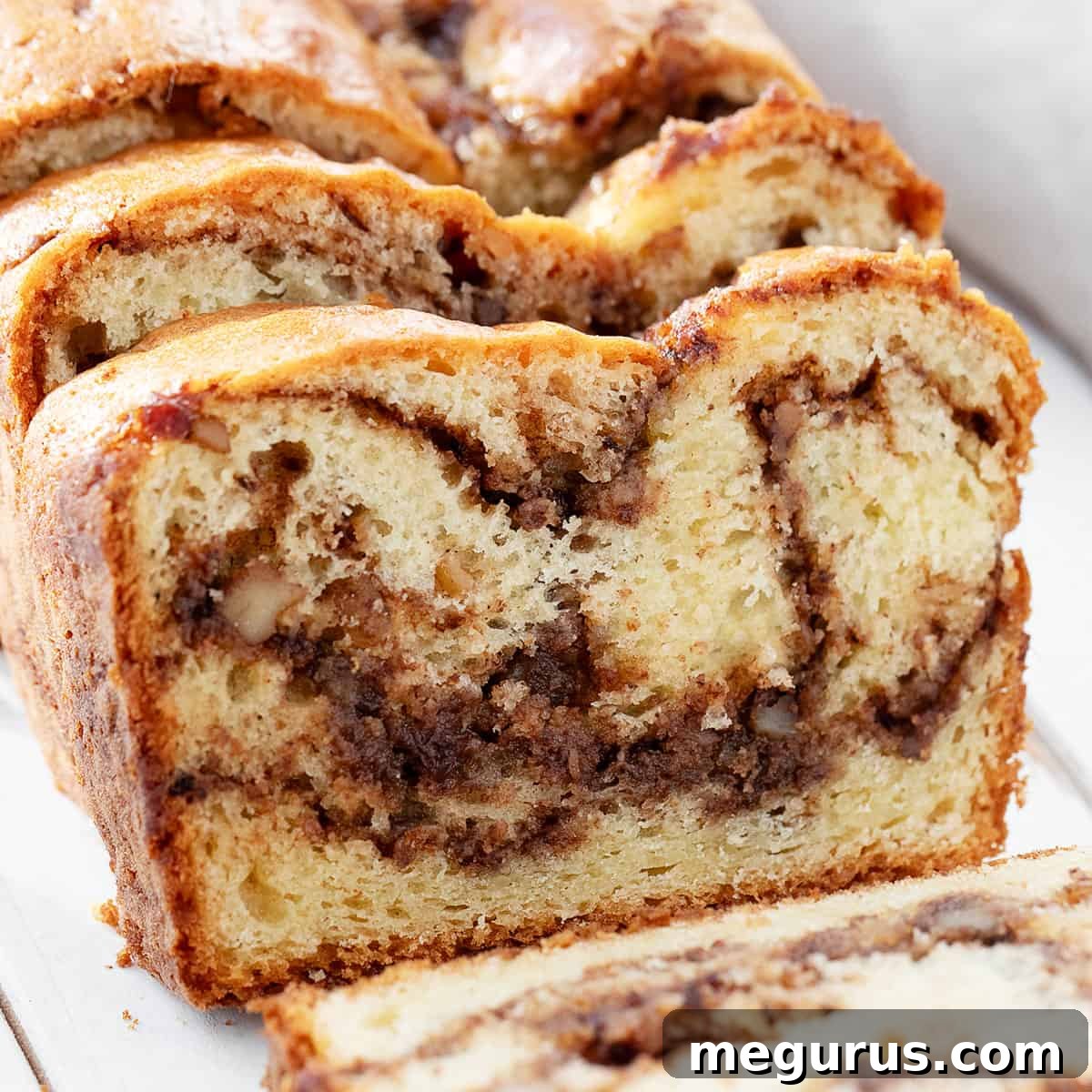
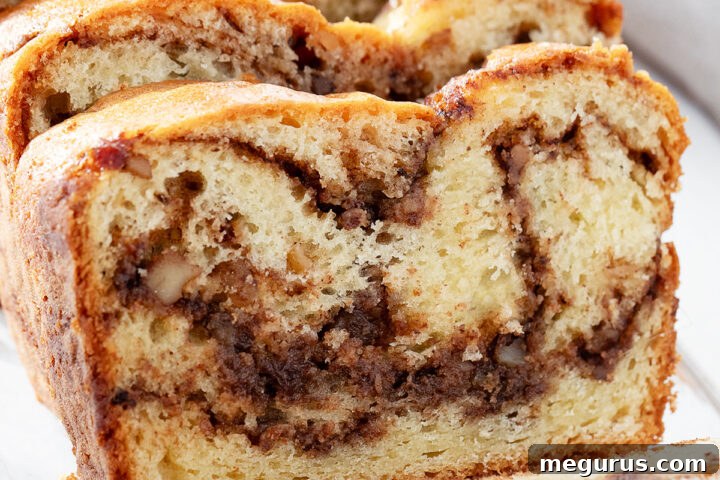
Indulge in the comforting embrace of a classic with this exquisite Hungarian Coffee Cake Loaf. Imagine a tender, vanilla-infused loaf, meticulously layered with a rich, aromatic filling of finely chopped nuts, sweet raisins, dark brown sugar, warm cinnamon, and a hint of cocoa. This isn’t just a cake; it’s a timeless treat, perfected for modern convenience, designed to keep beautifully on your counter for days, inviting you to savor a slice whenever the craving strikes.
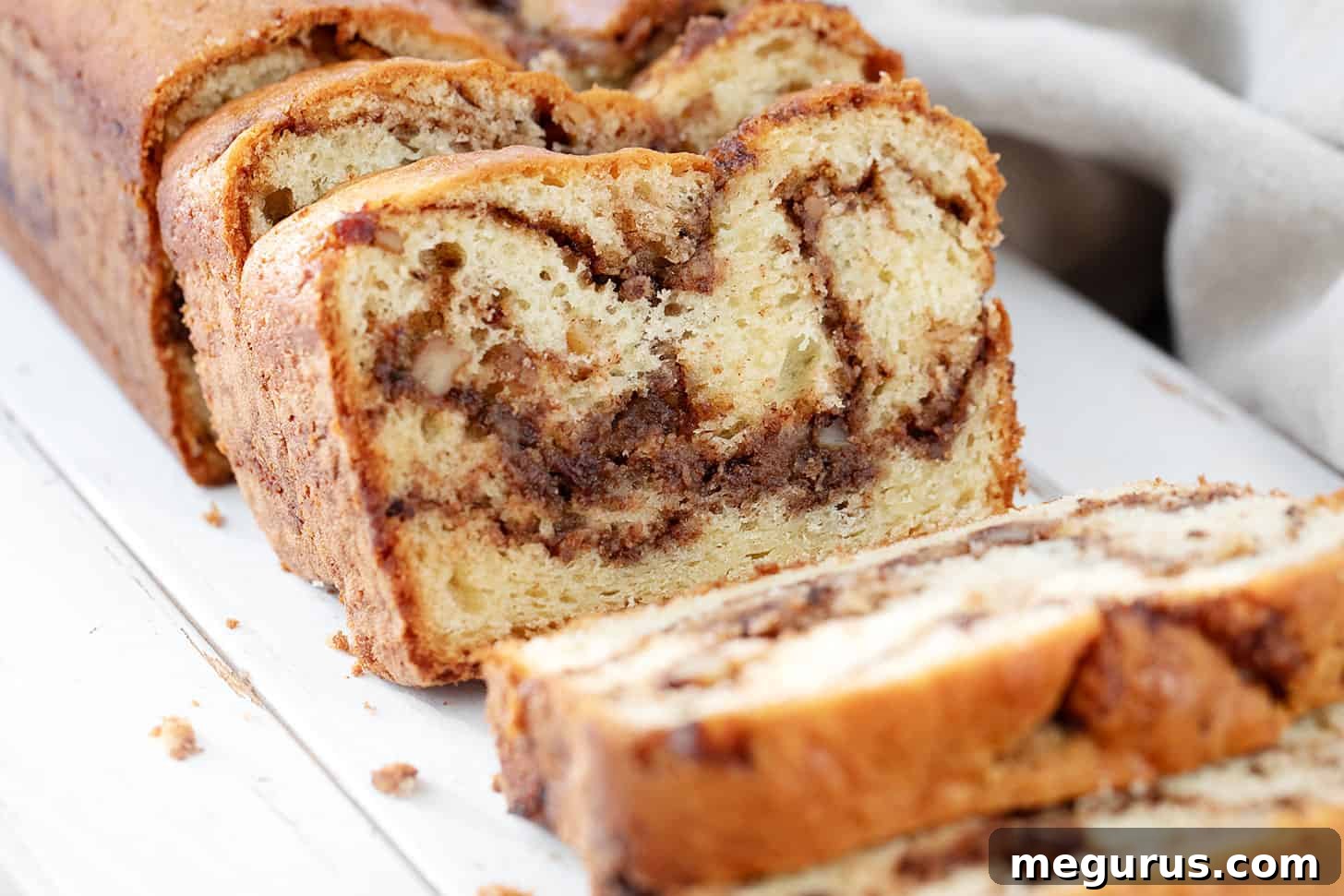
Our rendition of the Hungarian Coffee Cake Loaf draws inspiration from the legendary Maida Heatter’s “Budapest Coffee Cake.” While Maida’s original recipe delighted many as a grand bundt cake crowned with a sweet icing sugar glaze, we’ve thoughtfully re-imagined it for simplicity and everyday enjoyment. We’ve scaled down the recipe to a more manageable loaf size and opted to forgo the glaze. This adaptation not only makes for easier preparation but significantly extends its shelf life, allowing you to enjoy this delightful treat over several days without compromising on its rich flavor or moist texture.
The result is a coffee cake loaf that’s every bit as delicious as its predecessor, but in a format perfectly suited for a quick breakfast, a delightful afternoon pick-me-up with your favorite hot beverage, or a simple, elegant dessert. Its tender crumb and intricate layers of spiced, nutty sweetness make it an instant favorite, offering a slice of pure comfort with minimal fuss.
Why You’ll Adore This Hungarian Coffee Cake Loaf
This isn’t just another coffee cake recipe; it’s a celebration of rich flavors and practical baking. Here’s why this Hungarian Coffee Cake Loaf is destined to become a staple in your kitchen:
- Unforgettable Flavor Profile: A tender vanilla cake base perfectly complements the bold, aromatic filling. The combination of walnuts, raisins, brown sugar, cinnamon, and cocoa creates a symphony of sweet and spicy notes that dance on your palate.
- Perfectly Portioned: Adapted from a larger bundt cake, this loaf-sized version is ideal for smaller households or for those who prefer to have a ready-to-slice treat without the grandeur of a large cake. It’s less intimidating to bake and perfect for casual enjoyment.
- Convenience Reimagined: By skipping the traditional glaze, we’ve made this loaf incredibly easy to store and transport. No sticky messes, just pure, unadulterated coffee cake goodness that remains fresh for days.
- Incredibly Versatile: Whether you enjoy it with your morning coffee, as a delightful afternoon snack, or a simple dessert, this coffee cake seamlessly fits into any part of your day. It’s also a wonderful addition to brunches, potlucks, or family gatherings.
- Freezer-Friendly: Prepare a batch and freeze slices for future cravings. It thaws beautifully, retaining its moistness and flavor, making it a fantastic make-ahead option for busy weeks.
- A Taste of Tradition: Inspired by a classic Maida Heatter recipe, this loaf carries a hint of baking heritage, updated for modern lifestyles. It’s a taste of nostalgia with a fresh, accessible twist.
Essential Ingredients & Smart Substitutions
Crafting the perfect Hungarian Coffee Cake Loaf begins with understanding your ingredients. Here’s a deeper dive into the key components and how to adapt them:
The Nutty, Spiced Filling:
- Dark Brown Sugar: Essential for its deep molasses flavor and moisture, which caramelizes beautifully with the spices.
- Ground Cinnamon: Provides that quintessential warm, comforting spice. Ensure it’s fresh for maximum aroma.
- Cocoa Powder: Dutch-processed cocoa powder is highly recommended for a richer, darker chocolate flavor without bitterness, thanks to its lower acidity. Natural cocoa powder can be used as a fine substitute, but the flavor profile will be slightly different.
- Raisins: Don’t skip these, even if you’re not typically a raisin fan! When finely chopped and mixed with the other ingredients, they transform, offering a lovely, subtle fruity note that many mistake for dates. They add a wonderful chewiness and natural sweetness that balances the walnuts. For variety, you could try dried cranberries or finely chopped dried apricots.
- Walnuts: The slight bitterness of walnuts is a perfect counterpoint to the sweet brown sugar and cinnamon. They add a delightful crunch and earthy flavor. If walnuts aren’t your preference, pecans are an excellent substitute, offering a buttery, less bitter taste. For a nut-free version, simply omit the walnuts (and pecans), though the texture and flavor will be altered.
The Tender Vanilla Loaf:
- All-Purpose Flour: Spooned and leveled for accurate measurement, this forms the structural base of our tender cake.
- Baking Powder & Baking Soda: These leavening agents work together to give the loaf its rise and light texture.
- Fine Salt: Balances the sweetness and enhances all the flavors. If using salted butter, reduce the amount of added salt to a mere pinch.
- Unsalted Butter (Cold): The secret to this cake’s fine crumb and rich flavor. Starting with cold butter and beating it softens it while incorporating air, a clever technique that prevents over-softening. Cut it into pieces for easier beating.
- Vanilla Extract: Essential for that warm, inviting vanilla base. Use good quality pure vanilla extract for the best flavor.
- White Granulated Sugar: Provides sweetness and helps create a tender crumb when creamed with the butter.
- Eggs: The base recipe, being scaled down, calls for 1.5 large eggs. To get half an egg, simply beat one egg in a small bowl and use 2 tablespoons of it. The remaining egg can be used for another purpose or discarded. If you prefer to avoid waste, a practical solution is to use 1 whole egg and increase the sour cream by 2 tablespoons. This slight adjustment won’t significantly impact the final texture.
- Full-Fat Sour Cream (14% b.f.): This is the star ingredient for a super moist, rich, and tender crumb. The fat content and acidity of sour cream contribute immensely to the loaf’s texture and flavor. While plain, full-fat Greek or regular yogurt can be substituted in a pinch, be aware that you might miss the characteristic tighter crumb and richer flavor that sour cream provides. For optimal results, stick with full-fat sour cream.
Crafting Your Hungarian Coffee Cake Loaf: A Visual & Detailed Guide
Creating this Hungarian Coffee Cake Loaf is a rewarding process. Follow these steps for a perfectly layered and baked masterpiece. While these steps offer a detailed guide, always refer to the complete ingredient list and precise measurements for the best results.
- Prepare Your Pan: Grease an 8 1/2 x 4 1/2-inch or 4 x 10-inch loaf pan with cooking spray. Line the bottom and sides with parchment paper, leaving an overhang of at least 1 inch on the longer sides to create “handles” for easy removal after baking.
- Preheat Oven: Preheat your oven to 375°F (190°C) for a non-convection oven. If you’re using a glass loaf pan, reduce the oven temperature to 350°F (175°C), as glass retains heat more efficiently.
- Craft the Filling: In a small bowl, combine the dark brown sugar, ground cinnamon, and cocoa powder. Stir thoroughly. Then, add the finely chopped raisins and walnuts, mixing until evenly distributed. Set this aromatic filling aside.
- Combine Dry Ingredients: In a separate medium bowl, whisk together the all-purpose flour, baking powder, baking soda, and fine salt. Ensure they are well combined.
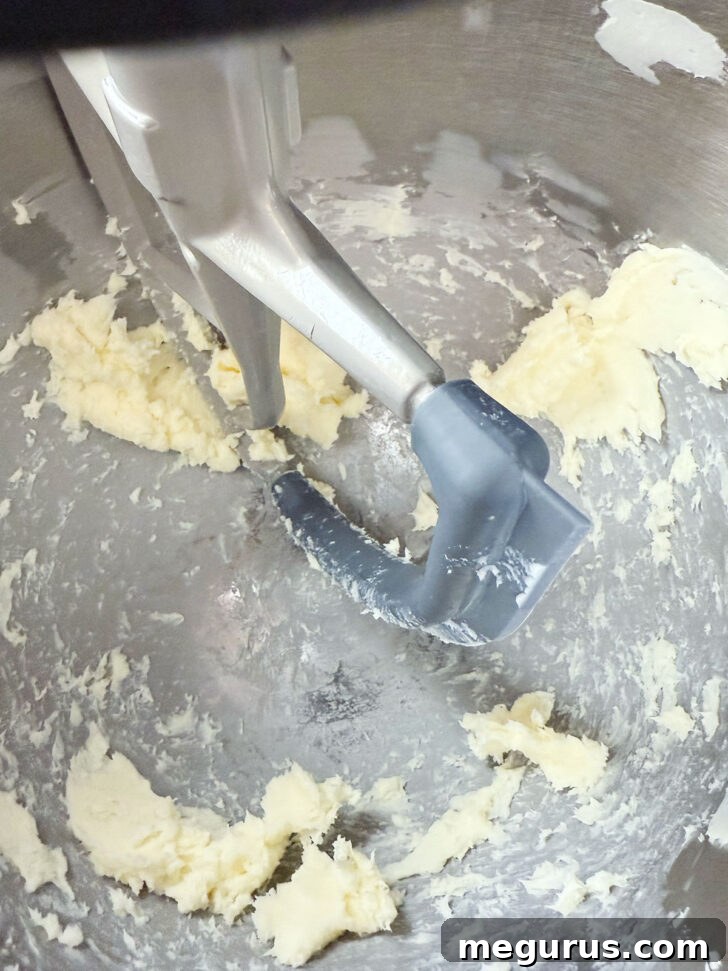
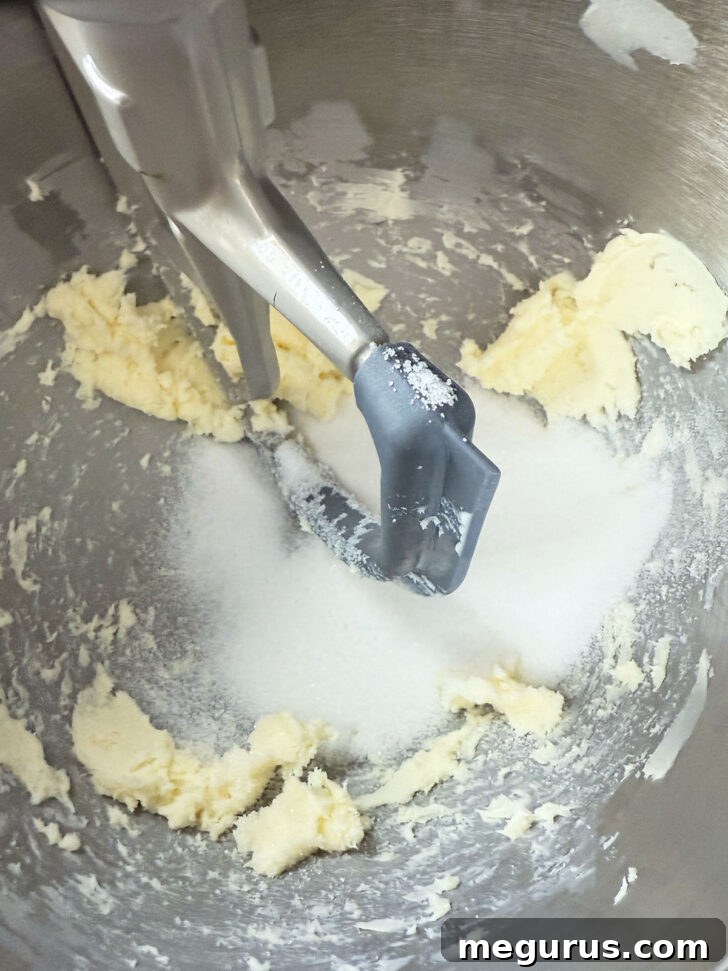
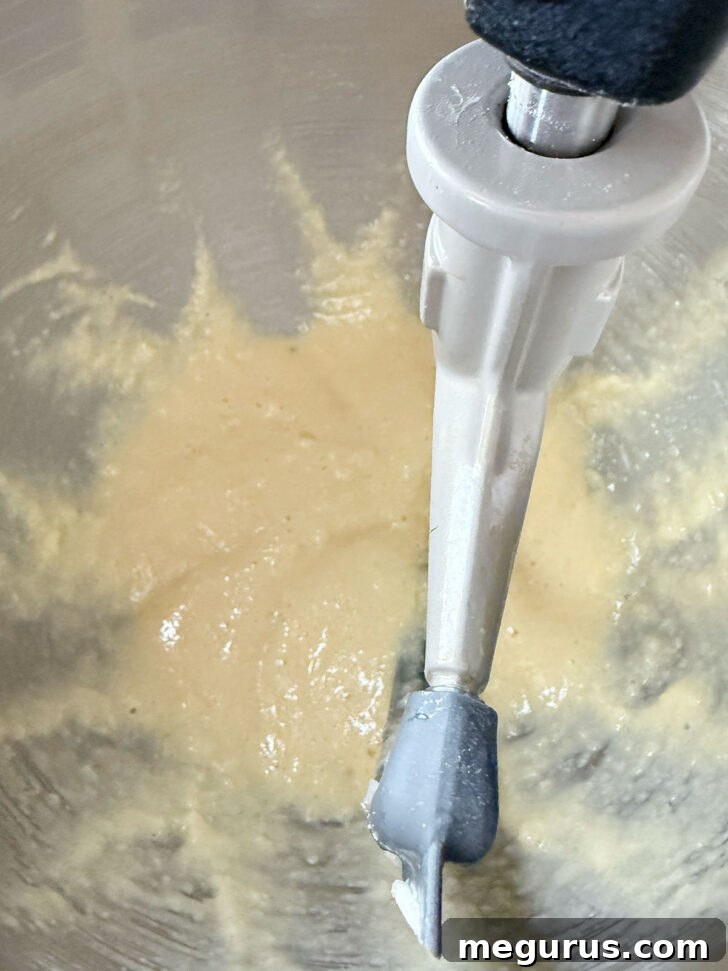
- Cream Butter and Sugar: Add the cold butter pieces to the bowl of a stand mixer fitted with a paddle attachment, or use a large bowl with an electric hand mixer. Beat the butter alone for about 1 minute until it softens. Next, add the white granulated sugar and vanilla extract, beating on medium speed for 1-2 minutes until light and fluffy. Scrape down the sides of the bowl with a rubber spatula, then add the eggs and beat briefly on high speed until the mixture is smooth and well incorporated.
- Alternate Wet and Dry: With the mixer on low speed, begin adding the dry flour mixture and sour cream in alternating stages. Start by adding about one-third of the flour mixture, beating just until combined. Follow with half of the sour cream, then half of the remaining flour, then the rest of the sour cream, and finally the last portion of the flour mixture. Beat only until the batter is smooth after each addition, being careful not to overmix.
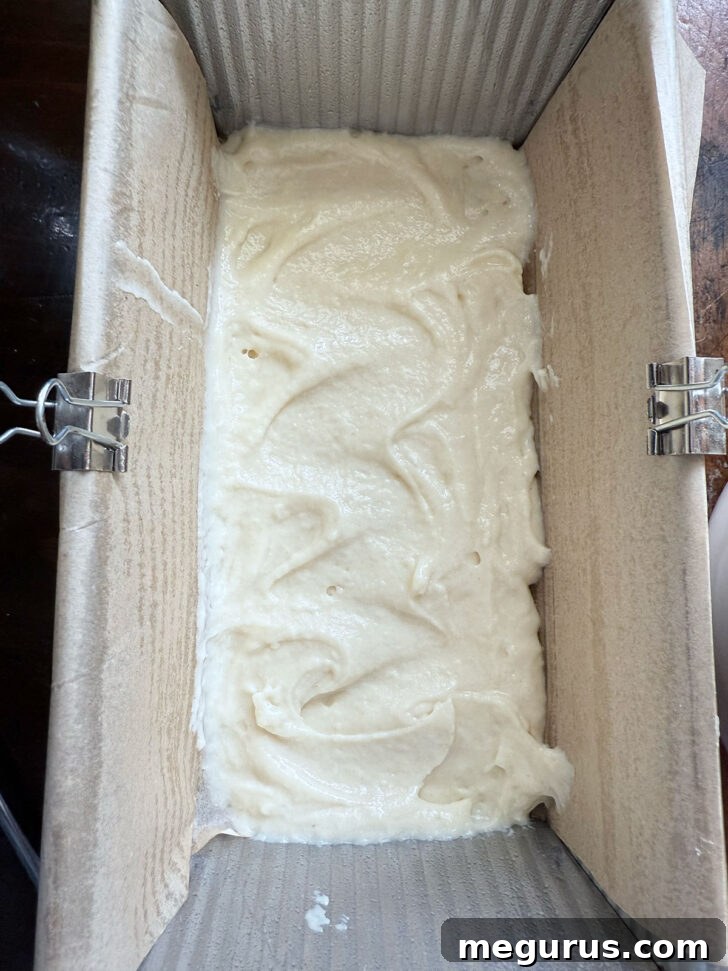
- Layer the Loaf: This is where the magic happens! You’ll create four layers of batter and three layers of filling. To help, you can mentally divide your batter into four equal portions. Spoon about one-quarter of the batter into the bottom of the prepared loaf pan and use the back of a spoon or an offset spatula to spread it into an even layer.
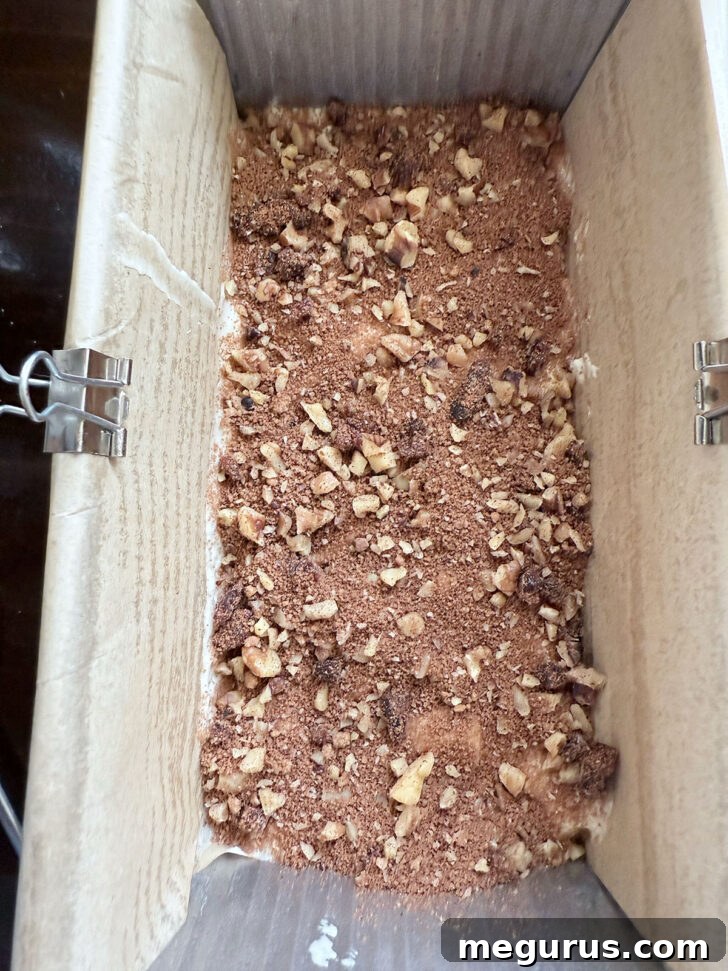
- First Filling Layer: Evenly sprinkle one-third of your prepared filling mixture over the batter layer.
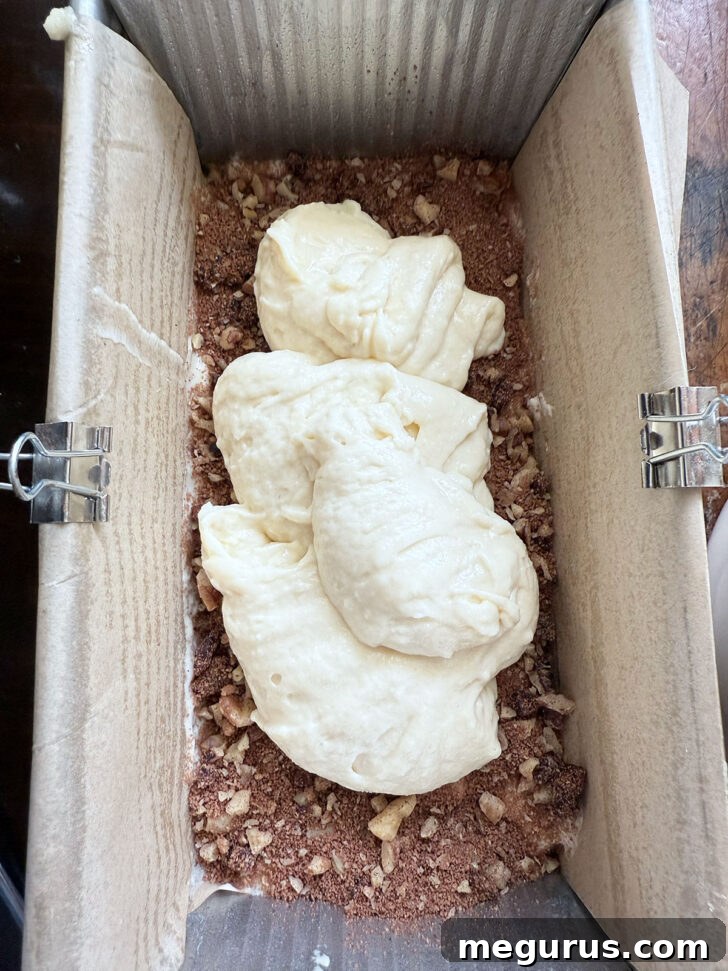
- Second Batter Layer: Carefully spoon another quarter of the batter in small dollops over the filling. Then, gently spread this batter layer from the center outwards, much like icing a cake. This technique helps prevent picking up bits of the filling and keeps your layers distinct. Don’t worry if a little filling mixes into the batter; it will still taste amazing!
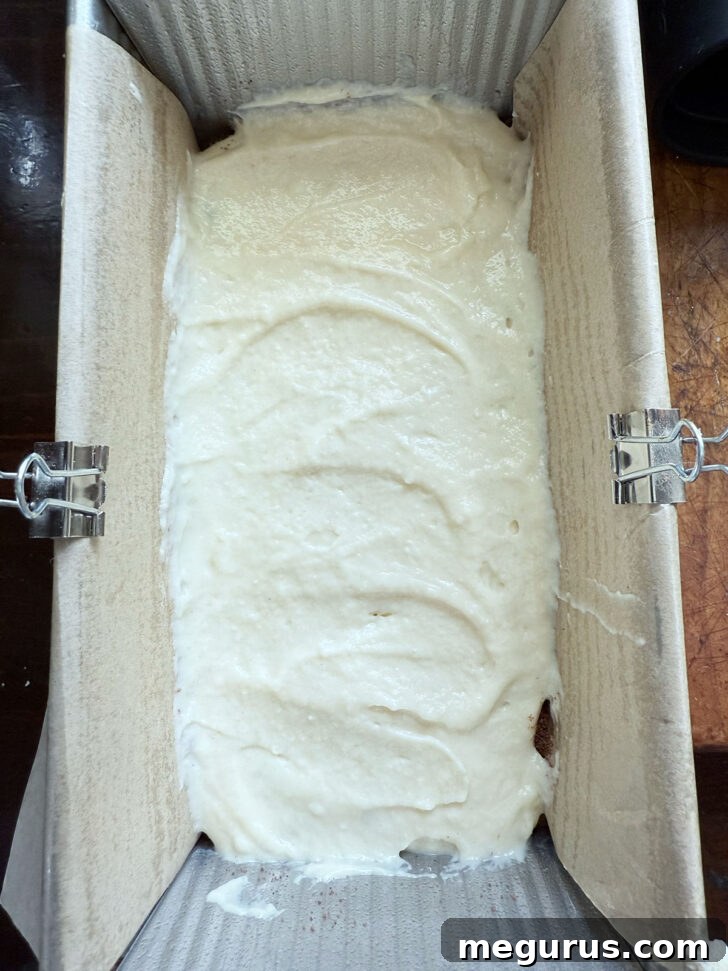
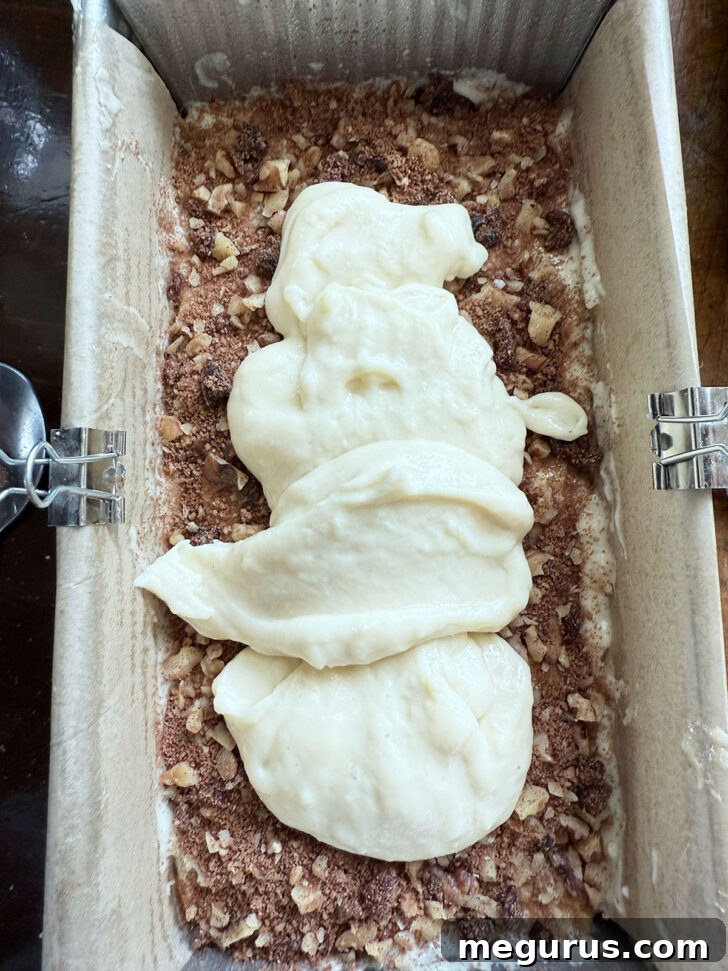
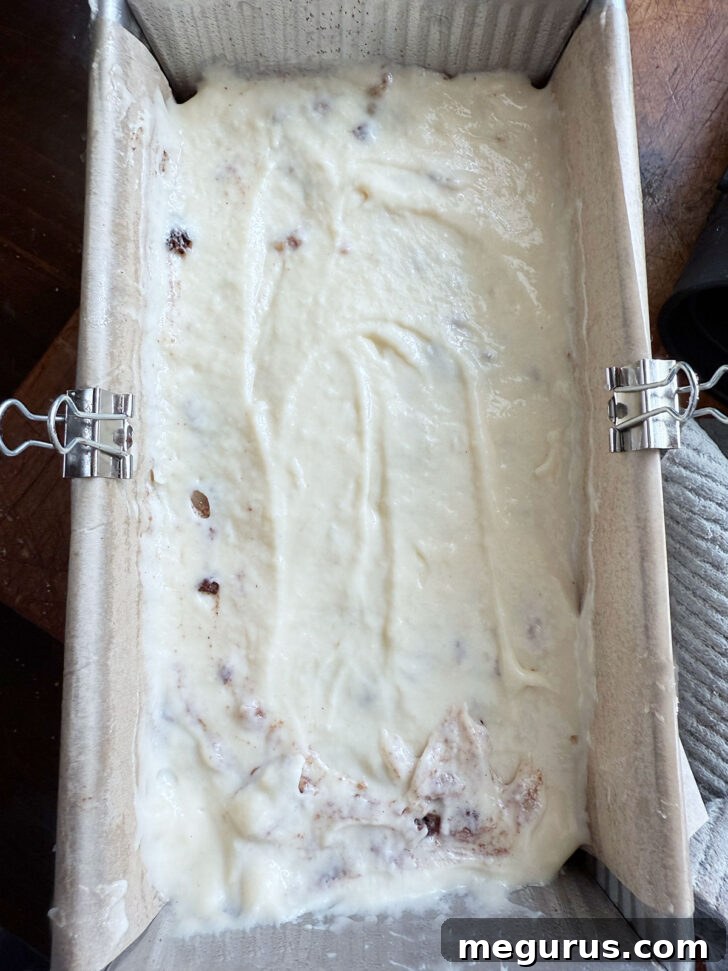
- Repeat Layering: Continue this layering process: batter, then filling, then batter, then filling, until you have used all the filling and finished with the final quarter of batter on top. Gently smooth the top layer of batter so it is level in the pan.
- Bake to Perfection: Carefully place the loaf pan into your preheated oven. Bake for approximately 45-50 minutes for an 8 1/2 x 4 1/2-inch metal loaf pan, or about 40 minutes for a 4×10-inch loaf pan. Baking times can vary depending on your oven and the material of your pan, so keep an eye on it!
- Check for Doneness: The loaf is ready when a wooden skewer or cake tester inserted into the center comes out clean (it might have a few moist crumbs of filling attached, which is fine, but no wet batter).
- Cool and Serve: Once baked, remove the loaf from the oven and let it cool in the pan for about 10 minutes. Then, using the parchment paper handles, carefully lift the loaf out of the pan and transfer it to a wire cooling rack to cool completely. Slicing too early can result in a crumbly texture.
Expert Baking Tips for a Flawless Loaf
Achieving baking perfection often comes down to a few key insights. Here are some invaluable tips to ensure your Hungarian Coffee Cake Loaf turns out beautifully every time:
- Choose Your Loaf Pan Wisely: This recipe works well in either an 8 1/2 x 4 1/2-inch loaf pan or a 4 x 10-inch tea cake loaf pan. Many bakers, myself included, have a preference for the shorter, longer 4×10-inch pan, as it often yields a more elegant slice and can bake slightly more evenly.
- The Cold Butter Hack: A brilliant technique often employed by baking maestros like Maida Heatter, starting with cold butter bypasses the need for advanced planning and prevents the risk of using overly softened butter. Instead of letting butter sit out, simply beat cold, cubed butter on its own until it softens and becomes creamy. This step incorporates air and prepares the butter perfectly for sugar. Remember, it’s crucial to beat the butter *first* before adding sugar; cold, hard butter won’t cream efficiently with sugar.
- Glass vs. Metal Pans: Glass bakeware heats up and retains heat more than metal. If you’re using a glass loaf pan, be sure to reduce your oven temperature by 25 degrees Fahrenheit (e.g., from 375°F to 350°F) to prevent the edges from over-browning before the center is cooked through.
- Mastering the Layers: When spreading the batter over the filling, think of it like frosting a cake. Start spreading from the thickest part of the batter in the center and gently push it towards the outside edges. Try to avoid going back and forth with your spoon or spatula, as this can pick up bits of the filling and make your layers less distinct. However, don’t fret if some filling gets mixed into the batter – it will still taste fantastic! The goal is visual appeal, but flavor is paramount.
- Don’t Overmix: After adding the flour, mix the batter just until the ingredients are combined. Overmixing develops the gluten in the flour, which can lead to a tough, dry loaf. A few streaks of flour are better than an overmixed batter.
- Oven Calibration: Every oven is different. It’s a good idea to know your oven’s quirks. If your oven tends to run hot or cold, adjust the temperature accordingly. Always use the visual cues and the cake tester method to determine doneness, rather than relying solely on time.
Making Ahead, Storing, and Freezing
One of the many charms of this Hungarian Coffee Cake Loaf is its excellent keeping qualities, making it a fantastic candidate for making ahead or enjoying over an extended period.
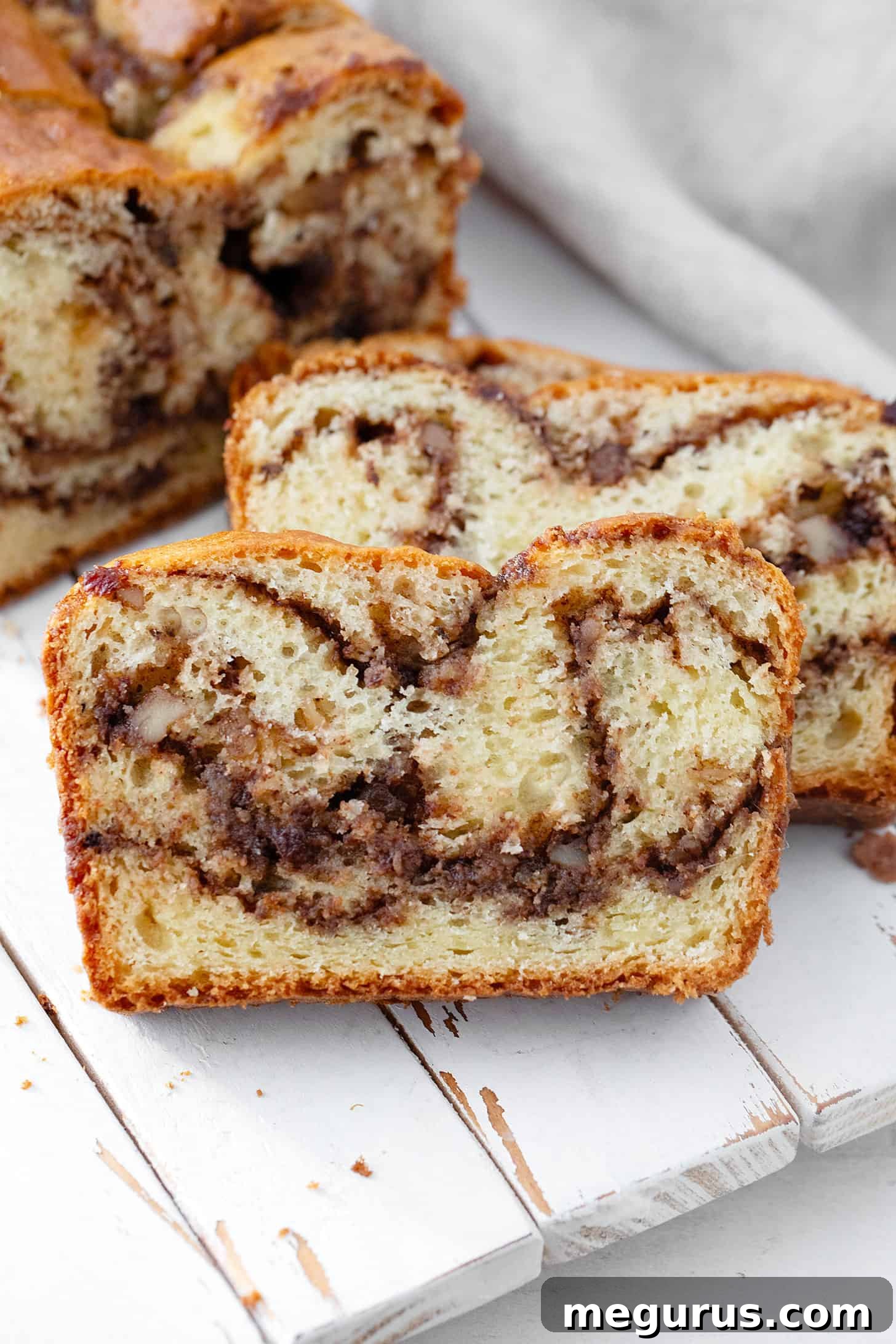
- Storage at Room Temperature: Once the loaf has completely cooled, store it in an airtight container at room temperature. It will maintain its delicious freshness and tender texture for 3 to 4 days, making it ideal for daily enjoyment.
- Freezing for Longer Enjoyment: This coffee cake loaf freezes exceptionally well. To freeze, ensure the loaf is completely cool. Wrap it tightly in plastic wrap, then an additional layer of aluminum foil to prevent freezer burn. It can be frozen for up to 3 months. When you’re ready to enjoy, simply thaw it at room temperature for a few hours or overnight. You can also warm individual slices slightly in the microwave for a “freshly baked” experience.
Get the Recipe: Hungarian Coffee Cake Loaf
Leave a Review
20 mins
40 mins
1 hr
12 servings
Ingredients
Nut Filling:
- 6 Tablespoons dark brown sugar
- 1 1/2 teaspoons ground cinnamon
- 1 1/2 teaspoons cocoa powder, Dutch-processed recommended
- 1 1/2 Tablespoons raisins, finely chopped
- 1/2 cup walnuts, finely chopped
Cake:
- 1 1/2 cups all-purpose flour, spooned and leveled
- 3/4 teaspoon baking powder
- 3/4 teaspoon baking soda
- 1/4 teaspoon fine salt, reduce to a pinch if using salted butter
- 6 Tablespoons unsalted butter, cold, cut into 6 pieces
- 1 teaspoon vanilla extract
- 3/4 cups white granulated sugar
- 1 1/2 large eggs, *see Note 1 below
- 1 cup full-fat sour cream (14% b.f.), or full-fat plain yogurt *see Note 2 below
Instructions
-
Prepare an 8 1/2 x 4 1/2-inch loaf pan or 4 x 10-inch loaf pan by spraying with cooking spray and lining the bottom and sides with parchment paper. Allow the parchment paper to extend beyond the pan on the sides by at least 1 inch, to use as handles to remove the loaf after baking. Set aside.
-
Preheat the oven to 375F (non-convection/not fan-assisted). *If using a glass loaf pan, reduce the oven temperature to 350F.
-
Prepare the filling by combining the brown sugar, cinnamon and cocoa powder in a small bowl. Stir to combine. Add the chopped raisins and walnuts to the bowl and stir together. Set aside.
-
In a medium bowl, combine the flour, baking powder, baking soda and salt. Whisk together well and set aside.
-
Add the cold butter pieces to the bowl of a stand mixer fitted with the paddle attachment or to a large bowl with an electric mixer. Beat the butter until softened, about 1 minute. Add the white sugar and vanilla and beat together on medium speed for a minute or two. Add the eggs and beat in, scraping down the bowl with a rubber spatula and beating at high speed briefly until the mixture is quite smooth.
-
With the mixer on low, add about 1/3 of the flour mixture, followed by half of the sour cream, half the remaining flour, the remaining sour cream and finally the remaining flour mixture, beating only until smooth after each addition.
-
Tip! You will layer the batter into the loaf pan, forming 4 layers of batter and 3 layers of filling in between. I find it helpful to roughly divide the batter into quarters in the bowl as a guide for how much to use for each layer. For the filling, use 1/3 to start, then divide the remaining filling between the next two layers.
-
Spoon about 1/4 of the batter into the bottom of the prepared loaf pan and use the back of a spoon to spread the batter into an even layer. Sprinkle 1/3 of the filling evenly over the top of the batter. Add another 1/4 of the batter in small spoonfuls scattered over the top of the filling and use the back of a spoon to spread from the batter evenly over the top of the filling. Spread in one direction only from the thickest part of the batter out to avoid picking up bits of the filling in the batter. This process is similar to icing a cake to avoid picking up crumbs. Repeat layering until you have 4 layers of batter and 3 layers of filling, ending with the last quarter of batter and smoothing it level in the pan.
-
Tip! *Baking times will vary from oven to oven and depending on the colour of your loaf pan. Check regularly during the end part of baking and test with a cake tester when it looks close to done. The tester should come out clean of batter (but may have a bit of the filling attached).
-
Place the loaf into the preheated oven and bake for 45-50 minutes for an 8 1/2 x 4 1/2-inch metal loaf pan or about 40 minutes for a 4×10-inch loaf pan.
-
Remove from the oven and allow the loaf to cool in the pan for 10 minutes, then remove the loaf from the pan and place on a cooling rack to cool completely before slicing.
-
Store the cooled loaf in an airtight container at room temperature for 3-4 days. The loaf will also freeze well for up to 3 months.
Notes
Note 2: Full-fat sour cream is highly recommended for the best flavour and texture. In a pinch, you could use plain regular or Greek yogurt, but higher fat yogurt will give the best results.
Tips!
When spreading the batter into the loaf pan in layers, spread the batter like you would ice a cake by spreading from the thickest part of the batter in the centre towards the outside and not making a return trip with the spoon, as that is when you will pick up bits of the filling. That said, don’t worry if you get a bit of filling in the batter. It will all be good in the end!
Be sure to read the notes above this Recipe Card, for more tips on making this recipe. You’ll also find substitution suggestions and step-by-step photos that you might find helpful.
Calories: 253kcal,
Carbohydrates: 34g,
Protein: 4g,
Fat: 12g,
Saturated Fat: 5g,
Polyunsaturated Fat: 3g,
Monounsaturated Fat: 3g,
Trans Fat: 0.2g,
Cholesterol: 45mg,
Sodium: 145mg,
Potassium: 142mg,
Fiber: 1g,
Sugar: 19g,
Vitamin A: 273IU,
Vitamin C: 0.3mg,
Calcium: 59mg,
Iron: 1mg
Adapted from Maida Heatter’s Budapest Coffee Cake