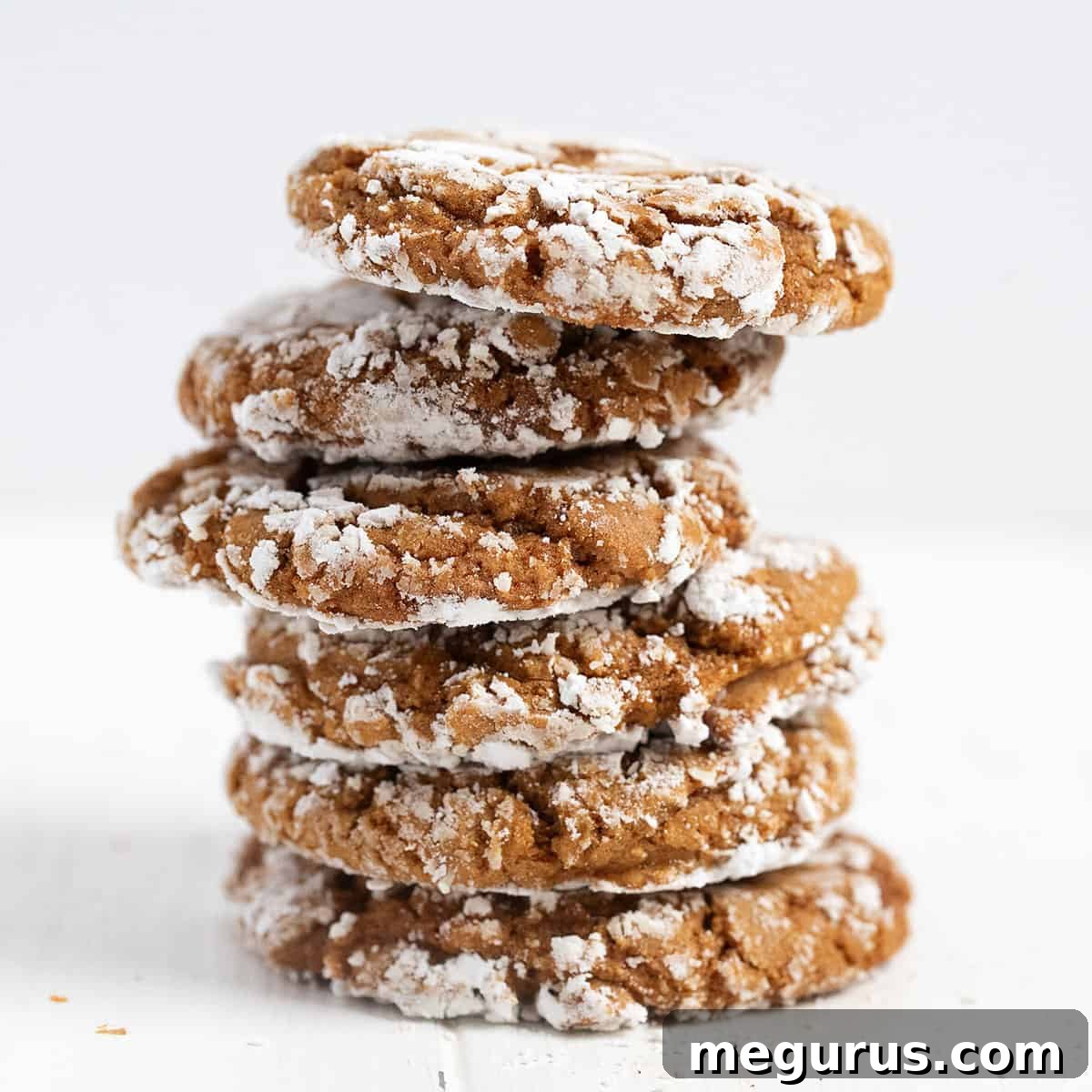
There’s nothing quite like the comforting aroma of freshly baked cookies filling your home, especially during the festive holiday season. Among the myriad of classic holiday treats, Ginger Crinkle Cookies stand out as an absolute favorite. These delightful cookies are celebrated for their wonderfully soft and chewy texture, vibrant gingerbread spices, and signature crackled coating of powdered sugar. They’re not just a feast for the taste buds; their beautiful appearance makes them a showstopper on any dessert platter or a cherished gift for a Christmas cookie swap.
If you’ve been searching for an easy Christmas cookie recipe that delivers on both flavor and festive charm, look no further. This recipe for soft and chewy ginger crinkle cookies is incredibly straightforward, perfect for bakers of all skill levels. What makes them even more appealing is the generous yield – one batch creates 30 to 36 cookies, making them ideal for sharing, holiday gatherings, or stocking up your cookie jar.
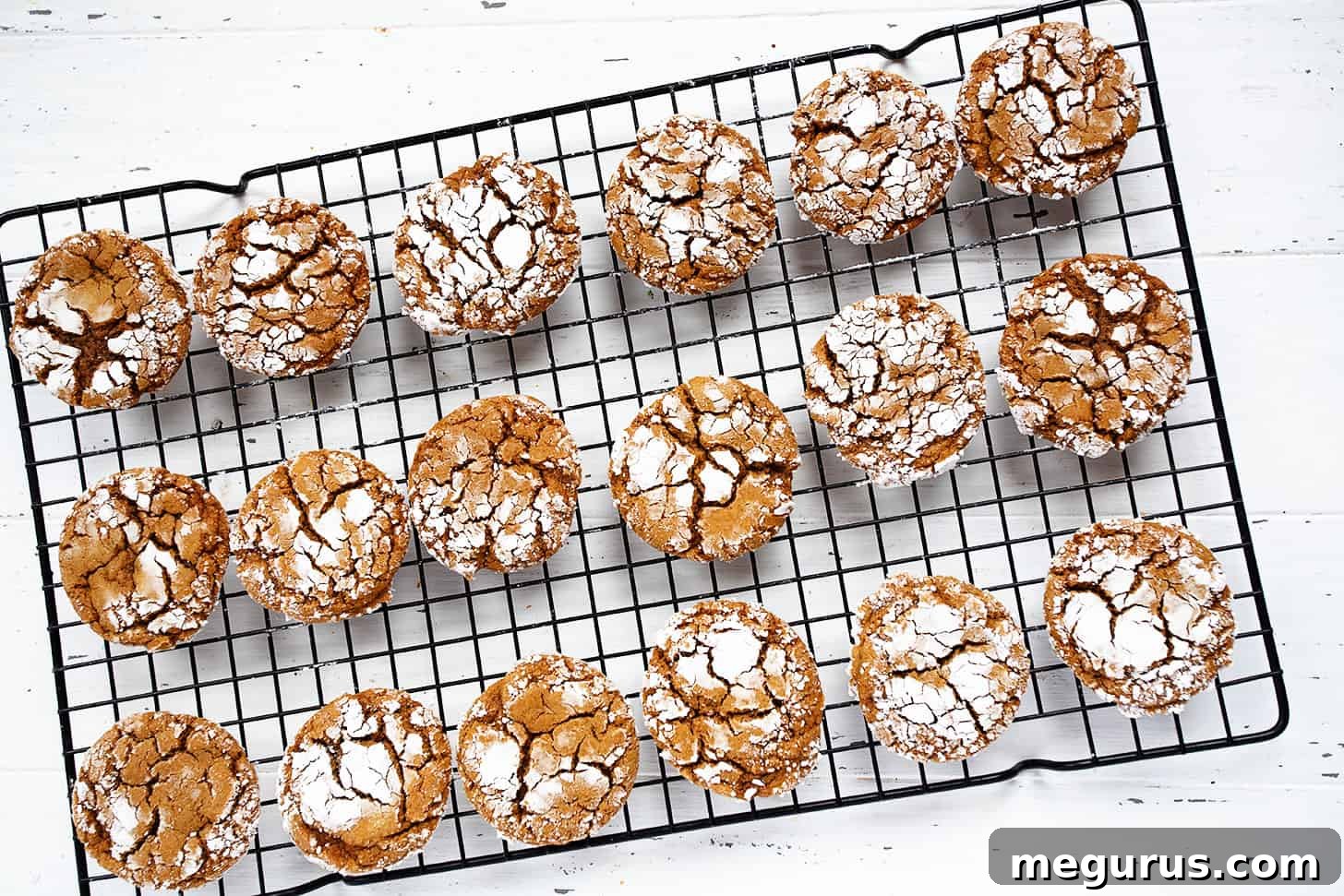
One of the best aspects of this gingerbread cookie recipe is its forgiving nature. Unlike many cookie doughs that demand chilling before baking, this particular dough requires no refrigeration, either before starting or between batches. This convenience makes it a fantastic project for baking with children or grandchildren, allowing for more fun and less waiting. The result is always a batch of perfectly spiced, beautifully crackled, and irresistibly chewy holiday cookies that capture the true spirit of the season.
The Essential Ingredients for Perfect Ginger Crinkle Cookies
Crafting exceptional homemade ginger cookies begins with understanding the role each ingredient plays. While the list might seem simple, a few key considerations and substitutions can make all the difference in achieving that ideal soft, chewy, and spiced profile.
Key Ingredient Notes and Smart Substitutions
- Butter: This recipe specifically calls for unsalted butter. Unsalted butter allows you to control the exact amount of salt in your cookies, which is crucial for balancing flavors. If you only have salted butter on hand, it’s perfectly acceptable to use, but remember to reduce the amount of added salt in the recipe to avoid an overly salty taste. Butter should always be at room temperature for optimal creaming with sugar, contributing to the cookies’ tender texture.
- Molasses: The type of molasses you choose significantly impacts the flavor of these spiced cookies. It is vital to use “Fancy” molasses, sometimes labeled “light molasses.” This variety offers a milder, sweeter flavor that beautifully complements the ginger and other spices. Avoid “cooking molasses” or “Blackstrap molasses,” as these have a much stronger, more bitter, and robust flavor profile that can overpower the delicate balance of these cookies, resulting in a less pleasant taste. Molasses is also key to the characteristic chewiness and rich, dark color of gingerbread-style treats.
- Brown Sugar: Light brown sugar is specified for a reason – it adds moisture and a subtle caramel note that enhances the overall flavor. If you find yourself with only dark brown sugar, feel free to use it. Dark brown sugar contains more molasses than its light counterpart, which will introduce a slightly deeper molasses flavor and yield a marginally darker cookie. Rest assured, the cookies will still be delicious and retain their wonderful texture.
- Spices (Ginger, Cinnamon, Nutmeg, Cloves): This blend is the heart of the gingerbread flavor. Using fresh, high-quality ground spices will make a noticeable difference. You can adjust the quantities slightly to suit your preference, perhaps adding a touch more ginger for a bolder kick or reducing the cloves if you prefer a milder spice profile.
- All-Purpose Flour: Proper flour measurement is paramount for cookie texture. See the detailed baking tips below for the “Stir, Spoon, and Level” method to ensure accuracy.
- Baking Soda: This leavening agent reacts with the acidic molasses to help the cookies rise and create that desirable soft chew.
- Fine Sea Salt: A small amount of salt enhances all the other flavors, preventing the cookies from tasting flat.
Expert Tips for Baking Your Best Ginger Crinkle Cookies
Achieving the perfect crackle cookie recipe involves a few simple techniques that can elevate your baking from good to extraordinary. These tips ensure your ginger crinkle cookies are soft, chewy, and boast that iconic, irresistible cracked surface.
Recipe Success Secrets
- Room Temperature Ingredients are Non-Negotiable: Always take your butter and egg out of the refrigerator at least 30 minutes (ideally 1 hour) before you plan to start baking. Room temperature butter creams smoothly with sugar, incorporating air that creates a light and tender crumb. A cold egg can cause the butter mixture to curdle, affecting the final texture. Patience here truly pays off.
- Invest in a Cookie Scoop: A small cookie scoop (I recommend a 1-tablespoon size) is an invaluable tool for making uniformly sized cookies. Consistency in size means your cookies will bake evenly, preventing some from being underdone while others are overbaked. If you don’t have one, use a 1 Tbsp measuring spoon and a small kitchen teaspoon to help scoop out the dough. After scooping, gently and quickly roll the dough between your palms to form a rough ball. Don’t worry about perfection, as you’ll be flattening them slightly later; the main goal is an even shape for easy rolling in sugar.
- Coat Generously in Icing Sugar: The magic of the “crinkle” comes from a thick, even coating of icing (confectioners’) sugar. Ensure each dough ball is thoroughly coated, almost like a snowball. This sugary exterior cracks beautifully as the cookie expands during baking, creating that signature festive look.
- The Gentle Press: Before baking, give each dough ball a gentle press with the palm of your hand to flatten it slightly into a puck shape. You want to slightly flatten the rounded top, not flatten them significantly to make them wider. This helps the cookies spread evenly and encourages the crinkles to form nicely across the surface, rather than just around the edges.
- No Chill, No Fuss Dough: One of the standout features of this easy ginger cookie recipe is that the dough does not require refrigeration before baking or even between batches. This makes the baking process much faster and more enjoyable. I’ve personally tested this, baking multiple trays, and the first batch was just as perfect as the last.
- Monitor Baking Time Closely: Every oven is different, and baking sheet thickness can also impact baking time. While my cookies took around 15 minutes in my oven (using a heavy baking sheet), yours might cook faster or slower. Watch your first batch carefully. Cookies are done when they’ve puffed up and the edges are set, but the centers still look slightly soft.
- The “Deflate and Crack” Trick: Immediately after removing the baking sheet from the oven, gently take one end and raise it a couple of inches, then drop it down onto the cooling rack. This simple action helps to deflate the cookies slightly and encourages the beautiful cracks to expand, enhancing their visual appeal. Let the cookies cool on the baking sheet for about 5 minutes before transferring them to a wire rack to cool completely. This prevents them from breaking and allows them to set fully.
- Yield: Following these tips and using a 1-tablespoon scoop, you should yield approximately 36 delicious ginger crinkle cookies, typically baked in 3 batches of 12 cookies each.
General Cookie Baking Mastery: Tips for Every Baker
Beyond the specific recipe, mastering a few universal cookie baking techniques can transform your results across all your favorite cookie recipes. These insights will help you achieve consistently perfect cookies every time.
- Measure Your Flour Precisely: The Stir, Spoon, and Level Method. This is perhaps the most critical step for proper cookie texture. First, stir the flour in its container to aerate it and break up any compaction. Then, gently spoon the flour into your dry measuring cup until it’s overfilled. Finally, use the flat edge of a knife or a straight-edged utensil to scrape off the excess, leveling it flush with the top of the measuring cup, allowing any excess to fall back into the container. Scooping flour directly from the bag can result in up to 25% more flour than needed, leading to dry, dense, and crumbly cookies.
- Choose Quality Butter. For cookie baking, especially in recipes where butter is a primary fat, using good quality, regular (not cultured) unsalted butter is recommended. While it might be tempting to opt for cheaper butter, particularly when baking large quantities, inexpensive butter often has a higher water content. This increased water can negatively affect the final texture of your cookies, leading to less tender results and potentially more spreading. Most cookie recipes are developed and tested with standard unsalted butter, so sticking to that ensures consistency with the recipe developer’s intent.
- Room Temperature Butter is Essential, Not Optional. When a recipe calls for “softened” or “room temperature” butter, it’s a critical instruction for success. Butter that is too cold won’t cream properly with sugar, resulting in a dense cookie. Butter that is too warm or even slightly melted will lead to cookies that spread excessively and have a greasy texture. Take your butter out of the refrigerator 30 to 60 minutes before you start baking. Resist the urge to microwave or rapidly soften butter; even a slight melting can drastically alter the final texture of your cookies. Patience is truly a virtue here.
- Respect Dough Chilling Times (When Required). If a recipe specifies chilling the dough, do not skip or shorten this step. Chilling serves several important purposes: it solidifies the butter in the dough, which helps prevent cookies from spreading too much in the oven; it allows the flour to fully hydrate, leading to a more tender and flavorful cookie; and it deepens the flavors, especially in spice-heavy doughs. For this particular ginger crinkle cookie recipe, chilling isn’t needed, but it’s a crucial general rule for many other cookie types.
- Understand Your Oven. Baking times provided in recipes are guidelines. Actual baking time will vary significantly based on your oven’s calibration, its specific hot spots, and even the thickness and material of your baking sheets. It’s always best to watch your first batch closely. Pay attention to visual cues – golden edges, set centers – rather than relying solely on the clock. You might need to adjust the baking time up or down for subsequent batches or rotate your baking sheets halfway through baking for even results. An inexpensive oven thermometer can be a great investment to check if your oven’s internal temperature matches its setting.
Making Ahead, Storing, and Freezing Ginger Crinkle Cookies
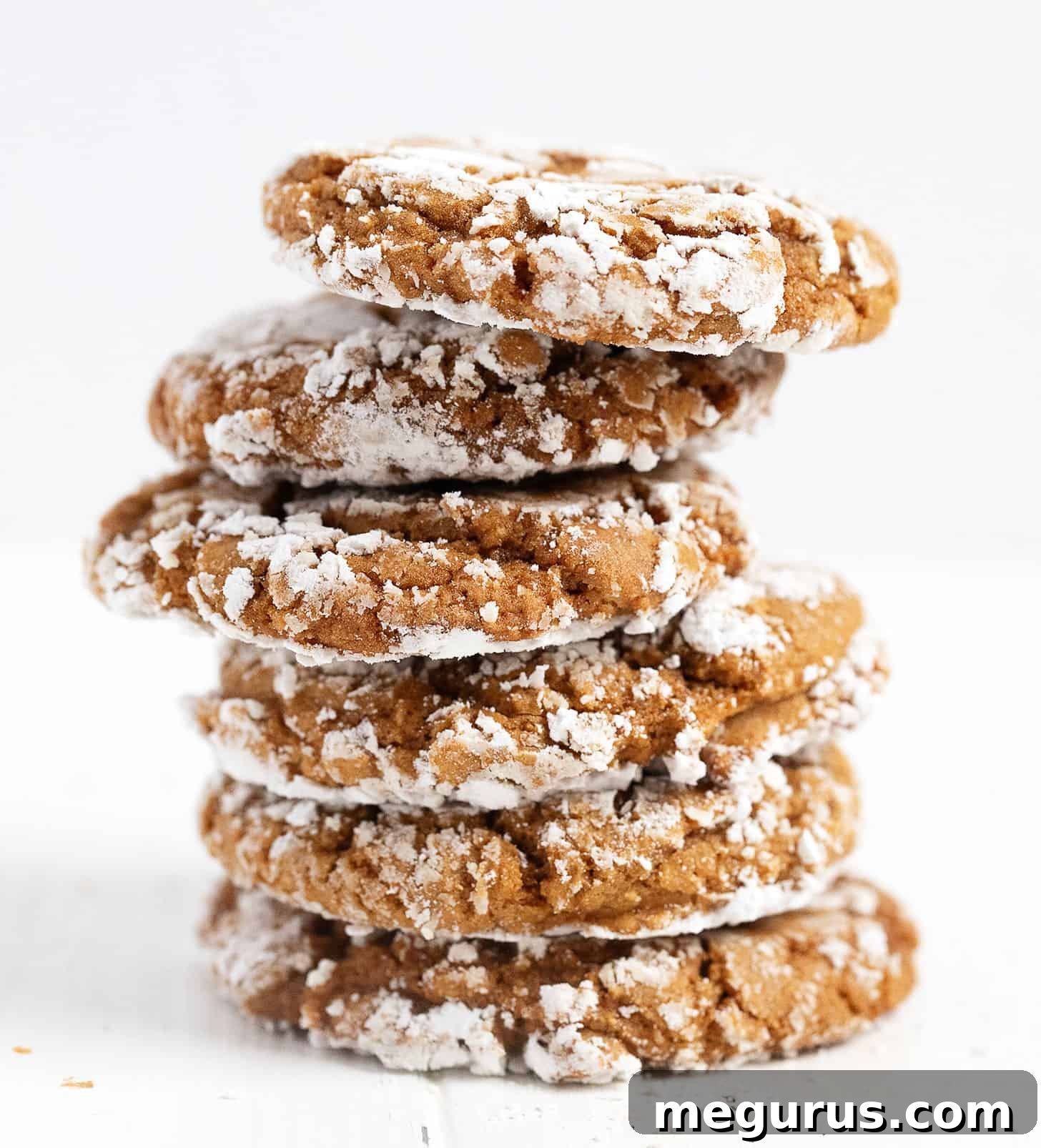
These delicious ginger cookies are not only easy to make but also incredibly convenient when it comes to storage, allowing you to enjoy them long after they’re baked. Their robust flavor even seems to deepen over time, making them a fantastic make-ahead option for holiday entertaining or simply to have on hand for a sweet treat.
Storage Guidelines:
- Room Temperature: Once completely cooled, store your ginger crinkle cookies in an airtight container or a classic cookie tin at room temperature. They will retain their wonderful softness and chewy texture for up to a week, or even slightly longer, if properly sealed. Ensure they are fully cooled before storing to prevent condensation, which can make them soggy.
- Freezing Baked Cookies: For extended freshness, these cookies freeze beautifully. Once completely cooled, place them in a single layer on a baking sheet and freeze until solid (about 1-2 hours). This prevents them from sticking together. Then, transfer the frozen cookies to a freezer-safe airtight container or heavy-duty freezer bag, layering them with parchment paper if stacking. They can be frozen for up to 2 months. Thaw them at room temperature for a few hours before serving.
- Freezing Cookie Dough: While this recipe doesn’t strictly require chilling, you can also freeze the dough if you wish to bake fresh cookies later. Scoop the dough into balls, roll them in the granulated sugar (but NOT the icing sugar yet), and arrange them on a parchment-lined baking sheet. Freeze until solid, then transfer the dough balls to a freezer-safe bag. When ready to bake, thaw the dough balls in the refrigerator overnight, then roll them in icing sugar and bake as directed. Alternatively, you can bake them from frozen, adding a few extra minutes to the baking time, though the crackle might not be as pronounced.
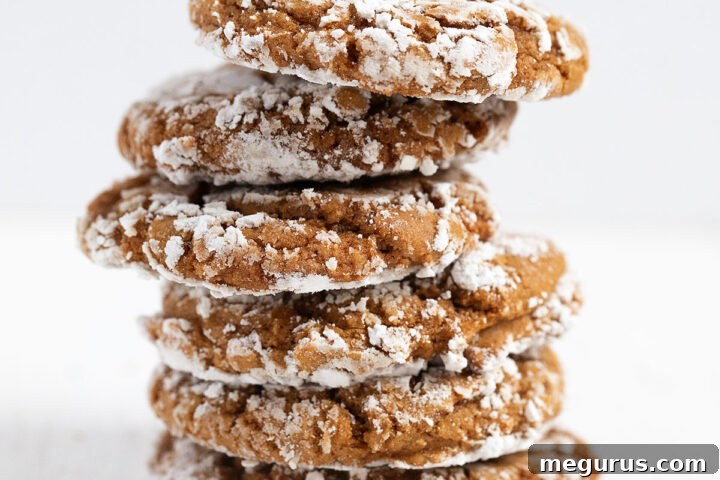
Get the Recipe: Ginger Crinkle Cookies
Pin This
Leave a Review
Ingredients
- 2 1/2 cups all-purpose flour, spooned and levelled
- 1 1/4 teaspoons ground ginger
- 1 1/4 teaspoons ground cinnamon
- 1/8 teaspoon nutmeg
- Pinch ground cloves
- 1/2 tsp baking soda
- 1/4 teaspoon fine sea salt, reduce to 1/8 tsp if using salted butter
- 1/2 cup unsalted butter, at room temperature
- 1 cup light brown sugar, packed
- 1 large egg, at room temperature
- 1/2 cup fancy molasses, not blackstrap
- 1/2 cup granulated sugar
- Icing/confectioners’ sugar, for rolling
Instructions
- Remove your butter and egg from the refrigerator 30 minutes before baking.
- Preheat oven to 325F (regular bake setting/not fan assisted) with the rack in the centre of the oven. Line a large baking sheet with parchment paper. Set aside.
- In a medium bowl, whisk together the flour, ginger, cinnamon, nutmeg, cloves, baking soda and salt. Set aside.
- In a large bowl with an electric mixer or the bowl of a stand mixer fitted with the paddle attachment, beat together the butter and brown sugar until light and smooth, about 1 minute. Beat in the egg and then the molasses.
- Add the flour mixture all at once to the butter mixture, blending together at low speed until thoroughly blended. Stir in the granulated white sugar just until blended.
- Use a small cookie scoop or a measuring Tablespoon, scoop out the batter and shape into balls by gently and quickly rolling between your palms. Roll the balls in the icing sugar, ensuring they are well coated, then place them on the prepared baking sheet at least 2 inches apart. Gently press down on the cookies with the palm of your hand to flatten into a puck shape.
- Bake until the cookies have puffed up and are set at the edges, anywhere from 12-15 minutes (will vary depending on size, baking sheet thickness and your oven). Remove from oven and place the baking sheet onto a cooling rack. Take one end of the baking sheet and raise it up a couple of inches, then drop it down onto the rack, to deflate the cookies and expand the cracks a bit. Let cookies cool on the baking sheet for about 5 minutes, then transfer to a cooling rack to cool completely.
Notes
Be sure to read the notes above this Recipe Card, where I share more detailed tips, variations and substitution suggestions for this recipe!
Explore More Ginger Cookie Recipes You’ll Adore!
If you’ve fallen in love with the warm, comforting spices of these ginger crinkle cookies, you’ll be delighted to discover other fantastic ginger-infused treats. From intricately designed festive cookies to wonderfully chewy snaps, there’s a ginger cookie for every occasion and craving. Expand your holiday baking repertoire with these delightful variations:
Whether you’re looking for an impressive centerpiece cookie or another family-favorite chewy delight, these additional ginger cookie recipes offer unique twists on a beloved classic. Happy baking, and enjoy the rich, spicy flavors that define the holiday season!