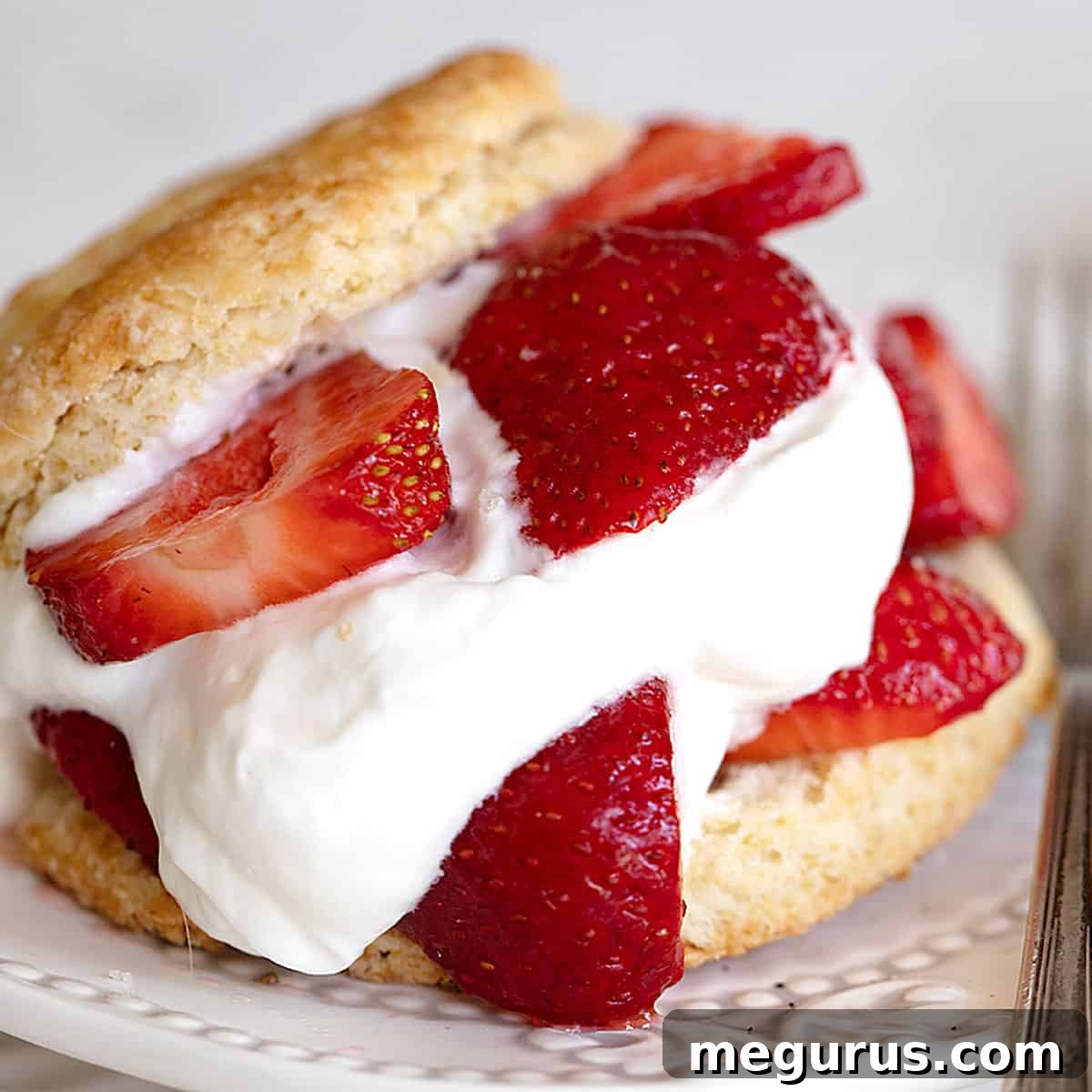
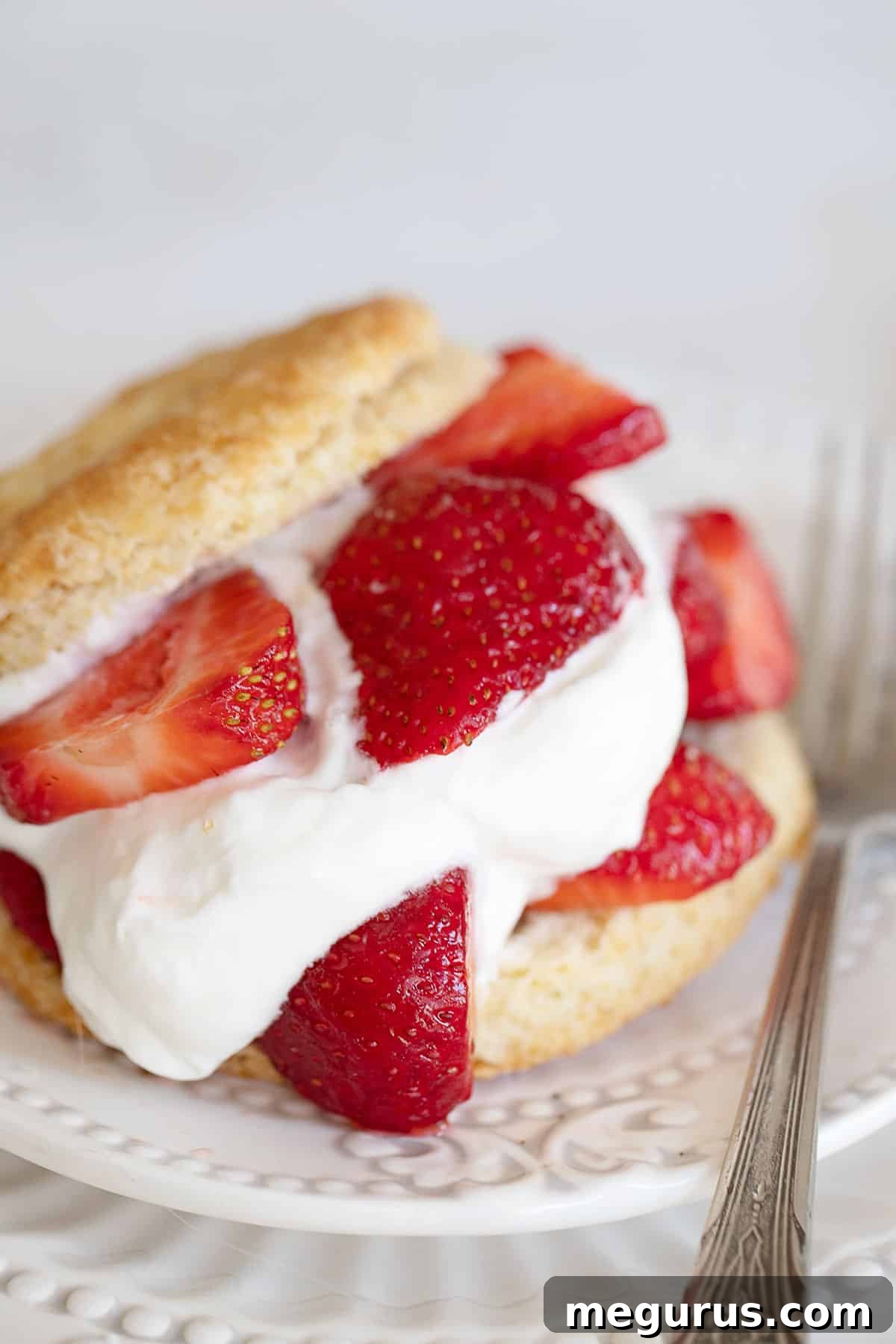
There are few desserts that evoke the warmth and nostalgia of home quite like a classic, old-fashioned strawberry shortcake. This iconic American treat, with its perfect harmony of textures and flavors, is a beloved staple for good reason. Imagine lightly sweet, tender biscuits with a delightful flaky crust, generously layered with sweet, juicy macerated strawberries, and crowned with billows of freshly whipped cream. It’s a simple pleasure, yet utterly satisfying, making it the quintessential spring and summer dessert.
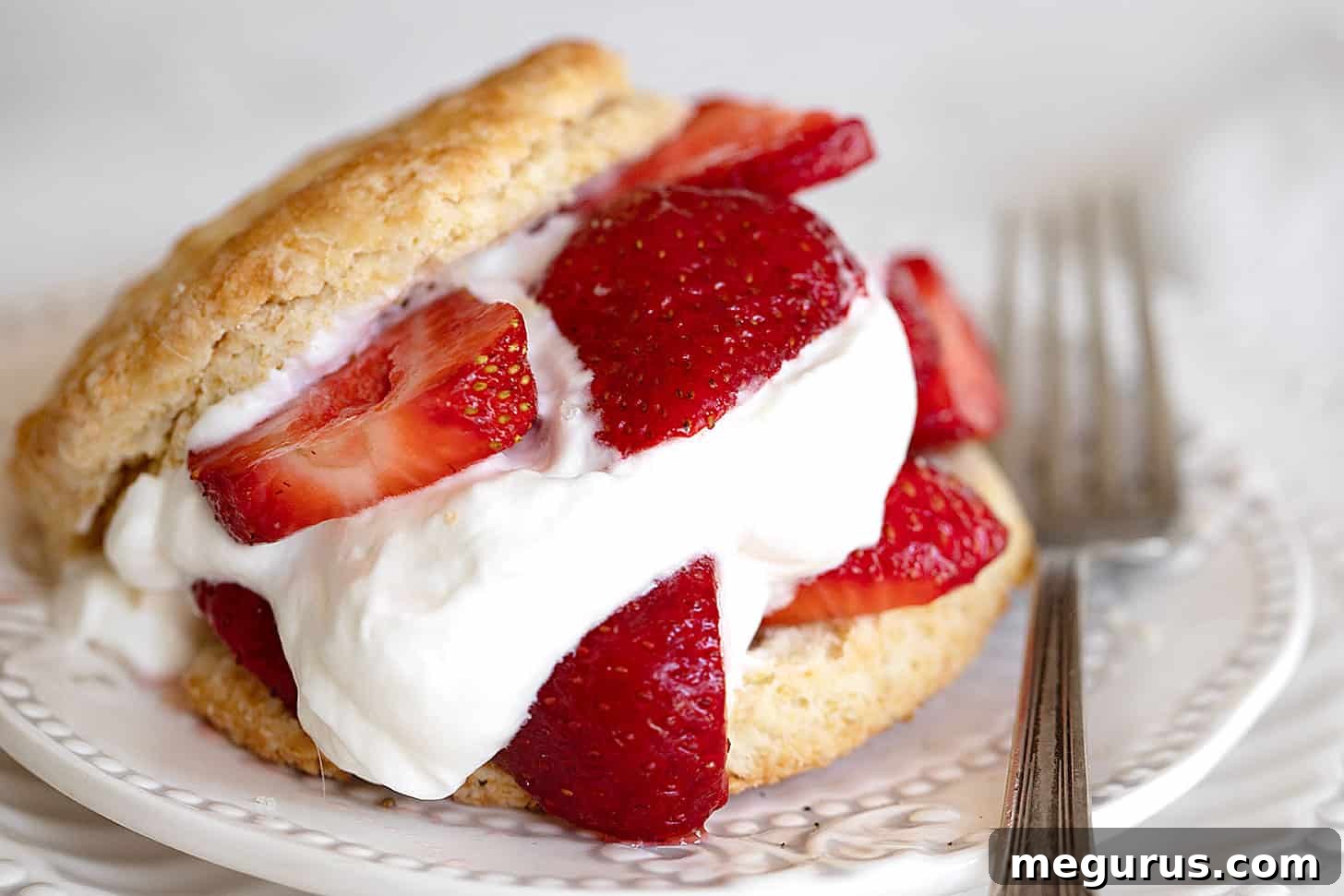
What sets this particular recipe apart is its dedication to the true old-fashioned shortcake experience. Unlike many modern versions that feature a cake-like base, this recipe champions thin, lightly sweet biscuits that are remarkably flaky and tender. This distinct biscuit texture serves as the perfect canvas, allowing the vibrant sweetness of ripe strawberries and the luxurious creaminess of whipped topping to truly shine. It’s a beautifully balanced dessert that celebrates the individual components while creating an unforgettable ensemble.
Crafting the perfect strawberry shortcake doesn’t require a culinary degree, but it does benefit from understanding the role of each ingredient and a few key techniques. This comprehensive guide will walk you through everything you need to know, from selecting the best ingredients to achieving those coveted flaky biscuits, ensuring your homemade strawberry shortcake is a resounding success that brings smiles to every table.
Key Ingredients and Thoughtful Substitutions
Understanding your ingredients is the first step to mastering any recipe. Here’s a closer look at the core components of our old-fashioned strawberry shortcake and how you can adapt them if needed:
- All-Purpose Flour: The foundation of our biscuits. While all-purpose flour works perfectly, for an even tenderer crumb, you could experiment with a lower protein flour like pastry flour. Just be mindful not to overwork the dough, regardless of flour type, to prevent tough biscuits.
- White Granulated Sugar: Provides just enough sweetness to the biscuits without overpowering the natural sugars in the strawberries. For a slightly different flavor profile, a touch of turbinado sugar sprinkled on top before baking can add a lovely crunch and subtle caramel note.
- Baking Powder: Our primary leavening agent, ensuring the biscuits rise beautifully and achieve that desirable light, airy texture. Ensure your baking powder is fresh for optimal results.
- Salt: Essential for balancing the flavors and enhancing the sweetness of both the biscuits and the overall dessert. If you’re using salted butter, reduce the amount of added salt as specified in the recipe card to avoid over-salting.
- Butter (Cold, Salted or Unsalted): Cold butter is crucial for flaky biscuits. As the butter melts in the oven, it releases steam, creating pockets of air that result in those wonderful layers. Using unsalted butter gives you more control over the salt content, but salted butter works just fine; simply adjust the added salt.
- Solid Vegetable Shortening (e.g., Crisco™): This is the secret to the incredibly tender and flaky texture of these old-fashioned biscuits. Shortening has a higher melting point than butter, which contributes to a more tender crumb and prevents the dough from spreading too much. If you don’t have shortening on hand, you can substitute with an equal amount of additional cold butter. However, be aware that this will result in a slightly less tender and flaky biscuit, leaning more towards a richer, buttery flavor.
- Sour Cream (Full-Fat Recommended): Sour cream adds a delightful tang and, more importantly, contributes moisture and tenderness to the biscuit dough. The acidity in sour cream also reacts with the baking powder, boosting the leavening. Full-fat sour cream is recommended for the best texture and flavor. While I haven’t tested this recipe with low-fat or non-fat sour cream, they may alter the final texture. A good substitute for sour cream would be plain full-fat Greek yogurt, which offers similar moisture and acidity. Buttermilk is another excellent choice; if using buttermilk, you might need to slightly reduce the amount of regular milk.
- Milk (Full-Fat Recommended): Used to bring the dough together, providing necessary moisture. Full-fat milk contributes to a richer biscuit. You might need slightly more or less than indicated, depending on the humidity and your flour. Add it gradually until the dough is just moistened.
- Strawberries (Fresh): The star of the show! Choose ripe, vibrant red strawberries for the best flavor. Washing them thoroughly and hulling them before slicing or halving is key. The maceration process (combining with sugar and lemon juice) is vital for developing their sweetness and creating that luscious, syrupy juice.
- Lemon Juice (Optional, for strawberries): A small amount of lemon juice brightens the strawberry flavor and helps draw out their natural juices during maceration. It’s optional, but highly recommended for a more vibrant, balanced taste.
- Heavy Whipping Cream (35% B.F.): For the luscious whipped cream topping. Always use cold cream; it whips up faster and holds its shape better.
- White Sugar (for whipped cream): Sweetens the cream. Powdered sugar (confectioners’ sugar) can also be used for a smoother texture and to help stabilize the cream, but granulated sugar works well here too.
- Vanilla Extract (Optional, for whipped cream): A touch of vanilla enhances the flavor of the whipped cream, adding a subtle warmth and aroma.
How to Master the Old-Fashioned Strawberry Shortcake
Creating these delightful strawberry shortcakes is a rewarding process. Below is a detailed summary of the steps. For precise measurements and complete instructions, always refer to the full recipe card at the end of this post. The visual guidance from the accompanying photos should also prove helpful.
- Prepare Your Strawberries: Begin by gently washing your fresh strawberries. Hull them and then halve or slice them, depending on your preference. In a medium bowl, combine the prepared strawberries with white sugar and an optional teaspoon of lemon juice. Stir everything together until the sugar begins to dissolve and coat the berries. Let this mixture stand at room temperature for at least an hour. This crucial step, known as maceration, allows the sugar to draw out the natural juices from the strawberries, creating a rich, flavorful syrup that is essential for shortcake.
- Preheat Oven and Prep Baking Sheet: While the strawberries macerate, preheat your oven to 400°F (non-convection). Line a baking sheet with parchment paper. This prevents sticking and ensures even baking.
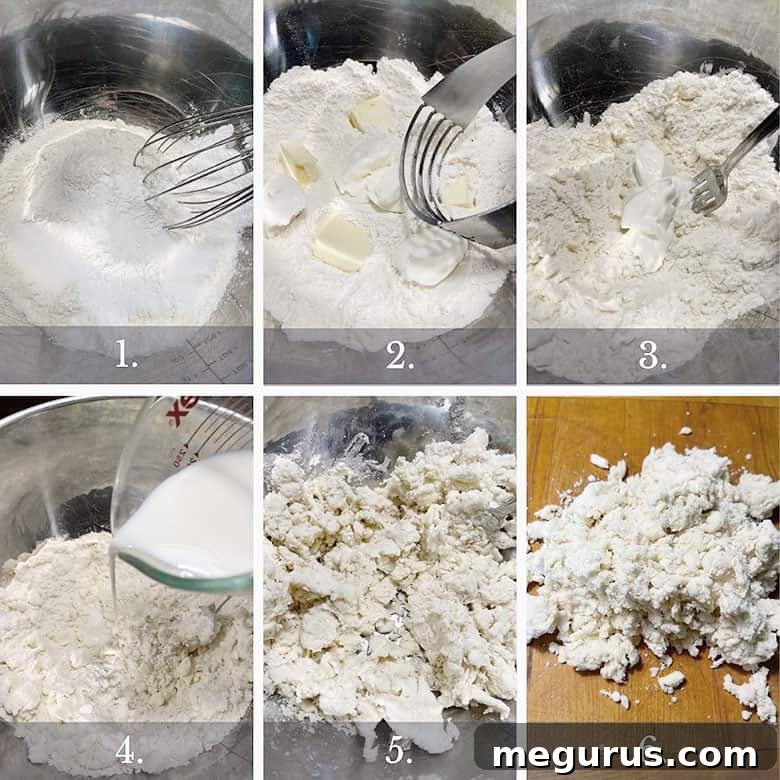
- Combine Dry Ingredients: In a large mixing bowl, whisk together the all-purpose flour, the small amount of white granulated sugar for the biscuits, baking powder, and salt. Whisking ensures these ingredients are evenly distributed, which is important for the biscuit’s rise and flavor.
- Cut in Butter and Shortening: Add the cold, cubed butter and solid vegetable shortening to the dry ingredients. Using a pastry cutter, two knives, or even your fingertips (working quickly to keep the fats cold), cut the fats into the flour mixture until it resembles coarse crumbs with some pea-sized pieces remaining. Avoid overmixing; these distinct pieces of fat are what create the flaky layers.
- Add Sour Cream: Lightly mix in the full-fat sour cream with a fork. It will help tenderize the dough and add a slight tang.
- Gradually Add Milk: Begin adding the milk in small increments, stirring gently after each addition. You want to add just enough milk to bring the dough together into a soft, cohesive mass. The dough should be moistened but not sticky or overly wet. Its consistency should be shaggy but hold together when pressed.
- Transfer and Roll Dough: Gently remove the dough from the bowl and transfer it to a lightly floured work surface. Avoid excess flour, which can make the biscuits dry.
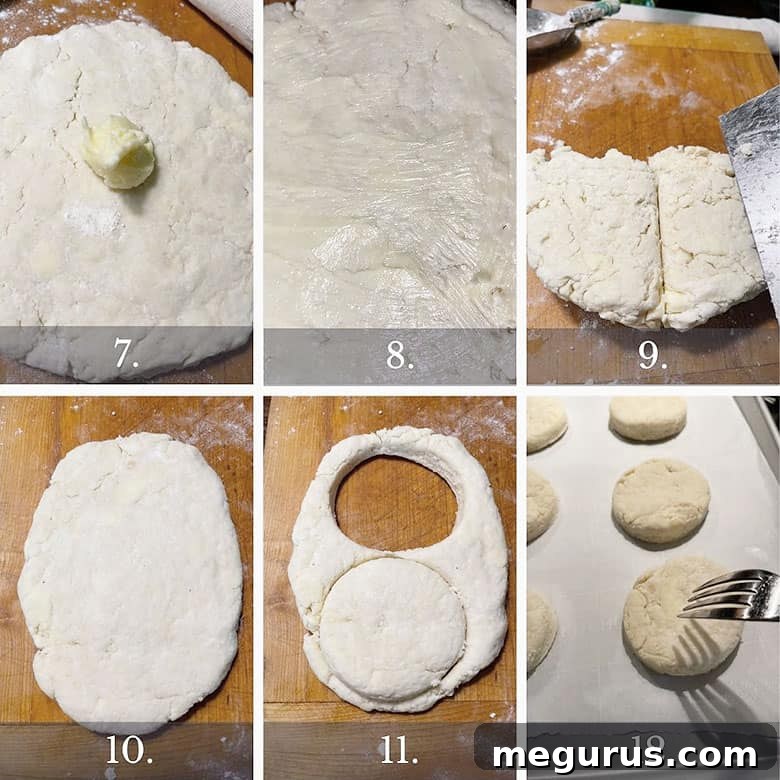
- Roll and Butter Dough: Carefully roll or pat the dough into a 1-inch thick oval (approximately 6 to 7 inches in diameter). The goal here is gentle handling to maintain tenderness. Spread the softened butter evenly over the entire surface of the dough.
- Fold and Cut Dough: Fold the buttered dough in half. This folding technique is another trick for creating additional flaky layers within the biscuits. The folded dough will be about 1¾ inches thick. Gently pat or roll the folded dough again to a uniform ¾-inch thickness.
- Cut Shortcake Rounds: Using a 3-inch round cutter (or the rim of a glass), cut out as many biscuit rounds as possible. Place these rounds onto your prepared parchment-lined baking sheet, leaving about 2 inches between each biscuit to allow for expansion. Gather any scraps, gently press them together (avoiding excessive kneading), and re-roll to cut out additional rounds. You should yield a total of 6 shortcakes.
- Prepare for Baking: Before placing them in the oven, use a fork to gently prick the top of each biscuit round once or twice. This helps prevent them from puffing up too much in the center and ensures a more even bake.
- Bake the Biscuits: Bake in the preheated 400°F oven for 16-18 minutes, or until the tops are beautifully golden brown and the biscuits are fully cooked through. Keep an eye on them, as oven temperatures can vary.
- Cool the Shortcakes: Once baked, immediately transfer the hot shortcakes to a wire cooling rack. Allow them to cool completely before assembling. This prevents sogginess and ensures the best texture. You can make these shortcakes ahead of time and store them in an airtight container once cooled.
- Prepare Whipped Cream: In a medium bowl, add cold heavy whipping cream. Using an electric mixer (or a stand mixer with the whisk attachment), whip the cream on medium-high speed until soft peaks begin to form. Then, gradually whip in the white sugar and vanilla extract (if using), continuing to whip until firm peaks are achieved. Be careful not to over-whip, or you’ll end up with butter!
- Assemble and Serve: To serve, carefully split each cooled shortcake in half horizontally. Place the bottom half on a dessert plate. Using a slotted spoon, generously spoon the macerated strawberries over the bottom shortcake. Drizzle a little of the delicious strawberry juice over the berries – it will wonderfully soak into the biscuit. Top with a dollop of freshly whipped cream, then add a few more strawberries. Finally, place the top half of the shortcake over the whipped cream and strawberries. Serve immediately and enjoy!
Essential Recipe Tips for Perfection!
- Sweetness Balance is Key: As mentioned, these old-fashioned shortcakes are intentionally not overly sweet, leaning more towards a lighter, almost pastry-like base. This design allows the fresh strawberries and cream to provide the primary sweetness. Therefore, it’s crucial to ensure your strawberries are adequately sweetened through maceration, and that you sweeten your whipped cream to taste. Don’t skip these steps!
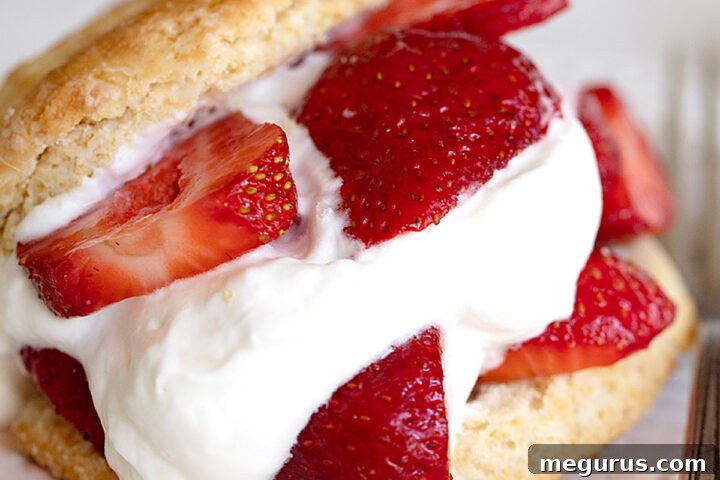
- Don’t Waste the Strawberry Nectar: In the photographs, the shortcakes are shown without the extra strawberry liquid to highlight their beautiful texture. However, for the ultimate flavor and moisture experience, I highly recommend spooning some of that delicious, syrupy liquid from the macerated strawberries over the bottom half of the shortcake before adding the cream. It soaks into the biscuit beautifully, adding incredible flavor and keeping it moist.
- Cold Ingredients for Flaky Biscuits: Always use very cold butter and shortening (if using) and cold sour cream/milk. This helps prevent the fats from fully incorporating into the flour, leading to those desirable pockets of steam and flaky layers when baked.
- Gentle Handing is a Must: When mixing the dough, cutting in the fats, and especially when rolling and folding, handle the dough as little as possible. Overworking the dough develops the gluten, which results in tough biscuits. A light, tender touch is your best friend here.
- Don’t Skimp on Maceration Time: Allowing the strawberries to sit with sugar for at least an hour (or even longer, up to several hours in the fridge) is essential. This process draws out their natural juices and creates a beautiful, sweet syrup that elevates the entire dessert.
- Perfectly Whipped Cream: Ensure your heavy cream is very cold before whipping. For best results, you can even chill your mixing bowl and whisk attachment for 10-15 minutes beforehand. Whip until firm peaks form, but watch carefully to avoid over-whipping, which can turn your cream grainy or into butter.
- Assembly Timing: Strawberry shortcake is best assembled just before serving. This keeps the biscuits from becoming soggy and the whipped cream fresh. If preparing for a crowd, have all components ready and assemble individual servings as needed.
Making Ahead, Storing, and Freezing Shortcake Components
One of the beauties of old-fashioned strawberry shortcake is that many of its components can be prepared in advance, making assembly a breeze, especially when entertaining. However, for the absolute best taste and texture, assembling just before serving is always recommended.
Shortcakes: The baked shortcake biscuits are best enjoyed on the day they are made, as their tender, flaky texture is at its peak. However, they will keep well for a couple of days if stored properly. Once completely cooled, place them in an airtight container at room temperature. To refresh them, you can briefly warm them in a low oven (around 250°F) for 5-7 minutes before serving.
These shortcakes also freeze exceptionally well, which is great for meal prep or having a spontaneous dessert ready. After baking and cooling completely, place the biscuits in a single layer on a baking sheet and freeze for about an hour until solid. Then, transfer them to a freezer-safe bag or airtight container. They will keep beautifully for up to two months. When ready to use, thaw them at room temperature or gently warm them in the oven.
Strawberries: The macerated strawberries can be prepared a few hours in advance and stored in an airtight container in the refrigerator. In fact, a longer maceration (up to 4-6 hours) can often deepen their flavor and create more delicious syrup. Just give them a quick stir before serving.
Whipped Cream: Freshly whipped cream is always best. However, you can whip the cream about an hour or two in advance and store it covered in the refrigerator. If it loses some stiffness, you can give it a quick whisk by hand before serving.
Frequently Asked Questions About Strawberry Shortcake
Here are some common questions and helpful answers to ensure your strawberry shortcake experience is flawless:
- What kind of strawberries are best for shortcake?
Look for ripe, in-season strawberries that are bright red and fragrant. Local farm stands or farmers’ markets often have the best selection. The sweeter the berries, the better your shortcake will be. - Can I use frozen strawberries?
While fresh strawberries are highly recommended for their texture and vibrant flavor, you can use frozen strawberries in a pinch. Thaw them completely, drain any excess liquid (though you might still want some of the juice for serving), and then macerate them with sugar as usual. The texture might be slightly softer than fresh berries. - Why are my biscuits tough?
Tough biscuits are almost always a sign of overworking the dough. Too much kneading or mixing develops the gluten in the flour, making the biscuits dense and chewy rather than tender and flaky. Handle the dough as little and as gently as possible. - Can I make this recipe gluten-free?
You can try substituting a good quality 1:1 gluten-free all-purpose flour blend. Ensure the blend contains xanthan gum for structure. The texture might be slightly different, but you can still achieve delicious results. - What’s the difference between old-fashioned shortcake and modern shortcake?
Traditional, old-fashioned shortcake typically uses a biscuit-like base, which is more savory, tender, and flaky. Modern versions often opt for a sweeter, softer, cake-like base, sometimes even sponge cake. This recipe stays true to the classic biscuit style. - How do I get my whipped cream to be extra stable?
For more stable whipped cream, ensure your cream is very cold. You can also add a teaspoon of cornstarch or powdered sugar per cup of cream, as these act as stabilizers. Another trick is to use a stabilizer product designed for whipped cream. - Can I use other fruits?
Absolutely! While strawberry shortcake is a classic, this biscuit base pairs wonderfully with other berries like raspberries, blueberries, or a mixed berry combination. Peaches or even sliced kiwi can also be delicious alternatives.
Old-Fashioned Strawberry Shortcake Recipe
Get the Recipe: Old-Fashioned Strawberry Shortcake
Pin This
Leave a Review
Ingredients
Shortcakes:
- 2 cups all-purpose flour
- 2 Tablespoons white granulated sugar
- 3-1/2 teaspoons baking powder
- 1/2 teaspoon salt, reduce to 1/4 tsp if using salted butter
- 1/4 cup butter, cold, salted or unsalted
- 1/4 cup solid vegetable shortening, or substitute equal amount of additional butter
- 1/4 cup sour cream, full-fat recommended, or Greek yogurt
- 1/4- 1/2 cup milk, full-fat recommended
- 3 Tablespoons butter, softened, salted or unsalted
For the strawberries:
- 1 1/2 qt. fresh strawberries, rinsed, then halved or sliced
- 1/3 cup white granulated sugar
- 1 teaspoon lemon juice, optional
Whipped cream:
- 1 cup heavy whipping cream, 35% b.f.
- 1 Tablespoon white sugar
- 1 teaspoon vanilla, optional
Instructions
-
Prepare the strawberries: Combine the strawberries, white sugar and lemon juice in medium bowl. Stir to combine well, then let stand at room temperature at least one hour.
-
For shortcake: Preheat oven to 400° F. (non-convection) Line a baking sheet with parchment paper and set aside.
-
In a medium bowl, whisk together the flour, white sugar, baking powder and salt. Add the butter and shortening, working it thoroughly into flour mixture using a pastry cutter or two knives. .Lightly mix in the sour cream with a fork. Add just enough of the milk to make a soft dough.
-
Remove dough to a lightly floured work surface. Roll out dough to 3/4 inch thickness on a lightly floured surface (circle will be 6 to 7 inches). Spread with softened butter. Fold dough over (it will be about 1-3/4 inches thick). Divide dough in half. Take one piece of the dough and roll to 3/4 inch thick. Use a 3-inch cutter (or glass) to cut two rounds. Place onto prepared baking sheet. Reserve scraps. Roll the second piece of dough and cut 2 more rounds, placing onto baking sheet. Gather the scraps from both pieces, roll, then cut 2 more rounds from the scraps, for a total of 6 rounds, placed with a couple of inches between on the prepared baking sheet.
-
Prick the biscuits with a fork once or twice, then bake in preheated oven for 16-18 minutes, or until golden. Remove from the oven, then immediately transfer to a cooling rack to cool. *Can be made ahead and stored in an airtight container once completely cooled.
-
To prepare the whipped cream: Add cold whipping to a medium bowl. Whip the cream with an electric mixer (or stand mixer with the whisk attachment) until soft peaks form, then whip in the sugar and vanilla, whipping further until firm.
-
To serve: Split the shortcakes in half. Place the bottom half on a plate and using a slotted spoon, spoon strawberries over top. Spoon a little of the juice over the strawberries. Top with whipping cream, then a few more strawberries. Top with top of shortcake.
Notes
Tips!
- As noted above, these old-fashioned shortcakes are not sweet. Think of a lighter version of pie crust. As such, you want to make sure your strawberries are nicely sweetened with sugar and that you sweeten the whipped cream as well.
- I didn’t spoon the liquid from the strawberries over the shortcakes for the photographs so that you could see the lovely shortcakes. I do suggest that you spoon some of the liquid at least over the bottom part of the shortcake. It will soak into the shortcake in a wonderful way!
Be sure to read the notes above this recipe card for more tips on making this recipe. You’ll also find step-by-step photos there, that you might find helpful.
Nutrition Information (per serving):
- Serving: 1 serving
- Calories: 473 kcal
- Carbohydrates: 59g
- Protein: 7g
- Fat: 24g
- Saturated Fat: 12g
- Polyunsaturated Fat: 3g
- Monounsaturated Fat: 7g
- Trans Fat: 2g
- Cholesterol: 40mg
- Sodium: 336mg
- Potassium: 578mg
- Fiber: 6g
- Sugar: 19g
- Vitamin A: 529 IU
- Vitamin C: 140mg
- Calcium: 142mg
- Iron: 3mg