
Delicious Shrovetide Jam Buns: A Traditional Fat Tuesday Sweet Treat
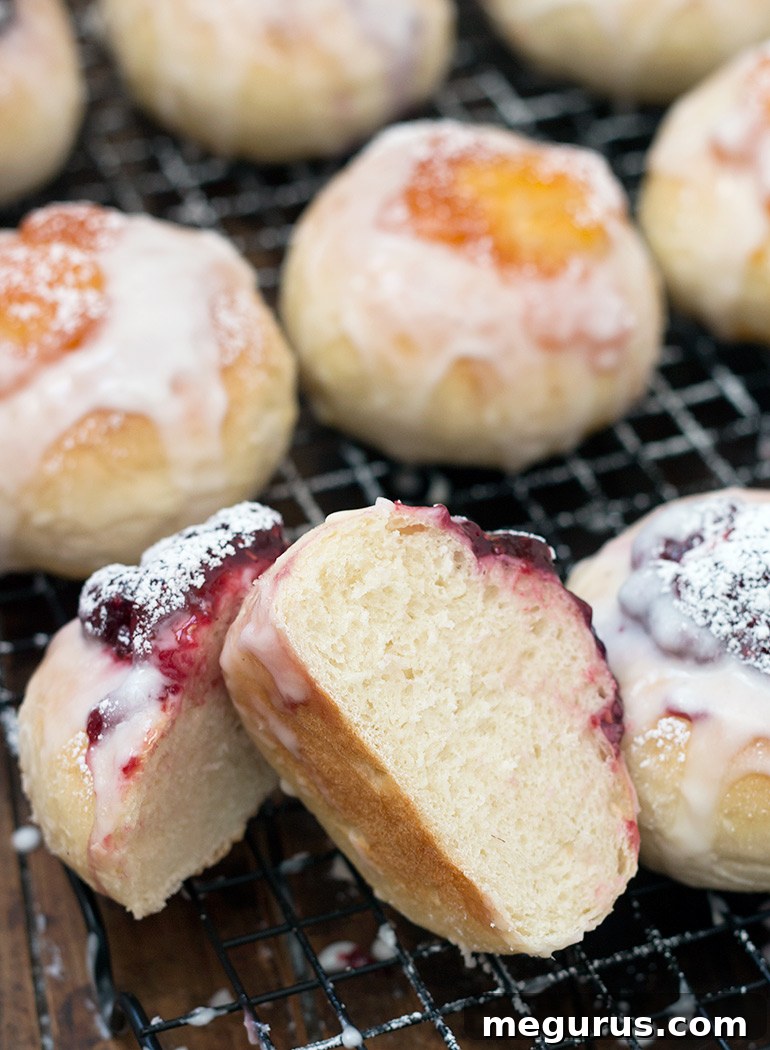
As the days shorten and the chill of winter lingers, many cultures around the world prepare for a period of reflection and fasting known as Lent. But before the solemnity begins, there’s a day of exuberant indulgence and celebration known as Shrove Tuesday, often called Fat Tuesday or Pancake Day. And what better way to celebrate than with a batch of these absolutely delightful Shrovetide Jam Buns? Imagine soft, pillowy rolls, brimming with sweet, vibrant jam and elegantly adorned with a delicate sugar glaze. These aren’t just a treat; they’re a delicious embrace of tradition, a last hurrah of sweetness before the Lenten fast. They are incredibly light, wonderfully fruity, and surprisingly easy to make, promising a burst of joy with every single bite.

Understanding Shrovetide Buns: A Celebration of Sweetness
Shrove Tuesday, a day of feasting before Ash Wednesday marks the beginning of Lent, is known by many names across the globe. From Pancake Tuesday in English-speaking countries to Mardi Gras in French and Fastelavn in Scandinavia, the common theme is a final indulgence in rich foods before the period of abstinence. Historically, these celebratory foods were designed to use up ingredients like eggs, milk, sugar, and fat – items often restricted during Lent. Shrovetide buns, or “fastelavnsboller” in Danish and Norwegian, embody this spirit perfectly. They are a delightful example of a “fat cake” designed to enrich and satisfy the palate.
These particular jam buns offer a sublime combination of textures and flavors: the softness of a freshly baked yeast roll, the burst of sweet and tangy fruit jam, and the subtle sweetness of a glistening glaze. They share a comforting similarity with jelly donuts, but without the deep-frying process, making them a much simpler and less fuss alternative for home bakers. The beauty of this recipe lies not only in its delicious outcome but also in its straightforward preparation. You don’t need to be an experienced baker to achieve impressive results with these sweet rolls. They are a beloved staple for pre-Lenten celebrations, bringing warmth and happiness to the table.
Why You’ll Love This Shrovetide Bun Recipe
- Easy to Follow: Simple, clear steps make this recipe accessible for bakers of all skill levels, from beginners to seasoned pros.
- Deliciously Light & Fluffy: The carefully crafted yeast dough yields incredibly soft, tender buns that melt in your mouth.
- Versatile Jam Filling: Customize these buns endlessly with your favorite fruit jams, preserves, or even a luscious fruit curd.
- Perfect for Any Occasion: While traditionally for Shrove Tuesday, these buns are a delightful choice for breakfast, brunch, an afternoon treat, or even a light dessert any time of year.
- Freezer-Friendly: Bake a big batch and easily freeze them to enjoy later, ensuring you always have a sweet treat on hand.
Key Ingredients and Smart Substitutions for Perfect Buns
Creating these heavenly Shrovetide buns starts with understanding the role of each ingredient. A few key components come together to form the light, airy dough and the irresistible topping, each playing a vital part in the final delicious outcome.
Dough Ingredients:
- Milk: Scalded milk, cooled to lukewarm, is essential. Scalding the milk denatures proteins that can inhibit yeast activity, resulting in a softer crumb. Ensure the milk is not too hot (above 110°F / 43°C) when adding yeast, as this will kill the yeast and prevent your dough from rising. Any type of milk (whole, 2%, skim) will work, but whole milk will yield a richer, more tender bun.
- Active Dry or Instant Yeast: This is the leavening agent that gives the buns their signature rise and fluffy texture. Active dry yeast typically needs to be proofed (activated in warm liquid with sugar), while instant yeast can often be mixed directly with dry ingredients. For best results, always ensure your yeast is fresh and active – a foamy appearance after proofing is a good sign.
- White Granulated Sugar: Provides sweetness to the dough and acts as food for the yeast, aiding in fermentation and promoting a good, consistent rise. A small amount of sugar greatly enhances the flavor of the buns.
- Kosher Salt: Balances the sweetness and significantly enhances the overall flavor profile of the buns. It also plays a crucial role in controlling yeast activity and strengthening the gluten structure. If using fine table salt, use slightly less as it is more concentrated than kosher salt.
- Large Egg: Adds richness, essential moisture, and helps with the structure and beautiful golden color of the dough. Using a room temperature egg integrates more smoothly and evenly into the mixture, contributing to a better dough consistency.
- Butter: At room temperature, butter adds wonderful tenderness, richness, and contributes significantly to a soft, melt-in-your-mouth crumb. Unsalted butter is preferred so you can control the salt content precisely in the recipe. If using salted butter, remember to slightly reduce the amount of added kosher salt.
- All-Purpose Flour: The primary structural component of the dough. Accurate measurement is crucial for proper dough consistency; always spoon and level your flour rather than scooping directly from the bag, which can compact it and add too much. You might need slightly more or less flour depending on humidity levels and how precisely you measure.
Topping and Glaze Ingredients:
- Jam: This is where you can truly customize your Shrovetide buns to your personal taste! I’ve had great success with classic apricot, tangy raspberry, and sweet blueberry jams. For the best results, opt for a thicker, fruit-filled jam or preserve rather than a runny jelly. A good consistency helps the jam stay in place during baking and provides a satisfying burst of fruit. You can also experiment with homemade fruit curds like lemon or passion fruit, or even a thick apple butter for unique flavor profiles.
- Egg Wash: A simple beaten egg brushed over the dough before baking gives the buns a beautiful golden-brown crust and a lovely, appetizing sheen that makes them look professionally baked.
- Icing/Confectioners’ Sugar: Used both for a final dusting for added sweetness and as the base for the delicate sweet glaze. Its fine texture dissolves easily, creating a smooth finish.
- Milk (for Glaze): Used to thin the icing sugar into a pourable glaze. Start with a small amount and add more gradually, literally drop by drop, to achieve the perfect consistency for drizzling.
Expert Baking Tips for Fluffy Shrovetide Buns
Achieving bakery-quality Shrovetide buns at home is entirely possible with a few insider tips. Pay attention to these details and techniques for the best results and a truly memorable treat:
- Don’t Fear the Jam Bubbles: It’s common for some jam to bubble up, seep out, or seemingly “disappear” into the buns as they bake, especially with thinner jams or vigorous oven heat. Don’t worry if this happens! Simply have a little extra jam warmed and ready. As soon as the buns come out of the oven, gently spoon a small amount of fresh jam into any craters or empty spaces to replenish the lost filling. The residual heat from the buns will warm it perfectly, and it will set nicely as they cool.
- Mastering the Glaze Consistency: The perfect powdered sugar glaze is key to both the aesthetic appeal and the delightful taste of these buns. It needs to be thin enough to elegantly drip down the sides, creating those lovely white streaks, but thick enough not to run completely off the bun and create a sticky mess. Start with the suggested amount of milk and add a tiny bit more, half a teaspoon at a time, until it reaches a slow, steady drip consistency off a spoon. A good test is to try it on just one bun first. If it’s too thin, whisk in a little more icing sugar. If too thick, a few more drops of milk will loosen it up. For an even and mess-free application, using a squeeze bottle or a piping bag with a small hole can make applying the glaze much easier and neater, allowing for precise coverage and the option to add a second layer for extra sweetness and visual appeal.
- Proofing for Perfection: Do not rush the rising times. The first rise allows the dough to develop deep flavor and a light, tender texture, while the second rise ensures puffy, airy buns with a beautiful structure. A warm, draft-free place is ideal for proofing. If your kitchen is cool, you can use a slightly warmed oven (turned off after heating to about 80-90°F / 27-32°C) or proof in a sunny spot. The dough should visually double in size and pass the “poke test” (an indentation from your finger slowly springs back) before proceeding.
- Uniform Buns for Even Baking: When dividing the dough, try to make each piece as equal in size as possible. This ensures that all buns bake evenly and at the same rate, resulting in a consistent presentation and texture across the batch. A kitchen scale can be very helpful here for precision.
- Oven Temperature Matters: Always ensure your oven is fully preheated to the specified 400°F (200°C) (for non-convection ovens) before placing the buns inside. An accurate oven temperature is vital for the buns to rise quickly, achieve a beautiful golden crust, and cook through completely without drying out or becoming dense.
- A Year-Round Delight: While steeped in tradition for pre-Lenten celebrations, these jam buns are simply too delicious and versatile to limit to just one day a year! They make a wonderful treat for weekend breakfasts, special brunches, an afternoon pick-me-up with tea or coffee, or even a light dessert. If you prefer a less sweet option, you can easily omit the sugar glaze and simply enjoy the jam-filled buns as they are, perhaps with a light dusting of powdered sugar. This recipe is also a fantastic way to use up any leftover jams or preserves you might have in your pantry.
Making Ahead, Storing, and Freezing Your Shrovetide Buns
While these Shrovetide buns are undeniably at their peak freshness and flavor on the day they are baked, sometimes you might have leftovers or want to get a head start on your baking. Here’s how to properly manage them to maintain their deliciousness:
- Storage (Same Day/Next Day): For optimal freshness and texture, these buns are best enjoyed on the day they are made. If you have any remaining to serve within 1-2 days, allow the buns to cool completely on a wire rack to prevent any condensation from making them soggy. Once cooled, store them at room temperature in an airtight container. The texture will be slightly softer on the second day but still delicious.
- Freezing for Later: These Shrovetide buns freeze exceptionally well, making them perfect for meal prep or enjoying a homemade treat anytime! To freeze, ensure they are completely cooled to room temperature. You can freeze them with or without the glaze; if glazing later, freeze them plain. Arrange them in a single layer on a baking sheet and flash freeze for 1-2 hours until they are solid. This prevents them from sticking together. Once frozen, transfer the buns to a freezer-safe bag or an airtight container, removing as much air as possible. They will keep beautifully in the freezer for up to 2-3 months.
- Thawing and Reheating: To thaw, simply take the desired number of buns out of the freezer and let them come to room temperature for a few hours. For a “freshly baked” experience, you can gently warm them. Microwave individual buns for 15-20 seconds, or place them in a preheated oven at 300°F (150°C) for about 5-10 minutes until warmed through. If they were frozen unglazed, you can add fresh glaze after thawing and warming for that perfect finishing touch.
- Preparing Dough Ahead: If you want to break up the work and prepare the dough in advance, you can do so up to the first rise. After the first rise, gently punch down the dough, form it into individual balls, and place them on a parchment-lined baking sheet. Cover the sheet tightly with plastic wrap and refrigerate overnight (up to 24 hours). The next day, take them out of the fridge an hour or two before you plan to bake to allow them to come to room temperature and proof again slightly before making the indentations and adding the jam. This method helps streamline your baking process.
Shrovetide Jam Buns Recipe
Traditionally enjoyed on Shrove Tuesday, these Shrovetide Jam Buns are sweet, jam-topped yeast rolls with a delightful sweet glaze. They make a great treat for Fat Tuesday or any day you desire a comforting, sweet indulgence!
Prep Time: 30 minutes
Cook Time: 15 minutes
Rising Time: Approximately 2 hours (includes two rises)
Total Time: Approximately 2 hours 45 minutes
Yield: 12 delicious buns
Ingredients
For the Dough:
- 2 cups milk, scalded and cooled to lukewarm (about 105°F / 40°C)
- 2 1/4 teaspoons Active Dry or Instant yeast (one standard packet)
- 1 Tablespoon white granulated sugar
- 1/2 teaspoon kosher salt (use a bit less if using fine table salt)
- 1 large egg, at room temperature
- 2 Tablespoons unsalted butter, softened to room temperature
- 3 cups all-purpose flour, spooned and leveled (plus extra for dusting)
For the Topping:
- 1 large egg, lightly beaten, for brushing before baking (egg wash)
- 12 Tablespoons jam, assorted flavors (choose a thicker consistency)
For the Glaze:
- 1 cup icing/confectioners’ sugar
- 2 Tablespoons milk, plus additional drops as needed for consistency
Instructions
- Prepare the Milk: In a small saucepan or a microwave-safe glass measuring cup, gently heat the milk until it just begins to simmer (small bubbles will form around the edge). Be careful not to let it boil vigorously. Remove from heat and allow it to cool to lukewarm, ideally around 105°F (40°C). This temperature is crucial for activating the yeast without killing it.
- Activate the Yeast: In a large mixing bowl, or the bowl of a stand mixer fitted with a dough hook, combine the lukewarm milk with the yeast and 1 tablespoon of granulated sugar. Stir gently to combine. Let this mixture stand undisturbed for 5 minutes. You should observe the yeast beginning to bloom and become foamy on the surface, indicating it is active and ready to use.
- Combine Wet Ingredients: Add the kosher salt, the room temperature large egg, and the softened butter to the yeast mixture. Mix thoroughly until all ingredients are well combined and smooth.
- Form the Dough: Gradually add 2 cups of the all-purpose flour to the wet ingredients and mix until a shaggy dough forms. Continue adding the remaining flour, 1/4 cup at a time, kneading (or mixing with the dough hook on low speed) until you achieve a smooth, elastic, and moist dough that pulls away from the sides of the bowl. The dough should feel slightly tacky to the touch but not overly sticky.
- First Rise: Lightly grease a clean large bowl with a little butter or oil. Place the dough in the greased bowl, turning it once to coat all sides. Cover the bowl tightly with plastic wrap or a clean kitchen towel and let it rise in a warm, draft-free place until it has visibly doubled in size. This usually takes about 45-60 minutes, depending on the warmth of your kitchen environment.
- Shape the Buns: Once the dough has completed its first rise, gently remove it to a lightly floured surface. Deflate it by gently pressing out the air. Divide the dough into 12 equal pieces. For the best results and uniform baking, consider using a kitchen scale to ensure each piece weighs the same. Form each piece into a smooth, round ball and arrange them on a baking sheet lined with parchment paper, ensuring there is enough space between each bun for them to expand.
- Second Rise: Cover the baking sheet with a clean kitchen towel and allow the buns to rise again in a warm place for another 30 minutes, or until they look noticeably puffy and have increased in size.
- Preheat Oven: While the buns are undergoing their second rise, preheat your oven to 400°F (200°C). If you have a convection oven, you may need to adjust the temperature or baking time.
- Fill and Glaze Prep: Using your thumb or the back of a spoon, make a deep indentation in the center of each risen roll. Fill each indentation with approximately 1 tablespoon of your chosen jam. In a small bowl, lightly beat the remaining large egg to create an egg wash. Gently brush the exposed dough (avoiding the jam itself) with the beaten egg wash.
- Bake the Buns: Bake the buns in the preheated oven for 12-15 minutes, or until they are beautifully golden brown on top and cooked through. Keep a close eye on them to prevent over-browning.
- Replenish Jam (if needed): Immediately after taking the buns out of the oven, if any jam has seeped out or bubbled away, spoon a small amount of fresh jam into the centers to replenish the filling. This ensures a vibrant, full jam center.
- Cool Completely: Transfer the baked buns to a wire rack to cool completely before applying the glaze. This prevents the glaze from melting and running off.
- Prepare and Apply Glaze: For the glaze, combine the 1 cup of icing sugar with 2 tablespoons of milk in a small bowl. Whisk until the mixture is smooth and free of lumps. The glaze should be thin enough to drizzle but thick enough to cling to the buns and drip slowly down the sides. If it’s too thick, add a few more drops of milk. If too thin, whisk in a little more icing sugar. Once the buns are cool, spoon or use a squeeze bottle to apply the glaze in a ring around the edge of the jam, allowing it to naturally drip down the sides of the bun. For an extra touch of prettiness, you can dust them with a little extra icing sugar just before serving.
- Serve and Store: These jam buns are truly best enjoyed on the day they are made, offering optimal freshness and texture. If you have any remaining, please refer to the storage and freezing instructions provided above for best preservation.
Nutritional Information (per 1 bun serving)
(Approximate values based on a serving size of 1 bun)
- Serving: 1 bun
- Calories: 163 kcal
- Carbohydrates: 34g
- Protein: 3g
- Cholesterol: 13mg
- Sodium: 104mg
- Potassium: 41mg
- Sugar: 11g
- Vitamin A: 20IU
- Calcium: 10mg
- Iron: 1.5mg
Enjoyed this recipe?
If you loved making and tasting these delightful Shrovetide Jam Buns, we’d be thrilled if you shared your experience! Please leave a star rating and a comment below to let us know how they turned out. Your valuable feedback helps other bakers discover and enjoy this wonderful, traditional recipe!
More Sweet Treats and Shrovetide Recipes to Love!