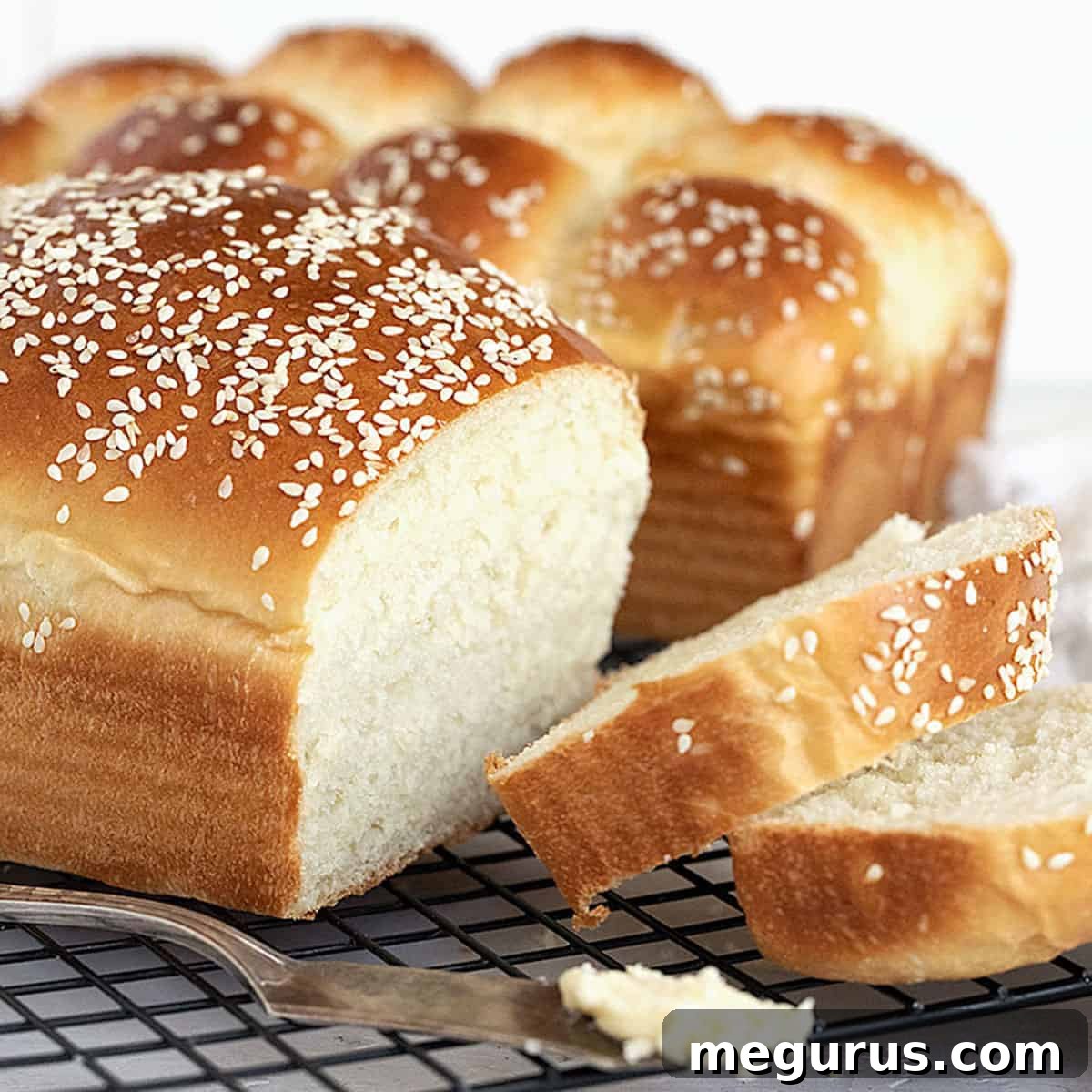
Homemade buttermilk bread is a true kitchen masterpiece, boasting a distinctively rich and slightly tangy flavor that pairs perfectly with its incredibly soft, tender crumb. This versatile recipe offers the flexibility to bake two classic loaves, a delightful combination of one loaf and a pan of soft pull-apart rolls, or even a batch of individual rolls. The unique qualities of buttermilk elevate this bread from ordinary to extraordinary, making it a beloved staple for any meal.
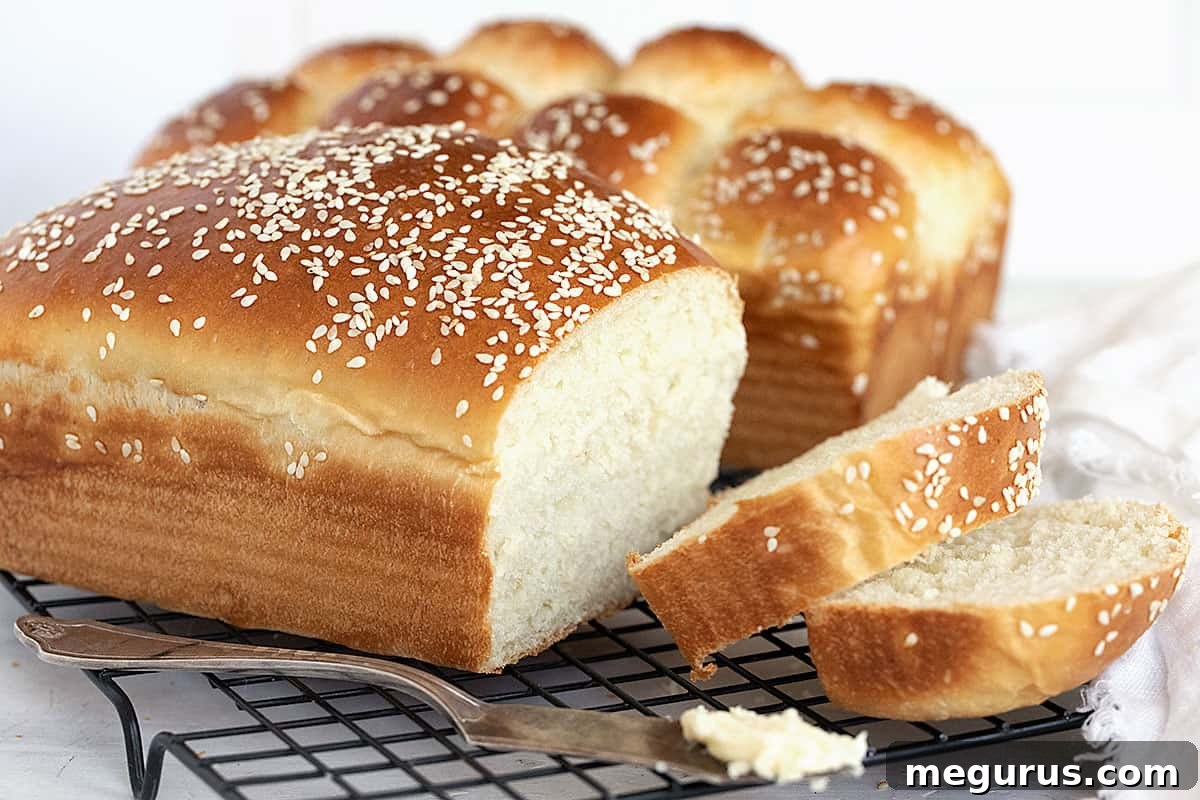
Why You’ll Love Baking This Buttermilk Bread Recipe!
- Unforgettable Flavor and Texture: Buttermilk is the secret ingredient that imparts a wonderfully light, subtly tangy taste and an exceptionally soft, pillowy white bread texture. The acidity in buttermilk tenderizes the gluten, resulting in a bread that’s both moist and incredibly tender.
- A Smart Way to Use Leftover Buttermilk: If you often find yourself with a partial carton of buttermilk after cooking, this recipe is your perfect solution! It calls for 1 1/2 cups of buttermilk, making it an ideal way to prevent waste and create something delicious.
- Bake Once, Enjoy Twice (or More!): This recipe yields enough dough for two loaves of bread. You can bake both, or get creative by making one classic loaf and one pan of convenient pull-apart rolls. Plus, this bread freezes beautifully, so you can enjoy one portion now and stash the other in the freezer for a busy day. Freshly baked bread is always just an thaw and warm away!
- Incredibly Versatile for Any Occasion: The finished bread is magnificent simply slathered with butter, making a fantastic foundation for sandwiches, or toasted to golden perfection for breakfast. The pull-apart rolls are particularly wonderful as a side dish for hearty soups, stews, or any family dinner, adding a touch of homemade comfort to your table.
- The Pure Joy of Homemade Baking: There’s nothing quite like the aroma of fresh bread baking in your oven. This recipe offers the satisfying experience of traditional bread-making, from mixing the dough to watching it rise, culminating in a product that tastes far superior to anything store-bought. It’s a rewarding culinary adventure for bakers of all skill levels.
Essential Ingredients and Thoughtful Substitutions
Crafting the perfect buttermilk bread begins with understanding each ingredient’s role. Here’s a detailed look at what you’ll need and potential alternatives:
Buttermilk: The Heart of the Recipe – For this bread, the quality of your buttermilk truly matters. While there are methods to “make your own” buttermilk using milk and an acid (like lemon juice or vinegar), they often don’t replicate the specific fat content and bacterial culture of genuine buttermilk, which is crucial for the unique flavor and tender crumb of this recipe. For the best results, we strongly recommend using real cultured buttermilk. It provides the ideal acidity and consistency needed for optimal gluten development and a superior finished product. Ensure your buttermilk is at room temperature before starting, as cold buttermilk can significantly slow down the yeast’s activity.
Instant Yeast: The Rising Star – This recipe specifically calls for regular instant yeast, such as SAF Brand. Instant yeast is designed to be added directly to dry ingredients without prior proofing, making the process straightforward and efficient. It’s different from rapid-rise or quick-rise yeast, which is formulated for a much faster rise and can sometimes lead to a less developed flavor or an overly airy texture in recipes designed for a slower rise. We highly recommend SAF Brand Instant Yeast for its consistent performance and reliability, and it’s readily available online and in many grocery stores.
*Using Active Dry Yeast: If active dry yeast is your only option, you can adapt this recipe with some slight modifications. You will need to “activate” it first. Gently warm your buttermilk to precisely 90°F (32°C). Be very careful not to overheat it, as buttermilk curdles easily. Sprinkle the active dry yeast over the warm buttermilk and let it sit for about 5-10 minutes until it becomes foamy. This indicates the yeast is active. Then, proceed with the recipe, combining this mixture with the remaining ingredients.
Flour: The Foundation of Your Loaf – Unbleached bread flour is the preferred choice for this recipe, delivering the best structure and chewiness. Bread flour has a higher protein content than all-purpose flour, which leads to stronger gluten development. This results in a more robust loaf with a satisfying chew and a beautiful, open crumb structure.
*Using All-Purpose Flour: You can certainly use bleached or unbleached all-purpose flour if bread flour isn’t available. However, be aware that the resulting loaf may have a slightly different consistency, often a bit softer and less chewy. You might also find that you need to use a bit more all-purpose flour overall to achieve the correct dough consistency, as its lower protein content absorbs liquid differently. Adjust by adding flour gradually until the dough reaches the desired texture.
Sugar: More Than Just Sweetness – White granulated sugar not only adds a touch of sweetness but also acts as food for the yeast, helping it activate and rise effectively. It contributes to the bread’s golden-brown crust and enhances the overall flavor balance.
Salt: The Flavor Enhancer – Fine salt is essential for enhancing the bread’s flavor profile and also plays a critical role in controlling yeast activity and strengthening the gluten structure. Don’t skip it!
Vegetable Oil (or Melted Butter): For Tenderness and Moisture – A touch of vegetable oil or melted and cooled butter adds richness, moisture, and helps create that desirable soft crumb. It also contributes to the bread’s keeping qualities, ensuring it stays fresh longer.
Egg: For Structure and Color – A large egg adds richness, helps bind the dough, and contributes to a beautiful golden crust and a tender interior. It also adds a slight boost to the dough’s structure.
Step-by-Step Visual Guide
Follow along with these photo collages to visualize each stage of the buttermilk bread-making process.
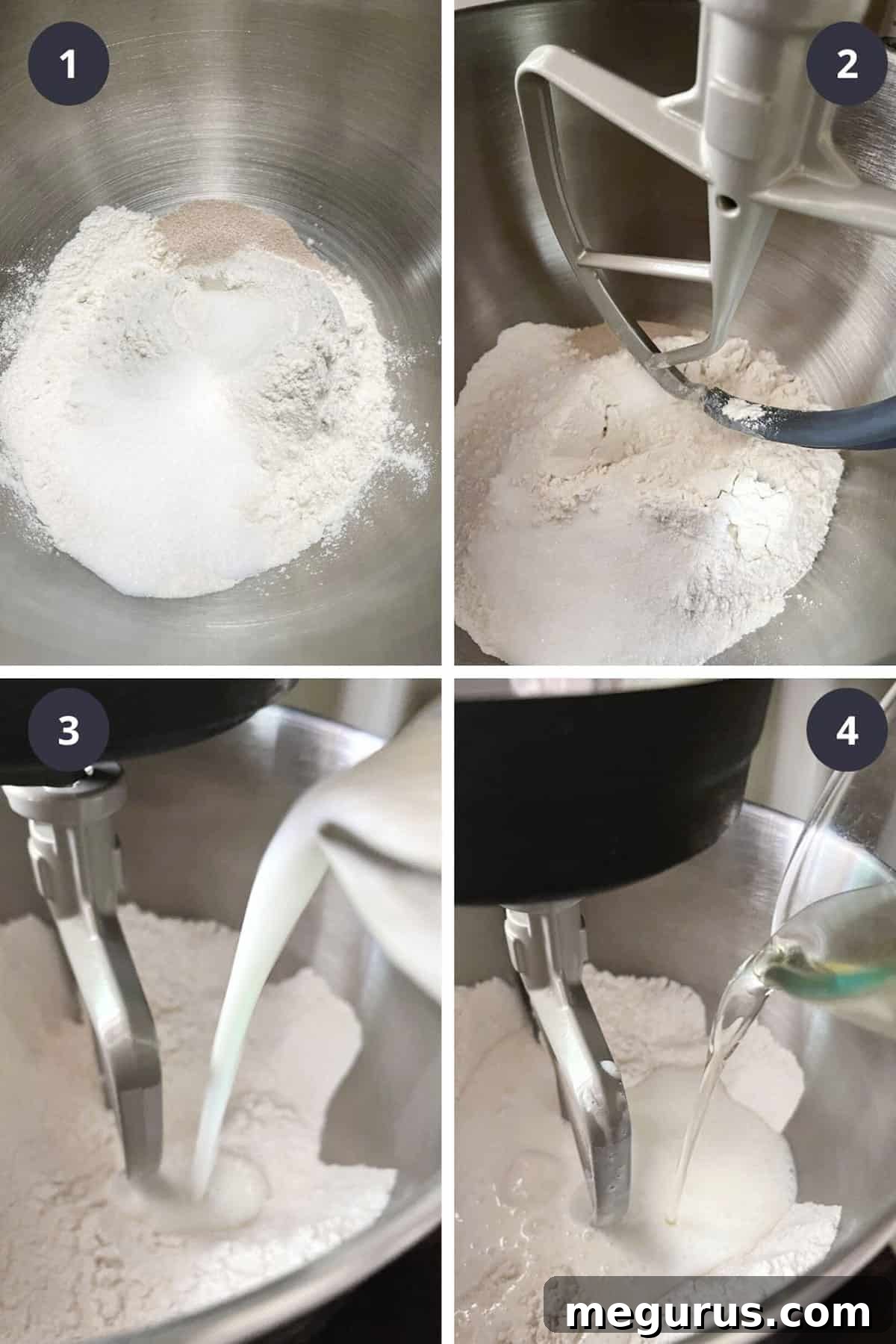
- Begin by adding approximately 3/4 of the total flour (about 3 cups), along with the instant yeast, granulated sugar, and fine salt into a large mixing bowl or the bowl of your stand mixer.
- Using the paddle attachment on your stand mixer, or a sturdy spoon by hand, gently stir these dry ingredients together until they are well combined.
- Next, pour in the room-temperature buttermilk. Ensuring it’s not cold is key for yeast activity.
- Add the vegetable oil (or your melted and cooled butter) into the mixture.
- Crack in the large egg, adding another layer of richness and binding to your dough.
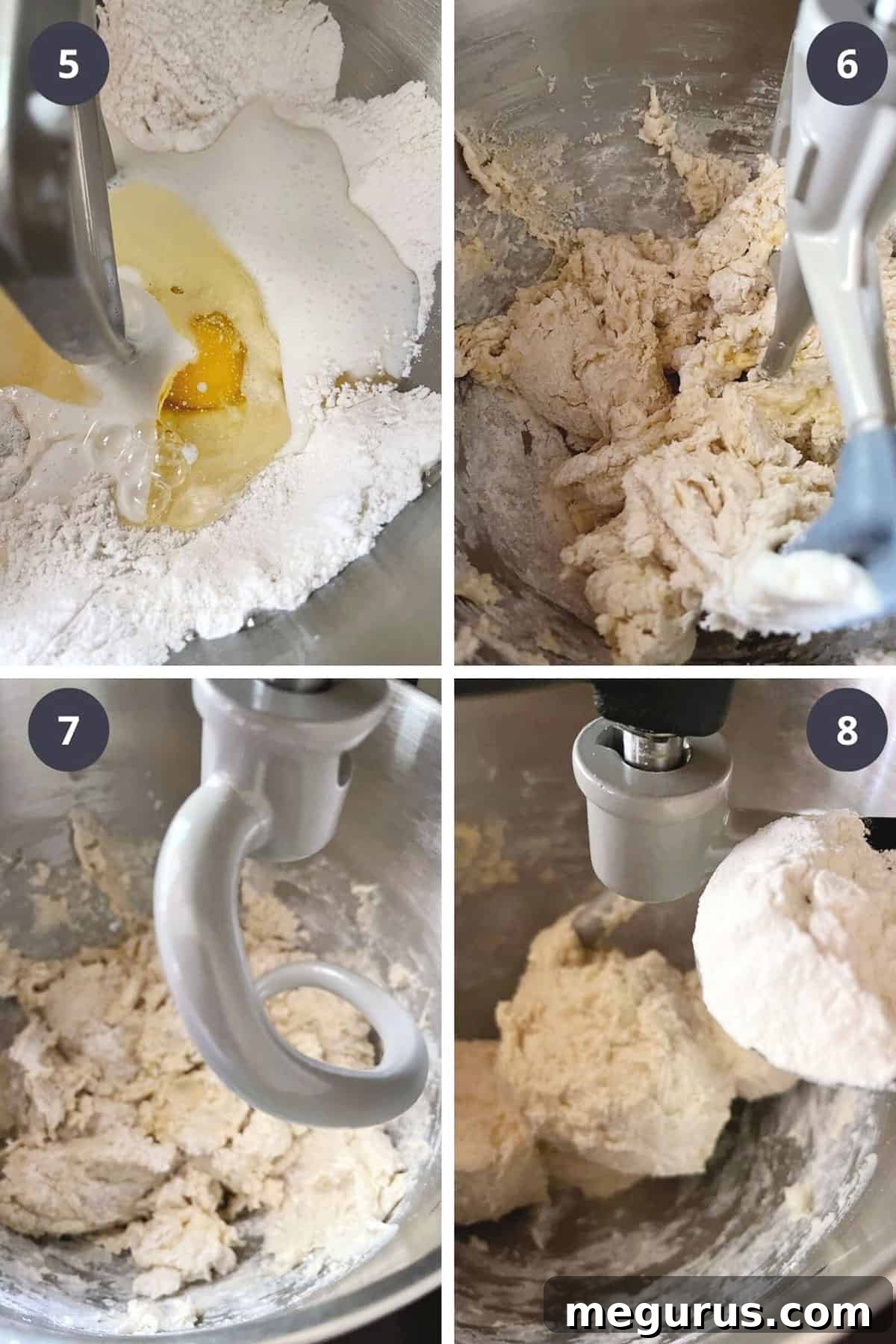
- With the paddle attachment, mix on low speed until all the ingredients are just moistened and no dry flour remains. Then, remove the paddle attachment, cover the bowl with a clean tea towel, and let the dough rest for about 20 minutes. This short rest allows the flour to fully hydrate, making the subsequent kneading much easier.
- After the rest, switch to the dough kneading hook on your stand mixer. This attachment is specifically designed for developing gluten.
- Gradually begin kneading in the remaining 1 cup of flour, adding it in small increments until it’s incorporated.
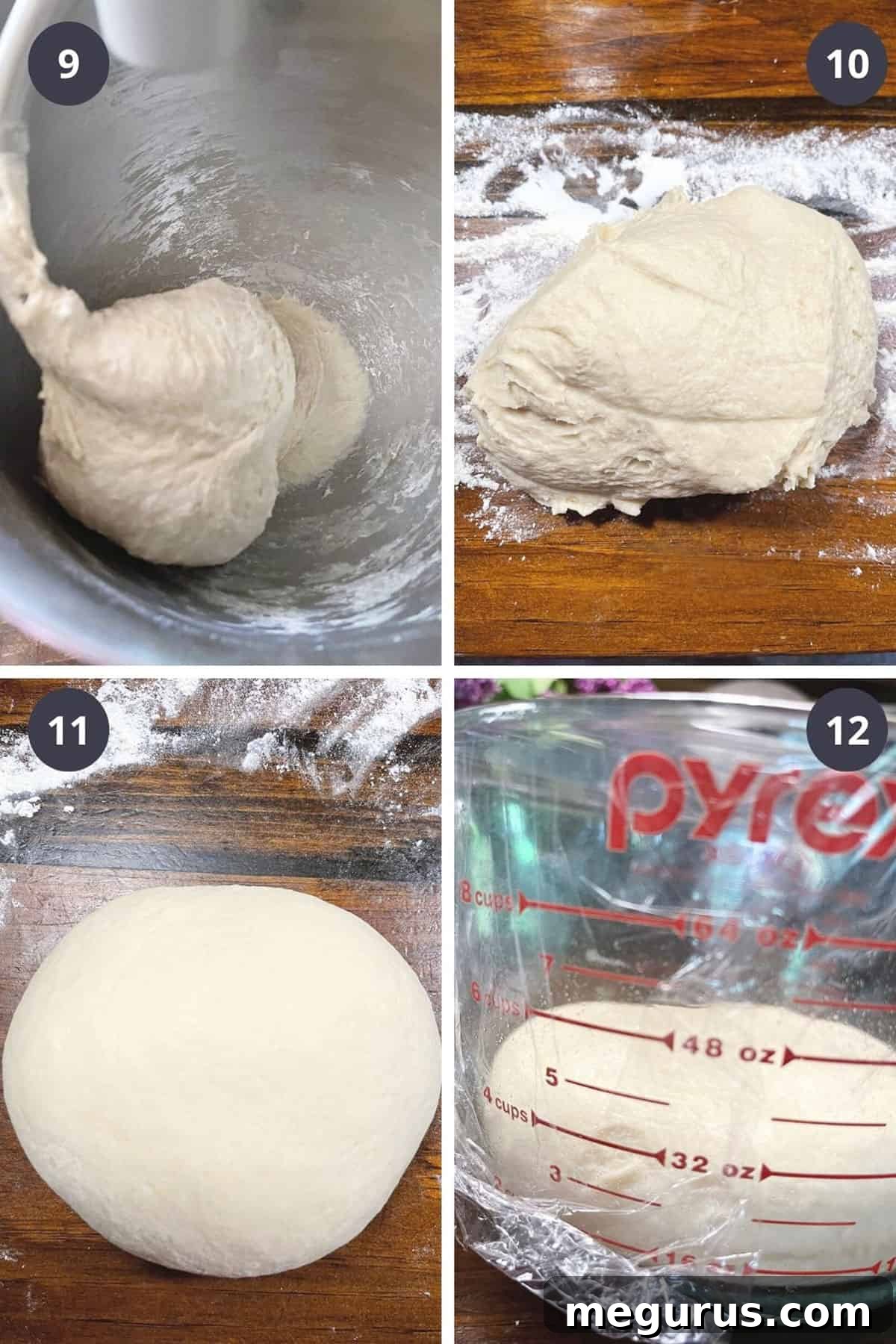
- Continue to knead the dough with the hook for approximately 5-6 minutes. The goal is to achieve a slightly sticky dough that wraps around the kneading hook, though it might not entirely clean the sides or bottom of the bowl. It should be cohesive and elastic.
- Carefully remove the dough from the mixer bowl and transfer it to a lightly floured work surface. Knead by hand for a few more minutes, adding only very small amounts of additional flour if the dough is excessively sticky and difficult to handle. Avoid adding too much flour, as this can make the bread dense.
- Once kneaded to a smooth, elastic consistency, form the dough into a neat, round ball.
- Place the dough ball into a generously greased bowl or large measuring cup. Cover it tightly with plastic wrap or a clean tea towel to prevent drying, and allow it to rise in a warm spot until it has visibly doubled in size. This first rise is crucial for flavor development.
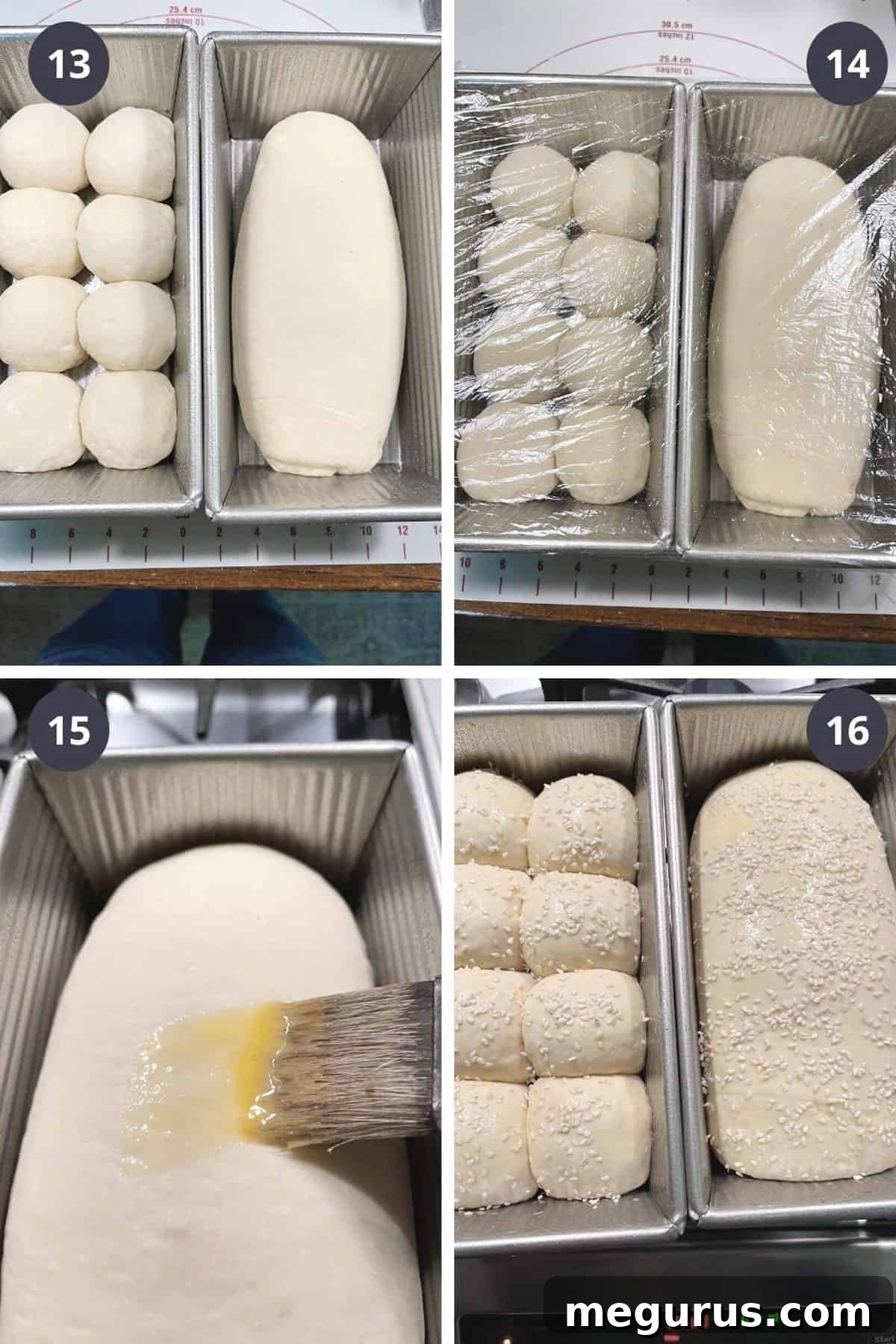
- After the first rise, gently punch down the dough to release the air. Now, it’s time to shape your bread: form it into two classic loaves, one loaf and a pan of pull-apart rolls, or a full batch of individual rolls, depending on your preference.
- Once shaped, place your loaves or rolls into prepared pans or onto a baking sheet. Cover them again with plastic wrap or a tea towel and let them rise for a second time until they have nearly doubled in size. This second rise creates the final texture and volume.
- Just before baking, prepare an egg wash by whisking one large egg with a teaspoon of water. Lightly brush the tops of your loaves or rolls with this mixture. The egg wash provides a beautiful golden-brown, shiny crust.
- If you desire, sprinkle the tops with sesame seeds, poppy seeds, or a light dusting of flour for added visual appeal and subtle flavor.
Pro Tips for Perfect Buttermilk Bread
- Buttermilk Temperature is Key: Always remember to take your buttermilk out of the fridge well in advance, ideally 1-2 hours before you start baking, allowing it to reach room temperature. Cold buttermilk can significantly inhibit yeast activity, prolonging your rise times considerably. Do not attempt to heat buttermilk in the microwave or stovetop, as its delicate proteins curdle very easily, which can ruin its texture and function in the dough. Patience here will pay off!
- The Right Yeast Makes a Difference: This recipe is specifically formulated for Instant Yeast. We do not recommend using rapid-rise or quick-rise yeast. These yeasts are engineered for accelerated rising, which often bypasses the crucial flavor development stage of a longer, slower fermentation. If you try to force a quick-rise yeast through a traditional two-rise process, it may exhaust itself prematurely, leading to a flat or dense loaf. Stick to regular instant yeast for the best texture, flavor, and reliable rise.
- Mastering Dough Portioning and Shaping: This recipe yields a generous amount of dough. For two smaller loaves, divide the dough equally (50/50). If you prefer one larger loaf and a smaller pan of rolls, aim for a 60/40 split. For free-form individual rolls, divide the dough into 8, 10, or 12 pieces, depending on your desired roll size. These free-form rolls can be baked on a parchment-lined baking sheet, or you can arrange 8 rolls snugly in a small cast-iron skillet or an 8-inch round cake pan for a charming presentation. Precise weighing of the dough portions ensures uniform baking and professional-looking results.
- Bread Maker Adaptation: While this recipe was developed for conventional oven baking with a stand mixer, it should adapt well to a bread maker. Utilize your machine’s “white bread” or “basic dough” setting. Monitor the dough during the kneading cycle and make slight adjustments to flour or liquid if necessary to achieve the correct consistency for your specific bread maker.
- Don’t Rush the Rise: Buttermilk doughs tend to rise slower than those made with water or milk due to the cooler temperature of the room-temperature buttermilk and its acidity. Resist the urge to speed up the process. A slow, steady rise builds superior flavor and texture.
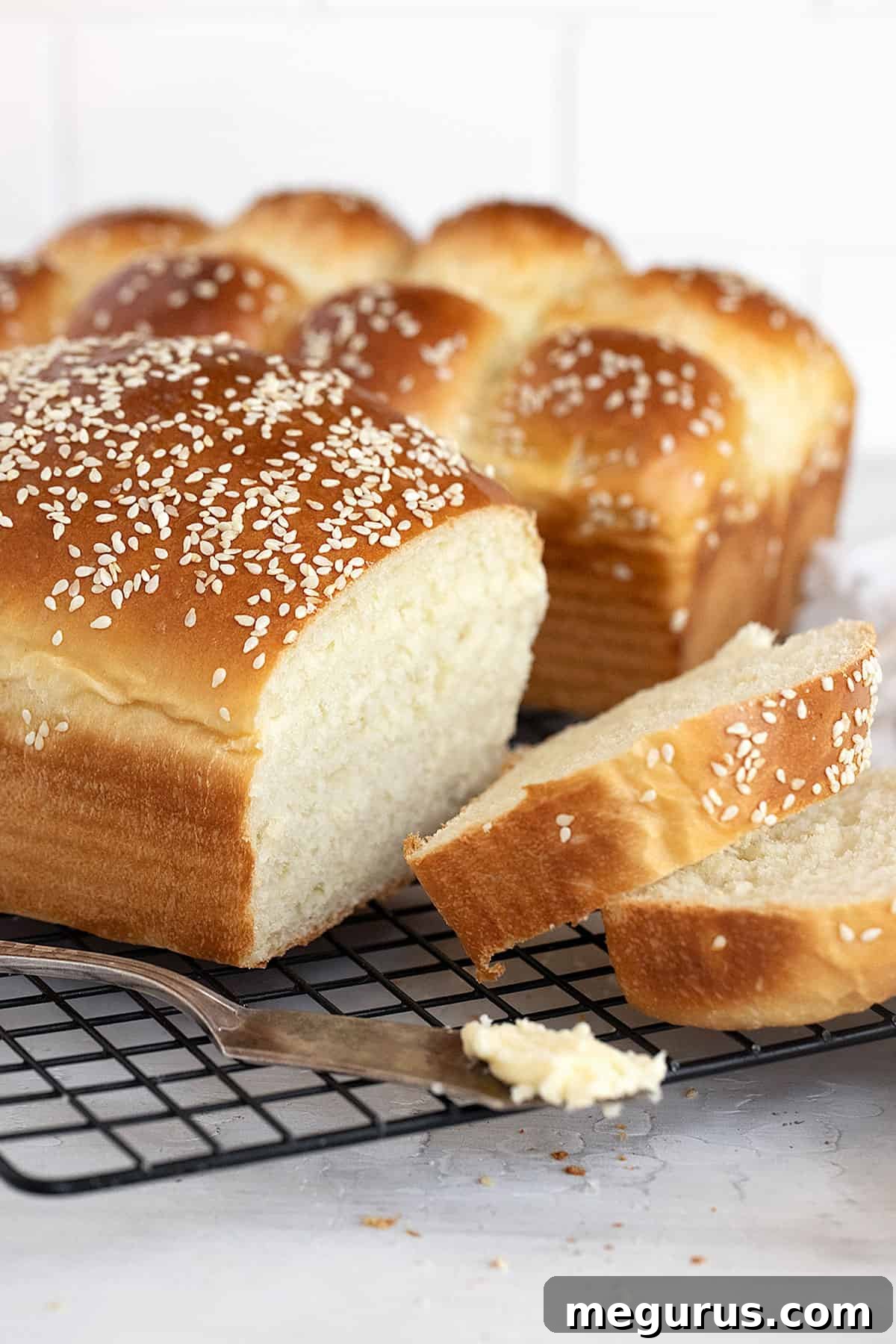
Top Tip: Patience is a Virtue with Buttermilk Dough!
One of the most important secrets to successful buttermilk bread is patience, especially during the rising stages. Buttermilk yeast dough can be notoriously slow to rise. This is primarily because buttermilk is added at room temperature, which, while necessary to prevent curdling, means there isn’t the initial warmth often present with recipes that use warm water or milk to kickstart the yeast. The acidity of buttermilk also contributes to a more gradual fermentation process.
Therefore, pack your patience for this recipe and be prepared for longer rise times than you might be used to with other bread recipes. Plan on anywhere from 1 1/2 to 2 hours for each rise, totaling 3-4 hours of active rising time. However, remember that rise times are highly dependent on the ambient temperature of your kitchen and even the time of year. A warmer kitchen will yield faster rises, while a cooler environment will slow things down. Instead of rigidly following the clock, trust your eyes and the dough itself. The most reliable indicator that your dough is ready is when it has visibly doubled in size, regardless of how long it took. Gently poke the dough; if the indentation slowly springs back, it’s typically ready. Don’t rush it; allowing the dough to rise properly is crucial for achieving the light, airy texture and full flavor that makes this buttermilk bread so exceptional.
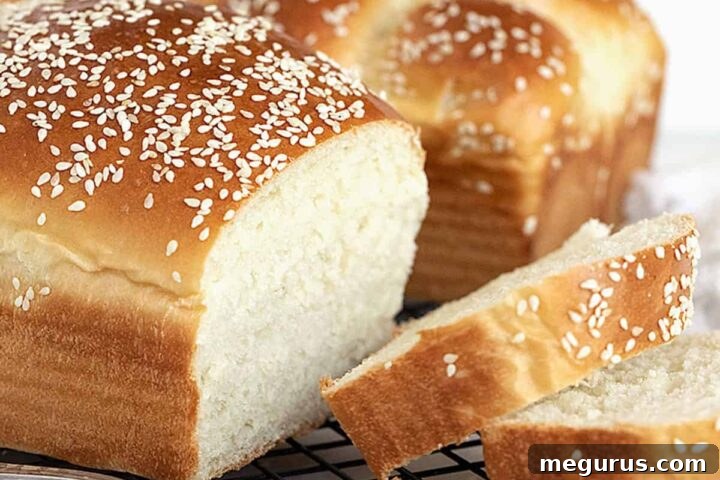
Get the Recipe: Buttermilk Bread (or Rolls)
Homemade buttermilk bread has a slightly tangy and rich flavor and a wonderful soft crumb. Make as 2 loaves or try one loaf and one loaf of pull-apart rolls.
Rated 5 stars by 8 users.
Pin This
Leave a Review
Prep Time: 15 mins
Cook Time: 40 mins
Rising and Resting Time: 3 hrs 20 mins
Total Time: 4 hrs 15 mins
Yield: 20 servings
Ingredients
Main Dough
- 4 cups (520 g) unbleached bread flour (*see Note 1 below for all purpose flour usage guidance)
- 2 teaspoons Instant yeast (*see Note 2 below for Active Dry Yeast usage guidance)
- 3 Tablespoons white granulated sugar
- 1 1/2 teaspoons fine salt
- 1 1/2 cups (375 ml) buttermilk, at room temperature
- 1/4 cup (60 ml) vegetable oil, or melted and cooled butter
- 1 large egg
For brushing before baking:
- 1 large egg
- 1 teaspoon water
For topping before baking:
- Sesame or poppy seeds or a dusting of flour, optional
Instructions
- Take the buttermilk out of the fridge well ahead and set on the counter to come to room temperature before you begin the baking process. Cold buttermilk will greatly extend the rising time. It is not recommended to try to warm buttermilk, as it curdles very easily.
- In a large bowl or the bowl of a stand mixer fitted with the paddle attachment, add about 3 cups (400g) of the flour, yeast, sugar, and salt. Mix together with a spoon or the mixer paddle. Add the room-temperature buttermilk, oil (or melted and cooled butter), and egg. Using a spoon or the paddle attachment, mix on low speed until well combined and all the flour is moistened. Remove the paddle attachment and cover the bowl with a clean tea towel. Let stand 20 minutes in the bowl.
- Switch to the kneading hook. Gradually add the remaining 1 cup (100g) flour and knead for about 5-6 minutes, until you have a sticky dough that wraps around the kneading hook, but doesn’t completely clean the bowl or the bottom of the bowl. Remove the dough to a lightly floured work surface and knead by hand for several minutes, adding only a very small bit of additional flour if needed to prevent the dough sticking to your hands or the work surface. Form the dough into a ball.
- Place the dough ball into a greased bowl or large measuring cup. Cover with plastic wrap and let rise until doubled, anywhere from 1-2 hours (or a bit longer if the buttermilk was still a bit cold when you started). Be patient. Allow it to rise until just doubled, however long that takes.
- Remove the dough to a lightly floured work surface.
- For two loaves: Divide the dough evenly into two equal pieces (weighing the dough is recommended for accuracy). Grease two 8×4-inch metal loaf pans. Take one of the dough pieces and press it into an oval shape, roughly 9-inches long and about 4 inches wide. Pull the long sides of the oval towards the center and pinch them together well. Flip the dough over so the smooth side is up and place it into a prepared loaf pan. Repeat with the other piece of dough.
- For one loaf and one loaf of rolls: Divide dough in half (as above) or alternatively, you can divide 60/40, using the larger portion for a loaf and the smaller portion for the loaf of rolls. For the loaf, shape as detailed above for two loaves and place into a greased 8×4-inch metal loaf pan.
- For the rolls, divide the smaller dough piece into 8 equal pieces (weighing the dough and dividing by 8 is recommended). Take one of the 8 dough pieces and form it into a smooth ball by stretching the dough piece out, then flipping it over, pinching up the sides, and sealing them together. Flip it over again and place into an 8×4-inch loaf pan. Repeat with the remaining dough pieces, arranging them in the loaf pan in 4 rows of 2, as shown in the step-by-step photos above.
- For two roll loaves: Divide the entire dough into 16 equal pieces and arrange between two 8×4-inch loaf pans, with 8 rolls in each pan, in 4 rows of two.
- For free-form rolls: Rather than placing them into a loaf pan, arrange the dough balls several inches apart on a parchment-lined baking sheet.
- For all shaped doughs, cover them with plastic wrap or a clean tea towel and allow them to rise until just shy of doubled in size. This can take as little as 20-30 minutes for free-form rolls or 1-2 hours for loaves or roll loaves. Be patient and let it rise as long as it needs to almost double in size.
- Preheat your oven to 400°F (200°C) (using a regular bake setting, not fan-assisted).
- Brush the tops of the risen loaves or rolls with the egg mixed with water. If desired, sprinkle with sesame or poppy seeds. Alternatively, you can leave them plain (no egg wash) and dust lightly with a bit of flour.
- When ready to bake, REDUCE THE OVEN TEMPERATURE TO 350°F (175°C) for loaves (or 375°F / 190°C for free-form rolls) and carefully place the pans in the oven. Bake for about 35-40 minutes for loaves (or 15-20 minutes for free-form rolls), rotating the pans front to back halfway through baking to ensure even browning. Bake until the loaves are deep golden brown and reach an internal temperature of about 205°F (96°C) using an instant-read thermometer.
- Remove from the oven immediately. Take the bread or rolls out of their pans and place them onto a wire cooling rack to cool completely. This prevents the bottom from becoming soggy.
- Homemade buttermilk bread and rolls freeze beautifully for up to 3 months. Once cooled, wrap them tightly in plastic wrap and then in foil or place them in a freezer bag. Thaw at room temperature or warm gently in the oven.
Notes
1. Active Dry Yeast Usage: If you’re using active dry yeast, you’ll need to activate it first. Very carefully warm the buttermilk to just about 90°F (32°C). Sprinkle the active dry yeast over the warmed buttermilk and let it sit for a few minutes until it becomes foamy. Then, combine this mixture with the rest of the ingredients as instructed. Be cautious not to over-warm the buttermilk, as it will curdle.
2. All-Purpose Flour Alternative: You can use all-purpose flour in place of bread flour, though the texture of the finished bread will be slightly different – often a bit less chewy. You may also find that you need to use slightly more all-purpose flour overall to achieve the correct dough consistency, as its lower protein content affects liquid absorption. Add flour gradually until the dough feels right.
You’ll also find more detailed tips and step-by-step photos above this Recipe Card that you might find helpful for visual guidance and further understanding!
Cuisine: American, Canadian
Course: Bread
Author: Jennifer Maloney
Nutrition Information (per serving):
Serving: 1 serving, Calories: 119kcal, Carbohydrates: 21g, Protein: 5g, Fat: 2g, Saturated Fat: 1g, Polyunsaturated Fat: 0.3g, Monounsaturated Fat: 0.4g, Trans Fat: 0.002g, Cholesterol: 21mg, Sodium: 202mg, Potassium: 68mg, Fiber: 1g, Sugar: 3g, Vitamin A: 57IU, Vitamin C: 0.004mg, Calcium: 28mg, Iron: 0.3mg